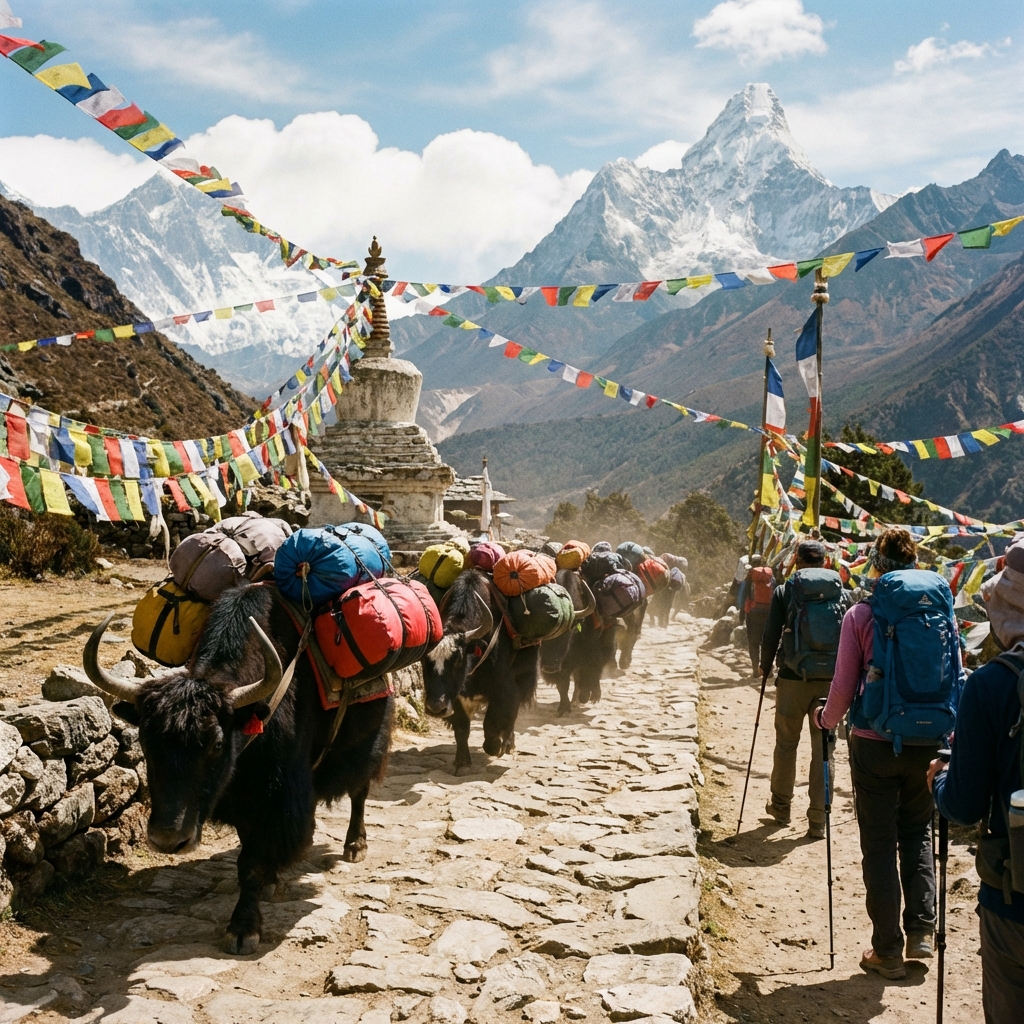
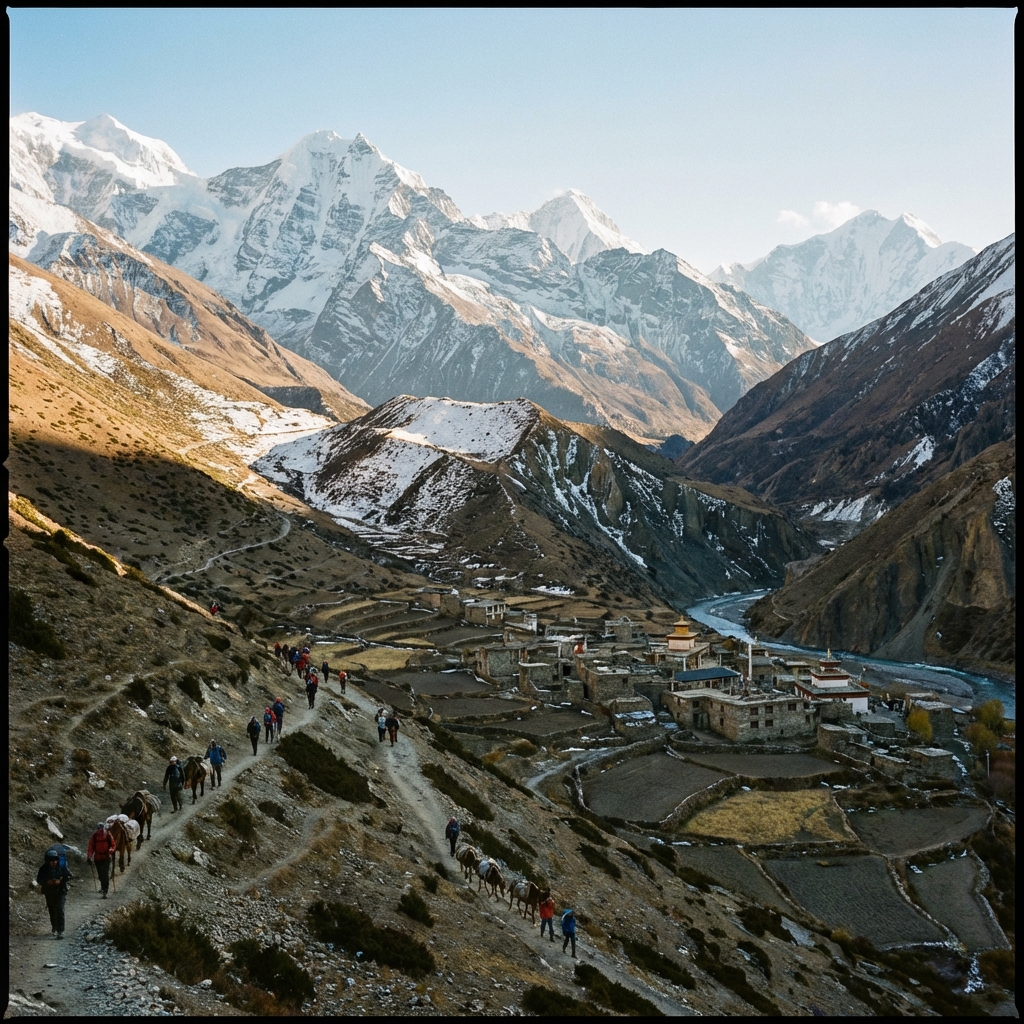
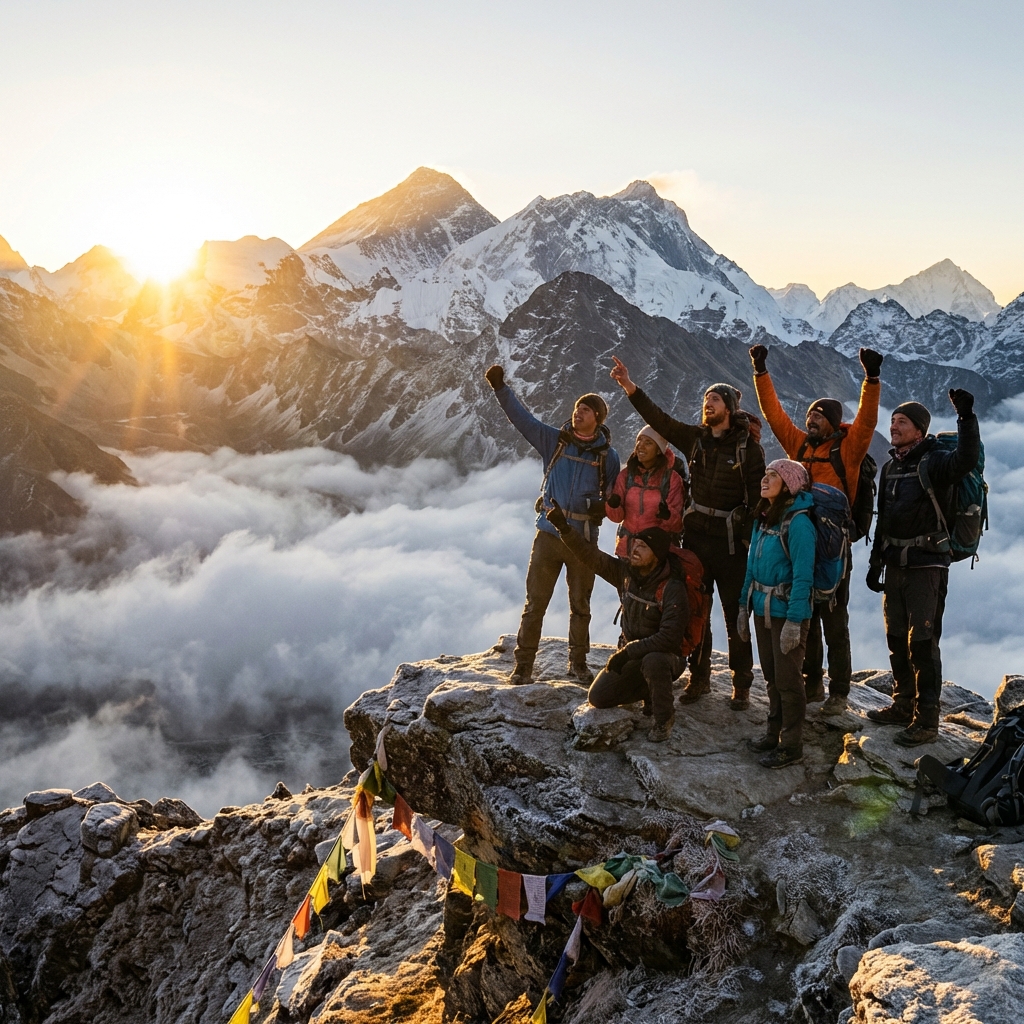
Choosing the right season for your Nepal trek is arguably the most consequential decision you'll make—more impactful than your choice of route, agency, or even fitness preparation. Trek the Everest region in October and you'll experience crystal-clear skies with 100+ kilometer visibility, comfortable temperatures, and reliable weather. Trek the same route in July and you'll face daily monsoon rains, leech-infested trails, cloud-obscured views, and potential flight cancellations.
The difference isn't subtle. It's the difference between seeing Everest's summit clearly from Kala Patthar and seeing nothing but white clouds. Between trekking in a t-shirt under blue skies and huddling in rain gear through downpours. Between paying premium prices alongside hundreds of trekkers and having trails nearly to yourself at budget rates.
But here's what most seasonal guides won't tell you: there is no universally "best" season for Nepal trekking. The conventional wisdom—"trek in October or April"—works for many trekkers but ignores crucial nuances. Some regions (like Mustang and Dolpo) are actually better during the monsoon. Winter offers spectacular conditions if you're prepared for cold. Shoulder seasons provide excellent value with minimal compromises. And even monsoon season works for certain treks and certain personalities.
This comprehensive 14,000-word guide moves beyond oversimplified advice to provide complete seasonal intelligence for Nepal trekking. We'll examine all four seasons in depth, break down every month individually with detailed weather data, compare regional differences (Everest vs Annapurna vs Langtang timing varies significantly), explore rain shadow areas that defy conventional patterns, analyze festival impacts, decode crowd dynamics, examine cost variations, and provide decision frameworks to help you choose YOUR optimal timing based on YOUR priorities.
Whether you're a first-time trekker seeking the most reliable conditions, a photographer chasing specific light and landscapes, a budget traveler willing to trade weather certainty for savings, or an experienced adventurer seeking solitude and challenge, this guide provides the data and insights you need.
October-November (Autumn)
March-April (Spring)
September, December, May
January-February
June-August
October-November
May-June
January-February
July-August
January-February, June-August
October (Dashain & Tihar)
4-6 months essential
Part 1: Understanding Nepal's Four Trekking Seasons
Nepal's seasonal patterns are dictated by the South Asian monsoon cycle, which creates four distinct trekking seasons with dramatically different characteristics. Understanding these seasonal fundamentals is essential before diving into month-by-month details.
The Four-Season Framework
Autumn (September-November): Post-monsoon dry season Winter (December-February): Cold dry season Spring (March-May): Pre-monsoon dry season Monsoon (June-August): Summer rainy season
Each season brings unique advantages, distinct challenges, and suitability for different trek types and trekker priorities.
Autumn Season (September-November): Peak Trekking Season
Overall Rating: 9.5/10 Best For: First-time trekkers, photography, reliability, mountain views Crowds: Very High (October peak) Pricing: Premium (highest of year)
Why Autumn Is Peak Season
Autumn's status as Nepal's premier trekking season isn't marketing hype—it represents the convergence of multiple favorable conditions that create the year's most reliable trekking environment.
Post-Monsoon Air Clarity
The June-August monsoon washes massive amounts of dust, pollution, and atmospheric particulates from the air. By September, and especially October-November, the atmosphere is exceptionally clean. Visibility regularly exceeds 100 kilometers on clear mornings, allowing panoramic views that stretch from the Annapurnas to Everest and beyond from high viewpoints.
This clarity creates the year's best mountain photography conditions. Peaks appear sharp and well-defined rather than hazy or obscured. The contrast between fresh snow on summits and deep blue skies is spectacular.
Weather Stability
Autumn sits firmly within Nepal's dry season, characterized by stable high-pressure systems that can dominate for days or weeks. Monthly precipitation averages just 15-40mm across major trekking regions—some of the lowest of the year.
Practically, this means you can plan itineraries with confidence. High passes remain accessible, visibility is predictable for critical flight days to mountain airports, and gear stays dry. Rest days forced by weather are rare.
Temperature Goldilocks Zone
Autumn temperatures hit an ideal balance: warm enough for comfortable daytime trekking, cool enough for good sleeping conditions, not yet cold enough to require extreme winter gear.
At mid-elevations (3,000-4,000m), expect pleasant 10-16°C daytime temperatures, dropping to manageable 0-5°C overnight. Even high camps (5,000m+) remain tolerable with sleeping bags rated to -15°C. You won't need the -25°C bags required for winter.
Full Infrastructure Operation
Every teahouse, every service, every support system operates at peak capacity during autumn. Lodges that close in winter are fully open. Menus are complete. Hot showers function reliably. Support services (helicopter rescue, porter availability, guide networks) work at maximum efficiency.
Fresh Snow Aesthetics
Late monsoon and early autumn snows dust high peaks white, creating stunning visual contrast against blue skies, while lower trails (below 4,500m) remain dry and easy to navigate. This combination creates Nepal's most photogenic landscapes.
Autumn Disadvantages
Very High Crowds (Especially October)
October sees peak trekking traffic—up to 100% capacity on popular routes like Everest Base Camp and Annapurna Circuit. Trails can feel congested, teahouses fill completely, and the wilderness experience diminishes. Some trekkers find the crowds overwhelming, particularly at famous viewpoints like Poon Hill or Kala Patthar where dozens of people jockey for position at sunrise.
Premium Pricing
Autumn commands the year's highest prices across all services: flights, teahouses, guides, porters, and packages. Expect to pay 20-40% more than shoulder seasons and 40-60% more than deep off-season.
Advance Booking Essential
Popular treks during October-November require booking 4-6 months in advance to secure preferred lodges, guides, and Lukla flights. Spontaneous trekking is difficult during peak autumn.
Festival Disruptions (Early October)
Dashain and Tihar, Nepal's biggest festivals, typically fall in early-to-mid October. During these periods (usually October 1-20), domestic tourism surges as Nepali families travel to the mountains. Some services reduce operations as staff return to their home villages. International trekkers often find this period more challenging than late October.
Autumn Month-by-Month
September: Transition Month
September represents the tail end of monsoon transitioning into autumn. Early September (Sept 1-15) still sees occasional rain, particularly in the afternoons, with about 100-150mm of precipitation. But by late September (Sept 15-30), conditions improve dramatically as the monsoon retreats.
Best for: Trekkers seeking fewer crowds than October but better weather than monsoon. Late September is excellent for those who can't access October dates.
Considerations: Early September has monsoon risk. Lukla flights can be unreliable. Leeches still active below 3,000m.
October: Peak of Peak Season
October is Nepal's single busiest trekking month, and for good reason. Weather stability reaches peak levels, visibility is exceptional, temperatures are ideal, and conditions are as close to "guaranteed good" as the Himalayas allow.
Precipitation averages just 15-35mm across major regions. Clear morning skies are the norm, with occasional afternoon clouds that typically don't bring rain. Temperatures at mid-elevations (3,000-4,000m) range from 10-16°C during the day to 0-5°C at night.
But October comes with maximum crowds—expect 100% capacity on popular routes—and premium pricing. Early October (Oct 1-20) coincides with Dashain and Tihar festivals, bringing additional challenges.
Sweet Spot: The last week of October (Oct 24-31) often represents optimal timing: festivals have concluded, weather remains excellent, crowds thin by 20-30%, but services continue operating fully.
November: Late Autumn Excellence
November maintains excellent weather with significantly reduced crowds. By mid-November, trekking traffic drops 30-40% from October peaks, yet conditions remain superb for the first three weeks.
Temperatures begin cooling, particularly at high elevations. Nighttime temperatures at 5,000m can drop to -10°C to -15°C, requiring warmer sleeping bags than October. But days remain pleasant and skies stay clear.
Late November (Nov 20-30) transitions toward winter. Some high-altitude lodges begin closing. Snow at high passes becomes more common. Trekkers need to monitor conditions more carefully.
Best for: Trekkers who want peak-season weather without peak crowds and can handle colder nights.
| Name | Weather | Crowds | Pricing | Visibility | Best For |
|---|---|---|---|---|---|
| September (Late) | 8/10 - Improving rapidly | Moderate | $$ - Mid-range | Good (85-95km) | Value seekers, fewer crowds |
| October | 10/10 - Peak conditions | Very High (100% capacity) | $$$ - Premium | Excellent (100+ km) | Reliability, first-timers, photography |
| November | 9/10 - Excellent but cooling | Moderate-High | $$$ - Premium | Excellent (100+ km) | Great weather, fewer crowds than Oct |
Pro Tip
The Autumn Sweet Spot Strategy: If you have scheduling flexibility, target late September to early October (Sept 25-Oct 10) or late October to mid-November (Oct 25-Nov 15). These windows avoid peak October crowds and festival complications while capturing excellent autumn weather. You'll save 15-25% on costs and enjoy a significantly better trail experience with only marginal weather tradeoffs.
Best Autumn Treks
Nearly every major Nepal trek is excellent during autumn, but these routes particularly shine:
- Everest Base Camp - Peak conditions, maximum flight reliability
- Annapurna Circuit - All high passes accessible, excellent visibility
- Manaslu Circuit - Larkya La pass optimal conditions
- Langtang Valley & Gosainkund - Perfect temperatures, minimal rain
- Three Passes Trek - All passes safely crossable
- Upper Mustang - Dry season in rain shadow, excellent access
For detailed autumn trekking information, see:
Winter Season (December-February): The Cold Off-Season
Overall Rating: 6.5/10 Best For: Budget travelers, solitude seekers, experienced cold-weather trekkers Crowds: Low (40-60% reduction from peak) Pricing: Budget (20-40% savings)
Why Winter Works
Winter trekking in Nepal defies many trekkers' assumptions. While it's genuinely cold—particularly at high elevations—it's also clear, stable, and dramatically less crowded than peak seasons. For trekkers prepared for cold conditions, winter offers exceptional value and experience.
Crystal-Clear Visibility
Winter air is the driest and cleanest of the year. Visibility can be even better than autumn, with razor-sharp mountain views extending to the horizon. The low humidity creates exceptional photography conditions with crisp, well-defined peaks.
Stable Weather Patterns
Winter is part of Nepal's dry season, so precipitation remains low (15-25mm monthly average). When it does precipitate at high elevations, it falls as snow rather than rain, which is actually easier to manage than monsoon rains.
High-pressure systems dominate for extended periods, creating long stretches of stable, predictable weather.
Dramatic Snow Scenery
Winter snow coverage creates spectacular landscapes. Trails through snow-covered forests, frozen waterfalls, and pristine white mountain amphitheaters offer scenery that rivals autumn's famous clarity.
Minimal Crowds
Winter sees 40-60% fewer trekkers than autumn peaks. Popular trails feel peaceful and uncrowded. You can often have lodges nearly to yourself. The wilderness experience is authentic.
Budget Pricing
Teahouses, guides, porters, and package prices drop 20-40% in winter. For budget-conscious trekkers, winter offers genuine savings without sacrificing the core trekking experience.
Winter Challenges
Extreme Cold at High Elevations
This is winter's primary challenge. At 5,000m+, nighttime temperatures regularly drop to -20°C to -30°C. Even at mid-elevations (3,500-4,000m), expect -10°C to -15°C nights.
You need serious cold-weather gear: sleeping bags rated to -25°C or lower, proper insulated jackets, quality gloves, warm boots. Many trekkers underestimate winter cold and suffer.
High-Altitude Lodge Closures
Many high-elevation lodges close during deep winter (late December through early February), particularly on routes like Everest Base Camp and Annapurna Circuit. This limits route options and requires more careful planning.
Lower and mid-elevation treks (Poon Hill, Lower Langtang, Helambu) maintain full lodge operations through winter.
Snow at High Passes
Passes above 5,000m can accumulate significant snow, sometimes requiring trail-breaking or making crossing dangerous or impossible. Routes with 5,000m+ passes (Thorong La, Larkya La, Cho La, Renjo La) require careful monitoring and flexible itineraries.
Shorter Daylight Hours
Winter days are short in the Himalayas—about 10 hours of daylight versus 13-14 in summer. This compresses trekking windows and makes early starts essential for long trekking days.
Higher Altitude Sickness Risk
Some evidence suggests cold temperatures may increase altitude sickness susceptibility, possibly due to increased respiratory rate in cold air or dehydration from breathing dry air. Careful acclimatization is even more critical in winter.
Winter Month-by-Month
December: Early Winter
December represents the transition from autumn to deep winter. Early December (Dec 1-15) often retains excellent autumn-like conditions with only moderately cold temperatures. But by late December (Dec 15-31), winter arrives in force.
Crowds diminish significantly after the first week of December as the autumn rush ends. Pricing begins dropping. Some high-altitude lodges remain open early in the month but close by mid-December.
Best for: Trekkers seeking shoulder-season conditions with fewer crowds than autumn. Early December is particularly good.
Considerations: Late December sees maximum cold and many high lodge closures. Christmas/New Year can bring temporary crowd increases from holiday travelers.
January: Deep Winter
January is Nepal's coldest month and lowest point for trekking traffic. This is true off-season, with 60-70% fewer trekkers than October.
Temperatures at high camps can drop to -25°C to -30°C at night. Days remain sunny and clear, but cold even at lower elevations. Many high-altitude lodges are closed, limiting route options.
Despite the cold, January offers spectacular conditions for those prepared: crystal-clear skies, pristine snow coverage, peaceful trails, and rock-bottom prices.
Best for: Experienced trekkers comfortable with extreme cold, budget travelers, solitude seekers.
Avoid if: You dislike cold, lack proper winter gear, or want maximum route flexibility.
February: Late Winter Warming
February begins warming toward spring. Early February (Feb 1-15) remains quite cold, particularly at high elevations, with conditions similar to January. But late February (Feb 15-28) sees noticeable warming and the return of some high-altitude lodge operations.
February is actually one of the most underrated months for Nepal trekking. It offers many of winter's advantages (clear skies, low crowds, budget pricing) with moderating temperatures that make high-altitude trekking more comfortable than January.
Best for: Trekkers seeking winter advantages without peak winter cold. Late February is particularly appealing.
For detailed winter trekking information, see:
Best Winter Treks
Not all treks are equally suitable for winter. These routes work particularly well:
Excellent Winter Options:
- Poon Hill Trek - Lower elevation (3,210m), all lodges open, spectacular views
- Mardi Himal Trek - Lower than ABC, manageable cold, beautiful snow scenery
- Lower Langtang Valley - Kyanjin Gompa (3,870m) accessible, stunning winter landscapes
- Helambu Circuit - Lower elevations, mild winter conditions
- Everest Base Camp - Doable but challenging; requires proper gear and flexibility
Challenging Winter Options:
- Annapurna Circuit - Thorong La pass (5,416m) can be difficult or closed
- Manaslu Circuit - Larkya La pass (5,160m) often has deep snow
- Three Passes Trek - All three passes are challenging in winter conditions
Generally Closed:
- Upper Dolpo - Too remote and cold for winter access
- Kanchenjunga Circuit - Extreme conditions, lodges closed
Pro Tip
Winter Success Strategy: Choose treks with maximum elevations under 4,500m, bring gear rated for -25°C, build extra acclimatization days into your itinerary, and maintain schedule flexibility in case high passes are temporarily impassable. Consider trekking in late February when conditions moderate while prices remain low.
Spring Season (March-May): Second Peak Season
Overall Rating: 9/10 Best For: Rhododendron blooms, warm weather, families, second-time trekkers Crowds: High (March-April), Moderate (May) Pricing: Premium (March-April), Mid-range (May)
Why Spring Is Excellent
Spring is Nepal's second major trekking season, offering conditions nearly as good as autumn with distinct advantages that some trekkers prefer.
Rhododendron Bloom Spectacle
Spring's signature feature: Nepal's national flower, the rhododendron, blooms in spectacular displays across trekking routes, particularly in the Annapurna region. Forests explode in reds, pinks, and whites from late March through mid-April.
This creates photographic opportunities impossible in other seasons. The combination of flowering forests with snow-capped peaks above is uniquely spring.
Warming Temperatures
Spring temperatures steadily warm from March through May. By April-May, even high-altitude camps are significantly warmer than autumn or winter, making sleeping more comfortable and reducing cold-weather gear requirements.
Good Weather Stability (March-April)
Early-to-mid spring (March through mid-April) maintains good weather stability similar to autumn. While not quite as stable as October, precipitation remains low and sunny days dominate.
Cultural Festivals
Spring brings important cultural events including Holi (color festival), Buddha Jayanti (Buddha's birthday), and various monastery festivals. These add cultural richness to the trekking experience.
Full Services Available
By March, all winter-closed lodges reopen. The full trekking infrastructure operates at capacity, providing maximum flexibility and comfort.
Spring Disadvantages
Afternoon Haze (Late April-May)
As spring progresses into late April and May, increasing temperatures and pre-monsoon atmospheric build-up create afternoon haze that reduces visibility. Morning views remain good, but by noon-2pm, mountains often become obscured.
This is particularly noticeable in the Annapurna region. The Everest region suffers less from this effect.
Pre-Monsoon Weather Instability (May)
Late May sees increasing monsoon precursors: afternoon thunderstorms become more common, precipitation increases, and weather patterns become less predictable. May is noticeably less stable than March-April.
High Pollen and Allergens
The same flowering that creates beautiful scenery also produces significant pollen. Trekkers with allergies may struggle during peak bloom periods.
Still Relatively Crowded (March-April)
While not quite as crowded as October, March and April remain busy months with substantial trekking traffic and premium pricing.
Spring Month-by-Month
March: Early Spring Excellence
March represents the transition from winter to spring. Early March (Mar 1-15) can still be quite cold at high elevations, with lingering winter conditions. But by mid-to-late March (Mar 15-31), spring arrives with warming temperatures and the first rhododendron blooms.
March maintains excellent weather stability. Precipitation remains low (20-40mm), skies are generally clear, and visibility is very good. Crowds increase through the month as the spring rush begins.
Best for: Trekkers seeking good weather without peak crowds. Late March captures early blooms with excellent conditions.
April: Peak Spring Season
April is spring's premier month, roughly equivalent to October in autumn. Rhododendron blooms hit peak intensity across most routes. Temperatures are comfortable at all elevations. Weather remains generally stable, though afternoon haze begins appearing late in the month.
Crowds reach high levels—not quite October intensity but substantial. Pricing increases to near-peak levels. Advance booking (2-3 months) becomes advisable for popular routes.
Sweet Spot: Early-to-mid April (Apr 1-20) captures peak blooms with optimal weather before late-month haze increases.
May: Late Spring Transition
May is spring's most variable month. Early May (May 1-15) maintains good conditions similar to April, though haze increases and afternoon clouds become more common. But late May (May 15-31) sees monsoon precursors intensify: afternoon thunderstorms, increasing precipitation (50-100mm), and less predictable weather.
The upside: May is warm—the warmest comfortable trekking month of the year. Even high camps are mild. And crowds thin significantly as the spring rush ends, creating a more peaceful trail experience.
Best for: Trekkers who prioritize warm temperatures and don't mind hazy afternoons. Early May is better than late May.
Avoid if: You prioritize crystal-clear visibility. Consider autumn instead.
| Name | Weather | Crowds | Pricing | Visibility | Best For |
|---|---|---|---|---|---|
| March | 8.5/10 - Good and improving | Moderate-High | $$ - Mid to Premium | Very Good (90-100km) | Early blooms, good weather, moderate crowds |
| April | 9/10 - Excellent overall | High | $$$ - Premium | Good (70-90km, haze late month) | Peak rhododendron blooms, warm weather |
| May | 7/10 - Warm but unstable late month | Moderate | $$ - Mid-range | Moderate (50-80km, significant haze) | Warmest temperatures, fewer crowds |
For detailed spring trekking information, see:
Best Spring Treks
Particularly Excellent in Spring:
- Annapurna Base Camp - Peak rhododendron displays
- Ghorepani Poon Hill - Maximum flower bloom, stunning scenery
- Mardi Himal - Rhododendrons and warm temperatures
- Langtang Valley - Beautiful blooms, comfortable conditions
- Annapurna Circuit - Thorong La accessible, blooming forests
Also Very Good:
- Everest Base Camp - Less haze than Annapurna, good visibility
- Manaslu Circuit - Larkya La clear of snow, good conditions
- Three Passes - All passes accessible, stable weather (March-early April)
Pro Tip
Spring Bloom Timing Strategy: Rhododendron blooms progress with elevation and vary by location. Lower elevations (2,000-2,500m) bloom late March. Mid-elevations (2,500-3,500m) peak in early-to-mid April. Higher elevations (3,500-4,000m) bloom mid-to-late April. For maximum bloom viewing, trek in early-to-mid April and choose Annapurna region routes.
Monsoon Season (June-August): The Challenging Season
Overall Rating: 4/10 (Standard Routes), 7/10 (Rain Shadow Regions) Best For: Rain shadow treks (Mustang, Dolpo), budget extremists, experienced trekkers Crowds: Very Low (70-80% reduction) Pricing: Lowest of year (40-60% savings)
Why Monsoon Is Challenging
The June-August monsoon season brings fundamental challenges that make standard Nepal trekking routes genuinely difficult and less rewarding for most trekkers.
Heavy Precipitation
Monsoon months receive 70-85% of Nepal's annual precipitation. Monthly totals range from 200-600mm depending on location and year. Rain falls almost daily, often in intense afternoon downpours lasting several hours.
Trails become muddy, slippery, and difficult to navigate. River crossings become dangerous or impossible. Landslides block routes periodically.
Poor Visibility
Persistent clouds obscure mountains for days at a time. When you can see peaks, it's usually only briefly during early morning windows. The spectacular visibility that defines autumn and winter is absent.
Many trekkers complete entire monsoon treks without ever seeing the famous peaks they came to photograph.
Leeches Below 3,000m
Monsoon activates massive leech populations in forests below 3,000m. These bloodsuckers are particularly active in the Annapurna region, making lower-elevation walking genuinely unpleasant for many trekkers.
Flight Cancellations
Lukla and other mountain airports experience frequent weather-related cancellations during monsoon, sometimes for days at a time. This creates serious schedule uncertainty and potential missed international flights.
Trail Damage
Landslides and erosion damage trails during monsoon. Some routes require significant detours. Remote areas may have sections that are temporarily impassable.
Limited Services
Many teahouses close during monsoon, particularly at higher elevations. This reduces accommodation options and flexibility. Some popular trails have minimal infrastructure during peak monsoon (July-August).
Monsoon's Hidden Advantages
Dramatic Budget Savings
Monsoon offers the year's lowest prices—40-60% below peak season. For budget-constrained trekkers willing to accept weather tradeoffs, this represents massive savings.
Extreme Solitude
Monsoon trails are nearly empty. You might not see another trekker for days. For those seeking genuine wilderness solitude, monsoon delivers.
Lush Green Landscapes
The Himalayas are at their greenest and most verdant during monsoon. Waterfalls cascade everywhere. Forests are lush and vibrant. For trekkers who appreciate botanical beauty over peak views, monsoon offers unique aesthetics.
Wildflower Displays (High Elevations)
Above 4,000m where rain is less intense, monsoon brings spectacular wildflower blooms that rival spring rhododendrons. High meadows explode with color.
The Rain Shadow Exception: Mustang and Dolpo
This is crucial: Not all Nepal trekking regions experience heavy monsoon.
Upper Mustang, Lower Mustang, and Dolpo lie in the rain shadow of the main Himalayan range. The monsoon drops most of its precipitation on the range's southern slopes before reaching these northern regions. As a result, these areas receive minimal monsoon rain and are actually excellent for trekking during summer.
Upper Mustang (June-September): Receives only 50-100mm during the entire monsoon season. Dry, stable conditions with warm temperatures make this the ideal time for Mustang trekking. In fact, many consider summer the best season for Mustang.
Dolpo (June-September): Similar rain shadow effect. Remote Dolpo treks are excellent during monsoon months when southern regions are unpleasant.
Lower Mustang/Jomsom Area: Partial rain shadow effect. Significantly drier than Annapurna Circuit's southern sections, though not as dry as Upper Mustang.
Monsoon Month-by-Month
June: Early Monsoon
June represents the transition into monsoon. Early June (June 1-15) often maintains reasonable conditions similar to late May, with afternoon storms but still-decent morning weather. But by mid-to-late June (June 15-30), full monsoon conditions arrive.
Precipitation increases to 150-300mm monthly. Clouds dominate. Leeches emerge. Services begin scaling back.
Monsoon exception: Upper Mustang season begins in June. Excellent conditions in rain shadow regions.
July: Peak Monsoon
July is typically Nepal's wettest month, with 250-400mm+ precipitation across standard trekking regions. Rain falls daily, often in multiple sessions. Clouds obscure mountains almost continuously. Trails are muddy and leech-infested.
This is genuinely the year's worst month for standard routes like Everest Base Camp, Annapurna Circuit, and Langtang. Very few trekkers attempt these routes in July.
Monsoon exception: Upper Mustang, Dolpo, and rain shadow areas remain dry and excellent.
August: Late Monsoon
August maintains heavy monsoon conditions similar to July through mid-month, then begins transitioning toward autumn in late August (Aug 20-31). Total precipitation typically ranges 200-350mm.
Late August sees improving conditions as the monsoon retreats. Skies begin clearing more frequently. By the last week of August, some trekkers successfully complete standard routes with acceptable (though not great) conditions.
Monsoon exception: Rain shadow regions remain excellent through August.
| Name | Weather | Crowds | Pricing | Visibility | Best For |
|---|---|---|---|---|---|
| June | 5/10 - Early monsoon arriving | Low | $ - Budget | Poor (30-60km) | Rain shadow regions (Mustang, Dolpo) |
| July | 3/10 - Peak monsoon (worst month) | Very Low | $ - Lowest of year | Very Poor (20-50km) | Only rain shadow regions viable |
| August | 4/10 - Monsoon continuing | Very Low | $ - Lowest of year | Poor (30-60km) | Rain shadow regions, late month improving |
For detailed monsoon trekking information, see:
Best Monsoon Treks
Excellent During Monsoon:
- Upper Mustang - Dry rain shadow, summer is optimal season
- Lower Mustang (Jomsom-Muktinath) - Partial rain shadow, manageable conditions
- Dolpo Circuit - Remote rain shadow region, summer access
Acceptable for Experienced/Flexible Trekkers:
- High-elevation routes above 4,500m - Above heavy rain zones, but still cloudy
- Nar Phu Valley - Partial rain shadow effect
Generally Not Recommended:
- Everest Base Camp - Heavy rain, leeches, poor visibility
- Annapurna Circuit (southern sections) - Extreme leeches, landslide risk
- Langtang Valley - Heavy precipitation, clouds
- Annapurna Base Camp - Very wet, leeches, zero visibility
- Manaslu Circuit - Monsoon-exposed, challenging conditions
Pro Tip
Monsoon Success Strategy: If you must trek during June-August due to schedule constraints, strongly consider rain shadow regions (Upper Mustang is genuinely excellent) or wait until late August when conditions improve. If trekking standard routes, choose higher-elevation treks that spend minimal time below 3,000m (avoiding leech zones), build extreme schedule flexibility for flight delays, and mentally prepare for limited mountain visibility. Bring quality rain gear and waterproof pack covers.
Part 2: Complete Month-by-Month Reference Guide
This section provides quick-reference ratings for each month across key trekking factors, allowing rapid comparison to identify your optimal timing.
| Month | High | Low | Conditions | Crowds | Notes |
|---|---|---|---|---|---|
| January | - | - | 15-25mm | Very Low (30% capacity) | |
| February | - | - | 15-30mm | Low (40% capacity) | |
| March | - | - | 20-40mm | Moderate-High (70% capacity) | |
| April | - | - | 30-60mm | High (85% capacity) | |
| May | - | - | 50-120mm | Moderate (60% capacity) | |
| June | - | - | 150-300mm | Low (25% capacity) | |
| July | - | - | 250-400mm | Very Low (15% capacity) | |
| August | - | - | 200-350mm | Very Low (20% capacity) | |
| September | - | - | 100-150mm (early), 40-80mm (late) | Moderate (65% capacity) | |
| October | - | - | 15-35mm | Very High (100% capacity) | |
| November | - | - | 10-25mm | Moderate-High (75% capacity) | |
| December | - | - | 15-30mm | Moderate (50% early, 30% late) |
Quick Decision Matrix: What Month Should I Choose?
Use this decision tree to rapidly identify your optimal month:
Priority: Most reliable weather and best visibility? → October or November
Priority: Warmest comfortable temperatures? → May or April
Priority: Lowest prices and fewest crowds? → January, February, or July-August (rain shadow only)
Priority: Seeing rhododendron blooms? → Late March to mid-April
Priority: Avoiding all cold? → April, May, or late March
Priority: Avoiding crowds entirely? → January or February (winter) or June-August (monsoon, rain shadow only)
Priority: Best photography conditions? → October, November, or February
Priority: Maximum route flexibility? → March, April, September, October, or November
Priority: Cultural festivals? → October (Dashain & Tihar) or February-March (Losar in Sherpa regions)
Schedule Flexibility: None, must trek in June-August? → Upper Mustang or Dolpo (excellent) or accept challenging monsoon conditions
Schedule Flexibility: None, must trek in winter? → December-February (bring proper cold-weather gear, choose lower-elevation routes)
Part 3: Regional Seasonal Variations
Nepal's trekking regions don't all share identical seasonal patterns. Understanding regional variations helps you optimize timing for your specific trek.
Everest Region (Khumbu) Seasonal Characteristics
Best Overall Months: October, November, April, May
The Everest region sits in the eastern Himalayas with specific characteristics:
Autumn (Sept-Nov): Peak season. October-November offer the year's best conditions with exceptional visibility, stable weather, and comfortable temperatures. Expect maximum crowds and premium pricing. September transitions from monsoon with improving conditions.
Winter (Dec-Feb): Challenging but doable. Very cold (overnight temps to -25°C at Gorak Shep), but clear and stable. Some high-altitude lodges close in deep winter (late December to mid-January). Budget pricing and extreme solitude. Best for experienced winter trekkers.
Spring (Mar-May): Excellent season. Less hazy than Annapurna region due to eastern location. March-April particularly good with stable weather. May warms significantly with some afternoon haze but still quite good. Fewer rhododendrons than Annapurna.
Monsoon (Jun-Aug): Not recommended. Heavy rain, frequent Lukla flight cancellations (sometimes 3-5 days), leeches below 3,000m, poor visibility. Some adventurous trekkers succeed in late August, but it's risky.
Everest-Specific Considerations:
- Lukla flight reliability: Critical year-round but especially Oct-Nov and May when demand is highest. Book flights with buffer days.
- Cold extremes: Everest region is notably colder than Annapurna at equivalent elevations.
- Festival impact: Dashain (early October) brings domestic tourism surges.
For detailed Everest region seasonal information:
Annapurna Region Seasonal Characteristics
Best Overall Months: October, November, March, April
The Annapurna region is Nepal's most diverse trekking area with varied seasonal patterns:
Autumn (Sept-Nov): Peak season across all Annapurna routes. October-November offer excellent conditions with good visibility, stable weather, and optimal temperatures. Thorong La pass (Annapurna Circuit) is reliably crossable. Rhododendron forests are brown/dormant.
Winter (Dec-Feb): Lower routes (Poon Hill, Mardi Himal to Viewpoint) are excellent with clear skies and manageable cold. Annapurna Circuit's Thorong La becomes challenging with deep snow; many trekkers skip this route in deep winter. ABC is cold but doable with proper gear.
Spring (Mar-May): Annapurna's signature season for many trekkers. Rhododendron blooms (late March through mid-April) are spectacular, particularly on ABC and Poon Hill routes. Excellent visibility in March-early April, then increasing haze in late April-May. Thorong La crossing is excellent.
Monsoon (Jun-Aug): Not recommended for most Annapurna routes. The region's southern exposure makes it extremely wet with heavy rain, significant leeches, and frequent landslides. Exception: Lower Mustang (Jomsom-Muktinath section) has rain shadow protection and is acceptable even in monsoon.
Annapurna-Specific Considerations:
- Rhododendron timing: Lower elevations (2,000-2,500m) bloom late March, mid-elevations (2,500-3,500m) early-mid April, higher elevations (3,500-4,000m) mid-late April.
- Afternoon haze: More pronounced than Everest, especially late April-May.
- Monsoon leeches: Particularly intense in Annapurna's forests below 3,000m.
- Thorong La conditions: Monitor carefully in winter and monsoon.
For detailed Annapurna region seasonal information:
Langtang Region Seasonal Characteristics
Best Overall Months: October, November, April, May
Langtang sits north of Kathmandu with unique characteristics:
Autumn (Sept-Nov): Excellent across all months. October-November are peak season with superb conditions. Less crowded than Everest or Annapurna regions even in peak season. September is good with improving conditions.
Winter (Dec-Feb): Lower Langtang Valley (to Kyanjin Gompa, 3,870m) is very good in winter—clear, cold but manageable, beautiful snow scenery, budget pricing. Higher routes (Gosainkund, Tserko Ri) become challenging with snow. One of the best winter regions.
Spring (Mar-May): Excellent season. March-April offer great conditions with blooming forests. May is warm and pleasant. Good rhododendron displays, particularly on Gosainkund route.
Monsoon (Jun-Aug): Not recommended. Langtang receives heavy monsoon precipitation and is fully exposed to monsoon weather. Poor visibility, trail difficulties, landslide risk.
Langtang-Specific Considerations:
- Accessibility from Kathmandu: 7-8 hour drive makes access easier and cheaper than Everest.
- Winter feasibility: Better than Everest, roughly similar to Annapurna.
- Less crowded: Even in peak season, significantly fewer trekkers than Everest/Annapurna.
Manaslu Region Seasonal Characteristics
Best Overall Months: September, October, November
Manaslu Circuit has similar but slightly different seasonal patterns than Everest and Annapurna:
Autumn (Sept-Nov): Peak season. September through November offer excellent conditions. Larkya La pass (5,160m) is reliably crossable with stable weather. Post-monsoon clarity provides exceptional visibility.
Winter (Dec-Feb): Challenging. Larkya La accumulates significant snow making crossing difficult or impossible. Most trekkers avoid Manaslu Circuit in deep winter. Lower sections are acceptable.
Spring (Mar-May): Good season, particularly March-April. Weather is generally stable. Larkya La becomes increasingly accessible as spring progresses and snow melts.
Monsoon (Jun-Aug): Not recommended. Heavy precipitation, landslide risk, poor visibility. No rain shadow protection.
Manaslu-Specific Considerations:
- Permit restrictions: Requires organized trekking (guide mandatory), which affects seasonal booking.
- Larkya La conditions: More snow-prone than Thorong La; winter crossing is genuinely risky.
For detailed Manaslu seasonal information:
Rain Shadow Regions: Mustang & Dolpo
Best Overall Months: May, June, July, August, September
These regions defy conventional Nepal seasonal patterns:
Upper Mustang:
- Summer (May-Sept): BEST SEASON. Dry, warm, stable conditions. Rainfall is minimal (50-100mm for entire monsoon season). Clear skies, excellent visibility. This is when to trek Mustang.
- Autumn (Oct-Nov): Good but increasingly cold, particularly at high camps. Strong winds common.
- Winter (Dec-Feb): Very cold, some lodges close, very strong winds. Challenging.
- Spring (Mar-April): Cold but improving. Late April into May is excellent.
Dolpo:
- Summer (Jun-Sept): Best season for remote Dolpo treks. Rain shadow protection provides dry conditions when rest of Nepal is monsoon-wet.
- Other seasons: Very limited access due to snow on high passes and extreme cold.
Mustang/Dolpo-Specific Considerations:
- Inverted seasonality: Summer is optimal, unlike all other Nepal regions.
- Strong winds: Persistent strong winds year-round, particularly Oct-April.
- Extreme remoteness (Dolpo): Requires serious planning and experience.
Part 4: Altitude Considerations by Season
Altitude creates microclim ates that vary significantly by season. Understanding altitude-seasonal interactions is essential for route planning.
Lower Elevations (1,000-2,500m) by Season
Representative locations: Pokhara, Lukla, Jiri, Besisahar, lower trail sections
Autumn (Sept-Nov): Warm and pleasant daytime (15-22°C), cool comfortable nights (8-14°C). Light layers sufficient. Can be hot in direct sun during October.
Winter (Dec-Feb): Cool to mild daytime (10-18°C), cold nights (2-8°C). Comfortable for walking, layers needed for morning/evening.
Spring (Mar-May): Warm to hot daytime (18-28°C), mild nights (10-18°C). May can be quite hot and humid.
Monsoon (Jun-Aug): Warm and humid (20-28°C day, 15-20°C night). Heavy rain, very active leeches. Most unpleasant season at these elevations.
Key Point: Lower elevations are comfortable year-round except monsoon. Winter is perfectly pleasant at these heights.
Mid-Elevations (2,500-3,500m) by Season
Representative locations: Namche Bazaar, Manang, Ghandruk, Syabrubesi area
Autumn (Sept-Nov): Pleasant daytime (10-18°C), cool nights (2-10°C). Excellent conditions. Light fleece sufficient for October, warmer layers for November.
Winter (Dec-Feb): Cool daytime (5-12°C), cold nights (-5°C to 2°C). Warm layers essential. Clear and comfortable for daytime trekking but cold mornings/evenings.
Spring (Mar-May): Pleasant to warm daytime (12-20°C), mild nights (3-12°C). Very comfortable conditions. May can be quite warm.
Monsoon (Jun-Aug): Mild daytime (12-18°C), cool nights (8-14°C). Heavy precipitation, clouds, some leech activity.
Key Point: Mid-elevations are the "Goldilocks zone"—comfortable in all seasons with appropriate clothing. Winter is cold but manageable.
High Elevations (3,500-4,500m) by Season
Representative locations: Dingboche, Pheriche, Thorong Phedi, Yak Kharka, Kyanjin Gompa
Autumn (Sept-Nov): Cool to mild daytime (5-14°C), cold nights (-5°C to 3°C). Good sleeping bags (-15°C rated) needed. November noticeably colder than October.
Winter (Dec-Feb): Cold daytime (-2°C to 8°C), very cold nights (-15°C to -8°C). Quality winter sleeping bags (-20°C to -25°C rated) essential. Clear, dry, stable conditions but genuinely cold.
Spring (Mar-May): Cool to mild daytime (3-15°C), cold nights (-8°C to 5°C). Warming through the season. April-May quite comfortable.
Monsoon (Jun-Aug): Cool daytime (5-12°C), cold nights (0°C to 8°C). Above heavy rain zone but still cloudy with occasional precipitation (as snow).
Key Point: This zone requires serious cold-weather preparation in autumn/winter. Spring is most comfortable. Altitude acclimatization becomes critical.
Very High Elevations (4,500-5,500m) by Season
Representative locations: Gorak Shep, Lobuche, Thorong La pass, Larkya La pass, Base camps
Autumn (Sept-Nov): Cool daytime (0-10°C), very cold nights (-10°C to -5°C in October, -15°C to -8°C in November). Quality sleeping bags essential. Generally stable conditions.
Winter (Dec-Feb): Cold daytime (-8°C to 3°C), extremely cold nights (-25°C to -15°C). Extreme cold-weather gear required. Many lodges closed. Only for experienced winter mountaineers.
Spring (Mar-May): Cold to cool daytime (-3°C to 12°C), very cold nights (-15°C to 0°C). Warming significantly through the season. May is relatively comfortable.
Monsoon (Jun-Aug): Cold daytime (0-8°C), cold nights (-5°C to 5°C). Often above rain zone but cloudy. Snow possible any time.
Key Point: This zone is challenging in all seasons. Winter is extreme and dangerous without proper preparation. Spring offers best balance of accessibility and comfort.
Seasonal Altitude Strategy
October-November: All altitude zones accessible. Manageable cold even at highest elevations.
December-February: Focus on treks maxing out at 4,000-4,500m unless you have extensive winter mountaineering experience and gear.
March-May: All altitude zones accessible and increasingly comfortable as season progresses.
June-August: Only rain shadow regions recommended. Altitude considerations are secondary to weather challenges.
Pro Tip
Cold-Weather Altitude Rule: For every 1,000m above 3,000m, expect nighttime temperatures to drop approximately 6-7°C compared to valley temperatures. In winter (Jan-Feb), temperatures at 5,000m can be 25-30°C colder than Kathmandu. Plan gear accordingly based on your trek's maximum elevation and season.
Part 5: Festival Calendar and Cultural Timing
Nepal's rich festival calendar significantly impacts trekking conditions, particularly during autumn. Understanding festival timing helps you either seek out cultural experiences or avoid disruptions.
Major Festivals Affecting Trekking
Dashain (September-October)
Timing: 15 days in September or October (lunar calendar determines exact dates) 2026 Dates: October 3-17 (approximate)
Nepal's biggest festival. Many Nepalis return to their home villages, creating two impacts:
- Domestic tourism surge: Trails and teahouses experience increased traffic from Nepali trekkers, particularly in Annapurna region
- Service disruptions: Some guides, porters, and lodge staff take time off to celebrate with families
Trekking Impact: High. Many trekkers prefer to avoid Dashain week, particularly the middle of the festival period (days 8-12).
Strategy: Either trek before September 25 or after October 20 to avoid peak festival complications.
Tihar (October-November)
Timing: 5 days immediately following Dashain 2026 Dates: October 21-25 (approximate)
Festival of Lights. Smaller impact than Dashain but still creates service disruptions.
Trekking Impact: Moderate. Some services reduced during the 5-day period.
Combined Dashain-Tihar Strategy: The entire October 1-25 period can be complicated by festivals. The best October trekking window is often October 26-31 (after festivals conclude but before November cooling).
Losar (Tibetan New Year) (February)
Timing: Usually mid-to-late February 2026 Date: February 19 (approximate)
Celebrated in Sherpa, Tamang, and Tibetan Buddhist communities. Creates cultural richness in Everest, Langtang, and Manaslu regions.
Trekking Impact: Minimal to positive. Adds cultural interest, only minor service disruptions (1-2 days).
Strategy: Trekking during Losar can enhance the cultural experience, particularly in Everest region villages.
Mani Rimdu (October-November)
Timing: 19 days in October or November at specific monasteries 2026 Dates: Varies by monastery (Tengboche: late October, Chiwong: early November)
Sacred Buddhist festival celebrated at Tengboche and other Everest region monasteries. Features masked dances and ceremonies.
Trekking Impact: Positive. Draws trekkers specifically to witness ceremonies. Tengboche becomes particularly crowded during festival days but offers unique cultural experience.
Strategy: If trekking EBC during late October, consider timing arrival at Tengboche to witness Mani Rimdu ceremonies. Book Tengboche accommodation well in advance.
Holi (March)
Timing: One day in March 2026 Date: March 14 (approximate)
Color festival celebrated with colored powder and water.
Trekking Impact: Minimal. Primarily celebrated in cities and lowlands, not mountain regions.
Buddha Jayanti (April-May)
Timing: Full moon day in April or May 2026 Date: May 12 (approximate)
Buddha's birthday. Celebrated at Buddhist sites including Lumbini and Boudhanath.
Trekking Impact: Minimal. Some monastery celebrations in trekking regions but no service disruptions.
Festival Strategy Summary
Seek Out Festivals: If cultural immersion is a priority, time your trek to coincide with Losar (February in Sherpa regions) or Mani Rimdu (late October at Tengboche).
Avoid Festival Complications: If you prioritize smooth services and lower crowds, avoid October 1-25 (Dashain and Tihar period).
Festival-Neutral Months: November, December, January, March, April, May, June, July, August, September (except during Dashain) have minimal festival impact.
Part 6: Crowd Patterns and Peak Seasons
Understanding crowd dynamics helps you either embrace the social energy of peak season or strategically find solitude.
Crowd Levels by Month (Standard Routes)
Very High Crowds (85-100% capacity):
- October (peak month, 100% capacity)
- November (85-90% capacity)
- April (85-90% capacity)
High Crowds (65-80% capacity):
- Late March (75% capacity)
- Early December (70% capacity)
- Late September (70% capacity)
Moderate Crowds (40-60% capacity):
- Early March (50% capacity)
- Early May (55% capacity)
- Mid-September (45% capacity)
Low Crowds (25-40% capacity):
- Late December (35% capacity)
- February (40% capacity)
- Late May (30% capacity)
- Early June (25% capacity)
Very Low Crowds (10-20% capacity):
- January (30% capacity)
- Late June through August (15-20% capacity)
What Crowd Levels Mean Practically
100% Capacity (October):
- Teahouses fully booked, advance reservations essential
- Multiple groups at every rest stop
- Viewpoints crowded at sunrise (Poon Hill may have 100+ people)
- Social, communal atmosphere
- All services running smoothly due to high demand
- Minimal wilderness solitude
70-85% Capacity (November, April, late September):
- Teahouses usually bookable with 1-2 weeks advance notice
- Regular interaction with other trekkers
- Viewpoints busy but not overwhelming
- Good balance of social and solitude
- Full service availability
40-60% Capacity (March, early May, mid-September):
- Teahouses generally available without advance booking
- Modest trail traffic, see groups periodically
- Viewpoints peaceful with small groups
- Balance tips toward solitude
- All services available
Below 40% Capacity (Winter, monsoon):
- Most teahouses available without booking
- Trails often empty for long stretches
- Viewpoints may have you alone
- Strong wilderness solitude
- Some high-altitude services may be reduced or closed
Regional Crowd Variations
Most Crowded Routes (Peak Season):
- Everest Base Camp - maximum traffic
- Annapurna Circuit - very high traffic
- Annapurna Base Camp - very high traffic
- Poon Hill - extremely crowded at viewpoint
Moderately Crowded (Peak Season): 5. Manaslu Circuit - growing popularity but still moderate 6. Langtang Valley - moderate traffic 7. Mardi Himal - moderate traffic
Less Crowded (Even Peak Season): 8. Upper Mustang - restricted permits limit numbers 9. Kanchenjunga - remote, fewer trekkers 10. Makalu - very remote 11. Dolpo - extremely remote
Crowd Avoidance Strategies
Strategy 1: Choose Off-Peak Months
Trek in February, late December, January, or late May to avoid 60-80% of peak crowds while maintaining reasonable (winter) or acceptable (late May) conditions.
Strategy 2: Choose Less-Popular Routes
Even in October, routes like Manaslu, Mardi Himal, or Langtang have 40-60% fewer trekkers than Everest Base Camp or Annapurna Circuit.
Strategy 3: Trek During Festival Periods
Counter-intuitively, the Dashain week (mid-October) sometimes sees fewer international trekkers who deliberately avoid festival complications, though domestic traffic increases.
Strategy 4: Trek Opposite Direction
On routes like Annapurna Circuit, trekking counter-clockwise (against the normal clockwise flow) means you'll encounter groups going the opposite direction rather than following the same crowd.
Strategy 5: Weekday Starts
Starting treks mid-week (Tuesday-Thursday) rather than Saturday-Sunday avoids the weekend surge of Kathmandu-based weekend trekkers and group departures.
Pro Tip
The Sweet Spot for Moderate Crowds: Late November and late February through mid-March offer the best balance: significantly fewer crowds than peak season (50-60% reduction), but better weather than deep winter or monsoon. You'll find peace without sacrificing too much reliability.
Part 7: Cost Variations by Season
Trekking costs vary dramatically by season, with differences of 40-60% between peak and off-season.
Pricing Tiers by Season
Premium Pricing (Peak Season): Months: October, November, April Cost Level: 100% (baseline)
All services charge maximum rates:
- Teahouse rooms: NPR 500-1,000/night ($4-8)
- Meals: NPR 600-1,200/meal ($5-10)
- Guide rates: NPR 3,000-4,000/day ($25-33)
- Porter rates: NPR 2,000-2,500/day ($16-20)
- Package tours: Maximum pricing
Mid-Range Pricing (Shoulder Season): Months: September, December, March, early May Cost Level: 80-90% of peak
Services begin offering modest discounts:
- Teahouse rates: 10-15% negotiable discounts possible
- Package tours: 10-20% below peak pricing
- Guide/porter rates: Usually fixed but occasionally negotiable
Budget Pricing (Off-Season): Months: January, February, late May, June Cost Level: 60-70% of peak (30-40% savings)
Significant savings available:
- Teahouse rates: Highly negotiable, 30-40% discounts common
- Meals: Some price reductions
- Package tours: 30-40% below peak pricing
- Guide/porter rates: More negotiable
Deep Budget Pricing (Deep Off-Season): Months: July, August Cost Level: 40-60% of peak (40-60% savings)
Maximum savings but challenging conditions:
- Teahouse rates: Extremely negotiable, some lodges nearly empty
- Package tours: 40-60% below peak pricing
- Many services willing to negotiate significantly to secure business
Specific Cost Examples: October vs January vs July
Everest Base Camp 12-Day Budget Teahouse Trek:
- October (Peak): $1,200-1,500 (package), or $700-900 (independent)
- January (Winter): $800-1,000 (package), or $500-650 (independent)
- July (Monsoon): $600-750 (package), or $400-500 (independent)
Annapurna Circuit 14-Day Budget Teahouse Trek:
- October (Peak): $1,000-1,300 (package), or $600-800 (independent)
- January (Winter): $700-900 (package), or $450-600 (independent)
- July (Monsoon): $500-700 (package), or $350-500 (independent)
Daily Independent Trekking Costs:
October (Peak):
- Accommodation: NPR 500-800 ($4-7)
- Food (3 meals): NPR 1,500-2,000 ($12-17)
- Snacks/drinks: NPR 500-800 ($4-7)
- Total: $25-$35 /day
January (Winter):
- Accommodation: NPR 300-500 ($2.50-4)
- Food (3 meals): NPR 1,200-1,500 ($10-13)
- Snacks/drinks: NPR 400-600 ($3-5)
- Total: $15.50-22/day
July (Monsoon):
- Accommodation: NPR 200-400 ($1.50-3)
- Food (3 meals): NPR 1,000-1,300 ($8-11)
- Snacks/drinks: NPR 300-500 ($2.50-4)
- Total: $12-18/day
Cost-Saving Strategies
Strategy 1: Trek in Shoulder or Off-Season
Choosing February instead of April or late November instead of October can save 25-40% on total costs.
Strategy 2: Book Teahouses Directly Without Packages
Independent teahouse trekking costs 40-50% less than package tours. In off-season with negotiation, savings increase to 50-60%.
Strategy 3: Trek with a mandatory licensed guide/Porter
On well-established routes (EBC, ABC, Annapurna Circuit), independent trekking saves $25-50/day in guide/porter costs. Only recommended for experienced trekkers comfortable with navigation.
See: EBC with a mandatory licensed guide - Independent Trekking
Strategy 4: Negotiate Accommod ation-Meal Packages
Many lodges offer "stay free if you eat here" arrangements. Negotiating room-meal combos can save 20-30% versus paying separately.
Strategy 5: Bring Your Own Snacks from Kathmandu
Trail snacks (chocolate, nuts, energy bars) cost 2-3x Kathmandu prices at altitude. Bringing supplies saves $3-5/day.
Strategy 6: Choose Budget-Friendly Routes
Some routes (Poon Hill, Mardi Himal, Langtang Valley) are inherently cheaper than Everest Base Camp due to shorter distances and lower elevations.
Pro Tip
Maximum Budget Strategy: Trek independently (no guide/porter) during deep off-season (January-February or June-August rain shadow regions), negotiate all teahouse rates, bring snacks from Kathmandu, choose budget-friendly routes (Langtang, Poon Hill, Mardi Himal). Total costs can drop to $12-18/day—a fraction of peak season package costs of $100-150/day.
Part 8: Weather Patterns and Climate Fundamentals
Understanding Nepal's fundamental weather patterns provides context for all seasonal variations.
The Monsoon Cycle: Foundation of Nepal's Seasons
Nepal's weather is dominated by the South Asian monsoon, a seasonal wind pattern that dictates annual precipitation cycles.
Summer Monsoon (June-September):
Warm, moisture-laden winds blow north from the Indian Ocean and Bay of Bengal, striking Nepal's southern Himalayan slopes. As air rises over mountains, it cools and releases moisture as heavy rain at lower elevations and snow at higher elevations.
The monsoon delivers 70-85% of Nepal's annual precipitation during these four months.
Winter Dry Season (November-February):
High-pressure systems dominate. Winds reverse, blowing dry air from the Tibetan Plateau southward over Nepal. Precipitation is minimal. Skies are clear. Temperatures drop.
Pre-Monsoon Transition (March-May):
Gradual warming. Increasing atmospheric moisture and instability lead to afternoon clouds and occasional pre-monsoon storms, particularly in late May.
Post-Monsoon Transition (September-October):
Monsoon retreats. Air clears rapidly. High-pressure systems establish. October represents peak stability between monsoon and winter.
Temperature Patterns by Altitude
General Rule: Temperature decreases approximately 6-7°C per 1,000m elevation gain.
Kathmandu (1,400m) Average Temperatures:
- January: 2-19°C
- April: 12-29°C
- July: 20-29°C
- October: 13-27°C
Namche Bazaar (3,440m) Average Temperatures:
- January: -8°C to 6°C
- April: 0°C to 13°C
- July: 8°C to 16°C
- October: 2°C to 12°C
Gorak Shep (5,164m) Average Temperatures:
- January: -20°C to -5°C
- April: -12°C to 3°C
- July: -5°C to 8°C
- October: -10°C to 2°C
Precipitation Patterns
Annual Precipitation by Region:
- Annapurna Region: 2,000-4,000mm annually (south-facing slopes)
- Everest Region: 800-1,500mm annually (eastern location)
- Langtang Region: 1,500-2,500mm annually
- Upper Mustang: 200-400mm annually (rain shadow)
- Kathmandu Valley: 1,400mm annually
Monthly Distribution (Typical Annapurna Region):
- October: 30mm (2% of annual)
- November: 15mm (1% of annual)
- December-February: 15-30mm each (1-2% each)
- March-May: 30-100mm each (2-7% each)
- June: 200mm (14% of annual)
- July: 450mm (32% of annual)
- August: 400mm (28% of annual)
- September: 180mm (13% of annual)
Wind Patterns
Spring (March-May): Moderate to strong winds, particularly at high elevations and in Upper Mustang. Afternoon winds common.
Monsoon (June-August): Variable winds, often calm between rain events.
Autumn (September-November): Generally calm with light winds. Excellent for trekking.
Winter (December-February): Strong winds at high elevations. Upper Mustang experiences severe winds. Lower elevations relatively calm.
Jet Stream Influence
The Himalayan jet stream (high-altitude wind current) significantly impacts weather, particularly at peaks above 6,000-7,000m.
Winter: Jet stream sits directly over Himalayas, bringing extreme winds to high peaks (this is why winter mountaineering is extremely challenging).
Spring: Jet stream begins migrating north. Window for spring climbing seasons.
Summer: Jet stream moves north of Himalayas, reducing high-altitude winds but allowing monsoon to dominate.
Autumn: Jet stream migrates south, creating stable weather window. Peak climbing season (Sept-Oct).
For trekkers staying below 6,000m, jet stream influence is minimal, but it explains why high passes can experience sudden severe winds even when valley weather is calm.
Part 9: Choosing Your Perfect Season - Decision Framework
With all this data, how do you actually decide? This framework helps you prioritize and choose.
Step 1: Identify Your Non-Negotiables
Question 1: Do you have fixed dates?
- Yes, must trek in specific months: Your season is determined. Focus on optimizing route choice and preparation for those conditions.
- Flexible within 2-3 month window: You can optimize within constraints.
- Fully flexible: You can choose optimal season for your priorities.
Question 2: What's your cold tolerance?
- Hate cold, want warmth: Choose April-May. Avoid December-February.
- Comfortable with moderate cold: All seasons except deep winter viable.
- Experienced with extreme cold: Winter (December-February) is viable.
Question 3: What's your rain tolerance?
- Hate rain, want dry: Choose October-November. Avoid June-August.
- Can tolerate some rain: Shoulder seasons (September, May) viable.
- Rain acceptable if I save money: Monsoon rain shadow routes (Mustang) viable.
Question 4: What's your budget level?
- Budget critical, seeking maximum savings: Choose January-February or June-August (rain shadow).
- Budget conscious but flexible: Shoulder seasons (September, December, March).
- Budget not a concern: Peak seasons (October, April) available.
Question 5: How do you feel about crowds?
- Want social atmosphere, don't mind crowds: Peak seasons (October-November, April) fine.
- Prefer moderate crowds: Shoulder seasons (September, March, December).
- Want solitude, hate crowds: Off-seasons (January-February, June-August).
Step 2: Rank Your Priorities
Rank these factors from 1 (most important) to 8 (least important):
- Weather reliability and stability
- Mountain visibility and photography
- Comfortable temperatures (warmth)
- Low cost / maximum budget savings
- Few crowds / solitude
- Cultural experiences (festivals, blooms)
- Maximum route flexibility
- Specific dates (schedule constraints)
Step 3: Match Priorities to Optimal Months
Priority: Weather reliability + Mountain visibility → Best: October, November → Alternatives: September, February, April
Priority: Comfortable warm temperatures → Best: April, May → Alternatives: March, late September
Priority: Budget savings + Low crowds → Best: January, February, July-August (rain shadow only) → Alternatives: December, late May, June
Priority: Cultural experiences → Best: October (Dashain/Tihar), late March-April (rhododendron blooms), February (Losar) → Alternatives: Timing Mani Rimdu at Tengboche
Priority: Maximum route flexibility → Best: October, November, April → Alternatives: March, September
Priority: Balanced trade-offs (good weather, moderate crowds, acceptable pricing) → Best: Late September, Late November, Early March, Early December → These shoulder windows offer 80% of peak season quality with 30-50% fewer crowds and 15-25% cost savings
Step 4: Route-Specific Optimization
Some routes have different optimal windows:
Everest Base Camp:
- Optimal: October-November, April-May
- Acceptable: March, December, September
- Challenging: January-February (very cold), June-August (monsoon)
Annapurna Circuit:
- Optimal: October-November, March-April
- Acceptable: September, December
- Challenging: January-February (Thorong La snow), June-August (monsoon)
Annapurna Base Camp:
- Optimal: October-November, late March-April (peak rhododendron)
- Acceptable: September, December, May
- Challenging: January-February (cold), June-August (monsoon)
Langtang Valley:
- Optimal: October-November, April-May
- Acceptable: September, December-February (lower valley), March
- Challenging: June-August (monsoon)
Upper Mustang:
- Optimal: May-September (inverted seasonality!)
- Acceptable: April, October
- Challenging: November-March (extreme cold, winds)
Manaslu Circuit:
- Optimal: September-November
- Acceptable: March-April
- Challenging: December-February (Larkya La snow), June-August (monsoon)
Decision Matrix Examples
Example Trekker 1: Sarah
- Fixed dates: Must trek in July due to work schedule
- Priorities: Decent weather despite monsoon, moderate budget
- Decision: Upper Mustang (excellent in July due to rain shadow) or delay trek to different year if standard routes are priority
Example Trekker 2: John
- Flexible dates: October-December window
- Priorities: Maximum visibility for photography, okay with crowds
- Decision: October (peak visibility, embrace crowds) or early November (excellent visibility, slightly fewer crowds)
Example Trekker 3: Maria
- Flexible dates: Any time except summer
- Priorities: Warm temperatures, seeing rhododendrons, decent weather
- Decision: Early-mid April (peak rhododendron bloom, warm, good weather)
Example Trekker 4: David
- Flexible dates: Fully flexible
- Priorities: Extreme budget savings, solitude, okay with cold
- Decision: January or February (maximum savings, extreme solitude, clear skies, cold but manageable with proper gear)
Example Trekker 5: Lisa
- Flexible dates: March-November
- Priorities: Good weather, fewer crowds than October, acceptable pricing
- Decision: Late September or late November (shoulder seasons offering excellent weather with 30-40% fewer crowds and 15-20% savings)
The "Perfect Balance" Recommendations
If you want the best overall balance of weather, crowds, cost, and experience:
First Choice: Late September (Sept 20-30) or Late November (Nov 20-30)
- 85-90% of peak weather quality
- 30-40% fewer crowds than October
- 15-20% cost savings
- All services operating
- Excellent balance
Second Choice: Early March (Mar 1-15) or Early December (Dec 1-15)
- 75-85% of peak weather quality
- 40-50% fewer crowds
- 20-30% cost savings
- Trade slightly more weather variability for better value and peace
Best Budget Balance: Late February (Feb 20-28)
- Warming from deep winter but still off-season pricing
- 30-40% cost savings
- Very few crowds
- Improving weather
- All lodges reopening
- Best "bang for buck" timing
Pro Tip
The Ultimate Flexible Strategy: If you have 2-3 weeks of date flexibility, monitor weather forecasts 4-6 weeks out and book for the most stable weather window within your available dates. Weather patterns can shift year to year, and flexibility allows you to optimize for actual conditions rather than historical averages.
Part 10: Special Seasonal Considerations
Several special factors affect seasonal timing beyond basic weather and crowds.
Dashain Festival: The October Wild Card
Dashain deserves special attention as it creates the year's most complex trekking dynamics.
When: Usually early-to-mid October (dates vary by lunar calendar) Duration: 15 days, with days 8-12 being most impactful
Positive Aspects:
- Cultural richness—witnessing Nepal's biggest festival
- Some international trekkers avoid Dashain, creating brief crowd dips
- Festive atmosphere in villages
Negative Aspects:
- Domestic tourism surge (Nepali families trekking)
- Some guides, porters, lodge staff take 3-5 days off for family celebrations
- Service disruptions or closures at some lodges
- Teahouse availability more limited
- Some agencies charge festival surcharges
Strategy:
- Trek before September 25 or after October 25 to avoid entirely
- If trekking during Dashain, book all services 4-5 months in advance
- Build schedule flexibility for potential service disruptions
- Consider it an opportunity for cultural immersion if you embrace festivals
Lukla Flight Reliability by Season
Lukla flights (gateway to Everest region) experience seasonal reliability patterns:
Most Reliable (80-95% on-time departure rate):
- October-November
- December-January
- March-April
Moderate Reliability (60-80% rate):
- September (improving through month)
- February
- May (declining through month)
Poor Reliability (30-60% rate):
- June-August (monsoon weather causes frequent cancellations)
Strategy: Build 2-3 buffer days at end of Everest treks during any season. During monsoon (June-August), consider alternative access routes (Jiri or Salleri road approaches) or different regions entirely.
For detailed Lukla flight information: Lukla Flight Guide
Altitude Sickness Seasonal Variations
Some evidence suggests seasonal variations in altitude sickness susceptibility:
Higher Risk Periods:
- Winter (December-February): Cold, dry air may increase respiratory stress
- Rapid weather changes (March-April transition): Barometric pressure fluctuations
Lower Risk Periods:
- October-November: Stable pressure systems, comfortable temperatures
- May-June: Warm temperatures, stable conditions (when not raining)
Universal Factors: Proper acclimatization is critical regardless of season. No season provides immunity from altitude sickness.
See: Fitness Requirements for Nepal Trekking
Photography Considerations by Season
Different seasons offer different photographic opportunities:
Best Overall Light and Visibility:
- October-November: Crystal-clear air, excellent definition
- February: Exceptionally clear but very cold
Best Color (Rhododendrons):
- Late March through mid-April: Peak bloom season
Best Snow Coverage:
- January-February: Maximum snow on peaks and trails
- Post-monsoon October: Fresh snow on peaks, dry trails below
Best Dramatic Weather:
- May-June: Pre-monsoon clouds create dramatic light and mood
- September: Clearing monsoon creates dynamic skies
Golden Hour Quality:
- Winter (Dec-Feb): Lower sun angle creates longer, richer golden hour
- Summer (Jun-Aug): Higher sun creates shorter but intense golden hour
For detailed photography guidance: Trekking Photography Guide for Nepal
Environmental Impact by Season
Your seasonal choice affects environmental impact:
Lower Environmental Stress Periods:
- Off-seasons (Jan-Feb, Jun-Aug): Fewer trekkers means less waste, less trail erosion, less resource consumption
Higher Environmental Stress Periods:
- Peak seasons (Oct-Nov, Apr): Maximum trekker numbers strain waste management and resources
Consideration: Off-season trekking reduces your environmental footprint. Teahouses generate less waste when partially filled versus operating at maximum capacity.
See: Nepal Trekking Cultural Etiquette
Part 11: Seasonal Packing Variations
What you pack varies dramatically by season. This section provides seasonal packing guidance.
October-November (Autumn) Packing
Clothing Layers:
- Base layers: 2-3 sets (medium weight)
- Mid layers: 1-2 fleece jackets
- Insulated jacket: Lightweight down (rated to -5°C sufficient)
- Hardshell rain jacket: For occasional rain
- Trekking pants: 2 pairs
- Warm hat and gloves: Medium weight
Sleeping:
- Sleeping bag rated to -15°C (October), -20°C (November)
- Silk or fleece liner adds warmth
Essential Notes:
- Sun protection critical (strong UV at altitude)
- Dust mask helpful for dry trail conditions
- October is warmer than November; adjust accordingly
For complete packing details: Everest Base Camp Packing List
December-February (Winter) Packing
Clothing Layers:
- Base layers: 3-4 sets (thermal weight)
- Mid layers: 2-3 fleece or wool layers
- Insulated jacket: Heavy down (rated to -15°C or colder)
- Hardshell jacket: Wind and snow protection
- Insulated pants: Essential for high camps
- Warm hat: Heavy wool or fleece
- Gloves: Multiple sets (thin liner + thick insulated + waterproof shells)
- Neck gaiter/balaclava: Face protection
Sleeping:
- Sleeping bag rated to -25°C minimum (at high camps, -30°C is better)
- Down or synthetic sleeping bag liner
Footwear:
- Insulated winter trekking boots essential
- Multiple pairs of thermal socks
- Camp shoes: Insulated booties
Essential Notes:
- Winter requires serious gear investment
- Underestimating cold is the #1 winter mistake
- Chemical hand/toe warmers very helpful
March-May (Spring) Packing
Clothing Layers:
- Base layers: 2-3 sets (light to medium weight)
- Mid layers: 1-2 fleece jackets (lighter than winter)
- Insulated jacket: Medium down (rated to -10°C)
- Hardshell rain jacket: Increasingly important as May approaches
- Trekking pants and shorts: May is warm enough for shorts in valleys
- Hat and gloves: Light to medium weight
Sleeping:
- Sleeping bag rated to -10°C (March), -5°C to 0°C (April-May)
Essential Notes:
- May can be quite warm; lighter gear works
- Late May needs good rain gear (pre-monsoon storms)
- Strong sun protection essential
June-August (Monsoon) Packing
Clothing Layers:
- Base layers: 3-4 sets (you'll get wet, need extras to rotate)
- Light fleece: 1-2 for cool evenings
- Quality rain jacket and pants: ESSENTIAL—monsoon means serious rain
- Trekking pants: Quick-dry essential
- Waterproof gloves: Hands get wet in rain
Rain Protection:
- High-quality rain jacket and pants (not cheap ponchos)
- Waterproof pack cover (critical)
- Dry bags for all electronics and clothes
- Waterproof stuff sacks for sleeping bag
Footwear:
- Waterproof boots essential
- Extra socks (will get wet despite best efforts)
- Sandals for stream crossings and camp
Leech Protection:
- Long gaiters (essential below 3,000m)
- Salt or leech-deterrent spray
- Long pants (not shorts, even if hot)
Sleeping:
- Sleeping bag rated to 0°C to -5°C sufficient (temperatures are mild)
Essential Notes:
- Monsoon is ALL about rain protection and waterproofing
- Accept that you'll get wet; focus on keeping crucial items dry
- Good morale in rain requires good gear
Universal Seasonal Packing Principles
Always Pack Regardless of Season:
- First aid kit
- Water purification (tablets or filter)
- Headlamp with extra batteries
- Sunglasses (UV protection essential year-round)
- Sunscreen (SPF 50+)
- Toiletries
- Quick-dry towel
- Trekking poles (helpful in all seasons)
- Snacks from Kathmandu
Seasonal Variations:
- Winter: More clothing layers, colder-rated sleeping bag, insulated water bottles
- Spring/Autumn: Balanced layers, medium sleeping bag
- Monsoon: Maximum waterproofing, multiple clothing sets for rotation
For comprehensive packing guidance: What to Wear Trekking in Nepal
Frequently Asked Questions (FAQ)
Related Resources and Links
Seasonal Guides by Month
- Trekking Nepal in January - Deep winter conditions and strategies
- Trekking Nepal in February - Late winter warming period
- Trekking Nepal in March - Early spring transition (Note: Check if guide exists)
- Trekking Nepal in April - Peak spring season
- Trekking Nepal in May - Late spring warmth
- Trekking Nepal in June - Early monsoon arrival
- Trekking Nepal in July - Peak monsoon wettest month
- Trekking Nepal in August - Late monsoon improving
- Trekking Nepal in September - Post-monsoon transition
- Trekking Nepal in October - Peak season excellence
- Trekking Nepal in November - Late autumn conditions
- Trekking Nepal in December - Early winter transition
Route-Specific Seasonal Guides
- Best Time to Trek Everest Region - Everest region seasonal overview
- Best Time for Annapurna Base Camp Trek - ABC detailed seasonal guide
- Best Time for Annapurna Circuit - Annapurna Circuit timing
- Manaslu Circuit Best Time - Manaslu seasonal patterns
- Best Time to Trek Nepal - General seasonal overview
Planning and Preparation Resources
- How to Choose a Trekking Agency - Booking considerations by season
- Independent vs Guided Trekking - Seasonal feasibility comparison
- Budget Trekking in Nepal - Off-season budget strategies
- Best Beginner Treks Nepal - Seasonal considerations for first-timers
- What to Expect on Your First Nepal Trek - Seasonal preparation
Packing and Gear
- Everest Base Camp Packing List - Seasonal packing variations
- What to Wear Trekking in Nepal - Clothing by season
- Travel Insurance for Nepal Trekking - Seasonal risk considerations
Logistics and Practical Information
- Lukla Flight Guide - Seasonal flight reliability
- Nepal Visa Guide - Year-round visa information
- Nepal Money, ATMs & Currency - Financial planning
- Nepal SIM Cards & WiFi - Communications
Cultural and Safety Information
- Nepal Trekking Cultural Etiquette - Festival awareness
- Solo Female Trekking Nepal - Seasonal safety considerations
- Solo Trekking Nepal Safety - Off-season solo considerations
- Fitness Requirements Nepal Trekking - Seasonal fitness needs
Route Comparison
- EBC vs ABC Comparison - Seasonal differences between regions
- Everest vs Annapurna Region - Regional seasonal patterns
Final Recommendations: Choosing Your Perfect Season
After 14,000 words of seasonal analysis, here are the ultimate takeaways:
For First-Time Trekkers: Choose October, November, or April. These months offer maximum reliability, excellent weather, full services, and the highest success rates. Accept the crowds and premium pricing as the cost of guaranteed quality.
For Budget-Conscious Trekkers: Choose late February, early December, or late May. These shoulder/off-season windows offer 25-40% savings with acceptable weather tradeoffs.
For Photographers: Choose October, November, or late March-April. Post-monsoon autumn delivers peak visibility and clarity; spring adds rhododendron color.
For Solitude Seekers: Choose January, February, or rain shadow regions (Mustang) during June-August. Embrace cold or rain in exchange for peaceful trails.
For Warmth Lovers: Choose April-May. Spring warmth makes high-altitude trekking most comfortable.
For Flexibility: If you have scheduling freedom, target shoulder season sweet spots: late September, early-to-mid December, late February to mid-March, or late November. These windows offer 85% of peak quality with 30-50% fewer crowds and significant savings.
For Specific Routes:
- Everest Base Camp: October-November or April-May
- Annapurna Circuit: October-November or March-April
- Annapurna Base Camp: October-November or late March-April (rhododendrons)
- Langtang: October-November or April-May
- Manaslu: September-November
- Upper Mustang: May-September (inverted season!)
The Ultimate Principle: There is no universally perfect season. Your optimal timing depends on YOUR priorities: weather certainty vs budget savings, crowds vs solitude, warmth vs clarity, specific blooms vs general conditions. Use this guide's framework to identify what matters most to you, then choose the season that aligns with those priorities.
Nepal's Himalayas offer extraordinary experiences year-round—the key is matching season to expectations and preparing appropriately for the conditions you'll encounter.
Happy trekking, and may your seasonal choice bring you exactly the mountain experience you seek.
- Best Time to Trek Nepal - General Overview
- Trekking Nepal in October - Peak Season Guide
- Best Time for Annapurna Base Camp
- Best Time to Trek Everest Region
- Trekking Nepal in January - Winter Conditions
- Trekking Nepal in April - Spring Peak
- Trekking Nepal in July - Monsoon Challenges
- Manaslu Circuit Best Time
- Budget Trekking Nepal - Seasonal Savings
- What to Expect First Nepal Trek
- Everest Base Camp Packing List
- What to Wear Trekking Nepal
- Lukla Flight Guide - Seasonal Reliability
- Nepal Trekking Cultural Etiquette
- Solo Trekking Nepal Safety
- Best Beginner Treks Nepal
- EBC vs ABC Comparison
- Everest vs Annapurna Region
- Independent vs Guided Trekking
- Fitness Requirements Nepal Trekking
- Travel Insurance Nepal Trekking
- Trekking Photography Guide Nepal
- Best Time Annapurna Circuit
- Solo Female Trekking Nepal
- How to Choose Trekking Agency