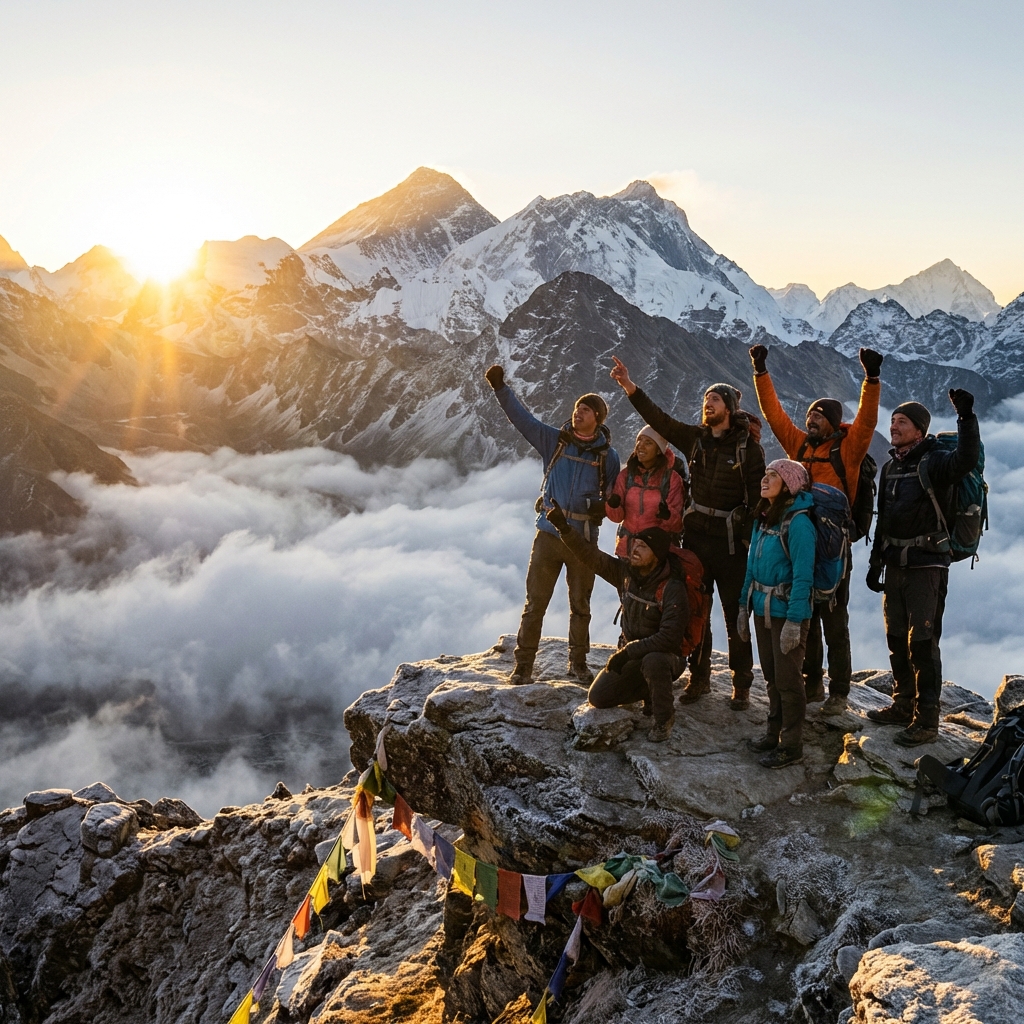

Mustang Nepal: The Forbidden Kingdom Region of Nepal
Mustang is a high-altitude desert district in north-central Nepal (Gandaki Province), straddling the Himalayas and the Tibetan Plateau. Covering roughly 3,573 km² with its headquarters at Jomsom, it splits into restricted Upper Mustang—the "Forbidden Kingdom" of Lo Manthang—and open Lower Mustang around Muktinath. Sheltered in the Annapurna-Dhaulagiri rain shadow, Mustang stays dry and trekkable even in monsoon.
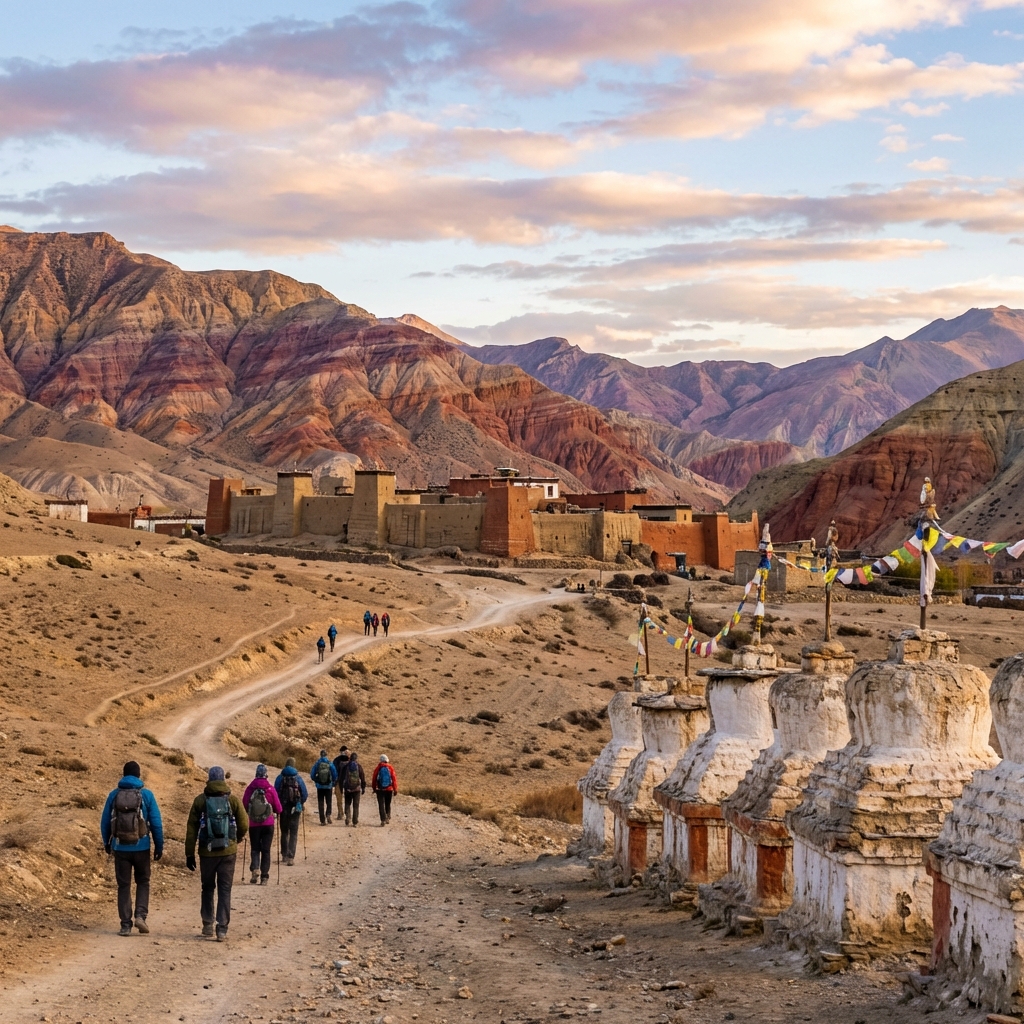
Welcome to Mustang—Nepal's most extraordinary hidden treasure, a high-altitude desert kingdom where ancient Tibetan culture thrives unchanged, medieval walled cities stand against ochre cliffs, and the monsoon never arrives. This is not the lush, green Nepal of postcards. This is a stark, windswept landscape of eroded canyons, mysterious sky caves, and crimson rock formations that feel more like Tibet or Arizona than the Himalayas.
Mustang exists in two distinct worlds: Upper Mustang, the restricted "Forbidden Kingdom" centered on the walled city of Lo Manthang, where access costs $500 USD minimum and preserves one of Earth's last authentic Tibetan Buddhist cultures; and Lower Mustang, the accessible pilgrimage region encompassing Jomsom, Kagbeni, and the sacred Muktinath Temple, integrated into the famous Annapurna Circuit.
What makes Mustang genuinely unique among Nepal's trekking regions is its rain shadow geography. Sheltered behind the massive Annapurna and Dhaulagiri ranges, Mustang receives a mere 250-400mm of annual rainfall—making it a high-altitude desert where you can trek comfortably during June-September monsoon season when the rest of Nepal drowns in rain. While Kathmandu floods and Everest Base Camp turns to mud, Mustang enjoys clear blue skies and dry trails.
This comprehensive regional guide covers everything you need to understand, compare, and plan your Mustang adventure—from the $500 Upper Mustang permit requirements to Lower Mustang's budget-friendly pilgrimage trails, from Tibetan monastery etiquette to monsoon-season trekking advantages, from the annual Tiji Festival to the geological wonders of 10,000+ ancient sky caves.
Culture seekers, monsoon trekkers, Tibet-like experiences without China visa
May-October (perfect during monsoon), March-November possible
5 days (Lower) to 14+ days (Upper)
Easy-Moderate (Lower) to Moderate-Difficult (Upper)
3,710m (Muktinath) to 4,200m (Upper Mustang passes)
250-400mm (vs 2,500-5,000mm rest of Nepal)
ACAP for Lower; ACAP + RAP ($500+) for Upper
Mandatory for Upper Mustang; recommended for Lower
$800-1,500 (Lower) / $2,500-4,000 (Upper)
Jomsom (25-min flight from Pokhara)
Teahouse lodges throughout both regions
Tibetan Buddhist (Sakya sect), Thakali, Gurung communities
Walled medieval city, 10,000+ sky caves, Tiji Festival, desert landscapes
Mustang District at a Glance
Many travellers search "Mustang Nepal" or "Mustang district Nepal" wanting the basic facts before they plan a trek. Here is the geographic and administrative profile of the region in one place:
| Attribute | Detail |
|---|---|
| Country / Province | Nepal, Gandaki Province |
| Administrative HQ | Jomsom (2,720m) |
| Area | ~3,573 km² (fifth-largest district in Nepal by area) |
| Population (2021 census) | ~14,452 residents (second least-populated district) |
| Elevation range | ~2,010m (lowest) to 8,167m at Dhaulagiri (seventh-highest peak on Earth) |
| Conservation status | Entire district lies within the Annapurna Conservation Area |
| Main languages | Nepali, Gurung, Thakali, Tibetan |
| Name meaning | "Mustang" derives from a Tibetan term meaning "plain of aspiration" |
| Restricted zone | Upper Mustang, closed to foreigners until 1992 |
The name often causes confusion. "Mustang region of Nepal" and "Mustang district Nepal" refer to the same place—Nepal's fifth-largest district by area but among its emptiest by population—while "Mustang kingdom" refers specifically to the historic Kingdom of Lo in Upper Mustang, whose monarchy formally ended in 2008.
Who This Guide Is For:
- Travelers comparing Mustang against Everest, Annapurna, or Langtang regions
- Culture enthusiasts seeking authentic Tibetan Buddhist experiences
- Monsoon-season trekkers needing dry alternatives (June-August)
- Those interested in restricted area permits and exclusive destinations
- Trekkers planning the Annapurna Circuit wanting to understand the Mustang section
- Photographers drawn to dramatic desert landscapes and ancient architecture
- Pilgrims visiting Muktinath Temple (sacred to both Hindus and Buddhists)
- Adventure travelers seeking less-crowded, off-the-beaten-path destinations
If you're still deciding between Nepal's trekking regions, this guide provides comprehensive comparison data. If you've already chosen Mustang, use this as your planning hub for permits, seasons, costs, cultural preparation, and route selection between Upper and Lower Mustang experiences.
Understanding Mustang: Two Regions, Two Experiences
Mustang District (3,640 square kilometers) divides into two dramatically different sub-regions, each offering distinct trekking experiences, cultural immersion levels, permit requirements, and costs.
Upper Mustang: The Last Forbidden Kingdom
Upper Mustang (also called "Lo" or "Kingdom of Lo") encompasses the northern restricted area centered on the ancient walled capital of Lo Manthang. This is Nepal's most exclusive trekking destination, opened to foreign visitors only in 1992 after centuries of isolation.
Defining Characteristics:
- Altitude: 3,000m-4,200m consistently (high-altitude desert plateau)
- Geography: Barren desert landscapes, eroded ochre canyons, dramatic rock formations
- Culture: Pure Tibetan Buddhist (Sakya sect), medieval walled city, ancient monasteries
- Access: Restricted area requiring special $500+ permit, mandatory guide, minimum 2 persons
- Annual Visitors: Fewer than 1,000 foreign trekkers (vs 40,000+ on Everest Base Camp)
- Climate: Extreme rain shadow—only 250mm annual rainfall, perfect for monsoon trekking
- Trek Duration: 10-14 days minimum
- Cost: $2,500-4,000 per person all-inclusive
- Best For: Cultural immersion, exclusivity, Tibet-like experiences, monsoon-season trekking
Key Destinations in Upper Mustang:
- Lo Manthang (3,840m): 14th-century walled capital with royal palace, three ancient monasteries, 600+ years of preserved culture
- Chhoser Cave Complex: 10,000+ man-made caves carved into cliffs 2,000-3,000 years ago
- Ghar Gompa: One of Nepal's oldest monasteries, founded by Padmasambhava in 8th century
- Sky Caves: Archaeological mystery with ancient meditation chambers, burial sites, murals
- Tsarang: Former second capital with impressive monastery and fortress ruins
- Korala Pass: View of Nepal-Tibet border region (requires additional permits)
Upper Mustang Advantages:
- Most authentic Tibetan culture outside Tibet (without needing China visa)
- Drastically fewer crowds due to high permit costs
- Perfect monsoon-season destination (dry trails when everywhere else floods)
- Medieval walled city unlike anything else in Nepal
- Living history—culture preserved by centuries of isolation
- Annual Tiji Festival (May)—spectacular Tibetan Buddhist celebration
Upper Mustang Challenges:
- Expensive restricted area permit (USD 50/day minimum for 10 days at $50/day)
- Cannot trek independently (guide mandatory, minimum 2 persons)
- Basic teahouse facilities (simpler than Everest/Annapurna circuits)
- Consistent high altitude (3,500m+ for multiple days)
- Extreme wind and dust in valleys
- Limited emergency medical access (helicopter evacuation expensive)
Lower Mustang: Accessible Pilgrimage & Annapurna Gateway
Lower Mustang encompasses the southern area from Jomsom to Muktinath, including sections integrated into the famous Annapurna Circuit trek. This region requires no special restricted permits and can be trekked independently (though guide now mandatory under new ACAP regulations).
Defining Characteristics:
- Altitude: 1,950m-3,710m (Muktinath highest point)
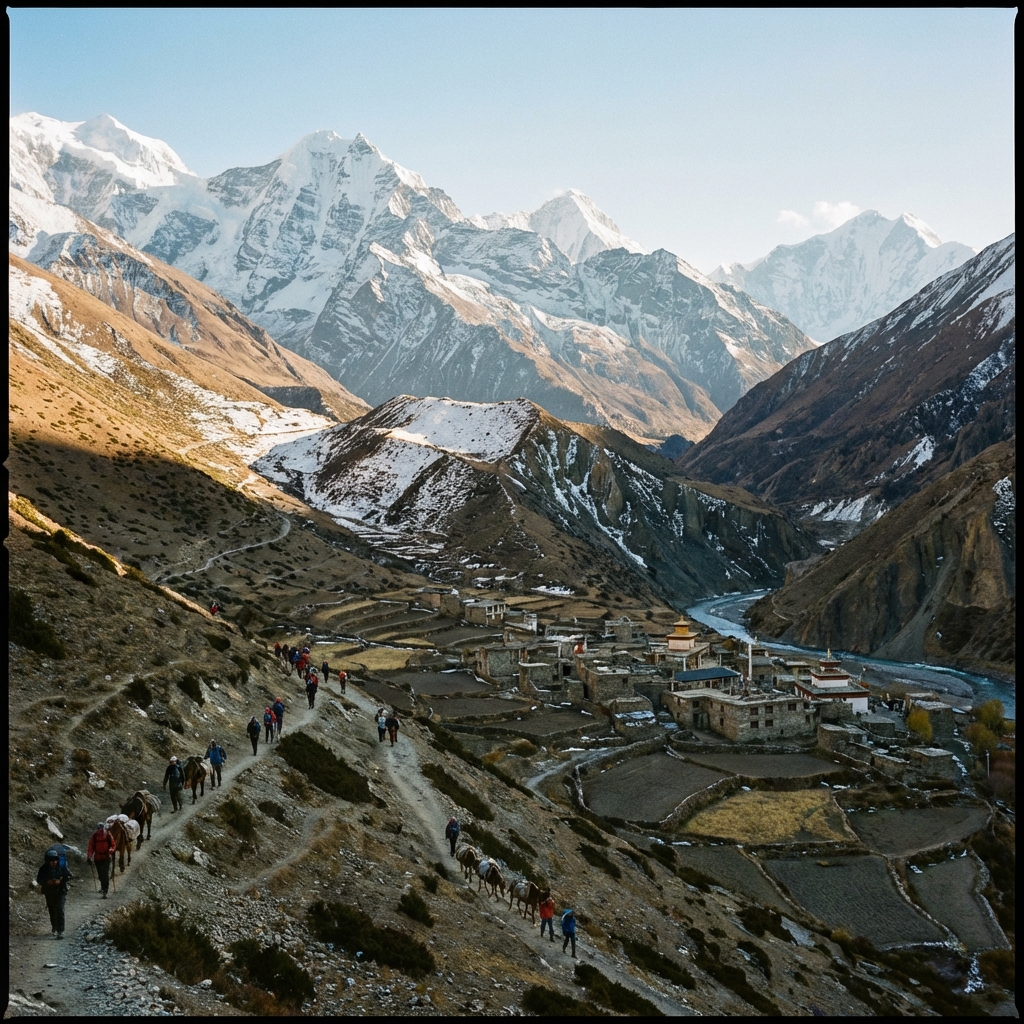
- Geography: Kali Gandaki River gorge (world's deepest), transition from green valleys to high-altitude desert
- Culture: Mix of Thakali, Gurung, and Tibetan communities, Hindu-Buddhist pilgrimage traditions
- Access: Open area requiring only ACAP permit (NPR 3,000/~$23), guide recommended
- Annual Visitors: Thousands (part of Annapurna Circuit, one of Nepal's most popular treks)
- Climate: Rain shadow effect but some monsoon moisture at lower elevations
- Trek Duration: 5-9 days typical
- Cost: $800-1,500 per person all-inclusive
- Best For: Pilgrimage, Annapurna Circuit trekkers, budget travelers, shorter timeframes
Key Destinations in Lower Mustang:
- Muktinath Temple (3,710m): Sacred to both Hindus and Buddhists, 108 water taps, eternal flame, major pilgrimage site
- Jomsom (2,720m): Gateway town with airport, administrative center, last ATM before Upper Mustang
- Kagbeni (2,810m): Medieval village guarding entrance to Upper Mustang, ancient monastery, apple orchards
- Marpha (2,670m): Charming Thakali village famous for apple brandy, white-washed houses, narrow stone streets
- Kali Gandaki Gorge: World's deepest gorge between Annapurna I (8,091m) and Dhaulagiri (8,167m)
- Tatopani: Natural hot springs for post-trek relaxation
- Jharkot & Jhong: Traditional villages near Muktinath with ancient monasteries
Lower Mustang Advantages:
- Affordable permits (no expensive restricted area fees)
- Integrates with Annapurna Circuit (world-famous trek)
- Sacred pilgrimage site (Muktinath) with spiritual significance
- Better teahouse infrastructure and food variety
- Easier logistics and access (regular flights to Jomsom)
- Spectacular mountain views (Dhaulagiri, Annapurna, Nilgiri)
- Can combine with Upper Mustang for complete experience
- Shorter trek duration possible (5 days minimum)
Lower Mustang Challenges:
- More crowded than Upper Mustang (though still less than Everest Base Camp)
- Less culturally preserved than remote Upper Mustang
- Strong afternoon winds in Kali Gandaki Valley (infamous)
- Jomsom flights notoriously delayed by weather
- Some road access reducing wilderness feel
- Monsoon affects lower elevations more than Upper Mustang
The Rain Shadow Advantage: Why Mustang is Different
The defining geographical feature of Mustang—what makes it fundamentally different from every other major trekking region in Nepal—is its position in the rain shadow of the Annapurna and Dhaulagiri massifs.
How the Rain Shadow Works:
Monsoon moisture from the Indian Ocean travels north, laden with water. When these air masses encounter the towering Annapurna-Dhaulagiri barrier (peaks of 7,000m-8,000m), they're forced upward. As air rises, it cools and dumps precipitation on the southern slopes—creating Nepal's lush, green, monsoon-soaked landscapes.
By the time these air masses cross the mountain barrier and descend into Mustang, they've already released nearly all moisture. The descending air warms and dries further, creating desert conditions on Mustang's northern side.
Practical Results for Trekkers:
| Monsoon Season Reality | Rest of Nepal | Mustang Region |
|---|---|---|
| Annual Rainfall | 2,500-5,000mm | 250-400mm |
| June-September Conditions | Heavy rain, muddy trails, leeches, clouds | Dry trails, clear skies, perfect trekking |
| Vegetation | Lush forests, rhododendrons, rice paddies | Hardy scrub, juniper, medicinal plants |
| Landscape | Green, forested, tropical to alpine | Desert, ochre cliffs, eroded canyons |
| Trek Difficulty | Mud, slippery trails, rain gear essential | Dust, dry trails, wind protection needed |
This means: When rest of Nepal is at its worst (monsoon season June-September), Mustang is at its best. This is Nepal's only major trekking region where monsoon season is actually preferred by many experienced trekkers.
Complete Trek Comparison: Upper vs Lower Mustang
| Route | Duration | Max Altitude | Difficulty | Permits | Teahouses | Crowds |
|---|---|---|---|---|---|---|
| Upper Mustang | 10-14 days | 4,200m (passes) | Moderate-Difficult | $500-700 RAP + ACAP | Basic-Good | Very Low (Restricted) |
| Lower Mustang | 5-9 days | 3,710m (Muktinath) | Easy-Moderate | ACAP only (~$23) | Good-Excellent | Moderate |
| Annapurna Circuit (Full) | 12-21 days | 5,416m (Thorong La) | Difficult | ACAP + TIMS (~$40) | Excellent | Moderate-High |
| Everest Base Camp | 12-16 days | 5,364m | Moderate-Difficult | ~$50 | Excellent | High (Peak Season) |
Detailed Trek Options in Mustang Region
1. Upper Mustang Circuit (10-14 days)
- Route: Jomsom → Kagbeni → Chele → Syangboche → Ghami → Tsarang → Lo Manthang → Return via alternate route → Jomsom
- Highlights: Walled city of Lo Manthang, three ancient monasteries, royal palace, desert landscapes, Tibetan culture
- Best For: Cultural immersion, exclusivity, monsoon-season trekking, Tibet experience without China visa
- Permit Cost: USD 500-700 (RAP) + ACAP
- Total Cost: USD 2,500-4,000
- Max Altitude: 4,200m (Dhakmar La Pass)
- Difficulty: Moderate (consistent high altitude but not technical)
- Guide: Mandatory, minimum 2 persons required
- Related Guide: Upper Mustang Trek: Journey to the Forbidden Kingdom
2. Jomsom to Muktinath Pilgrimage Trek (5-8 days)
- Route: Jomsom → Kagbeni → Jharkot → Muktinath → Return or continue on Annapurna Circuit
- Highlights: Sacred Muktinath Temple (108 water taps), Kali Gandaki Gorge, mountain views, Thakali culture
- Best For: Pilgrims, short timeframe, budget travelers, Annapurna Circuit section
- Permit Cost: ACAP only (NPR 3,000/~USD 23)
- Total Cost: USD 800-1,500
- Max Altitude: 3,710m (Muktinath)
- Difficulty: Easy-Moderate (short daily distances, manageable altitude)
- Guide: Recommended under new ACAP regulations
- Can Combine With: Annapurna Circuit, Poon Hill, or Upper Mustang extension
3. Lower Mustang Cultural Circuit (7-9 days)
- Route: Jomsom → Marpha → Kagbeni → Muktinath → Jharkot → Jhong → Return via Lubra
- Highlights: Apple brandy villages, Buddhist monasteries, Bon culture, traditional Thakali hospitality
- Best For: Cultural diversity, village life, photography, moderate trekking
- Permit Cost: ACAP only
- Total Cost: USD 1,000-1,800
- Max Altitude: 3,710m
- Difficulty: Moderate (varied terrain, side valleys)
4. Complete Mustang Experience (16-21 days)
- Route: Combine Lower Mustang (Jomsom to Muktinath) with full Upper Mustang circuit
- Highlights: Everything—pilgrimage, culture, landscapes, medieval city, monasteries
- Best For: Comprehensive exploration, photography projects, extended cultural immersion
- Permit Cost: USD 700-900 (extended RAP + ACAP)
- Total Cost: USD 3,500-5,000+
- Max Altitude: 4,200m
- Difficulty: Difficult (duration, cumulative altitude exposure)
5. Annapurna Circuit with Mustang Extension (18-25 days)
- Route: Classic Annapurna Circuit + Upper Mustang side trip from Kagbeni
- Highlights: World's greatest circuit trek + forbidden kingdom experience
- Best For: Ultimate trekking adventure, maximum diversity, extended vacations
- Permit Cost: USD 550-800 (RAP + ACAP + TIMS)
- Total Cost: USD 3,000-5,500
- Max Altitude: 5,416m (Thorong La Pass on Annapurna Circuit)
- Difficulty: Very Difficult (high pass, duration, altitude)
Best Time to Trek Mustang: The Monsoon Advantage
| Month | High | Low | Conditions | Crowds | Notes |
|---|---|---|---|---|---|
| January2 | - | - | Very cold, snow possible, strong winds | Minimal (many lodges closed) | |
| February2 | - | - | Cold, occasional snow, improving | Very Low | |
| March4 | - | - | Spring arrives, mostly clear, winds moderate | Low-Moderate | |
| April5 | - | - | Pleasant days, cool nights, stable weather | Moderate | |
| May5 | - | - | Warm days, comfortable nights, perfect | Moderate-High (Tiji Festival increases crowds) | |
| June5 | - | - | Warm, dry in Mustang (monsoon elsewhere), dusty | Low (monsoon season advantage) | |
| July5 | - | - | Warmest month, occasional clouds, still dry | Low | |
| August5 | - | - | Warm, end of monsoon, greener lower elevations | Low-Moderate | |
| September5 | - | - | Post-monsoon clarity returns, excellent visibility | Moderate | |
| October5 | - | - | Peak autumn, crystal clear, stable weather | Moderate-High | |
| November4 | - | - | Clear, cooling rapidly, dry | Moderate (decreasing) | |
| December2 | - | - | Cold, snow possible at passes, strong winds | Minimal (lodges closing) |
The Mustang Monsoon Strategy: June-September Perfection
Why Mustang is Perfect During Monsoon (June-September):
-
Dry Trails While Rest of Nepal Floods
- Kathmandu: 400-500mm rain per month during monsoon
- Everest Base Camp: Muddy, cloud-covered, leeches common
- Annapurna Circuit southern slopes: Heavy rain, trail damage, landslide risks
- Mustang: 20-50mm total for entire monsoon season
-
Clear Skies for Mountain Views
- Most of Nepal experiences persistent clouds during monsoon
- Mustang's rain shadow creates clear blue skies 80%+ of days
- Best photography light (dramatic, storm clouds visible over mountains to south)
-
Comfortable Temperatures
- Warmest trekking temperatures of year (15-25°C daytime)
- No need for heavy winter gear
- Pleasant evenings (still need warm sleeping bag for nights)
-
Fewer Trekkers, Better Prices
- Most tourists avoid Nepal during monsoon
- Mustang sees 50-70% fewer trekkers than autumn
- Better availability in teahouses
- Some agencies offer 10-20% discounts on monsoon trips
-
Greener Lower Elevations
- Lower Mustang and transition zones receive some moisture
- Unusual sight: Green vegetation against desert backdrop
- Wildflowers bloom where they never appear other seasons
Monsoon Season Trade-offs:
- Increased dust: Wind blows dust when not raining elsewhere; bring buff/face covering
- Strong afternoon winds: Kali Gandaki Valley becomes wind tunnel (especially Jomsom area)
- Occasional afternoon clouds: Brief clouds possible (rarely sustained rain)
- Access challenges: Jomsom flights delayed more frequently due to Pokhara weather
- Heat at lower elevations: Lower Mustang can be hot mid-day (25°C+)
Monsoon Mustang Perfection
June-September is genuinely the best time to trek Mustang if you want dry trails, clear skies, warm weather, and fewer crowds. The only other Nepal destination comparable during monsoon is Dolpo (also restricted, also in rain shadow, even more expensive). Plan flights with extra buffer days for weather delays, bring dust protection (buff, sunglasses), and embrace wind as your constant companion. You'll experience the surreal contrast of walking in perfect sunshine while watching monsoon storm clouds dump rain on the Annapurna massif visible to the south.
Peak Season: Spring & Autumn
Spring (March-May):
- Advantages: Warming temperatures, wildflowers (lower elevations), Tiji Festival (May), stable weather
- Challenges: Dustier conditions, afternoon winds, higher prices during Tiji
- Best Month: May (warmest, Tiji Festival, pre-monsoon clarity)
- Recommended For: Cultural festivals, comfortable temperatures, spring photography
Autumn (September-November):
- Advantages: Post-monsoon clarity, crystal-clear mountain views, comfortable temps, harvest season
- Challenges: Colder than spring, more crowded than summer, higher prices
- Best Month: October (peak clarity, stable weather, comfortable daytime temps)
- Recommended For: Photography (best visibility), stable weather, classic Nepal trekking season
Off-Season: Winter (December-February)
Winter Trekking Considerations:
- Temperatures: -10°C to 5°C (daytime), -20°C possible at night
- Conditions: Snow at high passes, strong winds, very cold
- Services: Many teahouses closed, limited food options
- Difficulty: Significantly increased (hypothermia risk, snow navigation)
- Crowds: Almost completely empty (ultimate solitude)
Recommended For:
- Experienced winter trekkers only
- Those with proper cold-weather gear (-15°C sleeping bag, 4-season gear)
- Flexible schedules (weather delays likely)
- Photographers seeking snow-covered desert landscapes
- Ultimate solitude seekers
Not Recommended For:
- First-time Nepal trekkers
- Those on fixed schedules (flight delays common)
- Budget travelers (helicopter evacuation risk higher)
- Anyone uncomfortable with extreme cold
Permits, Regulations & Access
Upper Mustang Permits (Restricted Area)
1. Upper Mustang Restricted Area Permit (RAP)
2026-27 Current Regulations:
- Cost: USD 50 per person per day
- Minimum Duration: Typically 10 days required (USD 500 minimum)
- Who Can Obtain: Only through registered Nepali trekking agencies (cannot obtain independently)
- Processing Time: 1-2 business days in Kathmandu
- Required Documents: Passport copy, 2 passport photos, trekking agency authorization
- Validity: Specific dates and approved route listed on permit
- Checkpoint: Verified at Kagbeni police checkpoint (entrance to Upper Mustang)
Mandatory Restrictions:
- Group Size: Minimum 2 persons (or pay for 2 permits if solo)
- Guide Requirement: Licensed guide from registered agency mandatory
- Independent Trekking: Not permitted (strictly enforced)
- Route Restrictions: Must follow approved route; side trips require permissions
Permit Extensions:
- Cost: USD 50 per person per additional day
- Must apply before current permit expires
- Arranged through trekking agency only
- Processing at Jomsom immigration office or advance in Kathmandu
Where Permit Fees Go:
- Monastery restoration and preservation (40%)
- Community development (schools, health posts, water projects) (30%)
- Trail maintenance and conservation (15%)
- Administrative costs and enforcement (15%)
2. Annapurna Conservation Area Permit (ACAP)
All Mustang Trekkers Need ACAP:
- Cost: NPR 3,000 (approximately USD 23) for foreign nationals
- Where to Obtain:
- Nepal Tourism Board office (Kathmandu)
- ACAP office (Pokhara)
- Through trekking agency (most convenient)
- Processing: Immediate (if obtained in person with documents)
- Required Documents: Passport copy, 2 passport photos
- Validity: Single entry for specified trek duration
- Purpose: Conservation fee for Annapurna protected area (includes all of Mustang)
3. Trekkers' Information Management System (TIMS) Card
- Status for Mustang: Generally not required for restricted areas, but some agencies obtain for safety tracking
- Cost if Obtained: USD 10-20
- Purpose: Trekker database for emergency tracking
Lower Mustang Permits (Open Area)
Much Simpler Permit Requirements:
Only ACAP Required:
- Cost: NPR 3,000 (~USD 23)
- No restricted area permit needed
- No minimum group size
- Can obtain independently or through agency
New 2026 Guide Requirement:
- ACAP regulations now require licensed guide for all foreign trekkers
- Can hire in Pokhara or Jomsom (more flexibility than Upper Mustang)
- Cost: USD 25-40 per day for guide services
- Independent trekking technically not permitted (though enforcement varies)
Guide & Porter Requirements
Upper Mustang (Mandatory, Strictly Enforced):
Licensed Guide:
- Required: Yes, absolutely mandatory
- Qualifications: Government-licensed trekking guide from registered agency
- Cost: USD 30-50 per day (included in package prices)
- Responsibilities: Navigation, cultural interpretation, permit verification, emergency support, local communication
- Languages: English (standard), other languages available at premium
Porter (Optional but Recommended):
- Required: No, optional
- Cost: USD 25-40 per day
- Ratio: Typically 1 porter per 2 trekkers (carries 12-15kg per person)
- Benefits: Energy conservation at altitude, better acclimatization, supports local employment
- Ethical Considerations: Ensure agency provides proper gear, insurance, fair wages
Lower Mustang (Recommended):
Guide:
- Required: Technically yes under new ACAP rules (2024)
- Enforcement: Varies; more relaxed than Upper Mustang
- Hiring: Can arrange in Pokhara or Jomsom (more flexibility)
- Cost: USD 25-35 per day
Porter:
- Optional: Yes
- Cost: USD 20-30 per day
- Benefits: Same as Upper Mustang
Access to Mustang: Getting to Jomsom
Jomsom (2,720m) serves as the gateway to both Upper and Lower Mustang. Reaching Jomsom requires either flying or trekking.
Option 1: Flight to Jomsom (Recommended)
Route: Kathmandu → Pokhara → Jomsom
Kathmandu to Pokhara:
- Flight: 25-30 minutes, USD 100-130, multiple daily departures
- Bus: 6-7 hours, USD 10-15 (tourist bus), rough mountain roads
Pokhara to Jomsom:
- Flight: 20-25 minutes, USD 100-130, morning departures only
- Aircraft: Small twin-prop planes (16-18 passengers) flying through narrow mountain corridor
- Route: Spectacular flight through Kali Gandaki Gorge between Annapurna and Dhaulagiri
- Schedule: Early morning only (6:00-10:00 AM) due to afternoon winds
- Reliability: Notorious for weather delays—flights often cancelled due to wind/clouds
Weather Delay Reality:
- 30-50% cancellation rate during monsoon (June-September)
- 10-20% cancellation rate in stable seasons (October-November, March-May)
- Delays can last 1-5 days during bad weather
- Essential: Build 2-3 buffer days into itinerary for both ends of trek
Booking Strategy:
- Book through trekking agency (included in packages)
- Independent travelers: Book 2-3 days advance in Pokhara
- Airlines: Tara Air, Summit Air, Sita Air, Simrik Airlines
- Check-in: 1 hour before departure
- Baggage: 15kg limit (strictly enforced due to small planes)
Option 2: Trek to Jomsom (The Long Way)
Via Annapurna Circuit:
- Duration: 5-7 days from Pokhara area
- Route: Pokhara → Nayapul → Ghorepani → Tatopani → Ghasa → Kalopani → Jomsom
- Advantage: Proper acclimatization before starting Mustang trek
- Challenge: Adds significant time and effort
Via Annapurna Circuit from East:
- Duration: 7-10 days
- Route: Besisahar → Manang → Thorong La Pass (5,416m) → Muktinath → Jomsom
- Advantage: Complete classic circuit, see both sides
- Challenge: Very long, requires Thorong La crossing (difficult high pass)
Option 3: Jeep/4WD Road (Budget Option, Less Scenic)
Pokhara to Jomsom by Road:
- Duration: 8-10 hours, rough dirt road, dusty
- Cost: USD 60-100 (private jeep), USD 20-30 (shared jeep)
- Road Condition: Rough, unpaved sections, landslide-prone during monsoon
- Comfort: Very uncomfortable (switchbacks, dust, bumpy)
- When to Consider: Flight cancelled multiple days, tight budget, not altitude sensitive
Recommendation: Fly both ways if schedule allows. Trek in (via Annapurna Circuit approach) if time permits and acclimatization desired. Avoid road option unless absolutely necessary.
Upper Mustang: The Forbidden Kingdom Deep Dive
History: Six Centuries of Isolation
The Kingdom of Lo (Upper Mustang's historical name) traces its origins to 1380 CE when King Ame Pal unified the region and established Lo Manthang as his capital. For over 600 years, this kingdom maintained remarkable autonomy, preserving Tibetan Buddhist culture even after formal integration into Nepal in the 18th century.
Timeline of the Forbidden Kingdom:
- 8th Century: Padmasambhava (Guru Rinpoche) visits, establishing early Buddhist presence; founds Ghar Gompa
- 1380: King Ame Pal establishes Kingdom of Lo, builds Lo Manthang walled city
- 14th-15th Centuries: Golden age—major monasteries built (Jampa, Thubchen, Chode), murals painted, trade routes flourish
- 1769: Prithvi Narayan Shah unifies Nepal; Lo maintains semi-autonomous status
- 1950s-60s: Tibetan refugees flee Chinese occupation; Mustang serves as base for Tibetan resistance (Khampa guerrillas)
- 1974: Khampa resistance disbanded under international pressure
- 1992: Nepal government opens Upper Mustang to foreign tourists (expensive permits control numbers)
- 2008: Nepal becomes federal republic; Kingdom of Lo monarchy officially ends (cultural respect continues)
- 2016: Last King, Jigme Dorje Palbar Bista, passes away; son continues cultural leadership role
Why It Remained "Forbidden":
- Strategic Sensitivity: Border with Tibet (China)—Nepal government restricted access for security
- Cultural Protection: Isolation preserved fragile Tibetan culture from outside influences
- Economic Control: High permit fees fund conservation while limiting tourist numbers
- Environmental Fragility: High-altitude desert ecosystem vulnerable to impact
Lo Manthang: The Medieval Walled Capital
Lo Manthang stands as the spiritual and administrative heart of Upper Mustang—a living medieval city where approximately 900 Loba people maintain traditions largely unchanged for six centuries.
Architectural Marvel:
- City Walls: 856 meters circumference, 6 meters high, 1 meter thick
- Construction: Compacted clay and mud bricks (traditional yak-compaction method)
- Gates: Four entrance gates (north gate primary)
- Layout: Narrow earthen alleyways preventing wind; defensive design confuses invaders
- Buildings: Traditional Tibetan mud-brick architecture, flat roofs for drying crops
- Altitude: 3,840m (highest sleeping point on standard trek)
- Population: ~900 permanent residents (swells during festivals)
The Three Sacred Monasteries:
All three major monasteries date to 15th century; combined entry ticket costs NPR 1,000 (~USD 7.50).
1. Jampa Lhakhang (Champa Temple)
- Built: Early 15th century under King Angon Sangpo
- Highlights: Massive three-story Maitreya Buddha (future Buddha) statue, 108 ancient mandalas decorated with gold/silver/turquoise/coral
- Sect: Sakya-pa (Tibetan Buddhism)
- Significance: Oldest Sakya monastery in Lo Manthang
- Condition: Well-preserved, ongoing conservation efforts
2. Thubchen Gompa
- Built: 15th century
- Size: 37.20m × 24m (enormous assembly hall by Himalayan standards)
- Highlights: Spectacular murals using turquoise, malachite, cinnamon, gold pigments; depicts Buddhist cosmology, protective deities, religious teachings
- Significance: Finest example of medieval Mustang art
- Challenges: Water damage, earthquake damage (2015), restoration ongoing
- Atmosphere: Butter lamps, incense, profound spiritual ambiance
3. Chode Gompa (Chode Monastery)
- Built: 13th century (oldest structure)
- Function: Active monastery with resident monks
- Highlights: Daily prayers, monastic museum (Bonpo scriptures, thangkas, ritual masks, musical instruments), living Buddhist practice
- Annual Event: Primary venue for Tiji Festival (May)
- Significance: Living tradition—not frozen museum
The Royal Palace:
- Structure: Four-story imposing building with red/white bands, golden roof ornaments
- Function: Former residence of Kingdom of Lo rulers; partial museum now
- Contents: Ceremonial costumes, religious implements, historical documents, royal artifacts
- Access: Museum sections open to visitors (private family quarters remain closed)
- Significance: Architectural centerpiece, symbol of 600-year monarchy
Daily Life in Lo Manthang:
Modern life slowly penetrates this ancient city, creating fascinating contrasts:
- Solar panels on traditional flat roofs
- Satellite dishes next to prayer flags
- Monks with smartphones chanting ancient sutras
- Traditional barley farming alongside internet access (very slow)
- Polyandry (fraternal—brothers sharing wife) still practiced by some families
- Traditional Tibetan medicine (amchi) alongside basic modern health post
Cultural Etiquette in Lo Manthang:
- Walk clockwise around all religious structures (mani walls, chortens, monasteries)
- Ask permission before photographing people (especially monks, elders)
- Remove shoes before entering homes and monasteries
- Dress modestly (cover shoulders, knees)
- Don't touch religious objects without permission
- Donate appropriately at monasteries (NPR 100-500 suggested)
- Respect privacy (not everything is a photo opportunity)
The Mysterious Sky Caves
One of Upper Mustang's most enigmatic features: over 10,000 man-made caves carved into sheer cliff faces throughout the region. These ancient structures date back 2,000-3,000 years, though their exact purpose, construction methods, and builders remain subjects of archaeological debate.
Cave Types & Functions:
- Residential Caves: Multi-room living quarters carved into soft sedimentary rock
- Meditation Chambers: Small isolated caves for Buddhist monks' years-long retreats
- Burial Caves: Human remains, artifacts, and ritual objects discovered
- Storage Caves: High-altitude granaries protecting food from raiders and weather
- Monastery Caves: Complex cave systems with murals, altars, Buddhist iconography
The Chhoser Cave Complex:
The most accessible and impressive cave system lies near Chhoser village, 2-3 hours trek from Lo Manthang.
- Scale: Hundreds of interconnected caves stacked vertically in cliff face rising 300+ meters
- Condition: Some contain ancient murals; most empty and mysterious
- Access: Requires scrambling and climbing (not suitable for everyone—guide assessment essential)
- Safety: Many caves unstable; only enter with experienced local guides
- Time Required: Half-day to full-day trip from Lo Manthang
- Photography: Permitted (no religious restrictions in abandoned caves)
Archaeological Mysteries:
How Were They Built?
- No definitive answer; theories include:
- Carved from top-down as cliffs eroded over millennia
- Built using bamboo scaffolding (now vanished)
- Created during periods when ground level was higher
- Primitive tools (bronze, stone) over generations of work
Who Built Them?
- Pre-Buddhist inhabitants (2,000-3,000 years ago)
- Early Buddhist monks (meditation retreats)
- Ancient salt traders (storage and shelter)
- Combination of groups across millennia
Why at Such Heights?
- Protection from raiders and invaders
- Spiritual significance (closer to sky/heaven)
- Natural climate control (temperature regulation)
- Geological convenience (soft sedimentary rock easier to carve)
Recent Discoveries:
- 2007-2008 Expeditions: Teams found ancient manuscripts, Buddhist murals, human remains, pottery
- Carbon Dating: Some artifacts date to 1st-2nd century CE
- Ongoing Research: Archaeologists continue uncovering cave complexes throughout Mustang
Local Beliefs: Mustang residents believe stones from sky caves possess medicinal properties, especially for back pain. Guides share stories of spirits inhabiting certain caves.
The Tiji Festival: Nepal's Most Spectacular Cultural Event
The Tiji Festival represents Upper Mustang's most significant annual celebration—a three-day Tibetan Buddhist ritual held in Lo Manthang every May (dates vary by lunar calendar).
Festival Origins & Meaning:
"Tiji" derives from "Tempa Chirim"—meaning "Prayer for World Peace." The festival re-enacts the ancient legend of Dorje Sonnu (son of Buddha) defeating demons who threatened the Kingdom of Mustang with drought and destruction. The victory symbolizes Buddhism's triumph over Bon (Tibet's pre-Buddhist religion) and, more broadly, good's conquest of evil.
Three-Day Ceremony:
Day 1: Tsa Chham (The Opening)
- Monks don elaborate costumes and masks representing demons and deities
- Ritual dances begin in main square before Royal Palace
- Drums, cymbals, long horns create powerful soundscape
- Community gathers; atmosphere of anticipation and reverence
- Offerings placed at monastery altars
Day 2: Nga Chham (The Killing of the Demons)
- Most intensive and elaborate day
- Extended ritual dances depicting Dorje Sonnu's battle against evil
- Monks perform for hours in heavy costumes and masks
- Community participates with prayers and offerings
- Symbolic combat choreography with ancient origins
Day 3: Rha Chham (The Banishing)
- Final defeat and banishing of demons
- Ceremonial destruction of evil (symbolic effigy burning)
- Community celebrations: archery competitions, horse races
- Blessing ceremonies for prosperity in coming year
- Monks distribute blessed items (pills, strings) to attendees
For Trekkers Planning Tiji Festival Visit:
Timing:
- 2026: May 14-16 (tentative—confirm with agencies early 2026)
- 2026: May 3-5 (tentative—lunar calendar determines dates)
- Dates announced 3-4 months in advance by Lo Manthang monastery authorities
Booking Requirements:
- Reserve 4-6 months in advance—accommodations fill completely
- Limited teahouse capacity (5-7 lodges in Lo Manthang, ~40 total beds)
- Some trekkers sleep in monastery guestrooms or community halls during festival
Cost Implications:
- Expect 20-30% premium on standard trek prices during Tiji
- Permits same cost (RAP still USD 500+)
- Higher guide/porter rates (demand surge)
- Limited food menu in teahouses (supply challenges with crowds)
Experience Value:
- Once-in-a-lifetime cultural immersion
- Authentic celebration (not performed for tourists)
- Rare access to living Tibetan Buddhist traditions
- Vibrant atmosphere, community participation, spiritual significance
- Exceptional photography opportunities (respectful distance required)
Festival Etiquette:
- Photography permitted but maintain respectful distance during ceremonies
- No flash photography
- Don't obstruct monks or ceremony participants
- Dress modestly (cover shoulders, knees)
- Silence mobile devices
- Follow guide's instructions for positioning and behavior
Lower Mustang: Accessible Pilgrimage & Mountain Majesty
Muktinath: Sacred to Billions
Muktinath Temple (3,710m) stands as one of the most sacred pilgrimage sites in South Asia—revered by both Hindus (as one of 108 Divya Desams, or sacred Vishnu temples) and Buddhists (as important meditation site).
Religious Significance:
For Hindus:
- One of 108 Divya Desams—temples sacred to Lord Vishnu
- "Mukti" = liberation, "Nath" = lord → "Lord of Liberation/Salvation"
- Pilgrims believe bathing in sacred waters cleanses sins and brings moksha (salvation)
- Part of Char Dham pilgrimage circuit for some Hindu traditions
- Sacred Shaligram stones (fossils of ancient ammonites) found in Kali Gandaki River below
For Buddhists:
- Important site associated with Guru Rinpoche (Padmasambhava)
- Meditation site for enlightenment seekers
- Part of pilgrimage route through Himalayan Buddhist sacred geography
- Integration of Hindu deities into Vajrayana Buddhist pantheon
Temple Features:
108 Water Taps (Muktidhara):
- Sacred water spouts arranged in two columns
- Fed by natural mountain springs
- Pilgrims bathe under all 108 taps for purification ritual
- Water flows year-round (doesn't freeze despite altitude/temperature)
- Ancient engineering marvel (unknown construction date)
Eternal Flame:
- Natural gas flame burns continuously inside temple
- Considered miraculous (natural methane seepage)
- Symbolizes divine presence
- Never extinguished (protected location)
Main Temple:
- Pagoda-style architecture (Buddhist-Hindu synthesis)
- Gold-plated roof visible from distance
- Ancient murals and statues (Hindu and Buddhist)
- Active worship (daily rituals, prayers, offerings)
Pilgrimage Experience:
Access:
- 1.5-2 hour trek from Ranipauwa village (where trekkers sleep)
- Steep stone steps climb to temple complex
- Elderly/disabled pilgrims can arrange pony rides
Visitor Etiquette:
- Remove shoes before entering temple complex
- Dress modestly (long pants, covered shoulders—shawls available for rent)
- Photography restrictions vary (check current rules; generally exterior only)
- Donation expected (no fixed amount, NPR 50-500 typical)
- Respect both Hindu and Buddhist worshippers simultaneously
Best Time to Visit:
- Early morning (fewer crowds, sunrise light, peaceful atmosphere)
- Avoid major Hindu festivals (Janai Purnima August, Dashain October) unless seeking crowd experience
- Winter challenging (snow, ice on stairs, extreme cold)
Jomsom & Kagbeni: Gateway Villages
Jomsom (2,720m): Administrative Hub
Function:
- District headquarters of Mustang
- Main airport serving entire region
- Last reliable ATM before Upper Mustang
- Checkpoint for permits
- Supply center (last place to buy forgotten gear, snacks, batteries)
Facilities:
- 15-20 teahouses and lodges (good quality)
- Restaurants with diverse menus
- Small shops, bakeries, pharmacies
- Health post (basic medical services)
- Nepal Telecom mobile coverage (best in region)
- WiFi available (slow but functional)
- Banking: Nepal Bank ATM (bring backup cash—sometimes out of service)
Character:
- Functional rather than charming
- Windy (especially afternoons—Kali Gandaki wind tunnel)
- Dusty from airport and road traffic
- Transient atmosphere (gateway, not destination)
- Good place to rest after long flight or before trek
Nearby:
- Dhumba Lake: Small scenic lake 30-minute walk from town
- ACAP Office: Permit verification, trekking information
- Buddhist Monastery: Small gompa worth visiting
Kagbeni (2,810m): Medieval Charm at Upper Mustang Gateway
Significance:
- Official gateway to Upper Mustang restricted area
- Permit checkpoint (police verify RAP permits here)
- Last village with phone/WiFi before Upper Mustang
- Historical trade route junction
Character:
- Medieval atmosphere: Narrow alleyways, mud-brick architecture, ancient monastery
- Well-preserved traditional village (feels like stepping back centuries)
- Apple orchards producing excellent fruit and brandy
- Kali Gandaki River confluence (tributaries meeting)
- Spectacular mountain backdrop (Nilgiri peaks dominate skyline)
Highlights:
- Kag Chode Thupten Samphel Ling Monastery: 15th-century gompa with murals, prayer wheels, active monks
- Traditional architecture: Flat roofs, prayer flags, narrow passages, mani walls
- Apple products: Local orchards produce apples, cider, brandy (famous throughout Nepal)
- Atmosphere: Perfect blend of functional trekking stop and cultural immersion
Practical:
- 10-12 good teahouses
- Excellent dining (Tibetan, Nepali, Western options)
- Last reliable WiFi/charging before Upper Mustang
- Shops selling local apple products
- Nepal Telecom coverage (last reliable signal)
Trekker Tips:
- Spend evening exploring village (worth extra time)
- Stock up on snacks/supplies before entering Upper Mustang
- Send final messages to family (communication limited ahead)
- Visit monastery late afternoon (best light, fewer crowds)
Kali Gandaki Gorge: World's Deepest
The Kali Gandaki Gorge represents one of Earth's most spectacular geological features—the world's deepest gorge measured as vertical relief between river and adjacent peaks.
Geological Superlatives:
Depth Measurements:
- River Elevation: ~2,500m at Kalopani
- Annapurna I: 8,091m (5,591m above river)
- Dhaulagiri I: 8,167m (5,667m above river)
- Horizontal Distance Between Peaks: ~38 km
- Vertical Relief: Over 5,500m direct from river to summits
Comparisons:
- Grand Canyon: 1,857m deep (less than 1/3 Kali Gandaki's depth)
- Colca Canyon (Peru): 3,270m (previously claimed deepest)
- Yarlung Tsangpo Gorge (Tibet): 5,590m (competitor for deepest title; measurement methodology differs)
Geological Formation:
The gorge formed through combination of:
- Tectonic Uplift: Indian and Asian continental plates colliding, thrusting Himalayas skyward
- River Erosion: Kali Gandaki River cutting downward as mountains rose (antecedent river—existed before mountain uplift)
- Time: Millions of years of simultaneous uplift and erosion
- Glacial Action: Ice Age glaciers accelerated erosion, steepened valley walls
Trekking Through the Gorge:
Route: Tatopani → Ghasa → Kalopani → Marpha → Jomsom (classic Annapurna Circuit section)
Experience:
- Walk on ancient riverbed (flat, wide valley floor)
- Towering peaks rise vertically on both sides (overwhelming scale)
- Strong afternoon winds funnel through gorge (Jomsom area infamous)
- Dramatic perspective shifts (mountains appear impossibly high and close)
Wind Phenomenon:
Why So Windy:
- Thermal Wind: Sun heats Tibetan Plateau (north); cool air from south rushes upvalley
- Venturi Effect: Narrowing gorge accelerates wind speed
- Daily Pattern: Calm mornings, increasing wind from 10 AM, peak 2-5 PM, subsides evening
Trekking Strategy:
- Start early (before wind strengthens)
- Afternoon activities in village (rest, explore, avoid walking)
- Dust protection essential (buff, sunglasses, hat)
- Expect strong headwinds if walking north toward Jomsom
Shaligram Stones:
The Kali Gandaki River produces sacred Shaligram stones—fossilized ammonites (ancient marine creatures) dating to when this area was Tethys Sea floor 100+ million years ago.
Significance:
- Hindus revere Shaligrams as manifestations of Lord Vishnu
- Used in worship (kept in homes, temples)
- Finding one considered auspicious blessing
- Geologically: Evidence of ancient sea, tectonic uplift
Regulations:
- Collecting Shaligrams technically prohibited (protected by law)
- Enforcement variable
- Ethical consideration: Leave natural features undisturbed
Thakali Culture & Apple Country
The Thakali People:
The Thakali ethnic group dominates Lower Mustang, particularly villages of Marpha, Tukuche, and Thak Khola valley.
Cultural Characteristics:
- Origins: Mixed Tibetan-Mongolian ancestry; migrated centuries ago
- Religion: Blend of Buddhism and Bon (pre-Buddhist Tibetan shamanism)
- Language: Thakali (Tibeto-Burman family), Nepali (second language)
- Traditional Occupation: Salt traders on Tibet-India routes; innkeepers; farmers
Thakali Villages:
Marpha (2,670m):
- Most charming village in Lower Mustang
- White-washed stone houses with blue/green trim
- Narrow cobblestone streets (vehicle-free)
- Famous for apple orchards and brandy production
- Monastery, stupas, traditional architecture
- Excellent teahouses and restaurants
Tukuche (2,590m):
- Historical trading hub on salt route
- Traditional architecture preserving Thakali style
- Wealthy merchant families (old trading fortunes)
- Cultural museum showcasing Thakali heritage
- Quieter than Marpha (alternative rest stop)
Apple Industry:
Lower Mustang's climate (moderate rainfall, cool temperatures, sunny days) creates perfect conditions for apple cultivation.
Products:
- Fresh Apples: Harvest September-October (crisp, flavorful varieties)
- Apple Cider: Local production (sweet and dry varieties)
- Apple Brandy: Marpha's famous specialty—smooth, potent (40%+ alcohol)
- Dried Apple: Trail snack, export product
- Apple Pie: Teahouse specialty throughout region
Where to Buy:
- Marpha village orchards and distilleries (best prices, highest quality)
- Teahouses throughout Mustang (higher prices, good selection)
- Kathmandu/Pokhara (most expensive, imported from Mustang)
Trekker Favorite: After completing trek, celebrating with Marpha brandy is time-honored tradition. Local brandy costs NPR 200-400 per glass in teahouses, NPR 1,500-3,000 per bottle from distilleries.
Planning Your Mustang Trek: Practical Guide
Total Cost Breakdown
Upper Mustang (10-14 Days):
| Expense Category | Budget | Standard | Comfort |
|---|---|---|---|
| RAP Permit | $500-700 | $500-700 | $500-700 |
| ACAP Permit | $23 | $23 | $23 |
| Guide Services | $300-420 | $350-500 | $450-650 |
| Porter Services | $250-350 | $300-450 | $400-550 |
| Accommodation | $70-100 | $80-120 | $100-150 |
| Meals | $150-200 | $180-240 | $220-300 |
| Flights (KTM-PKR-JOM-PKR-KTM) | $200-280 | $250-350 | $300-400 |
| Ground Transport | $40-60 | $60-100 | $100-150 |
| Agency Service Fee | $250-400 | $350-500 | $500-700 |
| Tips (Guide/Porter) | $120-180 | $150-220 | $200-300 |
| Contingency (Weather Delays) | $200-300 | $250-350 | $350-500 |
| TOTAL | $2,093-2,990 | $2,473-3,553 | $3,320-4,423 |
Lower Mustang (5-9 Days):
| Expense Category | Budget | Standard | Comfort |
|---|---|---|---|
| ACAP Permit | $23 | $23 | $23 |
| Guide Services | $125-225 | $175-280 | $225-350 |
| Porter Services | $100-180 | $150-225 | $200-280 |
| Accommodation | $30-50 | $40-70 | $60-100 |
| Meals | $60-100 | $80-130 | $110-180 |
| Flights | $200-280 | $250-350 | $300-400 |
| Ground Transport | $30-50 | $50-80 | $80-120 |
| Agency Fee (if used) | $100-200 | $200-350 | $350-500 |
| Tips | $50-80 | $70-110 | $100-150 |
| Contingency | $100-150 | $150-200 | $200-300 |
| TOTAL | $818-1,328 | $1,188-1,818 | $1,625-2,403 |
Additional Costs Not Included:
- International flights to/from Kathmandu: USD 700-1,800 (varies by origin)
- Nepal visa on arrival: USD 30 (15 days) / USD 50 (30 days)
- Kathmandu hotels before/after trek: USD 15-150 per night
- Travel insurance: USD 50-200 (MANDATORY with helicopter evacuation coverage)
- Personal trekking gear purchases: USD 50-500 (if missing equipment)
- Extras on trek: Hot showers (USD 2-3), device charging (USD 2-4), WiFi (USD 3-5/hour), beverages, snacks, souvenirs
Essential Gear for Mustang's Desert Environment
Mustang's high-altitude desert climate requires different preparation than Nepal's greener trekking regions.
Critical Differences from Other Nepal Regions:
- Dust protection instead of rain protection (though rain gear still needed)
- Wind protection more important than waterproofing
- Extreme dryness (moisturizers, lip balm essential)
- High UV (sun protection paramount)
- Cold nights despite warm days (temperature extremes)
Clothing (Layering System for Desert Conditions):
Base Layers:
- 2-3 moisture-wicking long-sleeve tops (synthetic or merino wool)
- 2-3 thermal bottoms
- 5-6 pairs trekking socks (wool or synthetic—no cotton)
- 4-5 sets underwear
Mid Layers:
- Fleece jacket (medium weight)
- Lightweight insulated vest
- Warm down jacket (800-fill, essential for evenings)
Outer Shell:
- Hard-shell windproof/waterproof jacket (wind protection critical)
- Waterproof pants (wind protection, occasional rain)
- Lightweight trekking pants (2 pairs, quick-dry)
- Thermal trekking pants (for cold days)
Extremities (High Priority in Mustang):
- Warm beanie (nights are cold)
- Wide-brim sun hat (UV protection essential)
- Buff/neck gaiter (CRITICAL for dust and wind protection—bring 2-3)
- Thin liner gloves + insulated gloves
- Warm mittens (for very cold conditions)
Footwear:
- Well-broken-in waterproof hiking boots (ankle support)
- Camp shoes or sandals (evenings in teahouse)
- Gaiters (highly recommended for dust protection)
Sleep System:
- Sleeping bag rated -10°C to -15°C minimum (nights are cold year-round)
- Sleeping bag liner (adds warmth, improves hygiene)
- Inflatable pillow (teahouse pillows basic)
Trekking Equipment:
- 40-50L daypack (carry daily essentials)
- Trekking poles (knee protection, stability)
- Headlamp (LED, 200+ lumens) + extra batteries
- Sunglasses with 100% UV protection (critical) + spare pair
- Ski goggles or glacier glasses (optional but useful in heavy wind/dust)
Water & Hydration:
- 2-3 liter capacity (bottles or hydration bladder)
- Water purification: Tablets, SteriPEN, or quality filter (critical—no buying bottled water saves money and environment)
- Insulated bottle (prevents freezing in cold weather)
Sun & Skin Protection (Critical in High-Altitude Desert):
- Sunscreen SPF 50+ (100ml+ tube—you'll use enormous amounts)
- Lip balm with SPF 30+ (bring 2-3 sticks—lips suffer severely)
- Face/body moisturizer (extreme dryness damages skin)
- After-sun care/aloe vera
- Total solar protection is not optional in Mustang—UV radiation 30% higher than sea level
Dust Protection (Mustang-Specific):
- 2-3 buff/bandanas for face covering (essential in wind)
- Respiratory mask (optional, useful in heavy dust)
- Ziplock bags for protecting electronics from dust
- Dry bags for clothes and sleeping bag
Personal First Aid & Medications:
- Prescription medications + copies of prescriptions
- Diamox (acetazolamide) for altitude sickness prevention (consult doctor)
- Pain relievers: Ibuprofen, acetaminophen
- Anti-diarrhea: Imodium
- Antibiotics (ciprofloxacin for infections—consult travel doctor)
- Rehydration salts (Oralyte/Pedialyte)
- Blister treatment: Moleskin, Second Skin, athletic tape
- Basic first aid: Bandages, antiseptic, tweezers
- Personal medications for known conditions
Hygiene & Sanitation:
- Quick-dry towel (compact)
- Toilet paper (minimal in teahouses, none on trail)
- Hand sanitizer (60%+ alcohol)
- Wet wipes/baby wipes (water scarce for washing)
- Biodegradable soap
- Toothbrush, toothpaste
- Feminine hygiene products (not available in villages)
Electronics:
- Camera + extra batteries + memory cards (dust protection essential)
- Smartphone (limited use but useful for photos/emergencies)
- Power bank 10,000-20,000 mAh (charging expensive in teahouses—essential)
- Universal adapter + charging cables
- Headphones/earbuds
Documents:
- Passport with valid Nepal visa
- 4-5 passport photos (permits, unexpected needs)
- Travel insurance documents + emergency contact numbers
- Permits (RAP, ACAP, TIMS—provided by agency)
- Emergency contact information
- Digital backups emailed to yourself
Money:
- Cash in Nepali Rupees: NPR 40,000-80,000 (USD 300-600)
- USD $50-100 (emergency backup, widely accepted)
- Small denominations critical (change difficult in villages)
- Money belt or secure pouch
- NO ATMS beyond Jomsom—bring all cash you'll need
Health, Safety & Emergency Protocols
Altitude Sickness in Mustang:
Mustang's consistent high altitude (3,000m-4,200m for days) poses significant AMS risk despite relatively moderate maximum elevations.
Prevention:
- Gradual ascent: Follow itinerary's acclimatization schedule (Upper Mustang climbs gradually over 5 days)
- Stay hydrated: 3-4 liters water daily (pale urine indicates proper hydration)
- Diamox prophylaxis: 125mg twice daily starting day before ascent (consult doctor)
- Climb high, sleep low: Day trips above sleeping altitude help acclimatization
- Avoid alcohol and sleeping pills: Both suppress respiration
- Proper nutrition: Eat well despite reduced appetite
- Rest at same altitude if mild symptoms appear
AMS Symptoms:
- Mild: Headache, nausea, loss of appetite, fatigue, dizziness, difficulty sleeping
- Moderate: Severe headache, vomiting, weakness, confusion
- Severe (HACE/HAPE): Extreme confusion, inability to walk straight, coughing pink froth, unconsciousness
Critical Rule: NEVER ASCEND WITH AMS SYMPTOMS. Descend immediately if symptoms worsen despite rest.
Medical Facilities:
- Jomsom: Basic health post (limited capabilities)
- Lo Manthang: Very basic health post (minimal supplies)
- Nearest Comprehensive Care: Pokhara (helicopter evacuation required)
Emergency Evacuation:
- Helicopter evacuation: Only option for serious medical emergencies
- Cost: USD 3,000-8,000 depending on location
- Payment: Usually required upfront (insurance reimburses later)
- Coordination: Your trekking agency handles logistics
- Insurance: MANDATORY coverage for helicopter rescue up to 4,500m minimum
Travel Insurance Requirements:
- Trekking coverage up to 4,500m minimum
- Emergency evacuation minimum USD 100,000 coverage
- Medical treatment USD 50,000+
- Trip cancellation/interruption
- Lost/delayed baggage
Recommended Providers:
- World Nomads (popular with trekkers)
- IMG Global
- Allianz Global Assistance
- True Traveller (UK)
Environmental Health Risks:
Dehydration:
- Extremely dry air causes rapid water loss
- Drink 3-4 liters daily even when not thirsty
- Monitor urine color (should be pale yellow)
Sunburn/Windburn:
- High UV at altitude (30% more than sea level)
- Wind exacerbates skin damage
- Apply SPF 50+ sunscreen every 2 hours
- Wear sun hat, buff, sunglasses always
Gastrointestinal Issues:
- Purify all water (tablets, filter, boiled)
- Use hand sanitizer before meals
- Eat only hot, well-cooked food
- Avoid raw vegetables, salads
Hypothermia:
- Risk increases in wind/cold/wet conditions
- Layer properly, stay dry
- Recognize symptoms: Shivering, confusion, slurred speech, drowsiness
- Treatment: Shelter, dry clothes, warm drinks, gradual warming
Cultural Preparation & Etiquette
Tibetan Buddhist Customs:
Circumambulation (Kora):
- Always walk clockwise around religious structures (monasteries, chortens, mani walls, stupas)
- Maintain respectful demeanor (no loud talking, running)
- Prayer wheels: Spin clockwise while walking past
Monastery Etiquette:
- Remove shoes before entering
- Remove hats indoors
- Ask permission before photographing (often requires donation)
- No flash photography (damages ancient murals)
- Don't touch religious objects without permission
- Sit lower than monks (never sit on same level as altar)
- Donate appropriately (NPR 100-500 suggested)
- Visiting hours often restricted (typically 3-5 PM in Lo Manthang)
Photography Ethics:
- Always ask permission before photographing people
- Especially respectful with monks, elders, children
- No photos during religious ceremonies without permission
- Offer to share photos (email/WhatsApp appreciated)
- "Photo?" gesture with camera + smile usually sufficient
- Expect some to decline (respect this)
Dress Code:
- Cover shoulders and knees in villages and religious sites
- Remove shoes entering homes and monasteries
- Avoid revealing clothing (out of respect for conservative culture)
- Head covering not required for women (unlike some religions)
Social Customs:
- Accept tea/food when offered (refusing is rude)
- Use right hand for eating and giving/receiving items
- Don't point feet at people or religious objects
- Public displays of affection inappropriate
- Don't touch heads of others (sacred in Buddhist belief)
Gift-Giving:
- Small gifts appreciated but not expected
- Good options: Pens, school supplies, postcards from your country
- Avoid: Candy (dental health issues), money (creates dependency)
- Monastery donations better than individual gifts
Environmental Respect:
- Carry out all trash (especially batteries, plastic)
- Use toilet facilities (every teahouse has toilets)
- If nature calls on trail: 50+ meters from water, dig cat hole, bury waste, pack out toilet paper
- Don't pick plants or flowers
- Stay on established trails (fragile desert vegetation)
What Treks Are in the Mustang Region?
Mustang offers two distinct experiences: the Upper Mustang trek (10-14 days) to the walled city of Lo Manthang requiring a restricted area permit at USD 50/day, and Lower Mustang treks along the Annapurna Circuit through Jomsom and Kagbeni. Lower Mustang requires only an ACAP permit.
How Do I Get to the Mustang Region?
The primary access is by flight from Pokhara to Jomsom (20 minutes), or by trekking the western Annapurna Circuit from Besisahar. Jomsom flights are weather-dependent — budget buffer days. A jeep road now connects Pokhara to Jomsom via Beni (8-10 hours), providing a ground alternative. Upper Mustang treks begin from Kagbeni, the checkpoint marking the restricted area boundary.
Mustang Nepal: Quick Answers
Frequently Asked Questions (30+ Comprehensive Answers)
1. What makes Mustang different from other Nepal trekking regions?
Mustang is Nepal's only high-altitude desert region, located in the rain shadow of Annapurna and Dhaulagiri. It receives just 250-400mm annual rainfall (vs 2,500-5,000mm elsewhere in Nepal), creating unique desert landscapes. Upper Mustang preserves the most authentic Tibetan Buddhist culture outside Tibet, with medieval walled cities and restricted access limiting crowds. The region is perfect for monsoon-season trekking (June-September) when the rest of Nepal is wet and muddy.
2. Do I need a special permit for Upper Mustang? How much does it cost?
Yes, Upper Mustang requires a Restricted Area Permit (RAP) costing USD 50 per person per day (typically minimum 10 days = USD 500). You also need ACAP (NPR 3,000/~USD 23). The RAP can only be obtained through registered Nepali trekking agencies—you cannot apply independently. Lower Mustang requires only ACAP.
3. Can I trek Upper Mustang independently with a mandatory licensed guide?
No, absolutely not. Upper Mustang regulations mandate:
- Minimum 2 persons (or pay for 2 permits if solo)
- Licensed guide from registered agency (mandatory)
- No independent trekking (strictly enforced at Kagbeni checkpoint) Violation results in deportation and potential fines. This restriction protects fragile culture and environment while generating conservation funding.
4. What's the difference between Upper and Lower Mustang?
Upper Mustang: Restricted area beyond Kagbeni requiring $500+ permit, mandatory guide, featuring walled city of Lo Manthang, pure Tibetan culture, desert landscapes, 10-14 day trek, costs USD 2,500-4,000.
Lower Mustang: Open area from Jomsom to Muktinath requiring only ACAP permit (~$23), can trek with just guide (new ACAP rule), features pilgrimage sites, Kali Gandaki Gorge, Thakali villages, 5-9 day trek, costs USD 800-1,500.
5. When is the best time to trek Mustang?
Best Overall: May and October (stable weather, comfortable temps, clear skies)
Unique Advantage: June-September (monsoon season elsewhere) is actually excellent in Mustang due to rain shadow—dry trails, clear skies, warm weather when rest of Nepal floods
Cultural Experience: May (Tiji Festival in Upper Mustang)
Avoid: December-February (very cold, snow, many lodges closed)
Mustang offers the longest trekking season in Nepal (March-November possible, May-October ideal).
6. Is Mustang safe for solo female trekkers?
Yes, very safe with several factors contributing:
- Mandatory guide accompaniment in Upper Mustang (never actually alone)
- Conservative Buddhist culture with deep respect for guests
- Very low crime rate
- Fellow trekkers on routes
- Teahouse accommodation with other guests
Recommendations: Choose reputable agency, request female guide if preferred, dress conservatively in villages, trust instincts. Mustang is safer than most Western cities.
7. How difficult is the Upper Mustang trek compared to Everest Base Camp?
Upper Mustang is generally easier than Everest Base Camp:
- Lower maximum altitude (4,200m vs 5,364m)
- No extreme single-day altitude gains
- Gradual acclimatization over 5 days to Lo Manthang
- Shorter daily walking distances (5-6 hours vs 6-8 hours)
However, Upper Mustang challenges:
- Consistent high altitude (3,500m+ for multiple days)
- Basic teahouse facilities (simpler than Everest lodges)
- Strong winds and dust
- Remote location (limited emergency access)
Rating: Moderate (vs Moderate-Difficult for EBC)
8. Can I combine Upper and Lower Mustang in one trek?
Yes, absolutely recommended if time permits. A comprehensive Mustang trek (16-21 days):
- Fly to Jomsom
- Trek to Muktinath (Lower Mustang pilgrimage)
- Enter Upper Mustang at Kagbeni
- Complete Lo Manthang circuit
- Return to Jomsom
- Total cost: USD 3,500-5,000
This provides full cultural and geographical diversity—sacred pilgrimage sites, Tibetan villages, medieval walled city, desert landscapes, mountain views.
9. Why is Upper Mustang so expensive compared to other Nepal treks?
The $500+ Restricted Area Permit is intentionally expensive to:
- Limit tourist numbers (fewer than 1,000 annually vs 40,000+ on EBC)
- Fund cultural preservation and monastery restoration
- Support community development (schools, health posts, infrastructure)
- Protect fragile desert ecosystem
- Maintain exclusivity and preserve authentic culture
Your permit fees directly fund conservation. Many consider it excellent value for accessing one of Earth's most exclusive cultural regions.
10. What is the Tiji Festival? When does it happen?
Tiji Festival is Upper Mustang's most important annual celebration—a three-day Tibetan Buddhist ritual in Lo Manthang celebrating good's victory over evil. Monks perform elaborate masked dances re-enacting ancient legends.
Dates:
- 2025: May 14-16 (tentative, lunar calendar)
- 2026: May 3-5 (tentative)
- Confirmed 3-4 months in advance
Planning: Book 4-6 months ahead (accommodations fill completely), expect 20-30% cost premium, incredible cultural experience worth the effort.
11. Are there ATMs in Mustang? How much cash should I bring?
Last ATM: Jomsom (Nepal Bank—sometimes out of service, bring backup)
Beyond Jomsom: ZERO ATMs in Upper Mustang or remote Lower Mustang villages
Recommended Cash:
- Lower Mustang: NPR 20,000-40,000 (USD 150-300)
- Upper Mustang: NPR 40,000-80,000 (USD 300-600)
- Bring more than you think necessary
What For: Hot showers (NPR 200-400), charging (NPR 200-500), WiFi (NPR 300-500/hour), extra beverages, snacks, monastery donations, tips, souvenirs
12. Is there WiFi and phone coverage in Mustang?
Mobile Coverage:
- Nepal Telecom (NTC): Sporadic in larger villages (Kagbeni, Ghami, Tsarang, Lo Manthang)
- Ncell: Very limited to none in Upper Mustang
- Lower Mustang: Better coverage (Jomsom, Kagbeni, Muktinath)
WiFi:
- Available in some teahouses (not all)
- Cost: NPR 300-500 per hour
- Very slow and unreliable (satellite internet)
- Often doesn't work despite payment
Strategy: Inform family beforehand of limited contact, send final update from Kagbeni, embrace digital detox, final check-in from Jomsom upon return.
13. Can I fly directly to Lo Manthang instead of trekking?
Yes, helicopter charter possible:
- Cost: USD 3,000-5,000 per helicopter (5 passengers)
- Flight time: 45 minutes from Pokhara
Why most don't:
- Extremely expensive
- Dangerous (no acclimatization—sudden jump from 822m to 3,840m)
- Misses the journey (desert landscapes, villages, cultural immersion)
- Still requires permits and guide
- Weather-dependent
Best use: Emergency evacuation, extreme time constraints, one-way option (fly in, trek out), photography projects with budget.
14. What are the mysterious sky caves? Can I visit them?
10,000+ man-made caves carved into cliffs 2,000-3,000 years ago. Purposes included meditation chambers, residences, burial sites, storage. Construction methods remain archaeological mystery.
Chhoser Cave Complex (most accessible):
- 2-3 hours from Lo Manthang
- Hundreds of caves stacked vertically in 300m cliff
- Requires scrambling/climbing (not suitable for everyone)
- Local guides essential (many caves unstable)
- Half-day to full-day trip
Other caves scattered throughout Upper Mustang.
15. Is Muktinath Temple worth visiting if I'm not religious?
Absolutely yes:
- Spectacular mountain setting (Dhaulagiri, Nilgiri backdrop)
- Unique 108 water taps (ancient engineering marvel)
- Cultural significance (observe Hindu and Buddhist pilgrims)
- Eternal flame (natural gas phenomenon)
- Architecture and atmosphere
- Part of Annapurna Circuit experience
Even non-religious trekkers find Muktinath fascinating for cultural, architectural, and scenic value.
16. How strong are the winds in Mustang? Do I need special gear?
Winds in Kali Gandaki Valley (especially Jomsom area) are infamous—some of the strongest in Himalayas.
Wind Pattern:
- Calm mornings (6-10 AM)
- Increasing mid-morning (10 AM-12 PM)
- Peak 2-5 PM (can reach 60-80 km/h)
- Subsiding evening (6 PM+)
Trekking Strategy:
- Start early (before wind strengthens)
- Complete walking by 2-3 PM
- Afternoon activities in village (rest, explore)
Essential Gear:
- Hard-shell windproof jacket (critical, not optional)
- Buff/face covering (dust protection)
- Sunglasses secured with strap (will blow off otherwise)
- Wide-brim hat with chin strap
17. Can I trek Mustang with kids or elderly family members?
Lower Mustang: Yes, suitable for:
- Teenagers (13+) with trekking experience
- Fit elderly with doctor clearance
- Shorter days, lower altitude (max 3,710m)
- Good teahouse facilities
Upper Mustang: Generally not recommended for:
- Children under 13 (altitude, duration, basic facilities)
- Elderly with health concerns (remote, limited medical access)
Considerations:
- Altitude risks for developing bodies and elderly
- Long daily walking (5-7 hours)
- Basic toilet facilities
- Remote location (helicopter evacuation expensive)
If bringing family: Extend itinerary, hire extra porter, build flexibility, consult doctor beforehand.
18. What's the food like on the Mustang trek?
Lower Mustang: Excellent variety and quality
- Dal bhat (Nepali staple, unlimited refills)
- Tibetan specialties (momos, thukpa, tingmo)
- Western options (pasta, pizza, pancakes)
- Fresh vegetables (in season)
- Marpha apple products
Upper Mustang: Good but more limited
- Basic dal bhat (most nutritious option)
- Noodle dishes
- Tibetan bread and soup
- Limited fresh produce (transported from lower elevations)
- Simpler menus than Everest/Annapurna circuits
Dietary Needs:
- Vegetarian/Vegan: Easy (most menus vegetarian-focused)
- Gluten-free: Challenging (rice-based meals work, bring supplemental snacks)
- Meat: Limited and not recommended (refrigeration unreliable)
Daily Food Budget: USD 12-20 per person (3 meals + drinks)
19. How cold does it get at night in Mustang?
Temperatures vary by season:
May-September (Warmest):
- Daytime: 15-25°C
- Night: 5-10°C
- Sleeping bag: -10°C rating sufficient
October-November, March-April (Shoulder):
- Daytime: 10-17°C
- Night: -5 to 5°C
- Sleeping bag: -10°C to -15°C rating
December-February (Winter):
- Daytime: 0-7°C
- Night: -15 to -25°C
- Sleeping bag: -20°C rating minimum
Rooms unheated (only communal dining area has stove, evenings only). Bring warm sleeping bag year-round.
20. Are there hot showers in Mustang teahouses?
Availability:
- Lower Mustang: Most teahouses offer hot showers
- Upper Mustang: Available but more limited
How it works:
- Solar heated water (when sunny)
- Gas-heated water (when cloudy or high demand)
- Bucket showers common (especially Upper Mustang)
Cost:
- NPR 200-400 per shower (USD 1.50-3)
- Charged separately from room cost
Reality:
- Water heated late afternoon (after sun warms solar panels)
- Limited capacity (first guests get hottest water)
- Upper Mustang: Expect simple bucket showers
- Many trekkers skip showers (baby wipes instead) to save money
Recommendation: Hot shower every 2-3 days (saves money, conserves water in desert region).
21. Can I charge my electronics? How much does it cost?
Availability:
- Most teahouses have solar panels
- Limited capacity (competition in evenings)
Cost:
- NPR 200-500 per device per full charge (USD 1.50-4)
- Upper Mustang more expensive than Lower
Power Reliability:
- Depends on solar charge during day
- Cloudy days = limited power
- Blackouts common
- Slow charging (trickle charge overnight)
Essential Strategy:
- Bring large power bank (10,000-20,000 mAh)—CRITICAL
- Charge in Kathmandu and Pokhara before trek
- Minimize device use during trek
- Share charging slots with trek mates
- Prioritize phone/camera over other electronics
Power bank saves USD 50-100 in charging fees over 2-week trek.
22. What should I do if I get altitude sickness on the trek?
Mild Symptoms (Headache, Nausea, Fatigue):
- Inform guide immediately (don't hide symptoms)
- Stop ascending—rest at current altitude
- Hydrate (3-4 liters water)
- Take pain reliever (ibuprofen for headache)
- Monitor 12-24 hours
If symptoms worsen or don't improve: Descend
Moderate Symptoms (Severe Headache, Vomiting, Confusion):
- Descend immediately (even 300-500m helps)
- Guide coordinates emergency response
- Diamox administration (if not already taking)
- Seek medical evaluation at nearest health post
Severe Symptoms (HACE/HAPE—Cannot Walk Straight, Pink Froth, Unconsciousness):
- MEDICAL EMERGENCY
- Immediate descent (carried if necessary)
- Guide contacts trekking agency for helicopter evacuation
- Oxygen if available
- Emergency evacuation to Pokhara hospital
Critical Rule: Never ascend with AMS symptoms. Descending is always the right choice. More people die from pushing through than from severe sudden altitude sickness.
23. Can I extend my Upper Mustang permit if I want to stay longer?
Yes, extensions possible:
- Cost: USD 50 per person per additional day
- Apply through trekking agency (cannot do independently)
- Processing: 1 day at Jomsom immigration or advance in Kathmandu
- Must apply before permit expires
When to extend:
- Weather delays required extra days
- Enjoying Lo Manthang and want more exploration
- Visiting Chhoser caves or side valleys
- Joining Tiji Festival (unplanned)
Planning tip: Consider purchasing 1-2 extra days initially if uncertain about pace—better to have unused permitted days than scramble for extension.
24. How does Mustang compare for crowds vs Everest Base Camp or Annapurna Circuit?
Annual Trekker Numbers:
- Upper Mustang: <1,000 foreign trekkers
- Lower Mustang: ~5,000-8,000 (part of Annapurna Circuit)
- Annapurna Circuit: ~25,000
- Everest Base Camp: ~40,000+
On-Trail Experience:
- Upper Mustang: Walk for hours without seeing other trekkers; sometimes only group in teahouse
- Lower Mustang: See other trekkers daily but not crowded; choice of teahouses usually available
- Annapurna Circuit/EBC: Busy trails in peak season; teahouses often full; less solitude
Mustang advantage: Dramatically fewer crowds, more authentic cultural interactions, better photography (no crowds in shots), peaceful solitude.
25. Is there a road to Lo Manthang? Does it ruin the trekking experience?
Yes, rough dirt road now connects Jomsom to Lo Manthang (constructed in recent years).
Impact:
- Positive for locals: Easier access to goods, services, healthcare; economic benefits
- Mixed for trekkers: Some sections share road (dusty when jeeps pass); purists feel it diminishes wilderness
Reality:
- Jeeps infrequent (not busy highway—maybe 5-10 daily)
- Main trekking trails often parallel road (scenic routes maintained)
- Cultural experiences unchanged (monasteries, villages, people)
- Side valleys and sky caves road-free
- Most trekkers find cultural and landscape value outweighs road impact
Options:
- Traditional trekking on foot (most trekkers)
- Jeep-supported trek (use vehicle for less scenic sections)
- Motorcycle tour (adventure alternative)
26. What wildlife might I see in Mustang?
Mammals:
- Blue sheep (bharal): Most common large mammal, often seen on ridges
- Himalayan marmot: Fat ground squirrels, whistle alarm calls
- Tibetan wild ass (kiang): Rare, in remote northern areas
- Snow leopard: Extremely rare, mostly nocturnal, tracks sometimes seen
- Himalayan wolf: Very rare, remote areas
- Red fox: Occasional sightings
Birds:
- Himalayan griffon vulture: Large soaring raptors
- Golden eagle: Majestic hunters
- Lammergeier (bearded vulture): Bone-eating specialist
- Tibetan snowcock: Large pheasant-like bird
- Chukar partridge: Common in rocky areas
- Alpine chough: Black crow with yellow beak
Reality: Don't expect abundant wildlife (harsh desert environment limits populations). Blue sheep most likely sighting. Snow leopards rarely seen (tracks/scat occasionally found).
27. Do I need travel insurance for Mustang? What coverage is essential?
YES, ABSOLUTELY MANDATORY.
Essential Coverage:
- Trekking coverage up to 4,500m minimum (many policies exclude trekking above 3,000m without rider)
- Emergency helicopter evacuation: Minimum USD 100,000 coverage
- Medical treatment: USD 50,000+ for emergency care
- Repatriation: Return home if seriously ill/injured
- Trip cancellation/interruption: Weather delays, emergencies
- Lost/delayed baggage
Why Critical:
- Helicopter evacuation costs USD 3,000-8,000
- Payment usually required upfront (insurance reimburses later)
- Remote location = no other emergency options
- Jomsom flights frequently cancelled (trip interruption coverage important)
Recommended Providers:
- World Nomads
- IMG Global
- Allianz Global Assistance
- True Traveller (UK)
VERIFY: Read policy carefully—many exclude high-altitude trekking without explicit coverage purchased.
28. Can I do the Annapurna Circuit and Upper Mustang in one trip?
Yes, absolutely possible—ultimate Nepal trekking adventure (18-25 days total).
Option 1: Circuit First, Then Mustang
- Complete Annapurna Circuit (Besisahar to Jomsom via Thorong La)
- From Jomsom, enter Upper Mustang at Kagbeni
- Complete Lo Manthang circuit
- Return to Jomsom, fly out
- Duration: 20-25 days
- Max altitude: 5,416m (Thorong La Pass)
Option 2: Mustang First, Then Circuit
- Fly to Jomsom
- Complete Upper Mustang circuit
- Return to Jomsom/Kagbeni
- Continue on Annapurna Circuit route (reverse direction or standard)
- Duration: 18-23 days
Benefits:
- Maximum diversity (lush forests, high passes, desert, culture, pilgrimage)
- Two of Nepal's greatest treks combined
- Better acclimatization (gradual altitude exposure)
Challenges:
- Long duration (3-4 weeks)
- High cost (permits, services for extended period)
- Physical demands (cumulative fatigue)
- Requires flexible schedule (weather delays likely)
Total Cost: USD 3,000-5,500 depending on comfort level
29. Are there any cultural taboos I should know about?
Religious Taboos:
- Never point feet at people or religious objects (feet are spiritually lowest)
- Don't touch anyone's head (spiritually highest, sacred)
- Never step over religious texts, images, or prayer flags
- Don't sit on mani walls (disrespectful)
- Remove shoes before entering homes and monasteries
- Don't refuse food/tea when offered (polite refusal: accept, take small amount)
Photography Taboos:
- Never photograph without permission (especially people)
- No flash photography in monasteries (damages ancient murals)
- Don't photograph cremations, funerals, or intimate religious rituals
- Respect when people decline (don't insist)
Social Taboos:
- Public displays of affection inappropriate (kissing, excessive touching)
- Pointing with finger considered rude (gesture with flat hand instead)
- Passing items with left hand disrespectful (use right hand or both)
- Loud voices or arguments in villages (disrupts peace)
Environmental Taboos:
- Littering extremely disrespectful (carry all trash out)
- Picking flowers or plants (disturbs fragile ecosystem)
- Disturbing wildlife
Modern Considerations:
- Drones require special permits (generally prohibited without authorization)
- WiFi/charging not included in room price (pay separately)
30. What's the single most important tip for trekking Mustang successfully?
Embrace the journey, not just the destination.
Mustang's magic isn't just Lo Manthang or Muktinath—it's the entire experience:
- Walking through landscapes unlike anywhere else on Earth
- Conversations with locals maintaining centuries-old traditions
- Sunrises painting ochre cliffs in impossible colors
- Prayer flags dancing against crystalline blue skies
- Butter tea shared in teahouses after long walking days
- Silence broken only by wind and prayer bells
Practical tip: Build flexibility into schedule (weather delays happen), bring cash (no ATMs), protect from dust (buff/sunglasses essential), stay hydrated (3-4 liters daily), respect culture (ask before photos, walk clockwise around religious sites), hire porter (conserve energy at altitude), purchase comprehensive insurance (helicopter evacuation mandatory coverage).
Mindset tip: Slow down. Mustang rewards those who observe, listen, and connect. This isn't a race to tick off destinations—it's a pilgrimage through time to one of Earth's last preserved traditional cultures. The journey transforms you if you let it.
Related Links & Resources
Internal Trek Guides:
- Upper Mustang Trek: Journey to the Forbidden Kingdom - Complete 10-14 day itinerary to Lo Manthang
- Annapurna Circuit Trek - Classic circuit passing through Lower Mustang (Jomsom, Muktinath)
- Jomsom to Muktinath Pilgrimage Trek - 5-8 day Lower Mustang trek
- Annapurna Conservation Area Guide - Parent conservation area including all of Mustang
Regional Comparisons:
- Everest Region Guide - Compare Mustang vs Everest for choosing your trek
- Langtang Region Guide - Another cultural trekking region comparison
- Manaslu Region Guide - Similar restricted area trekking alternative
Permit & Planning:
- Nepal Trekking Permits Complete Guide - All permit types explained
- Restricted Area Permits Overview - RAP requirements for Upper Mustang and other restricted zones
- Upper Mustang Permit Guide - $50/day Restricted Area Permit details
- ACAP Information - Annapurna Conservation Area Permit details
Safety & Health:
- Altitude Sickness Prevention & Treatment - Critical information for high-altitude trekking
- Emergency Evacuation Procedures in Nepal - What to do in medical emergencies
- Helicopter Rescue Insurance Requirements - Essential coverage for Mustang trekking
Seasonal Planning:
- Best Time to Trek Nepal by Region - Month-by-month regional comparison
- Monsoon Season Trekking in Nepal - Why Mustang excels during monsoon
- Winter Trekking in Nepal - Cold-season considerations for Mustang
Cultural Preparation:
- Tibetan Buddhism in Nepal - Understanding religious practices
- Monastery Etiquette Guide - How to visit Buddhist monasteries respectfully
- Nepal Festival Calendar - Tiji Festival and other cultural events
- Lo Manthang Exploration Guide - The walled capital of the Mustang kingdom
Gear & Training:
- Complete Trekking Gear List - Mustang-ready packing guide
- Trekking Poles Guide - Why poles are essential for desert terrain
- Choosing a Sleeping Bag for Nepal - Cold-weather sleeping bag selection
Photography:
- Desert Landscape Photography Tips - Capturing Mustang's unique scenery
- Cultural Portrait Photography Ethics - Photographing people respectfully
Alternative Access:
- Jeep Transport & Trek Access in Nepal - Vehicle-based alternative for non-trekkers
- Mustang Helicopter Tours - Aerial exploration option
- Yartung Festival, Mustang - Horse-racing festival near Muktinath
Plan Your Mustang Trek With a Verified Local Agency
Ready to walk into the forbidden kingdom? Get a no-obligation quote for Upper Mustang or the Jomsom-Muktinath route from a vetted, government-licensed Nepal agency that handles your $500 permit, guide, and Jomsom flights.
Conclusion: The Last Forbidden Kingdom Awaits
Mustang stands apart. In a world where genuine remoteness becomes increasingly rare, where ancient cultures face relentless modernization, where mass tourism dilutes authentic experiences—Mustang endures. The expensive permits, mandatory guides, and restricted access that frustrate some travelers are precisely what preserves what makes Mustang extraordinary.
Walking through the gates of Lo Manthang transports you across centuries. The medieval walled city, ancient monasteries with priceless murals, sky caves carved by unknown hands millennia ago, prayer flags snapping in desert winds—these aren't reconstructions or museums frozen in time. They're living, breathing expressions of Tibetan Buddhist culture that survived in isolation while the world changed around them.
The landscapes humble even seasoned travelers. Ochre cliffs carved by ancient seas thrust skyward during continental collision. Erosion sculpting geology into cathedral canyons and hoodoo formations. The stark contrast of barren desert plateaus against snow-capped 8,000-meter giants. Crimson rock glowing at sunset like coals from Earth's forge. This is Nepal few imagine—where rain rarely falls, where dust devils dance across valleys, where the Himalayas create desert instead of forest.
The monsoon advantage alone makes Mustang remarkable. June through September—when Kathmandu drowns, when Everest Base Camp turns to mud, when most of Nepal becomes impassable—Mustang enjoys clear skies, dry trails, and comfortable temperatures. This meteorological quirk creates perfect trekking conditions when travelers avoid Nepal entirely, allowing you to experience the kingdom without crowds.
But Mustang offers more than scenery and weather. It's the Loba grandmother offering butter tea in her mud-brick home unchanged for generations. It's monks chanting sutras in monasteries where their predecessors prayed for six centuries. It's children playing in medieval alleyways while their parents tend barley fields using methods as ancient as the surrounding cliffs. It's witnessing polyandry, sky burial traditions, and Bon shamanism alongside Buddhist practice—cultural elements vanished elsewhere but preserved here by geography and governmental protection.
Your expensive permit fees fund this preservation. Monastery restoration, community health posts, school supplies, trail maintenance, conservation efforts—all supported by the restricted area system that ensures only those genuinely committed make the journey. You're not exploiting fragile culture; you're supporting its survival against pressures of modernization that threaten to homogenize the world.
Climate change, road construction, satellite internet, solar panels—modernity penetrates even Mustang. The royal family no longer rules formally. Young people migrate to Kathmandu seeking opportunities. Each year changes the kingdom incrementally. Visit now, while ancient traditions still dominate daily life, while monasteries function as spiritual centers rather than tourist attractions, while walking these trails still feels like genuine discovery.
Whether you choose Lower Mustang's accessible pilgrimage routes or Upper Mustang's exclusive Forbidden Kingdom circuit, whether you trek during monsoon's unique advantage or autumn's crystal clarity, whether you come for photography, culture, spirituality, or adventure—Mustang delivers experiences that linger long after you've returned to the ordinary world.
The walled city awaits. Ancient monasteries call. Sky caves guard their mysteries. Desert canyons invite exploration. Tibetan culture thrives against impossible odds. The last forbidden kingdom beckons those brave enough to venture beyond the ordinary into the extraordinary.
Your journey to Mustang isn't just a trek—it's a pilgrimage through time to one of Earth's most remarkable cultural and natural treasures.
The forbidden kingdom awaits. Will you answer the call?
Sources: