
Everest Region (Khumbu) Trekking Guide
The Everest region—known locally as Khumbu—is the high-altitude Sherpa homeland in northeastern Nepal, surrounding Mount Everest (8,849m) within Sagarmatha National Park. It is Nepal's most famous trekking area, home to the Everest Base Camp, Gokyo Lakes, and Three Passes treks, reached via a 35-minute flight from Kathmandu to Lukla (2,860m).
The Khumbu region—Nepal's legendary Everest territory—is far more than just a trekking destination beneath the world's highest peak. This is the ancestral homeland of the Sherpa people, a UNESCO World Heritage landscape where Buddhism permeates daily life, and a high-altitude ecosystem where human settlement pushes against the absolute limits of survivability. When you trek through Namche Bazaar, sleep beneath Ama Dablam's soaring walls, or watch monks perform prayer rituals at Tengboche Monastery, you're not just walking a trail—you're entering a living mountain culture that has thrived at 3,000-5,000 meters for over 500 years.
But the Khumbu is also Nepal's most logistically complex trekking region. Access depends entirely on Lukla's notorious mountain airstrip or multi-day approaches from lower valleys. Altitude here reaches extremes unknown elsewhere in Nepal's tea house network—you'll sleep above 5,000 meters on many routes. The weather window is narrow: October-November delivers optimal conditions, while monsoon and deep winter create genuine hazards. Permits involve multiple agencies. And the environmental pressure from 50,000+ annual trekkers has created waste management crises that threaten the very wilderness trekkers come to experience.
This comprehensive guide provides everything you need to understand the Khumbu region as a complete geographic, cultural, and trekking entity—not just individual trail descriptions. We'll explore the region's physical boundaries from the Dudh Kosi gorge to the Tibetan border, explain Sherpa Buddhist culture and its monastery network, profile every major village from Lukla to Gorak Shep, compare the signature treks (Everest Base Camp, Gokyo Lakes, Three Passes), break down the permit system, analyze seasonal timing across elevation zones, examine Edmund Hillary's infrastructure legacy, and confront the environmental challenges threatening this fragile high-altitude world.
Whether you're planning your first Himalayan adventure, deciding between Everest and Annapurna, or returning to explore deeper corners of Sherpa country, understanding the Khumbu as a complete region—rather than just a collection of trails—transforms your experience from tourism into genuine cultural immersion.
Dudh Kosi valley to Tibet border, Thame to Hinku valley
2,800m (Lukla) to 8,849m (Everest summit)
Sagarmatha National Park (1,148 km², UNESCO World Heritage)
Everest 8,849m, Lhotse 8,516m, Nuptse 7,861m, Ama Dablam 6,812m
Sherpa people (Buddhist, Tibetan heritage)
Lukla (2,860m) - Tenzing-Hillary Airport
Namche Bazaar (3,440m) - largest settlement
Tengboche Monastery (3,867m) - main Buddhist center
~50,000 (40,000 EBC, 8,000 Gokyo, 2,000 Three Passes)
October-November (optimal), March-May (second choice)
Sagarmatha Park ($30) + Khumbu Pasang Lhamu ($20) + TIMS
Lukla flights (35 min) or Jiri/Salleri road trek (7+ days)
Gorak Shep (5,164m) - highest permanent lodges
Best in Nepal (electricity, WiFi, varied food to 5,000m+)
EBC (12-14 days), Gokyo (12-15 days), Three Passes (18-21 days)
Altitude (AMS risk), Lukla delays, cold (winter -25°C+), crowds
Waste accumulation, deforestation, trail erosion, water pollution
30+ schools, 2 hospitals, bridges, reforestation projects since 1960s
Where Is the Everest Region?
The Everest region (Khumbu) lies in the Solukhumbu District of northeastern Nepal, roughly 140 km east of Kathmandu, along the Tibet (China) border. It sits within the Dudh Kosi river watershed and is protected as Sagarmatha National Park (1,148 km², a UNESCO World Heritage Site). The region spans elevations from Lukla (2,860m) up to the summit of Everest (8,849m), with Namche Bazaar (3,440m) as its main town.
In Nepali and Filipino searches, the Everest region is also referred to as "Nepal Everest" or "bundok Everest" (Everest mountain). For trekkers, "Everest region," "Khumbu," and "Sagarmatha" all describe the same high-altitude Sherpa trekking area above Lukla.
Geographic Boundaries: Understanding Khumbu Territory
The Dudh Kosi Watershed: Natural Borders
The Khumbu region is defined primarily by the Dudh Kosi river watershed, which drains the southern slopes of the Everest massif and creates the primary access corridor for all major treks. "Dudh Kosi" translates to "Milk River" in Nepali—a reference to the glacial meltwater that gives the river its distinctive white, churning appearance as it cascades through steep gorges from 5,000+ meter glaciers down to its confluence with the Sun Kosi at just 500 meters elevation.
Western Boundary: The Thame Valley and Bhote Kosi
The western edge of the Khumbu runs along the Bhote Kosi valley, which leads to the Nangpa La pass (5,716m) and historic trade routes to Tibet. The village of Thame (3,820m) marks the cultural boundary—west of here, you enter Rolwaling territory with different valley systems and significantly fewer trekkers. The Bhote Kosi valley was the traditional Sherpa migration route from Tibet in the 1500s, and many Thame families maintain the strongest Tibetan cultural connections in the region.
Eastern Boundary: The Hinku and Hongu Valleys
The eastern boundary is less defined but generally follows the ridgeline separating the Dudh Kosi from the Hinku valley (leading to Mera Peak) and the remote Hongu valley. The high passes of Kongma La (5,535m), Amphu Laptsa (5,845m), and Sherpani Col (6,135m) connect these systems, but they represent boundary zones rather than core Khumbu territory. Most trekkers encounter this eastern edge on the Three Passes Trek, which crosses Kongma La as its easternmost point.
Northern Boundary: The Tibet Border Ridge
The northern boundary is starkly defined by the international border with Tibet (China), which runs along the ridgeline connecting the world's highest peaks: Everest (8,849m), Lhotse (8,516m), Nuptse (7,861m), Pumori (7,161m), and Gyachung Kang (7,952m). This border is closely monitored, and trekkers cannot cross without specialized expedition permits. The border region is visible from high viewpoints like Kala Patthar and Gokyo Ri, where you look directly across the Khumbu Glacier toward Tibet's Rongbuk valley.
Southern Boundary: The Lower Dudh Kosi Gorge
The southern boundary is the most culturally fluid, generally considered to begin where the Dudh Kosi gorge narrows near Lukla (2,860m) or extends down to Salleri/Phaplu (2,400m) in some definitions. Below Lukla, the landscape transitions from high-altitude Sherpa territory to mixed Rai and Sherpa settlements in the Solu region. For most trekking purposes, Lukla serves as the functional southern gateway, though the cultural Sherpa homeland extends much further south into Solu.
Elevation Zones and Climate Transitions
The Khumbu spans an extraordinary vertical range—over 6,000 meters from lowest trails to Everest's summit—creating distinct elevation zones that dictate vegetation, climate, settlement patterns, and trekking challenges:
Lower Montane Zone (2,800m-3,400m): Lukla to Namche
- Dense rhododendron, blue pine, and oak forests
- Monsoon rainfall: 1,000-1,500mm annually
- Winter snowfall: occasional, 5-20cm accumulation
- All-season agriculture: potatoes, barley, vegetables
- Permanent year-round habitation
- Temperature range: -5°C to 20°C seasonal variation
Upper Montane Zone (3,400m-4,000m): Namche to Tengboche
- Fir, birch, and juniper forests (increasingly stunted)
- Monsoon rainfall: 800-1,000mm
- Winter snowfall: regular, 20-50cm accumulation
- Limited agriculture: potatoes only at lower elevations
- Year-round habitation with winter hardship
- Temperature range: -15°C to 18°C seasonal variation
Subalpine Zone (4,000m-4,600m): Tengboche to Dingboche/Machhermo
- Dwarf juniper, rhododendron scrub, alpine meadows
- Reduced precipitation: 500-700mm (rain shadow)
- Winter snowfall: heavy, 50-100cm accumulation
- No agriculture; all food imported
- Seasonal habitation (many lodges close Dec-Feb)
- Temperature range: -20°C to 15°C seasonal variation
Alpine Zone (4,600m-5,500m): Dingboche to Gorak Shep/Gokyo
- Sparse vegetation: grasses, mosses, lichens only
- Minimal precipitation: 300-500mm (extreme rain shadow)
- Year-round snow cover above 5,200m
- No agriculture; complete food import dependency
- Minimal habitation (Gorak Shep only 6-8 months)
- Temperature range: -30°C to 12°C seasonal variation
Nival Zone (5,500m+): High passes and peaks
- No vegetation; permanent snow and ice
- Precipitation as snow year-round
- No habitation; mountaineering only
- Temperature range: -40°C to 5°C seasonal variation
Understanding these zones is critical for trip planning because each creates different challenges. The altitude acclimatization risks increase dramatically above 4,000m, winter closures affect lodges above 4,200m, and navigation hazards (snow-covered trails, avalanche risk) emerge above 4,600m.
Rain Shadow Effect Creates Khumbu's Dry Climate
The Khumbu receives far less precipitation than southern Nepal slopes because the Himalayan massif blocks monsoon moisture. Namche gets ~800mm annually compared to 3,000mm+ in Pokhara. This creates clearer autumn/spring weather than Annapurna but also causes more extreme winter cold—less cloud cover means less nighttime insulation.
Glacial Systems: The Khumbu's Ice Rivers
The Khumbu contains some of the Himalaya's largest and most accessible glaciers, which shape both the landscape and trekking routes:
Khumbu Glacier (Main System)
- Length: ~17km from Everest's Western Cwm to below Gorak Shep
- Width: 2-3km at widest sections
- Elevation: 5,400m (terminus) to 7,600m (head)
- Notable features: Khumbu Icefall (world's most dangerous climbing section)
- Trek proximity: Visible from Kala Patthar, EBC sits on lateral moraine
- Status: Retreating ~20-30m annually; debris cover increasing
Ngozumpa Glacier (Gokyo System)
- Length: ~36km (longest glacier in Nepal)
- Width: Up to 2km at broadest sections
- Elevation: 4,600m (terminus) to 7,100m (head at Cho Oyu)
- Notable features: Six sacred Gokyo Lakes formed in terminal moraine depressions
- Trek proximity: Gokyo village sits directly on lateral moraine; trail crosses glacier
- Status: Retreat creating new lakes; Gokyo Lakes expanding
Nuptse Glacier, Lhotse Glacier, Ama Dablam Glacier
- Smaller tributary systems feeding into Khumbu and Imja valleys
- Important for local water supply but less visible to trekkers
- Rapid retreat creating glacial lake expansion (Imja Tsho now 1.5km long)
Imja Glacier and Imja Tsho Lake
- Critical environmental concern: Imja Tsho glacial lake expanding rapidly
- 2016 drainage project lowered lake level 3.4m to reduce outburst flood risk
- Located above Dingboche; visible from Chukhung valley treks
Glacial retreat is accelerating throughout the Khumbu, with terminus positions moving upvalley 30-50 meters annually. This creates both trekking challenges (rockfall on glacial moraines, trail erosion) and catastrophic risks (glacial lake outburst floods or GLOFs). The Nepalese government monitors 21 potentially dangerous glacial lakes in the Khumbu, with Imja Tsho and Thulagi Glacier (above Tsho Rolpa lake) receiving the most attention.
Sherpa Homeland: Culture, History, and Buddhist Heritage
Origins and Migration: From Tibet to Khumbu
The Sherpa people are not indigenous to the Khumbu—they migrated from the Kham region of eastern Tibet approximately 500 years ago, likely in the early 1500s. "Sherpa" derives from "sher" (east) and "pa" (people), literally meaning "people from the east." This migration was driven by a combination of political instability in Tibet, search for new grazing lands, and religious persecution of certain Buddhist sects.
The Sherpas settled in the high valleys of Solu-Khumbu, bringing with them Nyingma Buddhism (the "old school" of Tibetan Buddhism), yak herding expertise, and high-altitude agricultural techniques. They established villages at elevations where other Nepalese ethnic groups could not survive year-round—3,000 to 4,500 meters—and developed a unique adaptation to hypoxic conditions that modern science now recognizes includes genetic advantages for high-altitude metabolism.
Key Sherpa clans in the Khumbu:
- Thame clan: Considered the original settlers; strongest Tibetan ties
- Namche clan: Merchant families who controlled trade routes
- Khumjung/Khunde clan: Farming and herding families
- Pangboche clan: Spiritual lineage; monastery caretakers
These clan divisions still influence village organization, land ownership, and marriage patterns, though modernization and tourism are gradually reducing their social importance.
Sherpa Buddhism: Monasteries, Lamas, and Daily Practice
Buddhism is not merely a religion in Sherpa culture—it's the organizational principle of daily life, community structure, and relationship with the mountains. The Khumbu's monastery network serves as spiritual centers, schools, community gathering places, and cultural preservation sites.
Tengboche Monastery (Thyangboche, 3,867m)
- Founded: 1916 by Lama Gulu (rebuilt 1934 after earthquake, 1989 after fire)
- Affiliation: Nyingma tradition (Mindrolling lineage)
- Significance: Spiritual heart of Khumbu; seat of head lama
- Monks: ~60 resident monks (numbers vary with training cycles)
- Major festivals: Mani Rimdu (October/November lunar calendar)
- Trekker access: Open for viewing (respectful dress required); photography allowed outside
- Location: All EBC and Gokyo trekkers pass through
Tengboche's position on a forested ridge with panoramic views of Everest, Lhotse, Nuptse, Ama Dablam, and Thamserku makes it the most photographed monastery in Nepal. The monastery library contains rare Tibetan texts, and the main prayer hall features spectacular murals depicting Buddhist cosmology and Sherpa history.
Pangboche Monastery (3,985m)
- Founded: ~1667 (oldest monastery in Khumbu)
- Affiliation: Nyingma tradition
- Significance: Houses alleged "Yeti scalp" and hand relics (authenticity disputed)
- Monks: ~15 resident monks
- Festivals: Mani Rimdu (spring cycle, usually April)
- Trekker access: Limited; village lamas provide occasional tours
- Location: On EBC route between Tengboche and Dingboche
Thame Monastery (3,800m)
- Founded: ~1850s
- Affiliation: Nyingma tradition
- Significance: Training center for Tengboche monks; birthplace of Tenzing Norgay
- Monks: ~20-30 (varies; many train here before transferring to Tengboche)
- Festivals: Mani Rimdu (May lunar calendar)
- Trekker access: Requires side trip from Namche; quieter than Tengboche
- Location: West of Namche in Bhote Kosi valley
Khumjung Monastery and Khunde Monastery
- Smaller village monasteries serving local communities
- House important relics and serve as primary schools
- Less visited by trekkers but central to local religious life
Mani Rimdu Festival: Khumbu's Spiritual Centerpiece
The Mani Rimdu festival is the most important religious event in the Khumbu calendar, celebrated at different monasteries on different dates (Tengboche in October/November, Thame in May, Pangboche in April). The festival combines:
- Masked Cham dances: Lamas in elaborate costumes perform symbolic dances depicting the victory of Buddhism over evil spirits
- Sacred sand mandalas: Monks create intricate mandalas over several days, then ritually destroy them to symbolize impermanence
- Community blessings: Villagers receive empowerments and blessings from senior lamas
- Ritual offerings: Butter sculptures, torma offerings, and ceremonial fire pujas
For trekkers, witnessing Mani Rimdu at Tengboche (usually late October or early November) is extraordinary—the monastery courtyard fills with costumed dancers, the air vibrates with ceremonial music (long horns, drums, cymbals), and the surrounding peaks create an amphitheater for this 400-year-old tradition. However, this timing coincides with peak trekking season, so Tengboche becomes extremely crowded. Advance booking is essential.
Traditional Sherpa Life: Yak Herding, Trade, and Seasonal Migration
Before tourism transformed the Khumbu economy in the 1960s-1980s, Sherpa life revolved around three primary activities:
Yak and Yak-Cow Hybrid (Dzo/Dzomo) Herding
Yaks are the Khumbu's essential livestock, adapted to survive at 3,000-5,500 meters where other cattle cannot. Sherpa herders practice transhumance—seasonal migration between high summer pastures (4,500-5,000m) and lower winter valleys (3,000-3,500m).
- Summer (May-September): Herds graze on high alpine meadows; produce milk for butter and cheese
- Winter (November-March): Herds descend to lower valleys; reduced milk production
- Products: Yak butter (essential for Sherpa diet and butter lamps), dried cheese, wool, transport labor
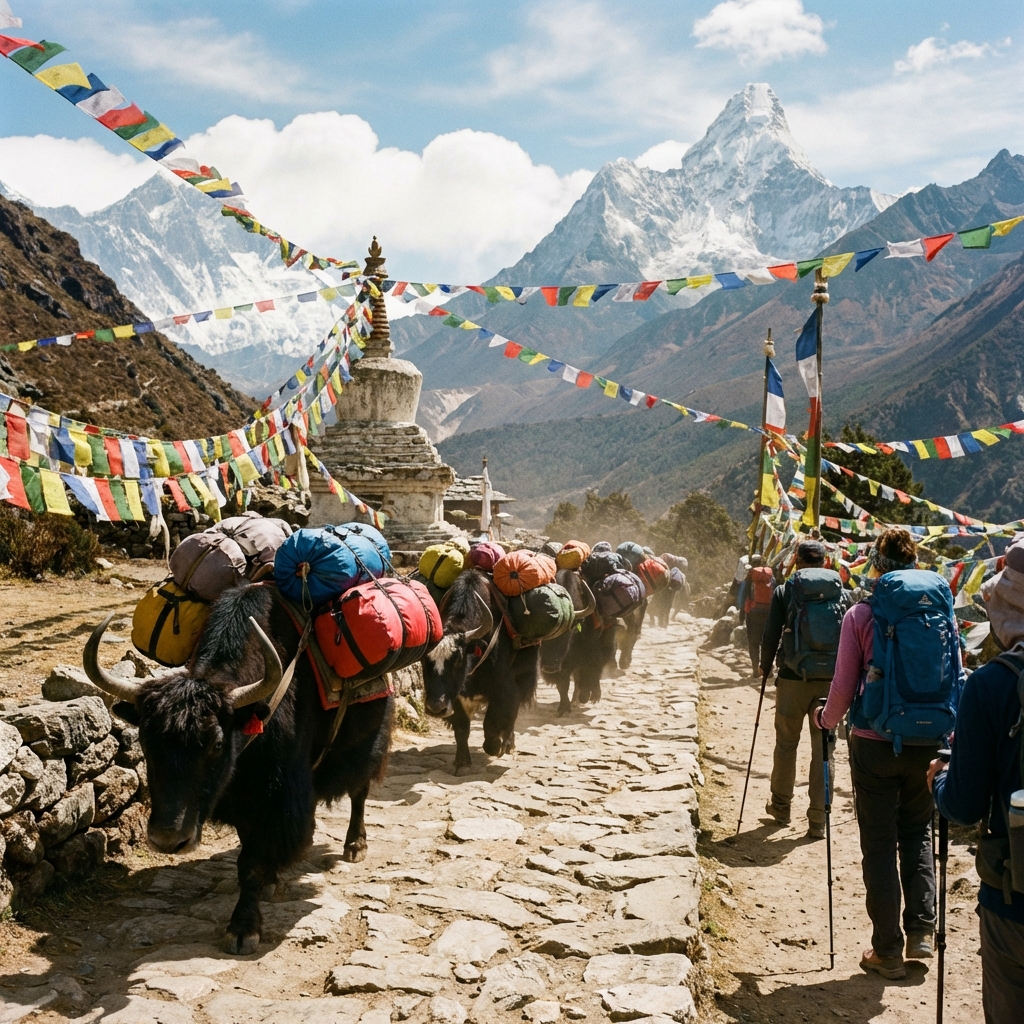
Pure yaks are relatively rare in the Khumbu today; most are dzo (male yak-cow hybrid) or dzomo (female hybrid), which are more docile and produce more milk. Male dzos serve as pack animals carrying trekking supplies on all major routes—you'll encounter hundreds on the EBC trail, recognizable by their size, thick fur, and distinctive grunting vocalizations.
Trans-Himalayan Trade
For centuries, Sherpas controlled trade between Tibet and lowland Nepal via the Nangpa La pass (5,716m)—one of the few accessible routes across the Himalayan barrier. Trade goods included:
- From Tibet: Salt, wool, yak tails, turquoise, coral
- To Tibet: Rice, corn, millet, manufactured goods from India
This trade collapsed after the 1959 Tibetan Uprising and China's subsequent closure of the border. The loss devastated the Khumbu economy until mountaineering and trekking tourism provided alternative income. Some limited trade resumed in the 1980s, but the Nangpa La primarily serves as a route for Tibetan refugees fleeing to Nepal—a politically sensitive subject that trekkers should approach with discretion.
Agriculture at Extreme Altitude
Sherpa villages practice marginal agriculture in the world's harshest farming conditions:
- Primary crop: Potatoes (introduced ~1850; now staple)
- Secondary crops: Barley, buckwheat (lower elevations only)
- Growing season: May-September only (3-4 months)
- Yields: Low; most villages import 70-80% of food even when farming
- Methods: Terracing, yak dung fertilizer, prayer flags for blessing
Farming above 4,000m is essentially impossible—villages like Dingboche (4,410m) and Gorak Shep (5,164m) import 100% of their food. This creates the trekking region's economic paradox: villages survive only because trekkers pay for food transported by yak and porter over multi-day routes.
Modern Sherpa Culture: Tourism Transformation and Identity
The 1953 Everest summit by Edmund Hillary and Tenzing Norgay transformed the Sherpa identity overnight—from obscure Himalayan herders to world-famous mountaineers. This transformation accelerated in the 1960s-1970s as trekking tourism exploded, and today the Khumbu Sherpa economy is 90%+ dependent on tourism.
Economic Transformation:
- 1950s: Subsistence farming/herding + limited trade
- 1960s-1970s: Mountaineering support (climbing Sherpas, base camp staff)
- 1980s-1990s: Lodge ownership, guide services, trekking agencies
- 2000s-2020s: Luxury lodges, helicopter businesses, international trekking companies
Many Khumbu Sherpas now own multiple lodges, employ non-Sherpa staff (Rai, Tamang, Magar porters), and send their children to schools in Kathmandu or abroad. The Sherpa climbing elite—families like Apa Sherpa (21 Everest summits), Kami Rita Sherpa (30+ summits as of 2026), and the late Babu Chiri Sherpa—have achieved international recognition and wealth unimaginable in pre-tourism generations.
Cultural Preservation Challenges:
- Language: Younger Sherpas increasingly speak Nepali/English over Sherpa language
- Religion: Buddhist practice declining among youth; monasteries struggle to attract new monks
- Traditional skills: Yak herding, farming knowledge being lost
- Migration: Many Sherpas move to Kathmandu; Khumbu population declining in winter
- Identity: Tension between "Sherpa as ethnicity" vs "sherpa as occupation" (trekking guide)
Organizations like the Khumbu Climbing Center (founded by climber Conrad Anker and Jenni Lowe-Anker) and the Himalayan Trust (Edmund Hillary's foundation) work to preserve Sherpa culture while providing economic opportunities. The Sagarmatha Pollution Control Committee (SPCC) employs Sherpas in environmental work, creating tourism-independent jobs.
Sherpa Women's Evolving Role:
Traditionally, Sherpa women managed households, farms, and herding while men traded and climbed. Tourism has created new opportunities:
- Lodge management: Many lodges are female-owned/operated
- Trekking guides: Growing numbers of female Sherpa guides
- Climbing: Lhakpa Sherpa, Pasang Lhamu Sherpa Akita (first Nepali woman to summit K2), and others breaking barriers
- Education: Higher female school enrollment than ever before
However, women still face significant inequality in land inheritance, monastery access (women cannot become monks in Nyingma tradition, though nunneries exist), and climbing industry pay.
Respectful Cultural Engagement in Sherpa Villages
When visiting monasteries, always walk clockwise around stupas and prayer wheels, remove shoes before entering prayer halls, ask permission before photographing monks or religious ceremonies, and consider donations to monastery maintenance funds. Avoid loud voices near prayer sessions. During Mani Rimdu or other festivals, stay behind designated viewing areas and don't interrupt ceremonies for photographs.
Major Peaks: The Khumbu's 8,000m Giants and Iconic Summits
Sagarmatha/Everest (8,849m): The Roof of the World
Names and Significance:
- Sagarmatha (Nepali): "Goddess of the Sky"
- Chomolungma (Tibetan/Sherpa): "Goddess Mother of the World"
- Mount Everest (English): Named after George Everest, British surveyor (1865)
- Elevation: 8,849m (revised 2020 after China-Nepal joint survey)
Everest's north face rises in Tibet; the south face (visible from Khumbu) forms Nepal's border. The mountain dominates the Khumbu skyline from almost every high viewpoint—Kala Patthar (5,545m), Gokyo Ri (5,357m), and the Everest View Hotel all exist primarily to frame Everest views.
Climbing History:
- First summit: May 29, 1953 (Edmund Hillary & Tenzing Norgay via South Col/Southeast Ridge)
- Total summits: 11,000+ as of 2026 (multiple summits by same climbers counted separately)
- Deaths: 310+ (mortality rate ~1% of summit attempts as of 2026)
- Commercial era: Began 1980s; now 600-800 summit attempts annually
- Controversies: Overcrowding (2019 "traffic jam" photo), summit disputes, environmental damage
Trekkers never summit Everest (that requires technical mountaineering expeditions costing $45,000-$100,000+), but Everest Base Camp (5,364m) and Kala Patthar (5,545m) bring you within 3,000 vertical meters of the summit—closer than most people ever get to an 8,000m peak.
Lhotse (8,516m): The South Neighbor
Names: Lhotse (Tibetan): "South Peak" Elevation: 8,516m (4th highest mountain in the world)
Lhotse shares the lower slopes and Western Cwm with Everest; they're part of the same massif. The Lhotse Face—a massive wall of blue ice rising from 7,000m to 8,000m—is one of mountaineering's most iconic and dangerous features, visible from the EBC trail between Dughla and Lobuche.
Sub-peaks: Lhotse Middle (8,414m) and Lhotse Shar (8,383m) First summit: May 18, 1956 (Swiss team: Fritz Luchsinger and Ernst Reiss) Climbing challenge: Less climbed than Everest despite proximity; extremely steep
From Kala Patthar and Gokyo Ri, Lhotse often appears as dramatic as Everest, its sharp pyramidal shape contrasting with Everest's more massive bulk.
Nuptse (7,861m): The Western Wall
Names: Nuptse (Tibetan): "West Peak" Elevation: 7,861m
Nuptse forms the western wall of the Khumbu valley, rising directly above the Khumbu Glacier. Its massive south face—2,000+ vertical meters of ice and rock—creates the dramatic backdrop for Gorak Shep and EBC itself.
First summit: May 16, 1961 (British team: Dennis Davis and Sherpa Tashi) Climbing challenge: Extremely technical; far fewer ascents than 8,000m peaks Trekker views: Best from Kala Patthar (where Nuptse dominates western horizon)
Nuptse's name as "West Peak" reflects its position relative to Everest/Lhotse, but at 7,861m, it's higher than all but 14 mountains on Earth. Its underappreciation by casual trekkers is partly due to Everest's overshadowing fame.
Ama Dablam (6,812m): The Matterhorn of Nepal
Names: Ama Dablam (Sherpa): "Mother's Necklace" (shape resembles a mother's arms protecting a child) Elevation: 6,812m
Many climbers and trekkers consider Ama Dablam the world's most beautiful mountain—its perfect pyramid shape, hanging glacier, and dramatic ridgelines create an aesthetic ideal that Everest's bulk cannot match. From Tengboche, Dingboche, and the entire upper EBC trail, Ama Dablam dominates the southern skyline.
First summit: March 13, 1961 (New Zealand team: Mike Gill, Barry Bishop, Mike Ward, Wally Romanes) Climbing: Popular technical climb (1,500+ summits); graded AD+ to D (alpine grade) Base camp trek: Side trip from Pangboche offers close views without summit attempt Cultural significance: Sacred to Sherpas; some older climbers still perform pujas before attempts
Ama Dablam appears on countless book covers, tourism posters, and trekking brochures. Its accessibility to trekkers (visible from Day 3 of the EBC trek) combined with its photogenic perfection makes it arguably more "famous" in trekking circles than the 8,000m giants.
| Route | Duration | Max Altitude | Difficulty | Highlights | Best For |
|---|---|---|---|---|---|
| Khumbu/Everest | |||||
| Annapurna | |||||
| Manaslu | |||||
| Langtang |
Other Notable Khumbu Peaks
Pumori (7,161m): "Daughter Peak"
- Directly west of Everest; visible from Kala Patthar and EBC
- First summit: 1962 (German-Swiss team)
- Popular technical climb (ice/mixed climbing)
- Name means "unmarried daughter" in Sherpa
Cho Oyu (8,188m): 6th Highest Mountain
- Sits on Nepal-Tibet border; head of Ngozumpa Glacier
- Visible from Gokyo Ri (spectacular view)
- Considered "easiest" 8,000m peak (still extremely dangerous)
- First summit: 1954 (Austrian team)
Thamserku (6,623m): The Sentinel
- Visible from Namche Bazaar and lower Khumbu
- Often first major peak trekkers see clearly
- First summit: 1964 (New Zealand team)
Kangtega (6,782m) and Taboche (6,367m)
- The "Snow Saddle" twin peaks visible throughout mid-Khumbu
- Dramatic when viewed from Tengboche ridge
- Less climbed; technical challenges
Island Peak/Imja Tse (6,189m): Trekking Peak
- Most popular "trekking peak" in Nepal (500+ summit attempts/year)
- Requires basic mountaineering skills (crampons, ice axe, rope)
- Often combined with EBC trek (16-19 day itineraries)
- First summit: 1953 (British reconnaissance team for Everest)
Key Villages: The Sherpa Settlement Network
Lukla (2,860m): The Gateway
Official name: Tenzing-Hillary Airport (previously Lukla Airport) Population: ~500 permanent residents (varies seasonally) Significance: Gateway for 90%+ of Khumbu trekkers
Lukla exists almost entirely because of its airstrip—one of the world's most dangerous airports, perched on a mountainside with a 12% gradient runway that ends in a sheer cliff. The airport was built in 1964 with funding from Edmund Hillary, transforming the Khumbu from a 7-day walk from Kathmandu to a 35-minute flight.
Infrastructure:
- Airstrip: 527m runway (one of world's shortest commercial runways)
- Lodges: 50+ tea houses (mostly used for first/last night of trek)
- Shops: Gear rental, last-minute supplies, ATM (often empty)
- Food: Restaurants, bakeries (last good coffee until Namche)
Challenges:
- Flight delays: Weather cancellations common (30-50% delay rate in monsoon/winter)
- Altitude: Immediate jump from 1,400m Kathmandu to 2,800m causes acclimatization issues for some
- Crowds: Bottleneck effect when flights are delayed; lodges fill rapidly
Most trekkers spend minimal time in Lukla, starting the trek immediately after landing or overnighting once before departure. The village has a transient, commercial atmosphere very different from higher Sherpa settlements.
Alternative access: Road now reaches Salleri/Phaplu (2,400m), allowing trekkers to avoid Lukla flights entirely by adding 2-3 days of approach walking. Some trekkers use this approach route and fly out from Lukla to save time.
Namche Bazaar (3,440m): The Sherpa Capital
Population: ~1,500-2,000 (varies seasonally; lower in winter) Significance: Largest settlement in Khumbu; trekking services hub; acclimatization base
Namche is the undisputed capital of the Khumbu—a bustling amphitheater-shaped town carved into a steep hillside with a Saturday market that has operated for centuries. Before trekking tourism, Namche was the primary trading post between Khumbu Sherpa communities and lowland Nepal, receiving salt and highland goods from Tibet in exchange for lowland agricultural products.
Infrastructure:
- Lodges: 150+ tea houses and hotels (basic to comfortable)
- Restaurants: 50+ options (pizza, pasta, Nepali, Tibetan, bakeries)
- Services: ATMs (2-3 machines; often run low), internet cafes, gear shops, pharmacies
- Medical: Small hospital (Kunde Hospital 30 minutes above Namche)
- Entertainment: Irish Pub, rooftop bars, Sherpa cultural museums
Acclimatization from Namche:
Most EBC itineraries schedule 2 nights in Namche for acclimatization. Standard options:
- Everest View Hotel hike (3,880m): 2-3 hours; panoramic Everest views without altitude gain beyond Namche
- Khumjung Village (3,790m): 2-3 hours round trip; Hillary School, monastery with alleged Yeti scalp relics
- Thame Valley: Half-day hike west toward Thame monastery (3,800m)
The "climb high, sleep low" principle applies here: ascend higher during the day, return to Namche for sleep to allow gradual acclimatization. This day is critical—rushing past Namche without proper acclimatization causes a disproportionate number of AMS cases higher on the trail.
Tengboche (3,867m): The Spiritual Heart
Population: ~50 (monastery community plus lodge staff) Significance: Monastery complex; spiritual center of Khumbu; legendary viewpoint
Tengboche is not really a village—it's a monastery complex with a handful of lodges clustered around it. The setting is extraordinary: a forested ridge above the Dudh Kosi gorge with Ama Dablam, Everest, Lhotse, Nuptse, Thamserku, and Kangtega visible simultaneously.
Why trekkers remember Tengboche:
- The monastery prayer ceremonies (6am and 3pm; respectful visitors may observe)
- The panoramic view from the ridge above the monastery
- The abrupt transition from forest to high alpine as you leave heading upvalley
- The bakery (famous for apple pie) as a morale boost before the harder trekking ahead
Mani Rimdu timing: If Mani Rimdu festival falls during your trek (late October/early November), Tengboche becomes a cultural highlight—but also extremely crowded. Book accommodation months in advance.
Dingboche (4,410m): The Acclimatization Village
Population: ~150-200 (seasonal; reduced winter presence) Significance: Second acclimatization stop; highest year-round farming settlement
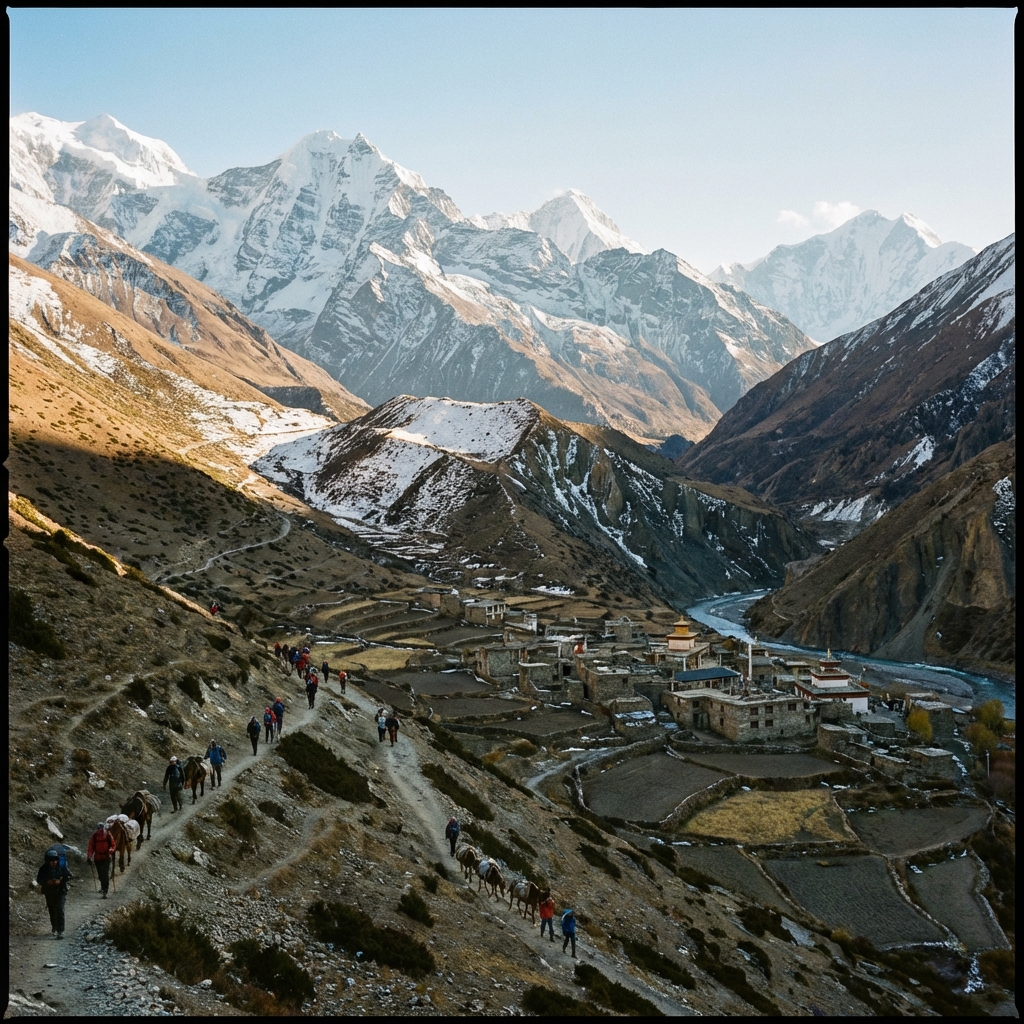
Dingboche sits in a wide valley at the treeline's edge, surrounded by stone-walled fields where villagers grow potatoes during the brief summer season (June-September). Above 4,000m, this marginal agriculture is extraordinary—testament to Sherpa adaptation to extreme environments.
Infrastructure:
- Lodges: 30+ tea houses (quality variable)
- Services: Small shops, medical post, WiFi (slow, expensive), charging (paid)
- Helicopter pad: Emergency rescue coordination point
Acclimatization in Dingboche:
Most itineraries schedule an acclimatization day here. Standard options:
- Nangkartshang Peak (5,083m): 4-5 hour round trip; altitude gain 670m; panoramic views including Makalu
- Chukhung valley (4,730m): 4-5 hours round trip or overnight; stepping stone toward Island Peak or Kongma La pass
- Short hikes: Valley walks to Sherpa memorials, ridge viewpoints
The altitude gain during acclimatization hikes here is more challenging than Namche hikes—you're starting at 4,410m, so exertion feels harder and AMS symptoms more likely. Move slowly, monitor symptoms, and descend if experiencing moderate to severe AMS.
Layout: Dingboche is less compact than Namche—lodges spread across the valley floor. Upper lodges have better views; lower lodges are slightly warmer. The village's stone walls create a patchwork pattern visible from surrounding ridges—a unique landscape feature you won't see elsewhere in the Khumbu.
Gorak Shep (5,164m): The Highest Settlement
Population: 30-50 (seasonal; closes December-February in most lodges) Significance: Highest permanent tea house settlement in Nepal; base for EBC and Kala Patthar
Gorak Shep is not a village in any traditional sense—it's a collection of lodges built on a sandy, windswept plateau beside a dried lakebed (Gorak Shep means "dead raven" in Sherpa, likely referencing birds found dead in this harsh environment). This is the absolute limit of tea house trekking infrastructure in the Khumbu.
Infrastructure:
- Lodges: 6-8 tea houses (very basic; shared rooms common; minimal heating)
- Services: Extremely limited; no shops, no medical facilities, emergency radio only
- Water: Melted from ice/snow in winter; limited running water
- Toilets: Outhouse-style; often frozen in winter
Altitude challenges at Gorak Shep:
At 5,164m, overnight stays here carry significant AMS risk. Many trekkers experience:
- Headache (altitude or dehydration)
- Difficulty sleeping (normal at this altitude)
- Reduced appetite
- Mild nausea
- Breathing irregularity during sleep (periodic breathing)
Lodge operators are experienced in recognizing dangerous AMS symptoms and will recommend descent if necessary. Helicopter rescues from Gorak Shep occur several times per week during peak season.
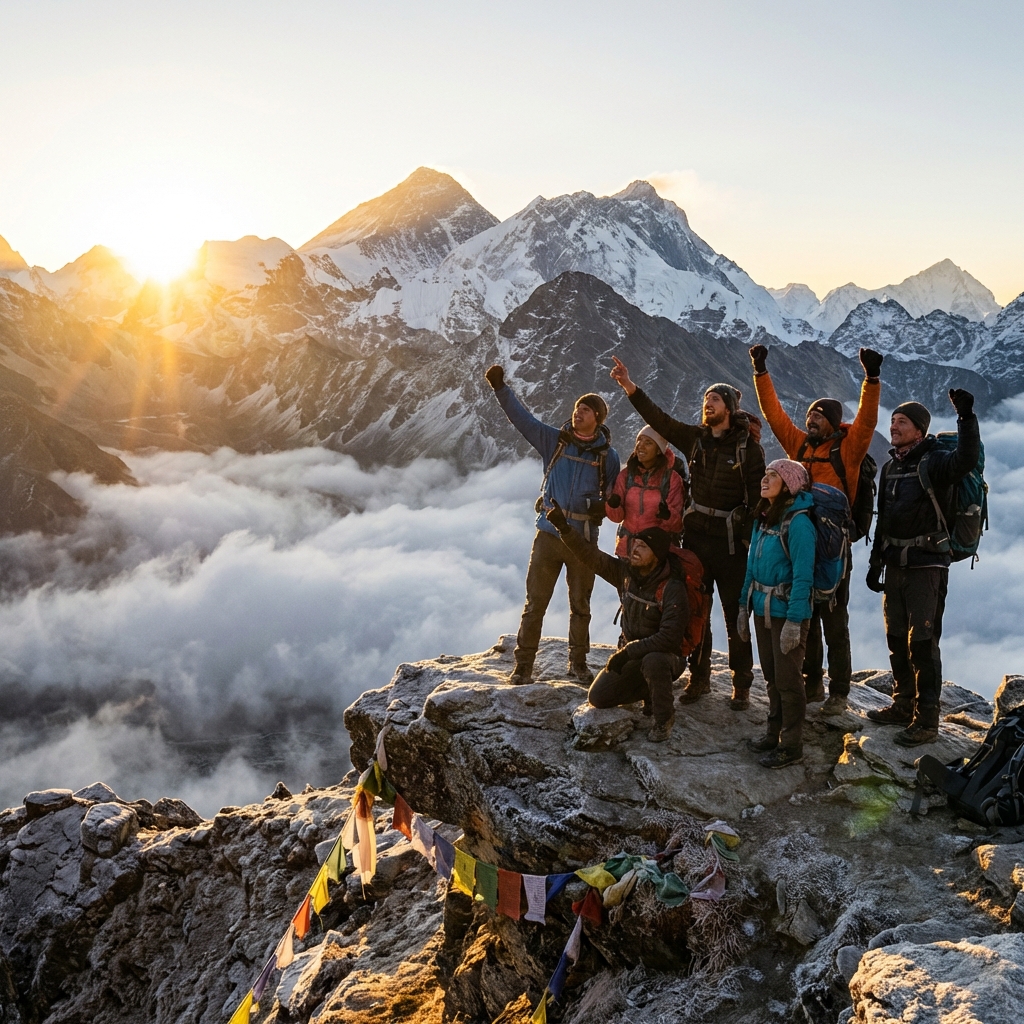
Recommended approach: Arrive early afternoon, rest briefly, then hike to Kala Patthar (5,545m) for sunset. This "climb high, sleep low" pattern reduces overnight AMS risk compared to hiking EBC (5,364m) on arrival day and Kala Patthar the next morning.
Practical considerations:
- Lodges fill by early afternoon in peak season; arrive early or book ahead
- Bring high-calorie snacks—hot meals available but expensive and often delayed
- Lodge temperatures drop to -20°C+ at night; bring 4-season sleeping bag or rent at lower villages
- Water is expensive (boiled water $3-5 per liter); purification tablets cheaper
Gokyo (4,790m): The Lake Village
Population: 30-40 (seasonal; most close December-February) Significance: Alternative to EBC route; base for Gokyo Ri and Gokyo Lakes
Gokyo sits on the lateral moraine of the Ngozumpa Glacier beside the third of six sacred Gokyo Lakes. The village offers similar altitude challenges to Gorak Shep but a very different atmosphere—quieter, more scenic (turquoise lakes vs. rocky moraine), and slightly less developed.
Infrastructure:
- Lodges: 10-12 tea houses (basic to moderate quality)
- Services: Minimal shops, no medical facilities, emergency radio, helicopter pad nearby
- Water: From lake (must purify) or boiled water (expensive)
What to do from Gokyo:
- Gokyo Ri (5,357m): Pre-dawn hike (3-4 hours round trip); altitude gain 567m; views of Everest, Cho Oyu, Ngozumpa Glacier
- Fourth and Fifth Lakes: Day hike north along glacier; increasingly remote; Fifth Lake offers broader panoramas
- Cho La Pass (5,420m): Technical pass crossing to EBC side (full day; ice, rock, potential snow)
- Renjo La Pass (5,360m): Alternative pass back toward Namche (less technical than Cho La)
Acclimatization: Some itineraries overnight at Machhermo (4,470m) before Gokyo; others push directly from Dole (4,200m). An acclimatization day at Gokyo is common before attempting Gokyo Ri or high passes.
Lake significance: The Gokyo Lakes are sacred in both Sherpa Buddhist and Hindu traditions. Pilgrims visit during the August full moon (Janai Purnima festival) for ritual bathing. Trekkers should respect this spiritual significance—don't wash clothes or bathe in lakes, and follow local guidance on behavior around sacred sites.
Smaller Villages Worth Knowing
Phakding (2,610m): First/last night stop for many trekkers; right on Dudh Kosi river; pleasant but forgettable.
Monjo (2,835m): Sagarmatha National Park entrance checkpoint; permit verification; overnight alternative to Namche for slower acclimatization.
Khumjung and Khunde (3,790m): Traditional Sherpa farming villages above Namche; Hillary School, monastery with Yeti relics, quieter atmosphere.
Pangboche (3,985m): Village split into Upper and Lower sections; oldest monastery; Ama Dablam views; good lunch stop between Tengboche and Dingboche.
Thame (3,800m): West of Namche; birthplace of Tenzing Norgay; monastery with May Mani Rimdu festival; quieter alternative acclimatization hike.
Lobuche (4,910m): Between Dingboche and Gorak Shep; overnight stop on many EBC itineraries; memorials to climbers who died on Everest; very cold.
Machhermo (4,470m): On Gokyo route; site of HRA (Himalayan Rescue Association) aid post during peak seasons; good overnight for Gokyo acclimatization.
Best Treks: Comparing the Khumbu's Signature Routes
Everest Base Camp Classic (12-14 Days)
Route: Lukla → Namche (2 nights) → Tengboche → Dingboche (2 nights) → Lobuche → Gorak Shep → EBC + Kala Patthar → return via same route
Why choose this trek:
- Most iconic Nepal trekking experience
- Best infrastructure (lodges, safety, rescue access)
- Achievable for fit first-time high-altitude trekkers
- Cultural richness (Sherpa villages, monasteries)
- Multiple viewpoints (Kala Patthar 5,545m is superior to EBC itself for views)
Challenges:
- Crowds (30,000-40,000 trekkers annually)
- Higher prices in peak season
- Lukla flight dependency
- AMS risk if itinerary rushed
Best time: October-November (optimal), March-May (second choice)
Full details: See our complete Everest Base Camp trek guide for day-by-day itineraries, costs, and planning details.
Gokyo Lakes Trek (12-15 Days)
Route: Lukla → Namche (2 nights) → Dole → Machhermo → Gokyo (2 nights) → Gokyo Ri → return via same route or cross Cho La to join EBC trail
Why choose this trek:
- 60-70% fewer trekkers than EBC
- Turquoise sacred lakes (unique scenery)
- Ngozumpa Glacier views (longest glacier in Nepal)
- Gokyo Ri viewpoint (broader panorama than Kala Patthar; includes Cho Oyu)
- Flexible route options (add Cho La Pass for loop; extend to Fifth Lake)
Challenges:
- Higher sustained altitude (Gokyo 4,790m vs. first EBC night at Lobuche 4,910m, but multi-night stay)
- Less developed trail/lodges than EBC corridor
- Cho La Pass crossing requires good conditions (ice, snow, rockfall risk)
- Lakes frozen January-March (reduced scenic value)
Best time: October-November (lakes thawed, turquoise peak), May (warmer for Cho La crossing)
Full details: See our complete Gokyo Lakes trek guide and Gokyo Lakes best time guide for seasonal planning.
Everest Three Passes Trek (18-21 Days)
Route: Lukla → Namche → EBC corridor → Kongma La (5,535m) → Chukhung → Cho La (5,420m) → Gokyo → Renjo La (5,360m) → Thame → return to Lukla
Why choose this trek:
- Complete Khumbu circuit (see everything: EBC, Gokyo, remote valleys)
- Three technical pass crossings (challenge and accomplishment)
- Significantly quieter sections (especially after Kongma La)
- Maximum mountain panoramas
- Best for experienced trekkers seeking comprehensive Khumbu experience
Challenges:
- Longest and most strenuous Khumbu trek
- Three high pass crossings (altitude, technical terrain, weather-dependent)
- Requires excellent fitness and prior high-altitude experience
- Most expensive (longer duration, porter support recommended)
- Highest AMS risk (sustained time above 4,500m)
- Pass closures possible in winter/monsoon
Best time: October (passes most stable), May (warmer but icier)
Pass difficulty ranking:
- Kongma La (5,535m): Highest; rockfall risk; less-defined trail; challenging both directions
- Cho La (5,420m): Most technical; ice, fixed ropes; avalanche risk in heavy snow; steep descent
- Renjo La (5,360m): Easiest; well-defined trail; least technical; stunning Gokyo Lakes descent
Full details: See our complete Three Passes trek guide and Three Passes best time guide.
| Month | High | Low | Conditions | Crowds | Notes |
|---|---|---|---|---|---|
| JanuaryFair (winter experts only) | - | - | Clear skies, extreme cold, dry | Frozen trails above 4,500m; many lodges closed; exceptional clarity but -30°C nights at altitude | |
| FebruaryFair (improving) | - | - | Clear skies, very cold, dry | Slightly warmer than Jan; more lodges open; still very cold nights; Losar (Sherpa New Year) celebrations | |
| MarchGood (spring starts) | - | - | Mostly clear, warming, occasional snow | Shoulder season begins; trails thawing; rhododendrons blooming lower elevations; increasing crowds | |
| AprilExcellent | - | - | Clear mornings, afternoon clouds, warmer | Peak spring season; rhododendrons peak; warmer nights; some afternoon cloud buildup; all lodges open | |
| MayGood (warming) | - | - | Warm days, afternoon clouds common | Warmest month; best for pass crossings; increasing cloud/haze; pre-monsoon moisture; Everest climbing season | |
| JunePoor | - | - | Monsoon starts, afternoon rain, clouds | Monsoon begins (usually mid-June); daily rain; leeches at lower elevations; trail mud; clouds obscure views | |
| JulyPoor | - | - | Heavy monsoon, daily rain, clouds | Monsoon peak; daily heavy afternoon rain; rare mountain views; trails wet; landslide risk; flights disrupted | |
| AugustPoor | - | - | Continued monsoon, rain, clouds | Monsoon continues; similar to July; Janai Purnima festival (Gokyo Lakes pilgrimage); wildflowers peak | |
| SeptemberFair-Good (improving) | - | - | Monsoon ending, clearing skies | Monsoon ends mid-to-late Sept; trails still muddy; clouds clearing; wildflowers; crowds building late month | |
| OctoberExcellent (PEAK) | - | - | Clear, stable, crisp | OPTIMAL MONTH; post-monsoon clarity; stable weather; Mani Rimdu festival; extremely crowded; book ahead | |
| NovemberExcellent | - | - | Clear, cold, stable | Continued excellent conditions; colder than Oct; less crowded late month; winter cold setting in at altitude | |
| DecemberFair-Good | - | - | Clear skies, cold, occasional snow | Winter conditions; very cold nights; some lodges close above Namche; exceptional clarity; experienced trekkers only |
Other Khumbu Trek Options
Everest View / Panorama Trek (7-9 days)
- Short trek to Namche, Tengboche, possibly Pangboche
- Max altitude ~3,870-4,000m (much lower AMS risk)
- Ideal for limited time or altitude concerns
- Still see Everest, Ama Dablam, Lhotse from viewpoints
- Much cheaper and faster
Jiri to EBC (19-22 days)
- Classic approach route (pre-Lukla airport era)
- Starts from Jiri (1,905m) or Shivalaya
- 7-8 days to reach Lukla; then standard EBC route
- Better acclimatization gradient
- Avoids Lukla flight uncertainty
- More cultural immersion (non-touristy lower villages)
- Requires extra time
Island Peak with EBC (16-19 days)
- Combines EBC trek with 6,189m trekking peak summit
- Requires basic mountaineering skills (crampons, ice axe, rope team)
- Usually climbed from Chukhung after acclimatization at Dingboche
- Most popular trekking peak in Nepal (500+ attempts/year)
- Success rate ~80-85% with proper acclimatization
- Costs $2,500-$4,500 including permit, guide, gear
Sagarmatha National Park: UNESCO World Heritage Wilderness
Park Establishment and Boundaries
Sagarmatha National Park was established in 1976 as Nepal's first Himalayan national park, then designated a UNESCO World Heritage Site in 1979. The park encompasses 1,148 square kilometers of the Khumbu region, protecting the watershed of the Dudh Kosi river system and the southern approaches to Mount Everest.
Park boundaries:
- North: Tibet border (Everest, Lhotse, Cho Oyu ridgeline)
- South: Below Lukla (~2,800m); Monjo checkpoint area
- East: Hinku valley watershed divide
- West: Bhote Kosi valley and Thame region
Elevation range: 2,845m (Monjo entry point) to 8,849m (Everest summit)
Park headquarters: Namche Bazaar (permits, visitor information, small museum)
Biodiversity and Ecosystems
Despite extreme altitude and harsh conditions, Sagarmatha National Park supports remarkable biodiversity:
Vegetation zones:
- Lower montane forest (2,800-3,500m): Blue pine, fir, juniper, birch, rhododendron (20+ species)
- Upper montane (3,500-4,000m): Birch, rhododendron, juniper scrub
- Subalpine scrub (4,000-4,600m): Dwarf rhododendron, juniper mats
- Alpine meadows (4,600-5,500m): Grasses, cushion plants, sedges
- Nival zone (5,500m+): Sparse lichens, mosses only
Mammals:
- Himalayan tahr (wild goat; common above 3,500m)
- Musk deer (rare; hunted historically for musk gland)
- Red panda (endangered; forested areas below 3,500m)
- Himalayan black bear (rare; forested areas)
- Snow leopard (critically endangered; 3-7 individuals estimated in park)
- Himalayan wolf (rare; high alpine zones)
Birds:
- Himalayan monal (national bird of Nepal; iridescent pheasant)
- Snow partridge, snow pigeon (high altitude specialists)
- Lammergeier (bearded vulture) (massive wingspan; bone-breaking behavior)
- Himalayan griffon (large vulture; scavenger)
- Red-billed chough, alpine chough (common around lodges)
- Blood pheasant, danphe pheasant
Endangered species: The park is critical habitat for snow leopards (estimated 3-7 individuals, though exact numbers are speculative due to their rarity and elusiveness), red pandas (below 3,500m in forests), and musk deer. All three face poaching pressure despite legal protection.
Conservation Challenges
Tourism pressure:
- 50,000+ annual visitors create enormous waste (plastic bottles, food packaging, human waste)
- Trail erosion from foot traffic and pack animals
- Lodge construction consuming wood (before kerosene/solar regulations)
- Noise and human presence disturbing wildlife
Sagarmatha Pollution Control Committee (SPCC): Established 1991 to address waste crisis. Initiatives include:
- Waste collection from lodges and campsites
- Depot system carrying trash down to Namche for sorting
- Burnable waste incineration; non-burnable carried to Kathmandu
- Toilet waste management (pit systems, solar composting)
- Annual cleanup expeditions (collecting decades of waste from EBC, high camps)
Despite these efforts, waste remains visible on trails, especially above 5,000m where cleanup is logistically harder. Trekkers should carry all trash down (including toilet paper) and minimize plastic bottle use.
Deforestation: Historical lodge construction and heating consumed vast amounts of firewood, causing deforestation crisis in 1970s-1980s. Current regulations:
- Wood fires banned for lodge heating (kerosene, solar, or no heating allowed)
- Reforestation programs (Hillary Trust and park authority plant millions of seedlings)
- Alternative energy promotion (solar panels, micro-hydro electricity)
Forests are slowly recovering, but climate change and tree line shifts complicate regrowth.
Climate change impacts:
- Glacial retreat: All Khumbu glaciers retreating (Khumbu Glacier ~30m/year, Ngozumpa ~25m/year)
- Glacial lake expansion: Imja Tsho and others growing, creating outburst flood risks
- Permafrost thaw: Destabilizing slopes, increasing rockfall
- Vegetation shifts: Tree line moving higher, altering ecosystems
- Snow leopard habitat: Shrinking as prey species shift ranges
These changes threaten both biodiversity and trekking infrastructure (trails, bridges, lodges built on previously stable ground).
Permits and Regulations: Navigating the Bureaucracy
Required Permits for Khumbu Trekking
1. Sagarmatha National Park Entry Permit
- Cost: NPR 3,000 (~$30 USD) for foreigners; NPR 1,500 for SAARC nationals
- Where to obtain: Kathmandu (Tourism Board office) or Monjo checkpoint (on trail)
- Payment: Cash only (Nepali rupees) at Monjo; card accepted in Kathmandu
- Validity: Single entry; no time limit (valid for entire trek)
- Checkpoint: Monjo (2,835m) just before Namche; passport and permit checked
2. Khumbu Pasang Lhamu Rural Municipality Permit
- Cost: NPR 2,000 (~$20 USD) per person
- Where to obtain: Lukla or Monjo checkpoint
- Payment: Cash only (Nepali rupees)
- Purpose: Local municipality fee (funds infrastructure, waste management, trail maintenance)
- Checkpoint: Same as park permit (Monjo)
3. TIMS Card (Trekkers' Information Management System)
- Status: As of 2026, TIMS is less strictly enforced in Khumbu than previously
- Cost: NPR 2,000 (individual trekker) or NPR 1,000 (organized group)
- Where to obtain: Kathmandu (TAAN or TIMS offices)
- Purpose: Trekker tracking and rescue coordination
- Note: Some reports indicate TIMS checks are inconsistent in Khumbu; verify current requirements
Total permit cost: ~$50-55 USD per person for standard EBC/Gokyo/Three Passes treks
Permits NOT required for Khumbu:
- Restricted Area Permits (Khumbu is open zone)
- Special climbing permits (unless attempting peaks; Island Peak requires separate $250-400 permit)
Checkpoint Procedures
Monjo checkpoint (entry to Sagarmatha National Park):
- All trekkers stop here (cannot bypass)
- Passport inspection
- Permit issuance (if not obtained in Kathmandu)
- Group registration
- Wait time: 5-30 minutes depending on group size and season
Namche checkpoint (Sagarmatha National Park headquarters):
- Optional stop (park HQ, museum, permit questions)
- Some groups register here for safety tracking
No checkpoints above Namche on standard routes (EBC, Gokyo, Three Passes all open zones)
Lukla Access: Flights, Roads, and Alternatives
Lukla Flight Details:
Route: Kathmandu (Tribhuvan International) or Ramechhap (Manthali) → Lukla (Tenzing-Hillary Airport) Flight time: 35-40 minutes Frequency: 50-80 flights/day in peak season (October-November); 10-20/day in off-season Airlines: Tara Air, Summit Air, Sita Air, Goma Air (small aircraft: 12-18 passengers) Cost: $215-220 USD per person each way (varies by season and booking time)
Ramechhap routing (peak season): To reduce Kathmandu airport congestion during peak trekking seasons (mid-March to May, September to November), flights often depart from Ramechhap (Manthali) instead of Kathmandu:
- Drive: 4-5 hours from Kathmandu to Ramechhap (132km, mostly paved)
- Departure time: Usually 2-6am (arrive at Ramechhap airport before sunrise)
- Flight time: 20 minutes (shorter than Kathmandu-Lukla)
- Return: Same route (fly to Ramechhap, drive to Kathmandu)
Flight delay risks:
Lukla is one of the world's most dangerous and weather-dependent airports:
- Delays: 30-50% of flights delayed 1+ days during monsoon/winter
- Cancellations: Weather (clouds, wind, visibility) causes same-day cancellations
- Backup days: Build 2-3 buffer days into itinerary for delays
- Alternatives if delayed:
- Wait in Kathmandu (or Ramechhap if already there)
- Helicopter charter ($500+ per person; weather-dependent too)
- Abandon trek or shorten itinerary
Best weather windows for Lukla flights:
- Morning flights: 6am-10am (most stable weather, most departures)
- Seasons: October-November and March-April (most reliable)
- Worst: June-August monsoon (50%+ delay rate); January-February winter storms
Road access alternatives:
Jiri road approach:
- Road: Kathmandu to Jiri by bus (7-9 hours, ~$5-15)
- Trek: Jiri to Lukla (7-8 days); Jiri to Namche (9-10 days)
- Advantages: No flight dependency; better acclimatization; cheaper; cultural immersion
- Disadvantages: Extra 7-10 days; less infrastructure; more strenuous
Salleri/Phaplu road approach:
- Road: Kathmandu to Salleri/Phaplu by bus (10-12 hours) or flight (30 min)
- Trek: Salleri to Lukla (2-3 days); Salleri to Namche (4-5 days)
- Advantages: Shorter than Jiri; avoids Lukla flights; small airstrip at Phaplu (alternative flights)
- Disadvantages: Extra 3-5 days; rough road conditions
Helicopter options:
- Kathmandu to Lukla: $3,500-5,000 (charter for 5 passengers)
- Kathmandu to Namche/Syangboche: $4,000-6,000
- One-way helicopter, trek back: Luxury option to skip Lukla uncertainty
- Helicopter return from EBC: $215-800 per person (shared); popular for time-limited trekkers
Edmund Hillary's Legacy: Schools, Hospitals, and Infrastructure
The Himalayan Trust and Hillary's Post-1953 Commitment
After summiting Everest with Tenzing Norgay in 1953, Edmund Hillary could have simply collected fame and moved on. Instead, he made an extraordinary commitment to the Sherpa people who had enabled his success, returning to the Khumbu repeatedly over 50+ years and building infrastructure that transformed the region.
Himalayan Trust (founded 1960):
- Initially funded by Hillary's lecture and book income
- Later supported by New Zealand and international donors
- Focused on education, healthcare, and environmental projects
- Active in Khumbu and wider Solu-Khumbu region
- Continues operation under leadership of Hillary's son Peter Hillary
Schools: Education Access in Remote Khumbu
Before Hillary's intervention, Khumbu had no schools. Children either received no education or traveled to monasteries in Tibet—an option that disappeared after 1959 when Tibet closed to refugees and emigrants.
Major Hillary schools:
Khumjung School (opened 1961):
- First school in Khumbu region
- Currently educates 200+ students (primary and secondary levels)
- Boarding facilities for children from remote villages
- Sherpa language and culture classes alongside standard curriculum
- Many current Khumbu leaders are Khumjung School graduates
Thame School:
- Serves Bhote Kosi valley communities
- Smaller enrollment (~50-80 students)
- Important for preserving traditional culture in more remote area
Total Hillary-funded schools: 30+ across Solu-Khumbu region
Impact on Sherpa literacy:
- Pre-1960: <5% literacy rate among Khumbu Sherpas
- 2020s: >80% literacy among younger generations
- Educational access enabled current generation of Sherpa trekking entrepreneurs, guides, and business owners
Healthcare: Hospitals and Medical Posts
Kunde Hospital (opened 1966):
- First permanent medical facility in Khumbu
- Located at 3,840m (near Khumjung School)
- Services: Primary care, emergency treatment, dental, maternal health
- Staffing: Nepali doctors and nurses (rotational); volunteer expatriate doctors (seasonal)
- Critical for both local residents and trekking emergencies
- Free or low-cost for local Sherpas; fees for trekkers help subsidize local care
Khunde Hospital and Phaphlu Hospital:
- Extended healthcare access to more remote areas
- Similar primary care and emergency services
- Phaphlu serves lower Solu region (south of Lukla)
HRA (Himalayan Rescue Association) Aid Posts:
- Separate from Hillary infrastructure but crucial
- Pheriche (4,371m) and Machhermo (4,470m) seasonal aid posts (October-November, March-May)
- Staffed by volunteer Western doctors specializing in altitude medicine
- Daily altitude sickness lectures (free, highly recommended for trekkers)
- Emergency AMS treatment (dexamethasone, Gamow bag, oxygen)
- Evacuation coordination with helicopter rescue services
Healthcare impact:
- Infant mortality: Dramatically reduced since 1960s
- Maternal health: Access to safe childbirth care
- Trekker safety: Faster AMS response, reduced deaths
- Disease prevention: Vaccination programs, TB treatment
Bridges, Water, and Infrastructure
Bridge construction: Hillary funded construction of many suspension bridges across the Dudh Kosi and tributary rivers:
- Replaced dangerous river crossings that killed villagers and animals annually
- Steel cable suspension bridges (many still in use on trekking routes)
- Enabled year-round access between villages (previously cut off during monsoon high water)
Water systems:
- Piped water to villages (gravity-fed from springs)
- Reduced waterborne disease
- Freed women and children from hours of daily water carrying
Reforestation:
- Millions of seedlings planted to reverse deforestation
- Nurseries established to provide ongoing supply
- Focus on native species (pine, fir, juniper, rhododendron)
Renewable energy:
- Supported micro-hydro electricity projects
- Solar panel installation for schools and hospitals
- Reduced dependence on wood fuel and kerosene
Criticisms and Complicated Legacy
While Hillary's contributions are overwhelmingly celebrated, some scholars and Sherpas note complexities:
Western paternalism concerns:
- Projects sometimes implemented without full Sherpa consultation
- Education curriculum initially emphasized Western knowledge over Sherpa traditional knowledge
- Created dependency on external funding rather than locally-controlled development
Tourism acceleration:
- Hillary's infrastructure (especially Lukla airport) enabled mass tourism
- This brought wealth but also environmental degradation, cultural erosion, and inequality
- Not clear Hillary foresaw or intended the current scale of tourism impact
Sherpa climbing exploitation:
- While Hillary advocated for Sherpa welfare, the broader climbing industry still underpays and undervalues Sherpa labor
- Death compensation and safety standards improved slowly despite Hillary's advocacy
Legacy today: Most Khumbu Sherpas view Hillary as a genuine friend and benefactor—his commitment spanned 50+ years, he learned Sherpa language, and he genuinely lived among them rather than just visiting. The annual Hillary Memorial Race (Everest Marathon) and numerous monuments throughout the Khumbu (Hillary and Tenzing statues, memorial plaque at Tengboche) reflect this respect.
Visit the Khumjung School and Kunde Hospital
During your Namche acclimatization day, hike to Khumjung village (3,790m, 2-3 hours round trip) to visit the Hillary School and Kunde Hospital. The school often welcomes respectful visitors (don't disrupt classes), and you can make donations for supplies. The hospital also accepts donations. This adds meaningful context to your trek beyond just mountain views.
Environmental Challenges: Waste, Crowds, and Climate Change
The Waste Crisis at 5,000+ Meters
The Khumbu faces an environmental paradox: its wilderness beauty attracts 50,000+ annual visitors, whose presence degrades the very ecosystem they come to experience.
Waste volume estimates:
- Per trekker: 3-5kg of waste generated during typical 12-day EBC trek
- Annual total: 150-250 tons of waste generated in Sagarmatha National Park
- Composition: Plastic bottles (40%), food packaging (30%), human waste (20%), other (10%)
Why waste is catastrophic at altitude:
- No decomposition: At 5,000m+, cold temperatures and low oxygen prevent biological decomposition—plastic and organic waste persists for decades or centuries
- No landfill: Remote location makes waste disposal impossible; everything must be carried down mountain
- Water contamination: Improper human waste disposal contaminates streams and glacial melt (trekkers' primary water source)
- Wildlife impact: Animals ingest plastic; waste disrupts fragile ecosystems
Sagarmatha Pollution Control Committee (SPCC) efforts:
Since 1991, SPCC has collected over 1,000 tons of waste from Khumbu trails and campsites:
- Waste depots: Collection points in villages; porters carry waste to Namche sorting facility
- Composting: Organic waste composted where possible (limited by altitude)
- Recycling: Plastic, metal, glass sorted and carried to Kathmandu for recycling
- Incineration: Some burnable waste incinerated (controversial due to emissions)
- Everest cleanup: Annual expeditions collect waste from EBC and high camps (100+ tons removed since 2010)
2019 Nepal Army cleanup expedition:
- Removed 10 tons of waste from Everest high camps
- Removed 4 bodies from mountain
- Highlighted scale of accumulation (decades of waste frozen in ice)
Trekker responsibility:
You can minimize your environmental impact:
- Refuse plastic bottles: Use purification tablets/filters with reusable bottles; many lodges offer boiled water refills
- Carry trash down: Pack all wrappers, toilet paper, hygiene products in bag; dispose in Namche or Kathmandu
- Human waste: Use lodge toilets; if trekking off-trail, bury waste 15cm deep, 50m from water sources
- Minimize packaging: Bring snacks in reusable containers; avoid individually wrapped items
- Support eco-lodges: Choose lodges with solar power, composting toilets, waste management systems
Deposit systems:
Some lodges and SPCC implement bottle deposit systems—you pay NPR 50 deposit per plastic bottle, refunded when you return the empty bottle to designated collection points. This incentivizes proper disposal and enables recycling.
Overcrowding and Trail Degradation
Crowd concentration:
Khumbu tourism is heavily concentrated on the EBC trail during October-November:
- Peak daily traffic: 500-800 trekkers per day ascending from Namche during October
- Bottlenecks: Namche, Tengboche, Dingboche lodges fill by mid-afternoon
- Trail traffic jams: Narrow sections create congestion; porter and yak traffic mix with trekkers
Lodge capacity stress:
Total lodge beds in Gorak Shep: ~150-200 Peak season demand: 200-300 trekkers/night Result: Shared rooms, floor sleeping, overflowing toilets, price gouging
Trail erosion:
- Foot traffic: 50,000 trekkers + porters + yak trains cause severe erosion on steep sections
- Monsoon damage: Heavy summer rains wash out unsupported trail sections
- Maintenance: Khumbu Pasang Lhamu Rural Municipality and SPCC fund repairs, but degradation outpaces repairs
- Stone paving: Many sections now paved with stone to prevent erosion (expensive, labor-intensive)
Everest climbing crowds (separate from trekking but related):
The 2019 viral photo of summit traffic jams (300+ climbers queuing at Hillary Step) highlighted overcrowding risks. While trekkers don't face summit crowds, the same systemic issues (too many permits, weather window concentration, profit over safety) affect the Khumbu ecosystem.
Climate Change: Glaciers, Lakes, and Future Risks
Glacial retreat rates:
All Khumbu glaciers are retreating:
- Khumbu Glacier: Terminal retreat ~30m/year (varies annually)
- Ngozumpa Glacier: ~25m/year
- Imja Glacier: ~50-70m/year (fastest retreat in region)
Glacial lake expansion:
As glaciers retreat, terminal moraine lakes grow:
- Imja Tsho: Expanded from <1km² in 1960 to >1.5km² by 2020
- Gokyo Lakes: All six lakes expanding; new lakes forming
- Thulagi Glacier: Tsho Rolpa lake (outside Khumbu but nearby) is one of Nepal's most dangerous growing lakes
GLOF (Glacial Lake Outburst Flood) risk:
When glacial lakes breach their moraine dams, catastrophic floods devastate downstream valleys:
- 1985 Dig Tsho GLOF: Destroyed hydropower plant, bridges, farmland in Dudh Kosi valley
- Imja Tsho mitigation: 2016 project lowered lake level 3.4m by creating outlet channel (reduced but did not eliminate risk)
- Ongoing monitoring: 21 potentially dangerous glacial lakes tracked in Khumbu region
Temperature change impacts:
Average temperatures in Khumbu have risen ~1°C since 1980 (faster than global average):
- Snow line shift: Permanent snow line moving upslope ~5-10m/decade
- Permafrost thaw: Destabilizing slopes, increasing rockfall and landslides
- Vegetation changes: Tree line moving higher; alpine plant distribution shifting
- Water availability: Changes in monsoon patterns affecting water supply
Impacts on trekking:
- Trail damage: Rockfall and erosion increase maintenance needs and create hazards
- Pass conditions: Ice conditions on high passes (Cho La, Kongma La, Renjo La) less predictable
- Water sources: Some traditional water sources drying up; others appearing as glaciers retreat
- Seasonal shifts: Weather patterns less predictable; traditional "best months" may shift
Solutions and Future Sustainability
Sustainable tourism initiatives:
- Visitor caps: Some proposals to limit annual trekking permits (politically difficult due to economic dependence)
- Fee increases: Higher permit fees to fund conservation (implemented gradually)
- Waste bonds: Proposal to require refundable waste deposits from trekkers
- Lodge standards: Certification system for eco-friendly lodges (solar power, composting, waste management)
Community-led conservation:
- Local committees: Sherpa communities increasingly leading conservation rather than just responding to external mandates
- Traditional practices revival: Some villages reviving rotational grazing, sacred grove protection, and other traditional ecological knowledge
- Youth engagement: Programs training young Sherpas in conservation, guiding, and sustainable tourism
International support:
- UNESCO World Heritage funding: Provides resources for park management
- NGO partnerships: Organizations like WWF, Mountain Legacy, and the Himalayan Trust support specific projects
- Research collaboration: Universities and research institutes study climate change impacts and solutions
Trekker role:
Individual choices matter:
- Choose less-crowded seasons (late November, early March) or routes (Gokyo over EBC)
- Hire local guides and stay in locally-owned lodges (money stays in community)
- Minimize waste and carry trash down
- Respect cultural and environmental rules
- Donate to conservation organizations (SPCC, Himalayan Trust, HRA)
The Khumbu's future depends on balancing economic needs (tourism provides 90%+ of income) with environmental preservation. Trekkers who understand these challenges and trek responsibly become part of the solution rather than just part of the problem.
What Treks Are in the Everest Region?
The Everest/Khumbu region offers several world-class treks: Everest Base Camp (12-14 days), Gokyo Lakes (10-12 days), the challenging Three Passes trek (18-20 days), and peak climbing expeditions to Island Peak and Lobuche East. All treks require a Sagarmatha National Park permit and TIMS card.
How Do I Get to the Everest Region?
Most trekkers fly from Kathmandu to Lukla (Tenzing-Hillary Airport) — a dramatic 25-minute mountain flight. Flights are weather-dependent and cancellations are common; budget 2-3 buffer days. Alternative access includes helicopter to Lukla or the overland route via Jiri (7-8 additional walking days). From Lukla, all treks proceed on foot through Namche Bazaar into the Khumbu.
Frequently Asked Questions (FAQ)
Related Resources and Planning Tools
- Everest Base Camp Trek Complete Route Guide
- Gokyo Lakes Trek Complete Route Guide
- Everest Three Passes Trek Route Guide
- Gokyo Lakes Best Time Guide (Month-by-Month)
- Three Passes Trek Best Time Guide
- Everest vs Annapurna: Which Region Should You Choose?
- Namche Bazaar Complete Village Guide
- Tengboche Monastery Guide
- Ama Dablam Base Camp Trek Guide
- Altitude Sickness Prevention and Treatment
- Annapurna Region Complete Guide
- Langtang Region Complete Guide
- Dolpo Region Complete Guide
- Mustang Region Complete Guide
- Nepal Trekking Permits Explained
- Best Time to Trek the Everest Region
- Nepal Trekking Gear Complete Packing List
- Solo Trekking in Nepal: Complete Safety Guide
- Lukla Flight Guide: Dealing with Delays and Alternatives
- Sherpa Culture and Buddhism in the Khumbu
- Khumbu Conservation Area Guide
- Everest Base Camp Trek Cost Breakdown 2026
- Tea House Amenities by Altitude
- Island Peak Climbing Guide (Imja Tse)
- EBC Winter Trek Guide
Final Thoughts: The Khumbu as Living Mountain Culture
The Khumbu/Everest region is Nepal's most famous trekking destination for good reason—it delivers the world's highest peaks, best trekking infrastructure, richest Sherpa Buddhist culture, and most iconic mountain experiences. But treating it merely as a "bucket list" destination to check off misses the profound reality: this is a living, fragile, culturally rich high-altitude world where human communities have survived for 500 years against extraordinary odds.
When you trek through Namche's bustling market square, watch monks perform ancient rituals at Tengboche, stand on Kala Patthar's frozen ridge gazing at Everest's summit pyramid, or share tea with a lodge owner whose family has lived at 4,000+ meters for ten generations, you're not just "doing a trek"—you're entering a space where human cultural adaptation, spiritual practice, environmental fragility, and commercial tourism collide in ways both beautiful and troubling.
The Khumbu faces enormous challenges: climate change melting glaciers and destabilizing slopes, 50,000 annual visitors generating waste faster than can be removed, younger Sherpas abandoning traditional culture for tourism jobs, and economic dependence on a single volatile industry. Yet it also demonstrates remarkable resilience: Sherpa communities leading conservation efforts, monasteries preserving 400-year-old traditions, and Hillary's legacy infrastructure supporting education and healthcare in one of Earth's harshest environments.
Your choices as a trekker matter. Trekking responsibly (minimizing waste, hiring local guides, respecting culture, understanding altitude risks, choosing less-crowded seasons or routes) means you become part of the solution rather than just another pressure on an overtaxed system. The Khumbu rewards those who approach it with humility, preparation, cultural curiosity, and environmental consciousness—offering not just stunning photographs but genuine transformation through immersion in a world utterly unlike the one most trekkers come from.
Whether you choose the iconic Everest Base Camp route, the quieter beauty of Gokyo Lakes, or the challenging completeness of the Three Passes circuit, you're walking trails shaped by centuries of Sherpa footsteps, beneath peaks sacred in Buddhist cosmology, through a landscape where every rock, lake, and ridge tells stories of geological upheaval, human adaptation, and the eternal dance between mountains and those who call them home.
The Khumbu is waiting. Trek it wisely, respectfully, and with the understanding that you're a temporary visitor to someone else's permanent home—a home that exists at the absolute edge of human survivability, maintained through cultural traditions you can witness but never fully comprehend in two weeks of walking. That humility, combined with wonder, is what transforms tourists into true travelers.
Namaste. May your journey through the Khumbu change you as profoundly as it changed Edmund Hillary, Tenzing Norgay, and the generations of Sherpas who have made this the world's most extraordinary trekking destination.


