
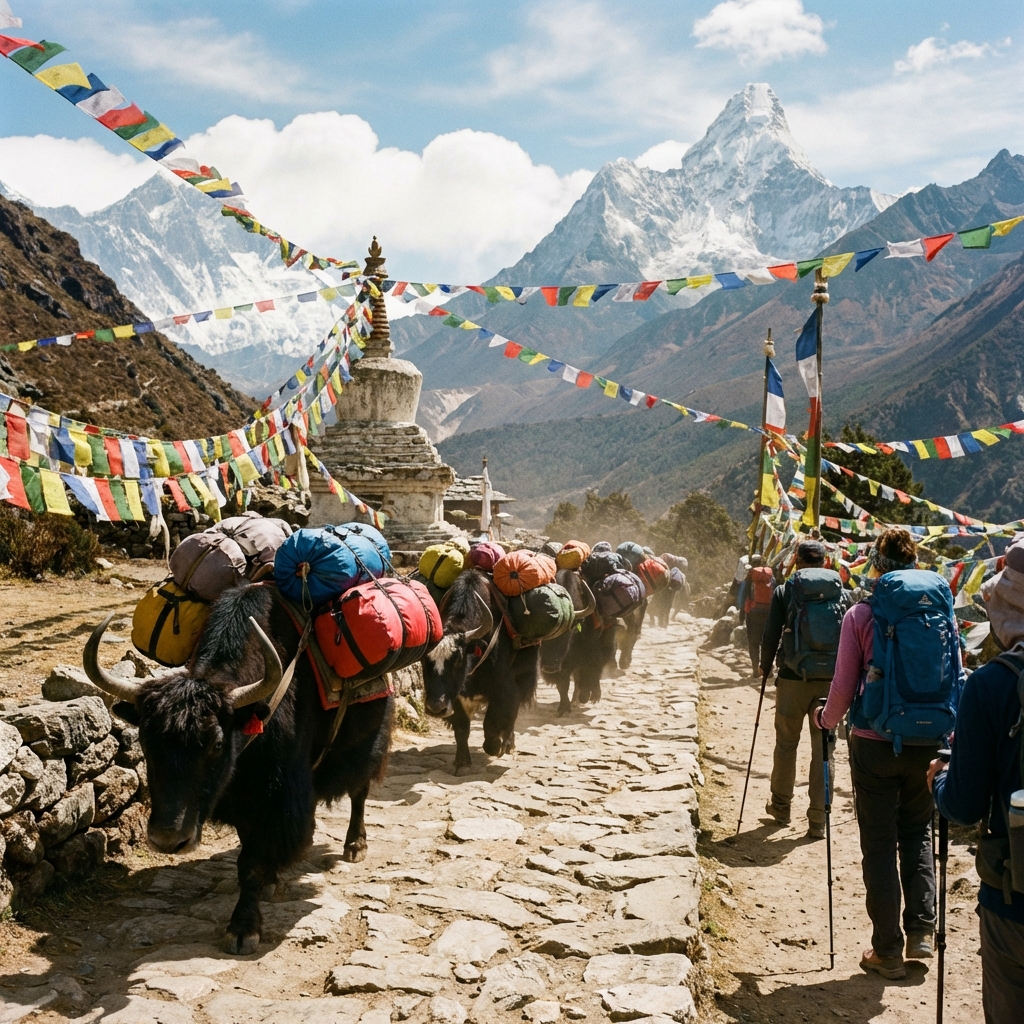
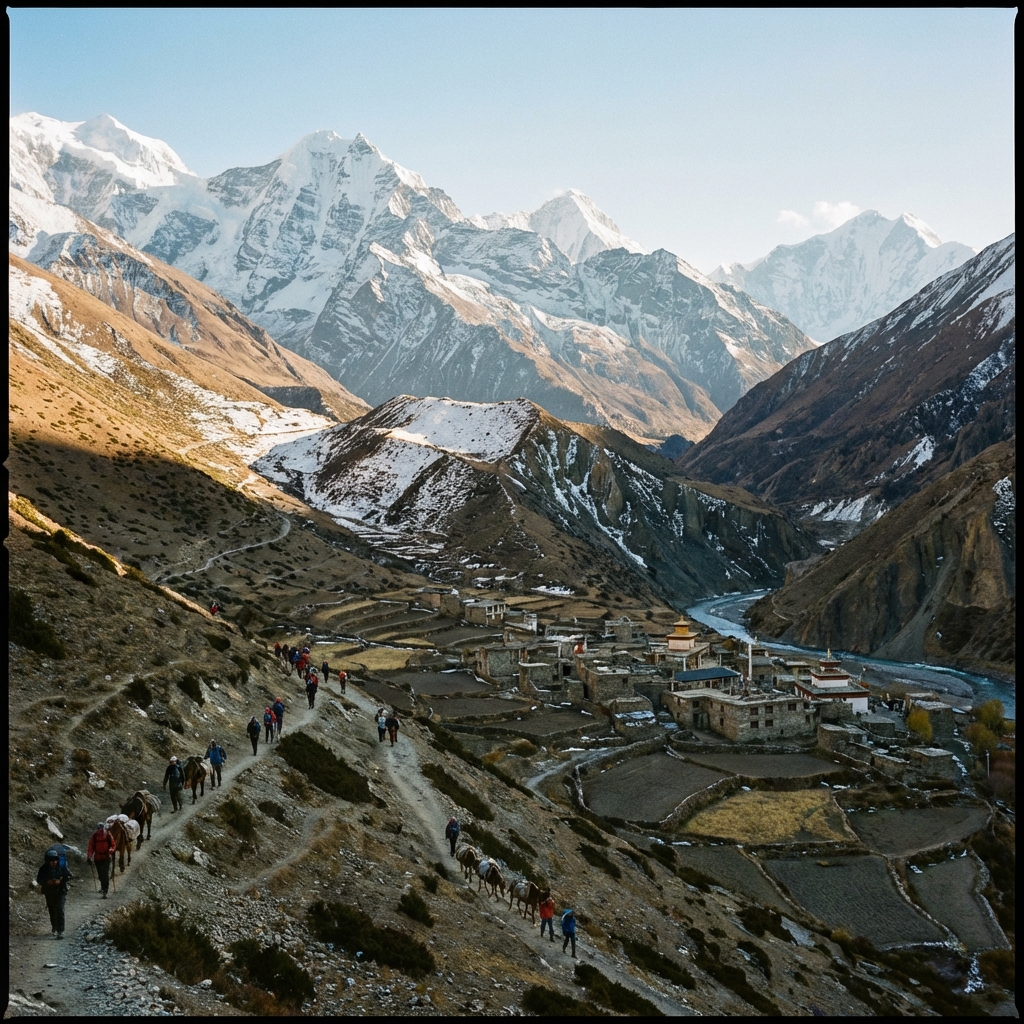
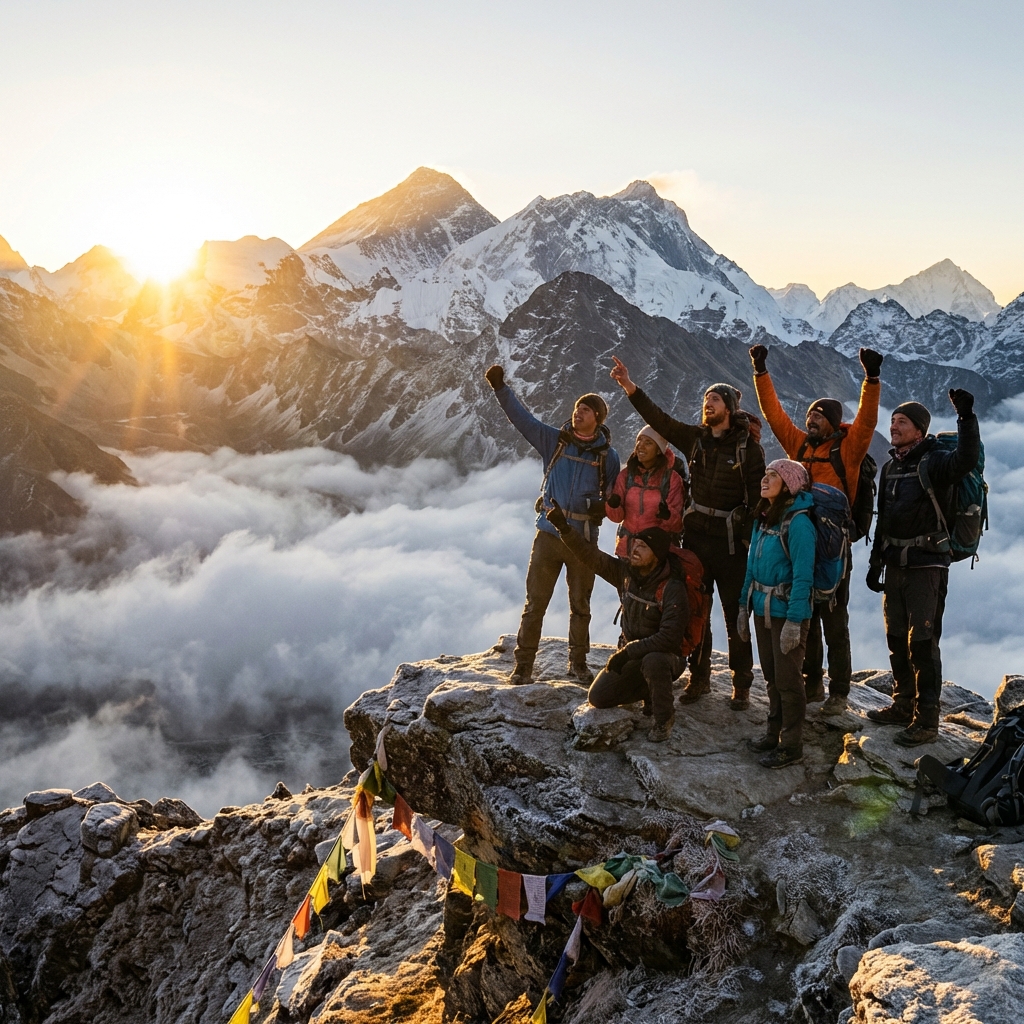
| Route | Duration | Max Altitude | Difficulty | Permits | Teahouses | Crowds |
|---|---|---|---|---|---|---|
| Pikey Peak (Solu) | 6-8 days | 4,065m | Easy-Moderate | TIMS only (NPR 2,000) | Good | Very Low |
| Everest Base Camp (Kala Patthar) | 12-16 days | 5,545m | Moderate-Challenging | $45-50 | Excellent | Very High |
| Gokyo Ri | 12-15 days | 5,357m | Moderate-Challenging | $45-50 | Excellent | Moderate |
| Poon Hill | 4-5 days | 3,210m | Easy-Moderate | $40 | Excellent | Very High |
Sir Edmund Hillary once declared Pikey Peak offered his favorite view of Mount Everest. Coming from the first man to summit the world's tallest mountain, that endorsement carries weight. Yet this stunning viewpoint in Nepal's lower Solu region remains wonderfully unknown—a hidden gem where you can witness a 360-degree Himalayan panorama spanning eight of the world's 8,000-meter peaks, all from an accessible 4,065 meters.
The Pikey Peak trek delivers what many trekkers seek in the Everest region: jaw-dropping mountain vistas, authentic Sherpa cultural immersion, and the profound experience of walking through landscapes that inspire spiritual reflection. But it does so without the crowds, costs, altitude risks, and time commitments that define the classic Everest Base Camp route.
This isn't a compromise trek—it's a revelation. At sunrise from Pikey's summit, when the first light ignites Everest, Makalu, Kanchenjunga, and the entire eastern Himalayan arc in blazing alpenglow, you'll understand why Hillary returned here repeatedly throughout his life. The Solu region, older and more traditional than the heavily-touristed Khumbu Valley to the north, preserves an authenticity that makes this journey as culturally rich as it is scenically spectacular.
This comprehensive guide covers everything you need to plan your Pikey Peak adventure: detailed day-by-day itineraries, honest comparisons with higher-altitude Everest treks, cultural insights into Solu Sherpa villages, cost breakdowns, and practical wisdom for maximizing your experience on Nepal's most underrated viewpoint trek.
Route Snapshot
6-8 days (5-9 days possible)
4,065m (13,337 ft) at Pikey Peak
50-65 km (31-40 miles)
Easy to Moderate
Oct-Dec (Autumn-Winter), Mar-May (Spring)
Lower Solu, Everest Region
Dhap (2,850m) or Phaplu (2,469m)
Phaplu or Junbesi
TIMS Card only (NPR 2,000 since 2026)
Teahouse/Lodge throughout
$700-$1,400 (all-inclusive)
Popular Route Variants:
| Variant | Duration | Route | Best For |
|---|---|---|---|
| Standard Out-and-Back | 6-7 days | Dhap-Pikey Peak-Junbesi-Phaplu | First-timers, time-limited |
| Extended Circuit | 8-9 days | Shivalaya-Bhandar-Pikey-Junbesi | Cultural immersion seekers |
| Quick Ascent | 5 days | Direct Dhap-Pikey-Dhap | Very fit trekkers, tight schedules |
| Monastery Extension | 9-10 days | Add Thupten Chholing Monastery | Culture and spirituality focus |
| EBC Connection | 16-18 days | Pikey to Lukla to EBC | Ultimate Everest experience |
Edmund Hillary's Favorite View: The Pikey Peak Summit
There's something profoundly moving about standing where your heroes stood. Edmund Hillary didn't climb Pikey Peak for glory or records—he climbed it repeatedly throughout his later life simply because the view moved him. From this modest 4,065-meter summit, the entire eastern Himalayan panorama unfolds in a way that higher, more famous viewpoints cannot match.
The 360-Degree Mountain Panorama
Unlike Kala Patthar or Gokyo Ri, where you're so close to specific peaks that your perspective narrows, Pikey Peak offers distance with comprehension. You see not just individual mountains but the entire arc of the Himalayas stretching across the horizon.
The Eight-Thousanders Visible from Pikey Peak:
| Peak | Height | Direction | Distance from Pikey | Notable Features |
|---|---|---|---|---|
| Everest | 8,849m | North-Northeast | ~60 km | Pyramid summit, Lhotse and Nuptse flanking |
| Lhotse | 8,516m | North-Northeast | ~58 km | Fourth highest, dramatic south face |
| Makalu | 8,485m | East-Northeast | ~50 km | Fifth highest, isolated pyramid |
| Cho Oyu | 8,188m | North-Northwest | ~80 km | Sixth highest, gentle slopes |
| Manaslu | 8,163m | West-Northwest | ~130 km | Eighth highest, on clear days only |
| Kanchenjunga | 8,586m | East | ~140 km | Third highest, visible in exceptional clarity |
Additional Magnificent Peaks:
Beyond the 8,000ers, Pikey reveals Numbur (6,958m)—the sacred peak of the Solu region—plus Thamserku, Ama Dablam, Gauri Shankar, Melungtse, and dozens of named 6,000-7,000m peaks creating a mountain amphitheater that defies description.
The Sunrise Experience
The Pikey Peak sunrise rivals any mountain viewpoint in Nepal. The 4:30 AM wake-up call tests your resolve, but what follows justifies every moment of lost sleep.
Sunrise Timeline and Color Evolution:
| Time | Sky Condition | Mountain Illumination | Photography Notes |
|---|---|---|---|
| 5:15 AM (Blue Hour) | Deep blue pre-dawn | Peaks silhouetted | Long exposures, tripod essential |
| 5:30 AM (First Light) | Eastern sky brightening | High summits catch first rays | Golden light on Everest, Makalu |
| 5:45 AM (Alpenglow) | Pink-orange horizon | Full panorama illuminated | Peak color saturation, shoot fast |
| 6:00 AM (Golden Hour) | Full daylight approaching | Warm tones across range | Best panoramas, valley visibility |
| 6:30 AM (Full Light) | Clear morning sky | All peaks visible | Detail shots, telephoto work |
Sunrise Timing by Season
Autumn (October-November): Sunrise approximately 6:00-6:15 AM. Leave Pikey Base Camp by 5:00 AM.
Winter (December-February): Sunrise approximately 6:30-6:45 AM. Leave by 5:30 AM. Extreme cold (-15°C), bring serious warm layers.
Spring (March-May): Sunrise approximately 5:30-5:45 AM. Leave by 4:30 AM. Rhododendron blooms visible on slopes below.
Arrive 30-45 minutes before sunrise to secure your viewing spot and watch the entire light transformation. The Buddhist stupa at the summit provides foreground interest for photographs.
Why Hillary Preferred Pikey
Edmund Hillary's endorsement wasn't casual sentiment. After climbing Everest and dedicating his life to Nepal's Sherpa people, he developed an intimate understanding of the Himalayas that few outsiders ever achieve. Pikey offered what he valued most:
- Comprehension: Distance allows you to understand the mountain geography as a whole
- Accessibility: No extreme altitude, no technical climbing, just walking to wonder
- Authenticity: The Solu region remained unspoiled by mass tourism
- Perspective: Seeing Everest from this angle reminds you it's part of a greater whole
- Solitude: Even today, you might share the summit with a dozen people instead of hundreds
Hillary built schools and hospitals throughout Solu-Khumbu. Pikey Peak wasn't just a viewpoint to him—it was the heart of a region he loved.
The Solu Region: Old Sherpa Country
If Khumbu is the Sherpas' tourist showroom, Solu is their living room—the authentic, less-traveled homeland where traditional culture remains vibrant and relatively undiluted by trekking tourism.
Understanding Solu vs. Khumbu
The broader Solu-Khumbu region divides into two distinct zones:
Solu (Lower Region):
- Altitude: 2,000-3,500m
- Character: Agricultural valleys, rhododendron forests, Buddhist villages
- Economy: Traditional farming, limited tourism
- Accessibility: Road access to Phaplu, less isolated
- Cultural preservation: High—tourism still modest
Khumbu (Upper Region):
- Altitude: 3,000-5,500m+
- Character: Alpine terrain, high-altitude settlements
- Economy: Tourism-dependent since 1950s
- Accessibility: Primarily via Lukla flight
- Cultural preservation: Good but influenced by mass tourism
The Pikey Peak trek explores Solu almost exclusively, offering insight into Sherpa culture as it existed before Everest became the world's most famous mountain.
The Old Trade Route Heritage
Before Nepal opened to foreigners in 1950, before Lukla airport existed, the Solu Valley formed the primary approach route for all Everest expeditions. The trails you'll walk from Shivalaya or Dhap up through Bhandar and Junbesi were the same paths that Tenzing Norgay, Edmund Hillary, and every early Everest mountaineer followed.
These weren't recreational trails—they were vital trade routes connecting Tibet with the Nepali midlands. Sherpa and Rai traders carried salt, wool, and turquoise down from Tibet, returning with grain, manufactured goods, and lowland products. The trail architecture reflects this heritage: stone-paved paths, carved rest stops (chautaras), and bridges built to last centuries.
Walking these routes today, you're literally following in Hillary's footsteps during his 1953 approach march to Everest.
Authentic Sherpa Villages
The villages along the Pikey trek preserve traditional Sherpa culture with less tourism adaptation than their Khumbu counterparts.
Cultural Elements You'll Encounter:
- Architecture: Traditional stone houses with slate roofs, minimal modern construction
- Agriculture: Terraced fields of potatoes, buckwheat, and barley; yak and nak herding
- Religion: Active Buddhist monasteries; daily practice not just tourist display
- Language: Sherpa spoken as first language; less English than Khumbu
- Dress: Traditional clothing common, especially among older generations
- Economics: Farming and animal husbandry primary, tourism supplementary
This isn't a museum recreation—it's living culture where tourism supports rather than dominates the local economy.
Route Overview: Dhap to Pikey Peak
The standard Pikey Peak trek follows an out-and-back or partial circuit route through the Solu highlands, with the Pikey summit as the central objective.
Standard Route Architecture
Option A: Dhap-Pikey-Junbesi (Most Popular 6-7 Days)
This balanced route starts at Dhap village (accessible by jeep from Phaplu) and creates a gentle circuit back to Phaplu via Junbesi.
Day 1: Kathmandu → Phaplu (flight or drive) → Dhap
Day 2: Dhap → Jhapre
Day 3: Jhapre → Pikey Base Camp
Day 4: Pikey Peak sunrise → Junbesi
Day 5: Junbesi exploration (Thupten Chholing Monastery)
Day 6: Junbesi → Phaplu
Day 7: Phaplu → Kathmandu
Option B: Shivalaya Circuit (Extended 8-9 Days)
The traditional full route that Hillary himself walked, starting from roadhead at Shivalaya and creating a full circuit.
Day 1: Kathmandu → Shivalaya (8-9 hour drive)
Day 2: Shivalaya → Bhandar (2,190m)
Day 3: Bhandar → Sete (2,575m)
Day 4: Sete → Junbesi (2,680m)
Day 5: Junbesi → Pikey Base Camp (3,640m)
Day 6: Pikey Peak sunrise → Jhapre (2,920m)
Day 7: Jhapre → Dhap → Phaplu
Day 8: Phaplu → Kathmandu
Option C: Quick Dhap Out-and-Back (5 Days)
For time-limited trekkers prioritizing the summit view.
Day 1: Kathmandu → Phaplu → Dhap (2,850m)
Day 2: Dhap → Pikey Base Camp (3,640m)
Day 3: Pikey Peak sunrise → Jhapre (2,920m)
Day 4: Jhapre → Dhap → Phaplu
Day 5: Phaplu → Kathmandu
Trail Terrain Summary
| Section | Distance | Elevation Change | Trail Type | Challenge Level |
|---|---|---|---|---|
| Dhap to Jhapre | 12-14 km | +70m net | Forest trails, villages | Easy |
| Jhapre to Pikey Base | 10-12 km | +720m | Rhododendron forest, ridge | Moderate |
| Pikey Base to Summit | 2.5 km | +425m | Ridge trail, rocky path | Moderate (steep) |
| Pikey to Junbesi | 14-16 km | -1,385m net | Descending forest trail | Moderate (knees) |
| Junbesi to Phaplu | 10-12 km | -211m net | Village trails, some road | Easy |
Total ascent over trek: Approximately 1,500-1,800 meters Total descent: Similar (depends on route variant)
Complete Itinerary: Standard 6-7 Day Trek
This detailed itinerary covers the most popular Pikey Peak route with optimal pacing for acclimatization, cultural exploration, and photography.
Day 1: Kathmandu to Phaplu to Dhap (2,850m)
Flight option: Kathmandu to Phaplu (45 minutes) Drive option: Kathmandu to Dhap (8-10 hours) Trek: Phaplu to Dhap (2-3 hours) Elevation gain (trek portion): +381m
Your Pikey adventure begins with either a spectacular mountain flight to Phaplu's small airport or a long but scenic drive through the Nepali midlands. Phaplu serves as the district center of Solu, with basic services, lodges, and the starting point for the trek.
The flight to Phaplu rivals the famous Lukla flight for scenery while being significantly less stressful—the runway is longer and the approach less dramatic. On clear days, you'll see the entire eastern Himalayan range from your window.
From Phaplu, a jeep or 2-3 hour walk brings you to Dhap village, perched on a ridge with first views of the mountains you'll approach. Dhap is small but welcoming, with several teahouses catering to the modest trekker traffic.
Dhap Village highlights:
- Traditional Sherpa architecture
- Spectacular sunset views (if arriving early)
- Quiet evening atmosphere—prepare for the trek ahead
Information current as of January 2025.
Phaplu
2,469m
Room: $8-15/night
Dal Bhat: $5-8
District center with all services. Last ATM until Kathmandu return. Stock up on cash and any forgotten items.
Dhap
2,850m
Room: $8-12/night
Dal Bhat: $5-7
Small ridge village with mountain views. Quiet and authentic. Start of the real trekking.
Day 2: Dhap to Jhapre (2,920m)
Trek duration: 5-6 hours Distance: 12-14 km Elevation change: +70m net (with ups and downs)
This cultural immersion day winds through traditional Sherpa and Rai villages, crossing ridges and valleys via ancient trade paths. The trail passes through Sigane village, descends to cross streams, then climbs through rhododendron forest to reach Jhapre.
Trail highlights:
- Sigane village with traditional houses and terraced fields
- Rhododendron forest (spectacular in March-April bloom)
- First close views of Numbur, the sacred peak of Solu
- Traditional chautaras (stone rest platforms built by earlier generations)
The elevation profile is gentle, making this an easy day that allows your body to adjust to trekking rhythm and altitude. The landscape feels distinctly different from higher Khumbu—more forested, greener, with agriculture integrated throughout.
Jhapre village: Jhapre sits on a forest ridge with limited but comfortable teahouse options. This quiet settlement sees few trekkers compared to Khumbu villages, and the evening atmosphere reflects that peaceful isolation. Lodge owners are often surprised and delighted to have guests—hospitality here feels genuine rather than transactional.
Cultural Etiquette in Solu Villages
The Solu region sees far fewer foreign trekkers than Khumbu, and traditional customs remain strong. Some key etiquette points:
- Remove shoes before entering lodges and definitely before entering homes or monasteries
- Walk clockwise around Buddhist stupas, mani walls, and monasteries
- Ask permission before photographing people, especially monks and older villagers
- Dress modestly—the Sherpas are generally relaxed, but avoid revealing clothing in villages
- Learn basic Sherpa greetings: "Namaste" (hello/goodbye), "Thujeche" (thank you)
Your respectful behavior helps preserve the authentic culture that makes Solu special.
Day 3: Jhapre to Pikey Base Camp (3,640m)
Trek duration: 4-5 hours Distance: 10-12 km Elevation gain: +720m
The real climb begins. This day gains significant altitude as you ascend through dense rhododendron and oak forest toward the Pikey ridge. The trail is well-maintained but steady, requiring consistent pacing and regular rest stops.
Key waypoints:
| Stop | Altitude | From Jhapre | Trail Character |
|---|---|---|---|
| Lamjura La (pass) | ~3,530m | 3-4 hours | Forest trail, Buddhist shrines, prayer flags |
| Pikey Base Camp (Bhulbhule) | 3,640m | 4-5 hours | Ridge clearing, teahouses, mountain views |
The forest along this section is extraordinary, especially in spring when rhododendrons bloom. Ancient trees, some hundreds of years old, create a canopy overhead. You might spot Himalayan monals (Nepal's national bird), blood pheasants, or other montane species.
Pikey Base Camp: The cluster of simple lodges at Pikey Base Camp occupies a ridge clearing with stunning evening views. "Base camp" is generous—it's more accurately a high pasture teahouse stop—but the setting is magical. On clear evenings, Everest and the high peaks glow in the sunset.
This is your summit night. After an early dinner (order immediately upon arrival), prepare for the pre-dawn wake-up:
- Lay out warm layers in order
- Charge headlamp and camera batteries (keep batteries warm)
- Fill water bottles with hot water (prevents freezing)
- Request wake-up call and breakfast timing from lodge staff
Pro Tip
Sleep with your boots inside your sleeping bag—not actually in the bag, but tucked underneath the foot. Frozen boots at 4 AM make the summit climb miserable. Also keep your camera battery in the bag to prevent overnight drain from cold.
Day 4: Pikey Peak Summit (4,065m) and Descent to Junbesi (2,680m)
Summit climb: 2-2.5 hours ascent, 1.5 hours return to base Summit elevation gain: +425m Main trek: Base camp to Junbesi, 5-6 hours Total elevation loss: -960m
Summit day schedule:
- 4:00 AM: Wake up, dress in all warm layers
- 4:15 AM: Quick breakfast (thermos tea, biscuits, porridge if available)
- 4:30 AM: Begin summit climb by headlamp
- 5:00-5:15 AM: Reach upper ridge, first light approaching
- 5:45-6:30 AM: Arrive at summit (4,065m) for sunrise
- 6:30-8:00 AM: Photography, enjoy the panorama
- 8:00-9:30 AM: Return to base camp for proper breakfast
- 10:00 AM: Begin descent to Junbesi
The Summit Climb:
The pre-dawn climb follows a clear ridge trail, gaining 425 meters in approximately 2 kilometers. The path is non-technical but steep in sections, requiring steady breathing and frequent short rests. Your headlamp beam will likely be one of only a handful on the trail—this isn't Poon Hill's conga line of trekkers.
The summit itself features a large Buddhist stupa adorned with prayer flags. The 360-degree view encompasses approximately 150 degrees of Himalayan peaks, from Annapurna in the west to Kanchenjunga in the east.
What you'll witness:
As described earlier, the sunrise transforms the Himalayas from black silhouettes to pink alpenglow to blazing gold over about 45 minutes. The temperature at the summit will be well below freezing (potentially -10°C to -15°C in winter), but the spectacle will make you forget the cold.
Take your time. This is the moment you came for.
Photography tips:
- Wide-angle for panoramas (16-35mm)
- Telephoto for individual peaks (70-200mm minimum)
- Bracket exposures—the contrast between dark foreground and bright peaks is extreme
- Include prayer flags and stupa for context
- Capture the color evolution, not just the peak moment
Descent to Junbesi:
After returning to base camp for a proper breakfast and packing, the trail descends steeply through forest to reach Junbesi valley. The descent is hard on knees—trekking poles are valuable here.
Junbesi is a revelation after days in small villages. This substantial Sherpa settlement features a beautiful monastery, active local life, and comfortable lodges. You've earned this rest.
Information current as of January 2025.
Pikey Base Camp (Bhulbhule)
3,640m
Room: $10-15/night
Dal Bhat: $6-8
Simple but adequate lodges. Cold at night. Focus is the summit tomorrow, not comfort tonight.
Junbesi
2,680m • Sherpa
Room: $10-20/night
Dal Bhat: $6-9
Highlights: Thupten Chholing Monastery (45 min uphill), traditional architecture, active cultural life
Lovely Sherpa village with authentic atmosphere. Best lodging on the trek. Strong Buddhist presence.
Day 5: Junbesi Rest Day and Monastery Visit
Day hike: 3-4 hours round trip to Thupten Chholing Monastery Elevation gain: +220m to monastery
After yesterday's long day, a rest in Junbesi allows recovery while offering cultural enrichment. The highlight is visiting Thupten Chholing Monastery, one of Solu's most important Buddhist institutions.
Thupten Chholing Monastery:
This active monastery houses over 300 monks and nuns, making it one of the largest monastic communities in the region. Unlike tourist-oriented monasteries in Khumbu, Thupten Chholing remains primarily a religious institution where practice takes precedence over tourism.
Monastery visit guidelines:
- Timing: Best to visit during morning prayers (6-8 AM) or afternoon prayers (3-5 PM), but respectfully—this is their practice, not a show
- Photography: Ask permission before photographing; flash photography is prohibited inside prayer halls
- Dress code: Modest clothing required; remove hats inside buildings
- Donations: A donation (NPR 500-1,000) supports the monastery's work and is appreciated
- Clockwise movement: Always walk clockwise around the main prayer hall and stupas
The monastery complex includes a large prayer hall with beautiful murals, separate quarters for monks and nuns, a library of Buddhist texts, and workshops where traditional arts are practiced.
Other Junbesi activities:
- Explore the village's traditional Sherpa architecture
- Visit the smaller village monastery (Serlo Gompa)
- Watch daily village life—potato harvesting, yak herding, weaving
- Purchase local handicrafts (woven goods, prayer flags, incense)
- Simply rest and recover on a comfortable lodge terrace
Optional Extension: Longer Monastery Circuit
If you have an extra day, consider the extended monastery circuit visiting Chiwong Monastery (2-3 hours from Junbesi), one of the oldest in Solu. This 16th-century gompa features remarkable ancient murals and receives almost no tourist traffic. Speak with your guide about arranging this extension.
Day 6: Junbesi to Phaplu (2,469m)
Trek duration: 4-5 hours Distance: 10-12 km Elevation change: -211m net (with ups and downs)
The final trekking day follows a pleasant trail through villages and forest back to Phaplu. The terrain is gentle, the altitude low and comfortable, and the mood reflective as your trek concludes.
Trail highlights:
- Ringmo village with traditional houses
- Forested sections with bird watching opportunities
- Gradual immersion back into "civilization" as you approach Phaplu
- Final mountain views looking back toward Pikey and Numbur
Phaplu arrival:
Returning to Phaplu feels like returning to a city after days in the backcountry, even though it's a small town. Hot showers, varied food options, WiFi connectivity—the conveniences you didn't miss until they're available again.
Celebrate your successful trek with a good meal and comfortable lodge. Tomorrow you'll fly or drive back to Kathmandu, but tonight you're still in the mountains.
Day 7: Phaplu to Kathmandu
Flight: Phaplu to Kathmandu (45 minutes) - Morning departures Drive option: Phaplu to Kathmandu (8-10 hours)
Most trekkers fly, as the drive is long and uncomfortable. Flights depart early morning (7-9 AM), weather permitting. On clear days, the return flight offers one last stunning view of the Himalayan range.
Phaplu flights are more reliable than Lukla—the longer runway and less dramatic approach mean fewer weather cancellations. Still, schedule a buffer day in Kathmandu if you have an international flight connection.
Extended 8-Day Circuit Itinerary
For those with more time and interest in the complete old route experience, the Shivalaya circuit offers deeper cultural immersion.
Alternative Days (Extended Route)
Day 1: Kathmandu to Shivalaya (1,800m)
- Drive: 8-10 hours through scenic midlands
- Stay in basic lodge at roadhead
Day 2: Shivalaya to Bhandar (2,190m)
- Trek: 5-6 hours, +390m
- Traditional Rai and Sherpa villages, Likhu Khola crossing
Day 3: Bhandar to Sete (2,575m)
- Trek: 5-6 hours, +385m
- Ascend through forest to ridge village
Day 4: Sete to Junbesi (2,680m)
- Trek: 5-6 hours, minimal elevation change
- Cross Lamjura La (3,530m), descend to Junbesi
- This route visits Junbesi BEFORE Pikey summit
Day 5: Junbesi to Pikey Base Camp (3,640m)
- Trek: 5-6 hours, +960m
- Ascent day preparing for summit
Day 6: Summit and descent to Jhapre
- (As described in standard itinerary)
Day 7-8: Return via Dhap to Phaplu
This circuit is more physically demanding but offers richer cultural experience and follows the exact historic route.
Difficulty Assessment: Why Pikey is Perfect for Everest Views Without EBC Altitude
The Pikey Peak trek occupies a sweet spot in Nepali trekking: challenging enough to feel accomplished, accessible enough to be achievable for most reasonably fit travelers.
What Makes Pikey "Easy to Moderate"
Easy to ModerateFactors that make it easier:
- Manageable altitude: 4,065m maximum is well below the danger zone for AMS
- Gradual ascent: You approach max altitude over 3-4 days
- Lower sleep altitudes: Highest overnight is 3,640m (base camp)
- Shorter daily distances: 10-14 km per day vs. 15-18 km on longer treks
- Good trail conditions: Well-maintained paths, no technical sections
- Escape routes: Can descend quickly if issues arise
- Modest duration: 6-8 days total vs. 12-16 for EBC
Factors that add challenge:
- Summit day ascent: 425m gain before sunrise, partially in darkness
- Cold temperatures: Summit can reach -10°C to -15°C at dawn
- Consecutive trekking days: 4-5 days of walking requires endurance
- Knee stress on descents: Particularly Pikey to Junbesi descent
- Basic facilities: Simple teahouses, limited amenities at base camp
Comparison: Pikey Peak vs. Classic Everest Treks
| Factor | Pikey Peak | EBC/Kala Patthar | Gokyo Ri |
|---|---|---|---|
| Max Altitude | 4,065m | 5,545m | 5,357m |
| Altitude Risk | Very Low | Moderate | Moderate |
| Days Above 4,000m | 1 day | 6-8 days | 5-7 days |
| Acclimatization Days | 0 required | 2-3 required | 2 required |
| Trek Duration | 6-8 days | 12-16 days | 12-15 days |
| Daily Hours Walking | 4-6 hours | 5-7 hours | 5-7 hours |
| Physical Demand | Moderate | Moderate-High | Moderate-High |
| Technical Difficulty | None | None | None |
| Weather Exposure | Moderate | High | High |
| Crowd Levels | Very Low | Very High | Moderate |
| Cost (Budget) | $700-$1,000 | $1,500-$2,500 | $1,600-$2,600 |
| Permits Required | TIMS only | 3+ permits | 3+ permits |
| Everest View Quality | Excellent (distance) | Good (close but limited angle) | Excellent (comprehensive) |
Fitness Requirements: Honest Assessment
Minimum fitness baseline for Pikey Peak:
- Walk 12-15 km on hilly terrain without excessive fatigue
- Climb 700m elevation gain in 4-5 hours with rest stops
- Handle 4-5 consecutive days of walking
- Carry a light daypack (5-7 kg) throughout
- No specific altitude experience required (though helpful)
Recommended training program (6-8 weeks minimum):
| Weeks | Cardio | Strength | Hiking | Notes |
|---|---|---|---|---|
| 1-2 | 30-40 min, 3x/week | Basic leg exercises | 2-3 hour weekend hike | Build base |
| 3-4 | 45-50 min, 4x/week | Lunges, squats with weight | 3-4 hour hike with elevation | Intensity increase |
| 5-6 | 60 min, 4x/week | Stair training, balance work | 4-5 hour hike, 600m+ gain | Simulate trek days |
| 7-8 | Maintain 60 min | Light maintenance | Back-to-back hiking days | Peak preparation |
Best training activities:
- Hill hiking with gradual elevation gain
- Stair climbing (build to 45-60 minutes continuous)
- Long walks with weighted pack (8-10 kg)
- Altitude preparation if available (but not essential)
Age Considerations
Pikey Peak is excellent for a wide age range:
Younger trekkers (10-16): Suitable for active kids with hiking experience. The moderate altitude and duration make it family-friendly, unlike EBC.
Adults (17-60): The core demographic. With proper fitness preparation, most healthy adults will find Pikey challenging but achievable.
Older trekkers (60+): Very doable with good fitness. The moderate altitude significantly reduces risk compared to higher Everest treks. Many fit seniors complete Pikey successfully.
Regardless of age, honest self-assessment and adequate preparation are key.
Best Time to Visit: Month-by-Month Conditions
| Month | High | Low | Conditions | Crowds | Notes |
|---|---|---|---|---|---|
| January | 8°C | -8°C | 10mm | Very Low | Very cold summit mornings (-15°C). Crystal clear views. Some teahouses closed. |
| February | 10°C | -6°C | 15mm | Very Low | Warming slightly. Excellent visibility. Still cold at altitude. |
| MarchBest | 14°C | -2°C | 30mm | Low | Spring begins. Rhododendrons starting to bloom at lower elevations. |
| AprilBest | 18°C | 2°C | 45mm | Moderate | Peak rhododendron bloom. Excellent weather. Best spring month. |
| MayBest | 20°C | 6°C | 80mm | Moderate | Pre-monsoon. Afternoon clouds common but mornings clear for sunrise. |
| June | 21°C | 10°C | 180mm | Very Low | Monsoon arrives. Rain, leeches, obscured views. Not recommended. |
| July | 20°C | 12°C | 300mm | Very Low | Peak monsoon. Heavy rain, dangerous trails. Avoid. |
| August | 20°C | 12°C | 280mm | Very Low | Monsoon continues. Very muddy. Poor visibility. |
| September | 18°C | 8°C | 150mm | Low | Late monsoon. Improving conditions late month. Post-monsoon flowers. |
| OctoberBest | 16°C | 4°C | 20mm | Moderate | Best autumn month. Crystal clear skies. Comfortable temperatures. |
| NovemberBest | 12°C | 0°C | 5mm | Moderate | Excellent conditions. Cooler but stable. Fewer crowds than October. |
| DecemberBest | 9°C | -5°C | 5mm | Low | Clear but cold. Summit mornings frigid (-12°C). Good for solitude. |
Peak Season: October-November (Autumn)
The post-monsoon autumn delivers Pikey's best overall conditions. The monsoon has washed the atmosphere clean, humidity is low, and skies are spectacularly clear.
October highlights:
- Best visibility of the entire year
- Comfortable temperatures (not too hot, not too cold)
- Stable weather patterns with minimal rain
- Moderate crowds (still far less than EBC routes)
- Dashain and Tihar festivals add cultural dimension
November highlights:
- Equally clear skies as October
- Cooler temperatures (better for high-altitude trekking)
- Even fewer trekkers than October
- Harvest completed; trails less busy with local traffic
What to expect in autumn:
- Summit sunrise temperature: -5°C to -8°C
- Midday at base camp: 12°C to 18°C
- Near-zero precipitation
- 90%+ chance of clear morning visibility
Spring Season: March-May (Rhododendron Bloom)
Spring transforms Pikey into a botanical wonderland while maintaining excellent trekking conditions.
March highlights:
- Warming temperatures after winter
- Lower elevation rhododendrons beginning to bloom
- Less crowded than April-May
- Generally clear skies with increasing afternoon clouds
April highlights:
- Peak rhododendron bloom throughout trek
- The most colorful month—forest aflame with blooms
- Moderate temperatures perfect for trekking
- Excellent visibility for sunrise views
May highlights:
- Late blooms at highest elevations
- Warmer temperatures (can be hot at midday in villages)
- Pre-monsoon clouds add drama to mountain views
- Afternoon rain possible but usually clears by evening
The Rhododendron Spectacle:
The rhododendron forests between Jhapre and Pikey Base Camp, and along the Junbesi approach, feature dozens of species blooming in reds, pinks, whites, and magentas. Peak bloom timing:
- Early March: Lower forests (2,000-2,500m)
- Mid-March to Early April: Mid-elevation forests (2,500-3,200m)
- Mid-April to Early May: High forests near base camp (3,200-3,700m)
For maximum bloom coverage, trek in early-to-mid April.
Pro Tip
If you must choose between autumn and spring for Pikey Peak, consider your priorities:
Choose Autumn (Oct-Nov) if you prioritize:
- Maximum visibility and clear skies
- Stable, predictable weather
- Comfortable temperatures
- Lowest chance of trail cancellation
Choose Spring (Mar-May) if you prioritize:
- Rhododendron bloom spectacle
- Warmer temperatures
- Slightly fewer trekkers (excluding April)
- Vibrant forest colors and new growth
Both seasons are excellent. You can't go wrong with either choice.
Winter Trekking: December-February
Winter Pikey is for those seeking solitude and willing to endure serious cold.
Winter advantages:
- Near-empty trails and villages
- Absolute clarity—the clearest views of the year
- Authentic experience with minimal tourism
- Significantly lower costs (lodges negotiate rates)
Winter challenges:
- Extreme cold at altitude (-12°C to -15°C at summit)
- Some teahouses close (fewer options)
- Short daylight hours (early sunset)
- Potential snow above 3,500m
- Increased risk of flight/drive delays to/from Phaplu
Winter essential gear:
- 4-season sleeping bag (-15°C rating minimum)
- Serious down jacket (expedition weight)
- Insulated pants for summit morning
- Hand warmers and extra batteries
- Full face coverage (balaclava, goggles)
Winter Pikey is achievable and rewarding, but demands respect and proper preparation.
Cost Breakdown: Budget Analysis for 2026
Pikey Peak stands out as one of Nepal's most budget-friendly quality treks. The short duration, minimal permit requirements, and less-developed tourism infrastructure all contribute to lower costs.
Package Tour Costs (Most Common)
| Package Type | Price Range (USD) | What's Included | Best For |
|---|---|---|---|
| Budget Group | $700-$900 | Basic teahouses, shared guide, Jeep transport, most meals | Solo trekkers joining group, budget-conscious |
| Standard Private | $900-$1,200 | Good teahouses, private guide, porter option, all meals | Couples, small groups wanting flexibility |
| Premium Private | $1,200-$1,600 | Best lodges, private guide + porter, all meals + snacks, flight included | Those wanting maximum comfort and service |
| Luxury | $1,600-$2,500 | Best available lodges, 1:1 guide, porter, flight, all amenities | Premium experience seekers |
Independent Trekking Daily Costs
If you hire a guide locally and arrange your own itinerary, daily costs break down as follows:
| Category | Budget | Mid-Range | Comfortable |
|---|---|---|---|
| Accommodation | $8-12 | $12-18 | $18-25 |
| Meals (3x daily) | $12-18 | $18-25 | $25-35 |
| Hot shower | Skip or $2-3 | $3-4 | $4-5 |
| WiFi/Charging | $1-2 | $2-3 | $3-4 |
| Snacks/drinks | $3-5 | $5-8 | $8-12 |
| Daily Total | $24-40 | $40-58 | $58-81 |
6-day trek estimate (trekking days only): $144-240 (budget) to $348-486 (comfortable)
Fixed Costs and Permits
| Item | Cost (USD) | Notes |
|---|---|---|
| TIMS Card | NPR 2,000 (as of 2026) | Trekkers' Information Management System, mandatory |
| National Park Permit | Not required | Pikey is outside Sagarmatha National Park |
| Local fees | $0 | No municipality fees in Solu |
| Licensed Guide | $30-35/day | Required since 2023 regulation |
| Porter (optional) | $22-28/day | One porter for 2 trekkers, carries 20-25kg |
| Kathmandu-Phaplu flight | $180-220 round trip | Per person, weather-dependent |
| Kathmandu-Shivalaya drive | $100-150 | Entire jeep (seats 6-8), one way |
| Phaplu-Dhap jeep | $30-50 | Shared or private |
| Travel insurance | $50-150 | Coverage including up to 5,000m altitude |
Sample Total Budgets (6-Day Trek)
Budget Independent Trekker:
- Guide (6 days): $180-210
- Daily costs (6 days): $150-240
- Transport (flight): $180-220
- Fixed permits: Free
- Total: $510-670
Standard Mid-Range Package:
- All-inclusive package: $900-1,100
- Tips for guide/porter: $60-80
- Personal expenses: $50-100
- Total: $1,010-1,280
Comfortable Private Trek:
- Premium package: $1,200-1,400
- Tips: $80-100
- Personal expenses: $80-120
- Total: $1,360-1,620
Money-Saving Tips for Pikey Peak
Significant savings are possible with smart planning:
- Choose jeep over flight: Save $150-180 (if you have time)
- Join a group tour: Share guide costs, reduce per-person transport
- Trek in shoulder season: Lodges more willing to negotiate (early March, late November)
- Hire guide in Kathmandu vs. agency: Often 20-30% cheaper
- Bring snacks from Kathmandu: Trail prices increase at altitude
- Skip hot showers some nights: Save $15-20 over the trek
- Use solar charging: Many lodges offer free solar charging
Where NOT to save:
- Guide quality (safety and experience matter)
- Travel insurance (essential for any trek)
- Proper gear (rent in Kathmandu if you must, but don't skip essentials)
Pikey Peak vs. Kala Patthar: The Viewpoint Comparison
The most common question: Should I trek to Pikey or go all the way to Kala Patthar at Everest Base Camp for the ultimate Everest view?
The Head-to-Head Breakdown
| Factor | Pikey Peak (4,065m) | Kala Patthar (5,545m) |
|---|---|---|
| Everest Distance | ~60 km | ~6 km |
| Everest View | Full mountain visible, pyramid summit clear | Close-up but angle shows only upper faces |
| Panorama Scope | 360° including 8 eight-thousanders | 270° focused on Everest massif |
| Altitude Difficulty | Low—most people have no AMS issues | Moderate—AMS common, serious prep needed |
| Trek Duration | 6-8 days | 12-16 days |
| Time Above 4,000m | 1 day | 6-8 days |
| Physical Demand | Moderate | Moderate-High |
| Crowd Level | Very low—often alone or small groups | Very high—hundreds daily in peak season |
| Cost (Budget) | $700-$1,000 | $1,500-$2,500 |
| Permit Complexity | Minimal (TIMS only) | Multiple permits, higher fees |
| Cultural Immersion | Excellent—authentic Solu villages | Good but tourism-influenced |
| Photography | Comprehensive panoramas, context | Dramatic close-ups, iconic angles |
| Bragging Rights | "Hillary's favorite view" | "I reached Everest Base Camp" |
Which Mountain View is Actually "Better"?
This is subjective, but here's the honest assessment:
Pikey Peak offers the superior comprehensive view:
- You see Everest as part of the Himalayan range, not isolation
- The perspective allows you to understand the mountain geography
- Eight 8,000ers visible vs. focus on Everest-Lhotse-Nuptse
- Better for grasping the scale of the Himalayas as a whole
Kala Patthar offers the superior Everest-specific view:
- Much closer proximity creates dramatic impact
- You see the intricate details of Everest's faces and ridges
- The Khumbu Icefall, Western Cwm, and South Col are visible
- Better for that "I'm at Everest" emotional connection
The photography comparison:
- Pikey: Panoramas, context shots, sunrise over entire range
- Kala Patthar: Iconic Everest close-ups, telephoto details, dramatic scale
Who Should Choose Pikey Over EBC/Kala Patthar?
Pikey Peak is the better choice if you:
- Have 7-10 days maximum for your trek
- Want to minimize altitude sickness risk
- Prefer authentic culture over established tourist infrastructure
- Seek solitude and quiet mountain experience
- Are budget-conscious ($700+ difference)
- Want comprehensive Himalayan views over Everest-specific focus
- Are trekking with children or less experienced hikers
- Value Edmund Hillary's endorsement
- Want to avoid crowds and experience old Nepal
Kala Patthar/EBC is better if you:
- Have 14+ days available
- Specifically want to reach Everest Base Camp
- Can handle higher altitude and associated risks
- Want the "I went to EBC" achievement
- Prefer well-developed infrastructure and services
- Want the closest possible Everest view
- Are willing to share the experience with hundreds of other trekkers
- Have the budget for a longer, more expensive trek
Pro Tip
The insider move: Do both, but start with Pikey. Use Pikey as your acclimatization trek, then move on to EBC 6-12 months later. You'll appreciate how each viewpoint offers something different, and Pikey will give you altitude experience that makes EBC more enjoyable and safer.
Alternatively, if you have 16-18 days, trek Pikey Peak and then continue north to Lukla and on to EBC. This gives you the complete Solu-Khumbu experience from lower to higher regions.
Cultural Highlights: Thupten Chholing Monastery and Sherpa Heritage
Beyond the mountain views, Pikey Peak offers cultural richness that rivals any Nepal trek.
Thupten Chholing Monastery
This remarkable monastery complex, a 45-minute uphill walk from Junbesi, houses over 300 monks and nuns in one of Solu's most important religious institutions.
Historical background: Thupten Chholing was founded in the 1960s by Tibetan refugees fleeing the Chinese occupation. The monastery follows the Nyingma tradition of Tibetan Buddhism, the oldest of the four major schools. Unlike many monasteries that have become primarily tourist attractions, Thupten Chholing remains an active center of religious study and practice.
What you'll see:
- Large prayer hall (dukhang) with vivid murals depicting Buddhist cosmology
- Separate residential quarters for monks and nuns
- Workshops where traditional arts are practiced and taught
- Library containing ancient Buddhist texts
- Multiple smaller shrines and meditation halls
- Prayer wheels, stupas, and outdoor ritual spaces
Daily schedule:
- Morning prayers: 6:00-8:00 AM
- Midday teaching sessions (monks/nuns only)
- Afternoon prayers: 3:00-5:00 PM
- Evening meditation and individual practice
Visiting respectfully:
The monastery welcomes respectful visitors, but remember this is a working religious institution, not a museum:
- Dress modestly: Cover shoulders and legs; remove hats indoors
- Ask permission before photographing: Especially during prayers
- Never use flash photography inside prayer halls: Damages ancient murals
- Walk clockwise around the main hall and all stupas
- Maintain silence during prayer sessions
- Remove shoes before entering buildings
- Make a donation: NPR 500-1,000 supports the monastery's work
- Don't interrupt monks during practice: Observe from the back
Buddhist Prayer Session Etiquette
If you attend a prayer session (highly recommended for the cultural experience):
- Arrive early to find a seat before prayers begin
- Sit quietly in the back or designated visitor area
- Don't walk in front of praying monks/nuns
- Stay for the entire session if possible (leaving mid-prayer is disruptive)
- Photography: Ask beforehand, never during prayers
- Donations: Placed in designated boxes at the entrance
The deep-throated chanting, ceremonial horns, drums, and cymbals create a powerful atmosphere. Even without understanding the Tibetan language, the devotion is palpable.
Sherpa Villages and Traditional Life
The Solu region preserves Sherpa culture with less tourism influence than Khumbu villages like Namche or Lukla.
Traditional Sherpa architecture in Solu:
The houses you'll see in Jhapre, Junbesi, and surrounding villages represent centuries-old architectural traditions:
- Stone construction: Thick walls provide insulation against cold
- Slate roofs: Heavy stone slates secured with minimal nails
- Small windows: Conserve heat in winter
- Ground floor animal quarters: Yaks, naks, and dzopkyos provide warmth
- Upper floor living space: Smoke from the central hearth rises through living areas before venting
- Roof terraces: For drying crops, social gathering, and ceremonies
Daily life in Sherpa villages:
Walking through Solu villages, you'll witness traditional practices still central to daily life:
Agriculture:
- Potato cultivation (primary staple)
- Barley and buckwheat at higher elevations
- Vegetable gardens near homes
- Yak and nak herding in alpine pastures
Religious practice:
- Morning and evening prayers in home shrines
- Monastery visits on Buddhist holy days
- Prayer flag renewal ceremonies
- Butter lamp offerings
Social structure:
- Extended family living arrangements
- Communal work for harvests and construction
- Village decision-making through community meetings
- Respect for elders and religious authorities
Traditional dress: While daily clothing is often modern, older Sherpas and festival occasions feature traditional dress:
- Women: Colorful aprons (pangden) over long dresses, ornate jewelry
- Men: Thick woven robes (chuba), felt boots in winter
- Both: Distinctive Sherpa hats with ear flaps and decorative trim
Interacting with Local Communities
The Sherpa people are renowned for warmth and hospitality, but respectful interaction enhances the experience for everyone.
Recommended practices:
- Learn basic Sherpa greetings: "Khamzang" (how are you?), "Thujeche" (thank you)
- Ask permission before photographing people
- Purchase handicrafts directly from artisans when possible
- Accept offered tea (refusing is considered rude)
- Dress modestly in villages
- Show respect for religious sites and practices
- Support local businesses: eat at village restaurants, stay at family-run lodges
Cultural sensitivities:
- Don't touch people's heads (sacred in Buddhism)
- Use right hand for giving and receiving (left hand is unclean)
- Remove shoes before entering homes and religious buildings
- Don't point feet at people or Buddhist images
- Ask before entering private property
- Respect privacy—not everything is a photo opportunity
Pikey Peak as Alternative to EBC: For Families and Time-Limited Trekkers
Pikey Peak has emerged as the smart alternative for specific trekker profiles who want Everest-region experience without EBC's demands.
Perfect for Families with Children
Age suitability:
- 10-16 years: Ideal age range with reasonable fitness
- Younger children: Possible for fit, experienced young hikers
- Teenagers: Excellent introduction to serious trekking
Why Pikey works for families:
- Safe altitude: 4,065m maximum minimizes AMS risk for children
- Manageable daily distances: 4-6 hours walking vs. 6-8 hours on EBC
- Flexible itinerary: Can rest extra days if needed
- Shorter duration: 6-8 days fits school holidays
- Lower cost: More affordable for family groups
- Cultural education: Monastery visits and village immersion
- Achievement: Summit experience without extreme difficulty
- Fewer crowds: Children feel safer and more comfortable
Family trekking tips:
- Add extra rest days for comfort
- Hire porter to carry children's gear
- Bring familiar snacks from home
- Consider splitting long days (stay in Ulleri-equivalent)
- Build in fun: photography challenges, bird watching, star gazing
- Prepare children for basic facilities
- Share the "Hillary's favorite view" story to build excitement
Ideal for Time-Limited Trekkers
For those with 7-10 day holidays:
Pikey delivers a complete Himalayan trekking experience in half the time of classic EBC:
- Complete in 6-7 days (vs. 12-16 for EBC)
- Fewer travel days lost to/from trailhead
- Less vacation time needed from work
- Lower risk of itinerary disruption from weather or health issues
Weekend warrior preparation: If you work full-time and have limited training time, Pikey is more achievable than EBC:
- Less extreme fitness required: Can prepare in 6-8 weeks vs. 12+ for EBC
- Lower altitude risk: Less concern about inadequate acclimatization
- Easier recovery: Back to work within days vs. weeks
- Test trek possibility: Use Pikey to assess if you're ready for EBC later
For First-Time Himalayan Trekkers
Pikey serves as an excellent introduction to high-altitude trekking:
Learning opportunities:
- Experience teahouse trekking system
- Understand altitude effects at moderate elevation
- Learn trekking rhythm and pacing
- Build confidence for future higher treks
- Assess your enjoyment of multi-day trekking
- Understand gear needs and preferences
Progression path:
- First trek: Pikey Peak (4,065m, 6-8 days)
- Second trek: Langtang Valley (4,984m, 8-10 days) or ABC (4,130m, 10-12 days)
- Advanced trek: EBC (5,364m), 14-16 days)
- Expert trek: Three Passes (5,545m, 18-21 days)
This progression builds experience, altitude tolerance, and confidence systematically.
Frequently Asked Questions
Planning and Logistics
How far in advance should I book Pikey Peak trek?
Unlike EBC which requires 4-8 weeks advance booking during peak season, Pikey offers more flexibility. For organized tours, 2-4 weeks ahead is sufficient even in October-November. Independent trekkers can arrange guides and permits 3-7 days before starting in Kathmandu. Lodges rarely fill completely given the low trekker numbers.
Do I need a guide for Pikey Peak?
Since 2023, Nepal requires all foreign trekkers to have either a licensed guide or porter-guide in most trekking regions. Pikey Peak falls under this regulation. Beyond the legal requirement, a guide provides safety, cultural interpretation, navigation, and supports the local economy. Guide costs ($25-$35 /day) are modest compared to overall trek expenses.
Can I do Pikey Peak solo as a woman?
Yes. Solo female trekkers regularly complete Pikey safely. The trails are clear, villages are welcoming, and the Sherpa culture is respectful. That said, hiring a guide (required anyway) provides additional security and cultural bridge. Lodges are family-run and safe. Standard precautions apply: don't trek alone on isolated trails, inform lodges of your daily plans, carry communication device.
How do I get to the Pikey Peak trailhead?
Two main options:
-
Fly to Phaplu: Kathmandu to Phaplu flight (45 min, $110-130 one way), then jeep or walk to Dhap (2-3 hours). Most convenient.
-
Drive to Shivalaya: Kathmandu to Shivalaya by jeep (8-10 hours, $100-150 entire vehicle). More adventurous, longer trek.
Flights are weather-dependent but more reliable than Lukla. Book through your trekking agency or directly with local airlines (Tara Air, Summit Air).
Is there cell phone service on the trek?
Limited. Ncell network has coverage in Phaplu, Junbesi, and occasionally Dhap. Coverage is spotty to non-existent between villages and above 3,000m. WiFi is available at some lodges in Junbesi (slow, limited). Don't expect reliable connectivity. Offline maps essential.
Do I need to book teahouses in advance?
No. Unlike EBC trails where lodges fill during peak season, Pikey's low trekker traffic means walk-in availability virtually always exists. Your guide will call ahead from the previous night's stop if desired, but it's rarely necessary. Only during major Nepali festivals (Dashain, Tihar) might advance booking help.
Health and Safety
What's the risk of altitude sickness at Pikey Peak?
Very low. The 4,065m summit elevation falls well below the altitude at which AMS becomes common (typically above 4,500m). Your highest sleeping altitude is 3,640m at base camp. Most trekkers experience no altitude symptoms beyond mild shortness of breath during exertion. Proper hydration, slow ascent, and avoiding alcohol minimize the already-small risk.
What if I get sick or injured on the trek?
Your guide will assess the situation and arrange appropriate response:
- Minor illness: Rest day in village, basic medications from guide's kit
- Moderate issues: Descend to lower village with health post (Junbesi has clinic)
- Serious injury/illness: Helicopter evacuation from Junbesi or Phaplu (2-3 hours)
helicopter rescue costs $1,800-$5,000 depending on location (EBC to Lukla $1,800-$2,500, EBC to Kathmandu $4,500-$5,000) and is covered by travel insurance with altitude coverage to 5,000m. Your guide coordinates with insurance company and rescue services.
Is the trail dangerous? Are there cliff edges?
The Pikey trails are generally safe, well-maintained paths. There are no exposed cliff edges or technically dangerous sections. The main risks are:
- Slipping on muddy trails (monsoon season)
- Knee strain on descents
- Mild altitude effects
- Getting lost if attempting with a mandatory licensed guide (don't do this)
Standard trekking precautions (good boots, trekking poles, watching your footing) are sufficient.
What vaccinations do I need?
No vaccinations are legally required for Nepal entry. Recommended vaccines include:
- Hepatitis A and B
- Typhoid
- Tetanus-diphtheria
- Routine vaccines (measles, mumps, rubella)
- Rabies (optional, for rural trekking)
Consult a travel medicine clinic 6-8 weeks before departure for personalized recommendations.
Is the water safe to drink?
Never drink untreated water. Three safe options:
- Water purification tablets (chlorine or iodine): Cheapest, 30-minute wait time
- UV purifier (SteriPen): Fast, battery-dependent
- Filtered water from lodges: Some lodges offer filtered water at modest cost
Avoid buying bottled water (plastic waste problem). Bring reusable bottle and purification method.
Costs and Money
How much cash should I bring?
Bring all cash from Kathmandu—the last ATM is in Phaplu, which you may not reach before starting the trek. Recommended amounts:
- Independent trekker: NPR 25,000-35,000 ($190-270) for trail expenses + tips
- Package trekker: NPR 10,000-15,000 ($75-115) for snacks, drinks, and tips
- Emergency buffer: Additional NPR 10,000 ($75) for unforeseen costs
Lodges and guides accept only cash (Nepali Rupees). Credit cards useless on trail.
How much should I tip guides and porters?
Standard tipping in Nepal:
- Guide: $8-$15 per day (total at trek end)
- Porter: $6-10 per day (total at trek end)
For 6-day Pikey trek:
- Guide: $50-75 total
- Porter (if hired): $35-60 total
Tips are significant income supplements. Generous but not excessive tipping supports without creating unrealistic expectations.
Can I use credit cards on the trek?
No. Cash only throughout Solu villages. No ATMs between Phaplu and Kathmandu. No credit card machines. Plan accordingly.
Weather and Seasons
Can I trek Pikey during monsoon?
Technically yes, realistically no. Monsoon (late June through August) brings heavy rain, leeches, muddy trails, and cloud-obscured views. The few trekkers who attempt it rarely see mountain views—the entire point of Pikey Peak. Save your money and vacation days for better seasons.
How cold is the Pikey summit at sunrise?
Depends on season:
- October-November: -5°C to -8°C
- December-February: -10°C to -15°C (extreme cold)
- March-May: -2°C to -5°C
With wind chill, it feels 5-10° colder. Proper layering essential: base layer, fleece, down jacket, wind shell, hat, gloves.
What's the best single month to trek Pikey?
October for overall best conditions: clear skies, comfortable temperatures, good trail conditions, mountain views.
April for rhododendron blooms: colorful forests, warming weather, excellent visibility.
Both are outstanding. Choose based on your priorities: pure mountain clarity (October) or botanical spectacle (April).
Accommodation and Food
What are Pikey Peak lodges like?
Simple but adequate:
- Rooms: Twin beds with foam mattresses, blankets provided, no heating
- Bathrooms: Shared squat toilets (Western toilets rare), basic wash facilities
- Dining: Common room with wood stove (evening warmth), basic menu
- Power: Solar or generator, limited hours (phone charging available for fee)
- WiFi: Only in Junbesi, spotty and slow
Don't expect hotel comfort. Do expect warm hospitality and adequate shelter.
What food is available?
Standard trekking menu includes:
- Dal bhat (rice, lentils, vegetables—unlimited refills, best value)
- Momos (dumplings, steamed or fried)
- Noodle soups (Thukpa, wai-wai)
- Fried rice or noodles
- Eggs (fried, boiled, omelet)
- Porridge, pancakes, toast for breakfast
- Tibetan bread
- Tea, coffee, hot chocolate
Food is fresh, filling, and safe. Quality is consistent across lodges. Vegetarian options abundant.
Can I get vegetarian/vegan food?
Easily. Nepali cuisine is naturally vegetarian-friendly. Dal bhat is vegan if you request no ghee. Vegetable dishes, noodle soups, and rice plates readily available. Notify your guide about dietary restrictions.
Should I bring snacks?
Yes. Trail mix, energy bars, chocolate, and dried fruit supplement lodge meals and provide energy during trekking. Buy in Kathmandu where selection and prices are better. Budget NPR 2,000-3,000 ($15-25) for 6-day trek snacks.
Comparison and Alternatives
Pikey Peak vs. Poon Hill—which is better?
Different strengths:
Choose Poon Hill if you want:
- Shorter trek (4-5 days)
- Excellent infrastructure
- Established, easy-to-navigate route
- Annapurna and Dhaulagiri views
- More fellow trekkers for socializing
Choose Pikey if you want:
- Everest and eastern Himalayan views
- Fewer crowds and authenticity
- Edmund Hillary's favorite viewpoint
- Solu Sherpa culture
- Higher altitude (4,065m vs. 3,210m)
Both are excellent short treks. Poon Hill is easier and more developed; Pikey is quieter and offers Everest.
Can I combine Pikey Peak with EBC trek?
Yes. With 16-18 days total, you can trek:
Phaplu → Pikey Peak → Junbesi → Phaplu → (jeep or flight) Lukla → EBC → Lukla
This combination gives you the complete lower and upper Everest region experience. It's physically demanding (17+ consecutive trekking days) but incredibly rewarding for those with time and fitness.
Is Pikey Peak worth it if I've already done EBC?
Yes, for different reasons. Pikey offers:
- The comprehensive panoramic view you missed at Kala Patthar
- Authentic Solu culture distinct from Khumbu's tourism
- Peaceful trekking vs. EBC crowds
- Understanding of where Hillary's early expeditions passed
- Rhododendron forests absent in high Khumbu
Many repeat Nepal trekkers choose Pikey precisely because it's NOT EBC—a different perspective on the Everest region.
Related Routes and Planning Resources
Nearby Treks in Everest Region:
- Everest Base Camp Trek — The classic high-altitude Everest journey
- Gokyo Lakes Trek — Alternative Everest viewpoint with turquoise lakes
- Everest Three Passes Trek — Advanced circuit crossing three 5,000m+ passes
Alternative Short Treks:
- Poon Hill Trek — Annapurna region short trek (4-5 days)
- Mardi Himal Trek — Quiet Annapurna viewpoint (5-7 days)
- Khopra Ridge Trek — Off-the-beaten-path Annapurna trek
Essential Planning Guides:
- Everest/Khumbu Region Overview — Complete region information including lower Solu
- Nepal Trekking Permits Explained — TIMS and permit requirements
- Best Time to Trek Everest Region — Seasonal planning guide
- Altitude Sickness Prevention — Safety essentials for any altitude trek
Longer Nepal Treks:
- Annapurna Circuit — Classic long circuit (14-21 days)
- Manaslu Circuit Trek — Remote and spectacular alternative
- Langtang Valley Trek — Closer to Kathmandu, beautiful valley
Final Thoughts: The Insider's Everest Viewpoint
Edmund Hillary climbed the world's tallest mountain. He achieved what had eluded humanity for millennia. Yet he returned repeatedly throughout his life to Pikey Peak—a modest 4,065-meter summit that offered no records, no fame, no technical challenge. He returned because the view moved him. Because the perspective was perfect. Because the Solu region and its people captured his heart.
That endorsement should tell you everything.
Pikey Peak isn't a consolation prize for those who can't afford or don't have time for Everest Base Camp. It's a revelation—a viewpoint that offers something even Kala Patthar cannot: comprehensive understanding of the Himalayas as a connected whole, not isolated giants. The sunrise here doesn't just show you mountains; it shows you the roof of the world awakening.
But the mountains are only half the story. The Solu region—old Sherpa country, the land Hillary devoted his post-climbing life to supporting—preserves an authenticity that the heavily-touristed Khumbu Valley has inevitably lost. Walking these trails, staying in family-run lodges, visiting active monasteries where practice matters more than tourism, you'll experience Nepal as it was before Everest became the world's most famous mountain.
This trek rewards you with achievement—you'll summit at altitude, you'll push your body, you'll earn the view. But it does so without the extreme risks, massive costs, and crowd congestion that increasingly define high-altitude Himalayan trekking. You'll likely share the Pikey summit with a handful of people instead of hundreds. You'll walk ancient trade routes where Hillary himself walked. You'll experience Sherpa culture as living practice, not museum display.
The rhododendron forests will enchant you. The village hospitality will warm you. The monastery prayers will move you. And that sunrise—that transcendent moment when the first light ignites Everest, Makalu, Lhotse, and Kanchenjunga in golden fire—will stay with you forever.
Hillary knew what he was talking about. Pikey Peak might be his favorite view of Everest. It might become yours too.
The mountains are waiting. Your adventure begins with a single step.
This guide is maintained by the Nepal Trekking Team with input from verified local agencies, Solu-based guides, and experienced trekkers. Last updated January 2026. For corrections or updates, contact our editorial team.
The Route
Interactive Route Map
Explore the trek on a topographic map. Tap a waypoint for elevation, accommodation, and day-by-day detail. Scroll to zoom.
Loading interactive map…


