Langtang Valley Trek: Complete 2026 Guide, Itinerary & Cost
The Langtang Valley trek is a 7-12 day Himalayan trek north of Kathmandu, climbing through Tamang villages to Kyanjin Gompa (3,870m) and the Tserko Ri viewpoint (5,033m). It is Nepal's closest major trek to the capital, reached by a 7-8 hour drive with no flights, and costs roughly $800-$1,800.
| Route | Duration | Max Altitude | Difficulty | Permits | Teahouses | Crowds |
|---|---|---|---|---|---|---|
| Langtang Valley | 7-12 days | 5,033m | Moderate | $45 | Good | Low-Moderate |
| Everest Base Camp | 12-16 days | 5,364m | Moderate-Challenging | $45-50 | Excellent | High (Peak Season) |
| Annapurna Base Camp | 10-14 days | 4,130m | Moderate | $40-45 | Excellent | Moderate |
| Ghorepani Poon Hill | 4-5 days | 3,210m | Easy-Moderate | $40 | Excellent | High |
The Langtang Valley Trek is Nepal's best-kept secret for time-conscious trekkers seeking an authentic Himalayan experience without the crowds of Everest or the logistics of Annapurna. Often called the "Valley of Glaciers" by pioneering British mountaineer Bill Tilman in 1949, this stunning alpine corridor lies just 7 hours from Kathmandu—making it the most accessible major trekking destination in Nepal.
In 7-12 days, you'll journey through dense rhododendron forests, past cascading waterfalls, into traditional Tamang villages unchanged for centuries, and finally emerge into a glacial wonderland beneath the towering bulk of Langtang Lirung (7,227m). The cultural immersion here is unparalleled—the Tamang people's Tibetan-Buddhist traditions feel more authentic and less commercialized than anywhere else in Nepal's popular trekking regions.
But there's a deeper reason to choose Langtang: your visit directly supports communities rebuilding after the devastating 2015 earthquake and avalanche that buried the original Langtang Village, claiming over 350 lives including many tourists. Every teahouse stay, every meal purchased, every conversation shared contributes to a remarkable story of resilience and recovery.
This comprehensive guide covers everything you need to plan your Langtang adventure: three itinerary options from 7 to 12 days, the unmissable Tserko Ri summit experience, honest difficulty assessments, detailed costs (Langtang is Nepal's most affordable major trek), extension options to Gosainkunda and Helambu, and practical advice on supporting local recovery through responsible tourism.
Route Snapshot
7-12 days
5,033m (16,512 ft) at Tserko Ri
3,870m (12,697 ft) at Kyanjin Gompa
60 km (37 miles) round trip
Moderate
Mar-May (Spring), Oct-Nov (Autumn)
Langtang National Park
Syabrubesi (1,460m)
Langtang National Park + TIMS
Teahouse/Lodge throughout
$800-$1,800 (all-inclusive)
Key Route Variants:
| Variant | Duration | Highlights | Best For |
|---|---|---|---|
| Short Langtang | 7 days | Syabrubesi-Kyanjin-Return | Limited time, fit trekkers |
| Standard Langtang | 10 days | Classic route with Tserko Ri | Most trekkers, first-timers |
| Langtang + Gosainkunda | 12-14 days | Sacred lakes, Laurebina La Pass | Extended adventure seekers |
| Langtang + Helambu | 14-16 days | Complete regional traverse | Cultural immersion, longer journey |
Why Langtang Valley? The Perfect Introduction to Himalayan Trekking
The Langtang Valley offers something increasingly rare in Nepal's trekking world: authenticity without compromise. While Everest draws over 50,000 trekkers annually and Annapurna sees similar numbers, Langtang receives a fraction of that traffic, preserving the intimate village atmosphere that first attracted adventurers to Nepal decades ago.
Accessibility Without Sacrificing Adventure
The valley's greatest practical advantage is its proximity to Kathmandu. While Everest requires expensive flights to Lukla and Annapurna demands a 7-hour drive to Pokhara, Langtang is accessible via a scenic (if adventurous) 7-8 hour drive directly from Kathmandu. No flights, no weather delays, no complex logistics—just pack your bag and go.
This accessibility makes Langtang ideal for:
- Business travelers with a free week who want to see the real Himalaya
- Families or groups with varying fitness levels who need flexibility
- Budget trekkers who want to minimize transport costs
- First-time Nepal visitors testing their altitude tolerance before committing to longer treks
- Repeat visitors seeking an uncrowded alternative to mainstream routes
Cultural Authenticity: The Tamang Heartland
The Langtang region is the heartland of Nepal's Tamang people, one of the country's largest ethnic groups with deep Tibetan Buddhist roots. Unlike the more commercialized Sherpa villages of Everest or the tourist-oriented lodges of Annapurna, Tamang communities in Langtang maintain traditional lifestyles largely unchanged by tourism.
You'll experience:
- Traditional stone houses with hand-carved wooden doorways
- Buddhist monasteries (gompas) where monks still perform daily rituals
- Yak herding culture at high pastures above Kyanjin Gompa
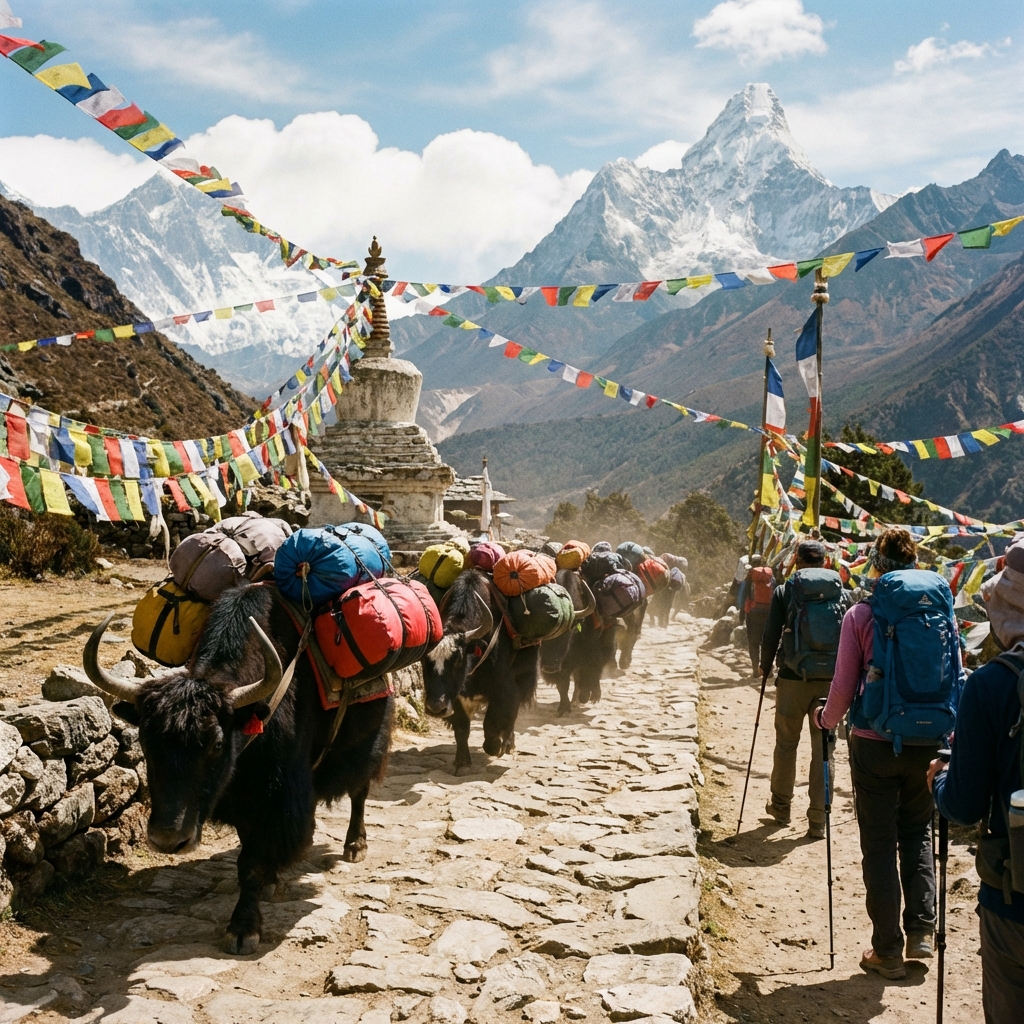
- Local cheese production at the famous Kyanjin cheese factory
- Warm hospitality from families whose livelihoods depend on trekkers
- Tibetan Buddhist customs including prayer flags, mani walls, and chortens
Pro Tip
Learn a few Tamang phrases before your trek. "Laso" (hello) and "Thuche" (thank you) will earn genuine smiles. The Tamang language is distinct from Nepali and closer to Tibetan—your effort to speak it shows respect for local culture.
The "Valley of Glaciers" Origin
When British mountaineer Bill Tilman first explored this valley in 1949, he was struck by the massive glaciers spilling down from the surrounding peaks. He named it the "Valley of Glaciers"—a name that still captures its essence today. The Langtang Glacier stretches 10 kilometers from the base of Langtang Lirung, while smaller glaciers cascade from Dorje Lakpa, Gangchhenpo, and Naya Kanga peaks.
Standing at Kyanjin Gompa and looking north toward Tibet, you're surrounded by a semicircle of 6,000-7,000 meter peaks—not the world's highest, but arguably some of its most dramatic and accessible.
Post-2015 Earthquake Recovery: A Story of Resilience
Understanding Langtang's Recent History
On April 25, 2015, the devastating Gorkha earthquake triggered a massive avalanche that buried the original Langtang Village under millions of tons of ice, rock, and debris. Over 350 people lost their lives—villagers, trekkers, and guides alike—in what became the single deadliest event of Nepal's earthquake tragedy. Understanding this history helps you appreciate the remarkable recovery you'll witness and the importance of your visit.
What Happened
The 7.8 magnitude earthquake struck at 11:56 AM on April 25, 2015. In Langtang Village, the shaking triggered a catastrophic landslide from the cliffs above. A massive wall of ice, rock, and debris—traveling at speeds up to 200 km/h—obliterated the village in seconds. The destruction was so complete that many victims were never recovered.
Nearby villages suffered extensive damage but were spared the worst. Kyanjin Gompa, higher in the valley, survived largely intact. But the human toll was devastating: 176 local Tamang residents, approximately 100 domestic tourists, and dozens of foreign trekkers and their guides perished.
The Remarkable Rebuilding
What you'll witness today is a testament to Tamang resilience and community spirit. Within months of the earthquake, villagers began returning. Within years, the trail was restored and new teahouses constructed. The rebuilt Langtang Village sits slightly above the original site, with improved structures and safer positioning.
Current status (2026):
- Trail fully restored with improved sections and better bridges
- Teahouse capacity returned to pre-earthquake levels
- New Langtang Village rebuilt with earthquake-resistant construction
- Memorial site honoring victims at the original village location
- Improved infrastructure including better water systems and trails
How Your Visit Supports Recovery
Tourism is the economic lifeline of Langtang communities. Your teahouse stay, meal purchases, and guide/porter employment directly support families rebuilding their lives. Unlike some development programs, this is direct, community-controlled economic development.
Ways to maximize your positive impact:
- Stay at locally-owned teahouses rather than outside-owned lodges
- Eat meals where you sleep—this is expected etiquette and supports your hosts
- Purchase local products like yak cheese, handicrafts, and sea buckthorn juice
- Hire local guides and porters from Tamang communities
- Pay fair prices—aggressive bargaining undermines community recovery
- Share the story—recommend Langtang to other trekkers
Visit the Memorial
The memorial site at the original Langtang Village is a moving experience. Take time to reflect on the lives lost and the community's remarkable recovery. Your guide can share stories of the event and the rebuilding process. Many families lost multiple members—your respectful presence honors their memory.
Route Overview: Syabrubesi to Kyanjin Gompa and Beyond
The Langtang Valley trek follows a classic out-and-back route, ascending the Langtang Khola (river) valley from Syabrubesi to Kyanjin Gompa, with optional extensions to surrounding viewpoints and high passes.
Trail Sections Overview
Section 1: Syabrubesi to Lama Hotel (2,480m) — Forest Ascent The trail begins with a steep climb through dense forest of oak, rhododendron, and bamboo. Waterfalls cascade alongside the path. Wildlife sightings are common—watch for langur monkeys, red pandas (rare), and diverse birdlife including the colorful Himalayan monal (Nepal's national bird).
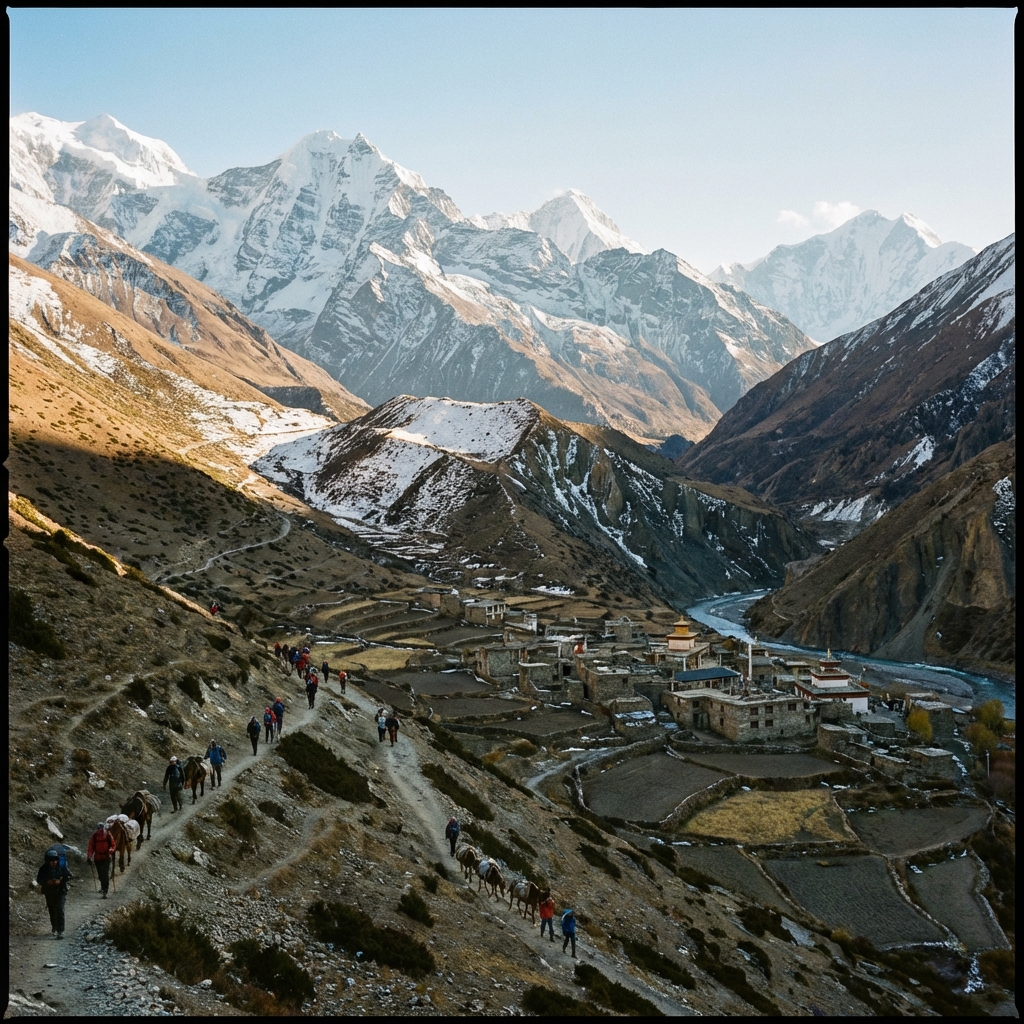
Section 2: Lama Hotel to Langtang Village (3,430m) — Cultural Transition Vegetation thins as you gain altitude. The forest gives way to alpine meadows and yak pastures. Traditional Tamang villages appear—stone houses with prayer flags fluttering from rooftops. Views of Langtang Lirung begin to dominate the northern skyline.
Section 3: Langtang Village to Kyanjin Gompa (3,870m) — Alpine Wonderland The valley opens dramatically. You're surrounded by massive peaks, glacial moraines, and high-altitude meadows. Kyanjin Gompa marks the practical end of the main trail, though multiple day hike options extend the adventure.
Section 4: Day Hikes from Kyanjin Gompa — Summit Opportunities
- Kyanjin Ri (4,773m): 3-4 hour round trip, excellent panoramic viewpoint
- Tserko Ri (5,033m): 5-7 hour round trip, highest accessible point, spectacular sunrise
- Langtang Glacier: 2-3 hour round trip, walk onto the glacier itself
- Langshisa Kharka (4,285m): 5-6 hour round trip, remote yak pastures
Altitude Profile
Complete Itinerary Options
Langtang's flexibility is a major advantage. Choose from three main itinerary options based on your available time and fitness level.
Short Itinerary: 7 Days (For Fit Trekkers with Limited Time)
This compressed schedule is achievable but demanding. Recommended only for those with prior trekking experience and good cardiovascular fitness.
| Day | Route | Altitude | Hours | Notes |
|---|---|---|---|---|
| 1 | Kathmandu to Syabrubesi | 1,550m | 7-8 hrs drive | Scenic but rough mountain road |
| 2 | Syabrubesi to Lama Hotel | 2,480m | 5-6 hrs | Steep forest climb |
| 3 | Lama Hotel to Kyanjin Gompa | 3,870m | 6-7 hrs | Long day, pass through Langtang Village |
| 4 | Kyanjin Gompa: Tserko Ri excursion | 5,033m | 5-7 hrs | Pre-dawn start for sunrise |
| 5 | Kyanjin Gompa to Lama Hotel | 2,480m | 5-6 hrs | Rapid descent |
| 6 | Lama Hotel to Syabrubesi | 1,550m | 4-5 hrs | Final trekking day |
| 7 | Syabrubesi to Kathmandu | 1,400m | 7-8 hrs drive | Return to capital |
Altitude Warning for 7-Day Itinerary
This itinerary involves rapid altitude gain on Day 3 (1,390m in one day). Monitor yourself carefully for AMS symptoms. If you experience severe headache, nausea, or disorientation, descend immediately. Consider the 10-day itinerary if you're new to high-altitude trekking.
Standard Itinerary: 10 Days (Recommended for Most Trekkers)
The optimal balance of pace and experience. Includes proper acclimatization and time to explore Kyanjin Gompa's surroundings.
| Day | Route | Altitude | Hours | Highlights |
|---|---|---|---|---|
| 1 | Arrive Kathmandu | 1,400m | - | Permit arrangements, gear check |
| 2 | Kathmandu to Syabrubesi | 1,550m | 7-8 hrs | Scenic mountain drive |
| 3 | Syabrubesi to Lama Hotel | 2,480m | 5-6 hrs | Forest trek, waterfall views |
| 4 | Lama Hotel to Langtang Village | 3,430m | 5-6 hrs | Enter alpine zone, earthquake memorial |
| 5 | Langtang Village to Kyanjin Gompa | 3,870m | 3-4 hrs | Arrival at valley head |
| 6 | Kyanjin Gompa: Acclimatization | 3,870m | 4-5 hrs | Kyanjin Ri hike, cheese factory |
| 7 | Kyanjin Gompa: Tserko Ri | 5,033m | 6-7 hrs | Summit day, sunrise views |
| 8 | Kyanjin Gompa to Lama Hotel | 2,480m | 5-6 hrs | Descent begins |
| 9 | Lama Hotel to Syabrubesi | 1,550m | 4-5 hrs | Final trek, celebration |
| 10 | Syabrubesi to Kathmandu | 1,400m | 7-8 hrs | Return drive, buffer day |
Extended Itinerary: 12-14 Days (Langtang + Gosainkunda)
For those with more time, combining Langtang with the sacred Gosainkunda Lakes creates one of Nepal's most rewarding and varied treks. This route crosses the 4,610m Laurebina La Pass with stunning views in all directions.
| Day | Route | Altitude | Hours | Highlights |
|---|---|---|---|---|
| 1 | Arrive Kathmandu | 1,400m | - | Preparations |
| 2 | Kathmandu to Syabrubesi | 1,550m | 7-8 hrs | Drive |
| 3 | Syabrubesi to Lama Hotel | 2,480m | 5-6 hrs | Forest trek |
| 4 | Lama Hotel to Langtang Village | 3,430m | 5-6 hrs | Alpine transition |
| 5 | Langtang Village to Kyanjin Gompa | 3,870m | 3-4 hrs | Valley head |
| 6 | Kyanjin Gompa: Tserko Ri | 5,033m | 6-7 hrs | Summit day |
| 7 | Kyanjin Gompa to Lama Hotel | 2,480m | 5-6 hrs | Return descent |
| 8 | Lama Hotel to Thulo Syabru | 2,230m | 5-6 hrs | Alternative descent route |
| 9 | Thulo Syabru to Shin Gompa | 3,330m | 5-6 hrs | Climb toward Gosainkunda |
| 10 | Shin Gompa to Gosainkunda | 4,380m | 4-5 hrs | Sacred lake destination |
| 11 | Gosainkunda to Ghopte via Laurebina La | 3,440m | 6-7 hrs | High pass crossing (4,610m) |
| 12 | Ghopte to Kutumsang | 2,470m | 5-6 hrs | Descend toward Helambu |
| 13 | Kutumsang to Chisapani | 2,215m | 5-6 hrs | Final ridge walking |
| 14 | Chisapani to Sundarijal to Kathmandu | 1,400m | 4-5 hrs | Trek end, drive to city |
Kyanjin Gompa: The Spiritual Heart of Langtang
Kyanjin Gompa (3,870m) is the cultural and geographic heart of the upper Langtang Valley. This small settlement—home to perhaps 50 permanent residents and a centuries-old monastery—serves as base camp for exploring the valley's highest reaches.
The Monastery
The Buddhist monastery at Kyanjin Gompa dates back several hundred years and remains an active religious site. Monks from local Tamang families maintain daily rituals, and the monastery welcomes respectful visitors. During major festivals (especially Losar, Tibetan New Year, in February), the gompa hosts colorful celebrations.
Visitor etiquette:
- Remove shoes before entering prayer halls
- Walk clockwise around religious structures
- Ask permission before photographing monks or ceremonies
- Small donations (NPR 100-200) are appreciated but not required
- Dress modestly (cover shoulders and knees)
The Famous Cheese Factory
One of Langtang's unique attractions is the yak cheese factory at Kyanjin Gompa—Nepal's first such operation, established in 1955 with Swiss assistance. The factory produces hard cheese similar to Gruyere using traditional methods and local yak milk.
What to know:
- Peak production: June-September (when yaks graze highest)
- Products available: Hard cheese, fresh cheese, yogurt
- Prices: NPR 700-900 per kilogram
- Tasting: Free samples usually available
- Best purchase: Aged hard cheese makes an excellent trail snack or souvenir
The cheese factory represents an early model of sustainable mountain development—still operating after 70 years and providing income to local herding families.
Accommodation at Kyanjin Gompa
Multiple teahouses offer accommodation ranging from basic to relatively comfortable by trekking standards.
Information current as of January 2025.
Kyanjin Gompa
3,870m
Room: $10-15/night
Dal Bhat: $6-10
Valley's main settlement. Multiple lodge options. Cold nights—request extra blankets. Some lodges have solar heating in common areas.
Top teahouse recommendations:
- Peaceful Guest House: Clean rooms, friendly family, excellent dal bhat
- Langtang View Lodge: Best views of Langtang Lirung, reliable hot water
- Yala Peak Guest House: Popular with climbers, knowledgeable owner
Day Hike Options from Kyanjin Gompa
Spending at least two nights at Kyanjin Gompa allows proper acclimatization and time to explore the surrounding area.
Kyanjin Ri (4,773m) — Half Day A relatively straightforward climb directly above the village. The trail is steep but short, reaching the summit in 2-3 hours. Views encompass the entire upper valley, Langtang Glacier, and surrounding peaks. Ideal for acclimatization before attempting Tserko Ri.
Langtang Glacier — Half Day An easy walk northwest from Kyanjin Gompa leads to the snout of the Langtang Glacier. You can walk onto the ice itself (with caution). Surreal scenery of ice caves, seracs, and glacial lakes. Best in morning before afternoon melt.
Langshisa Kharka (4,285m) — Full Day A longer excursion continuing up-valley past Kyanjin Gompa to remote yak pastures. Few tourists reach this point. Wild landscape with possible wildlife sightings (Himalayan tahr, blue sheep). Return the same day or consider camping with proper permits.
Tserko Ri Summit: The Unmissable 5,033m Viewpoint
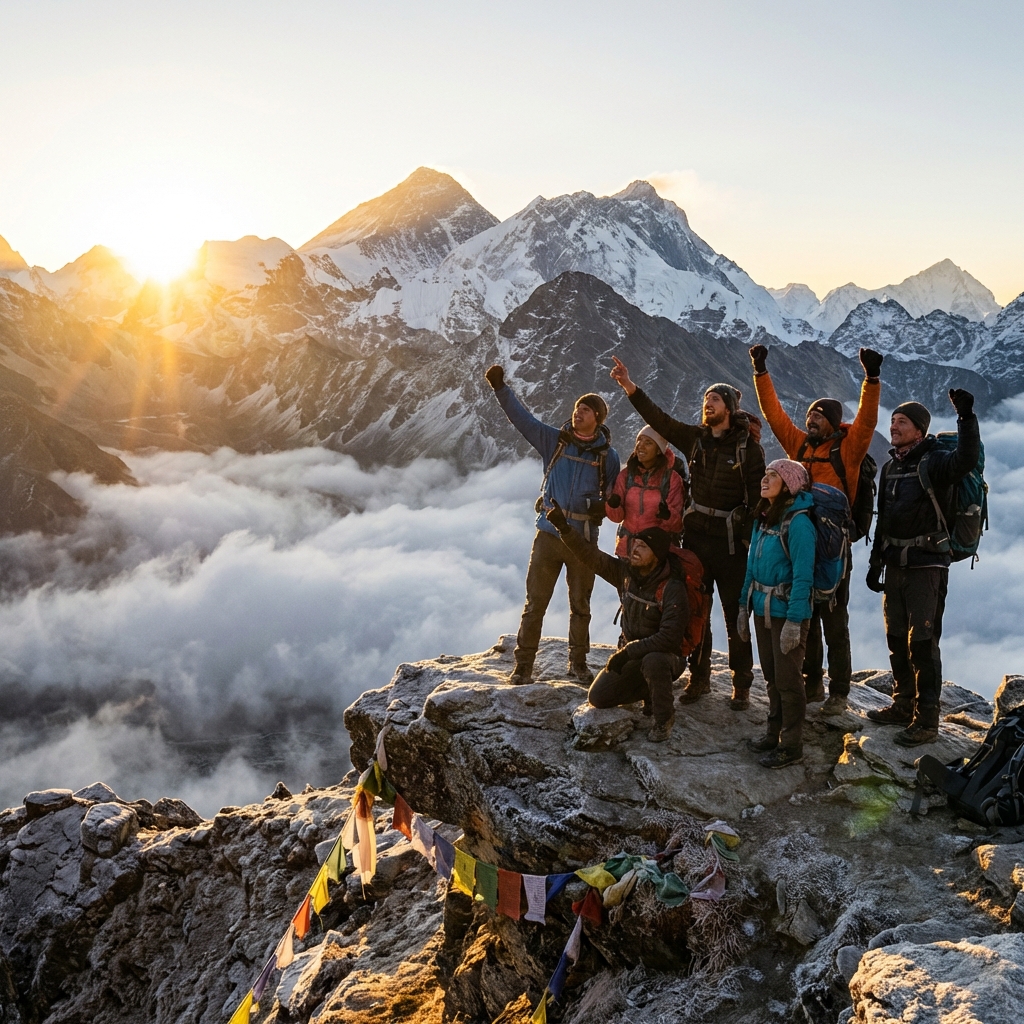
Climbing Tserko Ri is the highlight of the Langtang Valley trek for most trekkers. This 5,033-meter viewpoint offers arguably the finest accessible panorama in the region—and one of the best sunrise experiences in all of Nepal.
Why Tserko Ri is Worth the Effort
Standing atop Tserko Ri at sunrise, you're surrounded by a 360-degree amphitheater of Himalayan giants:
To the North (Tibet):
- Langtang Lirung (7,227m) — the valley's dominant peak, painfully close
- Kimshung (6,745m) — pyramidal peak on the Tibetan border
- Shishapangma (8,027m) — visible on clear days, Tibet's highest peak entirely within its borders
To the East:
- Dorje Lakpa (6,966m) — dramatic ice-clad wall
- Gangchhenpo (6,387m) — technical climbing peak
- Views toward Jugal Himal and beyond
To the South:
- The entire Langtang Valley spread below
- Distant views of Ganesh Himal
- On exceptional days, glimpses of Manaslu and Annapurnas
To the West:
- Naya Kanga (5,844m) — popular climbing peak
- Ganchenpo (6,387m)
The Climb: What to Expect
Statistics:
- Starting point: Kyanjin Gompa (3,870m)
- Summit: Tserko Ri (5,033m)
- Elevation gain: 1,163m
- Distance: ~4 km one way
- Duration: 5-7 hours round trip
- Difficulty: Strenuous but non-technical
Trail description: The path begins behind the teahouses at Kyanjin Gompa, climbing steeply through yak pastures before zigzagging up increasingly rocky terrain. No technical climbing required, but some sections involve scrambling over boulders. The final approach to the summit is a rocky ridge with some exposure.
Schedule for sunrise:
- 3:30-4:00 AM: Wake up, light breakfast
- 4:00-4:30 AM: Begin climbing with headlamp
- 6:00-6:30 AM: Summit arrival before sunrise
- 6:30-7:15 AM: Sunrise viewing (time varies by season)
- 7:30-9:00 AM: Descent
- 9:30-10:00 AM: Return to Kyanjin Gompa for breakfast
Pro Tip
The pre-dawn climb is cold—temperatures can drop to -10°C or below at the summit. Wear all your layers, including down jacket and gloves. Bring a thermos of hot tea or water (regular bottles may freeze). Carry snacks—you'll need energy for the climb. And don't forget spare batteries for your headlamp and camera!
Altitude Considerations
At 5,033m, Tserko Ri reaches serious altitude. Proper acclimatization is essential:
Minimum requirements:
- At least one full day at Kyanjin Gompa (3,870m) before attempting
- No AMS symptoms the previous day
- Ability to sleep well at 3,870m
Warning signs requiring descent:
- Severe headache unresponsive to medication
- Persistent nausea or vomiting
- Difficulty breathing at rest
- Confusion or disorientation
- Inability to walk straight
Realistic success rate: Approximately 70-80% of well-acclimatized trekkers reach the Tserko Ri summit. Those who don't typically turn back due to weather, fatigue, or mild AMS symptoms. There's no shame in turning around—the views from partway up are still magnificent.
Kyanjin Ri Alternative
If Tserko Ri seems too ambitious, Kyanjin Ri (4,773m) offers an excellent alternative. The shorter climb (2-3 hours round trip) still provides spectacular views and serves as ideal acclimatization. Many trekkers climb Kyanjin Ri on their first afternoon at Kyanjin Gompa, then attempt Tserko Ri the following morning.
Day-by-Day Detailed Guide (Standard 10-Day Itinerary)
Day 1: Arrival in Kathmandu (1,400m)
Your Langtang adventure begins in Nepal's chaotic, captivating capital. After arriving at Tribhuvan International Airport, your agency representative will transfer you to your hotel in Thamel or a quieter neighborhood.
Essential tasks:
- Confirm permits are arranged (Langtang National Park Entry + TIMS)
- Final gear check—Thamel has excellent rental shops for sleeping bags, down jackets
- Withdraw sufficient cash—no ATMs after Syabrubesi
- Early dinner and rest for early departure
Accommodation: Hotel in Kathmandu (included by most agencies)
Day 2: Kathmandu to Syabrubesi (1,460m)
The drive to Syabrubesi is an adventure in itself—7-8 hours through terraced hillsides, along rushing rivers, and eventually up a rough mountain road carved into steep cliffs.
Drive details:
- Distance: ~140 km
- Duration: 7-8 hours (can be longer with traffic or road conditions)
- Highlights: Trisuli River valley, views of Ganesh Himal, Tamang villages
- Road condition: Paved until Dhunche, then rough and unpaved to Syabrubesi
The drive is spectacular but exhausting. Motion sickness medication helps on the winding sections. Bring snacks and water—meal stops are basic.
Information current as of January 2025.
Syabrubesi
1,550m
Room: $5-8/night
Dal Bhat: $4-6
Trek trailhead. Stock up on snacks and essentials. Last reliable phone signal. The Tatopani hot springs are a 20-minute walk—perfect after the long drive.
Day 3: Syabrubesi to Lama Hotel (2,480m)
The trek begins with a steep climb through lush forest—one of the most biodiverse sections of the route.
Trek details:
- Distance: 10 km
- Duration: 5-6 hours
- Elevation gain: 930m
- Terrain: Forest trails, suspension bridges, some steep sections
The trail crosses suspension bridges over the Langtang Khola multiple times. Dense rhododendron forest (spectacular in spring bloom) gradually gives way to oak and maple. Watch for wildlife—langur monkeys are common, red pandas rare but possible.
Lunch stop: Bamboo (1,960m) offers several teahouses with basic meals.
Information current as of January 2025.
Lama Hotel
2,480m
Room: $5-10/night
Dal Bhat: $5-7
Named for the red pandas (lama in Tibetan) occasionally spotted nearby. Multiple teahouse options. Cold nights begin—bring warm sleeping layers.
Day 4: Lama Hotel to Langtang Village (3,430m)
You'll emerge from the forest into the upper valley today—a dramatic landscape transition as views of surrounding peaks open up.
Trek details:
- Distance: 13 km
- Duration: 5-6 hours
- Elevation gain: 950m
- Terrain: Forest transitioning to alpine meadows
The trail passes through several small settlements: Gumnachok, Ghora Tabela (old Tibetan yak pasture checkpoint), and finally Langtang Village. Views of Langtang Lirung (7,227m) grow increasingly dramatic as you ascend.
Memorial visit: Take time at the memorial site for victims of the 2015 earthquake. The massive debris field from the avalanche is still visible on the hillside above. This is a solemn place—respect the gravity of what happened here.
Information current as of January 2025.
Langtang Village
3,430m
Room: $8-12/night
Dal Bhat: $6-8
Rebuilt since 2015 avalanche. The new village sits slightly higher than the original. Visit the memorial to honor those who perished. Strong community spirit—your stay directly supports recovery.
Day 5: Langtang Village to Kyanjin Gompa (3,870m)
A shorter day allows time to explore Kyanjin Gompa upon arrival and begin acclimatization.
Trek details:
- Distance: 5 km
- Duration: 3-4 hours
- Elevation gain: 440m
- Terrain: Alpine meadows, yak pastures, moraines
The valley opens dramatically as you leave Langtang Village. Yaks graze on high pastures. Prayer flags flutter from every prominence. The monastery's white buildings appear in the distance, backed by the massive wall of peaks marking the Tibetan border.
Afternoon activities:
- Explore Kyanjin Gompa village
- Visit the cheese factory
- Short acclimatization walk toward Kyanjin Ri
- Rest and hydrate for tomorrow
Day 6: Kyanjin Gompa Acclimatization Day (3,870m)
A critical rest day following the "climb high, sleep low" principle. Don't skip this even if you feel fine—altitude sickness symptoms often appear 24-48 hours after rapid ascent.
Recommended schedule:
- Morning: Climb Kyanjin Ri (4,773m) — 3-4 hour round trip
- Lunch: Return to Kyanjin Gompa
- Afternoon: Visit monastery, cheese factory, explore village
- Evening: Early dinner, early sleep before Tserko Ri attempt
Kyanjin Ri details: The trail climbs steeply from behind the teahouses. Follow the obvious path up the grassy ridge, then rocky terrain to the summit. Views are excellent—consider this a preview of tomorrow's even more spectacular panorama.
Day 7: Tserko Ri Summit Day (5,033m)
The highlight of your trek—pre-dawn ascent to one of Nepal's finest accessible viewpoints.
Schedule:
- 3:30 AM: Wake up, hot drink, light snack
- 4:00-4:30 AM: Depart with headlamp
- 6:00-6:30 AM: Summit arrival
- 6:30-7:15 AM: Sunrise viewing and photography
- 7:30-9:00 AM: Descent
- 9:30-10:00 AM: Breakfast at teahouse
- Rest of day: Relax, explore, or optional second excursion
What you'll see: The 360-degree panorama from Tserko Ri is unforgettable. Langtang Lirung's massive bulk fills the northern sky. The Tibetan plateau stretches beyond the border peaks. On exceptional days, you can see Shishapangma, the world's 14th-highest peak, entirely within Tibet.
Day 8: Kyanjin Gompa to Lama Hotel (2,480m)
Descent begins—the rapid altitude drop will make breathing noticeably easier.
Trek details:
- Distance: 18 km
- Duration: 5-6 hours
- Elevation loss: 1,390m
- Terrain: Retracing your ascent route
The downhill trek passes quickly. Stop again at the memorial site if you wish. Observe details you missed on the way up—the forest seems different descending. Arrive at Lama Hotel with time to celebrate your successful trek.
Day 9: Lama Hotel to Syabrubesi (1,460m)
Final trekking day—a satisfying descent through forest to the trailhead.
Trek details:
- Distance: 10 km
- Duration: 4-5 hours
- Elevation loss: 930m
- Terrain: Forest trails, suspension bridges
The descent feels different than the ascent—you're returning triumphant from the glacier valley. Take time to appreciate the forest sounds, the rushing river, the waterfalls you rushed past ascending.
Evening options:
- Visit Tatopani hot springs (20-minute walk from Syabrubesi)
- Celebratory dinner with your guide and porter
- Tip distribution (customary and expected)
Day 10: Syabrubesi to Kathmandu (1,400m)
Return drive to the capital. The road feels less intimidating on the way back—or perhaps you've simply adjusted to Nepali mountain driving.
Drive details:
- Duration: 7-8 hours
- Arrival: Late afternoon in Kathmandu
- Buffer purpose: If road conditions cause delays, you won't miss flights
This day also serves as a buffer for any unexpected delays. If the drive completes on schedule, enjoy an evening in Kathmandu—Thamel's restaurants and shops await.
Difficulty Assessment: Is Langtang Right for You?
Why Langtang is Ideal for First-Time Himalayan Trekkers
The Langtang Valley trek has earned its reputation as an excellent introduction to high-altitude trekking for several key reasons:
1. Moderate Maximum Altitude At 5,033m (Tserko Ri), Langtang reaches serious but manageable altitude. This is lower than Everest Base Camp (5,364m) yet high enough to experience true alpine conditions. The standard itinerary allows natural acclimatization without the extended time commitments of higher treks.
2. Gradual Altitude Profile The valley's geography forces a gradual ascent. You gain altitude steadily over 3-4 days, sleeping higher each night but never making dangerous jumps. The "climb high, sleep low" principle is easily applied with day hikes from Kyanjin Gompa.
3. Well-Established Trail Infrastructure Teahouses appear every few hours along the route. Emergency evacuation by helicopter is possible from multiple points. The trail is well-marked and maintained—no route-finding skills required.
4. No Technical Skills Required The entire trek is hiking on trails—no climbing equipment, rope work, or mountaineering experience needed. The Tserko Ri summit involves scrambling over boulders but nothing technical.
5. Flexible Duration Unlike Everest (minimum 12 days) or Annapurna Circuit (12-21 days), Langtang can be completed in 7-10 days, accommodating various schedules.
Difficulty Comparison
| Trek | Max Altitude | Days Above 3,500m | Technical Difficulty | Overall Rating |
|---|---|---|---|---|
| Ghorepani Poon Hill | 3,210m | 1-2 days | None | Easy-Moderate |
| Langtang Valley | 5,033m | 3-4 days | None | Moderate |
| Annapurna Base Camp | 4,130m | 2-3 days | None | Moderate |
| Everest Base Camp | 5,364m | 6-8 days | None | Moderate-Challenging |
| Annapurna Circuit | 5,416m | 3-4 days | None | Challenging |
| Three Passes (Everest) | 5,545m | 10+ days | Some glacier travel | Very Challenging |
Physical Fitness Requirements
Minimum fitness baseline:
- Walk 10-15 km on hilly terrain without significant fatigue
- Climb 800-1,000m elevation in a single day comfortably
- Handle 5-6 hours of walking daily for 5-7 consecutive days
- Carry a 5-8 kg daypack throughout
Recommended training (8-12 weeks before trek):
| Weeks | Activity | Details |
|---|---|---|
| 1-4 | Cardio base | 30-45 min walking/jogging 4x/week |
| 5-8 | Stair work | Include stairs or inclines, build to 1-hour sessions |
| 9-10 | Weighted hiking | Weekend hikes with 5-8 kg pack, 3-4 hours |
| 11-12 | Back-to-back days | Two consecutive hiking days to simulate trek |
Who Should Reconsider Langtang?
While accessible to most reasonably fit adults, the following situations warrant consultation with a doctor or reconsideration:
- Severe respiratory conditions (chronic asthma, COPD)
- Heart conditions or recent cardiac events
- Recent major surgery
- Pregnancy (especially second and third trimesters)
- Inability to commit minimum 7 days
- Unwillingness to turn back if altitude symptoms emerge
For a gentler introduction, consider the Ghorepani Poon Hill trek (4-5 days, maximum 3,210m) first. Alternatively, Mardi Himal offers another shorter option in the Annapurna region. For a deeper honest assessment of the trail's demands, read our Langtang Valley difficulty assessment.
Best Time to Visit: Month-by-Month Analysis
| Month | High | Low | Conditions | Crowds | Notes |
|---|---|---|---|---|---|
| January | -2°C | -15°C | 20mm | Very Low | Cold, possible snow above Lama Hotel, clear skies |
| February | 2°C | -12°C | 25mm | Low | Cold improving, good visibility, quiet trails |
| MarchBest | 8°C | -6°C | 45mm | Moderate | Spring begins, rhododendrons blooming, warming |
| AprilBest | 12°C | -2°C | 65mm | Moderate-High | Peak spring, forests in full bloom, ideal weather |
| MayBest | 14°C | 2°C | 120mm | Moderate | Warm, pre-monsoon clouds, still good trekking |
| June | 12°C | 5°C | 300mm | Very Low | Monsoon begins, heavy rain, leeches, poor visibility |
| July | 12°C | 6°C | 450mm | Very Low | Peak monsoon, trail conditions difficult, not recommended |
| August | 12°C | 6°C | 400mm | Very Low | Monsoon continues, landslide risk, not recommended |
| September | 10°C | 3°C | 220mm | Low | Monsoon ending, improving conditions late month |
| OctoberBest | 10°C | -4°C | 35mm | Moderate-High | Peak autumn, best visibility, excellent conditions |
| NovemberBest | 6°C | -8°C | 15mm | Moderate | Excellent weather, cooling temps, clear skies |
| December | 2°C | -12°C | 15mm | Low | Cold, possible snow, fewer crowds, budget-friendly |
Spring Season (March-May)
Pros:
- Rhododendron forests in spectacular bloom (especially March-April)
- Warming temperatures, comfortable trekking
- Vibrant greenery throughout lower elevations
- Wildlife more active
- Longer daylight hours
Cons:
- Afternoon clouds may obscure peak views
- Pre-monsoon rain possible in late May
- Slightly more crowded than autumn
Best for: Photographers, flower enthusiasts, those who prefer warmer conditions
Autumn Season (October-November)
Pros:
- Clearest skies and best mountain visibility
- Stable, predictable weather
- Post-harvest season, golden landscapes
- Major festivals (Dashain, Tihar) add cultural dimension
- Comfortable temperatures
Cons:
- Peak crowds (though still quieter than Everest/Annapurna)
- Cooler nights at Kyanjin Gompa
- Book teahouses ahead during Dashain period
Best for: First-time trekkers, those prioritizing mountain views
Shoulder and Off-Season Considerations
Early December: Cold but clear. Fewer trekkers, excellent value. Bring serious cold-weather gear for nights above 3,000m.
Late February-Early March: Winter easing, trails quiet, spring approaching. Excellent budget period with improving conditions.
Monsoon (June-August): Not recommended. Heavy rainfall, leeches below 2,500m, trail washouts, landslide risk. Some adventurous trekkers attempt monsoon trips, but conditions are challenging. For comprehensive seasonal guidance, see our best time to trek Nepal guide.
Cost Breakdown: Nepal's Most Affordable Major Trek
One of Langtang's most compelling advantages is its cost-effectiveness. The absence of Lukla flights (Everest) and shorter duration make it significantly cheaper than other major treks while offering comparable experiences.
Why Langtang is Budget-Friendly
- No expensive internal flights: The Kathmandu-Lukla flight for Everest costs $215-400+ round trip
- Shorter duration: 7-10 days vs 12-16 for Everest/Annapurna
- Lower teahouse prices: Less developed tourism infrastructure means lower prices
- Road access from Kathmandu: Bus/jeep transport ($20-30) vs flights
- Fewer "extras": Less commercialized, fewer opportunities for spending
Budget Framework (2026)
| Budget Level | Total Cost | What It Includes |
|---|---|---|
| Budget | $800-1,100 | Bus transport, basic teahouses, dal bhat meals, self-guided or basic guide |
| Mid-Range | $1,200-1,500 | Jeep transport, comfortable teahouses, varied meals, experienced guide, porter |
| Premium | $1,600-1,800 | Private jeep, best available lodges, full support, premium agency |
Detailed Cost Breakdown (10-Day Standard Itinerary)
Fixed Costs:
| Item | Cost (USD) | Notes |
|---|---|---|
| Langtang National Park Permit | $23 (NPR 3,000) | Required for all trekkers |
| TIMS Card | $15 (NPR 2,000) | Trekker registration |
| Kathmandu-Syabrubesi transport | $20-40 | Bus cheaper, jeep faster |
| Total Fixed | $58-78 |
Variable Costs (Budget Level):
| Item | Daily Cost | 10-Day Total | Notes |
|---|---|---|---|
| Accommodation | $5-10 | $50-100 | Basic rooms, shared bathroom |
| Meals (3x daily) | $12-18 | $120-180 | Dal bhat = best value |
| Hot showers | $2-3 | $10-15 | Higher at altitude |
| Phone charging | $2-3 | $10-15 | Higher at altitude |
| Snacks, drinks | $3-5 | $30-50 | Tea, chocolate, biscuits |
| Daily Variable | $24-39 | $220-360 |
Optional Costs:
| Item | Cost | Notes |
|---|---|---|
| Guide (licensed) | $25-35/day | Recommended for first-timers |
| Porter | $20-25/day | Carries up to 15kg |
| Travel insurance | $50-100 | Essential—must cover altitude |
| Gear rental (sleeping bag) | $2/day | Available in Kathmandu |
| Gear rental (down jacket) | $3/day | Available in Kathmandu |
| Tips (guide + porter) | $80-150 | Customary and expected |
Sample Budget Totals
Budget Solo Trekker (10 days, no guide):
- Permits: $38
- Transport: $40
- Accommodation/meals: $300
- Extras: $50
- Insurance: $75
- Total: ~$500-550 (not including international flights or Kathmandu hotels)
Mid-Range with Guide and Porter (10 days):
- Agency package: $800-1,000 (includes permits, guide, porter, accommodation, meals)
- Personal extras: $100
- Tips: $120
- Insurance: $75
- Kathmandu hotels: $50
- Total: ~$1,150-1,350
Langtang vs Other Treks: Cost Comparison
| Trek | Duration | Permit Costs | Transport | Est. Total |
|---|---|---|---|---|
| Langtang Valley | 7-10 days | $38 | $40-80 | $800-1,500 |
| Annapurna Base Camp | 10-14 days | $40-45 | $50-100 | $1,200-2,500 |
| Everest Base Camp | 12-16 days | $45-50 | $350-400 (flights) | $1,500-3,000+ |
| Annapurna Circuit | 12-21 days | $40-45 | $50-100 | $1,300-2,500 |
Bottom line: Langtang offers 70-80% of the Everest Base Camp experience at 50-60% of the cost. For a line-by-line breakdown of permits, transport, food, and guide fees, see our dedicated Langtang Valley cost breakdown.
Langtang vs Other Treks: Choosing the Right Route
Langtang vs Everest Base Camp
| Factor | Langtang Valley | Everest Base Camp |
|---|---|---|
| Maximum altitude | 5,033m (Tserko Ri) | 5,364m (EBC) / 5,545m (Kala Patthar) |
| Duration | 7-10 days | 12-16 days |
| Access | 7-8 hour drive | Lukla flight (weather dependent) |
| Cost | $215-1,500 | $1,500-3,000+ |
| Crowds | Low-Moderate | High (peak season) |
| Iconic factor | Moderate | Very High (world's highest peak) |
| Cultural immersion | Excellent (Tamang) | Good (Sherpa) |
| Altitude sickness risk | Moderate | Higher |
| Teahouse quality | Good | Excellent |
| Flight delay risk | None | Significant |
Choose Langtang if: You have limited time, want to avoid flight logistics, prefer fewer crowds, or seek better value.
Choose Everest if: Seeing Everest is a life goal, you have 2+ weeks, budget is flexible, and you're comfortable with Lukla flight uncertainty. See our complete Everest region guide for more information.
Langtang vs Annapurna Base Camp
| Factor | Langtang Valley | Annapurna Base Camp |
|---|---|---|
| Maximum altitude | 5,033m | 4,130m |
| Duration | 7-10 days | 10-14 days |
| Access from Kathmandu | 7-8 hours | 14-16 hours (via Pokhara) |
| Cost | $800-1,500 | $1,200-2,500 |
| Crowds | Low-Moderate | Moderate |
| Ecological diversity | Good | Excellent (jungle to glacier) |
| Cultural immersion | Excellent (Tamang) | Very Good (Gurung) |
| Altitude challenge | Higher | Lower |
| Mountain views | Excellent | Spectacular (closer to 8,000ers) |
| Physical difficulty | Moderate | Moderate |
Choose Langtang if: You want easier logistics from Kathmandu, fewer crowds, or higher altitude experience.
Choose Annapurna BC if: You prioritize diverse landscapes, lower altitude risk, or being surrounded by 8,000m peaks.
Langtang vs Ghorepani Poon Hill
| Factor | Langtang Valley | Poon Hill |
|---|---|---|
| Maximum altitude | 5,033m | 3,210m |
| Duration | 7-10 days | 4-5 days |
| Difficulty | Moderate | Easy-Moderate |
| Altitude sickness risk | Moderate | Very Low |
| Crowds | Low-Moderate | High |
| Mountain views | Excellent | Excellent (panoramic) |
| Cost | $800-1,500 | $500-900 |
| Best for | First major Himalayan trek | Trekking introduction |
Choose Langtang if: You want a "real" high-altitude experience and have 7+ days.
Choose Poon Hill if: You have limited time, want an easier introduction, or are testing your hiking abilities.
Extension Options: Gosainkunda, Helambu, and Beyond
Gosainkunda Lakes Extension (Add 4-5 Days)
The sacred Gosainkunda Lakes are among Nepal's most important Hindu and Buddhist pilgrimage sites. Combining them with Langtang creates a spectacular two-week adventure crossing the 4,610m Laurebina La Pass.
Highlights:
- Gosainkunda Lake (4,380m): Crystal-clear sacred lake where Lord Shiva is said to have plunged his trident to create water
- Laurebina La Pass (4,610m): High crossing with views stretching from Langtang Lirung to the Annapurnas
- Diverse terrain: From Langtang's glacial valley to alpine lakes to rhododendron forests
- Pilgrimage atmosphere: During Janai Purnima festival (August), thousands of pilgrims trek here
Route from Langtang: Instead of returning directly to Syabrubesi, descend to Thulo Syabru, then climb to Shin Gompa and Gosainkunda. Cross Laurebina La Pass to reach the Helambu region, eventually descending to Sundarijal near Kathmandu.
For detailed Gosainkunda information, see our Gosainkunda Trek Guide.
Helambu Extension (Add 5-7 Days)
The Helambu region south of Langtang offers gentler terrain, lower altitudes, and deep immersion in Tamang and Sherpa culture. This extension creates a complete traverse of the Langtang National Park area.
Highlights:
- Lower altitude: Maximum ~4,000m, easier on the body
- Rich culture: Traditional Tamang and Sherpa villages largely unchanged by tourism
- Scenic ridges: Walking along high ridges with continuous mountain views
- Forest diversity: Dense rhododendron, oak, and maple forests
Best for: Trekkers wanting cultural immersion, those with altitude concerns, photographers seeking village life subjects.
Tamang Heritage Trail (Add 3-4 Days)
This newer trail focuses specifically on Tamang culture, passing through traditional villages with homestay accommodation.
Route: Syabrubesi → Gatlang → Tatopani → Thuman → Briddim → rejoin main Langtang trail (see our Tamang Heritage Trail guide for the full village-by-village breakdown)
Highlights:
- Homestay experiences: Live with local families
- Hot springs at Tatopani: Natural hot springs for relaxation
- Traditional architecture: Stone houses, carved doorways, Buddhist symbols
- Less trodden: Far fewer tourists than main route
Alternative Return Route via Sherpa Gaun and Khangjim
Rather than retracing the same trail all the way to Syabrubesi, many trekkers take a quieter high route on the descent through the villages of Sherpa Gaun and Khangjim (Kanjim). After dropping from Kyanjin Gompa to Lama Hotel, you branch onto a forested ridge trail that contours above the Langtang Khola instead of following the valley floor.
Why choose it:
- Far fewer trekkers than the main trail—genuine solitude
- Different forest, ridge, and village scenery on the way out
- Glimpses of Sherpa and Tamang village life rarely seen on the standard route
- Adds little or no time to a standard 10-day itinerary
The route is slightly more up-and-down than the direct descent, so it suits trekkers who still have energy in the legs. Ask your guide to route the final day or two via Sherpa Gaun and Khangjim before rejoining the trail to Syabrubesi.
Climbing Peaks
For trekkers interested in mountaineering, Langtang offers several accessible peaks:
Naya Kanga (5,844m): Popular climbing peak with moderate difficulty, accessible from Kyanjin Gompa. Requires 2-3 extra days and proper climbing gear.
Yala Peak (5,520m): One of Nepal's easiest climbing peaks, technical but achievable with basic mountaineering skills. Often combined with Langtang trek.
Permits required: Nepal Mountaineering Association (NMA) climbing permit ($250-350 depending on peak).
Wildlife and Nature in Langtang National Park
Langtang National Park, established in 1976, protects 1,710 square kilometers of spectacular Himalayan landscape. The park's ecological diversity—from subtropical forests at 1,000m to glacial peaks above 7,000m—supports remarkable biodiversity.
Mammal Species
Red Panda (Ailurus fulgens) Langtang is one of Nepal's best locations for spotting the elusive red panda. These raccoon-sized creatures live in bamboo forests between 2,500-4,000m. Sightings are rare but possible, especially in the forest zone between Lama Hotel and Langtang Village. Look for russet-colored animals in tree canopies during early morning or late afternoon.
Himalayan Tahr (Hemitragus jemlahicus) These wild goat-relatives are common on rocky slopes above the treeline. You'll likely spot them on cliffs near Kyanjin Gompa or during the Tserko Ri climb. Males have impressive manes and can weigh up to 100 kg.
Himalayan Black Bear (Ursus thibetanus) Present but rarely seen, black bears inhabit the forested zones. They're generally shy and avoid humans. Keep food stored properly at teahouses.
Snow Leopard (Panthera uncia) The legendary "ghost of the mountains" inhabits Langtang's highest reaches but is extremely rarely seen. Camera trap studies confirm their presence in remote areas near the Tibetan border.
Other mammals: Musk deer, barking deer, Himalayan marmot, pika, langur monkey, wild boar.
Bird Species
Langtang's birdlife is exceptional, with over 250 recorded species.
Himalayan Monal (Lophophorus impejanus) Nepal's national bird, a spectacular pheasant with iridescent plumage. Males display brilliant greens, purples, and reds. Common in forested areas between 2,500-4,500m. Listen for their distinctive whistling calls.
Blood Pheasant (Ithaginis cruentus) Named for males' blood-red breast feathers, these birds are common in rhododendron forests and alpine scrub.
Other notable birds: Himalayan griffon vulture, golden eagle, snow pigeon, grandala, white-capped river chat, various laughingthrushes and warblers.
Flora
Rhododendron Forests Langtang hosts 12 species of rhododendron, creating spectacular displays from March through May. Species range from giant tree rhododendrons at lower elevations to dwarf alpines near the treeline.
Bamboo Zones Dense bamboo forests between 2,000-3,000m provide red panda habitat and distinctive tunnel-like trail sections.
Alpine Meadows Above the treeline, alpine meadows bloom with wildflowers from June through August. Blue poppies, primulas, and edelweiss dot the landscape.
Medicinal Plants The region is renowned for medicinal plants including yarsagumba (caterpillar fungus), highly valued in traditional Chinese medicine.
Best Wildlife Viewing Tips
- Start early: Most wildlife is active at dawn
- Stay quiet: Reduce conversation when passing through forest
- Use binoculars: Essential for bird watching and scanning cliffs for tahr
- Ask locals: Teahouse owners often know recent sighting locations
- Be patient: Wildlife sightings require time and luck
Tamang Culture: Living Heritage of the Himalaya
The Tamang people are among Nepal's largest ethnic groups, numbering over 1.5 million. Their homeland spans the hills surrounding Kathmandu Valley, with the Langtang region representing their cultural heartland. Understanding Tamang traditions enriches your trek immeasurably.
Origins and History
The Tamang trace their ancestry to Tibet, with migration likely occurring 1,000+ years ago. The name "Tamang" derives from Tibetan words meaning "horse traders"—reflecting their historical role in trans-Himalayan commerce. Despite their large population, the Tamang were historically marginalized in Nepal's caste hierarchy, their culture overlooked in favor of dominant groups.
Religion and Beliefs
Tamang religious practice blends Tibetan Buddhism with older animist and Bon traditions.
Buddhist Elements:
- Monasteries (gompas) in every village
- Prayer flags on homes, trails, and peaks
- Mani walls (stone walls inscribed with prayers)
- Chortens (Buddhist shrines) marking trail junctions
- Lama priests conducting ceremonies
Traditional Elements:
- Shamanic practitioners (bombo/jhankri) for healing
- Nature spirits requiring propitiation
- Ancestor worship ceremonies
- Sacred landscapes and forbidden areas
Village Life
Traditional Tamang villages follow consistent patterns:
Architecture: Stone houses with wooden frames, slate or metal roofing, hand-carved wooden doorways. Ground floors house animals; upper floors are living quarters.
Economy: Mixed subsistence agriculture (potatoes, barley, buckwheat), animal husbandry (yaks, sheep, goats), and increasingly, tourism.
Social Structure: Extended family households, village councils making collective decisions, strong reciprocal labor traditions.
Festivals and Ceremonies
Losar (February): Tibetan/Tamang New Year, the most important celebration. Monasteries host special ceremonies, families gather, traditional dances performed.
Saga Dawa (May/June): Buddha's birth, enlightenment, and death commemorated. Pilgrimages to sacred sites, prayers, and offerings.
Janai Purnima (August): Full moon festival when thousands of pilgrims trek to Gosainkunda. Coincides with monsoon but creates unique cultural experience.
Experiencing Tamang Culture on Your Trek
- Attend monastery ceremonies: Evening prayers at Kyanjin Gompa welcome respectful visitors
- Learn phrases: "Laso" (hello), "Thuche" (thank you), "Momo" (dumpling)
- Purchase handicrafts: Hand-woven textiles, carved wooden items, Buddhist artifacts
- Accept hospitality: Tea offered at homes is a gesture of welcome—accept graciously
- Ask about traditions: Most families enjoy sharing their culture with interested visitors
Frequently Asked Questions
Planning and Logistics
How far in advance should I book the Langtang trek? For peak seasons (October-November, March-April), book 2-4 weeks ahead for agencies, though independent trekkers can often arrange permits on arrival. Shoulder seasons allow more flexibility. Unlike Everest, there are no flight bookings to stress about.
Can I trek Langtang independently with a mandatory licensed guide? Yes, though Nepal's 2023 regulation technically requires guides for all treks. Enforcement in Langtang is inconsistent—some trekkers report no issues trekking independently, while others are questioned at checkpoints. For safety and cultural insights, a guide is recommended, especially for first-timers.
Is WiFi available on the Langtang trek? Limited. Most teahouses offer WiFi for a fee ($2-5), but expect slow speeds and frequent outages above Langtang Village. Cell coverage (Ncell) extends to around Langtang Village but becomes unreliable higher up. Bring offline maps and download entertainment before leaving Kathmandu.
What happens if road conditions prevent the drive to Syabrubesi? Landslides occasionally block the road, especially during monsoon season. Options include waiting (usually cleared within 24-48 hours), alternative routes via Dhunche, or helicopter if urgently needed. Build buffer days into your itinerary. Road conditions are generally good October-May.
Physical Preparation
How fit do I need to be for Langtang Valley? You should comfortably walk 10-15 km on hilly terrain and handle 5-6 hours of daily trekking for 5-7 consecutive days. Prior multi-day hiking experience helps but isn't mandatory. Start training 8-12 weeks before your trek—focus on cardio, stair climbing with weight, and back-to-back hiking days.
Can beginners do the Langtang Valley trek? Absolutely. Langtang is considered one of the best treks for first-timers due to its moderate altitude, manageable distances, and excellent infrastructure. That said, take training seriously and don't underestimate the physical demands.
Is Tserko Ri (5,033m) achievable for most trekkers? With proper acclimatization, approximately 70-80% of trekkers summit Tserko Ri. The climb is strenuous but non-technical. Factors affecting success include acclimatization quality, weather conditions, and personal fitness. Kyanjin Ri (4,773m) offers an excellent alternative if Tserko Ri seems too ambitious.
Health and Safety
Do I need altitude medication (Diamox)? Discuss with your doctor. Acetazolamide (Diamox) helps acclimatization for many trekkers, particularly those with limited time. The standard preventive dose is 125mg twice daily starting 1-2 days before ascending above 3,000m. It doesn't mask symptoms—you'll still know if you're developing AMS.
Is the water safe to drink? Never drink untreated water. Options include:
- Water purification tablets (cheapest, 30-minute wait)
- SteriPen UV purifier (fast, battery-dependent)
- Boiled water from teahouses (NPR 100-200/liter)
- Bottled water (expensive at altitude, creates plastic waste)
Are there medical facilities on the Langtang trek? Basic first aid is available at teahouses. There's a small health post at Langtang Village. For serious issues, helicopter evacuation to Kathmandu (1-2 hours) is the standard protocol. Ensure your insurance covers evacuation from 5,000m+.
What vaccinations are recommended? No vaccinations are legally required for Nepal entry, but the following are recommended:
- Hepatitis A (essential)
- Typhoid
- Routine vaccines (MMR, Tetanus, Polio)
- Consider: Hepatitis B, Rabies (if handling animals)
Consult a travel medicine specialist 6-8 weeks before departure. For more information, see our health preparation guide.
Weather and Timing
What temperatures should I expect at Kyanjin Gompa? October-November: Daytime highs 8-12°C, nighttime lows -5°C to -10°C March-April: Daytime highs 10-14°C, nighttime lows -2°C to -6°C Temperatures at Tserko Ri summit can be 10-15°C colder with wind chill.
Can I trek Langtang in winter (December-February)? Possible for experienced trekkers with cold-weather gear. Temperatures at Kyanjin Gompa drop to -15°C or lower at night. Some teahouses may close. Trail can be snow-covered above Lama Hotel. The upside: crystal-clear skies, zero crowds, budget pricing.
Is monsoon trekking possible? Not recommended. Heavy rainfall makes trails slippery and dangerous. Leeches are prevalent below 2,500m. Landslides block roads. Mountain views disappear behind persistent clouds. Some adventurous trekkers attempt it, but conditions are challenging and unpleasant.
Accommodation and Food
What are teahouses like in Langtang? Rebuilt since 2015, teahouses offer basic but comfortable accommodation:
- Twin rooms with foam mattresses
- Shared bathrooms (squat toilets standard)
- Common dining halls (some with stoves for warmth)
- Limited hot water (available for purchase at higher elevations)
- Simple but filling food
What food is available? Dal bhat (rice, lentils, vegetables) is the staple—nutritious, filling, with unlimited refills at most teahouses. Other options include:
- Noodles, fried rice, fried potatoes
- Momos (dumplings), thukpa (soup)
- Pancakes, porridge for breakfast
- Limited Western options (pizza, pasta—quality varies)
- Hot drinks: tea, coffee, hot chocolate
Prices increase with altitude—expect to pay 50-100% more at Kyanjin Gompa than at Syabrubesi.
Do I need my own sleeping bag? Highly recommended, especially for October-November or colder months. Teahouses provide blankets, but a -10°C to -15°C rated sleeping bag ensures comfortable sleep at high camps. Rental available in Kathmandu ($2-3/day).
Budget and Money
How much cash should I bring? Bring all cash from Kathmandu—no ATMs exist beyond Syabrubesi (and that one is unreliable). Budget NPR 3,000-5,000/day ($22-37) for independent trekking, covering accommodation, meals, and extras. Bring extra for emergencies.
Are tips expected? Yes. Standard guidelines:
- Guide: $8-10 per day
- Porter: $5-8 per day
For a 10-day trek with one guide and one porter, budget $150-200 for tips. Tip in Nepali rupees at trek's end, directly to each person.
Can I pay by credit card? Very rarely. Some Kathmandu agencies accept cards for packages, but on the trail, everything is cash. Small denomination Nepali rupee notes are most useful.
Quick Answers: Langtang Valley Trek FAQ
Bridge Block: Planning Your Langtang Trek
Ready to start planning? Here are your next steps:
- Compare verified Langtang trekking agencies
- Langtang National Park permit guide
- Langtang Valley trek cost breakdown
- Langtang Valley 7-day itinerary
- Kyanjin Gompa trek guide
- Best time to trek in Nepal
- Altitude sickness prevention and response
- What to pack for a Nepal trek
Related Routes and Extensions
Within Langtang Region:
- Gosainkunda Trek — Sacred lakes and Laurebina La Pass crossing
- Tamang Heritage Trail — Cultural immersion through traditional villages
- Helambu Trek — Lower altitude option with rich cultural experiences
Comparison Treks:
- Everest Base Camp Trek — Nepal's most famous trek
- Annapurna Base Camp Trek — Similar difficulty, different landscape
- Ghorepani Poon Hill Trek — Shorter, easier introduction to Himalayan trekking
- Manaslu Circuit — Remote alternative for experienced trekkers
Back to Region Overview:
This guide is maintained by the Nepal Trekking Team with input from verified local agencies, Langtang community members, and experienced guides. Last updated June 2026. For corrections or updates, contact our editorial team.
Special acknowledgment to the Tamang communities of Langtang Valley who continue rebuilding their lives and welcoming trekkers with remarkable warmth and resilience.
The Route
Interactive Route Map
Explore the trek on a topographic map. Tap a waypoint for elevation, accommodation, and day-by-day detail. Scroll to zoom.
Loading interactive map…


