
Annapurna Range Trekking Guide 2026: From Circuit & ABC to the Kalihani Pass Trek
The Annapurna range is Nepal's most accessible and diverse trekking destination, offering everything from 4-day beginner walks to 21-day high-altitude expeditions and remote crossings like the Kalihani Pass trek and the Sara Umga Pass trek. The range circles the Annapurna massif between Pokhara and the trans-Himalaya, with routes for every fitness level, season, and budget under one ACAP permit. Start with the classics, then jump to the off-grid passes below.
Unlike the Everest region with its singular focus on the world's highest peak, the Annapurna region presents trekkers with an extraordinary range of landscapes, cultures, and experiences—all starting from the lakeside city of Pokhara, just 25 minutes by air or 6 hours by road from Kathmandu.
This is the only trekking region in Nepal where you can walk through subtropical rice paddies, bamboo forests, rhododendron groves, alpine meadows, and Tibetan-style high-altitude deserts—all on a single trek. It is also home to the world's most diverse protected area, the Annapurna Conservation Area Project (ACAP), which encompasses 7,629 square kilometers of pristine wilderness and more than 100,000 local residents across multiple ethnic groups.
The Annapurna massif itself includes some of the world's most spectacular peaks: Annapurna I (8,091m), the tenth-highest mountain and first 8,000-meter peak ever climbed, along with Dhaulagiri, Machapuchare (the sacred "Fishtail" peak), Manaslu, and dozens of other giants. But what truly sets this region apart is not just the mountains—it is the combination of world-class trekking, rich cultural immersion with Gurung, Thakali, and Tibetan communities, and infrastructure that supports every budget and fitness level.
Who this guide is for:
- First-time Nepal trekkers comparing Annapurna against Everest or Langtang
- Experienced hikers choosing between ABC, Circuit, or off-the-beaten-path routes
- Travelers seeking cultural immersion alongside mountain scenery
- Trekkers with limited time who need Pokhara's easy access
- Those planning repeat visits to explore the region's many valleys
If you are still comparing regions, use this hub to understand Annapurna's full scope. If you already know your route, jump directly to the specific trek guide and use this page for permits, logistics, and seasonal planning.
October, November, March, April, May
4–21 days depending on route
Easy to Very Strenuous
3,210m (Poon Hill) to 5,416m (Thorong La Pass)
ACAP + TIMS (guide required for foreign trekkers)
$600–$900 budget / $1,200–$2,500 standard / $2,500–$4,500 comfort
Teahouse lodges throughout (camping for remote extensions)
Mandatory for foreign trekkers in ACAP (2026 regulation)
The Annapurna Advantage: Something for Everyone
The Annapurna region's greatest strength is its range. Whether you have 4 days or 21, whether you are a first-timer or a seasoned trekker, whether you prefer teahouse comfort or wilderness camping, Annapurna has a route that fits. No other region in Nepal offers this level of variety with such reliable infrastructure.
Best Annapurna Treks by Traveler Type
Beginner / First‑Time Himalayan Trekkers
- Best pick: Ghorepani Poon Hill trek (4–5 days). The most accessible trek in Nepal with stunning sunrise views, comfortable teahouses, and zero altitude risk.
- Step-up option: Annapurna Base Camp (10–14 days). Classic sanctuary trek with manageable altitude (4,130m) and excellent infrastructure.
Classic Iconic Experience
- Best pick: Annapurna Circuit (12–21 days). One of the world's greatest long-distance treks, crossing Thorong La Pass (5,416m) and circumnavigating the entire Annapurna massif.
Short Timeframe (4–7 Days)
- Best pick: Poon Hill for sunrise panoramas, or Mardi Himal for a quieter base camp experience with dramatic close-up views.
Remote / Quieter Experience
- Best pick: Khopra Ridge trek for community lodges and fewer crowds, or Nar Phu Valley for Tibetan culture in a restricted area.
High‑Adventure / Expert Challenge
- Best pick: Annapurna Circuit with Tilicho Lake extension for the world's highest lake and high-pass crossing. For advanced trekkers, add Upper Mustang for a complete cultural and trekking adventure.
- Off-grid pass crossings: For true wilderness camping, the Kalihani Pass trek and Sara Umga Pass trek cross remote, teahouse-free high passes of the Annapurna range (see the detailed descriptions below).
Cultural Immersion
- Best pick: Circuit or Nar Phu Valley for deep Tibetan Buddhist culture, or base yourself in Gurung villages like Ghandruk and Chomrong along the ABC trail.
Luxury / Comfort‑First Trekking
- Best pick: ABC or Poon Hill with premium lodge packages. The Annapurna region has better luxury lodge networks than most other regions, with upgraded accommodations available in key villages.
Quick Decision Filters (Choose Your Trek in 5 Minutes)
- If you want the most iconic multi-day experience: choose the Annapurna Circuit and keep the full 15–18 day itinerary with proper acclimatization.
- If you want the best mountain views with manageable altitude: choose Annapurna Base Camp for the sanctuary amphitheater.
- If you have under 7 days: choose Poon Hill for sunrise panoramas or Mardi Himal for base camp rewards in shorter time.
- If you want fewer crowds and authentic culture: choose Khopra Ridge or Nar Phu Valley.
- If you are nervous about altitude: choose lower-altitude routes like Poon Hill (3,210m) or limit yourself to the ABC trek (4,130m).
- If you want hot springs and forest diversity: add Tatopani and Jhinu Danda to your itinerary.
Use the comparison table below to confirm your choice, then jump to the route‑specific details.
Top Annapurna Region Treks: Complete Comparison
| Trek | Duration | Max Altitude | Difficulty | Best For | Cost |
|---|---|---|---|---|---|
| Ghorepani Poon Hill | 4–5 days | 3,210m | Easy–Moderate | First trek, short time | $600–$1,200 |
| Annapurna Base Camp | 10–14 days | 4,130m | Moderate | Classic sanctuary experience | $1,200–$2,500 |
| Annapurna Circuit | 12–21 days | 5,416m | Difficult | World's greatest circuit | $1,500–$3,000 |
| Mardi Himal Trek | 5–7 days | 4,500m | Moderate | Quieter base camp | $800–$1,600 |
| Khopra Ridge Trek | 8–12 days | 3,660m | Moderate | Community lodges, off-trail | $1,000–$2,000 |
| Nar Phu Valley | 10–14 days | 5,320m | Difficult | Remote Tibetan culture | $1,800–$3,500 |
| Upper Mustang | 10–14 days | 3,840m | Moderate–Difficult | Tibetan Buddhist heritage | $2,500–$4,500 |
| Tilicho Lake (with Circuit) | 16–18 days | 5,416m | Difficult | World's highest lake | $1,800–$3,200 |
| ABC + Poon Hill Combined | 13–16 days | 4,130m | Moderate | Two iconic viewpoints | $1,400–$2,600 |
Annapurna Region Geography & Subregions
The Annapurna region is defined by the massive Annapurna Himal range and the deep Kali Gandaki Valley, which separates it from the Dhaulagiri massif. This creates one of the world's deepest gorges and one of the most dramatic trekking landscapes on Earth.
The Annapurna Massif: A Ring of Giants
The Annapurna range is actually a series of peaks forming a barrier between the Modi Khola and Marsyangdi River valleys:
| Peak | Height | Notable Features |
|---|---|---|
| Annapurna I | 8,091m | 10th highest peak, first 8,000m peak climbed (1950) |
| Annapurna II | 7,937m | Visible from Pokhara, stunning east face |
| Annapurna III | 7,555m | Forms northern sanctuary wall |
| Annapurna IV | 7,525m | Dramatic pyramid visible from Circuit |
| Annapurna South | 7,219m | Guards ABC, spectacular from sanctuary |
| Machapuchare (Fishtail) | 6,993m | Sacred peak, climbing forbidden |
| Dhaulagiri I | 8,167m | 7th highest, across Kali Gandaki |
| Gangapurna | 7,455m | Impressive glaciated peak |
| Manaslu | 8,163m | 8th highest, visible from eastern routes |
Key Subregions and Valleys
1. The Annapurna Sanctuary (ABC Area) The Modi Khola valley leads to the spectacular natural amphitheater of the Annapurna Sanctuary—a glacial basin completely ringed by peaks. Access is through a narrow gorge, creating a dramatic entrance to this sacred space. The sanctuary is the destination of the Annapurna Base Camp trek.
2. The Manang Valley (Circuit Eastern Side) The Marsyangdi River valley provides the eastern approach to the Annapurna Circuit. This valley transitions from subtropical forests through temperate zones to high alpine desert, showcasing incredible ecological diversity. Key villages include Chame, Upper Pisang, Manang, and Thorong Phedi.
3. The Kali Gandaki Valley (Circuit Western Side) One of the world's deepest gorges, the Kali Gandaki separates Annapurna and Dhaulagiri. This valley served as an ancient salt trading route between Nepal and Tibet. Villages like Muktinath, Kagbeni, Jomsom, and Tatopani dot the trail. The valley is famous for ammonite fossils and strong afternoon winds.
4. The Southern Ridges (Poon Hill, Khopra, Mardi Himal) The southern approaches to the Annapurna range offer accessible viewpoints without requiring extreme altitude. These routes pass through rhododendron forests, Gurung villages, and terraced farmland before reaching high viewpoints with spectacular mountain panoramas.
5. Nar Phu Valley (Restricted Area) A hidden valley east of Manang that remained closed to foreigners until 2002. This remote area preserves ancient Tibetan Buddhist culture and requires special permits. It connects to the main Annapurna Circuit via high passes.
6. Upper Mustang (Restricted Area) The trans-Himalayan region north of Kagbeni, preserving the ancient Kingdom of Lo. This high-altitude desert landscape feels more Tibetan than Nepali. Special permits (USD 50/day (no minimum days)) are required, but the cultural rewards are extraordinary.
7. Tatopani and Lower Valleys The lower Kali Gandaki and Modi Khola valleys offer subtropical trekking with natural hot springs, terraced agriculture, and traditional villages. These areas are often used as entry or exit points for longer treks.
All Major Annapurna Region Treks: Detailed Descriptions
1. Annapurna Base Camp (ABC)
Duration: 10–14 days | Max Altitude: 4,130m | Difficulty: Moderate
The ABC trek takes you into the heart of the Annapurna Sanctuary, a spectacular natural amphitheater surrounded by some of the world's highest peaks. You'll stand beneath Annapurna I's massive south face while encircled by Machapuchare, Hiunchuli, Annapurna South, and Gangapurna.
What makes it special:
- Incredible ecological diversity (subtropical to alpine in under 2 weeks)
- Sacred Machapuchare (Fishtail peak), climbing forbidden
- Manageable altitude perfect for first-time high-altitude trekkers
- Excellent teahouse infrastructure throughout
- Cultural immersion in Gurung villages
Best for: First-time Himalayan trekkers, those with 10–14 days, travelers wanting iconic views without extreme altitude.
Full details: Annapurna Base Camp Trek Guide
2. Annapurna Circuit
Duration: 12–21 days | Max Altitude: 5,416m (Thorong La Pass) | Difficulty: Difficult
One of the world's greatest long-distance treks, circumnavigating the entire Annapurna massif and crossing the dramatic Thorong La Pass. The route traverses five climate zones and encounters multiple ethnic cultures, from Hindu valleys to Tibetan Buddhist highlands.
What makes it special:
- Thorong La Pass (5,416m) crossing—one of the highest trekking passes
- Extraordinary landscape and cultural diversity
- Buddhist monasteries and sacred pilgrimage sites
- Less crowded than Everest region
- Optional Tilicho Lake extension (world's highest lake)
Current reality: Road construction has impacted lower sections, but the core experience from Manang to Muktinath remains pristine and spectacular.
Best for: Experienced trekkers with 15+ days, those seeking a complete Himalayan adventure, cultural explorers.
Full details: Annapurna Circuit Trek Guide
3. Ghorepani Poon Hill Trek
Duration: 4–5 days | Max Altitude: 3,210m | Difficulty: Easy–Moderate
The most accessible trek in Nepal, famous for sunrise panoramas from Poon Hill viewpoint. The trail climbs through beautiful rhododendron forests (spectacular in spring) to the ridgeline village of Ghorepani, then continues to the sunrise viewpoint.
What makes it special:
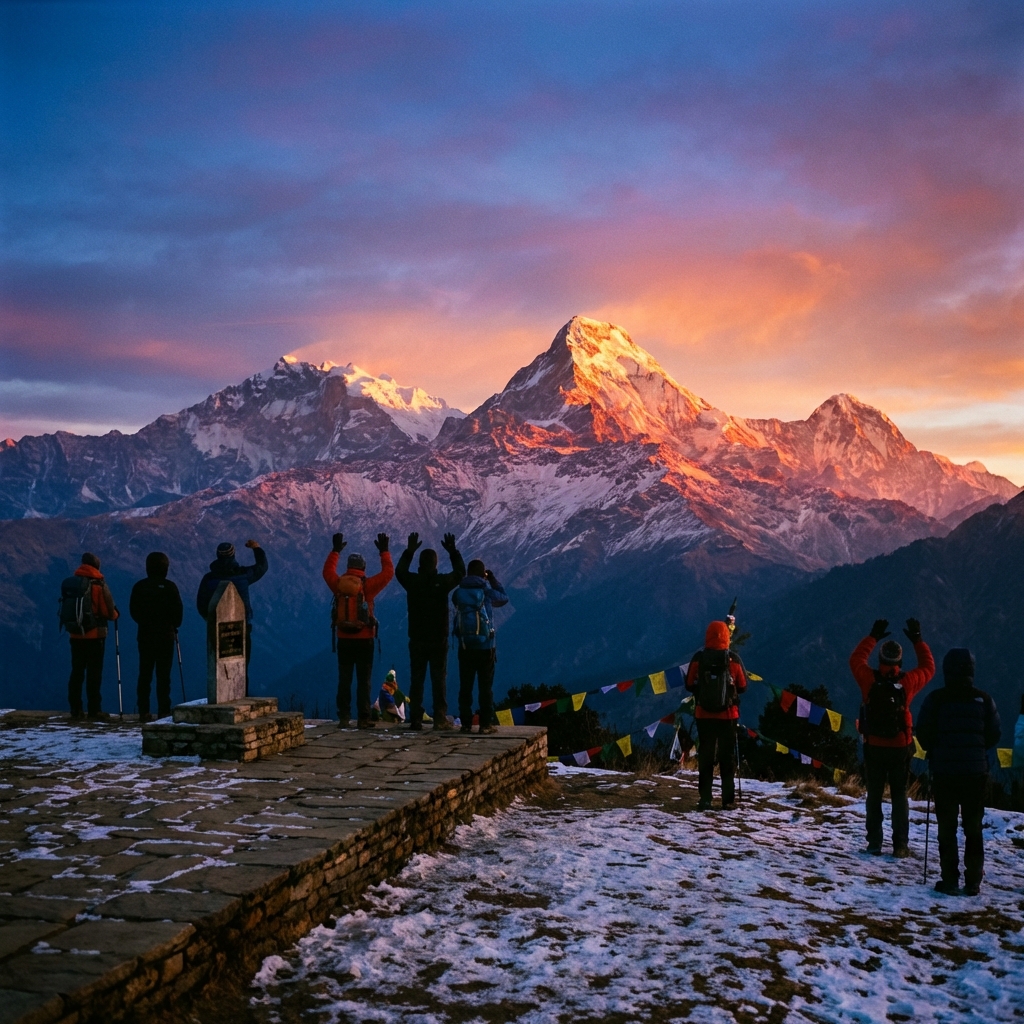
- Spectacular 360° sunrise views of Dhaulagiri, Annapurna, and Machapuchare
- No altitude risk at 3,210m
- Perfect for families, older trekkers, and first-timers
- Rhododendron forests bloom spectacularly in March–April
- Can be combined with ABC for extended itinerary
Best for: Short-time travelers, beginners, families, those testing fitness for longer treks.
Full details: Ghorepani Poon Hill Trek Guide
4. Mardi Himal Trek
Duration: 5–7 days | Max Altitude: 4,500m | Difficulty: Moderate
A newer route that gained popularity for its dramatic close-up views of Machapuchare and the Annapurna range from Mardi Himal Base Camp. The trail is quieter than ABC or Poon Hill, offering a more intimate mountain experience.
What makes it special:
- Dramatic close-up views of Machapuchare's south face
- Quieter trails with fewer trekkers
- Ridge-walking with 360° mountain panoramas
- Short duration fits tight schedules
- Can be combined with Poon Hill or ABC
Best for: Trekkers wanting base camp rewards without long commitment, those seeking quieter trails, photography enthusiasts.
Full details: Mardi Himal Trek Guide
5. Khopra Ridge (Khopra Danda) Trek
Duration: 8–12 days | Max Altitude: 3,660m | Difficulty: Moderate
A community-based trekking route developed as an alternative to Poon Hill, with profits supporting local villages. The trek reaches Khopra Ridge (Khopra Danda), which offers spectacular views without the crowds. Optional side trip to Khayer Lake adds a challenging but rewarding day.
What makes it special:
- Community lodges supporting local economies
- Quieter alternative to Poon Hill
- Spectacular ridge-walking with panoramic views
- Optional Khayer Lake (sacred alpine lake) side trip
- Less commercialized, more authentic experience
Best for: Travelers supporting sustainable tourism, those wanting off-the-beaten-path experience, moderate trekkers.
Full details: Khopra Ridge Trek Guide
6. Nar Phu Valley Trek
Duration: 10–14 days | Max Altitude: 5,320m (Kang La Pass) | Difficulty: Difficult
A restricted area trek through remote valleys that preserve ancient Tibetan Buddhist culture. The trail passes through medieval villages with chortens, gompas, and prayer wheels, then crosses high passes to rejoin the main Annapurna Circuit.
What makes it special:
- Restricted area with special permit requirements
- Authentic Tibetan Buddhist culture
- Remote valleys with ancient villages
- Dramatic landscapes reminiscent of Tibet
- Can combine with main Circuit for comprehensive experience
Best for: Experienced trekkers, cultural explorers, those seeking remote wilderness, adventurous spirits.
Full details: Nar Phu Valley Trek Guide
7. Upper Mustang Trek
Duration: 10–14 days | Max Altitude: 3,840m | Difficulty: Moderate–Difficult
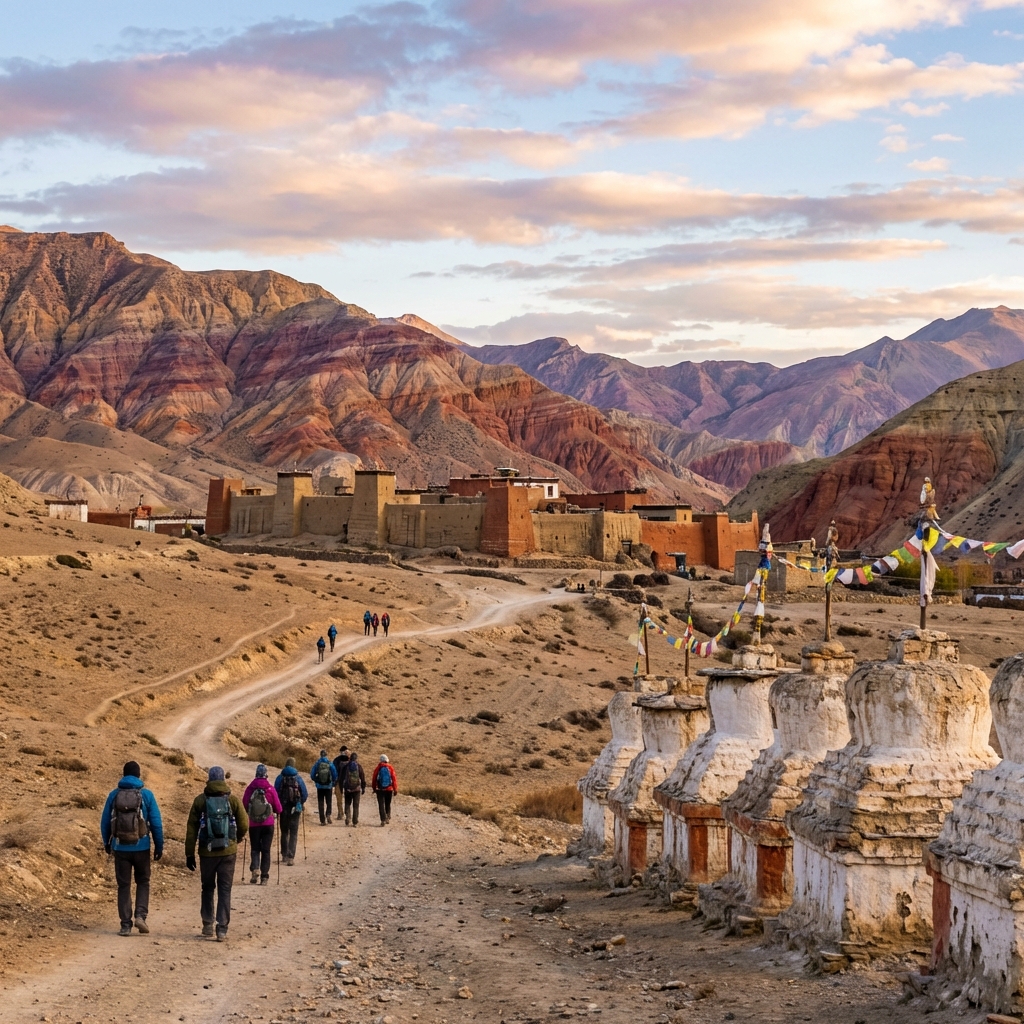
The former Kingdom of Lo, a restricted area in Nepal's trans-Himalayan region. This high-altitude desert landscape preserves ancient Tibetan culture, with cave dwellings, monasteries, and the walled city of Lo Manthang.
What makes it special:
- Restricted area requiring special permit (USD 50/day (no minimum days))
- Ancient Kingdom of Lo with preserved Tibetan culture
- Desert landscapes unique in Nepal
- Cave monasteries and settlements
- Less physically demanding than Circuit despite altitude
Best for: Cultural enthusiasts, those seeking unique landscapes, travelers with higher budgets, history buffs.
Full details: Upper Mustang Trek Guide
8. Tilicho Lake Side Trip (with Circuit)
Duration: Add 2–3 days to Circuit | Max Altitude: 4,919m (lake) or 5,100m (pass) | Difficulty: Difficult
The world's highest lake (though this status is disputed), Tilicho Lake is a stunning turquoise glacial lake surrounded by ice cliffs. The side trip departs from Manang, providing excellent additional acclimatization before Thorong La Pass.
What makes it special:
- One of the world's highest lakes
- Completely road-free wilderness trekking
- Excellent acclimatization before Thorong La
- Dramatic high-altitude landscapes
- Far fewer trekkers than main Circuit route
Best for: Circuit trekkers with extra time, those wanting additional acclimatization, adventure seekers.
Full details included in: Annapurna Circuit Trek Guide
9. Jomsom Muktinath Trek
Duration: 5–7 days | Max Altitude: 3,760m | Difficulty: Easy–Moderate
A shorter trek through the Kali Gandaki gorge, visiting the sacred pilgrimage site of Muktinath. Can be done independently or combined with Circuit (western descent) or as a standalone trek starting from Jomsom (accessible by flight from Pokhara).
What makes it special:
- Sacred Muktinath Temple (holy to Hindus and Buddhists)
- Kali Gandaki gorge—world's deepest
- Tibetan-influenced villages and culture
- Accessible via flight to Jomsom
- Can be part of Circuit or standalone trek
Best for: Pilgrims, those with limited time, travelers wanting high-altitude experience without long commitment.
10. Annapurna Panorama Trek (ABC Short Version)
Duration: 6–8 days | Max Altitude: 3,210m | Difficulty: Easy–Moderate
A shortened ABC itinerary that reaches Poon Hill and Ghandruk but does not enter the sanctuary. Ideal for travelers wanting a taste of the Annapurna region without full commitment to ABC.
What makes it special:
- Best of ABC route without sanctuary commitment
- Lower altitude reduces risk
- Shorter duration fits tight schedules
- Gurung village cultural immersion
- Beautiful rhododendron forests
Best for: Limited time, altitude-sensitive trekkers, those testing fitness for longer treks.
11. Kalihani Pass Trek (Off-the-Beaten-Path)
Duration: 14–18 days | Max Altitude: ~5,400m (Kalihani La) | Difficulty: Strenuous (camping)
The Kalihani Pass trek is one of the wildest, least-trodden crossings in the Annapurna range, linking the Lamjung foothills and the Dudh Khola valley to the western Annapurna via the high Kalihani La (around 5,400m). Unlike the teahouse-lined Circuit, this is a true camping and expedition-style route: there is almost no lodge infrastructure over the pass, so trekkers travel with a full crew of guide, cook, and porters.
What makes it special:
- A genuine wilderness pass crossing with no crowds and no teahouses near the top
- Glacier moraine, alpine pasture, and remote Gurung and Tamang settlements
- Strong sense of expedition trekking, closer to a mountaineering approach march
- Connects naturally with the Manaslu and Annapurna Circuit trail systems
- Camping under the peaks of the Annapurna and Lamjung Himal
Planning notes: Because the Kalihani Pass trek crosses a high, glaciated pass with no fixed lodges, it requires a registered agency, full camping support, and solid acclimatization built around the same principles as the Annapurna Circuit. Carry crampon-compatible boots and budget extra contingency days for snow on the pass. It sits within ACAP, so the standard ACAP permit applies, and a guide is mandatory under the 2026 regulations. Best attempted in October–November or April–May, when the pass is most likely to be clear of deep snow.
Best for: Experienced trekkers comfortable with camping, those seeking solitude away from the main Annapurna trails, and adventurers wanting a high pass without the Circuit crowds.
12. Sara Umga Pass Trek (Hidden Valley Crossing)
Duration: 16–20 days | Max Altitude: ~5,000m+ (Sara Umga La) | Difficulty: Strenuous (camping)
The Sara Umga Pass trek (also spelled Sara Umga La) is a remote, expedition-style crossing that links the Annapurna Sanctuary side of the range toward the Dhaulagiri and Hidden Valley region. It is one of the most demanding off-the-beaten-path itineraries in the Annapurna range, combining glacier travel, high camps, and total wilderness with no teahouse network over the pass.
What makes it special:
- A rarely walked high pass connecting the Annapurna and Dhaulagiri massifs
- Pristine, road-free wilderness with full camping logistics
- Dramatic close-range views across the Annapurna Sanctuary and Kali Gandaki side of the range
- Suits trekkers who want a serious challenge beyond the standard Sanctuary trek
- Pairs with the Annapurna Base Camp approach valleys
Planning notes: Like the Kalihani Pass trek, the Sara Umga Pass trek demands a full camping crew, mountaineering-grade acclimatization, and flexible buffer days for weather. Conditions on the pass vary year to year, so route timing should be confirmed with your operator. The standard ACAP permit applies and a licensed guide is required for foreign trekkers in 2026. Plan it for the stable autumn (October–November) or spring (April–May) windows.
Best for: Strong, experienced trekkers and aspiring mountaineers seeking a rugged, crowd-free crossing of the Annapurna range.
Annapurna Region Trek Comparison: Choose Your Route
The chart below helps you quickly compare all major Annapurna routes to choose the best match for your time, fitness, and interests:
| Trek | Days | Max Alt | Difficulty | Crowds | Cultural Highlights | Best Season | Cost (USD) |
|---|---|---|---|---|---|---|---|
| Poon Hill | 4–5 | 3,210m | Easy–Mod | High | Gurung villages | Oct–Nov, Mar–Apr | $600–$1,200 |
| ABC | 10–14 | 4,130m | Moderate | Moderate | Gurung, hot springs | Oct–Nov, Mar–May | $1,200–$2,500 |
| Circuit | 12–21 | 5,416m | Difficult | Moderate | Manang, Mustang, Tibetan | Oct–Nov, Mar–May | $1,500–$3,000 |
| Mardi Himal | 5–7 | 4,500m | Moderate | Low | Ridge villages | Oct–Nov, Mar–May | $800–$1,600 |
| Khopra Ridge | 8–12 | 3,660m | Moderate | Very Low | Community lodges | Oct–Nov, Mar–May | $1,000–$2,000 |
| Nar Phu | 10–14 | 5,320m | Difficult | Very Low | Tibetan villages | May–Oct | $1,800–$3,500 |
| Upper Mustang | 10–14 | 3,840m | Mod–Diff | Low | Kingdom of Lo | Apr–Oct | $2,500–$4,500 |
| Tilicho | +2–3 | 4,919m | Difficult | Low | High lake, glaciers | May–Oct | Add $200–$400 |
Gurung Culture & Thakali Heritage: Living Traditions
One of the Annapurna region's greatest treasures is its cultural diversity. Unlike the Sherpa-dominated Everest region, Annapurna is home to multiple ethnic groups, each with distinct traditions, languages, and ways of life.
The Gurung People
The Gurung (or Tamu) are the dominant ethnic group in the southern Annapurna region, particularly around Ghandruk, Chomrong, and the ABC trail. Known for their warm hospitality and rich cultural traditions, Gurung communities have lived in these hills for centuries.
Key Cultural Elements:
- Language: Tibeto-Burman language family with unique script
- Religion: Blend of animism, shamanism, and Tibetan Buddhism
- Architecture: Two-story stone houses with slate roofs
- Economy: Traditional agriculture, animal husbandry, now tourism
- Military tradition: Famous as Gurkha soldiers in British and Indian armies
- Festivals: Lhosar (Gurung New Year), Tamu Lhosar
Cultural Highlights on the Trail:
- Ghandruk: Protected heritage village with museum and traditional architecture
- Chomrong: Gateway to ABC, largest Gurung settlement on route
- Landruk: Quieter village with authentic homestay opportunities
- Traditional honey hunting: Famous Gurung cliff honey harvesting traditions
The Thakali People
The Thakali ethnic group dominates the Kali Gandaki valley, particularly around Jomsom, Marpha, and Tukuche. Historically traders on the salt route between Nepal and Tibet, Thakalis are known for their business acumen and distinctive cuisine.
Key Cultural Elements:
- Cuisine: Famous throughout Nepal—dal bhat, dhindo, buckwheat pancakes
- Architecture: Whitewashed houses with flat roofs, inner courtyards
- Religion: Blend of Tibetan Buddhism and Bon traditions
- Economy: Historic traders, now focused on agriculture and tourism
- Apple orchards: Famous for apples, cider, and brandy production
Cultural Highlights:
- Marpha: Beautiful village with narrow flagstone alleys, apple products
- Tukuche: Traditional Thakali architecture and monastery
- Jomsom: Modern administrative center but retains Thakali character
- Local distilleries: Apple brandy and marpha (local moonshine)
Manangba People
The Manangba people of Manang valley have unique status in Nepal—historically granted royal trading privileges that allowed them to travel throughout Southeast Asia. This has created a relatively prosperous and cosmopolitan culture.
Key Cultural Elements:
- Trading heritage: Special trading rights created wealth and worldliness
- Buddhism: Tibetan Buddhist traditions with important monasteries
- Architecture: Flat-roofed stone houses designed for altitude and wind
- Language: Manangba dialect related to Tibetan
- Festivals: Buddhist festivals, Yartung horse festival
Cultural Highlights:
- Manang town: Prosperous trading hub with monasteries and museums
- Braga Gompa: 500+ year old monastery with impressive murals
- Upper Pisang: Traditional architecture with panoramic views
- Ghyaru and Ngawal: Ancient villages on the high Circuit route
Tibetan Influence in Upper Regions
The trans-Himalayan areas of Upper Mustang and Nar Phu valley are culturally Tibetan, preserving traditions that have been suppressed in Tibet itself.
Cultural Elements:
- Language: Tibetan dialects
- Religion: Tibetan Buddhism (Sakyapa sect in Mustang)
- Architecture: Multi-story mud-brick houses, whitewashed walls
- Festivals: Tiji festival (Upper Mustang), monastic celebrations
- Art: Cave paintings, murals, ancient manuscripts
Experiencing Local Culture on the Trail
Homestay Opportunities: Many villages along ABC, Poon Hill, and Khopra Ridge routes offer homestay experiences. Expect to pay $20–30 for room and meals, with proceeds going directly to families.
Cultural Etiquette:
- Remove shoes before entering homes and monasteries
- Ask permission before photographing people or religious sites
- Walk clockwise around mani walls, chortens, and monasteries
- Don't point your feet at religious objects or altars
- Accept tea or food offerings graciously; refusal can be impolite
- Dress modestly in villages (covered shoulders and knees)
Food Culture: Try regional specialties beyond standard trekking fare:
- Dal bhat: The national dish, with regional variations
- Thakali khana set: Complete meal with multiple side dishes
- Dhindo: Buckwheat or millet porridge (traditional staple)
- Sel roti: Sweet rice bread ring (breakfast or snack)
- Gundruk: Fermented leafy green vegetable (acquired taste)
- Local raksi or tongba: Traditional alcoholic beverages (enjoy responsibly)
Supporting Local Communities
The ACAP model distributes tourism revenue directly to communities through lodge ownership, porter employment, and permit fees. Choosing locally-owned teahouses over chain lodges helps ensure tourism benefits reach the people who host you.
Best Time to Trek Annapurna Region: Month-by-Month Guide
The Annapurna region's diverse altitudes and valley orientations create microclimates, but general seasonal patterns apply. For detailed analysis, see Best Time to Trek Nepal.
Seasonal Overview (Fast Decision Guide)
Autumn (September–November): The most stable weather of the year. Post-monsoon skies are crystal clear, making October and November ideal for high-altitude routes. October is busiest; November colder but quieter with excellent visibility.
Spring (March–May): Second-best season with warming temperatures and blooming rhododendrons (March–April). April is peak spring month with perfect weather but crowds on popular routes. May sees increasing afternoon clouds as monsoon approaches but remains excellent for trekking.
Winter (December–February): Crisp air and empty trails, but extremely cold nights especially above 3,000m. Lower-altitude routes (Poon Hill, lower ABC sections) remain accessible. High passes like Thorong La can be dangerous or closed due to snow.
Monsoon (June–August): Heavy rainfall, frequent cloud cover, and unreliable conditions. Lower-altitude sections (below 3,000m) are muddy with leeches. Rain shadow areas (Upper Mustang, Nar Phu) remain accessible and are actually best visited during monsoon. Only recommended for experienced trekkers with flexible schedules.
Month-by-Month Analysis
| Month | High | Low | Conditions | Crowds | Notes |
|---|---|---|---|---|---|
| January | 8°C (low alt) / -2°C (high alt) | -2°C / -15°C | 20mm | Very Low | Cold, dry, clear skies. High passes risky. Good for lower routes. |
| February | 10°C / 2°C | 0°C / -12°C | 25mm | Low | Warming begins. Rhododendrons budding. Still cold at altitude. |
| MarchBest | 14°C / 7°C | 3°C / -5°C | 40mm | Moderate | Spring begins. Rhododendrons blooming. Excellent conditions. |
| AprilBest | 18°C / 10°C | 6°C / -2°C | 55mm | High | Peak spring. Best rhododendrons. Busy trails. Perfect weather. |
| MayBest | 20°C / 12°C | 10°C / 2°C | 100mm | Moderate | Warm, afternoon clouds. Still good trekking. Pre-monsoon. |
| June | 22°C / 10°C | 14°C / 4°C | 280mm | Low | Monsoon begins. Rain, clouds, leeches below 3,000m. Mustang OK. |
| July | 22°C / 9°C | 15°C / 5°C | 450mm | Very Low | Peak monsoon. Heavy rain, poor visibility. Mustang season. |
| August | 22°C / 10°C | 15°C / 5°C | 400mm | Very Low | Monsoon continues. Trails slippery. Landslide risk. |
| SeptemberBest | 20°C / 8°C | 12°C / 2°C | 220mm | Moderate | Monsoon retreating. Late September excellent. Trails drying. |
| OctoberBest | 18°C / 8°C | 8°C / -3°C | 35mm | Very High | Peak season. Best weather. Clearest skies. Busy lodges. |
| NovemberBest | 14°C / 5°C | 3°C / -8°C | 15mm | High | Excellent visibility. Colder nights. Decreasing crowds. |
| December | 10°C / 0°C | 0°C / -12°C | 15mm | Low | Cold, dry, clear. Some lodges closing. High passes risky. |
Special Considerations by Route
For Poon Hill (3,210m): Trekable year-round except heavy monsoon (July-Aug). Winter is cold but manageable. Best: Oct-Nov, Mar-Apr.
For ABC (4,130m): Avoid December-February (too cold at altitude) and July-August (monsoon). Best: Oct-Nov, Mar-May.
For Annapurna Circuit (5,416m): Thorong La Pass is most reliable Oct-Nov and Apr-May. Winter snow can close the pass. Best: Oct-Nov.
For Upper Mustang (rain shadow): Best during monsoon (May-Oct) when rest of Nepal is wet. The rain shadow effect keeps this area dry while clouds are blocked by the Himalaya.
For Nar Phu Valley: Similar to Mustang, the rain shadow allows summer trekking. Best: May-Oct.
Festival Timing (Cultural Considerations)
Major festivals affect transportation, staffing, and cultural experiences:
- Dashain (September-October): Nepal's biggest festival. Transport busy, some lodges closed, but incredible cultural immersion.
- Tihar (October-November): Festival of lights. Beautiful village celebrations.
- Tiji Festival (April-May): Upper Mustang's most important festival. Permits harder to get, prices higher, but extraordinary cultural experience.
- Lhosar (December-January): Gurung New Year. Cultural celebrations in Gurung villages.
- Yartung Horse Festival (August): Manang's traditional horse racing festival.
Annapurna Conservation Area Project (ACAP): Permits & Regulations
Understanding ACAP
The Annapurna Conservation Area Project is Nepal's largest protected area, covering 7,629 square kilometers. Established in 1986, ACAP pioneered a community-based conservation model that has become a global template for sustainable tourism management.
ACAP's Scope:
- Biodiversity: 1,352 plant species, 128 mammals, 514 bird species
- Communities: Over 100,000 residents in 57 Village Development Committees
- Ethnic Groups: Gurung, Thakali, Manangi, Bhotia, Tibetan, and others
- Altitude Range: 790m (Birethanti) to 8,091m (Annapurna I summit)
Conservation Goals:
- Protect biodiversity and critical habitats
- Promote sustainable tourism development
- Support local community livelihoods
- Preserve cultural heritage
- Manage natural resources sustainably
How Your Permit Fees Are Used:
- Trail maintenance and safety improvements
- Community development projects (schools, health posts)
- Environmental conservation programs
- Cultural heritage preservation
- Renewable energy initiatives (micro-hydro, solar)
Required Permits for Annapurna Trekking
1. ACAP (Annapurna Conservation Area Permit)
- Cost: NPR 3,000 (~$22-23 USD) for foreign nationals
- Cost: NPR 1,000 for SAARC nationals
- Cost: NPR 100 for Nepali citizens
- Validity: Duration of your trek (no time limit once issued)
- Required For: All treks within ACAP boundaries
2. TIMS Card (Trekkers' Information Management System)
- Cost: FREE (as of 2026)
- Purpose: Registration and safety tracking
- Required For: All trekkers in Nepal
- Validity: Duration of registered trek
3. Restricted Area Permits (If Applicable)
- Nar Phu Valley: $90 for first 7 days, $15/day thereafter
- Upper Mustang: USD 50/person/day (no minimum days), $50/day thereafter
- Required through: Registered trekking agency only
2026/2027 Regulation Changes
Mandatory Guide Requirement: As of April 2026, Nepal requires all foreign trekkers in protected areas (including ACAP) to trek with a licensed guide or porter. Solo independent trekking is no longer permitted for foreigners.
What This Means:
- You must book through a registered trekking agency OR hire a licensed guide independently
- Your guide must be registered with TAAN (Trekking Agencies' Association of Nepal)
- Porter-only is acceptable (doesn't have to be a "guide" specifically)
- This regulation increases minimum costs but improves safety and supports local employment
Where to Obtain Permits
In Kathmandu:
- Nepal Tourism Board Office, Bhrikuti Mandap, Kathmandu
- Hours: 10 AM – 5 PM (Sunday–Friday)
- Bring: Passport, 2 passport photos, cash in NPR
In Pokhara:
- Nepal Tourism Board Office, Lakeside, Pokhara
- TAAN Office, Pokhara
- Hours: 10 AM – 5 PM (Sunday–Friday)
Through Trekking Agency (Most Common): Most trekkers arrange permits through their agency as part of the package. The agency handles all paperwork and checkpoints.
Required Documents:
- Valid passport (6+ months validity)
- 2 passport-size photos
- Completed application form
- Payment in NPR cash (USD often accepted at higher rate)
Checkpoint Procedures
ACAP checkpoints are located at entry points to the conservation area:
Major Checkpoints:
- Birethanti: Poon Hill and ABC route entry
- Besisahar: Annapurna Circuit eastern entry
- Chomrong: ABC sanctuary entry verification
- Kagbeni: Upper Mustang restricted area checkpoint
- Koto: Nar Phu Valley restricted area checkpoint
What to Expect:
- Present ACAP permit and TIMS card
- Officers record entry in logbook
- Quick inspection (1-2 minutes)
- Keep permits accessible throughout trek
Keep Permits Accessible
ACAP checkpoints can appear at multiple points along trails. Keep your permits in an accessible pocket or waterproof pouch—not buried at the bottom of your pack. Loss of permits may require returning to checkpoint for replacement.
For comprehensive permit information across all Nepal trekking regions, see: Nepal Trekking Permits Explained
Getting There: Pokhara as the Gateway
Unlike the Everest region with its challenging Lukla flight, the Annapurna region benefits from excellent access via Pokhara, Nepal's adventure capital and second-largest city. This accessibility is one of Annapurna's greatest advantages.
Kathmandu to Pokhara
By Air (Fastest):
- Flight Time: 25-30 minutes
- Frequency: 15-20 daily flights (Buddha Air, Yeti Airlines, Shree Airlines)
- Cost: $80-150 USD one-way
- Pros: Fast, spectacular mountain views on left side of aircraft
- Cons: Weather-dependent (fog/clouds can cause delays)
By Tourist Bus (Most Popular):
- Duration: 6-7 hours
- Frequency: Hourly departures 7 AM – 2 PM from Kathmandu tourist areas
- Cost: $10-15 USD
- Pros: Scenic Trisuli River valley route, reliable, cheap
- Cons: Long, winding roads, motion sickness possible
By Private Vehicle:
- Duration: 5-6 hours
- Cost: $80-120 USD (sedan) or $100-150 USD (SUV)
- Pros: Flexible timing, comfortable, stops as desired
- Cons: More expensive, only cost-effective for groups
By Local Bus:
- Duration: 7-8 hours
- Cost: $5-8 USD
- Pros: Cheapest option
- Cons: Crowded, uncomfortable, not recommended for foreign trekkers
Pokhara as a Base
Pokhara offers everything you need for final trek preparations:
Logistics:
- Gear Rental: Trekking poles, sleeping bags, down jackets ($1-5/day per item)
- Last-Minute Purchases: Snacks, toiletries, layers
- Currency Exchange: Banks and money changers with better rates than trail
- ATMs: Reliable ATMs (last chance before some routes)
Pre-Trek Activities:
- Lakeside walks with Annapurna range views reflected in Phewa Lake
- International Mountain Museum (excellent context for your trek)
- Paragliding (post-trek celebration!)
- Restaurants and cafes with diverse cuisines
- Massage and spa services
Transportation from Pokhara to Trailheads:
| Trailhead | Distance | Transport | Duration | Cost |
|---|---|---|---|---|
| Nayapul (Poon Hill, ABC) | 42 km | Private jeep or bus | 1.5 hrs | $30-50 (jeep) |
| Besisahar (Circuit) | 175 km | Bus | 5-6 hrs | $10-15 |
| Chame (Circuit shortened) | 185 km | Jeep | 7-8 hrs | $80-120 |
| Jomsom (Circuit end, Mustang start) | — | Flight only | 20 min | $110-130 |
| Khangshar (Mardi Himal) | 30 km | Jeep | 1 hr | $25-40 |
Jomsom Flight Considerations
For Annapurna Circuit trekkers, the Pokhara–Jomsom flight is the most common exit strategy:
Flight Details:
- Duration: 20-25 minutes
- Frequency: Morning flights only (weather dependent)
- Cost: $110-130 USD one-way
- Airlines: Tara Air, Summit Air
Advantages:
- Avoids long, dusty descent road
- Spectacular aerial views of Kali Gandaki gorge
- Saves 4-5 days of trekking
- More time in Pokhara for relaxation
Challenges:
- Weather-dependent (winds increase after 11 AM)
- Frequent delays or cancellations
- Small aircraft with strict baggage limits
- Book with 2-day buffer for delays
Backup Plan: If Jomsom flights are canceled for multiple days, jeep/bus transport to Pokhara is available (8-10 hours, rough roads).
Accommodation & Food: Teahouse Trekking in Annapurna
The Annapurna region has the most developed teahouse network in Nepal, with comfortable lodges throughout most routes. This infrastructure makes trekking accessible to those who prefer not to camp.
Teahouse Accommodation Standards
Lower Altitudes (Below 2,500m):
- Twin rooms with foam mattresses
- Some rooms with attached bathrooms
- Electric lighting and phone charging available
- Hot showers (solar or gas-heated)
- Varied menu options
- WiFi available ($2-5)
Mid Altitudes (2,500m-3,500m):
- Basic twin rooms, shared bathrooms
- Squat toilets standard (some Western toilets)
- Dining halls with wood/kerosene stoves
- Hot showers for fee ($2-4)
- Reliable menu but less variety
- Intermittent WiFi
High Altitudes (Above 3,500m):
- Very basic rooms, often unheated
- Shared facilities only
- Cold nights requiring good sleeping bag
- Hot showers expensive or unavailable
- Limited menu options
- Expensive WiFi or phone charging
Typical Teahouse Costs
| Altitude Range | Room Cost | Meal Cost (Dal Bhat) | Hot Shower | Charging | WiFi |
|---|---|---|---|---|---|
| Below 2,000m | NPR 200-500 ($1.50-4) | NPR 400-600 ($3-5) | NPR 200-300 | NPR 200 | NPR 300-500 |
| 2,000-3,000m | NPR 300-600 ($2-5) | NPR 500-700 ($4-6) | NPR 300-400 | NPR 300 | NPR 400-600 |
| 3,000-4,000m | NPR 500-800 ($4-6) | NPR 600-900 ($5-7) | NPR 400-500 | NPR 400 | NPR 500-700 |
| Above 4,000m | NPR 800-1,500 ($6-12) | NPR 800-1,200 ($6-10) | NPR 500-700 | NPR 500 | NPR 600-800 |
Costs increase significantly with altitude due to porter transportation fees and fuel costs.
Food on the Trail
Dal Bhat: The Trekker's Staple Dal bhat (lentil soup with rice) is the foundation of Nepali trekking cuisine. Most lodges offer unlimited refills ("Dal bhat power, 24 hour!"). It's nutritious, affordable, and provides excellent energy for long trekking days.
Standard Menu Items:
- Breakfast: Porridge, pancakes, eggs (various styles), Tibetan bread, toast
- Lunch/Dinner: Dal bhat, fried rice, noodle soup (thukpa), momos (dumplings), pasta, pizza (quality varies), soups
- Snacks: Tea, coffee, hot chocolate, biscuits, chocolate bars
- Regional Specialties: Thakali khana set, Gurung bread, dhindo
Eating Strategy:
- Order dinner where you plan to sleep (teahouse etiquette)
- Dal bhat offers best value and nutrition
- Avoid meat above 3,000m (refrigeration unreliable)
- Drink plenty of tea/soup for hydration
- Bring electrolyte packets for high-altitude hydration
Food Costs Increase with Altitude: Expect to pay 50-100% more for the same meal at ABC (4,130m) compared to Nayapul (1,070m). This reflects porter costs to transport supplies.
Water Management
Never drink untreated water. Options include:
| Method | Cost | Pros | Cons |
|---|---|---|---|
| Purification Tablets | $10-15 for trek | Cheapest, lightest | 30-min wait, taste |
| SteriPen UV | $50-80 device | Fast (90 sec), effective | Requires batteries, doesn't filter sediment |
| Water Filter | $30-80 | No taste, filters sediment | Bulky, can freeze at altitude |
| Boiled Water | NPR 100-300/liter | Safe, no equipment | Expensive, must cool |
| Bottled Water | NPR 100-400/bottle | Convenient | Expensive, plastic waste |
Recommended Approach: Bring purification tablets or SteriPen. Refill from teahouse taps or streams. Boiled water is available at most lodges for a fee (cheaper than bottled).
Community Lodges (Khopra Ridge, Some Routes)
Some routes feature community-owned lodges where profits directly support villages:
Advantages:
- Supports sustainable tourism model
- Profits fund community projects (schools, health posts)
- Often more authentic cultural experience
- Similar comfort to standard teahouses
Khopra Ridge Community Lodges: These lodges were built specifically to provide alternative income to Poon Hill-area communities. Standards are good, and the community ownership model has been successful.
Major Villages Guide: What to Expect in Key Settlements
Information current as of January 2025.
Pokhara
820m
Room: $10-100
Dal Bhat: $3-10
Gateway city. Final preparations before trek. Lakeside tourist area.
Nayapul
1,070m
Room: NPR 300-500
Dal Bhat: NPR 400-600
Common trailhead for ABC and Poon Hill treks. 1.5 hours from Pokhara.
Ghorepani
2,860m
Room: NPR 400-700
Dal Bhat: NPR 500-700
Base for Poon Hill sunrise. Busy in season. Good lodge availability.
Ghandruk
2,010m
Room: NPR 400-800
Dal Bhat: NPR 500-700
Beautiful Gurung village. Protected heritage area. Cultural highlights.
Chomrong
2,170m
Room: NPR 500-900
Dal Bhat: NPR 600-800
Gateway to ABC sanctuary. Last major village. Good facilities.
Annapurna Base Camp
4,130m
Room: NPR 800-1,500
Dal Bhat: NPR 800-1,200
The goal! Limited capacity. Book ahead in peak season. Cold nights.
Manang
3,540m
Room: NPR 500-900
Dal Bhat: NPR 600-900
Circuit hub. Acclimatization base. HRA altitude talks at 4 PM daily.
Muktinath
3,760m
Room: NPR 700-1,200
Dal Bhat: NPR 700-1,000
Sacred pilgrimage site. Post-Thorong La descent. Hindu and Buddhist temples.
Jomsom
2,720m
Room: NPR 500-1,000
Dal Bhat: NPR 600-900
Modern town. Circuit exit point. Flights to Pokhara. Windy afternoons.
Kagbeni
2,800m
Room: NPR 600-1,000
Dal Bhat: NPR 700-900
Medieval village. Upper Mustang checkpoint. Tibetan architecture.
Tatopani
1,190m
Room: NPR 400-700
Dal Bhat: NPR 500-700
Natural hot springs. Lower Kali Gandaki. Circuit continuation point.
Cultural & Natural Highlights: Must-See Stops
Sacred Sites & Monasteries
Muktinath Temple (3,760m) One of Nepal's most sacred pilgrimage sites, revered by both Hindus and Buddhists:
- 108 water spouts: Bathing under all 108 is believed to cleanse sins
- Eternal flame: Natural gas seeps create fire-on-water phenomenon
- Jwala Mai Temple: Buddhist section with meditation caves
- Thousands of pilgrims visit annually
Braga Monastery (3,439m) 500-year-old gompa on the Annapurna Circuit:
- Impressive interior murals and thangka paintings
- Ancient Buddhist artifacts
- Afternoon prayers often open to visitors
- Dramatic cliff-side location
Tengboche Monastery (See Everest Region) While technically in Everest region, worth mentioning for comparison.
Natural Wonders
Poon Hill (3,210m) Nepal's most famous sunrise viewpoint:
- 360° panorama of Dhaulagiri, Annapurna, Machapuchare, Manaslu
- Short pre-dawn hike from Ghorepani
- Spectacular alpenglow as first light hits peaks
- Busy but worth the crowds
Tilicho Lake (4,919m) One of the world's highest lakes:
- Stunning turquoise glacial lake surrounded by ice cliffs
- Remote wilderness setting
- Excellent additional acclimatization for Circuit trekkers
- 2-3 day side trip from Manang
Natural Hot Springs Several locations offer natural thermal baths:
- Jhinu Danda: Along ABC route, riverside pools
- Tatopani: Name means "hot water," developed pools and lodges
- Fee: NPR 200-300 for access
- Perfect for: Sore muscles after long trekking days
Kali Gandaki Gorge World's deepest gorge (debated but impressive regardless):
- Separates Annapurna (8,091m) and Dhaulagiri (8,167m)
- Vertical relief over 5,500m from river to peaks
- Ancient salt trading route
- Ammonite fossils (shaligram stones) found in riverbed
Viewpoints & Photo Spots
Best Sunrise Locations:
- Poon Hill (3,210m) - Classic panorama
- Annapurna Base Camp (4,130m) - Amphitheater glow
- Thorong La Pass (5,416m) - High-altitude dawn
- Upper Pisang (3,300m) - Annapurna II close-up
Best Sunset Locations:
- ABC - Golden light on south faces
- Manang - Valley views with Gangapurna
- Kagbeni - Desert landscape with peaks
Photography Tips:
- Golden hour (30 min after sunrise/before sunset) provides best light
- Rhododendron forests best in March-April
- Bring extra batteries (cold drains power fast)
- Protect cameras from dust on lower Circuit sections
Safety & Altitude: Critical Information
For comprehensive altitude safety protocols, see: Altitude Sickness Signs and Turnaround Rules
Altitude Considerations by Route
| Route | Max Altitude | Days Above 3,500m | AMS Risk | Acclimatization Strategy |
|---|---|---|---|---|
| Poon Hill | 3,210m | 0-1 | Very Low | No special acclimatization needed |
| ABC | 4,130m | 1-2 | Low-Moderate | One acclimatization day recommended |
| Mardi Himal | 4,500m | 1-2 | Moderate | Gradual ascent, rest day helpful |
| Circuit | 5,416m | 4-6 | Moderate-High | MANDATORY acclimatization days in Manang |
| Nar Phu | 5,320m | 4-5 | Moderate-High | Similar to Circuit, add rest days |
| Upper Mustang | 3,840m | All trek | Low-Moderate | High starting altitude, gradual thereafter |
Common Annapurna-Specific Hazards
1. Thorong La Pass Weather (Circuit) The pass can close suddenly due to snowfall. Weather windows in shoulder seasons can be narrow. Always have 2-3 buffer days and be prepared to wait or turn back.
2. Avalanche Zones (ABC Route) Sections between Bamboo and Deurali pass through avalanche-prone areas. Heavy snowfall can close trails temporarily. Follow guide's advice and lodge owner reports.
3. Kali Gandaki Winds (Circuit West Side) Strong afternoon winds in the Kali Gandaki valley can make walking difficult. Start early and plan to reach lodges by early afternoon.
4. Altitude at ABC Despite "only" 4,130m, ABC's rapid altitude gain from Chomrong (2,170m) in 3-4 days can cause problems. Follow itinerary and don't skip acclimatization principles.
5. Trail Erosion & Landslides Monsoon can cause landslides. Post-monsoon (Sept-Oct), some trail sections may be damaged and under repair.
Emergency Evacuation
Helicopter Rescue:
- Available from most points in Annapurna region
- Cost: $3,000-6,000 USD depending on location
- Insurance MUST cover high-altitude evacuation
- Coordination through lodges or HRA clinic (Manang)
Lower-Altitude Options:
- Porters can carry injured trekkers on stretchers to road access points
- Jeeps available for medical transport from road-accessible villages
Key Medical Resources:
- HRA Clinic (Manang): Best high-altitude medical facility in region, daily altitude talks
- Jomsom Hospital: Basic but functional for emergencies
- Pokhara: Multiple hospitals with Western-trained doctors (CIWEC-style clinics)
- Emergency Number: Nepal Police Tourist Unit: 1144
Nepal Tourism Police
24-hour emergency line
HRA Manang Clinic
Altitude medicine experts, daily 4 PM talks
Himalayan Rescue Association
Kathmandu coordination office
Nepal Ambulance Service
National emergency medical services
Helicopter evacuation cost: $3,000-6,000 USD depending on location and weather
CRITICAL: Verify your travel insurance covers helicopter evacuation to at least 6,000m altitude. Standard policies often exclude high-altitude trekking. Bring insurance documents and emergency contacts on your trek.
Sustainable Tourism & ACAP Conservation
The Annapurna region pioneered community-based conservation tourism, creating a model now replicated worldwide. As a trekker, your choices directly impact local communities and conservation efforts.
How ACAP Works
Community-Based Model:
- Villages have direct say in tourism development
- Profits from permits fund local projects
- Local residents own and operate most lodges
- Porter and guide employment prioritizes local people
Conservation Initiatives:
- Forest management and reforestation programs
- Wildlife protection (snow leopard, musk deer, Himalayan tahr)
- Trail maintenance and erosion control
- Waste management systems in high-use areas
- Alternative energy (solar, micro-hydro) to reduce firewood use
Community Development Projects:
- Schools and education programs
- Health posts and medical clinics
- Clean drinking water systems
- Agricultural support and training
- Cultural heritage preservation
Your Role as a Responsible Trekker
Low-Impact Practices:
- Water: Use purification instead of buying plastic bottles
- Waste: Carry out all non-biodegradable waste (batteries, wrappers, hygiene products)
- Energy: Take quick showers, charge devices strategically
- Trails: Stay on established paths to prevent erosion
- Firewood: Choose lodges with alternative heating (solar, kerosene)
- Culture: Respect local customs, dress modestly, ask permission for photos
- Economics: Support locally-owned lodges over chains
Teahouse Etiquette:
- Order meals where you sleep (lodge income model depends on food sales)
- Don't haggle aggressively (margins are thin at altitude)
- Tip guides and porters fairly
- Be patient during busy times
- Respect quiet hours (usually after 9 PM)
Porter Welfare: If hiring porters independently or through an agency:
- Ensure proper clothing and footwear for altitude
- Respect weight limits (20-25 kg maximum)
- Provide adequate lodging and meals
- Fair wages (check TAAN guidelines)
- Insurance coverage
ACAP Success Story
Since 1986, ACAP has demonstrated that conservation and tourism can be mutually beneficial. Forests that were once declining have regenerated, wildlife populations have stabilized, and local communities have seen significant improvements in education, health, and income—all while hosting over 100,000 trekkers annually. Your permit fees directly support this success.
Annapurna Trek Cost Breakdown (Budget, Standard, Premium)
Costs vary significantly by route, season, and service level. Below are realistic estimates for 2026.
Cost by Trek Route (All-Inclusive Packages)
| Trek | Duration | Budget | Standard | Premium |
|---|---|---|---|---|
| Poon Hill | 4-5 days | $600-900 | $1,000-1,400 | $1,600-2,200 |
| ABC | 10-14 days | $1,200-1,600 | $1,800-2,500 | $2,800-4,000 |
| Annapurna Circuit | 15-18 days | $1,500-2,000 | $2,200-3,000 | $3,500-5,000 |
| Mardi Himal | 5-7 days | $800-1,200 | $1,400-1,800 | $2,000-2,800 |
| Khopra Ridge | 8-12 days | $1,000-1,400 | $1,600-2,200 | $2,400-3,200 |
| Nar Phu Valley | 12-15 days | $1,800-2,400 | $2,800-3,600 | $4,000-5,500 |
| Upper Mustang | 10-14 days | $2,500-3,200 | $3,500-4,500 | $5,000-7,000 |
What's Included by Package Level
Budget Package ($50-75/day on trail):
- Basic teahouses (room selection limited)
- Group guide (1 guide for multiple trekkers)
- No porter (carry your own pack)
- Dal bhat meals (limited menu choice)
- Permits and transportation from Pokhara
- Does not include: Tips, drinks, snacks, hot showers, charging
Standard Package ($90-130/day on trail):
- Good teahouses (better room selection)
- Private guide or small group guide
- Porter (shared 1:2 trekkers)
- Varied meals (more menu choice)
- All permits, transportation, basic insurance
- Includes: Some hot showers, basic charging
- Does not include: Tips, extensive snacks/drinks, WiFi
Premium Package ($150-250+/day on trail):
- Best available lodges (upgraded rooms where possible)
- Private guide with extensive experience
- Porter (dedicated 1:1)
- Full meal choices
- All permits, transportation, comprehensive insurance
- Includes: Hot showers, charging, WiFi, first-aid kit
- Helicopter contingency options available
- Does not include: Tips (but recommended amounts provided)
Major Cost Components (Breakdown)
Fixed Costs:
- ACAP Permit: NPR 3,000 (~$22 USD)
- TIMS Card: NPR 2,000 (registration mandatory)
- Restricted Area Permits (if applicable): $90-500 depending on area
- Guide fee: $25-$35 /day (licensed, experienced guides at higher end)
- Porter fee: $20-$30 /day (one porter can carry for 2 trekkers)
Variable Costs (per day on trail):
- Teahouse room: NPR 300-1,500 ($2-12 depending on altitude)
- Meals (3x): NPR 1,200-2,400 ($9-18 depending on altitude and choices)
- Hot showers: NPR 200-500 ($1.50-4)
- Device charging: NPR 200-500 ($1.50-4)
- WiFi: NPR 300-800 ($2-6)
- Snacks and drinks: NPR 500-1,500 ($4-12)
Transportation:
- Kathmandu-Pokhara bus: $10-$25 (tourist bus $15, VIP $20-25) (tourist bus)
- Kathmandu-Pokhara flight: $105+ for foreigners
- Pokhara-Nayapul jeep: $30-50 (shared)
- Pokhara-Besisahar bus: $10-15
- Jomsom-Pokhara flight: $110-130
Hidden Costs to Budget:
- Tips for guide and porter: $8-20/day depending on service
- Extra meals on rest/buffer days
- Gear rental in Pokhara: $5-15/day for sleeping bag, jacket, poles
- Extra nights if weather delays occur
- Travel insurance: $120-$280 for comprehensive coverage
Money Management Tips
Cash Strategy:
- Withdraw cash in Pokhara (last reliable ATMs)
- Limited ATMs on trail (Chame and Jomsom on Circuit—often broken)
- Budget NPR 3,000-5,000 per day ($22-37) for comfortable trekking
- Bring 20% extra for contingencies
Cost Comparison: Annapurna vs Everest
- Permits: Annapurna cheaper (ACAP $22 vs EBC $37+)
- Flights: Annapurna optional, Everest mandatory ($350-400)
- Lodges: Similar prices, Annapurna slightly cheaper
- Total: Annapurna typically 20-30% less expensive
Sample Itineraries: Standard Options
12-Day Annapurna Base Camp Itinerary
Sample Itinerary
Arrive Kathmandu, permits preparation
Hotel in Kathmandu, trek briefing
Drive or fly to Pokhara
Lakeside accommodation
Drive to Nayapul, trek to Tikhedhunga
Short first day, easy entry
Trek to Ghorepani (stone staircase)
3,300 steps, pace yourself
Poon Hill sunrise, trek to Tadapani
Optional sunrise hike
Trek to Chomrong
Gateway to sanctuary
Trek to Dovan
Enter bamboo forests
Trek to Deurali
Above treeline
Trek to ABC via MBC
Summit day! Sanctuary views
Sunrise at ABC, descend to Bamboo
Long descent
Trek to Jhinu Danda, hot springs, drive to Pokhara
Celebrate completion!
Drive or fly to Kathmandu, departure
Buffer day for delays
16-Day Annapurna Circuit Itinerary
Sample Itinerary
Arrive Kathmandu
Trek preparation
Drive to Pokhara
Highway journey
Drive to Chame
Skip lower road sections
Trek to Upper Pisang
Choose high route
Trek to Manang via Ghyaru
Spectacular high trail
Acclimatization day in Manang
Ice Lake or Gangapurna Lake hike
Trek to Yak Kharka
Short day, conserve energy
Trek to Thorong Phedi
Final approach to pass
Cross Thorong La Pass to Muktinath
Summit pass at dawn! 5,416m
Visit Muktinath Temple, trek to Jomsom
Sacred pilgrimage site
Jomsom rest day / buffer for weather
Explore town, buffer for flight
Fly Jomsom to Pokhara
Spectacular flight
Rest in Pokhara
Lakeside relaxation
Drive or fly to Kathmandu
Return to capital
Kathmandu sightseeing / shopping
Cultural sites, souvenirs
Departure
End of adventure
What Treks Are in the Annapurna Region?
The Annapurna region offers Nepal's widest variety of treks: the legendary Annapurna Circuit (12-18 days), Annapurna Base Camp (7-10 days), the beginner-friendly Poon Hill loop (4-5 days), the increasingly popular Mardi Himal (5-7 days), Khopra Ridge, and off-the-beaten-path options like Sikles and the Royal Trek. All require an ACAP permit.
How Do I Get to the Annapurna Region?
The gateway city is Pokhara, accessible from Kathmandu by 25-minute flight or 6-hour road journey. From Pokhara, trailhead access varies by route: Nayapul for ABC and Poon Hill (1.5 hours by road), Besisahar for the Annapurna Circuit (4-5 hours by road), and Kande for Mardi Himal (45 minutes). Pokhara has excellent trekking infrastructure with gear shops, agencies, and permits offices.
Frequently Asked Questions
Next Steps: Plan Your Annapurna Region Trek
- Annapurna Base Camp Trek — Detailed Route Guide
- Annapurna Circuit Trek — Complete Circuit Guide
- Ghorepani Poon Hill Trek — Short Sunrise Trek
- Mardi Himal Trek — Off-the-Beaten-Path Base Camp
- Khopra Ridge Trek — Community Trekking
- Nar Phu Valley Trek — Remote Tibetan Culture
- Upper Mustang Trek — Kingdom of Lo
- Nepal Trekking Permits Explained
- Altitude Sickness: Signs, Prevention & Turnaround Rules
- Best Time to Trek Nepal
- Everest Region Overview (Compare)
- Langtang Region Overview (Compare)
Plan Your Annapurna Trek with Confidence
Tell us your dates, fitness level, and interests. We'll match you with the right Annapurna route, vetted operators, and a realistic itinerary.