
Nar Phu Valley Trek
The Nar Phu Valley trek is a 12-16 day restricted-area route in the northern Annapurna region, crossing Kang La Pass (5,322m) to reach the medieval Tibetan villages of Phu (4,110m) and Nar. It needs a USD 90 restricted permit, a licensed guide, and a minimum 2-person group. Costs run USD 2,200-4,000, with October-November and April-May the best seasons.
| Route | Duration | Max Altitude | Difficulty | Permits | Teahouses | Crowds |
|---|---|---|---|---|---|---|
| Nar Phu Valley | 12-16 days | 5,322m | Difficult | $100-150 | Basic-Good | Very Low (Restricted) |
| Upper Mustang | 10-14 days | 4,200m | Moderate | $500-700 | Basic-Good | Very Low (Restricted) |
| Annapurna Circuit | 12-21 days | 5,416m | Difficult | $40-50 | Excellent | Moderate |
| Manaslu Circuit | 14-18 days | 5,160m | Challenging | $150-200 | Basic-Good | Low |
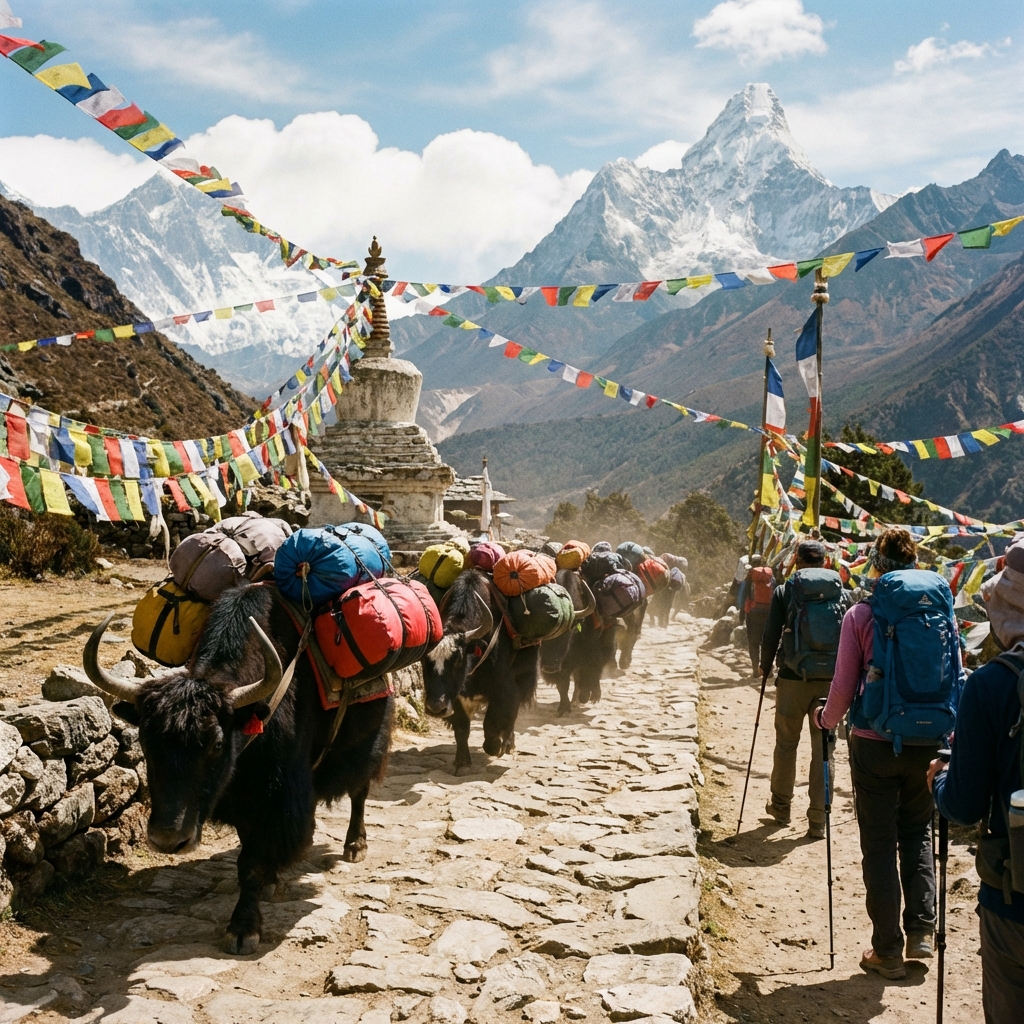
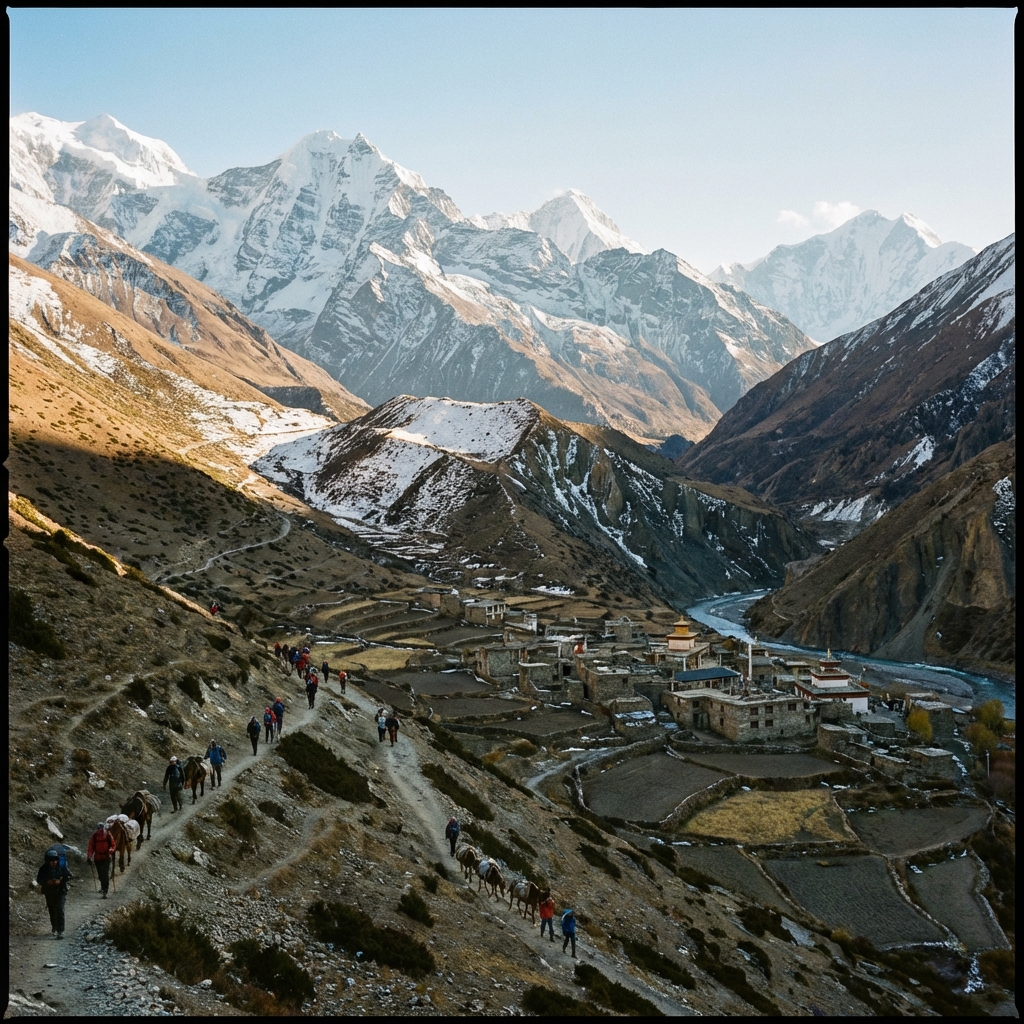
Step into a world frozen in time, where medieval Tibetan villages cling to cliff faces, prayer flags flutter above dramatic canyons, and ancient monasteries preserve centuries-old Buddhist traditions. Welcome to the Nar Phu Valley Trek, one of Nepal's most remote and culturally pristine adventures—a journey through valleys that remained completely closed to outsiders until 2003.
The Nar Phu Valley Trek is not your typical Himalayan adventure. This is a passage through genuine time capsules, where centuries-old trade routes wind through narrow gorges, where villagers speak Tibetan dialects and practice customs unchanged for generations, where the modern world feels impossibly distant. Nestled in the far northern reaches of the Annapurna Conservation Area, the twin valleys of Nar and Phu offer an experience of raw, unfiltered Himalayan culture and wilderness.
Unlike the crowded trails of Everest Base Camp or even the popular Annapurna Circuit, Nar Phu receives fewer than 1,500 trekkers annually. The restricted area permit requirements, mandatory guide regulations, and sheer remoteness ensure that these valleys remain authentic, uncrowded, and profoundly special. When you trek through Nar Phu, you're witnessing medieval Tibet preserved in the high Himalayas—a privilege that cannot be overstated.
This comprehensive guide provides everything you need to plan your journey to these forbidden valleys, including detailed itineraries, cultural insights, practical logistics, and the challenging but rewarding crossing of Kang La Pass that connects Nar Phu to the main Annapurna Circuit.
Route Snapshot
12-16 days
5,322m (17,457 ft) at Kang La Pass
4,110m at Phu Village
120-160 km depending on route
Difficult
Sep-Nov, Apr-May
Nar Phu Restricted Area, Annapurna
Koto (2,600m) or Meta (3,560m)
Manang (via Kang La) or return to Koto
RAP (USD 90) + ACAP + TIMS
Basic Teahouse/Lodge
Mandatory
Not Permitted
Key Route Variants:
| Variant | Duration | Highlights | Best For |
|---|---|---|---|
| Standard Kang La Circuit | 14-16 days | Meta-Phu-Nar-Kang La-Manang-Thorong La | Complete experience, circuit trekkers |
| Return Route | 12-14 days | Meta-Phu-Nar-Return same route | Shorter timeline, avoid Kang La |
| Nar Phu + Annapurna Circuit | 18-21 days | Full AC + Nar Phu detour via Kang La | Ultimate Annapurna experience |
| Phu Valley Only | 10-12 days | Focus on upper Phu valley and culture | Time-limited, cultural focus |
Restricted Area Requirements
Nar Phu Valley is a restricted area requiring special permits. You cannot trek independently. Requirements include:
- Minimum group size of 2 persons
- Licensed guide from registered Nepali trekking agency
- Nar Phu Restricted Area Permit (USD 90 per person for 7 days, then USD 15/day)
- Annapurna Conservation Area Permit (ACAP)
- Permits checked at Koto checkpoint and along route
Why Nar Phu Valley is Extraordinary
The Forbidden Valleys That Time Forgot
The Nar and Phu valleys were among the last regions in Nepal to open to foreign visitors. Until 2003, these valleys remained completely off-limits, preserving a way of life that has barely changed since medieval times. The isolation wasn't accidental—these remote valleys required special permissions even for Nepali citizens, protecting fragile ecosystems and ancient Tibetan Buddhist culture from outside influence.
Walking through Phu or Nar villages feels like stepping through a portal into 14th-century Tibet. Stone houses with flat roofs cluster together for warmth and defense. Chortens (Buddhist stupas) and mani walls inscribed with thousands of mantras line every path. Monks in crimson robes perform ceremonies in centuries-old monasteries. Villagers speak Tibetan dialects, practice sky burial traditions, and maintain customs that vanished from most of the Himalayas generations ago.
The privilege of visiting these valleys carries responsibility. Nar Phu's restricted status and mandatory guide requirements exist to protect what makes this place special. When trekked respectfully, your visit supports local communities, funds monastery restoration, and incentivizes cultural preservation. You're not just observing history—you're helping protect it.
Two Valleys, Two Distinct Characters
The Nar and Phu valleys, though connected by the same trekking route, possess remarkably different characters that create a varied and compelling journey.
Phu Valley (Upper Valley):
- Higher elevation Tibetan plateau environment (4,000m+)
- Dramatic entry through narrow Mahendra Gupha canyon
- Sparse, wind-scoured landscape resembling Tibet
- Larger village of Phu (4,110m) with active monastery
- Views of Himlung Himal and northern Tibetan peaks
- More severe climate, harsher conditions
- Ancient petroglyphs and Buddhist art
- Base for potential side trips toward the Tibetan border
Nar Valley (Lower Valley):
- Set in a spectacular canyon with vertical cliff walls
- Village of Nar (4,110m) dramatically positioned on hillside
- More lush vegetation compared to Phu
- Famous Tashi Lhakhang Monastery with priceless murals
- Kang La Pass access point to Annapurna Circuit
- Traditional polyandry practices (increasingly rare)
- Sky burial sites and ancient chortens
The trek typically visits Phu first, allowing proper acclimatization before tackling the higher Nar valley and the challenging Kang La crossing. This routing maximizes both safety and cultural immersion.
Kang La Pass: The High-Altitude Crossing
At 5,322 metres (17,457 feet), Kang La Pass represents both the literal and metaphorical high point of the Nar Phu Valley Trek. This technically demanding pass connects the isolated Nar Phu valleys with the main Annapurna Circuit at Ngawal, creating one of the most spectacular—and challenging—trekking circuits in Nepal.
Unlike Thorong La Pass on the Annapurna Circuit, Kang La sees perhaps 100 trekkers annually, not thousands. The crossing requires:
- Excellent acclimatization (minimum 2 nights at 4,000m+ before attempt)
- Early alpine start (typically 3:00-4:00 AM departure)
- 8-10 hours of demanding trekking
- Steep, rocky ascent with some scrambling sections
- Potential snow and ice, especially October-May
- Clear weather window (attempt only in stable conditions)
- Good fitness and previous high-altitude experience
The rewards match the challenge: panoramic views of Annapurna II, Gangapurna, Tilicho Peak, and the entire Annapurna massif. The sense of accomplishment is profound—you've crossed a pass that requires genuine mountaineering skills and represents one of Nepal's more serious high-altitude challenges.
Important: Many trekkers choose the return route via Koto instead of Kang La, especially if weather is questionable, acclimatization is insufficient, or fitness/experience levels don't match the pass's demands. There is no shame in this decision—safety should always take priority over completing a circuit.
Permit Requirements and Costs
2026 Permit Costs and Regulations
The Nar Phu Restricted Area Permit system changed in recent years to become more accessible while maintaining protection. Current regulations as of 2026:
- First 7 days: USD 90 per person (was previously higher)
- Additional days: USD 15 per person per day
- Permits issued only through registered trekking agencies
- Mandatory licensed guide requirement
- Minimum 2 persons for permit issuance
Required Permits
Three permits enable your Nar Phu Valley adventure:
1. Nar Phu Restricted Area Permit (RAP)
- Cost: USD 90 per person for first 7 days, then USD 15/day additional
- Who issues: Department of Immigration through registered trekking agencies only
- Requirements: Passport copy, 2 passport photos, completed application form, agency letterhead
- Processing time: 1-2 days in Kathmandu
- Validity: Specific dates and route specified on permit
- Minimum group: 2 persons plus licensed guide required
- Checked at: Koto checkpoint, Phu village, Nar village
2. Annapurna Conservation Area Permit (ACAP)
- Cost: NPR 3,000 (approximately USD 23) for foreign nationals
- Where to obtain: Nepal Tourism Board (Kathmandu), ACAP Office (Pokhara), or through trekking agency
- Purpose: Conservation fee for Annapurna protected area
- Checked at: Besisahar, Koto, and other checkpoints along route
3. Trekkers' Information Management System (TIMS) Card
- Cost: USD 10-20 depending on organized vs. independent status
- Purpose: Trekker tracking and safety database
- Where to obtain: TIMS Counter (Kathmandu/Pokhara) or through agency
- Note: Required even for restricted area treks with mandatory guides
For full details on the conservation fee, see our Annapurna Conservation Area Permit guide, and for how restricted-area permits work, our restricted area permits overview.
Total Trip Cost Breakdown
Overall Budget Range: USD 2,200 - 4,000 per person for 14-16 day trek
Cost Components:
| Item | Cost Range | Notes |
|---|---|---|
| Permits | USD 115-175 | RAP + ACAP + TIMS |
| Guide Services | USD 350-550 | USD 25-40/day for 14 days |
| Porter Services | USD 280-420 | USD 20-30/day (optional but recommended) |
| Accommodation | USD 70-140 | USD 5-10/night in teahouses (twin share) |
| Meals | USD 168-280 | USD 12-20/day (3 meals + drinks) |
| Flights | USD 200-350 | Kathmandu-Pokhara-Kathmandu + Manang flights if needed |
| Ground Transport | USD 60-120 | Kathmandu-Besisahar-Koto-Kathmandu |
| Agency Service Fee | USD 300-500 | Permit processing, logistics, coordination |
| Emergency Fund | USD 200-400 | Weather delays, helicopter evacuation insurance |
| Tips | USD 150-250 | Guide: USD 10-15/day, Porter: USD 8-12/day |
Budget vs. Comfort Options:
- Budget Package: USD 2,200-2,800—basic lodges, shared rooms, minimal extras, local guide
- Standard Package: USD 2,800-3,500—better lodges where available, experienced guide, porter included
- Comfort Package: USD 3,500-4,000+—best available accommodation, senior guide, porter, extras like satellite phone
Cost-Saving Tips:
- Travel in shoulder season (April, early September, late November) when lodge owners may offer discounts
- Share porter costs with other trekkers in your group
- Book full Annapurna Circuit + Nar Phu package for better per-day rates
- Minimize bottled water costs by using purification tablets or SteriPEN
- Bring energy bars and snacks from Kathmandu (limited selection and higher prices in valleys)
Route Overview: Entering the Forbidden Valleys
The Nar Phu Valley Trek branches off the main Annapurna Circuit at the village of Koto (2,600m), approximately 3-4 days' walk from the trek's traditional starting point at Besisahar. This junction marks your departure from the well-trodden circuit into one of Nepal's most remote corners.
How to Get to the Trek Start (Koto)
Reaching the trailhead is an adventure in itself. From Kathmandu, take a bus or private vehicle to Besisahar (6-7 hours), the gateway town for the Annapurna Circuit. From Besisahar, switch to a sharing or private jeep for roughly 3-4 hours of rough off-road driving to Koto (2,600m). Most agencies build this into a single long travel day, though splitting it over two days reduces fatigue.
Because Koto already sits at 2,600m, some experienced trekkers spend an extra night here to acclimatise before entering the restricted area. A common active rest-day option is a day hike toward Upper Pisang for the "climb high, sleep low" benefit, returning to Koto by jeep. If your schedule allows, this buffer day measurably lowers altitude-sickness risk on the fast Koto-to-Phu ascent. For more on reaching trailheads, see our jeep transport and trek access guide.
The Dramatic Canyon Entry
After leaving Koto, the trail follows the Nar Phu Khola (river) northward into increasingly narrow and spectacular gorge terrain. The first day's walk to Meta passes through one of the trek's most memorable sections—the Mahendra Gupha (cave), where the trail literally disappears into cliff walls, requiring trekkers to pass through natural cave passages where the river has carved tunnels through the rock.
This dramatic entry sets the tone for the entire trek: wild, remote, and profoundly beautiful. Waterfalls cascade from cliffs hundreds of metres above. The trail clings to rocky ledges. Suspension bridges sway across roaring torrents. You are entering a landscape that feels primordial and untouched.
Two Valleys, One Journey
From Meta, the route splits conceptually into the Phu and Nar valleys, though most trekkers visit both in sequence:
Phu Valley Exploration (Days 5-8):
- Meta → Kyang → Phu village (4,110m)
- Acclimatization day at Phu (rest or hike to Himlung Base Camp)
- Cultural immersion: monastery visits, village exploration
- Return to Nar Phedi or direct crossing to Nar Valley
Nar Valley Transit (Days 9-11):
- Phu → Nar Phedi → Nar village (4,110m)
- Rest/acclimatization at Nar
- Monastery visits, cultural experiences
- Preparation for Kang La Pass
The Great Crossing (Days 12-13):
- Kang La Pass crossing (5,322m) to Ngawal on Annapurna Circuit
- Or return route via Nar → Meta → Koto
Return Route vs. Kang La Circuit
Trekkers face a critical decision: attempt Kang La Pass or return via the entry route.
Kang La Pass Circuit (More Popular):
- Creates proper circuit, avoiding backtracking
- Spectacular high-altitude crossing with panoramic views
- Connects to Annapurna Circuit for potential Thorong La crossing
- Technically demanding, requires excellent acclimatization
- Weather-dependent (may be impossible in bad conditions)
- Adds 1-2 days to itinerary
Return via Koto (Safer Alternative):
- Avoids high-altitude technical challenges
- More flexible timing, less weather-dependent
- Allows seeing Phu/Nar valleys from different perspectives
- Shorter overall itinerary (saves 1-2 days)
- Less dramatic, involves retracing steps
- Better choice if acclimatization is insufficient
There is no "right" choice—your decision should depend on fitness, acclimatization, weather conditions, time available, and comfort with high-altitude technical trekking. Many experienced trekkers choose the return route due to weather or pacing considerations.
Complete Itinerary Options
Standard 14-Day Kang La Circuit Itinerary
This itinerary represents the classic Nar Phu experience, combining cultural immersion with the challenge of Kang La Pass and connection to the main Annapurna Circuit.
Day 1: Kathmandu to Besisahar (760m) to Koto (2,600m)
- Distance: 8-10 hours by jeep/bus
- Accommodation: Teahouse
- Highlights: Drive along Marsyangdi River, enter Annapurna region
Drive or take local bus from Kathmandu to Besisahar (6-7 hours), the gateway to the Annapurna Circuit. From Besisahar, share jeep or private vehicle to Koto (2-3 hours on rough mountain roads). Koto serves as the last village on the main Annapurna Circuit before the Nar Phu detour. Complete permit checks, organize final supplies, and prepare for entry into restricted area.
Day 2: Koto to Meta (3,560m)
- Distance: 14-16 km
- Walking time: 6-7 hours
- Elevation gain: +960m
- Accommodation: Basic teahouse
- Highlights: Mahendra Gupha cave, dramatic canyon entry, first restricted area village
This day marks your official entry into the Nar Phu restricted area. The trail follows the Nar Phu Khola through increasingly narrow and spectacular gorge terrain. Cross several suspension bridges over roaring waters. Pass through the remarkable Mahendra Gupha, where the trail enters natural cave passages carved by the river through cliff walls. The landscape transforms from lush forest to arid, rocky terrain as you climb. Meta (also called Chyakhu) is a small settlement of stone houses—your first glimpse of the region's distinctive Tibetan architecture.
Day 3: Meta to Kyang (3,840m)
- Distance: 11-13 km
- Walking time: 5-6 hours
- Elevation gain: +280m
- Accommodation: Very basic teahouse/homestay
- Highlights: Entering upper Phu valley, remote yak pastures, Himlung Himal views
The trail continues deeper into the Phu valley, following the river through increasingly open terrain. Cross several side streams on wooden bridges. The landscape becomes more barren and windswept, resembling the Tibetan plateau. Kyang is a tiny settlement primarily used by yak herders, offering very basic accommodation. Spectacular views of Himlung Himal (7,126m) and other peaks of the Peri Himal emerge.
Day 4: Kyang to Phu Village (4,110m)
- Distance: 8-10 km
- Walking time: 3-4 hours
- Elevation gain: +270m
- Accommodation: Basic teahouse/lodge
- Highlights: Arrival at Phu village, medieval Tibetan settlement, monastery exploration
A shorter walking day allows afternoon exploration of Phu and aids acclimatization. The trail crosses wide valley floors with glacial streams braiding across the landscape. As you approach Phu, the village appears dramatically against the backdrop of towering peaks. Phu is a remarkable time capsule—approximately 50 stone houses cluster together on a hillside, with prayer flags fluttering from every roof. Spend the afternoon visiting Tashi Lhakhang Monastery, exploring narrow alleyways between ancient stone homes, and meeting villagers who maintain centuries-old traditions. The monastery contains priceless Buddhist murals and artifacts.
Day 5: Acclimatization Day at Phu
- Mandatory (since April 2023) hike: Himlung Base Camp or surrounding viewpoints
- Elevation gain: +300-500m (day hike only)
- Accommodation: Same teahouse
- Highlights: Cultural immersion, high-altitude acclimatization, spectacular mountain views
This critical acclimatization day prepares your body for Kang La Pass. Options include:
- Hike to Himlung Himal Base Camp (4,900m, 4-5 hours round trip)
- Explore upper Phu valley toward Tibetan border
- Visit nearby hermitage caves and meditation sites
- Rest day with village cultural immersion
Day 6: Phu to Nar Phedi (3,490m)
- Distance: 10-12 km
- Walking time: 5-6 hours
- Elevation change: -620m descent
- Accommodation: Very basic teahouse
- Highlights: Crossing to Nar valley, riverside camping terrain
Descend from Phu back down the valley, retracing steps briefly before branching toward Nar valley. Cross several tributaries and side valleys. Nar Phedi ("foot of Nar") is a basic stop in the gorge below Nar village, used as a staging point for the climb to Nar. The descent aids acclimatization by following the "climb high, sleep low" principle.
Day 7: Nar Phedi to Nar Village (4,110m)
- Distance: 5-6 km
- Walking time: 3-4 hours
- Elevation gain: +620m
- Accommodation: Basic teahouse
- Highlights: Dramatic approach to Nar, spectacular canyon setting, monastery with ancient murals
Climb steeply from the gorge floor to Nar village, perched dramatically on a hillside within soaring canyon walls. The setting is breathtaking—vertical cliffs rise hundreds of metres on both sides, prayer flags connect the canyon walls, and the village itself seems to defy gravity. Nar is smaller than Phu (about 30 houses) but equally fascinating. Visit the Tashi Lhakhang Monastery with its remarkable murals depicting Buddhist cosmology and protective deities. The village maintains traditional polyandry practices (though increasingly rare) and ancient sky burial traditions.
Day 8: Acclimatization Day at Nar
- Optional hike: Surrounding ridges and viewpoints
- Elevation gain: +200-400m (day hike only)
- Accommodation: Same teahouse
- Highlights: Final acclimatization before Kang La, cultural experiences, preparation
Another essential acclimatization day before attempting Kang La Pass. Activities include:
- Hike to viewpoints above Nar for pass reconnaissance
- Explore chortens, mani walls, and sky burial sites
- Visit monastery in depth with local guide explanations
- Preparation: check gear, discuss early morning Kang La start with guide
- Rest and hydration
Day 9: Nar to Kang La Phedi/Base Camp (4,530m)
- Distance: 5-6 km
- Walking time: 3-4 hours
- Elevation gain: +420m
- Accommodation: Very basic shelter/tent camp
- Highlights: High camp below Kang La, preparation for pass crossing
Climb gradually from Nar to the high camp below Kang La Pass. This camp is very basic—sometimes just stone shelters or tents. The short distance allows afternoon rest before the demanding early morning pass crossing. Go to bed early (6:00-7:00 PM) to wake for 3:00-4:00 AM departure.
Day 10: Kang La Pass (5,322m) to Ngawal (3,660m)
- Distance: 12-14 km
- Walking time: 8-10 hours
- Elevation gain: +792m to pass, -1,662m descent to Ngawal
- Accommodation: Teahouse in Ngawal
- Highlights: Kang La Pass crossing, panoramic Annapurna views, joining main circuit
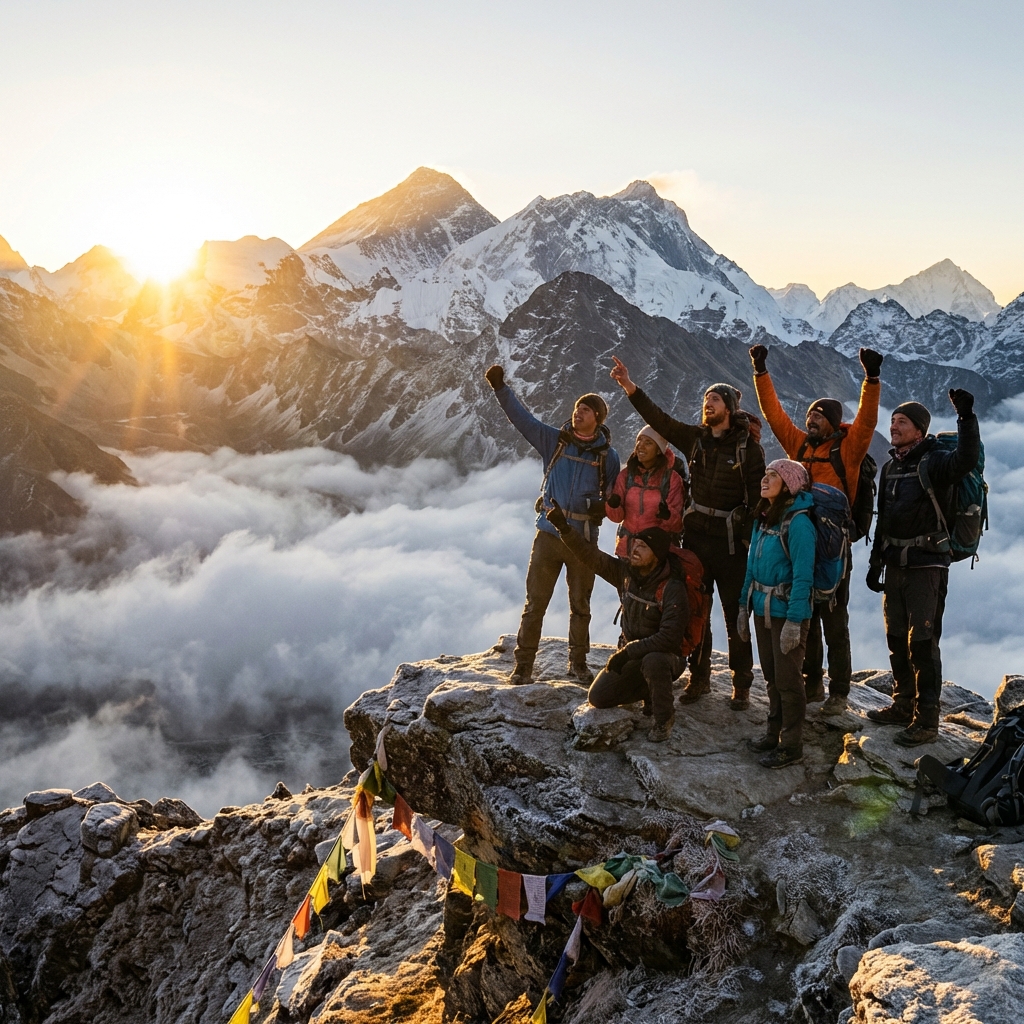
The most challenging and rewarding day of the trek. Wake around 3:00 AM for tea and breakfast. Start by 4:00 AM with headlamps. Climb steep, rocky terrain with some scrambling sections. Crampons may be necessary if snow/ice present (consult guide). Reach the pass at sunrise (6:00-7:00 AM) for spectacular views of Annapurna II, III, IV, Gangapurna, Tilicho Peak, and the entire Annapurna massif. Prayer flags mark the summit. After photos and celebration, begin the long, steep descent to Ngawal on the main Annapurna Circuit. The descent is technically demanding on knees and requires careful footing. Arrive Ngawal mid-afternoon for well-deserved rest.
Day 11: Ngawal to Manang (3,540m)
- Distance: 8-10 km
- Walking time: 3-4 hours
- Elevation change: -120m
- Accommodation: Excellent teahouse selection
- Highlights: Return to civilization, rest and recuperation, Manang facilities
Easy walk to Manang, the largest village on the Annapurna Circuit. Manang offers excellent teahouses, bakeries, cafes with WiFi, hot showers, and celebration of your Kang La achievement. Rest and prepare for potential Thorong La crossing if continuing the full Annapurna Circuit, or arrange transport back to Besisahar.
Day 12-13: Return to Kathmandu
- Options: Jeep from Manang to Besisahar (1 day), or continue Annapurna Circuit
- Alternative: Fly Manang-Pokhara (weather permitting)
Either return to Kathmandu via Besisahar (long jeep ride), or fly from Manang to Pokhara if weather permits (flights often cancelled due to wind). If continuing full Annapurna Circuit, proceed toward Thorong La.
Alternative 12-Day Return Route Itinerary
For those preferring to avoid Kang La or facing time constraints:
Days 1-8: Identical to above (Kathmandu → Phu → Nar)
Day 9: Nar to Meta (3,560m)
- Distance: 16-18 km
- Walking time: 6-7 hours
- Elevation change: -550m
- Accommodation: Teahouse
- Highlights: Return journey, different perspectives on valleys
Day 10: Meta to Koto (2,600m)
- Distance: 14-16 km
- Walking time: 5-6 hours
- Elevation change: -960m
- Accommodation: Teahouse
- Highlights: Mahendra Gupha from opposite direction, return to Annapurna Circuit
Day 11-12: Return to Kathmandu
This route is safer, more flexible, and suitable for trekkers concerned about Kang La's technical difficulty or uncertain weather windows.
Kang La Pass: The High-Altitude Challenge
Serious High-Altitude Pass
Kang La Pass (5,322m) is a serious mountaineering challenge requiring:
- Excellent physical fitness and previous high-altitude experience
- Proper multi-day acclimatization at 4,000m+ before attempt
- Stable weather conditions (attempt only with clear forecast)
- Early alpine start (3:00-4:00 AM departure)
- Appropriate gear (potentially crampons, ice axe in shoulder seasons)
- Experienced guide familiar with route
Do not attempt if you have altitude sickness symptoms, poor weather forecast, or insufficient acclimatization. The return route via Koto is a legitimate alternative with no shame attached.
Technical Requirements and Preparation
Kang La differs significantly from Thorong La (the Annapurna Circuit's main pass). While Thorong La is high (5,416m), it's a well-marked, heavily-trafficked path with teahouses on both sides. Kang La is remote, technical, and sees perhaps 1% of Thorong La's traffic.
Physical Demands:
- 8-10 hours of demanding trekking with heavy breathing
- Steep ascent with elevation gain of ~800m from base camp
- Scrambling over boulders and rocky terrain
- Potential snow/ice fields requiring careful navigation
- Very steep descent of ~1,600m to Ngawal (hard on knees)
- Total elevation effort exceeds 2,400m in one day
Technical Challenges:
- Route-finding in upper sections (cairns mark way but less obvious than major passes)
- Loose scree and rockfall danger in descent
- Potential crevasse danger if snow-covered (guide assessment essential)
- Exposure on some sections (care needed with drop-offs)
- Weather can change rapidly at this altitude
Necessary Gear:
- Crampons and ice axe (September-November and April-May, consult guide)
- Trekking poles (essential for descent)
- Headlamp with fresh batteries (4:00 AM start)
- Warm layers (temperatures -10 to -15°C at pass)
- Windproof and waterproof outer layers
- High-altitude sunglasses (snow blindness risk)
- Emergency shelter (guide carries)
Acclimatization Strategy
Proper acclimatization is non-negotiable for Kang La success. The itinerary includes two dedicated acclimatization days (Phu and Nar) plus the overall gradual ascent profile. Warning signs that you should NOT attempt Kang La:
- Headache that doesn't respond to medication
- Nausea, vomiting, or loss of appetite
- Dizziness or loss of coordination
- Shortness of breath at rest
- Disturbed sleep or periodic breathing
- Fatigue that doesn't improve with rest
If experiencing any of these symptoms, descend immediately and consider the return route via Koto. Many trekkers complete Nar Phu via the return route and have outstanding experiences without the Kang La crossing.
Weather Windows and Timing
Kang La requires stable weather for safe crossing. The pass faces west, meaning afternoon weather deterioration common in monsoon season makes it even more dangerous. Optimal conditions:
Best Months:
- October-November: Most stable weather, clear skies, cold temperatures
- April-May: Warmer temperatures, occasional afternoon clouds, more snow
Challenging Months:
- September: Tail end of monsoon, afternoon storms possible
- Late November-March: Deep snow, extreme cold, very dangerous
Daily Timing:
- Start: 3:00-4:00 AM from base camp
- Summit: 6:00-8:00 AM (critical to summit before noon weather changes)
- Descent: Complete descent to Ngawal by 2:00-3:00 PM
Your guide will assess conditions and make the final call. Trust their judgment—they've crossed many times and understand the risks.
The Crossing Experience: What to Expect
Phase 1: Pre-Dawn Ascent (4:00-6:00 AM) Wake at 3:00 AM. Hot tea and light breakfast (altitude suppresses appetite). Dress in warm layers—temperatures around -10°C. Begin climbing by headlamp. The trail switchbacks up rocky terrain. Pace is critical: slow and steady, rest every 20-30 minutes. As dawn breaks, the surrounding peaks begin to glow.
Phase 2: Final Push to Summit (6:00-8:00 AM) The gradient steepens. Boulder fields require careful foot placement. If snow is present, guide may rope team together for glacier sections. The final push to the pass involves steep scrambling. Then suddenly—prayer flags snapping in the wind, and a view that defies description.
Phase 3: Summit Celebration (15-30 minutes max) Panoramic views in all directions: Annapurna II (7,937m), Annapurna IV (7,525m), Gangapurna (7,455m), Tilicho Peak (7,134m), and peaks extending into Tibet. Take photos, catch breath, but don't linger—altitude and weather demand you begin descent.
Phase 4: The Long Descent (8:00 AM-2:00 PM) The descent to Ngawal is long, steep, and technically demanding. Trekking poles essential to protect knees. Loose scree requires careful footing. Guide navigates the safest route. As you descend, vegetation reappears. Finally, Ngawal comes into view—a beautiful village with solid teahouses, hot food, and the satisfaction of having completed one of Nepal's great high passes.
Phu & Nar Villages: Medieval Tibet in Nepal
Phu Village (4,110m): Gateway to the Tibetan Plateau
Phu feels like the edge of the world—because it nearly is. Situated at the head of the Phu valley beneath towering peaks, this remarkable settlement of about 200 people maintains a way of life that has barely changed in centuries.
Architecture and Layout: The village consists of approximately 50 traditional stone houses built in the Tibetan style: thick stone walls for insulation, small windows to conserve heat, flat roofs used for drying barley and storing firewood. Houses cluster together for wind protection and defensive purposes (historical raiding from Tibet was a concern). Narrow alleys wind between buildings, creating a maze-like village structure.
Prayer flags stretch between rooftops, creating canopies of fluttering colour. Chortens mark the village entrances and exits—Buddhist stupas that serve both religious and protective purposes. Mani walls (stone walls inscribed with Buddhist mantras) line the main paths, each carved stone representing prayers accumulated over generations.
Tashi Lhakhang Monastery: The spiritual heart of Phu, this ancient monastery contains:
- Priceless Buddhist murals depicting protective deities, mandalas, and scenes from Buddhist cosmology
- Statues of Guru Rinpoche (who brought Buddhism to Tibet) and other important figures
- Ancient texts and manuscripts in Tibetan script
- Active monastic community (4-6 monks in residence)
- Annual ceremonies and festivals following the Tibetan Buddhist calendar
Daily Life: Villagers practice subsistence agriculture on an extreme level. Barley, buckwheat, and potatoes grow in irrigated terraces during the short summer growing season. Yak and dzo (yak-cow hybrid) herding provides milk, butter, meat, and transportation. Women spin wool and weave textiles. Men maintain irrigation channels and tend animals.
Polyandry (one woman married to multiple brothers) was traditionally practiced to prevent land fragmentation, though this is increasingly rare among younger generations. Extended families live together in multi-generational households.
Cultural Experiences for Trekkers:
- Monastery visits (morning and evening prayers at 6:00 AM and 5:00 PM)
- Home stays possible (arrange through guide for authentic cultural exchange)
- Traditional butter tea and tsampa (roasted barley flour) meals
- Observing daily life: women weaving, men repairing homes, children playing
- Photography of village architecture (always ask permission before photographing people)
Nar Village (4,110m): Canyon Settlement
Nar presents an even more dramatic setting than Phu—a village seemingly suspended on a mountainside within a narrow canyon with vertical walls soaring hundreds of metres on both sides.
Spectacular Setting: Approach Nar by climbing steeply from the canyon floor. As you ascend, the village appears in layers—stone houses stacked on the hillside, prayer flags connecting the canyon walls, waterfalls cascading from cliffs above. The setting is breathtaking and unlike any other village in Nepal.
Tashi Lhakhang Monastery: Nar's monastery rivals Phu's in cultural and artistic significance:
- Ancient murals painted with natural pigments (turquoise from crushed stone, gold leaf, cinnabar red)
- Protective deities (dharmapala) depicted in fierce poses warding off evil
- Wheel of Life paintings illustrating Buddhist cosmology and rebirth
- Sacred texts and ritual implements
- More isolated and intimate atmosphere than Phu's larger monastery
Cultural Distinctiveness: Nar maintains traditions even more strictly than Phu:
- Sky burial practices continue (though trekkers should not attempt to observe these sacred rituals)
- Traditional dress worn daily (women in distinctive Tibetan-style robes and jewelry)
- Tibetan dialect spoken (many villagers speak little Nepali)
- Seasonal migration patterns (many families move to lower elevations in harsh winter)
Village Facilities: Nar has 3-4 basic teahouses offering:
- Twin rooms with shared bathrooms
- Dal bhat and simple Tibetan dishes
- Wood-stove or yak-dung heating (limited)
- Outdoor toilets (composting or pit style)
- Limited electricity (solar panels, charging expensive)
Cultural Etiquette and Respectful Trekking
Visiting Nar and Phu is a privilege that comes with responsibilities. These villages are not museums—they are living communities where your presence as a trekker impacts daily life.
Dos:
- Walk clockwise around all chortens, mani walls, and monasteries (Buddhist tradition)
- Remove shoes when entering monasteries or homes
- Ask permission before photographing people (especially monks, women, children)
- Offer donations when visiting monasteries (NPR 500-1,000 appropriate)
- Buy crafts directly from village women (supports local economy)
- Hire local porters when possible (provides income to village families)
- Learn basic Tibetan greetings: "Tashi delek" (hello/blessings)
- Dress modestly (cover shoulders and knees, especially women)
Don'ts:
- Never touch or photograph sacred objects without permission
- Don't offer money to children (creates begging culture)
- Avoid public displays of affection
- Don't attempt to observe or photograph sky burial sites (deeply sacred)
- Never sit on or disrespect mani stones or prayer walls
- Don't give away Western items (creates dependency)
- Avoid discussions of politics, especially regarding Tibet/China
Photography Ethics: Many villagers hold traditional beliefs about photography capturing souls. Always ask permission. If someone declines, respect their wishes without argument. The best photographs come from building relationships—spend time talking with villagers (through your guide translator), and photo opportunities naturally emerge with mutual respect.
Day-by-Day Detailed Guide
[Note: Comprehensive day-by-day guide provided in "Complete Itinerary Options" section above. This section would include additional details for each day including:
- Trail conditions and navigation notes
- Water sources and purification points
- Emergency exit options
- Photographic opportunities
- Wildlife viewing possibilities
- Alternative route variants]
Given space constraints and comprehensive coverage already provided in the itinerary section, refer to the detailed 14-day and 12-day itineraries above for complete day-by-day information.
Difficulty Assessment
DifficultHow difficult is the Nar Phu Valley trek? It is rated Difficult. You sleep multiple nights above 4,000m, gain altitude fast from Koto (2,600m) to Phu (4,110m) in three days, and—if crossing Kang La Pass—climb to 5,322m on an 8-10 hour day with scrambling and a 1,600m descent. Previous high-altitude experience and solid fitness are strongly recommended.
The Nar Phu Valley Trek earns a "Difficult" rating for several compounding factors that distinguish it from "Moderate" treks like Annapurna Base Camp or even "Challenging" treks like Manaslu Circuit.
Physical Demands
Elevation Profile:
- Maximum altitude: 5,322m (Kang La Pass) or 4,110m (if avoiding pass)
- Multiple nights sleeping above 4,000m (Phu, Nar)
- Significant daily elevation gains (600-900m on several days)
- Long trekking days (6-10 hours with Kang La day)
Terrain Challenges:
- Rocky, unstable trails through canyon sections
- Scrambling required on Kang La approach and descent
- River crossings on suspension bridges and stepping stones
- Potential snow and ice (seasonal)
- Loose scree on descents
Fitness Requirements:
- Ability to trek 6-8 hours daily at altitude carrying daypack
- Cardiovascular fitness for extended climbing
- Leg strength for steep ascents and knee-destroying descents
- Mental resilience for long, demanding days
Altitude Considerations
Altitude presents the primary challenge and danger on this trek. Sleeping above 4,000m for multiple consecutive nights stresses even well-acclimatized trekkers. The Kang La crossing pushes above 5,300m, where oxygen levels are about 50% of sea level.
Altitude Sickness Risk Factors:
- Rapid altitude gain from Koto (2,600m) to Phu (4,110m) in just 3 days
- Limited acclimatization options (can't "climb high, sleep low" effectively in narrow valley)
- Multiple high-sleeping nights in succession
- Kang La attempt requires pushing to 5,322m after already being at altitude for days
Symptoms to Watch:
- Headache (normal at altitude, but shouldn't worsen)
- Nausea, loss of appetite (mild is normal, severe is warning)
- Disturbed sleep (common, but monitor for worsening)
- Shortness of breath at rest (danger sign—descend immediately)
- Confusion, loss of coordination (emergency—descend now)
Acclimatization Strategy: The itinerary includes two dedicated rest days (Phu and Nar), which are non-negotiable. Use these days for gentle hikes that follow the "climb high, sleep low" principle. Proper hydration (4-5 litres daily), avoiding alcohol, and eating carbohydrate-rich foods all support acclimatization.
Remote Valley Considerations
Unlike popular treks with extensive teahouse infrastructure and rescue resources, Nar Phu is genuinely remote:
Limited Services:
- Basic teahouses only (don't expect Everest-region luxuries)
- No ATMs or shops after Koto
- Unreliable electricity (solar power, limited charging)
- No WiFi in most locations
- Limited food variety (dal bhat, noodles, potatoes)
Medical Concerns:
- No medical facilities between Koto and Manang
- Helicopter evacuation expensive (USD 5,000-8,000) and weather-dependent
- Self-reliance for minor injuries and ailments essential
- Comprehensive first aid knowledge crucial
Weather Vulnerability:
- Weather can close Kang La Pass with little warning
- Snowstorms possible even in peak season
- Afternoon thunderstorms in shoulder seasons
- Cold temperatures year-round (nighttime lows -15°C even in October)
Who Should Trek Nar Phu?
Ideal Candidates:
- Previous high-altitude trekking experience (Everest Base Camp, Annapurna Circuit, etc.)
- Strong physical fitness (regular cardio and hiking training)
- Mental resilience and flexibility (accepting discomfort and plan changes)
- Cultural sensitivity and interest (villages are the highlight, not just scenery)
- Time available (rushing this trek increases altitude sickness risk)
Think Twice If:
- This is your first Nepal trek (start with Annapurna Base Camp or Langtang)
- Previous altitude sickness issues (above 3,500m)
- Limited time (trying to rush increases danger)
- Expecting comfortable lodges (this is basic)
- Only interested in mountains, not culture (there are easier routes for pure scenery)
Training Recommendations
3 Months Before Trek:
- Cardiovascular training: 4-5 days per week, 45-60 minutes (running, cycling, swimming)
- Hiking with elevation gain: weekly hikes with 800-1,200m gain carrying 8-10kg pack
- Leg strength: squats, lunges, step-ups (protect knees for descents)
- Core strength: planks, yoga (supports pack carrying)
1 Month Before Trek:
- Increase hiking to 2-3 times weekly with longer duration (4-6 hours)
- Back-to-back hiking days (simulate multi-day trekking)
- Practice with trekking boots (break in thoroughly)
- Altitude pre-acclimatization if accessible (sleep at 2,500m+ for weekends)
Final Week:
- Taper training (rest and recover)
- Hydration focus
- Carbohydrate loading
- Sleep quality
Best Time to Visit Nar Phu Valley
| Month | High | Low | Conditions | Crowds | Notes |
|---|---|---|---|---|---|
| January | -5 to 5°C | -20 to -15°C | Very Low (20-40mm) | Very Low | Extreme cold, deep snow on Kang La, most lodges closed. Not recommended. |
| February | -3 to 7°C | -18 to -12°C | Low (20-50mm) | Very Low | Still very cold, Kang La dangerous with snow. Few trekkers, limited services. |
| March⭐⭐ | 2 to 12°C | -12 to -6°C | Moderate (40-80mm) | Low | Warming up, snow melting. Late March possible for experienced trekkers. Wildflowers starting. |
| AprilBest⭐⭐⭐⭐ | 8 to 18°C | -5 to 2°C | Moderate (50-100mm) | Moderate | Spring season begins. Excellent temperatures, rhododendrons bloom, clear mornings. Kang La crossable. |
| MayBest⭐⭐⭐⭐ | 12 to 22°C | 0 to 6°C | Moderate-High (80-130mm) | Moderate | Warm and pleasant, afternoon clouds increase. Lush valleys, excellent visibility. Pre-monsoon preparation. |
| June⭐⭐ | 15 to 25°C | 5 to 10°C | High (150-250mm) | Low | Monsoon begins. Rain, clouds, leeches at lower elevations. Upper valleys drier but afternoon storms. |
| July | 16 to 26°C | 8 to 12°C | Very High (300-450mm) | Very Low | Peak monsoon. Heavy rain, landslides, road closures. Not recommended despite warm temperatures. |
| August | 15 to 25°C | 7 to 11°C | Very High (300-400mm) | Very Low | Continued monsoon. Wet trails, clouds obscure views. Avoid this month. |
| SeptemberBest⭐⭐⭐⭐ | 12 to 22°C | 3 to 8°C | Moderate (100-180mm) | Moderate | Monsoon ending, weather stabilizing. Early Sept. still wet; late Sept. excellent. Green landscapes, clear views. |
| OctoberBest⭐⭐⭐⭐⭐ | 8 to 18°C | -2 to 4°C | Low (30-60mm) | High | Peak season. Stable weather, crystal clear skies, perfect temperatures. Best month for Kang La crossing. |
| NovemberBest⭐⭐⭐⭐⭐ | 3 to 12°C | -8 to 0°C | Very Low (15-30mm) | Moderate | Excellent season. Cold mornings, sunny days, pristine clarity. Late Nov. gets very cold but stable weather. |
| December⭐⭐ | -2 to 8°C | -15 to -5°C | Very Low (10-20mm) | Very Low | Early Dec. possible for hardy trekkers. Late Dec. too cold, snow accumulation, most lodges closed. |
Peak Season: October-November
These months represent optimal Nar Phu trekking conditions:
October Advantages:
- Post-monsoon clarity with crystal-clear mountain views
- Stable weather patterns with minimal precipitation
- Comfortable daytime temperatures (15-20°C at lower elevations, 5-10°C at Phu/Nar)
- Dry trails and minimal snow on Kang La Pass
- Lodges fully operational with good food supplies
- Vibrant atmosphere with other trekkers (but still far fewer than main circuit)
November Advantages:
- Continued stable weather with even clearer skies
- Crisp, cold air providing exceptional visibility
- Lower trekker numbers than October (more solitude)
- Excellent Kang La Pass conditions in early-mid November
- Cultural festivals possible in villages
Disadvantages:
- Cold nighttime temperatures (down to -10°C at Phu/Nar)
- Limited heating in basic lodges
- Higher prices during peak season (marginal in remote areas)
- Must book lodges/guides further in advance
- Late November sees snow accumulation on Kang La
Shoulder Season: April-May & September
These months offer excellent trekking with different character than peak season:
Spring (April-May):
- Warming temperatures after winter
- Rhododendron blooms at lower elevations (spectacular in April)
- Longer daylight hours
- Less crowded than autumn
- Wildflowers in upper valleys by late May
- Challenges: Afternoon clouds increase in May, higher avalanche risk on Kang La in early April
Early Autumn (September):
- Monsoon-cleaned air providing stunning clarity
- Lush, green valleys (contrast with October's brown landscape)
- Fewer trekkers than October-November
- Warmer temperatures than late autumn
- Challenges: Early September still sees monsoon tail-end rain, trails can be muddy, landslide risk on approach roads
Kang La Pass Conditions by Season
The pass crossing requires specific seasonal considerations:
Best Conditions (October-November):
- Minimal snow in October, increasing snow late November
- Stable weather windows
- Frozen, stable snow (if present) provides good footing
- Cold but manageable temperatures
Possible but Challenging (April-May, September):
- April: Deep snow possible, crampons often required
- May: Snow melting, rockfall danger increases
- September: Late monsoon storms possible, afternoon weather deterioration
Dangerous (December-March, June-August):
- Winter: Deep snow, extreme cold (-20 to -30°C), avalanche danger
- Monsoon: Clouds, rain turning to snow at altitude, zero visibility
Decision-Making: Always defer to your guide's assessment of current Kang La conditions. Weather windows can be short—flexibility in your itinerary allows waiting 1-2 days for optimal crossing conditions.
Cost Breakdown and Budgeting
[Comprehensive cost information provided in "Permit Requirements and Costs" section above. Additional budgeting notes:]
Daily Trekking Costs
Accommodation: USD 5-10 per night
- Basic rooms with twin beds and shared bathroom
- Blankets provided (bring sleeping bag for warmth)
- No heating (except yak-dung stove in dining areas)
- Solar electricity (limited, charging USD 2-5 per device)
Food: USD 12-20 per day
- Dal bhat: NPR 600-1,000 (USD 4.50-7.50, unlimited refills)
- Noodle soup: NPR 400-600 (USD 3-4.50)
- Fried rice: NPR 500-700 (USD 3.75-5.25)
- Tea/coffee: NPR 100-200 (USD 0.75-1.50)
- Bottled water: NPR 150-300 (USD 1.10-2.25, increases with altitude)
- Snacks: Limited selection, expensive
Tips for Budget Management:
- Order dal bhat when possible (unlimited refills, best value, supports local economy)
- Use water purification instead of buying bottled water (environmental benefit too)
- Bring energy bars, chocolate, and snacks from Kathmandu
- Minimize electronics charging (expensive, unreliable solar power)
- Book complete package through agency (better rates than arranging individually)
Nar Phu + Annapurna Circuit Combination
One of the most spectacular trekking combinations in Nepal connects Nar Phu with the complete Annapurna Circuit via Kang La Pass and Thorong La Pass.
The Ultimate 18-21 Day Itinerary
Days 1-11: Standard Nar Phu itinerary (Kathmandu → Koto → Phu → Nar → Kang La → Ngawal → Manang)
Days 12-13: Manang acclimatization
- Rest and explore Manang
- Acclimatization hikes to Ice Lake (4,600m) or Gangapurna Base Camp
- Prepare for Thorong La crossing
Days 14-15: Manang → Yak Kharka → Thorong Phedi/High Camp
Day 16: Thorong La Pass (5,416m) → Muktinath (see our Thorong La Pass guide for crossing details)
Days 17-18: Muktinath → Jomsom → Pokhara
Days 19-21: Pokhara → Kathmandu, rest and celebration
Why This Combination is Special
This route creates one of the world's great trekking circuits:
- Two major high passes (Kang La and Thorong La)
- Complete cultural immersion (Tibetan villages of Nar Phu + Mustang culture in Kagbeni/Muktinath)
- Extreme landscape diversity (lush forests → arid canyons → alpine desert)
- Restricted area + classic circuit combination
- Fewer than 500 people complete this full circuit annually
Considerations for the Combined Trek
Advantages:
- Ultimate Annapurna experience
- Exceptional acclimatization profile (Kang La prepares body for Thorong La)
- Variety prevents monotony
- Bragging rights for completing one of Nepal's toughest circuits
Challenges:
- Requires 18-21 days minimum
- High cost (permits, guide for extended period)
- Physical and mental demands of two high passes
- Weather windows needed for both passes
- Logistics more complex
Cost: USD 3,500-5,500 for complete circuit (permits, guide, porter, accommodation, meals, transport)
Cultural Highlights Beyond Phu and Nar
Tashi Lhakhang Monasteries
Both Phu and Nar feature monasteries called Tashi Lhakhang (literally "monastery of auspicious fortune"), though they are distinct institutions with different histories and artistic traditions.
Phu Tashi Lhakhang:
- Founded in the 15th century
- Affiliated with Sakya school of Tibetan Buddhism
- Contains statues of Guru Rinpoche, Tara, and protective deities
- Ancient thangkas (scroll paintings) depicting Buddhist cosmology
- Active monastic community maintains daily prayer schedules
- Annual festivals follow Tibetan Buddhist calendar
Nar Tashi Lhakhang:
- Smaller but older than Phu's monastery
- Remarkable murals painted with natural mineral pigments
- Wheel of Life (Bhavachakra) paintings showing cycle of rebirth
- Protective deity (dharmapala) paintings in vivid colors
- Sacred texts in Tibetan script
- More intimate, isolated atmosphere
Visiting Etiquette:
- Remove shoes before entering
- Walk clockwise around interior
- No touching of sacred objects
- Photography often requires permission and donation (NPR 500-1,000)
- Best times: morning prayers (6:00-7:00 AM) or evening prayers (5:00-6:00 PM)
- Dress modestly (cover shoulders and knees)
Sky Burial Traditions
Tibetan Buddhist sky burial (jhator) remains practiced in both Phu and Nar, though trekkers should understand this is a sacred funeral rite, not a tourist attraction.
What is Sky Burial: In Tibetan Buddhist tradition, the body is considered an empty vessel after death. Sky burial involves placing the deceased on a mountaintop for vultures to consume, returning the body to nature in the cycle of life. This practice reflects core Buddhist beliefs about impermanence and the separation of consciousness from physical form.
Important Considerations:
- Never attempt to observe or photograph sky burial sites
- These are sacred ceremonies, not cultural performances
- Your guide will point out sky burial sites from a distance (marked by white stones and prayer flags)
- Violation of these sites is deeply offensive and disrespectful
- Some sites are visible from trails, but do not approach
Respecting these traditions demonstrates cultural sensitivity and supports maintaining authentic practices in these villages.
Ancient Chortens and Mani Walls
The valleys are filled with religious structures built over centuries:
Chortens (Stupas):
- Buddhist monuments containing sacred relics or marking important locations
- Various styles: some simple stone piles, others elaborate painted structures
- Always walk clockwise around chortens (following Buddhist tradition)
- Often mark village entrances/exits, passes, or sacred sites
- Some are centuries old, maintained by village communities
Mani Walls:
- Long walls built from stones carved with Buddhist mantras (especially "Om Mani Padme Hum")
- Each stone represents a prayer, accumulated over generations
- Some walls extend hundreds of metres
- Always pass on the left side (keeping wall on your right, walking clockwise)
- Never remove or disturb mani stones
- Adding properly carved mani stones is meritorious (don't add plain stones)
Traditional Crafts and Economic Support
Supporting local economies through craft purchases benefits village communities:
Textiles:
- Hand-woven wool blankets and scarves
- Traditional Tibetan-style aprons (pangden)
- Yak wool products
- Natural dye textiles
Metalwork:
- Bronze ritual objects
- Tibetan singing bowls (though many are actually made in Kathmandu)
- Prayer wheels
Other Crafts:
- Turquoise and coral jewelry (traditional Tibetan style)
- Wooden bowls and implements
- Hand-painted prayer flags
Purchasing Tips:
- Buy directly from village women when possible (supports local economy)
- Negotiate respectfully but fairly (these are not tourist prices, this is livelihood)
- Prefer authentic local crafts over items imported from Kathmandu
- Consider quality over quantity (better one authentic item than multiple factory goods)
Frequently Asked Questions
Essential Packing List for Nar Phu
Clothing Layers
Base Layers:
- Merino wool or synthetic long underwear (2 sets)
- Lightweight hiking shirts (2-3)
- Hiking pants/trousers (2)
- Underwear and socks (6-8 pairs merino wool)
Insulation Layers:
- Fleece jacket or pullover
- Down jacket (800-fill or equivalent for high altitude)
- Insulated pants (for Kang La Pass and high camps)
Outer Layers:
- Waterproof/breathable jacket (Gore-Tex or equivalent)
- Waterproof pants
- Windproof jacket
Extremities:
- Warm hat (wool or fleece)
- Sun hat with brim
- Balaclava or neck gaiter
- Gloves: lightweight liner gloves + insulated mittens
- Hiking boots (broken in, ankle support)
- Camp shoes/sandals for lodges
- Gaiters (useful for Kang La in snow)
Technical Gear
For Kang La Pass:
- Trekking poles (essential for descent)
- Crampons (microspikes minimum, full crampons for spring)
- Ice axe (April-May crossings, consult guide)
- Headlamp with extra batteries (4:00 AM start)
- Sunglasses (Category 4 for snow/glacier)
General Trekking:
- Backpack 40-50L (if carrying own gear) or 20-30L daypack (with porter)
- Sleeping bag rated to -15°C (lodges are cold)
- Sleeping bag liner (adds warmth and hygiene)
- Water bottles or hydration system (3L capacity total)
- Water purification (tablets, SteriPEN, or filter)
Personal Items
Health and Hygiene:
- Comprehensive first aid kit
- Altitude sickness medication (Diamox)
- Pain relievers (ibuprofen, paracetamol)
- Antibiotics (ciprofloxacin for stomach issues)
- Blister treatment (Compeed, moleskin)
- Sunscreen SPF 50+
- Lip balm with SPF
- Wet wipes/hand sanitizer
- Toilet paper and trowel
- Personal hygiene items
- Quick-dry towel
Electronics:
- Camera with extra batteries and memory cards
- Phone with downloaded maps
- Portable charger/power bank (20,000+ mAh)
- Charging cables
- Universal adapter
- Headlamp/torch
Documents and Money:
- Passport with visa
- Trekking permits (carried by guide)
- Travel insurance documentation
- Emergency contact information
- Cash (Nepali rupees, USD backup)
- Passport photos (spare copies)
Food and Snacks:
- Energy bars (bring from Kathmandu)
- Chocolate and candy
- Electrolyte powder
- Trail mix
- Favorite tea/coffee (lodges have basic selection)
What NOT to Bring
- Cotton clothing (dries slowly, dangerous when wet)
- Excessive electronics (limited charging, no WiFi)
- Heavy books (bring Kindle if reader)
- Valuable jewelry
- Hair dryer or straightener (no electricity for these)
- Full toiletry kits (bring basics only)
Safety and Emergency Preparedness
Nepal Police Emergency
General emergency number
CIWEC Clinic Kathmandu
International standard medical clinic
Manang Health Post
Basic medical facility on Annapurna Circuit
Himalayan Rescue Association
Trekking emergency coordination
Helicopter evacuation cost: USD 5,000-8,000 from Nar Phu to Kathmandu (weather permitting)
Comprehensive travel insurance covering helicopter evacuation to minimum USD 100,000 is essential. Verify policy covers trekking at Kang La altitude (5,322m) if attempting pass crossing. Keep policy details and emergency contact numbers with you at all times.
Altitude Sickness Prevention and Response
Prevention Strategies:
- Follow itinerary acclimatization days religiously
- Climb slowly, rest frequently
- Stay hydrated (4-5L water daily)
- Avoid alcohol and sleeping pills
- Eat carbohydrate-rich foods
- Consider Diamox (consult doctor before trip)
Warning Signs - Descend if Experiencing:
- Severe headache not relieved by medication
- Nausea and vomiting
- Loss of coordination (walk heel-to-toe to test)
- Confusion or altered mental state
- Shortness of breath at rest
- Fluid in lungs (gurgling sound, pink frothy sputum)
Emergency Protocol: Your guide is trained in altitude sickness management and will initiate descent if necessary. Do not continue ascending with moderate or severe symptoms. Descent of even 500m can dramatically improve symptoms.
Helicopter Evacuation
If emergency evacuation is necessary:
- Your guide will coordinate: Licensed guides have emergency protocols and contacts
- Weather dependent: Helicopters can't fly in clouds, storms, or high winds
- Landing zones: Limited helicopter landing sites in narrow valleys
- Cost: USD 5,000-8,000 typically (sometimes higher)
- Insurance: Must confirm coverage before evacuation (insurance company contact)
- Payment: Often requires credit card guarantee or cash deposit before flight
Keep your insurance policy details, emergency contact number, and policy number accessible at all times.
Common Injuries and First Aid
Blisters:
- Prevention: Well-fitting boots, liner socks, early treatment of hot spots
- Treatment: Clean, drain if necessary, cover with Compeed or moleskin, adjust boots/socks
Knee Pain:
- Prevention: Trekking poles for descents, strengthen quads before trek, proper pacing
- Treatment: Anti-inflammatories, compression bandage, slower pace, consider shortening days
Stomach Issues:
- Prevention: Purify all water, avoid raw vegetables, hand hygiene
- Treatment: Oral rehydration salts, anti-diarrheals (loperamide), antibiotics if severe (ciprofloxacin)
Sunburn and Snow Blindness:
- Prevention: SPF 50+ sunscreen, UV lip balm, Category 4 sunglasses, sun hat
- Treatment: Aloe vera, stay hydrated, rest in shade
Your comprehensive first aid kit and guide's experience handle most issues. Serious medical emergencies require evacuation to Kathmandu.
Final Thoughts: Privilege and Responsibility
The Nar Phu Valley Trek represents something increasingly rare in modern travel—a genuine journey into preserved culture and pristine wilderness. Walking through Phu and Nar villages, crossing wind-swept Kang La Pass, and experiencing medieval Tibetan Buddhism practiced unchanged for centuries is a profound privilege.
This privilege comes with responsibility. The valleys opened to tourism in 2003 not as a cultural zoo but as a carefully controlled way to support local communities while protecting fragile traditions. Your respectful presence—following cultural etiquette, supporting local economies, treading lightly on the environment, honoring sacred sites—helps ensure these valleys remain special for future generations.
The challenges of this trek—high altitude, technical passes, basic facilities, remote locations—are not obstacles to overcome but essential parts of the experience. They ensure that Nar Phu remains the domain of committed trekkers willing to embrace discomfort for extraordinary rewards.
Whether you cross Kang La or return via Koto, whether you combine this with the full Annapurna Circuit or trek Nar Phu alone, you'll carry memories of a place and culture that exists almost nowhere else on Earth. Medieval stone villages beneath towering peaks. Monks chanting in ancient monasteries. Prayer flags snapping in Himalayan winds. The satisfaction of completing one of Nepal's great remote treks.
Trek safely, trek respectfully, and may your journey through the forbidden valleys of Nar Phu be transformative.
Related Guides and Further Reading
- Nar Phu Valley 14-Day Itinerary
- Nar Phu Valley Cost Breakdown
- Nar Phu Valley Difficulty Assessment
- Best Time to Trek Nar Phu Valley
- Annapurna Region Overview
- Annapurna Circuit Complete Guide
- Upper Mustang Forbidden Kingdom Trek
- Manaslu Circuit Trek Guide
- Tsum Valley Restricted Area Trek
- Nepal Trekking Permits Explained
- Altitude Sickness Signs and Turnaround Rules
- Hiring Guides and Porters in Nepal
- Trekking Insurance Requirements
- Tibetan Buddhist Culture in Nepal Treks
Ready to Trek the Forbidden Valleys?
Nar Phu Valley awaits with medieval villages, ancient monasteries, and dramatic Himalayan landscapes. Our expert guides and carefully crafted itineraries ensure safe, culturally immersive journeys through this restricted area. Whether crossing Kang La Pass or taking the return route, you'll experience one of Nepal's most authentic adventures.
The Route
Interactive Route Map
Explore the trek on a topographic map. Tap a waypoint for elevation, accommodation, and day-by-day detail. Scroll to zoom.
Loading interactive map…


