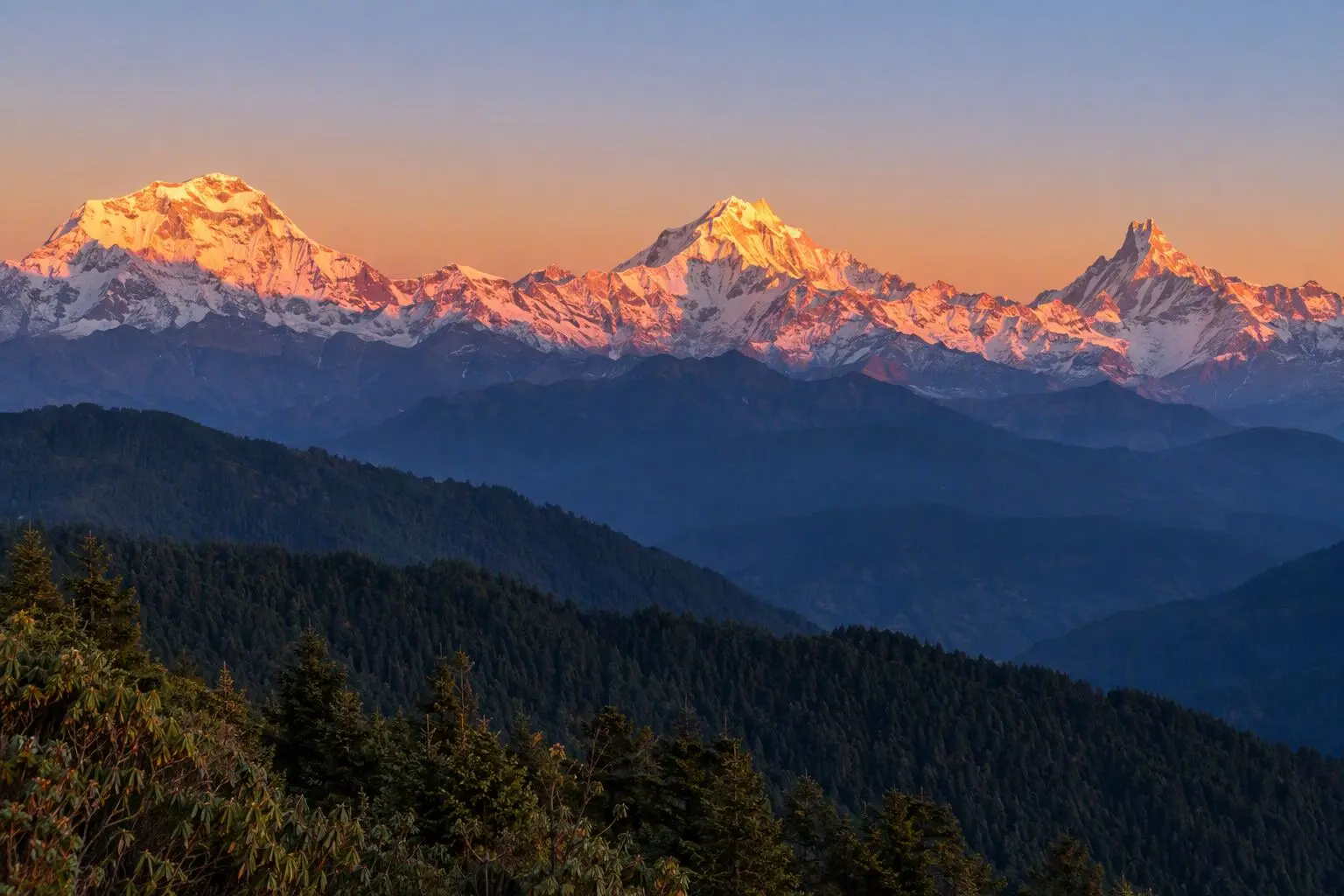

The Annapurna region contains Nepal's most varied trekking. It runs from the subtropical foothills around Pokhara to the rain-shadow desert of the Mustang borderlands, and from the rhododendron forests of Poon Hill to the glaciated heights of Annapurna Base Camp. Because of this range, seasonal timing is not a simple question.
To understand the Annapurna region's weather, start with how the Annapurna Massif acts as a massive barrier to the monsoon. The southern approaches (ABC, Poon Hill, Mardi, Ghorepani) receive heavy monsoon rainfall. The northern sections (upper Annapurna Circuit, Manang, Mustang border) lie in the rain shadow and get dramatically less. So trekking windows differ significantly within the same region.
- Best Overall Months
- October, November, March, April, May
- Rhododendron Peak Bloom
- Mid-March to late April
- Thorong La Pass Open
- October–May (weather dependent)
- Monsoon Period
- June–August (heavy rain on south slopes)
- Quietest Months
- January, February (cold, clear)
- Warmest Trekking
- April–May (lower altitudes)
- Snow at ABC (4,130m)
- December–February
- Upper Circuit Rain Shadow
- Manang accessible year-round in theory
Month-by-Month Guide: All Annapurna Treks
January
Overall rating: Acceptable (Cold, Clear, Quiet)
January is the middle of Nepal's high-altitude winter. The mountains are dusted with fresh snow, crowds have largely departed, and conditions range from bitterly cold at altitude to pleasantly crisp at lower elevations.
Poon Hill / Ghorepani (2,874m): Good in January. Snow on the rhododendron trail is beautiful and the summit views on clear mornings are superb. Temperatures at dawn near -5°C on the ridge. Carry warm gear.
Annapurna Base Camp (4,130m): Possible but cold. The Modi Khola approach is often snowy, and the base camp itself can see -15°C at night. Ice on the trail between Chhomrong and Dovan requires care. Several lodges may close.
Annapurna Circuit: The circuit is technically walkable in January but Thorong La (5,416m) carries serious risk of closure due to snowpack. The northern section around Manang has less snowfall but extreme cold. Only for experienced winter trekkers with proper gear.
Mardi Himal (4,500m): Cold and potentially icy near the summit camp but the approach through forest is lovely in light snow. With very few trekkers on this trail in January, it is a superb off-season choice.
Khopra Ridge (3,660m): Good January trekking. The ridge approach is lower than ABC and the views of Dhaulagiri and the Annapurnas are exceptional in the cold clarity. Some lodges may be unstaffed, so check ahead.
February
Overall rating: Good (Winter Ending, Crowds Building)
February marks the transition from winter to pre-monsoon spring. Lower valleys are warming, rhododendrons begin at the lowest elevations, and the first wave of spring trekkers arrives from late February.
Poon Hill: February is underrated. The first rhododendrons at lower elevations bloom from mid-February and add color to what was a bare forest. Sunrise views remain superb. Expect comfortable temperatures by day (+10 to +15°C) and cold nights.
ABC: Improving through the month. Snow on upper sections is still present but the trail is generally navigable. The sanctuary can be beautiful with a fresh dusting of snow on the surrounding peaks.
Annapurna Circuit: Thorong La becomes more reliable through February. It still requires careful weather assessment, but experienced trekkers make good crossings in the latter half of the month. The lower-altitude western section around Tatopani and Beni is warm and pleasant.
Upper Circuit / Manang: The rain-shadow effect means Manang sees relatively little winter precipitation. February trekking here is feasible and very quiet. The landscape is stark but beautiful.
March
Overall rating: Excellent (Rhododendron Season Begins)
March is the beginning of Nepal's spring bloom and arguably the best month for mid-altitude Annapurna trekking. Rhododendrons transform the forests between 2,000m and 3,500m.
Poon Hill: March is peak rhododendron season for lower elevations. The trail between Ulleri and Ghorepani becomes a tunnel of red, pink, and white blossoms. Views remain excellent. Crowds increase from mid-March.
ABC: Excellent conditions emerging. The Modi Khola valley is lush and green, and the rhododendrons around Jhinu Danda and Sinuwa are in full bloom. ABC itself is clear of heavy snow by late March most years. This is a superb month for this trek.
Annapurna Circuit: Thorong La is generally open and reliable in March. The western descent to Muktinath offers flowering shrubs and warmer temperatures. The east side (Manang approach) is drier and cooler. Overall an excellent month.
Mardi Himal: Outstanding in March. The forested approach is draped in rhododendrons, the high camp offers clearing views, and crowding is minimal compared to ABC.
Rhododendron Bloom Timing by Elevation
Nepal's rhododendron bloom follows altitude. Lower forests (below 2,000m) bloom in February. The main trekking forests between 2,000-3,000m are at peak bloom in mid-March to early April. High-altitude species above 3,500m bloom in late April to May. For the Annapurna region, the Ghorepani-Poon Hill corridor peaks in late March to early April.
April
Overall rating: Excellent (Peak Spring Season)
April is one of the two best months to trek the Annapurna region. Temperatures are ideal at all elevations, visibility is generally excellent, rhododendrons are at peak at higher elevations, and the monsoon is still weeks away.
Poon Hill: Slightly past peak rhododendron at lower elevations but upper species still blooming. Possibly the most crowded month of the year on this trail: expect large crowds crossing Poon Hill summit at dawn.
ABC: April is arguably the finest month for the Annapurna Base Camp trek. The sanctuary is free of snow, temperatures in the base camp bowl are pleasant by day, and the flowers along the Modi Khola approach are superb. Lodges are fully staffed and the route is in perfect condition.
Annapurna Circuit: Thorong La is fully reliable in April. The full circuit is excellent this month. The rain-shadow areas around Manang are dry and clear, the lower valleys are green, and the contrast between southern subtropical forests and northern arid highlands is at its most vivid.
Khopra Ridge: April is excellent for Khopra. The approach villages are green, the ridge walk to Khayer Lake (4,850m) is superb, and views of Dhaulagiri are crystal clear.
May
Overall rating: Good (Pre-Monsoon Heat at Lower Elevations)
May brings rising heat to lower elevations and increasingly variable weather as the monsoon approaches. Upper elevations and northern rain-shadow areas remain excellent.
Poon Hill: Warm and hazy in May. Low-elevation sections can be hot and humid. Most experienced trekkers prefer April for this route. The bloom is well past.
ABC: The lower Modi Khola section is hot in May. From Chhomrong upward, conditions remain good. The sanctuary itself is clear and comfortable. Pre-monsoon clouds can reduce afternoon visibility.
Annapurna Circuit: The upper circuit in Manang and around Thorong La remains excellent in May, with dry, clear mornings and magnificent views. The lower western section toward Besisahar is increasingly warm and humid.
Upper Circuit High Route (rain shadow): May is actually excellent for the Jomsom-Muktinath section of the Jomsom Muktinath trek and the surrounding areas. The rain shadow means minimal monsoon impact even in June here.
June
Overall rating: Poor (South Slopes) / Fair (North Rain Shadow)
The monsoon typically reaches Nepal's southern slopes by early to mid-June. Southern Annapurna approaches (ABC, Poon Hill, Mardi, lower Circuit) become wet, leechy, and difficult. The north remains drier.
Poon Hill / ABC / Mardi: Not recommended. Heavy rain, leeches on the trail, frequent landslides on approach roads, and persistent cloud obscuring views. Most trekking agencies advise against these treks from June through August.
Annapurna Circuit northern section (Manang to Muktinath): This rain-shadow corridor can still be walked in June. The arid Mustang borderlands receive significantly less monsoon rain. However, the crossing sections (Besisahar approach, Thorong La descent) are wet. Partial circuit from Besisahar to Jomsom crossing Thorong La is still possible with careful planning.
July and August
Overall rating: Very Poor for Most Treks
The monsoon is at full intensity. The Annapurna region's south-facing slopes receive some of Nepal's heaviest rainfall. Pokhara averages over 1,000mm in July and August combined.
Recommended for neither Poon Hill, ABC, Mardi, nor the full Circuit.
The exception remains the far northern rain-shadow sections around Manang and the Mustang plateau. Some trekkers pair a monsoon visit to Upper Mustang (just north of the Annapurna region's northern boundary), which sits in deep rain shadow and is genuinely accessible in monsoon season.
September
Overall rating: Improving (Late Monsoon Transition)
September sees the monsoon weakening through the month. By late September, conditions on the southern slopes are improving rapidly.
Poon Hill / ABC: Late September can be good. The forests are lush and green from monsoon rains, waterfalls are at their most dramatic, and the air is fresh. Expect some rain, particularly in early September, but the second half of the month is often trekking-worthy.
Annapurna Circuit: Good in late September. The full circuit is walkable and the landscape is dramatically green. Thorong La is generally open but can carry fresh snow from late-season storms.
October
Overall rating: Outstanding (Peak Autumn Season)
October is the most popular month to trek Nepal and the Annapurna region is at its finest. Post-monsoon skies are crystal clear, temperatures are perfect at all elevations, and every lodge is fully staffed.
All Annapurna treks are excellent in October. This is the month when Poon Hill views are sharpest, ABC shows the full surrounding amphitheater with perfect clarity, and the Circuit's Thorong La is reliably clear.
Crowds: Expect the highest trekker numbers of the year. The Poon Hill route from Ghorepani is busy but not unpleasant. ABC can feel crowded at lodges in Deurali and MBC. Book accommodation in advance.
November
Overall rating: Excellent (Clear and Cooling)
November is arguably superior to October for experienced trekkers. Crowds thin significantly after the first week, skies remain clear, and the cooling temperatures reduce trail dust.
Poon Hill: November is magnificent for sunrises from Poon Hill. The light is golden and the air crystalline. By late November the deciduous trees along the trail are turning autumn colors.
ABC: November is excellent but the sanctuary gets cold at night (approaching -10°C by late November). Carry adequate sleeping gear. The views are exceptional.
Annapurna Circuit: Thorong La becomes progressively more challenging with snowfall risk in late November. Early November crossings are reliable; late November requires careful weather assessment. The circuit is at its least crowded and most atmospheric this month.
Thorong La Late November Risk
From late November onward, fresh snowfall on Thorong La (5,416m) can close the pass for days at a time. If planning an Annapurna Circuit in late November, build at least two buffer days in Manang or Yak Kharka to wait out any snowfall. See the technical pass crossings guide for detailed preparation advice.
December
Overall rating: Good (Cold, Clear, Very Quiet)
December offers excellent trekking conditions for those prepared for cold and comfortable with quieter trails. Tourist numbers drop sharply and lodges offer significant discounts.
Poon Hill: December is excellent. The trail is very quiet, views are sharp, and the cold air makes the sunrise at 2,874m genuinely bracing. Night temperatures approach -10°C on the ridge but days can be pleasant.
ABC: Cold but achievable for well-prepared trekkers. The sanctuary is often snow-dusted, which gives beautiful conditions for photography. Carry a -15°C rated sleeping bag and full winter layering.
Annapurna Circuit: Thorong La is risky in December. Snowpack accumulates and closures become more frequent. Only for experienced winter trekkers with a flexible schedule.
Altitude Variation: How Elevation Affects Timing
The Annapurna region spans from 800m at Pokhara to 5,416m at Thorong La, with significant microclimatic variation:
| Elevation Zone | Best Months | Key Treks |
|---|---|---|
| 1,000–2,000m | Oct-May (avoid Jun-Aug) | Lower circuit, Nayapul approach |
| 2,000–3,500m | Oct-May, March for blooms | Poon Hill, Mardi approach, Ghorepani |
| 3,500–4,500m | Oct-Nov, Apr-May | ABC sanctuary, Khopra, upper Mardi |
| 4,500m+ | Oct-Nov, Apr-May only | High circuit, Thorong La approaches |
Festivals Affecting the Annapurna Region
Dashain (September/October): Nepal's largest festival causes a domestic trekker surge and tea house closures in some villages as staff return home. The fortnight of Dashain falls between late September and late October, depending on the lunar calendar. Foreign trekkers are largely unaffected but the trail has a festive atmosphere.
Tihar (October/November): The Festival of Lights follows Dashain and is celebrated in all trail villages. Families exchange tikka and sweets, and trekkers often participate.
Shiva Ratri (February/March): Thousands of Hindu pilgrims travel to Muktinath temple on the Annapurna Circuit's western side, and a visit to this ancient site at that time is a distinct cultural experience.
Is October a Good Time to Trek in the Annapurna Region?
October is arguably the single best month for Annapurna trekking. Post-monsoon clarity delivers long-distance mountain views, temperatures are comfortable at all elevations, and all routes are fully operational including the Thorong La pass. The only drawback is crowds: October is peak season with fully booked teahouses on popular routes like ABC and Poon Hill. Book 3-4 months ahead.
What's the Weather Like on the Annapurna Circuit?
Weather on the Annapurna Circuit varies dramatically by section. The southern approach (Besisahar to Chame) receives heavy monsoon rain from June to September. The northern section around Manang village sits in the rain shadow and receives significantly less rainfall year-round. Thorong La pass (5,416m) is usually crossable from March to May and from September to November but can close during heavy winter snowfall. Check our altitude sickness guide before crossing high passes.