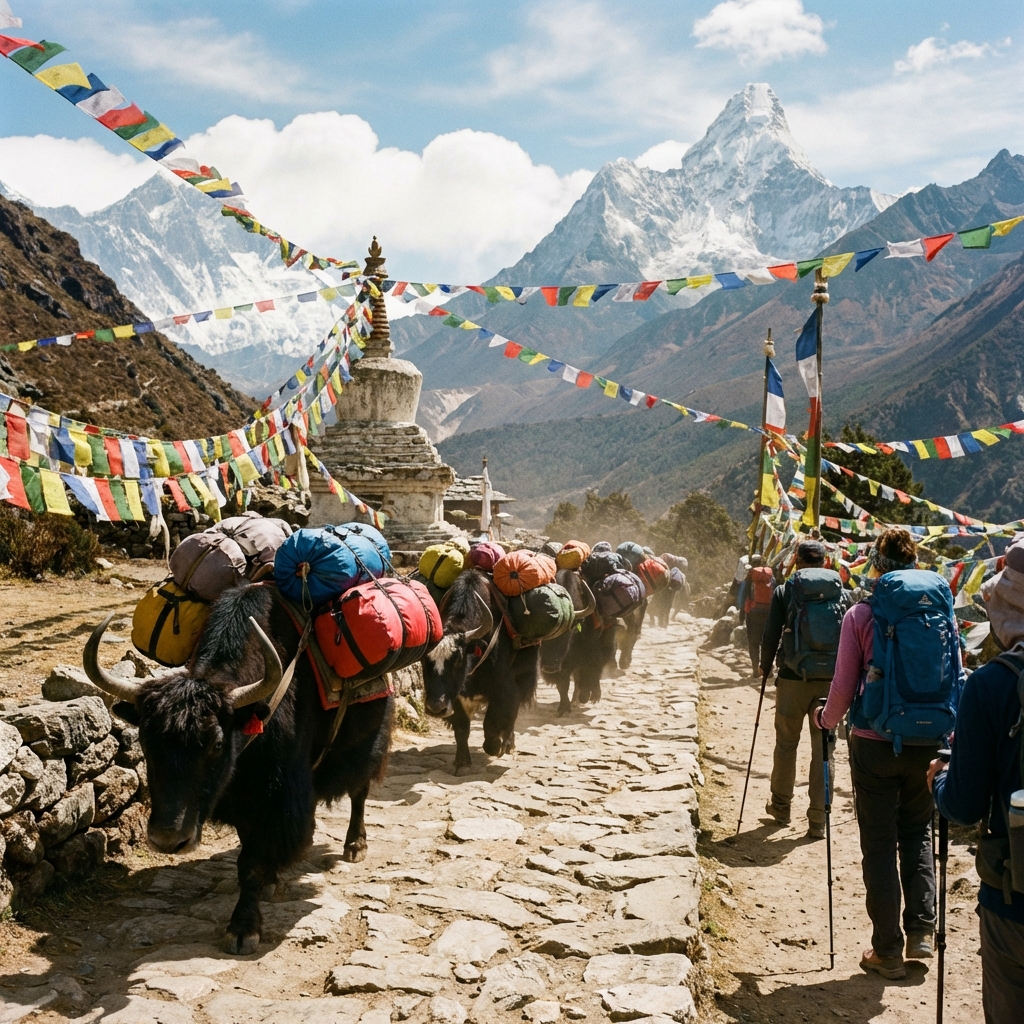
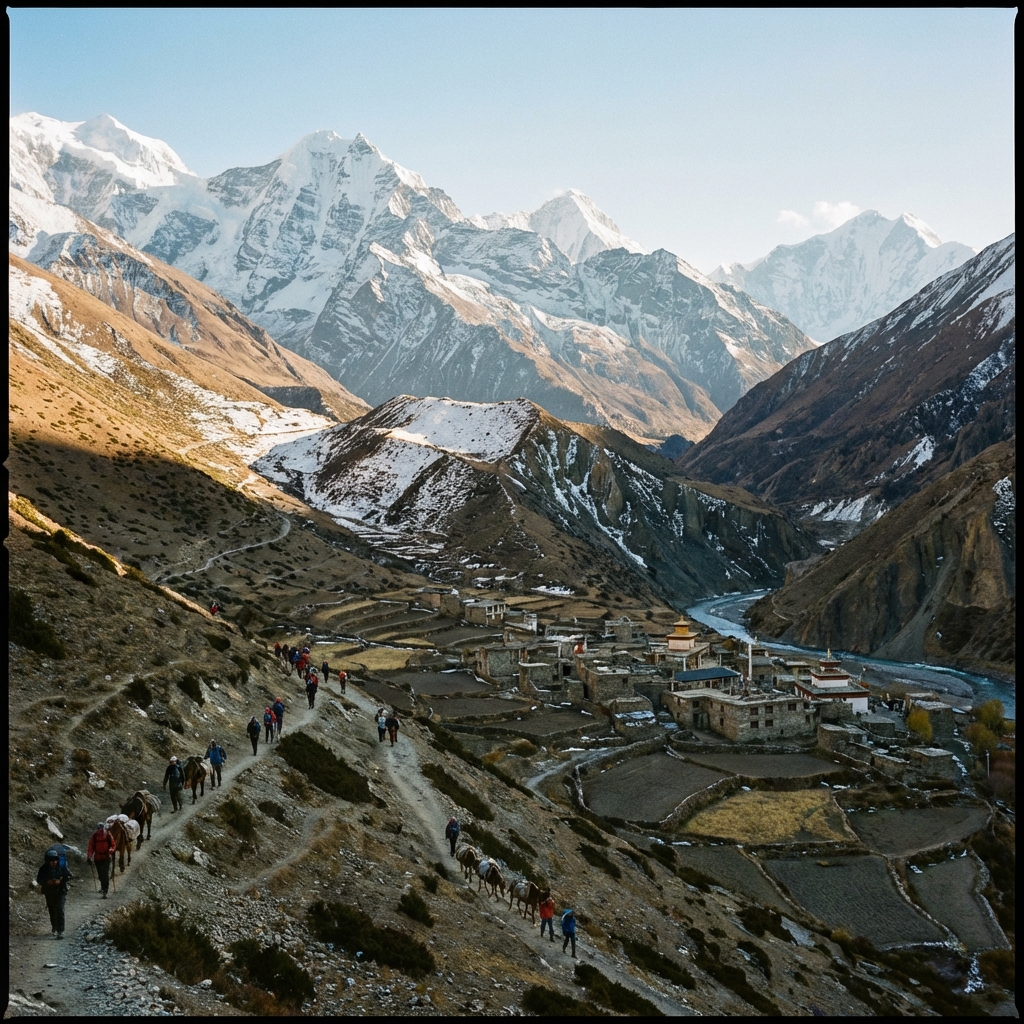
Nepal's trekking trails traverse an extraordinary range of environments — from subtropical forests at 1,000 metres where leeches drop from overhanging leaves, through alpine meadows swept by freezing winds, to glacial moraines at 5,000+ metres where exposed skin can develop frostbite in minutes. This environmental diversity means that trail hazards shift dramatically with altitude, season, and geography. A trekker on the Annapurna Circuit might encounter leeches in the Marsyangdi valley on day two and risk frostbite on Thorong La pass a week later. Understanding which hazards apply to which sections of your route — and preparing specifically for each — is a fundamental element of trek safety that goes beyond altitude awareness.
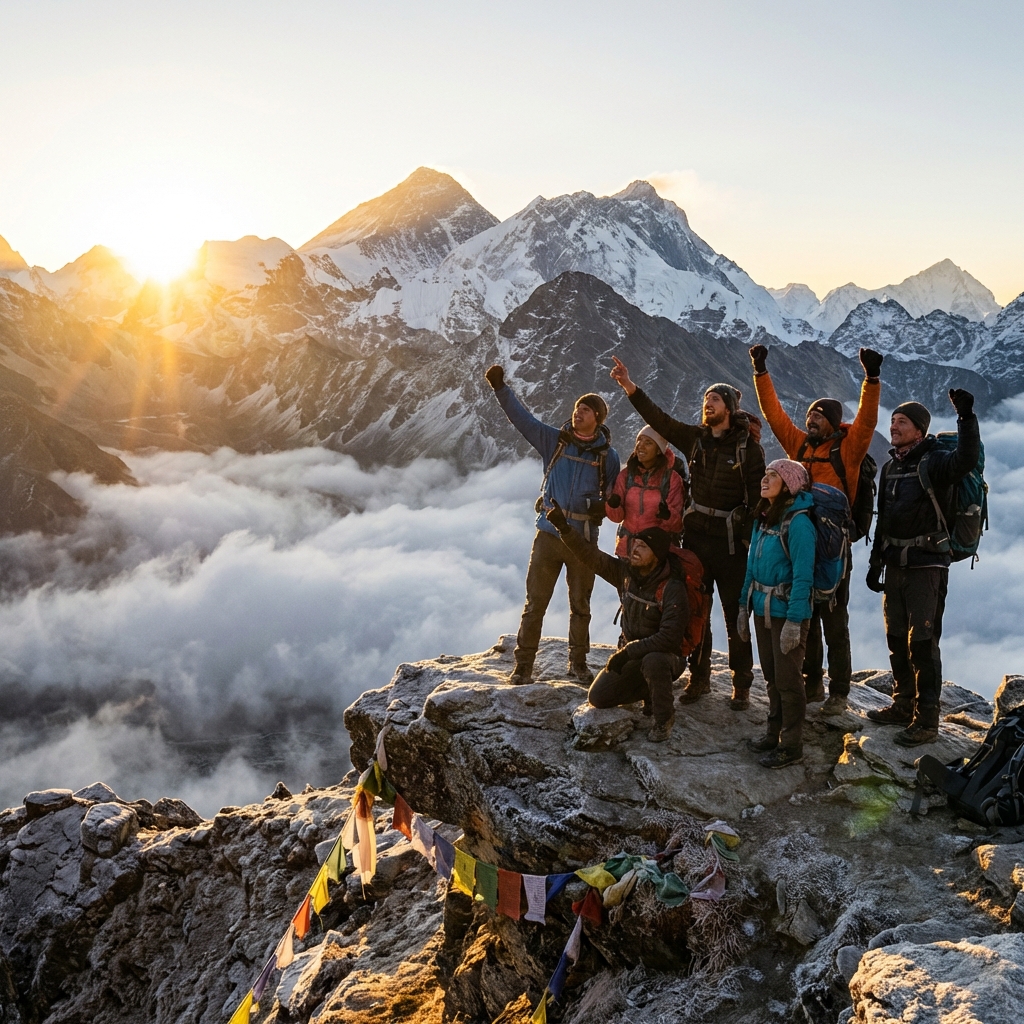
Cold weather injuries — frostbite and hypothermia — are the most serious non-altitude trail hazards on Nepal treks. Both are directly caused by the combination of extreme altitude, wind exposure, and inadequate protection that can occur on high passes and exposed ridgelines. Frostbite occurs when skin and underlying tissue freezes, most commonly affecting fingers, toes, ears, nose, and cheeks. The mechanism is straightforward: when core body temperature drops, the body redirects blood flow away from extremities to protect vital organs, leaving peripheral tissue vulnerable to freezing. Wind chill is the critical amplifier — at 5,000 metres, an ambient temperature of -5°C with a 30 km/h wind produces an effective temperature of -15°C on exposed skin, reducing the frostbite onset time from hours to minutes. The highest passes on Nepal's popular treks — Thorong La (5,416m), Cho La (5,420m), Larkya La (5,160m), and Renjo La (5,360m) — are typically crossed in early morning when temperatures are lowest, adding dawn cold to altitude cold to wind chill in a dangerous combination. Prevention depends entirely on preparation: proper layering systems, insulated gloves with liner gloves underneath, warm hats that cover ears, face protection (buffs, balaclavas), and insulated waterproof boots. Chemical hand and toe warmers provide supplemental heat during pass crossings.
Hypothermia is a more insidious danger than frostbite because it affects cognitive function, which means the victim progressively loses the ability to recognise and respond to their own deterioration. Core body temperature drops below 35°C when heat loss exceeds heat production — and at altitude, this threshold arrives faster because reduced oxygen impairs the body's metabolic heat generation. Wet cold is far more dangerous than dry cold: water conducts heat away from the body 25 times faster than air, which is why getting caught in rain or snow without waterproof layers is the single most common cause of hypothermia on Nepal treks. The classic scenario involves a trekker caught in an afternoon storm above 4,000 metres, wearing a sweaty base layer from the morning's ascent, without a waterproof shell accessible in their pack. Within 30-60 minutes, the combination of wet clothing, wind, and reduced metabolic capacity at altitude can produce mild hypothermia. The progression from mild (shivering, clumsy hands, impaired judgement) to moderate (shivering stops, drowsiness, confusion) to severe (unconsciousness, cardiac arrest) can take as little as 2-3 hours in extreme conditions. Treatment centres on preventing further heat loss and rewarming: remove wet clothing, insulate with dry layers and sleeping bags, provide warm sweet drinks if the patient is conscious, and apply body-heat contact. Prevention is the only reliable strategy — always carry waterproof layers accessible in your pack, change out of wet base layers at rest stops, and know the weather forecast for your route.
The leech ecosystem on Nepal's trails is one of the most memorable — and frequently dreaded — aspects of monsoon trekking. Terrestrial leeches (Haemadipsa species) are most active between 1,500 and 3,500 metres elevation during the monsoon season (June through September), though they can appear as early as May and persist into October in particularly wet areas. The Annapurna region below Ghorepani, the approach to Langtang Valley through Dhunche, and the lower sections of the Manaslu Circuit through the Budhi Gandaki gorge are the leech hotspots that experienced monsoon trekkers know well. Leeches sense approaching hosts through vibration, body heat, and carbon dioxide, and they are remarkably fast — a leech can cross a boot and find exposed skin in seconds. They attach using a sucker and inject an anaesthetic and anticoagulant, so bites are initially painless and bleed freely for hours after removal. While leeches do not transmit diseases, the real risk is secondary infection of the wound site, especially in the humid, sweaty conditions of monsoon trekking where cuts heal slowly. Prevention measures include leech socks (tightly woven gaiters that cover boots and lower legs), DEET application to footwear and lower legs, tucking pants into socks, and regular body checks at every rest stop. Salt carried in a small container causes instant leech release without risk of leaving mouthparts.
Insect-borne hazards vary significantly by altitude and season, and most trekkers overestimate the disease risk while underestimating the nuisance factor. True disease-transmitting mosquitoes — Anopheles (malaria) and Aedes (dengue) — are confined to the Terai lowlands and Kathmandu valley, below the altitudes where most trekking takes place. Malaria risk on standard trekking routes is essentially zero. Dengue fever has increased in Kathmandu in recent years and is a consideration for pre-trek and post-trek city stays, but not on the trails themselves. The insect hazards that actually affect trekkers are more mundane: sand flies in river valley camps below 2,000 metres cause intensely itchy bites; bedbugs in some lower-altitude teahouses disturb sleep and leave characteristic linear bite patterns; ticks in brushy terrain below 3,000 metres can transmit scrub typhus; and common flies contaminate food and water, contributing to the gastrointestinal illness that affects 30-50% of Nepal trekkers. Prevention involves DEET or Picaridin-based repellent for exposed skin, permethrin treatment for clothing, sleeping bag liner use in teahouses, daily tick checks when trekking through low brush, and careful food hygiene.
Seasonal variation in trail hazards follows clear patterns that inform packing and route planning. Spring (March-May) sees increasing warmth that reduces cold injury risk at lower elevations, but high passes remain genuinely cold with residual snow — Thorong La and Cho La can have thigh-deep snow through April. Pre-monsoon thunderstorms in late April and May bring sudden temperature drops and lightning risk on exposed ridgelines. Insect activity begins increasing but leeches are not yet at peak activity. Monsoon (June-September) inverts the hazard profile: cold injuries are minimal below 5,000 metres, but leeches are at maximum activity, trails are slippery with landslide risk, river crossings become dangerous, and insect-borne nuisance peaks. Autumn (October-November) is the sweet spot with minimal insect activity, manageable cold, and dry trails — though late November brings rapidly increasing cold at altitude and wind chill becomes the primary hazard at passes. Winter (December-February) maximises cold injury risk at all elevations above 3,500 metres: heavy snow closes high passes entirely, hypothermia risk during storms is significant even at 3,000-4,000 metres, and shorter daylight hours reduce the margin for navigational error. The trade-off is complete absence of insects and leeches.
Gear selection for hazard prevention follows the altitude and season matrix. For cold protection, the critical items are a layering system (moisture-wicking base layer, insulating mid-layer, windproof and waterproof outer shell), insulated gloves with liner gloves, warm hat and face protection, insulated boots rated for expected temperatures, and chemical warmers as backup. For monsoon protection, the essentials are leech socks or gaiters, DEET-based repellent, waterproof bags for electronics and documents, quick-dry clothing, and a comprehensive first-aid kit with antiseptic for leech bite wounds and antihistamine for insect bite reactions. A lightweight sleeping bag liner provides hygiene protection in teahouses year-round. Pack configuration matters as much as content: keep rain gear and warm layers accessible in the top of your pack or in hip belt pockets, not buried at the bottom where they are useless during sudden weather changes. The trekkers who suffer most from trail hazards are typically those who owned the right gear but could not access it quickly enough when conditions changed.