Frostbite and Hypothermia Prevention on Nepal Treks: Complete Survival Guide
Cold is one of the most underestimated dangers on Nepal treks. While most trekkers obsess over altitude sickness -- and rightly so -- cold-related injuries claim lives and cause permanent damage every trekking season. Frostbite can destroy fingers, toes, ears, and noses. Hypothermia can kill. Both are preventable, and both are treatable in their early stages, but only if you know what to look for and act quickly.
The Himalayan environment creates a uniquely dangerous combination: extreme altitude reduces your body's ability to regulate temperature, thin dry air steals heat rapidly, high winds produce brutal wind chill effects, and sudden weather changes can catch trekkers exposed on mountain passes and ridgelines. A sunny morning can turn into a whiteout blizzard in under an hour at elevations above 4,000 meters.
This guide covers everything you need to know about frostbite and hypothermia prevention and treatment on Nepal treks -- from recognizing the earliest warning signs to field treatment techniques and evacuation decisions.
Above 4,500m, especially above 5,000m
Any altitude when wet, exhausted, or exposed
Can feel like -30°C to -45°C
Below 35°C (95°F)
Full recovery if caught early
May require amputation
Fingers, toes, ears, nose, cheeks
Layering system + staying dry
Understanding Cold Injuries: Frostbite vs. Hypothermia
Cold injuries fall into two categories, and understanding the difference is critical because the treatment approaches differ.
Frostbite is localized freezing of body tissue. It affects extremities and exposed skin -- fingers, toes, nose, ears, and cheeks. The tissue actually freezes, forming ice crystals within and between cells, causing damage that ranges from mild (frostnip) to severe (deep tissue destruction requiring amputation).
Hypothermia is a drop in your core body temperature below 35°C (95°F). It affects your entire body, and specifically your brain and heart. While frostbite damages extremities, hypothermia can kill you. It does not require freezing temperatures -- hypothermia can develop at temperatures as warm as 10°C (50°F) if you are wet, exhausted, and exposed to wind.
A trekker can develop both simultaneously, and often does. Someone with hypothermia loses the ability to generate enough heat to protect their extremities from frostbite, creating a compound emergency.
Frostbite: Stages, Recognition, and Treatment
The Stages of Frostbite
Frostbite progresses through distinct stages. Early recognition and treatment prevent progression to permanent damage.
Stage 1: Frostnip (Superficial, Reversible)
What is happening: The skin surface is cooling rapidly, but tissue has not yet frozen. Blood vessels constrict to conserve heat, reducing blood flow to the affected area.
What it looks and feels like:
- Skin appears red, then turns white or grayish-yellow
- The area feels cold, tingling, or prickling ("pins and needles")
- Numbness begins to develop
- Skin is still soft and pliable when touched
What to do:
- Get out of the cold and wind immediately
- Rewarm the area gently using body heat (place fingers in armpits, cup hands over ears)
- Do NOT rub the area -- this damages tissue
- Once rewarmed, the skin may turn red and feel tingly or burning -- this is normal recovery
- Full recovery is expected with no permanent damage
Frostnip Is Your Early Warning System
Frostnip is your body telling you that frostbite is imminent. If you notice frostnip symptoms -- tingling, numbness, or color changes in your extremities -- treat it as an urgent warning. Stop, rewarm, and address the cause (inadequate gloves, wet socks, too much wind exposure) before continuing. Ignoring frostnip and pushing on is how it progresses to actual frostbite within minutes.
Stage 2: Superficial Frostbite
What is happening: The skin surface and some underlying tissue have frozen. Ice crystals are forming in the tissue.
What it looks and feels like:
- Skin turns white, gray, or blue-white
- Skin feels hard on the surface but soft tissue underneath is still pliable
- The area feels numb -- loss of sensation
- Rewarming produces significant pain, redness, and swelling
- Clear or milky blisters may form within 24-36 hours
What to do:
- This requires proper field treatment (see treatment section below)
- Do NOT rewarm in the field if there is any chance of refreezing -- refreezing causes catastrophically worse damage
- Protect the area from further cold exposure
- Seek medical care as soon as possible
Stage 3: Deep Frostbite
What is happening: All layers of skin, underlying tissue, muscle, and possibly bone have frozen. This is a serious injury that frequently results in permanent tissue loss.
What it looks and feels like:
- Skin is white, blue, or black
- The area feels hard and wooden when pressed -- no give at all
- Complete numbness (no sensation whatsoever)
- Joints may be immovable
- Upon rewarming (which is extremely painful): large blood-filled blisters, severe swelling, skin turns black over days/weeks
- Tissue may appear mummified
What to do:
- This is an evacuation emergency
- Do NOT attempt to rewarm in the field unless you are certain the tissue will not refreeze
- Protect the area from further trauma (do not walk on frostbitten feet if possible)
- Evacuate to hospital -- this injury requires professional medical treatment
- See our guide on helicopter rescue in Nepal if evacuation is needed
Frostbite Field Treatment Protocol
If you must treat frostbite in the field (at a tea house or camp, not on the open trail):
- Move to shelter. Get out of wind and cold completely
- Remove wet clothing and constrictive items (gloves, rings, tight boots)
- Prepare a warm water bath at 37-39°C (98-102°F) -- warm to the touch but not hot. If no thermometer is available, test with an unaffected elbow
- Immerse the frostbitten area for 20-30 minutes until tissue becomes soft, red/purple, and painful
- Do NOT rub, massage, or apply direct heat (no campfire, no heating pad directly on skin, no hot water)
- Expect severe pain during rewarming -- administer ibuprofen (400-600mg) for pain and its anti-inflammatory properties
- After rewarming, loosely bandage with clean dry gauze. Place gauze between frostbitten fingers/toes
- Elevate the affected area if possible
- Do NOT pop blisters -- they protect healing tissue
- Keep the area clean, dry, and warm. Prevent refreezing at all costs
The Cardinal Rule: Never Rewarm If Refreezing Is Possible
This cannot be overstated: tissue that is frostbitten, rewarmed, and then refreezes suffers dramatically worse damage than tissue that remains frozen. If you are on a high pass with hours of cold exposure still ahead of you, it is better to leave frostbitten feet frozen and walk out on them (causing less total damage) than to rewarm them and then have them refreeze. Only rewarm when you are certain the tissue will stay warm.
Hypothermia: Stages, Recognition, and Treatment
Hypothermia is more immediately life-threatening than frostbite and requires urgent recognition and treatment.
The Stages of Hypothermia
| Stage | Core Temperature | Symptoms | Mental State |
|---|---|---|---|
| Mild | 35-32°C (95-90°F) | Shivering, cold pale skin, fast breathing, fatigue | Alert but may have poor judgment, confusion |
| Moderate | 32-28°C (90-82°F) | Violent shivering then shivering stops, clumsy movements, slurred speech, slow breathing | Confused, irrational, drowsy, may deny being cold |
| Severe | Below 28°C (82°F) | No shivering, rigid muscles, very slow/irregular heartbeat, shallow breathing | Unconscious or barely responsive |
| Critical | Below 24°C (75°F) | Cardiac arrest risk, may appear dead | Unconscious, may appear dead |
Recognizing Hypothermia on the Trail
Hypothermia is insidious because it impairs judgment -- the person affected is often the last to recognize their own deteriorating condition. This is why trekking partners, guides, and group awareness are essential.
Watch for these behavioral warning signs:
- The "Umbles": Stumbles, fumbles, mumbles, grumbles. A trekker who starts stumbling on flat trail, cannot work their pack buckles, speaks unclearly, or becomes unusually irritable may be hypothermic
- Lagging behind when they normally keep pace
- Uncontrollable shivering -- this is the body's emergency heating mechanism and is a clear warning sign
- Paradoxical undressing -- in moderate to severe hypothermia, the person may start removing clothing despite being in freezing conditions (the body's temperature regulation has failed catastrophically)
- "Terminal burrowing" -- in severe hypothermia, victims may crawl into small spaces or hide -- a primitive survival instinct
Pro Tip
Check on the quietest person in your group. Hypothermia victims often become quiet and withdrawn as their mental state deteriorates. The loudly complaining trekker is probably fine -- it is the one who has stopped talking, fallen behind, and is standing still staring at nothing who needs immediate attention. Make it a habit to do regular headcounts and wellness checks, especially during cold exposed sections.
Hypothermia Field Treatment Protocol
For Mild Hypothermia (Person Is Shivering and Alert)
- Get to shelter immediately -- tea house, tent, behind a rock wall, anywhere out of wind
- Remove wet clothing and replace with dry layers
- Insulate from the ground (sleeping pad, foam, dry vegetation -- anything between the person and the cold ground)
- Add insulation layers -- sleeping bag, down jacket, emergency blanket
- Provide warm sweet drinks (hot tea with sugar, hot chocolate) -- NOT alcohol
- Provide high-calorie food (chocolate, nuts, energy bars)
- Apply external heat sources -- chemical hand warmers in armpits, groin, and neck (NOT directly on skin)
- Encourage gentle movement if the person is able
- Monitor continuously -- mild hypothermia can progress rapidly
For Moderate Hypothermia (Person Has Stopped Shivering, Is Confused)
- Handle gently. Rough handling can trigger fatal cardiac arrhythmias in hypothermic patients
- Get to shelter and follow steps 2-5 above
- Do NOT give food or drinks if the person cannot swallow safely (risk of choking or aspiration)
- Apply heat sources to core (armpits, groin, neck) -- NOT to extremities (this can cause "afterdrop" where cold blood from extremities floods back to the core, further cooling it)
- Place the person in a sleeping bag with a warm, healthy person (body-to-body heat transfer is highly effective)
- Do NOT encourage movement -- let the person rest
- Evacuate. Moderate hypothermia requires professional medical care
For Severe Hypothermia (Person Is Unconscious or Nearly So)
- This is an immediate life-threatening emergency
- Handle extremely gently -- cardiac arrest is a real risk
- Check for breathing and pulse (check for 60 seconds -- pulse may be very slow and hard to detect)
- If no pulse and no breathing, begin CPR and continue until medical help arrives or rescuers are exhausted
- Insulate and apply core heat as described above
- Do NOT assume the person is dead -- "You're not dead until you're warm and dead." Hypothermia victims have survived with extremely low core temperatures
- Evacuate immediately -- this person needs hospital care with active rewarming equipment
Afterdrop: The Hidden Danger of Rewarming
When rewarming a moderately or severely hypothermic person, there is a risk of "afterdrop" -- a further drop in core temperature that occurs when cold blood from the extremities circulates back to the heart. This is why you apply heat to the core (armpits, groin, neck) and NOT to the hands and feet first. Warming the extremities first can trigger afterdrop, potentially causing fatal cardiac arrhythmias. Always warm the core first.
Risk Factors on Nepal Treks
Understanding the specific risk factors in the Nepal trekking environment helps you anticipate and prevent cold injuries.
Altitude and Cold: The Dangerous Combination
Temperature drops approximately 6.5°C for every 1,000 meters of elevation gain. This means:
| Altitude | Typical Temperature Range (Trekking Season) | Night Temperature |
|---|---|---|
| 2,000m (Lukla) | 5°C to 15°C | -2°C to 5°C |
| 3,500m (Namche) | 0°C to 10°C | -8°C to 0°C |
| 4,500m (Dingboche) | -5°C to 5°C | -15°C to -5°C |
| 5,000m (Gorak Shep) | -10°C to 0°C | -20°C to -10°C |
| 5,364m (EBC) | -12°C to -2°C | -25°C to -12°C |
| 5,416m (Thorong La) | -15°C to -5°C | -25°C to -15°C |
Temperatures during peak trekking season (October-November, March-May). Winter treks (December-February) are significantly colder.
But temperature alone does not tell the full story. Altitude also:
- Reduces oxygen availability, impairing your body's heat production
- Causes dehydration through increased respiration in dry air, reducing blood volume and circulation to extremities
- Increases metabolic demands, depleting energy reserves faster
- May impair judgment through mild cognitive effects, making you less likely to notice and act on early cold symptoms
Wind Chill: The Temperature Multiplier
Wind is the most dangerous amplifier of cold at altitude. The table below shows effective "feels like" temperatures at various wind speeds.
| Actual Temp | Wind 15 km/h | Wind 30 km/h | Wind 50 km/h | Wind 70 km/h |
|---|---|---|---|---|
| 0°C | -4°C | -8°C | -11°C | -13°C |
| -5°C | -10°C | -15°C | -18°C | -21°C |
| -10°C | -16°C | -22°C | -26°C | -29°C |
| -15°C | -22°C | -28°C | -33°C | -36°C |
| -20°C | -28°C | -35°C | -40°C | -44°C |
| -25°C | -34°C | -41°C | -47°C | -51°C |
At exposed high passes like Thorong La (5,416m), Cho La (5,420m), and Kongma La (5,535m), sustained winds of 30-50 km/h are common, with gusts much higher. Exposed skin can develop frostbite in under 10 minutes when wind chill drops below -25°C.
Pro Tip
Check the weather forecast and wind conditions the evening before any pass crossing. Your guide should be monitoring conditions, but take responsibility yourself as well. If wind speeds above 40 km/h are forecast for the morning of your pass crossing, seriously consider waiting a day. The pass will still be there tomorrow; your fingers might not be if you push through a wind storm.
Wet Clothing: The Accelerator
Water conducts heat away from your body approximately 25 times faster than air. This is why wet clothing is so extremely dangerous:
- Sweat: Heavy exertion on steep uphills produces sweat that soaks base layers. When you stop or reach an exposed ridge, that wet clothing becomes a heat-extracting disaster
- Rain and snow: Getting caught in precipitation without proper rain gear
- River crossings: Wet boots and socks at altitude
- Condensation: Breathing inside a sleeping bag can create dampness
Fatigue and Exhaustion
A tired body generates less heat. The combination of altitude-induced fatigue, long trekking days, poor sleep in cold tea houses, and inadequate calorie intake creates a scenario where your body simply cannot produce enough heat to maintain core temperature.
High-Risk Scenarios on Nepal Treks
1. Early Morning Pass Crossings
Most high passes are crossed in the early morning to avoid afternoon clouds and wind. This means leaving in darkness at 3:00-5:00 AM, when temperatures are at their lowest, and climbing for hours in wind-exposed terrain. The slow pace of high-altitude walking means you are not generating maximum body heat.
2. Waiting at Viewpoints and Summit Pushes
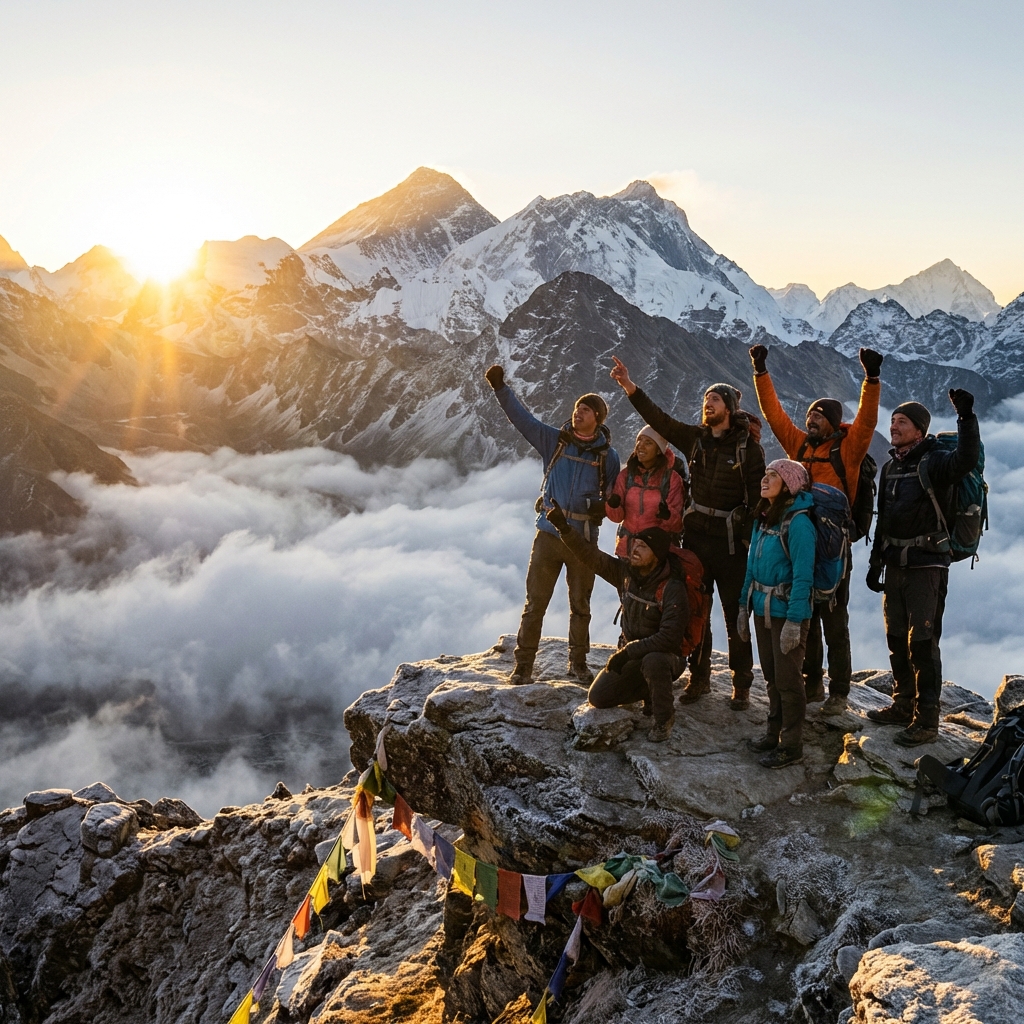
Standing still at Kala Patthar (5,545m) at sunrise, waiting for the perfect photo of Everest while wind blasts across the ridge. Your body is producing minimal heat (you are standing, not walking), you may have already burned through breakfast calories, and the exposure is maximum.
3. Descending After Pass Crossings
After the massive effort of ascending a pass, the descent involves less exertion (less heat generation), but you may be sweaty from the climb, fatigued, and now descending into wind on the other side.
4. Unexpected Weather Changes
A sudden whiteout or snowstorm while you are exposed above treeline with inadequate shelter nearby. These situations are where hypothermia develops most rapidly.
5. Tea House Nights Above 4,000m
Tea house rooms are unheated. At 4,500m+, nighttime temperatures inside your room can drop well below freezing. With an inadequate sleeping bag, you can develop mild hypothermia during sleep -- waking groggy, confused, and cold.
Prevention Strategies
Prevention is vastly more effective than treatment. Every cold injury on a Nepal trek is potentially preventable with proper preparation and decision-making.
The Layering System
A proper layering system is your primary defense against cold. See our detailed layering system guide for Nepal trekking for full recommendations.
Quick Summary:
| Layer | Purpose | Key Requirement |
|---|---|---|
| Base layer | Moisture management | Merino wool or synthetic; NEVER cotton |
| Mid layer | Insulation | Fleece or lightweight down |
| Insulation layer | Maximum warmth | Down or synthetic puffy jacket |
| Shell layer | Wind and weather protection | Waterproof and windproof |
The critical rules:
- Never wear cotton at altitude. Cotton absorbs sweat and water, holds moisture against your skin, and has zero insulating value when wet. "Cotton kills" is a wilderness medicine saying that is literally true
- Layer up before you get cold. Adding layers after you start shivering means you are already losing the battle
- Ventilate to prevent sweating. Open zippers, remove a layer, slow down -- staying dry is more important than staying warm
Protecting Extremities
Your fingers, toes, nose, ears, and cheeks are the most vulnerable to frostbite because they are the farthest from your core and the first places your body sacrifices blood flow to protect vital organs.
Hands:
- Mittens are warmer than gloves (fingers share heat)
- Use a liner glove inside a waterproof outer mitten system
- Bring chemical hand warmers for extreme cold days
- Never grip bare metal (trekking poles, ice axes) with bare skin
Feet:
- Warm, dry socks are essential -- carry spare pairs
- Boots should not be too tight (tight boots restrict circulation)
- Use insulated boot liners or vapor barrier socks in extreme cold
- Wiggle your toes regularly to maintain circulation
- If feet feel numb, stop and rewarm immediately
Head and Face:
- You lose significant heat through your head -- always wear a warm hat
- A balaclava or buff covering nose and mouth warms inhaled air and protects facial skin
- Ski goggles or wrap-around sunglasses protect eyes and surrounding skin from wind
Ears:
- A hat that covers ears fully, or a headband under a hat
- Ears have minimal blood flow and freeze quickly
Pro Tip
The "Hot Nalgene" trick for cold nights in tea houses. Before bed, fill a Nalgene water bottle with hot water (available from tea house kitchens for a small fee). Place it inside your sleeping bag at your feet or against your core. It radiates warmth for hours and can be the difference between a shivering, sleepless night and a restful one. In the morning, the water is still drinkable. This is one of the most effective cold-weather trekking strategies used by experienced Himalayan trekkers.
Nutrition and Hydration
Your body needs fuel to generate heat. At altitude, caloric demands increase by 30-50%, yet many trekkers eat less due to altitude-related appetite loss.
- Eat frequently: High-calorie snacks every 1-2 hours during cold exposure
- Eat before bed: A calorie-rich dinner and a bedtime snack provide fuel for overnight heat generation
- Stay hydrated: Dehydration reduces blood volume, impairing circulation to extremities. Aim for 3-4 liters per day at altitude
- Warm drinks: Hot tea, soup, and hot water provide both hydration and direct warmth
- Avoid alcohol: Alcohol dilates blood vessels, creating a false sensation of warmth while actually accelerating heat loss. At altitude, alcohol also worsens dehydration and altitude sickness
Decision-Making and Planning
- Start early, arrive early. Do not be caught on exposed terrain in the afternoon when conditions often deteriorate
- Know your escape routes. On every exposed section, know where the nearest shelter is
- Monitor weather obsessively. Ask your guide and local tea house owners about expected conditions
- Have a turnaround time. If conditions deteriorate, be willing to turn back
- Rest days matter. A fatigued, depleted body is vulnerable to cold injury. Take planned rest days
- Never trek alone above 4,000m. If you develop hypothermia, you need someone to recognize it and help you
For comprehensive winter trekking guidance, see our winter trekking Nepal guide.
Altitude Sickness and Cold: The Compounding Danger
Cold injuries and altitude sickness are deeply interconnected and frequently occur together. Understanding this relationship is critical.
- Altitude sickness reduces your body's heat production as the body diverts energy to coping with low oxygen
- Hypothermia symptoms overlap with AMS symptoms -- confusion, poor coordination, and impaired judgment are features of both
- Dehydration accelerates both altitude sickness and cold vulnerability
- A trekker with AMS is at much higher risk of hypothermia and vice versa
If a trekker shows signs of both altitude sickness and hypothermia simultaneously, the situation is extremely serious. Both conditions require descent, which is fortunate since the treatment aligns -- get lower, get warm.
For detailed altitude sickness information, see our altitude sickness prevention and treatment guide.
Diamox and Cold Sensitivity
Diamox (acetazolamide), the most commonly used medication for altitude sickness prevention, has a notable side effect: tingling in the fingers and toes. This tingling can mask the early warning signs of frostnip and frostbite. If you are taking Diamox, be extra vigilant about checking your extremities visually (look for color changes) rather than relying solely on sensation. Set reminders to inspect your fingers and toes every 30-60 minutes during cold exposure.
Emergency Kit Items for Cold Conditions
In addition to your standard trekking gear, carry these items specifically for cold emergency situations:
| Item | Purpose | Weight |
|---|---|---|
| Emergency bivy or space blanket | Emergency shelter from wind | 100-300g |
| Chemical hand warmers (6-10 pairs) | Rewarming extremities and core | 200-400g |
| Spare dry socks in waterproof bag | Replacing wet socks | 100g |
| Spare dry base layer top | Replacing sweat-soaked layer | 150-200g |
| Nalgene bottle (for hot water) | Hot water bottle for warming | 180g |
| Thermos (small) | Carrying hot drinks on exposed sections | 300-400g |
| Balaclava or full face buff | Complete face protection in emergencies | 50-100g |
| Ibuprofen | Pain management during frostbite rewarming | Minimal |
When to Evacuate
Not every cold injury requires evacuation, but some absolutely do. Here is a decision framework.
Continue Trekking (With Extra Precautions)
- Frostnip that resolves completely with rewarming
- Mild hypothermia that resolves with shelter, dry clothing, warm drinks, and food
- No ongoing exposure to conditions that caused the problem (you have better gear, weather has improved)
Descend to Lower Altitude (Not Necessarily Evacuate)
- Frostnip that recurs despite prevention efforts
- Mild hypothermia in a trekker who is fatigued or showing signs of AMS
- Superficial frostbite with small clear blisters that can be managed with basic care
Evacuate (Helicopter or Urgent Ground Transport)
- Deep frostbite (hard, wooden tissue, blood-filled blisters)
- Moderate or severe hypothermia that does not respond to field treatment
- Any cold injury combined with severe AMS, HACE, or HAPE
- Frostbitten feet that prevent walking (do not walk on rewarmed frostbitten feet)
- Unconscious or severely confused patient
Frequently Asked Questions
How cold does it actually get on popular Nepal treks like Everest Base Camp?
During peak trekking season (October-November), daytime temperatures at Everest Base Camp (5,364m) range from -12°C to -2°C, with nighttime temperatures dropping to -25°C or lower. At Thorong La Pass (5,416m) on the Annapurna Circuit, similar temperatures prevail. Lower altitude sections like Namche Bazaar (3,440m) are milder, ranging from 0°C to 10°C during the day. Winter treks (December-February) are 10-15°C colder at all elevations.
Can you get hypothermia even in the October trekking season?
Absolutely. Hypothermia does not require extreme cold -- it requires your body to lose heat faster than it produces heat. A trekker who is wet from sweat, exposed to wind at 4,500m, fatigued, and inadequately layered can develop hypothermia even when the air temperature is above freezing. The most dangerous combination is wet clothing plus wind plus fatigue plus altitude, and this can occur in any season.
What is the difference between frostnip and frostbite?
Frostnip is the preliminary stage before actual frostbite sets in. The skin is cold, tingling, and may appear red or white, but the tissue has not frozen. Frostnip is fully reversible with simple rewarming and causes no permanent damage. Frostbite means tissue has actually frozen -- ice crystals have formed in the cells. Even superficial frostbite can cause blistering and tissue damage, while deep frostbite can result in permanent tissue death requiring amputation. The transition from frostnip to frostbite can happen within minutes of continued cold exposure.
Why is cotton so dangerous at altitude?
Cotton absorbs moisture readily (up to 27 times its weight in water) and retains it against your skin. When wet, cotton provides zero insulation and actively conducts heat away from your body. At altitude, where conditions are already challenging your body's heat regulation, wearing a wet cotton t-shirt can accelerate heat loss dramatically. Merino wool and synthetic fabrics, by contrast, wick moisture away from your skin and retain significant insulating properties even when damp.
How do I keep my hands warm at extreme altitude?
Use a layered system: a thin liner glove (merino or synthetic) inside a thick insulated mitten with a waterproof shell. Mittens are significantly warmer than gloves because your fingers share heat in the same space. Bring chemical hand warmers for the coldest days. Keep a spare pair of liner gloves accessible in your jacket pocket. If your hands start going numb, immediately tuck them into your armpits for direct core body heat. Never grip cold metal (trekking poles, ice axes) with bare skin.
Should I worry about frostbite on the Annapurna Base Camp trek?
The Annapurna Base Camp trek reaches 4,130m, which is lower than most passes. Frostbite risk is relatively low on this trek during peak season, but it is not zero -- especially during early morning starts and if you encounter unexpected weather. The approach through the Modi Khola valley is relatively sheltered, but the ABC amphitheater itself can be very cold and windy. Proper layering and hand/foot protection are still essential. The risk increases substantially if you are trekking in winter or late autumn.
What sleeping bag temperature rating do I need to prevent overnight hypothermia?
For the Everest Base Camp trek and Annapurna Circuit (including Thorong La), you need a sleeping bag rated to at least -15°C for peak season and -20°C to -25°C for winter. Remember that sleeping bag ratings are "survival" ratings, not comfort ratings -- you will feel cold at the bag's rated temperature. Buy or rent a bag rated 10-15°C below the coldest temperatures you expect. Also, a sleeping pad with an R-value of 4.0 or higher is essential, as ground cold is a major source of heat loss during sleep.
Is it possible to get both altitude sickness and hypothermia at the same time?
Yes, and this is a particularly dangerous combination. Both conditions cause confusion, poor coordination, and impaired judgment. Altitude sickness reduces your body's ability to generate heat (due to low oxygen and increased metabolic demands), making you more vulnerable to hypothermia. Hypothermia, in turn, impairs your body's ability to acclimatize. If a trekker shows overlapping symptoms of AMS and hypothermia, the situation is urgent -- they need to descend to lower altitude AND be rewarmed simultaneously.
How quickly can frostbite develop in Himalayan conditions?
At wind chill temperatures below -25°C (common on exposed high passes in wind), exposed skin can develop frostbite in under 10 minutes. At wind chill temperatures below -35°C, frostbite can develop in under 5 minutes. However, properly covered skin with good circulation can endure these conditions for hours. The speed of frostbite development depends on temperature, wind speed, moisture, circulation (affected by tight clothing, altitude, and dehydration), and individual variation.
What should I do if my trekking partner is confused and stumbling but insists they are fine?
This is a classic moderate hypothermia scenario -- the person's impaired judgment prevents them from recognizing their own condition. Do not argue or defer to their wishes. Take charge of the situation. Get them to shelter immediately, remove wet clothing and replace with dry layers, provide warm drinks if they can swallow safely, and monitor them closely. If confusion persists after rewarming, they need evacuation. Trust what you observe, not what a hypothermic person tells you about how they feel.
Are there any medications that increase the risk of frostbite or hypothermia?
Yes, several. Beta-blockers (used for heart conditions and anxiety) reduce blood flow to extremities and impair the body's cold response. Sedatives, some antihistamines, and anxiety medications reduce awareness of cold. As mentioned, Diamox causes extremity tingling that can mask frostnip. Some blood pressure medications affect circulation. If you take any regular medication, discuss cold-weather implications with your doctor before the trek. See our guide on trekking with pre-existing health conditions for more detail.
Key Takeaways
Cold injuries on Nepal treks are preventable with proper preparation, gear, and awareness. Remember these essential principles:
- Prevention is everything. Proper layering, staying dry, eating well, staying hydrated, and making smart decisions about exposure prevent the vast majority of cold injuries
- Recognize early signs and act immediately. Frostnip is a warning; mild hypothermia shivering is a warning. Heed them
- Never wear cotton at altitude. Merino wool and synthetic fabrics only
- Wind chill is the real danger. Protect yourself from wind above all else on exposed terrain
- Altitude makes everything worse. Your body's defenses are compromised at elevation
- Watch your companions. Hypothermia impairs judgment -- the victim may not recognize their own condition
- When in doubt, get to shelter and warmth. No photo, no summit, no schedule is worth a cold injury
For related safety information, see our guides on altitude sickness prevention and treatment and HAPE and HACE emergency guide.
This guide provides general wilderness medicine information for educational purposes. It is not a substitute for professional medical training. Consider taking a wilderness first aid or wilderness first responder course before trekking in remote areas. In any medical emergency, seek professional medical care as quickly as possible.