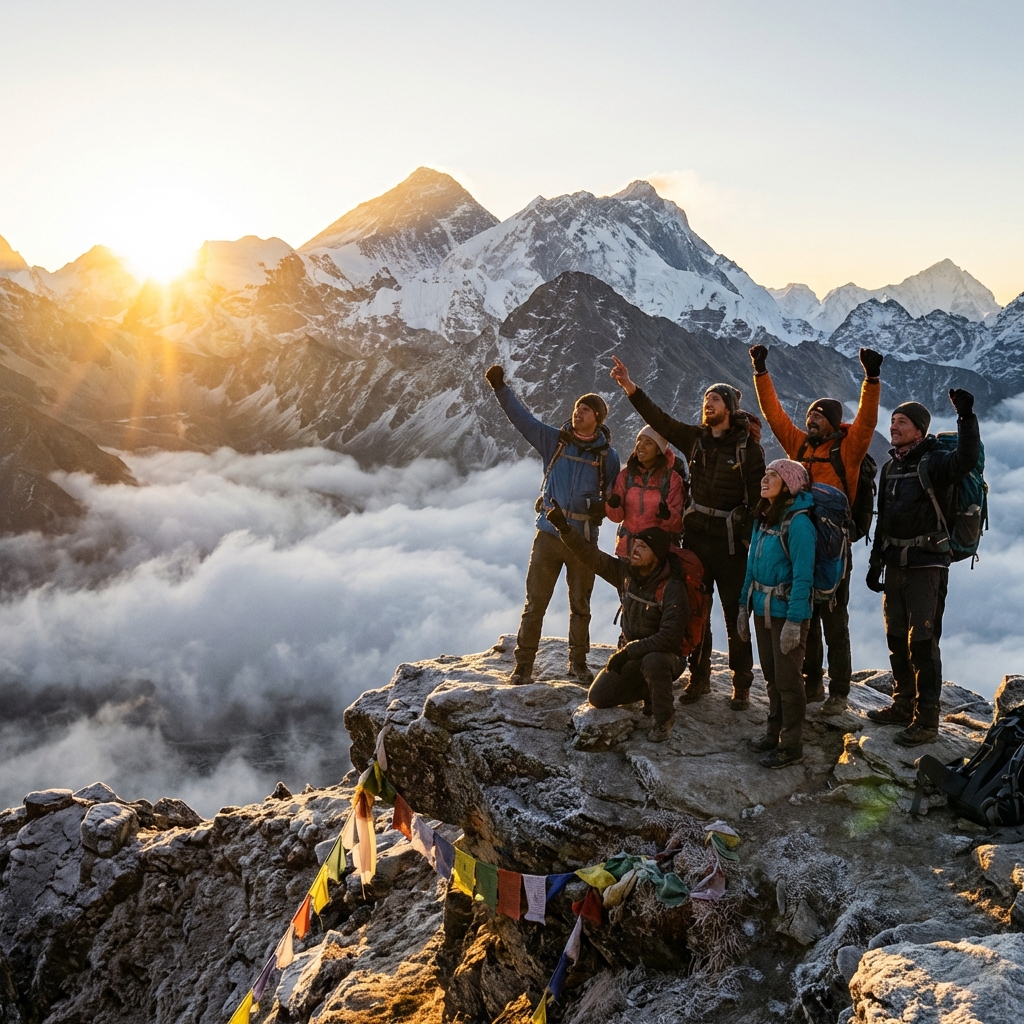
Summit the Himalayas
Peak climbing in Nepal
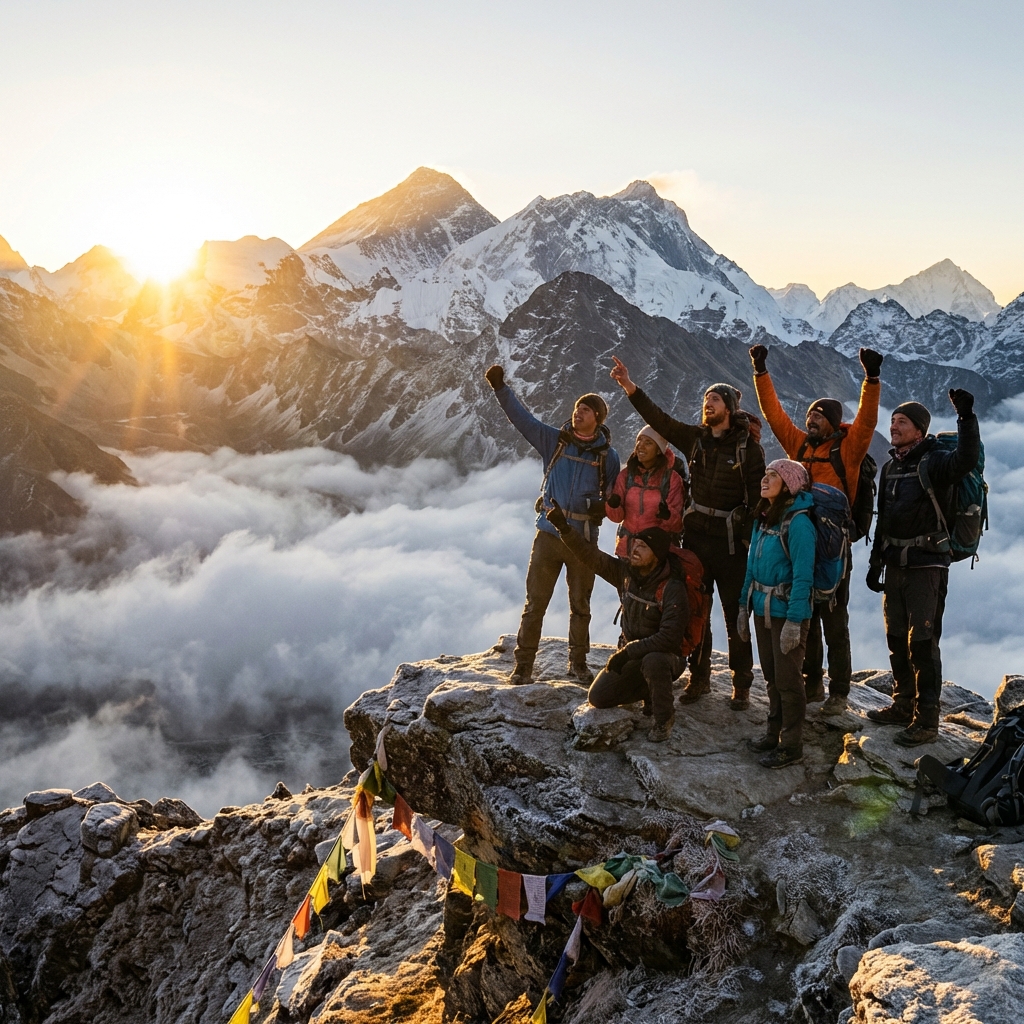
Stand on the summit of a Himalayan peak. From beginner-friendly 5,000m ascents to technical 6,000m challenges, our guided expeditions put the world's greatest mountains within reach.
- Trekking peaks
- 6
- Altitude range
- 5,732m+
- Summit success
- 95%
- Sherpa ratio
- 1:2
Trekking peaks
Altitude range
Summit success
Sherpa ratio
Know before you go
Understanding peak difficulty grades
Non-technical. Strong trekking fitness required. No prior climbing experience needed.
Basic crampon and rope skills. Training provided at base camp. Good fitness essential.
Technical ice and rock. Prior high-altitude experience recommended. Fixed ropes and steep terrain.
Multi-week expeditions. Significant mountaineering experience required. High commitment.
Trekking Peaks
NMA-permitted peaks between 5,700m and 6,500m — achievable summits with world-class views.
Island Peak (Imja Tse)
Nepal's most popular climbing peak with stunning views of Lhotse, Nuptse, and Makalu. A true Himalayan summit experience combining the classic Everest Base Camp trek with a technical summit push.
From
$2,200
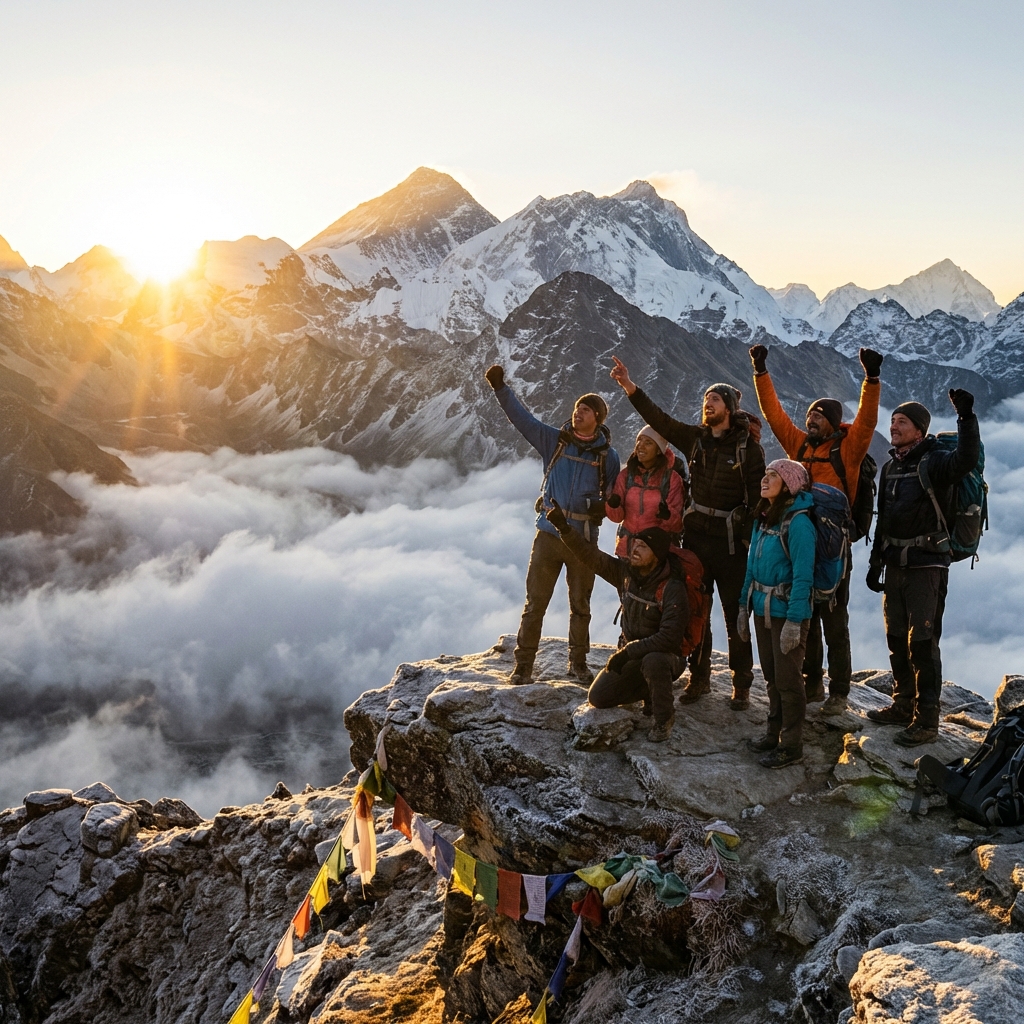
Mera Peak
The highest trekking peak in Nepal — a non-technical ascent that rewards you with panoramic views of five 8,000m giants: Everest, Kangchenjunga, Lhotse, Makalu, and Cho Oyu.
From
$2,000
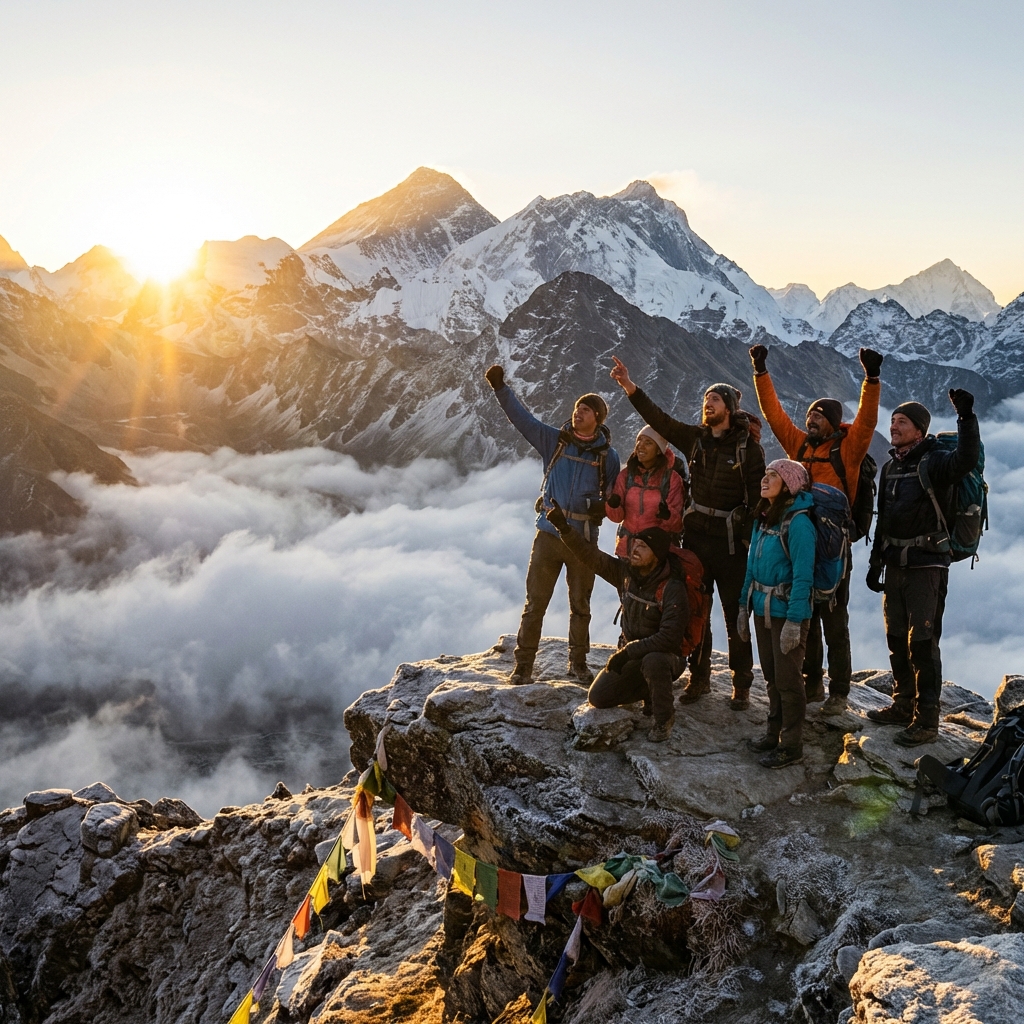
Lobuche East
A serious technical challenge in the Khumbu Valley with exposed ridges, steep ice walls, and fixed rope sections. Ideal for climbers seeking genuine mountaineering skills before tackling bigger peaks.
From
$2,300
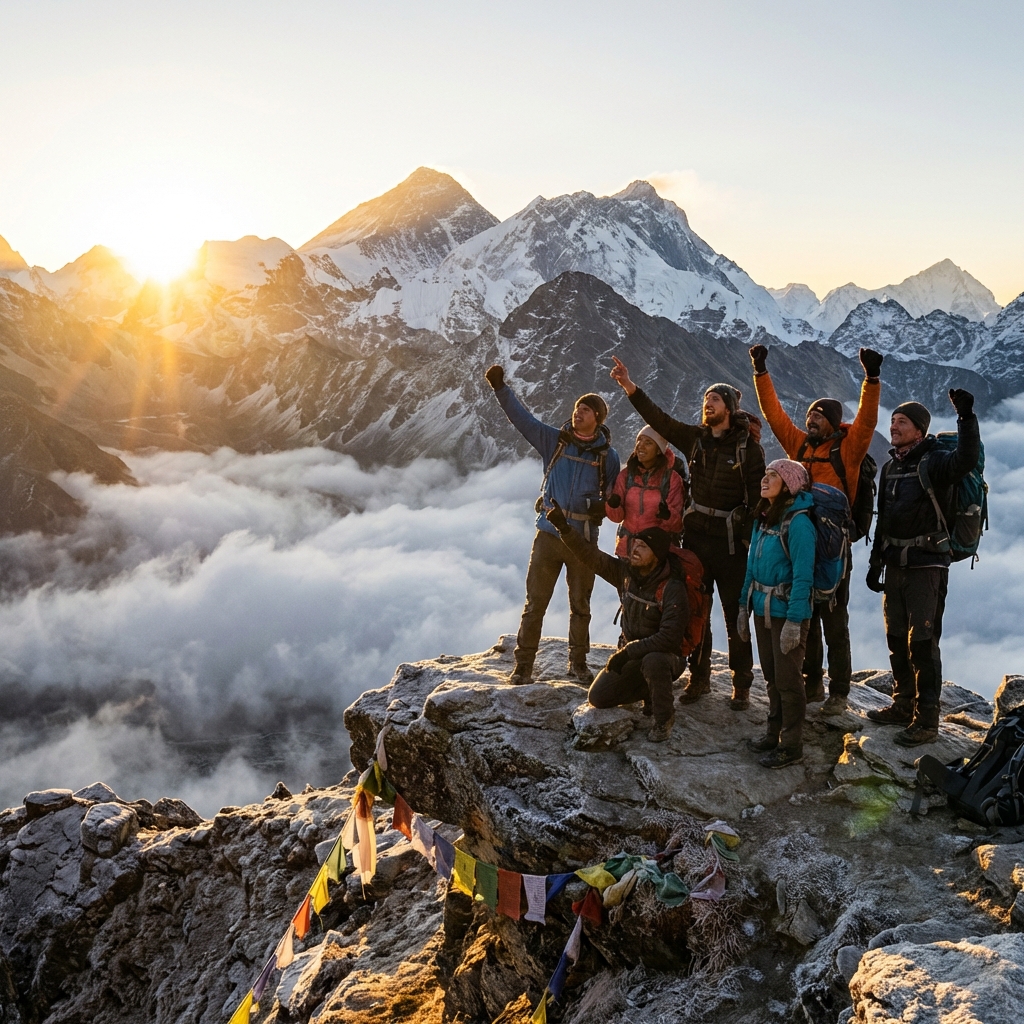
Pisang Peak
A beautiful climb on the Annapurna Circuit offering sweeping views of the Annapurna and Manaslu massifs. Combines cultural richness of the circuit with a rewarding summit attempt.
From
$1,800
Chulu West
A demanding climb in the Manang district with steep snow and ice sections above 5,800m. The summit ridge delivers breathtaking views of the Annapurna range and Dhaulagiri.
From
$2,500
Yala Peak
The best beginner peak in Nepal — a straightforward climb in the Langtang Valley with no technical sections. Perfect introduction to high-altitude climbing with views of Langtang Lirung and Shishapangma.
From
$1,500
What's Included
Every peak climbing package comes with comprehensive support so you can focus on the summit.
Expert Climbing Sherpa
Experienced, summit-certified climbing Sherpas at a 1:2 ratio. Your safety and success are their mission.
NMA Permits & Fees
All climbing permits, national park fees, and NMA liaison officer costs are covered in full.
Pre-Climb Training
Ice axe, crampon, and fixed rope training at base camp before your summit attempt.
Technical Gear
Climbing ropes, carabiners, harnesses, ice screws, and communal climbing equipment provided.
Safety Equipment
Satellite phone, oxygen monitor, comprehensive first aid kit, and emergency evacuation plan.
Full Board & Lodging
All meals during the trek, teahouse or camping accommodation, and base camp facilities.
The Route
Interactive Route Map
Explore the trek on a topographic map. Tap a waypoint for elevation, accommodation, and day-by-day detail. Scroll to zoom.
Loading interactive map…
Requirements & Preparation
What you need to know before booking your peak climbing expedition.
Fitness Requirements
- Able to trek 6-8 hours daily with a pack
- Cardiovascular fitness (running, cycling, hiking)
- Begin training at least 3 months before departure
- Prior high-altitude trekking experience recommended for hard peaks
Personal Gear Needed
- Double plastic or insulated mountaineering boots
- Down jacket rated to -20°C and layering system
- Personal climbing harness and helmet
- Crampons compatible with your boots
- Trekking poles, sunglasses, headlamp
Documentation & Insurance
- Valid passport with 6+ months remaining
- Nepal visa (available on arrival)
- Travel insurance covering mountaineering to 7,000m
- Helicopter evacuation coverage mandatory
- Medical fitness certificate from your doctor
Expedition Grade
Ready for something bigger?
For experienced mountaineers, we organize full-scale expeditions to Nepal's iconic higher peaks. These require greater commitment, technical skill, and time — but the rewards are extraordinary.
Ama Dablam
6,812mOften called the Matterhorn of the Himalayas. A stunning, technical climb requiring expedition-level commitment with dramatic exposure and mixed terrain.
Himlung Himal
7,126mOne of the most accessible 7,000m peaks in Nepal. Remote and uncrowded, it offers a genuine high-altitude expedition experience in the Manaslu-Annapurna border region.
Climb with confidence
Safety first, summit second
Every expedition is led by summit-certified climbing Sherpas with full safety systems — so you can focus on the mountain.
- Summit success rate
- 95%
- Sherpa-to-climber ratio
- 1:2
- Evacuation coverage
- 7,000m
- Years in the Himalayas
- 16+
Summit success rate
Sherpa-to-climber ratio
Evacuation coverage
Years in the Himalayas
Peak Climbing FAQs
Common questions about climbing peaks in Nepal.
Do I need a climbing permit for trekking peaks?
What prior climbing experience do I need?
When is the best season for peak climbing?
Can I climb solo or do I need to join a group?
Is helicopter rescue insurance mandatory?
Your summit awaits
Ready to climb?
Whether it's your first summit or your tenth, our team will build the perfect expedition for your experience level and goals. Let's plan your climb.