Peak Trekking Seasons
Nepal's four peak trekking months — October, November, March, and April — deliver the clearest skies, most reliable weather, and best trail conditions of the year. Plan your timing, understand the trade-offs, and book with the right lead time.
When the Himalaya opens
Understanding Nepal's Peak Trekking Seasons
Nepal's peak trekking seasons are not a marketing construct — they reflect genuine atmospheric windows when the Himalayan environment is at its most accessible and visually spectacular. Two distinct periods dominate the trekking calendar: the post-monsoon autumn window from October through November, when recently cleared skies produce visibility exceeding 100 kilometres, and the pre-monsoon spring window from March through April, when stable high-altitude conditions coincide with rhododendron forests in full bloom between 2,500 and 4,000 metres. Together, these four months account for over 70 percent of all foreign trekking in Nepal — a concentration that reflects both the genuine quality of conditions and the self-reinforcing infrastructure that builds up around high demand. During peak season, every teahouse is open, rescue services are fully staffed, trail conditions are regularly maintained, and the entire support ecosystem from guide agencies to flight operators operates at full capacity.
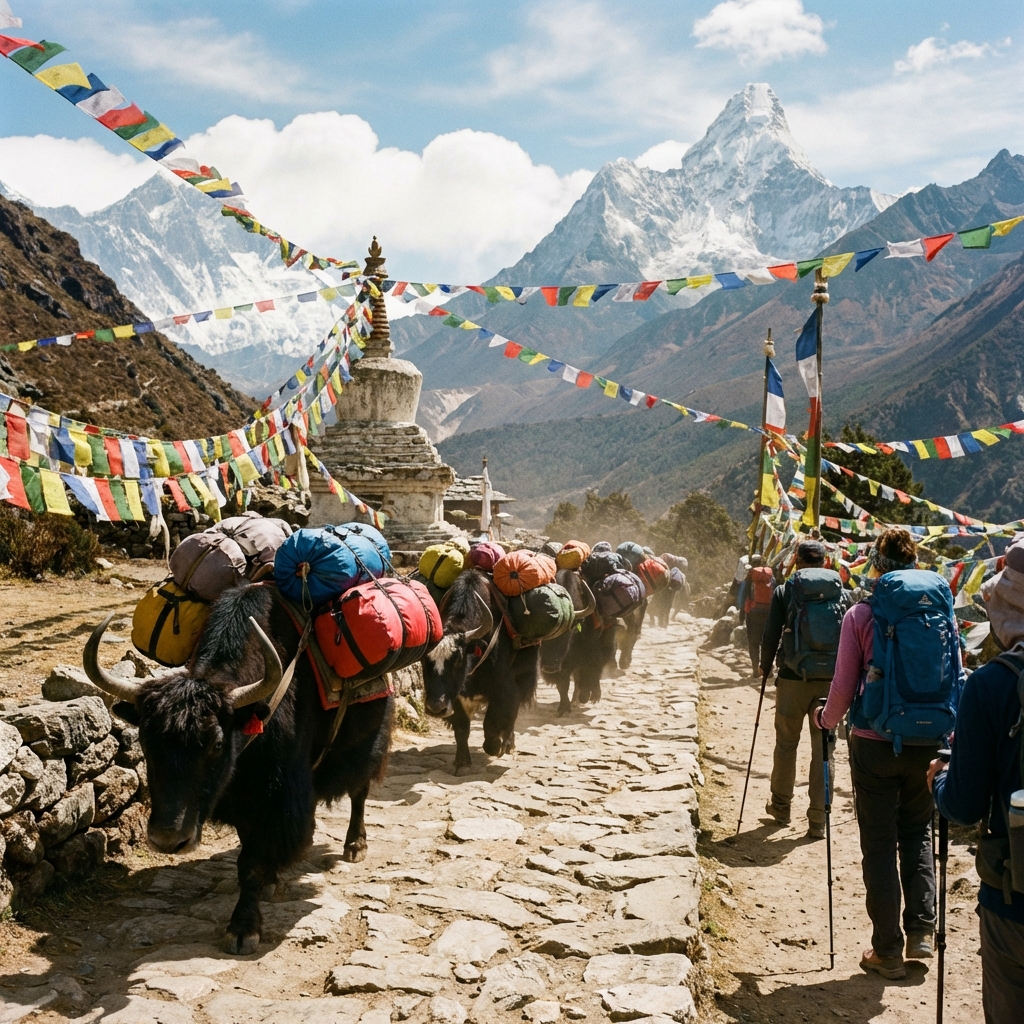
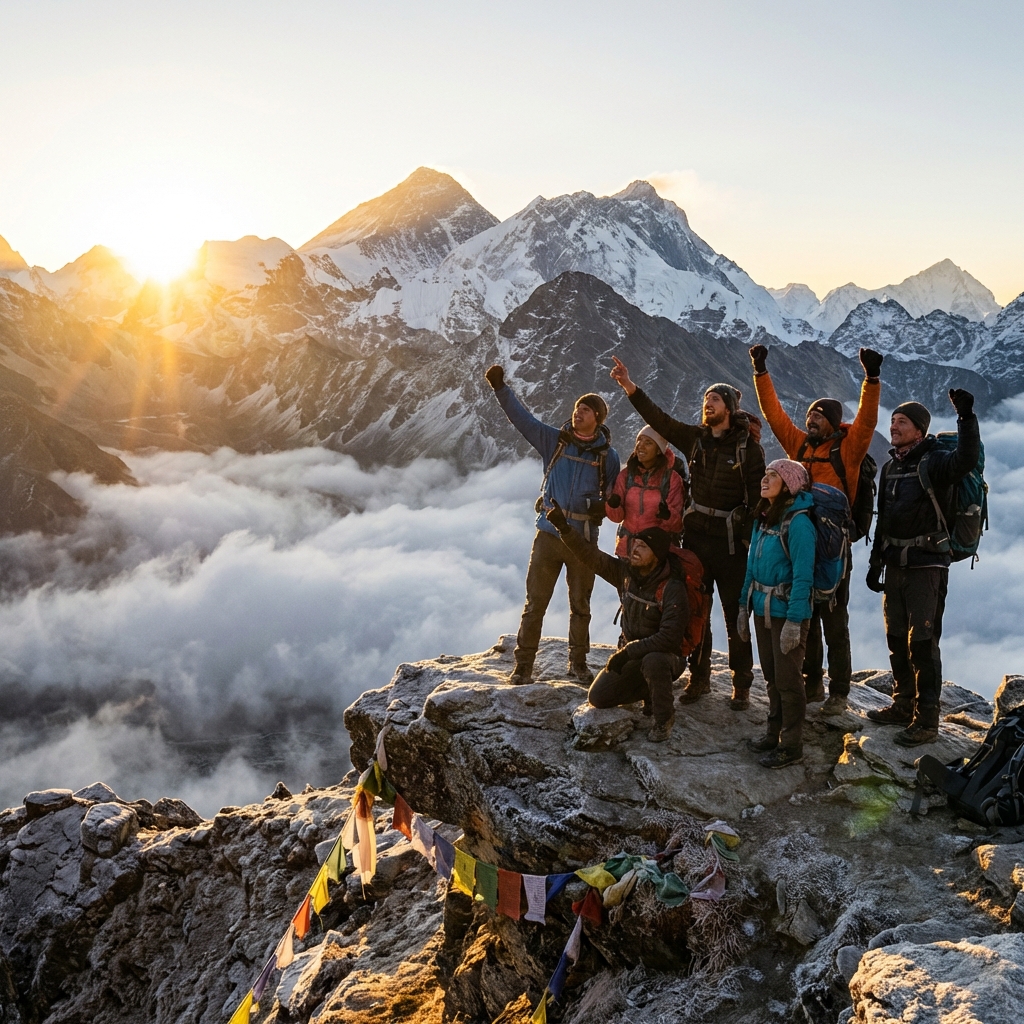
The autumn window opens in earnest as the monsoon retreats south through September. October is the single most popular trekking month in Nepal, and for good reason: post-monsoon air is freshly washed of dust and haze, producing the clearest mountain panoramas of the entire year. At Everest Base Camp and on the Annapurna Circuit, October mornings routinely offer unobstructed views of peaks across the entire Himalayan range. Temperatures at trekking altitudes are comfortable — cold at night above 4,000 metres, but manageable with proper layering during the day. October also coincides with Dashain and Tihar, Nepal's two most important festivals, which add cultural richness to any itinerary that passes through villages and towns. November continues the good weather with slightly cooler temperatures and meaningfully thinner crowds compared to October, making it an underrated choice for trekkers who want excellent conditions without the peak congestion. By late November, high passes begin to accumulate snow and the reliable weather window closes until spring.
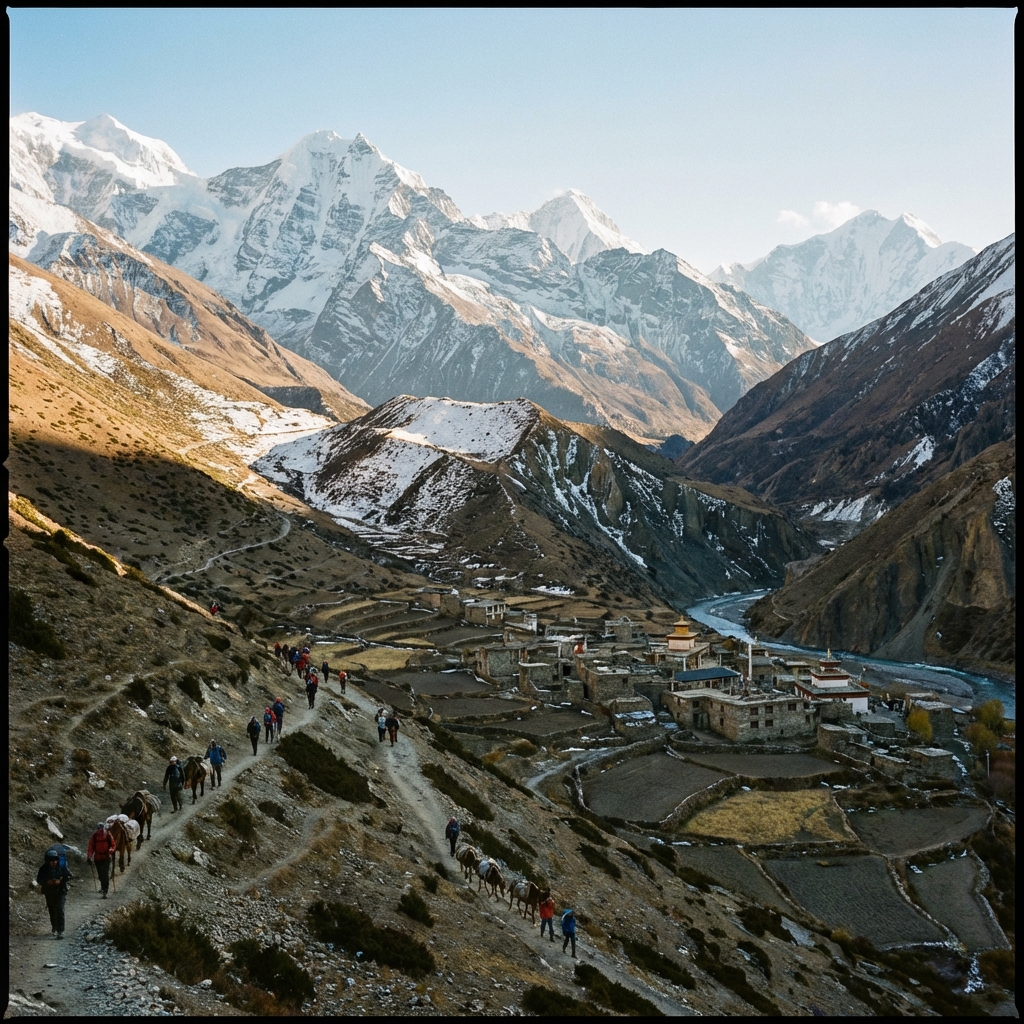
The spring window has a distinct character from autumn. March begins cool at altitude but warms rapidly through the month as days lengthen and the sun gains strength. The defining feature of spring trekking is the rhododendron bloom: between 2,500 and 4,000 metres, Nepal's national flower transforms hillsides and forests into dense displays of red, pink, and white. The Annapurna and Langtang regions offer particularly spectacular rhododendron scenery along this elevation band. April delivers the best spring conditions overall — stable weather at high altitude, warm days in the mid-hills, and clear enough skies above 3,000 metres for excellent mountain views. Pre-monsoon haze does build below 3,000 metres as April progresses, creating a milky quality to distant lowland views, but higher elevations remain clear and photogenic. Spring trekking crowds are noticeably lighter than autumn, making it the preferred season for trekkers who want peak-season trail conditions without peak-season crowd density.
Weather data puts the quality of peak-season conditions in concrete terms. In valley floors and lower approaches (below 2,000 metres), daytime temperatures in October and April range between 15 and 25 degrees Celsius with light winds. At mid-altitude trekking elevations around 3,000 metres, expect 5 to 15 degrees Celsius during the day and near-freezing nights above 3,500 metres. High camps and passes above 5,000 metres — Thorong La, Cho La, Renjo La — see daytime highs of minus 10 to plus 5 degrees Celsius with variable wind conditions. Precipitation statistics tell the most compelling story: peak months average 1 to 3 rain days per month, compared with 20 or more days during the June-to-September monsoon. Wind speeds at trekking altitude are generally moderate below 5,000 metres during peak season, though high passes can experience strong gusts in the early afternoon, making morning crossings the standard practice for safety and comfort.
The crowd reality of peak season deserves honest acknowledgement. Lukla airport, the gateway to the Everest region, operates at maximum capacity throughout October, with flights booked weeks in advance and any weather-related cancellation creating a cascading backlog that affects trekkers for days. On Thorong La, the highest point of the Annapurna Circuit at 5,416 metres, daily crossing numbers can exceed 500 trekkers in October, creating a slow-moving procession at the steepest sections. Teahouse beds on the EBC route sell out by early afternoon on busy nights, creating genuine pressure to arrive at each stop by 1 or 2pm. Prices reflect demand — accommodation and meal costs run 30 to 50 percent above off-peak rates throughout peak season. Despite these pressures, the infrastructure quality during peak season is genuinely superior: all teahouses are open, trails are maintained and well-marked, helicopter rescue services are fully operational and readily available, and the concentration of experienced trekkers creates an informal safety network on every major route.
Route selection matters more during peak season than at any other time of year. The highest benefit from stable peak conditions accrues to routes involving high-altitude passes, where weather windows are narrow and unpredictable conditions are most costly. Thorong La (5,416m) on the Annapurna Circuit, Cho La (5,420m) and Renjo La (5,360m) on the Everest Three Passes route, and Larkya La (5,160m) on the Manaslu Circuit all become significantly more reliable and safer to cross during peak months. For trekkers seeking fewer crowds within the peak season calendar, the alternatives to EBC and Annapurna Classic are substantial: the Manaslu Circuit sees a fraction of Annapurna traffic, Kanchenjunga Base Camp receives perhaps 1,000 trekkers annually, and Makalu Base Camp remains genuinely remote and uncrowded even in October. These routes require restricted area permits and licensed guides, but deliver a level of solitude that the classic routes cannot offer during peak months.
Booking strategy is what separates a smooth peak-season trek from a frustrating one. The cascade of advance planning starts with Lukla flights: for October departures, booking 2 to 3 months ahead is not overcaution but necessity, as seat inventory from airlines like Tara Air and Summit Air fills rapidly. Trekking agencies should be confirmed 1 to 2 months out to ensure guide and porter availability, which tightens sharply from late September as demand peaks. Popular teahouses on the EBC corridor — Namche Bazaar, Tengboche, Dingboche, Lobuche — benefit from advance reservation where possible, or early daily arrivals to secure beds before afternoon surge. Permit offices in Kathmandu get meaningfully busier during peak season; budget an extra hour compared to off-season visits. Starting treks mid-week rather than on weekends offsets the weekend departure surge and spreads crowd pressure more evenly along the trail. The guides below provide current conditions, recent trail reports, and detailed planning information for each peak-season route.
By the numbers
Peak Seasons at a Glance
4 months
Peak Months
Oct, Nov, Mar, Apr
100+ km
Visibility
clear Himalayan panoramas
High
Crowd Level
book 2-3 months ahead
5–20°C
Temp Range
comfortable trekking temps
Peak Season Guides
Detailed guides for trekking Nepal during the peak autumn and spring windows — weather conditions, route planning, crowd management, and booking timelines.
Good to know
Frequently Asked Questions
Is October or November better for trekking in Nepal?
October delivers the best weather conditions in Nepal alongside Dashain and Tihar festivals, creating an extraordinary combination of ideal trekking conditions and vibrant cultural atmosphere. The post-monsoon air is crystal clear, mountain views are at their finest, and virtually every teahouse and trail is operating at full capacity. The trade-off is that October is also the single most crowded and expensive month — Lukla flights book out weeks in advance, popular teahouses fill by early afternoon, and prices run 40–50% above off-peak rates. November offers a genuine alternative: slightly cooler temperatures at altitude, noticeably thinner crowds than October, and better teahouse availability without needing to rush. The weather remains reliable through mid-November, with clear skies and excellent visibility. Choose October if weather quality is your top priority and you are willing to plan well ahead. Choose November if you want a quieter, more relaxed experience with good conditions and easier logistics.
Should I choose spring or autumn for my first Nepal trek?
Autumn — specifically October and early November — is the recommended choice for first-time trekkers to Nepal. The reasons are practical: post-monsoon skies deliver the clearest mountain views of the year, weather patterns are well-established and predictable, all teahouses and services are fully operational, and you benefit from the largest concentration of fellow trekkers if you need help or company. The trail infrastructure is at its best, rescue services are fully staffed, and accommodation options are plentiful. Spring (March–April) is also excellent and has its own advantages — rhododendron forests in full bloom between 2,500 and 4,000 metres create stunning trail scenery, and crowds are noticeably lighter than peak autumn. However, spring weather can be slightly less predictable, with pre-monsoon haze building below 3,000 metres as April progresses. Both seasons are genuinely good, but autumn edges out spring for beginners due to more consistent conditions and a larger, more experienced trekking community on the trails.
How far in advance should I book for peak season?
Different elements of your Nepal trek require different lead times during peak season. Lukla flights are the most time-sensitive booking: reserve these 2–3 months ahead for October departures, as seat availability evaporates quickly and last-minute bookings become nearly impossible or prohibitively expensive. If flying Kathmandu–Lukla, target booking as soon as you confirm your trip dates. For trekking agencies, 1–2 months advance booking ensures you get an experienced guide and porter rather than whoever is left available. Popular teahouses on the Everest Base Camp route — particularly in Namche Bazaar, Tengboche, Dingboche, and Lobuche — benefit from advance reservation or early daily arrivals by 1–2pm. Budget one full day in Kathmandu for permit processing at the Nepal Tourism Board office, where queues are longer during peak season. Arrange travel insurance before departure from your home country, as retroactive coverage is not possible.
Are teahouses fully booked during peak season?
On the two most popular routes — Everest Base Camp and the Annapurna Circuit — teahouse beds genuinely fill up during October. Namche Bazaar, Tengboche, Dingboche, and Thorong Phedi are the specific bottleneck points where accommodation runs short on busy nights. The practical solutions are straightforward: start trekking early each day and aim to arrive at your planned stop by 1–2pm. Arriving at 4–5pm in October means a real chance of finding no beds left. Some lodges on the EBC route allow advance reservations by phone or through trekking agencies — worth arranging for the popular stops. Above 4,500 metres, particularly near high camps on less-developed routes, carrying a lightweight tent as a backup is a reasonable precaution. On less-trafficked routes like Manaslu Circuit, Kanchenjunga, or Makalu Base Camp, overcrowding is not an issue even during peak months — these are genuine alternatives if crowd-free trekking matters to you.
What are the disadvantages of trekking in peak season?
Peak season in Nepal comes with real trade-offs that deserve honest consideration before you book. The most significant issue is crowds: Lukla airport operates at maximum capacity throughout October, Thorong La on the Annapurna Circuit sees 500 or more trekkers crossing daily, and trail bottlenecks at popular viewpoints and teahouses can feel more like queuing than wilderness trekking. Prices reflect demand — teahouse accommodation and meals run 30–50% above off-peak rates, trekking agency fees are higher, and Lukla flight prices spike sharply. Flight delays compound during peak season because the backlog from one cancelled flight ripples through days of subsequent operations. On the EBC route in particular, the concentration of trekkers reduces the sense of remote adventure that many people seek in the Himalayas. The village experience along popular trails feels more tourist-focused than authentically local during October–November. These are not reasons to avoid peak season — the weather and visibility are genuinely superior — but they are worth factoring into your expectations.
Can I trek independently during peak season or do I need a guide?
Independent trekking is entirely legal and widely practiced in Nepal's two most popular regions — Annapurna and Everest — during peak season and year-round. Trail markings are clear and well-maintained, teahouses are plentiful and open, and the concentration of trekkers means you are rarely walking entirely alone. The TIMS card and relevant national park permits are the only requirements for independent trekkers in these open regions. Restricted areas operate under completely different rules: Manaslu Circuit, Upper Mustang, Dolpo, and parts of Kanchenjunga require a licensed registered guide, a minimum group size of two trekkers, and a restricted area permit obtained through a registered agency — independent trekking in these areas is not permitted regardless of season. Even in open regions, guides add meaningful value at high altitude: navigation in bad weather, altitude sickness recognition, teahouse negotiation, and local knowledge of conditions ahead. Whether you hire one is a personal decision, not a legal requirement in the open trekking regions.