Trekking Nepal in November: The Autumn Peak Season Guide
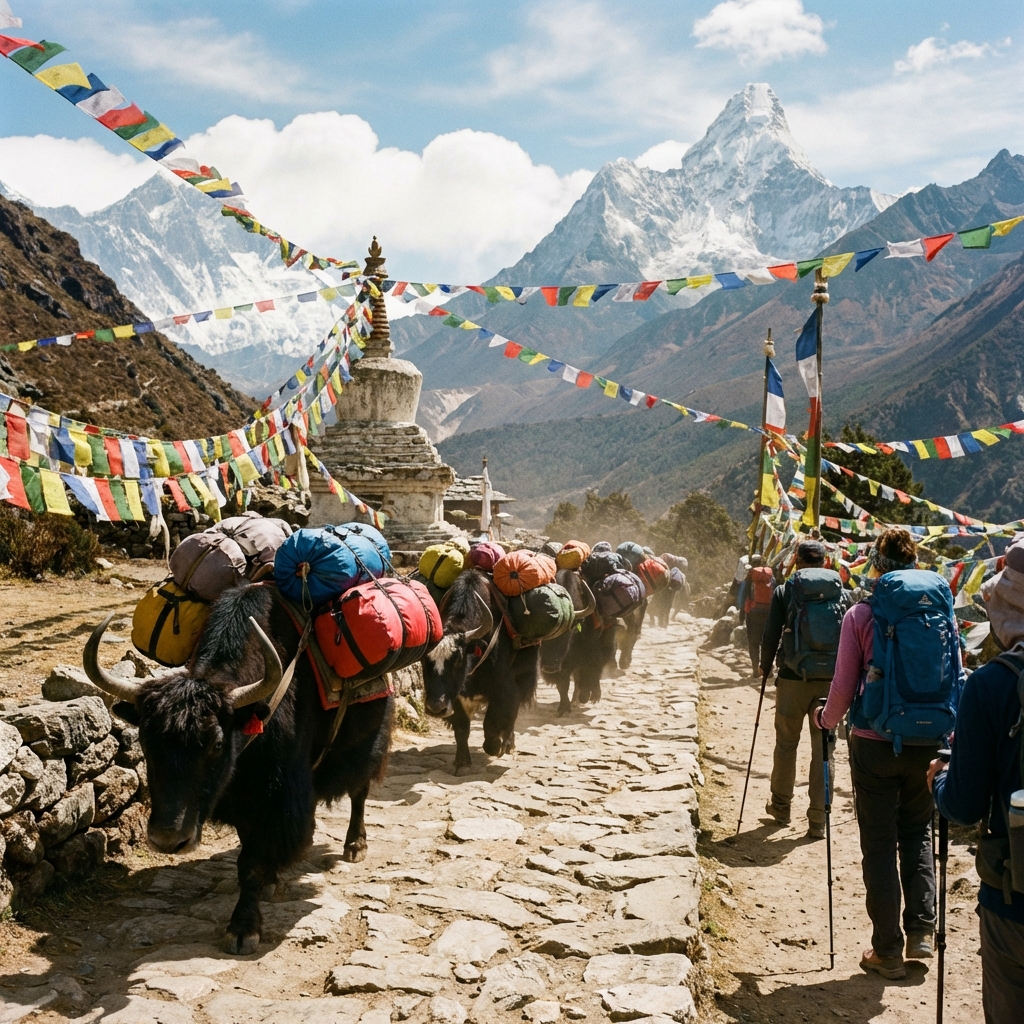
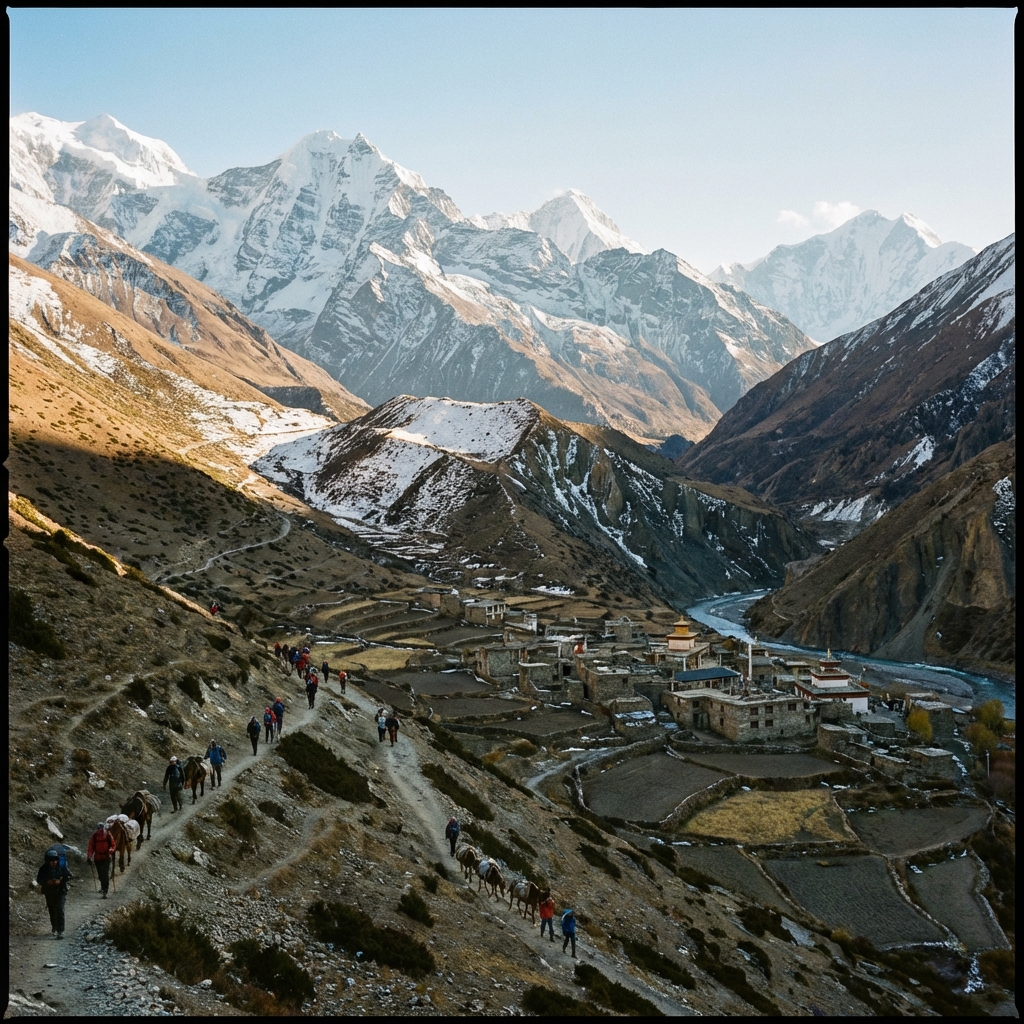
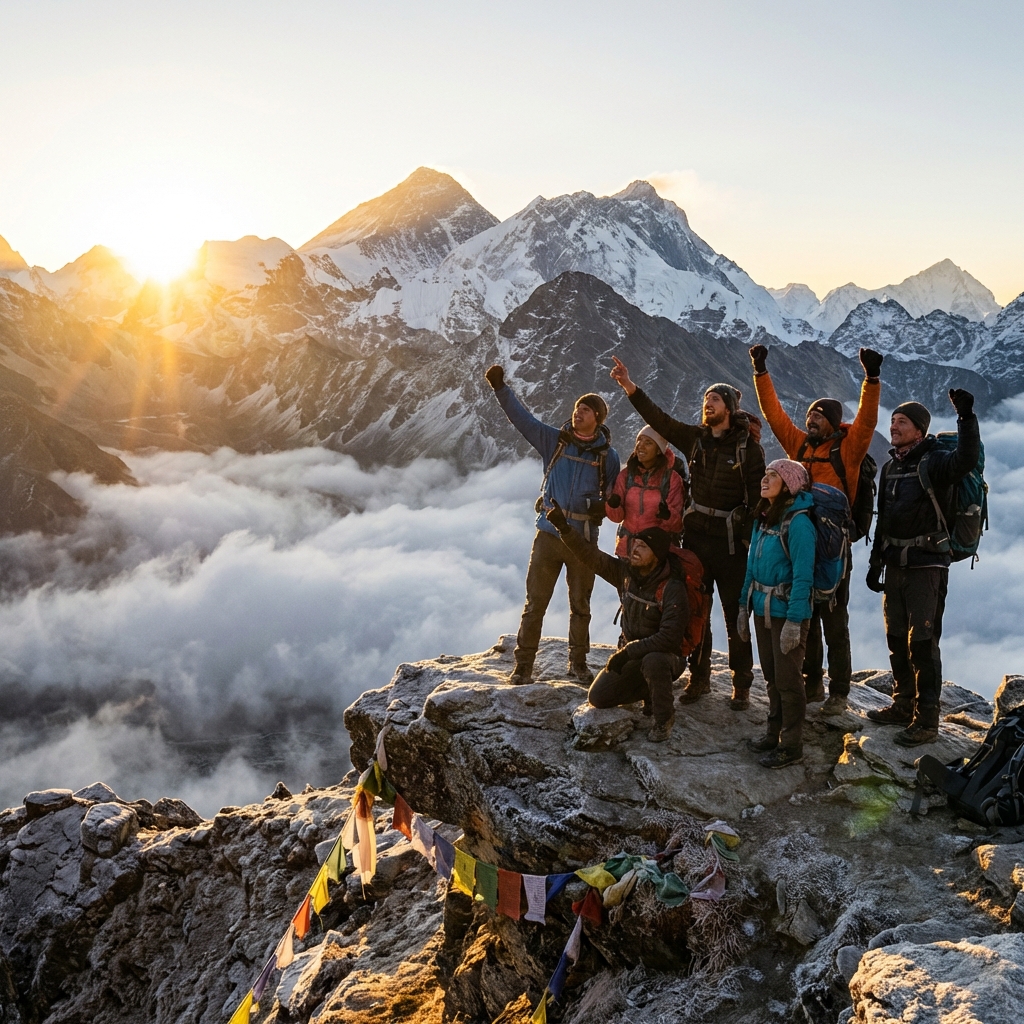
November represents the culmination of Nepal's autumn trekking season—the month when post-monsoon conditions reach their absolute zenith. While October claims the crown for popularity (driven largely by festival timing), November delivers arguably superior trekking conditions: even more stable weather, exceptional visibility extending 150+ kilometers on clear mornings, warmer daytime temperatures than December yet cooler and more comfortable than October's peak, and dramatically reduced crowds after the first week as Dashain and Tihar conclude.
This is the month experienced Himalayan trekkers choose when they have flexibility. Weather systems are at their most predictable, high passes remain accessible without winter's deep snow, photography conditions are extraordinary with fresh post-monsoon snow contrasting against impossibly blue skies, and the temperature "sweet spot" makes high-altitude trekking comfortable without extreme cold-weather gear requirements.
However, November brings significant considerations: the first half overlaps with Nepal's busiest festival period requiring advance bookings, temperatures begin their winter descent (particularly noticeable in late November), days are noticeably shorter than October limiting trekking hours, and teahouses at extreme elevations start winter closures by month's end. Understanding November's nuances—both its considerable advantages and specific challenges—is essential for capitalizing on what many consider Nepal's finest trekking month.
Excellent (Peak+ Conditions)
Best of entire year
Exceptional (150+ km)
Very High early, High mid, Moderate late
Ideal sweet spot (warmer than Dec)
4-6 months for popular routes
10.5-11 hours (shortening)
All major treks at absolute peak
Why November Dominates: The Ultimate Trekking Month
November's reputation among experienced trekkers as potentially the best single month for Himalayan trekking isn't marketing hyperbole—it's the result of converging favorable conditions that create an optimal trekking environment.
1. Peak Weather Stability: The Year's Most Predictable Conditions
November sits at the absolute center of Nepal's autumn dry season, characterized by persistent high-pressure systems that can dominate for weeks without interruption. While October offers excellent stability, November takes it further with even lower precipitation averages (10-25mm across major regions—some of the lowest recorded monthly totals) and minimal weather variability.
Practical Impact: You can plan complex itineraries involving high passes (Thorong La, Cho La, Renjo La, Larkya La) with high confidence they'll be accessible. Multi-day weather windows are the norm, not the exception. Flight cancellations to mountain airports drop significantly compared to shoulder months.
Data Point: November precipitation at Namche Bazaar (3,440m) averages just 12mm across the month—compared to October's 18mm, March's 35mm, and April's 58mm. This translates to approximately 1-2 light precipitation events for the entire month rather than 3-5 in October.
2. Exceptional Atmospheric Clarity: The Best Visibility of the Year
Post-monsoon air washing continues through November, but with one critical difference from October: the month's cooler temperatures reduce atmospheric moisture and haze even further. The result is crystalline visibility that frequently exceeds 150 kilometers on clear mornings—the best of the entire year.
Photography Advantage: November delivers the sharpest mountain photography conditions. Peaks appear extraordinarily well-defined, with fine details visible at extreme distances. The month's lower sun angle (compared to October) creates more dramatic shadows and modeling on mountain faces, enhancing three-dimensionality in images.
Viewpoint Impact: From classic vantage points like Kala Patthar, Gokyo Ri, Poon Hill, and Tserko Ri, November visibility often allows you to see the entire Himalayan chain stretching to the horizon—Dhaulagiri to Makalu visible simultaneously from higher viewpoints.
3. Temperature Sweet Spot: Warmer Than Winter, More Comfortable Than October Peak
November occupies a Goldilocks zone between October's occasionally warm conditions and December's genuine winter cold. Daytime temperatures remain highly comfortable for trekking (neither too hot nor too cold), while nighttime temperatures, though cool, don't yet require the extreme cold-weather sleeping systems needed from late December onward.
Daytime Comfort: At mid-elevations (3,000-4,000m), expect pleasant 8-14°C daytime temperatures—cool enough to trek comfortably without overheating, warm enough that you're not constantly battling cold. High-altitude trekking (4,500m+) remains manageable at 2-8°C daytime, requiring layers but not the full expedition kit needed in deep winter.
Night Management: November nights are cold (0 to -10°C at high elevations) but very manageable with proper sleeping bags rated to -15°C. This is significantly warmer than December-February when -20°C or colder bags become essential for comfort and safety.
Energy Conservation: The moderate temperatures reduce the physical stress of extreme cold, conserving energy for altitude acclimatization and reducing cold-related sleep disruption that can impair recovery.
4. Reduced Crowds After Festival Period: The November Transition
While November's first week continues October's high crowd levels (Tihar festival extends into early November), a dramatic transition occurs mid-month. After November 7-10, trekker numbers drop by 30-40% as the post-festival surge concludes but weather remains excellent.
The Sweet Spot: November 10-25 represents optimal timing for those seeking peak conditions with more breathing room. Lodges are less fully booked, popular viewpoints aren't mobbed at sunrise, and the trail experience feels more authentic and less like a highway procession.
Late November Consideration: After November 25, crowds thin further (50-60% below October peak), but temperatures begin dropping noticeably, days shorten further, and some extreme-altitude lodges begin winter closures. Still excellent conditions for most routes, but the window is closing.
5. Fresh Snow Aesthetics: Visual Peak of the Season
November typically receives light snowfall events at high elevations (4,500m+), dusting peaks and creating the year's most photogenic mountain landscapes. Lower trails remain completely dry and snow-free, while summits gleam white against deep blue skies—the iconic Himalayan aesthetic.
Color Contrast: The combination of white peaks, blue skies, and still-green vegetation at lower elevations (monsoon greenery persists through November at 2,500-3,500m) creates spectacular visual contrast absent in drier late winter and spring.
Pro Tip
The November 10-20 Window: For absolute optimal conditions combining weather, visibility, comfortable temperatures, and manageable crowds, target November 10-20. This ten-day window offers peak November conditions after Tihar festival crowds disperse but before late-month temperature drops and day-length limitations become more challenging. This is when experienced trekkers plan their Nepal adventures.
November Weather Breakdown: Detailed Altitude Analysis
Understanding conditions by elevation zone is critical for appropriate preparation and realistic expectations.
Lower Elevations (1,000-2,500m)
Representative Locations: Pokhara (820m), Lukla (2,860m), Jiri (2,003m), Besisahar (760m), Lower Langtang Valley
Daytime Temperatures: 12-20°C (54-68°F) Nighttime Temperatures: 5-12°C (41-54°F) Conditions: Warm and pleasant during day, cool evenings, occasional morning frost at higher end
What This Means:
- Mornings start cool and crisp; by late morning t-shirt trekking is comfortable
- Evenings require light fleece or jacket but remain pleasant
- Sleeping bags rated to 0°C sufficient at these elevations
- Strong sun even in November—sun protection essential (UV increases with altitude)
- Dust can be an issue on busy trails—consider buff or mask in popular areas
- Perfect conditions for acclimatization at trek starts
November vs October: Slightly cooler overall (3-5°C drop), more comfortable for daytime trekking as midday heat is reduced. Mornings noticeably crisper.
Mid Elevations (2,500-4,000m)
Representative Locations: Namche Bazaar (3,440m), Manang (3,540m), Ghorepani (2,870m), Kyanjin Gompa (3,870m), Tengboche (3,860m)
Daytime Temperatures: 8-14°C (46-57°F) Nighttime Temperatures: 0-6°C (32-43°F) Conditions: Comfortable trekking temperatures, cold evenings, light frost common
What This Means:
- Layering system essential: merino base layer, fleece mid-layer, light down jacket
- Mornings cold until sun hits valleys (typically 7:30-9:00 AM depending on location)
- Afternoons pleasant for trekking; once sun drops behind ridges (4:30-5:30 PM) temperatures plummet quickly
- Lodge common rooms with heating (yak dung or wood stoves) essential for evening comfort
- Sleeping rooms unheated—sleeping bags rated to -10°C recommended for comfort
- Hot showers available but increasingly expensive and less reliable than October
- Water sources don't yet freeze—hydration remains easy
- Most comfortable elevation zone for November trekking
November vs October: Approximately 4-6°C cooler overall. Evenings noticeably colder, requiring warmer evening layers. Still very comfortable for trekking.
High Elevations (4,000-5,000m)
Representative Locations: Dingboche (4,410m), Lobuche (4,940m), Thorong High Camp (4,925m), Gokyo (4,790m), Manaslu Base Camp (4,800m)
Daytime Temperatures: 3-10°C (37-50°F) Nighttime Temperatures: -8 to 0°C (18-32°F) Conditions: Cool days, cold nights, possible light snow events
What This Means:
- Multiple insulation layers required: base layers, fleece, insulated down jacket (minimum 600-fill)
- Mornings very cold until sun exposure (can take until 8-9 AM for sunlight to reach valleys)
- Afternoons can be pleasant in direct sun, but any wind makes it feel much colder
- Evenings and nights genuinely cold—full winter evening kit needed (insulated jacket, warm hat, gloves)
- Sleeping bags rated to -15°C essential; -20°C rated bags provide better comfort margin
- Water bottles can freeze overnight—keep one in sleeping bag
- Battery performance degraded by cold—keep electronics warm
- Acclimatization absolutely critical at these elevations
- November remains significantly more comfortable than December-February at these heights
November vs October: Approximately 5-8°C cooler. Nights transition from "cold" to "very cold." Winter gear (expedition gloves, warmer sleeping bag) becomes necessary rather than optional.
Extreme High Elevations (5,000m+)
Representative Locations: Gorak Shep (5,164m), Kala Patthar (5,545m), Thorong La Pass (5,416m), Cho La Pass (5,420m), Larkya La Pass (5,160m), Everest Base Camp (5,364m)
Daytime Temperatures: -2 to 6°C (28-43°F) Nighttime Temperatures: -15 to -5°C (5-23°F) Conditions: Cold throughout day, very cold nights, light snow possible
What This Means:
- Full winter trekking kit essential: insulated down jacket (700+ fill), expedition-grade gloves, warm hat, neck gaiter
- Mornings extremely cold; even with sun, wind chill makes it feel much colder
- High pass crossings (Thorong La, Cho La, Renjo La) require early starts (3-5 AM) in extreme cold
- Sleeping bags rated to -20°C minimum; -25°C provides better comfort
- Water management critical—bottles freeze solid; insulated bottles or wide-mouth Nalgene in sleeping bag
- All electronics affected by cold—keep cameras warm, charge devices in lodge common areas
- High-calorie food intake essential to maintain core temperature
- Despite cold, November offers warmest conditions for these elevations outside of May
- Significantly more comfortable than December-April
November vs October: Approximately 6-10°C cooler, particularly noticeable overnight. Transitions from "need warm gear" to "need winter expedition gear." Still very manageable compared to deep winter.
| Month | High | Low | Conditions | Crowds | Notes |
|---|---|---|---|---|---|
| Lower (1,000-2,500m)Best | 12-20°C | 5-12°C | Very Low (5-15mm) | High early, Moderate late | Perfect conditions, warm days, comfortable nights |
| Mid (2,500-4,000m)Best | 8-14°C | 0-6°C | Very Low (10-20mm) | High early, Moderate late | Ideal trekking zone, cold nights manageable |
| High (4,000-5,000m)Best | 3-10°C | -8-0°C | Very Low (10-25mm) | High early, Moderate late | Cool but very comfortable, winter gear needed |
| Extreme (5,000m+)Best | -2-6°C | -15--5°C | Low (15-35mm, snow) | Moderate | Cold but clearest conditions, expedition gear essential |
Regional Weather Analysis: November Across Nepal
November conditions vary by region due to different monsoon influences, elevations, and topography.
Everest Region: Absolute Peak Conditions
Overall November Rating: Excellent (5/5)
November delivers the Everest region's finest trekking conditions. Weather stability reaches its annual peak, visibility is extraordinary (frequently 150+ km allowing views from Annapurna to Kangchenjunga), and temperatures remain comfortable for high-altitude trekking without deep winter's severity.
Specific Conditions:
- Namche Bazaar (3,440m): Daytime 8-12°C, nights 0-4°C, almost no precipitation
- Tengboche (3,860m): Daytime 6-10°C, nights -2 to 2°C, occasional light snow
- Dingboche/Lobuche (4,400-4,900m): Daytime 3-8°C, nights -8 to -3°C, light snow possible
- Gorak Shep/EBC (5,160-5,364m): Daytime -1 to 5°C, nights -12 to -6°C, clear and stable
November Advantages:
- High pass crossings (Cho La, Renjo La, Kongma La) accessible and safer than winter
- Gokyo Lakes often partially frozen creating beautiful ice formations
- Kala Patthar sunrise exceptionally clear with dramatic light
- Fewer trekkers than October on Three Passes route
- Lodges fully operational through entire month (closures begin early December)
Booking Requirements: Essential 4-6 months ahead for Everest Base Camp trek during November 1-15. More flexibility mid-to-late November.
Learn more: Best Time to Trek Everest Region
Annapurna Region: Thorong La at Its Best
Overall November Rating: Excellent (5/5)
The Annapurna Circuit and Annapurna Base Camp routes perform exceptionally in November. The critical Thorong La Pass (5,416m) experiences optimal conditions—accessible, stable weather, minimal snow accumulation—making November arguably the single best month for this crossing.
Specific Conditions:
- Pokhara/Ghandruk (800-2,000m): Daytime 15-22°C, nights 8-14°C, perfect conditions
- Ghorepani/Poon Hill (3,210m): Daytime 10-14°C, nights 2-6°C, crystal clear
- Manang (3,540m): Daytime 8-12°C, nights 0-4°C, stable and dry
- Thorong High Camp (4,925m): Daytime 2-6°C, nights -10 to -5°C, excellent pass conditions
- Annapurna Base Camp (4,130m): Daytime 4-8°C, nights -6 to -2°C, spectacular amphitheater views
November Advantages:
- Thorong La Pass typically snow-free or minimal snow (unlike December-March)
- Exceptional sunrise from Poon Hill—entire Annapurna range visible
- Manaslu Circuit equally excellent with Larkya La Pass accessible
- ABC (Annapurna Base Camp) delivers panoramic views of the sanctuary
- Rhododendron forests still retain greenery from monsoon (unlike late winter)
Special Consideration: Thorong La crossings start very early (3-4 AM) in extreme cold. Temperature can be -15 to -20°C at dawn. Full winter gear essential.
Explore: Annapurna Circuit Complete Guide Read: Annapurna Base Camp Trek Guide
Langtang Region: Uncrowded Excellence
Overall November Rating: Excellent (5/5)
Langtang delivers spectacular November conditions with significantly fewer trekkers than Everest or Annapurna regions. The region's slightly lower elevations make November particularly comfortable temperature-wise while maintaining excellent visibility.
Specific Conditions:
- Syabrubesi (1,460m): Daytime 14-20°C, nights 6-12°C, warm and pleasant
- Lama Hotel (2,470m): Daytime 10-15°C, nights 3-8°C, comfortable
- Langtang Village (3,430m): Daytime 8-12°C, nights 0-5°C, excellent conditions
- Kyanjin Gompa (3,870m): Daytime 6-10°C, nights -3 to 2°C, stable weather
- Tserko Ri (4,984m): Daytime 0-4°C, very cold dawn, incredible panoramas
November Advantages:
- 60-70% fewer trekkers than Everest/Annapurna regions
- Extremely stable weather in rain shadow position
- Comfortable temperatures for altitude adjustment
- Excellent conditions for Gosainkunda Lake trek (lake frozen—beautiful ice formations)
- Tamang cultural villages less touristy atmosphere
Booking Requirements: Moderate advance booking (2-3 months) sufficient except major festival dates.
Discover: Langtang Valley Trek
Manaslu Region: Remote Peak Season
Overall November Rating: Excellent (5/5)
The Manaslu Circuit experiences ideal November conditions with the critical Larkya La Pass (5,160m) at peak accessibility before winter snow accumulation.
Specific Conditions:
- Soti Khola to Philim (700-1,570m): Daytime 16-22°C, warm subtropical
- Samagaon (3,530m): Daytime 8-12°C, nights 0-4°C, excellent
- Samdo (3,860m): Daytime 6-10°C, nights -3 to 2°C, stable
- Larkya La Pass (5,160m): Daytime 0-5°C, nights -15 to -8°C (at high camp), typically clear
November Advantages:
- Larkya La Pass accessible with minimal snow
- Fewer trekkers than Annapurna Circuit (restricted area status)
- Spectacular Manaslu views from all angles
- Lower-elevation subtropical forest sections pleasant (not hot as in Oct)
Permit Requirement: Restricted area permit + guide mandatory. Book 3-4 months ahead.
Upper Mustang & Dolpo: End of Season Window
Overall November Rating: Good to Very Good (4/5)
These rain-shadow regions remain accessible in November but conditions begin transitioning toward winter. Early November excellent, late November challenging.
Specific Conditions:
- Upper Mustang (Lo Manthang 3,840m): Daytime 6-12°C, nights -5 to 0°C, very dry
- Dolpo (Ringmo 3,640m): Daytime 4-10°C, nights -8 to -2°C, cold but clear
November Considerations:
- Strong winds increase through November (Mustang particularly affected)
- Late November sees some lodge closures
- Excellent visibility and cultural access
- Significantly colder than October
Window: November 1-20 optimal; after November 20 conditions deteriorate rapidly.
Best Treks for November: Route-Specific Recommendations
November offers peak conditions for virtually all major Nepal treks. Here's detailed analysis by route.
Everest Base Camp Trek
November Rating: Excellent (5/5) Optimal November Window: November 5-25 Typical Duration: 12-14 days Maximum Elevation: 5,364m (Base Camp) / 5,545m (Kala Patthar)
Why November Excels:
- Exceptional Kala Patthar visibility—Everest, Lhotse, Nuptse, Ama Dablam, Pumori all crystal clear
- Stable weather minimizes flight disruptions to/from Lukla
- Comfortable temperatures for high-altitude acclimatization
- Post-monsoon greenery in lower valleys contrasts with snow-covered peaks
- Lodges fully operational through entire month
November Challenges:
- Very crowded November 1-10 (post-Dashain surge)
- Cold nights at Lobuche/Gorak Shep (-12 to -6°C)
- Early sunsets (5:15 PM) limit afternoon trekking time
- Advance booking essential for November first half
What to Expect:
- Crystal-clear Everest views from Tengboche monastery
- Frozen waterfalls creating ice sculptures along trail
- Crowded but manageable on standard itinerary
- Spectacular photography conditions
Booking Timeline: 4-6 months for November 1-15; 2-3 months for November 16-30
Complete Guide: Everest Base Camp Trek
Everest Three Passes Trek
November Rating: Excellent (5/5) Optimal November Window: November 5-22 Typical Duration: 18-21 days Maximum Elevation: 5,545m (Kala Patthar)
Why November Excels:
- All three passes (Kongma La 5,535m, Cho La 5,420m, Renjo La 5,360m) accessible
- Less crowded than standard EBC route
- Exceptional panoramic views from each pass
- Gokyo Lakes partially frozen—stunning ice formations
- Stable weather window allows complex itinerary
November Challenges:
- Pass crossings extremely cold at dawn (-15 to -20°C wind chill)
- Requires excellent fitness and acclimatization
- Lodge availability tighter than standard EBC route
- After November 22, snow accumulation can affect passes
November Strategy:
- Allow extra days for weather flexibility
- Cross passes early in November window (less snow accumulation)
- Full expedition gear essential for pass crossings
Booking Timeline: 5-6 months advance recommended
Detailed Guide: Everest Three Passes Trek
Annapurna Circuit
November Rating: Excellent (5/5) Optimal November Window: November 3-23 Typical Duration: 12-18 days Maximum Elevation: 5,416m (Thorong La Pass)
Why November Excels:
- Thorong La Pass at absolute peak condition—accessible, stable, minimal snow
- Dramatic ecosystem changes from subtropical to alpine to arid Tibetan plateau
- Manang offers perfect acclimatization in comfortable November temperatures
- Exceptional visibility from both sides of Thorong La
- Lower Annapurna Conservation Area sections pleasant (not hot)
November Challenges:
- Thorong La crossing starts 3-4 AM in -15 to -20°C conditions
- Very crowded on standard tea house route November 1-15
- Strong winds possible at Thorong Phedi/High Camp
- Some higher Manang side lodges close after November 25
November Strategy:
- Spend extra acclimatization day in Manang (weather excellent)
- Cross Thorong La mid-morning when possible (after sunrise warmth)
- Full winter gear essential for pass crossing
- Consider anti-clockwise direction for fewer crowds
Booking Timeline: 3-4 months for peak November dates; 2 months for mid-late November
Complete Guide: Annapurna Circuit Trek
Annapurna Base Camp (ABC)
November Rating: Excellent (5/5) Optimal November Window: November 1-28 Typical Duration: 7-10 days Maximum Elevation: 4,130m (Annapurna Base Camp)
Why November Excels:
- Annapurna Sanctuary amphitheater delivers 360° mountain panorama
- Lower maximum elevation makes November temperatures very comfortable
- Shorter duration suits limited schedules
- Modi Khola valley stunning with post-monsoon greenery and snow-capped peaks
- Less crowded than EBC or Annapurna Circuit
November Challenges:
- Avalanche risk at Machhapuchhre Base Camp/ABC after heavy snow (rare in November)
- Cold nights at ABC (-6 to -2°C) but manageable
- Trail can be crowded at Poon Hill section
November Strategy:
- Combine with Poon Hill for sunrise (extraordinary November clarity)
- Allow flexibility for rest day at ABC (weather typically permits)
- Start early from MBC to ABC to maximize summit time
Booking Timeline: 2-3 months advance for November
Detailed Guide: Annapurna Base Camp Trek
Langtang Valley Trek
November Rating: Excellent (5/5) Optimal November Window: November 1-30 Typical Duration: 7-10 days Maximum Elevation: 4,984m (Tserko Ri viewpoint)
Why November Excels:
- Significantly fewer trekkers than Everest/Annapurna (60-70% less)
- Comfortable temperatures at Langtang Valley/Kyanjin Gompa
- Exceptional Langtang Lirung and Ganesh Himal views
- Easy Kathmandu accessibility (7-hour drive vs flights)
- Authentic Tamang village culture
November Challenges:
- Tserko Ri sunrise extremely cold (-10 to -5°C)
- Limited lodge options at Kyanjin Gompa (book ahead)
- Earthquake recovery ongoing in some sections
November Strategy:
- Add Gosainkunda extension (lake frozen—beautiful ice formations)
- Spend 2 nights at Kyanjin for Tserko Ri and exploration
- Excellent alternative to crowded Everest/Annapurna
Booking Timeline: 1-2 months sufficient (less crowded)
Complete Guide: Langtang Valley Trek
Manaslu Circuit
November Rating: Excellent (5/5) Optimal November Window: November 3-20 Typical Duration: 14-16 days Maximum Elevation: 5,160m (Larkya La Pass)
Why November Excels:
- Larkya La Pass at peak accessibility (less snow than December onward)
- Remote and less crowded than Annapurna Circuit
- Spectacular Manaslu (8,163m) views from multiple angles
- Diverse cultural experience (Hindu lowlands to Tibetan highlands)
- Excellent weather stability
November Challenges:
- Larkya La crossing very cold (-15°C at dawn)
- Restricted area permit + mandatory guide requirement
- Limited lodge capacity requires advance booking
- After November 20, snow can affect pass
November Strategy:
- Build in extra acclimatization days (altitude gain aggressive)
- Cross Larkya La early in month for minimal snow
- Full winter gear essential
- Book through reputable agency (permit requirements complex)
Booking Timeline: 4-5 months advance (permit processing + lodge capacity)
Detailed Guide: Manaslu Circuit Trek
Gokyo Lakes Trek
November Rating: Excellent (5/5) Optimal November Window: November 5-25 Typical Duration: 12-14 days Maximum Elevation: 5,357m (Gokyo Ri)
Why November Excels:
- Lakes often partially frozen creating stunning ice formations
- Less crowded than Everest Base Camp route (especially mid-late November)
- Gokyo Ri delivers superior mountain panorama (Everest, Lhotse, Makalu, Cho Oyu)
- Ngozumpa Glacier spectacular in November light
- Can combine with Cho La Pass to EBC if conditions allow
November Challenges:
- Cold nights at Gokyo (-10 to -4°C)
- Cho La Pass crossing challenging in late November (snow accumulation)
- Limited lodges at Gokyo—book ahead
November Strategy:
- Spend 2 nights at Gokyo for sunrise attempts
- Consider Renjo La return for circuit variation
- Avoid post-November 22 for Cho La crossing
Booking Timeline: 3-4 months for November first half
Complete Guide: Gokyo Lakes Trek
Poon Hill Trek
November Rating: Excellent (5/5) Optimal November Window: November 1-30 Typical Duration: 4-5 days Maximum Elevation: 3,210m (Poon Hill)
Why November Excels:
- Short duration perfect for limited schedules
- Lower elevation means very comfortable November temperatures
- Spectacular Annapurna/Dhaulagiri panorama from Poon Hill
- Excellent first-time trek in Nepal
- Accessible year-round but November optimal
November Advantages:
- Crowded sunrise at Poon Hill but worth it (arrive 5:30 AM)
- Rhododendron forests still green from monsoon
- Can extend to Annapurna Base Camp
- Very stable weather—rarely disrupted
Booking Timeline: 1 month ahead sufficient (unless Dashain dates)
The Crowd Reality: November's Busiest and Quietest Periods
Understanding November's crowd dynamics helps optimize booking strategy and experience quality.
November 1-10: Extension of October Peak
Crowd Level: Very High (95-100% of October peak) Why: Tihar festival extends into early November; international trekkers continue October momentum
Affected Routes:
- Everest Base Camp: Fully booked, very crowded trails
- Annapurna Circuit/ABC: High capacity, busy viewpoints
- Popular teahouses: Advance booking essential
Management Strategy:
- Book 5-6 months ahead
- Accept crowds or choose alternative routes (Langtang, Manaslu)
- Start treks mid-week (Tue/Wed) rather than weekends
- Choose less popular lodges away from standard stops
November 10-20: Sweet Spot Window
Crowd Level: High to Moderate (60-75% of October peak) Why: Post-festival surge concludes; weather remains excellent
Characteristics:
- Noticeable reduction in trail density
- Lodge booking easier (2-3 months ahead sufficient)
- More authentic experience—less "trekking highway" feel
- Sunrise viewpoints less mobbed
- Dining halls not packed to capacity
This Is The Optimal Window: Best balance of peak conditions with manageable crowds.
November 21-30: Shoulder Transition
Crowd Level: Moderate (50-60% of October peak) Why: Temperatures dropping; days shortening; approaching winter
Characteristics:
- Significantly fewer trekkers
- Easy lodge booking (1 month ahead)
- Some extreme-altitude lodges beginning closures
- Colder conditions (approaching winter)
- Still excellent weather and visibility
Considerations:
- Perfect for crowd-averse trekkers
- Requires warmer gear (transitioning to winter kit)
- Some route sections may have snow accumulation
- Check specific lodge operating dates
Pro Tip
Crowd Avoidance Strategy: If you're flexible, target November 12-22 as the absolute sweet spot. Post-Tihar crowds have dispersed, weather remains at peak, temperatures are still manageable (not yet deep cold), and the trail experience feels far more authentic. You'll still see fellow trekkers daily (this is Nepal's peak season), but lodges won't be overflowing, sunrise viewpoints won't feel like rush hour, and you'll actually get your preferred sleeping room rather than "whatever's left."
Booking Requirements: Timeline and Strategy
November's popularity requires strategic booking, especially for the month's first half.
Essential Booking Timeline
6 Months Ahead (May-June for November trek):
- Everest Base Camp: November 1-15
- Annapurna Circuit: November 1-12
- Manaslu Circuit: November 1-20 (permit processing + lodge capacity)
- Any trek during Tihar festival dates
4-5 Months Ahead (June-July):
- Everest Three Passes: November 5-20
- Gokyo Lakes: November 1-15
- Annapurna Base Camp: November 1-15
- Popular routes mid-November
3-4 Months Ahead (July-August):
- Everest Base Camp: November 16-30
- Annapurna Circuit/ABC: November 13-25
- Langtang Valley: November 1-15
2-3 Months Ahead (August-September):
- Most routes: November 16-30
- Langtang Valley: November 16-30
- Poon Hill: November 1-30
- Less crowded routes anytime
1-2 Months Ahead (September-October):
- Late November treks (November 22-30)
- Shoulder routes with flexibility
- Solo trekkers with route flexibility
What to Book in Advance
Essential:
- Lukla flights for Everest region (book 3-6 months ahead—November very tight)
- Restricted area permits (Manaslu, Upper Mustang—45-60 day processing)
- Guided treks during November 1-15 (trekking companies have lodge quotas)
Recommended:
- First and last night Kathmandu accommodation
- Kathmandu-trek trailhead transportation
- TIMS card and park permits (can be processed 2 weeks ahead minimum)
Flexible:
- Individual teahouse lodges (can book as you trek in late November)
- Most meals (ordered at lodges)
- Porter arrangements (available at trailheads)
Booking vs. Walking-In Strategy
Book Package/Guided Trek If:
- Trekking November 1-15 on popular routes (EBC, Annapurna Circuit)
- Limited flexibility in dates
- First time trekking in Nepal
- Want guaranteed lodge placement
- Restricted area permits required (Manaslu, Mustang)
Independent Booking Acceptable If:
- Trekking November 16-30
- Flexible itinerary (can adjust to lodge availability)
- Experienced with Nepal trekking
- Alternative route options if lodges full
- Willing to share rooms if necessary
Lukla Flight Critical Bottleneck
For Everest region treks in November, Lukla flights are the critical bottleneck. These small mountain airports have limited daily capacity (15-20 flights), weather delays are common, and November demand is extreme. Book Lukla flights immediately when scheduling confirms—ideally 4-6 months ahead. Build 2-3 buffer days before/after trek for weather delays. Consider alternative: drive to Jiri/Salleri and trek to Lukla (adds 3-4 days but eliminates flight dependency).
Temperature Sweet Spot: Why November Hits the Balance
November occupies a unique temperature position that many experienced trekkers consider ideal.
The Goldilocks Principle
Too Hot: May-September at lower elevations can be uncomfortably warm, creating excessive sweating, dehydration risk, and challenging heat at midday.
Too Cold: December-February requires extensive cold-weather gear, extreme sleeping bag ratings, frozen water management, and genuine suffering in high-altitude cold.
Just Right: November delivers comfortable daytime trekking temperatures, manageable nighttime cold, and minimal extreme weather gear requirements.
Comparative Temperature Analysis
November vs October (November is Cooler by 3-6°C):
- October mid-elevations: 10-16°C days, 2-8°C nights
- November mid-elevations: 8-14°C days, 0-6°C nights
- Impact: November slightly cooler but more comfortable for active trekking (less midday heat), mornings crisper, evenings require warmer layers
November vs December (November is Warmer by 5-9°C):
- November high elevations: 3-10°C days, -8 to 0°C nights
- December high elevations: -2 to 5°C days, -15 to -8°C nights
- Impact: November significantly warmer, especially overnight; requires -15°C sleeping bag vs December's -20 to -25°C requirement; water management easier; batteries last longer
Practical Temperature Benefits
Gear Simplification: November requires less extreme equipment than winter:
- Sleeping bag: -15°C rated (vs -20 to -25°C winter)
- Down jacket: 600-700 fill (vs 800+ fill winter)
- Gloves: Liner + insulated (vs expedition-grade arctic gloves)
- Base layers: Medium weight (vs expedition weight)
Energy Conservation: Moderate temperatures reduce caloric expenditure fighting cold, conserving energy for altitude adjustment and trekking exertion.
Sleep Quality: November temperatures allow reasonable sleep comfort with appropriate gear. December-February cold frequently disrupts sleep even with proper equipment, impairing recovery and acclimatization.
Flexibility: November temperatures permit longer trekking days and more flexible timing. Winter cold restricts movement to narrow warm-hours windows.
The November "Warmth" Misconception
Important: November is NOT warm. It's cold, especially at high elevations. But it's comfortably cold rather than punishingly cold. You'll need proper insulation and winter trekking gear. But you won't need the absolute extreme cold-weather equipment required from late December through February.
Temperature Expectations:
- Lower elevations: Pleasant to warm days, cool nights
- Mid elevations: Cool days, cold nights—very comfortable for trekking
- High elevations: Cold days, very cold nights—manageable with proper gear
- Extreme elevations: Very cold throughout—requires full winter kit but more comfortable than winter
Photography Conditions: November's Visual Peak
November delivers the year's finest mountain photography conditions through converging atmospheric and lighting factors.
Atmospheric Clarity: The November Advantage
Why November Excels:
- Post-monsoon air washing complete—maximum particulate removal
- Cooler temperatures reduce atmospheric moisture (less haze than October)
- Stable high-pressure systems prevent cloud formation
- Reduced dust compared to spring (monsoon settled dust, winter winds not yet active)
Visibility Ranges:
- Good conditions: 80-120 km
- Excellent conditions: 120-150 km
- Exceptional conditions: 150+ km (common in November)
What This Means: From high viewpoints (Kala Patthar, Gokyo Ri, Poon Hill), you can often see:
- Entire Himalayan chain from Dhaulagiri to Kangchenjunga
- Individual peaks 100+ km distant standing sharp and clear
- Fine details on distant mountain faces
- Minimal atmospheric distortion
Lighting Quality: November's Unique Character
Low Sun Angle: November's sun tracks lower in the sky (solar altitude declining toward winter solstice), creating:
- Longer shadow lengths emphasizing topographic relief
- Enhanced three-dimensionality on mountain faces
- More dramatic modeling and texture
- Extended golden hour periods
Dawn/Dusk Duration:
- Sunrise: 6:15-6:30 AM (progresses later through month)
- Sunset: 5:15-5:30 PM (progresses earlier through month)
- Golden hour: 30-45 minutes (longer than summer)
- Blue hour: 45-60 minutes
Midday Light: November's lower sun angle makes midday photography more workable than summer's harsh overhead light. Contrast remains manageable, shadows less extreme.
Snow and Color Contrast
The November Aesthetic:
- Fresh snow on peaks (4,500m+): Brilliant white
- Mid-elevation vegetation (2,500-4,000m): Still green from monsoon
- Alpine zones (3,500-4,500m): Golden grasses
- Sky: Deep blue (intense at altitude, minimal atmospheric scattering)
Visual Impact: This color combination—white peaks, blue sky, green valleys, golden meadows—creates the iconic Himalayan landscape. November delivers this better than any other month (spring vegetation not yet lush, winter vegetation completely brown/dormant).
Specific Photography Opportunities
Kala Patthar Sunrise:
- Best November timing: 5:30 AM arrival (summit by 6:00 AM before sunrise)
- Temperature: -15 to -10°C with wind chill
- Light progression: Blue hour (5:45-6:10) → alpenglow (6:10-6:20) → direct light (6:20-6:40)
- Peak moments: First light hitting Everest summit (6:15-6:20 AM)
Poon Hill Panorama:
- Best November timing: 5:15 AM arrival (crowded—arrive early for position)
- Temperature: -2 to 2°C
- View span: Dhaulagiri to Manaslu chain (80+ km)
- Peak moment: Simultaneous alpenglow across entire range (6:25-6:35 AM)
Gokyo Ri Summit:
- Best November timing: 5:45 AM start for 7:00 AM summit
- Temperature: -12 to -8°C
- Unique advantage: Four 8,000m peaks visible (Everest, Lhotse, Makalu, Cho Oyu)
- Peak moment: Sunrise hitting Everest (6:15-6:25 AM)
Technical Considerations
Cold-Weather Photography Challenges:
- Battery life reduced 40-60% in November cold—carry spares in inner jacket pocket
- LCD screens slow in cold—allow warm-up time
- Condensation when bringing cold camera into warm lodge—use ziplock bag transition
- Tripod handling with gloves—practice beforehand
November-Specific Settings:
- Snow exposure compensation: +0.7 to +1.3 EV (bright snow fools meters)
- High-altitude light intensity: Often can shoot ISO 100-200 even in early morning
- Polarizing filter: Dramatic effect on November's intense blue skies
- UV filter: Essential (high-altitude UV very strong, can cause haze)
Pro Tip
The Magic Hour Strategy: November's exceptional clarity means the "magic hour" extends longer than summer. Plan to be at viewpoints 45-60 minutes before sunrise to capture the full sequence: blue hour pre-dawn (often spectacular), alpenglow (when first light hits peaks), and direct sunrise light. The progression in November clarity is extraordinary—each phase delivers distinct imagery. Don't just show up for sunrise itself; the 30 minutes before is often even better.
Costs: November Peak Season Pricing
November pricing reflects peak demand, particularly during the month's first half overlapping with festival season.
Accommodation Costs
Teahouse Lodge Pricing (per room per night):
Lower Elevations (1,000-2,500m):
- Basic room: NPR 300-500 ($2-4)
- Room with attached bath: NPR 800-1,500 ($6-12)
- Hot shower: NPR 200-400 ($1.50-3)
Mid Elevations (2,500-4,000m):
- Basic room: NPR 400-800 ($3-6)
- Better room: NPR 1,000-2,000 ($7-15)
- Hot shower: NPR 300-600 ($2-5)
High Elevations (4,000-5,000m):
- Basic room: NPR 800-1,500 ($6-12)
- Better room: NPR 1,500-3,000 ($12-23)
- Hot shower: NPR 500-1,000 ($4-8) — often not available
Extreme Elevations (5,000m+):
- Any available room: NPR 1,500-4,000 ($12-30)
- Hot shower: Usually not available
- Room heating: NPR 200-500 extra if available
November Premium: November pricing runs at peak rates (same as October, 15-25% higher than December-February shoulder season). During November 1-10 (overlapping Tihar), some popular lodges may charge 10-20% premium over standard peak rates.
Food Costs
Typical Meal Pricing (NPR):
Lower Elevations:
- Dal Bhat (unlimited refills): 400-700 ($3-5)
- Fried rice/chow mein: 400-600 ($3-5)
- Pasta dishes: 500-800 ($4-6)
- Breakfast (porridge/eggs/pancakes): 300-600 ($2-5)
- Tea/coffee: 80-150 ($0.60-1.20)
Mid Elevations (3,000-4,000m):
- Dal Bhat: 700-1,200 ($5-9)
- Fried rice/chow mein: 600-900 ($5-7)
- Pasta: 700-1,100 ($5-8)
- Breakfast: 500-900 ($4-7)
- Tea/coffee: 150-250 ($1.20-2)
High Elevations (4,000-5,000m):
- Dal Bhat: 1,200-2,000 ($9-15)
- Fried rice/chow mein: 900-1,500 ($7-12)
- Pasta: 1,000-1,600 ($8-12)
- Breakfast: 700-1,200 ($5-9)
- Tea/coffee: 200-400 ($1.50-3)
Extreme Elevations (Gorak Shep, etc.):
- Dal Bhat: 1,800-2,500 ($14-19)
- Any main meal: 1,200-2,200 ($9-17)
- Breakfast: 1,000-1,500 ($8-12)
- Tea/coffee: 300-500 ($2-4)
- Bottled water (1L): 400-700 ($3-5)
Budget Tip: Dal Bhat (traditional Nepali lentils and rice with vegetable curry) offers best value with unlimited refills. At high elevations, this can mean $12-15 for essentially all-you-can-eat vs $15-20 for single-portion western dishes.
Porter and Guide Costs
Daily Rates (November Peak Season):
Porter:
- NPR 2,500-3,500 per day ($19-27)
- Carries up to 25-30kg (usually split between 2 trekkers)
- You provide food, accommodation, insurance
Guide:
- NPR 3,500-5,000 per day ($27-38)
- English-speaking, licensed
- You provide food, accommodation, insurance
- Higher rates for technical routes or specialized guides
Porter-Guide Combination:
- NPR 4,000-6,000 per day ($30-46)
- Carries lighter load (15-20kg) while guiding
November Considerations: Peak season means experienced porters/guides book out early. Budget higher end of ranges for November 1-15. Tipping expected: 10-15% of total fee at trek conclusion.
Permits and Fees
Standard Permits (NPR):
- TIMS Card (independent): NPR 2,000 ($15)
- TIMS Card (organized group): NPR 1,000 ($7.50)
- Sagarmatha (Everest) National Park: NPR 3,000 ($23)
- Annapurna Conservation Area: NPR 3,000 ($23)
- Langtang National Park: NPR 3,000 ($23)
- Manaslu Restricted Area: NPR 10,000 Sep-Nov ($75)
- Upper Mustang Restricted Area: USD $500 (10 days)
November Note: Restricted area permit costs are season-dependent. November falls in peak season category (higher rates than Dec-Aug for some areas like Manaslu).
Total Budget Estimates
Independent Trekker (November):
- Budget: $25-35 per day (basic lodges, dal bhat meals, no guide)
- Mid-range: $40-60 per day (better lodges, varied meals, porter)
- Comfortable: $70-100 per day (best available lodges, all meals, guide+porter)
Organized Trek Package (November):
- Budget agency: $800-1,200 (EBC 14-day, basic services)
- Mid-range agency: $1,200-1,800 (EBC 14-day, good services)
- Premium agency: $2,000-3,500 (EBC 14-day, best services, small groups)
November vs Other Months:
- November = October pricing (peak rates)
- 15-25% higher than December-February
- 10-18% higher than March-early April
- 5-10% higher than late May-early September (where accessible)
Hidden Costs to Remember:
- Lukla flights: $215-350 return (November often at high end)
- Kathmandu accommodation: $15-100 per night
- Hot showers: $2-8 per shower at elevation
- Device charging: $2-5 per charge at high elevation
- Bottled water: $3-6 per liter above 4,500m (or bring purification)
- Snacks and extras: $5-15 daily
- Emergency contingency: 20% buffer for delays/changes
November Pricing Strategy
November pricing is non-negotiable during the first half (high demand). After November 15, you may find slight flexibility at less popular lodges, particularly in late November as season winds down. However, don't expect December-February discounts until after November ends. The value proposition in November isn't low cost—it's peak conditions and reliability worth paying premium pricing.
Shoulder Options: Early December Alternative
For those seeking November-like conditions with reduced crowds and lower costs, early December offers compelling trade-offs.
December 1-15: The Transition Window
Weather Stability: Excellent (comparable to November) Visibility: Excellent (very similar to November) Temperature: Noticeably colder (-4 to -8°C drop across all elevations) Crowds: Moderate to Low (50-60% of November levels) Pricing: 10-20% lower than November peak rates
Advantages Over November:
- Significantly fewer trekkers—more solitude
- Easier lodge booking (1-2 months ahead sufficient)
- Lower costs across all services
- Still excellent weather stability
- Full lodge operations through mid-December
Disadvantages vs November:
- Colder temperatures require warmer gear (-20°C sleeping bags)
- Shorter days (sunrise 6:45 AM, sunset 5:00 PM)
- Some extreme-altitude lodges closed
- High pass crossings more challenging (snow accumulation)
- Lukla flights less reliable (winter weather starting)
Best Routes for Early December:
- Everest Base Camp: Excellent (avoid Three Passes)
- Annapurna Base Camp: Excellent (lower elevation, accessible)
- Langtang Valley: Excellent (comfortable December conditions)
- Poon Hill: Excellent (low elevation, perfect conditions)
- Annapurna Circuit: Good (Thorong La increasingly challenging)
Late November vs Early December: Direct Comparison
| Factor | November 20-30 | December 1-15 |
|---|---|---|
| Daytime Temperature | 3-10°C (high elev) | -1 to 6°C (high elev) |
| Night Temperature | -8 to 0°C | -12 to -5°C |
| Weather Stability | Excellent | Excellent |
| Visibility | Exceptional | Excellent |
| Crowds | Moderate | Moderate-Low |
| Pricing | Peak rates | 10-20% lower |
| Lodge Availability | Full operations | Some closures starting |
| Pass Accessibility | Good | More challenging |
| Gear Required | -15°C sleeping bag | -20°C sleeping bag |
| Day Length | 10.5 hours | 10.25 hours |
Recommendation: If you're flexible and comfortable with colder conditions, late November (November 22-30) offers November quality at reduced crowds, while early December (December 1-12) provides the best value proposition—excellent conditions at shoulder-season pricing.
What to Pack: November-Specific Gear List
November occupies a transition zone requiring versatility: warm enough that full winter expedition gear isn't essential, but cold enough that summer trekking equipment is inadequate.
Clothing Layers
Base Layers:
- Merino wool or synthetic long-sleeve tops (2-3)
- Merino wool or synthetic long underwear bottoms (2)
- Merino wool or synthetic t-shirts (2-3)
- Sports bras (3-4)
- Underwear (5-6 pairs)
- Warm sleeping layers (separate from trekking layers)
Mid Layers:
- Fleece jacket (medium weight)
- Fleece or synthetic insulated vest (optional but useful)
- Soft-shell jacket or wind-resistant layer
- Trekking pants (2 pairs—zip-off or regular)
- Thermal tights (for sleeping and layering)
Outer/Insulation Layers:
- Down jacket or synthetic insulated jacket (600-700 fill, rated to -5°C comfort)
- Waterproof/windproof shell jacket (even though rain unlikely, essential for wind)
- Waterproof pants (less critical than October but bring for pass crossings)
Extremities:
- Warm hat/beanie (essential—40% heat loss through head)
- Sun hat or cap with brim
- Buff or neck gaiter (very useful for wind protection)
- Liner gloves (thin)
- Insulated gloves or mittens (warm—essential for high elevations)
- Expedition gloves (for passes and extreme elevations)
- Wool hiking socks (4-5 pairs—merino ideal)
- Liner socks (optional—helps with moisture management)
November-Specific Notes:
- November requires warmer gloves than October—bring expedition-grade for passes
- Down jacket should be warmer than October requirement (600+ fill vs 400-500 fill)
- Thermal sleeping layers essential (don't sleep in trekking clothes)
Footwear
Primary:
- Broken-in hiking boots (ankle support, waterproof, warm)
- Gaiters (useful for occasional snow/dust)
Secondary:
- Camp shoes (lightweight sneakers, sandals with socks, or down booties for lodge evenings)
November Consideration: Boots should be warm. November cold makes summer hiking shoes inadequate above 4,000m. Consider insulated boots or bring warm wool socks (2 pairs simultaneously if needed).
Sleeping System
Essential:
- Sleeping bag rated to -15°C comfort (-20°C limit)
- Down preferred for weight/packability
- Synthetic acceptable (bulkier, heavier, but works if wet)
- Sleeping bag liner (silk or fleece—adds 5-8°C warmth)
November Critical Spec: -15°C comfort rating is ESSENTIAL. Don't bring -5°C or -10°C bag marketed for "Nepal trekking"—these are inadequate for November at high elevations. You will be genuinely cold. Budget $200-400 for quality -15°C bag.
Lodge Alternative: Some lodges rent sleeping bags (NPR 200-500 per night). Quality variable. If renting, verify temperature rating and cleanliness. Many experienced trekkers prefer bringing their own for hygiene and known performance.
Backpack and Bags
Main Pack:
- 50-65L backpack (if carrying everything yourself)
- 30-40L backpack (if using porter)
Organization:
- Daypack or summit pack (20-30L for side trips, carry valuables)
- Dry bags or stuff sacks (organize and protect contents)
- Duffel bag for porter (if using porter service—max 12-15kg)
November Note: November weather stability means waterproofing less critical than October, but bring pack rain cover for occasional snow/precipitation.
Technical Gear
Trekking:
- Trekking poles (highly recommended—reduce knee stress, help with ice/snow)
- Headlamp with extra batteries (essential—mornings dark, evenings long)
- Sunglasses (high UV protection—Category 3 or 4 for snow/glacier)
- Microspikes or crampons (optional but useful for icy sections, passes)
Hydration:
- Water bottles (2x 1L Nalgene—wide mouth doesn't freeze as easily)
- Insulated bottle cover (helpful for preventing freezing)
- Water purification (tablets, Steripen, or filter—avoid buying bottled water)
Navigation:
- Offline maps (Maps.me, Gaia GPS, paper maps)
- Compass and/or GPS device
- Power bank (10,000-20,000 mAh—cold reduces battery life)
Personal Items
Health/Hygiene:
- First aid kit (comprehensive—blisters, altitude, stomach issues)
- Prescription medications (bring extras)
- Diamox (altitude sickness prevention—consult doctor)
- Pain relievers (ibuprofen for altitude headaches)
- Toilet paper (lodges sometimes run out at high elevations)
- Hand sanitizer (hygiene critical)
- Sunscreen SPF 50+ (high-altitude sun intense even in November)
- Lip balm with SPF (essential—dry air, intense sun)
- Toiletries (minimal—lodges have basic facilities)
Documents:
- Passport (with Nepal visa)
- Permits (TIMS, park permits—carry physical copies + digital backups)
- Travel insurance details (emergency contact, policy number)
- Emergency contact information
- Cash (USD and NPR—ATMs unavailable on trek)
Electronics:
- Phone (offline maps, photos, emergency contact)
- Camera (if separate from phone)
- Power bank(s) (essential—lodge charging expensive/unreliable at elevation)
- Headphones
- Adapter plugs (Nepal uses Type C, D, and M)
November-Specific Additions
Items More Important in November than Summer:
- Warmer sleeping bag (-15°C vs -5°C summer requirement)
- Expedition gloves (not just liner gloves)
- Insulated down jacket (vs light windbreaker)
- Thermal sleeping layers
- Insulated water bottle cover
- Extra batteries (cold degrades performance)
- Warmer hat (vs baseball cap alone)
Items Less Critical than Monsoon Season:
- Waterproof pants (bring but rarely needed)
- Rain cover for pack (bring but rarely used)
- Multiple quick-dry trekking pants (one pair sufficient—no rain/sweat)
Weight Management
Target Weights:
- Solo trekker carrying everything: 12-15kg maximum
- Using porter: 8-10kg personal daypack
- Porter duffel: 12-15kg maximum (porter carries up to 25-30kg for 2 trekkers)
November Weight Reality: November gear (warmer sleeping bag, insulated jacket, extra layers) weighs 2-3kg more than summer minimum. Don't try to cut weight by bringing inadequate insulation—you'll suffer. If weight is concern, hire porter.
Pro Tip
The November Sleep System: Your sleeping bag is THE most critical gear item for November comfort. Don't economize here. A -15°C comfort-rated bag from reputable brand (Western Mountaineering, Feathered Friends, Mountain Hardwear, Marmot) costs $300-500 but transforms your experience from suffering through cold nights to sleeping comfortably and recovering properly for next day's trek. Poor sleep at altitude impairs acclimatization and enjoyment. Invest in the bag.
November vs October: The Detailed Comparison
October and November are Nepal's two premier trekking months. Understanding their differences helps choose the optimal window for your priorities.
Weather and Visibility
Stability:
- October: Excellent (95/100)
- November: Excellent+ (98/100)
- Winner: November—marginally more stable with slightly lower precipitation
Visibility:
- October: Exceptional (100-130km typical)
- November: Exceptional+ (120-150km typical)
- Winner: November—cooler air, lower moisture content creates maximum clarity
Precipitation:
- October: Very low (15-35mm monthly)
- November: Very low (10-25mm monthly)
- Winner: November—lowest precipitation of the year
Analysis: Weather differences are marginal but consistently favor November for absolute peak stability and visibility.
Temperature and Comfort
Daytime Trekking:
- October: 10-16°C mid-elevations, occasionally warm in direct sun
- November: 8-14°C mid-elevations, cooler and more comfortable
- Winner: November—more comfortable for active trekking, less overheating
Nighttime:
- October: 2-8°C mid-elevations, manageable with -10°C bag
- November: 0-6°C mid-elevations, requires -15°C bag
- Winner: October—warmer nights, less demanding gear
High Elevations:
- October: 5-12°C days, -5 to 3°C nights (4,000-5,000m)
- November: 3-10°C days, -8 to 0°C nights (4,000-5,000m)
- Winner: October—4-6°C warmer at high elevations
Analysis: October offers warmer conditions (advantage for cold-sensitive trekkers), while November provides more comfortable active trekking temperatures (advantage for heat-sensitive trekkers). Trade-off depends on personal preference.
Crowds and Logistics
Trekker Volume:
- October: Very High (100% peak season—busiest month of year)
- November: Very High early (95%), High mid (75%), Moderate late (60%)
- Winner: November (mid-to-late)—significantly fewer trekkers after November 10
Lodge Availability:
- October: Fully booked throughout (advance booking essential entire month)
- November: Fully booked early, easier mid-month, flexible late month
- Winner: November (mid-to-late)—more booking flexibility
Festival Impact:
- October: Dashain (Oct 1-15) + Tihar (Oct 20-Nov 5) = domestic tourism surge
- November: Tihar continues into early November, then clears
- Winner: November (after Nov 10)—festival crowds disperse
Pricing:
- October: Peak rates entire month
- November: Peak rates, possible minor discounts late month
- Winner: Tie—essentially identical pricing
Analysis: October's crowds are Nepal's highest of the year. November 1-10 continues this, but November 10-30 offers significantly better crowd management.
Trail Conditions
High Pass Accessibility:
- October: Excellent (minimal snow on major passes)
- November: Excellent early, good mid-month, challenging late (snow accumulating)
- Winner: October—passes remain most accessible throughout month
Snow Coverage:
- October: Minimal snow except highest peaks
- November: Fresh snow dusting at high elevations, passes can accumulate snow late month
- Winner: October—less snow management required
Trail Difficulty:
- October: Standard conditions
- November: Standard early, occasional icy sections late month
- Winner: October—slightly easier trail conditions
Analysis: October offers easier trail conditions and more reliable pass crossings throughout the entire month. November excellent early-to-mid but late November sees increasing snow.
Photography and Aesthetics
Mountain Views:
- October: Exceptional clarity, dramatic post-monsoon snow
- November: Exceptional+ clarity, maximum visible distance
- Winner: November—measurably better visibility
Lighting Quality:
- October: Excellent, moderate sun angle
- November: Excellent, lower sun angle (more dramatic shadows)
- Winner: November—better modeling and texture from lower sun
Landscape Color:
- October: Post-monsoon green at lower elevations, fresh snow above
- November: Still green mid-elevations, more snow accumulation, golden alpine meadows
- Winner: Tie—both offer spectacular color contrast
Analysis: November offers marginally better photography conditions through superior clarity and lower sun angle creating more dramatic light.
Day Length and Timing
Daylight Hours:
- October: 11.5-11 hours (sunrise 6:00 AM, sunset 5:30 PM)
- November: 11-10.5 hours (sunrise 6:15 AM, sunset 5:15 PM)
- Winner: October—30-45 minutes more daylight
Impact:
- October allows slightly later starts and more flexible timing
- November requires earlier starts for same distance, especially for pass crossings
- Late November's 5:15 PM sunset limits afternoon trekking significantly
Analysis: October's longer days provide more schedule flexibility. November's shortened days require more disciplined timing.
The Verdict: Which Month Wins?
Choose October If:
- You prefer warmer temperatures (especially overnight)
- You value longer daylight hours
- You're attempting challenging high passes (Three Passes, etc.)
- You want maximum pass accessibility throughout month
- You have limited flexibility (October performs consistently well entire month)
- You don't mind crowds (you're going peak season anyway)
Choose November If:
- You prioritize absolute best weather stability
- You want exceptional visibility for photography
- You prefer comfortable daytime trekking temperatures (cooler = less overheating)
- You're flexible with timing and can trek November 10-25 (optimal window)
- You want fewer crowds than October
- You're comfortable with colder nights and warmer sleeping gear
Choose November 10-20 If:
- You want the absolute sweet spot combining all of November's advantages (weather, visibility, comfortable temps) with manageable crowds and full lodge operations—this window is peak Nepal trekking
Honest Assessment: October and November are both exceptional. Differences are marginal for most trekkers. If someone held a gun to my head and forced a choice for "single best month," I'd say November 12-22 edges out anything in October—but it's a 51/49 decision. October is safer (warmer, longer days, more consistent throughout month). November 10-25 offers peak conditions with better crowd management.
The Pragmatic Approach
Don't agonize over October vs November. Both are excellent. Choose based on: (1) Your schedule flexibility, (2) Your cold tolerance (November colder), (3) Your crowd tolerance (October busier), and (4) Booking availability (November often has better options mid-month). You'll have an excellent trek either month if you prepare appropriately. The worst decision is skipping both because you can't decide.
Managing Crowds: November Strategies
While November offers reduced crowds compared to October (especially mid-to-late month), popular routes remain busy. Strategic planning enhances experience quality.
Route Selection Strategy
Most Crowded November Routes:
- Everest Base Camp (standard route)
- Annapurna Circuit (tea house route)
- Annapurna Base Camp
- Poon Hill
Moderate Crowd November Routes:
- Gokyo Lakes (less than EBC main route)
- Everest Three Passes (more challenging = fewer trekkers)
- Manaslu Circuit (restricted area limits numbers)
- Langtang Valley
Least Crowded November Routes:
- Kanchenjunga Base Camp
- Makalu Base Camp
- Nar Phu Valley
- Tsum Valley
Strategy: If crowds are primary concern, choose Tier 2 or 3 routes. If you're committed to iconic routes (EBC, Annapurna Circuit), focus on timing and tactics rather than route change.
Timing Tactics
Within November:
- November 1-10: Avoid if possible (continuation of October festival crowds)
- November 10-20: Optimal (post-festival, pre-late-month cold)
- November 20-30: Fewest crowds but colder conditions
Within Week:
- Start mid-week (Tuesday/Wednesday): Most trekkers start Monday/weekend, creating waves
- Avoid holiday periods: International holidays (Thanksgiving for Americans) create surges
Daily Timing:
- Start early: Begin trekking 7:00-7:30 AM (ahead of 8:30-9:00 AM pack)
- Arrive lodges early: 2:00-3:00 PM arrival secures better rooms, ahead of 4:00-5:00 PM rush
- Sunrise viewpoints: Arrive 45-60 minutes before sunrise (Poon Hill especially crowded—arrive 5:00 AM for good position)
Itinerary Modifications
Extend Standard Routes: Add extra acclimatization days or alternate stops to spread from main crowd flow:
- EBC: Add Thame village visit, Ama Dablam Base Camp, extra Dingboche day
- Annapurna Circuit: Add Tilicho Lake extension, Nar Phu Valley side trip
- ABC: Add Annapurna Panorama extension, extra Chomrong exploration
Reverse Direction: Some routes work anti-clockwise, avoiding main crowd flow:
- Annapurna Circuit: Anti-clockwise (harder but less crowded)
- Everest: Jiri approach adds 4-5 days but avoids Lukla flight and spreads crowds
Alternative Stops: Choose less popular villages when multiple options exist:
- Everest region: Pangboche instead of Dingboche (quieter, equally good acclimatization)
- Annapurna: Braga instead of Manang (smaller, less touristy, better acclimatization)
Lodge Selection
Advance Booking: For November 1-15, book specific lodges in advance through agency. For November 16-30, booking 1-2 stops ahead while trekking usually works.
Strategic Lodge Choice:
- New lodges: Often less booked than famous old lodges, equal or better facilities
- Edge of village: Lodges at village entry/exit less crowded than center
- Slightly off-trail: Lodges 5-10 minutes from main trail significantly quieter
Arrival Strategy: Arrive lodges 2:00-3:00 PM to:
- Secure better room (views, quieter location, better condition)
- Choose dining table position for evening (window seats, quieter corners)
- Claim hot shower time (limited hot water at high elevations)
Group Size Management
Solo vs Group Dynamics:
- Solo: Maximum flexibility to adjust timing and pace avoiding crowds
- Small group (2-4): Good flexibility with social benefits
- Large group (8+): Creates own crowd, less flexibility, but manages logistics
Strategy: Solo or small group allows better crowd avoidance through flexible timing and route adjustments. Large groups contribute to crowding but simplify logistics.
Realistic Expectations
You WILL See People: November is peak season. On popular routes (EBC, Annapurna Circuit), you'll see dozens to hundreds of other trekkers daily. This isn't wilderness solitude—it's a popular tourism activity.
Crowds Aren't Bad: The trekking community creates vibrant evening atmosphere in lodges, shared experiences at viewpoints, and safety through numbers. Many trekkers enjoy the social aspect.
Manage, Don't Eliminate: The goal isn't zero crowds (impossible in November on major routes). The goal is reducing negative crowd impacts (overbooked lodges, sunrise viewpoint mobs, dining hall chaos) while retaining positive aspects (safety, social connection, shared excitement).
Pro Tip
The November Sweet Spot Itinerary: For optimal crowd management on Everest Base Camp trek, start November 12-14 (Wednesday-Friday). This timing: (1) Avoids Tihar festival surge, (2) Starts mid-week spreading from weekend warriors, (3) Puts you at EBC around November 19-22 (excellent weather, moderate crowds), (4) Finishes before late-November cold intensifies. Arrive lodges by 2:00-3:00 PM daily, and you'll experience peak November conditions with manageable crowd levels.
Comprehensive November FAQ
Weather and Conditions
Q1: Is November too cold for trekking in Nepal?
No, November is not too cold—it's actually one of the best months temperature-wise. While it's colder than October and significantly colder than summer months, November temperatures remain very manageable with proper gear. At mid-elevations (3,000-4,000m) where most trekking occurs, expect comfortable 8-14°C daytime temperatures and 0-6°C nights. This requires good insulation but isn't extreme. November is significantly warmer than December-February winter months. The cold is "comfortable winter cold" rather than "extreme arctic cold."
Q2: Does it snow in November in Nepal trekking regions?
Light snow events can occur at high elevations (above 4,500m) in November, but it's typically minimal and adds to scenery rather than creating problems. Lower trails (below 4,000m) rarely see snow. November sits in the dry season with very low precipitation—any snow is usually light overnight dusting that clears quickly. Heavy snowstorms are rare. By late November (after November 25), snow frequency and accumulation increase as winter approaches, potentially affecting high passes. For standard routes below 5,000m, snow is a minor consideration in November.
Q3: What's the rain risk in November?
Very low. November is one of the driest months of the year across all trekking regions, with monthly precipitation averaging just 10-25mm (compared to 200-400mm in monsoon months). You might experience 1-2 very light precipitation events across an entire month, typically brief afternoon showers at lower elevations or light snow at high elevations. The risk of multi-day rain disrupting your trek is minimal. You should still bring rain gear (useful for wind protection and emergency), but you'll likely never use it.
Q4: How much colder is late November than early November?
Noticeably colder but not dramatically so. Across November, temperatures drop approximately 3-5°C at all elevations. Early November (November 1-10) feels similar to late October. Mid-November (November 10-20) represents optimal temperature balance. Late November (November 20-30) transitions toward winter cold—expect 4-6°C daytime temps at high elevations and -12 to -8°C overnight. The difference is meaningful for gear requirements (late November benefits from warmer sleeping bag and extra layers) but doesn't fundamentally change trekking feasibility.
Q5: Is visibility better in November than October?
Marginally yes. Both months offer exceptional post-monsoon clarity, but November's cooler temperatures further reduce atmospheric moisture and haze. Visibility in November frequently exceeds 150km on clear mornings (vs 100-130km typical in October). For photography and mountain views, November delivers measurably better clarity. However, the difference is subtle—both months are excellent. If someone chooses October, they won't feel they missed out on views.
Crowds and Logistics
Q6: Is November crowded?
Early November (November 1-10) is very crowded, comparable to October peak due to festival overlap. Mid-November (November 10-20) sees moderate to high crowds—busy but manageable. Late November (November 20-30) has moderate crowds, noticeably quieter than peak season. Overall, November is crowded on popular routes (Everest Base Camp, Annapurna Circuit) but less so than October, especially after November 10.
Q7: How far ahead do I need to book for November?
For November 1-15 on popular routes (Everest Base Camp, Annapurna Circuit), book 4-6 months ahead. For November 16-30, 2-3 months usually sufficient. Less crowded routes (Langtang, Manaslu) can be booked 2-3 months out even for early November. The critical bottleneck is Lukla flights for Everest region—book these immediately when dates confirm, ideally 4-6 months ahead.
Q8: Can I trek independently in November or do I need a package?
you must trek with a licensed guide (mandatory since April 2023) in November on non-restricted routes (Everest Base Camp, Annapurna Circuit/ABC, Langtang, Poon Hill). However, November 1-15 demand means advance lodge booking (via trekking agency or online) is highly recommended for popular routes. For November 16-30, independent booking-as-you-go works. Restricted routes (Manaslu Circuit, Upper Mustang) require organized trek with guide regardless of month.
Q9: Are lodges fully operational in November?
Yes, November represents peak season with full lodge operations through most of the month. Extreme altitude lodges (Gorak Shep, Thorong High Camp) begin winter closures in late November (typically after November 25-28), but standard route lodges remain open. If you're trekking November 1-25, expect full services. If trekking November 25-30, verify specific high-elevation lodge operating dates.
Q10: Will I be able to get a room without booking ahead?
November 1-15: Risky on popular routes—advance booking recommended. November 10-20: Usually possible but may not get your preferred lodge or room. November 20-30: Generally no problem finding rooms, though choices may be limited as some lodges close. Solo trekkers have easier time than groups. Showing up 2:00-3:00 PM (ahead of 4:00-5:00 PM rush) increases room availability.
Routes and Trekking
Q11: Which treks are best for November?
All major Nepal treks perform excellently in November. Top recommendations: (1) Everest Base Camp—peak conditions, exceptional visibility; (2) Annapurna Circuit—Thorong La Pass at optimal accessibility; (3) Gokyo Lakes—frozen lakes create spectacular scenery; (4) Annapurna Base Camp—comfortable temperatures for lower-elevation trek; (5) Langtang Valley—excellent conditions with fewer crowds; (6) Manaslu Circuit—Larkya La accessible before winter snow. Essentially, November is optimal for 95% of Nepal routes.
Q12: Can I do high passes in November?
Yes, November is excellent for high passes, especially early-to-mid November. Thorong La (5,416m), Cho La (5,420m), Renjo La (5,360m), and Larkya La (5,160m) all remain accessible with minimal snow accumulation. November offers better pass conditions than March-April (less snow than spring) and far better than December-February (winter snow accumulation). Best window: November 5-22. After November 22, snow accumulation increases on passes, making crossings more challenging.
Q13: Is November too cold for Everest Base Camp?
No. November is actually one of the two best months for Everest Base Camp (along with April-early May). While cold—expect -12 to -6°C overnight at Gorak Shep—it's significantly warmer than December-March. Daytime temperatures reach 0-6°C at EBC elevation, allowing comfortable exploration with proper layers. The cold is very manageable with appropriate sleeping bag (-15 to -20°C rated) and insulated clothing. November offers peak EBC conditions: stable weather, exceptional Everest views, accessible trails, and full lodge operations.
Q14: Can I do Annapurna Circuit in November?
Absolutely. November is arguably THE best month for Annapurna Circuit. Thorong La Pass (5,416m)—the circuit's crux—experiences optimal November conditions: minimal snow, stable weather, and accessible trails. The pass crossing will be cold (starting at 3-4 AM in -15 to -20°C temperatures), requiring proper winter gear, but it's significantly easier than December-March. November combines reliable pass accessibility with comfortable trekking temperatures throughout the circuit. Highly recommended.
Q15: Is late November (after November 20) still good for trekking?
Yes, late November remains very good for most routes, with important considerations. Advantages: Fewer crowds (50-60% of peak), excellent weather and visibility, lower prices potential. Challenges: Colder temperatures (approaching winter), shorter days (sunset 5:15 PM limits afternoon trekking), some extreme-altitude lodges beginning closures, increased snow on high passes. Best late-November routes: Everest Base Camp (excellent), Annapurna Base Camp (excellent), Langtang Valley (excellent), Poon Hill (excellent). Less ideal: Everest Three Passes (snow), Annapurna Circuit (Thorong La snow increasing).
Gear and Preparation
Q16: What sleeping bag do I need for November?
A sleeping bag rated to -15°C comfort (not limit) is essential for November trekking at high elevations. Many people bring inadequate bags rated to -5°C or -10°C and suffer through cold nights. At high camps (Lobuche, Gorak Shep, Thorong High Camp), November nights reach -12 to -6°C inside unheated rooms. A -15°C comfort bag keeps you comfortable; -10°C bag keeps you marginally warm; -5°C bag leaves you genuinely cold. Consider -20°C rated bag for late November or if you sleep cold. Down bags offer better warmth-to-weight ratio than synthetic.
Q17: What clothes do I need for November?
Layering system essential: (1) Base layers: Merino wool long-sleeve top and bottoms (2-3 sets); (2) Mid layers: Fleece jacket, fleece vest or soft-shell; (3) Insulation: Down jacket rated to -5°C (600-700 fill power); (4) Shell: Waterproof/windproof jacket and pants. Extremities: Warm hat, sun hat, liner gloves, insulated gloves, expedition gloves (for passes), wool socks (4-5 pairs), neck gaiter. November requires warmer gear than October—don't skimp on insulation.
Q18: Do I need crampons or microspikes for November?
Not typically essential but useful. Most standard routes (EBC, ABC, Annapurna Circuit) don't require crampons in November—trails are walkable without technical gear. However, microspikes or light traction devices are helpful for: occasional icy trail sections, high pass crossings (Thorong La, Cho La), early morning frozen trails. If attempting Three Passes routes or technical routes in late November, microspikes recommended. For standard routes November 1-20, optional but nice to have. Trekking poles (highly recommended) provide good stability on most terrain.
Q19: Can I rent gear in Kathmandu/Pokhara for November?
Yes, rental gear widely available in Kathmandu (Thamel district) and Pokhara. You can rent: sleeping bags (-15 to -20°C rated, $1-3/day), down jackets ($1-2/day), trekking poles ($0.50-1/day), and backpacks. Quality varies—inspect carefully before renting. For critical items (sleeping bag especially), consider bringing your own for known performance and hygiene. For less critical items (trekking poles, stuff you forgot), rental works fine. November peak season means popular sizes may be unavailable—rent early if possible.
Q20: How many layers do I need at different elevations?
Lower elevations (1,000-2,500m): T-shirt or light long-sleeve while trekking; add fleece for evenings. Mid elevations (2,500-4,000m): Base layer + fleece while trekking; add down jacket for evenings/nights. High elevations (4,000-5,000m): Base layer + fleece + wind layer while trekking in sun; add down jacket when sun drops or wind picks up; full insulation for evenings. Extreme elevations/passes (5,000m+): All layers—base + fleece + down jacket + shell—often needed even while trekking; expedition gloves, warm hat, neck gaiter essential. You'll constantly adjust layers through the day as sun/shade, wind, and exertion change.
Health and Safety
Q21: Is altitude sickness worse in November?
No, altitude sickness risk is unchanged by season—it's purely a function of elevation gain rate and individual physiology. November doesn't increase or decrease risk. However, November cold can mask early altitude symptoms (headache attributed to cold, reduced appetite to general discomfort), potentially delaying recognition. Monitor symptoms carefully. Proper acclimatization schedule essential regardless of month. November advantage: Excellent weather allows flexible rest days if needed without weather-day complications.
Q22: Is helicopter rescue available in November?
Yes, helicopter rescue operates year-round in Nepal, and November weather actually improves rescue reliability. Clear skies and stable weather mean helicopters can fly consistently (unlike monsoon season or deep winter storms). November represents one of the best months for rescue accessibility. Comprehensive travel insurance covering helicopter evacuation (up to $100,000+ coverage) is mandatory. Rescue from high elevations (above 4,500m) costs $5,000-15,000 depending on location and complications.
Q23: What about November air quality in Kathmandu?
November-February represents Kathmandu Valley's worst air quality period due to temperature inversions trapping pollution. Sensitive individuals should consider: N95 masks in Kathmandu, minimizing Kathmandu time (fly in/out, immediate trek start), staying in less-polluted areas (Nagarkot, Dhulikhel rather than central Kathmandu). Once you're on trek above 2,500m, air quality becomes excellent—arguably the cleanest air in the world. The pollution is Kathmandu-specific, not trek-region issue.
Q24: Do I need special insurance for November trekking?
You need comprehensive travel insurance covering: (1) Helicopter evacuation from up to 6,000m, (2) Medical treatment, (3) Trip cancellation/interruption. This isn't November-specific—it's essential for any Nepal trek. Verify policy explicitly covers trekking at altitude (many policies exclude mountaineering; trekking should be covered but confirm). Companies like World Nomads, True Traveller, and IMG offer appropriate coverage. Budget $100-300 for 2-3 week coverage depending on age and country.
Q25: Can I drink tap water in November?
No. Never drink untreated water in Nepal regardless of season. Use: (1) Purification tablets (chlorine or iodine), (2) UV sterilizer (Steripen), (3) Filter (LifeStraw, Sawyer, etc.), or (4) Boiled water (lodges provide for fee—NPR 100-200/liter). Buying bottled water is expensive (NPR 100-700/liter depending on elevation) and environmentally destructive (plastic waste issue). November's cold doesn't affect water safety—bacterial/parasitic contamination risk remains year-round.
Costs and Value
Q26: Is November more expensive than other months?
November pricing runs at peak season rates, equivalent to October and 15-25% higher than December-February shoulder season. However, November offers best value-for-money in terms of weather reliability, conditions, and experience quality. You're paying peak prices for peak conditions. Lodge room costs, meals, guide/porter rates all run at highest levels. Some flexibility possible in late November (after November 20) as season winds down, but don't expect significant discounts until December.
Q27: What's a realistic daily budget for November?
Budget trekker (independent, basic lodges, dal bhat meals): $25-$40 /day. Mid-range (better lodges, varied meals, porter): $40-60/day. Comfortable (best lodges, all amenities, guide+porter): $70-100/day. This excludes permits, Kathmandu accommodation, flights/transportation, and gear. For Everest Base Camp 14-day trek budget: Budget: $350-500; Mid-range: $600-850; Comfortable: $1,000-1,400 (on-trek only).
Q28: Are prices negotiable in November?
Generally no, especially November 1-20 during peak demand. Lodges know they'll fill rooms at standard prices. You might find minor negotiation flexibility (NPR 100-200 off room price) at less popular lodges in late November (after November 22), but don't expect significant discounts. Peak season economics don't favor negotiation. Your best strategy is seeking value (lodge quality for price) rather than negotiating down prices.
Final Verdict: Is November Right for You?
November stands as one of Nepal's two premier trekking months (alongside October), offering conditions that arguably represent the year's absolute peak for mountain trekking.
November's Undeniable Strengths
Weather Stability: Unmatched. November delivers the year's most predictable conditions with minimal precipitation, stable high-pressure systems, and exceptional reliability for complex itineraries involving high passes.
Visibility and Clarity: The best. Post-monsoon air washing reaches maximum effect, creating 150+ km visibility and extraordinary mountain photography conditions.
Temperature Balance: Ideal for many. Cooler than October but significantly warmer than winter, November hits a sweet spot—comfortable for active trekking without summer heat, manageable cold without winter's extreme gear requirements.
Route Accessibility: Comprehensive. All major routes operate at peak performance in November. High passes remain accessible (especially early-to-mid month), lodges function fully (through November 25), and trails are in excellent condition.
November's Real Challenges
Cold Sensitivity: If you're highly sensitive to cold, November's nights (0 to -15°C depending on elevation) may feel uncomfortable despite proper gear. October's warmer temperatures would suit you better.
Crowd Reality: November 1-15 continues October's very high crowds on popular routes. If solitude is priority, November alone won't deliver it—you need route selection (remote areas) or timing (late November) strategy.
Day Length: November's 10.5-11 hour days (shortening through month) limit afternoon trekking time. If you prefer flexible, leisurely timing, October's 30-45 minutes of additional daylight provides more breathing room.
Late Month Transitions: After November 22-25, conditions shift noticeably toward winter—colder temperatures, earlier sunsets, some lodge closures, increased snow on passes. The window is closing.
Who Should Choose November?
November is IDEAL if you:
- Can schedule flexibility for November 10-25 (optimal window)
- Want absolute peak weather stability and visibility
- Prefer comfortable daytime trekking temperatures (not too hot)
- Don't mind cold nights with proper gear (-15°C sleeping bag)
- Seek slightly fewer crowds than October peak
- Value photography conditions highly
- Are attempting major high passes (Thorong La, Larkya La, etc.)
November is ACCEPTABLE if you:
- Must trek November 1-10 (still excellent conditions despite crowds)
- Are trekking late November 20-30 (excellent but approaching winter)
- Are attempting standard routes (EBC, ABC) with appropriate cold-weather gear
- Accept peak-season pricing for peak conditions
November is NOT IDEAL if you:
- Are highly cold-sensitive (choose October instead)
- Require long daylight hours for slow pace (choose October or April-May)
- Want absolute solitude (choose December-February or remote routes)
- Are attempting technical routes late November (snow accumulation increasing)
- Prefer warmer nights and minimal cold-weather gear (choose October)
The November Bottom Line
November is objectively one of the two best months for Nepal trekking, offering weather conditions, visibility, and temperature balance that represent the year's peak. Within November, November 10-22 stands out as an exceptional window combining all of November's advantages (stability, clarity, comfortable temps) with reduced crowds post-Tihar and full services pre-winter closures.
If you can schedule for this window and prepare appropriately with cold-weather gear (especially -15°C sleeping bag), November will almost certainly deliver an outstanding trekking experience. The month's reputation among experienced Himalayan trekkers as potentially the single best month is well-earned.
The trade-offs are real—colder than October, shorter days, festival crowds early month—but for most trekkers, November's strengths substantially outweigh its limitations. This is peak season for very good reasons.
Ready to Trek Nepal in November?
Experience Nepal's Himalayas during the year's most stable weather window. Our expert team handles logistics, permits, and bookings so you can focus on the mountains.
Is November a Good Time to Trek in Nepal?
November is widely considered Nepal's finest trekking month. Post-monsoon weather stability reaches its peak, visibility extends 150+ km on clear mornings, and temperatures occupy the ideal sweet spot — warm enough for comfort yet cool enough for high-altitude exertion. All major routes including Everest Base Camp, the Annapurna Circuit, and the Manaslu Circuit are at their absolute best.
What's the Weather Like in Nepal in November?
November delivers Nepal's most stable weather. Clear mornings with brilliant blue skies are the norm, daytime temperatures range from 10-20C at trekking elevations, and precipitation is minimal (under 15mm in most regions). Late November sees the beginning of winter's temperature decline, with nights at 4,000m+ dropping to -10C or below. Pack warm layers for evenings. For gear guidance, see our complete trekking gear list.
Frequently Asked Questions
- Best Time to Trek in Nepal: Complete Seasonal Guide
- Trekking Nepal in October: Peak Season Guide
- Best Time to Trek Everest Region
- Everest Base Camp Trek Guide
- Annapurna Circuit Complete Guide
- Annapurna Base Camp Trek
- Langtang Valley Trek Guide
- Manaslu Circuit Trek
- Everest Three Passes Trek
- Gokyo Lakes Trek
- Nepal Trekking Permits Guide
- What to Pack for Nepal Trekking
- Altitude Sickness Prevention Guide
- Nepal Trekking Costs Breakdown
- Teahouse vs Camping Treks
- Solo vs Guided Trekking Nepal
- Everest Base Camp vs Annapurna Circuit
- How to Train for Nepal Trekking
- Nepal Trekking Insurance Guide
- Best Trekking Regions in Nepal
- Lukla Flight Information
- Kathmandu to Trek Transportation
- Everest Region Overview
- Annapurna Region Overview
- Langtang Region Guide