| Route | Duration | Max Altitude | Difficulty | Permits | Teahouses | Crowds |
|---|---|---|---|---|---|---|
| Everest Base Camp | 12-16 days | 5,364m | Moderate-Challenging | $45-50 | Excellent | High (Peak Season) |
| Annapurna Base Camp | 7-12 days | 4,130m | Moderate | $40-45 | Excellent | Moderate |
| Manaslu Circuit | 14-18 days | 5,160m | Challenging | $150-200 | Basic | Low |
| Langtang Valley | 7-10 days | 4,984m | Moderate | $45 | Good | Moderate |
Everest Base Camp Trek 2026: Itinerary, Cost & Complete Guide
The Everest Base Camp trek 2026 is a 12–16 day teahouse trek to 5,364m at the foot of the world's highest peak, costing roughly $900–$2,200 with a licensed guide. The best seasons are spring (March–May) and autumn (September–November), and most fit trekkers reach Base Camp with proper acclimatization.
The Everest Base Camp (EBC) trek stands as Nepal's most iconic high-altitude journey, drawing over 50,000 trekkers annually to the foot of the world's tallest peak. This comprehensive guide provides everything you need to plan your 2026 EBC adventure—from detailed day-by-day itineraries and realistic fitness assessments to current permit costs and verified trekking agency recommendations.
Unlike generic travel content, this guide is built from verified data, local expertise, and first-hand accounts from operators who have safely guided thousands of trekkers through the Khumbu Valley. Whether you're a first-time high-altitude trekker or an experienced mountaineer seeking logistical clarity, this resource helps you make informed decisions about timing, budget, physical preparation, and—crucially—which agencies to trust with your safety.
Route Snapshot
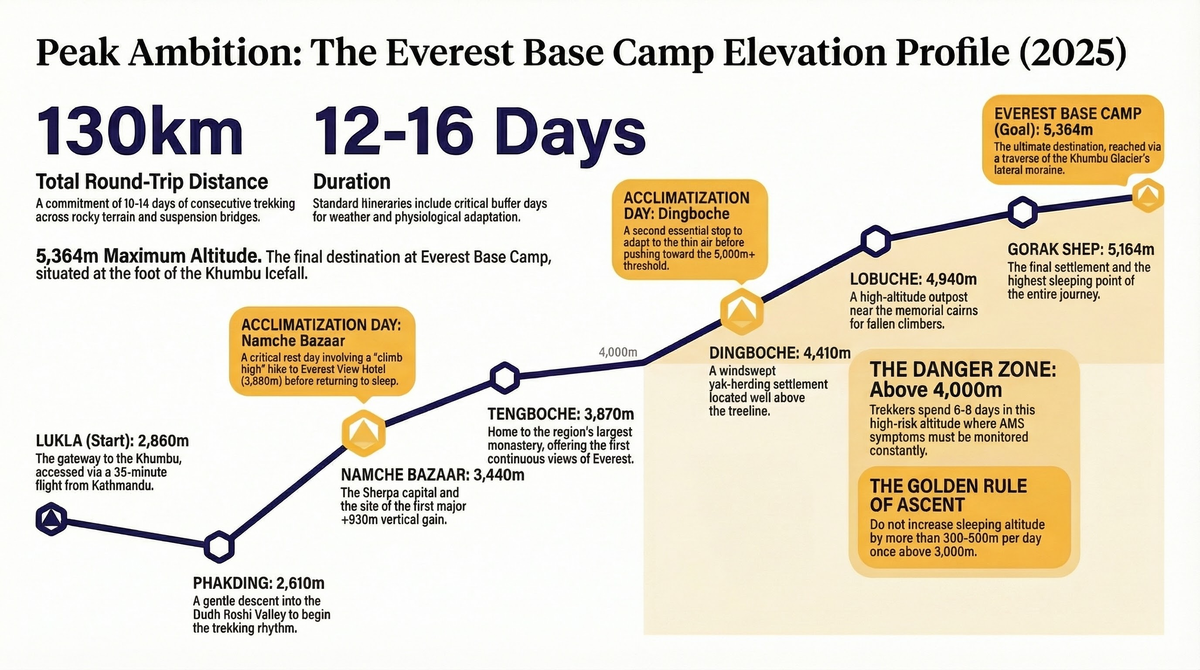
12-16 days
5,364m (17,598 ft) at Everest Base Camp
5,164m (16,942 ft) at Gorak Shep
130 km (80 miles) round trip
Moderate to Challenging
March-May (Spring), Sept-Nov (Autumn)
Khumbu Valley, Sagarmatha National Park
Lukla (2,860m)
TIMS + National Park + Local Municipality
Teahouse/Lodge throughout
Key Route Variants:
| Variant | Duration | Highlights | Best For |
|---|---|---|---|
| Classic EBC | 12-14 days | Lukla-Namche-EBC-Lukla | First-timers, moderate fitness |
| EBC + Kala Patthar | 13-15 days | Adds sunrise viewpoint at 5,545m | Photographers, panorama seekers |
| EBC + Gokyo Lakes | 16-18 days | Combines two valleys via Cho La Pass | Experienced trekkers, fewer crowds |
| Three Passes Trek | 18-21 days | Kongma La, Cho La, Renjo La passes | Advanced trekkers only |
| Helicopter Return | 10-12 days | Trek up, fly down from Gorak Shep | Limited time, budget flexibility |
Who This Route Is For
The Everest Base Camp trek suits a wide range of trekkers, but it demands honest self-assessment. This isn't a casual walk—it's a committed high-altitude journey that requires physical preparation, mental resilience, and respect for mountain conditions.
Ideal candidates:
- Physically active individuals who can walk 5-7 hours daily for 10+ consecutive days
- Those comfortable with basic accommodation (shared rooms, limited hot water)
- Trekkers who can commit to proper acclimatization schedules (no rushing)
- People with prior multi-day hiking experience (mandatory since April 2023, but helpful)
- Those prepared for cold temperatures (down to -15°C at higher camps)
May need to reconsider:
- Anyone with serious respiratory or cardiovascular conditions
- Those unable to commit to minimum 12-day itineraries
- Trekkers unwilling to turn back if altitude sickness symptoms emerge
- People expecting hotel-quality amenities throughout
Pro Tip
First-time high-altitude trekker? Consider a "warm-up" trek first. The Langtang Valley (4,984m max) or Annapurna Base Camp (4,130m max) provide excellent preparation for EBC's demands while being achievable in shorter timeframes.
Difficulty & Fitness Requirements
Understanding the Challenge
The EBC trek earns its "Moderate to Challenging" rating through a combination of factors:
- Altitude: You'll spend 6-8 days above 4,000m, with final days above 5,000m
- Duration: 10-14 days of consecutive trekking with limited rest days
- Terrain: Rocky trails, suspension bridges, steep ascents, and descents
- Weather: Unpredictable conditions, cold nights, potential snow
- Accommodation: Basic facilities, no heating, shared bathrooms
Altitude Difficulty Comparison
| Trek | Max Altitude | Days Above 4,000m | Altitude Difficulty |
|---|---|---|---|
| Poon Hill | 3,210m | 0 days | Low |
| Annapurna BC | 4,130m | 1-2 days | Moderate |
| Langtang | 4,984m | 2-3 days | Moderate-High |
| Everest BC | 5,364m | 6-8 days | High |
| Three Passes | 5,545m | 10+ days | Very High |
| Island Peak | 6,189m | 12+ days | Extreme |
Physical Fitness Requirements
Minimum fitness baseline:
- Walk 15-20 km on hilly terrain without exhaustion
- Climb 1,000m elevation gain in a single day comfortably
- Handle 5-7 hours of walking daily for multiple consecutive days
- Previous experience with multi-day hikes (3+ days) strongly recommended
Recommended training program (12-16 weeks before trek):
| Weeks | Cardio | Strength | Hiking |
|---|---|---|---|
| 1-4 | 30 min, 3x/week | Squats, lunges 2x/week | Weekend day hike (2-3 hrs) |
| 5-8 | 45 min, 4x/week | Add stairs, step-ups | Weekend hike (4-5 hrs) |
| 9-12 | 60 min, 4x/week | Weighted pack training | Back-to-back day hikes |
| 13-16 | Maintain intensity | Taper strength work | Multi-day backpacking trip |
Seasonal Difficulty Variations
The same route presents different challenges depending on when you trek:
| Season | Difficulty Modifier | Key Factors |
|---|---|---|
| Spring (Mar-May) | Standard | Warming temps, possible afternoon clouds, rhododendrons blooming |
| Pre-Monsoon (June) | +15% harder | Increasing rain, leeches at lower elevations, reduced visibility |
| Monsoon (July-Aug) | Not recommended | Trail washouts, flooding, dangerous conditions |
| Autumn (Sept-Nov) | Standard | Stable weather, best visibility, crowds at peak |
| Winter (Dec-Feb) | +25% harder | Extreme cold (-20°C), snow on trails, some lodges closed |
Complete 14-Day EBC Itinerary
This is our recommended standard itinerary, including two critical acclimatization days. Cutting these days significantly increases altitude sickness risk.
Day 1: Arrival in Kathmandu (1,400m)
- Arrive at Tribhuvan International Airport
- Transfer to hotel in Thamel or Boudha district
- Trek briefing with your agency (gear check, permits confirmation)
- Early dinner and rest (prepare for early departure)
Logistics:
- Airport pickup typically included by agencies
- Permit copies and TIMS registration confirmed
- Gear rental available in Thamel if needed
Day 2: Fly Kathmandu to Lukla, Trek to Phakding (2,610m)
- Flight time: 25-35 minutes (weather dependent)
- Trek duration: 3-4 hours
- Elevation change: -250m descent
The legendary flight to Lukla's Tenzing-Hillary Airport sets the tone for your adventure. After landing at one of the world's most challenging airports (short runway, mountain backdrop), you'll begin trekking immediately.
The trail descends gradually through pine forests, crossing several suspension bridges over the Dudh Koshi River. Phakding offers comfortable teahouses and serves as a gentle introduction to the trekking routine.
Information current as of January 2025.
Lukla
2,860m
Last ATM until Namche. Stock up on cash (NPR).
Phakding
2,610m
Quiet riverside village. Good place to adjust to trekking rhythm.
Day 3: Phakding to Namche Bazaar (3,440m)
- Trek duration: 5-6 hours
- Elevation gain: +830m
The most demanding day of the first section. After a gradual start, the trail steepens dramatically after Jorsale (the Sagarmatha National Park entrance checkpoint). The final 2-hour climb to Namche gains 600m and tests your lungs at altitude.
Key checkpoints:
- Monjo: TIMS and National Park permit check
- Jorsale: Second checkpoint (snacks available)
- Hillary Bridge: Famous suspension bridge crossing
First views of Everest (weather permitting) appear on the final climb to Namche.
Day 4: Namche Bazaar Acclimatization Day (3,440m)
- Day hike options: 4-5 hours
- Max altitude reached: ~3,900m
Critical for altitude adaptation. Namche is the Khumbu's largest settlement and the perfect place to acclimatize. The golden rule of acclimatization—"climb high, sleep low"—applies here.
Recommended acclimatization hikes:
- Everest View Hotel (3,880m): 2-hour round trip, stunning panorama
- Khumjung Village (3,790m): 3-hour loop, visit Hillary School
- Syangboche Airport (3,720m): Easy walk above town
Pro Tip
Don't skip the Namche acclimatization day even if you feel great. Acute Mountain Sickness (AMS) symptoms often appear 24-48 hours after rapid altitude gain. This rest day allows your body to produce more red blood cells and adjust to lower oxygen levels.
Day 5: Namche to Tengboche (3,870m)
- Trek duration: 5-6 hours
- Elevation change: +430m net (with descent in between)
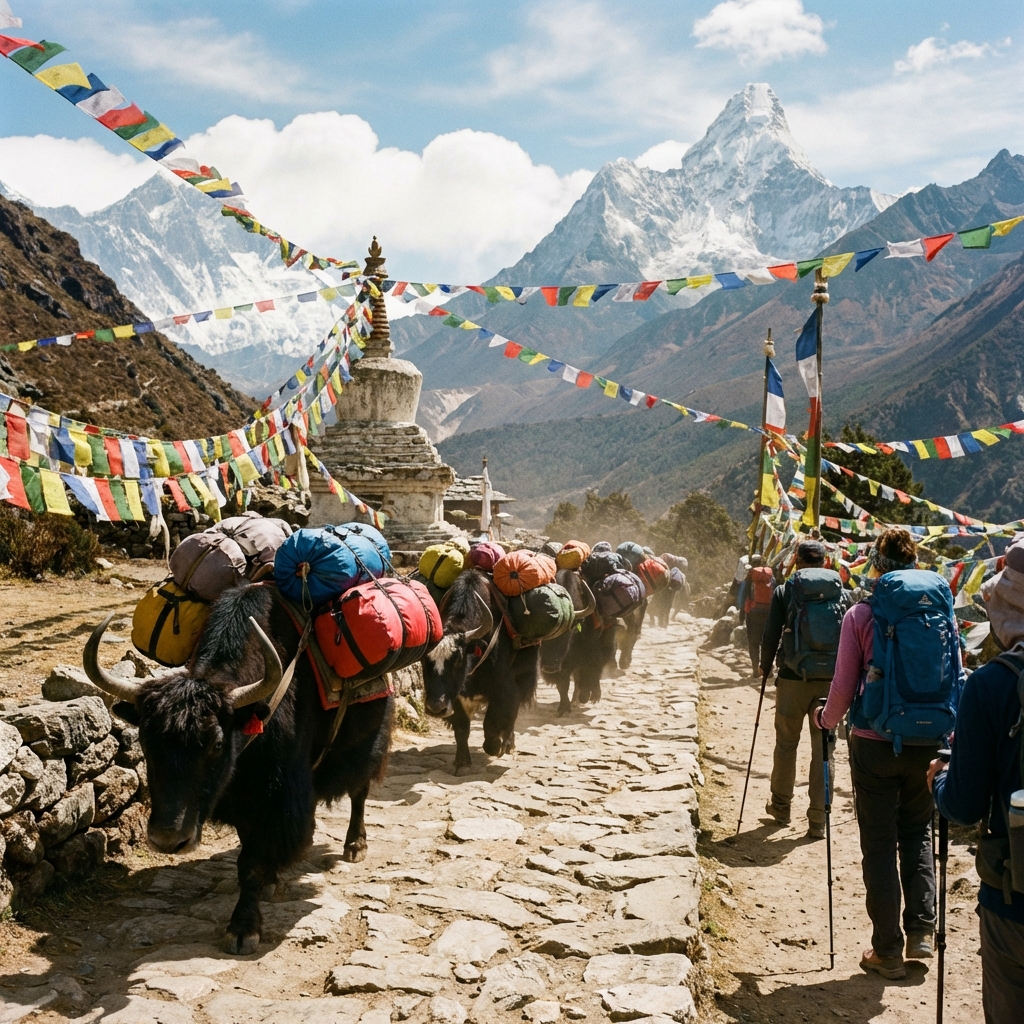
A scenic day with varied terrain. The trail contours high above the Dudh Koshi Valley, offering continuous views of Everest, Lhotse, and Ama Dablam. After descending to Phunki Tenga (3,250m), a steep 2-hour climb leads to Tengboche.
Highlight: Tengboche Monastery, the largest in the Khumbu region. Afternoon prayers (3-4 PM) are open to respectful visitors.
Day 6: Tengboche to Dingboche (4,410m)
- Trek duration: 5-6 hours
- Elevation gain: +540m
The landscape transforms as you climb above the treeline. The trail passes through Pangboche (home to Khumbu's oldest monastery) and crosses the Imja Khola to reach Dingboche, a yak-herding settlement in a wide, windswept valley.
Trail notes:
- Afternoon winds common—start early
- Spectacular views of Island Peak and Ama Dablam
- Last significant village before high camps
Day 7: Dingboche Acclimatization Day (4,410m)
- Day hike: 3-4 hours
- Max altitude reached: ~4,800m
Second critical acclimatization day. At this altitude, you're in the "risk zone" for AMS, and proper acclimatization becomes non-negotiable.
Recommended hike: Climb the ridge above Dingboche toward Nangkartshang Peak (5,083m). Most trekkers reach the viewpoint at approximately 4,800m before returning. This hike provides stunning views of Makalu (8,485m) and the surrounding peaks.
Day 8: Dingboche to Lobuche (4,940m)
- Trek duration: 4-5 hours
- Elevation gain: +530m
A shorter but higher day. The trail passes the memorial cairns at Dugla Pass (4,620m), honoring climbers and Sherpas who lost their lives on Everest. The emotional weight of this place reminds trekkers of the mountain's demands.
Lobuche is a small settlement with basic lodges. Expect colder temperatures and simpler facilities.
Day 9: Lobuche to Gorak Shep, Trek to Everest Base Camp (5,364m)
- Trek duration: 6-8 hours total
- Highest point: 5,364m (EBC)
- Sleep altitude: 5,164m (Gorak Shep)
The day you've been preparing for. An early start takes you across the Khumbu Glacier's lateral moraine to Gorak Shep, the final settlement. After lunch and rest, you'll make the 2-3 hour round trip to Everest Base Camp.
At Base Camp:
- During climbing season (April-May), the camp bustles with expedition tents
- Off-season, the site is quieter but equally impressive
- The Khumbu Icefall looms above, leading toward the summit
- Photo opportunities at the iconic Base Camp sign
Important: Return to Gorak Shep before dark. The terrain is unstable, and temperatures plummet after sunset.
Day 10: Kala Patthar (5,545m) and Descent to Pheriche (4,280m)
- Trek duration: 7-8 hours
- Highest point: 5,545m (optional)
- Elevation change: -1,360m net
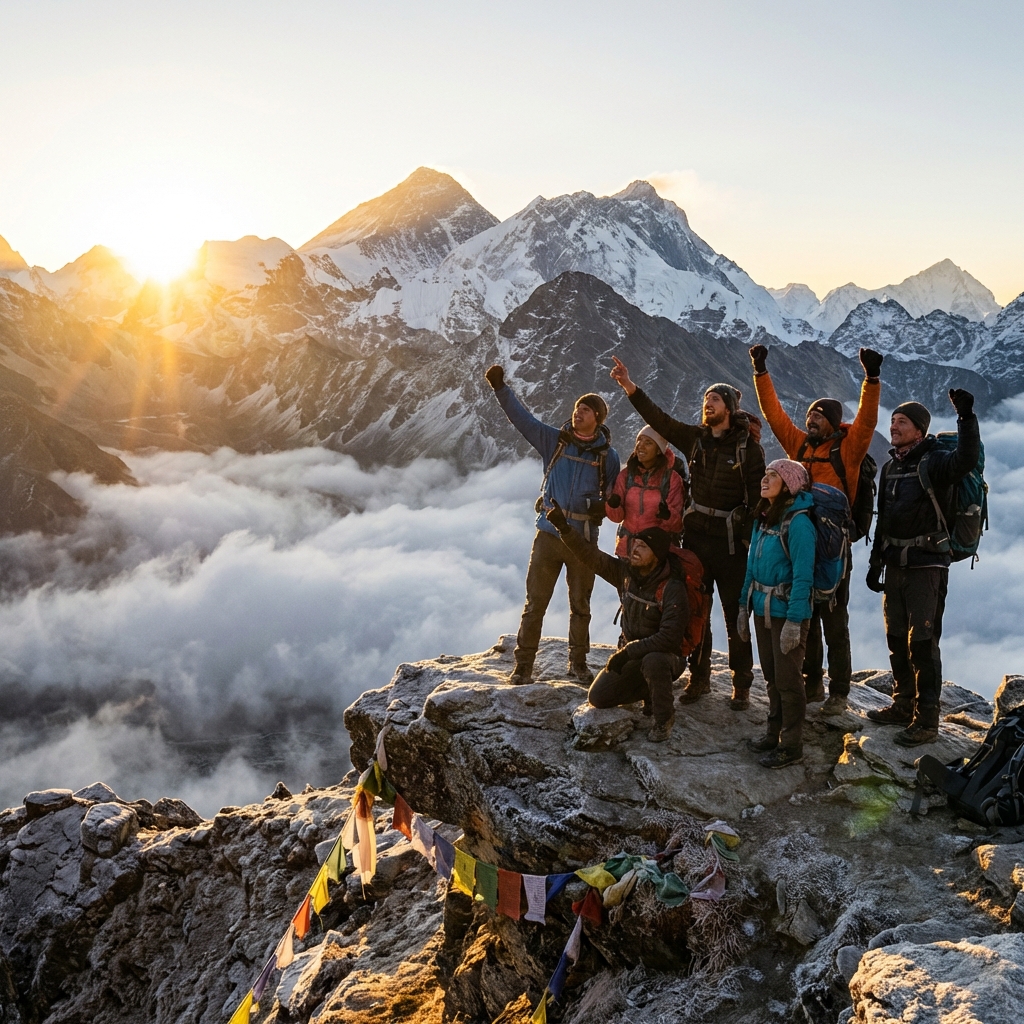
Pre-dawn start (4:00-4:30 AM) for the climb to Kala Patthar, the trek's highest viewpoint. On clear mornings, sunrise illuminates Everest, Nuptse, Changtse, and the Khumbu Icefall in golden light.
After descending to Gorak Shep for breakfast, continue down to Pheriche, an alternative to Dingboche with a medical clinic and slightly different scenery.
Pro Tip
The Kala Patthar climb is optional but highly recommended. Base Camp sits below Everest's south face and doesn't offer summit views—Kala Patthar is where you see the mountain in its full glory. Start early to beat the clouds that typically roll in by mid-morning.
Day 11: Pheriche to Namche Bazaar (3,440m)
- Trek duration: 6-7 hours
- Elevation change: -840m
A long descent day, retracing your steps through Tengboche and Phunki Tenga. The lower altitude brings warmer temperatures and denser vegetation. Your body will appreciate the increased oxygen.
Most trekkers feel a mix of accomplishment and reluctance as the journey nears its end.
Day 12: Namche Bazaar to Lukla (2,860m)
- Trek duration: 6-7 hours
- Elevation change: -580m
Final trekking day. The familiar trail back to Lukla feels different now—you've been to Base Camp, and the journey transforms into reflection and celebration.
Evening in Lukla:
- Celebratory dinner with your guide and porters
- Tip distribution (customary and expected)
- Early sleep before morning flight
Day 13: Fly Lukla to Kathmandu
- Flight time: 25-35 minutes (highly weather dependent)
Flight contingency: Weather delays are common. Have at least one buffer day in your itinerary. If the flight is canceled:
- Wait for next available flight (often the same day when weather clears)
- Helicopter option ($400-500 USD, seats limited)
- Overland route via Salleri-Jiri if weather remains poor (2+ extra days)
Day 14: Kathmandu Departure Day
- Buffer day for flight delays
- Hotel checkout and airport transfer
- Alternatively: Kathmandu sightseeing (Boudhanath, Pashupatinath, Durbar Square)
Best Season for EBC Trek
| Month | High | Low | Conditions | Crowds | Notes |
|---|---|---|---|---|---|
| January | -2°C | -17°C | 15mm | Very Low | Extreme cold, some lodges closed, clear skies |
| February | 1°C | -15°C | 20mm | Very Low | Still cold but improving, quieter trails |
| MarchBest | 5°C | -10°C | 30mm | Moderate | Spring begins, rhododendrons blooming lower |
| AprilBest | 8°C | -5°C | 50mm | High | Peak spring season, expedition activity at EBC |
| MayBest | 10°C | -3°C | 70mm | High | Warmest month, summit season at Everest |
| June | 8°C | 0°C | 150mm | Low | Pre-monsoon, increasing rain, reduced visibility |
| July | 7°C | 2°C | 280mm | Very Low | Monsoon peak, trail conditions poor |
| August | 8°C | 2°C | 250mm | Very Low | Monsoon continues, leeches at lower elevations |
| SeptemberBest | 8°C | -2°C | 120mm | Moderate | Monsoon ending, clearing skies |
| OctoberBest | 7°C | -8°C | 30mm | Very High | Peak autumn, best visibility, busiest month |
| NovemberBest | 3°C | -12°C | 15mm | High | Excellent weather, cooling temperatures |
| December | 0°C | -15°C | 10mm | Low | Cold but clear, fewer trekkers |
Prime Trekking Windows
Autumn (September-November): The most popular period. Post-monsoon conditions bring clear skies, stable weather, and the best mountain views. October is the busiest month—expect crowded trails and full teahouses, but unparalleled visibility.
Spring (March-May): Warmer temperatures and blooming rhododendrons below 4,000m. April-May coincides with Everest climbing season, adding expedition energy to Base Camp visits. Afternoon clouds are more common than autumn. Still deciding when to go? Compare the two windows in our EBC autumn vs spring guide.
Shoulder and Off-Season Considerations
Early December / Late February: Experienced trekkers with cold-weather gear can find excellent conditions. Fewer crowds, clear skies, but temperatures at high camps drop to -20°C. Some lodges close.
Monsoon (June-August): Not recommended. Trails become slippery and dangerous, leeches appear at lower elevations, and mountain views disappear behind persistent clouds.
Permits & Regulations (2026 Update)
Required Permits
| Permit | Cost (2025) | Where to Obtain | Validity |
|---|---|---|---|
| TIMS Card (Trekkers' Information Management System) | NPR 2,000 | Nepal Tourism Board (Kathmandu) | Duration of trek |
| Sagarmatha National Park Entry Permit | NPR 3,000 (~$22 USD) | Sagarmatha National Park office or Kathmandu | Duration of trek |
| Khumbu Pasang Lhamu Rural Municipality Fee | NPR 2,000 (~$15 USD) | Local checkpoints | Duration of trek |
Total permit cost: Approximately $37-45 USD per person
Pro Tip
TIMS cards became NPR 2,000 for individual trekkers in 2026, but remain mandatory for registration and tracking purposes. Agencies typically handle all permit arrangements—verify this is included in your package cost.
2026 Regulation Updates
Nepal's Department of Tourism introduced new guidelines effective from 2026:
- Guide requirement for solo trekkers: Foreign nationals must trek with a licensed guide or porter—true independent trekking is no longer permitted (mandatory guide rule in force since April 2023)
- GPS tracking: Some agencies provide GPS devices; emergency locator beacons recommended
- Insurance verification: Trekking agencies increasingly verify helicopter evacuation coverage before departure
For detailed permit requirements, see our Nepal Trekking Permits Guide.
Typical Costs & Inclusions
Budget Framework (2026)
| Budget Level | Cost Range | What It Includes |
|---|---|---|
| Budget | $900-1,200 | Basic agency, shared guide, budget lodges, no flight cushion |
| Mid-Range | $1,500-2,200 | Reputable agency, experienced guide, better lodges, permits included |
| Premium | $2,500-4,000+ | Top-rated agency, private guide, best lodges, full porter support, helicopter backup |
What Should Be Included (Standard Package)
Expect these inclusions:
- All permits and fees
- Domestic flights (Kathmandu-Lukla-Kathmandu)
- Licensed trekking guide
- Accommodation (teahouse/lodge)
- Meals during trek (breakfast, lunch, dinner)
- Porter support (15-20 kg per porter, typically 1 porter per 2 trekkers)
Typical exclusions (budget for separately):
- International flights to/from Kathmandu
- Travel insurance (mandatory, $100-200)
- Kathmandu accommodation
- Meals in Kathmandu
- Hot showers and charging ($3-5 per use at high camps)
- Tips for guide and porters ($150-250 recommended)
- Personal gear
- Emergency helicopter evacuation (covered by insurance)
For detailed cost analysis, see our EBC Trek Cost Breakdown.
Hidden Cost Alerts
Watch for these in agency quotes:
- "Meals included" but only breakfast (verify three meals)
- Flight delays not covered (some agencies charge extra for rebooking)
- Porter support capped too low (15 kg per person is standard; 10 kg leaves you carrying more)
- Tips described as "optional" but culturally expected
Everest Base Camp Trek Departures & Booking 2026
The EBC trek runs on fixed and private departures throughout the two prime windows. For the 2026 season, plan around these dates:
- Spring 2026: Departures from early March through late May, with April–May overlapping the Everest climbing season at Base Camp.
- Autumn 2026: Departures from mid-September through late November, with October offering the clearest skies and busiest trails.
For peak-season departures (October–November and April–May), reserve your spot 2–3 months ahead to lock in preferred guides, flight slots, and teahouse rooms. Shoulder-season departures (early December, late February) allow more last-minute flexibility but require cold-weather gear.
Joining a group vs. private departure
Group departures (typically 2–12 trekkers) lower your per-person cost, while private departures let you set the pace and add acclimatization days. Either way, book with a verified local agency so your guide, porter, and flight logistics are handled by people who know the Khumbu.
Ready to plan your 2026 EBC trek?
Compare verified local agencies and get transparent quotes for your Everest Base Camp trek dates and group size.
Safety Risks & Altitude Protocol
Primary Risk: Acute Mountain Sickness (AMS)
At EBC altitudes, reduced oxygen pressure affects everyone. The key is recognizing symptoms early and responding appropriately.
AMS Symptoms (Lake Louise Criteria):
| Severity | Symptoms | Required Action |
|---|---|---|
| Mild | Headache, fatigue, reduced appetite, mild nausea | Rest, hydrate, monitor overnight |
| Moderate | Severe headache not relieved by medication, vomiting, significant fatigue | Do NOT ascend next day; consider descent |
| Severe | Confusion, ataxia (difficulty walking straight), severe breathlessness at rest | IMMEDIATE DESCENT required; medical emergency |
Golden Rules:
- Ascend no more than 300-500m sleeping altitude per day above 3,000m
- Include acclimatization days at Namche (3,440m) and Dingboche (4,410m)
- "Climb high, sleep low" during acclimatization hikes
- Hydrate constantly (3-4 liters per day)
- Avoid alcohol and sleeping pills above 3,000m
- If symptoms worsen, descend immediately
Secondary Risks
| Risk | Mitigation |
|---|---|
| Weather exposure | Carry layers, rain gear, sun protection; check forecasts daily |
| Falls on trail | Use trekking poles; take care on suspension bridges and rocky sections |
| Gastrointestinal illness | Drink only treated water; eat at busy teahouses; carry hand sanitizer |
| Hypothermia | Proper gear; don't underestimate evening temperatures |
| Khumbu cough | Common dry cough at altitude; hydrate, use throat lozenges, wear buff |
Himalayan Rescue Association (Pheriche)
Altitude medicine clinic
Nepal Tourism Police
24/7 emergency line
CIWEC Clinic (Kathmandu)
Western-standard medical care
Helicopter evacuation cost: $3,000-5,000 USD (covered by travel insurance)
Verify your policy covers helicopter evacuation to 6,000m altitude. Standard travel insurance often caps at lower elevations.
For comprehensive altitude safety information, see our Altitude Sickness Prevention Guide.
What to Pack for EBC Trek
Essential Gear Checklist
Clothing:
- Base layers (moisture-wicking, 2-3 sets)
- Insulating mid-layer (fleece or down jacket)
- Outer shell (waterproof/windproof jacket and pants)
- Down jacket (essential above 4,000m)
- Trekking pants (convertible recommended)
- Warm hat and sun hat
- Gloves (liner + insulated pair)
- Warm socks (4-5 pairs, wool/synthetic blend)
- Trekking boots (broken in, waterproof, ankle support)
- Camp shoes/sandals
Gear:
- Backpack (30-40L daypack if using porter; 50-60L if carrying your own)
- Sleeping bag (-15°C to -20°C rated)
- Trekking poles (highly recommended)
- Headlamp with spare batteries
- Sunglasses (Category 4, side shields recommended)
- Water bottles (2x 1L) + purification tablets or SteriPen
- First aid kit (including AMS medication if prescribed)
Documents:
- Passport (with 6+ months validity)
- Permit copies (agency should provide)
- Travel insurance documentation
- Emergency contact information
- Cash (NPR and small USD bills for tips)
Pro Tip
Gear rental is available in Kathmandu's Thamel district at reasonable rates. Sleeping bags ($1-2/day), down jackets ($2-3/day), and trekking poles ($1/day) can be rented if you prefer not to invest in cold-weather gear.
Choosing a Verified Trekking Agency
Why Agency Selection Matters
The difference between a mediocre and excellent EBC experience often comes down to your agency's competence. At 5,000m+, guide experience, safety protocols, and logistical reliability become critical.
Key factors to evaluate:
-
Guide experience and training
- Certified by Nepal Government (TG license)?
- First aid / wilderness first responder trained?
- Years of experience on this specific route?
-
Safety protocols
- Written acclimatization policy?
- Clear AMS response procedures?
- Communication equipment (satellite phone/inReach)?
- Evacuation plan and relationships with helicopter services?
-
Pricing transparency
- Itemized inclusions/exclusions?
- Flight delay policy?
- Tipping expectations clarified upfront?
-
Porter welfare ethics
- Load limits enforced (max 25 kg per porter)?
- Porter insurance provided?
- Proper equipment for porters?
-
Verification status
- Licensed with Nepal Tourism Board?
- TAAN (Trekking Agencies' Association of Nepal) member?
- Verifiable reviews from multiple sources?
Questions to Ask Before Booking
- What is your guide-to-client ratio for this trek?
- How do you handle altitude sickness situations?
- What communication devices do your guides carry?
- What happens if Lukla flights are delayed?
- What is your porter load policy?
- Can I speak with previous clients?
For agency comparisons, see our Compare EBC Trekking Agencies page.
Frequently Asked Questions
Fitness & Difficulty
How fit do I need to be for EBC trek? You should be able to walk 15-20 km on hilly terrain and handle 5-7 hours of daily trekking for 10+ consecutive days. Prior multi-day hiking experience is helpful but mandatory since April 2023. Most reasonably fit adults who train properly can complete the trek.
Is the EBC trek harder than Kilimanjaro? Different challenges. Kilimanjaro is shorter (5-7 days) but involves a summit push to 5,895m. EBC is longer (12-14 days) with maximum altitude of 5,364m but more consistent high-altitude exposure. Both require serious acclimatization attention.
Can beginners do the EBC trek? Yes, with proper preparation. You don't need technical climbing skills—just endurance, determination, and willingness to commit to acclimatization schedules. Start training 3-4 months before your trek.
What is the success rate for EBC trek? Approximately 85-90% of trekkers who follow proper acclimatization schedules reach Base Camp. Most failures result from AMS symptoms, pre-existing health conditions, or inadequate fitness preparation.
Logistics & Planning
Do I need a guide for EBC trek? As of 2026, Nepal requires foreign trekkers to have a licensed guide or porter. Solo trekking is no longer permitted. Beyond the regulation, guides provide safety, local knowledge, and logistical support that significantly enhance the experience.
How far in advance should I book? For peak seasons (October-November, April-May), book 2-3 months ahead to secure preferred agencies and lodge reservations. Shoulder seasons allow more flexibility.
What if Lukla flights are canceled? Weather delays are common. Build at least one buffer day into your itinerary. Options if grounded: wait for next flight (often same day), take helicopter ($400-500), or trek out overland (adds 2-3 days).
Is WiFi available on the trek? Limited. Most teahouses offer WiFi for a fee ($2-5), but speeds are slow and connections unreliable above Namche. Don't rely on constant connectivity.
Health & Safety
Do I need altitude medication? Discuss with your doctor. Acetazolamide (Diamox) is commonly prescribed as a preventive measure, typically 125-250mg twice daily starting 1-2 days before ascent. It doesn't mask symptoms—you'll still know if you're getting AMS.
Can I trek EBC with asthma? Many asthmatic trekkers complete EBC successfully, but consult your doctor first. Bring adequate medication, and be aware that cold, dry air at altitude may trigger symptoms.
Is the water safe to drink? Never drink untreated water. Use purification tablets (chlorine or iodine), a SteriPen, or buy bottled water (though bottles create waste). Avoid ice in drinks.
What vaccinations do I need? Consult a travel medicine specialist. Typically recommended: Hepatitis A, Typhoid, routine vaccinations (MMR, Tetanus). Consider Hepatitis B, Japanese Encephalitis, and Rabies depending on your activities.
Budget & Money
How much cash should I bring? $300-500 USD equivalent in Nepali Rupees covers extras (hot showers, charging, snacks, drinks, souvenirs). ATMs available only in Lukla and Namche; bring enough from Kathmandu.
How much should I tip guides and porters? Guidelines: $8-$15 /day for guides, $10-15/day for porters. For a 14-day trek with one guide and one porter, budget $250-350 total for tips.
Are credit cards accepted? Rarely above Lukla. Bring cash in NPR. Small USD bills useful for emergencies.
Weather & Timing
What temperatures should I expect? At EBC/Gorak Shep (5,164m) in peak season: daytime highs around 5-10°C, nighttime lows -10°C to -20°C. Lower elevations (Namche) significantly warmer: 10-15°C days, 0-5°C nights.
Can I trek EBC in winter? Possible for experienced trekkers with proper cold-weather gear. Temperatures at high camps drop to -25°C. Some lodges close. Clear skies but extreme conditions.
Is monsoon trekking possible? Not recommended. Trails become slippery and dangerous, leeches appear below 3,000m, and mountain views disappear. Rain averages 250-280mm/month July-August.
Route Variations
What's the difference between EBC and Kala Patthar? EBC (5,364m) is the trekking destination at the foot of the Khumbu Icefall. Kala Patthar (5,545m) is a nearby viewpoint offering superior Everest views. Most itineraries include both.
Is the Three Passes Trek harder than EBC? Significantly harder. Three Passes adds Kongma La (5,535m), Cho La (5,420m), and Renjo La (5,360m) passes. Requires 18-21 days, excellent fitness, and often some ice/snow traversing.
Can I combine EBC with Gokyo Lakes? Yes, via the Cho La Pass (5,420m). This 16-18 day itinerary is more challenging but rewards with Gokyo Ri views and beautiful turquoise lakes. Requires good fitness and weather windows for the pass crossing.
2026 Trek Questions
Bridge Block: Choosing a Verified Operator
- Compare verified operators for Everest Base Camp
- Permits required for EBC trek
- Safety standards we verify
- Transparent pricing standards
- Porter welfare standards
- See verified agencies for Everest Base Camp
Plan Your EBC Trek
Related Routes
- Gokyo Lakes Trek — Alternative Khumbu experience with fewer crowds
- Everest Three Passes Trek — Advanced circuit combining multiple high passes
- Annapurna Base Camp Trek — Lower altitude alternative with stunning scenery
- Langtang Valley Trek — Closer to Kathmandu, excellent acclimatization precursor
- Back to Everest-Khumbu Region Overview
This Everest base camp trek 2026 guide is maintained by the Trek and Tour Nepal editorial team with input from verified local agencies and Khumbu-based guides. Last updated June 2026. For corrections or updates, contact our editorial team.
The Route
Interactive Route Map
Explore the trek on a topographic map. Tap a waypoint for elevation, accommodation, and day-by-day detail. Scroll to zoom.
Loading interactive map…


