ABC vs Everest (EBC): Which Base Camp Trek to Choose
ABC vs Everest in one line: Annapurna Base Camp (ABC) tops out at 4,130m over 10-14 days for $500-2,500 and suits first-timers; Everest Base Camp (EBC) reaches 5,364m over 12-16 days for $900-4,000, needs a Lukla flight, and carries far higher altitude-sickness risk. Choose ABC for value, lower risk, and ecological variety; choose EBC for the world's most iconic trek.
Choosing between Everest Base Camp (EBC) and Annapurna Base Camp (ABC) is the most common dilemma facing first-time Nepal trekkers. Both journeys deliver world-class Himalayan experiences, but they cater to different preferences, fitness levels, and expectations. This isn't a matter of "better" or "worse"—it's about finding the right match for your goals, abilities, and available time.
This comprehensive ABC vs EBC comparison cuts through the marketing hype and provides data-driven analysis across 12 critical decision factors for the 2026 trekking season. Whether you prioritize lower costs, reduced altitude risk, cultural immersion, or the ultimate bucket-list credential, this guide helps you make an informed choice based on verified information from agencies, trekkers, and local experts.
The short answer: ABC suits first-timers, those with 10-14 days, tighter budgets, and preference for ecological diversity. EBC suits experienced trekkers (or determined beginners), those with 14+ days, higher budgets, and desire for the world's most iconic trek. Read on for the detailed breakdown.
Quick Comparison Table
| Route | Duration | Max Altitude | Difficulty | Permits | Teahouses | Crowds |
|---|---|---|---|---|---|---|
| Everest Base Camp | 12-16 days | 5,364m (Kala Patthar 5,545m) | Moderate-Challenging | $45-50 | Excellent | High (Peak Season) |
| Annapurna Base Camp | 10-14 days | 4,130m | Moderate | $23 (ACAP only) | Excellent | Moderate |
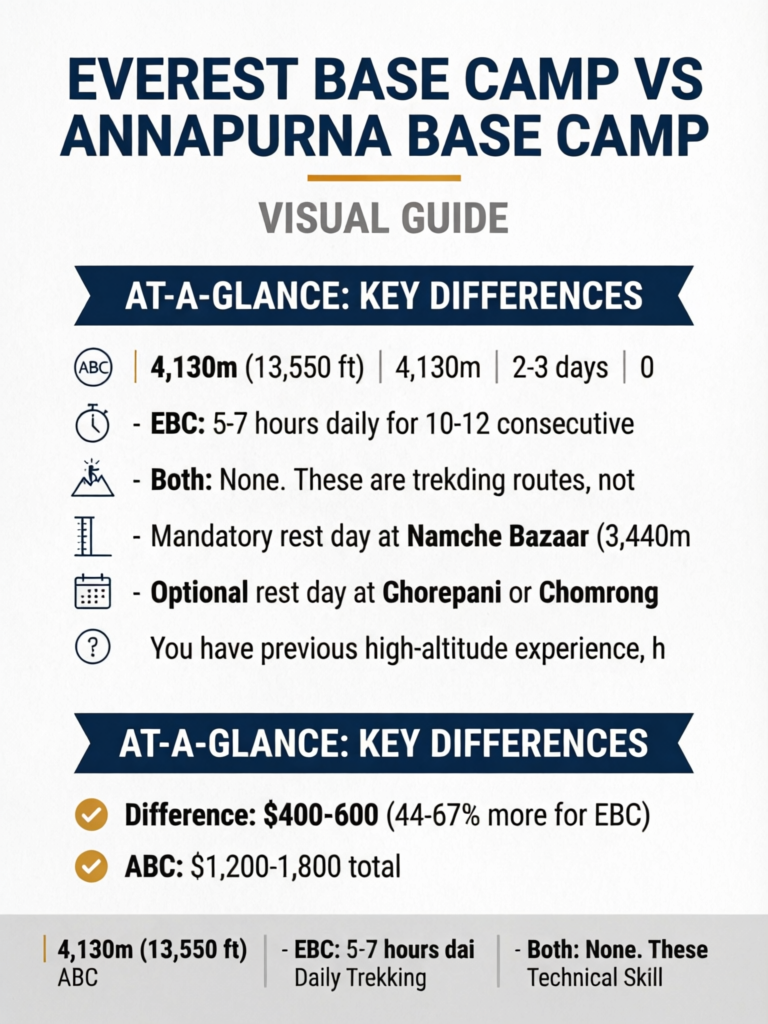
At-a-Glance: Key Differences
1,234m higher at EBC (5,364m vs 4,130m)
EBC 30-50% more expensive than ABC
EBC needs 2-4 extra days minimum
EBC requires Lukla flights ($215-400); ABC doesn't
Significantly higher at EBC
ABC offers more varied ecosystems
EBC: Sherpa culture; ABC: Gurung/Magar culture
EBC busier in October; ABC more spread out
EBC: High alpine, rocky; ABC: Jungle to glacier
ABC more beginner-friendly
1. Difficulty Comparison: The Altitude Factor
The single biggest difference between these treks is altitude exposure, which drives most of the difficulty variation.
Maximum Altitude
| Trek | Base Camp Altitude | Highest Point | Days Above 4,000m | Days Above 5,000m |
|---|---|---|---|---|
| EBC | 5,364m (17,598 ft) | 5,545m (Kala Patthar) | 6-8 days | 2-3 days |
| ABC | 4,130m (13,550 ft) | 4,130m | 2-3 days | 0 days |
Altitude sickness risk: The 1,234-meter difference in maximum altitude is substantial. EBC's highest point (Kala Patthar at 5,545m) sits 1,514 meters higher than ABC. This translates directly to significantly increased AMS (Acute Mountain Sickness) risk at EBC.
Understanding the Altitude Risk Gap
At ABC's maximum altitude (4,130m), approximately 10-15% of trekkers experience mild AMS symptoms. At EBC's maximum altitude (5,364m), that figure rises to 40-50%, with 5-10% experiencing moderate to severe symptoms requiring descent. The difference isn't trivial—it's the primary factor determining which trek suits your physiology and risk tolerance.
Physical Difficulty
Daily Trekking Hours:
- EBC: 5-7 hours daily for 10-12 consecutive days
- ABC: 4-6 hours daily for 8-10 consecutive days
Terrain Difficulty:
- EBC: Rocky, exposed high-altitude trails; multiple suspension bridges; steep ascents on moraines
- ABC: Stone staircases (3,300+ steps); varied terrain from subtropical to alpine; well-maintained paths
Technical Skills Required:
- Both: None. These are trekking routes, not mountaineering expeditions
- Both: Basic fitness and determination are sufficient
- Neither: Requires climbing equipment or rope work
Acclimatization Demands
EBC Acclimatization Schedule:
- Mandatory rest day at Namche Bazaar (3,440m)
- Mandatory rest day at Dingboche (4,410m)
- "Climb high, sleep low" protocol essential above 4,000m
- Total trek cannot safely be rushed below 12 days
ABC Acclimatization Schedule:
- Optional rest day at Ghorepani or Chomrong
- Gradual altitude gain allows natural adjustment
- Only 1-2 nights above 3,500m before summit push
- Can be safely completed in 10 days by fit trekkers
Pro Tip
First-time high-altitude trekkers: ABC's lower maximum altitude (4,130m vs 5,364m) provides a significantly larger safety margin. You'll still experience altitude effects, but the consequences of poor acclimatization are less severe, and descent is faster if needed.
Difficulty Verdict
Choose EBC if: You have previous high-altitude experience, handle altitude well, commit to proper acclimatization, and want the challenge of Nepal's higher trek.
Choose ABC if: You're new to high altitude, concerned about AMS risk, have limited time for acclimatization, or prefer moderate altitude with lower health risk.
2. Cost Comparison: The Lukla Flight Factor
Cost is the second-largest differentiator. EBC is consistently 30-50% more expensive than ABC, primarily due to flight costs.
Full Cost Breakdown
| Cost Element | Annapurna Base Camp | Everest Base Camp |
|---|---|---|
| Permits | $23 (ACAP) + TIMS (NPR 2,000 for foreigners) | $37-45 (SNP + TIMS + Municipality) |
| Flights | None required (optional $100 Pokhara flight) | $350-400 roundtrip Lukla flights (mandatory) |
| Transportation | $15-50 bus/jeep Kathmandu-Pokhara-Nayapul | Included in flight; $10-20 Kathmandu transfers |
| Teahouse costs/night | $5-25 (lower at low altitude) | $10-30 (higher throughout) |
| Meals per day | $12-35 | $18-50 |
| Hot showers | $2-5 above 3,000m | $3-7 above 4,000m |
| Guide (10-14 days) | $250-490 | $300-560 (12-16 days) |
| Porter (10-14 days) | $200-350 | $240-400 (12-16 days) |
| Duration | 10-14 days total | 12-16 days total |
| TOTAL (guided package) | $1,200-2,500 | $1,500-4,000 |
| TOTAL (independent) | $500-900 | $900-1,500 |
Why EBC Costs More
1. Lukla Flights ($215-400 roundtrip) The Tenzing-Hillary Airport at Lukla (2,860m) is accessible only by air. This single cost factor accounts for most of the price difference. ABC starts from Nayapul, accessible by road from Pokhara.
2. Higher Altitude Logistics Everything above 4,000m costs more—food, accommodation, fuel for heating. EBC spends 6-8 days in this zone; ABC spends 2-3 days.
3. Longer Duration EBC's minimum 12-day trek (vs. ABC's 10 days) adds 2-4 days of guide fees, accommodation, and meals.
4. Flight Delay Buffers Lukla weather delays are common. Smart trekkers budget 1-2 extra days in Kathmandu ($50-100/day), adding hidden costs.
Budget Comparison by Category
Budget Trekker (minimal comfort):
- ABC: $500-900 total
- EBC: $900-1,500 total
- Difference: $400-600 (44-67% more for EBC)
Mid-Range Trekker (standard package):
- ABC: $1,200-1,800 total
- EBC: $1,800-2,800 total
- Difference: $600-1,000 (50-55% more for EBC)
Premium Trekker (comfort-focused):
- ABC: $2,000-2,500 total
- EBC: $3,000-4,000 total
- Difference: $1,000-1,500 (50% more for EBC)
The ABC Budget Advantage
If you're working with a tight budget, ABC delivers 90% of the Himalayan base camp experience for 50-70% of EBC's cost. The savings come primarily from avoiding Lukla flights and shorter high-altitude exposure.
Cost Verdict
Choose EBC if: Budget is flexible ($1,500-4,000 total), you accept higher costs for the iconic experience, and flight expenses don't concern you.
Choose ABC if: Budget is limited ($500-2,500 total), you want maximum value for money, or you prefer putting savings toward other Nepal experiences.
For line-by-line numbers, see our ABC trek cost breakdown and EBC trek cost breakdown.
3. Scenery & Highlights: Rocky Giants vs Ecological Journey
Both treks deliver spectacular Himalayan scenery, but the style differs dramatically.
Everest Base Camp: High-Altitude Grandeur
What you'll see:
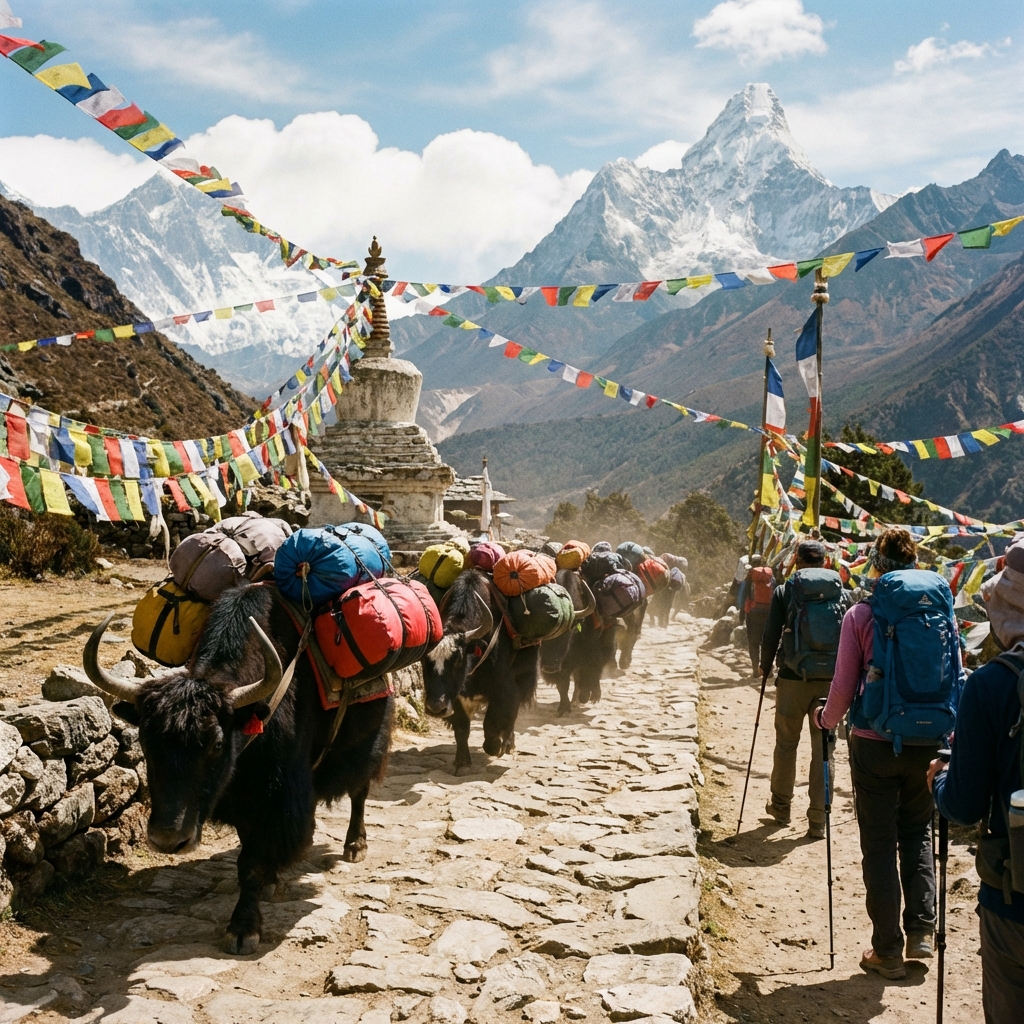
- The Everest massif: Everest (8,849m), Lhotse (8,516m), Nuptse (7,861m), Ama Dablam (6,812m)
- Khumbu Icefall: The legendary route to Everest's summit, visible from Base Camp
- High alpine desert: Stark, rocky terrain above treeline (most of the trek)
- Glacial moraines: Walking on ancient glacial debris fields
- Sherpa villages: Namche Bazaar, Tengboche, Dingboche with traditional stone architecture
- Tengboche Monastery: The Khumbu's largest monastery with Everest backdrop
- Suspension bridges: Crossing the Dudh Koshi River gorge on spectacular high bridges
Photographic highlights:
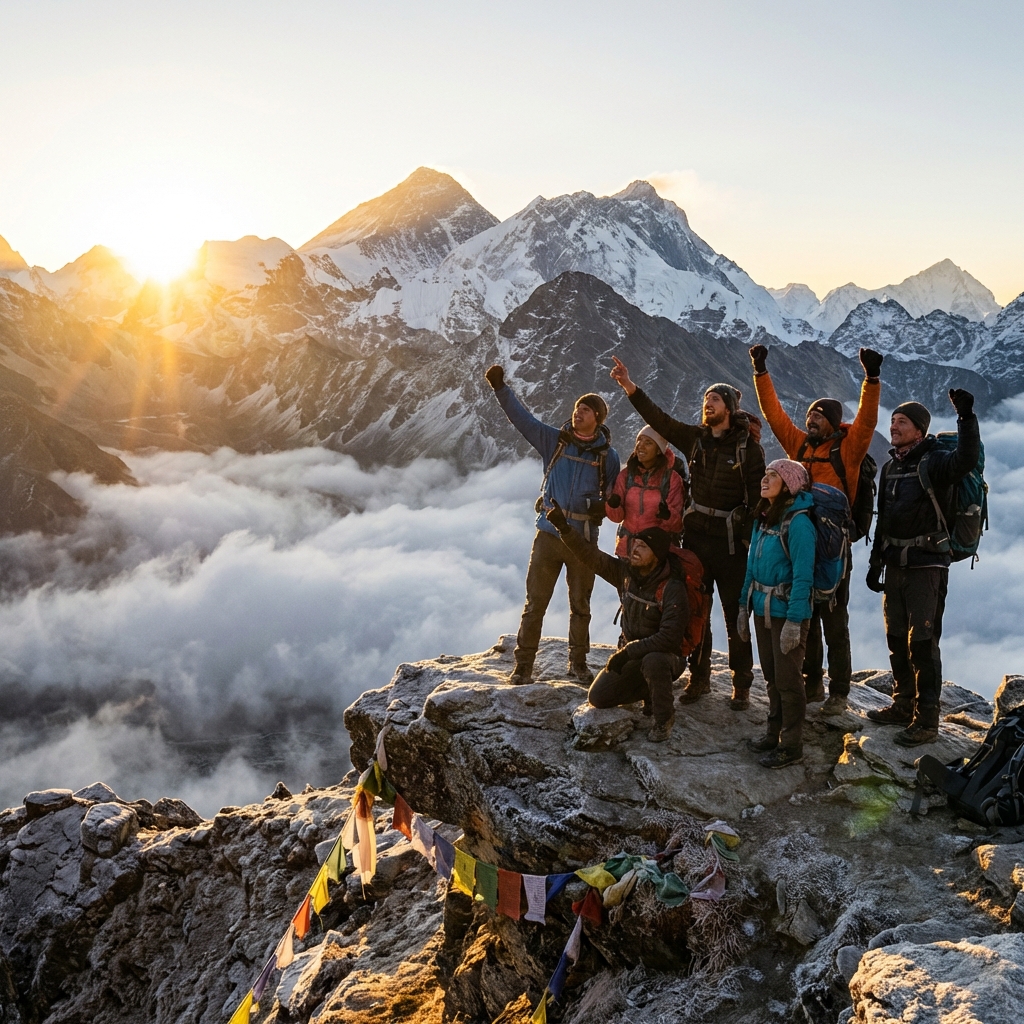
- Sunrise from Kala Patthar (5,545m) with Everest's summit pyramid
- Ama Dablam's perfect pyramid shape (often called "Matterhorn of the Himalayas")
- Hillary Bridge with Everest visible above
- Expedition tents at Base Camp during climbing season (April-May)
The EBC experience: Dominated by high-altitude alpine scenery. Rugged, rocky, and awe-inspiring in its starkness. The scale of the mountains is overwhelming—you're walking through the planet's highest terrain.
Annapurna Base Camp: Ecological Diversity Showcase
What you'll see:
- Annapurna Sanctuary amphitheater: Surrounded 360° by giants—Annapurna I (8,091m), Machapuchare (6,993m), Hiunchuli (6,441m), Gangapurna (7,455m)
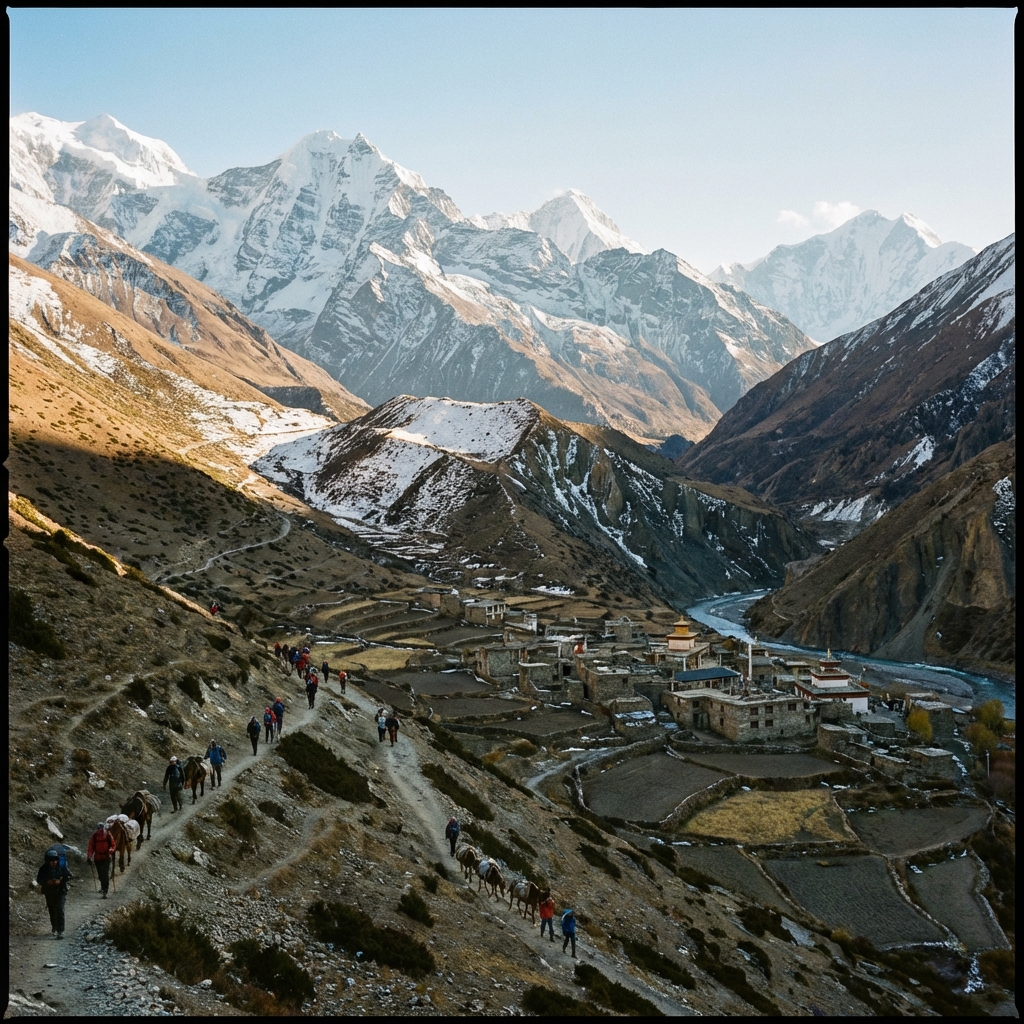
- Subtropical forests: Rice terraces, banana groves, village farmland
- Rhododendron forests: Spectacular blooms in March-April (red, pink, white)
- Bamboo gorges: Dense bamboo corridors along Modi Khola
- Alpine meadows: Transition from forest to high mountain
- Poon Hill sunrise: 360° panorama of Dhaulagiri and Annapurna ranges
- Gurung villages: Chomrong, Ghandruk with traditional culture
- Natural hot springs: Jhinu Danda thermal pools
Photographic highlights:
- Machapuchare's sacred fishtail summit (unclimbed, climbing forbidden)
- Sunrise at ABC with Annapurna I's massive south face
- Rhododendron forests in bloom (spring)
- Poon Hill panorama at dawn
- Gurung village architecture with mountain backdrops
The ABC experience: A journey through Nepal's full ecological spectrum. You start in subtropical warmth and climb through temperate forests, bamboo groves, and alpine zones to reach the glacial sanctuary. The diversity is ABC's signature feature.
Scenery Comparison Table
| Aspect | Everest Base Camp | Annapurna Base Camp |
|---|---|---|
| Dominant ecosystem | High alpine, rocky | Subtropical to alpine (full spectrum) |
| Vegetation | Minimal above 4,000m | Rhododendron forests, bamboo, alpine meadows |
| Mountain views | Everest, Lhotse, Ama Dablam | Annapurna massif, Machapuchare, Dhaulagiri |
| Unique feature | Khumbu Icefall, world's highest peak | 360° mountain amphitheater, sacred Machapuchare |
| Village character | Sherpa stone villages | Gurung terraced hillside villages |
| Terrain variety | Moderate (mostly high alpine) | High (jungle to glacier) |
| Forest hiking | Minimal | Extensive (days 3-7) |
| Glacial scenery | Extensive | Moderate |
Scenery Verdict
Choose EBC if: You want the world's highest mountains, classic high-altitude alpine scenery, and the iconic Everest name. Your priority is peak grandeur over ecological variety.
Choose ABC if: You want maximum landscape diversity, blooming forests (spring), and the unique experience of walking through multiple climate zones in one trek.
Route Structure: Out-and-Back vs Loop Variety
A factor many comparisons miss: how the two routes are shaped changes how much you see.
- EBC is largely out-and-back. You ascend the Khumbu valley to Base Camp and return down the same trail. The scenery is staggering, but you cover the Lukla–Namche–Tengboche–Dingboche corridor twice.
- ABC can be walked as a loop. Smart itineraries enter via Ghandruk or Landruk and exit via Ghorepani/Poon Hill (or vice versa), so the approach and exit show different valleys, villages, and viewpoints. Only the final sanctuary stretch (Chomrong to ABC and back, roughly 4-5 days) is out-and-back.
This loop design is why ABC packs in more variety per day: subtropical jungle and rice terraces on the way in, the Poon Hill panorama as a bonus, the Modi Khola cloud forest, and the Jhinu Danda hot springs on the descent. EBC trades that variety for sheer altitude and the Everest name.
Pro Tip
Ask your agency to route ABC up via Ghandruk/Landruk and down via Ghorepani so you bag Poon Hill sunrise without backtracking — see our ABC + Poon Hill combination trek. On EBC, the equivalent "add variety" move is looping back through Gokyo Lakes instead of retracing your steps.
Jhinu Danda Hot Springs (ABC's Reward Finish)
ABC has one perk EBC simply cannot match: natural hot springs. After the long descent from the sanctuary, most ABC itineraries stop at Jhinu Danda, where a 15-20 minute walk down to the Modi Khola river leads to riverside thermal pools — a genuine muscle-soothing reward after days of stone staircases. There is no equivalent on the EBC route, where your "recovery" is a cold lodge night before flying out of Lukla. If a relaxing finish matters to you, ABC wins this point outright.
Pokhara: The Post-Trek Factor
ABC begins and ends near Pokhara, Nepal's lakeside resort city, which functions as a built-in reward. Many trekkers add 1-2 nights at Phewa Lake to unwind — boating, paragliding, lakeside cafes, and a massage before the flight back to Kathmandu. EBC, by contrast, starts and ends in Kathmandu via Lukla, with no comparable decompression stop. For a trip that "caps off" with relaxation rather than a long descent and an airport, ABC has a structural edge. See our Pokhara guide for trekkers to plan a stopover.
4. Cultural Experience: Sherpa vs Gurung Heritage
Both treks offer rich cultural immersion, but with distinct ethnic groups and traditions.
Everest Base Camp: Sherpa Heartland
The Sherpa People: World-renowned for mountaineering prowess, the Sherpa people of the Khumbu region have guided Himalayan expeditions for over a century. Their Tibetan Buddhist culture permeates every aspect of the trek.
Cultural highlights:
- Namche Bazaar: The Khumbu's bustling trading hub with Saturday market, Sherpa museum, and Hillary School
- Tengboche Monastery: Daily prayer ceremonies (3-4 PM) open to visitors; monastery blesses Everest climbers
- Mani stones and prayer wheels: Buddhist devotional art lines the trail
- Sagarmatha National Park: UNESCO World Heritage Site protecting Sherpa homeland
- Expedition culture: During climbing season (April-May), Base Camp buzzes with international expeditions—unique insight into mountaineering world
Language: Sherpa (Tibeto-Burman); Nepali widely spoken; English common in tourism areas
Festivals: Mani Rimdu (October/November at Tengboche)—masked dances and ceremonies
Annapurna Base Camp: Gurung and Magar Villages
The Gurung and Magar People: Indigenous to the mid-hills of the Annapurna region, Gurung and Magar communities have preserved traditional agriculture and cultural practices while welcoming trekkers.
Cultural highlights:
- Chomrong: Gateway village with traditional Gurung architecture, local honey, cultural museum
- Ghandruk: Nepal's most famous Gurung heritage village (optional detour)
- Poon Hill area: Mix of Magar and Gurung settlements
- ACAP programs: Community-run conservation and development initiatives
- Traditional agriculture: Terraced farming, buffalo herding still practiced
- Gurung Museum: Cultural exhibits in Ghandruk showcasing traditional dress, customs, history
Language: Gurung or Magar (both Tibeto-Burman); Nepali universal; English common
Festivals: Gurung Lhosar (December/January)—Gurung New Year celebrations
Cultural Comparison
| Aspect | EBC (Sherpa Culture) | ABC (Gurung/Magar Culture) |
|---|---|---|
| Cultural fame | Internationally recognized for mountaineering | Less internationally known, more local authenticity |
| Primary livelihood | Tourism, mountaineering, trade | Agriculture, tourism (secondary) |
| Religious sites | Tengboche, Pangboche monasteries | Smaller gompas, Hindu-Buddhist blend |
| Tourist exposure | Very high | Moderate |
| Cultural preservation | Strong but commercialized | Strong with more traditional feel |
| Village architecture | Stone houses, Tibetan-style | Slate-roofed houses, terraced hillsides |
| Authenticity factor | Authentic but touristy in Namche | More traditionally preserved |
Pro Tip
For deeper cultural immersion on either trek, request a homestay experience in Namche (EBC) or Chomrong/Ghandruk (ABC). Your guide can arrange this—expect $20-30 for full room and board with local families.
Cultural Verdict
Choose EBC if: You're fascinated by mountaineering history, Sherpa culture, and Tibetan Buddhism. The international mountaineering scene adds cultural dimension.
Choose ABC if: You prefer less touristed cultural experiences, interest in agriculture-based communities, and traditional Gurung heritage.
5. Best Time Comparison: Seasonal Windows
Both treks share similar optimal seasons, but with nuanced differences in shoulder-season viability.
Optimal Trekking Seasons (Both Treks)
Autumn (October-November):
- Weather: Clear skies, stable conditions, best mountain visibility
- Temperatures: Cool but comfortable (daytime 10-15°C at mid-elevations)
- Crowds: Peak season—expect full teahouses and busy trails
- Best for: First-timers prioritizing weather stability and views
Spring (March-May):
- Weather: Warming temperatures, occasional afternoon clouds
- Temperatures: Warmer than autumn (daytime 12-18°C at mid-elevations)
- Crowds: High but slightly less than October
- Best for: Photographers (rhododendrons at ABC), expedition atmosphere (EBC climbing season)
Seasonal Differences: EBC vs ABC
| Season | Everest Base Camp | Annapurna Base Camp |
|---|---|---|
| Jan-Feb (Winter) | Very cold (-20°C at high camps), some lodges closed, clear skies, low crowds. Experienced trekkers only. | Cold (-15°C at ABC), manageable with gear, quieter, clear views. More accessible than EBC. |
| March-May (Spring) | Excellent. Expedition season adds atmosphere. Warming weather. | Excellent. Rhododendrons blooming. More vibrant scenery. |
| June-Aug (Monsoon) | Not recommended. Dangerous conditions. | Not recommended. Heavy rain, leeches, landslides. |
| Sept (Early Autumn) | Good from mid-Sept. Monsoon clearing. | Good from mid-Sept. Less crowded than Oct. |
| Oct-Nov (Peak Autumn) | Busiest months. Book ahead. Best visibility. | Busy but more spread out than EBC. Best weather. |
| Dec (Early Winter) | Cold but clear. Fewer crowds. Need cold-weather gear. | Cold but feasible. Good shoulder season option. |
Month-by-Month Recommendation
Best Overall: October
- Both treks: Peak season for good reason
- Crystal-clear mountain views
- Stable weather patterns
- Full teahouse operations
Best for Avoiding Crowds: Late November or Late February
- EBC: Late Feb better (winter easing, spring not yet arrived)
- ABC: Both work; late Nov slightly warmer
Best for Flowers: March-April
- EBC: Some blooms at lower elevations
- ABC: Spectacular rhododendron forests (clear ABC advantage)
Best for Expedition Atmosphere: April-May
- EBC: Clear advantage—climbing season at Base Camp
- ABC: No equivalent atmosphere
Worst Time: July-August
- Both treks: Monsoon. Dangerous. Don't go.
Shoulder Season Sweet Spot
Late February and early December offer excellent weather with 50-70% fewer trekkers. ABC is more viable during these periods due to lower maximum altitude. EBC is possible but requires serious cold-weather gear above 4,500m.
Best Time Verdict
Choose EBC if: You specifically want April-May for expedition season atmosphere at Base Camp, or you're experienced with extreme winter conditions.
Choose ABC if: You want spring rhododendron blooms, or you're trekking in shoulder seasons (Dec-Feb) where ABC's lower altitude is more forgiving.
For comprehensive seasonal analysis, see our Best Time to Trek Nepal guide.
6. Crowds & Tourism: Solitude vs Bucket List
Tourism levels differ significantly between these treks, especially during peak season.
Trek Traffic Comparison
Annual Trekker Numbers (2024 estimates):
- EBC: 50,000-60,000 trekkers per year
- ABC: 35,000-45,000 trekkers per year
Peak Season (October) Daily Traffic:
- EBC: 300-500 trekkers per day starting from Lukla
- ABC: 150-250 trekkers per day starting from Nayapul
Where You'll Encounter Crowds
Everest Base Camp:
- Heaviest crowds: Namche Bazaar (overnight hub), Tengboche to Dingboche section
- Most congested: October, especially mid-October coinciding with Dashain festival
- Quieter sections: Above Lobuche (fewer trekkers continue to Kala Patthar sunrise)
- Lodge availability: Book ahead in October or arrive early (before 2 PM) to secure beds
Annapurna Base Camp:
- Heaviest crowds: Ghorepani/Poon Hill (sunrise magnet), Chomrong (gateway village)
- Most congested: Late October, early November
- Quieter sections: Bamboo to Deurali (narrows funnel trekkers)
- Lodge availability: Generally walk-in OK except peak October weekends at ABC itself
The Tourism Experience
EBC Tourism Characteristics:
- International hub atmosphere (especially Namche)
- 50+ teahouses in major villages
- English widely spoken
- Western food options common
- "Trekker conveyor belt" feel in October
- Extensive commercialization (bakeries, gear shops, Irish pubs in Namche)
ABC Tourism Characteristics:
- More localized feel
- 10-30 teahouses in major villages
- English common but less universal than EBC
- More traditional Nepali menu focus
- Less "crowded trail" feeling even in peak season
- Less commercialization, more village atmosphere
Strategies to Avoid Crowds (Both Treks)
Timing:
- Trek in November (post-peak), late February, or early December
- Start early (6-7 AM) to get ahead of the pack
- Avoid mid-October (coincides with Nepal's Dashain festival)
Route variations:
- EBC: Consider Gokyo Lakes alternative route (fewer crowds)
- ABC: Enter via Ghandruk or exit via Jhinu to vary scenery
Accommodation:
- Stay at less popular lodges in each village
- Arrive by 1-2 PM to have choice of accommodations
Pro Tip
Want EBC with fewer crowds? Consider the Jiri to Everest Base Camp trek—the classic pre-1960s route before Lukla airport. Adds 5-7 days but offers cultural depth and far fewer trekkers. See our Jiri to Everest Base Camp guide.
Crowds Verdict
Choose EBC if: You don't mind busy trails, enjoy the international trekker community atmosphere, and want the bucket-list experience regardless of crowds.
Choose ABC if: You prefer quieter trails, more intimate village experiences, and less commercialized infrastructure.
7. Accessibility: Lukla Flights vs Road Access
How you reach the trailhead significantly impacts cost, convenience, and stress levels.
Everest Base Camp: Lukla Flight Gateway
Tenzing-Hillary Airport, Lukla (2,860m):
- One of the world's most challenging airports
- 527-meter runway on a mountain slope
- Rated as "dangerous" due to terrain, weather, and altitude
- Flights operate only in visual conditions (no instrument landing)
Flight logistics:
- Frequency: 50+ daily flights in peak season (weather permitting)
- Aircraft: Small twin-engine aircraft (12-16 passengers)
- Duration: 25-35 minutes from Kathmandu (or Ramechhap)
- Cost: $200-215 per person, each way
- On-time performance: ~60-70% in good season; much lower in marginal weather
Ramechhap Alternative (2023-present): Peak season flights now often depart from Ramechhap (4-5 hour drive from Kathmandu) to reduce Kathmandu airport congestion. This adds travel time but improves flight reliability.
Delay risk:
- 30-40% of trekkers experience at least one delay (1-24 hours)
- Weather closes Lukla frequently (fog, clouds, wind)
- Peak season delays can cascade (one delayed flight backs up the queue)
- Helicopter option available ($400-500) but limited capacity
Annapurna Base Camp: Road Access from Pokhara
Access route:
- Kathmandu to Pokhara: 200 km, 6-7 hours by bus ($15-25) or 25 min by flight ($100-150)
- Pokhara to Nayapul: 45 km, 1.5 hours by jeep/bus ($5-15)
- Begin trekking from Nayapul (1,070m)
Advantages:
- No flight dependency (unless you choose Pokhara flight for convenience)
- Predictable departure schedule
- Road access means easier evacuation if needed
- More budget-friendly
- No weather-related delays
Pokhara stopover benefit: Many trekkers spend an extra day in Pokhara before/after the trek, enjoying:
- Phewa Lake boating
- Paragliding (world-class launching site)
- International Mountain Museum
- Lakeside restaurants and relaxation
Accessibility Comparison
| Factor | EBC (Lukla Flights) | ABC (Road Access) |
|---|---|---|
| Weather dependency | High | Low (only Pokhara flight if chosen) |
| Delay likelihood | 30-40% | <5% (if driving) |
| Added cost | $215-400 | $15-50 (or $100-150 if flying to Pokhara) |
| Stress level | Moderate-High | Low |
| Flexibility | Limited | High |
| Evacuation ease | Helicopter only | Road + helicopter options |
| Environmental impact | Higher (aviation fuel) | Lower (road transport) |
The Lukla Flight Reality
Budget an extra day (or two) as a buffer for Lukla flight delays. Missing your international flight home due to Lukla weather is a real risk. Travel insurance typically doesn't cover "disinclination to travel" due to delays—you'll pay for extra accommodation and rebooking.
Accessibility Verdict
Choose EBC if: You accept flight risk as part of the adventure, have schedule flexibility (buffer days), and budget for potential helicopter backup.
Choose ABC if: You want predictable logistics, avoid flight dependency, prefer road access for peace of mind, or have tight international flight connections.
8. Duration & Time Requirements
How much vacation time can you commit? This often decides the question.
Minimum Time Requirements
Everest Base Camp:
- Absolute minimum: 12 days (Kathmandu to Kathmandu)
- Recommended minimum: 14 days (includes 1 buffer day for Lukla delays)
- Comfortable pace: 16 days (includes 2 buffer days, extra acclimatization)
- With extensions: 18-21 days (Gokyo Lakes, Three Passes, Jiri start)
Annapurna Base Camp:
- Absolute minimum: 10 days (Kathmandu to Kathmandu)
- Recommended minimum: 12 days (includes comfortable pace)
- With Poon Hill: 13-14 days
- Leisurely pace: 14 days (extra acclimatization, cultural stops)
Detailed Duration Breakdown
EBC Timeline (14 days):
- Day 1: Arrive Kathmandu
- Day 2: Fly to Lukla, trek to Phakding
- Days 3-4: Trek to Namche, acclimatization day
- Days 5-8: Trek via Tengboche, Dingboche (acclimatization day), Lobuche to Gorak Shep
- Day 9: Everest Base Camp + Kala Patthar
- Days 10-12: Descend to Namche, then Lukla
- Day 13: Fly to Kathmandu
- Day 14: Depart (buffer day)
ABC Timeline (12 days):
- Day 1: Arrive Kathmandu
- Day 2: Drive to Pokhara
- Days 3-9: Trek Nayapul to ABC (via Ghorepani/Poon Hill) and back to Jhinu
- Day 10: Drive to Pokhara
- Day 11: Drive/fly to Kathmandu
- Day 12: Depart
Time-Saving Options
EBC:
- Helicopter return from Gorak Shep ($400-500): Saves 3-4 days
- Skip Kala Patthar: Saves half day (not recommended)
- Faster itinerary (11 days): Higher AMS risk, not recommended
ABC:
- Skip Poon Hill route: Saves 2 days (direct to Chomrong)
- Helicopter return from ABC: Saves 3-4 days ($300-400)
- Combine Pokhara visit with buffer day: Saves 1 day
Duration Comparison
| Vacation Length Available | Best Trek Choice | Notes |
|---|---|---|
| 7-10 days | Neither (too short) | Consider Poon Hill or Langtang Valley |
| 10-12 days | ABC | Tight but achievable for ABC; impossible for EBC |
| 12-14 days | ABC (comfortable) or EBC (tight) | ABC is relaxed; EBC requires efficiency and luck with flights |
| 14-16 days | Either | EBC becomes comfortable with buffer days |
| 16+ days | Either, with extensions | Time for Gokyo (EBC) or cultural detours (ABC) |
Pro Tip
If you have exactly 14 days of vacation, ABC offers a more relaxed experience with built-in flexibility. EBC is possible but requires everything to go perfectly (no flight delays, no extra acclimatization needs). Most EBC agencies recommend 16 days for international travelers.
Duration Verdict
Choose EBC if: You have 14+ days available, can extend if needed, and have flexible work/personal commitments allowing potential delays.
Choose ABC if: You have 10-14 days available, tight international flight connections, or prefer a more relaxed pace without time pressure.
9. Accommodation & Facilities: Teahouse Quality
Both treks offer excellent teahouse infrastructure, but with differences in price and quality.
Teahouse Standards
What are teahouses? Family-run lodges providing basic accommodation and meals. Nepal's teahouse trekking network is one of the best-developed in the Himalayas, allowing trekkers to go lodge-to-lodge without camping gear.
Everest Base Camp Teahouses
Accommodation quality:
- Twin or dormitory rooms (2-6 beds)
- Foam mattresses (bring sleeping bag)
- No heating in rooms (heated common areas)
- Shared bathrooms (squat or western toilets)
- Solar-powered lighting (limited hours)
- Some lodges have attached bathrooms at premium price
Pricing progression:
- Lukla/Phakding: $5-10 per night
- Namche: $10-15 per night
- Tengboche/Dingboche: $12-18 per night
- Lobuche/Gorak Shep: $20-30 per night
Facilities:
- WiFi available ($3-7/hour; slower at altitude)
- Phone charging ($3-5 per charge)
- Hot showers ($5-7; limited water above 4,500m)
- Dining halls with yak-dung or kerosene heating
- Western-style food (pizza, pasta) available but expensive
Notable lodges:
- Namche: Panorama Lodge, Khumbu Lodge (excellent facilities)
- Tengboche: Tashi Delek Lodge (monastery views)
- Dingboche: Moonlight Lodge, Good Luck Lodge
Annapurna Base Camp Teahouses
Accommodation quality:
- Twin or dormitory rooms (similar to EBC)
- Foam mattresses (sleeping bag recommended)
- No heating in rooms (heated common areas)
- Shared bathrooms (mix of squat and western)
- Solar or hydroelectric power
- Generally newer construction in lower villages
Pricing progression:
- Nayapul/Tikhedhunga: $5-8 per night
- Ghorepani: $8-12 per night
- Chomrong: $8-15 per night
- Deurali/MBC: $12-18 per night
- ABC: $15-25 per night
Facilities:
- WiFi available ($2-5/hour; better connectivity than EBC overall)
- Phone charging ($2-4 per charge)
- Hot showers ($3-5; available most locations)
- Dining halls with wood or kerosene heating
- More traditional Nepali menu focus (but Western options available)
Notable lodges:
- Ghorepani: Excellent multiple options
- Chomrong: Hotel Chomrong, Himalayan Hotel
- ABC: Limited options (3-4 lodges), book ahead in October
Teahouse Comparison
| Aspect | EBC Teahouses | ABC Teahouses |
|---|---|---|
| Quality at low elevation | Good | Good |
| Quality at high elevation | Basic | Basic |
| Price range | Higher | Lower |
| Crowding (Oct) | Can be packed | Moderate |
| Food variety | High | Moderate-High |
| WiFi reliability | Moderate | Moderate-Good |
| Hot shower availability | Good (expensive) | Good (more affordable) |
| Advance booking needed | Yes (October) | Sometimes (ABC itself in October) |
Food on Both Treks
Standard menu items:
- Dal bhat (unlimited refills)—the trekker's staple
- Tibetan dishes: momos, thukpa, tingmo
- Western: pasta, pizza, pancakes, eggs
- Soups (excellent for hydration)
- Tea, coffee, hot chocolate
Meal cost progression:
- Low elevations: $3-6 per meal
- Mid elevations: $5-8 per meal
- High elevations: $8-12 per meal (ABC), $10-15 (EBC)
The Dal Bhat Strategy
Order dal bhat—Nepal's lentil soup with rice and vegetables. It's nutritious, filling, and includes unlimited refills for the same price. It's also the cheapest option, helping your budget go further. Many trekkers eat dal bhat twice daily.
Accommodation Verdict
Choose EBC if: You're comfortable with higher accommodation costs, basic facilities at altitude, and potential crowding in popular lodges during peak season.
Choose ABC if: You want slightly lower accommodation costs, prefer less crowded lodges, and prioritize value for money in teahouse selection.
10. Which Trek For You? Decision Framework
Let's cut to the practical decision based on your specific situation.
For First-Time Trekkers in Nepal
Recommendation: Annapurna Base Camp
Why ABC suits beginners better:
- Lower maximum altitude (4,130m vs 5,364m) = reduced AMS risk
- Shorter duration possible (10 days vs 12+ days)
- More forgiving if you underestimate fitness requirements
- Lower cost allows budget for mistakes/contingencies
- Road access eliminates flight stress
- Easier evacuation if health issues arise
- Excellent "warm-up" for future EBC attempt
When to choose EBC as your first trek:
- You have previous high-altitude experience (even without trekking)
- You're very fit and confident in your physical abilities
- Everest is a lifelong dream you won't compromise
- You have 16+ days available for proper acclimatization
- Budget isn't a constraint
For Photographers
Recommendation: Depends on season and subject
Choose EBC if:
- You want the Everest name/brand in your photos
- High-altitude stark beauty is your aesthetic (Kala Patthar sunrise)
- You're shooting in autumn for crystal-clear mountain views
- You want expedition/mountaineering documentary subjects (April-May)
Choose ABC if:
- You shoot in spring (rhododendron forests in bloom)
- You want ecological diversity (jungle to glacier in one essay)
- Machapuchare's unclimbed mystique appeals
- You prefer varied landscapes over single dramatic shot
- You want 360° mountain amphitheater compositions
For Culture Enthusiasts
Recommendation: Slight edge to ABC
Choose ABC if:
- You want less-touristed cultural experiences
- Agricultural communities interest you (terraced farming)
- You prefer smaller villages with more authentic interaction
- Gurung heritage and traditions appeal
Choose EBC if:
- Sherpa culture and mountaineering history fascinate you
- Tibetan Buddhism is a primary interest
- You want to see expedition culture at Base Camp
- Larger cultural hubs (Namche Bazaar) interest you
For Adventure Seekers
Recommendation: Everest Base Camp
Choose EBC if:
- You want the bragging rights and iconic name
- Pushing altitude limits is part of the adventure
- The Lukla flight adds to the experience (not detracts)
- You want the achievement of Nepal's most famous trek
- Extensions appeal (Gokyo, Three Passes)
Choose ABC if:
- You define adventure as diversity rather than extremity
- Ecological variation interests you more than altitude records
- Less-traveled paths appeal (though ABC is still popular)
For Budget Travelers
Recommendation: Annapurna Base Camp
ABC costs 30-50% less than EBC, saving $215-1,500 depending on budget level.
Choose ABC because:
- No Lukla flights = $215-400 saved
- Lower altitude = cheaper teahouse costs
- Shorter duration = fewer days of expenses
- More independent trekking options (without agency)
For Time-Limited Trekkers
Recommendation: Annapurna Base Camp
Choose ABC if you have:
- 10-12 days total (minimum for ABC; impossible for EBC)
- Tight international flight connections (ABC's road access is more reliable)
- Limited vacation time from work
Choose EBC only if:
- You have 14+ days available
- You can extend if flight delays occur
- Work commitments are flexible
For Families or Older Trekkers (50+)
Recommendation: Annapurna Base Camp
Choose ABC because:
- Lower altitude is safer for varied age/fitness levels
- Shorter duration is more manageable
- Road access provides evacuation comfort
- Less extreme temperature exposure
- More forgiving if someone needs extra rest days
When families choose EBC:
- All members are fit and experienced
- Children are teenagers (not younger)
- Family has previous trekking experience together
For Solo Trekkers
Recommendation: Either (both are safe for solo trekking)
Both treks require guides as of 2026 regulations, so "solo" means solo arrangement (not group tour) rather than truly alone.
ABC advantages:
- Easier to find walking partners on trail (social if desired)
- Lower cost for solo guide arrangement
- More village atmosphere (less tourist-hub feel)
EBC advantages:
- More international trekkers to meet
- Better English spoken (easier communication)
- More facilities (WiFi, social spaces)
Pro Tip
Can't decide? Do ABC first. If you love it and handle altitude well, return for EBC another season. Many trekkers use ABC as a "trial run" before committing to EBC's higher altitude and cost. The reverse is less common—those who do EBC first often don't feel ABC is enough of a different experience.
11. Can You Do Both? Combination Possibilities
Yes—and many serious trekkers do exactly this.
Combining EBC and ABC in One Trip
Logistics: Theoretically possible to do both in one Nepal visit, but requires significant time.
Minimum timeframe:
- EBC: 14 days (including travel/buffers)
- Rest in Kathmandu: 2-3 days
- ABC: 12 days (including travel)
- Total: 28-29 days minimum
Realistic timeframe:
- 32-35 days allows for proper rest, acclimatization, buffer days
Recommended sequence:
- Start with ABC (lower altitude, easier warm-up)
- Rest in Kathmandu or Pokhara (3-4 days full rest)
- Proceed to EBC (you'll be fitter and better acclimatized)
Cost for combined trip:
- Budget: $2,000-3,500
- Mid-range: $3,500-5,500
- Premium: $6,000-9,000
Who should consider this:
- Extended sabbatical travelers
- Gap year students
- Retirees with time flexibility
- Serious trekkers wanting comprehensive Nepal experience
Alternative: Two Separate Trips
More realistic for most:
- Trip 1: ABC (10-14 days) in spring
- Trip 2: EBC (14-16 days) in autumn of same year or following year
Advantages:
- Better rest and recovery between treks
- Experience different seasons
- Spread financial cost across two trips
- Reduce overall risk (not all eggs in one basket)
Other Combination Options
ABC + Annapurna Circuit:
- 21-25 days total
- Both in Annapurna region (logistically simpler)
- Thorong La Pass (5,416m) adds high-altitude challenge
- See our Annapurna Circuit guide
EBC + Gokyo Lakes:
- 16-18 days total
- Both in Khumbu region
- Adds variety without separate travel
- See our Gokyo Lakes guide
ABC + Poon Hill:
- 13-14 days total
- Natural combination (both in same region)
- Poon Hill sunrise + ABC sanctuary
- Best value combination trek
12. Frequently Asked Questions
Planning Questions
How do I choose between EBC and ABC if I want the "best" experience? There's no universal "best"—only best for your situation. If you have limited time (10-12 days), tight budget, or altitude concerns, ABC is objectively better. If you have 14+ days, flexible budget, and want the world's most iconic trek name, EBC is better. Both deliver world-class Himalayan experiences.
Can I switch my plans mid-trek if I'm struggling with altitude? At EBC, yes—you can turn back and descend at any point. At ABC, also yes. Your guide will support either decision. Don't push through serious AMS symptoms.
Which trek has better teahouse food? Roughly equivalent. EBC has more Western food options but at higher prices. ABC focuses more on traditional Nepali cuisine. Both offer dal bhat (the trekker staple), momos, and basic Western items.
Is one trek safer than the other? ABC has slightly better safety profile due to lower altitude (reduced AMS risk) and road access (easier evacuation). EBC's Lukla flight adds a risk element. Both are safe with proper preparation.
Altitude Questions
I've never been above 3,000m. Should I choose ABC? Yes, ABC is the better first high-altitude trek. You'll still experience altitude effects (headaches, breathlessness are normal), but the consequences of poor acclimatization are less severe than at EBC.
What percentage of trekkers get altitude sickness on each trek? ABC: ~10-15% experience mild AMS symptoms; <2% require descent. EBC: ~40-50% experience mild-moderate symptoms; 5-10% require descent. With proper acclimatization, most cases are mild and manageable.
Can I take Diamox (altitude medication) for either trek? Yes. Discuss with your doctor. Diamox is commonly used on both treks, particularly by those with limited acclimatization time or previous altitude sensitivity. Standard preventive dose is 125mg twice daily starting 1-2 days before ascending above 3,000m.
If I succeed at ABC, does that mean I can do EBC? Probably, but not guaranteed. Success at ABC (4,130m) indicates good altitude tolerance, but EBC goes 1,234m higher. Many who do well at ABC also succeed at EBC, but it's not automatic. Use ABC as a confidence builder and data point about your altitude response.
Logistics Questions
Can I book both treks with the same agency? Yes, and you may get a discount for booking both. Verify the agency is licensed for both regions and has experienced guides for each route.
Which trek is easier to do independently (without agency)? ABC is easier to arrange independently—road access from Pokhara, easier permit acquisition, and more flexibility with teahouse bookings. However, as of 2026, both require a guide by law.
What if I only have 7-9 days vacation? Neither EBC nor ABC is realistic. Consider Poon Hill (4-5 days), Mardi Himal (5-7 days), or Langtang Valley (7-10 days with faster itinerary).
Are permits harder to get for EBC or ABC? Roughly equal difficulty—which is to say, very easy. Most agencies handle permits for you. If arranging independently, ABC requires ACAP permit (NPR 3,000) and TIMS (NPR 2,000); EBC requires Sagarmatha National Park permit (NPR 3,000), municipality fee (NPR 2,000), and TIMS (NPR 2,000).
Fitness Questions
I can hike 15 km in a day at sea level. Is that enough for either trek? It's a decent baseline, but altitude changes everything. At 4,000m+, you're operating at 60-70% of sea-level capacity. Train specifically with elevation gain/loss, weighted pack, and consecutive days of hiking.
Which trek requires better fitness? EBC requires slightly better fitness due to higher altitude (more cardiovascular demand), longer days, and extended duration. ABC's famous stone staircase is physically demanding but at lower altitude.
Can I train for EBC by doing ABC first? Yes. ABC provides excellent high-altitude acclimatization experience and builds trekking-specific fitness. Many serious trekkers do ABC as EBC preparation.
Seasonal Questions
Which trek is better in monsoon (July-August)? Neither. Both are inadvisable during monsoon. Trails are dangerous, leeches are prevalent below 3,000m, and mountain views disappear. If you must trek in monsoon, consider Upper Mustang or Dolpo in the rain shadow.
Which trek is better in winter (December-January)? ABC is more manageable in winter due to lower maximum altitude. EBC in winter requires serious cold-weather gear and acceptance of extreme conditions (-25°C at high camps). Both are quiet and offer crystal-clear views if you can handle the cold.
For rhododendron blooms, which trek is better? ABC wins decisively. The rhododendron forests between Ghorepani and Chomrong are spectacular in March-April. EBC has minimal rhododendrons (mostly above treeline).
Cost Questions
What's the biggest cost difference between EBC and ABC? The Lukla flights ($215-400 roundtrip) account for most of the difference. Factor in longer EBC duration and higher altitude costs, and EBC typically runs 30-50% more expensive overall.
Can I do either trek for under $1,000? ABC: Yes, independent trekkers can do it for $500-900 if going very budget (basic teahouses, minimal extras, bus transport). EBC: Possible but very tight ($900-1,000 minimum due to Lukla flights).
Are tips expected on both treks? How much? Yes. Standard guidelines for both treks:
- Guide: $10-15 per day
- Porter: $8-10 per day For a 12-day ABC trek with guide and porter: budget $150-200 tips. For a 14-day EBC trek: budget $200-300 tips.
Final Decision Questions
If I can only do ONE Nepal trek in my lifetime, which should it be? Honestly? Flip a coin—both are world-class. If forced to choose: EBC has the name recognition and bucket-list factor. ABC delivers more diverse scenery and better value. Most trekkers don't regret either choice.
Can I decide after arriving in Nepal? Yes. Visit trekking agencies in Kathmandu or Pokhara, discuss your goals/fitness, and book based on their recommendations and your gut feeling. Having flexibility is valuable.
What do most first-time Nepal trekkers choose? It's roughly 60% EBC, 40% ABC among first-time trekkers. EBC's fame drives higher numbers, but ABC is growing in popularity as trekkers discover it offers comparable experiences with lower altitude risk and cost.
ABC vs Everest: Quick Answers
Your Next Steps
Decision Summary
Choose Everest Base Camp if you:
- Have 14+ days available
- Budget $1,500-4,000 total
- Want the world's most famous trek
- Have previous high-altitude experience or are very fit
- Accept flight dependency and delays
- Prioritize Everest name and bucket-list factor
- Want extensions like Gokyo or Three Passes
Choose Annapurna Base Camp if you:
- Have 10-14 days available
- Budget $500-2,500 total
- Want lower altitude risk (first-time high-altitude trekker)
- Prefer ecological diversity over single peak focus
- Want predictable road access logistics
- Prefer better value and fewer crowds
- Prioritize rhododendron forests (spring) or Gurung culture
Still can't decide? Do both. Start with ABC to build altitude experience and confidence, then return for EBC when you have more time and budget. Many serious Nepal trekkers eventually do both—and neither regrets it.
Detailed Planning Resources
Ready to start planning? Here are your next steps:
Route-Specific Guides:
- Everest Base Camp Complete Guide—detailed EBC itinerary, costs, agencies
- Annapurna Base Camp Complete Guide—detailed ABC itinerary, day-by-day
Essential Planning:
- Nepal Trekking Permits Explained—TIMS, ACAP, SNP permits
- Best Time to Trek Everest Region—seasonal details for EBC
- Best Time to Trek Nepal—comprehensive seasonal guide
Safety & Preparation:
- Altitude Sickness Signs and Turnaround Rules—critical AMS information
- Nepal Trekking Packing List—what to bring for either trek
Region Overviews:
- Everest Region Guide—all Khumbu treks
- Annapurna Region Guide—all Annapurna treks
Compare Verified Agencies
Both treks require agencies (or independent guides) as of 2026. We verify agencies based on:
- Safety protocols and guide training
- Transparent pricing (no hidden fees)
- Porter welfare standards
- Emergency response capabilities
- Client feedback and success rates
Browse verified operators:
Alternative Treks to Consider
Not convinced either EBC or ABC is right for you? Nepal offers dozens of world-class treks.
If ABC seems right but you want less crowded:
- Mardi Himal Trek—5-7 days, 4,500m, fewer trekkers
- Khopra Ridge Trek—9-12 days, stunning views, remote
If EBC seems right but altitude concerns you:
- Gokyo Lakes Trek—similar duration, alternative Khumbu route, 4,700m max
- Langtang Valley Trek—7-10 days, 4,984m, closer to Kathmandu
If you want longer, more challenging:
- Annapurna Circuit—12-21 days, 5,416m Thorong La Pass
- Everest Three Passes Trek—18-21 days, three 5,400m+ passes
- Manaslu Circuit—14-18 days, remote, restricted area
If you're a true beginner:
- Poon Hill Trek—4-5 days, 3,210m, perfect introduction
- Pikey Peak Trek—5-7 days, Everest views without extreme altitude
Ready to book ABC or EBC?
Tell us your dates, budget, and fitness — we'll match you with a verified local agency for the right base camp trek.
This comparison guide is maintained by the Trek and Tour Nepal editorial team with data from verified agencies, tourism statistics, and field research. Last updated June 2026. For corrections or suggestions, contact our editorial team.
Sources: