Dolpo Trek: Nepal's Most Remote Restricted-Area Trek
The Dolpo trek is an 18-28 day camping expedition into Dolpa District in far-western Nepal, crossing 5,000m+ passes to turquoise Shey Phoksundo Lake and ancient Bon monasteries. Lower Dolpo costs from about $4,080 per person; Upper Dolpo needs a $500 restricted-area permit (first 10 days) plus full expedition logistics. The best seasons are May-June and September-October.
| Route | Duration | Max Altitude | Difficulty | Permits | Teahouses | Crowds |
|---|---|---|---|---|---|---|
| Upper Dolpo | 24-28 days | 5,360m | Very Difficult | $500 (10 days) | Camping Only | Very Low |
| Lower Dolpo | 18-21 days | 5,190m | Difficult | $20/week | Basic/Camping | Low |
| Upper Mustang | 10-14 days | 3,840m | Moderate | $500 (10 days) | Basic | Low |
| Manaslu Circuit | 14-18 days | 5,160m | Difficult | $150-200 | Basic-Moderate | Low |
The Dolpo Trek stands alone as Nepal's most remote and isolated trekking experience—a genuine expedition into what travel writers call "Nepal's last forbidden kingdom." While Upper Mustang shares restricted area status and Manaslu offers remote wilderness, only Dolpo combines extreme isolation, ancient Bon Buddhist culture, and the requirement for full camping logistics into an experience that rivals expeditions to Tibet itself.
Opened to foreigners only in 1989, Dolpo remains largely unchanged since the 14th century. Where even Everest Base Camp now sees 50,000+ annual visitors, Upper Dolpo receives fewer than 500-700 trekkers per year. This isn't just about numbers—it's about stepping into a landscape so remote that supply planes can't land, roads don't exist, and villages practice a pre-Buddhist religion that predates Tibetan Buddhism by thousands of years.
This comprehensive guide reveals everything about trekking Nepal's most isolated region: from navigating the expensive restricted area permit requirements to organizing camping expeditions, crossing five high passes above 5,000m, and understanding why this trek represents the ultimate privilege for serious Himalayan adventurers seeking the road less traveled.
Route Snapshot
18-28 days (Lower/Upper)
280-350 km depending on route
5,360m (17,585 ft) at Kang La Pass
5,050m at Kang La High Camp
Very Difficult/Expedition Level
May-June, Sept-Oct (Limited windows)
Dolpa District, Shey Phoksundo National Park
Juphal (2,475m)
Juphal (Circuit)
RAP + Shey Phoksundo NP + TIMS
USD 500 (first 10 days) + $50/day after
Camping mandatory (full expedition)
Key Route Variants:
| Variant | Duration | Highlights | Best For |
|---|---|---|---|
| Lower Dolpo Circuit | 18-21 days | Phoksundo Lake, Dho Tarap, basic villages | First-time Dolpo visitors |
| Upper Dolpo Classic | 24-28 days | Full circuit, Shey Gompa, Crystal Mountain | Serious remote trekkers |
| Dolpo to Jumla | 22-26 days | One-way traverse across region | Explorers avoiding backtracking |
| Extended Upper Dolpo | 30-35 days | All five high passes, complete cultural immersion | Ultimate expeditions |
| Dolpo + Jomsom Exit | 26-30 days | Links Dolpo to Mustang region | Trans-Himalayan connection |
Why Choose the Dolpo Trek
Nepal's Last Forbidden Kingdom
Dolpo isn't just remote—it represents one of the last places on Earth where medieval Tibetan culture survives completely intact. While Chinese-occupied Tibet has undergone dramatic modernization and even Nepal's other restricted areas like Upper Mustang have road access, Dolpo remains frozen in time. Villages here practice Bon, the pre-Buddhist shamanic religion that once dominated the entire Himalayas before Buddhism's spread in the 8th century.
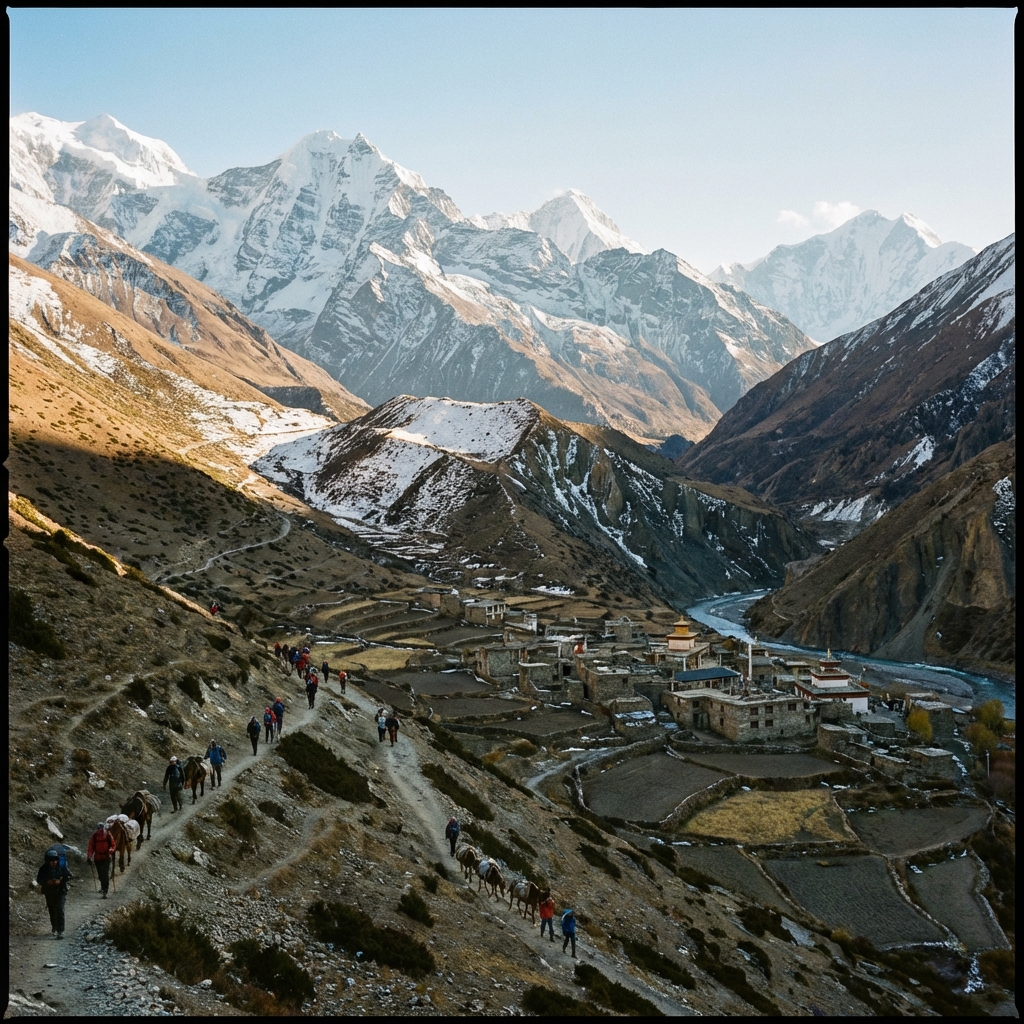
The region's isolation stems from geography. Surrounded by snow peaks exceeding 6,000m and accessible only by foot from a single dirt airstrip at Juphal, Dolpo sees fewer visitors annually than Everest Base Camp receives in a single busy day. This isn't marketing hyperbole—government statistics show Upper Dolpo receives 500-700 permits per year, compared to 50,000+ for Everest routes.
Beyond Standard Restricted Area Treks
Trekkers familiar with Nepal's other restricted areas often wonder how Dolpo compares. The differences are profound:
Upper Mustang ($500 permit, 10-14 days): Road-accessible since 2008, teahouse available, maximum altitude 3,840m. Cultural richness similar, but infrastructure vastly different. Upper Mustang feels like a remote cultural journey; Dolpo feels like a true expedition.
Manaslu Circuit ($150-200 permits, 14-18 days): Restricted but well-established teahouse circuit. Remote wilderness experience but modern infrastructure growing. One major pass versus Dolpo's five.
Kanchenjunga ($20/week permit, 18-24 days): Similar remoteness and camping requirements, but gentler terrain and more forested environments. Different cultural zone (Rai/Limbu rather than Tibetan).
Dolpo stands alone in combining the highest permit costs, the most extreme isolation, the most challenging terrain, and the rarest cultural experience. It's Nepal's ultimate insider secret—known among serious trekkers but rarely attempted due to logistics, costs, and difficulty.
The "Himalaya" Documentary Effect
Peter Matthiessen's 1978 masterpiece "The Snow Leopard" and Eric Valli's 1999 documentary film "Himalaya" (also called "Caravan") brought Dolpo to international consciousness. Valli's film, shot entirely in Dolpo with local villagers as actors, won César Awards and an Oscar nomination, depicting the ancient salt caravan trade that sustained Dolpo's economy for centuries.
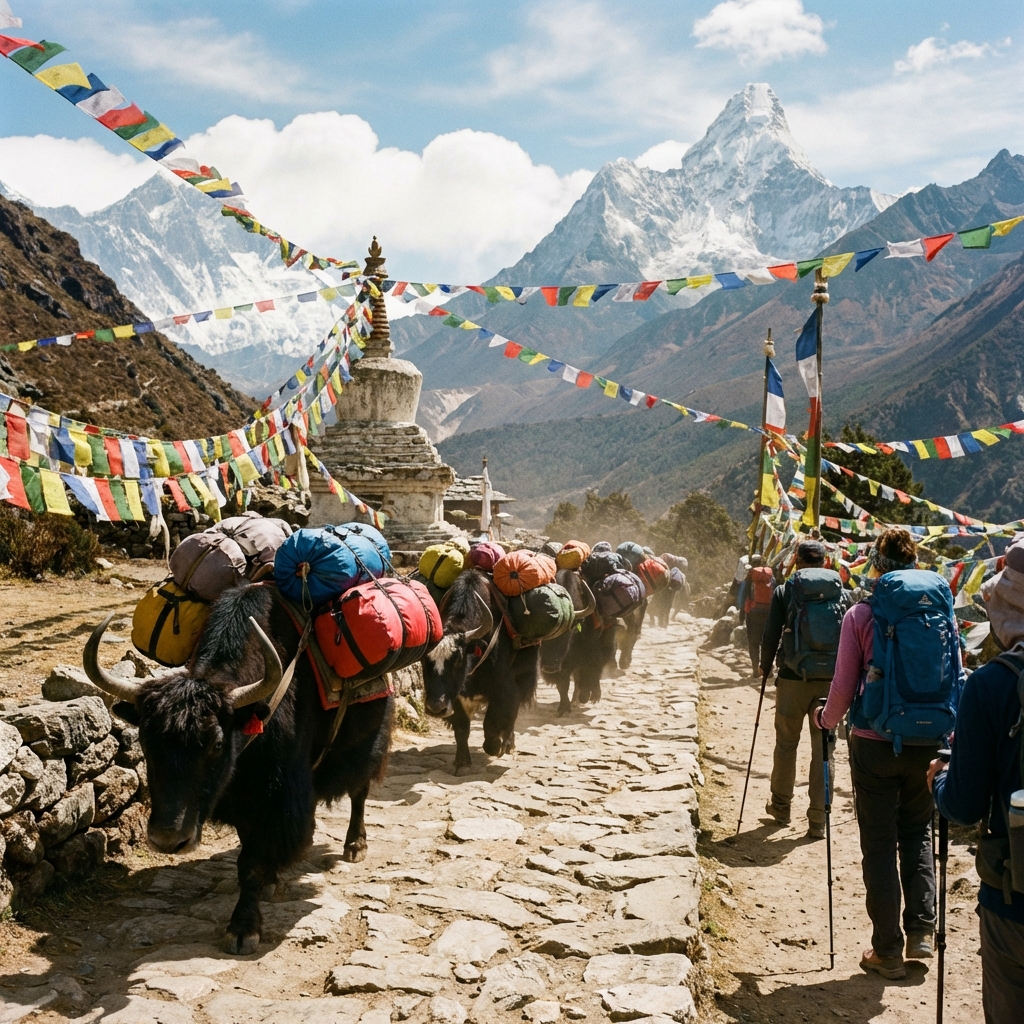
These works revealed a world unchanged since Marco Polo's era: caravans of yaks and horses crossing high passes to trade Tibetan salt for Nepali grain, villages where electricity and roads remain unknown, and monasteries preserving religious traditions that vanished elsewhere a millennium ago. While filming occurred 25+ years ago, Dolpo remains remarkably similar today—testament to its profound isolation.
Upper Dolpo vs Lower Dolpo: Understanding the Difference
The division between "Upper" and "Lower" Dolpo represents more than geographic distinction—it separates two completely different trekking experiences with different costs, difficulties, and permit requirements.
difficultLower Dolpo Circuit (18-21 Days)
Permit Requirements:
- Lower Dolpo Restricted Area Permit: $20 per person per week (first 4 weeks), $25/week thereafter
- Shey Phoksundo National Park Entry: $30 per person
- TIMS Card: $20 per person
- Total: ~$70-90 for 2-3 weeks
Route Overview: The Lower Dolpo circuit starts from Juphal, follows the Thuli Bheri River valley to Dunai (district headquarters), then ascends to Phoksundo Lake at 3,611m. From there, it crosses the Numa La Pass (5,190m) and Baga La Pass (5,070m) into the Tarap Valley, visits Dho Tarap village (4,040m), and returns via the Tarap Chu gorge.
Lower Dolpo offers spectacular scenery with Phoksundo Lake as its centerpiece—Nepal's deepest lake at 145m, with impossibly turquoise waters that defy photography. The trek crosses two 5,000m+ passes and visits Bon villages preserving ancient traditions. While still remote by most standards, Lower Dolpo has basic teahouses in major villages, though camping is recommended for better acclimatization control.
Best For: Trekkers seeking Dolpo's highlights without the expense and extreme difficulty of Upper Dolpo. Still requires excellent fitness and high-altitude experience. See our dedicated Lower Dolpo trek guide for the day-by-day plan.
very-difficultUpper Dolpo Circuit (24-28 Days)
Permit Requirements:
- Upper Dolpo Restricted Area Permit: $500 per person for first 10 days + $50 per day thereafter
- Lower Dolpo Restricted Area Permit: $20 per week (required for entry/exit)
- Shey Phoksundo National Park Entry: $30 per person
- TIMS Card: $20 per person
- Total: ~$570-750+ depending on days
Route Overview: Upper Dolpo encompasses everything in Lower Dolpo plus the region north of Phoksundo Lake—the true "inner Dolpo" that borders Tibet. After visiting Phoksundo, the route crosses Kang La Pass (5,360m), the trek's highest point, to reach Shey Gompa (4,390m), home to the Crystal Mountain pilgrimage site sacred to both Bon and Buddhist traditions.
From Shey, the route continues to Saldang (3,770m), Upper Dolpo's largest settlement, then follows the Panzang River through a high-altitude desert landscape remarkably similar to Tibet. The trek crosses multiple additional passes—Jyanta La (5,220m), Sela La (5,094m), and others—while visiting ancient villages like Tinje, Tokyu, and returning to Dho Tarap before exiting the region.
Mandatory camping throughout: No teahouses exist in Upper Dolpo. Full expedition logistics required with kitchen crew, porters, and all food/fuel carried from outside the region.
Best For: Experienced high-altitude trekkers seeking Nepal's ultimate remote wilderness experience. Requires 4+ weeks available, significant budget ($4,000-7,000+), excellent fitness, and comfort with expedition camping. Our Upper Dolpo trek guide covers the full inner-Dolpo itinerary in detail.
Which Route to Choose?
Choose Lower Dolpo if:
- Budget limit of $2,000-3,000
- Available time: 3 weeks
- Want highlights without extreme difficulty
- First major high-altitude trek
- Prefer some teahouse comfort available
Choose Upper Dolpo if:
- Seeking ultimate Nepal remote experience
- Budget allows $4,000-7,000+
- Available time: 4+ weeks minimum
- Experienced with altitude above 5,000m
- Comfortable with expedition camping
- Want to experience Tibet-like culture in Nepal
Most serious trekkers with proper time and budget choose Upper Dolpo—the permit cost becomes minor compared to total expedition expenses, and the experience represents something truly irreplaceable.
Phoksundo Lake Short Trek (10-14 Days): The Budget Entry Point
Short on time or budget? The Phoksundo Lake trek is the shortest, cheapest way to experience Dolpo—reaching the turquoise lake without crossing any high passes.
- Duration: 10-14 days total (5-6 days trekking each way from Dunai)
- Maximum altitude: 3,611m at Phoksundo Lake (no 5,000m passes)
- Permits: Lower Dolpo RAP only ($20/week) + Shey Phoksundo National Park ($30) + TIMS ($20)
- Cost: From roughly $1,500 per person on a group departure
- Accommodation: Basic teahouses and homestays in Chhepka, Sulighat and Ringmo, plus camping
- Difficulty: Easy-moderate by Dolpo standards—suitable as a first restricted-area trek
The route follows the Suli Gaad (Thuli Bheri) river through pristine forest, past the 167m Phoksundo waterfall, to Ringmo village on the lake's shore. It is an out-and-back walk, though you can extend it over Numa La and Baga La into the Tarap Valley or, with the expensive Upper Dolpo permit, north to Shey Gompa. For a deeper planning walkthrough, read our Dolpo trek to Phoksundo Lake guide.
Pro Tip
The Phoksundo Lake short trek is the only way to see Dolpo's signature lake for under $2,000. If you later want the full circuit, your Lower Dolpo experience counts as valuable acclimatization and route familiarity for an Upper Dolpo return.
Shey Phoksundo Lake: Nepal's Deepest Jewel
At 3,611m (11,849 ft) above sea level and plunging 145 meters deep, Shey Phoksundo Lake stands as Nepal's deepest and arguably most stunning body of water. The lake's impossibly turquoise color—caused by glacial melt carrying rock flour particles that refract light—creates what trekkers consistently describe as the most beautiful sight in the Himalayas.
Lake Facts and Natural History
Lake Statistics:
- Depth: 145m (476 feet) - Nepal's deepest lake
- Surface Area: 4.94 km² (1.91 square miles)
- Altitude: 3,611m (11,849 feet)
- Temperature: Freezes completely January-March
- Clarity: Up to 40m visibility in dry season
- Age: Formed by glacial damming approximately 30,000 years ago
The lake sits within Shey Phoksundo National Park, established in 1984 as Nepal's largest national park at 3,555 km². The park protects trans-Himalayan ecosystems ranging from subtropical forests below 2,000m to alpine deserts above 5,000m, creating extraordinary biodiversity including snow leopards, blue sheep, musk deer, and over 200 bird species.
Phoksundo's sacred status predates Buddhism—Bon tradition considers the lake a gateway to the spiritual world, home to protective spirits and serpent deities. The Ringmo village monastery, perched on the lake's southern shore, preserves Bon rituals that disappeared elsewhere centuries ago. During full moon nights, locals perform ceremonies involving torches reflected in the lake's mirror-calm waters—a scene photographed in Eric Valli's "Himalaya" film.
The Phoksundo Waterfall
The lake's western end features one of Nepal's most dramatic waterfalls—a 167-meter cascade where the lake's outflow plunges into the Phoksundo River gorge. The waterfall's constant spray creates rainbows on sunny mornings, and its roar echoes through the valley year-round. This represents the region's only outflow; the lake has no inflows visible from the shore, fed instead by underground glacial streams.
Cultural Significance
For both Bon and Buddhist practitioners, Phoksundo represents a beyul (hidden valley)—sacred landscapes described in ancient texts as refuges for preserving spiritual knowledge during times of persecution. Pilgrims believe circumambulating the lake (a 2-day walk) brings merit and spiritual purification. The practice predates Buddhism, originating in Bon shamanic traditions where the lake was considered an entrance to the underworld.
Ringmo village, home to approximately 200 people, survives through yak herding, potato farming, and increasingly, trekking tourism. Villagers speak Dolpo-pa, a Tibetan dialect distinct from standard Tibetan, and maintain traditions including polyandry (brothers sharing one wife) and sky burial practices that vanished from Tibet under Chinese rule.
Lake Conservation Rules:
- No swimming or bathing permitted (sacred waters, extremely cold)
- No fishing (lake is religiously protected)
- Camping only in designated areas
- Waste must be carried out
- Respect prayer flags and sacred sites
- Circumambulation done clockwise (Buddhist) or counter-clockwise (Bon)
Ancient Bon Culture: Pre-Buddhist Himalaya
Dolpo represents one of the last strongholds of Bon, the indigenous religion of Tibet that predates Buddhism by thousands of years. Understanding Bon traditions transforms the Dolpo trek from scenic wilderness experience into profound cultural immersion.
What is Bon Religion?
Bon emerged in the ancient kingdom of Zhang Zhung (western Tibet) around 1,800 BCE, making it one of the world's oldest continuous spiritual traditions. Before Buddhism arrived in Tibet during the 7th-8th centuries CE, Bon was the dominant faith across the Himalayas. When Buddhist missionaries arrived, they either absorbed Bon practices or drove Bon practitioners into remote regions like Dolpo, where the religion survived in relatively pure form.
Core Bon Beliefs:
- Tonpa Shenrab: Founder-teacher analogous to Buddha Shakyamuni in Buddhism, believed to have lived 18,000 years ago
- Yungdrung (Swastika): Primary symbol representing eternal, unchanging nature of truth (note: counter-clockwise, not the Nazi symbol)
- Five Elements: Earth, water, fire, air, and space form reality's basis
- Shamanic Practices: Direct spirit communication, healing rituals, divination
- Counter-Clockwise Circumambulation: Bon pilgrims circle sacred sites counterclockwise, opposite to Buddhist practice
Bon Monasteries in Dolpo
Upper Dolpo contains some of the most important Bon monasteries outside Tibet:
Samling Monastery (Bijer Village): Founded in 1183 CE, Samling is among the oldest Bon monasteries in existence. The monastery served as Dolpo's primary educational center for centuries, preserving texts that survived Tibet's 8th-century Buddhist persecution. At over 900 years old, it houses manuscripts written on palm leaves and bark, some predating paper's arrival in the Himalayas. The head lama, from the Yangton lineage, has spent decades restoring earthquake damage while maintaining traditional teaching methods.
Shey Gompa (Crystal Mountain): Situated at 4,390m near the Crystal Mountain, Shey Gompa represents Dolpo's most sacred pilgrimage site. Every 12 years, thousands gather for the Shey Festival, circumambulating Crystal Mountain (Shey Ri) in a clockwise (Buddhist) or counterclockwise (Bon) direction depending on their faith. The mountain's white quartz rock faces shimmer in sunlight, creating an appearance of pure crystal that inspired its name. Legend holds that the Buddhist saint Drutob Senge Yeshe and the Bon master Panchen Tamdrin fought here, agreeing to share the site peacefully—reflected in the monastery's mixed Bon and Buddhist imagery.
Tha-Sung Tso Ling Monastery (Ringmo Village): Perched dramatically on cliffs above Phoksundo Lake's southern shore, this monastery dates to the 15th century. Its location offers stunning views across the turquoise waters. The monastery preserves rare Bon medical texts and houses impressive murals depicting Bon deities in fierce, wrathful forms distinct from Buddhist iconography.
Dho Tarap Monasteries: The Tarap Valley contains multiple Bon monasteries, including Deden Phuntsok Ling and the shared Riwo Bumpa Gonpa (used by both Bon and Buddhist practitioners). The valley's 300+ residents maintain Bon traditions while also practicing a syncretic Buddhism influenced by centuries of cultural exchange.
Bon Practices Trekkers Observe
Prayer Wheels: Spin counterclockwise (opposite of Buddhist practice)
Swastikas: The yungdrung symbol appears everywhere, always counterclockwise. Essential to distinguish this ancient peaceful symbol from 20th-century Nazi appropriation.
Prayer Flags: Similar appearance to Buddhist flags but different mantras. Wind carries prayers in both traditions.
Shamanic Rituals: Bon practitioners maintain closer ties to nature spirit worship. Rituals for mountain deities, local spirits, and ancestors occur throughout the year.
Polyandry: Multiple brothers marrying one wife preserves family land holdings in resource-scarce environments. The practice continues in remote villages despite government discouragement.
Sky Burial: Bodies are offered to vultures on sacred platforms, returning the body's elements to nature. This practice continues in Upper Dolpo, though visitors cannot attend (deeply sacred, private ceremony).
Respecting Bon Traditions:
- Always circumambulate Bon sites counter-clockwise (ask if uncertain which direction)
- Remove shoes before entering monasteries
- Don't touch religious objects or thangka paintings
- Photography inside monasteries only with explicit permission (usually small donation requested)
- Don't point feet at religious images when sitting
- Dress conservatively (shoulders and knees covered)
- Speak quietly in sacred spaces
- Offer small donations (500-1000 rupees) when visiting monasteries
Bon and Buddhism: Complex Relationship
The relationship between Bon and Buddhism in Dolpo defies simple categorization. While historically antagonistic (8th-century Buddhist missionaries systematically suppressed Bon in Tibet), modern practice shows remarkable syncretism. Many Dolpo villagers practice both traditions, attending both Bon and Buddhist ceremonies without conflict.
This pluralism reflects practical reality: isolated from sectarian conflicts that consumed central Tibet, Dolpo developed its own synthesis. Some monasteries house both Bon and Buddhist statues. Festivals combine elements from both traditions. Lamas often study both canons. This unique religious landscape makes Dolpo invaluable for understanding Himalayan religious evolution.
Permit Requirements and Regulations
Dolpo's restricted area status means complex, expensive permit requirements. Understanding these thoroughly before committing to the trek is essential. For the full official breakdown, see our Dolpo permits guide and how it fits within Nepal's restricted area permits overview.
Critical Permit Rules:
- Minimum 2 trekkers required (cannot trek solo even with guide)
- Licensed guide mandatory for all routes
- Permits issued only through registered Nepali agencies
- Camping mandatory in Upper Dolpo (no teahouse alternatives)
- All permits must be secured in Kathmandu before departure
Upper Dolpo Permit Costs
Restricted Area Permit (RAP) - Upper Dolpo:
- First 10 days: USD $500 per person
- Days 11+: USD $50 per person per day
- Example: 24-day Upper Dolpo trek = $500 + (14 × $50) = $1,200 per person
Shey Phoksundo National Park Entry:
- USD $30 per person (NPR 3,000 + VAT)
- Valid entire trek duration
- Obtained at park entrance or Kathmandu
Lower Dolpo RAP (Entry/Exit):
- USD $20 per person per week
- Required to transit Lower Dolpo to access Upper Dolpo
- Usually need 1-2 weeks = $20-40
TIMS Card (Trekkers Information Management System):
- USD $20 per person
- Valid 1-month
Total Upper Dolpo Permits: ~$570-1,300+ depending on trek duration
Lower Dolpo Permit Costs
Restricted Area Permit (RAP) - Lower Dolpo:
- First 4 weeks: USD $20 per person per week
- After 4 weeks: USD $25 per person per week
- Example: 18-day Lower Dolpo = 3 weeks × $20 = $60 per person
Shey Phoksundo National Park Entry:
- USD $30 per person
TIMS Card:
- USD $20 per person
Total Lower Dolpo Permits: ~$110
Permit Application Process
Unlike open trekking areas where permits can be self-obtained, Dolpo requires agency booking:
-
Choose Licensed Agency: Must be registered with Nepal Tourism Board and authorized for restricted area permits
-
Provide Documents:
- Passport copy (valid 6+ months)
- Nepal visa copy
- Passport-size photos (2-4)
- Emergency contact information
- Travel insurance details
-
Agency Submits to Immigration Office: Department of Immigration in Kathmandu processes restricted area permits (Sunday-Friday, 10 AM - 5 PM)
-
Processing Time: 2-3 business days minimum. Peak season (Sept-Oct) can require 5-7 days
-
National Park Permit: Department of National Parks and Wildlife Conservation or obtainable at park entrance (though obtaining in Kathmandu recommended for cost stability)
-
Permit Check Posts: Your guide carries permits checked at multiple points: Juphal, Dunai, Chhepka, Phoksundo, Shey, and others
Permit Cost Context:
Yes, Upper Dolpo's $500+ permit costs shock trekkers familiar with Nepal's open areas. Context helps:
- Revenue Distribution: Permit fees fund local conservation, community development, and trail maintenance in areas receiving no road tax revenue
- Preservation Through Limits: High costs deliberately limit visitor numbers, protecting fragile environments and culture
- Comparison to Alternatives: Similar to Bhutan's daily tariffs ($250-290/day) or Antarctic expedition permits
- Total Trek Context: On a $5,000-7,000 expedition, permits represent 10-20% of costs, not a disproportionate expense
The fees represent investment in privilege—accessing one of Earth's last medieval cultures and most pristine wilderness.
Route Options and Itineraries
Dolpo trekking offers several route variations, each with distinct character, duration, and logistics.
Lower Dolpo Circuit (18-21 Days)
Day-by-Day Itinerary:
Days 1-2: Kathmandu to Dunai
- Fly Kathmandu to Nepalgunj (1 hour)
- Overnight in Nepalgunj
- Fly Nepalgunj to Juphal (25 minutes, subject to weather delays)
- Trek Juphal to Dunai via Thuli Bheri River (2-3 hours, descend to 2,100m)
Days 3-5: Dunai to Phoksundo Lake
- Day 3: Dunai to Chhepka (6-7 hours through pine forests, 2,800m)
- Day 4: Chhepka to Chunuwar/Jharana Hotel (5-6 hours, enter Shey Phoksundo NP, 3,000m)
- Day 5: Chunuwar to Phoksundo Lake/Ringmo (4-5 hours, first view of lake, 3,611m)
Day 6: Phoksundo Lake Acclimatization
- Explore lake shore, visit Ringmo monastery, waterfall hike
- Essential rest day before crossing passes
Days 7-9: Crossing to Tarap Valley
- Day 7: Ringmo to Phoksundo Bhanjyang (5-6 hours, climb through alpine terrain, 4,300m)
- Day 8: Phoksundo Bhanjyang to Numa La Base Camp (4-5 hours, 4,700m)
- Day 9: Cross Numa La Pass (5,190m) and descend to Danigar (7-8 hours strenuous, 4,200m)
Days 10-12: Tarap Valley
- Day 10: Danigar to Tokyo/Dho Tarap (5-6 hours, 4,040m)
- Day 11: Rest/acclimatization day in Dho Tarap, visit monasteries
- Day 12: Dho Tarap to Tarap Khola (5-6 hours downstream, 3,800m)
Days 13-16: Return to Dunai
- Day 13: Tarap Khola to Khanigaon (6-7 hours through dramatic gorge, 3,150m)
- Day 14: Khanigaon to Tarakot (5-6 hours, 2,540m)
- Day 15: Tarakot to Dunai (5-6 hours, 2,100m)
- Day 16: Dunai to Juphal (3-4 hours, 2,475m)
Days 17-18: Return to Kathmandu
- Day 17: Fly Juphal to Nepalgunj to Kathmandu (weather contingency day)
- Day 18: Contingency/departure
Alternative: Baga La Exit Instead of retracing through Tarap gorge, cross Baga La Pass (5,070m) from Dho Tarap to Danigar, creating full circuit. Adds 1 day but avoids backtracking.
Upper Dolpo Circuit (24-28 Days)
Days 1-7: Same as Lower Dolpo to Phoksundo Lake
Days 8-10: Phoksundo to Shey Gompa
- Day 8: Phoksundo to Sallaghari (6 hours through forests, 3,900m)
- Day 9: Sallaghari to Nagdalo High Camp (5-6 hours steep climb, 4,920m)
- Day 10: Cross Kang La Pass (5,360m) to Shey Gompa (7-8 hours, highest point of trek, 4,390m)
Days 11-12: Shey Gompa
- Day 11: Rest day at Shey
- Day 12: Explore Crystal Mountain, monastery ceremonies
Days 13-16: Shey to Saldang
- Day 13: Shey Gompa to Namgung Gompa via Shey La (5,000m), (6-7 hours, 4,430m)
- Day 14: Namgung to Saldang (5-6 hours through barren valleys, 3,770m)
- Day 15: Rest day in Saldang, visit largest Upper Dolpo village
- Day 16: Side hike to Yangjer Gompa (day trip from Saldang)
Days 17-20: Saldang to Dho Tarap
- Day 17: Saldang to Khomash (5 hours, 3,970m)
- Day 18: Khomash to Shimen (4-5 hours, 4,180m)
- Day 19: Shimen to Tinje (5-6 hours, 4,110m)
- Day 20: Tinje to Yak Kharka (5 hours, 4,700m)
Days 21-24: Tarap Valley to Juphal
- Day 21: Yak Kharka to Tokyu/Dho Tarap (6 hours, 4,040m)
- Day 22: Dho Tarap to Tarap Khola (5 hours, 3,800m)
- Day 23: Tarap Khola to Khanigaon (6-7 hours, 3,150m)
- Day 24: Khanigaon to Dunai (6-7 hours, 2,100m)
Days 25-28: Exit and Contingency
- Day 25: Dunai to Juphal (3-4 hours)
- Day 26-27: Fly Juphal-Nepalgunj-Kathmandu (weather contingency)
- Day 28: Buffer/departure
Extended Upper Dolpo (30+ days): Add Tsum Valley side trip, extra acclimatization days, or link to Jumla for one-way traverse.
Best Itinerary Modifications
Add Rest Days: Most agencies offer "express" itineraries with minimal acclimatization. Adding 2-3 extra rest days at Phoksundo (2 days), Shey (2 days), and Saldang (1 day) significantly improves safety and enjoyment. The trek isn't a race.
Alternative Exits:
- Juphal Return: Standard circuit option, allows equipment resupply
- Jumla Exit: One-way traverse, continues west from Dho Tarap (adds 5-7 days)
- Jomsom Exit: Links Dolpo to Mustang, extremely long (35+ days total)
Skip or Include:
- Lower Dolpo Only: Saves money and time but misses the true inner Dolpo
- Phoksundo Lake Focus: Can be done in 12-14 days for lake-only trips (not full circuit)
Itinerary Planning Wisdom:
"The best Dolpo trek itinerary includes more rest days than you think you need. This isn't Annapurna with lodges every 2 hours—if you get sick or injured, there's no escape option. Extra acclimatization days transform the trek from survival endurance test to genuinely enjoyable cultural immersion. Budget for 3-5 more days than minimum itineraries suggest."
— Advice from veteran Dolpo guide with 15+ expeditions
Complete Upper Dolpo Itinerary (Detailed)
This section provides detailed daily descriptions for the classic 27-day Upper Dolpo circuit—the definitive itinerary for experiencing everything Dolpo offers.
Day 1: Arrive Kathmandu (1,400m) Transfer to hotel, trek briefing, gear check, permit finalization. Rest and explore Thamel if arriving early.
Day 2: Kathmandu Sightseeing + Trek Preparation Visit UNESCO World Heritage sites (Swayambhunath, Pashupatinath) while agency finalizes camping equipment, food supplies, crew hiring. Final gear purchases in Thamel.
Day 3: Fly Kathmandu to Nepalgunj (150m) 1-hour flight to hot Terai plains. Nepalgunj serves as staging point for Dolpo flights. Overnight in basic hotel. Early sleep (4 AM wake-up for Juphal flight).
Day 4: Fly Nepalgunj to Juphal (2,475m), Trek to Dunai (2,100m) | 3-4 hours Early morning flight (25 minutes) to Juphal airstrip, one of Nepal's most dramatic landings between steep cliffs. Met by porter crew (14-20 people for typical group). Trek begins descending through villages to Bheri River, following it to Dunai, district headquarters. Basic town with shops, police checkpoint (permit check). Camp on terraced fields.
Day 5: Dunai to Ankhe (2,660m) | 5-6 hours Follow Thuli Bheri River upstream through pine and bamboo forests. Trail crosses multiple suspension bridges. Pass through small villages Dhera and Rahagaon. Camp in forest clearing.
Day 6: Ankhe to Sulighat (2,760m) | 6-7 hours Continue upriver through narrowing gorge. Dramatic scenery as valley walls steepen. Cross Sulighat bridge to south bank. Camp near river confluence.
Day 7: Sulighat to Phoksundo Lake/Ringmo (3,611m) | 5-6 hours Enter Shey Phoksundo National Park at Chhepka checkpoint (permit check). Climb through birch and fir forests, hearing Phoksundo waterfall long before seeing it. Spectacular 167m waterfall marking lake's outflow. Final climb reveals the turquoise lake. Camp on terraced fields near Ringmo village. First views leave trekkers speechless—photos can't capture the lake's impossible color.
Day 8: Phoksundo Lake Acclimatization Day Essential rest day. Morning: visit Ringmo Bon monastery perched on hillside above lake. Monks often chanting prayers visible from outside. Afternoon: hike to waterfall viewpoint or lake's northwestern shore. Evening: sunset turns lake colors from turquoise to deep blue to silver. Acclimatize to 3,600m before crossing high passes.
Day 9: Ringmo to Phoksundo Khola Camp (3,750m) | 3-4 hours Short day allows gentle altitude gain. Follow lake's eastern shore northward through juniper forests. Trail climbs gradually away from lake into upper valley. Camp in meadow near river. Blue sheep often visible on slopes above camp.
Day 10: Phoksundo Khola to Phoksundo Base Camp (4,450m) | 4-5 hours Valley narrows as you enter the hanging valley leading to Kang La. Vegetation disappears into alpine desert. Steep climb through moraine to base camp in dramatic cirque surrounded by 6,000m peaks. Temperature drops significantly. Prepare gear for high pass crossing tomorrow.
Day 11: Cross Kang La Pass (5,360m) to Shey Gompa (4,390m) | 7-8 hours Summit day. Pre-dawn start (4-5 AM). Steep climb up scree slopes in darkness using headlamps. Reach Kang La at sunrise—Nepal's most stunning sunrise vista. Panoramic views of Dhaulagiri, Churen Himal, Kanjiroba ranges. Prayer flags mark the pass. Descent is steep and rocky, requiring extreme caution. Drop into different world—Inner Dolpo's Tibetan plateau landscape. Arrive Shey Gompa mid-afternoon. This monastery sits below Crystal Mountain's white quartz cliffs. Rest and explore monastery buildings.
Day 12-13: Shey Gompa Rest Days Two full days to recover from pass crossing and acclimatize. Explore Crystal Mountain (Shey Ri), sacred to both Bon and Buddhist pilgrims. During Shey Festival years (every 12 years), thousands gather here. Hike to high viewpoints. Visit monastery's butter lamp room and thangka paintings. Monks perform puja ceremonies morning and evening. Camping near monastery allows deep cultural immersion. This represents the trek's spiritual heart.
Day 14: Shey Gompa to Namgung via Shey La (5,000m) | 6-7 hours Cross second high pass, Shey La. Less difficult than Kang La but still demanding. Views back to Crystal Mountain and ahead to vast Panzang Valley. Descend to Namgung village and its ancient Bon monastery perched dramatically on hillside. This monastery contains rare Bon medical texts and impressive murals. Camp near village.
Day 15: Namgung to Saldang (3,770m) | 6-7 hours Descend gradually through barren landscape resembling Tibetan plateau—nearly treeless high desert. Pass ruins of old fortresses on hilltops (remnants of medieval kingdom). Arrive Saldang, Upper Dolpo's largest settlement with ~350 residents. Multiple monasteries, both Bon and Buddhist. Camp on fields above village with stunning sunset views.
Day 16: Saldang Rest Day Explore village's five monasteries, medieval architecture, and interact with villagers (through translator). Saldang maintains strict polyandry tradition—brothers sharing wives to prevent land division. Visit the colorful main monastery decorated with prayer wheels and murals. Women wear traditional clothing with striped wool aprons unique to region. Rest physically for remaining passes.
Day 17: Saldang Side Trip to Yangjer Gompa Day hike to Yangjer monastery, perched at 4,500m above Saldang. This Bon monastery contains especially important religious texts. The resident lama may explain Bon practices (donation appreciated). Spectacular views across entire Panzang Valley. Return to Saldang camp.
Day 18: Saldang to Khomash (3,970m) | 5-6 hours Follow Nagon Khola River through expansive valley. Pass small villages Tora and Nak Khola. Barley and potato fields terraced against desert landscape. Camp near Khomash village. Quieter than Saldang with more traditional atmosphere.
Day 19: Khomash to Shimen (4,180m) | 4-5 hours Short day through scenic valley. Shimen village displays distinct Tibetan architecture—flat-roofed stone houses with small windows. Villagers practice both Bon and Buddhism. Camp on outskirts.
Day 20: Shimen to Tinje (4,110m) | 5-6 hours Follow Panzang Khola River through increasingly barren terrain. Tinje sits in wide valley with views to snowy peaks. Small village with Bon monastery. Camp on sandy flats—windy location but beautiful sunset light.
Day 21: Tinje to Yak Kharka (4,700m) | 5 hours Climb gradually to high pastureland. "Yak Kharka" means yak pasture—summer grazing area for herders. Spectacular high-altitude meadow camping. Often see actual yak herds. Stars at night are phenomenal this far from civilization.
Day 22: Yak Kharka to Tokyu (4,200m) | 6 hours Descend into Tarap Valley, crossing small pass. Tokyu is one of Tarap's larger villages. Multiple monasteries including impressive Bon gompa. Camp near village.
Day 23: Tokyu to Dho Tarap (4,040m) | 3-4 hours Short walk down valley to Dho Tarap, the Tarap Valley's main settlement. This village of ~350 people practices both Bon and Buddhism with several monasteries including the important Ribo Bumpa Gompa (shared by both faiths). The village sits in relatively fertile valley with extensive potato and barley fields. Camp on fields above village.
Day 24: Dho Tarap Rest Day Explore village monasteries, especially Ribo Bumpa with its unique mixed iconography. Visit ancient Bon stupas and prayer walls. The valley's relative warmth and fertility make it feel hospitable after Upper Dolpo's high deserts. Some agencies organize cultural performances by villagers.
Day 25: Dho Tarap to Nawarpani (3,475m) | 6-7 hours Begin descent from high Dolpo. Follow Tarap River (also called Lang Khola) downstream through dramatic gorge with vertical rock walls hundreds of meters high. Trail carved into cliffside in places—not for vertigo sufferers. Vegetation gradually returns as altitude drops. Camp in narrow gorge.
Day 26: Nawarpani to Tarakot (2,540m) | 6-7 hours Continue dramatic gorge descent. Eventually valley opens into pine forests. Pass through Laisicap village. Arrive Tarakot, an ancient fortress town that once controlled trade routes. Dzong (fortress) ruins visible on hilltop. Camp in village or nearby.
Day 27: Tarakot to Dunai (2,100m) | 6 hours Mostly flat walk following Bheri River downstream. Return to Dunai, now feeling like civilization after weeks in remote wilderness. Final night camping. Crew celebration and bonus distribution.
Day 28: Dunai to Juphal (2,475m) | 3-4 hours Easy final morning walk to Juphal airstrip. Arrive by early afternoon for next day's flight. Camp near airstrip. Equipment packing, final tips to crew.
Day 29: Fly Juphal to Nepalgunj to Kathmandu Early morning flight (weather permitting—delays common). If delayed, extra days in Juphal required (bring extra cash/food). Connect through Nepalgunj to Kathmandu. Celebrate successful expedition with hot shower and restaurant meal.
Day 30: Kathmandu Contingency/Departure Buffer day for weather delays. If flights went smoothly, explore Kathmandu or depart.
Why 30-Day Itineraries Matter:
Most agencies advertise "24-day Upper Dolpo" as the standard. Experienced trekkers add 5-7 extra days for:
- Weather contingency (Juphal flights cancel frequently)
- Extra acclimatization (safer, more enjoyable)
- Cultural immersion time (monastery visits, village interactions)
- Emergency buffer (illness, injury recovery)
The difference between miserable survival trek and transformative journey often comes down to not rushing. Budget 30 days total for comfortable Upper Dolpo experience.
Camping Expedition Logistics
Unlike Nepal's popular teahouse treks, Dolpo requires full expedition logistics. Understanding camping requirements helps set realistic expectations and budgets.
Why Camping is Mandatory
Upper Dolpo has zero teahouse infrastructure. Villages lack facilities to host trekkers—they have limited food supplies even for themselves, no commercial lodges, and no restaurant culture. Lower Dolpo has basic teahouses in major villages (Dunai, Ringmo, Dho Tarap), but even there, camping is recommended for:
- Better acclimatization control (camp at optimal altitudes)
- Flexibility in daily mileage
- Independence from limited lodge space
- Better hygiene and food safety
Expedition Crew Structure
A typical Upper Dolpo camping trek requires extensive crew:
For 2 Trekkers:
- 1 licensed guide (English-speaking, trained)
- 1 assistant guide/cook
- 1 kitchen helper
- 6-8 porters (carry gear, food, fuel)
- Total crew: 9-11 people
For 4 Trekkers:
- 1 senior guide
- 1 assistant guide
- 1 cook
- 2 kitchen helpers
- 12-16 porters
- Total crew: 16-20 people
For 8-10 Trekkers:
- 2 guides
- 1 cook
- 3 kitchen helpers
- 2 dining/camp staff
- 24-30 porters
- Total crew: 32-38 people
The large crew size shocks first-time expedition trekkers. This isn't luxury—it's necessity. Everything consumed during 3-4 weeks must be carried from Juphal: all food (rice, lentils, vegetables, cooking oil, spices), all fuel (kerosene for cooking—no firewood allowed in national park), camping equipment (tents, mattresses, sleeping bags if not bringing own), kitchen equipment (stoves, pots, dishes, utensils), and expedition supplies (first aid, communications).
What You Carry vs. Porters Carry
Trekkers Carry:
- Day pack (5-8 kg)
- Water bottles/hydration system (2-3 liters)
- Camera equipment
- Snacks for day
- Rain gear
- Extra warm layers for high passes
Porters Carry (All Your Other Gear):
- Sleeping bag
- Sleeping clothes
- Extra clothing
- Toiletries
- Personal items
- Charging equipment
- Medical supplies
Maximum porter load per person: 15-20 kg. Excess baggage requires additional porters (extra cost). Pack efficiently—you don't need a different outfit for each day.
Camp Structure and Routine
Typical Camp Layout:
- Dining tent: Large tent with tables, chairs, space for 2-10 people
- Kitchen tent: Separate tent with stoves, food prep area, storage
- Toilet tent: Portable toilet facility (WAG bags in Upper Dolpo—pack out all waste)
- Sleeping tents: 2-person tents, typically 1 person per tent for comfort
- Crew tents: Porters and guides sleep in larger shared tents
Daily Routine:
- 5:30-6:00 AM: Wake-up call with hot tea delivered to tent (bed tea)
- 6:30 AM: Washing water provided, start packing sleeping bag/gear
- 7:00 AM: Breakfast in dining tent (porridge, eggs, toast, tea/coffee)
- 7:30-8:00 AM: Trek starts while crew breaks camp
- 12:00-1:00 PM: Stop for lunch (crew races ahead, sets up lunch tent, prepares hot meal)
- 1:30 PM: Continue trekking
- 3:00-5:00 PM: Arrive at camp (already set up by crew)
- 4:00 PM: Snacks and tea served in dining tent
- 6:30-7:00 PM: Dinner (soup, main course, dessert, tea)
- 8:00-9:00 PM: Sleep
Food and Meals
Expedition food prioritizes calories, safety, and variety within logistics constraints:
Breakfast:
- Porridge, cornflakes, muesli
- Eggs (fried, scrambled, omelet while fresh eggs available)
- Toast or chapati with jam, honey, peanut butter
- Tea, coffee (instant), hot chocolate
Lunch:
- Dal bhat (rice and lentils) or fried rice
- Pasta or noodle dishes
- Chapati or roti
- Vegetables (potatoes, cauliflower, carrots—hardy vegetables)
- Tea, juice
Dinner:
- Soup (vegetable, noodle, lentil)
- Main: Dal bhat, pasta, noodles, potato dishes, rice dishes
- Vegetables (limited variety in Upper Dolpo)
- Dessert: Canned fruit, pudding when available
- Tea
Snacks:
- Biscuits, popcorn, peanuts during afternoon tea
- Bring own energy bars, chocolate, dried fruit for trail
Fresh Food Reality: First week includes fresh vegetables, eggs, sometimes meat. By week 2-3 in Upper Dolpo, expect mostly dried/canned goods. No refrigeration, limited supply options. Vegetarian menus work better for food safety.
Water and Sanitation
Drinking Water:
- Collect from streams and springs
- Purified by boiling (crew provides)
- Bring backup purification tablets
- Consume 4-5 liters daily at altitude
Toilet Facilities:
- Toilet tent with portable seat
- WAG (Waste Alleviation and Gelling) bags in Upper Dolpo—pack out solid waste
- Dig catholes in Lower Dolpo (follow Leave No Trace principles)
- Hand washing station with soap at every camp
Washing:
- Hot water for face washing provided morning/evening
- Full showers not possible above Dunai
- Wet wipes for body cleaning
- Baby powder or dry shampoo helpful
Environmental Practices
Dolpo's pristine environment demands strict waste management:
Leave No Trace Expedition Practices:
- All garbage packed out to Juphal for proper disposal
- Organic waste buried in catholes
- Used water disposed 70m from water sources
- No fires (kerosene stoves only)
- Portable toilets above base camps
- Minimize single-use plastics
Good agencies follow these practices religiously. Ask prospective agencies about their waste management policies—it distinguishes ethical operators from budget shortcuts.
Camping Comfort Expectations:
"Dolpo expedition camping is comfortable but not luxurious. You'll sleep in tents on foam mattresses, eat well but not gourmet meals, and have basic toilet facilities. This isn't Kilimanjaro-style 'glamping' with hot showers and WiFi. It's proper Himalayan expedition camping—functional, safe, adequate for purpose. The discomforts (cold hands washing face, basic toilets, sleeping in thermals) are part of authentic expedition experience."
— Veteran Dolpo trekker on setting realistic expectations
Difficulty Assessment and Physical Preparation
very-difficultDolpo ranks among Nepal's most physically demanding treks. Understanding the difficulty factors helps determine if you're ready.
Difficulty Factors
Extreme Altitude:
- Maximum altitude: 5,360m (Kang La Pass)
- Multiple passes above 5,000m
- Sustained time above 4,000m (2-3 weeks)
- Altitude affects everyone—even experienced high-altitude trekkers struggle
Trek Duration:
- 18-28+ consecutive days of trekking
- Cumulative fatigue builds over weeks
- Mental endurance as important as physical
- No exit options mid-trek (helicopter rescue extremely difficult/expensive)
Terrain Challenges:
- Rocky, uneven trails
- Steep ascents/descents (1,000m+ vertical days)
- High pass crossings on scree and snow
- River crossings on precarious bridges
- Exposure to drops in gorge sections
Remoteness:
- 5-7+ days from road/evacuation point
- Limited rescue options
- Must be self-sufficient with problems
- No medical facilities beyond basic first aid
Weather Extremes:
- Temperatures: -10°C to +25°C (14°F to 77°F)
- High winds on passes
- Sudden weather changes
- Sun exposure at high altitude
- Cold camps above 4,500m
Basic Infrastructure:
- Camping only (no lodge comforts)
- No heated tents
- Basic toilet facilities
- No showers for weeks
- Limited communication
Fitness Requirements
Cardiovascular Endurance: Dolpo requires ability to hike 6-8 hours daily for 3-4 consecutive weeks. On pass days, expect 8-10 hours of continuous exertion.
Training Recommendations (3-6 Months Pre-Trek):
- Hiking: 4-5 days per week, progressively increasing
- Start: 2 hours, flat terrain
- Build to: 6-8 hours with 1,000m+ elevation gain
- Final training: Back-to-back long hikes (simulate consecutive trek days)
- Cardio: Running, cycling, swimming for aerobic base
- 3-4 sessions per week, 45-90 minutes
- Include interval training (simulate steep sections)
- Strength Training: Legs, core, shoulders
- Squats, lunges, step-ups (leg endurance)
- Core work (pack carrying stability)
- Upper body (trekking pole use)
- Loaded Pack Training: Build up to hiking with 6-8kg day pack
Altitude Acclimatization: If possible, do preparatory high-altitude trek:
- Everest Base Camp (5,364m)
- Thorong La Pass on Annapurna Circuit (5,416m)
- Langtang with optional peaks (4,984m)
- Any trek exceeding 4,500m
Previous altitude experience teaches body acclimatization and reveals how you respond to thin air. Some people acclimatize easily; others struggle despite fitness.
Age Considerations
Minimum Age: Most agencies set 16-18 years minimum. The trek's demands exceed typical teenager capabilities unless exceptionally fit and experienced.
Maximum Age: No hard limit, but fitness matters more than age. Successful 65+ year old trekkers complete Dolpo, while unfit 30-year-olds fail. Medical clearance essential for 60+ trekkers.
Ideal Age Range: 25-55 years with good fitness and altitude experience.
Medical Clearance
Consult physician specializing in altitude medicine before committing to Dolpo:
Pre-Trek Medical Checks:
- Cardiovascular fitness assessment
- Lung function tests
- Blood oxygen saturation baseline
- Discuss altitude medication (Diamox)
- Review any chronic conditions (asthma, heart conditions, diabetes)
Medical Conditions Requiring Extra Caution:
- Heart disease or irregular heartbeat
- Uncontrolled asthma
- Previous altitude sickness episodes
- Diabetes (harder to manage at altitude)
- Pregnancy (avoid high-altitude treks)
Altitude Sickness Risk
Acute Mountain Sickness (AMS) Symptoms:
- Headache
- Nausea, vomiting
- Dizziness, lightheadedness
- Fatigue beyond normal tiredness
- Shortness of breath at rest
- Difficulty sleeping
Prevention Strategies:
- Ascend gradually (itinerary with rest days)
- "Climb high, sleep low" when possible
- Stay hydrated (4-5 liters daily)
- Avoid alcohol
- Consider Diamox (acetazolamide) preventively
- Communicate symptoms immediately to guide
When AMS Becomes Emergency:
- Confusion, loss of coordination (HACE - High Altitude Cerebral Edema)
- Severe breathlessness at rest, coughing pink frothy sputum (HAPE - High Altitude Pulmonary Edema)
- Inability to walk straight line
Both HACE and HAPE are life-threatening. Immediate descent required—difficult in Dolpo where "down" may still be at 4,000m+. This is why proper acclimatization and conservative itineraries matter.
Dolpo Fitness Reality Check:
Ask yourself honestly:
- Can I hike 6-8 hours daily for 2+ weeks consecutively?
- Have I trekked above 4,500m previously?
- Am I comfortable with basic camping for 3+ weeks?
- Can I handle being 5-7 days from medical care?
- Do I have 4+ weeks available (including contingency days)?
- Can I afford $4,000-7,000+ total costs?
If you answered "no" or "unsure" to multiple questions, consider building up with easier Nepal treks first: Manaslu Circuit, Makalu Base Camp, or Kanchenjunga provide better intermediate progressions before attempting Dolpo.
Best Time to Trek Dolpo
| Month | Temperature | Conditions | Crowds | Notes |
|---|---|---|---|---|
| January | -15°C to -5°C | Extreme cold, heavy snow | ||
| February | -12°C to 0°C | Cold, snow diminishing | ||
| March | -5°C to 10°C | Warming, variable snow | ||
| April | 0°C to 15°C | Warming, snow melting | ||
| May | 5°C to 20°C | Clear, dry, warming | ||
| June | 10°C to 25°C | Warm, increasingly cloudy | ||
| July | 12°C to 25°C | Monsoon rain (less than elsewhere) | ||
| August | 12°C to 24°C | Peak monsoon period | ||
| September | 8°C to 20°C | Clearing skies, crisp air | ||
| October | 2°C to 15°C | Dry, stable, perfect visibility | ||
| November | -5°C to 10°C | Cold, dry, decreasing daylight | ||
| December | -10°C to 0°C | Very cold, early snow |
Detailed Seasonal Analysis
Pre-Monsoon (May-June): Excellent
Advantages:
- Clear, stable weather
- Passes snow-free and safe
- Longer daylight hours
- Wildflowers bloom (rhododendrons, primulas)
- Warmer temperatures (relatively speaking)
- Shey Festival (every 12 years in late July/early August)
Disadvantages:
- Afternoon clouds can obscure mountain views
- Warmer means dusty trails
- Some haze from distance
- Slightly more trekkers than autumn
Temperature Ranges:
- Low altitudes (2,000-3,000m): 10-25°C day, 5-10°C night
- Mid altitudes (3,000-4,000m): 5-20°C day, 0-5°C night
- High camps (4,000-5,000m): 0-15°C day, -5 to -10°C night
- Passes (5,000m+): -5-10°C day, -10 to -15°C night
Post-Monsoon (September-October): Excellent
Advantages:
- Best mountain visibility (crystal clear after monsoon wash)
- Stable weather patterns
- Comfortable temperatures
- Minimal precipitation
- Reliable Juphal flights
- Freshly washed landscapes
Disadvantages:
- Most crowded season (500-700 trekkers vs. 200-300 other months)
- Higher permit/service demand
- Book early (3-6 months advance)
Temperature Ranges:
- Low altitudes: 10-22°C day, 5-12°C night
- Mid altitudes: 5-18°C day, 0-8°C night
- High camps: -2-12°C day, -8 to -12°C night
- Passes: -8-8°C day, -12 to -18°C night
Late Autumn (November): Good But Challenging
November Dolpo treks possible but require careful planning:
Advantages:
- Fewer trekkers
- Crystal clear skies
- Snow-capped peaks at their most dramatic
Disadvantages:
- Very cold (-20°C nights at high camps)
- Shorter daylight (darkness by 5:30 PM)
- Risk of early season snowstorms
- Some lodges in Lower Dolpo closed
- Higher risk of flight delays/cancellations
Only for experienced cold-weather trekkers with proper equipment.
Monsoon (July-August): Marginal
Dolpo sits in rain shadow of Dhaulagiri and Annapurna ranges, receiving less monsoon precipitation than most Nepal regions. Some trekkers attempt July-August Dolpo:
Advantages:
- Very few trekkers (under 50 for entire season)
- Lower service costs
- Wildflowers in full bloom
- Warmer temperatures
Disadvantages:
- Lower elevation trails (below 3,000m) muddy and slippery
- Leeches below 2,500m
- Cloudy days obscure views
- Higher landslide risk on approach trails
- Juphal flight delays more frequent
- River crossings more dangerous
Verdict: Only for very adventurous trekkers willing to accept compromised conditions for solitude.
Shey Festival Timing
Every 12 years (next: 2032), the Shey Festival brings thousands of pilgrims to Crystal Mountain for full moon circumambulation. If your timing aligns, this represents once-in-a-lifetime cultural immersion. Festival occurs late July/early August (monsoon season), requiring flexibility for weather.
Best Time Bottom Line:
First choice: Mid-September to mid-October (best weather, views, conditions)
Second choice: Mid-May to mid-June (warmer, wildflowers, good conditions)
Adventurous option: Late August to early September (transition period, fewer crowds)
Avoid: December-March (extreme cold, impassable passes), July-early August (monsoon issues)
Book September-October treks 4-6 months advance due to limited permit allocations and crew availability.
Cost Breakdown and Budgeting
Dolpo represents one of Nepal's most expensive treks due to permits, logistics, and duration. Understanding costs helps set realistic budgets. For context against other routes, compare with our Nepal trekking costs complete guide and the often-overlooked hidden costs of trekking in Nepal.
Comprehensive Cost Breakdown (Upper Dolpo)
For 2 Trekkers, 27-Day Upper Dolpo Circuit:
Permits and Fees:
- Upper Dolpo RAP (10 days): $500 × 2 = $1,000
- Upper Dolpo RAP (additional 14 days): $50 × 14 × 2 = $1,400
- Lower Dolpo RAP (entry/exit, 1 week): $20 × 2 = $40
- Shey Phoksundo National Park: $30 × 2 = $60
- TIMS Cards: $20 × 2 = $40
- Subtotal: $2,540
Domestic Flights:
- Kathmandu-Nepalgunj-Kathmandu: $400 × 2 = $800
- Nepalgunj-Juphal-Nepalgunj: $450 × 2 = $900
- Subtotal: $1,700
Trekking Services (Full Camping Expedition):
- Guide ($35-45/day × 27 days): $1,080
- Assistant guide/cook ($28-35/day × 27): $860
- Kitchen helper ($22-28/day × 27): $680
- Porters (7 people × $20-25/day × 27): $3,780
- Guide/crew food, accommodation, insurance: $1,200
- Crew transport Kathmandu-Juphal: $800
- Subtotal: $8,400
Food and Supplies:
- Trekker meals (breakfast, lunch, dinner, snacks × 27 days × 2): $2,160
- Crew meals: $1,620
- Cooking fuel (kerosene): $350
- Subtotal: $4,130
Equipment:
- Camping equipment rental (tents, mattresses, dining tent, kitchen, etc.): $1,200
- Satellite phone/emergency communication: $150
- Subtotal: $1,350
Kathmandu Expenses:
- Accommodation (3-4 nights hotel before/after): $300
- Meals in Kathmandu: $150
- Gear purchases/last-minute supplies: $200
- Subtotal: $650
Emergency/Contingency:
- Juphal flight delays (extra days in Juphal): $400
- Helicopter rescue insurance: $200
- Miscellaneous: $300
- Subtotal: $900
TOTAL COST (2 Trekkers): $19,670 Per Person: $9,835
Cost Range for Different Group Sizes:
- Solo trekker (paying for 2): $15,000-18,000
- 2 trekkers: $8,000-10,000 per person
- 4 trekkers: $6,000-7,500 per person
- 6-8 trekkers: $5,000-6,500 per person
- 10+ trekkers: $4,000-5,500 per person
Group size dramatically affects per-person costs. Permits are per-person, but guide/crew/equipment costs divide among group.
Lower Dolpo Cost Comparison
For 2 Trekkers, 18-Day Lower Dolpo Circuit:
Permits and Fees:
- Lower Dolpo RAP (3 weeks): $60 × 2 = $120
- Shey Phoksundo National Park: $30 × 2 = $60
- TIMS Cards: $20 × 2 = $40
- Subtotal: $220 (vs. $2,540 for Upper Dolpo)
Domestic Flights:
- Same as Upper Dolpo: $1,700
Trekking Services (Mix of Teahouse and Camping):
- Guide ($35/day × 18): $630
- Porter assistance: $720
- Guide meals/accommodation: $540
- Subtotal: $1,890 (vs. $8,400 for Upper Dolpo camping expedition)
Food and Accommodation:
- Trekker teahouse/camping costs: $1,800
- Subtotal: $1,800 (vs. $4,130 for full expedition catering)
Equipment:
- Minimal camping gear: $300
Kathmandu/Contingency:
- Similar: $1,550
TOTAL COST (2 Trekkers): $8,160 Per Person: $4,080
Lower Dolpo costs roughly half of Upper Dolpo, primarily due to lower permits and reduced camping logistics.
Hidden Costs to Budget For
Travel Insurance:
- Comprehensive policy with helicopter rescue up to 6,000m: $150-300
- Medical coverage, trip cancellation, gear loss: Required
Tips:
- Guide: $15-20/day
- Assistant guide/cook: $10-12/day
- Porters: $8-10/day each
- Total tips for 27-day Upper Dolpo with 10-person crew: $2,500-3,500
Personal Gear:
- High-quality sleeping bag (-15°C rating): $300-600
- Down jacket: $200-400
- Trekking boots: $150-300
- Clothing, accessories, day pack: $500-1,000
- Total if buying new: $1,150-2,300
Miscellaneous:
- Visa for Nepal ($50-125 depending on duration)
- International flights to/from Kathmandu (varies by origin)
- Pre/post-trek sightseeing or hotels
- Souvenirs, personal expenses
Budget Trek vs. Premium Trek
Budget Agencies ($4,000-5,000 for Upper Dolpo):
- Minimal crew (carry some equipment yourself)
- Basic food quality
- Lower guide experience/English level
- Older camping equipment
- No contingency support
Mid-Range Agencies ($6,000-7,500 for Upper Dolpo):
- Adequate crew for full service
- Good food variety and quality
- Experienced, English-speaking guide
- Decent camping equipment
- Some emergency support
Premium Agencies ($8,000-10,000+ for Upper Dolpo):
- Large crew, full service
- Excellent food, dietary accommodations
- Senior guide with 10+ Dolpo expeditions
- Top-quality equipment
- Satellite communication, comprehensive insurance
- Rescue coordination, medical support
- Domestic flight rebooking assistance
Budget Reality Check:
"Dolpo isn't the trek to cut corners on. The difference between $4,500 and $6,500 package from reputable agency mostly goes into crew wages, food quality, equipment condition, and emergency support—exactly the things that matter when you're 7 days from medical care at 5,000m. Saving $2,000 by going budget can mean arriving at high camp with insufficient food, torn tents, or undertrained guides. Pay for quality in remote expeditions."
— Common advice from veteran Dolpo trekkers on online forums
Ways to Reduce Costs
Join Group Departure: Most agencies organize fixed-date group departures (4-10 people) with lower per-person costs than private trips. You'll trek with strangers but save $2,000-3,000.
Bring Own Equipment: Bringing your own sleeping bag, down jacket, and trekking gear eliminates rental fees ($300-600 savings).
Lower Dolpo Alternative: If budget is primary concern, Lower Dolpo offers 80% of Upper Dolpo's highlights for 50% of cost.
Shoulder Season: Late May or early September departures may have lower service demand and slight cost reductions.
Book Direct with Nepali Agency: Booking through international adventure travel companies adds 30-50% markup. Research and book directly with established Kathmandu-based operators.
Cultural Highlights and Interactions
Beyond scenery, Dolpo's cultural treasures justify the expedition's difficulty and expense.
Ancient Monasteries
Monastery Etiquette:
- Remove shoes before entering
- Walk clockwise around interior (unless Bon monastery—ask first)
- Don't touch thangka paintings or statues without permission
- Photography often requires donation (500-1,000 rupees)
- Speak quietly, turn off phones
- Dress modestly (shoulders and knees covered)
- Sit lower than religious statues or monks
Key Monasteries on Upper Dolpo Circuit:
Thasung Tsogyal Monastery (Ringmo/Phoksundo): Perched above Phoksundo Lake's turquoise waters, this 15th-century Bon monastery preserves rare medical texts and astronomical charts. The head lama sometimes performs blessing ceremonies for trekkers (small donation appreciated). Views from the monastery over the lake at sunset are breathtaking.
Shey Gompa: Nepal's most remote major monastery sits at 4,390m below Crystal Mountain. Both Bon and Buddhist practitioners consider it sacred. The monastery contains meditation caves where yogis spent years in solitary retreat. During Shey Festival years, thousands of pilgrims circumambulate Crystal Mountain—Bon followers counterclockwise, Buddhists clockwise—creating a human mandala pattern visible from surrounding peaks.
Samling Monastery (Bijer): At over 900 years old, Samling predates most Tibetan monasteries. It served as Upper Dolpo's primary educational institution for centuries. The library contains texts on palm leaves and bark paper predating the Chinese script standardization. Earthquake damage in 2015 led to extensive restoration, which trekkers' donations support.
Yangjer Gompa: Accessible via day hike from Saldang, this monastery sits at 4,500m with commanding valley views. The resident lama, often elderly and speaking no English, maintains Bon practices exactly as they've been performed for centuries. His willingness to demonstrate prayer wheel spinning, mantra chanting, and ritual butter lamp offerings (through translator) provides profound cultural insights.
Traditional Villages
Saldang (3,770m): Upper Dolpo's largest settlement with ~350 residents living in traditional flat-roofed stone houses. The village's five monasteries reflect religious diversity. Women wear distinctive striped wool aprons woven with intricate patterns, and men often sport traditional Tibetan chubas (long robes). Villagers practice polyandry—brothers sharing one wife—to prevent family land division, a tradition that survives here but disappeared elsewhere in Nepal decades ago.
Dho Tarap (4,040m): The Tarap Valley's main village sits in a relatively fertile basin, making it Upper Dolpo's agricultural center. Extensive potato and barley fields surround the village. The shared Ribo Bumpa monastery houses both Bon and Buddhist statues—a rare architectural compromise. Village elders often perform cultural dances for trekking groups, wearing traditional costumes and singing songs in Dolpo-pa dialect.
Ringmo (3,611m): Sitting on Phoksundo Lake's shore, Ringmo villagers serve as lake guardians. They maintain strict taboos against fishing, swimming, or polluting the sacred waters. The village's 200 residents survive through yak herding, potato farming, and increasingly, hosting trekkers. During winter, when snow blocks all approaches, Ringmo becomes completely isolated for 4-5 months—residents must stockpile year's supplies before October.
Daily Life and Traditions
Agriculture: At 4,000m+, only hardy crops survive: potatoes, barley (for tsampa flour), and buckwheat. Villages use traditional irrigation channels diverted from glacial streams. Planting occurs in May-June; harvest in September-October. Families maintain communal fields, sharing labor and harvest.
Animal Husbandry: Yaks and yak-cow hybrids (dzo, dzomo) provide everything: transport, milk, butter, cheese, wool, dung fuel, and meat. Blue sheep hunting (where permitted) supplements protein. Sheep and goats provide wool for weaving traditional clothing.
Trade: For centuries, Dolpo-pa traders crossed high passes into Tibet, exchanging Nepali grain for Tibetan salt—a commodity that brought substantial profit before Chinese border closures in the 1950s-60s. Eric Valli's "Himalaya/Caravan" film documented these salt caravans. Today, trade has largely ceased, though some bartering continues with Mustang and Jumla regions.
Education: Upper Dolpo had virtually zero education infrastructure until the 1980s-90s. Now, villages have primary schools, though children seeking secondary education must travel to Dunai or Kathmandu—impossible for most families financially. Literacy rates remain low, especially among older generations and women.
Healthcare: No medical facilities exist in Upper Dolpo. Villagers rely on traditional Bon/Buddhist medicine (herbal remedies, spiritual healing) and occasionally trek 5-7 days to Dunai's basic health post for serious illness. Maternal and infant mortality rates remain tragically high. Trekking groups sometimes bring basic medicines to donate to village health posts.
Language and Communication
Languages:
- Dolpo-pa: Primary language, a Tibetan dialect distinct from standard Tibetan
- Nepali: Second language for some younger villagers
- English: Rare, mainly guides and some Dunai residents
Basic Dolpo-pa Phrases:
- Tashi Delek (tah-shee deh-lek): Hello/greetings
- Thug-je-che (too-jay-chay): Thank you
- Kaku (kah-koo): What?
- Gang-day (gahng-day): How much?
Most interactions occur through guide translation, though smiles and gestures transcend language barriers.
Respecting Local Customs
Photography:
- Always ask permission before photographing people, especially women and children
- Some villagers believe cameras capture souls—respect refusals
- Monastery interiors usually require donation for photography
- Don't photograph sky burial sites or ceremony (deeply sacred, extremely offensive)
Gifts and Donations:
- Monastery donations: 500-1,000 rupees ($4-8) appropriate
- School donations: Pens, notebooks, children's books (English or Nepali) welcomed
- Avoid giving candy or money to children (creates begging culture)
- Medical supplies: Donate through guides to health posts, not directly
Behavior:
- Dress conservatively (shoulders, knees covered)
- Remove shoes before entering homes or monasteries
- Don't touch people's heads (spiritually sacred)
- Use right hand for giving/receiving (left considered unclean)
- Ask before entering prayer rooms or touching religious objects
Cultural Immersion Depth:
"The cultural experience in Dolpo far exceeds other Nepal treks. In Annapurna or Everest regions, teahouse culture has evolved into tourist-focused hospitality. In Dolpo, you're genuinely visiting villages where people live exactly as their ancestors did centuries ago—same houses, same crops, same religious practices. Villagers' openness to share their culture (through guides) creates profound cross-cultural exchange. Many trekkers say the cultural insights impacted them more than the scenery."
— Cultural anthropologist who's trekked Dolpo 4 times
Wildlife and Natural History
Dolpo's trans-Himalayan ecosystem supports unique wildlife adapted to extreme altitude and harsh climate.
Notable Species
Blue Sheep (Bharal): These high-altitude wild sheep inhabit rocky slopes above 4,000m throughout Dolpo. Their blue-gray coat provides camouflage against stone faces. Groups of 10-50 often visible grazing on impossibly steep terrain. They serve as primary prey for snow leopards.
Snow Leopard: Dolpo represents one of Nepal's most important snow leopard habitats. These elusive cats roam between 3,000-5,500m, hunting blue sheep and marmots. With population estimates of only 350-500 in Nepal (and 4,000-7,500 globally), seeing one requires extraordinary luck. Even tracks or scat represents a thrilling find.
Himalayan Marmot: Large ground squirrels hibernate below ground in massive burrow complexes emerging in spring. Their piercing whistles warn of danger. Common around high camps, bold individuals often investigate tents.
Tibetan Wolf: Gray wolves adapted to Himalayan altitude. Packs of 3-6 sometimes spotted in Upper Dolpo's wide valleys. They prey on blue sheep, marmots, and occasionally domestic livestock (causing human-wildlife conflict).
Himalayan Black Bear: Inhabit forested zones below 3,500m, particularly pine forests approaching Phoksundo. Mostly vegetarian but occasionally predatory. Extremely rare encounters on Dolpo treks.
Birds:
- Himalayan Griffon Vulture: Huge scavengers crucial for sky burial disposal
- Lammergeier (Bearded Vulture): Drops bones from height to access marrow
- Himalayan Snowcock: High-altitude pheasant, difficult to spot
- Golden Eagle: Apex avian predator, hunts marmots and smaller birds
- Blood Pheasant: Colorful high-altitude species
- Various Rosefinches, Redstarts, and Accentors: Small colorful birds
Shey Phoksundo National Park
Established in 1984, this 3,555 km² (1,373 sq mi) park—Nepal's largest—protects trans-Himalayan ecosystems from 2,130m subtropical forests to 6,883m glaciated peaks.
Vegetation Zones:
Subtropical (below 2,500m):
- Oak, pine, and bamboo forests
- Rhododendrons bloom April-May
Temperate (2,500-3,500m):
- Blue pine, cypress, juniper forests
- Primulas, edelweiss, gentians
Alpine (3,500-4,500m):
- Dwarf juniper, shrub birch
- Alpine meadows with wildflowers
Trans-Himalayan Desert (above 4,500m):
- Sparse vegetation, grasses, cushion plants
- Tibetan-plateau-like barren landscape
Conservation Challenges:
Poaching: Snow leopards and musk deer hunted for traditional Chinese medicine markets, though enforcement has reduced this.
Livestock Overgrazing: Domestic yaks and sheep compete with wild herbivores for forage.
Yarsagumba Harvesting: Cordyceps sinensis fungus (caterpillar fungus) grows on moth larvae at 3,500-5,000m. This "Himalayan Viagra" sells for $50,000-100,000/kg in China. Thousands of harvesters descend on Dolpo May-June, causing environmental degradation, social conflict, and wildlife disturbance.
Climate Change: Glacial retreat, altered precipitation patterns, and vegetation zone shifts threaten alpine species.
Park Entry Fees ($30/person) fund:
- Ranger patrols and anti-poaching efforts
- Trail maintenance
- Human-wildlife conflict mitigation
- Community conservation education
Wildlife Viewing Tips:
- Best Times: Dawn and dusk when animals active
- Bring Binoculars: Essential for distance viewing
- Stay Quiet: Voices carry far in thin mountain air
- Watch for Signs: Tracks, scat, bones, scratching posts
- Don't Approach: Wildlife dangerous and easily stressed
- Respect Distance: Especially near mothers with young
"Trekkers expecting African safari-level wildlife encounters should adjust expectations. Alpine wildlife is sparse and extremely wary. Consider any sighting a privilege, and enjoy the pristine wilderness where animals still exhibit natural behavior free from habituation."
— Park ranger based in Dunai
Dolpo in Popular Culture
Dolpo captured international imagination through influential books and films revealing a previously unknown world.
"The Snow Leopard" by Peter Matthiessen (1978)
Peter Matthiessen's masterpiece chronicles his 1973 journey to Dolpo with zoologist George Schaller, who studied blue sheep and searched for elusive snow leopards. The book interweaves natural history, Buddhist philosophy, and Matthiessen's spiritual quest following his wife's death.
Winning the National Book Award, "The Snow Leopard" brought Dolpo to Western consciousness when the region remained completely closed to foreigners (opening didn't occur until 1989). Matthiessen's poetic prose transformed Dolpo into symbol of ultimate remoteness and spiritual pilgrimage destination.
Impact: The book inspired generations of trekkers to seek Dolpo's isolation and Buddhist heritage. Many Upper Dolpo trekkers carry dog-eared copies, reading passages at relevant locations. Shey Gompa's description particularly resonates.
Quote: "In this spare, silent world, in an atmosphere as clear as diamond, the earth seems to ring like bronze."
"Himalaya" (Also "Caravan") Film (1999)
French filmmaker Eric Valli spent months in Dolpo documenting the ancient salt trade caravans crossing high passes between Nepal and Tibet. His resulting film, "Himalaya" (international title) or "Caravan" (US title), cast entirely from Dolpo villagers performing their traditional livelihoods.
The plot follows an old village chief attempting to maintain traditional authority while leading winter salt caravan after his son's death, competing with a younger rival. While dramatic narrative, the film authentically captured Dolpo life: yak caravans, monastery ceremonies, village relationships, high pass crossings, and the stunning landscape.
Accolades:
- Oscar nomination for Best Foreign Language Film
- César Award for Best Film
- European Film Award for Best Cinematography
Impact: The film brought Dolpo visually to mass audiences, showing its medieval culture and spectacular scenery. Many trekkers cite "Himalaya" as inspiration for attempting the difficult journey.
Historical Context: The salt trade depicted has largely ceased since Chinese border closures in the 1950s-60s reduced Tibet accessibility. The film represents documentary of vanishing tradition.
Other Media
"Dolpo: Hidden Land of the Himalayas" (2001): Documentary by anthropologist Corneille Jest, who studied Dolpo extensively in the 1960s-70s before tourism existed.
"Lost Lamas of Dolpo" (National Geographic): Article and photo essay exploring Bon Buddhism's survival in isolation.
Academic Anthropological Studies: Numerous scholarly works on Dolpo's kinship structures, polyandry, Bon practices, and cultural preservation.
Recommended Pre-Trek Viewing/Reading:
Must Read:
- "The Snow Leopard" by Peter Matthiessen (spiritual/nature writing classic)
Must Watch:
- "Himalaya/Caravan" (2h 48m, subtitled, visually stunning)
Supplemental:
- "Shey Phoksundo: The Turquoise Jewel" (YouTube short documentary)
- "Dolpo Bon Buddhism" (anthropological documentary)
Engaging with these works before trekking deepens appreciation for Dolpo's unique cultural and natural heritage. You'll recognize locations, understand traditions, and connect with the landscape's spiritual significance.
Practical Trekking Information
Getting to Dolpo
International Travel: Fly to Tribhuvan International Airport, Kathmandu (KTM). Major international connections through Delhi, Dubai, Doha, Istanbul, Singapore, Bangkok.
Domestic Route:
- Day 1: Kathmandu to Nepalgunj (1-hour flight), overnight in Nepalgunj
- Day 2: Nepalgunj to Juphal (25-minute mountain flight), trek begins
Flight Realities: Juphal flights notoriously unreliable. The airstrip sits in narrow valley requiring visual flight rules—any cloud cover cancels flights. Expect 30-50% chance of delays during even the best seasons. Delays can last 1-3 days.
Contingency Planning:
- Budget extra days (3-4) at trip beginning/end
- Carry extra cash for unexpected Juphal accommodation/meals
- Book flexible return international flights
- Consider helicopter charter option ($4,000-6,000 for group if delayed 3+ days)
Alternative Access: Road access from Kathmandu to Jumla (3-4 days rough road) then 5-day trek to Dolpo possible but rarely used due to difficulty.
Accommodation
In Dolpo: Camping mandatory throughout Upper Dolpo. Lower Dolpo has basic teahouses in Dunai, Ringmo, Dho Tarap (simple rooms, shared bathrooms, basic food).
Kathmandu: Range from budget hostels ($10/night) to luxury hotels ($150+/night). Most trekkers choose mid-range hotels in Thamel district ($30-60/night) for convenience.
Nepalgunj: Basic hotels near airport ($20-40/night). Hot, humid conditions—air conditioning recommended.
Juphal: Very basic guesthouses if delayed ($5-15/night). Bring sleeping bag; cleanliness variable.
Gear Essentials
Clothing Layers:
- Base layers (merino wool or synthetic, 2-3 sets)
- Mid layers (fleece, lightweight down jacket)
- Outer shell (waterproof, windproof jacket and pants)
- Down parka (-15°C rated minimum)
- Trekking pants (2 pairs, lightweight and convertible)
- Warm hat, sun hat, buff/neck gaiter
- Gloves (liner gloves plus warm mittens)
- Socks (4-6 pairs, wool or synthetic)
Footwear:
- Main trekking boots (broken in, ankle support, waterproof)
- Camp shoes (lightweight, comfortable)
- Gaiters (for snow/scree on passes)
Sleeping:
- Sleeping bag (-15°C comfort rating minimum, -20°C for November)
- Sleeping bag liner (adds warmth, improves hygiene)
- Inflatable sleeping pad (provided by agency usually, but bring own for comfort)
Accessories:
- Trekking poles (essential for steep descents)
- Headlamp (with extra batteries)
- Sunglasses (high UV protection, glacier glasses for passes)
- Sunscreen (SPF 50+)
- Water bottles or hydration system (3L capacity total)
- Dry bags (protect gear from rain/snow)
- Stuff sacks (organize duffel)
Personal Items:
- First aid kit (blister care, altitude medication, personal meds)
- Toiletries (biodegradable soap, toilet paper, hand sanitizer, wet wipes)
- Camera equipment (extra batteries—charging limited)
- Journal/notebook
- Book for rest days
- Earplugs (camp life can be noisy)
Technical Items:
- Power bank (high capacity for charging)
- Universal adapter (if using Nepalgunj/Kathmandu outlets)
- Portable solar charger (optional)
Gear Purchase vs. Rental in Kathmandu:
Kathmandu's Thamel district offers extensive gear shopping and rental:
Buy: Base layers, socks, trekking poles, personal items (cost less than home)
Rent: Sleeping bags ($1-2/day), down jackets ($1-2/day), large duffels (inexpensive)
Quality Warning: Rental gear ranges from excellent (recent North Face, Mountain Hardwear) to garbage (fake brands, broken zippers, inadequate warmth). Inspect carefully before accepting.
Best Practice: Bring critical gear from home (boots, good clothing layers, personal equipment). Rent bulky items (sleeping bag, down parka) to save luggage weight.
Communications and Connectivity
Phone/Internet:
- Dunai: Limited cell signal (NCell, Nepal Telecom)
- Phoksundo: No signal
- Upper Dolpo: Zero cell coverage
- Satellite phone: Recommended for emergencies (guides typically carry)
Charging:
- Dunai: Electricity available (solar/diesel generator)
- Phoksundo: Some solar charging (expensive)
- Upper Dolpo: No charging infrastructure
- Solution: Bring multiple power banks, solar charger
Emergency Communication: Quality trekking agencies provide satellite phone (Iridium or Thuraya) for emergencies. Don't expect casual communication during trek.
Money and Payments
Currency: Nepali Rupee (NPR). Approximate rate: 1 USD = 149 NPR (rate fluctuates).
Cash Needs:
- Carry sufficient cash from Kathmandu
- Last ATM: Dunai (unreliable, often out of money)
- No ATMs or banks in Upper Dolpo
- Bring 30-40% extra cash for contingencies
Daily Expenses in Dolpo:
- Snacks, drinks: $5-10/day
- Charging electronics: $3-5/device (where available)
- Monastery donations: $2-$7 per visit
- Tips (end of trek): $200-400+ depending on group size
Credit Cards: Useless in Dolpo. Even Dunai doesn't accept cards.
Insurance Requirements
Mandatory Coverage:
- Medical expenses up to $100,000+ minimum
- Helicopter rescue from up to 6,000m altitude
- Emergency evacuation and repatriation
- Trip cancellation (weather delays, altitude sickness)
Recommended Additions:
- Personal liability
- Baggage loss/delay
- Adventure activity coverage (confirm trekking specifically covered)
Reputable Providers:
- World Nomads (popular among trekkers)
- Global Rescue (specialized in remote area rescue)
- IMG (International Medical Group)
- Travel Guard
- Allianz
Critical: Read policy fine print. Some exclude "mountaineering" above certain altitudes. Dolpo trekking is NOT mountaineering but altitude exceeds 5,000m. Verify explicit coverage.
Health and Safety
Vaccinations (Consult Travel Medicine Doctor):
- Routine: Tetanus, measles, etc.
- Recommended: Hepatitis A, Typhoid
- Consider: Hepatitis B, Rabies (if planning extended rural time)
- Not Required: Yellow fever (unless coming from endemic area)
Altitude Medication:
- Diamox (Acetazolamide): Preventive for altitude sickness, 125-250mg twice daily
- Dexamethasone: Emergency treatment for severe altitude illness
- Nifedipine: Emergency treatment for HAPE
- Consult doctor for prescriptions and dosing
Water Safety:
- All drinking water must be purified
- Agency provides boiled water at camps
- Bring backup purification (tablets, SteriPEN, filter)
- Consume 4-5 liters daily at altitude
Food Safety:
- Agency-provided food generally safe
- Avoid raw vegetables in villages
- Avoid meat in remote areas (no refrigeration)
- Stick to vegetarian diet for safety
Common Health Issues:
- Altitude sickness (headache, nausea, fatigue)
- Dehydration
- Sunburn (extreme UV at altitude)
- Blisters (break in boots beforehand)
- Stomach issues (bring antibiotics)
- Cold-related issues (frostbite, hypothermia)
When to Descend Immediately: Signs of HACE or HAPE require immediate descent, even at night:
- Severe headache unrelieved by medication
- Confusion, loss of coordination, irrational behavior
- Extreme fatigue, weakness
- Severe breathlessness at rest
- Coughing blood or pink frothy sputum
Don't wait for morning or "see how you feel." HACE and HAPE can kill within hours at severe stage.
Medical Evacuation Reality:
Helicopter rescue from Upper Dolpo requires:
- Satellite phone call to Kathmandu
- Weather clearance (can't fly in clouds/storms)
- Payment guarantee (insurance confirmation or credit card pre-authorization)
- Flight time: 2-3 hours from Kathmandu
- Landing site: Requires flat area, weather must be clear
Reality: Rescue isn't guaranteed same-day. Weather might prevent flying for 1-3 days. Landing zones might not exist near emergency location, requiring patient carry to meadow/flat area. This is why prevention (acclimatization, conservative itinerary, turning back when symptoms appear) is infinitely better than counting on rescue.
Cost: $4,000-7,000+ depending on location, weather, time of day. Without insurance confirmation, helicopter might not launch.
Frequently Asked Questions
Conclusion: Is Dolpo Worth It?
After digesting this comprehensive guide, you might feel overwhelmed by Dolpo's expense, difficulty, and logistics. The natural question arises: is it genuinely worth it?
For trekkers seeking Nepal's ultimate wilderness and cultural experience, the answer is an unequivocal yes.
Dolpo represents something increasingly rare in our over-connected world: genuine remoteness. While most "off-the-beaten-path" destinations now boast cellular towers and WiFi, Dolpo remains determinedly offline, unchanged, and authentic. Villages practice pre-Buddhist religion that vanished elsewhere a millennium ago. Landscapes resemble Tibet without the infrastructure or political complications. The few hundred annual trekkers leave almost no footprint on culture or environment.
This isolation has a price: expensive permits, expedition logistics, physical demands, and the psychological challenge of disconnecting from civilization for weeks. But that price purchases privilege—the privilege of experiencing one of Earth's last medieval cultures, of camping beside turquoise lakes that defy photography, of crossing high passes where prayer flags snap in winds that have blown the same for centuries.
The trekkers who invest in Dolpo consistently rank it among their most transformative travel experiences. Not because it was comfortable (it wasn't), not because it was easy (it's brutally hard), but because it represents genuine adventure in an age when such experiences grow scarce.
If you have the time (4 weeks minimum), the budget ($5,000-8,000 realistic), the fitness (previous high-altitude experience essential), and the desire to push beyond tourist trails into authentic wilderness—Dolpo awaits as Nepal's ultimate trekking challenge and privilege.
The last forbidden kingdom still exists. The question is: are you ready to answer its call?
Plan your Dolpo trek with a verified local agency
Get a personalized Upper or Lower Dolpo itinerary, transparent permit and camping costs, and an English-speaking guide matched to your dates and fitness.
Related Trekking Routes
Looking for alternatives or complementary treks? Consider these options:
Similar Remote Experiences:
- Upper Mustang Trek - Another restricted area with Tibetan culture, easier logistics
- Manaslu Circuit Trek - Remote circuit trek, less expensive, good stepping stone to Dolpo
- Makalu Base Camp Trek - Extreme remoteness, easier permit access
- Kanchenjunga Base Camp Trek - Far eastern Nepal, similar remoteness and difficulty
Preparation Treks:
- Everest Base Camp - Altitude practice, good infrastructure
- Annapurna Circuit - High pass experience at Thorong La
- Gokyo Lakes Trek - Beautiful lakes, altitude practice
- Everest Three Passes - Multiple high passes, excellent preparation
Ready to plan your Dolpo trek? Research reputable agencies, assess your fitness honestly, budget realistically, and book with a verified local agency for the adventure of a lifetime. Nepal's last forbidden kingdom awaits those willing to earn its spectacular rewards.
The Route
Interactive Route Map
Explore the trek on a topographic map. Tap a waypoint for elevation, accommodation, and day-by-day detail. Scroll to zoom.
Loading interactive map…