Kanchenjunga Base Camp Trek
The Kanchenjunga Base Camp trek is a 20-24 day guided expedition to the foot of the world's third-highest mountain (8,586m) in remote eastern Nepal. It reaches North Base Camp (Pang Pema, 5,143m) and South Base Camp (Oktang, 4,730m), costs $4,000-$5,500, and requires a Restricted Area Permit with a licensed guide.
The Kanchenjunga Base Camp trek represents the ultimate Himalayan wilderness expedition—a journey to the foot of the world's third-highest mountain (8,586m) through one of Nepal's most pristine and remote conservation areas. Unlike any other major Himalayan trek, Kanchenjunga offers the unique opportunity to visit both North Base Camp (Pang Pema at 5,143m) and South Base Camp (Oktang at 4,730m), circling the massive Kanchenjunga massif through landscapes where human footprints remain rare and nature reigns supreme.
This is not a trek for everyone. The Kanchenjunga region sits at Nepal's far eastern edge, touching both the Tibetan and Indian borders, requiring a Restricted Area Permit and mandatory guided trekking. You'll spend 20-24 days traversing rugged valleys, crossing high passes, camping in remote wilderness, and experiencing the authentic cultures of Limbu, Rai, Sherpa, and Tibetan communities who have called these mountains home for centuries. The reward is an adventure that few trekkers ever experience—true remoteness, spectacular biodiversity, and the raw majesty of one of Earth's greatest peaks.
Route Snapshot
20-24 days
5,143m (16,877 ft) at North Base Camp (Pang Pema)
4,730m (15,518 ft) at Oktang viewpoint
220-250 km (circuit route)
Very Difficult / Expedition Grade
Sept-Nov (Autumn), April-May (Spring)
Kanchenjunga Conservation Area, Eastern Nepal
Taplejung (bus/jeep from Bhadrapur/Ilam)
RAP + KCA + TIMS (mandatory guide)
Basic teahouses + some camping
Limited; camping required in some sections
6-9 hours through challenging terrain
What makes Kanchenjunga exceptional:
- Only major Himalayan trek visiting both North and South base camps of same peak
- Nepal's most pristine and least-developed trekking region
- Restricted Area Permit required—mandatory guide and minimum 2 trekkers
- Journey through Kanchenjunga Conservation Area, red panda habitat
- Extreme cultural diversity: Limbu, Rai, Sherpa, and Tibetan Buddhist traditions
- Circuit route crosses challenging Sele La (4,290m) and Sinon La (4,660m) passes
- Serious expedition logistics with limited rescue infrastructure
- True wilderness experience far from tourism crowds
Why Trek to Kanchenjunga Base Camp?
The Sacred Third Summit
Mount Kanchenjunga (8,586m) translates to "Five Treasures of Snow," referring to its five distinct summits, each representing a treasure house of God: gold, silver, gems, grain, and holy books. Revered by local communities as a sacred mountain, climbers traditionally stop just short of the actual summit out of respect—making Kanchenjunga one of the few 8,000m peaks where the true summit remains untouched.
The Kanchenjunga experience offers:
- Dual Base Camp Adventure: Unique opportunity to visit both North (Pang Pema) and South (Oktang) base camps in a single trek
- Extreme Remoteness: Far eastern Nepal near Tibetan and Sikkim borders, days from any road
- Pristine Wilderness: Kanchenjunga Conservation Area protects 2,035 sq km of untouched ecosystems
- Biodiversity Hotspot: Red pandas, snow leopards, Himalayan black bears, and over 250 bird species
- Cultural Kaleidoscope: Trek through Limbu and Rai lowlands, Sherpa highlands, and Tibetan Buddhist villages
- Restricted Area Status: RAP requirements keep trekker numbers low and preserve authentic character
- Expedition Challenge: Serious high-altitude adventure with significant passes, remote valleys, and expedition camping
Expedition Fitness and Commitment Required
The Kanchenjunga Base Camp trek demands exceptional physical fitness, extensive high-altitude experience, and mental preparation for a 3-week expedition in extremely remote terrain. This is not suitable for first-time trekkers or those without previous multi-week high-altitude experience. You'll face long days, challenging passes, limited infrastructure, basic accommodations, potential weather delays, and minimal rescue capabilities. Only attempt this trek if you're genuinely prepared for expedition-grade challenges and comfortable being off-grid for extended periods.
North Base Camp vs South Base Camp: The Dual Experience
The Kanchenjunga trek's unique feature is accessing both major base camps—a distinction no other 8,000m peak trek offers.
Pang Pema (North Base Camp) - 5,143m:
- Higher and more dramatic
- Approaches through Ghunsa Valley
- Views of Kanchenjunga's imposing north face
- Closer to Tibetan-influenced Sherpa culture
- More developed teahouse trail to this point
- Longer sustained altitude exposure
- Directly faces the five peaks of Kanchenjunga massif
Oktang (South Base Camp) - 4,730m:
- Approaches through Yalung Valley
- Views of Kanchenjunga's massive Yalung Glacier
- Southern face and southwest ridge perspectives
- More remote with less infrastructure
- Ramche (4,580m) is the overnight stop; Oktang is day-hike viewpoint
- Encounters more Limbu and Rai cultural influence lower down
Circuit Route Recommendation: Most trekkers follow a circuit: Ghunsa Valley to North BC, cross Sele La and Sinon La passes, descend Yalung Valley to South BC, return via Yamphudin. This 22-24 day route provides the complete Kanchenjunga experience with both base camps, maximum cultural diversity, and the satisfaction of circling the entire massif.
Kanchenjunga Conservation Area: A Biodiversity Marvel
Established in 1997, the Kanchenjunga Conservation Area spans 2,035 square kilometers, protecting one of the world's most biodiverse mountain regions. The conservation area's dramatic elevation range—from 1,200m subtropical valleys to 8,586m at Kanchenjunga's summit—creates extraordinary ecological diversity rarely found elsewhere in the Himalayas.
Flora and Fauna
Mammal species you may encounter:
- Red Panda: The conservation area's flagship species; best spotted in rhododendron forests between 2,500-4,000m
- Snow Leopard: Extremely rare sightings above 4,000m; tracks occasionally visible
- Himalayan Black Bear: Lower elevation forests, particularly in autumn
- Musk Deer: Elusive residents of upper forests
- Himalayan Tahr: Rocky slopes above treeline
- Serow: Forested gorges and steep terrain
- Wild Dogs (Dhole): Occasionally spotted in packs
Avian diversity:
- Over 250 bird species recorded
- Himalayan Monal (Nepal's national bird)
- Blood Pheasant at high elevations
- Lammergeier vultures soaring above ridges
- Impeyan pheasant in rhododendron groves
- Snow cock in alpine zones
Botanical treasures:
- 24 Species of Rhododendron: Spectacular blooms in April-May, creating entire mountainsides painted red, pink, and white
- 67 Species of Orchids: Including rare endemic varieties
- Old-Growth Forests: Ancient hemlock, fir, birch, and juniper forests
- Medicinal Plants: Over 300 species used in traditional Tibetan and local medicine
- Alpine Flora: Seasonal wildflower displays in upper meadows
Pro Tip
For wildlife enthusiasts, hire a guide with naturalist expertise. The Kanchenjunga region's biodiversity deserves expert interpretation. Knowledgeable guides can identify rare species, interpret animal signs, explain medicinal plant uses, and dramatically enhance your understanding of this ecological treasure. Spring (April-May) offers the best combination of rhododendron blooms and wildlife activity.
Complete 22-Day Circuit Itinerary
This represents the standard circuit route visiting both base camps. Most organized groups follow this schedule with minor variations for acclimatization needs.
Days 1-2: Arrival and Kathmandu Preparation
Day 1: Arrive Kathmandu, transfer to hotel
- International arrival at Tribhuvan International Airport
- Transfer to Thamel hotel
- Trek briefing with agency
Altitude: 1,400m | Accommodation: Hotel
Day 2: Kathmandu preparation day
- Permit processing (agency handles RAP through immigration office)
- Gear check and final equipment purchases
- Meet guide and porter team
- Pack and organize for 3-week expedition
Altitude: 1,400m | Accommodation: Hotel
Restricted Area Permit Processing
The Kanchenjunga Restricted Area Permit (RAP) must be obtained through a registered trekking agency and processed at Nepal Immigration Office in Kathmandu. Processing takes 1-2 business days. The permit costs USD $20 per person per week for the first four weeks. You cannot obtain this permit independently—licensed guide and agency booking are mandatory. Budget an extra day in Kathmandu if arriving just before weekends or Nepali holidays when immigration offices are closed.
Days 3-4: Journey to Trailhead
Day 3: Fly Kathmandu to Bhadrapur, drive to Birtamod/Ilam
- Early morning flight to Bhadrapur (45 minutes)
- Spectacular aerial views of eastern Himalayas including Everest and Kanchenjunga
- Drive to Ilam or Birtamod by jeep/bus (1-2 hours)
- Overnight in lowland town
Altitude: 100m (Bhadrapur) to 1,200m (Ilam) | Accommodation: Hotel | Flight: 45 min | Drive: 1-2 hours
Alternative route: Some groups take direct bus from Kathmandu to Ilam/Birtamod (16-18 hours overnight bus)—saves flight cost but takes longer and is physically exhausting before trek begins.
Day 4: Drive Birtamod/Ilam to Taplejung, trek to Mitlung (1-2 hours)
- Long jeep drive on rough roads through terraced farmland (8-10 hours)
- Register permits at Taplejung checkpoint
- Short trek descent to Mitlung to begin acclimatization
- First night in trekking teahouse
Altitude: 921m at Mitlung | Accommodation: Teahouse | Drive: 8-10 hours | Trek: 1-2 hours
Information current as of January 2025.
Taplejung
1,820m
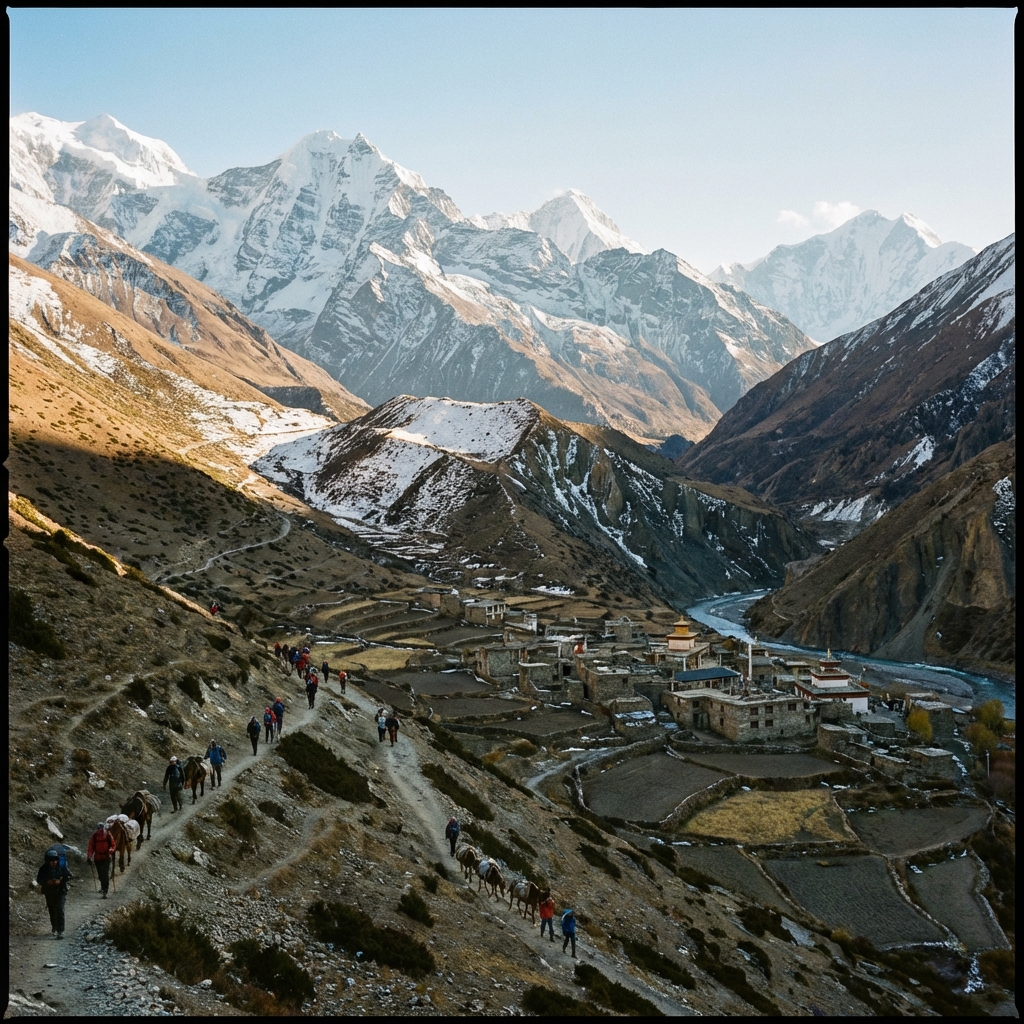
Administrative center and trek gateway. Stock up on any last-minute supplies, withdraw cash (no ATMs beyond here), and charge devices. Permits checked here before trek begins.
Mitlung
921m • Limbu
First overnight stop. Small village on Tamor River banks. Introduces you to Limbu culture and terraced farming lifestyle.
Days 5-8: Lower Ghunsa Valley Ascent
Day 5: Mitlung to Chirwa (5-6 hours)
- Follow Tamor River valley upstream
- Pass through Limbu farming villages
- Gradual ascent through subtropical forests
- Cross suspension bridges over turquoise river
Altitude: 1,270m | Distance: 10 km | Accommodation: Teahouse
Day 6: Chirwa to Sekathum (5-6 hours)
- Continue along Tamor River gorge
- Trail alternates between riverside and forested slopes
- Enter more remote sections
- Warmer subtropical climate zone
Altitude: 1,660m | Elevation Gain: 390m | Accommodation: Teahouse
Day 7: Sekathum to Amjilosa (5-6 hours)
- Steeper climbing begins
- Enter Ghunsa Khola valley
- Forest transitions from subtropical to temperate
- Leave Limbu villages; approaching Sherpa territory
Altitude: 2,510m | Elevation Gain: 850m | Accommodation: Teahouse
Day 8: Amjilosa to Gyabla (4-5 hours)
- Shorter day to aid acclimatization
- Enter magnificent old-growth rhododendron and bamboo forest
- Wildlife spotting opportunities increase
- Cooler temperatures as elevation increases
Altitude: 2,730m | Elevation Gain: 220m | Accommodation: Teahouse
Leech Season Alert
During monsoon season (June-August) and post-monsoon (September-early October), leeches are common in lower forests below 2,500m. Bring salt, tobacco, or leech repellent. Wear long pants, gaiters, and check your legs regularly during breaks. Leeches are harmless but annoying—they drop from vegetation and slip through boot eyelets. The leech zone ends as you climb above 2,500m.
Days 9-11: Acclimatization in Upper Ghunsa Valley
Day 9: Gyabla to Ghunsa (4-5 hours)
- Reach major Sherpa settlement
- Enter full Tibetan Buddhist cultural zone
- Views of Jannu (7,710m) appear
- Ghunsa is expedition base for Kanchenjunga climbers
Altitude: 3,595m | Elevation Gain: 865m | Accommodation: Teahouse
Information current as of January 2025.
Ghunsa
3,595m • Sherpa/Tibetan
Highlights: Largest village in upper valley; expedition base for Kanchenjunga climbers; monastery visits
Critical acclimatization stop. Mandatory 2-night stay recommended. Traditional Sherpa architecture with stone houses and prayer flags. Monastery offers cultural insight into Tibetan Buddhism. Stock up on snacks as shops become scarcer above.
Day 10: Acclimatization day at Ghunsa
- Essential rest day for altitude adaptation
- Acclimatization hike to Rampuk Kharka or monastery viewpoint (3,900-4,100m)
- Visit local Buddhist monastery
- Interact with expedition teams preparing for Kanchenjunga climbs
- Wash clothes, charge devices, rest
Activity: 2-3 hour acclimatization hike | Accommodation: Teahouse
Day 11: Ghunsa to Kambachen (4-5 hours)
- Trail enters alpine zone
- Treeline begins to thin
- Spectacular views of Jannu's north face
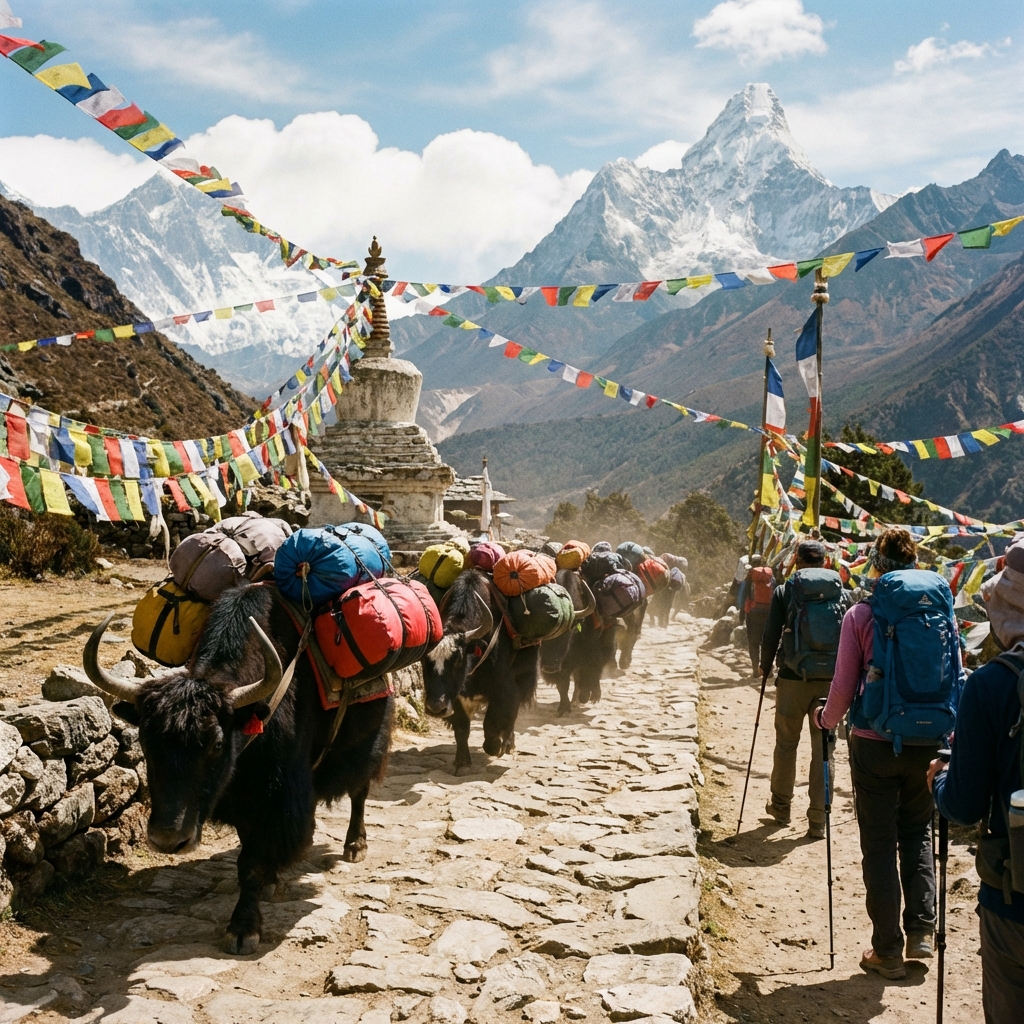
- Yaks and yak herders more common
Altitude: 4,050m | Elevation Gain: 455m | Accommodation: Teahouse/camping
The Acclimatization Principle
Ghunsa represents a critical acclimatization checkpoint. You've gained significant elevation from Mitlung (921m) to Ghunsa (3,595m) over six days. Taking a full rest day here allows your body to adapt to the altitude before pushing higher. Follow the "climb high, sleep low" principle during your acclimatization hike—go up to 4,000m+ during the day but return to sleep at 3,595m. This significantly reduces altitude illness risk in the days ahead.
Days 12-14: Approach to North Base Camp
Day 12: Kambachen to Lhonak (3-4 hours)
- Short day entering high-altitude zone
- Glacial landscapes appear
- Views of Mera Peak and other 6,000m summits
- Vegetation sparse; alpine meadow terrain
Altitude: 4,780m | Elevation Gain: 730m | Accommodation: Basic teahouse/camping
Day 13: Lhonak to Pang Pema (North Base Camp) (3-4 hours)
- Final approach to North Base Camp
- Walk alongside Kanchenjunga Glacier moraine
- Enter the inner sanctum of Kanchenjunga massif
- Afternoon at base camp for photography and exploration
Altitude: 5,143m | Elevation Gain: 363m | Accommodation: Basic shelter/camping
Day 14: Exploration day at Pang Pema, return to Lhonak (6-7 hours)
- Early morning sunrise views of Kanchenjunga's north face
- Optional hike to higher viewpoints (5,300m+)
- Views of five peaks of Kanchenjunga massif
- Explore base camp area where expeditions prepare
- Afternoon return to Lhonak for safer sleeping altitude
Altitude: High point 5,200-5,300m, sleep at 4,780m | Accommodation: Teahouse/camping
Pro Tip
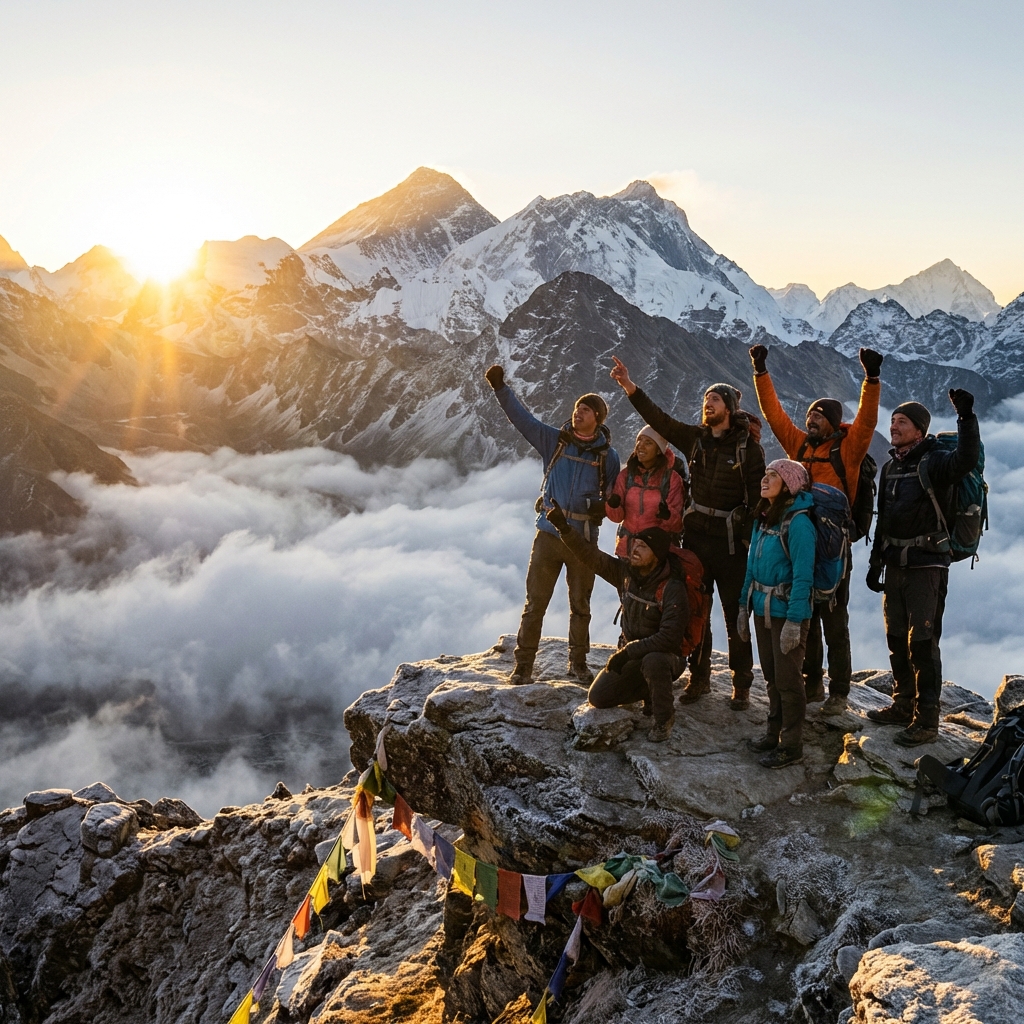
Wake before dawn at Pang Pema for the most spectacular mountain photography. Sunrise illuminates Kanchenjunga's north face in alpenglow—golden light painting the five summits. The best viewpoint is 30 minutes uphill from base camp proper toward the glacier's lateral moraine. Bring warm layers; temperatures at 5,143m at sunrise can reach -15°C to -20°C even in optimal seasons. This is the photographic payoff for your 2-week trek in.
Days 15-17: High Pass Crossing to South Side
Day 15: Lhonak to Ghunsa (6-7 hours)
- Descend back down Ghunsa Valley
- Retrace route through Kambachen
- Return to Sherpa village
- Rest and resupply before pass crossing
Altitude: 3,595m | Descent: 1,185m | Accommodation: Teahouse
Day 16: Ghunsa to Sele La Base Camp (5-6 hours)
- Leave Ghunsa Valley
- Climb toward Sele La Pass
- Enter rugged high-altitude terrain
- Camp below pass or in yak herder shelter
Altitude: 4,100m | Elevation Gain: 505m | Accommodation: Camping/basic shelter
Day 17: Sele La Base to Tseram via Sele La and Sinon La (7-9 hours)
- Major pass crossing day—start very early
- Cross Sele La Pass (4,290m)
- Descend slightly then climb to Sinon La Pass (4,660m)
- Spectacular views from both passes of Kanchenjunga massif
- Long descent to Tseram in Yalung Valley
- Physically and mentally demanding day
Note on the connecting passes: Different agencies route this crossing over a chain of passes between the Ghunsa (north) and Yalung (south) sides—commonly Sele La (4,290m), Sinon La (4,660m), and Mirgin La (4,663m). Some itineraries instead use the higher Lapsang La (around 5,160m). The exact sequence depends on snow conditions and your operator. From the high points you get clear views of Jannu (Kumbhakarna) and, in good weather, Makalu on the horizon. Snow lingers on these passes late into both trekking seasons, so micro-spikes and an early start are essential.
Altitude: High point 4,660m at Sinon La, sleep at 3,870m in Tseram | Accommodation: Teahouse/camping
Pass Crossing Day—Early Start Essential
Day 17 represents the trek's most challenging day. You'll cross two high passes (Sele La at 4,290m and Sinon La at 4,660m) in a single long day covering 14-16 km with significant elevation gain and loss. Start before sunrise (5-6 AM) to ensure you cross passes before afternoon weather deteriorates. Passes can become obscured by clouds, snow, or high winds after midday. Bring full layers, rain gear, plenty of snacks, and 3+ liters of water. This day determines whether you can complete the circuit—if weather is severe, you may need to wait an extra day or retreat to Ghunsa and exit via the same valley.
Days 18-20: Yalung Valley and South Base Camp
Day 18: Tseram acclimatization and exploration
- Rest day after demanding pass crossing
- Acclimatization hike toward Yalung base camp area
- Explore Tseram meadows
- Prepare for South Base Camp push
Altitude: 3,870m | Accommodation: Teahouse/camping
Day 19: Tseram to Ramche (3-4 hours)
- Short day ascending Yalung Valley
- Views of Kabru massif and south face of Kanchenjunga
- Reach Ramche, the South Base Camp staging area
- Afternoon views of Yalung Glacier
Altitude: 4,580m | Elevation Gain: 710m | Accommodation: Basic teahouse/camping
Day 20: Ramche to Oktang (South Base Camp) viewpoint, return to Tseram (7-8 hours)
- Early morning hike to Oktang viewpoint (4,730m)
- Spectacular views of Kanchenjunga's south face and Yalung Glacier
- Return to Ramche for breakfast
- Continue long descent to Tseram for night
- Complete the dual base camp achievement
Altitude: High point 4,730m, sleep at 3,870m | Accommodation: Teahouse/camping
Information current as of January 2025.
Tseram
3,870m
Highlights: Junction point in Yalung Valley; gateway to South Base Camp
More primitive than Ghunsa side. Smaller, more exposed to weather. Stock up on snacks from Ghunsa as choices are limited. Beautiful meadow setting with mountain views.
Ramche
4,580m
Highlights: Closest accommodation to Oktang viewpoint
Extremely basic facilities. Most groups camp here with tented camps arranged by trekking agencies. High altitude makes sleep difficult. Use for South Base Camp staging only.
Days 21-22: Descent and Exit
Day 21: Tseram to Torontan (5-6 hours)
- Descend Yalung Valley
- Re-enter forested zones
- Pass Tibetan Buddhist settlements
- Relief of reaching lower altitudes
Altitude: 2,995m | Descent: 875m | Accommodation: Teahouse
Day 22: Torontan to Yamphudin (5-6 hours)
- Continue descent through beautiful forests
- Pass through Limbu villages
- Celebrate trek completion in valley
- Warmer temperatures and richer vegetation
Altitude: 2,080m | Descent: 915m | Accommodation: Teahouse
Day 23: Yamphudin to Khamdime/Khebang, drive to Taplejung (6-7 hours trek + 4-5 hours drive)
- Final trekking day through terraced farmland
- Meet vehicle at roadhead
- Drive back to Taplejung
- Hot shower and proper bed at guesthouse
Altitude: 1,820m | Accommodation: Hotel
Day 24: Drive Taplejung to Bhadrapur, fly to Kathmandu
- Return journey by jeep and flight
- Arrive Kathmandu evening
- Celebration dinner with team
Accommodation: Hotel in Kathmandu
Route Variations and Alternatives
North Base Camp Only (16-18 days)
For those with less time or wanting a less demanding route:
- Follow itinerary to Pang Pema (North BC)
- Return via same Ghunsa Valley route
- Exit via Taplejung
- Saves 5-6 days and avoids challenging pass crossings
- Still achieves primary goal of reaching Kanchenjunga Base Camp
South Base Camp Only (16-18 days)
Less common but possible:
- Approach via Yamphudin and Yalung Valley
- Visit Oktang (South BC) from Ramche
- Return same route
- More remote with less developed infrastructure
- Fewer teahouses; more camping required
Extended Circuit with Additional Viewpoints (24-26 days)
For thorough explorers:
- Add extra rest/exploration days at Ghunsa, Lhonak, and Tseram
- Include optional side trips to viewpoints like Jannu Base Camp
- Slower pace for better altitude adaptation and photography
- More culturally immersive with extra village time
Worthwhile Side Trips and High Viewpoints
Strong, well-acclimatized trekkers can add two of the region's most rewarding extensions. Both require an extra day each and good weather:
- Drohmo Ri (around 5,800m): A demanding day-hike from Lhonak, climbing above Pang Pema for an unobstructed close-up of the Kanchenjunga north face, the Kanchenjunga Glacier, and the surrounding 7,000-8,000m wall. This is the highest viewpoint on the trek and the finest panorama you can reach without mountaineering—but the altitude makes acute mountain sickness a real risk, so attempt it only if you have spent extra acclimatization nights at Ghunsa and Kambachen.
- Jannu (Kumbhakarna) Base Camp: A side trip from Kambachen toward the foot of Jannu (7,710m), one of the most dramatic peaks in the Himalaya. The viewpoint gets you face-to-face with Jannu's sheer north face and is a quieter, lower-risk alternative to Drohmo Ri.
Discuss these extensions with your guide before the trek so the extra days and food are planned into the itinerary. Both add altitude exposure and should only be attempted by trekkers feeling strong, with no AMS symptoms.
Pro Tip
If you only have time for one high viewpoint, choose based on your altitude tolerance. Drohmo Ri delivers the single best Kanchenjunga panorama but pushes you near 5,800m; Jannu Base Camp is lower, safer, and still spectacular. Either way, add a buffer day so weather can't force you to skip it.
Cultural Diversity: A Tapestry of Ethnicities
The Kanchenjunga trek offers unparalleled cultural diversity, passing through territories of four distinct ethnic groups, each with unique languages, traditions, and religions.
Limbu Communities (Lower Valleys)
Territory: Mitlung, Chirwa, Sekathum, Yamphudin regions (921m to 1,660m)
Cultural characteristics:
- Indigenous Kirat people of eastern Nepal
- Practice Yumaism (indigenous animist religion) alongside Hinduism
- Famous for traditional tongba (fermented millet beer served hot)
- Terraced agriculture experts cultivating cardamom, millet, and rice
- Distinct architectural style with wooden homes on stilts
- Mundhum oral tradition of history and culture
What to observe:
- Elaborate wedding ceremonies if you're fortunate to witness one
- Traditional tongba drinking rituals
- Cardamom plantations—major cash crop
- Sakela festival grounds (spring and autumn harvest festivals)
Rai Communities (Mid-Elevation Forests)
Territory: Transitions zones around Amjilosa, Gyabla (2,100m to 2,730m)
Cultural characteristics:
- Also indigenous Kirat people, cousins to Limbu
- Skilled hunters and foragers with extensive plant knowledge
- Traditional animist beliefs blended with shamanic practices
- Expert at forest agriculture and honey hunting
- Known for Sakela dance and drum traditions
Sherpa Communities (Upper Ghunsa Valley)
Territory: Ghunsa, Kambachen, Lhonak (3,595m to 4,780m)
Cultural characteristics:
- Ethnic Tibetan Buddhist people
- Migrated from Tibet centuries ago
- Yak herding and high-altitude agriculture
- Strong mountaineering tradition—many work as expedition guides and porters for Kanchenjunga climbs
- Maintain Buddhist monasteries (gompas)
- Celebrate Losar (Tibetan New Year), Dumje, and other Buddhist festivals
Cultural experiences:
- Visit Ghunsa monastery and observe prayer ceremonies
- Witness butter lamp offerings
- Try Sherpa staples: tsampa (roasted barley flour), butter tea, yak cheese
- Observe traditional stone homes with Buddhist altars
Tibetan Refugees (Some Upper Valley Settlements)
Territory: Scattered settlements in upper valleys
Cultural characteristics:
- Refugees who fled Tibet in 1959 and subsequent years
- Maintain pure Tibetan Buddhist traditions
- Tibetan language primary
- Traditional wool weaving and carpet making
- Particularly devout Buddhist practitioners
Pro Tip
Learn a few basic phrases in Nepali, Limbu, and Tibetan. Lower valley Limbu communities appreciate "Jeju" (thank you in Limbu). Upper valley Sherpas and Tibetans respond warmly to "Tashi Delek" (Tibetan greeting). Simple linguistic effort breaks cultural barriers and leads to memorable interactions. Your guide can teach you appropriate greetings as you transition through cultural zones.
Difficulty Assessment
The Kanchenjunga Base Camp trek ranks among Nepal's most difficult standard trekking routes, suitable only for experienced trekkers with extensive high-altitude experience.
Physical Demands
Endurance requirements:
- 20-24 consecutive trekking days with minimal rest
- 6-9 hours of walking daily through rugged terrain
- Cumulative elevation gain exceeding 10,000m over full circuit
- Two major passes (Sele La and Sinon La) requiring stamina and determination
- Sustained periods above 4,000m affecting physical performance
Technical difficulty:
- Not technically challenging in good conditions (no ropes or mountaineering skills)
- Well-defined trails in most sections
- River crossings on bridges (some suspension bridges can be bouncy)
- Passes can require snow travel in shoulder seasons—micro-spikes useful
- Boulder fields and moraine walking near base camps
Altitude Challenges
Altitude profile:
- 13 nights spent above 3,000m
- 7+ nights above 4,000m
- 2-3 nights above 4,500m
- High point at 5,143m (Pang Pema)
- Sustained altitude exposure increases acute mountain sickness risk
Recommended preparation:
- Previous experience above 4,500m strongly recommended
- Consider acclimatization trek (e.g., Langtang Valley or Annapurna Base Camp) 4-6 weeks before
- Consult doctor about Diamox prophylaxis
- Understand AMS, HACE, and HAPE symptoms
- Be prepared to descend if symptoms develop
Remoteness and Logistics
Isolation factors:
- No roads for 150+ km once trek begins
- Limited mobile network (intermittent at best, none for long stretches)
- Helicopter evacuation only option for emergencies—weather dependent and expensive
- Days away from medical facilities beyond basic first aid
- Food and accommodation increasingly basic above 3,500m
Mental demands:
- 3+ weeks away from modern comforts
- Potential weather delays requiring flexibility
- Basic accommodations and limited menu options
- Long days requiring psychological resilience
- Group dynamics over extended period
Previous Trekking Experience Essential
Do not make Kanchenjunga your first Himalayan trek. This route demands previous high-altitude experience, ideally including at least one 4,500m+ trek completed successfully. First-time trekkers should build experience on shorter, more accessible routes like Everest Base Camp, Annapurna Circuit, or Manaslu Circuit before attempting Kanchenjunga. The remoteness and sustained altitude exposure leave no room for error or altitude-related issues in inexperienced trekkers.
Best Time to Visit
Kanchenjunga offers narrow seasonal windows for optimal trekking. The remoteness and high altitude make weather patterns critical to success and safety.
Autumn Season (September - November)
Peak months: October - Early November
Advantages:
- Most stable weather patterns of the year
- Clear, crisp air providing exceptional mountain views
- Post-monsoon landscapes lush and green
- Comfortable daytime temperatures in lower valleys (15-20°C)
- Lower avalanche risk on passes
- Rhododendron forests at their greenest
Disadvantages:
- Most popular season, though crowds remain minimal compared to Everest/Annapurna
- October can have occasional post-monsoon precipitation
- Nights increasingly cold above 4,000m (-10 to -15°C)
- Some snow possible on high passes by late November
Best for: First-time Kanchenjunga trekkers, photographers seeking clear mountain views, those prioritizing weather stability
Spring Season (April - May)
Peak months: Late April - May
Advantages:
- Rhododendron forests in spectacular bloom—entire mountainsides covered in red, pink, and white flowers
- Warmer temperatures overall
- Dry weather before monsoon
- Wildlife more active as winter ends
- Longer daylight hours
- Lower valleys come alive with spring farming activities
Disadvantages:
- Afternoon clouds can obscure mountain views
- Warmer temps increase afternoon rainfall possibility
- Higher avalanche risk on passes due to spring snow melt
- Dust and haze can reduce visibility in lower valleys
- Slightly more crowded than autumn (but still very quiet)
Best for: Rhododendron enthusiasts, botanists, wildlife watchers, those who prefer warmer trekking conditions
Winter Season (December - February)
Generally not recommended for standard trekkers
Challenges:
- Extreme cold, especially above 4,000m (nighttime temperatures -20 to -30°C)
- Heavy snowfall can block passes (Sele La and Sinon La often impassable)
- Many teahouses close in upper elevations
- Short daylight hours
- Serious avalanche risk
- Difficult helicopter evacuation if needed
Possible for: Experienced winter trekkers with full camping support, cold-weather gear, and flexibility for potential route changes or cancellations
Monsoon Season (June - August)
Not recommended
Challenges:
- Heavy rainfall making trails muddy, slippery, and dangerous
- Leeches below 2,500m
- Obscured mountain views due to constant clouds
- Landslide and rockfall risk
- Flooded rivers making crossings difficult or impossible
- High humidity reducing comfort
- Most teahouses close or operate minimally
| Month | High | Low | Conditions | Crowds | Notes |
|---|---|---|---|---|---|
| January | -8°C to -5°C | -20°C to -25°C | Low | Very Low | Extreme cold; passes often blocked by snow |
| February | -6°C to -3°C | -18°C to -22°C | Low | Very Low | Still very cold; challenging winter conditions |
| March | -2°C to 2°C | -12°C to -15°C | Moderate | Low | Transitional; early expeditions begin |
| AprilBest | 2°C to 6°C | -8°C to -12°C | Moderate | Moderate | Spring begins; rhododendrons bloom; weather improving |
| MayBest | 4°C to 8°C | -5°C to -10°C | Moderate-High | High | Peak spring; best rhododendrons; warming temps |
| June | 6°C to 10°C | -3°C to -6°C | Very High | Low | Monsoon begins; clouds obscure views; not recommended |
| July | 7°C to 11°C | -2°C to -4°C | Very High | Very Low | Peak monsoon; constant rain and clouds; avoid |
| August | 7°C to 11°C | -2°C to -5°C | Very High | Very Low | Monsoon continues; trails muddy; avoid |
| September | 5°C to 9°C | -5°C to -8°C | High | Moderate | Early autumn; monsoon ending; views improving |
| OctoberBest | 2°C to 6°C | -8°C to -12°C | Low | Very High | Peak season; stable weather; crystal clear views |
| NovemberBest | -2°C to 3°C | -12°C to -18°C | Low | Moderate | Excellent conditions early month; gets colder late month |
| December | -6°C to -2°C | -18°C to -22°C | Low | Very Low | Winter sets in; very cold; passes may have snow |
Cost Breakdown
The Kanchenjunga Base Camp trek is one of Nepal's more expensive treks due to remoteness, restricted area permit requirements, and mandatory guide service. For how these figures compare across the country, see our complete guide to Nepal trekking costs.
Typical Organized Trek Package: $3,000 - $5,500 USD
All-inclusive package (most common) - $4,000-$5,500
Includes:
- Restricted Area Permit (RAP) processing and fees
- Kanchenjunga Conservation Area Permit
- TIMS card
- Licensed trekking guide (mandatory)
- Porter service (typically 1 porter per 2 trekkers)
- All teahouse accommodation during trek
- Three meals per day (breakfast, lunch, dinner) during trek
- Tea/coffee with meals
- Kathmandu to Bhadrapur to Taplejung transfers
- Internal flights (Kathmandu-Bhadrapur return)
- Ground transportation
- Guide and porter insurance, meals, and accommodation
- Group trekking gear if camping sections required
- Welcome and farewell dinners in Kathmandu
Excludes:
- International flights to/from Nepal
- Nepal visa ($50 for 30 days)
- Kathmandu hotel accommodation (add $30-100/night)
- Travel insurance (mandatory - $150-300)
- Personal trekking gear and clothing
- Extra drinks (alcohol, bottled water, soft drinks)
- Hot showers during trek ($3-5 per shower)
- Battery charging ($2-5 per device above 3,500m)
- WiFi use (where available - $5-10/day)
- Tips for guide and porter team ($200-400 recommended total)
- Emergency evacuation costs if needed
Budget Breakdown by Category
Permits and entry fees: $100-150
- RAP: $20/week x 4 weeks = $80
- Kanchenjunga Conservation Area: $20
- TIMS: $20
Transportation: $300-500
- Kathmandu-Bhadrapur flight: $150-220 one way x 2 = $300-440
- Ground transportation (jeeps): $50-100
Guide and porter service: $800-1,200
- Licensed guide: $30-40/day x 22 days = $660-880
- Porter: $20-25/day x 22 days = $440-550
- Guide/porter insurance, food, accommodation: included
Accommodation and food: $800-1,200
- Teahouse accommodation: $5-10/night x 20 nights = $100-200
- Meals: $25-35/day x 22 days = $550-770
- Hot drinks: $100-150
Miscellaneous: $200-400
- Showers, charging, WiFi, snacks, tips, contingencies
Budget Option (Minimal Cost): $2,500-3,500
Possible by:
- Taking overnight bus instead of flight ($40 vs $440)
- Smaller group size split costs less efficiently
- Very basic teahouse choices
- Minimal porter support (carry more yourself)
- Sharing guide cost with other trekkers if finding partners
Warning: Going too budget compromises safety, guide quality, and emergency response capability. This is not a trek to cut corners on.
Luxury Option: $6,000-8,000+
Enhanced experience includes:
- Premium guide with mountaineering experience and naturalist knowledge
- Additional porter support (lighter personal loads)
- Higher-end teahouse choices where available
- Supplementary camping with comfortable tents in some sections
- Satellite phone for emergency communication
- Better insurance coverage for guide/porter team
- Extra rest days built into itinerary
- Private vehicle arrangements
Pro Tip
Book through a reputable Nepali trekking agency at least 2-3 months in advance. Kanchenjunga's RAP processing, guide availability, and logistics require advance planning. Spring (April-May) and autumn (October-November) seasons book up months ahead. Ask about group size—smaller groups (2-6 trekkers) often have more flexible itineraries and better guide interaction than larger groups (10-15 trekkers). Verify what's truly included in your package; hidden costs can add up significantly.
Permit Requirements and Regulations
The Kanchenjunga region's restricted status means more complex permit requirements than most Nepal treks. For the full step-by-step process, current fees, and where each document is issued, see our dedicated Kanchenjunga permit guide and the overview of restricted area permits in Nepal.
Required Permits
1. Restricted Area Permit (RAP) - MANDATORY
Cost: USD $20 per person per week for first 4 weeks; $25/week after
Process:
- Can ONLY be obtained through registered trekking agency
- Agency submits application to Nepal Immigration Office in Kathmandu
- Processing takes 1-2 business days
- Requires 2+ trekkers traveling together
- Requires licensed trekking guide
Documents needed:
- Passport copy and 2 passport photos
- Nepal visa
- Trekking agency booking confirmation
Validity: Issued for specific dates and route
2. Kanchenjunga Conservation Area Permit (KCAP)
Cost: NPR 2,000 (~USD $20) for foreign nationals; NPR 500 for SAARC
Process:
- Obtainable through trekking agency or at entry checkpoint in Taplejung
- Funds support conservation projects
3. TIMS Card (Trekkers' Information Management System)
Cost: USD $20
Process:
- Arranged by trekking agency
- Tracks trekker movements for safety
Mandatory Requirements
Licensed guide required:
- All Kanchenjunga trekkers must be accompanied by government-licensed guide
- Guide must be registered with trekking agency
- Solo trekking absolutely prohibited
Minimum group size:
- At least 2 trekkers required
- If traveling solo, agency can match you with other trekkers
Registered agency booking:
- Cannot obtain RAP independently
- Must book through Nepal Tourism Board registered agency
Restricted Area Rationale
The RAP system exists because Kanchenjunga:
- Borders Tibet (China) to the north
- Borders Sikkim, India to the east
- Lies in sensitive geopolitical zone
- Requires management to preserve pristine environment
- Limits trekker numbers to sustainable levels
Benefits of restrictions:
- Keeps region uncrowded and pristine
- Ensures all trekkers have qualified guides for safety
- Provides government tracking for rescue purposes
- Generates conservation funding
- Preserves cultural authenticity of remote communities
Permit Checkpoint Locations
Your permits will be checked at multiple points: Taplejung (trek start), various trail checkpoints throughout the route, and sometimes by army posts near border areas. Keep permits with you at all times—your guide will manage them but you should carry photocopies. Lost permits in remote areas create serious complications. Laminate or waterproof your permit documents.
Accommodation and Facilities
Accommodation quality and availability decrease dramatically as you gain altitude. Understanding what to expect helps set realistic expectations.
Lower Valleys (Mitlung to Amjilosa: 921m-2,510m)
Teahouse standard:
- Basic but functional lodges
- Private or shared twin rooms
- Shared bathrooms (squat toilets common)
- Running water (cold or solar-heated)
- Electricity available in evenings (3-6 hours)
- Some mobile network coverage
Facilities:
- Communal dining rooms with benches
- Wood-burning or kerosene stoves for heat
- Basic menus: dal bhat, noodles, fried rice, tea
- Small shops in some villages
Cost: $3-5 per bed; meals $4-8
Mid-Elevation (Gyabla to Ghunsa: 2,730m-3,595m)
Teahouse standard:
- Smaller lodges with fewer rooms
- Shared twin rooms (private increasingly rare)
- Shared bathrooms outside building
- Cold water only (hot water for washing in bucket, extra charge)
- Electricity intermittent or none
- No mobile network
Facilities:
- Dining halls with central stove (gather for warmth)
- Limited menus focusing on carbohydrate-heavy options
- Hot showers available for $3-5 (solar or wood-heated, limited hours)
Cost: $5-8 per bed; meals $6-10
Highlight location: Ghunsa
- Best facilities in upper valley
- Multiple teahouse choices
- Bakery with fresh bread and pastries
- Charging available ($3-5 per device)
- Hot showers
- Monastery visit opportunity
High Altitude (Kambachen to Pang Pema: 4,050m-5,143m)
Teahouse/shelter standard:
- Very basic stone shelters or yak herder huts
- Dormitory-style sleeping on platforms
- No private rooms
- Outdoor or minimal toilet facilities
- No running water (melt snow or use streams)
- No electricity
- No heat in sleeping areas
Facilities:
- Minimal cooking facilities
- Very limited menu (dal bhat, noodles, tea/soup)
- Food quality and variety decreases
- Slow cooking times at altitude
Cost: $8-12 per bed; meals $8-15
Note: Many groups switch to camping above 4,500m for comfort and food quality. Trekking agencies can provide camping support.
South Side (Yalung Valley: Tseram to Ramche)
Standard:
- Even more basic than north side
- Fewer teahouses, smaller structures
- Camping often preferred or required
- Facilities minimal to nonexistent at Ramche
Strategy: Most organized groups arrange camping support for Yalung Valley sections for better comfort and food variety.
Food and Menu Options
Typical trek menu items:
- Dal bhat (rice and lentil soup)—unlimited refills, best value and energy
- Fried rice or noodles
- Momo (dumplings)—when available in lower villages
- Tibetan bread (kapse)
- Potatoes in various forms
- Soup (vegetable, noodle)
- Tea (milk tea, lemon tea, ginger tea)
- Instant coffee
- Limited eggs and vegetables in lower sections
Dietary considerations:
- Vegetarian options plentiful
- Vegan possible but challenging (butter/milk common)
- Gluten-free difficult (rice-based dishes your main option)
- Western food nonexistent above Ghunsa
Eating strategy:
- Eat dal bhat whenever possible—unlimited refills provide maximum calories
- Avoid meat above 3,000m (refrigeration unreliable)
- Drink 4-5 liters of fluids daily for altitude adaptation
- Bring supplementary energy bars, nuts, and favorite snacks
- Lower villages are last opportunity to buy snacks in bulk
Pro Tip
Bring a high-quality water purification system. Above 3,500m, water sources are glacial streams that need treatment. Tablets, filters, or UV sterilizers all work. Boiled water is available for purchase but expensive ($3-5 per liter above 4,000m). Budget trekkers should purify their own water. Cold water intake is hard at altitude—request hot water for bottles to make drinking easier.
Safety and Emergency Preparedness
The Kanchenjunga region's remoteness demands serious safety planning. There's minimal rescue infrastructure and you're days from medical care.
Altitude Illness Prevention
Acute Mountain Sickness (AMS) prevention:
- Follow itinerary's acclimatization schedule—don't rush
- Ascend no more than 500m sleeping altitude gain per day above 3,000m
- Build in rest days at Ghunsa (day 10) and Tseram (day 18)
- "Climb high, sleep low" on rest days
- Hydrate constantly (4-5 liters daily)
- Avoid alcohol and sleeping pills
- Monitor yourself and teammates for symptoms
AMS symptoms:
- Headache (most common)
- Nausea or vomiting
- Fatigue despite rest
- Dizziness
- Difficulty sleeping
Treatment: Stop ascending. Rest. Hydrate. If symptoms worsen, descend immediately.
HACE (High Altitude Cerebral Edema)—life-threatening:
- Severe headache unrelieved by medication
- Confusion, disorientation
- Loss of coordination (ataxia test: can't walk straight line)
- Altered consciousness
Treatment: Immediate descent—medical emergency
HAPE (High Altitude Pulmonary Edema)—life-threatening:
- Shortness of breath at rest
- Persistent cough (possibly with pink frothy sputum)
- Chest tightness
- Blue lips or fingernails
Treatment: Immediate descent—medical emergency
Descent Is the Only Cure
If you or a teammate develops severe altitude illness symptoms (HACE or HAPE), the only effective treatment is immediate descent of at least 500-1,000m. Do not wait. Do not try to tough it out. These conditions can be fatal within hours. Your guide is trained to recognize symptoms and will initiate evacuation, but you must listen to your body and report symptoms early. Hundreds of meters of descent can be life-saving even if helicopter evacuation isn't immediately possible.
Medical Facilities and Evacuation
Medical care availability:
- No medical facilities beyond basic first aid posts above Taplejung
- Guides carry first aid kits
- No hospitals for 100+ km
- No oxygen available beyond what expedition teams carry
- No rescue helicopters based nearby
Helicopter evacuation:
- Only option for serious emergencies
- Cost: $5,000-$10,000 USD
- Weather-dependent (cannot fly in clouds, storms, high winds)
- May take 1-3 days to arrange and execute
- Helicopter cannot land at all locations—may need to walk to pickup zone
- Base camps and passes may be above safe helicopter altitude
Evacuation insurance:
- MANDATORY for Kanchenjunga trek
- Must cover altitude up to 6,000m
- Should cover helicopter rescue and medical repatriation
- Confirm policy covers "trekking in Nepal at altitude"
- Recommended providers: World Nomads, Global Rescue, IMG
- Cost: $150-300 for 3-4 week coverage
Communication:
- Mobile network sporadic at best; absent for long stretches
- Your guide should carry satellite phone or emergency beacon
- Consider renting personal satellite device (InReach, SPOT)
- Some agencies include satellite communication in packages
Emergency Contacts
Nepal Emergency Services
National emergency number (limited use in remote areas)
Himalayan Rescue Association
Altitude sickness information and rescue coordination
Your Trekking Agency
Primary emergency contact with local resources
International SOS Nepal
International emergency medical assistance (members)
Helicopter evacuation cost: $5,000-$10,000 USD depending on pickup location and weather conditions
Comprehensive travel insurance covering high-altitude trekking (6,000m), helicopter evacuation, and medical repatriation is MANDATORY. Evacuation from Kanchenjunga region is weather-dependent and not guaranteed. Satellite phone or emergency beacon highly recommended. Budget 2-4 days for evacuation to Kathmandu in worst-case scenarios.
Weather Hazards
Pass conditions:
- Sele La and Sinon La can become impassable with snow
- Afternoon storms common in spring/summer
- White-out conditions possible
- Always cross passes early in morning
Avalanche risk:
- Higher in spring due to snow melt
- Avoid high-risk slopes during warming
- Listen to local guide advice
- Some sections can be prone to rockfall
River crossings:
- Glacial rivers swell with afternoon melt
- Cross in morning when water lowest
- Never attempt dangerous crossing—wait for safer conditions
Cold exposure:
- Temperatures at base camps can reach -15 to -25°C at night
- Proper layering essential
- Frostbite risk on fingers, toes, nose, ears
- Carry windproof, waterproof outer layers
Personal Safety
Physical preparation:
- Build cardiovascular endurance (run, cycle, hike with loaded pack)
- Train for 3-6 months before trek
- Practice hiking 6-8 hours daily for multiple consecutive days
- If possible, complete acclimatization trek 4-6 weeks before
Mental preparation:
- Prepare for 3 weeks of discomfort and challenge
- Practice patience with delays and difficulties
- Maintain positive group dynamics
- Accept that some days will be hard
Health precautions:
- Consult doctor 2-3 months before trek
- Update vaccinations (Hepatitis A, Typhoid, Tetanus)
- Bring comprehensive first aid kit
- Pack altitude sickness medication (Diamox) after medical consultation
- Bring antibiotics for gastrointestinal issues (prescribe with doctor)
Kanchenjunga vs Makalu: Remote Trek Comparison
Both Kanchenjunga and Makalu Base Camp represent Nepal's most remote expedition-style treks. Here's how they compare:
| Route | Duration | Max Altitude | Difficulty | Permits | Teahouses | Crowds |
|---|---|---|---|---|---|---|
| Kanchenjunga BC Circuit | 20-24 days | 5,143m (Pang Pema) | Very Difficult | RAP + KCA + TIMS | Basic; camping some sections | Very Low |
| Makalu Base Camp | 16-20 days | 4,870m | Very Difficult | Makalu-Barun NP + TIMS | Minimal; camping above 3,500m | Very Low |
| Manaslu Circuit | 14-18 days | 5,160m (Larkya La) | Challenging | RAP + Manaslu CAP + TIMS | Adequate | Moderate |
| Everest Base Camp | 12-16 days | 5,364m | Moderate-Challenging | Sagarmatha NP + TIMS | Excellent | Very High |
When to choose Kanchenjunga over Makalu:
- Want dual base camp experience (North and South)
- Interested in extreme cultural diversity (four ethnic groups)
- Prefer circuit route over out-and-back
- Desire slightly better teahouse infrastructure
- Want to circle an entire 8,000m massif
When to choose Makalu over Kanchenjunga:
- Have less time (shorter trek)
- Prefer more wilderness camping experience
- Want even fewer trekkers
- Interested in more dramatic ecological transitions (jungle to glacier)
- Seeking simpler logistics (no pass crossings)
What both offer:
- True Himalayan remoteness
- Minimal tourism infrastructure
- Expedition-grade challenges
- Spectacular 8,000m peak views
- Pristine biodiversity
- Physical and mental test of endurance
Packing List Essentials
Clothing Layers
Base layers:
- 3-4 moisture-wicking t-shirts or base layer tops
- 2 pairs trekking pants (convertible zip-off useful)
- 1 pair thermal underwear (top and bottom) for high altitude
- 4-5 pairs trekking socks
- 4-5 pairs underwear
Mid layers:
- 1-2 fleece jackets or synthetic insulated jacket
- 1 down jacket (high loft, packable) for high altitude and evenings
Outer layers:
- 1 waterproof, windproof jacket (Gore-Tex or similar)
- 1 waterproof, windproof pants
- 1 insulated parka for base camps (optional but recommended)
Extremities:
- Warm hat (beanie or balaclava)
- Sun hat with brim
- Lightweight gloves (for lower elevations)
- Heavy insulated gloves or mittens (for high altitude)
- Buff or scarf for neck protection
Footwear
- Trekking boots: Broken-in, waterproof, ankle support essential
- Camp shoes: Lightweight sandals or running shoes for evenings
- Gaiters: Useful for snow on passes and keeping debris out of boots
- Crampons/micro-spikes: May be needed for pass crossings in shoulder season
Gear
Sleeping:
- Sleeping bag rated to -15°C to -20°C (high altitude nights are cold)
- Sleeping bag liner (adds warmth and keeps bag clean)
- Inflatable sleeping pad (teahouse mattresses are thin; pad adds comfort and insulation)
Trekking:
- Trekking poles (two recommended for stability and knee protection)
- Daypack (30-40L for daily essentials)
- Large duffel bag (70-80L for porter to carry main gear)
- Headlamp with extra batteries
- Sunglasses with UV protection (Category 4 for high altitude)
- Water bottles (2 x 1L) or hydration bladder (3L)
- Water purification (tablets, filter, or UV sterilizer)
Navigation and safety:
- Map and compass (backup to guide)
- Whistle
- Multi-tool or knife
- Emergency space blanket
- Lighter or matches
- Cord/rope (5-10m paracord useful)
Personal Items
Toiletries:
- Sunscreen SPF 50+ (high altitude UV intense)
- Lip balm with SPF
- Biodegradable soap
- Toilet paper and trowel (some toilets lack paper)
- Hand sanitizer
- Personal medications
- First aid kit (comprehensive)
Electronics:
- Phone with offline maps downloaded
- Camera with extra batteries and memory cards
- Power bank (20,000+ mAh recommended)
- Charging cables
- Plug adapter (Nepal uses Type C/D/M)
Documents:
- Passport and copies
- Permits (RAP, KCA, TIMS)—guide usually carries originals
- Travel insurance policy and emergency contact numbers
- Cash (USD and Nepali Rupees)—no ATMs beyond Taplejung
- Credit card (limited use but good backup)
Miscellaneous:
- Books or e-reader for rest days and evenings
- Journal and pen
- Playing cards or travel games
- Snacks from home (energy bars, nuts, chocolate, electrolyte mixes)
- Earplugs (dormitory sleeping and dog barking in villages)
- Stuff sacks or packing cubes for organization
- Dry bags for waterproofing important items
What Not to Bring
- Excessive clothing changes (you'll wear same clothes for days)
- Heavy books (bring e-reader)
- Luxury items that add weight
- Expensive jewelry
- Non-essential electronics
Pro Tip
Pack your duffel bag so you can access key items without unpacking everything. Use packing cubes or stuff sacks to organize by category: sleeping gear, clothing, toiletries, etc. You'll be living out of this bag for three weeks, and teahouse rooms are small with limited space to spread out. Efficient packing makes daily life much easier. Keep daily essentials (water, snacks, layers, sunscreen, camera) in your daypack so you don't need to dig through your duffel during trek days.
Training and Preparation
Physical Training (3-6 Months Before)
Cardiovascular endurance:
- Running, cycling, swimming 4-5 times per week
- Build to 60+ minutes sustained aerobic activity
- Include interval training to simulate altitude challenges
- Gradual progression—don't overtrain and risk injury
Hiking with weight:
- Practice long hikes (4-8 hours) with loaded daypack (8-12 kg)
- Include elevation gain/loss to simulate Kanchenjunga terrain
- Back-to-back hiking days to simulate consecutive trekking days
- Build to 15+ km hikes with 1,000m+ elevation gain
Strength training:
- Leg strength: squats, lunges, step-ups
- Core strength: planks, mountain climbers
- Upper body for trekking poles and carrying daypack
- 2-3 strength sessions per week
Altitude preparation:
- If possible, complete acclimatization trek 4-6 weeks before (e.g., Langtang Valley, Annapurna Base Camp, or Everest Base Camp)
- Consider altitude simulation training if available
- Understand your body's altitude response
Mental Preparation
Psychological resilience:
- Prepare for 3 weeks of discomfort
- Practice patience with delays and challenges
- Develop strategies for managing difficult days
- Research the trek thoroughly so you know what to expect
Group dynamics:
- If trekking with friends, discuss expectations openly
- If joining organized group, be prepared for varied paces and personalities
- Practice flexibility and compromise
- Maintain positive attitude even during tough moments
Health Preparation
Medical consultation:
- Visit doctor 2-3 months before trek
- Discuss altitude sickness prevention (Diamox prescription)
- Update vaccinations
- Discuss any pre-existing conditions and trek suitability
- Get prescriptions for antibiotics (for gastrointestinal issues) and pain medication
Dental check:
- Visit dentist before trek
- Address any potential issues (untreated cavities can worsen at altitude and in cold)
General health:
- Get in best health possible before trek
- Address any niggling injuries
- Ensure you're not recovering from illness when trek begins
Frequently Asked Questions
The Kanchenjunga Experience: What Makes It Special
The Kanchenjunga Base Camp trek isn't just another Himalayan adventure—it's a pilgrimage into one of Earth's last wild places, a journey that tests your limits while rewarding you with experiences few trekkers will ever know.
What you'll remember:
The Solitude: Unlike the crowded trails of Everest and Annapurna, Kanchenjunga offers true remoteness. Days pass seeing only your group, occasional yak herders, and local villagers living centuries-old lifestyles. The silence of the mountains, broken only by wind and distant avalanches, creates a meditative quality absent from busier regions.
The Cultural Tapestry: Few treks offer such cultural diversity in a single journey. You begin among Limbu farmers cultivating terraced cardamom fields, traverse Rai hunting communities in mid-elevation forests, ascend into Sherpa Buddhist villages with prayer-flag-draped monasteries, and encounter Tibetan refugee communities preserving pure Buddhist traditions. Each ethnicity brings distinct languages, architecture, food, festivals, and worldviews—a living anthropological exhibition.
The Dual Achievement: Standing at both North and South Base Camps of the world's third-highest mountain is an achievement shared by only a small percentage of Himalayan trekkers. The satisfaction of circling the entire Kanchenjunga massif, crossing challenging passes, and viewing the sacred peak from multiple perspectives creates a completion few other treks provide.
The Wilderness: Kanchenjunga Conservation Area protects ecosystems ranging from subtropical jungle to glacial moraine. Red panda habitat, ancient rhododendron forests ablaze with spring blooms, alpine meadows dotted with medicinal plants, and permanent snow peaks create ecological drama unmatched in accessibility. This is wilderness on a scale that feels primordial and untouched.
The Challenge: There's profound satisfaction in completing one of Nepal's most demanding treks. The physical challenge of 20+ consecutive trekking days, the mental fortitude required to manage altitude and discomfort, the adaptability demanded by basic conditions and potential weather delays—these challenges forge memories that last a lifetime. You return home knowing you accomplished something genuinely difficult.
The Sacred Mountain: Kanchenjunga isn't just a mountain—it's a deity to local communities. The name translates to "Five Treasures of Snow," each peak representing a divine storehouse. Standing beneath this sacred massif, watching alpenglow paint the five summits at sunrise, you feel the mountain's spiritual weight. Climbers who summit traditionally stop short of the true peak out of respect—making Kanchenjunga one of the few 8,000m peaks whose summit remains virgin.
This is not a trek that coddles or comforts. Kanchenjunga demands you rise to its challenges, adapt to its conditions, and earn every viewpoint through sustained effort. But for those who answer its call with preparation, respect, and determination, it offers an experience that transcends tourism—a genuine expedition into one of Asia's last wild corners.
Final Considerations
Before committing to the Kanchenjunga Base Camp trek, honestly assess:
Time availability: Can you commit 24-28 days total (including Kathmandu buffer days)? This trek cannot be rushed—tight schedules increase altitude illness risk and prevent weather flexibility.
Physical fitness: Are you in exceptional cardiovascular and muscular shape? Can you hike 6-8 hours daily for 20+ consecutive days? Fitness cannot be faked on Kanchenjunga.
High-altitude experience: Have you successfully completed previous high-altitude treks (4,500m+)? Do you know how your body responds to altitude? First-time high-altitude trekkers should not attempt Kanchenjunga.
Financial commitment: Can you budget $4,000-$5,500 for the trek plus insurance, gear, tips, and contingencies? Budget constraints that compromise safety or force corners-cutting make Kanchenjunga inappropriate.
Comfort with remoteness: Are you comfortable being off-grid for 3 weeks with minimal communication, basic facilities, and limited rescue capability? This trek demands psychological comfort with true wilderness conditions.
Weather flexibility: Can your schedule absorb 2-3 extra days for weather delays? Rigid timelines and non-changeable flights create dangerous pressure to push on in unsafe conditions.
Cultural sensitivity: Are you interested in respectful cultural immersion? Kanchenjunga passes through communities living traditional lifestyles—bringing appropriate respect and curiosity enhances everyone's experience.
If you can answer "yes" to these questions, the Kanchenjunga Base Camp trek awaits as one of Himalayan trekking's ultimate achievements. If any answers are "no" or uncertain, consider building more experience with shorter, less remote treks before attempting this expedition.
The third-highest mountain in the world rises in pristine remoteness on Nepal's far eastern frontier, awaiting those bold enough to seek it. The treasures of Kanchenjunga—spectacular wilderness, cultural richness, and the satisfaction of genuine adventure—belong to those willing to invest the preparation, time, and effort this sacred peak demands.
Related Treks and Resources
- Makalu Base Camp Trek - Alternative Remote Eastern Trek
- Manaslu Circuit Trek - Another Restricted Area Experience
- Everest Base Camp Trek - More Accessible High-Altitude Trek
- Everest Three Passes Trek - Challenging Everest Region Circuit
- Langtang Valley Trek - Acclimatization Trek Option
- Annapurna Circuit Trek - Classic High-Altitude Circuit
- Upper Mustang Trek - Another Remote Restricted Area Trek
- Nar Phu Valley Trek - Remote Valley with Restricted Area Permit
- Kanchenjunga Permit Guide - RAP, KCAP & TIMS Explained
- Kanchenjunga Region Overview - Eastern Nepal Trekking Hub
Ready to embark on the Kanchenjunga adventure? This remote expedition to Nepal's third-highest peak demands exceptional preparation, fitness, and commitment—but rewards you with one of Asia's last great wilderness experiences, dual base camp achievement, and cultural richness found nowhere else in the Himalayas.
Start planning your Kanchenjunga Base Camp trek at least 3-6 months in advance. Research reputable trekking agencies, book permits early (spring and autumn seasons fill up months ahead), begin physical training, gather expedition gear, and prepare for the adventure of a lifetime beneath the Five Treasures of Snow.
The Route
Interactive Route Map
Explore the trek on a topographic map. Tap a waypoint for elevation, accommodation, and day-by-day detail. Scroll to zoom.
Loading interactive map…