| Route | Duration | Max Altitude | Difficulty | Permits | Teahouses | Crowds |
|---|---|---|---|---|---|---|
| Khopra Ridge | 7-9 days | 3,660m (4,660m lake) | Moderate-Difficult | $40 | Community Lodges | Very Low |
| Poon Hill | 4-5 days | 3,210m | Easy-Moderate | $40 | Excellent | Moderate-High |
| Annapurna Base Camp | 10-14 days | 4,130m | Moderate | $40-45 | Excellent | Moderate |
| Mardi Himal | 5-7 days | 4,500m | Moderate | $40 | Good | Low |
Khopra Ridge Trek: 7-9 Day Itinerary, Cost & Complete Guide
The Khopra Ridge trek is a 7-9 day, moderate-to-difficult loop in the Annapurna region that reaches a 3,660m ridge viewpoint with 360-degree views of Dhaulagiri (8,167m) and Annapurna I (8,091m). It uses community lodges instead of commercial teahouses, sees only 10-20 trekkers a day, and offers an optional Khayer Lake pilgrimage at 4,660m. Guided packages cost $800-$1,600 per person, and ACAP plus a TIMS card are required.
There's a profound difference between visiting a place and becoming part of its story. The Khopra Ridge Trek invites you into the latter—a journey where every night's accommodation directly funds village schools, every meal supports local farmers, and every step forward helps preserve both mountain culture and environment.
Opened to trekkers only in 2012 with community lodges established in 2014, Khopra Ridge (Khopra Danda) represents Nepal's most successful experiment in responsible tourism. Here, at 3,660 meters on a spectacular ridge between the Annapurna and Dhaulagiri massifs, you'll experience the same jaw-dropping Himalayan panoramas that draw thousands to neighboring Poon Hill—but with one crucial difference: you might have the entire viewpoint to yourself.
Twenty-two named peaks rise around you, including two 8,000-meter giants: Dhaulagiri (8,167m) to the west and Annapurna I (8,091m) to the north. The Kali Gandaki Gorge—the world's deepest—ribbons far below, while Machapuchare's sacred fishtail summit pierces the sky. For those seeking even greater adventure, the optional pilgrimage to sacred Khayer Lake at 4,660 meters adds a challenging high-altitude dimension that few Annapurna treks can match.
What truly sets Khopra apart isn't just the solitude or the views—it's the knowledge that your journey matters. The community lodge model pioneered by local hero Mahabir Pun ensures that tourism revenue stays within villages, funding education, healthcare, and sustainable development. You're not just a visitor passing through; you're an active participant in these communities' futures.
Community Impact
100% of profits from Khopra Ridge community lodges return directly to local villages. Your trek funds: village schools and education programs, community health clinics, sustainable agriculture initiatives, women's empowerment projects, and forest conservation efforts. Unlike commercial teahouse treks, every rupee you spend creates measurable positive impact.
This comprehensive guide provides everything you need to plan your Khopra Ridge adventure: detailed itineraries for standard 7-day and extended 9-day options, honest assessments of the challenging Khayer Lake day, cultural insights into Gurung and Magar village life, practical advice for maximizing your community impact, and the real comparison between Khopra and more famous alternatives.
Route Snapshot
7-9 days (10-14 days with extensions)
3,660m ridge (4,660m Khayer Lake)
65-75 km (40-47 miles)
Moderate to Difficult
Oct-Nov (Autumn), Mar-May (Spring)
Annapurna Conservation Area
Nayapul (via Pokhara)
Nayapul or Tatopani
ACAP + TIMS Card
Community Lodges
$800-$1,600 (guided package)
10-20 trekkers (vs 200+ Poon Hill)
Key Viewpoints and Highlights:
| Location | Altitude | Highlight | Views |
|---|---|---|---|
| Ghandruk Village | 1,940m | Gurung cultural hub, ACAP museum | Annapurna South, Machapuchare |
| Tadapani Ridge | 2,630m | Rhododendron forest junction | Panoramic Annapurna range |
| Bayeli Kharka | 3,420m | Alpine meadow, first Dhaulagiri views | Dhaulagiri massif emerges |
| Khopra Ridge | 3,660m | 360° panorama viewpoint | 22 named peaks, sunrise/sunset |
| Khayer Lake | 4,660m | Sacred pilgrimage site (optional) | Close-up Annapurna cirque |
Why Khopra Ridge is Nepal's Responsible Trekking Alternative
The trekking industry has transformed Nepal's mountains—sometimes for better, often for worse. Trails become highways, villages become tourist factories, and the very authenticity that drew travelers in the first place gradually disappears under the weight of commercialization.
Khopra Ridge offers a different vision.
The Community Lodge Revolution
In 2012, when Khopra opened to tourism, local communities faced a choice: follow the commercial teahouse model that enriched individual families but created inequality and environmental stress, or try something unprecedented. They chose the latter.
The community lodge network operates as a cooperative where all profits return to the village collective rather than individual owners. This means:
Direct Educational Impact: Every trek night funds teacher salaries, school supplies, and scholarship programs for local children who might otherwise leave school to work in Kathmandu or India.
Healthcare Access: Remote villages lack basic medical facilities. Lodge profits support community health workers, medical supply purchases, and emergency evacuation funds.
Women's Empowerment: Lodge management provides employment and leadership opportunities for village women, who traditionally had limited economic participation.
Environmental Stewardship: Profits fund forest conservation, waste management systems, and sustainable agriculture training that reduces pressure on natural resources.
Cultural Preservation: Revenue enables younger generations to stay in villages rather than migrate for work, maintaining traditional knowledge, languages, and customs.
The Mahabir Pun Legacy
The community lodge model owes its existence to Mahabir Pun, a local teacher who earned international recognition (including the Ramon Magsaysay Award—Asia's Nobel Prize) for bringing wireless internet to remote Himalayan villages. His vision extended beyond connectivity to sustainable development where technology and tourism could preserve rather than destroy mountain culture.
Khopra's lodges incorporate his philosophy: solar power reduces firewood consumption, internet access keeps young people engaged with their heritage while connected to the wider world, and community management ensures that globalization benefits rather than undermines local traditions.
Information current as of January 2025.
Ghandruk
1,940m • Gurung
Highlights: ACAP museum, traditional stone houses, Gurkha soldier history
Major Gurung cultural center with Nepal Army Gurkha heritage
Tadapani
2,630m • Mixed Gurung/Magar
Highlights: Trail junction, rhododendron forest, mountain panoramas
Transition zone between commercial and community routes
Bayeli Kharka
3,420m • Seasonal settlements
Highlights: Alpine meadows, first Dhaulagiri views, herder culture
Seasonal yak herder settlements during summer months
Khopra Ridge
3,660m • Community lodge staff
Highlights: 360° panoramic viewpoint, sunrise/sunset
Purely tourism settlement, no permanent residents
The Complete Khopra Ridge Experience: What Makes it Unique
360-Degree Himalayan Theater
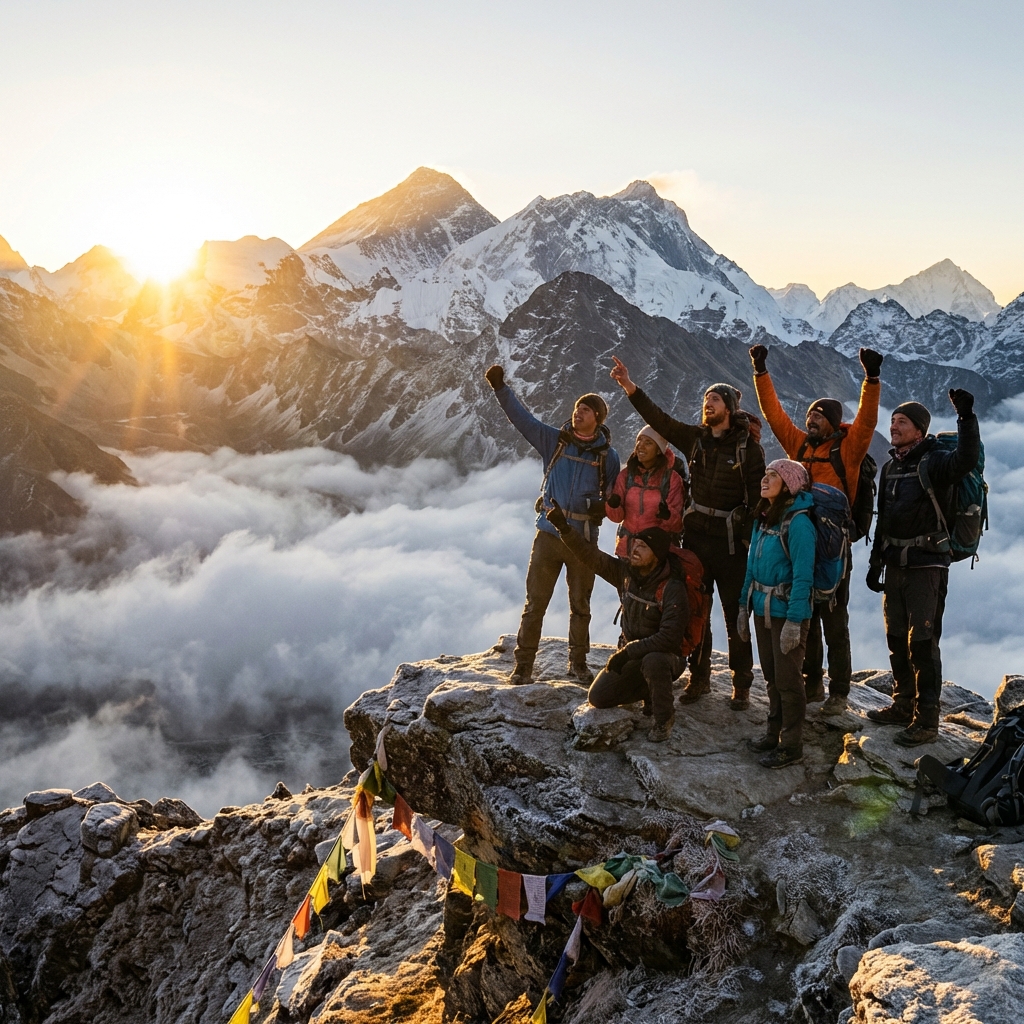
From Khopra Ridge's community lodge, you witness one of the world's most spectacular mountain panoramas. Unlike valley-bottom treks where peaks hide behind ridges, Khopra's exposed position delivers unobstructed views in every direction:
Western Horizon (Dhaulagiri Massif): Dhaulagiri I (8,167m—7th highest in the world) dominates the western skyline, its massive pyramid rising directly from the Kali Gandaki Gorge. The entire Dhaulagiri massif stretches 120 kilometers, including Dhaulagiri II through VII, Tukuche Peak, and countless unnamed summits.
Northern Horizon (Annapurna Sanctuary): The sacred Annapurna I (8,091m) forms the centerpiece of the northern view, flanked by Annapurna South (7,219m), Annapurna III (7,555m), and Gangapurna (7,455m). The entire Annapurna Sanctuary wall unfolds before you.
Eastern Horizon (Annapurna East): Machapuchare (6,993m)—the sacred "Fishtail" that no human has summited—rises in its distinctive twin-peaked profile. Hiunchuli (6,441m) and Lamjung Himal (6,931m) complete the eastern sweep.
Southern Horizon (Middle Hills and Valleys): The terraced hillsides of the Middle Hills cascade toward distant India, the contrast between cultivated villages and snow peaks creating a visual essay on Nepal's extraordinary vertical geography.
The Sacred Khayer Lake Pilgrimage
For many trekkers, Khayer Lake represents Khopra Ridge's ultimate challenge and reward. This glacial lake at 4,660 meters sits in a high-altitude amphitheater directly below the Annapurna South and Himchuli faces—one of the most dramatic close-up mountain experiences accessible without technical climbing.
The Challenge: This is not a casual day hike. Starting at pre-dawn (3:00-4:00 AM), you'll climb 1,000 vertical meters through darkness to reach the lake by mid-morning. The round-trip demands 10-11 hours of continuous movement, much of it above 4,000 meters where thin air makes every step harder. It's the highest point most Khopra trekkers will reach, and altitude sickness becomes a real concern.
The Spiritual Dimension: Khayer Lake holds deep significance for Hindu pilgrims who make an annual pilgrimage to bathe in its sacred waters. Small temples and prayer flags surround the shoreline, and you'll often encounter pilgrims performing ritual pujas. This isn't just a trekking destination—it's a living religious site where mountain worship and Hindu tradition intertwine.
The Reward: Standing at Khayer Lake with Annapurna South's massive face rising directly above, glacier ice cascading toward the turquoise water, is genuinely awe-inspiring. The scale is overwhelming, the silence profound. Most trekkers describe it as the trek's defining moment—the challenging ascent forgotten in the face of such raw Himalayan power.
Khayer Lake Altitude Considerations
The 4,660m altitude at Khayer Lake exceeds the altitude where acute mountain sickness (AMS) becomes common. Warning signs include: severe headache that doesn't respond to basic painkillers, nausea and vomiting, loss of coordination or balance, confusion or unusual behavior, and extreme fatigue. If experiencing these symptoms: Do NOT ascend higher. Descend immediately if symptoms worsen. Inform your guide of any concerning symptoms. The lake hike is optional—there's no shame in choosing the safer option of a rest day at Khopra Ridge.
Complete 7-Day Standard Itinerary
The standard Khopra Ridge trek balances time efficiency with proper acclimatization, delivering the core experience without excessive rushing or unnecessary rest days.
Day 1: Pokhara to Ghandruk (1,940m)
Journey: Drive Pokhara (800m) to Nayapul (1,070m) - 1.5 hours | Trek Nayapul to Ghandruk - 5-6 hours
Elevation Gain: +870m from Nayapul
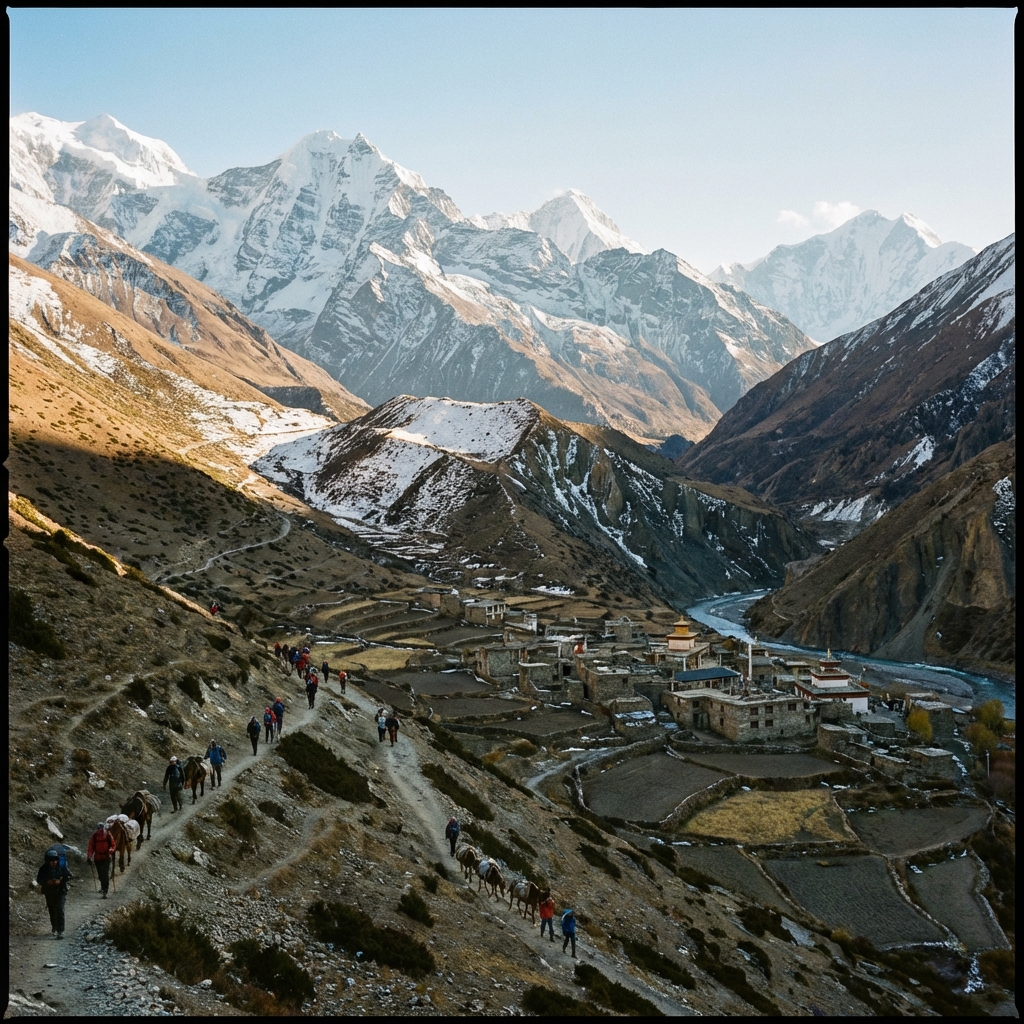
Terrain: Road drive through rice paddies and hillside villages. Trail alternates between jeep track and stone-paved footpath. Final approach climbs traditional stone staircases through terraced fields.
Highlights: Cross Modi Khola suspension bridge. Pass traditional Gurung villages with slate-roofed houses. Enter Annapurna Conservation Area. First close views of Annapurna South and Machapuchare.
Accommodation: Ghandruk village teahouse (not community lodge—Ghandruk has commercial lodges)
Notes: Ghandruk is Nepal's largest Gurung village and a major trekking hub. Visit the Gurung Museum showcasing traditional culture and famous Gurkha soldier history. Many shops selling local handicrafts, traditional clothing, and supplies. Good bakeries with real coffee. Take time to explore—it's more commercialized than villages ahead but offers valuable cultural insights.
Day 2: Ghandruk to Tadapani (2,630m)
Trekking Time: 3-4 hours
Elevation Gain: +690m
Terrain: Steep initial ascent through stone staircases leaving Ghandruk. Gradual climb through pristine rhododendron and oak forest. Final section along ridge-top trail.
Highlights: Enter legendary rhododendron forests (spectacular in March-April blooms). Forest birding—Danphe (national bird), colorful minivets, laughingthrushes. First transition from "teahouse zone" to quieter trails. Machapuchare views through forest clearings.
Accommodation: Tadapani lodges (mix of commercial and community-style)
Notes: Tadapani means "water from rock" in Nepali, referring to the spring-fed water sources. This is the junction point where you depart from the Poon Hill/ABC crowd. From here, trekker numbers drop dramatically. Rest up—tomorrow begins the true Khopra experience.
Day 3: Tadapani to Bayeli Kharka (3,420m)
Trekking Time: 5-6 hours
Elevation Gain: +790m
Terrain: Ridge-top trail through upper rhododendron zone. Alpine meadow approach. Trail less maintained than previous days—natural footpath rather than engineered trekking route.
Highlights: Departure from mainstream trails—notice the immediate decrease in trekker traffic. First appearance of Dhaulagiri massif to the west. Alpine meadow landscape replaces dense forest. Possible wildlife: Himalayan Tahr, musk deer, colorful pheasants. Sunset over Dhaulagiri range.
Accommodation: Bayeli Kharka community lodge (first true community lodge experience)
Notes: You've now crossed 3,000m, and altitude effects may begin. Drink extra water (3-4 liters today), avoid alcohol, and monitor for headache or unusual fatigue. Bayeli means "shepherd's hut" in the local language—this area serves as traditional summer grazing grounds for local yak and sheep herders. You might encounter herders with their animals during trekking season.
Day 4: Bayeli Kharka to Upper Chistibung (2,975m)
Trekking Time: 4-5 hours
Elevation Change: -445m descent
Terrain: Descent through mixed forest and alpine scrub. Rocky trail sections. Small valley floor, then gradual ascent to Upper Chistibung.
Highlights: Strategic descent for acclimatization ("climb high, sleep low" principle). Quiet forest walking with minimal trekkers. Danphe sightings common in clearings. Traditional yak herder shelters and cheese-making operations (seasonal).
Accommodation: Upper Chistibung community lodge
Notes: This descent might feel counterintuitive—you're dropping elevation when your goal is Khopra Ridge above. However, it's critical acclimatization strategy for tomorrow's ascent and the Khayer Lake day following. The descent also allows your body to recover before the final push. Upper Chistibung is very small—often just one lodge operating. Facilities are basic but warm hospitality compensates.
Day 5: Upper Chistibung to Khopra Ridge (3,660m)
Trekking Time: 3-4 hours
Elevation Gain: +685m
Terrain: Steep initial ascent through upper forest zone. Break through tree line to alpine meadows. Final approach across exposed ridgeline.
Highlights: Break out of forest zone to full Himalayan panorama. First sight of Khopra Ridge community lodge. 360-degree mountain views from the ridge. Dhaulagiri massif dominates western horizon. Entire Annapurna range visible to north. Sunset viewing from lodge terrace. Kali Gandaki Gorge visible far below.
Accommodation: Khopra Ridge Community Lodge (the heart of the trek)
Notes: Arrive by early afternoon to maximize time at the viewpoint and proper rest before the Khayer Lake day. The community lodge has solar panels for basic electricity, heated dining room (rare at this altitude), and shared bathrooms with limited hot water. Weather can change rapidly at this exposed altitude—wind, fog, or snow possible even in good seasons. Evening briefing with your guide about tomorrow's Khayer Lake attempt—they'll assess weather and your acclimatization status. Good satellite phone coverage for emergencies. This is the trek's highlight location—savor it.
Day 6: Khayer Lake Day Hike (4,660m) - Return to Khopra Ridge
Trekking Time: 10-11 hours total (5-6 hours ascent, 4-5 hours descent)
Elevation Gain: +1,000m (then -1,000m return)
Terrain: Pre-dawn start on rocky trail. Steep scree slopes and boulder fields. High-altitude alpine zone—no vegetation. Exposed ridge walking with drop-offs. Glacial moraine approach to lake.
Highlights: Pre-dawn headlamp hiking under Himalayan stars. Sunrise from high-altitude viewpoint. Sacred Khayer Lake with Annapurna South face rising directly above. Hindu pilgrimage temples and prayer flags at lakeshore. Close-up views of glaciers and icefalls. Rare high-altitude experience without technical climbing. Sense of serious mountain achievement.
Challenges: This is the trek's hardest day by far. Altitude effects (headache, nausea, fatigue) common above 4,300m. Weather can deteriorate rapidly—clouds, wind, snow. Navigation difficult in poor visibility. Long day requires sustained effort. No facilities or emergency support en route.
Accommodation: Return to Khopra Ridge Community Lodge for second night
Notes: Your guide will wake you at 3:00-3:30 AM for a 4:00 AM departure. Carry headlamp, warm layers, water (2L minimum), snacks, and rain protection. Pace is crucial—go slowly and steadily. Turn-around time is typically noon regardless of position—if you haven't reached the lake by then, you must descend to ensure safe return before dark. About 15-20% of trekkers choose to skip this day or turn back early due to altitude symptoms, weather, or fatigue—this is a smart decision, not a failure. Alternative: Rest day at Khopra Ridge with short hikes to nearby viewpoints.
Day 7: Khopra Ridge to Swanta to Pokhara (via Ulleri)
Trekking Time: 5-6 hours descent + 3-4 hours drive
Elevation Loss: -2,860m total (to Pokhara)
Terrain: Long descending trail through forest. Stone staircases (especially Ulleri's famous 3,200+ steps). Meet main Ghorepani-Poon Hill trail. Road at Ulleri or continue to Nayapul.
Highlights: Complete change in landscape—from alpine zone to lush hillside forest to agricultural terraces. Possible Ghorepani/Poon Hill extension (see extended itinerary). Tea shop breaks in villages. Arrival at roadhead for vehicle pickup. Return to Pokhara's lakeside for celebration meal.
Accommodation: Pokhara lakeside hotel
Notes: This is a big descent day with significant knee strain—trekking poles are very helpful. Ulleri to Nayapul sees heavy trekker traffic from Poon Hill trekkers—notable contrast to Khopra's solitude. Private jeep pickup arranged by your trekking agency. Drive to Pokhara takes 1.5-2 hours. Book lakeside accommodation in advance during peak season. Celebrate completion of a genuine achievement—you've completed a challenging trek that most tourists never experience.
| Month | High | Low | Conditions | Crowds | Notes |
|---|---|---|---|---|---|
| January★★☆☆☆ | 5-8°C | -8 to -5°C | Cold, clear skies, possible snow | Very few | Winter conditions, experienced trekkers only, excellent visibility when clear |
| February★★★☆☆ | 6-10°C | -6 to -3°C | Cold improving, clearer weather | Very few | Late winter, warming trend, fewer snow risks, still very quiet trails |
| March★★★★★ | 10-15°C | -2 to 2°C | Spring arrives, rhododendrons begin blooming | Moderate | Prime season begins, excellent weather, rhododendron forests stunning |
| April★★★★★ | 12-18°C | 2 to 6°C | Peak rhododendron bloom, warm days | Moderate-High | Best month for flowers, stable weather, comfortable temperatures |
| May★★★★☆ | 15-20°C | 5 to 8°C | Pre-monsoon, afternoon clouds common | Moderate | Warmer but cloudier, morning views best, humidity increasing |
| June★★☆☆☆ | 16-22°C | 8 to 12°C | Monsoon onset, daily rain, leeches lower elevations | Few | Monsoon season, not recommended, trails slippery, views obscured |
| July★☆☆☆☆ | 18-22°C | 10 to 13°C | Peak monsoon, heavy rain, trails dangerous | Very few | Avoid this month, landslide risks, leeches, poor visibility |
| August★☆☆☆☆ | 17-21°C | 10 to 12°C | Late monsoon, heavy rain continues | Very few | Still monsoon season, avoid, trails very muddy, leeches abundant |
| September★★★☆☆ | 15-19°C | 8 to 10°C | Monsoon ending, weather improving | Few to Moderate | Transitional month, early September risky, late September better |
| October★★★★★ | 12-16°C | 4 to 7°C | Post-monsoon clarity, stable weather, crisp air | High | Peak season begins, best mountain views, comfortable temps, stable weather |
| November★★★★★ | 8-12°C | 0 to 4°C | Crystal clear skies, cold nights, perfect visibility | High | Prime season, exceptional clarity, cold mornings, bring warm gear |
| December★★★☆☆ | 6-9°C | -4 to 0°C | Winter setting in, very clear, very cold | Moderate | Early winter, good visibility, very cold nights, possible snow above 3,500m |
Extended 9-Day Itinerary (With Acclimatization and Extensions)
For trekkers who want a more relaxed pace, better acclimatization, or additional viewpoints, the 9-day itinerary adds rest days and optional extensions. Short on time? See our condensed Khopra Ridge 6-day itinerary for the fastest realistic schedule.
Key Additions:
- Day 1: Kathmandu to Pokhara (travel day, buffer for delays)
- Day 2-6: Same as standard 7-day Days 1-5 (through to Khopra Ridge)
- Day 7: Rest/Acclimatization day at Khopra Ridge with optional short hikes to nearby viewpoints (excellent for photography, relaxation, and altitude preparation)
- Day 8: Khayer Lake day hike (better positioned after extra acclimatization)
- Day 9: Khopra Ridge to Ghorepani (2,860m) - 5-6 hours - Experience famous Poon Hill the next morning
- Day 10: Poon Hill sunrise (3,210m), descend to Ulleri/Nayapul, drive to Pokhara
Why Choose the Extended Itinerary:
- Better altitude acclimatization before Khayer Lake attempt (significantly improves success rate and comfort)
- More time at Khopra Ridge for photography during different light conditions
- Ability to add Poon Hill experience for comparison
- More relaxed daily schedule with time to engage with lodge hosts and learn about community projects
- Extra buffer day for weather delays (important in shoulder seasons)
Difficulty Assessment: Is Khopra Ridge Right for You?
Moderate-DifficultThe Khopra Ridge Trek sits in the moderate-to-difficult range, making it more challenging than Poon Hill but more accessible than technical peaks or extreme high-altitude routes like Thorong La Pass. For a full grading and fitness rundown, read our Khopra Ridge difficulty assessment.
Fitness Requirements
Cardiovascular Endurance: You'll walk 4-6 hours daily at increasing altitudes where oxygen levels decrease. Good aerobic fitness is essential. If you can comfortably hike 4-5 hours with elevation gain at sea level, you have a baseline. However, thin air makes everything harder.
Leg Strength: Nepal's trails mean constant ascent and descent—your knees and quadriceps take serious strain. Particularly on Day 7's long descent and Day 6's Khayer Lake climb. Pre-trek training should include hill repeats, squats, and lunges with a weighted backpack.
Mental Toughness: The Khayer Lake day tests mental strength more than physical capability. Starting at 3:00 AM, climbing in darkness, dealing with altitude effects, pushing through fatigue—this requires determination when your body wants to stop.
Altitude Considerations
Maximum sleeping altitude: 3,660m (Khopra Ridge) - This is below the extreme altitude zone (above 5,500m) but well into the altitude where acute mountain sickness (AMS) affects some trekkers.
Maximum day altitude: 4,660m (Khayer Lake) - This exceeds the altitude where AMS becomes increasingly common. About 20-30% of trekkers experience some AMS symptoms at this elevation.
Technical Difficulty
No Technical Skills Required: Unlike mountaineering routes, Khopra Ridge requires no climbing skills, rope work, or specialized equipment. You walk on trails (sometimes rocky and steep, but always passable in normal trekking boots).
Trail Conditions: Below Tadapani, trails are well-maintained and easy to follow. Beyond Tadapani, trails become less maintained—natural footpaths rather than engineered routes. Navigation is straightforward in clear weather but can be challenging in fog or snow. This is why a guide is highly recommended.
Exposure: Some ridge-top sections have drop-offs, but they're not technical scrambles. If you have severe fear of heights, inform your guide—they can help or suggest modifications.
Who Succeeds on This Trek?
Ideal Trekkers:
- Reasonably fit hikers with multi-day trekking experience
- First-time Nepal trekkers who've prepared physically and want more than Poon Hill
- Experienced trekkers seeking off-the-beaten-path alternatives to crowded routes
- Travelers who value cultural immersion and responsible tourism
- Anyone comfortable with basic accommodation and willing to embrace challenges
Who Should Reconsider:
- First-time hikers with no multi-day trekking experience (consider Poon Hill first)
- Anyone with serious knee problems (the descents are punishing)
- Travelers requiring consistent hot showers and Western comfort (facilities are basic)
- Those with previous serious altitude sickness below 4,000m (Khayer Lake may be risky)
- Anyone unwilling to wake at 3:00 AM and hike 10+ hours (skip Khayer Lake day)
Preparation Timeline
3-4 Months Before: Begin cardiovascular training—running, cycling, stair climbing 3-4x weekly. Add weekly long hikes with elevation gain if possible.
2 Months Before: Increase intensity. Add weighted backpack to hikes (8-10kg). Include leg strengthening exercises. Book trek and arrange permits/logistics.
1 Month Before: Taper intensity slightly but maintain frequency. Test all gear on day hikes. Break in trekking boots completely. Begin altitude medication consultation if concerned about AMS.
2 Weeks Before: Light maintenance exercise only. Finalize packing. Get any vaccinations or health checks completed.
Preparation Pays Off
The difference between struggling through the trek and thoroughly enjoying it often comes down to preparation. Trekkers who train consistently report: significantly less fatigue during daily walking, faster recovery each evening, higher success rates reaching Khayer Lake, and much more mental energy to appreciate the views and cultural experiences. The mountains will still be challenging—but you'll be ready.
Best Time to Trek Khopra Ridge: Month-by-Month Analysis
For a deeper month-by-month planning breakdown, see our guide to the best time to trek Khopra Ridge.
Prime Seasons: Autumn (October-November) and Spring (March-May)
Autumn Season (October-November):
This is Nepal's most popular trekking window, and for excellent reasons:
October: Post-monsoon clarity delivers the year's best mountain visibility. Skies are deep blue, peaks razor-sharp against the horizon. Temperatures are comfortable—warm enough during the day for t-shirt hiking, cool enough at night to appreciate a warm sleeping bag. The landscape is still green from monsoon rains, but trails have dried out. This is peak season, meaning Khopra Ridge will see its "highest" traffic—though still only 15-20 trekkers daily compared to hundreds on mainstream routes.
November: This might be autumn's best month for pure mountain views. Post-monsoon atmospheric dust has settled completely, creating unprecedented clarity. The air is crisp and dry. Rhododendron leaves turn golden, creating beautiful forest colors. Temperatures drop—daytime comfortable but mornings and nights genuinely cold, especially above 3,000m. Bring proper winter layers for high-altitude nights. Fewer trekkers than October, making already-quiet trails even more peaceful.
Spring Season (March-May):
Spring offers a completely different Khopra experience dominated by one spectacular feature: rhododendrons.
March: The rhododendron forests that cover the Tadapani to Bayeli Kharka section begin their legendary bloom. Red, pink, white, and occasionally yellow varieties create corridors of color through the forest. This is one of Nepal's most beautiful natural phenomena. Weather is warming, though mornings remain cold. Visibility is generally excellent early in the month, becoming hazier as the season progresses. Fewer trekkers than autumn—often the trail feels completely yours.
April: Peak rhododendron season. The forests are at their absolute most spectacular. If you're a photographer or nature lover, this is your month. Temperatures are pleasant—warm days, cool nights. Visibility remains good through mid-month but afternoon clouds become more common by late April as pre-monsoon weather patterns develop. Morning views are typically clear.
May: Late spring sees warmer temperatures and increasing afternoon cloud build-up as the monsoon approaches. Morning views are usually clear, but by afternoon, clouds often obscure peaks. This is the warmest month for trekking—sometimes too warm at lower elevations but perfect at high altitudes. Rhododendrons are past peak but still present. Fewer trekkers as the season winds down. By late May, occasional pre-monsoon showers begin.
Shoulder Seasons: December-February (Winter) and September (Monsoon Tail)
Winter Season (December-February):
Only for experienced trekkers comfortable with genuine cold and possible snow:
December-January: High-altitude sections see regular snow. Khopra Ridge and the Khayer Lake route can be snow-covered, making the already-challenging lake day significantly more difficult or impossible. Temperatures plunge—expect -10°C to -15°C at night at Khopra Ridge. That said, when weather is clear, visibility is absolutely stunning. You'll have the trails almost entirely to yourself. Facilities are limited—some lodges close during deepest winter.
February: Late winter sees improving weather and warming temperatures. Snow risks decrease, though still possible. This is becoming a popular month for trekkers seeking winter's clarity without January's harsh cold. Bring serious cold-weather gear.
September (Monsoon Tail):
Early September: Still monsoon conditions—frequent rain, leeches at lower elevations, poor visibility. Not recommended.
Late September: The monsoon begins breaking down. By the final week of September, weather often improves dramatically with clear mornings and only occasional afternoon showers. This can be an excellent time for trekkers seeking absolute solitude—almost no one is on the trails yet. Leeches remain a nuisance below 2,500m. Bring rain gear and leech socks. This is somewhat unpredictable—you're gambling on weather patterns.
Avoid: June-August (Full Monsoon)
The monsoon brings heavy rain, obscured views, muddy trails, leeches everywhere below 3,000m, and landslide risks. Community lodges may have reduced services or close entirely. Unless you have compelling reasons (budget travel, schedule constraints), avoid these months.
Cost Breakdown: Budgeting for Khopra Ridge
Understanding trek costs helps with realistic budget planning and choosing between independent versus guided options. For a line-by-line breakdown of every expense, see our dedicated Khopra Ridge cost breakdown.
Guided Package Trek: $800-$1,600 Per Person
Most international trekkers book through a Nepali trekking agency that arranges everything:
Budget Guided Package ($800-$1,000): Includes: Kathmandu-Pokhara tourist bus transport, basic Pokhara hotel (2 nights), guide and porter, community lodge accommodation, all trekking meals (DAL bhat-focused), permits, and emergency support. Usually involves group joining for cost savings.
Standard Guided Package ($1,100-$1,400): Includes: Private Kathmandu-Pokhara transport options (tourist bus or flight), mid-range Pokhara hotel, experienced English-speaking guide, porter support, community lodge accommodation with room choice preferences, varied meal options, comprehensive insurance coverage for guides/porters, and personalized service. This is the most popular option for international trekkers.
Premium Guided Package ($1,500-$1,600+): Includes: Kathmandu-Pokhara flights both ways, high-quality Pokhara accommodation (lakeside hotels), senior/expert guide, private porter, best available community lodge rooms, expanded food choices, satellite phone for emergency communication, and flexible itinerary modifications. For trekkers wanting maximum comfort within Khopra's inherently basic infrastructure.
What's Typically Included in Packages:
- All trekking permits (ACAP + TIMS)
- Pokhara accommodation before/after trek
- Ground transportation (Pokhara-Nayapul-Pokhara)
- English-speaking guide with required licenses
- Porter (carries up to 15kg)
- All meals during trekking (breakfast, lunch, dinner)
- Community lodge accommodation
- Guide and porter salary, insurance, meals, accommodation
- First aid kit
- Trip completion certificate
What's Typically NOT Included:
- International flights
- Nepal entry visa ($30-50 USD)
- Kathmandu accommodation (unless specified)
- Lunch/dinner in Kathmandu and Pokhara
- Travel insurance (mandatory—budget $50-150)
- Personal expenses (snacks, drinks, wifi, charging, etc.)
- Hot showers at lodges ($2-5 per shower)
- Tips for guide and porter (budget $150-250 total)
- Extra beverages during trek (tea, coffee, soft drinks, alcohol)
Independent/Self-Guided Trekking: $400-$700 Total
Nepal now requires guides for Annapurna region treks as of 2023, so fully independent trekking is technically not permitted. However, costs for hiring a guide independently are lower than full packages:
Hire Guide Directly: $30-40 per day Porter (Optional): $25-30 per day Community Lodge Accommodation: $5-10 per night Meals (DAL Bhat): $5-8 per meal x 3 meals = $15-25 per day Permits: ACAP ($25-30) + TIMS ($15-20) = $40-50 total Pokhara-Nayapul Transport: $20-30 each way (shared jeep)
7-Day Trek Budget Calculation:
- Permits: $45
- Guide (7 days): $245
- Porter (optional, 7 days): $196
- Accommodation (6 nights): $45
- Meals (21 meals): $147
- Transport: $50
- Miscellaneous (showers, charging, snacks): $70
- Total: $600-800 (without porter) or $800-1,000 (with porter)
This saves money but requires you to: Arrange all logistics yourself, navigate permit offices, find guide/porter independently (quality varies), manage accommodation booking (community lodges), and handle any problems without agency support.
Daily Budget During Trek
Accommodation: Community lodges charge minimal room fees ($5-10), with expectation you'll purchase meals.
Meals: DAL bhat (unlimited refills) = $5-8. Western meals (pasta, pizza, fried rice) = $7-12. Breakfast (porridge, eggs, toast) = $4-7. Drinks: Tea = $1-2, Coffee = $2-3, Soft drinks = $2-4, Beer = $4-6 (limited availability).
Services: Hot shower = $2-5 per use, Battery charging = $2-4, Wifi (where available) = $3-5 per day.
Daily Budget: Budget-conscious trekkers (DAL bhat only) = $25-30/day. Moderate trekkers (varied meals) = $40-55/day. Comfortable trekkers (all extras) = $60-80/day.
Community Lodge Pricing Philosophy
Community lodges intentionally keep accommodation fees minimal to make trekking accessible, with the understanding that meal purchases provide the actual revenue. This is standard across Nepal trekking but especially important here where profits fund community projects. Ordering generously at mealtimes and paying for services like charging and showers ensures maximum community benefit. Consider the meal prices not as costs but as direct donations to village schools and health clinics.
Khopra Ridge vs. Poon Hill: The Definitive Comparison
This is the most common comparison trekkers make—and for good reason. Both treks explore the Annapurna region, both offer spectacular mountain views, and both start from Nayapul. Yet they deliver fundamentally different experiences.
The Viewpoint Comparison
Poon Hill (3,210m): Famous sunrise viewpoint with panoramic views of Dhaulagiri, Annapurna South, Annapurna I, Machhapuchare, and surrounding peaks. The viewing platform accommodates hundreds of trekkers during sunrise. Views are spectacular—undeniably. But you experience them surrounded by crowds jostling for the best photography position.
Khopra Ridge (3,660m): 450 meters higher altitude provides even broader panoramas with slightly clearer atmosphere. You see the same peaks plus additional summits visible from higher elevation. The 360-degree sweep includes Kali Gandaki Gorge views that Poon Hill doesn't offer. Most mornings, you'll share the viewpoint with perhaps 5-15 people—sometimes alone. The experience feels personal rather than communal.
Verdict: If mountain views are equal, Khopra's solitude and broader panorama give it the edge—assuming you have the time and fitness.
Crowd Levels: The Decisive Factor
Poon Hill: Nepal's most popular short trek receives 200-400 trekkers daily during peak season (October-November). Ghorepani village is a bustling trekking town with dozens of lodges, restaurants, and shops. The trail is a well-worn highway. Sunrise at Poon Hill can feel like a concert crowd. This isn't inherently bad—some trekkers enjoy the social atmosphere and meeting fellow travelers from around the world.
Khopra Ridge: You'll typically encounter 10-20 trekkers total during the entire trek. Some days you'll see no one. Khopra Ridge community lodge might host 5-12 guests total during peak season. The trails feel wild and remote despite being well-established. If you crave solitude and "being away from it all," this is transformative.
Verdict: If crowds bother you, Khopra wins decisively. If you enjoy social trekking, Poon Hill's community atmosphere might appeal more.
Duration and Difficulty
Poon Hill: Standard 4-5 days, possible in 3 days for very fit trekkers. Maximum 6-8 hours walking daily. Accessible to beginners with moderate fitness. Minimal altitude risk (sleeping altitude maxes at 2,860m).
Khopra Ridge: Standard 7-9 days minimum. Several 5-6 hour days, with Khayer Lake day at 10-11 hours. Requires good fitness and previous multi-day hiking experience. Altitude is a factor—sleeping at 3,660m, climbing to 4,660m for Khayer Lake.
Verdict: Poon Hill for time-limited or beginner trekkers. Khopra for those seeking a more substantial mountain challenge.
Community Impact and Responsible Tourism
Poon Hill: Operates on standard commercial teahouse model. Individual families own and profit from lodges. This has created economic benefits but also inequality, environmental stress from competing businesses, and cultural dilution as villages transform into tourist economies.
Khopra Ridge: Pioneering community lodge model where all profits return to the collective village fund supporting schools, health clinics, and sustainable development. This is demonstrably responsible tourism where your presence creates measurable positive impact without the negative effects of over-commercialization.
Verdict: If responsible tourism matters to you, Khopra is the obvious choice. Your trek directly funds community wellbeing in a transparent, sustainable model.
Cost Comparison
Poon Hill: Guided packages: $400-700. Daily costs: $25-40 (competition keeps prices lower).
Khopra Ridge: Guided packages: $800-1,400. Daily costs: $40-60 (remoteness and community lodge model means slightly higher costs).
Verdict: Poon Hill is less expensive. However, considering the quality of experience and community impact, Khopra's higher cost represents better value for many trekkers.
The Bottom Line: Which Should You Choose?
Choose Poon Hill if:
- You have only 4-5 days available
- This is your first-ever multi-day trek and you want something accessible
- You enjoy social atmosphere and meeting fellow trekkers
- Budget is a primary concern
- You're not bothered by crowds at popular viewpoints
Choose Khopra Ridge if:
- You have 7-9+ days available
- You want spectacular views with far fewer people
- You value responsible tourism and supporting local communities directly
- You're seeking more of a genuine wilderness experience
- You're reasonably fit and ready for a moderate-to-difficult challenge
- You want to add Khayer Lake high-altitude adventure
Can You Do Both? Yes! Several itineraries combine both—typically Khopra first (when you're fresh for the harder trek), then exit via Ghorepani and add Poon Hill sunrise on your way down. This creates a comprehensive 9-11 day Annapurna experience showcasing both iconic viewpoints. Ask your trekking agency about combined itineraries.
Supporting Local Communities: Maximizing Your Positive Impact
The community lodge model only works if trekkers actively participate in supporting it. Here's how to ensure your trek creates maximum positive impact:
Understanding Community Lodge Economics
When you stay at a community lodge, your payment flows to the village cooperative, not an individual owner. Monthly profits are distributed according to pre-agreed formulas:
- 40-50% to community development fund (schools, health clinics)
- 20-30% to lodge maintenance and upgrades
- 10-15% to forest conservation and environmental programs
- 10-15% to women's empowerment and skill training programs
- 5-10% to emergency fund for natural disasters or medical crises
This is radically different from commercial lodges where profits enrich individual families, often creating village inequality and resource competition.
How to Maximize Positive Impact
Purchase Generously at Lodges: Room fees are minimal by design. The actual revenue comes from meal purchases. Order full meals rather than just snacks. Try different menu items. Purchase tea and coffee rather than carrying your own. Pay for hot showers and battery charging even if you might do without. Every rupee goes to community projects.
Hire Local Guides and Porters: If arranging your trek independently, prioritize hiring guides and porters from the Khopra route villages (Ghandruk, Tadapani, local communities) rather than only Kathmandu-based staff. This keeps employment revenue within the communities you're visiting.
Minimize Environmental Impact:
- Carry reusable water bottles and use purification tablets rather than purchasing plastic bottles
- Bring rechargeable batteries rather than disposables
- Pack out all non-biodegradable trash
- Use lodge toilets properly (don't throw trash in them)
- Conserve water and electricity (remember these are limited resources)
- Stay on established trails to prevent erosion
Cultural Respect and Engagement:
- Learn basic Nepali greetings (Namaste, Dhanyabad, etc.)
- Ask permission before photographing people, villages, or religious sites
- Dress modestly (cover knees and shoulders in villages)
- Remove shoes before entering homes or temples
- Avoid public displays of affection (conservative culture)
- Show genuine interest in local culture—ask questions, listen actively
Don't Create Dependency: Avoid giving money or gifts to children begging along trails. This creates problematic dependency relationships and incentivizes children to beg rather than attend school. If you want to contribute:
- Donate to school projects through your trekking agency
- Contribute to the community lodge fund directly
- Support local businesses by purchasing goods and services
- Leave educational materials (books, maps, etc.) at schools rather than giving to individuals
Educate Yourself on Projects: Ask lodge managers about specific community projects your payments support. Many lodges have information boards explaining current initiatives. Understanding where your money goes creates deeper connection and appreciation.
The Ripple Effect of Responsible Trekking
Community-based trekking keeps far more of your spending in the local economy than commercial alternatives. On the Khopra Ridge trek, the community-owned lodges are run as a cooperative, so lodging, food, and guiding fees flow directly to local Magar and Gurung households rather than to Kathmandu-based or international operators. That revenue helps fund village schools, basic healthcare, and year-round local employment, making your trek a direct contribution to the communities along the trail.
Permits and Regulations
Required Permits
Annapurna Conservation Area Permit (ACAP): $25-30 USD (NPR 3,000 for SAARC nationals, higher for other foreigners). This permit funds the Annapurna Conservation Area Project's environmental protection, trail maintenance, and community development programs. Valid for the duration of your trek.
Trekkers' Information Management System (TIMS) Card: $15-20 USD (NPR 2,000). This tracks trekker movements for safety purposes, enabling search and rescue operations if trekkers go missing. Contains your personal information, emergency contacts, and trekking insurance details.
Total Permit Cost: Approximately $40-50 USD
Where to Obtain Permits
In Kathmandu:
- Nepal Tourism Board Office (Bhrikutimandap, Exhibition Road)
- Trekking Agencies Authorized to Issue Permits (most common—included in guided packages)
In Pokhara:
- ACAP Office (near Damside)
- Nepal Tourism Board Pokhara Office
What You Need to Bring:
- Passport (original with valid Nepal visa)
- 2 passport-sized photos
- Completed application forms (available at offices or online)
- Travel insurance details (recommended)
- Trekking itinerary
- Cash for payment (USD or Nepali Rupees—credit cards often not accepted)
Regulations and Rules
Mandatory Guide Requirement: As of 2023 and still in force in 2026, Nepal requires all trekkers in the Annapurna Conservation Area to hire a licensed guide. Solo/independent trekking without a licensed guide is officially not permitted. This regulation aims to improve trekker safety, support local employment, and reduce environmental impact through better trail management. To choose a reputable operator, compare our best trekking agencies for Khopra Ridge.
Environmental Regulations:
- All non-biodegradable waste must be carried out
- No single-use plastics in conservation areas (technically enforced inconsistently)
- Camp only in designated areas
- Don't disturb wildlife or vegetation
- No cutting trees or branches for firewood
- Human waste must be properly disposed of in lodge facilities
Cultural Site Regulations:
- Photography restrictions at some religious sites
- Remove footwear before entering temples and homes
- Clockwise circumambulation of Buddhist stupas and chortens
- Don't touch religious artifacts without permission
Insurance Requirements
While not legally mandatory, comprehensive travel insurance is essentially required for Himalayan trekking. Your insurance should cover:
- Medical treatment and emergency medical evacuation (up to at least $100,000)
- Helicopter rescue from high altitude (up to at least $50,000)
- Trek cancellation and interruption
- Lost/stolen baggage and personal effects
- Coverage specifically includes "trekking up to 5,000m" (many standard policies exclude high-altitude trekking)
Recommended insurers experienced with Nepal trekking: World Nomads, IMG Global, Global Rescue, Trekking Insurance from specialized providers.
Cost: $50-150 USD depending on coverage level and trip duration.
Packing List and Gear Guide
Proper gear makes the difference between comfortable trekking and unnecessary suffering. Khopra Ridge's 3,660m altitude (4,660m for Khayer Lake) demands preparation for cold temperatures and mountain weather.
Clothing Layers: The Foundation
Base Layers:
- Moisture-wicking synthetic or merino wool t-shirts (3-4)
- Long-sleeve base layer top (1-2)
- Thermal underwear bottoms (1-2 pairs)
- Sports bras for women (3-4)
- Underwear (4-5 pairs)
- Synthetic or wool hiking socks (4-5 pairs)
- Sock liners for blister prevention (optional but recommended)
Mid Layers:
- Fleece jacket or pullover (1)
- Insulated jacket (lightweight down or synthetic) (1)
- Trekking pants—quick-dry, comfortable (2 pairs)
- Thermal/warm pants for high-altitude evenings (1 pair)
- Shorts or convertible pants for lower elevations (optional)
Outer Layers:
- Waterproof and windproof shell jacket (1—essential)
- Waterproof pants or rain pants (1)
- Down jacket or heavy insulated jacket for high altitude (1—essential for Khopra Ridge and Khayer Lake)
Extremities:
- Warm beanie/winter hat that covers ears (1)
- Sun hat with wide brim (1)
- Lightweight gloves (1 pair)
- Insulated warm gloves or mittens (1 pair—essential for Khayer Lake)
- Neck gaiter or balaclava (1)
Footwear: Critical Importance
Trekking Boots: Waterproof, ankle-support hiking boots—the single most important gear item. Must be broken in before the trek (wear them on multiple day hikes at home). Budget $150-300 for quality boots. Brands: Salomon, Scarpa, La Sportiva, Merrell, Lowa.
Camp Shoes: Lightweight sandals or running shoes for wearing at lodges in the evening. Your feet need to breathe and recover after full trekking days.
Gaiters (Optional but Recommended for Khayer Lake): Prevent snow, scree, and debris from entering boots during high-altitude sections.
Backpack and Bags
Daypack: 25-35 liter comfortable daypack for carrying daily essentials (water, snacks, camera, extra layers, rain gear). This is what you carry yourself while porter carries the main duffel.
Duffel Bag: 60-80 liter duffel for main gear. Porter carries this (weight limit: 12-15kg). Soft-sided bags work better than hard suitcases on trails. Many trekking agencies provide these.
Dry Bags/Stuff Sacks: Keep gear organized and protected from rain inside your duffel and daypack.
Sleeping
Sleeping Bag: Rated to -10°C to -15°C (15°F to 5°F)—essential for high-altitude nights at Khopra Ridge. Community lodges provide blankets, but they're often insufficient. Many trekking agencies provide sleeping bags (must be returned after trek). Rental in Kathmandu/Pokhara: $1-2 per day.
Sleeping Bag Liner (Optional): Adds warmth and hygiene. Silk or synthetic.
Trekking Essentials
Hydration:
- 2 water bottles (1 liter each) or hydration bladder system
- Water purification: tablets (Aquatabs, iodine) or filter (Sawyer Squeeze, SteriPEN)
Navigation:
- Physical maps (recommended even with guide)
- GPS device or smartphone with offline maps (Gaia GPS, Maps.me)
- Compass
Trekking Poles: Highly recommended—significantly reduce knee strain on descents and improve stability on uneven terrain. Collapsible poles pack easier.
Headlamp: Essential for Khayer Lake pre-dawn start and evening use at lodges. LED headlamp with extra batteries or rechargeable battery + power bank.
Personal Care and Health
Toiletries:
- Biodegradable soap
- Toothbrush and toothpaste
- Toilet paper (not always available at lodges)
- Hand sanitizer
- Wet wipes/baby wipes
- Sunscreen (SPF 50+ for high altitude)
- Lip balm with SPF
- Moisturizer (air is very dry)
- Towel (quick-dry microfiber)
First Aid and Medications:
- Personal prescription medications (bring extra)
- Altitude sickness medication (Diamox/acetazolamide—consult doctor before trek)
- Pain relievers (ibuprofen, acetaminophen)
- Antihistamines for allergies
- Anti-diarrheal medication (Imodium)
- Antibiotics (consult travel doctor)
- Blister treatment (Compeed, moleskin)
- Bandages and gauze
- Antiseptic cream
- Throat lozenges
Note: Your guide carries a comprehensive first aid kit, but bring personal medications and basic supplies.
Electronics
Camera: Bring whatever camera system you prefer. The views are extraordinary—you'll want good equipment. Extra batteries and memory cards (cold drains batteries quickly).
Smartphone: Useful for photos, offline maps, and communication. Bring charging cables and adapters (Nepal uses Type C, D, and M plugs—bring universal adapter).
Power Bank: 10,000-20,000 mAh capacity to recharge devices without relying on limited lodge electricity. Solar chargers work but are slow at these latitudes.
Charging Note: Most community lodges offer charging for $2-4 per device. Electricity is limited (solar panels or generators), so charge during peak sunlight hours.
Documents and Money
- Passport (original) with valid Nepal visa
- Photocopies of passport (keep separate from original)
- Trekking permits (ACAP and TIMS)
- Travel insurance documents with emergency contact numbers
- Emergency contact information
- Cash in Nepali Rupees (ATMs unavailable on trek—bring enough for entire trek plus buffer)
- Credit card for Kathmandu/Pokhara (not accepted on trek)
Cash Amount: Budget $50-100 USD worth of Nepali Rupees per day for meals, lodge extras, tips. For 7-day trek: $400-700 worth (NPR 50,000-90,000).
Optional but Useful
- Book or e-reader for evenings
- Playing cards or games
- Notebook and pen
- Earplugs (for lodge dormitories if sharing rooms)
- Snacks from home (energy bars, trail mix, chocolate)
- Ziplock bags for organizing and waterproofing
- Repair kit (duct tape, safety pins, sewing kit)
- Lightweight binoculars for wildlife and mountain viewing
What NOT to Bring
- Hair dryer (no consistent electricity)
- Heavy books (use e-reader)
- Excessive clothing changes (wash and repeat same items)
- Jewelry or valuables
- Full-size toiletries (transfer to small containers)
- Cotton clothing (doesn't dry, loses warmth when wet)
Weight Limits and Porter Ethics
If hiring a porter, the ethical weight limit is 12-15kg (26-33 lbs) maximum. This protects porter health and safety. Many porters are pressured to carry excessive loads—don't contribute to this exploitation. Pack light. If your gear exceeds 15kg, hire an additional porter rather than overloading one person. Responsible trekking means responsible treatment of the people who make your trek possible.
Frequently Asked Questions
Final Thoughts: Is Khopra Ridge the Trek for You?
The Khopra Ridge Trek represents everything that makes Himalayan trekking transformative—spectacular mountain landscapes that exceed what photographs can capture, physical challenges that test and expand your limits, cultural immersion that connects you to ancient mountain traditions, and the profound satisfaction of supporting communities in meaningful ways.
This isn't the easiest trek in Nepal. The 7-9 day duration demands a time commitment that not everyone can make. The moderate-to-difficult rating requires honest self-assessment of your fitness and willingness to push through discomfort. The basic lodge facilities mean sacrificing daily hot showers and consistent electricity. The optional Khayer Lake day pushes into genuine high-altitude territory where not everyone will succeed.
But for those who choose Khopra Ridge despite—or because of—these challenges, the rewards are extraordinary. You'll stand on ridges shared with perhaps a dozen other trekkers instead of hundreds, watching sunrise light flood across 22 Himalayan peaks. You'll sleep in community lodges knowing your presence funds village schools and health clinics. You'll walk through rhododendron forests that blaze with color in spring, share meals with lodge hosts who tell stories of their mountain culture, and test yourself at 4,660 meters where the air is thin and the mountains feel close enough to touch.
The community lodge model pioneered at Khopra represents trekking's future—sustainable, responsible, and genuinely beneficial to the people whose homeland you're privileged to visit. In an era when tourism too often exploits rather than uplifts, Khopra offers an alternative where everyone benefits: you gain an unforgettable adventure, local communities gain sustainable development, and the mountains retain their cultural and environmental integrity.
If you have the time, fitness, and desire for genuine mountain adventure away from mainstream crowds, the Khopra Ridge Trek delivers experiences that standard routes cannot match. The views are as spectacular as any in Nepal, the cultural encounters more authentic, the sense of achievement more profound, and the knowledge that your journey creates positive impact more meaningful.
The mountains are waiting. The communities are ready to welcome you. The question is: are you ready for Khopra Ridge?
Ready to plan your Khopra Ridge trek?
Get a tailored 7-9 day Khopra Ridge itinerary and a transparent quote from a verified local agency. Compare guides, dates and community-lodge packages for your 2026 trek.
Related Content
Explore these related guides to plan your complete Nepal trekking adventure:
- Annapurna Region Overview - Comprehensive guide to the entire Annapurna Conservation Area, route comparisons, and planning advice
- Poon Hill Trek Complete Guide - Nepal's most popular short trek, perfect for comparing with Khopra Ridge
- Annapurna Base Camp Trek - The famous sanctuary trek, excellent extension option from Khopra
- Mardi Himal Trek Guide - Another off-the-beaten-path Annapurna trek with similar solitude and stunning views
- Mohare Danda Community Trek - The sister community-lodge trek to Khopra, often combined into one loop
- Khopra Ridge Cost Breakdown - Line-by-line budgeting for permits, guide, porter, lodges and meals
- Nepal Trekking Permits Explained - Complete guide to ACAP, TIMS, and other required permits
- Altitude Sickness Signs and Turnaround Rules - Essential reading before attempting Khayer Lake or any high-altitude trek
- Best Time to Trek Nepal - Month-by-month analysis for planning your trek timing
Continue Your Journey: After completing Khopra Ridge, consider these next challenges:
- Annapurna Circuit - The classic circumnavigation with Thorong La Pass
- Manaslu Circuit - Off-the-beaten-path alternative to Annapurna Circuit
- Langtang Valley Trek - Stunning valley trek closer to Kathmandu with similar community lodge options
The Route
Interactive Route Map
Explore the trek on a topographic map. Tap a waypoint for elevation, accommodation, and day-by-day detail. Scroll to zoom.
Loading interactive map…


