
15 Guides
Tea Houses & Lodges
Everything you need to know about sleeping and eating on Nepal's trekking trails — from $3/night basic tea houses and dal bhat strategy to luxury lodges with underfloor heating, and what to expect from bathrooms and showers at every altitude.
On the Trail
Nepal's Tea House System
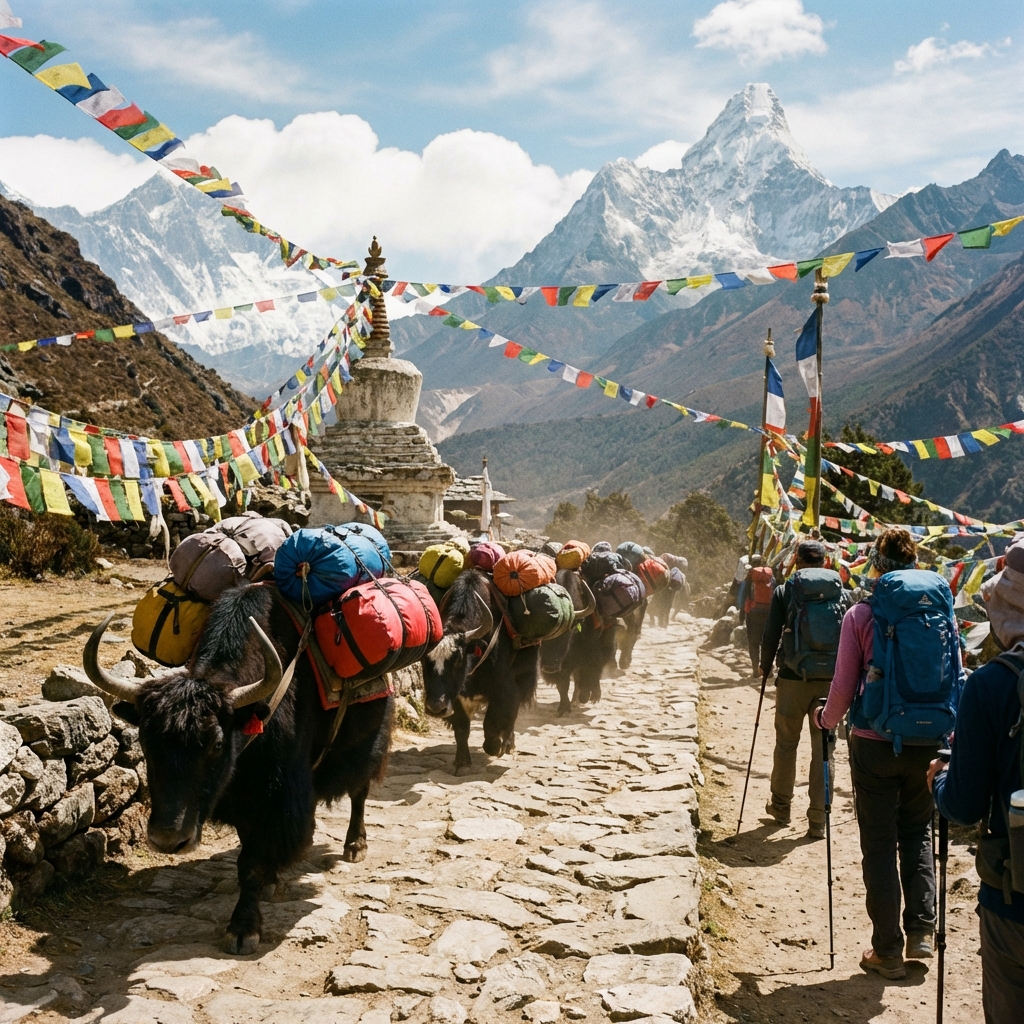
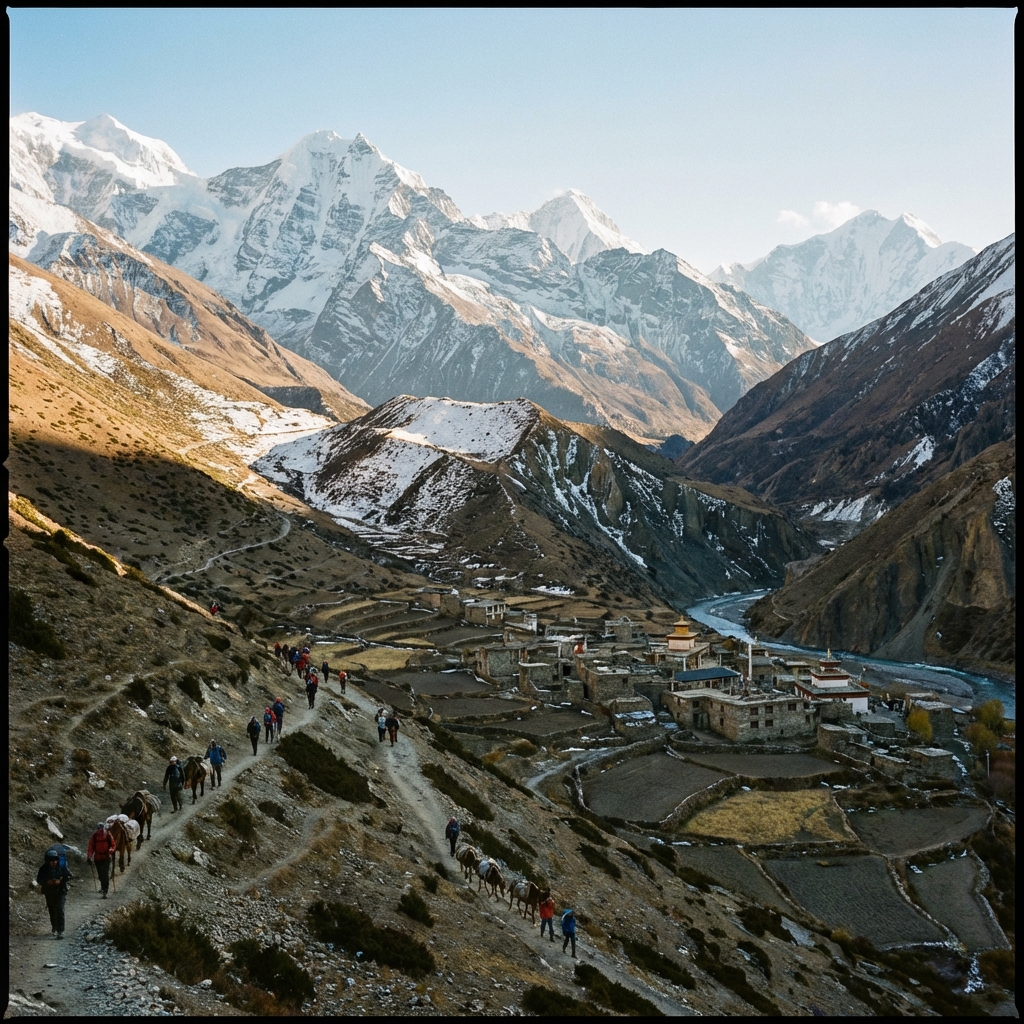
The tea house trekking system is one of Nepal's most remarkable travel innovations. Instead of camping in tents and carrying all supplies, trekkers sleep in small family-run lodges — tea houses — that line every major trail at intervals of roughly 2–4 hours of walking. This system means a well-equipped trek through the Khumbu or Annapurna requires nothing more than a daypack, sleeping bag, and the ability to walk — no tent, stove, or cooking equipment needed.
Tea houses range enormously in quality. At the budget end, a basic tea house offers a simple wooden twin room with foam mattresses, shared squat toilets, and cold water for washing. Meals come from a standard menu covering Nepali staples (dal bhat, potato dishes, tsampa porridge) and Western favourites (pasta, pizza, apple pie — increasingly recognizable versions at higher price points below 3,500m). The room itself is often cheap or even free if you eat at the lodge — this unwritten system means ordering meals from your host tea house is the expected norm.
Facilities improve dramatically in larger hubs. Namche Bazaar (3,440m) on the EBC route and Pokhara on the Annapurna approach offer Western-standard facilities at many lodges — hot showers, Wi-Fi, espresso machines, Western menus, and bakeries that would not look out of place in a European ski resort. Even in smaller villages at 4,000m, the competition for trekker business has driven meaningful improvements in mattress quality, blanket thickness, and kitchen standards over the past decade.
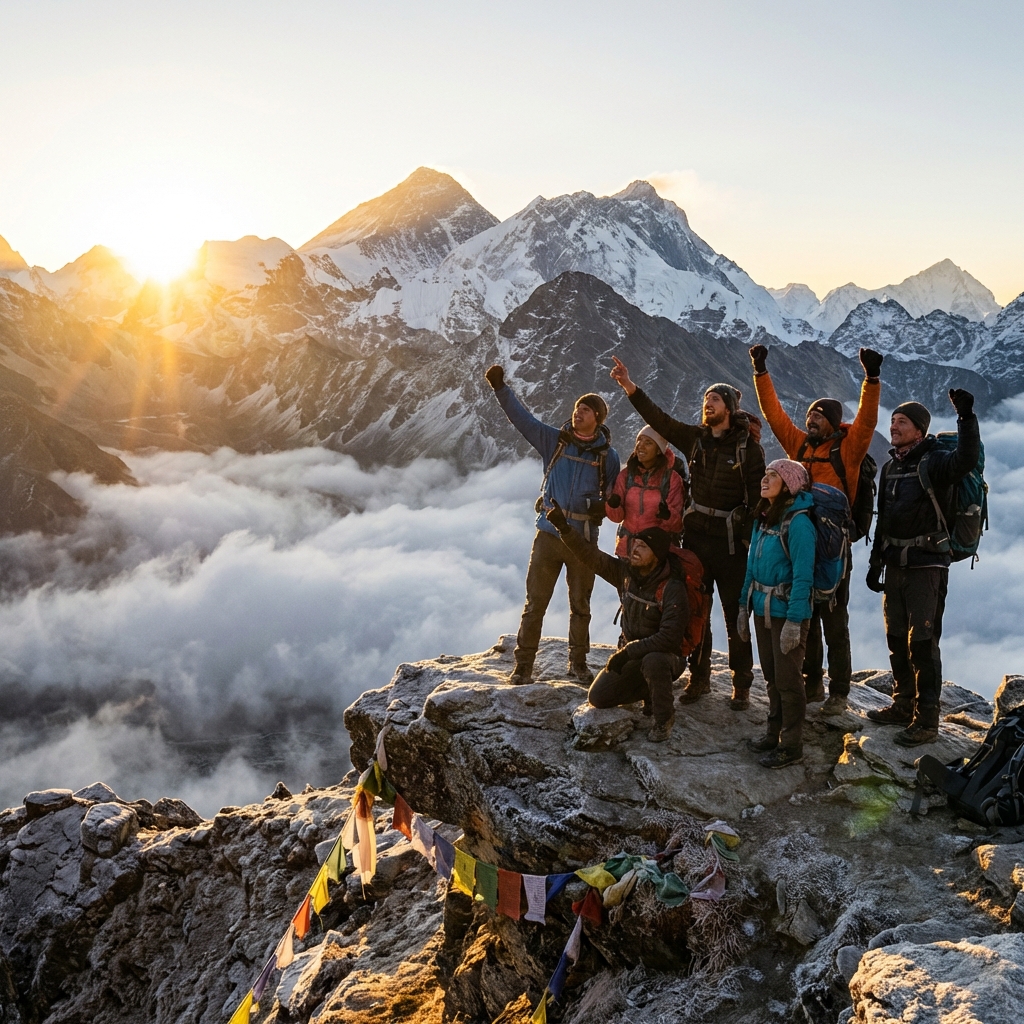
The upper boundary of the tea house system is where many trekkers are surprised. At Gorak Shep (5,140m) on the EBC route, facilities are genuinely basic: thin mattresses, minimal heating (yak dung stoves in the common room), limited menu items at elevated prices, and flush toilets that may or may not function reliably. Set expectations accordingly for the final push to Base Camp — the experience is transformative but not comfortable in a conventional sense. Our accommodation guides set clear expectations for each elevation band so you arrive prepared rather than disappointed.
By the Numbers
Accommodation at a Glance
$3–$10/night
Tea House Cost
Basic twin room
$4–$8
Dal Bhat Price
Full meal, refills included
Available
Hot Showers
Below 4,000m usually
200+
Tea Houses on EBC
Lukla to Gorak Shep
Browse the Library
All Tea House & Lodge Guides
Village-by-village accommodation breakdowns, food guides, booking strategies, and luxury lodge reviews across every major Nepal trekking route.
Good to Know
Frequently Asked Questions
Do I need to pre-book tea houses in Nepal, or can I just show up?
On the standard EBC and Annapurna routes, walk-in accommodation is generally feasible outside of the absolute peak weeks (first two weeks of October, late April). Tea house owners along the trail accept and expect walk-in guests, and competition between lodges keeps prices fair for independent travellers. However, pre-booking is strongly advisable during peak season — October in the Khumbu is particularly busy, and popular stops like Namche Bazaar, Dingboche, and Gorak Shep can fill up. Most lodges now have a phone or WhatsApp number; your guide can call ahead the night before to reserve rooms. On less-travelled routes like Manaslu or Langtang, pre-booking is less critical but still sensible — fewer lodges means less fallback if one is full. The important exception is luxury lodges (Yeti Mountain Home, Everest Summit Lodges, Ker & Downey properties) — these must be booked weeks or months in advance.
Is the food safe to eat in Nepali tea houses?
Food safety on Nepal's main trekking routes is generally reliable, especially at well-established tea houses used by regular trekkers. The golden rules are: stick to freshly cooked hot food, avoid raw salads and unpeeled fruit at altitude where hygiene is harder to maintain, and be cautious about meat dishes above 3,500m where refrigeration is minimal and supply chains long. Dal bhat — the national dish of lentil soup, rice, vegetables, and pickles — is the safest and most nutritious choice on the trail, made fresh continuously and served with unlimited refills. Boiled noodle soups, fried rice, and cooked vegetable dishes are similarly reliable. Stomach upset is common among trekkers not because the food is genuinely unsafe, but because your gut adapts to new bacteria, altitude affects digestion, and hygiene standards naturally vary. Carry electrolyte sachets and a basic anti-diarrhea medication as insurance.
Are hot showers available on trekking routes?
Hot showers are widely available in lower-elevation sections of major trekking routes, typically up to around 3,800–4,200m, but become scarcer and more expensive at higher altitudes. In Namche Bazaar (3,440m), most lodges offer hot showers either included or for a small charge ($2–4). From Dingboche (4,360m) upward on the EBC route, hot water for showering typically comes from electric geysers or solar-heated buckets rather than full shower facilities — expect to pay $3–6 for a bucket shower or to use a basic gravity-fed hot shower. At Gorak Shep (5,140m) and above, full showers are extremely rare. On the Annapurna Circuit, hot showers are reliably available up to Manang (3,519m) and become limited above Thorong Phedi. The practical advice: shower thoroughly in Namche or Pokhara before heading higher, and manage expectations above 4,000m. Wet wipes become your best friend for the upper trail.
How do I charge my phone and camera on a trek?
Charging facilities are available throughout the main trekking routes but become more expensive at altitude. Most tea houses offer plug sockets ($1–3/device/hour) or shared charging stations ($2–5 for a full phone charge). USB charging is widely available but AC socket types vary — Nepal uses Type C, D, and M sockets, so carry a universal adapter. Power banks are strongly recommended: charge them overnight and use them during the day to avoid the altitude charging fees. Solar chargers work reasonably well at high altitude where sun exposure is intense and consistent, but don't rely on them exclusively in autumn when cloud can persist for days. Laptop charging ($5–8/session at altitude) is expensive but available in most lodges. For photographers: bring extra batteries for DSLRs and mirrorless cameras, as cold temperatures dramatically reduce battery capacity above 4,000m — a battery that lasts 500 shots at sea level may last 150 at Base Camp.
What vegetarian and vegan food options are available on the trail?
Nepal's trekking trails are remarkably vegetarian-friendly, and the national diet is naturally plant-heavy. Dal bhat (the staple meal) is vegetarian by default — just confirm no ghee is added if you're vegan. Tsampa (roasted barley porridge), potato dishes, fried rice, noodle soups, vegetable curries, and momos (dumplings) are universally available. Breakfast options typically include porridge, toast, eggs, pancakes, and Tibetan bread. Most tea house menus offer explicit vegetarian sections. Vegan trekkers need to communicate clearly (ghee, cheese, and egg appear in unexpected dishes) but will find adequate food choices. Above 4,500m, menu options narrow — keep expectations realistic and focus on high-calorie, easily digestible foods. Many experienced trekkers at altitude find appetite reduces significantly, making any warm food they can stomach a victory.
What are the best luxury lodge options on the EBC route?
The Everest region's luxury lodge circuit has developed significantly over the past decade and now rivals some of the world's finest remote lodge experiences. The Yeti Mountain Home chain operates properties at Phakding, Namche, Tengboche, Dingboche, and Lobuche — all offering private en-suite rooms, refined Nepali cuisine, underfloor heating, and ranger-guided cultural programs. Everest Summit Lodges (Namche and Kongde) offer perhaps the finest mountain views from any lodge in the Khumbu. For the Pokhara and Annapurna approach, Tiger Mountain Pokhara Lodge and Ker & Downey's Camp de Base properties deliver exceptional pre- and post-trek luxury. Expect to pay $150–400/night at top properties compared to $5–15 at standard tea houses. Most luxury lodges require advance booking through their websites or partnered agencies.
Keep Exploring