
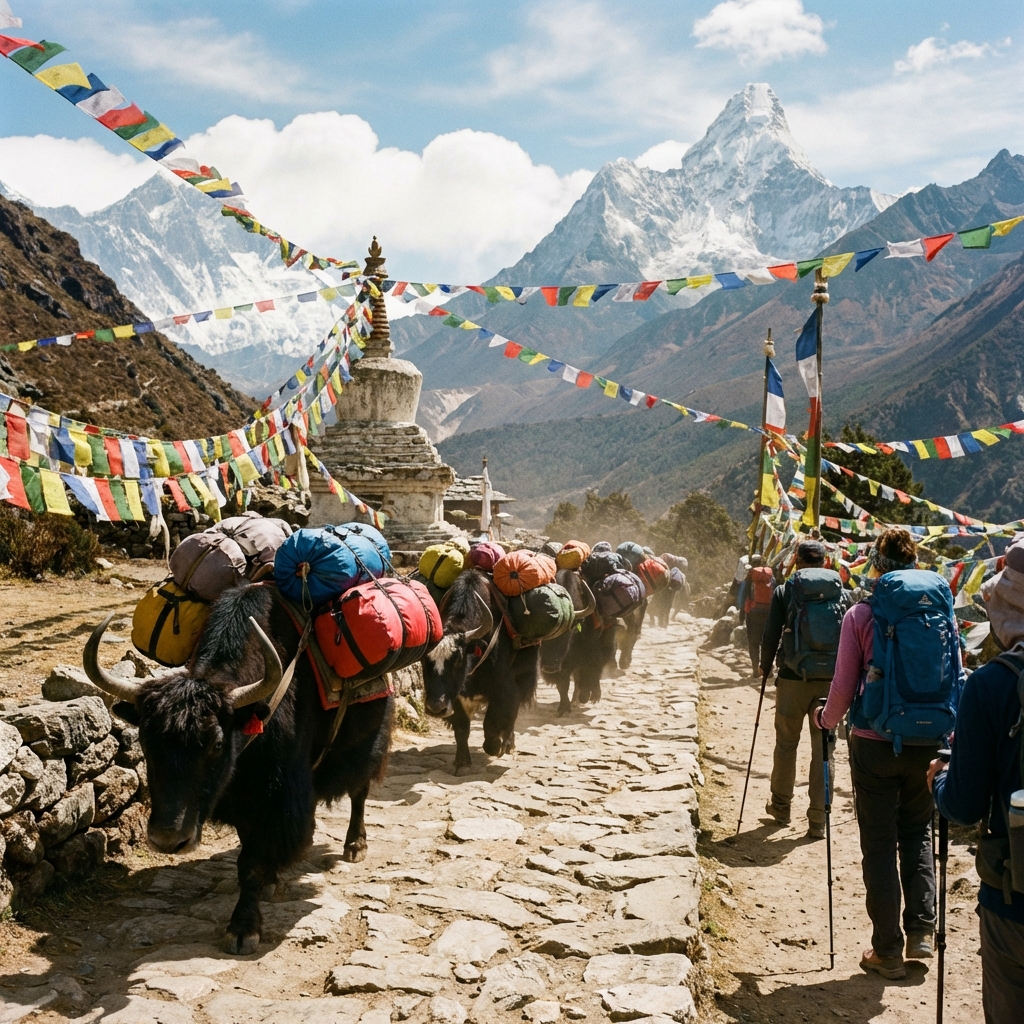
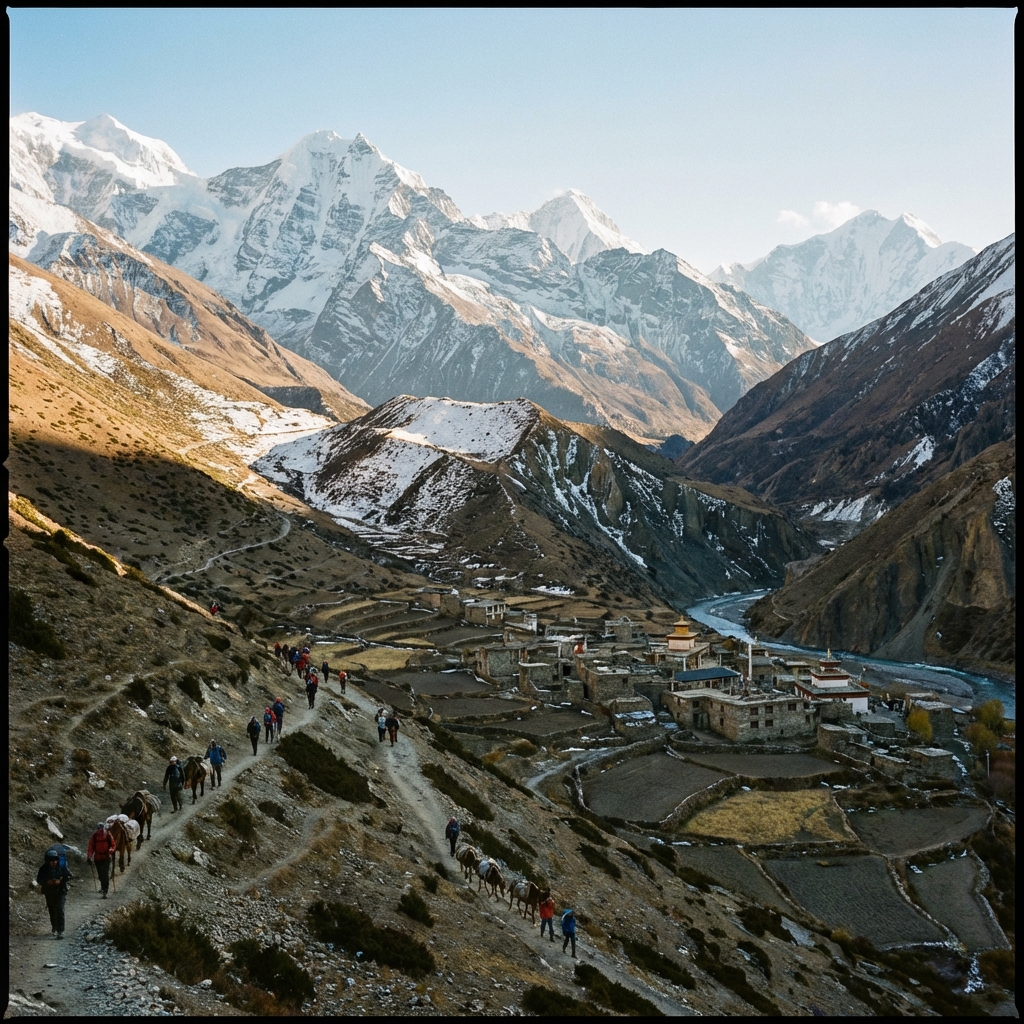
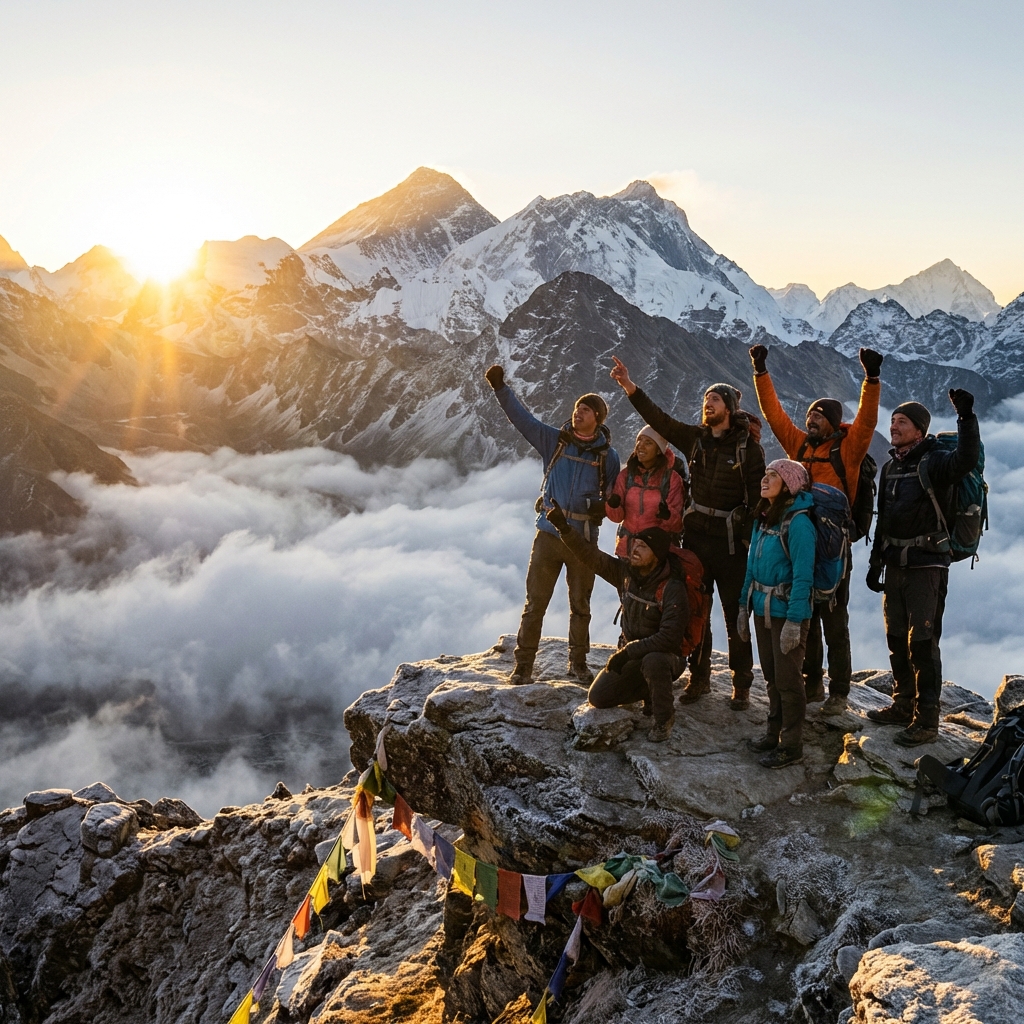
There is a moment that happens to every trekker who chooses a homestay over a tea house. You are sitting cross-legged on the floor of a Tamang family's kitchen, watching the grandmother stir a pot of gundruk soup over a wood fire, while the children crowd around to practice their English on you. Outside, the Himalayas glow pink in the sunset. There is no menu, no laminated price list, no WiFi password. Dinner is whatever the family eats, and you eat it together. In that moment, you understand that this is not just accommodation. It is the entire point of the trek.
Homestay trekking in Nepal offers something that tea house trekking cannot replicate: genuine immersion in the daily life of Nepal's mountain communities. Instead of staying in purpose-built lodges optimized for tourist comfort, you sleep in a family's home, eat their food, participate in their routines, and form connections that turn a trek from a scenic walk into a cultural experience.
This guide covers everything you need to know about homestay trekking: where homestays are available, what to expect in terms of accommodation and food, how much it costs, the etiquette that shows respect for your hosts, what gifts to bring, how to handle language barriers, and the honest pros and cons that help you decide if this style of trekking is right for you.
Staying in local family homes instead of tea houses
NPR 1,500-3,000 ($11-23) per night including meals
Tamang Heritage Trail, rural Annapurna, Langtang
Yes - you eat what the family eats
Basic: mattress on floor, shared bathroom, no WiFi
Highest of any Nepal accommodation option
Often arranged through community organizations
Culturally curious trekkers comfortable with basic conditions
What Is Homestay Trekking?
Homestay trekking replaces the standard tea house or lodge system with accommodation in the actual homes of local families along trekking routes. Instead of checking into a purpose-built guesthouse with individual rooms, menus, and tourist facilities, you become a temporary guest in a family's household.
The Community Homestay Model
Most homestays in Nepal operate through community-based tourism organizations. A village or community forms a homestay committee that registers participating families, sets standards, establishes pricing, and rotates guests among families to distribute income equitably. When you arrive in a homestay village, the committee assigns you to a family on a rotation basis rather than letting you choose.
This rotation system is fundamental to the homestay philosophy. It ensures that tourism income benefits the entire community rather than concentrating in the hands of a few families with better English or more appealing houses. It also means your experience varies from visit to visit, as each family has its own personality, cooking style, and living arrangement.
How It Differs from Tea House Trekking
| Feature | Homestay | Tea House |
|---|---|---|
| Accommodation | Family home, often a mattress on the floor | Purpose-built rooms with twin beds |
| Meals | Whatever the family cooks, eaten together | Menu with 30-50+ options |
| Privacy | Minimal - shared living spaces | Your own room with a door |
| Bathroom | Usually outdoor or basic shared | Shared or attached (varies by altitude) |
| WiFi | Rarely available | Usually available (for a fee) |
| Charging | Limited or unavailable | Usually available (for a fee) |
| Cultural exchange | Deep, authentic, unavoidable | Limited to brief interactions |
| Cost | NPR 1,500-3,000 per night with meals | NPR 2,000-5,000+ per night with meals |
| Availability | Specific routes and villages only | All major trekking routes |
| Booking | Through community organizations | Walk-in or advance booking |
Homestays Are Not for Everyone
Where to Find Homestay Treks in Nepal
Homestays are concentrated in areas where the Nepal Tourism Board and NGOs have invested in community-based tourism development. They are most established in the following regions.
Tamang Heritage Trail
The Tamang Heritage Trail north of Kathmandu is Nepal's premier homestay trekking route. This 7 to 10 day trek through Tamang villages in the Langtang region was specifically developed around the homestay concept after the devastating 2015 earthquakes as a way to rebuild communities through tourism income.
What makes it special: Tamang culture is distinctly Tibetan-influenced, with Buddhist monasteries, prayer flags, traditional stone houses, and a warm hospitality tradition. The trail passes through villages like Briddim, Nagthali, Gatlang, Goljung, and Thuman, each with established homestay programs.
Accommodation quality: Moderately basic. Most families have dedicated guest rooms with mattresses, pillows, and blankets. Bathrooms are typically separate structures outside the main house. Some villages have added basic toilet facilities specifically for homestay guests.
Food: Exceptional. Tamang home cooking includes dhido (millet porridge), gundruk (fermented greens), local dal bhat, freshly made sel roti (rice flour donuts), and butter tea. Meals are prepared on a wood or gas stove in the family kitchen. You eat with the family, usually seated on the floor around a low table or on floor cushions.
Rural Annapurna Villages
Several villages in the Annapurna region have developed homestay programs, particularly in areas off the main Annapurna Circuit and Annapurna Base Camp routes.
Key homestay villages:
- Lwang: A Gurung village near Pokhara known for organic tea and coffee farming. Homestays here include farm visits and tea-processing demonstrations.
- Ghandruk (lower sections): While the main village has tea houses, surrounding areas offer homestay experiences with Gurung families.
- Sikles: A large Gurung village with a well-organized homestay program accessible from Pokhara.
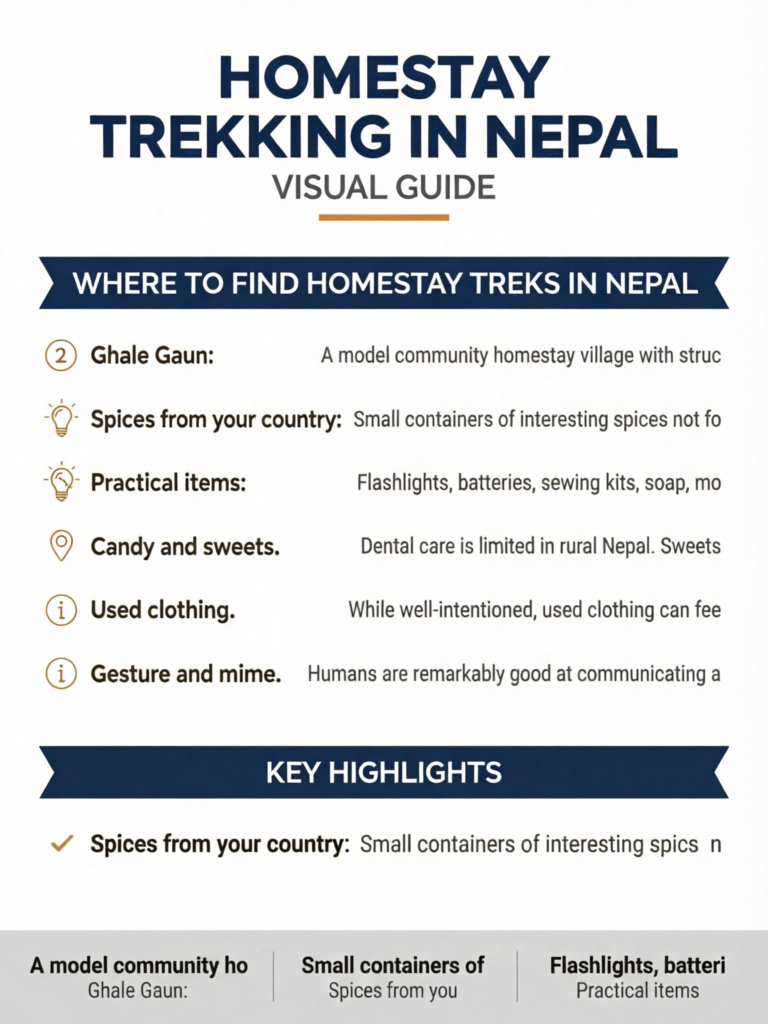
- Ghale Gaun: A model community homestay village with structured cultural programs.
Accommodation quality: Variable. Ranges from mattresses on floors to basic guest rooms. Facilities are generally simpler than tea houses in the same region.
Langtang Region
Beyond the Tamang Heritage Trail, the broader Langtang region offers homestay opportunities in rebuilt villages. After the 2015 earthquake destroyed much of the Langtang Valley, several communities rebuilt with homestay tourism as a central economic strategy.
Key areas: Villages in the lower Langtang Valley and along connecting routes to the Tamang Heritage Trail offer homestay options. The experience is similar to the Tamang Heritage Trail but with fewer established programs.
Remote and Off-Trail Areas
In Nepal's most remote trekking regions, homestays are sometimes the only accommodation option. Areas like Upper Dolpo, far-western Nepal, and lesser-known routes in the Makalu region do not have tea house infrastructure. Local families open their homes to trekkers out of tradition and hospitality as much as for income.
Important note: Homestays in truly remote areas are informal arrangements, not organized community programs. Conditions are extremely basic, communication may be very limited, and you should bring your own sleeping bag and possibly supplementary food.
Community Homestay Network
The Community Homestay Network Nepal (CHN) coordinates homestay programs across multiple regions. Booking through CHN or a partnered trekking agency ensures quality standards, fair pricing, and proper income distribution to host families. Their website lists participating villages and current programs.
What to Expect: Accommodation
Understanding what awaits you at a homestay helps set appropriate expectations and prevents disappointment.
Your Room
In established homestay programs, you will typically receive a private or semi-private room in the family's home. This room is often a multipurpose space that serves as a guest room, storage room, or extra sleeping area for the family during non-tourist seasons.
Sleeping arrangement: A mattress on the floor with blankets and a pillow. Some homestays have simple wooden bed frames. Mattresses are typically thin, and the floor beneath is often hard-packed earth or concrete. Bringing your own sleeping bag is strongly recommended and often expected.
Room size: Small by Western standards. Expect enough space for one or two mattresses with minimal floor space around them. There is usually no furniture beyond the mattress: no table, chair, or wardrobe.
Lighting: A single light bulb, often powered by solar panels or a small generator with limited operating hours. Bring a headlamp because you will need it at night.
Temperature: Homes are not heated in most regions. At altitude, nighttime temperatures inside an unheated stone house can drop near freezing. A warm sleeping bag rated to minus 10 degrees Celsius is essential.
Bathroom Facilities
This is the area where homestays differ most dramatically from tea houses, and where many trekkers find their comfort limit tested.
Toilet: Usually an outdoor pit latrine or squat toilet. Some communities have installed Western-style flush toilets for guests, but this is not universal. Toilet paper is rarely provided; bring your own.
Shower: Most homestays do not have shower facilities. Washing is done with a bucket of water, which may or may not be heated. In colder regions, many trekkers simply skip daily showers and use wet wipes for hygiene. If a hot bucket bath is available, it may cost extra.
Handwashing: A tap or bucket of water outside the bathroom. Bring hand sanitizer as backup.
Bring Your Own Hygiene Supplies
Homestays do not provide toiletries. Bring toilet paper, hand sanitizer, wet wipes, a small towel, soap, and any personal hygiene items you need. Also bring earplugs and an eye mask, as family homes can be noisy and have variable light control.
Common Areas
The heart of a homestay experience is the family's common living area, which is typically the kitchen. In many Nepali homes, especially at altitude, the kitchen functions as the living room, dining room, and social center. A wood or dung-burning stove provides warmth and cooking heat. The family gathers here in the evenings, and you are expected and welcome to join them.
This communal time around the kitchen fire is where the magic of homestay trekking happens. Stories are shared through broken English, gestures, and laughter. Children show you their schoolwork. The grandmother demonstrates traditional cooking techniques. The father explains the family's farming practices. These are the moments that justify the less comfortable sleeping arrangements.
What to Expect: Food
The food at a homestay is often the highlight of the experience. Unlike the standardized tea house menu that is the same from Lukla to Gorak Shep, homestay meals reflect genuine local cooking traditions.
Typical Homestay Meals
Breakfast (7:00-8:00 AM):
- Chapati or roti (flatbread) with vegetables or potato curry
- Tibetan bread with local honey
- Rice porridge or dhido (millet porridge)
- Tea: Nepali milk tea, butter tea, or plain black tea
Lunch (11:00 AM-12:30 PM):
- Dal bhat with seasonal vegetables and homemade pickle
- Sometimes dhido with gundruk soup
- Fresh vegetables from the family garden (seasonal)
Dinner (6:00-7:00 PM):
- Dal bhat (the standard evening meal in most Nepali homes)
- Occasionally special dishes: momos, thukpa, sel roti, or local specialties
- Seasonal fruit if available
The Food Experience
What makes homestay food remarkable is not fancy cooking but authenticity. The dal at a homestay is the same dal the family eats every day: a recipe perfected over generations using local lentils and spices. The vegetables come from the family's terrace garden. The pickle is grandmother's recipe. The chapati is rolled and cooked while you watch.
You have no choice in what to eat, and this is both the challenge and the beauty. Picky eaters may struggle. Adventurous eaters will be rewarded with flavors you cannot find in any restaurant or tea house.
Compliment the Food
Dietary Restrictions
Communicating dietary restrictions at a homestay is more challenging than at a tea house. There is no menu with vegetarian options clearly labeled. You are eating what the family cooks.
Vegetarian: Manageable. Many Nepali families eat vegetarian most days. Simply communicating that you do not eat meat is usually understood. The standard dal bhat is vegetarian.
Vegan: More challenging. Ghee (clarified butter) and dairy products are integral to Nepali home cooking. Explain your restrictions clearly, ideally with a written note in Nepali. Most families can accommodate but may find it unusual.
Allergies: Difficult. If you have serious food allergies, carry an allergy card in Nepali and be very explicit. Consider whether homestay trekking is the right choice given the limited control over food preparation. Our special dietary needs guide provides Nepali translation cards.
Cost: How Homestays Compare
Homestay trekking is generally cheaper than tea house trekking, though the savings are less dramatic than you might expect.
Typical Homestay Pricing
| Component | Homestay Cost | Tea House Equivalent |
|---|---|---|
| Room per night | NPR 500-1,000 | NPR 200-1,000 |
| Dinner | Included in package | NPR 600-1,200 |
| Breakfast | Included in package | NPR 300-700 |
| Lunch (if available) | NPR 400-600 or included | NPR 500-1,000 |
| Total per day (with meals) | NPR 1,500-3,000 ($11-23) | NPR 2,000-5,000+ ($15-38) |
Most community homestay programs operate on a fixed daily rate that includes accommodation, dinner, and breakfast. This all-inclusive pricing simplifies budgeting and eliminates the surprise costs that can accumulate at tea houses (charging, WiFi, hot showers, etc.) simply because these services are not available at homestays.
Where the Money Goes
This is perhaps the most compelling financial argument for homestay trekking. At tea houses, your money goes to the lodge owner, who may or may not be from the local community. At a community homestay, your fee is split between the host family (typically 60 to 70 percent) and the community fund (30 to 40 percent). The community fund supports village projects: school maintenance, trail improvement, clean water initiatives, and other communal needs.
When you stay at a homestay, you can be confident that your money directly supports the family hosting you and the broader village community. This is community-based tourism at its most effective.
Tipping at Homestays
Unlike tea houses where tipping is optional, leaving a tip at a homestay is strongly encouraged. A tip of NPR 300 to 500 per person per night directly to the family is appropriate and deeply appreciated. Some trekkers also bring gifts in lieu of or in addition to a monetary tip.
Homestay Etiquette: Showing Respect
Cultural sensitivity is important at any accommodation in Nepal, but at a homestay, where you are literally a guest in someone's home, it becomes paramount. Following local customs shows respect and enriches the experience for both you and your hosts.
Entering the Home
- Remove your shoes before entering the house. This is non-negotiable. Look for a pile of shoes at the entrance as your cue.
- Greet everyone with "Namaste" and a slight bow with hands pressed together.
- Ask permission before entering rooms other than your designated guest room and common areas.
- Do not touch the cooking fire or stove area unless invited. The kitchen is a sacred space in many Nepali homes.
During Meals
- Eat with your right hand if eating without utensils (the left hand is considered impure). Utensils are usually provided for guests.
- Accept food graciously. Refusing food can be perceived as insulting. If you genuinely cannot eat something, explain gently rather than simply pushing it aside.
- Wait for everyone to be served before starting, or follow your host's lead.
- Finish what is on your plate. Food waste is disrespectful in a culture where resources are limited.
- Accept seconds. When the host offers more food, it is polite to accept at least a small additional portion. Saying "pugyo" (enough) gently is acceptable when you are truly full.
General Behavior
- Dress modestly. Cover your shoulders and knees, especially women. This is a family home, not a tourist lodge.
- Ask before photographing. Always ask permission before taking photos of family members, religious items, or the interior of the home. Most families are happy to pose but appreciate being asked.
- Respect religious items. Do not touch Buddhist altars, prayer wheels, or religious objects in the home without explicit invitation.
- Keep noise levels down in the evening. Family homes have thin walls, and children often have early bedtimes.
- Do not display excessive wealth. Leave expensive jewelry and obvious luxury items in your main pack. Displaying wealth in a modest home is uncomfortable for everyone.
Helping Out
Many trekkers ask whether they should help with household chores. The answer is nuanced: offering to help is appreciated, but insisting can feel intrusive. Follow these guidelines:
- Offer to help clear dishes after meals. This is always welcome.
- Do not insist on cooking or cleaning if your offer is declined.
- Engage with children by playing games, helping with homework, or teaching them English words. This is genuinely valued.
- Show interest in the family's work: farming, weaving, cooking, animal husbandry. Asking to learn is a form of respect.
Learn Five Phrases
Gifts to Bring
Bringing small gifts for your host family is a thoughtful tradition in homestay trekking. The right gifts show appreciation without creating economic imbalance or dependency.
Good Gifts
- School supplies: Notebooks, pencils, pens, colored pencils, erasers. Always appreciated and directly useful. Bring enough for all the children in the household.
- Photos from your country: Printed photos of your family, home, city, or landscape. These create wonderful conversation starters and cultural exchange.
- Tea or coffee: Quality tea or coffee from your home country. Nepali families are tea enthusiasts and genuinely interested in trying different varieties.
- Spices from your country: Small containers of interesting spices not found in Nepal.
- Practical items: Flashlights, batteries, sewing kits, soap, moisturizer (dry skin is common at altitude).
- Fresh fruit: Buying oranges, apples, or bananas from a market at the trailhead and bringing them to your hosts is a simple, practical gift.
Gifts to Avoid
- Money to children. Never give money directly to children. It encourages begging and creates problematic dynamics. If you want to contribute financially, give to the community fund or the family adults.
- Candy and sweets. Dental care is limited in rural Nepal. Sweets contribute to dental problems, especially for children.
- Used clothing. While well-intentioned, used clothing can feel like charity rather than a gift. If you want to give clothing, bring new items.
- Religious items. Unless you understand the family's specific religious practices, avoid religious gifts that may be inappropriate.
Language Barriers: Navigating Communication
In established community homestay programs, at least one family member usually speaks basic English. In more remote areas, communication can be genuinely challenging.
Strategies for Communication
Learn basic Nepali. Even a small vocabulary makes an enormous difference. Our essential Nepali phrases guide covers the most useful words and phrases for trekkers.
Use a translation app. Download Google Translate's Nepali language pack for offline use before your trek. The camera translation feature can help with written Nepali, and the voice translation feature works for basic phrases.
Gesture and mime. Humans are remarkably good at communicating across language barriers through gestures, facial expressions, and acting. Pointing, miming, and drawing are all effective strategies.
Carry a phrasebook. A small Nepali phrasebook with key phrases written in both Roman and Devanagari script can be invaluable.
Use children as interpreters. Nepali children, even in remote areas, often learn English at school. A child's English may be limited, but it can bridge critical communication gaps between you and their parents or grandparents.
Do Not Assume Everyone Speaks English
While English is widely spoken in Nepal's tourist infrastructure, many rural families in homestay areas have limited English ability. This is especially true for older family members and women. Do not interpret limited English as lack of intelligence or unwillingness to communicate. These are often highly skilled, knowledgeable people whose expertise lies in farming, animal husbandry, traditional medicine, and mountain survival, not in foreign language skills.
Pros and Cons: An Honest Assessment
Homestay trekking is not better or worse than tea house trekking; it is fundamentally different. Here is an honest assessment of what you gain and what you sacrifice.
Advantages of Homestay Trekking
Authentic cultural experience. This is the primary and irreplaceable advantage. No amount of tea house trekking can replicate the intimacy of living with a Nepali family. You will learn about daily life, traditions, challenges, and joys in a way that transforms your understanding of Nepal.
Direct economic support. Your money goes directly to families and community projects. There are no intermediary hotel chains or absentee lodge owners. Your tourism dollars create maximum local impact.
Unique meals. Homestay food is home cooking at its finest. You will eat dishes that are not on any tea house menu, prepared from family recipes using locally grown ingredients. The food alone can be worth the trade-offs in comfort.
Quieter, more reflective experience. Without the social buzz of a tea house dining room full of international trekkers, homestay evenings are more contemplative. You are present with one family rather than part of a tourist crowd.
Off-the-beaten-path routes. Homestay treks often follow routes that are less crowded than the major tea house trails. If best cultural treks in Nepal appeal to you, homestays are the way to experience them.
Cheaper overall. All-inclusive pricing and the absence of extras (charging, WiFi, hot showers) make homestays generally cheaper than equivalent tea house experiences.
Disadvantages of Homestay Trekking
Less privacy. You are a guest in someone's home, not a customer in a hotel. Walls are thin, personal space is limited, and you may share common areas closely with the family.
Basic facilities. Bathrooms are basic, showers may not exist, rooms are simple, and heating is minimal. If physical comfort is important to your trek experience, homestays may test your limits.
No menu choice. You eat what the family cooks. If you dislike the food, your options are very limited. There is no alternative restaurant next door.
Language challenges. Communication barriers can feel isolating, especially for solo trekkers in remote areas where English proficiency is low.
Limited availability. Homestays exist only on specific routes. You cannot do a homestay trek on the Everest Base Camp route or the main Annapurna Circuit.
Less flexibility. Community rotation systems mean you cannot choose your specific host family. The experience varies depending on which family you are assigned to.
Planning a Homestay Trek
Booking and Logistics
Through a trekking agency: Many Kathmandu-based trekking agencies offer homestay trek packages, particularly for the Tamang Heritage Trail and Annapurna region homestay routes. This is the easiest option because the agency handles all logistics, provides a guide who speaks both English and the local language, and coordinates with homestay committees.
Through the Community Homestay Network: Contact CHN directly to book homestays on their partner routes. They can arrange accommodation and provide local guides.
Walk-in: On well-established homestay routes, you can arrive without a booking and the community committee will assign you a family. However, during peak season (October-November), advance arrangement is recommended to ensure availability.
What to Pack for a Homestay Trek
Beyond your normal trekking gear, bring the following for homestay-specific needs:
- Sleeping bag: Essential. Even if blankets are provided, they may not be warm enough, and having your own sleeping bag adds a hygiene layer.
- Earplugs and eye mask: Family homes are not soundproofed.
- Headlamp: Lighting may be limited, especially at night when generators are off.
- Toilet paper: Always bring your own.
- Wet wipes: For personal hygiene when shower facilities are unavailable.
- Small gifts: For your host families (see gift section above).
- Snacks: Tea house snacks and snack shops may not be available between homestay villages. Carry trail food purchased in Kathmandu.
- Printed photos or a small photo album: Showing images of your family and home country creates wonderful conversation.
- A journal: Homestay experiences are rich and worth recording in detail.
Bring a Portable Solar Charger
Best Season for Homestay Trekking
Homestay treks follow the same seasonal patterns as tea house treks. October to November and March to May are the prime seasons with clear weather and comfortable temperatures. However, homestays in lower-altitude regions (such as Lwang and Sikles near Pokhara) are accessible year-round except during the heaviest monsoon weeks.
Winter homestay trekking (December-February) is possible on lower-altitude routes and offers exceptionally clear skies and the warmth of a family fireside in the cold evenings. Summer monsoon trekking (June-August) brings lush landscapes and rice planting season, which can be a fascinating cultural experience, but trails are muddy and leeches are abundant at lower elevations.
Responsible Homestay Trekking
Homestay tourism works only when it benefits host communities. As a guest, you have responsibilities.
Financial Responsibility
Pay the agreed-upon rate without negotiating down. The prices set by community committees represent fair compensation for the accommodation and food provided. Tipping above the standard rate is encouraged and goes directly to the family.
Environmental Responsibility
Pack out all non-biodegradable waste. Homestay villages often lack proper waste management systems. The trash you leave behind becomes the community's problem. Follow responsible trekking practices even more carefully in homestay areas than on major trekking routes.
Cultural Responsibility
Respect local customs, dress modestly, ask before photographing, and avoid imposing your cultural norms on your hosts. You are a guest in their culture, not the other way around.
Social Media Responsibility
If you post about your homestay experience on social media, do so respectfully. Avoid "poverty tourism" framing that portrays your hosts as objects of pity. Present the experience as the cultural exchange it is: two-way, enriching, and respectful.
Frequently Asked Questions
Are homestays safe for solo travelers?
Yes. Community homestay programs are organized and regulated. Host families are vetted by the community committee, and your presence is known to the entire village. Solo female trekkers generally report feeling very safe at homestays, often safer than in anonymous tea houses. However, as with all solo trekking, basic precautions apply.
Can I do a homestay trek with a mandatory licensed guide?
On established routes like the Tamang Heritage Trail, trekking with a mandatory licensed guide is possible but not recommended for homestay trekking. A guide who speaks the local language dramatically improves the cultural exchange experience. The cost of a local guide (NPR 3,000-5,000 per day) is modest compared to the value they add in translation and cultural interpretation.
What if I do not like the food?
This is a genuine concern. Homestay food is home cooking, which means it may include unfamiliar flavors, textures, and ingredients. If something is truly inedible for you, politely eat what you can and supplement with your own snacks after the meal. Absolutely do not complain about the food or request alternative dishes. Your hosts are sharing their best with you.
Are homestays suitable for children?
Yes, and they can be especially rewarding for families. Nepali families adore children, and your kids will likely be treated like honored guests. However, ensure your children are comfortable with basic facilities, unfamiliar food, and sleeping on floor mattresses.
How far apart are homestay villages?
On established routes like the Tamang Heritage Trail, homestay villages are typically 3 to 6 hours of walking apart, similar to tea house spacing. On less-established routes, gaps may be longer. Your guide or the community network can advise on daily distances.
Can I combine homestay and tea house trekking?
Absolutely. Many trekkers combine the two styles. For example, you might trek the Tamang Heritage Trail on a homestay basis and then continue into the Langtang Valley using tea houses. This combination provides both cultural immersion and the convenience of established trekking infrastructure.
Do homestays have hot water?
Rarely. Some have solar-heated water for basic warm washing, but hot showers are not standard. Prepare for bucket baths with water that may be lukewarm at best. This is one of the biggest comfort adjustments for Western trekkers.
What happens if I get sick at a homestay?
Host families will do their best to care for you, but medical facilities are limited. Carry a first aid kit and any personal medications. If you become seriously ill, you will need to be evacuated to the nearest road or airstrip, which may take a day or more of walking. Ensure you have travel insurance that covers evacuation.
Can I access the internet at homestays?
Generally no. Most homestays do not have WiFi. Mobile data coverage is spotty in rural homestay areas. Consider this a feature, not a bug. The disconnection from digital life is part of what makes homestay trekking so transformative.
How do I book a homestay trek?
Contact a Kathmandu-based trekking agency that offers homestay treks, reach out to the Community Homestay Network Nepal directly, or ask at tourist information centers in Kathmandu or Pokhara. For the Tamang Heritage Trail, the Tamang Heritage Trail Homestay Committee can be contacted through the Nepal Tourism Board.
Is there electricity at homestays?
Most homestays have basic electricity from solar panels or micro-hydro projects, sufficient for a few light bulbs. Power may be available only during certain hours. Charging electronic devices may or may not be possible. Carry a power bank.
Summary: Is Homestay Trekking Right for You?
Homestay trekking is right for you if you value cultural experience over physical comfort, if you are adventurous about food, if you are patient with communication challenges, and if you want your tourism spending to directly benefit local communities. It is the most authentic way to experience Nepal beyond the mountains, revealing the warmth, resilience, and generosity of the people who call the Himalaya home.
It is not right for you if you need privacy, reliable facilities, food choice, or the social environment of international trekkers in tea house dining rooms. And there is absolutely no shame in that preference. The important thing is to choose the trekking style that lets you enjoy Nepal fully, whatever form that takes.