Best Cultural Treks in Nepal: Immersive Himalayan Experiences
The best cultural treks in Nepal are Upper Mustang, Tsum Valley, the Tamang Heritage Trail, Langtang Valley, the Annapurna Circuit, Helambu and the Khumbu (Everest) region. These routes put living Tibetan Buddhist, Sherpa, Tamang and Thakali communities, ancient monasteries and Himalayan festivals at the heart of the trek, not just the mountain views.
Nepal's trekking trails lead not only through some of the world's most spectacular mountain scenery but also through living museums of human culture. Along these ancient pathways, you encounter communities that have preserved their traditions, languages, religions, and ways of life for centuries, sometimes millennia. The Himalaya is not merely a geological feature; it is a cultural crossroads where Tibetan Buddhism meets Hindu tradition, where ancient trade routes created unique hybrid cultures, and where isolation has preserved practices that have vanished elsewhere in Asia.
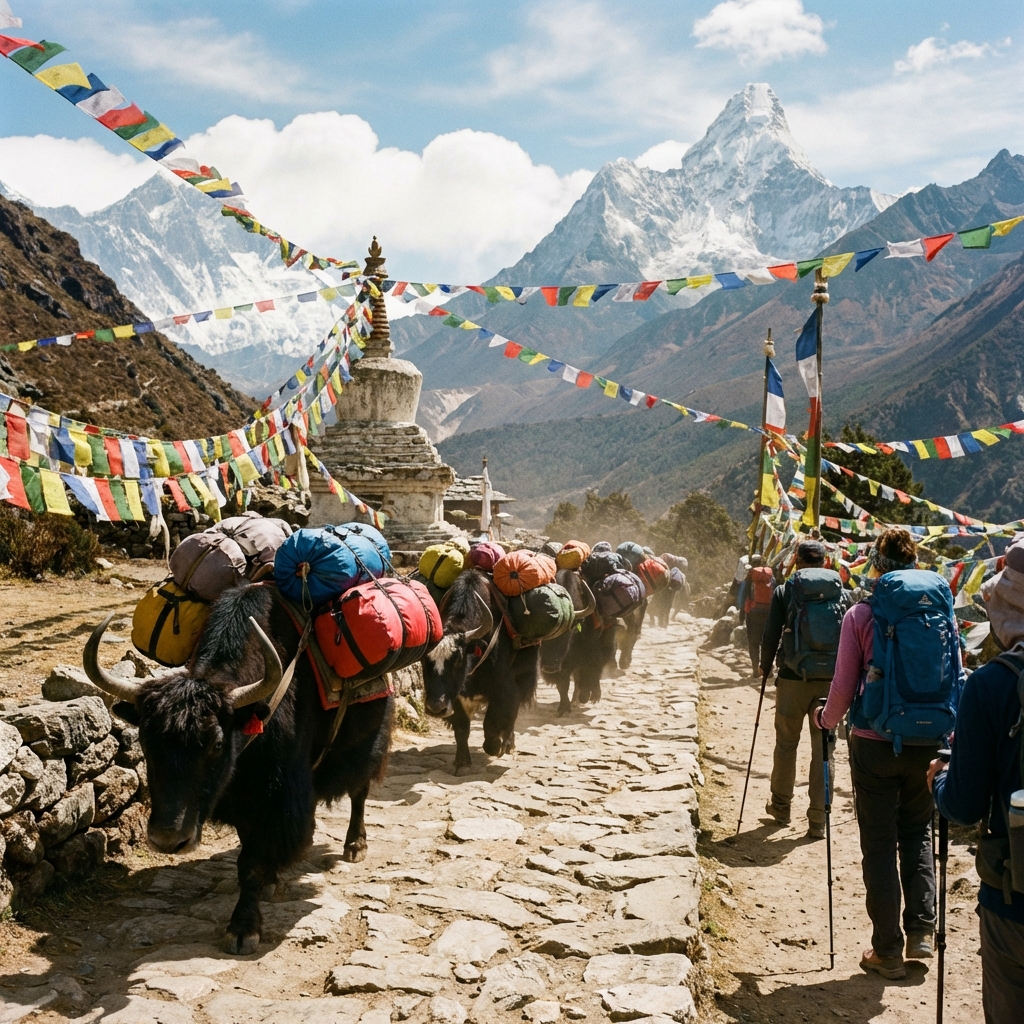
For many trekkers, the cultural dimension of their Nepal experience ultimately proves more memorable than the mountain views. The sight of prayer flags snapping in the wind above a medieval monastery, the warmth of a homestay family serving dal bhat by firelight, the resonant chanting of monks at dawn, the intricate wood carvings of a Newari village temple, the multicolored aprons of Tibetan women in Mustang - these are the moments that distinguish a Nepal trek from a walk in any other mountain range.
This guide identifies and ranks the best cultural treks in Nepal, providing detailed information about the communities you will encounter, the cultural highlights of each route, the festivals that can transform your trek from memorable to extraordinary, and practical advice on how to be a respectful and enriching presence in these communities.
Whether you are a culture enthusiast who treks primarily for human encounters, or a mountain lover looking to add depth to your Himalayan experience, these treks deliver cultural immersion that few other destinations on Earth can match.
Over 125 recognized ethnic groups
Over 120 languages across trekking regions
Buddhist (Tibetan), Hindu, Animist, and syncretic blends
Multiple (monasteries, cultural landscapes)
Upper Mustang, Tsum Valley, Tamang Heritage, Langtang, Helambu
Growing across cultural trek routes
Year-round, with peak celebrations in Oct-Nov and Feb-Mar
Essential - cultural sensitivity enhances every interaction
What Makes a Trek "Cultural"?
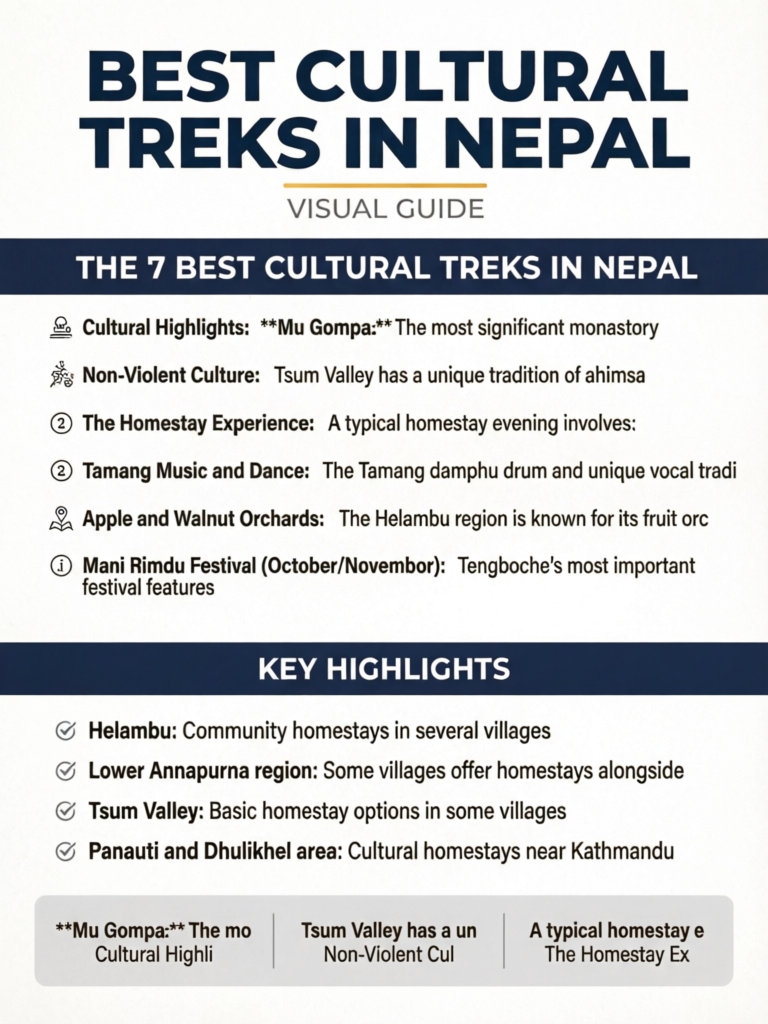
All Nepal treks pass through inhabited areas and offer some cultural exposure. But certain routes stand apart because culture is not merely a backdrop, it is the primary attraction. A truly cultural trek features:
Living traditions: Communities where traditional dress, language, architecture, religious practices, and social structures remain active parts of daily life, not performed for tourists.
Historical significance: Routes that follow ancient trade paths, pilgrim routes, or migration corridors with centuries of documented history.
Distinctive ethnic identity: Communities with strong, distinct cultural identities (Sherpa, Tamang, Thakali, Gurung, Loba, Nubri, etc.) that differ meaningfully from mainstream Nepali culture.
Accessible interaction: Opportunities for genuine exchange, whether through homestays, monastery visits, festival participation, or simply sharing tea in a family kitchen.
Architectural heritage: Traditional buildings, monasteries, chortens, mani walls, and village layouts that reflect cultural values and historical development.
The treks in this guide are ranked based on the depth, authenticity, and accessibility of their cultural offerings, combined with the overall trekking experience they provide.
The 7 Best Cultural Treks in Nepal
1. Upper Mustang Trek: The Lost Tibetan Kingdom
Cultural Rating: 10/10
Upper Mustang is, without qualification, Nepal's most extraordinary cultural trek. The former Kingdom of Lo, annexed by Nepal only in 1789, preserves a medieval Tibetan Buddhist culture that has largely vanished from Tibet itself. Walking into the walled city of Lo Manthang is like stepping through a portal into 14th-century Tibet. For route logistics, see our full Upper Mustang cultural trek guide and Upper Mustang cost breakdown.
12-16 days
3,850m (Lo Manthang)
Moderate
Restricted Area Permit (USD 50/day) + ACAP
Registered agency, minimum 2 trekkers, licensed guide
Tibetan Buddhist (Sakya lineage)
March-November (rain shadow protects from monsoon)
Loba people (Tibetan origin)
Cultural Highlights:
Lo Manthang (The Walled City): The capital of the former kingdom is a medieval walled city that contains four major monasteries (gompas), the former royal palace, and a labyrinth of mud-brick houses connected by narrow alleys. The architectural coherence is remarkable - this is not a restored heritage site but a living town of approximately 800 residents who continue traditional Tibetan Buddhist life within walls that were built in the 14th century.
The four major monasteries each represent different aspects of Tibetan Buddhist practice:
- Jampa Gompa (Champa Lhakhang): Houses a massive 15th-century Maitreya Buddha statue and exquisite wall paintings
- Thubchen Gompa: A 15th-century monastic hall with some of the finest surviving medieval Tibetan wall paintings in the world (painstakingly restored with international support)
- Choede Gompa: The main active monastery of Lo Manthang, where monks perform daily rituals
- Namgyal Gompa: Connected to the royal palace, symbolizing the historical unity of religious and political authority
Cave Monasteries and Sky Caves: The Mustang cliff faces contain thousands of human-made caves, some dating back over 2,000 years. These were used as dwellings, meditation retreats, burial chambers, and storage for sacred texts. The Luri Gompa cave monastery contains 14th-century paintings of extraordinary quality, accessible via a narrow path along cliff faces.
Traditional Agriculture and Trade: The Loba people maintain traditional barley and buckwheat farming in the arid landscape, using ancient irrigation systems. The region was historically a vital salt trade corridor between Tibet and the lowlands of South Asia. Though the salt trade has diminished, the culture it created persists.
Festivals to Time Your Visit Around:
Tiji Festival (usually May): The most spectacular festival in Upper Mustang. A three-day celebration featuring masked dances performed by monks in the courtyard of Choede Gompa, Tiji reenacts the legend of a deity who banished a demon of destruction from the land. The entire population of Lo Manthang participates, wearing their finest traditional clothing. This is one of the most visually and culturally extraordinary festivals in the Himalaya.
Yartung Festival (usually August): A horse racing festival celebrating the harvest, featuring traditional Loba equestrian skills and community feasting.
How to Be a Respectful Visitor in Upper Mustang:
- Always walk clockwise around chortens, mani walls, and monasteries
- Ask permission before photographing people, especially monks and the elderly
- Remove shoes before entering monasteries
- Do not touch religious objects or sit with your feet pointing toward altar or monks
- The Loba people are generally welcoming but value their privacy - be patient and respectful
- Consider bringing a small gift for monastery visits (butter for butter lamps is traditional)
Pro Tip
Request a visit to the former Royal Palace when in Lo Manthang. The current King of Mustang (whose role is now ceremonial since Nepal became a republic) sometimes receives visitors. Your guide can inquire about the possibility. Even if the king is not available, the palace interior provides fascinating insight into the region's political history.
Internal Link: For detailed monastery etiquette applicable across all cultural treks, see our monastery etiquette guide.
2. Tsum Valley Trek: The Sacred Hidden Valley
Cultural Rating: 9.5/10
Tsum Valley is one of Nepal's most culturally pristine trekking destinations. This remote valley in the Manaslu region was opened to trekkers only in 2008 and remains visited by fewer than 2,000 trekkers annually. The valley's name derives from the Tibetan word "Tsombo" meaning vivid, and it has been recognized as a beyul - a sacred hidden valley in Tibetan Buddhist tradition, prophesied by Guru Rinpoche as a refuge during times of strife. For full route detail, see our Tsum Valley trek guide and the Manaslu and Tsum Valley combination.
12-18 days (often combined with Manaslu Circuit)
3,700m (Mu Gompa area)
Moderate
Restricted Area Permit ($35/week Sep-Nov, $25/week Dec-Aug) + MCAP
Registered agency, minimum 2 trekkers, licensed guide
Tibetan Buddhist (Nubri people)
October-November, March-May
Designated beyul (sacred hidden valley)
Cultural Highlights:
Mu Gompa: The most significant monastery in the valley, Mu Gompa is a 500-year-old Kagyu lineage monastery perched on a hillside with commanding views of the valley. The monastery houses valuable thangka paintings, sacred texts, and ritual objects. A small community of monks maintains daily practice rituals that visitors can observe (with permission and respectful behavior).
Rachen Gompa: A nunnery that has gained increasing attention for its preservation of women's religious practice in the Tibetan Buddhist tradition. The nuns are welcoming and often happy to explain their daily routines.
Milarepa's Caves: The valley contains meditation caves associated with Milarepa, the 11th-century Tibetan Buddhist saint who is one of the most beloved figures in Himalayan Buddhism. These caves remain pilgrimage sites for Tibetan Buddhists.
Non-Violent Culture: Tsum Valley has a unique tradition of ahimsa (non-violence) that extends beyond Buddhist precepts. Hunting and fishing have been prohibited by cultural consensus for centuries. This creates a notably peaceful atmosphere and results in wildlife that is remarkably unafraid of humans. Blue sheep, Himalayan thar, and numerous bird species can be observed at close range.
Traditional Stone Architecture: The villages of Tsum Valley feature beautiful stone and mud-brick architecture with flat roofs used for drying grain and social gathering. Prayer flags connect rooftops, and every village entrance features elaborately carved mani walls (walls of stones inscribed with sacred mantras).
The Mani Wall Heritage: Tsum Valley contains some of the longest and most impressive mani walls in Nepal. These walls, constructed over centuries by devout villagers, contain thousands of individually carved prayer stones. Walking past them (always keeping the wall on your right) is a meditative experience.
Festivals:
Phungi Festival (variable dates): A unique Tsum Valley celebration involving community dances, horse-mounted processions, and traditional games. Timing varies and is determined locally.
Losar (February): Tibetan New Year is celebrated with particular fervor in Tsum Valley, with monastery rituals, traditional foods, and community gatherings.
Tsum Valley Preservation
Tsum Valley's cultural integrity is partly maintained by its restricted-area status, which limits visitor numbers and requires organized trekking. This is one case where permit restrictions serve a genuine cultural preservation purpose. The community has actively participated in decisions about tourism development, preferring quality over quantity. As a visitor, you are a guest in one of the Himalaya's most intact cultural landscapes - treat it accordingly.
3. Tamang Heritage Trail
Cultural Rating: 9/10
The Tamang Heritage Trail was specifically designed to showcase the rich culture of Nepal's Tamang people while providing economic benefits directly to local communities. Located in the Rasuwa district north of Kathmandu, this trail connects traditional Tamang villages through stunning landscapes with views of Langtang Himal, Ganesh Himal, and the Tibetan plateau. See our dedicated Tamang Heritage Trail guide for the full itinerary.
5-7 days
3,165m (Nagthali viewpoint)
Easy to Moderate
Langtang National Park + TIMS/Guide
Tamang (Buddhist-animist blend)
Excellent - community-run homestays in most villages
October-November, March-May
7-8 hours bus from Kathmandu to Syabrubesi
Cultural Highlights:
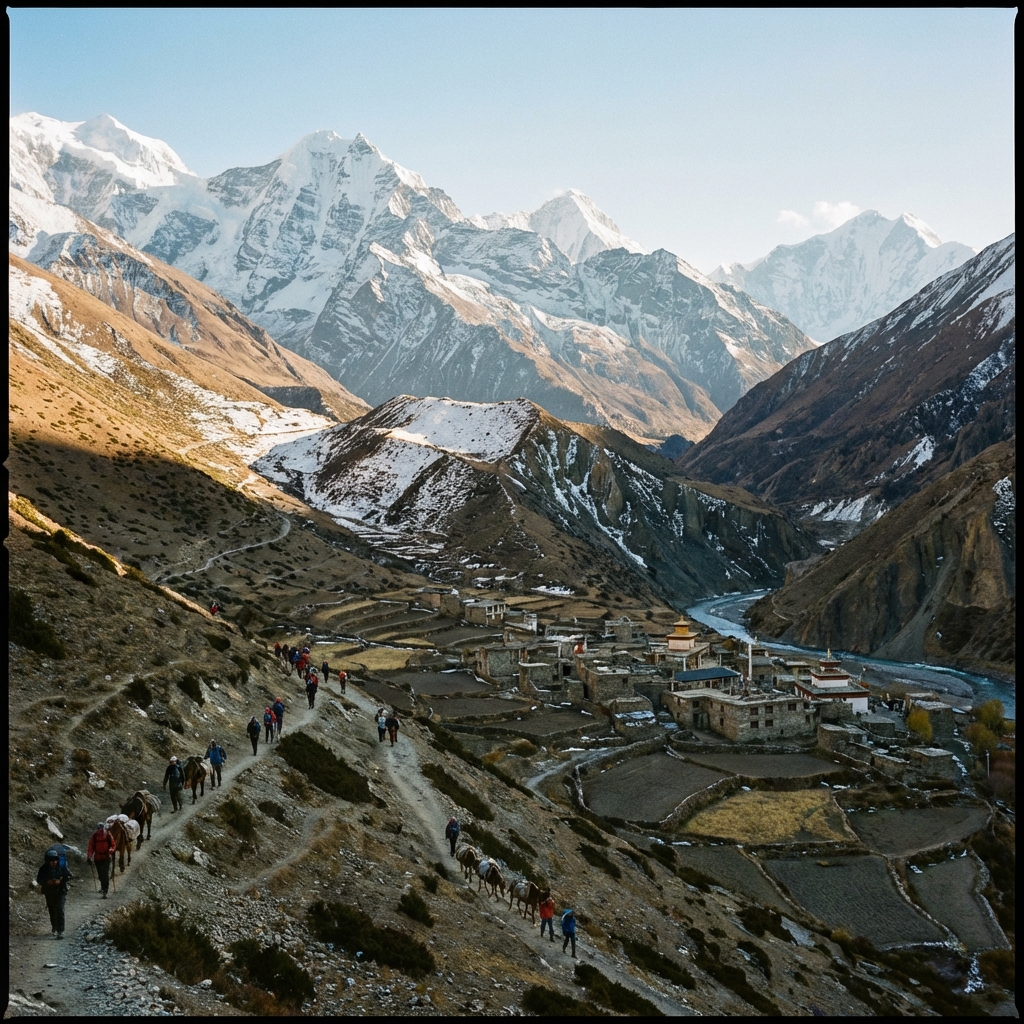
Tamang Villages: The trail passes through traditional Tamang villages including Gatlang, Goljung, Tatopani, Thuman, Timure, and Briddim. Each village has its own character, but all share common Tamang cultural elements: stone houses with slate roofs, Buddhist prayer flags, community meeting spaces, and agricultural terraces.
Tamang People: The Tamang are one of Nepal's largest ethnic groups, with Tibeto-Burman origins and a syncretic religious tradition blending Tibetan Buddhism with pre-Buddhist shamanic (Bompo) practices. They are known for their warmth, hospitality, and vibrant cultural traditions including distinctive music, dance, and handicrafts.
Community Homestays: The Tamang Heritage Trail pioneered the community homestay model in Nepal's trekking regions. Instead of commercial teahouses, you stay in family homes, eat meals prepared by your hosts, and participate (to whatever degree you choose) in daily family life. Rooms are simple but clean, meals are authentic home-cooked Tamang cuisine, and the experience provides income directly to families rather than to external business owners.
The Homestay Experience: A typical homestay evening involves:
- Arriving at your host family's home in the afternoon
- Settling into your room (usually a spare bedroom with basic bedding)
- Joining the family in the kitchen, often around the hearth fire
- Sharing dinner (typically dal bhat with local vegetables, pickles, and sometimes local fermented beverages)
- Cultural exchange: your hosts may share songs, dances, or stories; they will be curious about your life
- Morning breakfast before departing with genuine warmth
Tatopani Hot Springs: The trail passes through Tatopani (literally "hot water"), where natural hot springs provide a welcome soak after days of walking. The springs are a traditional Tamang healing site.
Gatlang Village: One of the most photogenic villages on any Nepal trek. Stone and timber houses descend a hillside facing Langtang Himal, with ancient chortens and monasteries integrated into the village fabric. The annual horse racing festival in Gatlang is a highlight if your timing coincides.
Tamang Music and Dance: The Tamang damphu drum and unique vocal traditions create a musical culture distinct from other Nepali ethnic groups. In homestay settings, families may offer impromptu musical performances, and the sight and sound of damphu drumming in a firelit kitchen is unforgettable.
Pro Tip
When staying in homestays on the Tamang Heritage Trail, bring small gifts for your host family. Practical items like good-quality soap, school supplies for children, or photos from your home country are appreciated. Avoid giving candy to children. Ask your guide to help facilitate meaningful exchanges and ensure your gifts are culturally appropriate.
Combining with Langtang: The Tamang Heritage Trail can be seamlessly connected with the Langtang Valley trek, creating a 12-14 day experience that combines the cultural depth of Tamang villages with the mountain grandeur of Langtang. This combination is one of Nepal's best overall trekking experiences.
4. Langtang Valley Trek: Tamang Culture in a Mountain Setting
Cultural Rating: 8.5/10
The Langtang Valley trek is often recommended for its mountain scenery, but its cultural dimension deserves equal billing. The valley is home to Tamang communities whose culture blends Tibetan Buddhist and indigenous practices, and the 2015 earthquake, which devastated the village of Langtang, created a cultural narrative of resilience and rebuilding that adds emotional depth to the trek.
7-10 days
4,773m (Kyanjin Ri) or 3,870m (Kyanjin Gompa)
Moderate
Langtang National Park + TIMS/Guide
Tamang (Buddhist influenced)
October-November, March-May
Bus from Kathmandu to Syabrubesi (7-8 hours)
Rebuilt and fully operational
Cultural Highlights:
The Langtang Earthquake Story: On April 25, 2015, a massive earthquake triggered an avalanche that buried the village of Langtang, killing over 300 people including trekkers and villagers. The rebuilt Langtang village stands as a testament to the resilience of the Tamang community. A memorial site honors those lost. Walking through the rebuilt village is a profoundly moving experience that connects you to the human reality of life in the Himalayas.
Kyanjin Gompa: The monastery at Kyanjin Gompa (3,870m) is small but significant, housing ancient thangka paintings and a tradition of daily worship maintained by the local community. The sound of monks chanting at dawn in this high-altitude setting, with Langtang Lirung towering above, is one of Nepal's most atmospheric cultural experiences.
Yak Cheese Factory: Kyanjin Gompa is home to one of Nepal's oldest cheese factories (established in the 1950s with Swiss assistance), producing yak cheese using methods that have remained largely unchanged. The factory is a fascinating cultural and historical artifact, and the cheese is excellent with crackers and hot tea.
Tamang Villages: The trail passes through traditional Tamang villages at various altitudes, each offering glimpses of traditional mountain farming life. Bamboo craft, weaving, and traditional butter-churning are still practiced.
For Cultural Etiquette Along This Route: See our comprehensive Nepal trekking cultural etiquette guide.
5. Annapurna Circuit: A Multi-Ethnic Cultural Journey
Cultural Rating: 8.5/10
The Annapurna Circuit is famous for its landscape diversity, but its cultural diversity is equally remarkable. Over 14-21 days, you pass through communities representing at least six major ethnic groups, each with distinct languages, religions, architecture, and traditions. No other single trek in Nepal provides this breadth of cultural exposure.
14-21 days
5,416m (Thorong La Pass)
Moderate to Challenging
ACAP + TIMS/Guide
Gurung, Thakali, Tibetan, Manangba, Manangi, Brahmin/Chhetri
October-November, March-May
Highest of any single trek in Nepal
Cultural Zones Along the Circuit:
Lower Circuit (Besisahar to Chame): Gurung and Brahmin/Chhetri The lower Marshyangdi Valley passes through Hindu-influenced villages of Brahmin and Chhetri communities, transitioning to Gurung villages as you gain altitude. Watch for:
- Hindu temples and shrines at lower elevations
- Gurung round houses (distinctive circular stone buildings)
- Terraced rice paddies transitioning to barley and millet at altitude
- Traditional water mills along the river
Middle Circuit (Chame to Manang): Manangba The Manang valley is home to the Manangba people, who historically held special trading privileges that allowed them to travel across Asia. This created a culturally sophisticated community with connections far beyond Nepal. The Manangba are known for their entrepreneurial spirit and their unique blend of Tibetan Buddhist practice with local traditions.
- Braga Gompa (dating to the 14th century) with its stunning collection of Buddhist statuary
- The old village of Braga, a stone citadel built into the cliff face
- Manang village market, where Manangba traders still operate shops alongside modern trekker services
Thorong La and Muktinath: Sacred Crossroads Muktinath Temple (3,710m) is one of Nepal's most important pilgrimage sites, sacred to both Hindus and Buddhists. The eternal natural gas flames burning near the water shrine represent one of the few places where earth, water, and fire co-exist. Hindu pilgrims from across South Asia make the journey here.
Lower Mustang (Jomsom to Tatopani): Thakali Culture The Kali Gandaki valley south of Jomsom is the heartland of the Thakali people, renowned throughout Nepal as hoteliers, businesspeople, and cooks. Thakali cuisine (a refined version of Nepali dal bhat with distinctive spice blends) is considered the best food on any trekking route in Nepal.
- Traditional Thakali houses with central courtyards
- Apple orchards (apples were introduced to the region in the 1960s and now define the local economy)
- Marpha village, perhaps the most photogenic town on the circuit, with its stone streets and whitewashed houses
Pro Tip
In Marpha (Annapurna Circuit), seek out the locally produced apple brandy. The Thakali people have perfected the distillation process over decades, and sampling the brandy at a Marpha guesthouse, with views of Dhaulagiri, is one of the circuit's quintessential cultural experiences.
Festivals on the Annapurna Circuit:
- Dashain (October): Celebrated throughout but with particular enthusiasm in Hindu villages of the lower circuit
- Tiji Festival (May): In Upper Mustang, accessible from Jomsom
- Yartung (August): Horse racing in Mustang and Manang
- Various Buddhist festivals: Timing varies by monastery; your guide can advise on current celebrations
6. Helambu Trek: Sherpa Culture Without Extreme Altitude
Cultural Rating: 8/10
Helambu offers an accessible introduction to Sherpa culture at moderate altitudes. Located just north of Kathmandu Valley, this region is home to a Sherpa community that settled here centuries ago, preserving Sherpa traditions while developing their own regional identity. For trekkers who want Sherpa cultural immersion without the altitude challenges of the Khumbu region, Helambu is the answer.
5-7 days
3,650m (Tharepati Pass)
Easy to Moderate
Langtang National Park + TIMS/Guide
Hyolmo Sherpa (Buddhist)
Bus from Kathmandu to Sundarijal (1 hour)
Closest Sherpa cultural experience to Kathmandu
Cultural Highlights:
Hyolmo People: The Sherpa community of Helambu is more precisely known as Hyolmo. While sharing common origins with the Sherpas of Khumbu (both descended from Tibetan migrants), the Hyolmo developed distinct cultural practices over centuries of relative isolation. Their religious art, music, and architecture have been recognized as a significant cultural heritage. In 2019, the Hyolmo Valley was proposed as a UNESCO Cultural Heritage site.
Monasteries: Helambu contains numerous monasteries of varying sizes and ages. The monastery at Tarkeghyang village is one of the most significant, with wall paintings, statuary, and an active monastic community. Morning and evening prayers are open to respectful visitors.
Traditional Villages: The villages of Sermathang, Tarkeghyang, and Melamchi Gaon feature traditional Hyolmo architecture: stone houses with carved wooden windows and slate roofs. The villages are compact, often built on hillsides with interconnected pathways and communal spaces.
Hyolmo Music and Dance: The Hyolmo have a rich musical tradition featuring distinctive drums, cymbals, and vocal styles. During festivals and celebrations, community dances tell stories from Buddhist tradition and local history.
Apple and Walnut Orchards: The Helambu region is known for its fruit orchards, and the trails pass through productive agricultural landscapes that demonstrate the Hyolmo integration of farming with spiritual practice.
7. Khumbu Region (Everest Area): The Sherpa Heartland
Cultural Rating: 8/10
The Khumbu region is the cultural heartland of the Sherpa people, whose name has become synonymous with Himalayan mountaineering but whose culture extends far beyond expedition support. A Khumbu trek, whether to Everest Base Camp, Gokyo Lakes, or simply to Namche Bazaar, provides immersion in one of the world's most distinctive mountain cultures.
7-18 days (depending on route)
3,440m (Namche) to 5,545m (Kala Patthar)
Moderate to Challenging
Sagarmatha National Park + TIMS/Guide
Sherpa (Tibetan Buddhist, Nyingma lineage)
Tengboche, Pangboche, Khumjung, Thame monasteries
Combining mountain trekking with Sherpa cultural immersion
Cultural Highlights:
Tengboche Monastery: The most famous monastery in the Khumbu, Tengboche sits at 3,867m with Ama Dablam, Everest, and Nuptse as its backdrop. The monastery was rebuilt after a 1989 fire and again strengthened after the 2015 earthquake. Morning prayers (from around 6:00 AM) are open to visitors and provide a deeply atmospheric cultural experience.
Mani Rimdu Festival (October/November): Tengboche's most important festival features masked dances, religious ceremonies, and community celebrations over three days. Mani Rimdu attracts Sherpa families from across the Khumbu and provides one of the most authentic Buddhist festival experiences accessible to trekkers. The dates follow the lunar calendar and change each year; your agency can confirm specific dates.
Namche Bazaar: The Sherpa capital is a thriving market town with a Saturday market that draws traders from across the Khumbu. The Sherpa Cultural Museum in Namche provides excellent context for understanding Sherpa history, religion, and social organization. The museum is small but well-curated.
Pangboche Monastery: One of the oldest monasteries in the Khumbu (estimated 16th century), Pangboche houses sacred relics and maintains an unbroken tradition of Buddhist practice. The monastery is less visited than Tengboche and offers a more intimate experience.
Khumjung and Khunde Villages: Twin villages above Namche that represent traditional Sherpa settlement patterns. Khumjung contains a school founded by Sir Edmund Hillary and a monastery that reportedly houses a yeti scalp (which can be viewed for a donation). These villages offer genuine Sherpa village life with less tourist infrastructure than Namche.
Thame Monastery and Village: The village of Thame, accessible as a side trip from Namche, is the birthplace of Tenzing Norgay (who, with Hillary, first summited Everest in 1953). The monastery above Thame is perched on a cliff face and provides dramatic cultural and visual experiences. Thame sees far fewer visitors than the main EBC trail.
For deeper understanding: see our Sherpa culture guide and prayer flags and Buddhist symbols guide.
Two More Cultural Treks Worth Considering
Beyond the seven ranked routes, two restricted-area treks stand out for trekkers who want the deepest Tibetan-Buddhist immersion with almost no crowds. Both require a registered agency, a licensed guide and a minimum of two trekkers.
Nar Phu Valley: Hidden Tibetan Villages North of Annapurna
The Nar Phu Valley, opened to trekkers only in 2002, hides two medieval Tibetan-origin villages, Nar and Phu, behind a narrow gorge off the Annapurna Circuit. Phu's ancient Tashi Lhakhang Gompa and the Bhotia (Tibetan-descended) herding culture survive almost untouched, and you can cross the Kang La pass (5,320m) to rejoin the main circuit. Plan for 9-14 days, a Restricted Area Permit plus ACAP, and best months of March-May and September-November. See our Nar Phu Valley trek guide and Nar Phu Valley cost breakdown.
Upper Dolpo: Bon and Tibetan Buddhism in Nepal's Remotest Corner
Upper Dolpo, the setting of the film and book Caravan, is the most remote cultural trek in Nepal. The region preserves both the ancient Bon religion (Tibet's pre-Buddhist faith) and Tibetan Buddhism, with the medieval Shey Gompa near sacred Crystal Mountain and centuries-old salt-trade caravans. Expect 18-26 days, an Upper Dolpo Restricted Area Permit plus Shey Phoksundo National Park fees, and high passes above 5,000m. Read our Upper Dolpo trek guide before you commit.
Festivals Calendar for Cultural Trekkers
Timing your trek to coincide with a major festival can transform an already cultural experience into something extraordinary. The following calendar highlights the most significant festivals in trekking regions.
| Festival | Typical Timing | Location | Significance |
|---|---|---|---|
| Lhosar (Tamang/Sherpa New Year) | February | Langtang, Helambu, Khumbu | New Year celebrations with dances, feasting, monasteries rituals |
| Holi | March | Lower altitudes, nationwide | Festival of colors, more prominent in Hindu communities |
| Tiji Festival | May | Lo Manthang, Upper Mustang | Three-day masked dance festival, most spectacular in Mustang |
| Yartung Horse Festival | August | Mustang, Manang | Horse racing, traditional games |
| Dashain | October | Nationwide | Nepal's biggest festival, significant across all communities |
| Tihar (Deepawali) | October/November | Nationwide | Festival of lights, animals honored |
| Mani Rimdu | October/November | Tengboche, Khumbu | Masked dances, Buddhist rituals |
| Lhosar (Gurung New Year) | December/January | Annapurna region | New Year celebrations in Gurung communities |
Festival Timing Note
Most Nepali festivals follow the lunar calendar, meaning exact dates shift each year. Your trekking agency can confirm specific dates for the year of your visit. Planning a trek around a festival requires flexibility in your itinerary, as festival dates may be confirmed only weeks in advance. The cultural reward, however, is immense.
Monastery Visits: What to Know
Monasteries (gompas) are the cultural heart of Buddhist trekking regions. Visiting them respectfully enriches your experience and supports their preservation.
General Monastery Etiquette
- Remove shoes before entering any monastery building
- Walk clockwise around the monastery, chortens, mani walls, and prayer wheels (always keep sacred objects on your right)
- Spin prayer wheels clockwise (the direction of the mantras inscribed on them)
- Do not touch statues, thangka paintings, or religious objects
- Sit cross-legged or kneel if sitting during prayers - never point your feet toward the altar or monks
- Photography: Ask before taking photos inside monasteries. Some allow it, others do not. Flash is almost always prohibited
- Dress modestly: Cover shoulders and knees. Remove hats
- Leave a donation: A small donation (NPR 100-500) in the offering box supports monastery maintenance
- Be quiet and respectful during prayer services. You are welcome to observe but should not interrupt
- If a monk or nun offers you something (butter tea, blessed rice, etc.), accept graciously with both hands
For the complete guide: monastery etiquette in Nepal.
Homestay Trekking: The Deepest Cultural Immersion
Homestays represent the most immersive form of cultural trekking. Unlike teahouses (which are essentially small hotels), homestays place you in family homes where you share meals, living space, and daily routines with your hosts.
Where Homestays Are Available
- Tamang Heritage Trail: The best-developed homestay network in Nepal's trekking regions
- Helambu: Community homestays in several villages
- Lower Annapurna region: Some villages offer homestays alongside teahouses
- Tsum Valley: Basic homestay options in some villages
- Panauti and Dhulikhel area: Cultural homestays near Kathmandu
What to Expect
Accommodation: Simple but clean rooms, often a spare bedroom with basic bedding. Expect a mattress on the floor or a simple bed. Toilets are usually outside (pit latrine or basic flush). Hot water may or may not be available.
Meals: Authentic home-cooked food, typically dal bhat (rice, lentil soup, vegetables, pickles) with seasonal variations. The food is usually excellent - better than many teahouse offerings because it is cooked with family care and fresh local ingredients.
Interaction: This is the point. Your host family will be curious about you, and you about them. Even with language barriers (your guide translates), meaningful exchange happens through shared meals, gestures, laughter, and simple human connection.
Cost: Homestay fees are standardized within community networks to prevent competition and ensure equitable distribution. Typical cost is NPR 1,500-3,000 per person per night including meals. This money goes directly to the host family.
Homestay Tips
- Learn a few phrases in the local language (your guide can teach you)
- Bring photos of your family and home to share
- Offer to help with simple tasks (your hosts may decline, but the gesture is appreciated)
- Respect meal times and household routines
- Keep your room tidy
- Express genuine thanks to your hosts upon departure
Pro Tip
If you are choosing between a teahouse trek and a homestay option on routes where both exist, choose the homestay at least once. The cultural depth of a homestay evening, even a single one, far exceeds what any teahouse can offer. The Tamang Heritage Trail's homestay program is the gold standard in Nepal and well worth experiencing.
Being a Respectful Cultural Trekker
Cultural trekking carries responsibility. Your behavior impacts not only your own experience but the willingness of communities to welcome future visitors.
The Core Principles
Ask Before Photographing People: This is the single most important rule of cultural trekking. Not everyone wants to be photographed, and assuming permission is disrespectful. A simple gesture and smile usually communicates the question across language barriers. Accept "no" gracefully.
Dress Modestly in Villages: While trekking clothes are fine on the trail, cover shoulders and knees when visiting monasteries, temples, and conservative villages. This shows respect for local norms.
Do Not Give Money or Gifts to Children: Giving money, candy, or pens to children on the trail encourages begging and disrupts family authority. If you want to help, donate to village schools or community organizations through your guide or agency.
Learn Basic Phrases: Even a few words in Nepali (namaste, dhanyabad) or the local language show respect and open doors. Your guide can teach you greetings specific to the ethnic group you are visiting.
Respect Religious Sites: Walk clockwise around Buddhist monuments. Do not sit on mani walls. Do not move or take prayer stones. Enter monasteries with reverence.
Support Local Economy: Buy local products (cheese, crafts, drinks) from village shops rather than carrying everything from Kathmandu. Eat at local teahouses. This is the most direct way your tourism dollars benefit the communities you visit.
Do Not Bargain Aggressively: In remote cultural areas, prices are already low by international standards. Hard bargaining over small amounts can feel exploitative to communities where cash income is limited.
For the complete etiquette guide: Nepal trekking cultural etiquette.
Planning Your Cultural Trek
Duration Recommendations
| Trek | Minimum Duration | Recommended Duration | Cultural Depth |
|---|---|---|---|
| Upper Mustang | 12 days | 16 days (includes side trips) | Extraordinary |
| Tsum Valley | 12 days | 15-18 days (with Manaslu) | Extraordinary |
| Tamang Heritage Trail | 5 days | 7 days (with Langtang) | Excellent |
| Langtang Valley | 7 days | 10 days (with Gosainkunda) | Very Good |
| Annapurna Circuit | 14 days | 18-21 days (full circuit) | Very Good |
| Helambu | 5 days | 7 days | Good |
| Khumbu (EBC) | 12 days | 14-16 days (with side trips) | Good |
Best Season for Cultural Treks
October and November offer the best combination of weather, cultural activity (Dashain, Tihar, Mani Rimdu), and operational infrastructure. However, cultural treks below 4,000m work well in other seasons too:
- Spring (March-May): Good weather, fewer crowds than autumn, Tiji Festival in Mustang
- Winter (December-February): Cold but quiet, Lhosar celebrations, intimate village experiences
- Monsoon (June-September): Upper Mustang and Tsum Valley work in monsoon (rain shadow), but most other routes are challenging
Budget Considerations
Cultural treks generally cost more than standard treks due to restricted area permits and the organized trekking requirements.
| Trek | Permit Cost (per person) | Agency Required? | Typical Total Cost (14 days) |
|---|---|---|---|
| Upper Mustang | $50/day (no minimum days) | Yes | $2,500-4,000 |
| Tsum Valley | $35/week (peak) | Yes | $1,800-3,000 |
| Manaslu Circuit | $100/week (peak) | Yes | $2,000-3,500 |
| Tamang Heritage | NPR 3,000 (park fee) | Guide required | $800-1,500 |
| Annapurna Circuit | NPR 3,000 (ACAP) | Guide required | $1,200-2,500 |
| Helambu | NPR 3,000 (park fee) | Guide required | $600-1,200 |
| Khumbu | NPR 3,000 (park fee) | Guide required | $1,500-2,500 |
Frequently Asked Questions
Which cultural trek should I do first?
For first-time cultural trekkers, the Tamang Heritage Trail offers the best introduction. It is relatively short (5-7 days), physically accessible, close to Kathmandu, and features the most developed homestay network in Nepal. The cultural immersion is immediate and authentic. For experienced trekkers seeking the ultimate cultural experience, Upper Mustang is the destination.
Do I need to know anything about Buddhism before trekking in Buddhist areas?
No prior knowledge is required, but even basic familiarity enhances the experience enormously. Understanding the significance of prayer flags, mani walls, stupas, and monastery layout transforms them from colorful scenery into meaningful cultural encounters. Your guide should be able to explain these elements. Our prayer flags and Buddhist symbols guide provides essential background.
Can I visit monasteries and temples as a non-Buddhist or non-Hindu?
Yes. Nepal's religious communities are generally welcoming to visitors of all faiths (and none). The key requirements are respectful behavior, appropriate dress, and genuine interest. You are not expected to participate in worship, but observing respectfully is always welcome.
Are cultural treks suitable for families with children?
Yes, particularly the lower-altitude options. The Tamang Heritage Trail, Helambu, and Poon Hill region are all family-friendly in terms of altitude and trail difficulty. Children often become the bridge for cultural interaction, as Nepali families are warmly receptive to visiting children. See our trekking with kids guide.
How do I ensure my tourism spending benefits local communities?
Choose agencies that employ local guides and porters from the trek region. Stay in locally owned teahouses and homestays rather than chain lodges. Buy local products. Tip your guide and porter fairly. Consider making a donation to a local school, monastery, or community organization that your guide can recommend. Avoid agencies that route all spending through Kathmandu offices.
Is it appropriate to photograph religious ceremonies?
This varies by location and ceremony. For large public festivals (Tiji, Mani Rimdu, Dashain celebrations), photography is generally welcome. For private monastery prayers and rituals, always ask permission first. Some monasteries prohibit photography inside prayer halls entirely. When in doubt, ask your guide or a monk.
What gifts are appropriate for monastery visits?
Small monetary donations are always appropriate (left in the offering box). For more personal offerings, Tibetan Buddhist monasteries appreciate: butter or oil for butter lamps, incense, dried fruits, or white khata scarves (available in Kathmandu). Your guide can help you choose and present offerings appropriately.
How can I learn about festivals before my trip?
The Nepal Tourism Board publishes an annual festival calendar, though exact dates may be confirmed late due to the lunar calendar system. Your trekking agency should be able to advise on festivals occurring during your travel window. The festivals calendar in this guide provides general timing.
Are cultural treks more expensive than standard treks?
Generally yes, due to restricted area permit fees (Upper Mustang, Tsum Valley, Manaslu) and the requirement for organized group trekking on these routes. However, the Tamang Heritage Trail and Helambu are among Nepal's most affordable treks. The cultural value of restricted-area treks justifies the additional cost for most trekkers.
What is the minimum fitness required for cultural treks?
It varies by route. The Tamang Heritage Trail and Helambu are suitable for anyone with reasonable walking fitness. Upper Mustang is moderate (no extreme altitude but sustained daily walking at 3,000-3,800m). The Annapurna Circuit and Manaslu Circuit (if combined with Tsum Valley) require good fitness due to high passes. See our fitness requirements guide.
Can I learn traditional crafts or skills during cultural treks?
Some homestays and community tourism programs offer opportunities to participate in traditional activities: weaving, cooking, butter churning, or agricultural tasks. These are not formalized programs but emerge organically during homestay visits. Express interest to your host family (through your guide), and they may be delighted to share their skills.
How do I balance cultural respect with honest documentation?
This is a thoughtful question. Photograph and write about what you see, but do so with sensitivity. Avoid depicting people in ways that emphasize poverty or exoticism. Share images and stories that reflect the dignity, warmth, and complexity of the communities you visit. When in doubt, ask yourself whether the person depicted would be happy with how they are represented.
What is the most authentic cultural trek in Nepal?
Upper Mustang and Tsum Valley are the most authentic cultural treks in Nepal. Both are restricted-area beyul-style regions where medieval Tibetan Buddhist life continues largely unchanged, visitor numbers stay low, and the culture is the trek rather than a backdrop. Upper Mustang edges ahead for its walled capital, Lo Manthang, and the Tiji Festival.
Which cultural trek in Nepal has the fewest crowds?
For genuinely crowd-free cultural trekking, choose Tsum Valley (fewer than 2,000 trekkers a year), Nar Phu Valley or Upper Dolpo. Their restricted-area status and remote access keep numbers far below the Everest and Annapurna highways while delivering some of Nepal's richest Tibetan-Buddhist and Bon heritage. See our off-the-beaten-path treks guide.
Can I do a cultural trek in Nepal without a guide?
Most of Nepal's deepest cultural treks cannot be done without a guide. Upper Mustang, Tsum Valley, Nar Phu and Upper Dolpo are restricted areas that legally require a registered agency, a licensed guide and at least two trekkers. Lower-altitude options like the Tamang Heritage Trail and Helambu still require a guide under current national-park rules but are far more accessible and affordable.
What is the best short cultural trek in Nepal?
The Tamang Heritage Trail (5-7 days) is the best short cultural trek in Nepal, offering community homestays, Tamang music and dance, and Langtang Himal views close to Kathmandu. Helambu (5-7 days) is a strong alternative for Hyolmo Sherpa culture at modest altitude. Both pair well with the Langtang Valley trek.
Final Thoughts
Nepal's cultural treks offer something that few other travel experiences can match: genuine immersion in ancient, living traditions set against the most dramatic mountain landscapes on Earth. The combination of cultural depth and natural grandeur creates a type of travel experience that changes how you see the world.
The treks in this guide range from the accessible (Tamang Heritage Trail, Helambu) to the extraordinary (Upper Mustang, Tsum Valley), but all share a common thread: they place human culture at the center of the trekking experience. Mountains provide the scenery, but people provide the meaning.
Approach these treks with openness, respect, and genuine curiosity. The communities you visit have welcomed travelers for centuries along these ancient routes. Your respectful presence continues a tradition of cultural exchange that predates modern tourism by millennia.
For related cultural preparation, explore our Nepal festivals and trekking calendar and essential Nepali phrases for trekkers.
Ready to plan your cultural trek? Start with our how to choose a trekking agency guide and explore our agency recommendations for Upper Mustang, Manaslu/Tsum Valley, and Langtang.