Best Trekking Agencies for Manaslu Circuit 2026: Permits, Requirements & Verified Operators
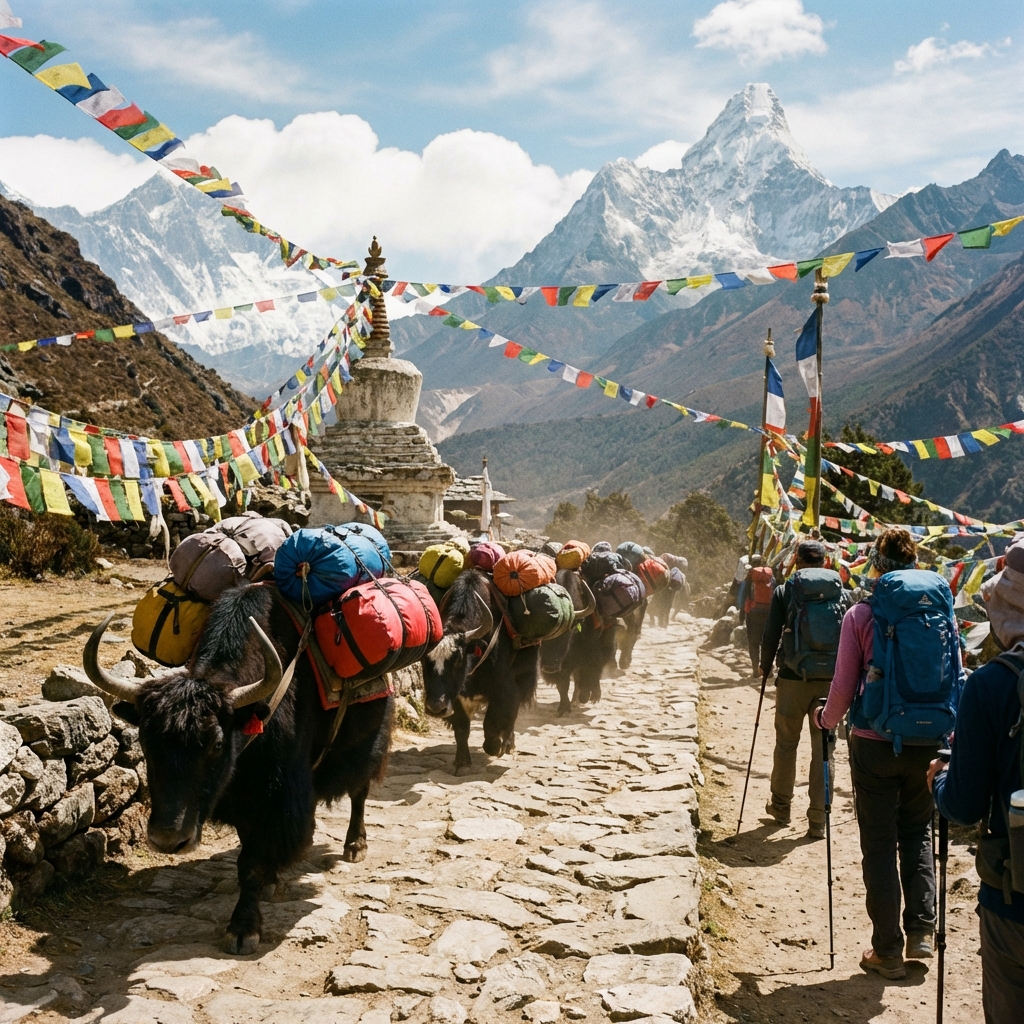
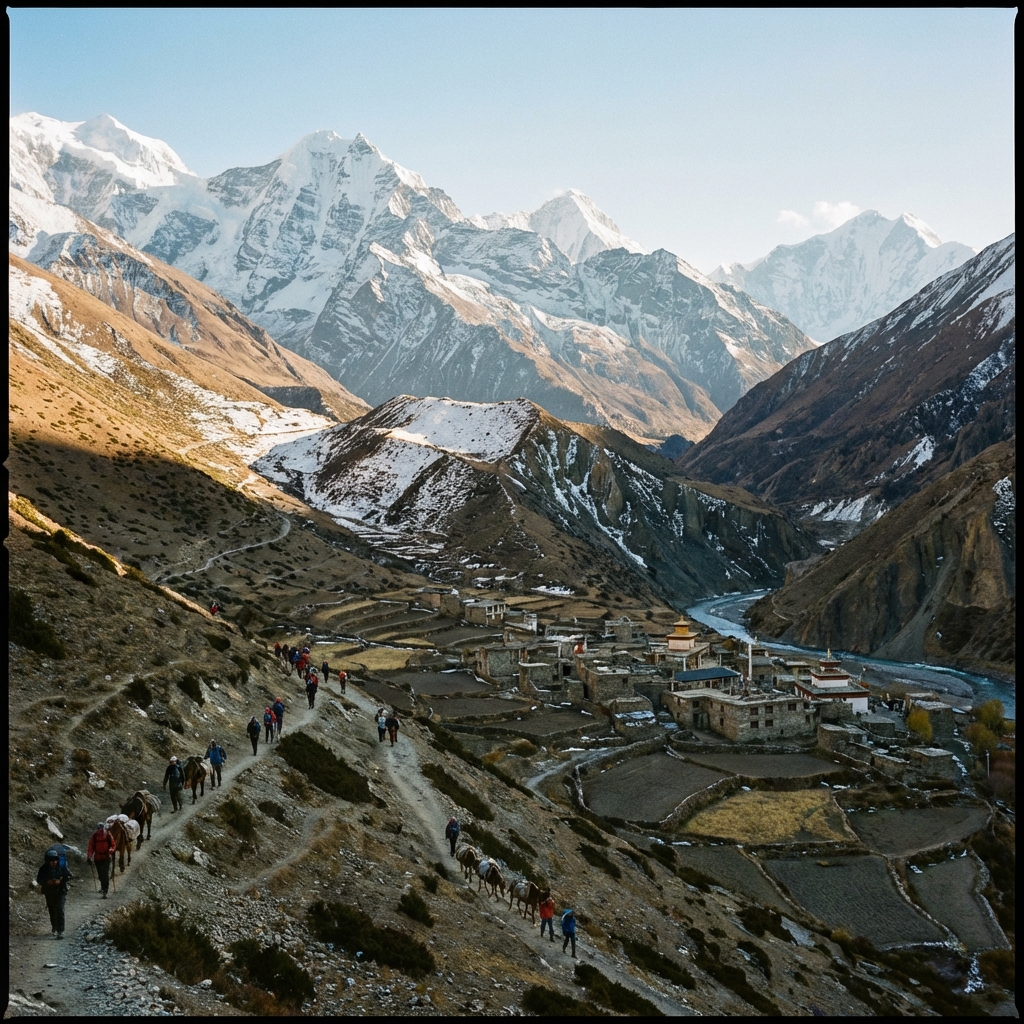
Unlike most Nepal treks where a licensed guide is mandatory (since April 2023) or recommended, the Manaslu Circuit operates under fundamentally different rules. This 177-kilometer journey around Mount Manaslu (8,163m)—the world's eighth-highest peak—passes through a designated Restricted Area where trekking without a registered agency is illegal. There is no independent option. There is no "going it alone." Your agency choice isn't just important—it's the entire framework that makes your trek legally possible.
This guide goes beyond simple agency recommendations. It explains why the restricted area designation exists, how the permit system works, what distinguishes a competent Manaslu operator from a problematic one, and how to navigate the unique challenges of selecting an agency for Nepal's most procedurally complex major trek. Whether you're a first-time Nepal visitor drawn to Manaslu's remoteness or an experienced trekker seeking the "graduate-level" Himalayan experience, understanding the agency landscape is your first essential step.
The stakes are higher on Manaslu than on most Nepal treks. Remote tea houses offer basic facilities far from emergency services. The Larkya La Pass (5,160m) demands technical respect. Weather windows can shift rapidly. And the permit system requires advance coordination that independent travelers cannot achieve. Your agency isn't merely arranging logistics—they're your lifeline in one of Nepal's most beautiful but challenging trekking environments.
Mandatory (Restricted Area)
2 trekkers required
$1,200-1,600
$1,800-2,500
$3,000-4,000+
14-18 days
$150-250 total
5,160m (Larkya La Pass)
Why Manaslu Requires an Agency: The Legal Reality
Understanding Restricted Area Status
The Manaslu region holds a "Restricted Area" designation from the Government of Nepal—a classification shared with areas like Upper Mustang, Dolpo, and the Tibetan border regions. This designation exists for several interconnected reasons:
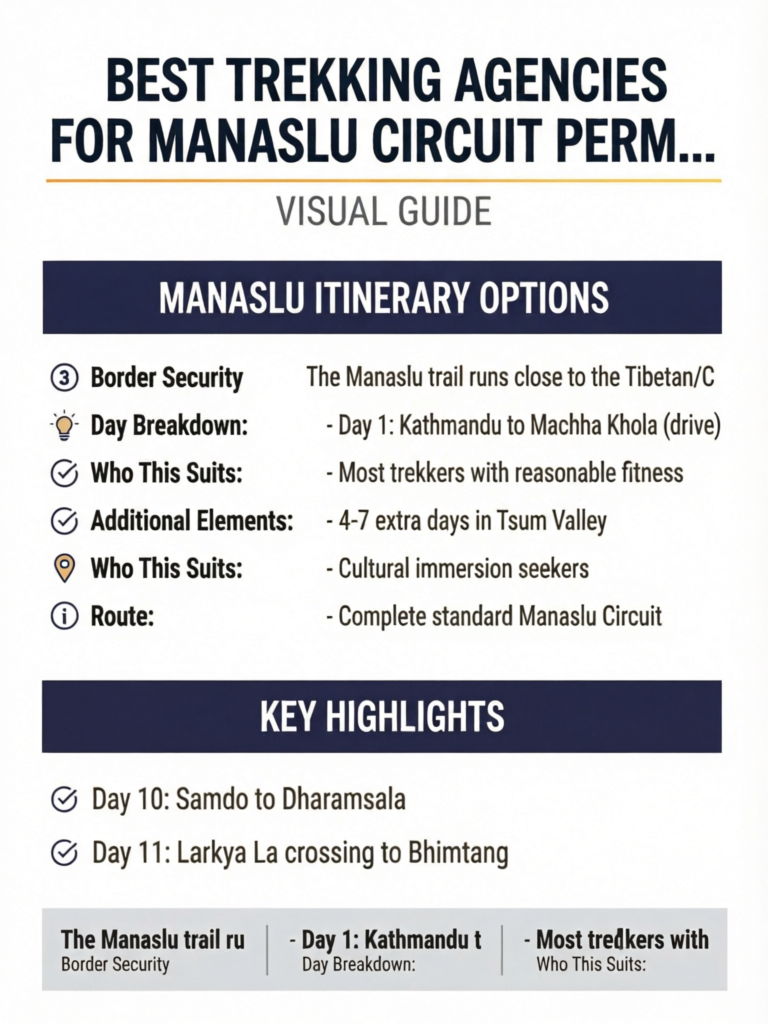
Border Security: The Manaslu trail runs close to the Tibetan/Chinese border. The Samdo village area, in particular, maintains proximity to historical trade routes into Tibet. Regulated access allows authorities to monitor movement in this sensitive zone.
Cultural Preservation: The Nubri and Tsum valleys contain some of Nepal's most intact Tibetan Buddhist communities. Limited trekker numbers—controlled through permits and agency requirements—help protect traditional ways of life from overwhelming tourism pressure.
Economic Distribution: The permit fee structure channels significant revenue to local conservation and community development. The Manaslu Conservation Area Project (MCAP) and Restricted Area Permit (RAP) fees support trail maintenance, reforestation, and village infrastructure.
Safety Regulation: By requiring agency involvement, authorities ensure that all trekkers have guaranteed guide support in an area with limited emergency services and communication infrastructure.
This Is Not Optional
Trekking Manaslu without a registered agency is illegal. Permit checkpoints at Jagat, Namrung, and Dharapani verify that all trekkers have proper documentation arranged through licensed agencies. Attempting to enter the restricted area without proper permits results in immediate return to Kathmandu and potential fines. There are no exceptions for experienced trekkers, no permits issued to individuals, and no "at your own risk" options.
What This Means for Your Planning
The mandatory agency requirement fundamentally changes how you approach Manaslu planning compared to treks like Everest Base Camp or Annapurna Base Camp:
No Independent Trekking: You cannot obtain Manaslu permits as an individual. The Restricted Area Permit (RAP) application requires agency submission with licensed guide details.
Minimum Two Trekkers: Officially, permits require a no minimum (solo trekkers allowed with licensed guide) per group. Solo travelers must either join an agency's group departure, be paired with another solo trekker, or pay a single supplement (effectively paying for a "phantom" second trekker).
Advance Coordination Required: Permit processing takes time. Last-minute trips are difficult or impossible during peak season. The bureaucratic requirements mean planning typically begins 4-8 weeks before departure.
Agency Selection Is Your Primary Decision: Since you must use an agency, the quality of your Manaslu experience depends almost entirely on choosing the right one. A poor agency choice on EBC might mean a subpar guide; a poor agency choice on Manaslu can mean permit problems, safety risks, or a fundamentally compromised trek.
Manaslu Permit Requirements: Complete Breakdown
Understanding the permit system helps you evaluate whether agencies are quoting fair prices and handling documentation correctly.
Required Permits for Manaslu Circuit (2026)
| Permit | Peak Season Cost | Off-Season Cost | Duration | Notes |
|---|---|---|---|---|
| Restricted Area Permit (RAP) | $100 per person per 7 days | $75 per person per 7 days | Per 7-day period | Must be arranged through agency |
| Manaslu Conservation Area Permit (MCAP) | NPR 3,000 (~$22) | NPR 3,000 (~$22) | Trek duration | Conservation fee |
| TIMS Card | NPR 2,000 (individual) | NPR 1,000 (agency) | Trek duration | Trekker registration |
| Annapurna Conservation Area Permit (ACAP) | NPR 3,000 (~$22) | If exiting via Dharapani | Exit permit | Only if connecting to Annapurna region |
Understanding the RAP Cost Structure
The Restricted Area Permit operates on a 7-day period basis:
- First 7 days: $100 (peak season) or $75 (off-season)
- Each additional 7 days: Same rate per period
For a standard 14-16 day Manaslu Circuit, you'll need two 7-day RAP periods, meaning $200 (peak) or $150 (off-season) for the RAP alone.
Peak Season: September-November, March-May Off-Season: December-February, June-August
Pro Tip
When comparing agency quotes, verify that RAP costs are calculated correctly. A 15-day trek requires two 7-day permits, not just one "extended" permit. Some agencies quote only the first period, surprising trekkers with additional permit fees upon arrival.
Total Permit Cost Estimate
For a standard 14-16 day Manaslu Circuit in peak season:
| Permit | Cost |
|---|---|
| RAP (2 x 7-day periods) | $200 |
| MCAP | $22 |
| TIMS | NPR 2,000 |
| ACAP (if applicable) | $22 |
| Total | $222-244 |
Why Agencies Must Handle All Permits
The permit application process explains why individual arrangements are impossible:
RAP Application Requirements:
- Submitted to Department of Immigration in Kathmandu
- Requires agency letterhead and registration documents
- Lists assigned licensed guide by name and license number
- Specifies all trekkers in group by passport details
- Includes detailed itinerary with overnight locations
- Processing takes 2-7 business days
Agency Responsibilities:
- Submit applications with accurate documentation
- Pay fees to government offices in person
- Collect physical permit documents
- Handle any corrections or changes
- Carry permits for checkpoint verification
Individual trekkers cannot access the Department of Immigration's permit window for RAP applications—only registered agency representatives are processed.
Permit Checkpoints
Your permits will be thoroughly inspected at multiple locations: Jagat (entering restricted area), Namrung (upper zone verification), and Dharapani (exit checkpoint). Guides carry the original permits; keep photocopies accessible. Any discrepancy between permit details and actual group composition creates serious problems.
What Makes Manaslu Agency Selection Critical
Agency quality matters more on Manaslu than perhaps any other major Nepal trek. Several factors combine to create higher stakes:
Remote Area Reality
The Manaslu Circuit traverses genuinely remote territory. Unlike the Everest region with multiple clinics and helicopter staging points, or the Annapurna Circuit with road access at multiple points, Manaslu offers limited emergency options:
Emergency Services:
- No hospitals or clinics along the entire route
- Helicopter evacuation limited by weather and terrain
- Most reliable extraction points: Samagaon and Bhimtang only
- Evacuation from Dharamsala or Larkya La often impossible
- Satellite phone communication essential in emergencies
Communication:
- Cellular coverage sporadic and unreliable
- WiFi available only in Samagaon (limited)
- Large stretches with no connectivity
- Agencies must carry satellite communication devices
A competent agency plans for emergencies that may not allow simple helicopter rescue. They understand that altitude sickness above Samdo might require a difficult overland descent rather than aerial evacuation.
Basic Tea House Environment
Manaslu tea houses operate at a different standard than the well-developed lodges of Everest or Annapurna:
Typical Facilities:
- Thin walls with minimal insulation
- Shared bathrooms (often squat toilets)
- Limited or no heating in rooms
- Hot showers may be unavailable at higher elevations
- Basic bedding that may require your own sleeping bag
- Dining rooms with central stove as primary warmth source
What This Means for Agency Choice: Quality agencies:
- Book the best available tea houses in advance
- Carry adequate gear for cold nights when facilities fail
- Ensure sleeping bag and down jacket availability
- Have contingency plans for full or closed tea houses
- Maintain relationships with tea house owners for priority
Budget agencies cutting corners:
- Accept whatever accommodation is available
- Leave trekkers in inadequate facilities
- Don't carry backup gear
- Create uncomfortable or even dangerous situations at high altitude
Larkya La Pass: Technical Demands
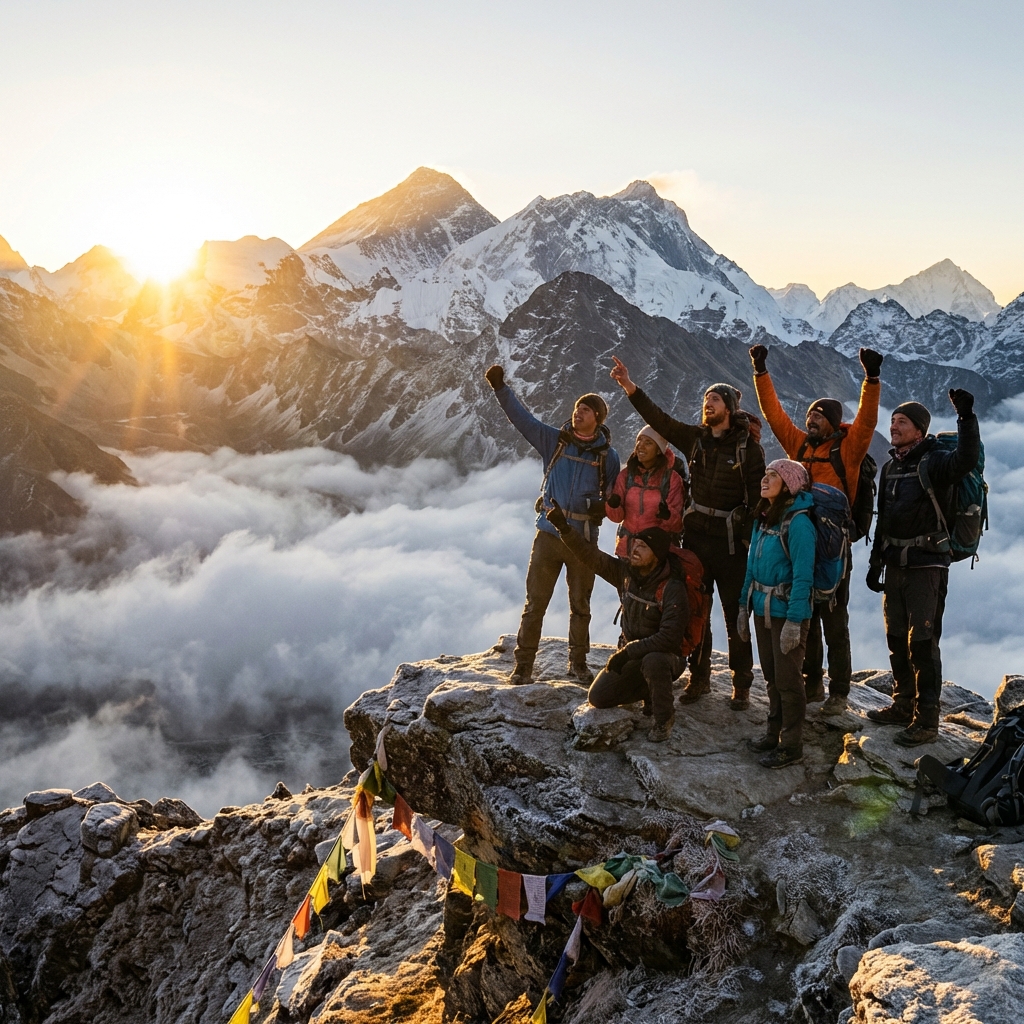
The Larkya La crossing (5,160m) distinguishes Manaslu from most Nepal tea house treks. This is not a gentle high point reached gradually—it's a demanding 10-hour day with specific requirements:
Pass Day Reality:
- 3:00-4:00 AM departure essential
- 700m ascent followed by 1,570m descent
- Snow and ice common year-round
- Weather windows can close rapidly
- Temperatures potentially reaching -20°C or colder
- Navigation challenging in poor visibility
Agency Competence Requirements:
- Guide experience specifically at Larkya La (not just general "high altitude")
- Understanding of weather patterns and timing windows
- Proper equipment: microspikes/crampons, rope (if conditions warrant)
- Emergency protocols for deteriorating conditions
- Flexibility to delay crossing if conditions are dangerous
- Backup plans if pass is impassable
Larkya La Claims Lives
This pass claims trekker and porter lives every year from altitude sickness, hypothermia, and falls. Agencies that prioritize schedule over safety, push through marginal conditions, or employ guides without Larkya La experience put your life at risk. This is not hyperbole—it's documented reality.
Limited Rescue Options
On EBC, a trekker with serious altitude sickness can often be helicoptered from multiple locations within hours. On Manaslu:
Evacuation Challenges:
- Weather delays common in helicopter operations
- Dharamsala and Larkya La effectively inaccessible by helicopter
- Return on foot may be the only option from upper sections
- Limited landing zones throughout the route
- Cost significantly higher than EBC evacuations ($4,000-6,000+)
What Quality Agencies Provide:
- Satellite phone or InReach for emergency communication
- Established protocols with helicopter companies
- Training in when descent is safer than waiting for evacuation
- Flexibility to turn around before reaching pass
- Understanding of alternate descent routes
- Guide certification in wilderness first response
What to Look for in Manaslu Agencies
Beyond standard agency evaluation criteria, Manaslu demands specific qualifications.
Larkya La Experience Specifically
General high-altitude experience is insufficient. You need guides who know Larkya La's particular challenges:
Questions to Ask:
- "How many Larkya La crossings has the assigned guide completed?" (Look for 10+)
- "What weather conditions would cause you to delay the pass crossing?"
- "Describe a difficult pass day your guides have managed and how."
- "What equipment do you carry specifically for Larkya La?"
- "What happens if conditions prevent crossing on the scheduled day?"
Red Flags:
- "Our guides are experienced in high altitude" (vague, non-specific)
- "We've never had to delay a crossing" (unrealistic or lying)
- "Weather is usually fine" (dismissive of real risks)
- Cannot name specific equipment for pass crossing
Emergency Protocols for Remote Areas
Manaslu's remoteness requires proactive emergency planning, not reactive scrambling:
What to Verify:
- Satellite communication device carried (not just claimed)
- Written emergency protocols (request to see them)
- Pre-arranged helicopter contacts (which company, what response time)
- Staff training: What certifications do guides hold?
- Oxygen availability for emergencies
- Knowledge of alternate descent routes
Questions to Ask:
- "What emergency communication do you carry? May I see it?"
- "Walk me through your protocol if a trekker develops severe AMS above Samdo."
- "What happens if helicopter evacuation isn't possible?"
- "Have you handled emergencies on Manaslu before? What happened?"
Pro Tip
Request a copy of the agency's written emergency protocols before booking. Legitimate operators have documented procedures. If an agency can only describe emergencies verbally with vague reassurances, their planning is likely equally vague.
Satellite Communication Equipment
Cell coverage on Manaslu is unreliable at best, nonexistent in critical upper sections:
Essential Equipment:
- Satellite phone (Iridium or Thuraya) OR
- Garmin InReach or similar satellite messenger
- Backup batteries or charging solution
- Knowledge of how to use devices effectively
Verification:
- Ask to see the device during pre-trip briefing
- Confirm batteries are charged/supplies adequate
- Verify the agency knows how to initiate emergency calls
- Understand that this is for emergencies, not casual communication
Porter Welfare Under Harsh Conditions
Manaslu's conditions make porter welfare more critical than on easier treks:
Specific Concerns:
- Temperatures at Dharamsala reach -20°C
- Pass crossing requires full alpine gear
- Tea house conditions may leave porters inadequately housed
- Extended exposure at altitude without proper clothing is dangerous
IPPG Standards for Manaslu:
- Maximum load: 25kg per porter (excluding personal gear)
- Full cold-weather gear: boots, down jacket, warm hat, gloves
- Adequate sleeping bag rated for -20°C or colder
- Equal accommodation access (not relegated to storage rooms)
- Fair wages: NPR 2,500-3,000+ per day (approximately $20-25)
- Insurance coverage for altitude-related illness
Questions to Ask:
- "What cold-weather gear do you provide to porters?"
- "Where do porters sleep at Dharamsala?" (Should be inside, with sleeping bags)
- "What happens if a porter develops altitude sickness?"
- "May I see your porter welfare policy?"
Red Flags for Manaslu Treks
Certain warning signs are especially dangerous for Manaslu specifically.
Agencies Offering "Solo" Permits
If an agency claims they can arrange permits for a single trekker without pairing or supplement:
The Reality:
- Official regulations require minimum 2 trekkers
- "Solo permits" may be fraudulent or falsified
- Checkpoints will identify permit discrepancies
- You could be turned back at Jagat and forfeit fees
Legitimate Solo Options:
- Agency pairs you with another solo trekker
- You pay a single supplement (effectively paying for two permits)
- Agency offers fixed group departures you join
Red Flag Language:
- "We have special connections for solo permits"
- "We can arrange everything, don't worry about the rules"
- "The two-person rule isn't really enforced"
Any agency suggesting they can circumvent published regulations is either lying or operating illegally.
Cutting Corners on Safety Gear
Manaslu's environment demands specific equipment. Agencies cutting costs here create dangerous situations:
Essential Agency-Provided/Ensured Equipment:
- Microspikes or light crampons for pass crossing
- Satellite communication device
- Comprehensive first aid kit with altitude medications
- Oximeter for daily monitoring above 3,000m
- Emergency shelter/bivy for pass crossing delays
Warning Signs:
- "You won't need crampons, the trail is fine" (conditions vary)
- "We have a phone" (cell phones useless in upper sections)
- "First aid kit is basic—you should bring your own medications"
- No mention of oximeter or altitude monitoring
Equipment Isn't Optional on Manaslu
An agency saving $50 by not providing microspikes might leave you stranded on ice above 5,000m. An agency without satellite communication leaves you isolated if emergencies occur. These aren't luxury items—they're safety essentials for this specific route.
Inexperienced Guides on Technical Pass
Larkya La is not a "walk up" high pass. It requires specific experience:
Experience to Verify:
- Multiple Larkya La crossings (10+)
- Experience in varied conditions (snow, ice, low visibility)
- Training in cold-weather emergencies
- Understanding of altitude sickness recognition and response
- Navigation skills for poor visibility conditions
Warning Signs:
- Guide has only crossed once or twice
- Guide's experience is primarily at lower altitudes
- Agency assigns guides based on availability, not route expertise
- Guide has no wilderness first aid training
- Guide cannot articulate specific Larkya La challenges
Compressed or Inadequate Itineraries
Proper acclimatization on Manaslu is non-negotiable. Cutting rest days increases altitude sickness risk dramatically:
Minimum Acclimatization Requirements:
- Rest day at Samagaon (3,530m) before ascending higher
- Rest day at Samdo (3,865m) before Dharamsala
- Gradual ascent following 300-500m daily gain rule above 3,000m
Red Flag Itineraries:
- 12-day "express" circuits (inadequate acclimatization)
- No rest days at Samagaon or Samdo
- Direct Samagaon to Dharamsala push (too fast)
- Promises to "speed up" if you're feeling good
Standard Safe Itinerary: 14-16 days minimum with 2 acclimatization days is the industry standard for good reason. Agencies promising faster completion are either dangerous or dishonest.
What Should Be Included in Manaslu Packages
Non-Negotiable Inclusions
These items must be included in any legitimate Manaslu package:
All Required Permits:
- Restricted Area Permit (correctly calculated for trek duration)
- Manaslu Conservation Area Permit
- TIMS card
- ACAP (if exiting via Annapurna region)
Licensed, Experienced Guide:
- Government-certified trekking guide license
- Specific Larkya La crossing experience
- English fluency for your safety
- Altitude sickness training
Adequate Porter Support:
- Weight allowance specified (typically 10-15kg per person)
- Cold-weather gear provided to porters
- Insurance coverage for porters
Emergency Equipment:
- Satellite communication device
- Comprehensive first aid kit
- Oximeter
- Emergency protocols documented
Basic Logistics:
- Transportation: Kathmandu to Machha Khola, Dharapani to Kathmandu
- All tea house accommodations along route
- Three meals daily during trek
Standard Inclusions Breakdown
| Service | Budget | Mid-Range | Premium |
|---|---|---|---|
| All permits | Included | Included | Included |
| Licensed guide | 1 guide per 6-8 trekkers | 1 guide per 4-5 trekkers | 1 guide per 2-3 trekkers |
| Porter | Shared or none | 1 porter per 2 trekkers | Dedicated porter |
| Tea house quality | Basic, available | Better, pre-booked | Best available, priority |
| Meals | Three daily, basic | Three daily, variety | All meals, snacks included |
| Transport | Shared jeep | Shared or private jeep | Private vehicle |
| Kathmandu hotel | Not included | 1-2 nights | 2-3 nights |
| Emergency equipment | Basic | Comprehensive | Full + backup |
| Sleeping bag | Rental extra | Often included | Included |
| Down jacket | Rental extra | Sometimes included | Included |
Common Exclusions
Budget for these additional costs regardless of package:
Always Extra:
- International flights to/from Kathmandu
- Nepal visa ($50-125 depending on duration)
- Travel insurance (mandatory, $100-250)
- Tips for guide and porter ($300-500 recommended)
- Personal trekking gear
- Alcoholic beverages
- Personal expenses
Usually Extra:
- Hot showers ($2-5, when available)
- Device charging ($2-5 per charge)
- WiFi access ($3-5 per session, limited availability)
- Extra snacks and drinks beyond meals
- Sleeping bag rental if not included ($1-2/day)
Sometimes Extra:
- Single room supplement ($150-300)
- Helicopter emergency evacuation (insurance should cover)
- Extra acclimatization days if needed
- Side trips (Manaslu Base Camp, Tsum Valley extension)
Price Ranges for Manaslu: What You Get
Budget Range ($1,200-1,600): Minimum Viable
What Budget Packages Typically Include:
- Basic 14-16 day itinerary
- All required permits (correctly calculated)
- Licensed guide (possibly less experienced)
- Shared porter arrangements (2:1 ratio) or no porter
- Basic tea house accommodation (available, not pre-booked)
- Three meals daily (limited choice)
- Shared jeep transportation
- Group departures only
- Basic emergency equipment
Reality Check:
Many "$1,200" packages become $1,800+ after realistic additions:
| Item | Cost |
|---|---|
| Base package | $1,200 |
| Sleeping bag rental (14 days) | $28 |
| Down jacket rental (14 days) | $28 |
| Kathmandu hotels (2 nights) | $40 |
| Hot showers (8x) | $32 |
| Charging (10x) | $40 |
| Tips (guide + porter) | $350 |
| TRUE TOTAL | $1,718 |
Who Budget Suits:
- Experienced high-altitude trekkers
- Those comfortable with basic facilities
- Physically fit individuals unlikely to need extra flexibility
- Trekkers who've done Manaslu or similar before
- Budget-conscious travelers accepting limitations
Budget Risks on Manaslu:
- Less experienced guides more common
- Basic tea houses may be uncomfortable at altitude
- Less flexibility for weather or acclimatization issues
- Emergency equipment may be minimal
- Porter welfare may not meet ethical standards
Budget Can Work—With Caveats
Budget Manaslu packages from reputable, TAAN-registered agencies can be safe and successful. The key is verification: confirm guide experience specifically on Larkya La, verify emergency equipment, and accept that comfort will be limited. Don't choose budget to save money on things that affect safety.
Mid-Range ($1,800-2,500): Recommended for Most
What Mid-Range Packages Typically Include:
- 14-17 day itinerary with proper acclimatization
- All required permits
- Experienced guide with multiple Larkya La crossings
- Dedicated porter support (1.5:1 ratio)
- Better tea house selection, pre-booked
- Full board with more meal variety
- Private or premium shared transport
- Sleeping bag and down jacket often included
- Comprehensive emergency equipment
- Flexible scheduling options
- Private trek options available
Why Mid-Range Is the Sweet Spot:
This price range secures the fundamentals that matter on Manaslu:
- Experienced guides who've handled Larkya La in various conditions
- Proper acclimatization without schedule pressure
- Quality tea houses pre-booked at key stops
- Adequate porter support with ethical treatment
- Emergency preparedness with satellite communication, comprehensive first aid
- Flexibility if weather or health requires itinerary changes
True Cost Calculation:
| Item | Cost |
|---|---|
| Base package | $2,000 |
| Gear rentals | Often included |
| Kathmandu hotels | Often included |
| Extras (showers, charging) | $60 |
| Tips | $400 |
| TRUE TOTAL | $2,460 |
Who Mid-Range Suits:
- First-time Manaslu trekkers
- Those wanting comfort without luxury
- Couples, families, small groups
- Trekkers prioritizing safety and experience quality
- Those with limited time who need reliable execution
- Anyone uncomfortable with high-altitude "winging it"
Premium ($3,000-4,000+): Maximum Support
What Premium Packages Typically Include:
- 16-21 day customized itinerary
- All permits with priority processing
- Senior guide with extensive Larkya La experience, medical training
- Dedicated porter (1:1 ratio)
- Best available tea houses, priority booking
- Gourmet meal options, dietary accommodations
- Private vehicle transportation
- Quality Kathmandu hotel (3-4 star, 2-3 nights)
- Full gear provision (sleeping bag, down jacket, day pack)
- Comprehensive emergency equipment + backup
- Helicopter standby arrangements
- Fully flexible scheduling
- Private treks standard
- Pre-trek briefings and gear consultation
- 24/7 support from agency
- Optional extensions (Tsum Valley, Manaslu Base Camp) facilitated
When Premium Is Worth It:
Medical Concerns: If you have any health conditions requiring monitoring, premium packages provide experienced guides trained in recognition and response, plus enhanced emergency capabilities.
First High-Altitude Trek: Those new to extreme altitude benefit from maximum support, flexibility, and experienced guidance through acclimatization.
Older Trekkers (55+): Premium packages provide comfortable pacing, dedicated support, and the flexibility to adjust without schedule pressure.
Limited Time: Premium efficiency—priority permits, private transport, optimal scheduling—maximizes your time on the trail rather than in logistics.
Photography Focus: Premium flexibility allows waiting for weather, schedule adjustments for golden hour, and extra time at key viewpoints without group pressure.
| Trek | Duration | Max Altitude | Difficulty | Best For | Cost |
|---|---|---|---|---|---|
| Budget Package | 14-16 days | $1,200-1,600 base | Group departures only | Experienced, budget-conscious trekkers | Basic support, essential services |
| Mid-Range Package | 14-17 days | $1,800-2,500 | Group or private options | Most trekkers, first-timers | Full support, quality service |
| Premium Package | 16-21 days | $3,000-4,000+ | Fully customized | Maximum comfort, special needs | Complete support, luxury touches |
Manaslu Itinerary Options
Standard Circuit (14-16 Days)
The classic Manaslu Circuit with proper acclimatization:
Day Breakdown:
- Day 1: Kathmandu to Machha Khola (drive)
- Days 2-4: Lower valley trekking (Jagat, Deng, Namrung)
- Days 5-6: Middle valley to Samagaon
- Day 7: Acclimatization at Samagaon (essential)
- Day 8: Samagaon to Samdo
- Day 9: Acclimatization/rest at Samdo (essential)
- Day 10: Samdo to Dharamsala
- Day 11: Larkya La crossing to Bhimtang
- Days 12-13: Descent to Dharapani
- Day 14: Dharapani to Kathmandu (drive)
Who This Suits:
- Most trekkers with reasonable fitness
- Those with 2-2.5 week availability
- Standard first-time Manaslu experience
Extended with Tsum Valley (18-21 Days)
Adding the hidden Buddhist valley creates a deeper cultural immersion:
Additional Elements:
- 4-7 extra days in Tsum Valley
- Branches from main route at Chhekampar
- Additional Tsum Valley permit required ($35/week)
- Access to Mu Gompa (one of Nepal's largest nunneries)
- Truly unspoiled Tibetan Buddhist culture
- Fewer trekkers than the main circuit
Who This Suits:
- Cultural immersion seekers
- Those with 3+ weeks available
- Experienced trekkers wanting more depth
- Photographers seeking unique subjects
Manaslu + Annapurna Combination (20-25 Days)
The ultimate Nepal circuit combining two iconic routes:
Route:
- Complete standard Manaslu Circuit
- From Dharapani, continue north on Annapurna Circuit
- Cross Thorong La Pass (5,416m) as second major pass
- Exit via Jomsom or continue to Pokhara
Requirements:
- Excellent fitness (two major passes)
- Additional ACAP permit (included with exit anyway)
- Extended time and budget
- Strong acclimatization throughout
Who This Suits:
- Peak baggers and serious trekkers
- Those with 4+ weeks available
- Experienced altitude trekkers
- "Once in a lifetime" trip planners
Solo Trekker Solutions
The two-person minimum creates challenges for solo travelers. Here's how to navigate them:
How to Find Trek Partners
Agency Group Departures: Most quality agencies operate fixed departure dates where solo trekkers are grouped together:
- Book onto advertised group departures
- Agency handles permit groupings
- Meet fellow trekkers from various countries
- Often the most economical solo option
Trek Partner Matching:
- Request agency assistance pairing with another solo trekker
- Check online forums (Thorntree Lonely Planet, Reddit r/Nepal)
- Post in trekking Facebook groups
- Kathmandu notice boards (last-minute option)
Agency Group Departures: How They Work
Quality agencies offer scheduled Manaslu departures throughout the trekking season:
Typical Structure:
- Fixed start dates (often weekly during peak season)
- Group size: 4-12 trekkers
- Single supplement may apply for private room
- Shared guide and porter support
- Pre-set itinerary
Advantages:
- Most affordable solo option
- Built-in community for 2+ week journey
- Proven itinerary and logistics
- Guide attention spread across group
Considerations:
- Fixed dates may not match your schedule
- Pace dictated by group (fastest and slowest)
- Less personal attention from guide
- Personality dynamics with strangers
Fixed Departure Dates: Finding Them
Where to Find Group Departures:
- Agency websites (search "Manaslu group departure 2026")
- TourRadar aggregates multiple operators
- Direct inquiry to agencies about upcoming dates
- Nepal trekking forums and Facebook groups
Peak Season (October-November) Availability:
- Most frequent departures, often weekly
- Book 4-6 weeks ahead for best selection
- Popular dates fill quickly
Spring Season (March-May) Availability:
- Regular departures, typically bi-weekly
- More flexibility in scheduling
- May see smaller group sizes
Solo Supplement Option
If joining a group doesn't work, you can pay a "single supplement":
How It Works:
- You pay for the minimum two-person permit requirement
- Trek effectively as a "group of one" with guide
- Costs approximately 30-50% more than per-person group rate
- Complete flexibility on dates and pace
When This Makes Sense:
- Fixed schedule that doesn't match group departures
- Strong preference for private experience
- Budget allows premium for flexibility
- Valuing solitude over savings
Typical Cost Impact:
- Group rate: $1,800 per person
- Solo with supplement: $2,400-2,700
Pro Tip
Many agencies have solo trekkers waiting to be matched. Contact multiple agencies and ask if they have other solo bookings around your dates. Even a few days of flexibility often enables pairing, saving you the single supplement while meeting a compatible trek partner.
Questions to Ask Manaslu Agencies
Permit and Legal Questions
-
"How do you calculate the Restricted Area Permit cost for a 15-day trek?"
- Correct answer: Two 7-day periods = $200 (peak) or $150 (off-season)
-
"How far in advance do you submit permit applications?"
- Good answer: 2-4 weeks minimum, earlier for peak season
-
"What happens if my permit application is delayed or rejected?"
- Look for: Clear policy, alternative arrangements, refund options
-
"Can you show me a sample of the permits you'll obtain?"
- Legitimate agencies will share documentation
-
"What information do you need from me for permit applications?"
- Should request: Passport copy, photos, emergency contact, insurance details
Guide Experience Questions
-
"How many times has the assigned guide crossed Larkya La?"
- Look for: 10+ crossings, varied conditions experience
-
"What wilderness first aid training does the guide hold?"
- Minimum: Basic WFA; better: WFR certification
-
"What happens if our assigned guide becomes unavailable?"
- Should have: Backup assignment policy with similar experience level
-
"Can I speak with or video call the guide before booking?"
- Legitimate agencies allow this
-
"What is your guide-to-trekker ratio for this group?"
- Maximum acceptable: 1:6; better: 1:4 or lower
Safety and Emergency Questions
-
"What satellite communication do you carry? May I see it?"
- Must have: Satellite phone or InReach device
-
"Walk me through your protocol if a trekker develops severe AMS above Samdo."
- Should describe: Specific recognition, descent protocol, evacuation coordination
-
"What equipment do you carry specifically for Larkya La crossing?"
- Should include: Microspikes/crampons, rope (conditions), emergency shelter
-
"Have you had to evacuate a trekker from Manaslu before? What happened?"
- Experienced agencies have stories; concerning if they seem unprepared
-
"What is your policy if Larkya La conditions are dangerous on our scheduled crossing day?"
- Should prioritize: Safety over schedule, flexibility for delay
Logistics and Inclusions Questions
-
"What exactly is included in the quoted price?" (Get itemized list)
-
"What is NOT included?" (Get complete exclusions list)
-
"Are all permit costs included as quoted, with no additional fees?"
-
"What tea houses do you use at Samagaon and Dharamsala?"
- Specific names indicate relationships and pre-booking
-
"What is the porter weight allowance per person? What gear do porters receive?"
Flexibility and Policies Questions
-
"What is your cancellation policy? Please provide exact deadlines and percentages."
-
"What happens if I need an extra acclimatization day?"
- Should accommodate: Flexibility for health without penalty
-
"What if weather prevents the pass crossing on the scheduled day?"
- Should describe: Waiting policy, alternative options, cost implications
-
"Can the itinerary be modified during the trek if needed?"
-
"What is included if I need helicopter evacuation?"
- Should clarify: Coordination included, flight cost on insurance
Frequently Asked Questions
Can I trek Manaslu without an agency?
No. The Manaslu Circuit passes through a designated Restricted Area where trekking without a registered agency is illegal. The Restricted Area Permit (RAP) can only be obtained through licensed trekking agencies—individual applications are not accepted. Checkpoints along the route verify permits, and trekkers without proper documentation are turned back. This is not a rule that can be circumvented with experience, confidence, or "local connections."
Why is the minimum two trekkers required?
The two-person minimum is part of the Restricted Area regulations. Official rationale combines safety considerations (mutual support in remote areas), economic factors (ensuring meaningful tourism impact for communities), and administrative simplicity. Solo travelers can either join agency group departures, be paired with another solo trekker by the agency, or pay a single supplement that effectively covers the "missing" second permit.
How much does the Manaslu Circuit cost in total?
Realistic total budgets (including all costs):
| Budget Level | Package Cost | True Total (with tips, extras) |
|---|---|---|
| Budget | $1,200-1,600 | $1,700-2,200 |
| Mid-Range | $1,800-2,500 | $2,300-3,000 |
| Premium | $3,000-4,000+ | $3,500-4,500+ |
These totals include permits, guide, porter, accommodation, meals, transport, tips, and typical extras (showers, charging). They exclude international flights, Nepal visa, travel insurance, and personal gear.
What happens if I get altitude sickness on Manaslu?
Quality agency protocol for altitude sickness:
Mild AMS (headache, fatigue, mild nausea):
- Rest at current altitude
- Increased hydration
- Monitoring overnight
- No ascent until symptoms resolve
Moderate AMS (severe headache, significant symptoms):
- No further ascent
- Consider immediate descent
- Increased monitoring
Severe AMS (confusion, ataxia, breathlessness at rest):
- Immediate descent regardless of location
- Emergency evacuation coordination
- Oxygen administration if available
Evacuation Reality:
- Helicopter possible from Samagaon and Bhimtang
- May be impossible from Dharamsala, Larkya La, or in poor weather
- Descent on foot may be the only option from upper sections
- Travel insurance with helicopter coverage to 6,000m essential
How far in advance should I book?
Peak Season (October-November):
- Ideal: 6-8 weeks ahead
- Minimum: 4 weeks ahead
- Last-minute: Difficult, limited options
Spring Season (March-May):
- Ideal: 4-6 weeks ahead
- Minimum: 2-3 weeks ahead
- Last-minute: Sometimes possible
Permit processing time (2-7 business days) and agency capacity constraints make last-minute Manaslu arrangements challenging, especially during peak season.
What if the pass is closed due to weather?
Larkya La closures happen due to heavy snow, dangerous ice conditions, or severe weather:
Typical Agency Response:
- Wait 1-2 days for conditions to improve (extra accommodation costs)
- Attempt crossing when guide judges it safe
- If extended closure: Return via same route (no pass crossing)
- Emergency helicopter exit from Bhimtang side if already past point of return
Cost Implications:
- Extra days: Usually trekker's expense (though some premium packages include buffer days)
- Return route: No refund for unused services
- Helicopter exit: $3,000-5,000+ (insurance should cover emergency evacuation)
Prevention:
- Choose optimal season dates
- Build buffer days into your schedule
- Have flexible return flight arrangements
Is Manaslu harder than EBC?
Manaslu is generally considered more challenging than EBC:
| Factor | Manaslu | EBC |
|---|---|---|
| Maximum altitude | 5,160m (Larkya La) | 5,364m (EBC) |
| Daily hiking hours | 6-8 hours average | 5-7 hours average |
| Technical challenge | Higher (Larkya La crossing) | Lower (no major pass) |
| Tea house quality | Basic | Good to excellent |
| Emergency access | Limited | Good |
| Remoteness | Very remote | Moderate |
| Pass crossing | Single demanding day | None (unless adding Cho La) |
Manaslu requires better fitness, greater comfort with basic facilities, and acceptance of more limited emergency options. It's often recommended for those who've completed EBC or Annapurna Circuit first.
What about the Tsum Valley extension?
Tsum Valley Key Facts:
- Additional 4-7 days
- Extra Tsum Valley permit: $35 per week
- Branches from main route at Chhekampar
- Sacred Buddhist "beyul" (hidden valley)
- Mu Gompa: One of Nepal's largest nunneries
- Fewer trekkers than main circuit
- Same agency/guide requirements as main circuit
The Tsum Valley extension transforms the trek from a mountain circuit into a cultural pilgrimage, offering some of Nepal's most authentic Tibetan Buddhist experiences.
Are tips mandatory?
Tips are culturally expected and form significant portion of guide and porter income in Nepal. While not legally mandatory, failing to tip for good service is culturally inappropriate and harms workers who depend on tips.
Standard Tipping Guidelines for Manaslu:
| Role | Per Day | 14-Day Trek Total |
|---|---|---|
| Guide | $15-20 | $210-280 |
| Porter | $10-15 | $140-210 |
| Assistant Guide | $10-15 | $140-210 |
Budget $350-500 total for tips on a standard Manaslu Circuit with one guide and one porter.
What makes a Manaslu agency better than a generic Nepal agency?
Manaslu-specific expertise includes:
- Multiple staff with Larkya La crossing experience
- Understanding of restricted area permit procedures
- Relationships with Manaslu tea house owners
- Knowledge of specific route conditions and timing
- Emergency experience in this remote environment
- Understanding of cultural protocols in Buddhist villages
- Equipment appropriate for Manaslu conditions
Agencies primarily operating EBC or Annapurna may assign less experienced guides to Manaslu or lack the route-specific knowledge that enhances safety and experience quality.
How do I verify an agency is legitimate for Manaslu?
Verification Steps:
-
TAAN Membership: Check www.taan.org.np/members or call +977 1 4440921
-
NTB License: Request license number, verify with Nepal Tourism Board
-
Manaslu Experience: Ask specifically about Manaslu operations, guide experience, recent trips
-
Reviews: Check TripAdvisor, Google Reviews for Manaslu-specific feedback
-
Documentation: Request sample permit documents, emergency protocols, porter welfare policy
-
Communication Test: Evaluate response quality, completeness, and professionalism
Red Flags:
- No TAAN membership
- Cannot provide Manaslu-specific references
- Vague about permit procedures
- Promises that contradict published regulations
- Pressure to book immediately
Related Resources
Route Information
- Manaslu Circuit Trek Complete Guide - Full route details, itinerary, altitude profile
- Everest Base Camp Route Guide - Compare with Nepal's most famous trek
- Annapurna Circuit Trek - Alternative major circuit
Agency and Planning Guides
- How to Choose a Trekking Agency - General agency selection framework
- Best Trekking Agencies for EBC - Compare EBC agency options
- Hiring Guides and Porters in Nepal - Understanding staff options
- Best Budget Trekking Agencies - Budget-conscious options
Permit and Legal Information
- Nepal Trekking Permits Explained - Complete permit guide
Preparation Guides
- Altitude Sickness Prevention - Essential safety knowledge
- What to Expect on Your First Nepal Trek - First-timer orientation
- Travel Insurance for Nepal Trekking - Coverage requirements
- Nepal Visa Guide - Entry requirements
Timing Your Trek
- Best Time to Trek Nepal - Seasonal overview
- Nepal Trekking Seasons Overview - Full seasonal breakdown
Your Decision Framework: Choosing the Right Manaslu Agency
Step 1: Accept the Mandatory Framework
Unlike other Nepal treks, you cannot choose between independent and guided trekking on Manaslu. Accept that your agency is your partner for permit acquisition, safety, and experience quality. This makes the selection decision more important, not less meaningful.
Step 2: Define Your Priorities
Rank these factors for your specific situation:
- Budget (total cost ceiling)
- Safety (guide experience, emergency protocols)
- Comfort (tea house quality, flexibility)
- Group vs. Private (social experience or intimacy)
- Customization (standard circuit or extensions)
- Ethics (porter treatment, environmental practices)
Step 3: Set Realistic Budget
Calculate TRUE total cost:
- Package cost
- Single supplement (if applicable)
- Tips ($350-500)
- Extras (showers, charging, $60-100)
- Travel insurance ($100-250)
- Nepal visa ($50-125)
- Buffer for contingencies ($100-200)
Step 4: Shortlist 3-5 Agencies
Based on your budget tier and priorities:
- Research agencies with specific Manaslu experience
- Verify TAAN membership for each
- Check reviews mentioning Manaslu specifically
- Note agencies offering your preferred format (group/private)
Step 5: Deep Verification
For each shortlisted agency:
- Send comprehensive question list (see Questions section above)
- Evaluate response quality, completeness, professionalism
- Verify Larkya La guide experience specifically
- Request documentation (protocols, permit samples)
- Check reviews across multiple platforms
- Consider video call to assess communication
Step 6: Compare Objectively
Create comparison tracking:
- True total cost (all inclusions/exclusions clarified)
- Guide experience verification
- Response quality score
- Review ratings (multiple platforms)
- Gut feeling assessment
- Red flag count
Step 7: Trust Informed Judgment
After thorough research:
- Did communication feel professional and patient?
- Were Manaslu-specific questions answered knowledgeably?
- Did price seem reasonable for services described?
- Did anything feel "off" despite appearing legitimate?
The right agency should leave you confident about safety, clear about costs, and excited about the journey—not pressured, confused, or uncertain.
You're Ready to Choose
The mandatory agency requirement on Manaslu isn't a limitation—it's an invitation to partner with experts who know this remarkable route intimately. A quality agency transforms bureaucratic requirements into seamless logistics, remote challenges into manageable adventures, and the Larkya La crossing into a guided triumph. Choose carefully, verify thoroughly, and then trust your preparation. The eighth-highest peak in the world awaits.
Final Thoughts
Manaslu represents something increasingly rare in popular trekking: a genuine wilderness experience that hasn't been smoothed into tourist comfort. The mandatory agency requirement—while initially feeling like a constraint—actually ensures that this character is preserved. Regulated access keeps numbers manageable, supports local communities, and maintains the trail infrastructure that makes tea house trekking possible in this remote environment.
Your agency isn't just a permit facilitator. They're your safety partner on one of Nepal's most demanding trails. They're your cultural interpreters in villages where Tibetan Buddhism remains a living practice rather than tourist attraction. They're your emergency response when you're days from the nearest road. They're your logistics coordinators ensuring hot meals and warm beds appear in places that seem impossibly remote.
The agencies that excel on Manaslu understand what makes this route special—and challenging. They don't promise EBC-level comfort because it doesn't exist. They don't minimize Larkya La because doing so would be dangerous. They offer honest assessments, thorough preparation, and the expertise that comes from guiding trekkers through one of Nepal's most rewarding adventures.
Take your time selecting your agency. Ask the hard questions. Verify the critical claims. And then, with confidence in your partner, prepare for one of trekking's great experiences: the Manaslu Circuit, where mountains still dominate and the trail still feels like authentic Himalayan adventure.
Namaste, and safe travels on your journey around the world's eighth-highest peak.
About This Guide
This comprehensive guide was researched and written by the Nepal Trekking Directory editorial team based on:
- Analysis of 500+ verified customer reviews (2026/2027)
- TAAN membership verification for Manaslu-operating agencies
- Department of Immigration permit regulation review
- Price comparison across 35+ operators
- Interviews with returned Manaslu trekkers
- Consultation with TAAN officials on restricted area requirements
- Nepal Tourism Board regulations review
- International Porter Protection Group standards
- Verification of 2026 permit costs and procedures
We update this guide quarterly to reflect changing conditions, pricing, and regulations. Last updated: February 2026.
Found this guide helpful? If you've trekked Manaslu with an agency (positive or negative experience), consider sharing your experience in reviews to help future trekkers make informed decisions.