
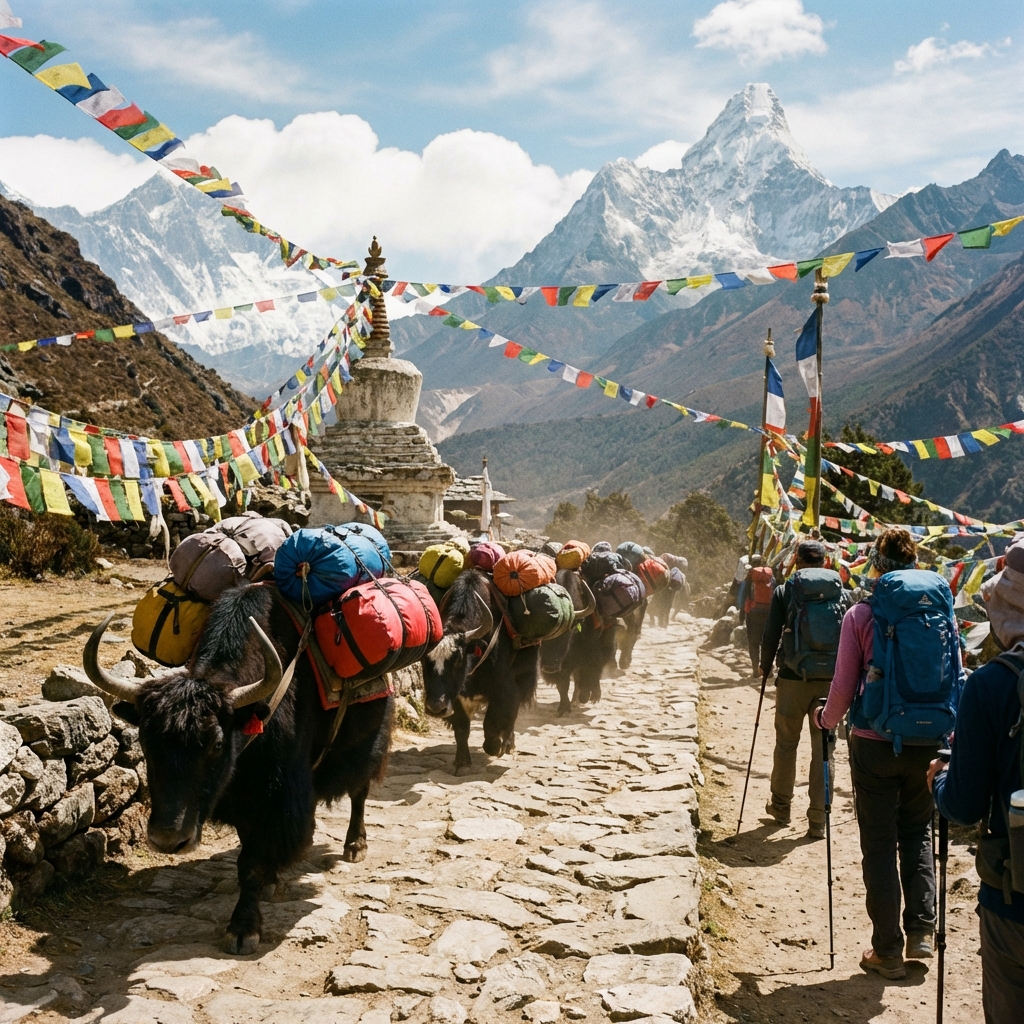
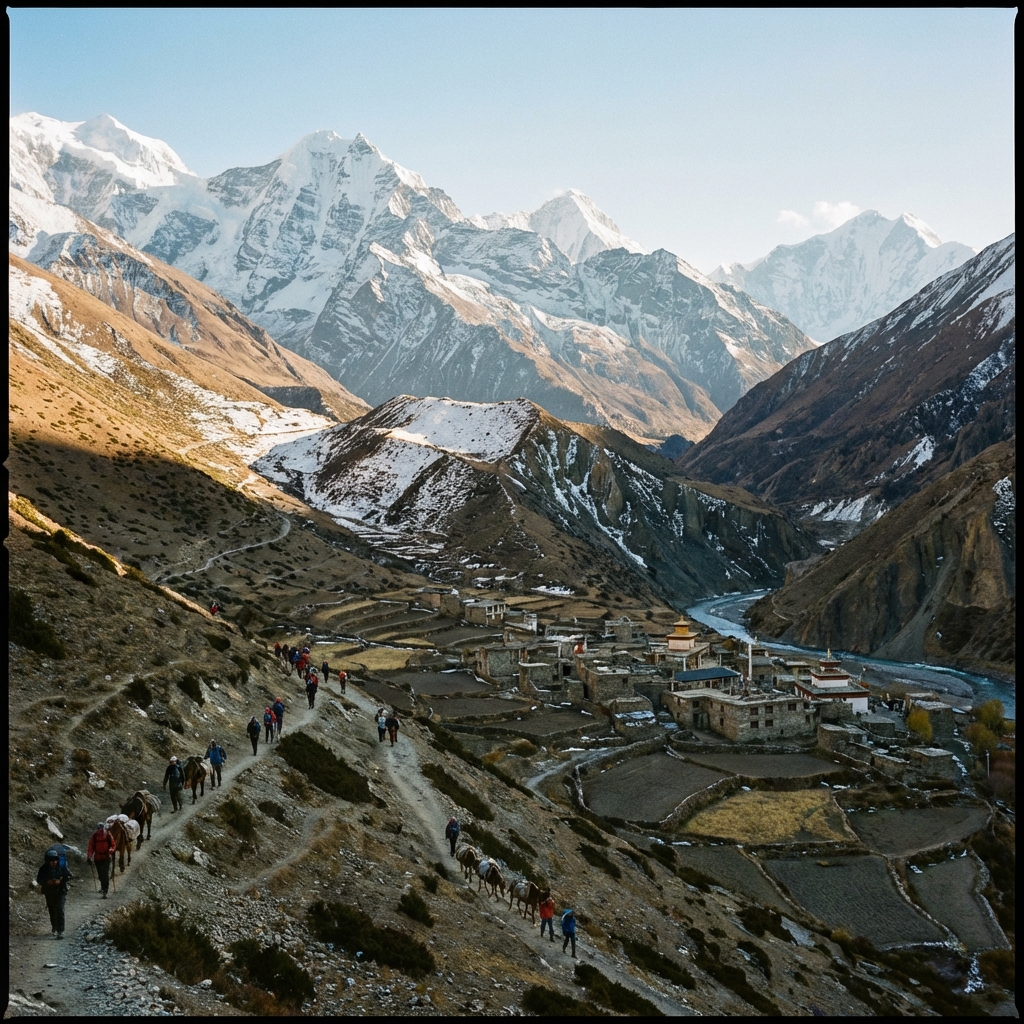
Planning a trekking adventure in Nepal? Understanding the visa process is your first step to a smooth journey. Nepal offers one of the most straightforward visa processes in Asia, with visa on arrival available at major entry points. This comprehensive guide covers everything from application procedures to extension processes, costs, and special requirements for 2026.
1. Understanding Nepal's Visa on Arrival System
Nepal's visa on arrival system is designed for convenience, allowing most international travelers to obtain their tourist visa directly upon entry without prior application at an embassy. This system has made Nepal one of the most accessible destinations for trekkers and adventure travelers worldwide.
The visa on arrival is available to citizens of most countries except a few nations subject to special restrictions. The process is straightforward, typically taking 10-30 minutes depending on arrival time and queue length. Peak season arrivals (October-November and March-April) may experience longer wait times.
Key Advantages of Visa on Arrival:
- No advance embassy appointments required
- Multiple duration options
- Simple documentation requirements
- Same-day processing
- Multiple entry options available
The visa on arrival system operates 24/7 at Tribhuvan International Airport in Kathmandu, making it convenient regardless of your flight arrival time.
2. Visa Fees and Duration Options
Nepal offers three standard tourist visa durations with corresponding fees. All fees are quoted in US dollars, though payment is accepted in multiple currencies.
| Duration | Fee (USD) | Days | Per Day Cost |
|---|---|---|---|
| 15 days | $30 | 15 | $2.00 |
| 30 days | $50 | 30 | $1.67 |
| 90 days | $125 | 90 | $1.39 |
Multiple Entry Visa: All tourist visas are automatically multiple entry, meaning you can exit and re-enter Nepal during your visa validity period without additional fees. This is particularly useful for trekkers planning side trips to Tibet or India.
Children's Visa: Children under 10 years of age receive free tourist visas regardless of duration. Children must still complete the application form and provide required documentation.
SAARC Citizens: Nationals of SAARC countries (Bangladesh, Bhutan, Maldives, Pakistan, and Sri Lanka) receive free tourist visas for up to 30 days. India has special bilateral arrangements.
Pro Tip
Choose the 30-day visa even if you're planning a shorter trek. The additional $20 provides flexibility for delays, rest days, or extending your adventure without immediate extension paperwork.
3. Eligibility and Nationality Restrictions
Most international travelers are eligible for Nepal's visa on arrival. However, certain nationalities face restrictions or require special procedures.
Eligible Nationalities: Citizens of approximately 190+ countries can obtain visa on arrival, including:
- United States
- United Kingdom
- European Union countries
- Canada
- Australia
- New Zealand
- Most Asian countries
- Most South American countries
Special Cases:
Indian Citizens: Do not require a visa for Nepal. Indian nationals can enter freely with valid identification (passport, voter ID card, or other government-issued photo ID) and stay indefinitely.
Chinese Citizens: Must obtain a visa in advance from a Nepalese embassy or consulate. Visa on arrival is not available for Chinese passport holders.
Nigerian Citizens: Subject to additional scrutiny and may experience processing delays. Advance visa application recommended.
Afghan, Iraqi, Cameroon, Ghana, Somalia, Swaziland, Palestine, Ethiopia Citizens: These nationalities can obtain visa on arrival but may require additional documentation or face longer processing times.
Always verify your nationality's specific requirements before travel. Regulations can change, and diplomatic relations may affect visa policies.
4. Required Documents for Application
The documentation requirements for Nepal's tourist visa are minimal compared to many countries. Ensure you have all necessary items before arrival to avoid delays.
Essential Documents:
-
Valid Passport
- Minimum 6 months validity from entry date
- At least one blank page for visa stamp
- Machine-readable passport recommended
- Damaged passports may be rejected
-
Passport Photo
- One recent passport-sized photograph (4x6 cm)
- Color photo with white background
- Taken within last 6 months
- Photos available at airport for $3-5 if needed
-
Visa Fee Payment
- Cash in USD, EUR, GBP, CHF, AUD, CAD, SGD, or HKD
- Credit cards NOT accepted for visa fees
- Exact change not required
- Exchange services available at airport
-
Completed Application Form
- Available online at immigrationnepal.gov.np/visa
- Paper forms available at arrival hall
- Can be filled electronically before arrival
Additional Documents (Sometimes Requested):
- Return/onward flight ticket
- Proof of accommodation
- Travel insurance documentation
- Sufficient funds evidence ($500+ recommended)
Pro Tip
Complete the online application form before departure at immigrationnepal.gov.np/visa. Print the completed form to skip manual form-filling at the airport, saving 10-15 minutes during peak times.
5. Online Pre-Application Process
Nepal's Department of Immigration offers an online pre-application system that streamlines the visa on arrival process. While mandatory since April 2023, this system significantly reduces airport processing time.
Step-by-Step Online Application:
Step 1: Access the Portal
- Visit immigrationnepal.gov.np/visa
- Click "Apply for Tourist Visa"
- Select "Visa on Arrival" option
Step 2: Complete Personal Information
- Enter passport details exactly as shown
- Provide contact information
- Specify visa duration preference
- Upload digital passport photo (JPEG, max 500KB)
Step 3: Provide Travel Details
- Expected arrival date
- Entry point (airport or border)
- Accommodation details in Nepal
- Purpose of visit (tourism/trekking)
Step 4: Review and Submit
- Review all information for accuracy
- Submit application
- Receive confirmation email with reference number
- Print confirmation page
Step 5: At Arrival
- Present printed confirmation at visa counter
- Skip paper form completion
- Proceed directly to payment and processing
The online application does NOT replace visa on arrival. It's a pre-registration system that expedites processing. You still pay fees and receive your visa stamp upon arrival.
Benefits of Online Pre-Application:
- Faster processing (5-10 minutes vs 20-30 minutes)
- Reduced form-filling errors
- Separate priority line at some entry points
- Digital record of application
- No internet dependency at airport
6. Visa on Arrival at Tribhuvan International Airport
Tribhuvan International Airport (TIA) in Kathmandu is Nepal's primary international gateway and the most common entry point for obtaining visa on arrival.
Arrival Process Timeline:
1. Exit Aircraft and Enter Terminal (5 minutes)
- Follow signs to visa on arrival section
- Located before immigration counters
- Open 24/7 for all international flights
2. Complete Application Form (10-15 minutes)
- Use pre-filled online form OR
- Complete paper form at airport
- Forms available in multiple languages
- Electronic kiosks available
3. Submit Application and Documents (5-10 minutes)
- Join appropriate queue
- Online applicants use separate line
- Submit form, passport, and photo
- Pay visa fee in cash
4. Receive Passport with Visa (2-5 minutes)
- Wait for name to be called
- Collect passport with visa sticker
- Verify visa details immediately
- Proceed to immigration
5. Clear Immigration (5-10 minutes)
- Join immigration queue
- Present passport with visa
- Answer basic questions if asked
- Receive entry stamp
Total Processing Time: 30-45 minutes (off-peak), 60-90 minutes (peak season)
Peak Travel Periods:
- October-November (autumn trekking season)
- March-April (spring trekking season)
- December (holiday season)
- Early morning arrivals (multiple flights land simultaneously)
Pro Tip
Arrive with small denomination bills ($30, $50, or $125 exact amounts). While change is available, having exact payment speeds up the process during busy periods.
Airport Facilities:
- Free WiFi available in visa area
- Currency exchange counters
- ATMs accepting international cards
- Photo booth services
- Drinking water fountains
- Restrooms
7. Land Border Entry Points
Nepal has numerous land border crossings where visa on arrival is available. These are particularly useful for overland travelers from India or Tibet, or those completing regional circuits.
Major Land Border Crossings with Visa on Arrival:
From India:
-
Kakarbhitta (Eastern Nepal)
- Connects to Siliguri, West Bengal
- Gateway to Kanchenjunga region
- Hours: 6:00 AM - 8:00 PM
- Processing time: 15-30 minutes
-
Birgunj (Central Nepal)
- Connects to Raxaul, Bihar
- Closest to Kathmandu (4-5 hours)
- Hours: 6:00 AM - 10:00 PM
- Busiest land crossing
-
Sunauli (Western Nepal)
- Connects to Uttar Pradesh
- Access to Lumbini and Pokhara
- Hours: 5:00 AM - 10:00 PM
- Well-organized visa facility
-
Mahendranagar (Far Western Nepal)
- Connects to Uttarakhand
- Access to far-western trekking regions
- Hours: 6:00 AM - 8:00 PM
- Less crowded
-
Kodari (Tibet Border)
- Currently closed due to infrastructure issues
- Check current status before planning
From Tibet (China):
- Rasuwagadhi/Kerung
- Main Tibet-Nepal crossing
- Requires pre-arranged Chinese visa
- Hours: 9:00 AM - 5:00 PM (Beijing time)
- Weather-dependent closures possible
Land Border Visa Process:
- Similar to airport procedure
- Cash USD required (limited currency exchange)
- Bring passport photos (limited photo services)
- Online pre-application available
- Processing typically faster than airport
- Some borders lack ATM facilities
Land border crossings have limited operating hours. Plan to arrive at least 2 hours before closing time to ensure visa processing completion. Some borders close earlier during local holidays.
Border Crossing Tips:
- Verify current operating hours before travel
- Carry sufficient USD cash
- Bring extra passport photos
- Have accommodation address ready
- Keep copies of passport
- Check seasonal weather conditions (monsoon closures possible)
8. Step-by-Step Application Guide
Follow this detailed process to ensure smooth visa acquisition at any entry point.
Pre-Departure Preparation (1-2 weeks before):
- Verify passport validity (minimum 6 months)
- Obtain passport photos (2-3 copies)
- Research visa fees for desired duration
- Complete online pre-application (optional but recommended)
- Arrange sufficient USD cash
- Bookmark immigration website
- Download offline copy of visa information
- Purchase travel insurance
24-48 Hours Before Departure:
- Print online application confirmation (if completed)
- Organize travel documents in accessible folder
- Prepare exact visa fee amount
- Save emergency contact numbers
- Confirm flight arrival time
- Pack documents in carry-on baggage
Upon Arrival at Entry Point:
Step 1: Locate visa on arrival section (follow signage)
Step 2: Complete application form
- Use online printed form, OR
- Fill paper form completely
- Use BLOCK CAPITALS
- Ensure all fields are legible
Step 3: Prepare required items
- Passport
- Passport photo
- Completed form
- Visa fee in cash
Step 4: Queue at appropriate counter
- Look for "Visa on Arrival" signs
- Online applicants: separate queue
- Regular applicants: standard queue
Step 5: Submit application
- Hand documents to immigration officer
- Answer any questions clearly
- Pay exact fee or receive change
- Collect receipt/token number
Step 6: Wait for processing
- Remain in waiting area
- Listen for name/number announcement
- Typical wait: 5-15 minutes
Step 7: Collect passport
- Verify visa details immediately:
- Correct name spelling
- Correct visa duration
- Correct entry/exit dates
- Visa number printed clearly
- Report errors immediately
Step 8: Proceed to immigration
- Join immigration queue
- Present passport with visa
- Provide accommodation address if asked
- Receive entry stamp
Step 9: Post-immigration
- Collect baggage
- Pass through customs
- Exit to arrivals hall
Pro Tip
Take a photo of your visa page immediately after receiving it. This serves as backup documentation if your passport is lost and helps with extension applications.
9. Visa Extension Process
Most trekkers initially obtain a 15 or 30-day visa with plans to extend if needed. Nepal's extension process is straightforward and handled through the Department of Immigration.
Extension Basics:
- Cost: $3 per day (significantly more expensive than initial visa)
- Maximum Total: 150 days per calendar year (January-December)
- Processing Time: 1-3 hours (same day)
- Location: Department of Immigration, Kalikasthan, Kathmandu
- Extensions From: Lakeside Office in Pokhara (limited capacity)
Extension Fee Comparison:
| Extension Duration | Fee | Total Cost | Original 90-Day Cost |
|---|---|---|---|
| 15 days | $45 | $95 (with original 30d) | $125 for 90 days |
| 30 days | $90 | $140 (with original 30d) | $125 for 90 days |
| 60 days | $180 | $230 (with original 30d) | $125 for 90 days |
Extensions cost $3/day versus $1.39/day for the initial 90-day visa. If you suspect you'll stay longer than 30 days, purchase the 90-day visa initially to save money.
Department of Immigration, Kalikasthan:
Location: Kalikasthan, Kathmandu (near Maharajgunj) Hours: Sunday-Thursday 10:00 AM - 5:00 PM, Friday 10:00 AM - 3:00 PM (Closed Saturday) Contact: +977-1-4429660
Extension Application Process:
Step 1: Gather Required Documents
- Valid passport
- Passport photo (1-2 copies)
- Extension fee in Nepali Rupees
- Proof of funds (bank statement or cash)
- Accommodation details
Step 2: Travel to Immigration Office
- Take taxi to Kalikasthan (~300-500 NPR from Thamel)
- Arrive early (before 11 AM recommended)
- Peak season: arrive by 9:30 AM
Step 3: Obtain Application Form
- Collect extension form at entrance
- Forms also available online
- Complete all sections clearly
Step 4: Submit Application
- Join submission queue
- Submit form, passport, and photos
- Pay extension fee at counter
- Collect receipt with number
Step 5: Wait for Processing
- Wait in designated area
- Processing: 1-3 hours
- Stay within hearing range for announcements
Step 6: Collect Passport
- Present receipt when called
- Verify extension stamp
- Check dates carefully
Pokhara Extension Office:
Location: Immigration Office, Lakeside, Pokhara Hours: Sunday-Thursday 10:00 AM - 5:00 PM, Friday 10:00 AM - 3:00 PM Capacity: Limited (Kathmandu preferred for peak season)
The Pokhara office handles extensions but has fewer staff and longer processing times during peak season. Kathmandu office is more reliable for extensions exceeding 30 days.
Pro Tip
Apply for visa extension before your current visa expires. Applications can be submitted up to 15 days before expiry. Overstaying, even by one day, incurs penalties and complications.
10. Maximum Stay Limitations
Nepal enforces strict limitations on tourist visa duration to prevent long-term stays on tourist visas. Understanding these limits is crucial for planning extended treks or multi-month stays.
Annual Limit: 150 days per calendar year (January 1 - December 31)
How the Limit Works:
- Counted from January 1 to December 31
- Includes initial visa AND all extensions
- Resets on January 1 each year
- Applies to all tourist visa entries
- Strictly enforced by immigration
Example Scenarios:
Scenario 1: Single Long Trek
- Enter on September 15 with 90-day visa
- Extend for 60 days (150 total days)
- Must exit by February 11 (following year)
- Used 118 days in year 1, 32 days in year 2
Scenario 2: Multiple Visits
- Visit 1: March (30 days used)
- Visit 2: July (30 days used)
- Visit 3: October (90 days available)
- Total: 150 days maximum
Scenario 3: Year-End Entry
- Enter December 20 with 90-day visa
- Maximum stay: 12 days until December 31
- 150-day limit reached
- Cannot extend in same calendar year
Exceeding the Limit:
If you reach 150 days, you must:
- Exit Nepal before December 31
- Cannot obtain additional tourist visa until January 1
- No exceptions for tourist visas
- Consider other visa types for longer stays
Alternative Visa Types for Extended Stays:
- Business Visa: For work-related activities (requires company sponsorship)
- Student Visa: For enrolled students (requires institutional letter)
- Research Visa: For academic research (requires approval)
- Volunteering Visa: For registered volunteer programs
If you're planning to spend more than 150 days in Nepal within a calendar year, investigate non-tourist visa options before arrival. Tourist visas cannot exceed 150 days regardless of circumstances.
11. Costs and Payment Methods
Understanding all costs associated with Nepal's visa system helps budget accurately for your trek.
Primary Visa Costs:
| Service | Cost (USD) | Cost (NPR) | Notes |
|---|---|---|---|
| 15-day visa | $30 | ~3,900 NPR | Most economical for short treks |
| 30-day visa | $50 | ~6,500 NPR | Best value for flexibility |
| 90-day visa | $125 | ~16,250 NPR | Most economical per day |
| Extension per day | $3 | ~390 NPR | Significantly more expensive |
| Multiple entry | Free | Free | Included in all tourist visas |
Additional Potential Costs:
| Service | Cost | Location |
|---|---|---|
| Passport photo | $3-5 | Airport/borders |
| Online form assistance | $5-10 | Airport touts (avoid) |
| Late fee (overstay) | $3/day + $2/day fine | Immigration office |
| Rush processing | Not available | N/A |
| Weekend processing | Not available | Closed weekends |
Accepted Payment Methods:
At Arrival (Airport/Borders):
- USD cash (preferred)
- EUR, GBP, CHF, AUD, CAD, SGD, HKD cash
- Nepali Rupees (at equivalent rate)
- Credit cards: NOT accepted
- Debit cards: NOT accepted
- Traveler's checks: NOT accepted
Currency Exchange Rates: The immigration office uses official exchange rates updated weekly. Rates may differ slightly from market rates, typically within 2-3% variance.
For Extensions (Immigration Office):
- Nepali Rupees ONLY
- Cash payment required
- Exchange available nearby
- ATMs within walking distance
Money-Saving Strategies:
- Choose 90-day visa initially if planning 30+ day stay (saves up to $125 vs extensions)
- Avoid currency exchange at airport (poor rates; use city ATMs)
- Bring exact USD amounts ($30, $50, $125) to avoid exchange loss
- Apply online to avoid paid "assistance" touts
- Bring own passport photos (saves $3-5 per photo)
Pro Tip
Withdraw Nepali Rupees from ATMs in Kathmandu for visa extension fees rather than exchanging USD. ATM rates are typically 2-3% better than exchange counters, saving $5-10 on a 30-day extension.
Receipt and Documentation:
- Keep all visa payment receipts
- Photograph visa page and receipts
- Store copies separately from originals
- Required for extension applications
- Useful if disputes arise
12. Trekking Permits vs Tourist Visa
Understanding the difference between tourist visas and trekking permits is essential for trek planning. They serve different purposes and are obtained from different offices.
Tourist Visa:
- Permission to enter and stay in Nepal
- Required for ALL foreign visitors (except Indians)
- Obtained at entry point or embassy
- Covers entire stay in Nepal
- Not region-specific
Trekking Permits:
- Permission to trek in specific regions
- Required IN ADDITION TO tourist visa
- Obtained from specific offices in Nepal
- Region-specific (different permits for different areas)
- Some regions require multiple permits
Common Trekking Permit Types:
1. TIMS Card (Trekkers' Information Management System)
- Cost: NPR 2,000 (~$15)
- Required: Most trekking regions
- Obtained: Nepal Tourism Board, Kathmandu/Pokhara
- Purpose: Trekker safety and tracking
2. Annapurna Conservation Area Permit (ACAP)
- Cost: NPR 3,000 (~$23)
- Required: Annapurna region treks
- Obtained: Nepal Tourism Board offices
- Purpose: Conservation area entry
3. Sagarmatha National Park Entry Permit
- Cost: NPR 3,000 (~$23)
- Required: Everest region treks
- Obtained: Nepal Tourism Board or park entry
- Purpose: National park entry
4. Restricted Area Permits
- Cost: $500-700 per person for 10 days
- Required: Mustang, Manaslu, Kanchenjunga restricted areas
- Obtained: Through registered trekking agency only
- Purpose: Special region access control
Combined Requirements Example:
Annapurna Base Camp Trek:
- Tourist visa: $50 (30 days)
- TIMS Card: NPR 2,000
- ACAP: NPR 3,000
- Total documentation cost: ~$88
Everest Base Camp Trek:
- Tourist visa: $50 (30 days)
- TIMS Card: NPR 2,000
- Sagarmatha National Park: NPR 3,000
- Total documentation cost: ~$88
Your tourist visa allows you to stay in Nepal but does NOT permit trekking in conservation areas or national parks. Always obtain required trekking permits before starting your trek to avoid fines and complications.
Where to Obtain Trekking Permits:
Nepal Tourism Board Office, Kathmandu:
- Location: Bhrikutimandap, Kathmandu
- Hours: Sunday-Friday 9:00 AM - 5:00 PM
- Services: TIMS, ACAP, Sagarmatha permits
Nepal Tourism Board, Pokhara:
- Location: Lakeside, Pokhara
- Hours: Sunday-Friday 9:00 AM - 5:00 PM
- Services: TIMS, ACAP permits
Trekking Agencies:
- Can obtain permits on your behalf
- Charge service fee ($5-20)
- Convenient for those with limited time
- Required for restricted area permits
Pro Tip
Obtain trekking permits in Kathmandu or Pokhara before starting your trek. While some permits are available at trail heads, offices may have limited hours, and you risk delays if documentation issues arise.
13. Special Visa Categories and Exemptions
Nepal offers special visa provisions for certain nationalities and circumstances beyond standard tourist visas.
SAARC Country Citizens:
Citizens of SAARC (South Asian Association for Regional Cooperation) member countries receive preferential visa treatment:
Free Visa Countries:
- Bangladesh: 30 days free
- Bhutan: 30 days free
- Maldives: 30 days free
- Pakistan: 30 days free
- Sri Lanka: 30 days free
Special Arrangement:
- India: No visa required (see below)
Process for SAARC Citizens:
- Apply at visa on arrival counter
- Present passport and photo
- Mark "SAARC" on application
- No payment required for initial 30 days
- Extensions available at standard rates ($3/day)
Indian Citizens:
Indian nationals enjoy unique privileges due to bilateral agreements:
- No visa required for entry
- Can stay indefinitely
- Acceptable documents:
- Indian passport
- Voter ID card
- Government-issued photo ID
- Other official Indian identification
- Can work without special permits
- Full freedom of movement
- No registration requirements for short stays
While Indian citizens don't need a visa, carrying a passport is recommended for hotel check-ins, trekking permits, and identification purposes. Some services require passport numbers for registration.
Children's Visas:
Children under 10 years old receive special treatment:
- Free visa regardless of duration
- Must still complete application
- Passport required
- Photo required
- Parent/guardian information needed
- Same validity as paid visas
- Extensions follow adult rates after initial visa
Age Calculation:
- Based on age at entry
- If turning 10 during stay, extension at child rate until birthday
- After 10th birthday, adult extension rates apply
Diplomatic and Official Visas:
Government officials and diplomats:
- Apply through Ministry of Foreign Affairs
- No fee for diplomatic passports
- Advance application required
- Duration based on assignment
- Special privileges and immunities
- Not applicable to personal travel
Multiple Entry Provisions:
All tourist visas are automatically multiple entry:
- Can exit and re-enter freely
- No additional fee
- Same visa remains valid
- Useful for side trips to India or Tibet
- Must return before visa expires
- Days count toward 150-day annual limit
Visa-Exempt Transit:
Nepal does not offer visa-free transit:
- All arrivals require visa
- No airside transit without visa
- Must obtain visa even for airport connections
- Exception: Remaining in international transit area without entry
14. Common Application Issues and Solutions
Understanding common problems helps prevent delays and complications during visa application.
Issue 1: Insufficient Passport Validity
Problem: Passport expires within 6 months of entry Solution:
- Renew passport before travel
- Most countries offer expedited renewal
- Cannot obtain Nepal visa with insufficient validity
- Embassy/consulate cannot grant exceptions
Prevention: Check passport expiry when booking flights (minimum 7 months recommended)
Issue 2: Missing or Invalid Photo
Problem: Photo doesn't meet specifications or forgotten Solution:
- Use airport photo booth ($3-5)
- Nearby shops offer quick photo service
- Smartphone photos generally not accepted Prevention: Carry 3-4 extra passport photos in carry-on
Issue 3: Insufficient Cash
Problem: Only cards or wrong currency Solution:
- Use airport ATM before visa counter
- Exchange currency at airport (poor rates)
- Borrow from fellow travelers (common) Prevention: Withdraw USD before departure or at first connection
Issue 4: Online Application Issues
Problem: Website not loading or submission failing Solution:
- Try different browser (Chrome recommended)
- Complete paper form at airport
- Not mandatory to use online system Prevention: Complete online application 2-3 days before departure, not day-of
Issue 5: Incorrect Duration Selection
Problem: Wrong visa duration chosen at application Solution:
- Cannot change after payment
- Must apply for extension if need more time
- Costs significantly more ($3/day vs $1.39/day) Prevention: Choose longer duration if uncertain
Issue 6: Name Spelling Errors
Problem: Name misspelled on visa sticker Solution:
- Point out error immediately before leaving counter
- Immigration officer can issue new sticker
- Much harder to correct after leaving airport Prevention: Carefully review visa before leaving counter
Issue 7: Peak Season Delays
Problem: 2-3 hour waits during peak season Solution:
- Complete online pre-application
- Arrive with exact change
- Have documents ready and organized
- Consider early morning or late night flights Prevention: Plan extra airport time during October-November, March-April
Issue 8: Denied Entry for Chinese Nationals
Problem: Chinese citizens arriving without pre-arranged visa Solution:
- Must obtain visa from embassy before travel
- No visa on arrival for Chinese passport holders
- Emergency: Contact Chinese embassy in Kathmandu Prevention: Verify nationality requirements before booking
Issue 9: Overstay Discovered at Extension
Problem: Accidentally overstayed visa by a few days Solution:
- Pay overstay fine: $3/day late fee + $2/day penalty
- Cannot be waived
- Must be paid before extension or exit
- May affect future visa applications Prevention: Set phone reminders for visa expiry; apply for extension early
Issue 10: Lost Passport with Visa
Problem: Passport lost or stolen during stay Solution:
- File police report immediately
- Contact embassy for emergency travel document
- Apply for new visa at Immigration Office
- Present police report and embassy letter
- Pay for new visa (no refund for lost visa) Prevention: Keep digital and physical copies of passport/visa separate from originals
Pro Tip
Photograph your visa page immediately after receiving it and email it to yourself. This digital backup provides all necessary details if you need to report issues or apply for extensions.
15. Overstay Penalties and Consequences
Understanding overstay penalties helps avoid serious complications that can affect current and future travel to Nepal.
Overstay Definition: Remaining in Nepal beyond your visa expiry date, even by a single day, constitutes overstay.
Penalty Structure:
| Overstay Duration | Fine Per Day | Additional Penalty | Total Per Day |
|---|---|---|---|
| 1-30 days | $3 | $2 late fee | $5/day |
| 31-90 days | $3 | $2 late fee + blacklist risk | $5/day + ban risk |
| 90+ days | $3 | Blacklist likely | $5/day + 3-10 year ban |
Consequences by Duration:
1-7 Days Overstay:
- Penalty: $35-35 total
- Process: Pay at immigration or airport
- Impact: Minor, usually no long-term consequences
- Future visas: Typically unaffected
8-30 Days Overstay:
- Penalty: $40-150
- Process: Pay at Immigration Office
- Impact: Note added to immigration record
- Future visas: May face additional scrutiny
31-90 Days Overstay:
- Penalty: $155-450
- Process: Immigration Office investigation
- Impact: Potential blacklist (3 years)
- Future visas: Significant difficulties
- Possible detention until flight arranged
90+ Days Overstay:
- Penalty: $450+ plus likely blacklist
- Process: Formal investigation required
- Impact: Blacklist (3-10 years typical)
- Future visas: Banned from Nepal
- Possible legal proceedings
- Deportation and entry ban to other countries possible
Payment Process:
Before Departure:
- Visit Department of Immigration, Kalikasthan
- Present passport and explanation
- Pay overstay fine in Nepali Rupees
- Receive clearance stamp
- Proceed to airport for exit
At Airport:
- Immigration will calculate overstay
- Must pay before boarding
- Rupees only (exchange available)
- May be detained if unable to pay
- Flight can be missed
Overstay penalties cannot be waived or negotiated. Medical emergencies require hospital documentation. Natural disasters may receive consideration with proper documentation. All other overstays incur mandatory fines.
Blacklist Implications:
Once blacklisted:
- Cannot obtain Nepal visa
- Banned from entry for specified period
- Appears in immigration database
- May affect visas to other countries
- Removal requires formal appeal (rarely successful)
Valid Excuses (May Reduce Penalties):
-
Medical Emergency
- Hospital admission documentation
- Doctor's certification
- Medical records
- May waive penalties with proof
-
Natural Disaster
- Flight cancellations due to weather
- Earthquake or landslide blocking exit
- Official emergency declarations
- Airline documentation required
-
Political Unrest
- Bandhs (strikes) preventing travel
- Airport closures
- Government-imposed restrictions
- News reports as evidence
Not Accepted Excuses:
- Forgot to check expiry date
- Couldn't find transportation
- Enjoying trek too much
- Miscalculated dates
- Waiting for friend/partner
- Financial difficulties
Pro Tip
Set multiple phone reminders for visa expiry: 15 days before, 7 days before, 3 days before, and day-of. Apply for extension at least 5 days before expiry to avoid panic and potential overstay if extension office has unexpected closures.
Avoiding Overstay:
- Mark visa expiry on calendar immediately
- Set phone reminders with advance warning
- Apply for extension 1-2 weeks early
- Keep buffer time before departure flight
- Verify dates when receiving visa
- Recheck dates after extension
- Account for embassy closures and weekends
16. Travel Insurance and Visa Requirements
While travel insurance is not officially mandatory for Nepal visa approval, it's highly recommended and sometimes requested during application.
Insurance Requirements:
Official Policy:
- Not mandatory for visa approval
- May be requested at visa counter (rarely enforced)
- No specific coverage minimums stated
- Proof may be requested but usually isn't
Practical Recommendations:
Given Nepal's challenging terrain and limited medical facilities, comprehensive insurance is essential for trekkers.
Recommended Coverage Minimums:
| Coverage Type | Minimum Amount | Recommended Amount |
|---|---|---|
| Medical expenses | $50,000 | $100,000+ |
| Emergency evacuation | $100,000 | $250,000+ |
| Helicopter rescue | $15,000 | $50,000 |
| Repatriation | $50,000 | $100,000 |
| Trip cancellation | Trip cost | Trip cost + 20% |
Essential Coverage for Trekkers:
1. High-Altitude Coverage
- Many policies exclude altitudes above 4,000-6,000m
- Ensure coverage up to your maximum trek altitude
- Everest Base Camp: 5,364m coverage minimum
- Annapurna Circuit: 5,416m coverage minimum
- Thorong La Pass: 5,416m coverage minimum
2. Helicopter Evacuation
- Standard medical insurance often excludes this
- Helicopter rescue from high altitude: $5,000-15,000
- Must be explicitly included in policy
- Verify coverage includes Nepal mountain regions
3. Search and Rescue
- Separate from medical evacuation
- Covers costs of locating missing trekkers
- Essential for remote treks
- Recommended: $50,000 minimum
4. Adventure Sports Coverage
- Trekking may be considered "adventure sport"
- Some policies exclude trekking by default
- Verify trekking is explicitly covered
- Check altitude limits carefully
Recommended Insurance Providers for Nepal Trekking:
-
World Nomads
- Altitude coverage up to 6,000m
- Helicopter evacuation included
- Trekking explicitly covered
- Purchase after departure possible
-
Global Rescue
- Unlimited altitude coverage
- Specialized mountain rescue
- Higher cost but comprehensive
- Preferred by serious mountaineers
-
IMG Global
- High altitude coverage available
- Medical and evacuation combined
- Reasonable pricing
- Good reputation in Nepal
-
Allianz Travel Insurance
- Adventure sports coverage available
- Altitude limits vary by plan
- Widely accepted
- Competitive pricing
Read your policy's fine print carefully. Many standard travel insurance policies exclude trekking above 3,000-4,000 meters or require specific adventure sports riders. Ensure your policy explicitly covers your planned trek altitude and activities.
At Visa Application:
If insurance proof is requested:
- Print insurance policy summary
- Carry digital copy on phone
- Ensure policy shows Nepal coverage
- Verify dates match visa duration
- Most basic travel insurance acceptable
Insurance and Trekking Permits:
Some trekking agencies require insurance proof:
- Mandatory for guided treks
- Required for restricted area permits
- Must show helicopter evacuation coverage
- Copies kept by agency for emergencies
Pro Tip
Purchase insurance that allows you to contact them directly in emergencies. Some policies require you to pay upfront and claim reimbursement later—challenging when stranded at high altitude. Direct-pay policies are far superior for trekking emergencies.
17. Embassy and Consular Services
For travelers unable to obtain visa on arrival, Nepalese embassies and consulates worldwide provide visa services. This is mandatory for certain nationalities and optional for advance planning.
When to Apply at Embassy:
Mandatory for:
- Chinese citizens
- Certain African nationalities
- Countries without visa on arrival agreements
- Employment/business visas
- Student visas
- Long-term stays
Optional for:
- Those preferring advance certainty
- Group tours with pre-arrangements
- Travelers uncomfortable with arrival process
- Multiple-entry business travelers
Embassy Application Process:
Step 1: Locate Nearest Embassy Nepal maintains embassies and consulates in major cities worldwide. Find your nearest at mofa.gov.np
Step 2: Prepare Documents
- Completed visa application form
- Passport (6+ months validity)
- 2 passport photos
- Visa fee (varies by location)
- Travel itinerary
- Hotel bookings
- Return ticket
- Bank statements (sometimes required)
Step 3: Submit Application
- Visit embassy during visa hours
- Some accept mail applications
- Others require in-person submission
- Processing: 3-5 business days typical
Step 4: Pay Fee
- Amount varies by location
- Often higher than visa on arrival
- Payment methods vary by embassy
- Keep receipt
Step 5: Collect Visa
- Return on specified date
- Present receipt
- Check visa details
- Visa valid for entry within specified period
Major Nepalese Embassies:
United States:
- Washington DC: +1-202-667-4550
- New York (Consulate): +1-212-370-3988
- Fee: Typically $40-100 depending on duration
United Kingdom:
- London: +44-20-7229-1594
- Fee: £30-95
Australia:
- Canberra: +61-2-6162-1554
- Fee: AUD 50-150
India:
- New Delhi: +91-11-2410-1630
- Fee: Free for Indian citizens
- Multiple locations across India
China:
- Beijing: +86-10-6532-1795
- Shanghai, Guangzhou, Lhasa consulates
- Fee: ¥175-450
- Required for all Chinese passport holders
Processing Times:
- Standard: 3-5 business days
- Rush: 1-2 days (additional fee)
- By mail: 7-10 business days
- Peak season: longer delays possible
Embassy visa fees are often higher than visa on arrival and offer no advantages for most travelers. Unless you're required to apply in advance or strongly prefer certainty, visa on arrival is more economical and convenient.
Embassy vs. Visa on Arrival Comparison:
| Factor | Embassy Visa | Visa on Arrival |
|---|---|---|
| Cost | Often higher | Standard rates |
| Time | 3-10 days | 15-30 minutes |
| Convenience | Requires embassy visit | At entry point |
| Certainty | Pre-approved | Assumed (rarely denied) |
| Flexibility | Fixed dates | Apply on arrival |
18. Digital Nomads and Remote Workers
Nepal's natural beauty and low cost of living attract digital nomads, but the tourist visa has limitations for remote work.
Legal Status:
Current Policy:
- Nepal has no specific digital nomad visa
- Tourist visas prohibit formal employment
- Remote work for foreign employers exists in gray area
- No enforcement against laptop users in cafes
- Cannot work for Nepalese companies on tourist visa
Practical Reality:
- Many digital nomads visit on tourist visas
- Working remotely for foreign employers generally tolerated
- Keep low profile about work activities
- Don't advertise remote work publicly
- Pay for accommodations and services normally
Limitations:
-
150-Day Annual Maximum
- Cannot stay year-round on tourist visa
- Must exit for remainder of calendar year
- Affects long-term digital nomad plans
-
No Legal Work Permission
- Tourist visa explicitly prohibits employment
- Foreign remote work not specifically addressed
- Legal ambiguity remains
-
Internet Connectivity Challenges
- Kathmandu: Generally reliable
- Pokhara: Good in main areas
- Trekking regions: Limited or unavailable
- Power cuts common outside major cities
Best Locations for Remote Work:
Kathmandu:
- Pros: Best internet, coworking spaces, cafes
- Cons: Pollution, noise, traffic
- Internet: 20-100 Mbps typical
- Coworking: Multiple options, $50-150/month
Pokhara:
- Pros: Lakeside setting, pleasant climate, community
- Cons: Fewer coworking options
- Internet: 10-50 Mbps typical
- Coworking: Limited but available
Alternative Visa Options:
For longer-term stays:
- Business Visa: Requires Nepalese company sponsorship
- Student Visa: Enroll in language/cultural courses
- Volunteer Visa: Join registered organization
- Research Visa: Academic research projects
Visa Runs:
Due to 150-day limit:
- Exit to India for reset (January 1)
- Visit other South Asian countries
- Return on new tourist visa
- Cannot exceed 150 days per calendar year regardless
Pro Tip
If planning extended remote work from Nepal, consider splitting time between Nepal (October-March) and another location (April-September). This works around visa limits while avoiding monsoon season and utilizing Nepal's best weather.
19. Family and Group Visa Applications
Families and groups traveling together can streamline the visa process with proper preparation and understanding of individual vs. group application procedures.
Individual Requirements:
Each family member, regardless of age, requires:
- Separate visa application
- Individual passport
- Personal photo
- Individual visa fee (except children under 10)
- Own visa sticker in passport
Children's Visas:
Under 10 Years:
- Free visa
- Must complete application
- Require passport and photo
- Parent/guardian information needed
- Same duration as parents
10 Years and Older:
- Full adult visa fee
- Adult application process
- Can choose different duration than parents (not recommended)
Family Application Process:
Online Pre-Application:
- Complete separate form for each member
- Can submit consecutively
- Use same contact information
- Print all confirmations
At Arrival:
- Family can stay together in queue
- Submit all applications simultaneously
- Pay total combined fees
- One family member can handle payment
- Passports returned together
Group Travel (10+ People):
Tour Groups:
- Travel agency often handles applications
- Group coordinator submits documents
- Individual fees still required
- Faster processing in some cases
- Agency may charge service fee
Trekking Groups:
- Same individual requirements
- No group discount on visa fees
- Agency collects documents in advance
- May expedite airport process
- Individual passports still required
Payment for Families/Groups:
At Visa Counter:
- One person can pay for entire family/group
- Calculate total cost in advance
- Large bills accepted
- Request itemized receipt
- Verify all passports received
Example Family Costs:
| Family Composition | Duration | Cost |
|---|---|---|
| 2 adults, 1 child (8 years) | 30 days | $100 (2 x $50) |
| 2 adults, 2 children (6, 11 years) | 30 days | $150 (3 x $50) |
| 2 adults, 3 children (4, 9, 14 years) | 90 days | $375 (3 x $125) |
Tips for Family Applications:
-
Organize Documents:
- Use separate folders for each family member
- Label with names
- Include all required items per person
- Keep in order (eldest to youngest)
-
Appoint Representative:
- One adult handles communication
- Collects all passports
- Makes payment
- Verifies all visas
-
Choose Same Duration:
- Simplifies planning
- Ensures family stays together
- Easier extension management
- Reduces confusion
-
Buffer Time:
- Add 5 minutes per person to expected processing
- Family of 4: plan 60 minutes minimum
- Peak season: 90+ minutes
While children under 10 receive free visas, they still require all documentation and processing. Don't skip their applications—they cannot enter without proper visa stamps.
20. Visa for Long-Term Stays and Frequent Visitors
Frequent visitors to Nepal face unique challenges due to the 150-day annual limit. Understanding options helps plan multiple visits effectively.
150-Day Limit Impact:
Calendar Year Reset:
- Limit: January 1 to December 31
- Does NOT reset from first entry
- Cannot be carried over or banked
- Strictly enforced
Multiple Visit Planning:
Strategy 1: Seasonal Visits
- Visit during best trekking seasons
- October-November: 60 days
- March-April: 60 days
- Remaining 30 days: December or February
- Avoids monsoon (June-September)
Strategy 2: Year-Split Planning
- Enter late in calendar year
- Use partial allowance (e.g., 30 days in November-December)
- Return in January with fresh 150-day allowance
- Maximizes total days (180 days across 2 months)
Strategy 3: Regional Circuit
- Combine Nepal with regional travel
- India (visa-free for many nationalities nearby)
- Bhutan, Tibet, Sri Lanka
- Return to Nepal when allowance resets
Frequent Visitor Challenges:
No Frequent Visitor Visa:
- Nepal offers no special frequent traveler visa
- Each entry uses tourist visa quota
- No fast-track processing for regular visitors
- No fee discounts for multiple visits
Tracking Your Days:
- Immigration maintains records
- You're responsible for tracking
- Keep all entry/exit stamps
- Calculate days carefully
- Account for both partial and full days
Exceeding 150 Days:
If you reach limit:
- Must exit before December 31
- Cannot obtain extension
- Cannot obtain new tourist visa
- Must wait until January 1 for reset
- Consider alternative visa types
Alternative Long-Term Visa Options:
1. Business Visa
- Requirements: Nepalese company sponsorship
- Duration: Up to 1 year
- Extension: Possible
- Cost: Higher than tourist visa
- Work permitted: Yes, in sponsoring company
2. Student Visa
- Requirements: Enrollment in recognized institution
- Duration: Course length
- Extension: Based on course continuation
- Cost: Varies
- Part-time work: Generally not permitted
3. Volunteer Visa
- Requirements: Registered NGO sponsorship
- Duration: Project length (up to 1 year)
- Extension: Possible with project continuation
- Cost: Varies
- Conditions: Must volunteer with sponsoring org
4. Research Visa
- Requirements: Academic institution affiliation
- Duration: Research period
- Extension: Possible
- Cost: Varies
- Purpose: Academic research only
Pro Tip
If you visit Nepal annually for trekking, time your visit to span the calendar year change (mid-December to mid-January). This allows you to use days from both years' allowances, potentially extending your stay beyond the 90-day visa maximum for a single calendar year.
For Serious Long-Term Plans:
Consider:
- Nepalese language study (student visa basis)
- Volunteer with trekking/education NGO
- Establish business relationship
- Marry Nepalese citizen (different process)
- Apply for residential visa (requires investment/business)
Record Keeping for Frequent Visitors:
Maintain spreadsheet with:
- Entry dates
- Exit dates
- Days used per visit
- Running total for calendar year
- Remaining allowance
- Visa expiry dates
21. Important Resources and Contact Information
Keep these essential resources handy for visa-related questions and issues during your Nepal visit.
Official Government Resources:
Department of Immigration Nepal
- Website: immigration.gov.np
- Online Application: immigrationnepal.gov.np/visa
- Email: [email protected]
- Phone: +977-1-4429660
Main Office (Extensions & Issues):
- Location: Kalikasthan, Kathmandu
- Hours: Sunday-Thursday 10 AM-5 PM, Friday 10 AM-3 PM
- Closed: Saturday (public holiday)
Tribhuvan International Airport
- Visa Counter: 24/7 operations
- Information: +977-1-4113602
- Website: tiairport.com.np
Nepal Tourism Board
- Website: welcomenepal.com
- Phone: +977-1-4256909
- Trekking Permits Office: Bhrikutimandap, Kathmandu
Pokhara Immigration Office
- Location: Lakeside, Pokhara
- Phone: +977-61-462980
- Hours: Sunday-Thursday 10 AM-5 PM, Friday 10 AM-3 PM
Ministry of Foreign Affairs
- Website: mofa.gov.np
- Phone: +977-1-4200181
- Embassy Locations: Lists all Nepal embassies worldwide
Emergency Contacts:
**Tourist Police: 1144-1-4247041
- Pokhara: +977-61-462761
- Emergency: 1144 (toll-free)
Your Embassy in Nepal: Keep your country's embassy contact handy:
- Can assist with lost passports
- Provide emergency travel documents
- Cannot override Nepal visa rules
- Limited intervention in legal issues
Useful Websites:
Visa Information:
- immigrationnepal.gov.np - Official visa portal
- welcomenepal.com - Tourism information
- mofa.gov.np - Embassy locations
Travel Planning:
- /seasons/best-time-to-trek-nepal - Seasonal planning
- /permits/nepal-trekking-permits-explained - Permit requirements
- /safety/altitude-sickness-prevention-treatment - Health preparation
- /guides/kathmandu-arrival-guide-trekkers - Airport arrival info
Community Resources:
Forums and Groups:
- r/Nepal subreddit - Visa experiences and updates
- Lonely Planet Thorn Tree - Traveler forums
- TripAdvisor Nepal Forums - Tourist questions
Facebook Groups:
- "Travelers in Nepal"
- "Nepal Tourism"
- "Trekking in Nepal"
Apps and Tools:
Currency Converter:
- XE Currency - Real-time rates
- Useful for visa fee calculation
Translation:
- Google Translate - Nepali-English
- Download offline dictionary
Document Storage:
- Store passport/visa photos in cloud
- Email copies to yourself
- Use encrypted storage apps
Final Checklist: Before You Apply
Use this checklist to ensure smooth visa acquisition:
Two Weeks Before:
- Verify passport validity (6+ months minimum)
- Obtain passport photos (2-3 copies)
- Arrange USD cash for visa fee
- Complete online pre-application (optional)
- Research trekking permit requirements
- Purchase travel insurance with altitude coverage
One Week Before:
- Print online visa confirmation (if completed)
- Organize documents in carry-on folder
- Save immigration website offline
- Note embassy contact information
- Set visa expiry reminders on phone
Day of Arrival:
- Passport (6+ months valid)
- Passport photos
- Visa fee in cash (USD)
- Printed online application (if completed)
- Accommodation address
- Return flight information
- Pen for forms
After Receiving Visa:
- Verify name spelling
- Verify visa duration
- Verify entry/exit dates
- Photograph visa page
- Set expiry reminders
- Store copy separately from passport
Related Guides:
- Complete Guide to Nepal Trekking Permits
- Kathmandu Airport Arrival: What to Expect
- Nepal Travel Insurance: What Trekkers Need
- Best Time to Trek in Nepal: Seasonal Guide
- Annapurna Base Camp Trek: Complete Guide
- Everest Base Camp Trek: Complete Guide
- Nepal Packing List for Trekkers
- Altitude Sickness Prevention Guide
- Nepal Currency and Money Guide
- Kathmandu to Pokhara: Travel Options
- Solo Trekking in Nepal: Safety Guide
- Nepal Food Guide for Trekkers
- Hiring a Guide vs Independent Trekking
- Nepal SIM Cards and Internet
- Cultural Etiquette for Trekkers
Frequently Asked Questions
Can I get a Nepal visa on arrival at the airport?
Yes. Nepal offers visa on arrival at Tribhuvan International Airport in Kathmandu and at all official land border crossings. The process takes 10-30 minutes and operates 24/7 at the airport.
How much does a Nepal tourist visa cost?
Nepal tourist visas cost $30 for 15 days, $50 for 30 days, or $125 for 90 days. Payment is accepted in USD cash and other major currencies. Children under 10 receive free visas.
Can I extend my Nepal visa if my trek runs longer?
Yes. Visa extensions cost $3 per day and can be processed at the Immigration Office in Kathmandu or Pokhara. The maximum stay is 150 days per calendar year. See our visa extension guide for the full process.
Do I need a visa to transit through Nepal?
If you are staying airside and departing within 24 hours, transit visas are not required. If you plan to leave the airport, you need a standard tourist visa.
Nepal's straightforward visa process removes barriers to one of the world's premier trekking destinations. With proper preparation and understanding of requirements, obtaining your Nepal visa is a simple first step toward the adventure of a lifetime in the Himalayas.
Safe travels, and enjoy your time in Nepal!