
The 200 km journey between Kathmandu and Pokhara is one of the most traveled routes in Nepal and a necessary leg for virtually every trekker heading to the Annapurna region. Despite the short distance, this journey offers dramatically different experiences depending on your transport choice -- from a breezy 25-minute flight over the Himalayas to a grueling 10-hour local bus through mountain switchbacks. Choosing the right option affects your energy level, budget, and how much time you have for actual trekking.
This guide compares every transport option in detail: tourist buses, luxury coaches, domestic flights, private vehicles, and the budget local bus. We cover costs, comfort, reliability, booking logistics, and which option makes sense for which type of trekker. For broader information about Pokhara as a trekking base, see our Pokhara guide for trekkers. For Kathmandu logistics, check our Kathmandu arrival guide.
200 km by road, 150 km by air
Flight: 25 minutes, $100-150
Tourist bus: 6-7 hours, $10-15
Luxury bus: 6-7 hours, $15-25
Private car/jeep: 5-6 hours, $100-150
Local bus: 7-10 hours, $4-6
Prithvi Highway, mostly paved, some sections under improvement
Buddha Air, Yeti Airlines, Shree Airlines
Transport Options at a Glance
Before the detailed breakdowns, here is a side-by-side comparison to help you quickly identify the right choice.
| option | cost | time | comfort | reliability | bestFor |
|---|---|---|---|---|---|
| Tourist Bus | $10-15 | 6-7 hours | Moderate | High | Budget-conscious trekkers |
| Luxury/Deluxe Bus | $15-25 | 6-7 hours | Good | High | Comfort-minded budget travelers |
| Domestic Flight | $100-150 | 25 min flight | High | Weather-dependent | Time-pressed, comfort seekers |
| Private Car/Jeep | $100-150 | 5-6 hours | High | Very High | Groups, families, flexibility |
| Local Bus | $4-6 | 7-10 hours | Low | Moderate | Ultra-budget, adventurous |
| Night Bus | $8-12 | 8-10 hours | Low-Moderate | Moderate | Saving a hotel night |
Tourist Bus
The tourist bus is the default choice for most trekkers and represents the best balance of cost, comfort, and reliability. These buses are operated specifically for tourists and run daily between Kathmandu and Pokhara.
How It Works
Tourist buses depart from the Tourist Bus Park in Kathmandu (near Thamel, on Kantipath) each morning, typically between 7:00 and 7:30 AM. They arrive in Pokhara at the Tourist Bus Park in Prithvi Chowk, roughly a 10-minute taxi ride from Lakeside. The journey takes 6-7 hours including one meal stop (approximately 30-45 minutes).
Cost
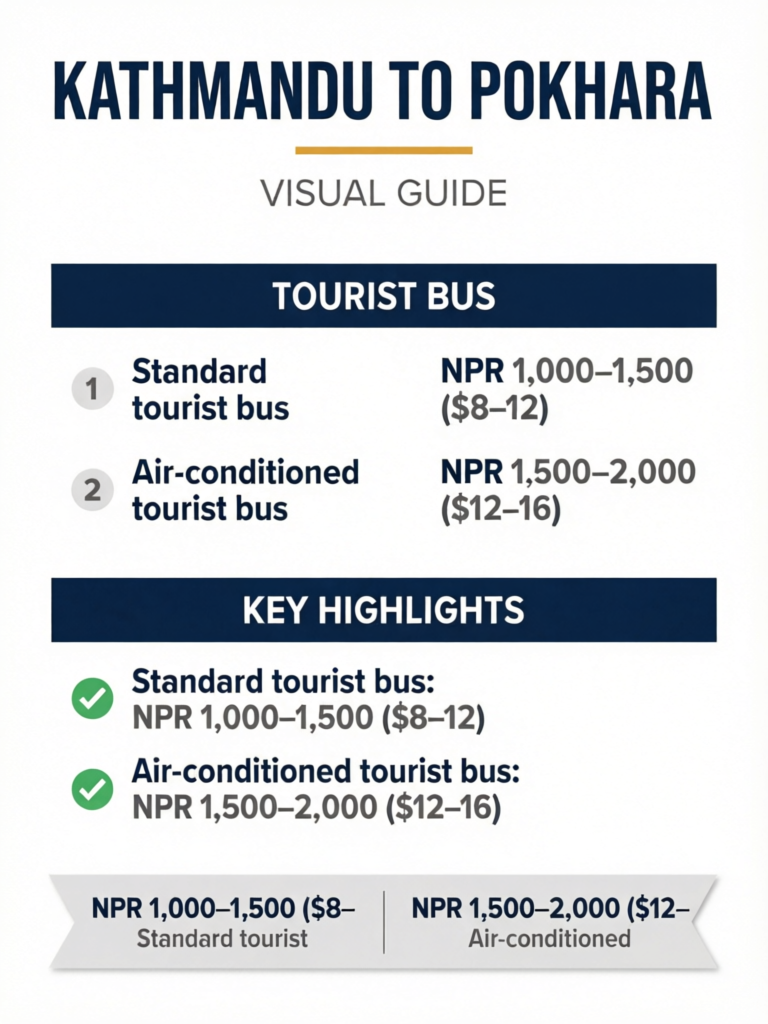
- Standard tourist bus: NPR 1,000-1,500 ($8-12)
- Air-conditioned tourist bus: NPR 1,500-2,000 ($12-16)
Prices are relatively standard across operators. Most hotels and travel agencies in Thamel can book tickets for you (sometimes with a small markup). Booking directly at the Tourist Bus Park counter is cheapest.
Comfort Level
Tourist buses are a significant step up from local buses. They have assigned seating, luggage storage in the undercarriage, no rooftop passengers, and no stopping to pick up locals along the route. Air-conditioned buses are available but not universal -- confirm AC when booking during hot months (April-September).
Seats are standard coach-style with moderate legroom. The ride is smooth on the paved sections of the Prithvi Highway but bumpy on sections under improvement. Motion sickness is common on the winding sections between Mugling and Pokhara -- sit near the front if you are susceptible and consider taking travel sickness medication.
Typical Schedule
| Event | Time |
|---|---|
| Check-in at Tourist Bus Park | 6:30-7:00 AM |
| Departure | 7:00-7:30 AM |
| Lunch stop (near Mugling or Kurintar) | 10:30-11:30 AM |
| Arrival in Pokhara | 1:00-2:30 PM |
Pros and Cons
Pros: Affordable, reliable daily departures, better than local buses, includes meal stop, direct Kathmandu-Pokhara route
Cons: Early morning departure, 6-7 hours on a sometimes rough road, limited legroom, no toilet on board (stops every 2-3 hours), can be crowded in peak season
Sit on the Left Side Going to Pokhara
Booking Tips
- Book through your hotel or any Thamel travel agency one day in advance during peak season
- During off-season, you can often buy tickets the morning of departure
- Arrive at the Tourist Bus Park by 6:45 AM for the best seat choices
- Bring snacks and water -- the lunch stop restaurants are basic and overpriced
- A neck pillow and earplugs make the journey significantly more comfortable
Luxury / Deluxe Bus
For trekkers who want a better road experience without the cost of a flight, luxury and deluxe bus services offer upgraded comfort at a modest price premium.
What Makes It "Luxury"
The term "luxury" covers a range from slightly better to genuinely comfortable, so examine what you are booking:
Basic deluxe: Wider seats with more legroom, air conditioning, sometimes reclining seats. Marginally better than tourist bus.
True luxury (Greenline, etc.): Spacious reclining seats, onboard toilet, WiFi (sometimes functional), complimentary water, better suspension, and lunch included at a quality restaurant. These services operate modern buses and maintain higher standards.
Cost
- Deluxe bus: NPR 1,500-2,500 ($12-20)
- Premium luxury (Greenline-style): NPR 2,000-3,500 ($16-28)
Is It Worth the Upgrade?
For an extra $5-15 over the tourist bus, you get noticeably better seats, an included lunch, and a more organized experience. For trekkers who are tall, have back issues, or simply want to arrive in Pokhara less fatigued, the upgrade is excellent value. The premium services like Greenline also tend to have newer, better-maintained buses with superior drivers.
Greenline Bus Service
Domestic Flight
Flying between Kathmandu and Pokhara is the fastest option and offers spectacular mountain views as a bonus. For trekkers on tight schedules, the 25-minute flight versus the 6-7 hour road journey can mean an extra day of actual trekking.
Airlines and Frequency
Multiple airlines operate the Kathmandu-Pokhara route with 15-25 daily flights:
- Buddha Air: The largest domestic carrier, generally the most reliable
- Yeti Airlines: Good frequency, competitive pricing
- Shree Airlines: Smaller fleet, often slightly cheaper
- Saurya Airlines: Fewer flights, sometimes better last-minute availability
Flights use small propeller aircraft (typically 70-seat ATR 72 or similar). The flight takes 25-30 minutes in the air, but allow 2-3 hours total including airport procedures.
Cost
- One-way fare: $100-150 (NPR 13,000-20,000)
- Peak season (Oct-Nov): Higher end of range, book early
- Off-season: Lower fares, sometimes promotional deals around $80-90
- Luggage: Typically 15 kg checked + 5 kg carry-on included. Extra baggage costs $1-2 per kg
The Flight Experience
On clear days, the Kathmandu-Pokhara flight offers extraordinary mountain views. You fly parallel to the Himalayan range, and on the right side of the aircraft (flying Kathmandu to Pokhara), you can see Ganesh Himal, Manaslu, the Annapurna range, and Dhaulagiri. On very clear days, Everest is visible in the distance to the east.
The flight is short but can be turbulent, particularly during afternoon flights when thermal activity increases. Morning flights (before 10 AM) tend to be smoother and offer better visibility.
The Weather Reliability Problem
The single biggest drawback of flying is weather dependency. Fog in Kathmandu (common October-February mornings) and cloud cover in Pokhara can delay or cancel flights. During monsoon season (June-September), cancellations are frequent.
Delay statistics: During peak trekking season, roughly 10-20% of Kathmandu-Pokhara flights experience delays of 1-4 hours. Approximately 5-10% are cancelled entirely. These are rough estimates and vary by month, airline, and specific weather conditions.
Cancellation protocol: If your flight is cancelled, the airline will rebook you on a later flight (same day if available) or the next day. Refunds are available but can take weeks to process. No compensation is provided for cancellation-related expenses.
Never Fly on Your Trek Start Date
Airport Logistics
Kathmandu Tribhuvan Airport (domestic terminal): Located 6 km from Thamel (20-30 minutes by taxi). Arrive 2 hours before departure during peak season, 1.5 hours off-season. The domestic terminal is separate from the international terminal.
Pokhara Airport: Located 3 km from Lakeside (10-15 minutes by taxi). Smaller and less congested than Kathmandu. Taxis to Lakeside cost NPR 500-800.
Booking Flights
- Direct airline websites: Best prices and most current availability. Buddha Air and Yeti Airlines have functional online booking
- Travel agencies in Thamel: Can book all airlines and sometimes hold group allocations. Minor markup but convenient
- Hotel travel desks: Can arrange flights as part of broader trek logistics
- Book early in peak season: October flights can sell out 1-2 weeks in advance
- Bring passport: Required for domestic flight check-in
Morning Flights Are Best
Private Car or Jeep
For trekkers who want door-to-door service, maximum flexibility, and the ability to stop along the route, a private car or jeep is the most comfortable road option.
Cost
- Private car (sedan): $80-120 (NPR 10,000-15,000)
- Private jeep (SUV): $100-150 (NPR 13,000-20,000)
- Per-person cost for groups: Splitting a jeep among 3-4 people brings the cost to $25-40 per person -- comparable to a luxury bus with vastly superior comfort and flexibility
Advantages
Flexibility: Stop whenever you want for photographs, bathroom breaks, or roadside snacks. The Prithvi Highway has several scenic viewpoints and riverside spots that buses pass without stopping.
Comfort: Modern vehicles with good suspension, air conditioning, and adequate space for luggage. No sharing with strangers.
Door-to-door: Pickup from your Thamel hotel, drop-off at your Pokhara hotel. No navigating bus parks or finding taxis at either end.
Speed: Private vehicles cover the route in approximately 5-6 hours -- faster than buses because they do not make meal stops (unless you request one) and can navigate traffic more efficiently.
Group economics: For groups of 3-4, the per-person cost is reasonable and the comfort improvement is dramatic. Families with children will find this option significantly less stressful than a bus.
How to Arrange
- Through your hotel: Most Thamel and Lakeside hotels can arrange private cars. Prices may include a small markup
- Through your trekking agency: If you have booked an agency trek, they often arrange transport
- Directly with drivers: Travel agencies and drivers advertise along Thamel's main roads. Negotiate the price and confirm the vehicle type before agreeing
- Online: Some operators offer online booking for private transfers
Vehicle Quality
Request a relatively new vehicle (within 5-7 years). Older vehicles on the Prithvi Highway are uncomfortable and potentially less safe. Confirm that the vehicle has air conditioning (important April-September), functioning seatbelts, and a driver familiar with the route. Jeeps (Toyota Prado, Mahindra Scorpio) are more comfortable than sedans on the rougher highway sections.
Split a Jeep with Fellow Trekkers
Local Bus
The local bus is the cheapest option and the most authentic Nepali transport experience. It is also the least comfortable and least predictable. Most trekkers avoid it, but ultra-budget travelers and those seeking immersion may find it worthwhile.
Cost
- Fare: NPR 500-800 ($4-6)
- Departs from: Gongabu Bus Park (New Bus Park), Kathmandu -- a 30-minute taxi from Thamel
The Experience
Local buses are designed for Nepali commuters, not tourists. Expect:
- No assigned seating (first come, first served, with additional standing passengers)
- Luggage on the roof (tied down with ropes) or crammed under seats
- Frequent stops to pick up and drop off passengers along the entire route
- Hindi and Nepali music at high volume
- Vendors boarding to sell snacks, water, and newspapers
- Chickens, goats, and bags of rice as fellow passengers
- No air conditioning (windows open for ventilation)
- No toilet on board (driver stops periodically)
Time
The journey takes 7-10 hours depending on traffic, road conditions, and the number of stops. During monsoon season, landslides can close sections of the highway, adding hours or requiring overnight waits.
When It Makes Sense
The local bus makes sense if you are on an extremely tight budget (saving $6-10 matters), you want an authentic Nepali cultural experience, you have flexible timing, and you have a high tolerance for discomfort. It does not make sense if you are starting a trek the next day and need to arrive rested, or if you are post-trek and your body needs recovery.
Safety Considerations on Local Buses
Night Bus
Night buses operate between Kathmandu and Pokhara, departing in the evening and arriving in the early morning. They save a hotel night but sacrifice sleep quality.
Cost
- Standard night bus: NPR 800-1,200 ($7-10)
- Deluxe night bus: NPR 1,200-1,800 ($10-15)
Schedule
- Departure: 7:00-9:00 PM from Tourist Bus Park or Gongabu Bus Park
- Arrival: 3:00-5:00 AM in Pokhara
Pros and Cons
Pros: Saves one night of hotel accommodation, maximizes your time (travel while sleeping), available when daytime buses are fully booked.
Cons: Very difficult to sleep on a moving bus on a winding road, arrival at 3-4 AM means waiting for your hotel to have a room ready, safety concerns on Nepali highways at night, not recommended before a trek (you need to arrive rested).
When It Makes Sense
The night bus is reasonable for experienced Nepal travelers who are flexible and want to save money, or when daytime buses are fully booked during peak season. It is not recommended for first-time visitors, pre-trek travel (you need sleep), or anyone prone to motion sickness.
The Prithvi Highway: What to Expect
All road transport between Kathmandu and Pokhara follows the Prithvi Highway, Nepal's most important road. Understanding the route helps set expectations.
Route Overview
The highway follows river valleys for most of the journey:
-
Kathmandu to Mugling (110 km, 2.5-3.5 hours): Follows the Trisuli River gorge with dramatic scenery -- steep cliffs, rushing rapids, and terraced hillsides. This section includes the most winding portions and is where motion sickness is most common.
-
Mugling to Pokhara (90 km, 2.5-3 hours): Follows the Marsyangdi and Seti rivers through broader valleys. The terrain becomes gentler, views open up, and the ride is smoother. On clear days, the first views of the Annapurna range appear in the final hour.
Road Conditions
The Prithvi Highway has been progressively upgraded over recent years, with significant improvement to road surfaces, widening in key sections, and new tunnel construction. However, sections remain under active improvement, and conditions vary:
- Good paved sections: Approximately 70% of the route is well-paved and reasonably smooth
- Under improvement sections: 20-30% of the route has construction zones with gravel surfaces, single-lane traffic, and delays
- Monsoon disruptions: During June-September, landslides can block the highway for hours or days. Road crews are generally quick to clear small slides, but major ones can require alternative routing
Highway Improvement Updates
Meal Stops
Both tourist buses and luxury services stop at roadside restaurants along the highway, typically near Mugling or Kurintar (roughly the halfway point). These restaurants cater to bus passengers with set meals:
- Dal bhat set: NPR 300-500 (rice, lentils, vegetables, pickles)
- Fried rice or noodles: NPR 250-400
- Tea and coffee: NPR 50-100
- Snacks: NPR 50-200
The food is basic but filling. Hygiene varies -- stick to hot, freshly cooked dishes rather than salads or cut fruit. Bring your own snacks (biscuits, nuts, fruit) as backup.
Connecting Transport to Trek Logistics
The Kathmandu-Pokhara journey is rarely an end in itself -- it is a link in the chain connecting international arrival to trailhead. Understanding how it fits into your trek logistics prevents wasted time.
For Annapurna Treks (ABC, Poon Hill, Circuit, Mardi Himal)
Kathmandu to Pokhara to trailhead sequence:
- Arrive in Kathmandu (international flight)
- Spend 1-2 nights in Thamel for jet lag recovery and preparation
- Travel Kathmandu to Pokhara (this guide)
- Spend 1-2 nights in Lakeside for permits, gear, and briefing
- Travel Pokhara to trailhead:
- Nayapul (for ABC and Poon Hill): 1.5-2 hours by taxi/jeep, NPR 3,000-5,000
- Besisahar (for Annapurna Circuit): 4-5 hours by bus/jeep, NPR 2,000-5,000
- Kande (for Mardi Himal/Australian Camp): 1 hour by taxi, NPR 2,000-3,000
Optimizing the Journey
Time-pressed trekkers: Fly Kathmandu to Pokhara (arrive by mid-morning) and travel to the trailhead the same afternoon if your permits are arranged in advance. This saves a full day but requires pre-arranged logistics.
Budget trekkers: Take the morning tourist bus to Pokhara (arrive early afternoon) and spend one night in Lakeside before heading to the trailhead the next morning. This is the most cost-effective approach.
Comfort seekers: Fly to Pokhara, spend two nights in Lakeside for a relaxed preparation period, then depart for the trailhead well-rested and fully organized.
Return Journey (Post-Trek)
After your trek, you will return to Pokhara and need to get back to Kathmandu for your international departure. Key considerations:
- Book your return transport before your trek if traveling during peak season
- Allow buffer days: Do not fly internationally from Kathmandu the same day you travel from Pokhara. Flight cancellations and road delays can ruin your connection
- The return flight bonus: Flying Pokhara to Kathmandu after your trek means you arrive rested rather than spending 7 hours on a bus with tired legs
The One-Way Flight Strategy