
Lakeside is the center of trekking culture in Pokhara. It is a roughly 2 km strip of hotels, restaurants, gear shops, and travel agencies along the eastern shore of Phewa Lake, beneath the Annapurna range. Virtually every trekker heading into the Annapurna region spends their pre-trek preparation days and post-trek recovery time here. Our broader Pokhara guide for trekkers covers the entire city and its role as a trek gateway. This article goes deep into the Lakeside neighborhood itself: its micro-geography and street-by-street character. It covers where to stay at every budget, where to eat, what to do on rest days, and how to navigate the area like a local.
Think of Lakeside as Pokhara's answer to Kathmandu's Thamel, but more relaxed, prettier, and with a massive lake instead of traffic-choked streets.
- Length of Lakeside Strip
- Approximately 2 km along the lake
- Elevation
- 822m (2,697 ft)
- Lake
- Phewa Tal (Phewa Lake), second-largest in Nepal
- Mountain Views
- Annapurna I, Machhapuchhre (Fishtail), Dhaulagiri
- Hotel Range
- $8 (dorm) to $200+ (lakefront luxury)
- ATMs
- 10+ along main strip (Nabil, NIC Asia, Everest)
- WiFi
- Available in most hotels and restaurants
- Best Season
- October-November and March-May
Lakeside Neighborhood Layout
Understanding Lakeside's geography saves time and frustration. The neighborhood runs north-south along the eastern shore of Phewa Lake, with the main road (Lakeside Marg) serving as the central spine. The area divides naturally into three zones.
North Lakeside (Baidam North)
The northern section from the Hallanchowk intersection down to about the Camping Chowk area is the liveliest part of Lakeside. This is where you find the highest concentration of restaurants, bars, gear shops, and trekking agencies. The main bus park and tourist bus stop are at the northern edge, making this the natural arrival point.
Character: Busy, social, slightly louder at night. The closest equivalent to Thamel in Pokhara. Most backpackers and younger trekkers gravitate here.
Best for: First-time visitors, social trekkers, budget travelers, nightlife seekers, those wanting everything within walking distance.
Central Lakeside (Mid-Baidam)
The middle section, roughly from Camping Chowk to the Barahi Chowk area, strikes a balance between convenience and calm. The well-known Barahi Temple sits on a small island just offshore (accessible by boat), and the lakefront restaurants here have the best views without the northern noise.
Character: Moderate activity, good restaurant variety, pleasant walking along the lake. Most boat hire stations are here.
Best for: Mid-range travelers, couples, families, those wanting a balance of access and peace.
South Lakeside (Baidam South / Pardi)
The southern end of Lakeside, from Barahi Chowk southward past the Ratna Mandir (Royal Palace) area, is the quietest zone. Hotels here tend to be more upscale, the lakefront is less developed, and the atmosphere is truly peaceful. The trade-off is a longer walk to the main restaurant and shopping clusters.
Character: Quiet, more residential, fewer restaurants but higher-end options. Some of Pokhara's best luxury hotels are here.
Best for: Post-trek recovery, luxury seekers, those wanting lake views without crowds, longer-stay visitors.
Street Numbering Does Not Exist
Where to Stay: Accommodation by Budget
Lakeside offers accommodation for every budget, from $8 dormitories to $200 lakefront suites. Location within the neighborhood matters as much as the hotel quality, so consider which zone suits your style.
Budget: $8-20 per Night
Budget accommodation in Lakeside is plentiful and generally of decent quality. For $8-12, expect a basic private room with shared bathroom and possibly intermittent hot water. For $15-20, you get ensuite bathrooms, reliable hot water, and often a small balcony.
What to look for at this budget:
- Hot water (solar-heated is common; ask if it works in the evening, not just morning)
- WiFi in common areas (room signal may be weak)
- Luggage storage for trek days (essential, so confirm this before booking)
- Rooftop or garden common area
- Breakfast included (many budget places offer basic toast and eggs)
Best budget zones: North Lakeside has the highest concentration of budget options. The side streets (called galis) off the main road offer quieter rooms at lower prices than main-road-facing properties.
Booking tips: During peak season (October-November, March-April), book 3-5 days in advance. In low season, walk-in rates are often lower than online prices. Negotiate for multi-night stays.
Mid-Range: $30-60 per Night
This is the sweet spot for most trekkers. At $30-60, you get comfortable rooms with private bathrooms, consistent hot water, good WiFi, often a balcony with lake or mountain views, and sometimes a swimming pool or spa.
What to look for at this budget:
- Lake-view rooms (worth the extra $5-15 premium)
- In-house restaurant with decent food
- Gear storage room for equipment during your trek
- Travel desk that can arrange permits, guides, and transport
- Air conditioning or heating (useful in summer heat or winter cold)
Best mid-range zones: Central Lakeside offers the best value at this level, with lakefront properties that are quieter than the north but still convenient. Several excellent mid-range hotels cluster around the Barahi Chowk area.
Upscale: $80-200+ per Night
Pokhara's upscale hotels offer real luxury, with lake and mountain views that rival any destination on earth. At this level, expect spacious rooms with premium bedding, full-service restaurants, swimming pools, spas with massage services, airport transfers, and concierge services that handle all trek logistics.
What to look for at this budget:
- Direct lakefront location with unobstructed Annapurna views
- Spa with post-trek massage packages (see our massage and spa guide)
- In-house trekking coordination
- Generator backup for uninterrupted power
- Quieter south Lakeside location for recovery
Best upscale zones: South Lakeside has the most upscale properties, with several international-standard hotels offering lakefront gardens and mountain panoramas.
Luggage Storage During Your Trek
Restaurants and Cafes
Lakeside's restaurant scene is far better than you might expect from a Nepali lakeside town. Restaurants compete hard for trekkers, which keeps quality high and prices reasonable. You can eat excellent dal bhat for $3 or a proper wood-fired pizza for $8.
Nepali and Local Food
- Dal bhat sets are available everywhere for NPR 350-600 ($3-5). The best versions come with 6-8 side dishes including pickles, vegetables, lentil soup, rice, and sometimes goat or chicken
- Momos (dumplings) are a Lakeside staple at NPR 200-400 per plate. Buff (water buffalo) momos are the local favorite
- Thakali cuisine (the regional food style of the Annapurna area) is available at several specialized restaurants and is excellent pre-trek fuel
- Newari food sets (beaten rice, marinated meat, fermented vegetables) at dedicated Newari restaurants offer an authentic experience
International Cuisine
Lakeside caters to an international trekking crowd, and the restaurant variety reflects this:
- Italian: Multiple restaurants serve genuine wood-fired pizza and handmade pasta. Quality is surprisingly good thanks to longtime expat involvement
- Korean and Japanese: Pokhara has a significant Korean tourist population, and several excellent Korean BBQ and Japanese restaurants have resulted
- Indian: Tandoori, curry houses, and South Indian restaurants are plentiful and generally authentic
- Bakeries and cafes: European-style bakeries serve croissants, cakes, and proper espresso coffee. Post-trek trekkers often camp out in these places for hours
Lakefront Dining
Several restaurants along the lake have outdoor terraces directly on the water, with views of Phewa Lake and the Annapurna range. These are the prime dining spots in Pokhara, and the sunset views from lakefront restaurants in Central Lakeside are superb. Expect to pay 10-30% more than non-lakefront restaurants for similar food, but the setting justifies the premium.
Post-Trek Celebration Meal
Coffee Culture
Pokhara has developed a real coffee culture over the past several years, with multiple specialty cafes serving single-origin Nepali beans. Nepal grows excellent arabica coffee in the hills south of Pokhara, and several Lakeside cafes roast their own beans. For trekkers accustomed to instant Nescafe on the trail, a proper flat white on your return to Lakeside is a small luxury that feels enormous.
Things to Do in Lakeside
Phewa Lake Boat Rides
Phewa Lake is the centerpiece of Lakeside life. Boat hire stations are clustered in Central Lakeside, and you can rent a wooden rowboat or hire a boatman for a relaxed paddle on the lake.
| Option | Cost | Duration | Notes |
|---|---|---|---|
| Self-row wooden boat | NPR 400-600/hour | 1-2 hours typical | Relaxing, good exercise |
| Boatman-paddled boat | NPR 800-1,000/hour | 1-2 hours | Sit back and enjoy |
| Boat to Barahi Temple island | NPR 400-600 round trip | 30-45 min | Visit the island temple |
| Full-lake circuit | NPR 1,500-2,000 | 2-3 hours | Covers the entire lake |
The lake reflects the Annapurna range on calm mornings (before 9 AM), creating mirror-image mountain photographs. The Tal Barahi Temple on its tiny island is accessible only by boat and is a lovely visit. The far shore of the lake, backed by forested hills, offers pleasant short walks.
Phewa Lake Safety
Sarangkot Sunrise Viewpoint
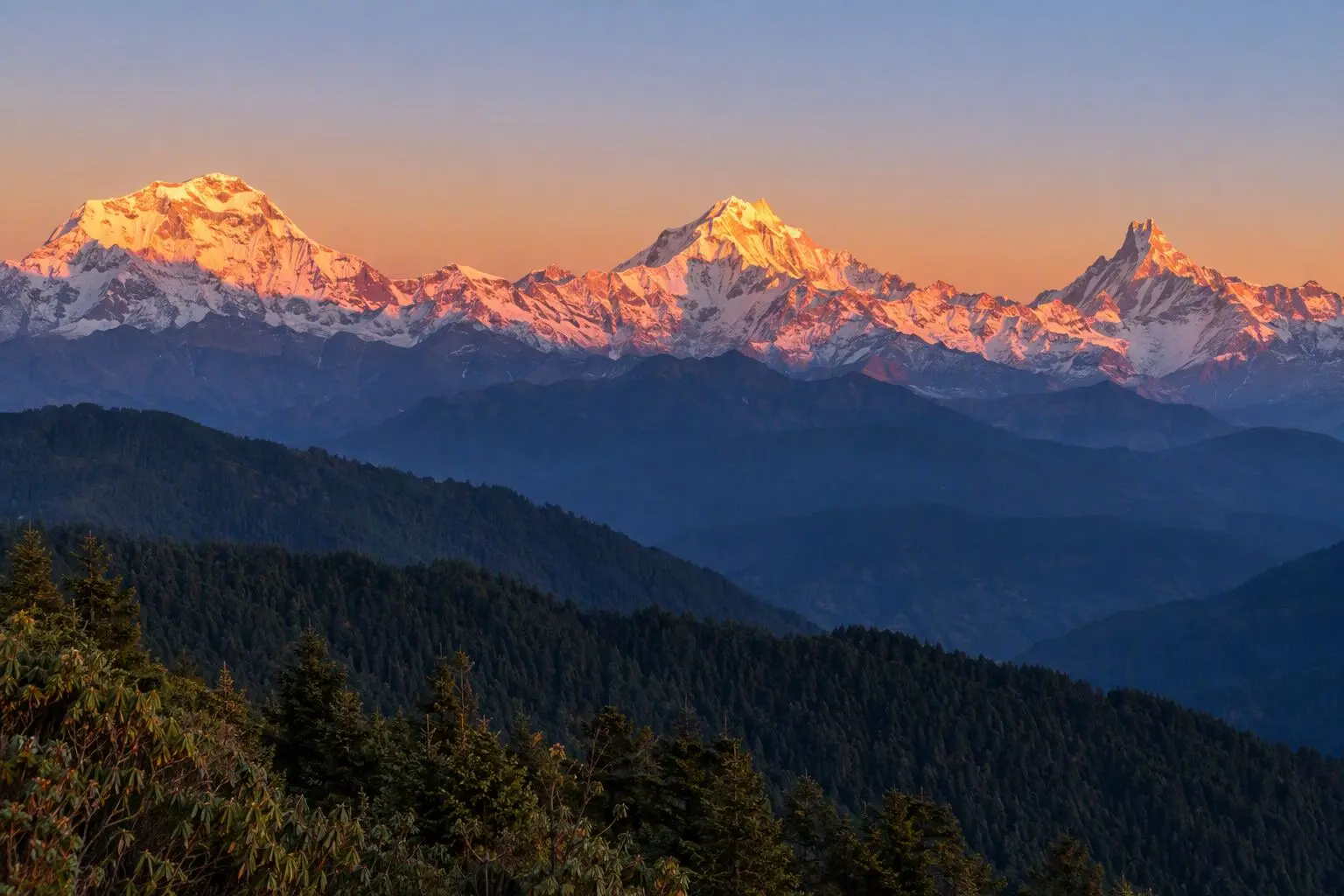
Sarangkot (1,592m) is the hilltop viewpoint northwest of Lakeside that offers one of the finest mountain panoramas accessible without trekking. On a clear morning, you see Dhaulagiri (8,167m), the full Annapurna range, Machhapuchhre (Fishtail, 6,993m), and Manaslu (8,163m): an arc that includes three 8,000m peaks, lit by sunrise alpenglow.
Getting there:
- Taxi: NPR 1,500-2,500 from Lakeside (30-40 minutes, pre-dawn departure required)
- Hike: A 1.5-2 hour uphill walk from the base of Sarangkot village. Good pre-trek warm-up
- Tour: Many hotels arrange Sarangkot sunrise tours (NPR 1,500-2,500 per person including transport)
Timing: Leave Lakeside by 5:00-5:30 AM to reach the viewpoint before sunrise (time varies seasonally). The mountain views are best from October through March when skies are clearest. Monsoon and late spring mornings are often cloudy.
Sarangkot Sunset Alternative
Paragliding
Pokhara is one of the world's premier paragliding destinations, and tandem flights launching from Sarangkot ridge are available to anyone regardless of experience. The standard 30-minute flight passes over Phewa Lake with the Annapurna range as a backdrop, landing on the Lakeside waterfront.
| Option | Cost | Duration | Altitude |
|---|---|---|---|
| Standard tandem flight | $70-90 | 25-30 min | 1,500m above lake |
| High flight (cross-country) | $120-160 | 45-60 min | Higher altitude, thermal riding |
| Acro tandem (aerobatic) | $100-130 | 20-25 min | Includes spins and spirals |
Important considerations:
- Book with a reputable operator that has paragliding-specific insurance and experienced pilots
- Morning flights (9-11 AM) typically have the calmest conditions
- Weight limits apply: most operators cap at 100-110 kg combined pilot-passenger weight
- GoPro footage and photos are typically included or available for $10-20
- Not recommended within 24 hours of arrival from high altitude (above 3,500m) as your body is still adjusting
Post-Trek Relaxation
Lakeside is ideal for post-trek recovery. After days of mountain exertion, these activities are popular with returning trekkers:
Massage and spa: Dozens of spa establishments line Lakeside, ranging from basic Nepali massage shops (NPR 1,000-2,000 per hour) to professional spa centers with trained therapists (NPR 3,000-6,000 per session). Hot stone massage and deep tissue are particularly popular with trekkers. See our massage and spa guide for recommendations.
Yoga classes: Several yoga studios offer drop-in classes (NPR 500-1,000) that are excellent for stretching sore muscles. Multi-day packages are available for trekkers spending several days in recovery.
Swimming pools: Several mid-range and upscale hotels have pools accessible to non-guests for a fee (NPR 300-800). Swimming is excellent low-impact recovery exercise.
Movie restaurants: A uniquely Pokhara phenomenon: several Lakeside restaurants screen movies on large screens while you eat. Returning trekkers often spend entire evenings in these places, watching films they missed while on the trail.
Reading and cafe time: Lakeside has several excellent bookshops with used English-language books, and the combination of a good novel, a lake-view cafe, and limitless coffee is a post-trek pleasure few trekkers resist.
Rest Day Before Flying Home
Shopping
Lakeside shopping falls into several categories:
Trekking gear: Gear shops in North Lakeside sell similar equipment to Thamel in Kathmandu, though the selection is slightly smaller. Prices are comparable. Good place to buy last-minute gear or replace items you forgot.
Souvenirs: Pashmina shawls, singing bowls, thangka paintings, prayer flags, and Nepali handicrafts are available throughout Lakeside. Quality and price vary enormously, so inspect carefully and bargain assertively.
Tibetan market: A permanent Tibetan market near the northern end of Lakeside sells jewelry, textiles, and Buddhist religious items. Bargain to 40-60% of the initial asking price.
Outdoor clothing: Many shops sell North Face, Rab, and other brand gear at discounted prices. Some items are genuine factory seconds; many are high-quality counterfeits. For trekking-critical gear, buy genuine items from established shops. For casual clothing, the copies are often acceptable quality.
Nightlife
Lakeside's nightlife is low-key compared to Kathmandu's Thamel but has enough variety for post-trek celebration.
Bars and pubs: Several bars in North Lakeside serve cold beer (Everest, Gorkha, and Nepal Ice are the popular local brands at NPR 400-600), cocktails, and play music until 10-11 PM. The atmosphere is social and international, with trekkers from dozens of countries swapping trail stories.
Live music: A few restaurants feature live music (typically acoustic covers) in the evenings during peak season. Quality varies, but the atmosphere is always fun.
Lakefront bars: The most pleasant evening drinking spots are the lakefront bars in Central Lakeside, where you can watch the last light fade from the mountains with a beer in hand.
Closing times: Pokhara's nightlife generally winds down by 10-11 PM. A few places stay open later, but Lakeside is not a late-night party zone. Most trekkers, exhausted from altitude and trail life, are happy with early evenings.
Money, ATMs, and Banking
ATMs
ATMs are abundant along the main Lakeside strip. The following banks have reliable ATMs:
- Nabil Bank: Multiple ATMs, widely considered the most reliable for international cards. Per-transaction withdrawal limit is typically NPR 35,000
- NIC Asia: Good availability, accepts most international Visa and Mastercard
- Everest Bank: Joint venture partner of Punjab National Bank (India), good for international withdrawals
- Himalayan Bank: Reliable but sometimes has queue issues
ATM tips:
- Withdraw NPR before heading to the mountains, as ATMs above Lakeside are rare or unreliable
- Maximum single withdrawal is usually NPR 35,000-50,000 (approximately $260-370)
- Fees vary by your home bank; expect NPR 500 per transaction from the Nepali bank plus whatever your bank charges
- Carry backup cash (USD or EUR) that can be exchanged at money changers in Lakeside
Money Exchange
Multiple money exchange shops in Lakeside offer competitive rates for major currencies (USD, EUR, GBP, AUD). Rates are slightly worse than Kathmandu but better than the airport. Compare 2-3 shops before exchanging, and count your money carefully before leaving the counter.
Cash for the Mountains
Getting Around Lakeside
Walking
Lakeside is best explored on foot. The main strip from north to south is approximately 2 km, easily walkable in 25-30 minutes without stops. The lakefront promenade sections are pleasant walking paths. Side streets (galis) are narrow and vehicle-free, making for safe pedestrian exploration.
Taxis
Taxis are available throughout Lakeside but are mainly used for destinations beyond the neighborhood:
| Destination | Cost | Time |
|---|---|---|
| Pokhara Airport | NPR 500-800 | 10-15 min |
| Tourist Bus Park | NPR 300-500 | 5-10 min |
| Sarangkot | NPR 1,500-2,500 | 30-40 min |
| Nayapul (ABC/Poon Hill trailhead) | NPR 3,000-5,000 | 1.5-2 hours |
| Davis Falls / Mahendra Cave | NPR 600-1,000 | 15-20 min |
| Begnas Lake | NPR 2,000-3,000 | 40-50 min |
Bicycle and Scooter Rental
Bicycles and scooters are available for rent throughout Lakeside:
- Bicycles: NPR 500-800 per day for basic bikes. Mountain bikes cost NPR 1,000-1,500. Good for lakeside rides and visiting nearby attractions
- Scooters: NPR 800-1,500 per day. An international driving license is technically required, though enforcement varies. Useful for reaching Sarangkot, Davis Falls, or the Peace Pagoda independently
Lakeside Road Improvements
Lakeside for Different Types of Trekkers
Pre-Trek Preparation (1-2 Days)
Use your pre-trek time in Lakeside efficiently:
- Day 1 morning: Obtain ACAP permit from the Tourism Office in Lakeside and your TIMS card through your registered trekking agency (bring passport photos and cash)
- Day 1 afternoon: Buy or rent any missing gear from Lakeside shops. Repack your bag.
- Day 1 evening: Briefing with guide/agency if using one. Lakefront dinner.
- Day 2 morning: Final preparations, withdraw cash for the trek
- Day 2 afternoon: Sarangkot sunset trip or Phewa Lake boat ride (gentle activity)
Post-Trek Recovery (1-2 Days)
Returning trekkers should:
- Day 1: Sleep in. Long brunch at a lakefront cafe. Massage or spa session. Easy lakeside walk. Early dinner and early bed.
- Day 2: Phewa Lake boat ride or Sarangkot sunrise. Shopping for souvenirs. Long lunch. Prepare for departure to Kathmandu or onward travel.
Extended Stay (3+ Days)
With more time, explore beyond Lakeside:
- Day trip to Begnas Lake: A quieter, less touristy lake 30 minutes east
- World Peace Pagoda: A Japanese-built Buddhist stupa on a ridge south of the lake with panoramic views (reached by boat + short hike or long walk)
- Davis Falls and Gupteshwar Cave: Natural attractions south of Lakeside (15-20 minute taxi ride)
- Day hike to Australian Camp: A 3-4 hour hike reaching 2,060m with Annapurna views, and a perfect warm-up for your trek