NPR 1,500-3,500 per hour
NPR 4,000-8,000 per session
NPR 1,200-3,000 per hour
NPR 100-200 entry fee
NPR 500-1,500 per session
Days 2-4 after finishing trek
10-15% or NPR 200-500
$30-100 USD including accommodation
Your body has spent days or weeks carrying a pack across mountain terrain, ascending and descending thousands of meters, sleeping on thin mattresses in cold tea houses, and breathing thin, dry air. Every muscle aches, your joints are stiff, and your back feels like it was used as a speed bump. A professional massage is not an indulgence after a Nepal trek -- it is a medical necessity that will dramatically accelerate your recovery.
Nepal offers exceptional massage and spa experiences at prices that would be unthinkable in Western countries. A one-hour deep tissue massage that would cost $100-150 in New York, London, or Sydney can be had for NPR 1,500-3,500 ($12-27 USD) in Kathmandu or Pokhara. This guide covers everything: the different types of massage available, the best spas in Kathmandu (Thamel, Boudha, and Patan) and Pokhara (Lakeside), what to expect, how much to pay, hot springs, yoga retreats, and how to get the most out of your recovery bodywork.
For the broader picture of post-trek physical recovery, read our comprehensive post-trek recovery guide.
Why Post-Trek Massage Matters
The Physical Case
Trekking in Nepal puts extraordinary strain on specific muscle groups and joints:
| Body Area | Trekking Impact | Massage Benefit |
|---|---|---|
| Calves | Constant uphill climbing causes severe tightness | Deep tissue work releases knots and improves blood flow |
| Quadriceps | Shock absorption during long downhill sections | Reduces inflammation and speeds recovery |
| Hamstrings | Tight from repetitive stepping motions | Lengthens shortened muscles, reduces lower back pain |
| Hip Flexors | Compressed from steep ascents and sitting on buses | Release prevents referred lower back and knee pain |
| Lower Back | Carrying a backpack for hours daily | Relieves compression and muscle spasm |
| Shoulders and Neck | Pack straps, hunched posture, cold exposure | Releases tension, reduces headaches |
| Feet | Pounding impact on rough terrain for days | Improves circulation, releases plantar fascia |
The Recovery Science
Massage is not just about feeling good. Research shows that post-exercise massage:
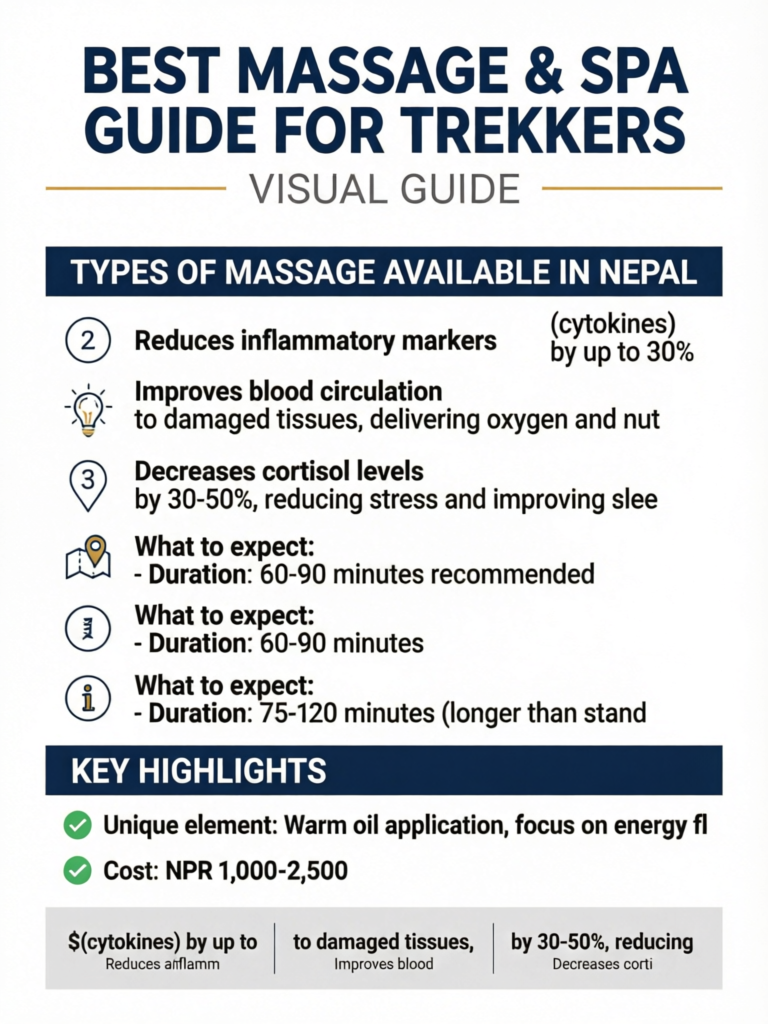
- Reduces inflammatory markers (cytokines) by up to 30%
- Increases mitochondrial biogenesis, accelerating cellular recovery
- Improves blood circulation to damaged tissues, delivering oxygen and nutrients
- Reduces delayed onset muscle soreness (DOMS) by up to 30%
- Decreases cortisol levels by 30-50%, reducing stress and improving sleep
- Increases serotonin and dopamine, improving mood during the post-trek adjustment period
When to Get a Massage
Days 1-2 post-trek: Light, gentle massage only. Your muscles are acutely inflamed and deep work can cause more damage. Swedish or light-pressure massage is appropriate.
Days 2-4 post-trek: The ideal window for deep tissue work. Acute inflammation has subsided but muscles are still tight and congested with metabolic waste. This is when you will get the most benefit.
Days 5-7 post-trek: Still beneficial, particularly for stubborn knots in calves, shoulders, and lower back. Your muscles are now in the repair phase.
Pro Tip
Types of Massage Available in Nepal
Deep Tissue Massage
Best for: Post-trek recovery, releasing specific muscle knots, chronic tightness in calves and quads.
Deep tissue massage uses firm pressure and slow strokes to reach deeper layers of muscle and fascia. After a trek, this is the most therapeutically effective option. The therapist will work on specific problem areas -- typically calves, quadriceps, IT band, lower back, and shoulders.
What to expect:
- Duration: 60-90 minutes recommended
- Pressure: Firm to intense (communicate with your therapist)
- Pain level: Some discomfort is normal; sharp pain is not
- Cost: NPR 1,500-4,000 in Kathmandu, NPR 1,200-3,000 in Pokhara
- After effects: You may feel sore for 24-48 hours after deep tissue work. This is normal.
Traditional Nepali Massage
Best for: Overall relaxation, cultural experience, improving circulation.
Traditional Nepali massage uses warm mustard oil or sesame oil and combines elements of Ayurvedic principles with techniques passed down through generations. The strokes tend to be long and rhythmic, with focus on energy channels (nadis) and pressure points (marma points).
What to expect:
- Duration: 60-90 minutes
- Pressure: Medium
- Unique element: Warm oil application, focus on energy flow
- Cost: NPR 1,000-2,500
- Cultural note: In traditional Nepali homes, oil massage (tel maalish) is a regular family practice, not a luxury
Ayurvedic Massage (Abhyanga)
Best for: Holistic recovery, stress relief, skin nourishment after high-altitude dryness.
Abhyanga is a traditional Ayurvedic full-body oil massage using warm herbal oils selected based on your dosha (body constitution). The techniques involve long, flowing strokes that follow the direction of the body's energy channels. In Nepal, Ayurvedic practices have been blended with local healing traditions for centuries.
What to expect:
- Duration: 75-120 minutes (longer than standard massage)
- Oil: Warm herbal oils (often sesame-based with medicinal herbs)
- Technique: Long, rhythmic strokes, gentle to medium pressure
- Cost: NPR 2,000-5,000
- Extras: Often includes Shirodhara (warm oil poured on forehead) for additional cost
Thai Massage
Best for: Improving flexibility, stretching tight muscles, those who prefer massage without oil.
Thai massage involves rhythmic pressing and stretching, done on a mat on the floor. The therapist uses their hands, knees, legs, and feet to move you through a series of yoga-like stretches. No oil is used, and you remain fully clothed. This can be excellent after trekking because it targets the stretching and flexibility deficits that develop during weeks of repetitive forward motion.
What to expect:
- Duration: 60-120 minutes
- Pressure: Can range from gentle to firm
- Unique element: Passive stretching, no oil, done clothed on a floor mat
- Cost: NPR 1,500-3,500
- Note: After a long trek, some Thai massage positions may be uncomfortable if your muscles are very tight. Communicate with the therapist.
Foot Reflexology
Best for: Targeted foot recovery after weeks of walking, those who want a lighter overall treatment.
After 10-21 days of trekking, your feet have taken an extraordinary beating. Reflexology focuses entirely on the feet, applying pressure to specific points that are believed to correspond to different body organs and systems. Regardless of the reflexology theory, the direct massage benefit to tired, compressed feet is undeniable.
What to expect:
- Duration: 30-60 minutes
- Focus: Feet, ankles, lower calves
- Pressure: Medium to firm on specific points
- Cost: NPR 800-2,000
- Benefit: Immediate relief for foot pain, improved circulation, deeply relaxing
Shirodhara
Best for: Deep relaxation, headache relief, insomnia, mental stress recovery.
Shirodhara involves a continuous stream of warm herbal oil poured gently over the forehead (the "third eye" area). It is deeply relaxing and is particularly beneficial for trekkers experiencing post-trek insomnia, headaches, or mental restlessness.
What to expect:
- Duration: 30-45 minutes (often combined with head and face massage)
- Cost: NPR 1,500-3,500 (standalone) or NPR 500-1,500 as add-on to full body massage
- Sensation: Deeply calming, often induces a meditative state or sleep
Combination Treatments for Trekkers
Many spas offer "trekker recovery packages" that combine deep tissue massage, foot reflexology, and hot stone therapy in a single 2-3 hour session. These packages typically cost NPR 3,000-6,000 and offer better value than booking treatments separately. Ask about trekker-specific packages when you book.
Best Spas in Kathmandu
Thamel Area
Thamel is where most trekkers stay, and the area is packed with massage and spa options. Quality varies enormously -- from excellent therapeutic bodywork to barely-trained operators running a tourist trap. Here are the reliable options:
1. Seeing Hands Nepal
- The highlight: Massage by trained visually impaired therapists who have developed extraordinary sensitivity to muscle tension through touch. This is not a gimmick -- the quality is genuinely excellent.
- Locations: Multiple in Thamel (original location on JP Road)
- Price: NPR 1,500-2,500 per hour
- Specialties: Deep tissue, Swedish, reflexology
- Why trekkers love it: Affordable, skilled therapists, convenient Thamel location
- Social impact: Provides meaningful employment for blind and visually impaired Nepalis
- Book ahead: Popular with trekkers; walk-ins possible but booking recommended during peak season
2. Shtrii Spa
- The highlight: Premium spa experience with well-trained therapists, clean facilities, and proper massage tables and rooms
- Location: Near Thamel, Lazimpat area
- Price: NPR 3,000-6,000 per session
- Specialties: Ayurvedic treatments, deep tissue, aromatherapy, facial treatments
- Why trekkers love it: Professional-grade experience at a fraction of Western prices
- Atmosphere: Quiet, clean, upscale -- a genuine escape from Thamel's chaos
3. Thamel Spa
- The highlight: Reliable mid-range option with multiple locations and consistent quality
- Location: Several locations throughout Thamel
- Price: NPR 2,000-4,000 per session
- Specialties: Full-body massage, hot stone therapy, aromatherapy
- Why trekkers love it: Easy to find, walk-in friendly, reasonable prices
4. Spa 1930
- The highlight: Located in a restored Rana-era palace building, combining heritage atmosphere with spa services
- Location: Kantipath, near Thamel
- Price: NPR 3,500-7,000 per session
- Specialties: Luxury treatments, couples massage, Ayurvedic packages
- Why trekkers love it: Beautiful setting, high-quality products, indulgent experience
5. Karma Spa
- The highlight: Popular backpacker-friendly option with affordable rates and decent quality
- Location: Central Thamel
- Price: NPR 1,200-2,500 per session
- Specialties: Thai massage, deep tissue, foot reflexology
- Why trekkers love it: Budget-friendly without cutting corners on technique
Pro Tip
Boudha (Boudhanath) Area
The area around Boudhanath Stupa has a quieter, more spiritual atmosphere than Thamel, and several excellent spas cater to the neighborhood's mix of locals, monks, and tourists.
1. Boudha Wellness Spa
- Location: Near Boudhanath Stupa
- Price: NPR 2,000-4,000
- Specialty: Tibetan healing massage, herbal compress therapy
- Atmosphere: Peaceful, Tibetan-influenced decor, away from tourist crowds
2. Shechen Healing Center
- Location: Near Shechen Monastery, Boudha
- Price: NPR 1,500-3,500
- Specialty: Traditional Tibetan medicine consultation plus therapeutic massage
- Unique element: The center combines traditional Tibetan medicine (Sowa Rigpa) with massage therapy
Patan Area
Patan (Lalitpur) is quieter than Kathmandu and offers some excellent spa options in a more relaxed setting.
1. Patan Wellness Center
- Location: Near Patan Durbar Square
- Price: NPR 2,000-4,500
- Specialty: Ayurvedic treatments, meditation-massage combinations
- Why go here: Combine a cultural day in Patan with a spa visit
2. Dwarika's Pancha Kosha Himalayan Spa
- Location: Dwarika's Hotel, Battisputali (between Kathmandu and Patan)
- Price: NPR 8,000-20,000+ per treatment
- Specialty: Ultra-luxury spa using Himalayan herbs and minerals, five-element healing philosophy
- Why go here: If you want to splurge on the best spa experience in Nepal, this is it. The treatments use ingredients sourced from the Himalayan region, and the facilities are world-class.
Avoiding Low-Quality Massage Parlors
Thamel has many massage shops that advertise aggressively on the street. While some are legitimate, others employ poorly trained therapists who can actually cause injury through incorrect technique. Red flags include aggressive street touts, extremely low prices (below NPR 800 per hour), dirty or cramped facilities, and therapists who do not ask about injuries or problem areas before starting. Always choose established spas with reviews from other trekkers.
Best Spas in Pokhara
Many trekkers end their Annapurna region treks in Pokhara rather than Kathmandu, and the lakeside town offers excellent spa options in a more relaxed setting. See our Pokhara guide for trekkers for comprehensive city information.
Lakeside (Baidam) Spas
1. Jiva Cafe and Spa
- Location: Lakeside, Pokhara
- Price: NPR 1,500-3,500
- Specialty: Deep tissue, aromatherapy, Ayurvedic massage
- Why trekkers love it: Excellent quality, lakeside atmosphere, good cafe attached
2. Seeing Hands Pokhara
- Location: Lakeside, Pokhara
- Price: NPR 1,200-2,200
- Specialty: Same concept as Kathmandu -- skilled blind therapists
- Why trekkers love it: Same excellent quality as the Kathmandu locations
3. Middle Path Spa
- Location: Lakeside North, Pokhara
- Price: NPR 2,000-4,500
- Specialty: Combination packages, Tibetan singing bowl therapy, hot stone massage
- Why trekkers love it: Comprehensive trekker recovery packages
4. Pokhara Day Spa
- Location: Central Lakeside
- Price: NPR 1,800-4,000
- Specialty: Swedish, Thai, and sports massage
- Why trekkers love it: Professional therapists with sports massage training
5. Fishtail Spa (Temple Tree Resort)
- Location: Gaurighat, Lakeside
- Price: NPR 4,000-10,000
- Specialty: Luxury spa treatments, couples packages, garden setting
- Why trekkers love it: Resort-quality experience if you want to treat yourself
Spa Price Comparison: Kathmandu vs. Pokhara
| Treatment Type | Kathmandu (NPR) | Pokhara (NPR) | Notes |
|---|---|---|---|
| 1-hour Swedish Massage | 1,500-3,000 | 1,200-2,500 | Pokhara slightly cheaper |
| 1-hour Deep Tissue | 2,000-4,000 | 1,500-3,500 | Quality comparable |
| 90-min Ayurvedic | 2,500-5,000 | 2,000-4,000 | Wider selection in KTM |
| Foot Reflexology (45 min) | 1,000-2,000 | 800-1,500 | Great value in Pokhara |
| Hot Stone Massage | 2,500-5,000 | 2,000-4,000 | Similar quality both cities |
| Trekker Recovery Package | 3,500-7,000 | 3,000-6,000 | 2-3 hours combined |
| Luxury Full Day Spa | 8,000-20,000 | 5,000-12,000 | More options in KTM |
Pro Tip
What to Expect During Your Session
Before the Massage
- Health questionnaire: Reputable spas will ask about injuries, medical conditions, allergies, and problem areas. Be honest. Mention your trek, how many days, any specific pain points.
- Communication: Tell your therapist exactly where hurts most. For trekkers, this is typically calves, quadriceps, lower back, shoulders, and feet.
- Pressure preference: Specify whether you want light, medium, or firm pressure. You can adjust during the session.
- Oil preference: If you have sensitive skin or oil allergies, mention this. Most Nepali massages use oil.
During the Massage
- Speak up: If the pressure is too much or too little, say so immediately. "Dherai" means "too much" in Nepali. "Thik chha" means "that's fine."
- Focus areas: Ask the therapist to spend extra time on your worst areas. A 60-minute massage does not have equal time for every body part.
- Breathing: Deep, slow breathing enhances the massage benefit and helps you tolerate deeper pressure.
- Hydration: The spa should offer water or tea before and after. Accept it -- massage releases metabolic waste from muscles that needs to be flushed out.
After the Massage
- Rest: Sit or lie quietly for 10-15 minutes after your session. Do not jump up and rush out.
- Hydrate: Drink at least 2-3 glasses of water in the hours following your massage.
- Soreness: Some muscle soreness for 24-48 hours after deep tissue work is normal. If you experience sharp pain or bruising, the pressure was too intense.
- Avoid: No heavy exercise, alcohol, or heavy meals for 2-3 hours after massage.
Tipping Guide
Tipping practices for spa and massage services in Nepal:
| Service Level | Tipping Guideline | Amount |
|---|---|---|
| Basic massage (NPR 1,000-2,000) | 10-15% | NPR 100-300 |
| Mid-range spa (NPR 2,000-4,000) | 10-15% | NPR 200-500 |
| Premium spa (NPR 4,000+) | 10% or round up | NPR 400-1,000 |
| Exceptional service | 15-20% | Based on total |
Important notes on tipping:
- Tips in Nepal are mandatory since April 2023 but are greatly appreciated. Spa therapists in Nepal earn modest wages.
- Always tip in cash, directly to your therapist, not through the front desk (unless they specifically request it be added to the bill).
- If you had a particularly good experience, NPR 500 extra is a generous tip that will be remembered and appreciated.
Supporting Ethical Spa Businesses
When choosing a spa, consider businesses that employ and train disadvantaged populations. Seeing Hands Nepal employs blind therapists, providing meaningful careers. Several spas in Pokhara employ women from rural communities who have been trained in massage therapy. Your spa spending can be a form of social impact if directed to the right businesses.
Hot Springs Near Pokhara and Trekking Routes
Nepal has natural hot springs (tatopani, literally "hot water" in Nepali) located along several trekking routes and near Pokhara. These geothermally heated pools have been used for centuries for healing and relaxation.
Tatopani Hot Springs (Myagdi District)
The most famous hot springs in Nepal, located on the Annapurna Circuit route near the village of Tatopani at approximately 1,200 meters elevation.
- Location: Along the Kali Gandaki River, between Ghasa and Beni on the Annapurna Circuit
- Water temperature: 38-42 degrees Celsius (100-108 degrees Fahrenheit)
- Entry fee: NPR 100-200
- Facilities: Basic changing areas, concrete pools fed by natural springs
- Best for: Trekkers finishing or taking a rest day on the Annapurna Circuit
- Mineral content: Sulphur and iron -- believed to have therapeutic properties for muscle and joint pain
Jhinu Danda Hot Springs (Annapurna Region)
Located on the descent from Annapurna Base Camp, accessible from the village of Jhinu Danda.
- Location: Along the Modi Khola River, on the ABC trek route
- Water temperature: 35-40 degrees Celsius
- Entry fee: NPR 100
- Facilities: Basic natural pools beside the river
- Best for: Trekkers returning from Annapurna Base Camp
- Note: Requires a steep 20-minute descent from Jhinu village, and the same climb back up. After a full trek, your knees may not appreciate this.
Singha Tatopani (Near Pokhara)
Lesser-known hot springs closer to Pokhara, accessible as a day trip.
- Location: Approximately 1 hour from Pokhara by local transport
- Water temperature: 35-38 degrees Celsius
- Entry fee: NPR 50-100
- Facilities: Basic
- Best for: Quick hot spring experience without a long journey
Pro Tip
Yoga Retreats for Post-Trek Recovery
Nepal is a premier yoga destination, and combining post-trek recovery with a yoga retreat can be a transformative experience.
Kathmandu Area Yoga
Pranamaya Yoga Studio
- Location: Thamel, Kathmandu
- Drop-in classes: NPR 800-1,200 per class
- Style: Hatha, Vinyasa, Restorative, Yin
- Best for trekkers: Restorative and Yin classes for post-trek recovery
- Schedule: Multiple classes daily
Himalayan Yoga Academy
- Location: Nagarjun, outskirts of Kathmandu
- Retreats: 3-day to 30-day programs
- Cost: $30-60 per day (including accommodation, meals, and yoga)
- Best for: Trekkers wanting immersive recovery experience
Kopan Monastery
- Location: Hilltop north of Boudhanath
- Meditation courses: 1-day to 1-month programs
- Cost: $15-30 per day (dana/donation-based for shorter visits)
- Best for: Meditation rather than physical yoga; excellent for post-trek mental recovery
Pokhara Area Yoga
Pokhara Yoga School
- Location: Lakeside, Pokhara
- Drop-in classes: NPR 500-1,000
- Retreats: 3-7 day programs from $200-500
- Best for: Combining lake views with yoga practice
Sadhana Yoga Retreat
- Location: Lakeside area, Pokhara
- Retreats: Multi-day programs with accommodation
- Cost: $40-80 per day
- Best for: Immersive retreat experience with mountain views
Begnas Lake Yoga Retreat
- Location: Begnas Lake, 30 minutes from Pokhara
- Retreats: 3-14 day programs
- Cost: $50-100 per day
- Best for: Ultimate tranquility away from tourist areas
Best Yoga Styles for Post-Trek Recovery
| Yoga Style | Intensity | Post-Trek Benefit | Recommended Timing |
|---|---|---|---|
| Restorative Yoga | Very gentle | Deep relaxation, nervous system reset | Days 1-3 post-trek |
| Yin Yoga | Gentle | Deep stretching, fascia release | Days 2-5 post-trek |
| Hatha Yoga | Moderate | Balanced strength and flexibility | Days 3-7 post-trek |
| Vinyasa Flow | Moderate-High | Cardiovascular, full-body movement | Week 2+ post-trek |
| Ashtanga | High | Strength building, discipline | Week 3+ post-trek |
Yoga Caution After Trekking
Avoid vigorous yoga styles (Power Yoga, Ashtanga, intense Vinyasa) for at least a week after completing a major trek. Your muscles are fatigued and prone to injury from overstretching. Start with Restorative or Yin yoga, which focuses on gentle, supported stretching and relaxation. Your body needs recovery, not another intense workout.
Creating a Post-Trek Recovery Schedule
Here is a recommended schedule combining massage, hot springs, and yoga for optimal post-trek recovery:
Days 1-2: Gentle Recovery
- Day 1: Rest, hydrate, gentle walk. Optional light Swedish massage or foot reflexology.
- Day 2: First deep tissue massage (60-90 minutes). Focus on calves, quads, and lower back. Gentle stretching in the evening.
Days 3-4: Active Recovery
- Day 3: Restorative or Yin yoga class (60 minutes). Short sightseeing in Kathmandu or Pokhara.
- Day 4: Second massage session, focusing on remaining problem areas. Longer walks and light activity.
Days 5-7: Building Back
- Day 5: More active yoga class (Hatha). Extended sightseeing or easy hiking.
- Day 6: Optional third massage. Hot springs visit if near Pokhara.
- Day 7: Return to moderate physical activity. Your body should be feeling significantly better.
Comparing Massage Traditions: What is Right for You?
| Factor | Deep Tissue | Nepali Traditional | Ayurvedic | Thai | Reflexology |
|---|---|---|---|---|---|
| Oil Used | Yes (moderate) | Yes (heavy, warm) | Yes (herbal, warm) | No | Yes (light) |
| Pressure | Firm to intense | Medium | Gentle to medium | Variable | Firm on points |
| Clothing | Undressed, draped | Undressed, draped | Undressed, draped | Fully clothed | Bare feet only |
| Duration | 60-90 min | 60-90 min | 75-120 min | 60-120 min | 30-60 min |
| Best For | Specific pain relief | General recovery | Holistic healing | Flexibility | Foot recovery |
| Post-Trek Rating | Excellent | Very good | Very good | Good | Good (targeted) |
| Pain Level | Moderate | Low | Low | Low to moderate | Moderate |
| Cost Range (NPR) | 1,500-4,000 | 1,000-2,500 | 2,000-5,000 | 1,500-3,500 | 800-2,000 |
Booking and Practical Tips
How to Book
- Walk-in: Most spas accept walk-ins, but during peak trekking season (October-November), popular places like Seeing Hands can be booked out. Walk-ins work best for mid-range and budget spas.
- Phone/WhatsApp: Call ahead for premium spas or during peak season. Most spas have WhatsApp numbers on their signs or Google listings.
- Hotel concierge: Your hotel can book spa appointments and often has arrangements with specific spas.
- Online: Google Maps reviews are the most reliable source for current spa quality and pricing in Nepal.
What to Bring
- Nothing special is needed -- spas provide robes, towels, and slippers
- Bring your own flip-flops if you prefer
- Leave valuables at your hotel
- Bring cash (many spas do not accept cards) plus tip money
Red Flags to Watch For
- Therapists who do not wash hands before starting
- Dirty sheets or towels
- No health intake questionnaire
- Pressure to purchase expensive packages
- Staff who do not speak enough English (or your language) for you to communicate comfort level and problem areas
- Very aggressive street solicitation
Pro Tip
Frequently Asked Questions
How much should I expect to pay for a massage in Kathmandu?
A standard one-hour massage in Thamel ranges from NPR 1,500-3,500 ($12-27 USD). Premium spas charge NPR 4,000-8,000 ($31-62 USD). Ultra-luxury spa experiences at hotels like Dwarika's can exceed NPR 15,000 ($115+ USD). Even at the high end, prices are a fraction of equivalent services in Western countries.
Is Seeing Hands Nepal really good, or is it just a novelty?
Seeing Hands Nepal is genuinely excellent. The blind and visually impaired therapists undergo rigorous training and develop extraordinary tactile sensitivity. They are often better than sighted therapists at locating and releasing muscle knots because they rely entirely on touch. Multiple independent review sources consistently rate them among the best massage providers in Nepal.
Should I get a massage if I have blisters or sunburn?
Yes, but inform your therapist about the specific areas to avoid. They can work around blisters, sunburned skin, and other sensitive areas. Foot reflexology should be avoided if you have open blisters on the soles of your feet, but a full-body massage that avoids the feet is fine.
How many massages should I get during my post-trek recovery?
Two to three sessions over a week is ideal. The first session (day 2-3) addresses the most acute muscle tightness. The second session (day 4-5) works deeper into residual problem areas. A third session (day 6-7) is a maintenance session that finishes the recovery process. Most trekkers find that two sessions make a noticeable difference.
Is it okay to get a massage if I have altitude-related swelling?
Gentle massage can actually help reduce mild peripheral edema (swelling in hands, feet, and ankles) that is common after returning from altitude. However, if you have significant swelling accompanied by breathlessness, chest pain, or confusion, seek medical attention immediately -- these could be signs of serious altitude illness. See our altitude after-effects guide for more information.
What is the difference between a spa in Thamel and one in Pokhara?
Thamel spas tend to be more concentrated and competitive, with a wider range of options. Pokhara Lakeside spas are generally more relaxed in atmosphere and slightly cheaper, with a more laid-back vibe that matches the town's character. Quality is comparable in both cities. If you are finishing an Annapurna region trek in Pokhara, there is no need to wait until Kathmandu for a massage.
Are the hot springs worth visiting?
Absolutely, especially if they are on or near your trekking route. The natural mineral water at Tatopani and Jhinu Danda has genuine therapeutic benefits for sore muscles and joints. The experience of soaking in a natural hot spring surrounded by Himalayan scenery is also psychologically restorative. If you need to make a special trip to reach hot springs, it depends on how much time you have -- but most trekkers who visit them rank the experience highly.
Can I get a couples massage in Nepal?
Yes. Most mid-range and premium spas offer couples massage options with side-by-side treatment rooms. Prices are typically double the individual rate. Shtrii Spa, Spa 1930, and the Dwarika's spa in Kathmandu all offer couples treatments. In Pokhara, the Temple Tree Resort spa is a popular couples option.
Is it safe to get a massage with a back injury?
If you have developed a back injury during your trek, a skilled massage therapist can help -- but communication is critical. Inform the therapist about the specific location and nature of your pain. Ask for a therapist experienced with sports injuries. If your pain is severe, accompanied by numbness or tingling in your legs, or if you suspect a disc injury, see a doctor before getting a massage.
Do I need to book massage appointments in advance?
During peak trekking season (October-November and March-April), popular spas like Seeing Hands Nepal can be fully booked by mid-morning. Booking a day ahead is recommended for specific spas during these months. During off-peak seasons, walk-ins are usually fine. Premium spas should always be booked in advance regardless of season.
What should I wear to a spa?
Wear comfortable, casual clothing. You will change into a robe or be draped with towels during the massage. For Thai massage, wear loose, comfortable clothing (long pants and a t-shirt) as you remain clothed throughout. Flip-flops or sandals are convenient footwear.
Can I request a male or female therapist?
Yes, and this is a normal request that any reputable spa will accommodate. Simply state your preference when booking. In Nepal, female therapists are available at all established spas, and male therapists are common as well. Solo female travelers should feel comfortable requesting a female therapist if preferred.