Off-Peak & Shoulder Seasons
Discover Nepal's trails when the crowds disappear. Winter clarity, monsoon rain-shadow magic, and shoulder-month savings — with the right preparation, off-peak trekking delivers experiences peak season simply cannot match.
Beyond the crowds
Trekking Nepal Outside Peak Season
The case for off-peak trekking in Nepal is stronger than most guides acknowledge. During October and November — Nepal's peak season — costs inflate across every category: domestic flights to Lukla or Jomsom book out weeks in advance at premium prices, teahouses on the Annapurna Circuit charge 30–50% more than their off-season rates, and guide and porter day rates reflect intense demand. Off-peak trekkers pay roughly 60% less overall when combining cheaper international flights, discounted accommodation, negotiable guiding fees, and last-minute domestic flight availability. The financial savings are compelling, but the experiential argument is equally strong. Trails that see hundreds of trekkers daily in October become genuinely solitary walks in January or July. Teahouse owners have time to talk, village life unfolds without the performance of tourist season, and high campsites that are crowded tent cities in autumn become private wilderness. The trade-off is real — weather is less predictable, some infrastructure reduces, and preparation requirements increase — but for trekkers willing to plan carefully, off-peak Nepal rewards far beyond its reputation.
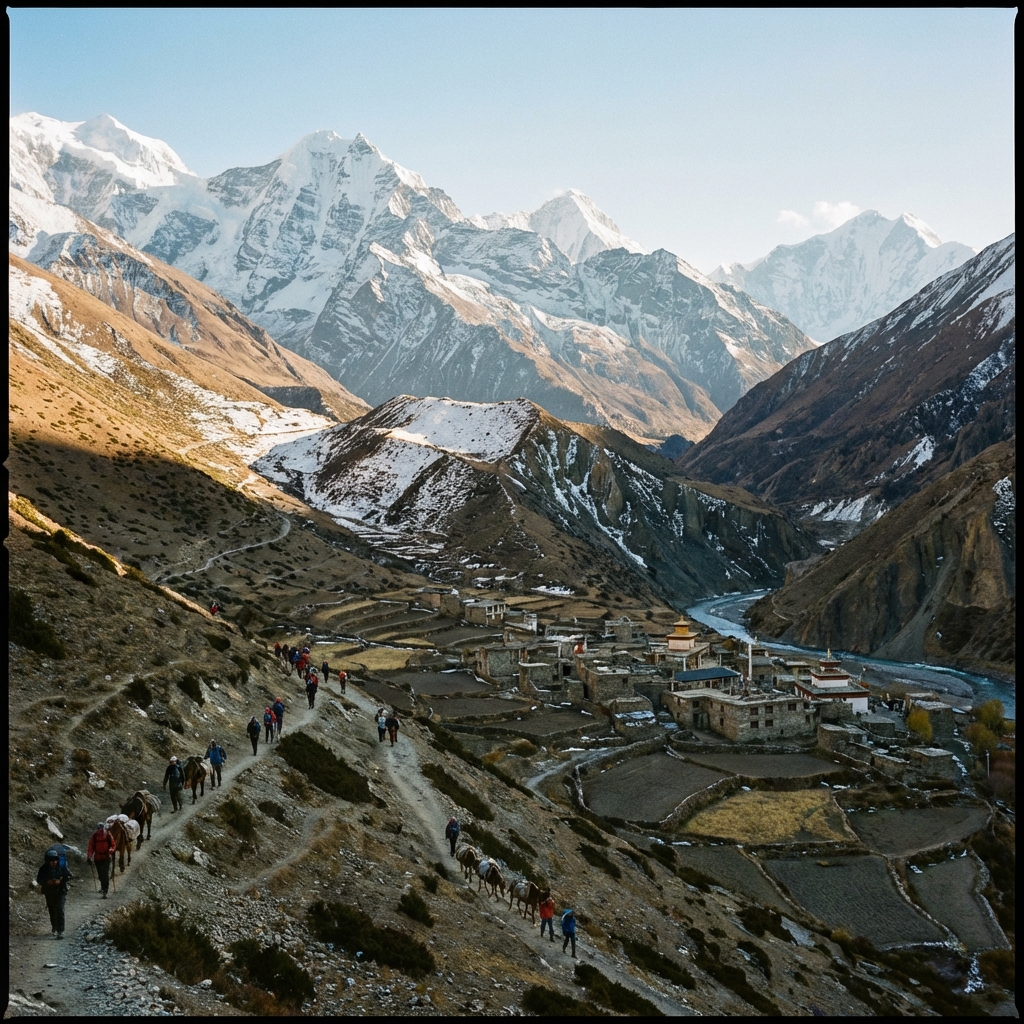
Winter trekking — December, January, and February — offers cold clarity at lower elevations that produces some of Nepal's most spectacular mountain photography. Below 3,500m, temperatures are cold but manageable for properly equipped trekkers, and the absence of haze that accumulates in spring makes mountain views razor-sharp on clear days. The serious limitation is high passes: anything above 5,000m including Thorong La (5,416m) and Larkya La (5,160m) accumulates snow that renders crossing dangerous or impossible. Winter trekking works best on routes that top out below 4,500m — Poon Hill (3,210m), Mardi Himal (4,500m), lower Annapurna treks, and the Ghorepani-Tadapani circuit. Short days are a genuine factor: sunrise around 6:45am and sunset around 5:15pm mean only about 10 hours of hiking daylight. Night temperatures at 3,000m regularly drop to -5°C to -10°C, requiring a quality four-season sleeping bag. Plan shorter daily distances than in autumn, start hiking early, and arrive at your teahouse by mid-afternoon to settle before cold sets in.
Monsoon trekking from June through August requires a geography lesson to plan correctly. Nepal's lowland and south-facing trails receive 300–600mm of monthly rainfall during peak monsoon — trail conditions deteriorate rapidly, landslides block major routes, and leeches are active on vegetation below 3,000m. But north of the main Himalayan range, the rain shadow transforms the season entirely. Upper Mustang, Dolpo, and upper Manaslu sit behind the Himalayan barrier that blocks monsoon clouds before they reach these trans-Himalayan valleys. These areas receive minimal rainfall, warm temperatures, and clear high-altitude skies even as southern Nepal drowns in seasonal rains. The contrast is dramatic: Upper Mustang in July is dryer than London in October. Lush green landscapes fill lower valleys below the rain shadow, dramatic cloud formations and waterfalls are at their peak on south-facing slopes, and the entire monsoon experience becomes a study in Himalayan microclimates. Route selection determines everything about monsoon trekking.
Shoulder months — May and September — offer a middle path between peak crowds and off-season challenges. May brings pre-monsoon heat at low elevations (30°C+ in valley floors) and building haze below 3,000m that obscures mountain views. Above 4,000m, conditions remain viable and rhododendron blooms at mid-elevation make lower trails spectacular. September runs the opposite trajectory: the monsoon is retreating, trail conditions improve weekly, and by late September (20th–30th) many routes deliver October-quality weather with 25–40% lower costs. Late September is arguably the best value month in Nepal's trekking calendar — close to peak conditions at significantly reduced prices. Both shoulder months require flexibility in your itinerary and a higher weather tolerance than October or November, but experienced trekkers frequently prefer them specifically because they combine reasonable conditions with dramatically reduced crowds and costs.
Safety considerations for off-peak trekking differ by season. In winter, cold at altitude slows acclimatization and increases hypothermia risk — more conservative elevation gain schedules are essential, and rest days at altitude need to be genuinely restful rather than cold and uncomfortable. Monsoon brings trail washouts and landslides as primary hazards; check the Besisahar-Chame road and other access routes before committing, as a single landslide can close a valley for days. Helicopter rescue — the safety net many trekkers rely on — is significantly less available during monsoon when cloud cover grounds aircraft for extended periods. The reduced trekker density in all off-season periods means fewer people who can help in an emergency. Communication gaps in remote areas are amplified when teahouse staff is minimal and satellite phone coverage is your only option. Travel insurance is non-negotiable for off-peak trekking and must explicitly cover monsoon and winter conditions, high-altitude evacuation, and the specific region you are trekking — read the policy carefully before departure.
Matching specific routes to each off-peak window makes the difference between a frustrating experience and an exceptional one. For winter (December–February): Poon Hill at 3,210m is the benchmark recommendation — short, accessible from Pokhara, and offering sunrise mountain views on clear winter mornings; Mardi Himal base camp at 4,500m is achievable with appropriate gear; Helambu near Kathmandu suits day-trip or overnight winter trekkers. For monsoon (June–August): Upper Mustang rates 10 out of 10 in monsoon and stands as the definitive rain shadow trek; Dolpo offers a remote and culturally rich alternative; Nar Phu Valley provides restricted-area authenticity with minimal rainfall. For shoulder months (May and September): most standard routes — Annapurna Circuit, Everest Base Camp, Manaslu Circuit — work with weather flexibility and buffer days built into the schedule. Avoid high passes in deep winter and monsoon-exposed valleys June through August.
Gear requirements change meaningfully for off-peak trekking compared to the standard October–November kit list. Winter trekkers need a four-season sleeping bag rated to -20°C, a quality insulated down or synthetic jacket, hand warmers and toe warmers for pre-dawn starts, thermal base layers (merino or synthetic, never cotton), and hot water bottles to fill at teahouses for sleeping bag warmth. Monsoon trekkers need Gore-Tex or equivalent quality rain gear that will hold up through weeks of sustained wet conditions rather than occasional showers, gaiters to manage leech country below 3,000m, quick-dry synthetic clothing for everything, waterproof bag liners inside your pack, and in remote areas a lightweight tent as backup for route flexibility. All off-peak trekkers benefit from a flexible itinerary with genuine weather buffer days (not nominal ones that cannot actually be used), a satellite communicator for emergencies when other trekkers are not around to relay messages, and a headlamp with spare batteries for navigating short winter days or pre-dawn monsoon starts before rain builds.
By the numbers
Off-Peak Season at a Glance
8 months
Off-Peak Months
Jan-Feb, May-Sep, Dec
30–50%
Cost Savings
vs peak season prices
Low
Trail Crowds
often solo on trails
Extra prep
Requires
weather gear, flexible plans
Off-Peak Season Guides
Detailed guides for trekking Nepal in winter, monsoon, and shoulder months — route recommendations, safety advice, gear lists, and real cost breakdowns.
Good to know
Frequently Asked Questions
Is it safe to trek in Nepal during the monsoon?
Trekking during the monsoon is safe in rain shadow regions — Upper Mustang, Dolpo, and upper Manaslu sit north of the Himalayan rain barrier and receive minimal rainfall even at the height of monsoon season. These areas are genuinely enjoyable June through August. By contrast, trekking on lowland or south-facing trails during monsoon carries real risk: landslides block paths, rivers swell dangerously, and leeches are active below 3,000m. Route selection is the critical variable. If you choose an established rain shadow route, stay alert to daily trail conditions, avoid river crossings during heavy rain, and carry proper rain gear, the risks are manageable. Monsoon trekking is best suited to experienced trekkers with flexibility built into their itinerary. Always check trail status through your agency or recent trekker reports before committing to a route.
Which Nepal treks are best in winter?
Poon Hill (3,210m) is the winter champion — short approach, relatively low altitude, and sunrise mountain views that rival anything in Nepal. It is feasible December through February for fit trekkers with appropriate cold-weather gear. Mardi Himal to 4,500m works in winter with a good sleeping bag and layering system. Helambu near Kathmandu offers easy access and low-altitude trails suitable for winter. The lower Everest trail to Namche Bazaar (3,440m) is feasible if you are prepared for cold nights. Anything above 5,000m should be avoided December through February unless you are highly experienced in alpine conditions. High passes including Thorong La, Larkya La, and Cho La accumulate snow that makes crossing dangerous or impossible. Stick to routes that top out below 4,500m for a comfortable winter trek.
How much cheaper is off-peak trekking compared to peak season?
Off-peak savings are substantial across every cost category. Teahouse accommodation prices drop 20–30% compared to October–November peak rates, and you can negotiate further in quieter areas. Domestic flights — Kathmandu to Lukla, Pokhara to Jomsom — are 30–40% cheaper outside peak season and available last-minute rather than requiring weeks of advance booking. Guide and porter day rates are 20–30% negotiable when demand is low. International flights to Kathmandu from most origins are also significantly cheaper outside the October–November peak window. Combined, total trip costs for a 2-week off-peak trek run 30–50% lower than an equivalent peak-season trek. Budget trekkers can realistically save $500–1,000 on a two-week Himalayan trip by choosing off-peak timing, with the main trade-off being weather unpredictability rather than any reduction in the quality of the trekking experience itself.
Can I cross high passes (above 5000m) in winter?
Generally no — high passes above 5,000m are not considered standard trekking terrain in winter. Thorong La (5,416m) on the Annapurna Circuit, Larkya La (5,160m) on the Manaslu Circuit, and Cho La (5,420m) on the Everest Three Passes route all accumulate heavy snow from December through February. The passes may be physically blocked or present extreme avalanche and hypothermia risk. Some experienced mountaineers with full alpine gear, local guide knowledge, and proper acclimatization attempt these crossings in winter, but this is well outside the scope of standard trekking and not something casual trekkers should attempt. If a high pass is on your bucket list, plan for spring (April–May) or autumn (late September–November) when conditions are predictable and rescue services are readily available. Never attempt a 5,000m+ pass in winter without verifying current conditions through local operators.
What is the rain shadow effect and which treks benefit from it?
The rain shadow effect occurs when the main Himalayan range blocks moisture-laden monsoon clouds from the Indian Ocean. As clouds rise over the southern foothills, they release their rain before reaching the high valleys and trans-Himalayan regions to the north. Regions sitting north of the main range receive dramatically less rainfall — sometimes ten times less than south-facing valleys at the same time of year. Upper Mustang, with its Tibetan plateau landscape, receives almost no monsoon rainfall and is widely regarded as the premier monsoon trek in Nepal. Dolpo, Manang, upper Tsum Valley, and Nar Phu Valley all benefit from similar protection. These regions are actually at their best during monsoon: warm temperatures, clear high-altitude skies, green lower valleys visible below the cloud line, and essentially no tourist crowds. If you are planning a June–August trek, a rain shadow route transforms the season from a liability into an asset.
Do teahouses stay open during the off-season?
On well-travelled routes — the main Annapurna Circuit, the Everest Base Camp trail, and the Langtang Valley — most teahouses remain open year-round, though with reduced staff and simplified menus. You will not go hungry, but expect fewer menu options and slower service. The situation changes on remote routes. Upper Manaslu lodges often close entirely December through February when trekker numbers drop to near zero. Some Kanchenjunga stops reduce operations significantly during monsoon. Availability in Dolpo and Tsum Valley depends heavily on the specific lodge owner's decision that season. Before any off-peak trek on a remote route, confirm teahouse availability through your agency or through recent online trek reports from other trekkers who completed the route within the past few weeks. Always carry two to three days of emergency food supplies as backup regardless of confirmed availability — off-season logistics are less predictable than peak-season infrastructure.