
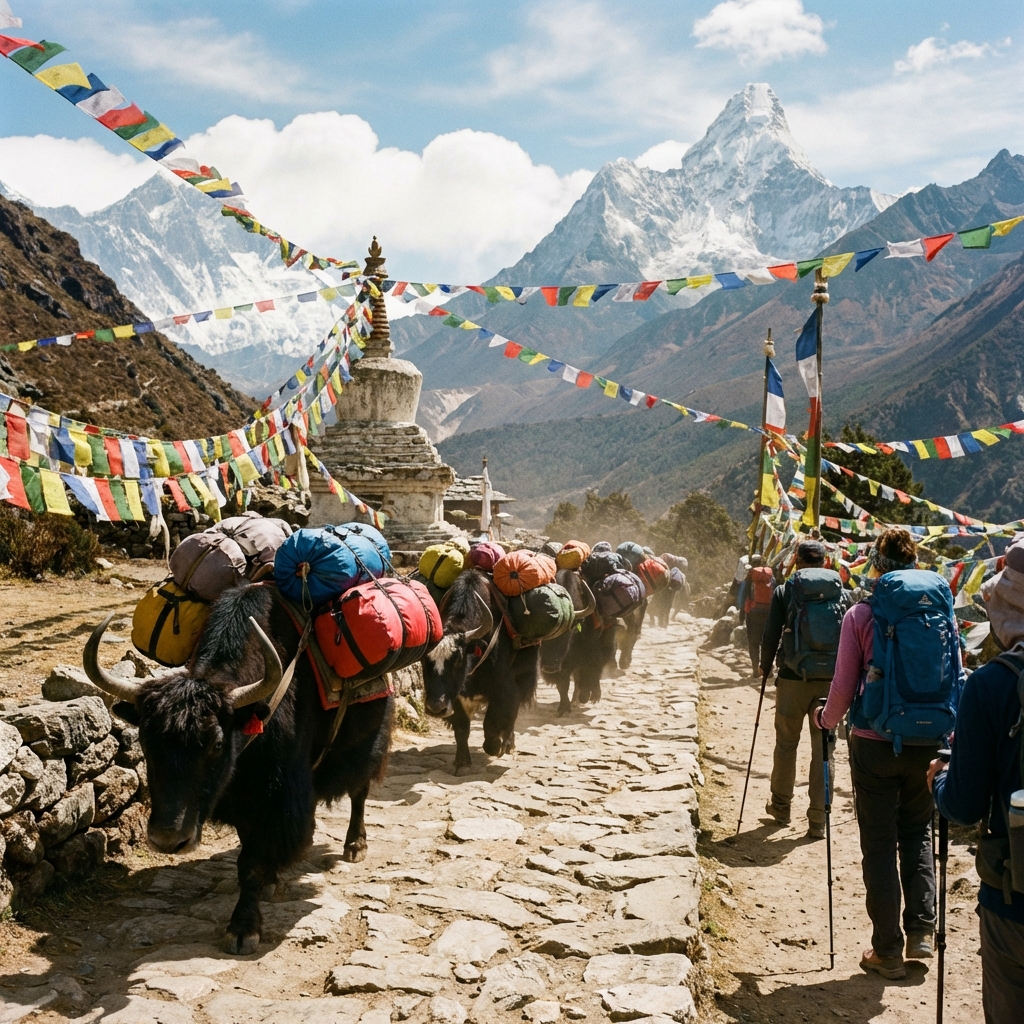
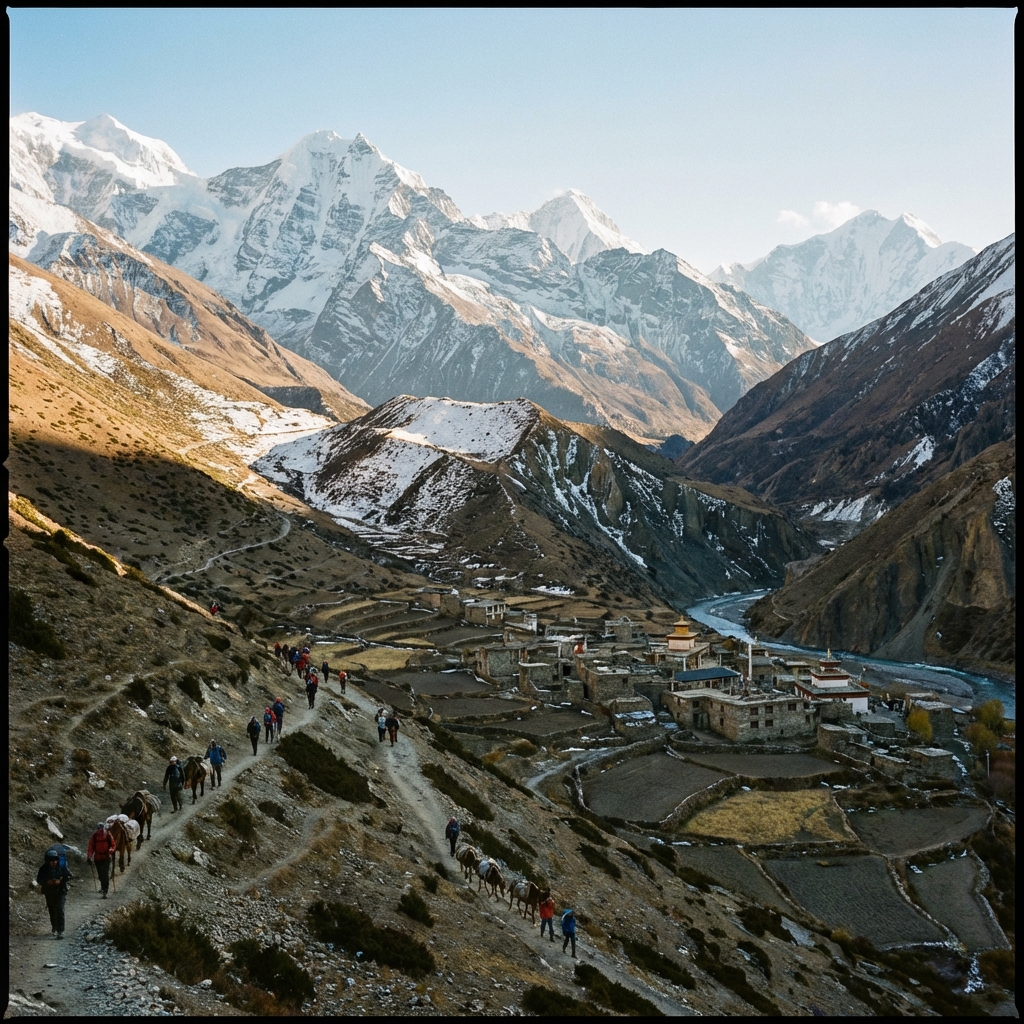
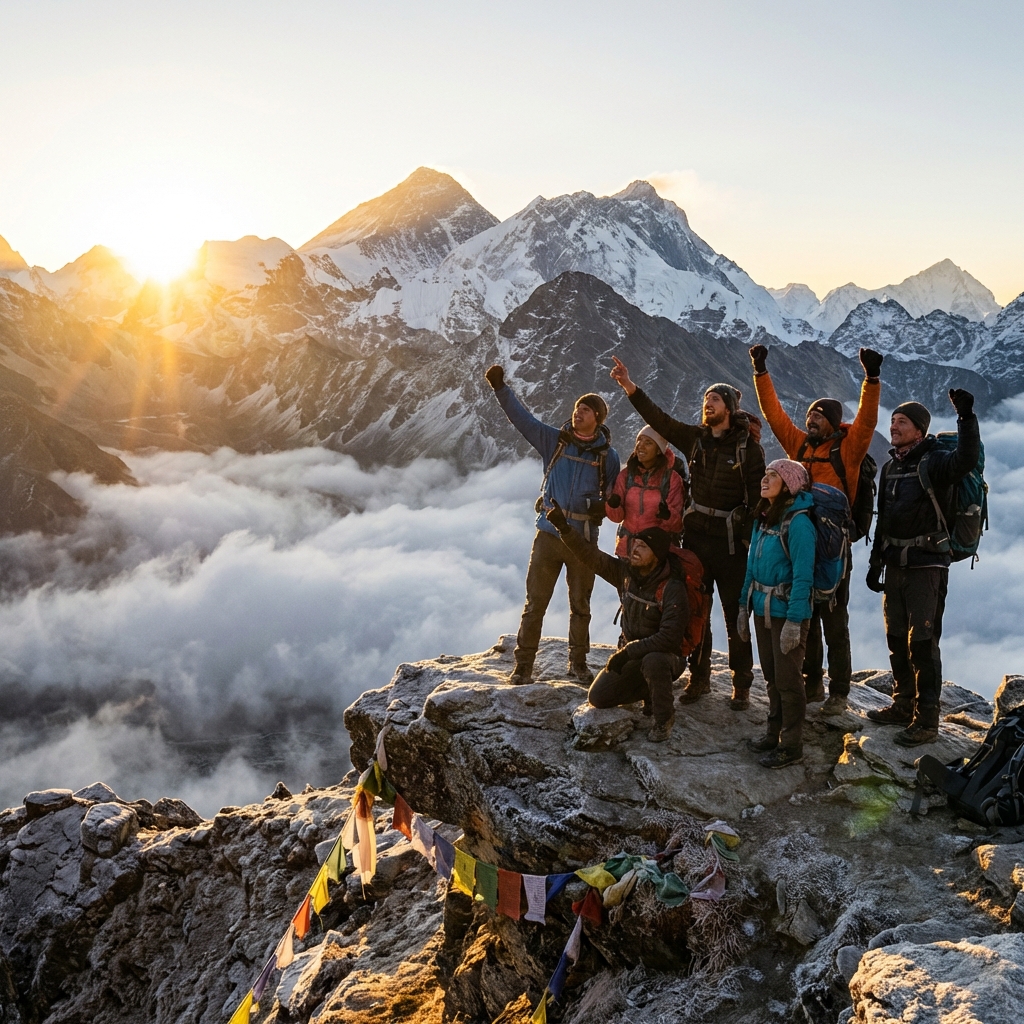
January represents Nepal's deepest winter—the coldest, most challenging, yet potentially most rewarding month for properly prepared trekkers. This is the month when the Himalayas reveal their most extreme character: temperatures plunge to -25°C at high camps, snow blankets passes and peaks in pristine white, atmospheric clarity reaches annual peaks with visibility exceeding 200 kilometers, and trails empty to just 15-25% of October's crowds.
January is emphatically NOT a month for casual trekkers or first-time Himalayan visitors. This month demands expedition-grade winter gear, genuine cold tolerance, mental resilience for short daylight hours and long frigid nights, acceptance of reduced infrastructure (some ultra-high lodges close), and realistic expectations about the physical and psychological challenges of deep winter mountain travel. However, for experienced winter adventurers who come properly equipped and mentally prepared, January delivers unparalleled rewards: absolute solitude on famous trails, crystalline mountain panoramas of almost surreal clarity, authentic cultural immersion during Maghe Sankranti festival (January 14-15, 2025), and the profound satisfaction of experiencing the Himalayas when few others dare venture forth.
This comprehensive guide provides complete January weather analysis across all altitude zones and trekking regions, brutally honest route recommendations (many popular treks require serious reconsideration), extreme cold gear essentials including -25°C sleeping bag requirements, Maghe Sankranti festival insights and timing, booking considerations (easier than any other month), cost savings breakdown (30-40% below peak season), health and safety protocols for extreme cold, and detailed comparisons with neighboring months to help you determine if January's extraordinary character aligns with your experience level, cold tolerance, and adventure objectives.
Challenging (Deep Winter Season)
Excellent (peak dry season)
Exceptional (200+ km)
Very cold to extreme cold
Lowest (15-25% of October)
30-40% cheaper than peak
Experienced winter trekkers only
January 14-15, 2025
Why January Demands Serious Consideration: The Unvarnished Reality
January sits at the extreme edge of Nepal's trekking calendar—a month that separates casual hikers from serious mountain adventurers. Understanding both the extraordinary advantages and genuine challenges is critical for appropriate planning.
1. The Coldest Month: Temperature Reality Check
January is unequivocally Nepal's coldest month. High-altitude temperatures drop to levels that genuinely threaten unprepared trekkers.
Temperature Extremes:
- Gorak Shep (5,164m): -20 to -25°C nights, -5 to 0°C days
- Thorong Phedi (4,540m): -15 to -20°C nights, -2 to 3°C days
- Kala Patthar (5,545m): -15 to -20°C even at midday
- Namche Bazaar (3,440m): -8 to -2°C nights, 4-10°C days
- Lower elevations (below 2,500m): 0-5°C nights, 10-18°C days
What Cold This Severe Means:
- Water freezes solid within minutes if not properly stored
- Electronics fail without careful battery management
- Exposed skin risks frostbite in minutes at high camps
- Sleeping becomes genuinely difficult without proper gear
- Morning routines require significant mental fortitude
- Cold amplifies altitude sickness symptoms
Sherpa Perspective: "January is when we test young guides who want to become sirdar (head guide). If they can manage clients in January cold, they can handle any season. January separates those who love mountains from those who just like trekking." — Pasang Sherpa, 24-year guiding veteran, Khumbu region
Pro Tip
January's extreme cold is NOT theoretical—it's a daily physical reality that affects every aspect of trekking from sleep quality to water availability to basic hygiene. If you've never winter camped in temperatures below -15°C, January high-altitude trekking will shock you. Test your cold tolerance and gear on smaller objectives before committing to major January treks.
2. Atmospheric Clarity at Annual Peak: Visibility Beyond Imagination
The same cold that challenges trekkers creates Nepal's most spectacular visibility. January's dry air, minimal dust, and stable high-pressure systems combine to produce almost surreal mountain clarity.
Visibility Quality:
- Regular 200+ kilometer viewing distances from major viewpoints
- Individual rock features visible on peaks 50+ kilometers away
- Entire mountain ranges spanning hundreds of kilometers in single panoramas
- Stars at night appear in three-dimensional depth
- Sunrise/sunset create dramatic atmospheric optics
Photography Gold Standard:
- Professional photographers specifically target January for commercial shoots
- Fresh snow coverage creates brilliant white contrasts
- Deep blue skies (Rayleigh scattering at minimum)
- Empty trails mean landscape compositions without crowds
- Early morning golden hour light produces portfolio-quality conditions
Real-World Examples:
- Kala Patthar: See Everest, Lhotse, Nuptse, Cho Oyu, Makalu, Pumori, Ama Dablam, Thamserku, and dozens of Tibetan peaks in single 360° panorama
- Poon Hill: Entire Annapurna and Dhaulagiri massifs appear razor-sharp from 100+ kilometers
- Gokyo Ri: Count individual peaks across three distinct Himalayan ranges
- Langtang viewpoints: Tibetan plateau peaks normally obscured by haze become clearly visible
3. Absolute Minimum Crowds: True Wilderness Solitude
January sees the absolute lowest trekker volumes of any month—typically just 15-25% of October's crowds. This creates genuine wilderness experiences even on Nepal's most famous routes.
Crowd Reality (Daily Trekker Numbers):
- Everest Base Camp: 30-70 trekkers/day starting from Lukla vs. 500-800 in October
- Annapurna Base Camp: 20-40 trekkers/day vs. 200-400 in October
- Langtang Valley: 10-20 trekkers/day vs. 100-200 in October
- Poon Hill: 15-30 trekkers/day vs. 150-300 in October
- Gokyo Lakes: 5-15 trekkers/day vs. 80-150 in October
What Minimal Crowds Mean:
- Hours of completely solo trekking on famous trails
- Often the only guests in teahouses (entire lodge to yourself)
- Personal, family-like relationships with lodge owners
- Viewpoints become meditative sanctuaries rather than social gatherings
- Flexibility to adjust pace and itinerary spontaneously
- Authentic Sherpa/Gurung/Tamang cultural interactions vs. tourist-oriented experiences
Lodge Owner Perspective: "In January, we treat guests like family members coming home. October is business—we serve 50 people dinner. January is personal—we cook special dishes, share stories, spend evenings together. January trekkers become lifetime friends." — Mingma Sherpa, lodge owner, Tengboche
4. Maximum Cost Savings: 30-40% Below Peak Season
January's low demand creates the year's most significant pricing advantages across all services. This represents genuine value for those prepared for winter conditions.
Comprehensive Cost Reductions:
- Accommodation: 35-45% cheaper than October ($2-4/night vs. $6-10)
- Meals: 30-40% cheaper (dal bhat $3-5 vs. $5-8 in October)
- Guide rates: 30-35% lower ($25-$35 /day vs. $25-32)
- Porter rates: 30-35% lower ($20-$30 /day vs. $18-24)
- Package treks: 30-40% cheaper overall
- Gear rental: Best availability and negotiation leverage
- Domestic flights: Occasional off-season discounts
Value Analysis: January offers the absolute best price-to-experience ratio for qualified trekkers. You pay 60-70% of peak prices for weather stability and visibility that equals or exceeds October, with the addition of complete solitude. The trade-off is cold—if you can handle extreme temperatures, January is financially unbeatable.
Budget Impact Example (EBC 14-day trek):
- October package: $2,000-2,800
- January package: $1,200-1,800
- Savings: $700-1,000 (35-40%)
5. Maghe Sankranti Cultural Immersion: Winter Solstice Festival
Maghe Sankranti (January 14-15, 2025) marks the end of winter's deepest cold and the sun's northward journey. This major Hindu and Buddhist festival provides unique cultural access throughout trekking regions.
Festival Significance:
- Marks the beginning of longer, warmer days (winter solstice equivalent)
- Celebrates harvest and auspicious new beginnings
- Religious bathing in sacred rivers and lakes
- Special foods: til ko laddu (sesame balls), ghee, molasses, yam, sweet potato
- Family gatherings and cultural ceremonies
Where to Experience Maghe Sankranti While Trekking:
Everest/Khumbu Region:
- Namche Bazaar: Large celebrations, monastery ceremonies
- Lukla: Market festivities, family gatherings
- Tengboche Monastery: Buddhist ceremonies
- Pangboche, Khumjung: Traditional village celebrations
Langtang Region:
- Langtang Village: Tamang cultural celebrations (if rebuilding complete)
- Kyanjin Gompa: Monastery blessings
- Syabrubensi: Festive market atmosphere
- Gosaikunda Lake: Sacred bathing (lake partially frozen but pilgrims still visit)
Annapurna Region:
- Ghandruk, Ghorepani: Gurung cultural celebrations
- Manang: Tibetan Buddhist influence
- Jomsom, Muktinath: Pilgrimage site gatherings
Cultural Participation Guidelines:
- Arrive in villages 1-2 days before festival
- Bring small gifts (khata scarves, modest offerings for monasteries)
- Ask permission before photographing religious ceremonies
- Participate respectfully in communal meals if invited
- Understand some lodge services may be reduced during festival
Maghe Sankranti Dates:
- 2026: January 14-15 (Tuesday-Wednesday)
- 2026: January 14-15 (Wednesday-Thursday)
- 2027: January 14-15 (Thursday-Friday)
January Weather Breakdown: Complete Analysis by Altitude
January conditions vary dramatically by elevation. Understanding these zones determines route selection, gear requirements, and realistic success expectations.
Lower Elevations (1,000-2,500m)
Representative Locations: Pokhara (820m), Kathmandu Valley (1,400m), Lukla (2,860m), Jiri (2,003m), Salleri (2,390m), lower Langtang approach, Besisahar (760m)
Temperatures:
- Daytime: 10-18°C (50-64°F) — comfortable trekking
- Nighttime: 0-6°C (32-43°F) — cool to cold, occasional frost
Conditions:
- Very dry (3-8mm precipitation monthly)
- Clear skies 90-95% of days
- Morning fog common in valleys (clears by 9-10am)
- Comfortable for most trekkers
- No snow except rare light dustings above 2,200m
Gear Requirements:
- Light to medium fleece or down jacket for evenings
- Regular 3-season sleeping bag (0 to -5°C) adequate
- Standard trekking clothing
- No extreme cold gear needed
Practical Considerations:
- These elevations experience minimal temperature difference from October
- Ideal for acclimatization phases and approach/exit days
- Villages lively and fully operational
- Excellent for first-time January trekkers testing winter conditions
Mid Elevations (2,500-4,000m)
Representative Locations: Namche Bazaar (3,440m), Manang (3,540m), Langtang Village (3,430m), Ghorepani (2,860m), Dingboche (4,410m), Ghandruk (1,940m), Kyanjin Gompa (3,870m)
Temperatures:
- Daytime: 4-12°C (39-54°F) — cold but workable with sun
- Nighttime: -8 to 2°C (18-36°F) — cold to very cold
Conditions:
- Very dry (5-12mm precipitation monthly)
- Clear skies 85-92% of days
- Strong diurnal temperature variation (sun warms significantly)
- Occasional light snow possible, clears quickly
- Morning frost universal
Gear Requirements:
- Warm expedition down jacket (-15°C rated)
- Sleeping bag -15°C minimum required
- Complete layering system (base + mid + insulation + shell)
- Warm gloves and hat essential
- Face protection for windy conditions
Practical Considerations:
- This zone encompasses most popular trekking
- Mornings very cold until sun reaches valleys (8-10am)
- Teahouse lodges have heating (yak-dung stoves) but sleeping rooms unheated
- Water management critical (bottles freeze overnight if not stored properly)
- Keep electronics warm (batteries drain rapidly in cold)
Lodge Owner Insight: "January at Namche, water pipes freeze every night. We bring water inside before sunset. Trekkers must fill bottles at 5pm or wait until 10am when sun melts everything. Smart trekkers keep one bottle in sleeping bag." — Dawa Sherpa, lodge owner, Namche Bazaar
High Elevations (4,000-5,000m)
Representative Locations: Lobuche (4,940m), Gokyo (4,790m), Chukhung (4,730m), Thorong Phedi (4,540m), Manang to Thorong La route, Annapurna Base Camp (4,130m), Tilicho Base Camp (4,150m)
Temperatures:
- Daytime: 0-8°C (32-46°F) — cold even in direct sun
- Nighttime: -15 to -5°C (5-23°F) — very cold to extreme cold
Conditions:
- Dry (8-18mm precipitation monthly)
- Clear skies 80-88% of days
- Moderate snow accumulation possible after clear nights
- Wind significant factor (increases perceived cold dramatically)
- Altitude effects amplified by cold
Gear Requirements:
- Expedition down jacket (-20°C rated) essential
- Sleeping bag -20°C minimum, -25°C recommended
- Full winter layering system (multiple base layers)
- Expedition gloves or mittens
- Balaclava or face mask
- Insulated pants for high camps
- Chemical hand/toe warmers helpful
Critical Considerations:
- Water freezes solid within 30 minutes if exposed
- Electronics require constant warmth management
- Sleeping challenging even with proper gear
- Morning preparations require significant time and mental discipline
- Some lodges at upper end of this zone close in January
- Acclimatization protocols critical—cold worsens AMS symptoms
Safety Protocols:
- Never sleep with water bottles outside sleeping bag
- Keep tomorrow's clothes inside sleeping bag (warm dressing)
- Monitor extremities constantly for frostbite signs
- Stay hydrated despite cold (dehydration worsens altitude sickness)
- Know evacuation options (helicopter rescue operates but weather-dependent)
Extreme Elevations (5,000m+)
Representative Locations: Gorak Shep (5,164m), Kala Patthar (5,545m), Thorong La Pass (5,416m), Larkya La Pass (5,160m), Cho La Pass (5,420m), Renjo La Pass (5,360m), Gokyo Ri (5,357m)
Temperatures:
- Daytime: -5 to 3°C (23-37°F) — cold to very cold even at midday
- Nighttime: -20 to -10°C (-4 to 14°F) — extreme cold, life-threatening if unprepared
Conditions:
- Dry (10-25mm precipitation monthly, mostly as snow)
- Clear skies 75-85% of days
- Snow accumulation at passes (depth variable)
- High wind probability (wind chill severe)
- Altitude effects severe for unprepared trekkers
Gear Requirements (Non-Negotiable):
- -25°C sleeping bag absolutely mandatory
- Expedition-grade down parka (800+ fill power)
- Insulated pants essential
- Vapor barrier liners for sleeping bag in extreme conditions
- Double-layered glove system (liner + expedition mittens)
- Face protection (balaclava, goggles or glacier glasses)
- 4-season boots with insulated insoles
- Crampons for passes after snowfall
Extreme Cold Management:
- Hot water bottles in sleeping bag (request from lodges, usually 100-200 rupees)
- Warm all tomorrow's clothing inside sleeping bag overnight
- Chemical hand warmers for critical tasks (photography, tent setup)
- Pee bottles essential (avoid leaving sleeping bag at night)
- Battery banks kept warm (multiple backups)
- Eat high-calorie foods before sleeping (body heat generation)
January-Specific Risks:
- Frostbite: Fingers, toes, nose, ears vulnerable in minutes
- Hypothermia: Risk increases dramatically if you get wet (sweat or snow)
- Altitude sickness: Symptoms worsen in extreme cold
- Pass closures: Fresh snow can close passes for 2-4 days
- Rescue complications: Weather may delay helicopter evacuations
When to Absolutely Avoid:
- After heavy snowfall (wait 48-72 hours for trail clearing and stability assessment)
- During active storms (zero visibility, dangerous wind chill)
- If lacking proper expedition gear (no substitutes exist)
- First-time high-altitude trekkers (gain experience in warmer months first)
- Solo without emergency communication (satellite phone/GPS messenger essential)
| Month | High | Low | Conditions | Crowds | Notes |
|---|---|---|---|---|---|
| Lower (1,000-2,500m)Best | 10-18°C | 0-6°C | Very Low (3-8mm) | Very Low | Comfortable, minimal cold stress, excellent intro |
| Mid (2,500-4,000m)Best | 4-12°C | -8 to 2°C | Very Low (5-12mm) | Very Low | Cold nights, proper winter gear essential |
| High (4,000-5,000m) | 0-8°C | -15 to -5°C | Low (8-18mm) | Low | Very cold, expedition gear required, experienced only |
| Extreme (5,000m+) | -5 to 3°C | -20 to -10°C | Low (10-25mm) | Very Low | Extreme cold, life-threatening if unprepared, experts only |
January Weather by Region: Where January Works (and Doesn't)
Everest Region (Khumbu)
Overall January Rating: Fair to Good ★★★☆☆ (Experience-Dependent)
January Conditions:
- Visibility: Exceptional—often exceeding 200km, revealing Tibetan plateau
- Precipitation: Very low (8-18mm monthly)
- Temperature Range: Lukla 8-14°C days / 0-4°C nights, Namche 4-10°C days / -8 to -2°C nights, Gorak Shep -3 to 1°C days / -22 to -18°C nights
- Crowd Level: Very low (20-25% of October)
- Trail Conditions: Excellent below 4,200m, icy/snowy 4,200-5,000m+
- Infrastructure: Most lodges open early January, some highest camps close late January
Best Routes for January:
- Everest Base Camp: Possible with proper gear, experienced trekkers only
- Gokyo Lakes: Better than EBC (slightly lower, quieter)
- Everest View Trek (to Tengboche): Excellent—stays below 4,000m, manageable temps
- Namche to Thame Loop: Excellent cultural trek, moderate elevation
Routes Requiring Extreme Caution:
- Three Passes Trek: High passes frequently snow-covered, experienced winter mountaineers only
- Island Peak: Technical climbing in extreme cold, experts only
- Cho La Pass: Often impassable after snowfall
Booking Lead Time: 2-4 weeks sufficient for most lodges
January Advantages:
- Absolute clearest Everest views of entire year
- Lowest crowds (genuine solitude even on popular trails)
- Maximum cost savings (35-40% below peak)
- Sherpa culture more accessible (less tourist-oriented)
January Challenges:
- Gorak Shep/Lobuche extremely cold nights (-18 to -22°C)
- Kala Patthar summit attempt requires 4-5am start in extreme cold
- Some highest lodges close late January (check ahead)
- Lukla flights can have fog delays (though less than monsoon)
- Requires genuine winter mountaineering mentality
Sherpa Guide Perspective: "January Everest Base Camp separates tourists from mountaineers. October, anyone with money can go. January, you must have strong mind and proper gear. I take clients to EBC in January only if they have winter camping experience. The cold at Gorak Shep is serious—not for learning." — Tashi Sherpa, IFMGA-certified mountain guide, 18 years experience
Annapurna Region
Overall January Rating: Good ★★★★☆ (Route-Dependent)
January Conditions:
- Visibility: Outstanding—Annapurna massif, Dhaulagiri, Machapuchare crystal clear
- Precipitation: Very low (8-20mm monthly, regional variation)
- Temperature Range: Ghorepani 8-14°C days / 0-5°C nights, Manang 4-10°C days / -8 to -3°C nights, Thorong High Camp -6 to 1°C days / -18 to -12°C nights
- Crowd Level: Very low (20-30% of October)
- Trail Conditions: Excellent below 4,000m, Thorong La challenging
- Thorong La Pass (5,416m): Crossable but difficult—fresh snow common, early starts essential
Best Routes for January:
- Poon Hill Trek: Excellent—perfect January intro, spectacular sunrise, manageable cold
- Ghorepani-Ghandruk Loop: Excellent cultural trek, comfortable elevations
- Mardi Himal Trek: Very good—off-beaten, dramatic views, moderate crowds
- Annapurna Base Camp: Good with proper gear—cold at ABC but spectacular
- Jomsom-Muktinath: Excellent—rain shadow region, dry and clear
Routes Requiring Experience:
- Annapurna Circuit (full): Challenging—Thorong La requires winter mountaineering skills, 3am starts, contingency days
- Tilicho Lake Extension: Very cold, lake frozen, spectacular but harsh
Booking Lead Time: 2-3 weeks generally sufficient
January Advantages:
- Lower routes (Poon Hill, Ghorepani) perfect for January beginners
- Annapurna sunrise views rival October with zero crowds
- Excellent value pricing (30-35% savings)
- Diverse elevation options (choose comfort level)
January Challenges:
- Thorong La pass requires genuine mountaineering preparation
- ABC very cold overnight (-12 to -15°C)
- Some high circuit lodges close late January
- Morning starts delayed by extreme cold
Best Annapurna Choice for January: Poon Hill or Mardi Himal—both offer spectacular views with manageable January temperatures and full infrastructure.
Langtang Region
Overall January Rating: Very Good ★★★★☆
Why Langtang Excels in January:
- Perfect elevation profile (most trekking 2,200-4,000m where January temps manageable)
- Close to Kathmandu (7-8 hour drive, no Lukla flight dependency)
- Excellent lodge network remains fully operational
- Very quiet (15-20% of October crowds)
- Outstanding value-to-quality ratio
- Tibetan Buddhist and Tamang culture thrives in winter
- Maghe Sankranti celebrations authentic and accessible
January Conditions:
- Visibility: Exceptional—Langtang Lirung, Ganesh Himal, Tibetan peaks brilliantly clear
- Precipitation: Very low (6-12mm monthly)
- Temperature Range: Lama Hotel 6-12°C days / -2 to 3°C nights, Langtang Village 4-10°C days / -6 to 0°C nights, Kyanjin Gompa 2-8°C days / -10 to -4°C nights
- Crowd Level: Very low (15-20% of October)
- Trail Conditions: Excellent throughout main valley
Best Routes:
- Langtang Valley Trek: Outstanding—arguably January's single best major trek
- Tamang Heritage Trail: Excellent cultural focus, lower elevations, warm villages
- Helambu Trek: Very good, even lower and warmer
- Gosaikunda Trek: Fair—Laurebina La pass (4,610m) often snow-covered, experienced only
Why Langtang is January's Hidden Gem: Late January Langtang Valley may be the optimal trek-to-month pairing: comfortable temperatures (most trekking 2,500-4,000m), very quiet trails, no flight dependency, excellent facilities, strong cultural experiences, spectacular views, and best overall value of any major region.
Booking Lead Time: 1-2 weeks sufficient, walk-up often possible
January Advantages:
- Most accessible major region from Kathmandu
- Temperature profile perfect for January (not too extreme)
- Extremely quiet—genuine wilderness immersion
- Lodge owners treat guests like family
- Best price-to-experience ratio in January
January Challenges:
- Tserko Ri (4,984m) very cold if attempting summit
- Laurebina La pass (Gosaikunda route) challenging after snowfall
- Earthquake reconstruction ongoing in some areas (check current status)
Manaslu Region
Overall January Rating: Fair ★★★☆☆ (Experienced Only)
January Conditions:
- Larkya La Pass (5,160m): Very challenging in January—deep snow possible, extremely cold, weather windows narrow
- Temperature Range: Samagaon 3-8°C days / -8 to -2°C nights, Larkya La -8 to -2°C days / -18 to -12°C nights
- Crowd Level: Very low (10-15% of October)
- Infrastructure: Some highest lodges closed, limited rescue options
Assessment:
- Only for very experienced winter trekkers with high-pass experience
- Requires flexible schedule (3-4 contingency days for weather)
- Mandatory guide (restricted area + winter safety)
- Beautiful but genuinely challenging
Recommendation: Unless you have winter mountaineering experience and proper expedition gear, choose March-May or September-November instead.
Upper Mustang
Overall January Rating: Good ★★★★☆ (For Specific Trekkers)
Why Good Despite Cold:
- Rain shadow region = extremely dry even in deep winter
- Unique Tibetan culture fully accessible
- Maghe Sankranti celebrations traditional and authentic
- Less extreme cold than other regions at same altitude (Tibetan plateau characteristics)
- Excellent visibility
Challenges:
- Expensive restricted permit (USD 50/day (no minimum))
- Very cold nights despite dry conditions (-10 to -15°C)
- Jomsom flights can have wind delays
- Mandatory guide requirement
- Many lodges operate at reduced capacity
Assessment: If you can afford permits and want cultural immersion with moderate trekking, Upper Mustang offers reliability and uniqueness in January. Best for cultural enthusiasts rather than peak-baggers.
| Month | High | Low | Conditions | Crowds | Notes |
|---|---|---|---|---|---|
| Everest/Khumbu | -3 to 14°C | -22 to 4°C | Very Low (8-18mm) | Very Low | Extreme cold at high camps, experienced only |
| AnnapurnaBest | -6 to 14°C | -18 to 5°C | Very Low (8-20mm) | Very Low | Lower routes excellent, Thorong La challenging |
| LangtangBest | 2 to 12°C | -10 to 3°C | Very Low (6-12mm) | Very Low | Best overall January choice, manageable cold |
| Manaslu | -8 to 8°C | -18 to -2°C | Low (10-22mm) | Very Low | Very challenging pass, experts only |
| Upper MustangBest | 2 to 12°C | -15 to 0°C | Minimal (4-8mm) | Very Low | Dry, cultural focus, expensive permit |
Best Treks for January: Detailed Recommendations with Honest Assessments
1. Langtang Valley Trek — January's Premier Choice
Duration: 7-10 days Max Altitude: 3,870m (Kyanjin Gompa), 4,984m (Tserko Ri optional) January Rating: ★★★★★ Excellent
Why Langtang is January's Best Overall Trek:
- Perfect elevation profile: Most trekking 2,200-4,000m = comfortable January temps (4-12°C days)
- No flight dependency: Drive from Kathmandu (7-8 hours to Syabrubensi)
- Very quiet: 15-20% of October crowds = genuine solitude
- Excellent infrastructure: Lodge network fully operational, warm hospitality
- Cultural richness: Tamang and Tibetan Buddhist culture, Maghe Sankranti celebrations
- Spectacular views: Langtang Lirung (7,227m), Ganesh Himal, Tibetan peaks
- Best value: Lowest overall cost of major treks
January-Specific Conditions:
- Daytime trekking comfortable (6-12°C at main elevations)
- Night temperatures cold but manageable (-6 to 2°C with proper sleeping bag)
- Late January noticeably warmer than early January (2-4°C difference)
- Fresh snow coverage creates stunning landscape
- Kyanjin Gompa perfect for Maghe Sankranti timing (Jan 14-15)
Gear Requirements:
- Sleeping bag: -15°C minimum for Kyanjin Gompa
- Down jacket: Medium to warm weight
- Standard winter trekking layers
- If attempting Tserko Ri: Add expedition jacket, -20°C bag
Sample Itinerary:
- Day 1: Kathmandu to Syabrubensi (drive)
- Day 2: Syabrubensi to Lama Hotel (2,380m)
- Day 3: Lama Hotel to Langtang Village (3,430m)
- Day 4: Langtang Village to Kyanjin Gompa (3,870m)
- Day 5: Acclimatization day—short hikes, Maghe Sankranti if timing aligns
- Day 6: Optional Tserko Ri (4,984m) early morning, return Kyanjin
- Day 7-9: Return to Syabrubensi, Kathmandu
Budget: $500-900 package, $300-500 independent
Perfect For: First-time January trekkers, those seeking solitude without extreme cold, value-conscious travelers, cultural enthusiasts, photographers
Langtang Valley Complete Guide
2. Poon Hill Trek — Perfect January Introduction
Duration: 3-5 days (4 days standard) Max Altitude: 3,210m (Poon Hill viewpoint) January Rating: ★★★★★ Excellent
Why Poon Hill Excels in January:
- Low altitude = minimal cold: Comfortable sleeping temperatures (0-6°C)
- Legendary sunrise: Annapurna and Dhaulagiri massifs with January clarity
- Short duration: Limited cold exposure, quick success
- Excellent infrastructure: Well-developed lodge network
- Accessible: Perfect for January beginners or those testing cold tolerance
January-Specific Conditions:
- Daytime: 8-16°C (very comfortable trekking)
- Nighttime: 0-6°C (cool but manageable with -5°C sleeping bag)
- Poon Hill sunrise (4-5am start): -2 to 2°C, bring warm layers
- Rhododendron forests dormant (no blooms until March) but beautiful structure
- Very quiet compared to October (20-25% of peak crowds)
Gear Requirements:
- Sleeping bag: -5 to -10°C adequate
- Light to medium down jacket
- Standard 3-season trekking gear mostly sufficient
- Warm layers for early morning Poon Hill ascent
Why This is THE January Starter Trek: If you're uncertain about January trekking, Poon Hill provides perfect introduction—spectacular views, minimal cold stress, short commitment, full infrastructure, and easy exit if conditions feel too challenging.
Budget: $350-650 package, $200-400 independent
Perfect For: First-time January trekkers, families (older children), shorter schedules, those testing cold tolerance before longer treks, photographers, sunrise enthusiasts
3. Everest Base Camp — January's Ultimate Challenge
Duration: 12-14 days Max Altitude: 5,545m (Kala Patthar) January Rating: ★★★☆☆ Fair to Good (Experience-Dependent)
Honest Assessment: EBC in January is possible but genuinely challenging. This is NOT the romanticized Everest trek of October—it's a serious winter mountaineering undertaking requiring proper gear, experience, and mental fortitude.
Why Attempt EBC in January:
- Clearest Everest views of entire year: 200+ km visibility common
- Lowest crowds: 20-25% of October = solitude on world's most famous trek
- Maximum savings: 35-40% cheaper than peak season ($1,200-1,800 vs. $2,000-2,800)
- Authentic Sherpa culture: Villages less tourist-oriented, genuine interactions
- Personal achievement: Completing EBC in January carries legitimate bragging rights
Why Reconsider EBC in January:
- Extreme cold: Gorak Shep -20 to -22°C nights = genuinely brutal
- Kala Patthar: 4-5am summit start in -15 to -18°C darkness
- Sleep quality: Even with -25°C bag, sleep is challenging and uncomfortable
- Some lodges close: Highest camps may have limited options late January
- First-timers struggle: Requires previous winter camping/trekking experience
Mandatory Gear Requirements:
- Sleeping bag: -25°C rated (non-negotiable)
- Down jacket: Expedition grade (800+ fill, -25°C rated)
- Insulated pants for high camps
- Expedition mittens + liner gloves
- Balaclava and face protection
- Hot water bottles (rent from lodges)
- Chemical hand/toe warmers
- Multiple base layer sets
Modified Itinerary Recommendation: Consider sleeping at Lobuche (4,940m) instead of Gorak Shep for the final night—slightly warmer (-15 to -18°C vs. -20 to -22°C). Day-trip to Gorak Shep, EBC, and Kala Patthar from Lobuche if strong, or split across two days.
Kala Patthar Strategy:
- Start 4-5am from Gorak Shep (or 3am from Lobuche)
- Headlamp essential
- Sunrise timing: ~6:45-7:00am in January
- Summit before wind increases (8-9am)
- Extreme cold management critical
Who Should Attempt:
- Previous winter camping experience (-15°C+ environments)
- Proper expedition gear owned or rented
- Comfortable with genuine discomfort for multiple days
- Strong mental resilience
- Realistic expectations (this will be cold and challenging)
Who Should Wait:
- First-time Himalayan trekkers (do EBC in October first)
- Cold-intolerant individuals
- Those lacking proper gear or budget to rent quality equipment
- Anyone uncertain about capabilities
Budget: $1,200-1,800 package, $800-1,200 independent (with gear rental costs)
4. Annapurna Base Camp — Moderate January Option
Duration: 7-10 days Max Altitude: 4,130m January Rating: ★★★★☆ Good to Very Good
Why ABC Works in January:
- Lower than EBC: 4,130m vs. 5,164m = less extreme cold
- Spectacular amphitheater: 360° mountain panorama with fresh snow
- Good infrastructure: Lodges remain open throughout January
- Diverse ecosystem: Subtropical to alpine in single trek
- Lower sections comfortable: Pleasant trekking up to 3,000m
January-Specific Conditions:
- ABC nights: -12 to -15°C (cold but less extreme than Gorak Shep)
- Lower sections (below 3,000m): Very comfortable (10-16°C days)
- Upper amphitheater: Fresh snow creates magical landscape
- Machapuchare (Fishtail) views with January clarity = portfolio-quality photography
Gear Requirements:
- Sleeping bag: -15 to -20°C recommended for ABC night
- Warm down jacket
- Full winter layering system
- Slightly less extreme than EBC but still serious winter gear
Advantages Over EBC:
- 1,000m lower maximum elevation = warmer overall
- No Lukla flight dependency
- Shorter overall duration
- Less intimidating for January first-timers
- Still delivers dramatic Himalayan amphitheater experience
Budget: $215-1,200 package, $450-750 independent
Perfect For: Experienced trekkers wanting Himalayan drama without EBC's extreme cold, photographers, those seeking amphitheater setting, moderate winter challenge
5. Gokyo Lakes Trek — Quieter Everest Alternative
Duration: 10-12 days Max Altitude: 5,357m (Gokyo Ri) January Rating: ★★★☆☆ Fair to Good (Experienced Only)
Why Gokyo Over EBC in January:
- Significantly quieter (maybe 10-15% of October vs. EBC's 20-25%)
- Turquoise lakes partially frozen = unique winter aesthetic
- Gokyo Ri (5,357m) offers panoramic Everest views rivaling Kala Patthar
- Less crowded trail = more flexibility in pacing and lodge choice
January Challenges:
- Similar extreme cold to EBC (Gokyo village -18 to -20°C nights)
- Gokyo Ri (5,357m) is lower than Kala Patthar (5,545m) but accessed from a lower base
- Some highest lakes completely frozen
- Requires same expedition gear as EBC
Gear Requirements:
- Identical to EBC: -25°C sleeping bag, expedition jacket, full winter kit
Perfect For: Experienced trekkers who've done EBC before and want quieter Everest region alternative, photographers seeking unique frozen lake compositions
6. Mardi Himal Trek — Off-Beaten January Gem
Duration: 5-7 days Max Altitude: 4,500m January Rating: ★★★★☆ Very Good
Why Mardi Himal is Excellent for January:
- Off-beaten = extremely quiet (maybe 10% of October crowds)
- Dramatic close-up Machapuchare (Fishtail) and Annapurna South views
- Newer route with good lodges
- Similar views to ABC with fraction of the crowds
- Moderate challenge (less than EBC, similar to ABC)
January Conditions:
- High Camp (4,500m): -12 to -15°C nights
- Lower sections very comfortable
- Ridge walking with spectacular panoramas
- Fresh snow creates pristine landscape
Gear Requirements:
- Sleeping bag: -15 to -20°C
- Warm down jacket
- Standard winter trekking gear
Budget: $600-1,000 package, $400-650 independent
Perfect For: Those seeking solitude, Machapuchare photography enthusiasts, trekkers wanting ABC-style experience with minimal crowds
7. Ghorepani-Ghandruk Loop — Cultural + Views
Duration: 4-6 days Max Altitude: 3,210m (Poon Hill) January Rating: ★★★★★ Excellent
Why Excellent:
- Combines Poon Hill sunrise with Gurung cultural villages
- Comfortable elevations throughout
- Excellent lodge network
- Cultural immersion (Gurung villages, traditional architecture)
- Maghe Sankranti celebrations in villages
Perfect For: Cultural enthusiasts, families (older children), moderate fitness levels, those wanting views + culture without extreme altitude
8. Tamang Heritage Trail — Cultural January Alternative
Duration: 5-7 days Max Altitude: 3,700m January Rating: ★★★★☆ Very Good
Why Good for January:
- Lower elevations = comfortable temperatures
- Strong Tamang cultural focus
- Maghe Sankranti celebrations authentic
- Hot springs (Tatopani) perfect for cold weather
- Very quiet, genuine cultural immersion
- Close to Kathmandu
Perfect For: Cultural enthusiasts, those avoiding extreme altitude, hot spring lovers, anthropology interests
What to Pack: January Extreme Cold Gear Essentials
January demands the most comprehensive winter gear of any trekking month. Underestimating gear requirements is the primary failure mode for January trekkers.
Critical Gear by Maximum Altitude
Lower Routes Only (Poon Hill, Ghorepani, below 3,500m):
- Sleeping bag: -5 to -10°C sufficient
- Down jacket: Light to medium weight
- Gloves: Light to medium weight
- Hat: Warm beanie
- Overall: Standard 3-season+ gear mostly adequate
Mid-Elevation Routes (Langtang, ABC, Mardi Himal, 3,500-4,500m):
- Sleeping bag: -15 to -20°C required
- Down jacket: Warm expedition weight (-15°C rated minimum)
- Gloves: Warm winter gloves + liner gloves
- Hat: Warm beanie + balaclava
- Insulated pants: Helpful for high camps
- Overall: Solid 4-season winter gear mandatory
High-Elevation Routes (EBC, Gokyo, passes, 4,500m+):
- Sleeping bag: -20 to -25°C absolutely mandatory
- Down jacket: Expedition grade (800+ fill, -25°C rated)
- Gloves: Expedition mittens or heavy gloves + liners
- Hat: Warm beanie + full balaclava
- Insulated pants: Essential for all high camps
- Face protection: Balaclava + buff/neck gaiter
- Chemical warmers: Hand and toe warmers
- Hot water bottles: Rent from lodges
- Overall: Full expedition winter gear, no compromises
The January Layering System
Base Layers (Against Skin):
- Merino wool or synthetic (NOT cotton)
- Top: Long-sleeve crew or quarter-zip (2-3 sets for high routes)
- Bottom: Thermal leggings (2 sets)
- Weight: Midweight (200-250 gsm) for lower body, lightweight (150-200 gsm) for upper allows flexibility
Mid Layers (Insulation):
- Fleece jacket (200-300 weight)
- Insulated vest (optional but helpful)
- Soft-shell jacket (wind-resistant, breathable)
- Lightweight down jacket for camp (in addition to main down jacket)
Outer Layers (Protection):
- Waterproof shell jacket (Gore-Tex or equivalent)
- Waterproof shell pants
- Main down jacket (see altitude-specific requirements above)
- Insulated pants for high camps (above 4,500m essential)
Lower Body:
- Trekking pants (2 pairs, quick-dry)
- Thermal leggings (wear under trekking pants)
- Insulated pants (high elevations only)
- Waterproof shell pants
Extremity Protection (Critical in January)
Hands:
- Liner gloves (thin, allow dexterity for photography/zippers)
- Warm insulated gloves or mittens (-20°C rated minimum for high routes)
- Expedition mittens (for extreme cold above 5,000m)
- Keep spares dry (gloves getting wet = emergency)
Feet:
- Trekking boots: Insulated, waterproof, ankle support
- Socks: Merino wool, 4-6 pairs (change daily)
- Liner socks (optional, reduce blisters)
- Insulated insoles for extreme cold
- Gaiters (keep snow out of boots)
- Camp booties/down booties for lodge evenings
Head/Face:
- Warm beanie (wool or synthetic)
- Balaclava or face mask (wind and extreme cold protection)
- Buff or neck gaiter
- Sunglasses (Cat 3-4, glacier glasses for high passes)
- Headlamp (LED for cold weather, spare batteries)
Sleeping System
Sleeping Bag:
- Match to maximum altitude (see altitude sections above)
- Down superior to synthetic (warmer, lighter, more compressible)
- Comfort rating, NOT limit rating (use bag's comfort temp)
- Sleeping bag liner adds +5 to +10°C warmth (silk or fleece)
Sleep Accessories:
- Hot water bottles (rent from lodges, 100-200 rupees/night)
- Sleeping pad (if camping, 4-season R-value 5+)
- Pee bottle (wide-mouth Nalgene, essential for avoiding midnight cold)
- Earplugs (lodges can be noisy)
- Eye mask (long nights, early sunrise)
Pro Sleep Strategy:
- Warm all tomorrow's clothes inside sleeping bag overnight
- Keep electronics inside bag (battery preservation)
- Eat high-calorie snack before bed (body heat generation)
- Don't breathe into sleeping bag (moisture = cold)
- Use vapor barrier liner for extreme cold (advanced technique)
Sun Protection (Essential Despite Cold)
January's thin atmosphere and snow reflection create severe UV exposure:
- Sunscreen: SPF 50+ (face, neck, ears, hands)
- Lip balm: SPF 30+ (reapply frequently)
- Sunglasses: Category 3-4, 100% UV protection
- Glacier glasses: For passes and high snowfields (side shields)
- Buff/neck gaiter: Protects neck from sun and wind
Technical Gear
Navigation/Communication:
- Satellite messenger (Garmin inReach, SPOT) — emergency communication
- Phone with offline maps (maps.me, Gaia GPS)
- Power bank (20,000+ mAh, keep warm)
- Headlamp (plus spare batteries, lithium perform better in cold)
- Trekking poles (essential for icy sections, knee protection)
Water Management:
- Insulated water bottles (2x 1-liter minimum)
- Wide-mouth Nalgene (doubles as hot water bottle)
- Water purification (tablets, SteriPEN, filter)
- Thermos (keeps drinks hot throughout day)
First Aid & Hygiene:
- Comprehensive first aid kit
- Altitude sickness medication (Diamox, consult doctor)
- Pain relievers, anti-diarrhea medication
- Blister treatment (Compeed, moleskin)
- Hand sanitizer (water scarce for washing)
- Toilet paper (lodges sometimes run out)
- Wet wipes (bathing limited in cold)
Rental vs. Purchase Decision Matrix
Rent in Kathmandu/Pokhara:
- Sleeping bags (-25°C): $1.50-3/day ($20-40 for 14-day trek)
- Down jackets (expedition): $1.50-3/day
- Insulated boots: $2-4/day
- Trekking poles: $0.50-1/day
- Crampons (if needed): $1-2/day
- Duffel bags: $1/day
Rental Advantages in January:
- Excellent availability (low demand = best selection)
- Quality equipment (shops cater to expeditions)
- Cost-effective for one-time use
- Try before committing to purchase
- Negotiate multi-week rates (20-30% discount)
Bring from Home (Don't Rent):
- Base layers (sizing critical, comfort essential)
- Socks and underwear (hygiene)
- Your own boots (fit critical, break-in required)
- Gloves (fit and dexterity personal)
- Technical clothing you trust
- First aid and medications
- Electronics and batteries
Kathmandu Rental Tips:
- Rent in Thamel (concentrated options, competitive pricing)
- Inspect thoroughly: Check zippers, test compression, look for down loss
- Test sleeping bag compression (quality indicator)
- Smell check (some rental bags poorly maintained)
- Photograph/document condition (avoid damage disputes)
- Negotiate for multiple items (bundle discount)
- Get receipt with exact gear description
Weight Management
January gear is heavy. Strategic packing essential:
- Porter recommended: Even experienced trekkers benefit (January cold drains energy)
- Duffel weight limit: 10-15 kg for porter
- Daypack: 5-7 kg (water, layers, snacks, camera, essentials)
- Lighten where possible: Down vs. synthetic (lighter), eliminate duplicates, share items with partner
Costs & Budgeting: January's Maximum Savings
January delivers the year's most significant pricing advantages—typically 30-40% below October peak season across all services.
Accommodation Costs
Teahouses (per person/night):
- Early January: $2-4 (many "free room with meals" deals)
- Lodge owners desperate for business (very low occupancy)
- Late January: $2-3 (some highest lodges close, limited but cheap)
- Negotiation highly effective (low demand = flexibility)
Comparison to October:
- January: $2-4/night average
- October: $6-10/night average
- Savings: 50-70%
Food Costs
Typical Meal Prices:
- Dal bhat: $3-5 (vs. $5-8 in October)
- Western meals (pasta, pizza): $4-7 (vs. $6-10 in October)
- Tea/coffee: $0.80-1.50 (vs. $1.50-2.50 in October)
- Bottled water: Similar pricing (altitude-dependent, $1-4)
- Hot showers: $2-4 (vs. $3-5 in October)
- WiFi: $3-5/day (vs. $4-6 in October)
- Battery charging: $1-2 (vs. $2-3 in October)
Daily Food Budget:
- Budget: $15-20/day (dal bhat focus)
- Moderate: $25-35/day (mix of local and Western)
- Comfortable: $40-55/day (full Western menu, extras)
Comparison to October:
- January: 30-40% cheaper overall
- Easy negotiation (low competition for business)
Guide & Porter Rates
Guides:
- January: $20-$30 /day (vs. $25-32 in October)
- Negotiation easier (guides less booked)
- High-quality guides available (not committed to peak season groups)
- Savings: 30-40%
Porters:
- January: $12-15/day (vs. $18-24 in October)
- Better availability
- Savings: 30-40%
Guide/Porter Costs Include:
- Their food and accommodation (you pay)
- Insurance (mandatory, verify coverage)
- Equipment (if needed)
Why Hire in January:
- Safety critical (fewer trekkers means less help available if problems)
- Cold management expertise
- Route finding (snow can obscure trails)
- Cultural insights
- Emergency response capability
Package Trek Costs
Everest Base Camp (14 days, all-inclusive):
- October: $2,000-2,800
- January: $1,200-1,800
- Savings: $700-1,000 (35-40%)
Annapurna Base Camp (10 days):
- October: $900-1,600
- January: $600-1,000
- Savings: $300-600 (35-40%)
Langtang Valley (10 days):
- October: $700-1,300
- January: $450-850
- Savings: $250-450 (35-40%)
Poon Hill (4 days):
- October: $400-700
- January: $250-450
- Savings: $150-250 (35-40%)
Package Typically Includes:
- All permits (TIMS, National Park, restricted area if applicable)
- Guide and porter
- Accommodation (teahouse, twin-share)
- Meals (breakfast, lunch, dinner)
- Airport transfers
- Kathmandu hotel (1-2 nights)
Package Excludes:
- International flights
- Nepal visa ($30-50)
- Travel insurance
- Gear rental
- Personal expenses (snacks, drinks, WiFi, showers)
- Tips for guide/porter
Independent Trekking Costs
Everest Base Camp (14 days, self-guided):
- Permits: $50 (TIMS + Sagarmatha National Park)
- Accommodation: $30-60 (teahouse, meals separate)
- Meals: $210-350 ($20-$30 /day)
- Lukla flights: $215-400 return
- Kathmandu-Lukla transport
- Gear rental: $150-250 if needed
- Total: $800-1,200
- vs. Package ($1,200-1,800): Saves $400-600 but no guide
Budget Breakdown (per day, mid-range independent):
- Accommodation: $2-4
- Breakfast: $3-5
- Lunch: $5-7
- Dinner: $6-9
- Snacks/drinks: $3-6
- Hot shower: $2-4 (every 2-3 days)
- WiFi: $3-5 (if wanted)
- Battery charging: $1-2
- Daily total: $25-40
Hidden Costs to Budget For
Gear Rental (if needed):
- -25°C sleeping bag: $30-50 for 14-day trek
- Expedition down jacket: $25-40
- Trekking poles: $7-15
- Insulated boots: $30-60
- Total gear rental: $100-200 (significant but still cheaper than purchasing)
Lukla Flight Buffer:
- Plan for delays (1-2 extra days in Kathmandu)
- Hotel: $215-40/night
- Meals: $10-25/day
- Buffer fund: $50-150
Emergency Fund:
- Helicopter rescue: $4,000-8,000 (insurance covers if you have proper policy)
- Medical treatment: $100-500 (minor issues)
- Early evacuation: Variable
- Keep accessible: $500-1,000 (credit card or emergency cash)
Total Cost Comparison Summary
EBC 14-Day Trek, All-In Costs:
| Category | October (Peak) | January (Low) | Savings |
|---|---|---|---|
| Package trek | $2,400 | $1,500 | $900 (38%) |
| Lukla flights | $215 | $380 | $20 (5%) |
| Gear rental | $215 | $120 | $30 (20%) |
| Personal expenses | $280 | $210 | $70 (25%) |
| Insurance | $100 | $100 | $0 |
| TOTAL | $3,330 | $2,310 | $1,020 (31%) |
Money-Saving January Strategies
Maximize Savings:
- Trek late January (Feb 1-10) for lowest prices but warming trend
- Negotiate multi-day packages (guides more flexible)
- Book gear rental for full trek duration (better rates)
- Choose dal bhat (unlimited refills, best value, local)
- Share rooms when possible (some lodges offer discounts)
- Bring own snacks from Kathmandu (high-altitude markup significant)
- Limit hot showers (expensive, conserve cash)
- Download offline content (avoid WiFi charges)
- Group travel (split guide costs, better negotiation power)
Don't Compromise On:
- Proper sleeping bag rating (rent -25°C, not -15°C for high routes)
- Comprehensive insurance ($100 well spent)
- Guide for safety (January's low crowds = fewer helpers if emergency)
- Adequate food (energy critical in cold)
- Emergency fund (evacuation costs real)
Booking Timeline & Logistics: January's Unprecedented Flexibility
January's minimal demand creates the year's easiest booking process—a dramatic contrast to October's months-ahead requirements.
How Far Ahead to Book
Package Treks (Guided Groups):
- Early January (Jan 1-15): 3-5 weeks sufficient
- Late January (Jan 15-31): 2-4 weeks adequate
- Maghe Sankranti week (Jan 10-18): 4-6 weeks recommended (brief demand spike)
- Last-minute (1-2 weeks): Often possible (agencies eager for business)
Independent Trekking:
- Permits: Can obtain same-day or 1-2 days ahead in Kathmandu/Pokhara
- Lukla flights: 2-4 weeks recommended (vs. 3-4 months in October)
- Lodge reservations: Mostly unnecessary (walk-up works fine)
- Maghe Sankranti exception: Book popular villages 2-3 weeks ahead
Lodge Reservations: Walk-Up Reality
Do You Need Advance Bookings?
- Early January (Jan 1-20): No, except Maghe Sankranti dates
- Late January (Jan 20-31): No, but confirm highest camps haven't closed
- General strategy: Walk-up works 95% of the time
When to Pre-Book:
- Maghe Sankranti (Jan 14-15) in major villages (Namche, Langtang Village)
- If you require specific lodges (luxury preferences)
- Large groups (4+ people)
- Peace of mind (though truly unnecessary)
Lodge Owner Reality: "January and February, we have 5-10% occupancy. Sometimes zero guests for days. When trekker arrives, we celebrate. No reservation needed—we have 20 empty beds." — Ang Dawa, lodge owner, Dingboche
Permit Processing
TIMS Card (Trekkers' Information Management System):
- Where: TAAN office (Kathmandu) or Tourist Service Center (Pokhara)
- Processing: Same-day (30 minutes)
- Cost: $20 USD (SAARC), $30 USD (other nationalities)
- Requirements: 2 passport photos, passport copy, trek itinerary
National Park Permits:
- Sagarmatha (Everest): $30 USD, Monjo checkpoint
- Annapurna Conservation Area: $30 USD, ACAP entry gates
- Langtang National Park: $30 USD, park entrance
- Processing: Immediate (at entry gates)
Restricted Area Permits (Require Agency/Guide):
- Manaslu: $70 (Sept-Nov), $50 (Dec-Aug) per week + ACAP + MCAP
- Upper Mustang: USD 50 per person per day (no minimum days required)
- Tsum Valley: $35 (Sept-Nov), $25 (Dec-Aug) per week
- Processing time: 2-3 weeks (apply through registered agency)
Lukla Flight Strategy
January Flight Reliability:
- Weather delays: 15-25% of scheduled flights (fog, wind)
- Better than: Monsoon (40-60% delays), similar to October-November
- Worst delays: Mid-January (fog), early mornings (temperature inversion)
- Best timing: Late morning flights (10am-12pm) more reliable
Booking Timeline:
- October: Book 3-4 months ahead (full capacity)
- January: Book 2-4 weeks ahead (ample availability)
- Advantages: Easy rebooking if delayed, helicopter backup available
Buffer Days Essential:
- Plan 1-2 buffer days in Kathmandu before international departure
- January delays less frequent but still possible
- Helicopter alternative ($215-700 vs. $180 fixed-wing) if urgent
Lukla Alternatives (Avoiding Flight Altogether):
- Jiri to Lukla trek: 5-7 days walking (classic Hillary route)
- Phaplu/Salleri start: 3-4 days to Lukla region
- Advantages: No flight dependency, acclimatization benefits, quieter route, cost savings
- January viability: Excellent—lower elevation approach very comfortable
Insurance Requirements
Comprehensive Travel Insurance Mandatory:
- Minimum coverage: $50,000 emergency evacuation (helicopter rescue)
- Medical coverage: $100,000+
- Must explicitly cover: Trekking up to 6,000m
- Trip cancellation: Recommended ($500-2,000 coverage)
January-Specific Considerations:
- Verify "winter mountaineering" covered (some policies exclude)
- Confirm helicopter evacuation included (January weather can delay)
- Check "adventure sports" language (some insurers exclude trekking)
- Get policy in writing before departure
Recommended Providers:
- World Nomads (popular with trekkers, clear coverage)
- IMG Global (comprehensive, good evacuation coverage)
- Travel Guard (reliable claims processing)
- Austrian Alpine Club (budget-friendly for Europeans)
Cost: $120-$280 for 2-3 week trek (small price for essential coverage)
Visa on Arrival (Nepal)
Process:
- Where: Tribhuvan International Airport (Kathmandu), land borders
- Cost: 15 days ($30), 30 days ($50), 90 days ($125)
- Requirements: Passport valid 6+ months, passport photo (or take on arrival), visa fee (USD cash or card)
- Processing: 15-30 minutes
- Extension: Possible in Kathmandu (Department of Immigration)
Health & Safety: January-Specific Protocols
January's extreme cold creates unique health and safety considerations beyond standard altitude concerns.
Cold-Related Health Risks
Hypothermia (Biggest January Danger):
- Risk factors: Getting wet (sweat or snow), inadequate clothing, exhaustion, altitude
- Symptoms: Shivering, confusion, slurred speech, loss of coordination, drowsiness
- Prevention: Stay dry, layer properly, eat regularly, recognize early signs
- Treatment: Immediate warming, dry clothes, warm drinks, skin-to-skin contact if severe, evacuation if progressing
Frostbite (Extremities at Risk):
- Vulnerable areas: Fingers, toes, nose, ears, cheeks
- Risk peaks: High camps (above 4,500m), early morning summit attempts, windy conditions
- Symptoms: Numbness, white/gray skin, hard/waxy texture, blisters (later stages)
- Prevention: Proper gloves/mittens, warm socks, face protection, keep moving, recognize numbness immediately
- Field treatment: Gradual rewarming (NOT rubbing or hot water), protect from refreezing, evacuation for severe cases
January Cold Management Rules:
- Never ignore numbness (first frostbite sign)
- Keep spare gloves dry (wet gloves = emergency)
- Monitor partners constantly (confusion from hypothermia/altitude hard to self-recognize)
- Turn back if conditions deteriorate (summits always there, fingers aren't)
- Know evacuation options (helicopter rescue operates but weather-dependent)
Altitude Sickness (Amplified by Cold)
Why Cold Worsens Altitude Effects:
- Cold stress increases oxygen consumption
- Dehydration easier (people drink less when cold)
- Symptoms masked (headache blamed on cold rather than altitude)
- Sleep quality reduced (poor sleep worsens acclimatization)
AMS (Acute Mountain Sickness) Symptoms:
- Headache (primary symptom)
- Nausea, loss of appetite
- Fatigue beyond normal exertion
- Dizziness
- Difficulty sleeping
HACE (High Altitude Cerebral Edema) - Emergency:
- Severe headache unrelieved by medication
- Confusion, disorientation, irrational behavior
- Loss of coordination (ataxia test: can't walk straight line)
- Action: Immediate descent, oxygen if available, dexamethasone, helicopter evacuation
HAPE (High Altitude Pulmonary Edema) - Emergency:
- Shortness of breath at rest
- Persistent cough (pink/frothy sputum advanced stage)
- Chest tightness
- Extreme fatigue
- Action: Immediate descent, oxygen, nifedipine, helicopter evacuation
Prevention Strategy (Critical in January Cold):
- Ascent rate: Max 300-500m elevation gain per day above 3,000m
- Acclimatization days: Every 1,000m, take rest day
- Sleep altitude: "Climb high, sleep low" principle
- Hydration: 3-4 liters daily (harder in cold but essential)
- Diamox: Consult doctor (125-250mg twice daily, helps acclimatization)
- Recognition: Monitor symptoms daily, be honest with yourself/group
January Altitude Reality: Cold doesn't cause altitude sickness, but January's extreme temperatures amplify symptoms, reduce sleep quality (worsening acclimatization), and complicate treatment (descent at night more dangerous in extreme cold). Take acclimatization even more seriously in January.
Dehydration (Sneaky January Risk)
Why Dehydration Worse in January:
- Dry air (relative humidity <20% at altitude)
- People drink less when cold (water bottles freeze, cold water unappealing)
- Increased respiratory water loss (breathing hard in dry air)
- Snow reflection creates "false hydration sense" (seeing ice/snow everywhere)
Symptoms:
- Dark urine (should be clear/pale yellow)
- Headache (often misattributed to altitude)
- Fatigue
- Dizziness
- Reduced urination frequency
Hydration Strategy:
- Target: 3-4 liters daily (more at altitude)
- Warm drinks: Tea, hot lemon water (more appealing when cold)
- Insulated bottles: Keep water from freezing
- Thermos essential: Carry hot fluids throughout day
- Monitor urine: Clear = hydrated, dark = drink more
- Morning routine: Drink 500ml before starting (rehydrate from night)
Sun Exposure (Severe Despite Cold)
January UV Intensity:
- Thin atmosphere at altitude (less UV filtering)
- Snow reflection (up to 80% UV reflection vs. 10-20% from ground)
- Clear skies (no cloud cover filtering)
- Result: Severe sunburn possible in January despite cold
Protection Protocol:
- Sunscreen SPF 50+ (face, neck, ears, hands) every 2-3 hours
- Lip balm SPF 30+ (reapply frequently—lips burn easily)
- Sunglasses Category 3-4 (100% UV, wraparound or glacier glasses)
- Hat with brim (protects face)
- Buff/neck gaiter (protects neck, often forgotten area)
- Glove backs (backs of hands burn easily)
Snow Blindness (Photokeratitis):
- Caused by UV exposure to eyes (sunburn of cornea)
- Symptoms: Extreme pain, tearing, sensitivity to light, temporary vision loss
- Prevention: Always wear proper sunglasses (NO squinting as substitute)
- Treatment: Dark environment, eye drops, pain management, resolves in 24-48 hours
Emergency Evacuation
Helicopter Rescue (Primary January Evacuation):
- Operates: Year-round including January (weather permitting)
- Cost: $4,000-8,000 Kathmandu to high camps (Gorak Shep, Thorong La, etc.)
- Insurance: Comprehensive insurance absolutely essential (verify coverage)
- Weather dependency: January clear skies advantage, but storms delay (12-48 hours)
- Altitude limits: Helicopters operate to 7,000m+ (all trekking areas accessible)
Communication:
- Satellite messenger: Garmin inReach, SPOT (emergency SOS, two-way messaging)
- Mobile coverage: Limited/nonexistent above 4,000m (don't rely on)
- Lodge communication: Satellite phones at some high lodges (expensive but available)
- Guide's network: Experienced guides have emergency contacts/protocols
When to Call Evacuation:
- HACE/HAPE symptoms (immediate descent essential, helicopter if serious)
- Severe injury (fractures, head trauma)
- Serious illness (pneumonia, severe gastric issues)
- Frostbite (severe, progressing)
- Any life-threatening situation
Cost Reality: Don't hesitate to call evacuation due to cost fears—comprehensive insurance covers, and life/limbs more valuable than money. January's low crowds mean less help available from other trekkers, making evacuation decision thresholds lower.
Medical Facilities
On-Trail:
- Namche Bazaar: Kunde Hospital (well-equipped, altitude medicine specialists)
- Pheriche: Himalayan Rescue Association clinic (basic but experienced with altitude)
- Manang: HRA clinic
- Kathmandu: CIWEC Clinic, Nepal International Clinic (Western-standard care)
First Aid Kit Essentials:
- Altitude sickness: Diamox (acetazolamide), dexamethasone
- Pain/fever: Ibuprofen, paracetamol
- Gastric: Antacids, anti-diarrhea (Imodium), oral rehydration salts
- Antibiotics: Azithromycin, ciprofloxacin (consult doctor for prescriptions)
- Wound care: Bandages, antiseptic, blister treatment (Compeed)
- Cold-specific: Lip balm, hand/foot warmers, petroleum jelly (prevent chafing)
January vs. Other Months: Strategic Comparisons
January vs. December
Weather:
- January colder (2-4°C colder overall, 5-7°C colder at high camps)
- Visibility comparable (both excellent)
- December warmer early month, January coldest all month
Crowds:
- January quieter (15-25% of October vs. December's 40-60%)
- January absolute minimum crowds
Infrastructure:
- December more lodges open (especially early December)
- January sees late-month closures at highest camps
Costs:
- January cheaper (30-40% vs. December's 15-20% savings)
Verdict: December better for first-time winter trekkers (warmer, more infrastructure). January better for maximum solitude and savings (but colder, more challenging).
January vs. February
Weather:
- January colder early month, February shows warming trend
- Late January (Jan 25-31) similar to early February (Feb 1-10)
- February progressively warmer through month (2-4°C warmer late Feb)
Crowds:
- Similar (both 15-25% of October)
- February has Losar festival (brief demand spike, late Feb/early March)
Festivals:
- January: Maghe Sankranti (Jan 14-15)
- February: Losar (Feb 29, 2025—varies by lunar calendar)
Daylight:
- January: 9.5-10.5 hours
- February: 10-11 hours (increasing faster)
Verdict: January colder but has Maghe Sankranti cultural access. Late January (25-31) offers best of both—January pricing with February warming trend starting. February better for those wanting less extreme cold.
January vs. March
Weather:
- March significantly warmer (6-10°C warmer overall)
- March has more precipitation (spring transition, occasional snow/rain)
- January far clearer (March atmospheric dust increases)
Crowds:
- March much busier (60-70% of October vs. January's 15-25%)
- March spring rush begins
Costs:
- March prices rising toward peak (only 10-15% cheaper than October)
- January maximum savings (30-40% cheaper)
Spring:
- March: Early rhododendron blooms begin (late March)
- January: Dormant season (no blooms)
Verdict: March vastly better for comfort, warmth, spring flowers, and first-timers. January better for solitude, maximum savings, clearest visibility, and winter mountaineering challenge. Completely different experiences—choose based on priorities.
January vs. October (Peak Season)
Weather:
- October warmer (10-15°C warmer overall)
- January clearer (marginally better visibility, less atmospheric pollution)
- October more stable (though January dry season very stable too)
Crowds:
- October peak (100% baseline)
- January minimum (15-25% of October)
- October social, January solitary
Costs:
- October peak pricing
- January 30-40% cheaper across all services
Infrastructure:
- October full operations everywhere
- January some highest camps close late month
Experience:
- October: Accessible, social, reliable, comfortable
- January: Challenging, solitary, extreme, rewarding for prepared trekkers
Verdict: October better for 90% of trekkers (first-timers, families, comfort-seekers, those wanting social experience). January better for 10%—experienced winter trekkers seeking ultimate solitude, genuine challenge, maximum savings, and bragging rights. Apples and oranges comparison.
When January Doesn't Work: Brutally Honest Assessment
Who Should Absolutely Avoid January
First-Time Himalayan Trekkers:
- January's cold and challenges create steep learning curve
- Better to learn in forgiving months (October, March, April)
- Save January for second or third Nepal trek after gaining experience
- No shame in choosing easier months for first experience
Cold-Intolerant Individuals:
- If you genuinely hate cold weather, January will be miserable
- Comfort affects enjoyment—don't force yourself
- Choose October, November, March, or April instead
- Your preferences matter—honor them
Those Requiring Full Infrastructure:
- Late January sees some ultra-high lodge closures
- If you need guaranteed services everywhere, choose peak season
- Limited options at extreme elevations
Budget Trekkers Unable to Afford/Rent Winter Gear:
- Proper January gear (especially -25°C sleeping bag) non-negotiable
- Rental costs add $100-250 to budget
- If gear investment impossible, choose warmer months requiring less equipment
- Safety more important than timing
Families with Young Children:
- January extreme cold genuinely dangerous for kids
- Shorter days limit trekking hours (kids need more time)
- Choose family-friendly months: October, November, March, April
- Lower routes (Poon Hill) possible for older kids (12+) but still challenging
Those Seeking Social Experience:
- January's minimal crowds mean less social interaction
- If you want to meet lots of trekkers, choose October or April
- January is solitary—beautiful for some, lonely for others
Routes to Avoid in January (Unless Expert)
Ultra-High Passes Without Winter Mountaineering Experience:
- Thorong La (5,416m): Possible but requires genuine mountaineering skills, 3am starts, proper gear
- Larkya La (5,160m): Often heavily snow-covered, avalanche risk, extremely cold
- Three Passes (Khumbu): Cho La, Kongma La, Renjo La frequently impassable without crampons/ice axe skills
- Tilicho Lake: Lake frozen, extreme cold, limited rescue options
Recommendation: If you lack winter mountaineering training (crampon use, ice axe, avalanche awareness), avoid these passes in January. Stick to lower routes or attempt passes in October-November or April-May.
Eastern Remote Regions:
- Makalu Base Camp: Extremely remote, very cold, minimal infrastructure
- Kanchenjunga: Far eastern, isolated, harsh January conditions
- Recommendation: These are spring/autumn routes only
Very Remote Treks:
- Dolpo: Logistically complicated, extreme winter conditions
- Far-western regions: Too isolated for January infrastructure
Peak Climbing:
- Island Peak, Mera Peak, Lobuche Peak: Technical climbing in January requires expert-level skills
- Heavy snow, extreme cold, avalanche risk
- Only for experienced alpine climbers with proper winter training
Medical Contraindications
Consult Doctor Before January Trekking If:
- Heart conditions (cold stress increases cardiac workload)
- Respiratory issues (asthma, COPD—cold air triggers)
- Raynaud's disease (circulation problems worsen in cold)
- Previous severe altitude sickness
- Recent surgery (within 6 months)
- Pregnancy (altitude + cold = risks)
Absolute Medical Contraindications:
- Recent heart attack or stroke
- Severe uncontrolled hypertension
- Serious respiratory disease
- Advanced stages of chronic illness
Maghe Sankranti Festival: January's Cultural Highlight
Festival Overview
Maghe Sankranti Date: January 14-15, 2025 (Magh 1 in Nepali calendar)
Significance:
- Marks the end of winter's harshest phase (winter solstice equivalent)
- Sun begins northward journey (Uttarayan)
- Auspicious day for religious bathing, new beginnings
- Harvest celebration (yam, sweet potato season)
- One of Nepal's major Hindu and Buddhist festivals
Religious & Cultural Practices
Sacred Bathing (Main Ritual):
- Devotees bathe in sacred rivers and lakes at sunrise
- Believed to wash away sins and bring good fortune
- Major bathing sites: Triveni (Baglung), Gosaikunda Lake, Ridi (Gulmi)
- Trekkers may witness or participate respectfully
Traditional Foods:
- Til ko laddu: Sesame seed balls with molasses
- Ghee: Clarified butter (considered warming and auspicious)
- Chaku: Molasses-based sweet
- Yam and sweet potato: Roasted or boiled
- Tharu community: Maghi festival (ethnic new year)
Family Gatherings:
- Multi-generational family meals
- Gift exchanges (especially warming foods)
- Religious ceremonies at home shrines
- Community feasts in villages
Experiencing Maghe Sankranti While Trekking
Best Locations by Region:
Everest/Khumbu:
- Namche Bazaar: Largest Sherpa town, monastery ceremonies, market festivities
- Lukla: Festive atmosphere, family gatherings visible
- Tengboche Monastery: Buddhist ceremonies (Sherpas blend Hindu and Buddhist practices)
- Pangboche, Khumjung, Thame: Traditional village celebrations
Langtang Region:
- Langtang Village: Tamang cultural celebrations (blend of Hindu and Buddhist)
- Kyanjin Gompa: Monastery blessings and ceremonies
- Syabrubensi: Pre-trek festival atmosphere, market activity
- Gosaikunda Lake: Sacred bathing site (lake partially frozen but pilgrims still visit)
Annapurna Region:
- Ghandruk: Gurung cultural celebrations, traditional dress
- Ghorepani: Community gatherings
- Manang: Tibetan Buddhist influence, monastery ceremonies
- Jomsom, Muktinath: Pilgrimage site (Muktinath especially sacred for bathing)
Cultural Participation Guidelines:
Do:
- Ask permission before photographing religious ceremonies
- Accept offered food graciously (til ko laddu, chaku common gifts)
- Bring small gifts if visiting homes (khata scarves, sweets from Kathmandu)
- Dress modestly (cover shoulders, knees—especially at religious sites)
- Participate respectfully if invited to ceremonies
- Learn basic greetings ("Subha Sankranti" = Happy Sankranti)
Don't:
- Intrude on private family gatherings uninvited
- Photograph sacred bathing without explicit permission
- Expect normal lodge services (staff celebrating with families)
- Interrupt religious ceremonies for photos
- Rush through villages (take time to observe and appreciate)
Planning Around Maghe Sankranti
If You Want Festival Experience:
- Timing: Arrive in target village (Namche, Langtang Village, Ghandruk) 1-2 days before festival
- Stay: Plan 2-3 nights to fully experience (main day + surrounding festivities)
- Book ahead: Lodges fill with domestic tourists (Nepalis visiting mountains)—book 3-4 weeks ahead
- Expect: Some lodge services reduced (owners celebrating), but unique cultural access
- Bring: Small gifts (khata scarves 50-100 rupees each, purchased in Kathmandu)
If Avoiding Crowds:
- Alternative timing: Trek early January (Jan 1-10) or late January (Jan 20-31)
- Maghe Sankranti creates brief "micro peak season" for 3-5 days (Jan 12-16)
- Trails more crowded (mostly domestic tourists)
- Prices rise to near-October levels during festival period
- Not hugely disruptive but noticeable increase from normal January quiet
Festival Impact on Trekking:
- Positive: Unique cultural immersion, special foods, ceremonies, authentic village life
- Practical: Some lodges busier (book ahead), services may be reduced (staff celebrating), trails temporarily more crowded
- Overall: Brief disruption (3-5 days) but extraordinary cultural opportunity
Sherpa Guide Insight: "Maghe Sankranti in Namche is special. In October, we are hosts serving clients. In January during Sankranti, we are family sharing our culture. Trekkers who come for festival leave as friends. They see real Sherpa life, not tourist show." — Pemba Sherpa, cultural guide, Khumbu
Frequently Asked Questions (FAQ)
Weather & Conditions
Q: Is January too cold for trekking in Nepal? A: January is Nepal's coldest month—whether it's "too cold" depends on your experience, gear, and tolerance. Lower elevations (below 3,000m) are comfortable (10-18°C days, 0-6°C nights). Mid elevations (3,000-4,000m) are cold but manageable with proper gear (4-12°C days, -8 to 2°C nights). High elevations (4,000-5,000m+) are very to extremely cold (-5 to 8°C days, -20 to -5°C nights) requiring expedition-grade gear. With -25°C sleeping bags, expedition down jackets, and proper preparation, January is absolutely doable—but only for experienced winter trekkers, not first-timers.
Q: Will there be heavy snow blocking trails? A: Heavy sustained snowfall is uncommon in January (dry season). However, occasional snow is possible, especially above 4,000m. High passes (Thorong La, Larkya La, Cho La, Renjo La) can accumulate significant snow after storms, potentially closing for 1-3 days until trails are cleared. Lower and mid-elevation trails (below 4,000m) rarely have problematic snow accumulation. Fresh snow creates beautiful landscapes but usually clears quickly or is compacted by trekkers/yaks within 24-48 hours.
Q: How is visibility in January? A: January offers the year's absolute best visibility—often exceeding 200 kilometers on clear days. After months of dry season, atmospheric pollution and dust reach annual lows. From major viewpoints (Kala Patthar, Poon Hill, Gokyo Ri), you can see entire mountain ranges spanning hundreds of kilometers with astonishing clarity. Individual rock features become visible on peaks 50+ km away. Professional photographers specifically target January for commercial shoots. If spectacular mountain views are your priority, January visibility is unmatched.
Q: Does it rain in January? A: No, January is deep within the dry season. Precipitation averages just 3-20mm monthly across trekking regions—among the lowest of the entire year. You'll experience clear or partly cloudy conditions 80-95% of days. When precipitation occurs, it's usually light snow at high elevations (above 4,000m) after clear nights. Multi-day rain/snow events are extremely rare. Pack waterproof layers as precaution, but expect predominantly dry conditions.
Q: How short are the days in January? A: Daylight hours in January range from 9.5-10.5 hours. Early January sees approximately 9.5 hours (sunrise ~6:45am, sunset ~5:15pm). Late January improves to ~10.5 hours (sunrise ~6:30am, sunset ~5:45pm). This limits daily trekking compared to October's 11-12 hours. Practical impact: Start hiking 7:30-8:30am, finish by 3-4pm, long evenings in lodges (good for rest, socializing, reading). Not problematic with planning—just requires earlier starts and acceptance of lodge time.
Trekking Routes
Q: Can I do Everest Base Camp in January? A: Yes, but with significant caveats. EBC in January requires: (1) -25°C sleeping bag (non-negotiable), (2) Full expedition winter gear (down jacket, insulated pants, expedition mittens), (3) Previous winter camping/trekking experience, (4) Genuine cold tolerance and mental resilience, (5) Flexible schedule for possible weather delays. Advantages: Clearest Everest views of the year, 75-80% fewer crowds, 35-40% cost savings. Challenges: Extreme cold at Gorak Shep (-20 to -22°C nights), Kala Patthar 4-5am start in brutal cold, some highest lodges may close late January. January EBC is excellent for experienced winter mountaineers, potentially dangerous for first-timers.
Q: What's the best trek for January? A: Langtang Valley is arguably January's best overall trek—perfect elevation profile (most trekking 2,200-4,000m where January temps are manageable), close to Kathmandu (no Lukla flight), very quiet (15-20% of October crowds), excellent infrastructure, spectacular views, strong cultural experiences (Maghe Sankranti celebrations), and best overall value. For shorter treks, Poon Hill is outstanding—low altitude (minimal cold stress), legendary sunrise views, 3-5 day duration, perfect January introduction. For experienced trekkers seeking challenge, Everest Base Camp or Annapurna Base Camp with proper gear.
Q: Is Annapurna Circuit possible in January? A: Yes, but very challenging. Thorong La pass (5,416m) requires: (1) Winter mountaineering experience, (2) 3-4am crossing start (weather most stable early morning, becomes windier afternoon), (3) Proper crampons and ice axe skills if fresh snow, (4) Expedition gear (-25°C bag, full winter kit), (5) Experienced guide strongly recommended, (6) 3-4 contingency days for weather. Success rate ~70-75% with proper preparation and timing. Late January marginally better than early January (slightly warmer). Alternative: Shortened circuit avoiding Thorong La (Manang to Jomsom via Thorong La, then vehicle to Pokhara, skipping western side). Only for experienced trekkers comfortable with winter high passes.
Q: Can I trek Annapurna Base Camp in January? A: Yes, ABC is very good in January for properly equipped trekkers. Lower approach sections (Nayapul to Chomrong) are comfortable and pleasant (10-16°C days). Upper amphitheater (Deurali to ABC) is cold but spectacularly beautiful with snow coverage. ABC overnight is very cold (-12 to -15°C) requiring -15 to -20°C sleeping bag. Advantages: Stunning 360° snow-covered amphitheater, 70-75% fewer crowds than October, excellent lodge network, dramatic Machapuchare (Fishtail) views. More accessible in January than EBC due to lower maximum elevation (4,130m vs. 5,164m).
Q: Are the Three Passes (Everest region) doable in January? A: Technically possible but extremely challenging—recommended only for experienced winter mountaineers with proper training. Cho La (5,420m), Kongma La (5,535m), and Renjo La (5,360m) frequently have significant snow accumulation in January. Requirements: (1) Crampon and ice axe skills, (2) Avalanche awareness, (3) Expedition gear, (4) Experienced guide essential, (5) Very flexible schedule (5-7 contingency days). Success rate ~50-60% due to pass conditions. Unless you have alpine mountaineering experience, choose October-November or April-May instead.
Logistics & Planning
Q: How far ahead should I book for January? A: January requires minimal advance booking—major advantage over October. Package treks: 3-5 weeks sufficient (vs. 3-4 months in October). Lukla flights: 2-4 weeks recommended. Lodge reservations: Usually unnecessary—walk-up works 95% of the time. Exception: Maghe Sankranti week (Jan 10-18) book 4-6 weeks ahead for brief domestic tourist surge. Overall, January offers unprecedented flexibility—you can plan successful trek with just 2-4 weeks notice.
Q: Are lodges open in January? A: Most lodges remain open throughout January, especially at lower and mid elevations. Early to mid January (Jan 1-25): Nearly full operations across all elevations. Late January (Jan 25-31): Some very high lodges (above 5,000m) may close or reduce services—specifically Gorak Shep, highest Annapurna Circuit lodges, ultra-high camps. Popular routes (EBC, ABC, Langtang, Poon Hill) maintain good availability throughout month. Recommendation: Confirm highest camp availability with guides if trekking late January.
Q: Can I trek independently in January, or do I need a guide? A: you must trek with a licensed guide (mandatory since April 2023) on non-restricted routes (EBC, ABC, Langtang, Poon Hill), though guides are strongly recommended for January safety. Reasons to hire guide in January: (1) Low crowds mean less help available if problems arise, (2) Cold creates serious safety risks if you get lost/injured, (3) Route finding (snow can obscure trails), (4) Emergency response capability, (5) Cultural insights and Maghe Sankranti access. Independent feasible for very experienced winter trekkers with navigation skills, proper gear, and emergency communication (satellite messenger). First-time Himalayan trekkers should absolutely hire guides for January.
Q: What are Lukla flight chances in January? A: January Lukla flights operate with good reliability—better than monsoon, comparable to autumn. Weather delays occur 15-25% of scheduled flights (mostly morning fog or high winds). Build 1-2 buffer days in Kathmandu before international departure. January advantages: Less congested flight schedule than October, easier rebooking if delayed, helicopter alternative available ($500-700 vs. $180 fixed-wing). Best timing: Late morning flights (10am-12pm) more reliable than early morning (fog/temperature inversion). Alternative: Jiri to Lukla trek (5-7 days walking) eliminates flight dependency entirely.
Costs & Budget
Q: How much cheaper is January than October? A: January saves 30-40% overall compared to October peak season. Breakdown: Accommodation 35-45% cheaper ($2-4/night vs. $6-10), meals 30-40% cheaper, guides 30-35% cheaper ($15-20/day vs. $25-32), package treks 30-40% cheaper overall. Example: EBC trek costs $2,000-2,800 in October vs. $1,200-1,800 in January = $700-1,000 savings. Gear rental costs (if needed) partially offset savings but still net positive. January offers absolute best value-to-quality ratio of any month—you pay 60-65% of peak prices for weather stability and visibility equaling or exceeding October.
Q: What's a realistic budget for January EBC trek? A: Package trek (guided, all-inclusive): $1,200-1,800 for 14 days. Independent trek: $800-1,200 (includes permits $50, accommodation/meals $25-40/day for 14 days, Lukla flights $215, gear rental $215-200, buffer fund). Hidden costs: Gear rental if needed ($100-250), personal expenses (WiFi, showers, snacks $150-250), travel insurance ($100-200), tips for guide/porter ($100-200). Total all-in: $2,200-2,500 package, $1,500-2,000 independent. Compare to October: $3,200-3,800 package, $2,400-3,000 independent.
Q: Is January or December cheaper? A: January is cheaper (5-10% less than December overall). January represents absolute shoulder season minimum demand; December still sees some holiday trekkers. Accommodation and guide rates reach annual lows in January. However, both offer excellent value compared to October-November peak (December 15-20% cheaper, January 30-40% cheaper than peak). If cost is primary concern and you're comfortable with extreme cold, January edges December. If you want balance of value and slightly warmer conditions, December preferable.
Gear & Preparation
Q: What sleeping bag do I need for January? A: Depends on maximum altitude: Lower routes only (Poon Hill, Ghorepani, below 3,500m): -5 to -10°C adequate. Mid routes (Langtang, ABC, 3,500-4,500m): -15 to -20°C required. High routes (EBC, Gokyo, passes, above 4,500m): -20 to -25°C absolutely mandatory. Use comfort rating, NOT limit rating (limit = survival temperature, not sleep temperature). Down fill superior to synthetic (warmer, lighter, more compressible). Sleeping bag liner adds +5 to +10°C warmth. Do NOT underestimate—inadequate bag creates miserable/dangerous conditions at high camps.
Q: Can I rent winter gear in Kathmandu? A: Yes, excellent winter gear rental in Kathmandu (Thamel district) and Pokhara. January has outstanding availability (lowest demand of year) and best selection. Rent: -25°C sleeping bags ($1.50-3/day), expedition down jackets ($1.50-3/day), insulated boots ($2-4/day), trekking poles ($0.50-1/day), crampons if needed ($1-2/day). Tips: Inspect carefully (test zippers, check down loss, smell test), photograph for condition documentation, negotiate multi-week rates (20-30% discount), get detailed receipt. What to bring from home: Base layers (sizing critical), your own boots (fit essential), socks/gloves (personal comfort).
Q: Do I need crampons for January treks? A: Lower routes (Poon Hill, Ghorepani, Langtang below 4,000m): No. Mid routes (Langtang to Kyanjin, ABC): Usually no, occasional icy patches manageable with careful footing. High routes (EBC to Gorak Shep): Usually no, but sections above 4,500m can be icy early morning. Pass crossings (Thorong La, Cho La, Renjo La, Larkya La): Often yes—essential after fresh snowfall. Recommendation: Don't purchase speculatively—wait for guide assessment of current conditions. If needed, rent in Kathmandu ($1-2/day) or sometimes available locally. Ensure you know how to use properly (improper crampon use dangerous).
Q: How many layers do I need for January? A: Layering system: Base layer (merino wool or synthetic, 2-3 sets for high routes) + mid layer (fleece 200-300 weight + insulated vest) + insulation layer (down jacket, rated for your max altitude) + outer shell (waterproof jacket and pants). Lower body: Trekking pants + thermal leggings underneath + insulated pants for high camps (above 4,500m). Extremities: Liner gloves + warm gloves/mittens, warm beanie + balaclava, warm socks (4-6 pairs). High camps: Keep tomorrow's clothes inside sleeping bag overnight (warm dressing in morning).
Health & Safety
Q: Is altitude sickness worse in January? A: Cold doesn't directly cause altitude sickness, but January's extreme temperatures complicate management: (1) Cold stress increases oxygen consumption, (2) Dehydration easier (people drink less when cold, dry air), (3) Symptoms masked (headache blamed on cold vs. altitude), (4) Poor sleep quality worsens acclimatization, (5) Descent at night more dangerous in extreme cold. Follow standard acclimatization protocols regardless of month—max 300-500m elevation gain/day above 3,000m, rest days every 1,000m, stay hydrated (3-4 liters daily), recognize symptoms early, descend if worsening.
Q: What are the biggest dangers in January? A: Primary risks: (1) Hypothermia/frostbite from inadequate gear or getting wet, (2) Altitude sickness (same risk as any month, complicated by cold), (3) Getting lost with fewer trekkers available for help, (4) Slips on icy trails, (5) High passes snow-covered/avalanche risk after storms, (6) Dehydration (people drink less when cold), (7) Severe sunburn (UV intense despite cold). All manageable with: Proper expedition gear, realistic pacing, hiring experienced guide, conservative decision-making, comprehensive insurance, emergency communication (satellite messenger).
Q: Can helicopters rescue in January? A: Yes, helicopter rescue operates year-round including January. January actually good for helicopter operations—weather windows usually excellent (clear skies), visibility outstanding, dry conditions ideal. Rare winter storms might delay rescue 12-24 hours until weather clears. Helicopter costs: $4,000-8,000 Kathmandu to high camps (Gorak Shep, Thorong La, etc.). Comprehensive insurance with $50,000+ evacuation coverage absolutely mandatory. Don't hesitate to call evacuation if genuine emergency—insurance covers, and life/limbs more valuable than money. January's low crowds mean less help available, making evacuation decision thresholds lower than peak season.
Q: How do I prevent frostbite? A: Prevention: (1) Proper gloves/mittens (expedition-grade for high camps, -20°C rated), (2) Warm socks (merino wool, change daily), (3) Insulated boots with room for thick socks, (4) Face protection (balaclava), (5) Keep extremities moving (wiggle fingers/toes regularly), (6) Never ignore numbness (first warning sign), (7) Keep spare gloves dry (wet gloves = emergency), (8) Monitor partners constantly. Early signs: Numbness, white/gray skin. Action: Immediate gradual rewarming (skin-to-skin contact, warm water 37-40°C, NOT hot), protect from refreezing, evacuate if severe.
Cultural & Festivals
Q: When is Maghe Sankranti in 2026? A: Maghe Sankranti falls on January 14-15, 2025 (Magh 1 in Nepali calendar). Main celebrations occur on these two days, but festivities continue for a week. To experience Maghe Sankranti while trekking, plan to be in major villages (Namche Bazaar, Langtang Village, Ghandruk, Manang) around January 12-17. Coordinate with guide for cultural immersion timing—arrive 1-2 days before festival, stay 2-3 nights to fully experience.
Q: What is Maghe Sankranti? A: Maghe Sankranti marks the end of winter's harshest phase and the sun's northward journey (Uttarayan). It's one of Nepal's major Hindu and Buddhist festivals celebrating auspicious new beginnings and harvest (yam, sweet potato season). Main practices: Sacred bathing in rivers/lakes at sunrise, eating til ko laddu (sesame balls), ghee, molasses, yam, sweet potato (warming foods), family gatherings, community feasts, religious ceremonies at monasteries and home shrines. Trekkers can respectfully observe or participate in celebrations in mountain villages.
Q: Should I trek during Maghe Sankranti or avoid it? A: Trek during if: You want unique cultural immersion, monastery ceremonies, traditional celebrations, authentic village experience, special foods, family interactions. Avoid if: You want absolute quietest trails (brief domestic tourist surge), peak pricing during festival (3-5 days), some lodge services reduced (staff celebrating). Reality: Maghe Sankranti creates "micro peak season" for 3-5 days (Jan 12-16)—trails more crowded (mostly Nepali tourists), prices rise to near-October levels temporarily, but extraordinary cultural opportunity. Recommendation: Embrace for culture or trek early January (Jan 1-10) or late January (Jan 20-31) to avoid.
Q: Can I participate in Maghe Sankranti celebrations? A: Yes, respectfully. If invited to family celebrations, participate graciously—accept offered foods (til ko laddu, chaku), join communal meals if welcomed, wear modest clothing (cover shoulders/knees), bring small gifts if visiting homes (khata scarves from Kathmandu 50-100 rupees each). Ask permission before: Photographing religious ceremonies, entering private homes, participating in sacred bathing rituals. Learn basic greeting: "Subha Sankranti" (Happy Sankranti). Most villagers delighted to share cultural traditions with respectful trekkers—genuine interest and courtesy appreciated.
Miscellaneous
Q: Is January or February better for trekking? A: January advantages: Maghe Sankranti cultural access (Jan 14-15), marginally clearer visibility (atmospheric dust lower), slightly cheaper (5-10% less than February). February advantages: Warming trend throughout month (2-4°C warmer late Feb), longer daylight (10-11 hours vs. 9.5-10.5), Losar festival (Tibetan New Year, Feb 29, 2025), psychological spring approaching. Verdict: Early January (Jan 1-15) colder and darker than February. Late January (Jan 25-31) similar to early February—best of both worlds (January pricing, February warming trend starting). February better overall for comfort; January better for Maghe Sankranti and absolute coldest/quietest experience.
Q: Can families with children trek in January? A: Challenging but possible for older kids (12+) on lower routes. Feasible: Poon Hill, Ghorepani-Ghandruk Loop, lower Langtang (to Lama Hotel only). Requirements: Excellent gear for kids (proper sleeping bags, warm layers), realistic expectations (shorter daily distances), turn back if anyone struggling. Not recommended: Young children (under 10) face genuine hardship from cold, high-altitude routes (ABC, EBC) too challenging for kids. Better family months: October, November, March, April (warmer, longer days, safer margins). January possible for adventurous families with older kids and proper preparation.
Q: Will I get to see Everest in January? A: Yes, January offers the clearest Everest views of the entire year. Visibility regularly exceeds 200 kilometers—you can see Everest and surrounding peaks in astonishing detail. From Kala Patthar (5,545m), Gokyo Ri (5,357m), or even Tengboche (3,860m), Everest appears razor-sharp against deep blue skies. Professional photographers specifically target January for commercial shoots. Cloud cover minimal (80-90% clear days). If spectacular Everest views are your priority, January visibility is unmatched—superior even to October. Trade-off is extreme cold reaching those viewpoints.
Q: Do I need travel insurance for January trekking? A: Absolutely yes—comprehensive travel insurance is mandatory. Minimum coverage: $50,000 emergency evacuation (helicopter rescue $4,000-8,000), $100,000+ medical coverage, must explicitly cover trekking up to 6,000m. January-specific: Verify "winter mountaineering" covered (some policies exclude), confirm helicopter evacuation included, check "adventure sports" language (some exclude trekking). Recommended providers: World Nomads, IMG Global, Travel Guard, Austrian Alpine Club. Cost: $100-200 for 2-3 week trek—small price for essential coverage. Don't trek without it.
Q: What's the single biggest mistake January trekkers make? A: Underestimating the cold and arriving with inadequate gear. Specifically, using -10 or -15°C sleeping bags for routes requiring -20 to -25°C bags. High-altitude January nights are brutally cold—Gorak Shep reaches -20 to -22°C, which is genuinely dangerous with insufficient insulation. Second biggest mistake: First-time Himalayan trekkers attempting EBC or high passes in January without previous winter camping experience. January demands respect—come properly equipped with realistic expectations, or choose warmer months for your first Nepal trek.
Conclusion: Is January Right for Your Trek?
January represents Nepal trekking's ultimate challenge and reward paradox—a month that separates casual tourists from serious mountain adventurers through extreme cold, profound solitude, and extraordinary beauty.
January's Unmatched Advantages
For properly prepared trekkers on appropriate routes, January delivers:
- The absolute clearest mountain visibility of the entire year (200+ km)
- Lowest crowds of any month (15-25% of October = genuine wilderness even on famous trails)
- Maximum cost savings (30-40% below peak season across all services)
- Unique Maghe Sankranti cultural immersion (January 14-15, 2025)
- Pristine snow-covered landscapes creating portfolio-quality photography
- Authentic local interactions (villages less tourist-oriented, genuine hospitality)
- Unprecedented booking flexibility (plan successful trek with 2-4 weeks notice)
- Personal achievement and bragging rights (completing major trek in Nepal's coldest month)
January's Inescapable Challenges
These realities are non-negotiable:
- Extreme cold temperatures at high elevations (-20 to -25°C nights at high camps)
- Requires significant gear investment or rental ($100-250 for proper winter equipment)
- Shortest daylight hours (9.5-10.5 hours limiting daily trekking time)
- Some highest lodges close late January (limited options at extreme elevations)
- Not suitable for first-time Himalayan trekkers (requires previous winter experience)
- Demands genuine cold tolerance and mental resilience
- Safety margins narrower (fewer trekkers available for help if problems)
The January Sweet Spot
January works best for:
- Experienced trekkers with previous Himalayan or winter camping experience
- Cold-hardy adventurers who genuinely enjoy winter mountaineering
- Solitude seekers prioritizing empty trails over social atmosphere
- Value-conscious travelers wanting excellent conditions at minimum prices
- Late January timing (Jan 20-31) for warming trend advantage
- Lower to mid-elevation routes (Langtang, Poon Hill, Ghorepani) vs. extreme high routes
- Maghe Sankranti enthusiasts seeking authentic cultural festival immersion
- Photographers wanting pristine winter landscapes without crowds
- Mountaineers training for bigger objectives (Everest expeditions, etc.)
January Doesn't Work For
- First-time Nepal trekkers (choose October, November, or March)
- Cold-intolerant individuals (choose warmer months)
- Families with young children (too challenging and dangerous)
- Those requiring full infrastructure (some late-January closures)
- Budget trekkers unable to afford proper winter gear
- Ultra-high route aspirations without winter mountaineering training
- Social trekkers wanting to meet lots of people
- Those uncertain about capabilities (err toward warmer months)
Final Recommendations by Experience Level
First-Time January Trekkers (But Not First-Time Himalayan):
- Best routes: Poon Hill (3-5 days), Ghorepani-Ghandruk Loop (4-6 days), Langtang Valley to Kyanjin Gompa (7-10 days)
- Why: Lower altitudes = manageable January temperatures, excellent infrastructure, spectacular views, easy exit if conditions feel too challenging
- Timing: Late January (Jan 20-31) for warming trend
Experienced Winter Trekkers:
- Best routes: Langtang Valley (7-10 days), Annapurna Base Camp (7-10 days), Everest Base Camp (12-14 days), Gokyo Lakes (10-12 days)
- Why: Classic routes with January's unique character—solitude, clarity, challenge
- Timing: Any time January, though late January marginally more comfortable
Expert Winter Mountaineers:
- Possible routes: Annapurna Circuit with Thorong La (18-21 days), Three Passes Trek (18-21 days), Manaslu Circuit (14-16 days)
- Why: High passes require genuine mountaineering skills, extreme conditions, ultimate challenge
- Requirements: Crampon/ice axe proficiency, avalanche awareness, expedition experience, experienced guide mandatory
The Bottom Line
January is not Nepal's "best" trekking month for most people—that distinction belongs to October and November for accessibility, comfort, and reliability. But January is exceptional for specific trekkers who:
- Understand and accept the extreme cold trade-offs
- Have proper expedition gear or budget to rent quality equipment
- Value absolute solitude and maximum savings over guaranteed comfort
- Are comfortable with genuine deep winter Himalayan conditions
- Preferably trek late January (Jan 20-31) for warming trend
- Target appropriate routes for their experience level
For this specific profile, January delivers an unmatched experience: empty trails revealing the Himalayas in their most pristine winter glory, authentic cultural immersion during Maghe Sankranti festivities, exceptional value (best price-to-quality ratio of any month), crystalline visibility that makes mountains appear three-dimensional, and the profound personal satisfaction of experiencing Nepal's highest peaks when few others dare venture forth.
For everyone else—first-timers, cold-averse travelers, families, those requiring maximum infrastructure and services—October, November, March, or April provide more forgiving, comfortable, and accessible conditions. There's absolutely no shame in choosing warmer months. Nepal's mountains will still be spectacular, just without January's extreme character.
Choose based on honest self-assessment of your experience level, cold tolerance, budget, gear access, and adventure objectives. January rewards those who match its demanding profile and challenges those who don't. Come properly prepared or not at all.
- Trekking Nepal in December: Early Winter Guide
- Trekking Nepal in February: Late Winter Guide
- Best Time to Trek Nepal: Complete Guide
- Winter Trekking Nepal: Complete Guide
- Langtang Valley Trek: Complete Guide
- Poon Hill Trek: Sunrise Spectacular
- Everest Base Camp: Complete Guide
- Annapurna Base Camp: Complete Guide
- Ghorepani-Ghandruk Loop: Cultural Trek
- Mardi Himal Trek: Off-Beaten Beauty
- Gokyo Lakes Trek: Quieter Everest Route
- Tamang Heritage Trail: Cultural Immersion
- Annapurna Circuit: Complete Guide
- Manaslu Circuit: Remote Adventure
- Upper Mustang: Forbidden Kingdom
- Best Time Everest Region: Seasonal Guide
- Altitude Sickness Prevention
- Nepal Trekking Gear: Complete List
- Winter Gear Essentials Nepal
- Hiring Guides & Porters in Nepal
- Maghe Sankranti Festival Guide
- Lukla Flight Guide: Tips & Strategies
- Budget Trekking Nepal: Save Money
- Solo Trekking Nepal Safety Guide
- Nepal Visa Guide: Complete Information
- Travel Insurance Nepal Trekking
- Everest Region (Khumbu) Hub
- Annapurna Region Hub
- Langtang Region Hub
- Cold Weather Trekking Tips
Plan Your January Trek to Nepal
Experience the Himalayas at their coldest and clearest. Our January treks include expert winter guides, comprehensive gear support, Maghe Sankranti cultural coordination, and specialized safety protocols for deep winter trekking success.