
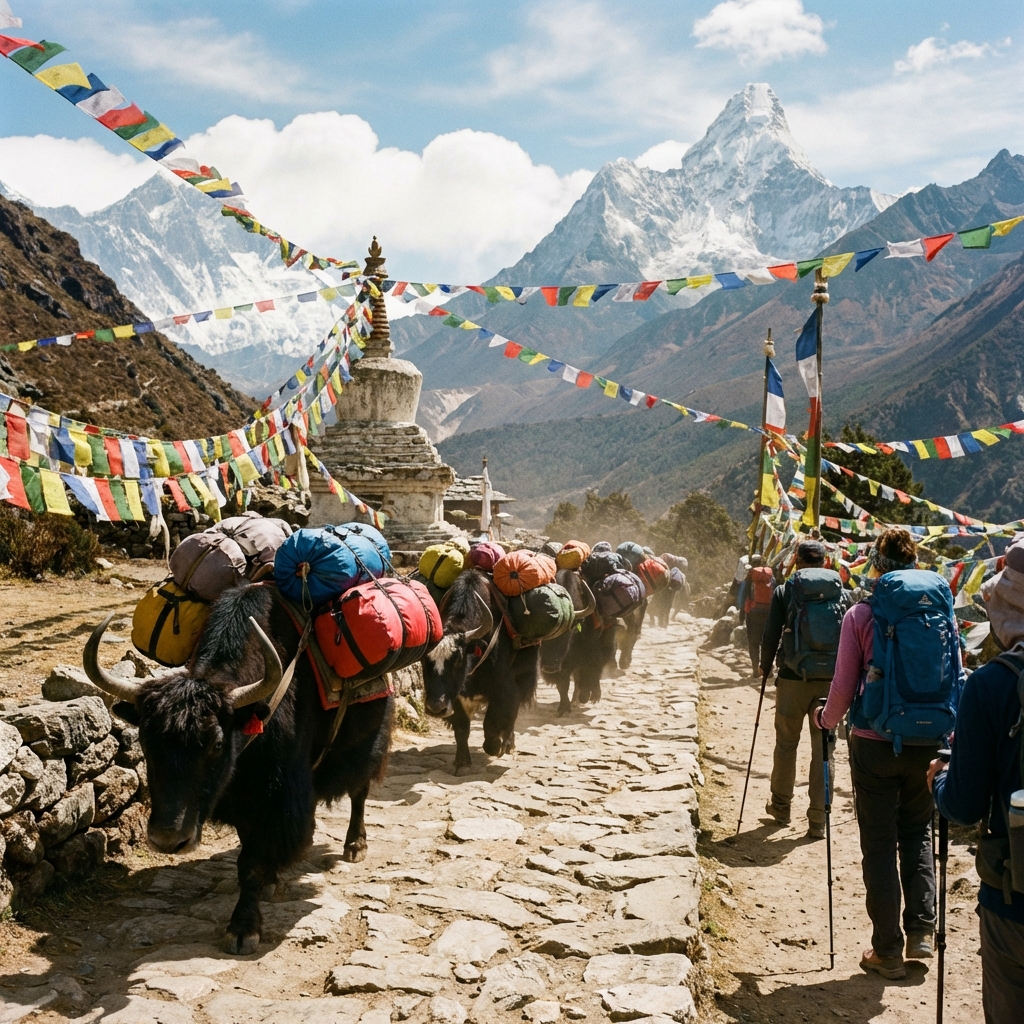
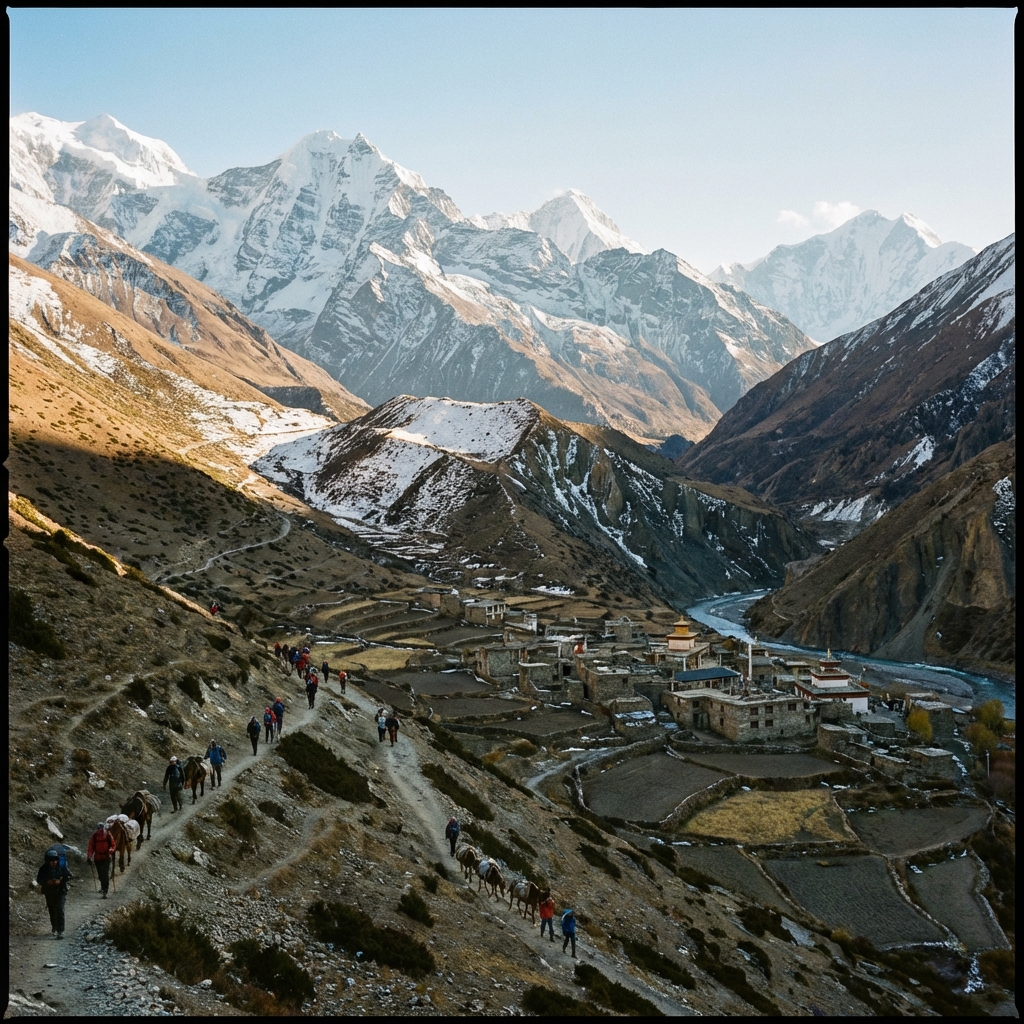
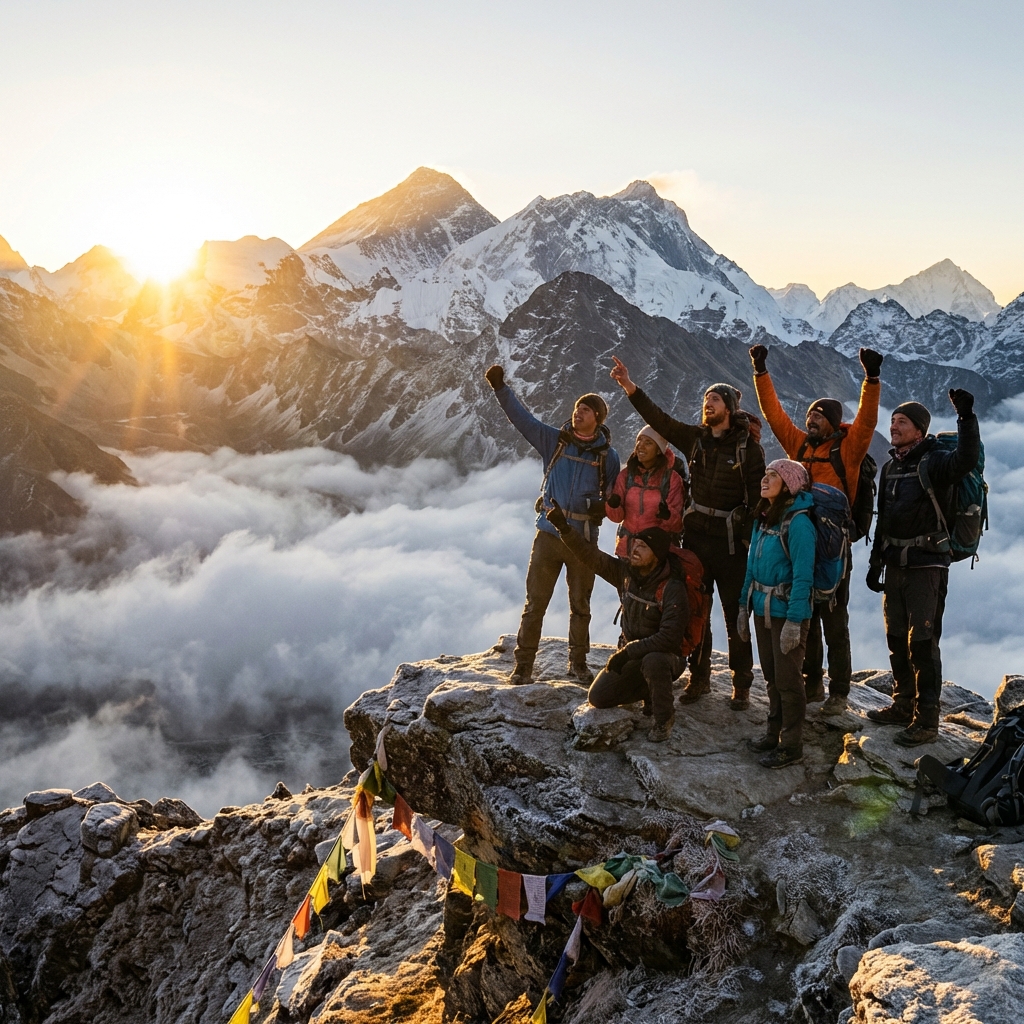
February represents Nepal's late winter transition—a month that straddles the coldest depths of January and the warming promise of March. While challenging with genuinely cold temperatures at high elevations, February rewards properly prepared trekkers with exceptional mountain clarity, pristine snow coverage, the absolute quietest trails of the year, significant cost savings, and the unique cultural opportunity of experiencing Losar (Tibetan New Year) in mountain villages.
This is emphatically NOT a beginner month. February demands proper winter gear (-20°C sleeping bags for high elevations), cold tolerance, realistic expectations about reduced high-altitude services, and acceptance that some ultra-high lodges may be closed. However, for experienced trekkers comfortable with winter conditions, February delivers unparalleled solitude, exceptional value, crystal-clear visibility often exceeding 150 kilometers, and authentic cultural experiences unavailable during crowded peak seasons.
This comprehensive guide provides complete February weather analysis across all altitude zones and regions, specific trek recommendations (with honest assessments of which routes work and which don't), winter gear essentials, Losar festival dates and celebrations, booking considerations (easier than any other month), cost savings breakdown (20-30% below peak), and detailed comparisons with neighboring months to help you determine if February's unique advantages outweigh its genuine challenges.
Good (Winter Shoulder Season)
Excellent (deep dry season)
Outstanding (150+ km)
Very cold to cold
Minimal (20-30% of October)
20-30% cheaper than peak
Lower/mid-altitude, experienced
Feb 29, 2025 (varies yearly)
Why February Works: The Compelling Advantages
February sits at Nepal's quietest moment—the lull between winter holidays and spring arrivals. This creates a unique window for specific trekker profiles.
1. The Absolute Quietest Trails of the Year
February sees just 20-30% of October's trekker volumes—the lowest of any month. This translates to genuine wilderness solitude even on famous routes.
Crowd Reality:
- Everest Base Camp: 50-100 trekkers/day starting from Lukla vs. 500-800 in October
- Annapurna Base Camp: 30-60 trekkers/day vs. 200-400 in October
- Langtang Valley: 15-30 trekkers/day vs. 100-200 in October
- Popular viewpoints (Kala Patthar, Poon Hill): 10-20 people vs. 80-150 in October
What This Means:
- Hours of solo trekking on famous trails
- Choice of beds in teahouses (often the only guests)
- Personal attention from lodge owners
- Dining halls feel intimate rather than cafeteria-like
- Viewpoints become meditative rather than social events
Pro Tip
Late February (Feb 20-28) offers the best balance—trails are still very quiet but warming trends make conditions more comfortable than early February. Temperatures are 2-4°C warmer, daylight extends to 11+ hours, and psychological spring approaching provides a mental boost.
2. Warming Trend Throughout the Month
Unlike December-January's relentless cold, February shows measurable warming week by week. This creates distinctly different conditions between early and late February.
Temperature Progression:
- Early February (1-10): Resembles late January, coldest nights
- Mid February (11-20): Noticeable warming at lower/mid elevations
- Late February (21-28): 2-4°C warmer than early month, spring approaching
Practical Impact:
- Late February high camps feel significantly warmer than January equivalents
- Lower elevations become genuinely comfortable by month's end
- Sleeping is less brutal in late February
- Psychological advantage: you're trekking toward spring, not deeper into winter
3. Exceptional Post-Winter Clarity
February maintains December-January's atmospheric clarity—pollution and dust remain at annual minimums after months of dry conditions.
Visibility Quality:
- Regular 150+ km viewing distances from major viewpoints
- Mountain peaks appear razor-sharp against deep blue skies
- Pristine snow coverage creates brilliant contrasts
- Early morning light (golden hour) produces dramatic photographic conditions
Photography Advantages:
- Fresh snow coverage (higher than March-April)
- Fewer trekkers in landscape compositions
- Clear air for long-distance shots
- Dramatic winter light quality
4. Significant Cost Savings: 20-30% Below Peak
February's low demand creates the year's best pricing across all services while infrastructure (early February) remains largely operational.
Cost Reductions:
- Accommodation: 25-35% cheaper than October ($3-5/night vs. $5-8)
- Meals: 20-30% cheaper
- Guide rates: 20-25% lower ($25-$35 /day vs. $25-30)
- Porter rates: 20-25% lower
- Package treks: 25-30% cheaper overall
- Gear rental: Better availability, easier negotiation
Value Assessment: February offers the best price-to-experience ratio for experienced winter trekkers—you pay 70-75% of peak prices for conditions that, while colder, match or exceed peak season in weather stability and visibility.
5. Losar Cultural Immersion
Losar (Tibetan New Year) typically falls in late February or early March (February 29, 2025). This provides unique cultural access unavailable other times.
Losar in Trekking Regions:
- Khumbu/Everest: Namche Bazaar, Khumjung, Thame, Tengboche monasteries
- Langtang: Langtang Village, Kyanjin Gompa
- Manaslu: Samagaon, Samdo (Tibetan influence)
- Upper Mustang: Lo Manthang celebrations
Cultural Experiences:
- Monastery ceremonies and prayers
- Traditional dances and music
- Family celebrations in villages
- Special foods and chang (Tibetan beer)
- 15 days of festivities (main celebration first 3 days)
Losar Dates (Lunar Calendar):
- 2025: February 29
- 2026: February 17
- 2027: February 6
Weather by Altitude: Complete Breakdown
February's conditions vary dramatically by elevation. Understanding these zones is critical for route selection and gear planning.
Lower Elevations (1,000-2,500m)
Locations: Lukla (2,860m), Pokhara (820m), lower Annapurna, Langtang approach
Temperatures:
- Daytime: 10-18°C (50-64°F) — comfortable trekking
- Nighttime: 2-8°C (36-46°F) — cool but manageable
Conditions:
- Very dry (5-10mm precipitation monthly)
- Clear skies 85-95% of days
- Comfortable for most trekkers
- No snow except occasional light dustings
Gear Requirements:
- Light fleece or down jacket sufficient for evenings
- Regular 3-season sleeping bag (-5°C) adequate
- No extreme cold gear needed
Mid Elevations (2,500-4,000m)
Locations: Namche Bazaar (3,440m), Manang (3,540m), Langtang Village (3,430m), Ghorepani (2,860m)
Temperatures:
- Daytime: 6-14°C (43-57°F) — cold but workable
- Nighttime: -4 to 4°C (25-39°F) — cold nights
Conditions:
- Very dry (8-15mm precipitation monthly)
- Clear skies 80-90% of days
- Occasional light snow possible
- Strong sun during day warms significantly
Gear Requirements:
- Warm down jacket for evenings (-10°C rated)
- Sleeping bag -10 to -15°C required
- Layering system essential
- Warm gloves and hat needed
High Elevations (4,000-5,000m)
Locations: Dingboche (4,410m), Lobuche (4,940m), Manang to Thorong Phedi, ABC (4,130m), Kyanjin Gompa (3,870m)
Temperatures:
- Daytime: 2-10°C (36-50°F) — cold, strong sun helps
- Nighttime: -10 to -2°C (14-28°F) — very cold
Conditions:
- Dry (10-20mm precipitation monthly)
- Clear skies 75-85% of days
- Moderate snow possible after clear nights
- High camps genuinely cold
Gear Requirements:
- Expedition down jacket essential
- Sleeping bag -15 to -20°C mandatory
- Full winter layering system
- Face protection (balaclava)
- Chemical hand warmers helpful
Extreme Elevations (5,000m+)
Locations: Gorak Shep (5,164m), Kala Patthar (5,545m), Thorong La (5,416m), Larkya La (5,160m)
Temperatures:
- Daytime: -2 to 6°C (28-43°F) — cold even in sun
- Nighttime: -18 to -10°C (0-14°F) — extreme cold
Conditions:
- Very dry (15-25mm precipitation monthly)
- Clear skies 70-80% of days
- Snow accumulation possible at passes
- Wind chill significant factor
Gear Requirements:
- -20°C sleeping bag absolutely mandatory
- Full expedition gear (as for December/January)
- 4-season tent if camping
- Crampons may be needed for passes after snow
| Month | High | Low | Conditions | Crowds | Notes |
|---|---|---|---|---|---|
| Lower (1,000-2,500m)Best | 10-18°C | 2-8°C | Very Low (5-10mm) | Very Low | Comfortable conditions, very quiet |
| Mid (2,500-4,000m)Best | 6-14°C | -4 to 4°C | Very Low (8-15mm) | Very Low | Cold nights, excellent days |
| High (4,000-5,000m)Best | 2-10°C | -10 to -2°C | Low (10-20mm) | Low | Very cold nights, proper gear essential |
| Extreme (5,000m+) | -2 to 6°C | -18 to -10°C | Low (15-25mm) | Low | Extreme cold, experienced only |
Weather by Region: Where to Trek in February
February suitability varies significantly by region. Some areas thrive in February; others become genuinely challenging.
Everest Region (Khumbu)
Overall February Rating: Very Good ★★★★☆
Conditions:
- Visibility: Exceptional (150+ km clear days)
- Precipitation: Very low (10-20mm monthly)
- Temperature: Very cold high camps (-15 to -20°C Gorak Shep)
- Trails: Clear and dry, occasional ice patches
- Losar: Strong Sherpa celebrations in Namche, Khumjung, Tengboche
Best Routes:
- Everest Base Camp: Excellent with proper gear
- Gokyo Lakes: Very good, quieter than EBC
- Everest View Trek (to Tengboche): Excellent, lower altitude
- Khumbu Three Passes: Challenging, experienced winter trekkers only
Challenges:
- Gorak Shep/Lobuche extremely cold nights
- Some higher lodges may reduce services late month
- Lukla flights can have delays (but less than monsoon)
Booking Lead Time: 1-2 months sufficient (vs. 4-5 months in October)
Annapurna Region
Overall February Rating: Good to Very Good ★★★★☆
Conditions:
- Visibility: Excellent (100-150km)
- Precipitation: Very low (8-18mm monthly)
- Temperature: Cold to very cold depending on route
- Trails: Excellent, well-maintained
- Losar: Limited (Gurung vs. Tibetan Buddhist culture)
Best Routes:
- Poon Hill: Excellent—lower altitude, spectacular sunrise
- Ghorepani-Ghandruk Loop: Excellent, comfortable elevation
- Mardi Himal: Very good, moderate crowds
- Annapurna Base Camp: Good, but cold at ABC (4,130m)
- Khopra Ridge: Excellent, off-beaten, dramatic
Annapurna Circuit:
- Possible but challenging
- Thorong La (5,416m) can be snow-covered
- Start 4-5am for crossing, warmer in Feb than Dec/Jan
- Build extra days for weather delays
- Experienced trekkers only
Best Annapurna Choice: Poon Hill or ABC if you have proper sleeping bag
Langtang Region
Overall February Rating: Excellent ★★★★★
Why Langtang Shines in February:
- Perfect elevation profile (most trekking 2,500-4,000m)
- February temperatures very manageable at these elevations
- Close to Kathmandu (no Lukla flight stress)
- Excellent lodge network remains open
- Strong Losar celebrations (Tamang culture)
- Best value-to-quality ratio in February
Routes:
- Langtang Valley: Excellent, highly recommended
- Gosainkunda: Good, but high pass (4,610m) can be snowy
- Tamang Heritage Trail: Excellent, cultural focus
- Helambu: Very good, lower elevation
Why Langtang is February's Best: Late February Langtang Valley may be the single best trek-to-month match—comfortable temps, very quiet, excellent facilities, no flight dependency, strong Losar culture, and spectacular views.
Manaslu Region
Overall February Rating: Fair to Good ★★★☆☆
Conditions:
- Larkya La (5,160m) challenging in February
- Snow accumulation possible
- Very quiet (15-25% of October numbers)
- Cold high camps
Assessment:
- Early February: Challenging, fresh snow possible
- Late February: More feasible, improving conditions
- Requires experienced guide familiar with winter conditions
- Build extra contingency days
- Restricted area requires guide anyway
Recommendation: Only for experienced winter trekkers comfortable with variable high-pass conditions
Upper Mustang
Overall February Rating: Very Good ★★★★☆
Why Good:
- Rain shadow region = very dry even in monsoon/winter
- Less extreme cold than other regions (tibetan plateau)
- Unique cultural experience (Lo Manthang)
- Losar celebrations authentic
- Excellent visibility
Challenges:
- Expensive restricted permit (USD 50/day (no minimum))
- Very cold nights despite dry conditions
- Jomsom flights can have wind delays
- Requires guide (mandatory)
Assessment: If you can afford permits, Upper Mustang in February offers reliability, uniqueness, and Losar cultural access.
| Month | High | Low | Conditions | Crowds | Notes |
|---|---|---|---|---|---|
| Everest RegionBest | 2-10°C (4,000m) | -10 to -2°C | Very Low | Low | Excellent visibility, very cold high camps |
| Annapurna RegionBest | 6-14°C (3,000m) | -4 to 4°C | Very Low | Low | Poon Hill excellent, Circuit challenging |
| Langtang RegionBest | 6-12°C (3,500m) | -6 to 2°C | Very Low | Very Low | Best overall Feb choice, Losar celebrations |
| Manaslu Region | 4-10°C (4,000m) | -8 to 0°C | Low | Very Low | Challenging pass, experienced only |
| Upper MustangBest | 8-14°C | -6 to 0°C | Very Low | Very Low | Dry, expensive permit, cultural richness |
Best Treks for February: Detailed Recommendations
1. Langtang Valley Trek — February's Hidden Gem
Duration: 7-10 days Max Altitude: 4,984m (Tserko Ri viewpoint optional) February Rating: ★★★★★ Excellent
Why Perfect for February:
- Ideal elevation profile (2,500-4,000m = comfortable Feb temps)
- Very quiet (15-20% of October crowds)
- No Lukla flight dependency (drive from Kathmandu)
- Excellent lodge network remains open
- Strong Losar celebrations (Tamang + Sherpa culture)
- Spectacular views with fresh snow coverage
February Specifics:
- Night temps: -6 to 4°C (manageable with -10 to -15°C bag)
- Daytime trekking comfortable (6-12°C)
- Late February especially pleasant
- Kyanjin Gompa perfect for Losar timing
Challenges:
- Tserko Ri (4,984m) very cold if attempted
- Early starts needed for viewpoint hikes
Langtang Valley Complete Guide
2. Poon Hill Trek — Perfect February Intro
Duration: 3-5 days (4 days standard) Max Altitude: 3,210m February Rating: ★★★★★ Excellent
Why Excellent:
- Low altitude = no extreme cold (comfortable nights)
- Legendary sunrise views with crystal February clarity
- Short duration = minimal cold exposure
- Excellent lodge infrastructure
- Accessible for February first-timers
February Specifics:
- Daytime: 8-16°C (comfortable)
- Night: 0-6°C (cool but fine with -5°C sleeping bag)
- Rhododendron forests (no blooms yet, but beautiful)
Perfect For: First-time February trekkers, shorter schedules, families, photographers
3. Everest Base Camp — February's Epic Challenge
Duration: 12-14 days Max Altitude: 5,545m (Kala Patthar) February Rating: ★★★★☆ Very Good (with proper gear)
Why It Works:
- Exceptional Everest clarity (pristine conditions)
- 40-50% of October crowds (quieter but not empty)
- All core teahouses operational early February
- Massive cost savings vs. peak season
February Specifics:
- Gorak Shep nights: -15 to -20°C (brutal cold)
- Kala Patthar summit: -10 to -15°C even at midday
- Sleeping bag -20°C absolutely mandatory
- Early starts essential (4-5am for Kala Patthar)
Challenges:
- Some high lodges reduce services late February
- Genuine winter conditions at 5,000m+
- Not for first-time Himalayan trekkers
Perfect For: Experienced trekkers with winter camping background, cold-hardy adventurers, those seeking uncrowded EBC
4. Annapurna Base Camp — Moderate February Option
Duration: 7-10 days Max Altitude: 4,130m February Rating: ★★★★☆ Good to Very Good
Why Good:
- Spectacular amphitheater setting with snow
- Lower than EBC (less extreme cold)
- Well-supported route
- Dramatic scenery
February Specifics:
- ABC nights: -10 to -15°C (cold but less than EBC)
- Lower sections comfortable (1,000-3,000m)
- -15°C sleeping bag recommended
- Fresh snow creates magical landscape
5. Ghorepani-Ghandruk Loop — Cultural + Views
Duration: 4-6 days Max Altitude: 3,210m (Poon Hill) February Rating: ★★★★★ Excellent
Combines: Poon Hill sunrise + Gurung cultural villages
Perfect For: Those wanting cultural immersion with spectacular views but avoiding extreme altitude
6. Mardi Himal Trek — Off-Beaten February
Duration: 5-7 days Max Altitude: 4,500m February Rating: ★★★★☆ Very Good
Advantages:
- 60% fewer crowds than ABC
- Dramatic close-up Machapuchare (Fishtail) views
- Newer route, excellent lodges
- Similar views to ABC, less trekker traffic
Losar Festival: Tibetan New Year in the Himalayas
Losar provides unique cultural access rarely experienced by trekkers. If your February dates align with Losar, this adds profound dimension to your trek.
Losar Dates by Year (Lunar Calendar)
- 2026: February 29 (Year of the Wood Snake)
- 2026: February 17 (Year of the Fire Horse)
- 2027: February 6 (Year of the Fire Sheep)
Where to Experience Losar While Trekking
Khumbu/Everest Region:
- Namche Bazaar: Largest Sherpa town, major celebrations
- Khumjung: Traditional village, monastery ceremonies
- Thame: Edmund Hillary's Sherpa friend Tenzing's village
- Tengboche Monastery: Dramatic religious ceremonies
Langtang Region:
- Langtang Village: Strong Tamang/Tibetan culture
- Kyanjin Gompa: Monastery celebrations
- Syabrubensi: Pre-trek Losar atmosphere
Upper Mustang:
- Lo Manthang: Most authentic Tibetan Losar (walled city)
- Ancient monasteries, traditional dances
Celebration Timeline
Day 1 (Losar Proper):
- Early morning monastery prayers
- Traditional butter sculptures
- Family gatherings and special foods
- Khapse (fried pastries), cheese, yak butter tea
- Limited trekking—participate rather than hike
Days 2-3:
- Continued celebrations
- Traditional dances and music
- Community gatherings
- Some lodges may have reduced services (feast preparation)
Days 4-15:
- Festive atmosphere continues
- Graduallyfades back to normal operations
Planning for Losar
If You Want Losar Experience:
- Plan to be in major Sherpa/Tamang village (Namche, Langtang Village, Kyanjin) on Losar day
- Build flexibility—celebrations may affect lodge services
- Bring small gifts (khata scarves, modest offerings)
- Photography respectful—ask permission at ceremonies
If Avoiding Losar Crowds:
- Brief domestic tourism surge (Kathmandu Nepalis visit mountains)
- Book 2-3 weeks ahead during Losar week
- Prices rise to peak levels for festival period
- Trails more crowded for 3-4 days around Losar
Pro Tip
Losar creates brief "micro peak season" with increased domestic trekkers and prices rising to October levels for 3-5 days around the holiday. Either embrace it for cultural immersion or trek earlier in February to avoid the surge.
What to Pack: February Winter Gear Essentials
February demands full winter gear. Underestimating this is the primary February failure mode.
Temperature-Driven Packing by Route
Lower Elevation Routes (Poon Hill, Ghorepani):
- Sleeping bag: -5 to -10°C sufficient
- Down jacket: Medium weight (-10°C rated)
- Gloves: Light to medium weight
- Overall: Standard 3-season gear mostly adequate
Mid Elevation Routes (Langtang Valley to 4,000m, lower ABC):
- Sleeping bag: -10 to -15°C required
- Down jacket: Warm expedition weight
- Gloves: Warm winter gloves + liner gloves
- Hat: Warm beanie
- Overall: Solid 4-season winter gear
High Elevation Routes (EBC, full ABC, high camps):
- Sleeping bag: -15 to -20°C mandatory (non-negotiable)
- Down jacket: Expedition grade (800-fill, -20°C+)
- Gloves: Expedition mittens or heavy gloves
- Hat: Warm beanie + balaclava for extreme cold
- Insulated pants: For high camps above 4,500m
- Chemical hand/toe warmers: Helpful
- Overall: Full expedition winter gear
February-Specific Additions
Beyond standard trekking gear, February requires:
Extremity Protection:
- Expedition-weight gloves or mittens (waterproof, -20°C rated)
- Liner gloves for dexterity (photography, zippers)
- Warm beanie (wool or synthetic)
- Balaclava or face mask for extreme cold/wind
- Neck gaiter or buff
- Warm socks (4-5 pairs, merino wool)
Sleeping System:
- Sleeping bag matched to max altitude (see above)
- Sleeping bag liner adds +5°C warmth
- Down booties for cold evenings in lodges
- Eye mask for long nights (9-10 hours darkness)
Layering System:
- Base layers (merino wool, 2-3 sets)
- Mid layers (fleece jacket, insulated vest)
- Outer layer (down jacket + waterproof shell)
- Insulated pants for high elevations
- Trekking pants + thermal leggings
Sun Protection (Critical):
- Sunglasses (Cat 3-4, glacier glasses for passes)
- Sunscreen SPF 50+ (UV intense despite cold)
- Lip balm with SPF
Rental in Kathmandu
What to Rent:
- Sleeping bags (-15 to -20°C): $1-2 USD/day
- Down jackets: $1-2 USD/day
- Warm boots if yours inadequate: $2-3/day
- Crampons if needed: $1-2/day
Rental Advantages in February:
- Excellent availability (low demand)
- Better quality selection
- Lower prices than peak season
- Negotiate multi-week rates
What to Bring from Home:
- Base layers (hard to find correct sizes)
- Your own boots (fit critical)
- Socks and gloves (personal comfort)
- Technical gear (headlamp, water bottles)
Costs & Budgeting: February Savings
February delivers the year's best pricing while maintaining good infrastructure (early Feb) or acceptable infrastructure (late Feb).
Accommodation Costs
Teahouses:
- Early February: Many offer "free room if eating 3 meals" deals
- Room charges: $2-5/night (vs. $6-9 in October)
- Negotiation easier due to low occupancy
- Late February: Some high lodges close (limited options but those open cheaper)
Food Costs
- Dal bhat: $4-6 (vs. $5-7 in October)
- Western meals: $5-8 (vs. $6-10 in October)
- Tea/coffee: $1-2 (vs. $1.50-2.50 in October)
- Bottled water: Similar pricing (altitude-dependent)
Guide & Porter Rates
Guides:
- February: $20-$30 /day (vs. $25-32 in October)
- Negotiation easier
- High-quality guides available (not booked)
Porters:
- February: $13-18/day (vs. $17-22 in October)
- Lower demand = better availability
Package Trek Costs
Everest Base Camp (14 days):
- February: $1,000-1,800 (vs. $1,400-2,400 in October)
- Savings: 25-30%
Annapurna Base Camp (10 days):
- February: $650-1,200 (vs. $900-1,600 in October)
- Savings: 25-30%
Langtang Valley (10 days):
- February: $500-950 (vs. $700-1,300 in October)
- Savings: 25-30%
Total Savings Example
Everest Base Camp Trek (14 days, guided, mid-range):
| Item | October Cost | February Cost | Savings |
|---|---|---|---|
| Package | $1,800 | $1,300 | $500 |
| Gear Rental | $60 | $50 | $10 |
| Extras (snacks, wifi, showers) | $200 | $170 | $30 |
| Total | $2,060 | $1,520 | $540 (26%) |
Budget vs. Moderate vs. Comfortable
Budget February Trek ($25-40/day):
- Basic teahouses, free room deals
- Cook your own food or dal bhat only
- No guide/porter (DIY)
- Minimal extras
Moderate February Trek ($40-65/day):
- Good teahouses
- Mix of dal bhat and Western food
- Guide or porter
- Some luxuries (hot showers, wifi)
Comfortable February Trek ($65-100+/day):
- Best available lodges
- Full Western menu
- Guide + porter
- All extras
Booking Timeline & Logistics
February's low demand creates unprecedented booking flexibility—a stark contrast to October's months-ahead requirements.
How Far Ahead to Book
Package Treks (Guided):
- Early February: 3-6 weeks sufficient
- Late February: 2-4 weeks adequate
- Losar week (Feb 25-Mar 5): 4-6 weeks recommended
Independent Trekking:
- Early February: 1-2 weeks for permits/flights
- Walk-up lodge booking feasible throughout
- Losar week: 2-3 weeks for popular lodges
Lukla Flights:
- Book 3-4 weeks ahead (easier than October's 3-4 months)
- Weather delays possible but less than monsoon
- Build 1-2 buffer days in Kathmandu
Lodge Reservations
Do You Need Advance Bookings?
- Early February: No (except Losar week)
- Late February: No, but some high lodges closing
- Walk-up works fine most routes
Strategy:
- Contact key lodges if peace of mind desired
- Otherwise walk-up totally viable
- Lodge owners happy to see guests
Permit Processing
Same as other months:
- TIMS card: Same-day processing in Kathmandu/Pokhara
- Park permits: Same day
- Restricted area permits: 2-3 weeks processing
Temperature Trends: Early vs. Late February
February is not monolithic—early and late month feel significantly different.
Early February (Feb 1-10)
Characteristics:
- Closest to January's depth of winter
- Coldest nights of February
- Shortest daylight (9.5-10 hours)
- Full winter infrastructure (most lodges open)
Best For:
- Those seeking absolute quietest conditions
- Coldest hardy trekkers
- Photographers wanting pristine winter scenes
Mid February (Feb 11-20)
Characteristics:
- Noticeable warming at lower/mid elevations
- Days lengthening (10-10.5 hours)
- Psychological shift toward spring
- Still very quiet trails
Best For:
- Balance between winter conditions and emerging warmth
- Most stable cold-weather period
Late February (Feb 20-28)
Characteristics:
- 2-4°C warmer than early February
- Daylight exceeding 11 hours
- Spring clearly approaching
- Some high lodges beginning closures
Best For:
- Those wanting February solitude with less extreme cold
- First-time February trekkers
- Optimal value-to-comfort ratio
Pro Tip
Target late February (Feb 20-28) if you want February's advantages—solitude, clarity, savings—with less brutal cold. This is the February "sweet spot" offering the best overall experience for most trekkers.
February vs. Other Months: Strategic Comparisons
February vs. January
Weather: Similar—both deep winter, January marginally colder (1-2°C) Visibility: Both excellent and comparable Crowds: February marginally quieter post-holidays Temperatures: February warming trend vs. January's relentless cold Verdict: Late February better than January for warming trend; early February nearly identical to late January
February vs. December
Weather: February colder overall (December warmer early month) Visibility: Comparable (both outstanding) Crowds: December busier (40-60% of Oct vs. Feb 20-30%) Infrastructure: December more lodges open Losar: February has Losar cultural advantage Verdict: December better for first-time winter trekkers; February better for solitude seekers
February vs. March
Weather: March warmer (5-8°C warmer), more precipitation Crowds: March much busier (60-70% of Oct vs. Feb 20-30%) Spring: March has emerging rhododendron blooms Costs: March prices rising toward peak; February shoulder rates Verdict: March better for comfort and blooms; February for solitude and value
February vs. October
Weather: October more stable, less cold (8-12°C warmer) Visibility: February marginally better (lower pollution) Crowds: October at peak (Feb has 70-80% fewer trekkers) Costs: October peak pricing; February 20-30% cheaper Infrastructure: October full operations; Feb some reductions Verdict: October better for first-timers and peak reliability; February for experienced trekkers wanting solitude
When February Doesn't Work: Honest Assessment
Who Should Avoid February
First-Time Himalayan Trekkers:
- February's cold and short days add complexity
- Better to learn in October-November or March-April
- Save February for second or third Nepal trek
Cold-Intolerant Individuals:
- If you genuinely dislike cold, February will be miserable
- No shame in preferring warmer months
- Comfort matters for enjoyment
Those Requiring Full Infrastructure:
- Late February sees some high-lodge closures
- If you need maximum service availability, choose Oct-Nov or Mar-Apr
Budget-Conscious Trekkers on Fixed Income:
- Winter gear investment (purchase or rent) adds cost
- Savings on trek may be offset by gear needs
- Calculate total costs before committing
Families with Young Children:
- Extreme cold challenging for kids
- Shorter days limit trekking hours
- Choose warmer months for family trips
Routes to Avoid in February
Ultra-High Passes Without Experience:
- Manaslu Circuit (Larkya La): Variable conditions
- Three Passes (Khumbu): Possible but challenging
- Annapurna Circuit (Thorong La): Doable but requires experience
Eastern Regions:
- Makalu Base Camp: Very remote, very cold
- Kanchenjunga: Extremely cold and isolated
Very Remote Routes:
- Dolpo: Possible but logistically challenging
- Far-western treks: Too isolated for February infrastructure
Frequently Asked Questions
Weather & Conditions
Q: Is February too cold for trekking in Nepal? A: February is cold but manageable with proper gear. Lower elevations (below 3,000m) are comfortable (10-18°C days). Mid elevations (3,000-4,000m) are cold but workable with layering (6-14°C days). High elevations (4,000-5,000m+) are very cold (-2 to 10°C days, -10 to -18°C nights) requiring expedition gear. With -15 to -20°C sleeping bags and proper clothing, February is very doable—just not for cold-intolerant people.
Q: Will I see snow during February treks? A: Light snow is possible above 4,000m, especially after clear nights. However, February is deep in the dry season—precipitation is minimal (5-20mm monthly). Lower and mid elevations rarely see snow. High elevations have ground snow coverage (beautiful white landscapes) and occasional fresh light snow. Heavy snowstorms are uncommon but possible—if they occur, expect 1-2 day delays while trails are cleared.
Q: How is visibility in February? A: February offers exceptional visibility—often exceeding 150km on clear days. After months of dry season, atmospheric pollution reaches annual lows. From major viewpoints, you can see mountain ranges extending across hundreds of kilometers. Kala Patthar views reveal Everest, Cho Oyu, Makalu, and Tibetan peaks; Poon Hill shows the entire Annapurna and Dhaulagiri massifs. February's clarity rivals or exceeds October's.
Q: Does it rain in February? A: No, February is deep within the dry season. Precipitation averages just 5-20mm monthly across trekking regions—some of the lowest of the year. You'll experience clear or partly cloudy conditions 75-90% of days. When precipitation occurs, it's usually light snow at high elevations after clear nights. Multi-day rain events are extremely rare.
Trekking Routes
Q: Can I do Everest Base Camp in February? A: Yes, with proper preparation. EBC in February requires: (1) -20°C sleeping bag (non-negotiable), (2) Expedition down jacket and full winter layers, (3) Realistic cold tolerance, (4) Flexibility for possible delays. Advantages: 40-50% fewer crowds, spectacular visibility, massive cost savings (25-30% cheaper). Challenges: Very cold nights at Gorak Shep/Lobuche (-15 to -20°C), some high lodges reducing services late February. February EBC is excellent for experienced winter trekkers.
Q: What's the best trek for February? A: Langtang Valley is arguably February's best overall choice. It offers perfect elevation profile (2,500-4,000m where February temps are very manageable), close proximity to Kathmandu (no Lukla flight), very quiet trails (15-25% of October crowds), excellent value, strong Losar celebrations (Tamang culture), and spectacular views. Late February Langtang is especially pleasant as warming trend is noticeable. For shorter trek, Poon Hill is outstanding in February.
Q: Is Annapurna Circuit possible in February? A: Yes, but challenging. Thorong La pass (5,416m) is crossable with proper planning: (1) Start crossing 3-4am (weather most stable), (2) Late February timing better than early February, (3) Expedition winter gear mandatory, (4) Experienced guide recommended, (5) Contingency days for weather. Success rate 80-85% with proper timing and gear. February advantage: Warmer than January/December crossing (though still cold). Consider shortened circuit options avoiding the pass.
Q: Can I trek Annapurna Base Camp in February? A: Yes, ABC is very good in February. Lower sections (Nayapul to Chomrong) are comfortable with pleasant temperatures. Upper sections (Deurali to ABC) are cold but spectacular with snow-covered amphitheater. You'll need -15°C sleeping bag for ABC nights (-10 to -15°C). Advantages: Beautiful snow coverage, 30-35% of October crowds, excellent lodge network. ABC is more accessible in February than EBC due to lower maximum elevation.
Logistics & Planning
Q: How far ahead should I book for February? A: February requires minimal advance booking—major advantage over October. Package treks: 3-6 weeks sufficient (vs. 4-5 months in October). Lukla flights: 3-4 weeks recommended. Lodge reservations: Usually unnecessary (walk-up works fine). Losar week exception (late Feb): Book 4-6 weeks ahead for brief demand surge around festival. Overall, February offers unprecedented flexibility.
Q: Are lodges open in February? A: Most lodges remain open throughout February, especially at lower and mid elevations. Early February: Full operations at all elevations. Late February (25-28): Some very high lodges (above 5,000m) may close or reduce services. Popular routes (EBC, ABC, Langtang, Poon Hill) maintain good lodge availability throughout month. Check with guides about specific high-camp availability if trekking late February.
Q: Can I trek independently in February? A: Yes, on non-restricted routes, though guides are recommended. February's low crowds mean help is less readily available if problems arise. Cold creates safety risks if you get lost or injured. Independent advantages: Lower costs, flexibility, self-reliance satisfaction. Recommendations: Experienced trekkers comfortable with winter conditions, navigation skills, proper emergency gear. First-time Himalayan trekkers should hire guides for February safety.
Q: What are Lukla flight chances in February? A: February Lukla flights operate reliably—better than monsoon, similar to autumn. Weather delays occur 15-25% of scheduled flights (mostly due to morning fog or high winds). Build 1-2 buffer days in Kathmandu before international flights. February advantages over October: Less congested flight schedule, easier rebooking if delayed, helicopter alternative available. Morning flights most reliable.
Costs & Budget
Q: How much cheaper is February than October? A: February saves 20-30% overall compared to October. Accommodation: 25-35% less, meals: 20-30% less, guides: 20-25% less, package treks: 25-30% less. Example: EBC trek costs $1,800-2,400 in October vs. $1,300-1,800 in February = $400-600 savings. Gear rental may offset some savings if purchasing/renting winter equipment. Overall, February offers best value-to-quality ratio of any month.
Q: Is February or December cheaper? A: February is marginally cheaper (5-10% less than December) as the absolute shoulder season. December still sees some holiday trekkers; February sees almost none. Accommodation and guide rates lowest in February. However, both are excellent value months compared to October-November peak. If cost is primary concern and you're comfortable with cold, February edges December.
Gear & Preparation
Q: What sleeping bag do I need for February? A: Depends on maximum altitude: Lower routes only (Poon Hill, below 3,500m): -5 to -10°C adequate. Mid routes (Langtang, ABC, 3,500-4,500m): -10 to -15°C required. High routes (EBC, passes, above 4,500m): -15 to -20°C mandatory. Do NOT underestimate—cold nights are standard, insufficient bags create miserable/dangerous conditions. Down fill superior to synthetic (warmer, more compressible). Rent in Kathmandu if not purchasing.
Q: Can I rent winter gear in Nepal? A: Yes, excellent winter gear rental in Kathmandu (Thamel) and Pokhara. February availability is outstanding (low demand). Rent: -20°C sleeping bags ($1-2/day), expedition down jackets ($1-2/day), winter boots ($2-3/day), trekking poles ($0.50-1/day). Inspect carefully, test zippers/compression, negotiate multi-week rates. Renting saves significant cost vs. purchasing if you won't use again.
Q: Do I need crampons for February treks? A: Depends on specific route and timing: Lower routes (Poon Hill): No. Mid routes (Langtang to 4,000m): Usually no, occasional icy patches manageable with careful footing. High routes (EBC): Usually no, but icy sections above 4,500m possible. Pass crossings (Thorong La, Cho La): Often yes—consult guide about current conditions. Early February more likely to need; late February less. Don't purchase speculatively—wait for guide assessment.
Health & Safety
Q: Is altitude sickness worse in February? A: Cold doesn't cause altitude sickness, but it complicates management. Cold stress increases oxygen consumption, dehydration easier in dry winter air (people drink less when cold), cold can mask symptoms (headache blamed on cold rather than altitude), extreme cold limits treatment options (nighttime descent more dangerous). Follow standard acclimatization protocols regardless of month—don't rush, stay hydrated, recognize symptoms early, descend if necessary.
Q: Can helicopters rescue in February? A: Yes, helicopter rescue operates year-round and February is actually good for operations. Weather windows are usually excellent (clear skies), visibility outstanding, dry conditions ideal. Rare winter storms might delay rescue 12-24 hours until weather clears. Helicopter costs: $4,000-8,000 Kathmandu to high camps. Comprehensive insurance with $50,000+ evacuation coverage is mandatory.
Q: What are February's biggest dangers? A: Main risks: (1) Hypothermia/frostbite from underestimating cold or inadequate gear, (2) Altitude sickness (same risk as any month), (3) Getting lost with fewer trekkers to help, (4) Slips on icy trails, (5) Some high passes snow-covered after storms. All manageable with proper gear, realistic pacing, hiring guide, and conservative decision-making. February is safe with preparation; dangerous if unprepared.
Cultural & Festivals
Q: When is Losar in 2026? A: Losar (Tibetan New Year) falls on February 29, 2025 (lunar calendar varies yearly). Main celebrations last 3 days (Feb 29-Mar 2), but festivities continue 15 days. To experience Losar while trekking, plan to be in Sherpa villages (Namche, Khumjung, Thame, Tengboche) or Tamang villages (Langtang Village, Kyanjin Gompa) around February 27-March 3. Coordinate with guide for cultural immersion timing.
Q: Should I trek during Losar or avoid it? A: Depends on priorities. Trek during Losar for: Unique cultural immersion, monastery ceremonies, traditional celebrations, authentic village experience. Avoid Losar if: You want absolute quietest trails (brief domestic tourist surge), peak pricing during festival period, some lodge services reduced (preparation for festivities). Losar creates "micro peak season" for 3-5 days—embrace for culture or avoid for solitude.
Q: What festivals besides Losar occur in February? A: February generally quiet festival-wise. Losar is the major event. Occasionally Maha Shivaratri (Hindu festival) falls in late February, celebrated in Kathmandu and some Hindu villages but minimal impact on mountain trekking. February is otherwise culturally quiet—one reason for low trekker volumes.
Miscellaneous
Q: Is February or March better for trekking? A: March is generally better for most trekkers: Warmer (5-8°C warmer than February), longer days (11-12 hours vs. 9-11), full lodge operations, early rhododendron blooms beginning. However, February advantages: Quieter trails (March sees 60-70% of October vs. February's 20-30%), lower prices (March rises toward peak), exceptional snow coverage (March snow melting), Losar cultural events. Choose February for solitude/value/winter aesthetics; March for comfort/warmth/blooms.
Q: How short are the days in February? A: Daylight hours: Early February ~9.5-10 hours (sunrise 6:30am, sunset 5:30pm). Late February ~11 hours (sunrise 6:15am, sunset 6:00pm). This limits daily trekking time compared to October's 11-12 hours. Impact: Start hiking 7-8am, finish by 3-4pm, long evenings in lodges (good for socializing, reading, rest). Not problematic with planning—just requires earlier starts and acceptance of lodge time.
Q: Can families with children trek in February? A: Challenging but possible for older kids (12+) on lower routes like Poon Hill or Ghorepani-Ghandruk. February's cold nights, shorter days, and need for proper gear creates complexity for families. Young children (under 10) face genuine hardship from cold. Better family months: October, November, March, April. If trekking in February with kids: Lower elevation routes only, excellent gear, realistic expectations, turn back if anyone struggling.
Conclusion: Is February Right for Your Trek?
February occupies a unique niche—a month that rewards specific trekker profiles while punishing poor planning or unrealistic expectations.
February's Clear Advantages
For the right trekker on the right route, February delivers:
- The absolute quietest trails of the entire year—genuine solitude even on famous routes
- Outstanding visibility (150+ km) with pristine winter landscapes
- Exceptional cost savings (20-30% below peak season)
- Unique Losar cultural immersion unavailable other times
- Late February warming trend creates improving conditions
- Easy last-minute booking and planning flexibility
- Fresh snow coverage creating dramatic photographic conditions
February's Clear Disadvantages
These challenges are inescapable:
- Genuinely cold temperatures at high elevations (-15 to -20°C nights at high camps)
- Requires investment in or rental of proper winter gear
- Shorter daylight hours (9-11 hours) limiting daily trekking time
- Some high-altitude lodges close late February
- Not suitable for first-time Himalayan trekkers
- Requires cold tolerance and mental resilience
The February Sweet Spot
February works best for:
- Experienced trekkers with previous Himalayan experience
- Cold-hardy adventurers comfortable with winter conditions
- Solitude seekers prioritizing empty trails over social atmosphere
- Value-conscious travelers wanting excellent conditions at low prices
- Late February timing (Feb 20-28) for warming trend advantage
- Mid-elevation routes (Langtang, Poon Hill, ABC) rather than extreme high routes
- Losar cultural enthusiasts seeking authentic festival immersion
- Photographers wanting pristine winter landscapes
February Doesn't Work For
- First-time Nepal trekkers (choose October/March)
- Cold-intolerant individuals (choose warmer months)
- Families with young children (too challenging)
- Those requiring full infrastructure (some late-Feb closures)
- Budget trekkers unable to afford/rent winter gear
- Ultra-high route aspirations without winter experience
Final Recommendations
Best February Scenarios:
- Langtang Valley trek, Feb 20-27, experienced trekker, Losar timing, budget-conscious
- Poon Hill trek, Feb 15-19, first-time February trekker, comfortable introduction
- Everest Base Camp, Feb 10-24, experienced winter trekker, proper gear, seeking solitude
- Annapurna Base Camp, Feb 18-27, moderate experience, late-month warmth
Worst February Scenarios:
- First-time Himalayan trek to EBC (too much cold complexity)
- Late February ultra-high routes (closing lodges create problems)
- Unprepared for cold with inadequate gear
- Expecting October-style full services everywhere
The Bottom Line
February is not Nepal's "best" trekking month for most people—that distinction belongs to October and November. But February is exceptional for experienced trekkers who:
- Understand and accept the trade-offs
- Have proper gear or budget to rent quality equipment
- Value solitude and savings over guaranteed perfect weather
- Are comfortable with genuine winter Himalayan conditions
- Preferably trek late February (20-28) for warming trend
- Target appropriate mid-elevation routes (Langtang, Poon Hill, ABC)
For this specific trekker profile, February delivers an unmatched experience: empty trails revealing the Himalayas in pristine winter glory, authentic cultural immersion during Losar festivities, exceptional value (best price-to-quality ratio of any month), and the profound satisfaction of experiencing Nepal's mountains when few others dare venture forth.
For everyone else—first-timers, cold-averse travelers, families, those requiring maximum services—October, November, March, or April provide more forgiving, comfortable, and accessible conditions.
Choose wisely based on honest self-assessment of your experience, cold tolerance, budget, and priorities. February rewards those who match its profile and challenges those who don't.
- Trekking Nepal in January: Deep Winter Guide
- Trekking Nepal in March: Spring Arrives
- Trekking Nepal in December: Early Winter
- Best Time to Trek Nepal: Complete Guide
- Langtang Valley Trek: Complete Guide
- Poon Hill Trek: Sunrise Spectacular
- Everest Base Camp: Complete Guide
- Annapurna Base Camp: Complete Guide
- Ghorepani-Ghandruk Loop: Cultural Trek
- Mardi Himal Trek: Off-Beaten Beauty
- Gokyo Lakes Trek: Quieter Everest Route
- Best Time Everest Region: Seasonal Guide
- Winter Trekking Nepal: Complete Guide
- Altitude Sickness Prevention
- Nepal Trekking Gear: Complete List
- Hiring Guides & Porters in Nepal
- Losar Festival: Tibetan New Year Guide
- Lukla Flight Guide: Tips & Strategies
- Budget Trekking Nepal: Save Money
- Solo Trekking Nepal Safety Guide
- Nepal Visa Guide: Complete Information
- Travel Insurance Nepal Trekking
- Everest Region (Khumbu) Hub
- Annapurna Region Hub
- Langtang Region Hub
Plan Your February Trek to Nepal
Experience the Himalayas at their quietest and most dramatic. Our February treks include expert winter guides, quality gear recommendations, Losar cultural coordination, and comprehensive support for cold-weather trekking success.