
Tamang Heritage Trail Trek: Itinerary, Cost & Guide
The Tamang Heritage Trail trek is a 7-10 day cultural circuit through traditional Tamang villages north of Kathmandu, in the Langtang region. It reaches a maximum altitude of 3,165m at Nagthali, rates Easy to Moderate, and costs roughly $700-1,200 for a guided trip. The trek runs from Syabrubesi through Gatlang, Tatopani, Thuman and Briddim, with nights in authentic community homestays.
The Tamang Heritage Trail represents Nepal's finest example of community-based tourism done right. This 7-10 day cultural circuit through authentic Tamang villages north of Kathmandu offers travelers something increasingly rare in the Himalayas: genuine cultural immersion where tourism revenue flows directly to local communities through homestay accommodations, traditional meals, and cultural performances.
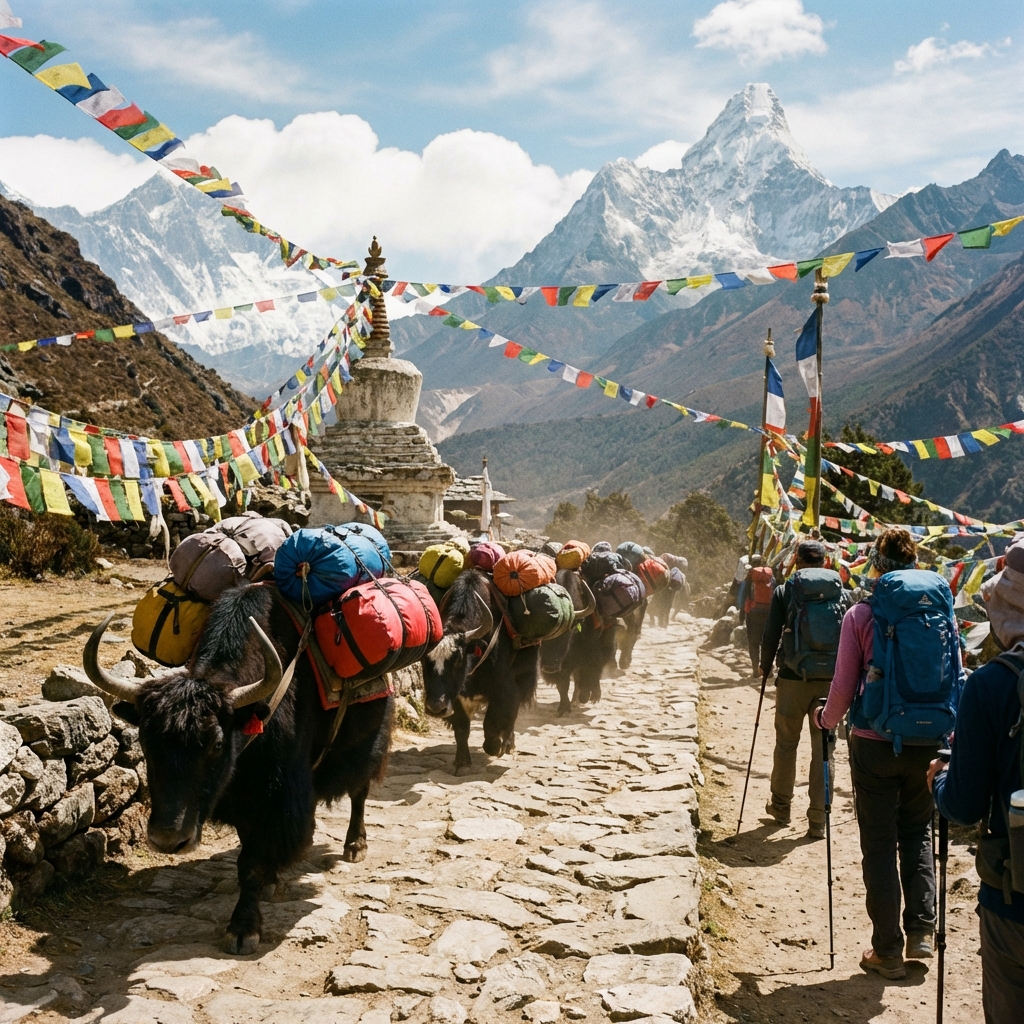
Unlike the crowded trails of the Annapurna and Everest regions, the Tamang Heritage Trail follows a peaceful circuit through Gatlang, Tatopani, Thuman, Briddim, and other villages where centuries-old traditions remain vibrantly alive. This is trekking as it should be—slow-paced, culturally enriching, and genuinely beneficial to the people who call these mountains home. If you want to plan your Tamang Heritage Trail trek for 2026, this guide covers the full itinerary, costs, permits, best seasons and how to book with a verified local agency or guide.
7-10 days
Easy to Moderate
3,165m (Nagthali)
Langtang National Park Permit (NPR 3,000)TIMS Card
Community homestays and basic lodges
Why Choose the Tamang Heritage Trail?
Direct Community Benefit Model
The Tamang Heritage Trail pioneered Nepal's community homestay network, established after the devastating 2015 earthquake to create sustainable livelihoods for remote villages. When you trek this route, approximately 70-80% of your spending goes directly to local families—for homestay accommodation, meals, cultural performances, and handicrafts.
This isn't tokenistic "homestay tourism" where you stay in a purpose-built tourist lodge. You're genuinely welcomed into family homes, sleeping in traditional wooden houses, sharing dal bhat prepared by your hosts, and participating in evening cultural exchanges. The experience creates meaningful connections while providing dignified income for communities rebuilding after the earthquake.
Briddim village, the heart of the homestay network, received the 2nd Mountain Development Prize at the 2005 International Mountain Day program in Kathmandu for its innovative community tourism management. Other villages quickly followed this model, creating a sustainable alternative to migration and environmental degradation.
Authentic Tamang Culture (Distinct from Sherpa)
The Tamang people migrated from Tibet centuries ago but developed their own distinct identity, language, and cultural practices. While sharing Tibetan Buddhist foundations with Sherpas, Tamang culture has unique characteristics worth understanding:
Language: Tamangs speak their own Tibeto-Burman language (Tamang Selo), distinct from Sherpa and Tibetan, though many also speak Nepali.
Religion: A fascinating blend of Tibetan Buddhism and ancient Bon shamanism. You'll encounter both Buddhist monasteries and shamanistic practices during village festivals.
Architecture: Traditional Tamang houses feature intricate wood carvings, stone construction, and distinctive red-painted mud plaster. The architectural style reflects both Tibetan influences and adaptations to the mid-hill climate.
Music and Dance: The Tamang Selo dance and Damphu drum are cultural cornerstones. During festivals like Lhosar (Tibetan New Year in February) and Chheju (December), villages come alive with traditional performances.
Livelihood: Unlike high-altitude Sherpa communities focused on mountaineering and yak herding, Tamangs practice terraced agriculture (potatoes, maize, wheat, millet), seasonal animal husbandry, and increasingly, community tourism.
Perfect for Families and Cultural Travelers
The Tamang Heritage Trail's gentle altitude profile (mostly 2,000-3,000m with one day at 3,165m) makes it ideal for families with children, older trekkers, and those seeking cultural depth over high-altitude challenges. Daily trekking times range from 4-7 hours on well-maintained trails through forests and villages—manageable for anyone with basic fitness.
This trek attracts culturally curious travelers rather than peak-baggers. You'll meet teachers on sabbatical, photographers documenting traditional life, anthropology students, and families seeking meaningful travel experiences. The pace is relaxed, with ample time for tea with locals, monastery visits, and children playing in village squares.
The Tamang People: Tibet to the Himalayas
Origins and Migration
"Tamang" derives from "Ta" (horse) and "Mang" (trader)—a reference to their historical role as horse traders on the Tibet-Nepal trade routes. Oral histories trace Tamang origins to Tibetan migration waves between the 7th and 14th centuries, though the community developed its distinct identity in Nepal's mid-hills.
Unlike Sherpas, who maintained closer cultural and linguistic ties to Tibet, Tamangs integrated more deeply with Nepal's broader cultural landscape while preserving their Buddhist-Bon heritage. This created a unique cultural fusion—Tibetan Buddhist monasteries alongside shamanistic healing practices, traditional Tamang language maintained alongside Nepali fluency.
Traditional Social Structure
Tamang villages traditionally operate through a clan-based social structure with communal decision-making. The "Tamba" (village priest/shaman) and "Lama" (Buddhist monk) both hold respected positions, reflecting the dual religious practice. Village elders form councils that make collective decisions about land use, festivals, and increasingly, tourism management.
The homestay network builds on this communal structure. Village tourism committees democratically manage guest distribution, pricing, and revenue sharing to ensure equitable benefits across households. This prevents the tourism wealth concentration that often creates resentment in other trekking regions.
Shamanism and Spiritual Practices
Tamang religious life fascinates ethnographers because it preserved ancient Bon shamanistic practices within a Tibetan Buddhist framework. The "Jhankri" (shaman) performs healing ceremonies, communicates with spirits, and conducts protective rituals that predate Buddhism's arrival.
During village festivals, you might witness Jhankri ceremonies involving rhythmic drumming, trance states, and traditional healing practices. These aren't staged tourist performances—they're living spiritual traditions that community members genuinely believe in and practice.
Buddhist monasteries coexist peacefully with shamanistic practice. Many Tamang families consult both lamas for Buddhist rituals and jhankris for healing and protection. This religious pluralism creates a spiritually rich atmosphere throughout the trek.
Easy to ModerateThe Community Homestay Experience
How the Homestay Model Works
The Tamang Heritage Trail homestay network represents one of Nepal's most successful community tourism initiatives. Here's how it actually functions:
Centralized Booking: Village tourism committees manage a rotating roster of participating households. When trekking groups arrive, families take turns hosting to distribute income equitably. Independent trekkers can arrange stays through village offices or trekking agencies that partner with communities.
Standardized Pricing: Communities agree on fair, consistent pricing—typically NPR 800-1,200 ($6-9) per person per night including accommodation and three meals. This prevents undercutting and ensures all families benefit similarly.
Quality Standards: Homestay families commit to cleanliness standards, separate guest sleeping areas, and cultural sensitivity training. While facilities are basic (squat toilets, limited electricity), homes maintain surprising comfort and cleanliness.
Cultural Exchange: Evening meals become cultural experiences. Families share stories, demonstrate traditional crafts, teach Tamang phrases, and often perform impromptu songs. These authentic exchanges create the trek's most memorable moments.
Revenue Distribution: A percentage of homestay fees goes to village development funds that support school improvements, trail maintenance, and medical facilities—ensuring tourism benefits extend beyond individual families.
What to Expect in a Tamang Homestay
Accommodation: You'll sleep in family homes' guest rooms with basic mattresses, pillows, and blankets. Bring a sleeping bag liner for hygiene and warmth. Rooms typically accommodate 2-4 trekkers and feature traditional Tamang wood carvings and decorations.
Bathroom Facilities: Most homestays offer squat toilets (some families now have western toilets) and basin washing facilities. Hot water for washing may be available for a small fee. Don't expect showers—this is authentic mountain village life.
Meals: Expect hearty, home-cooked meals emphasizing local ingredients. Breakfast might include Tibetan bread, chapati, porridge, and sweet tea. Lunches and dinners center on dal bhat (lentils and rice) with seasonal vegetables, pickles, and occasionally eggs or chicken. The food is simple but nutritious and surprisingly delicious.
Cultural Activities: Evenings might include Tamang Selo dance demonstrations, Damphu drumming, traditional craft demonstrations (weaving, woodcarving), or simply conversation around the kitchen fire. Families appreciate guests who participate enthusiastically.
Language: Most homestay families include at least one member with functional English, though communication often involves gestures, laughter, and smartphones with translation apps. This linguistic improvisation becomes part of the adventure.
Homestay Etiquette and Cultural Sensitivity
Essential Homestay Etiquette
Respect these cultural norms to honor your hosts:
- Remove shoes before entering homes and especially sleeping areas
- Accept offered food and tea graciously, even small tastes if you're full
- Ask permission before photographing family members, religious spaces, or ceremonies
- Dress modestly inside homes (cover shoulders and knees)
- Avoid public displays of affection which make conservative families uncomfortable
- Don't enter kitchen areas unless invited—this is often considered family space
- Participate in cultural activities enthusiastically but respectfully
- Learn basic Tamang phrases ("namaste," "thank you," "delicious") which delights hosts
- Offer small gifts appropriately—fresh fruits or treats for children are appreciated, but avoid creating dependency
- Tip fairly at trek end (NPR 1,000-1,500 or $8-12 per homestay family)
Buddhism and Bon practice certain taboos: Don't touch prayer wheels or religious objects with your left hand, walk clockwise around monasteries and chortens, and never point your feet toward religious images or people.
Route Overview: The Syabrubesi Circuit
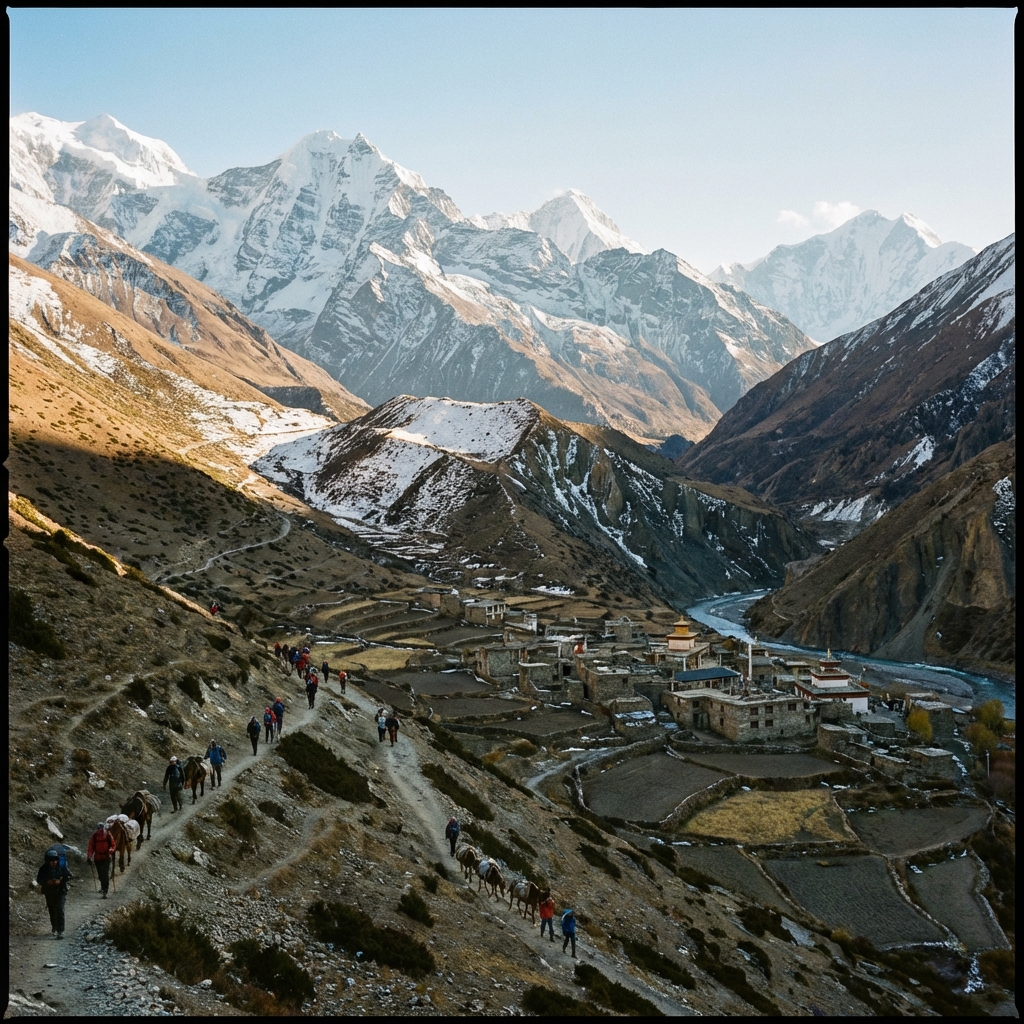
The Tamang Heritage Trail forms a roughly 100km circuit starting and ending in Syabrubesi (1,470m), the roadhead village that also serves as the gateway to Langtang Valley. The standard route follows a clockwise direction through five main villages, though variations exist.
Classic Route Sequence
Syabrubesi → Gatlang → Tatopani → Nagthali → Thuman → Briddim → Syabrubesi
This circuit maximizes cultural immersion while maintaining comfortable daily distances (typically 4-7 hours walking) and gentle altitude gains. The route's highest point is Nagthali viewpoint (3,165m)—high enough for spectacular mountain panoramas but low enough to avoid serious altitude concerns for most trekkers.
Route Variations
Short 7-Day Trek: Kathmandu → Syabrubesi → Gatlang → Tatopani → Thuman → Briddim → Syabrubesi → Kathmandu
Standard 8-Day Trek: Adds a rest day at Briddim for cultural activities or side hikes
Extended 10-Day Trek with Langtang Connection: Continues from Briddim to Lama Hotel (6-7 hours), connecting to the Langtang Valley circuit via Langtang Village and potentially Kyanjin Gompa
Alternative Starting Point: Some trekkers now drive directly to Gatlang (road recently completed), shortening the trek by one day but missing Syabrubesi's atmosphere
Seasonal Trail Conditions
Spring (March-May): Rhododendron forests explode in color, temperatures are moderate (10-18°C at 2,500m), and visibility is generally excellent after monsoon-cleared skies. March can still feel cool; April-May are prime.
Autumn (September-November): Post-monsoon clarity creates the year's best mountain views. September can still see occasional rain; October-November offer perfect conditions with stable weather and comfortable temperatures (8-15°C at altitude).
Monsoon (June-August): Trails become muddy and leech-infested, clouds obscure views, and landslide risks increase on road sections. However, the countryside is brilliantly green, wildflowers bloom, and you'll have trails nearly to yourself. Suitable for adventurous travelers comfortable with mud and leeches.
Winter (December-February): Clear skies rival autumn's visibility, but temperatures drop significantly (0-8°C at 2,500m; below freezing at night). Homestays are cozy with wood stoves, but you'll need serious cold-weather gear. Higher passes may see snow, though the trail remains generally open.
| Month | High | Low | Conditions | Crowds | Notes |
|---|---|---|---|---|---|
| January | 6 | -3 | Cold, clear skies, possible snow at Nagthali | ||
| February | 8 | -1 | Lhosar festival season, cold but clearer | ||
| March | 12 | 3 | Spring awakening, rhododendrons blooming | ||
| April | 16 | 7 | Peak season, warm days, blooming forests | ||
| May | 18 | 10 | Hot at lower elevations, pre-monsoon moisture | ||
| June | 19 | 13 | Monsoon begins, afternoon clouds, lush greenery | ||
| July | 19 | 14 | Heavy monsoon, leeches, landslide risk | ||
| August | 19 | 14 | Peak monsoon, very green, limited visibility | ||
| September | 17 | 11 | Monsoon fading, improving weather, festivals | ||
| October | 14 | 6 | Peak season, crystal clarity, Dashain/Tihar | ||
| November | 10 | 2 | Excellent trekking, clear views, cool nights | ||
| December | 7 | -2 | Winter sets in, clear skies, very cold nights |
Complete Itinerary Options
Standard 7-8 Day Itinerary
This itinerary balances cultural immersion, comfortable daily distances, and flexibility. Most trekkers follow this basic structure:
Day 1: Kathmandu to Syabrubesi (1,470m) – 7-9 hour drive
Depart Kathmandu early (6-7am) for the scenic but rough drive north via Trishuli Bazar, Dhunche, and the hydroelectric projects along Bhote Koshi River. The road improved significantly post-earthquake but still features unpaved sections with dramatic river gorge views. Arrive afternoon/evening with time to explore Syabrubesi's main street and prepare for trekking.
Overnight: Lodge in Syabrubesi
Day 2: Syabrubesi to Gatlang (2,238m) – 5-6 hours
Begin with a steady 2-3 hour climb to a magnificent viewpoint offering your first panoramas of Ganesh Himal, Langtang Lirung, and the Gosainkunda range. Descend through forests to Goljung Valley for lunch, passing Buddhist chortens and mani walls. Final 2-hour ascent through terraced fields to Gatlang, a traditional Tamang village spectacularly perched on steep hillsides. Visit Parvatikunda Lake and the ancient monastery.
Overnight: Homestay in Gatlang Altitude Gain: +768m
Day 3: Gatlang to Tatopani (2,607m) – 5-6 hours
Descend through forests and terraced farmland to the Bhote Koshi River at Chilime, crossing a suspension bridge near the Chilime Hydropower Dam. Enjoy riverside views before ascending gradually through small settlements to Tatopani. The trail offers continuous mountain panoramas and passes through varied forest ecosystems within Langtang National Park.
Overnight: Homestay in Tatopani Altitude Gain: +369m
Day 4: Tatopani to Thuman (2,338m) via Nagthali (3,165m) – 6-7 hours
This is the trek's longest and most spectacular day. Climb steadily through rhododendron and juniper forests to Brimdang village, then continue ascending to Nagthali Danda (3,165m)—the trek's highest point. The panoramic viewpoint reveals Langtang Lirung (7,227m), Shishapangma (8,013m, in Tibet), Ganesh Himal (7,422m), and countless other peaks. Lunch with mountain panoramas before descending through forests and meadows to Thuman village.
Overnight: Homestay in Thuman Altitude Change: +558m then -827m
Day 5: Thuman to Briddim (2,229m) via Timure – 5-6 hours
Descend to the Bhote Koshi River valley, following the ancient Tibet trade route to Timure village near the Nepal-Tibet border. The trail offers fascinating glimpses of historical trade dynamics—mule caravans once transported salt, wool, and goods along these paths. After lunch at Timure, ascend steeply through terraced fields and rhododendron forests to Briddim, the heart of the homestay network.
Overnight: Homestay in Briddim Altitude Change: -109m (net)
Day 6: Briddim to Syabrubesi (1,470m) – 4-5 hours
The final trekking day follows the Bhote Koshi River valley through forests and agricultural land. The trail alternates between shaded forest sections and open riverside paths with constant mountain views. Descend gradually, crossing the river via suspension bridges, to reach Syabrubesi. Arrive with time to celebrate trek completion, purchase last-minute souvenirs, and prepare for the drive to Kathmandu.
Overnight: Lodge in Syabrubesi Altitude Loss: -759m
Day 7: Syabrubesi to Kathmandu – 7-9 hour drive
Early morning departure retraces the rough but scenic road south to Kathmandu, arriving afternoon/evening. Many trekkers use this long drive for rest, photo reviewing, and processing the cultural experiences.
Overnight: Hotel in Kathmandu
Extended 10-Day Itinerary with Langtang Connection
For trekkers wanting both cultural immersion AND high-mountain scenery, this combination is unbeatable:
Days 1-5: Follow the standard Tamang Heritage Trail itinerary (Kathmandu → Syabrubesi → Gatlang → Tatopani → Thuman → Briddim)
Day 6: Briddim to Lama Hotel (2,470m) via Bamboo – 6-7 hours
Connect from the Tamang Heritage Trail to the classic Langtang Valley Trek route. Trek through Bhote Koshi valley, crossing to the west side, then ascend through stunning bamboo and rhododendron forests rich with wildlife. The forest section offers chances to spot red pandas, Himalayan black bears, and various pheasants.
Day 7: Lama Hotel to Langtang Village (3,430m) – 5-6 hours
Ascend through diverse forest zones into the wide Langtang Valley. Pass Ghoda Tabela (horse stable) where an army checkpoint registers permits, then continue through increasingly Tibetan-style landscapes to Langtang Village. Langtang Village was devastated by the 2015 earthquake but has been fully rebuilt with earthquake-resistant structures on a site about 100m higher than the original village. Trails and teahouses are fully restored and safe for trekking today.
Day 8: Langtang Village to Kyanjin Gompa (3,870m) – 3-4 hours
Short day allows gentle acclimatization while trekking through yak pastures, past enormous mani walls, to Kyanjin Gompa—a monastery village with spectacular glacier views. Arrive early afternoon with time to explore the gompa, visit the cheese factory, or hike to Kyanjin Ri viewpoint (4,773m) for sunset panoramas.
Day 9: Exploration Day at Kyanjin Gompa
Essential acclimatization day with multiple options: Hike Kyanjin Ri (4,773m) for 360-degree Himalayan panoramas including Langtang Lirung's massive north face; trek to Langshisa Kharka (4,285m) for glacier approaches; or simply rest, practice photography, and soak in the high-altitude atmosphere.
Day 10: Kyanjin Gompa to Lama Hotel (2,470m) – 6-7 hours
Rapid descent retracing your steps down-valley through Langtang Village and forests to Lama Hotel.
Day 11: Lama Hotel to Syabrubesi (1,470m) – 4-5 hours
Continue descending to Syabrubesi, completing the circuit.
Day 12: Syabrubesi to Kathmandu – 7-9 hour drive
This combination provides extraordinary value—authentic cultural immersion in Tamang villages followed by classic high-mountain trekking with glacier views, all within a manageable 12-day timeframe.
Hot Springs at Tatopani: Natural Healing Waters
Tatopani ("hot water" in Nepali) gained fame among trekkers for its natural hot springs—pools of naturally heated water believed to possess healing properties for muscle aches, joint pain, and general rejuvenation. Unfortunately, the 2015 earthquake dramatically reduced water flow from the main springs.
Current Hot Springs Status
The powerful hot springs that once allowed full-body bathing no longer flow at previous volumes. However, smaller thermal springs still emerge near the river, and locals maintain bathing areas where warm water pools allow foot soaking and limited bathing. The temperature remains pleasantly warm (approximately 35-40°C), and the tradition of bathing for healing continues.
Homestay families can guide you to the current hot spring locations along the riverbank. While not the dramatic bathing experience described in older guidebooks, the warm water still provides welcome relief for tired trekking muscles. Manage expectations—this is warm spring water, not developed hot spring pools.
Cultural Significance
Beyond physical benefits, hot springs hold spiritual significance in Hindu and Buddhist traditions. Many Nepalis undertake pilgrimage bathing at natural springs, believing the waters purify both body and spirit. Locals share stories of specific ailments—arthritis, skin conditions, muscle problems—allegedly cured or relieved by regular bathing.
This belief in healing waters connects to broader Himalayan spiritual geography where natural features (springs, lakes, caves, peaks) are viewed as sacred sites with inherent spiritual power. Bathing at Tatopani thus carries meaning beyond simple muscle relaxation.
Practical Hot Spring Tips
- Bring swimwear or quick-dry clothes for bathing—locals bathe clothed (men in shorts, women fully clothed)
- Time visits for afternoon/evening when you've finished trekking for the day
- Be respectful of local customs—men and women typically bathe separately or at different times
- Don't expect developed facilities—this is natural springs in a mountain village
- Combine with local knowledge—ask homestay families about current spring locations and bathing customs
- Consider the experience symbolic even if water flow is limited—it's about connecting with local traditions
Day-by-Day Cultural Highlights
Beyond the basic itinerary, here's what makes each village culturally distinctive:
Gatlang Cultural Experiences
Parvatikunda Pilgrimage: The sacred lake above the village attracts Hindu pilgrims who believe the waters possess divine properties. The hike to the lake (30-45 minutes from village) passes prayer flags and stone shrines.
Weaving Demonstrations: Gatlang women maintain traditional backstrap loom weaving, creating beautiful textiles with geometric patterns. Many homestays offer demonstrations and sell finished textiles—purchasing directly supports artisans without middlemen.
Monastery Exploration: The ancient monastery features rotating prayer wheels, Buddhist murals, and typically welcomes respectful visitors during non-prayer times. The resident lama sometimes offers blessings to visitors.
Agricultural Life: Observe terraced field cultivation of wheat, potatoes, and buckwheat using traditional techniques. During harvest seasons (spring and autumn), entire villages mobilize for cooperative harvesting—a fascinating community activity.
Tatopani and Thuman Shamanism
Jhankri Ceremonies: If your visit coincides with healing ceremonies or festivals, you might witness shamanistic practices involving rhythmic Damphu drumming, chanting, trance states, and traditional healing. These are genuine spiritual practices, not tourist performances—observe respectfully and ask before photographing.
Buddhist-Bon Coexistence: Notice how families consult both Buddhist lamas (for lifecycle rituals, blessings, festivals) and jhankris (for healing, protection from spirits, agricultural blessings). This religious pluralism reflects Tamang culture's Tibetan Buddhist foundation overlaid with pre-Buddhist animistic beliefs.
Traditional Medicine: Both villages maintain knowledge of medicinal plants harvested from surrounding forests. Some homestay families share information about traditional remedies—though always verify with modern medicine for actual ailments.
Briddim Community Activities
Evening Cultural Programs: Briddim's organized community tourism includes evening cultural performances featuring:
- Tamang Selo dance (circle dance with rhythmic steps)
- Damphu drumming (large frame drum central to Tamang music)
- Traditional songs in Tamang language
- Sometimes spontaneous participation where guests join the dancing
Handicraft Cooperatives: The women's cooperative produces and sells traditional crafts: hand-woven textiles, bamboo baskets, prayer flags, and wood carvings. Purchasing here ensures artisans receive fair prices.
Monastery Visits: Briddim's monastery welcomes visitors and the resident monks sometimes offer informal talks about Tibetan Buddhism, meditation, and monastic life.
Wildlife Watching: Briddim's location near Langtang National Park forests creates opportunities for wildlife encounters: red pandas (especially March-May), Himalayan black bears, various pheasants, and diverse birdlife. Guides can arrange early morning wildlife walks.
Difficulty Assessment: Who Can Do This Trek?
Easy to ModeratePhysical Requirements
The Tamang Heritage Trail ranks among Nepal's most accessible multi-day treks:
Daily Trekking Time: 4-7 hours of walking with regular rest stops, tea breaks, and lunch. The longest day (Tatopani to Thuman via Nagthali) involves 6-7 hours but with gradual climbing and a long lunch break.
Elevation Range: Most villages sit between 2,000-2,600m—high enough for mountain views but low enough that altitude sickness is unlikely. The highest point, Nagthali (3,165m), is reached gradually and you descend the same day.
Trail Conditions: Well-maintained paths through villages, forests, and terraced fields. Some steep sections with stone steps, but nothing technically challenging. Trails can be muddy during monsoon but are generally good quality.
Technical Skills: None required. This is walking, not climbing. Basic balance and comfort on uneven paths suffices.
Who Is This Trek Ideal For?
Families with Children: The gentle altitude profile, short daily distances, homestay accommodations, and cultural activities make this perfect for families with kids 8+. Children often love interacting with Tamang kids and learning traditional games.
Older Trekkers: The moderate pace and lower altitudes suit active seniors comfortable walking 4-6 hours daily. Many trekkers in their 60s and 70s successfully complete this circuit.
First-Time Trekkers: Excellent introduction to Himalayan trekking without intimidating altitude or distances. You gain multi-day trekking experience in a manageable setting.
Cultural Travelers: If you prioritize cultural immersion over mountain extremes, this trek delivers unmatched authenticity. Anthropologists, photographers, and culturally curious travelers find this deeply satisfying.
Off-Season Trekkers: The lower altitude makes this feasible year-round, including monsoon season (with waterproofs and leech tolerance) and winter (with cold-weather gear).
Who Might Find This Challenging?
Peak-Baggers: If you're seeking high passes, glaciers, and extreme altitude, connect this to Langtang Valley or consider more challenging routes. The Tamang Heritage Trail alone stays relatively low-altitude.
Speed Hikers: The cultural focus means slower pacing—homestay evenings, village explorations, cultural programs. If you prefer fast-paced hiking, this might feel slow.
Luxury Seekers: Homestays offer authentic, basic accommodation—squat toilets, limited electricity, simple meals. If you need comfortable lodges with hot showers, consider Annapurna Base Camp instead.
Fitness Preparation
An average fitness level suffices, but preparation enhances enjoyment:
6-8 Weeks Before: Build aerobic base with 3-4 weekly cardio sessions (walking, jogging, cycling, swimming). Aim for 45-60 minutes at moderate intensity.
4 Weeks Before: Add hill/stair training twice weekly. Wear your trekking boots to break them in and identify any fit issues.
2 Weeks Before: Include a practice day hike (4-6 hours) with your daypack loaded with trek weight (5-7kg). This tests boots, pack fit, and endurance.
Overall: No intense training required, but reasonable fitness makes the experience more enjoyable. If you can walk briskly for 90 minutes on uneven terrain, you're probably ready.
Best Time to Trek the Tamang Heritage Trail
Peak Season
October, November, March, April
Shoulder Season
September, December, February, May
Off Season
June, July, August, January
Peak Seasons Compared
Spring (March-May): The Rhododendron Window
Spring brings Nepal's forests to life with rhododendron blooms (primarily April) painting hillsides in crimson, pink, and white. Temperatures are comfortable (10-18°C at 2,500m), though March can still feel cool at higher elevations.
Advantages:
- Rhododendron forests in spectacular bloom (late March through April)
- Longer daylight hours for photography and exploration
- Comfortable temperatures for trekking (though lower elevations can feel hot)
- Stable weather with mostly clear skies
- Spring festivals in villages occasionally coincide with visits
Disadvantages:
- More trekkers than autumn (though still uncrowded compared to Annapurna/Everest)
- Occasional afternoon clouds can obscure mountain views
- Pre-monsoon haze sometimes reduces distant visibility
- Temperatures rise significantly in May at lower elevations
Autumn (September-November): The Clear-Sky Season
Post-monsoon clarity creates Nepal's most reliable mountain views. Forests are still green from monsoon rains, air is crystal clear, and temperatures are comfortable.
Advantages:
- Best mountain visibility of the year—razor-sharp views
- Stable weather with minimal rain
- Comfortable temperatures (8-15°C at altitude)
- Harvest season brings agricultural activity to villages
- Dashain and Tihar festivals (October-November) offer cultural immersion
- Trails are dry and in good condition
Disadvantages:
- More trekkers, especially October (still manageable on this route)
- Gradually cooling temperatures require layered clothing
- Popular festivals may make transportation/accommodation booking competitive
- Autumn sky can feel stark compared to spring's blooming landscapes
Shoulder Seasons
Early Monsoon (May-June) and Late Monsoon (September):
May transitions from spring to monsoon with increasing afternoon clouds and occasional rain. September sees monsoon retreating but still occasional precipitation.
These months offer advantages for certain travelers:
- Far fewer trekkers—trails feel wonderfully empty
- Lush, vibrant green landscapes
- Wildflowers blooming prolifically
- Comfortable temperatures
- Significantly lower prices on accommodation and transportation
However, clouds frequently obscure mountain views, and trails can be muddy. Suitable for culturally focused travelers less concerned about mountain panoramas.
Off-Season Trekking
Monsoon (June-August): The Green Season
Few trekkers venture out during monsoon, but this season has devoted fans:
Why Trek in Monsoon:
- Absolute solitude—you might be the only trekker in villages
- Countryside is brilliantly green and alive
- Wildflowers everywhere
- Waterfalls at maximum flow
- Cultural interactions are more intimate without tourist crowds
- Lower prices
- Hot weather at lower elevations is moderated
Challenges:
- Afternoon rain is virtually guaranteed
- Leeches are abundant in forests (bring salt and leech socks)
- Mountain views are frequently cloud-obscured
- Trails are muddy and slippery
- Landslide risk on road sections
- Some lodges may be closed
Suitable for: Adventurous travelers comfortable with rain and mud, botanists/nature photographers interested in monsoon ecology, and culturally focused travelers who prioritize village interactions over mountain views.
Winter (December-February): The Crystal Clear Season
Winter brings Nepal's clearest skies but also significant cold, especially at night.
Why Trek in Winter:
- Mountain views rival autumn's clarity
- Far fewer trekkers—peaceful village atmosphere
- Homestays feel cozier with wood stoves and family time
- Stable weather with minimal precipitation
- Lower prices
Challenges:
- Cold temperatures (0-8°C days, below freezing nights at altitude)
- Snow possible at Nagthali and higher elevations
- Shorter daylight hours (daylight 10am-5pm)
- Some high-elevation facilities may close
- Requires serious cold-weather gear
Suitable for: Trekkers with excellent cold-weather gear, winter hiking experience, and preference for solitude over comfortable temperatures.
Festival Season Considerations
Trekking during major festivals offers unique cultural experiences but requires planning:
Lhosar (Tibetan New Year, February): Tamang and Tibetan communities celebrate their new year with monastery ceremonies, traditional dances, family feasts, and village gatherings. Witnessing Lhosar in a Tamang village is unforgettable, but homestays fill quickly—book well ahead.
Dashain (September-October): Nepal's biggest Hindu festival sees urban Nepalis returning to home villages. Transportation is crowded, and some services slow down, but the festive atmosphere is contagious. Tamang villages celebrate less intensely than Hindu regions, but you'll notice the festive mood.
Tihar (October-November): The festival of lights involves beautiful illuminated villages, traditional songs, and family ceremonies. Villages glow with butter lamps and electric lights.
Chheju (December): Some Tamang villages celebrate this festival with traditional dances and cultural performances.
Permits and Regulations
Required Permits
Langtang National Park Entry Permit
- Cost: NPR 3,000 per person (~$22 USD)
- Validity: Duration of stay in national park areas
- Obtainable: Nepal Tourism Board office in Kathmandu, or at the checkpoint entering the national park (usually at Dhunche or near Syabrubesi)
- Required documents: Passport copy, passport-size photo, completed application form
- Processing time: Immediate if purchased in Kathmandu; may involve short wait at entry checkpoints
The Tamang Heritage Trail villages lie within or adjacent to Langtang National Park boundaries, so this permit is mandatory. Revenue supports park management, wildlife conservation, and community development.
TIMS Card (Trekkers Information Management System)
- Cost: NPR 2,000 per person for FIT (Free Individual Trekkers) through registered agencies; officially required
- Validity: Single trek
- Obtainable: Registered trekking agencies in Kathmandu (technically available at Nepal Tourism Board offices, but easier through agencies)
- Required documents: Passport copy, travel insurance details, trekking itinerary
- Purpose: Tracking trekker movements for safety/rescue operations
TIMS cards help authorities track trekkers in remote areas. In emergency situations, rescue teams reference TIMS data to locate missing trekkers. While enforcement has become less strict on some routes, the Langtang region generally checks TIMS cards.
Where to Obtain Permits
Option 1: Through a Trekking Agency (Recommended)
Most trekkers book the Tamang Heritage Trail through registered trekking agencies that handle all permit paperwork. You provide passport copies, photos, and insurance details; the agency obtains permits. This is easiest and ensures compliance.
Option 2: Self-Arrange in Kathmandu
Independent trekkers can visit:
- Nepal Tourism Board office (Pradarshani Marg, Kathmandu) for Langtang National Park permits
- Trekking Agencies Association of Nepal (TAAN) office (Maligaon, Kathmandu) for TIMS cards (though they may refer you to a registered agency)
Bring passport, passport-size photos (2-3), completed forms, and fees. Processing takes 30-60 minutes.
Option 3: At Langtang National Park Checkpoint
If you arrive without permits, the park checkpoint near Syabrubesi issues Langtang National Park permits on the spot. However, TIMS cards are harder to obtain outside Kathmandu—arrange in advance.
Permit Checkpoints
Expect permit checks at:
- Dhunche: First checkpoint when driving from Kathmandu
- Near Syabrubesi: Park entry checkpoint
- Ghoda Tabela: Army checkpoint if you continue to Langtang Valley (registers entry/exit)
Keep permits accessible throughout the trek. Checkpoints record details for safety tracking.
Travel Insurance Requirements
Nepal trekking permits don't officially require insurance, but travel insurance with helicopter rescue coverage up to 5,000m is absolutely essential.
The Tamang Heritage Trail is lower-altitude and lower-risk than routes like Everest Base Camp, but emergencies still occur:
- Altitude sickness (rare but possible)
- Injuries from slips or falls
- Sudden illness requiring evacuation
- Earthquake or landslide incidents
Quality trekking insurance covers:
- Helicopter rescue/evacuation from remote locations (costs $5,000-15,000 without insurance)
- Medical treatment in Kathmandu hospitals
- Trek cancellation/interruption if you must abort due to illness
- Emergency repatriation to your home country if needed
Recommended insurers familiar with Nepal trekking: World Nomads, IMG Global, Austrian Alpine Club (OEAV), British Mountaineering Council (BMC), and specialist adventure travel insurers.
Verify your policy covers:
- Altitude up to 5,000m minimum (adequate for this trek and potential Langtang extension)
- Helicopter rescue/evacuation specifically
- Nepal as a covered destination
- Trekking activities (some policies exclude "mountaineering")
Insurance Verification Critical
Rescue organizations in Nepal will verify insurance coverage before deploying helicopters for non-critical evacuations. Without valid insurance, you'll need to pay $5,000-15,000 upfront via credit card or bank transfer before rescue begins. Don't trek without proper coverage.
Cost Breakdown and Budget Planning
The Tamang Heritage Trail is one of Nepal's most affordable treks thanks to community-managed homestays and lower elevation (less expensive supplies). Here's realistic cost planning for your Tamang Heritage Trail trek (for how trekking costs work across the country, see our complete Nepal trekking costs guide):
Organized Trek Packages (Through Agencies)
Budget Package: $700-900 (7-8 days)
- Local bus transportation Kathmandu-Syabrubesi-Kathmandu
- Basic homestay/lodge accommodation
- All meals during trek
- Licensed guide
- Permits and local taxes
- Basic first aid kit
Standard Package: $1,000-1,200 (7-8 days)
- Private jeep transportation (more comfortable)
- Mix of homestay and better lodges
- Guide and porter (1 porter per 2 trekkers)
- All meals including some variety
- Permits, taxes, and insurance for staff
- Comprehensive first aid kit
Extended Package with Langtang: $1,400-1,800 (10-12 days)
- Private transportation
- Full board accommodation
- Guide, assistant guide (for larger groups), and porters
- Extended itinerary through Langtang Valley to Kyanjin Gompa
- All permits and taxes
- Support equipment (sleeping bags, duffel bags if needed)
What's Typically NOT Included:
- Kathmandu accommodation before/after trek
- Meals in Kathmandu
- Travel insurance
- Personal expenses (drinks, snacks, WiFi, charging, hot showers)
- Tips for guide and porter
- Visa fees
Independent Trekking Costs
Experienced trekkers can organize independently:
Transportation:
- Kathmandu to Syabrubesi local bus: NPR 700-1,000 ($5-8) per person each way
- Kathmandu to Syabrubesi private jeep: NPR 16,000-20,000 ($120-150) total, split among passengers
Accommodation:
- Homestays: NPR 800-1,200 ($6-9) per night including 3 meals
- Basic lodges in Syabrubesi: NPR 500-800 ($4-6) per night (meals extra)
Food (if not in homestay package):
- Breakfast: NPR 300-500 ($2.50-4)
- Lunch: NPR 400-600 ($3-5)
- Dinner: NPR 400-700 ($3-6)
- Tea/coffee: NPR 50-150 ($0.50-1.20)
- Bottled water: NPR 100-200 ($0.80-1.60) – expensive, use purification instead
Guide:
- Licensed Tamang Heritage Trail guide: $25-35 per day
- Food, accommodation, and insurance included in daily rate
Porter:
- $15-20 per day (carries up to 25kg for 2 trekkers)
- Food and accommodation included
Permits:
- Langtang National Park: NPR 3,000 ($22)
- TIMS Card: NPR 2,000 ($15)
Estimated Independent Budget (7-8 days):
- Ultra-budget (no guide/porter, simple meals): $250-350
- Budget with guide: $500-650
- Comfortable with guide and porter: $700-850
Daily Personal Expenses
Budget extra for:
- Bottled water/purification tablets: $2-5/day
- Snacks and treats: $3-5/day
- WiFi (intermittent availability): $2-4/day
- Device charging: $1-2/day
- Hot shower (where available): $2-3
- Souvenirs and handicrafts: Variable
- Tips for homestay families: NPR 1,000-1,500 ($8-12) per family at trek end
- Tips for guide: $50-70 total for 7-8 day trek
- Tips for porter: $35-50 total for 7-8 day trek
Money Management on Trek
Cash is King: Villages have no ATMs. Bring sufficient Nepali Rupees in small bills (500s and 100s). Some lodges accept USD/EUR but at poor exchange rates.
How Much Cash to Carry:
- Organized trek with meals included: NPR 10,000-15,000 ($75-115) for personal expenses
- Independent trek: NPR 40,000-60,000 ($300-450) covering accommodation, food, permits, and contingencies
Credit Cards: Not accepted in villages. Kathmandu ATMs work reliably (Nabil Bank and Standard Chartered are reliable).
Emergency Backup: Carry 20% extra cash as contingency. Weather delays, extra rest days, or unexpected expenses can extend budgets.
Cultural Experiences and Village Life
Daily Life in Tamang Villages
The Tamang Heritage Trail's essence lies not in mountain panoramas (though they're stunning) but in observing and participating in authentic village rhythms largely unchanged by modernity.
Agricultural Calendar: Tamang economy centers on terraced agriculture. Spring brings planting (potatoes, wheat, buckwheat, some rice at lower elevations). Summer involves tending crops and harvesting early vegetables. Autumn marks main harvest season with village-wide cooperation. Winter brings relative rest with focus on handicrafts and animal care.
Trekkers witness these cycles firsthand—fields being plowed by dzo (yak-cow hybrids), grain being threshed on stone platforms, women harvesting vegetables. Many homestays encourage guests to try their hand at agricultural tasks, providing memorable photo opportunities and cultural exchange.
Animal Husbandry: Villages maintain mixed herds of dzos, cows, goats, chickens, and occasionally yaks at higher elevations. Animals provide milk, meat, wool, and critically important manure for fertilizing terraced fields. Morning and evening, you'll see villagers bringing livestock to and from pastures—a timeless pastoral scene.
Traditional Crafts: Tamang culture maintains several crafts:
- Weaving: Women use backstrap looms to create textiles with geometric patterns. The rhythmic sound of looms is a village soundtrack.
- Wood Carving: Intricate carvings on doorframes, windows, and religious objects showcase this skill passed through generations.
- Bamboo Work: Baskets, mats, and utensils crafted from bamboo harvested in surrounding forests.
- Metalwork: Some villages maintain traditional metalworking for agricultural tools and religious objects.
Many homestays offer craft demonstrations or workshops where you can try weaving or carving. Purchasing crafts directly supports artisans.
Food Culture and Homestay Meals
Tamang cuisine blends Tibetan, Nepali, and indigenous influences:
Dal Bhat: Nepal's national dish appears at most lunches and dinners—lentil soup (dal) served over rice (bhat) with vegetable curries (tarkari), pickles (achar), and sometimes a small portion of meat. The meal is endlessly refillable—"dal bhat power, 24 hour" as the saying goes.
Tibetan Influences:
- Thukpa: Hearty noodle soup with vegetables and sometimes meat—perfect for cold evenings
- Momo: Steamed or fried dumplings with vegetable or meat fillings
- Tsampa: Roasted barley flour mixed into tea or eaten as porridge
- Tibetan Bread: Deep-fried bread served with honey, jam, or curry
Beverages:
- Chiya: Sweet milk tea, the universal hospitality beverage
- Tongba: Traditional fermented millet beverage served hot in bamboo containers (alcoholic)
- Raksi: Distilled grain alcohol, quite strong
- Butter Tea: Salty, buttery tea in traditional Tibetan style
Dietary Accommodations: Most homestays accommodate vegetarians easily (Nepali cuisine is vegetarian-friendly). Vegans face more challenges but can manage with advance communication. Inform your guide about dietary restrictions so hosts can plan accordingly.
Food is home-cooked from local ingredients—vegetables from terraces, grains from village harvests, spices ground by hand. Meals taste surprisingly delicious despite simple ingredients, reflecting genuine cooking skill passed through generations.
Music, Dance, and Evening Gatherings
Evenings at homestays often evolve into spontaneous cultural exchanges:
Tamang Selo Dance: The traditional circle dance involves rhythmic stepping, clapping, and spinning to Damphu drum beats. Hosts enthusiastically teach guests the steps, leading to much laughter and camaraderie. The dance has regional variations, and watching skilled dancers is mesmerizing.
Damphu Drumming: The large frame drum is central to Tamang music. Musicians create complex rhythms that accompany singing and dancing. Some drummers are exceptionally talented, performing solo pieces that demonstrate the instrument's range.
Traditional Songs: Hosts sing folk songs in Tamang language, often with call-and-response patterns. The songs tell stories of village life, historical events, love, and mountains. Even without understanding lyrics, the emotional resonance is palpable.
Storytelling: Older family members sometimes share stories—folk tales, village history, supernatural encounters, and personal experiences. English proficiency varies, but guides translate or family members piece together English narratives.
These evenings are trek highlights. They're not staged performances but genuine sharing of culture, with hosts as enthusiastic about teaching traditions as guests are about learning.
Religion and Spiritual Life
Monastery Visits: Most villages have Buddhist monasteries serving spiritual and community functions. Monasteries welcome respectful visitors. When visiting:
- Remove shoes before entering
- Walk clockwise around the main hall
- Don't touch religious objects without permission
- Photography may be restricted—ask first
- Donations to monastery upkeep are appreciated but not required
Prayer Wheels and Mani Walls: Throughout the trek you'll pass Buddhist prayer wheels (rotating cylinders containing prayers) and mani walls (stone walls carved with "Om Mani Padme Hum" mantra). Always pass these on the left (clockwise) as Buddhist custom requires.
Home Shrines: Most Tamang homes maintain Buddhist shrines with butter lamps, offerings, and religious images. These are sacred family spaces—observe respectfully and don't touch without invitation.
Shamanistic Practice: The living tradition of Jhankri shamanism continues alongside Buddhism. Shamans perform healing ceremonies, communicate with spirits, and provide protective rituals. If you're fortunate to witness ceremonies, understand these are genuine spiritual practices, not tourist entertainment.
Life Cycle Rituals: Birth, marriage, and death ceremonies follow traditional Buddhist-Bon patterns. Monks and shamans both participate in major life events, reflecting the integrated spiritual worldview.
Connecting to Langtang Valley Trek
One of the Tamang Heritage Trail's major advantages is seamless connection to the classic Langtang Valley Trek, creating a combined 10-14 day itinerary that balances cultural immersion with high-mountain trekking.
The Combined Itinerary
Days 1-6: Complete the Tamang Heritage Trail circuit (Kathmandu → Syabrubesi → Gatlang → Tatopani → Thuman → Briddim)
Day 7: Briddim to Lama Hotel (2,470m) – 6-7 hours. Bridge the cultural trail to Langtang Valley, trekking through Bhote Koshi valley forests rich with wildlife.
Day 8: Lama Hotel to Langtang Village (3,430m) – 5-6 hours. Ascend through forest zones into the dramatic Langtang Valley.
Day 9: Langtang Village to Kyanjin Gompa (3,870m) – 3-4 hours. Trek through yak pastures to the high monastery village with glacier views.
Day 10: Exploration day at Kyanjin Gompa. Acclimatization day with options: climb Kyanjin Ri (4,773m) for panoramic views, trek to Langshisa Kharka, visit cheese factory, or rest.
Day 11: Kyanjin Gompa to Lama Hotel (2,470m) – 6-7 hours descent.
Day 12: Lama Hotel to Syabrubesi (1,470m) – 4-5 hours.
Day 13: Syabrubesi to Kathmandu – 7-9 hour drive.
Why This Combination Works Brilliantly
Cultural + Natural Balance: Experience deep cultural immersion in Tamang villages followed by dramatic high-mountain scenery, glacier views, and Buddhist monastery culture in Langtang Valley. You get the best of both trekking experiences.
Altitude Acclimatization: The Tamang Heritage Trail's gentle altitude profile (2,000-3,165m) provides excellent acclimatization before Kyanjin Gompa's 3,870m elevation. You're far better acclimatized approaching Langtang this way than the direct Syabrubesi-Langtang route.
Reduced Altitude Sickness Risk: By gradually ascending through Tamang villages before entering high Langtang Valley, you minimize altitude sickness risk. The Nagthali crossing (3,165m) provides initial acclimatization before higher elevations.
Crowd Avoidance: The Tamang Heritage Trail sees far fewer trekkers than direct Langtang Valley routes. By approaching from Briddim, you experience Langtang Valley with better acclimatization and having already enjoyed peaceful trails.
Value Maximization: Adding 6 days and ~$400-600 to your trek budget doubles the experience diversity. The combined itinerary offers extraordinary value compared to doing these treks separately.
Post-Earthquake Recovery Support: Combining both routes supports a wider range of communities rebuilding from 2015 earthquake devastation. Your tourism spending benefits both Tamang Heritage villages and Langtang Valley communities.
Alternative Connections
Langtang + Gosainkunda: From Kyanjin Gompa, experienced trekkers can cross to Gosainkunda sacred lakes via high passes—a challenging 14-16 day circuit requiring excellent acclimatization and good weather.
Connection to Helambu: The Helambu Circuit lies east of Langtang, accessible via Ganjala Pass (5,122m)—an extremely challenging crossing for experienced mountaineers only.
Ruby Valley Extension: From the Tamang Heritage Trail, the newly promoted Ruby Valley Trek leads west toward Ganesh Himal and eventually connects to Manaslu Circuit—a remote, rarely trekked route for adventurous travelers.
Responsible Trekking: Maximizing Community Benefit
The Tamang Heritage Trail pioneered community-based tourism in Nepal. Trekking responsibly here means consciously supporting the model that makes this route special.
Direct Economic Support
Prioritize Homestays Over Lodges: Where possible, stay in family homestays rather than commercial lodges. Homestay income goes directly to families, while lodges (even in villages) may have external ownership.
Eat Local: Choose traditional meals (dal bhat, local vegetables) over Western foods that require importing expensive ingredients. This supports local agriculture and reduces environmental impact.
Buy Handicrafts Directly: Purchase textiles, carvings, and baskets directly from artisans in villages rather than Kathmandu shops. You'll pay similar or lower prices while ensuring artists receive full value.
Use Local Guides: Hire guides from Tamang communities rather than Kathmandu-based guides when possible. Local guides possess intimate cultural knowledge and language skills, and their income stays in communities.
Distribute Spending Widely: Buy tea at different houses, spread souvenir purchases across multiple artisans, and patronize various homestays if staying multiple nights. This distributes tourism benefits equitably.
Cultural Respect and Sensitivity
Learn Basic Tamang Phrases: "Syabasu" (thank you), "Chhyaba" (good), "Noobo" (tasty) demonstrate respect and delight hosts. Guides can teach essential phrases.
Dress Modestly: Cover shoulders and knees, especially inside homes and monasteries. Nepal's rural communities are conservative—revealing clothing can offend.
Ask Before Photographing: Always request permission before photographing people, especially during religious ceremonies or inside homes. Respect refusals graciously.
Participate Respectfully: Join cultural activities enthusiastically but with awareness these are real traditions, not tourist performances. Follow hosts' lead on appropriate behavior.
Respect Religious Practices: Observe Buddhist customs (clockwise circumambulation, removing shoes), don't interrupt prayers, and handle religious objects carefully and only with permission.
Understand Gender Dynamics: Tamang society has traditional gender roles. In some homes, women may be less forward in conversations—this reflects cultural norms, not unfriendliness.
Environmental Responsibility
Refuse Plastic Bottles: Carry reusable water bottles and use purification tablets or filters. Plastic waste devastates remote villages with no waste management infrastructure.
Dispose of Waste Properly: Pack out all non-biodegradable waste (batteries, packaging, hygiene products). Use toilet facilities provided, never outdoor defecation near villages or water sources.
Minimize Resource Use: Villages have limited electricity from solar panels or small generators. Charge devices selectively, use headlamps sparingly, and accept that you'll disconnect digitally.
Stay on Trails: Avoid shortcuts that accelerate erosion. Stick to established paths even when muddy or challenging.
Respect Wildlife: Don't feed animals, keep distance from wildlife, and never disturb birds or mammals for photographs.
Use Biodegradable Products: Bring biodegradable soap and shampoo. Chemicals from regular toiletries pollute village water sources.
Leave No Trace Principles
Follow Leave No Trace ethics adapted for Himalayan village trekking:
- Plan ahead and prepare - bring appropriate supplies to minimize waste
- Minimize campfire impacts - unnecessary in village homestays
- Dispose of waste properly - pack out all trash, use toilets
- Leave what you find - don't remove cultural artifacts or natural objects
- Respect wildlife - observe from distance, don't feed
- Be considerate of other visitors - keep noise down in villages
- Respect local culture - dress modestly, follow customs, learn traditions
Supporting Post-Earthquake Recovery
The 2015 earthquake devastated the Langtang region, including Tamang Heritage Trail villages. Briddim and other communities suffered significant structural damage, though thankfully with fewer casualties than Langtang Village.
Your trek supports ongoing recovery:
Homestay Income: Provides sustainable livelihoods that prevent migration to cities or foreign labor markets. Young people can remain in villages when tourism provides dignified income.
Infrastructure Rebuilding: Tourism revenue funded much of the homestay network's reconstruction. Continued trekker spending supports maintenance and improvements.
Community Development: Village tourism committees invest portions of homestay income into schools, health posts, and trail maintenance—communal benefits extending beyond individual families.
Cultural Preservation: Economic viability from tourism incentivizes preserving traditional architecture, crafts, and cultural practices. Without tourism income, communities might abandon traditions in favor of modern alternatives.
Psychological Recovery: For communities traumatized by earthquake losses, welcoming trekkers brings normalcy, pride in their culture, and connection to the wider world—important psychological recovery factors.
By trekking the Tamang Heritage Trail, you're not just having an adventure—you're actively participating in community recovery and sustainable development. This knowledge adds depth and meaning to the experience.
Connecting Routes and Extended Itineraries
| Route | Duration | Max Altitude | Difficulty | Highlights | Best For |
|---|---|---|---|---|---|
| Tamang Heritage Trail | 7-8 days | 3,165m | Easy-Moderate | Authentic Tamang culture, homestays, cultural immersion | Cultural travelers, families, first-time trekkers |
| Langtang Valley | 7-8 days | 4,773m (Kyanjin Ri) | Moderate | High mountain scenery, glaciers, cheese factory | Mountain lovers, moderate trekkers |
| Combined Tamang + Langtang | 10-14 days | 4,773m (Kyanjin Ri) | Moderate | Culture plus mountains, best of both | Comprehensive Langtang experience |
| Gosainkunda Trek | 7-9 days | 4,610m (Laurebina Pass) | Moderate-Challenging | Sacred lakes, religious pilgrimage, alpine beauty | Spiritual seekers, lake lovers |
| Helambu Circuit | 5-7 days | 3,640m | Easy-Moderate | Sherpa and Hyolmo culture, apple orchards, monasteries | Cultural trekkers, short timeframes |
The Great Himalaya Trail (GHT) Connection
The Tamang Heritage Trail forms a section of Nepal's ambitious Great Himalaya Trail—a network of high and low routes traversing the entire Himalayan range from east to west. The cultural low route includes the Tamang Heritage villages, while the high route crosses challenging passes for experienced mountaineers.
Adventurous trekkers can follow the GHT from Tamang Heritage west through Ruby Valley toward Ganesh Himal and eventually Manaslu. This remote, rarely trekked route requires excellent logistics, self-sufficiency, and weeks of trekking time.
Ruby Valley Trek: The Ganesh Himal Extension
From the Tamang Heritage Trail, the newly promoted Ruby Valley Trek (previously called Ganesh Himal Trek) leads westward through remote villages toward Ganesh Himal (7,422m). This trail sees very few trekkers and offers:
- Additional Tamang and Gurung villages with homestays
- Views of Ganesh Himal, Manaslu, and Annapurna ranges
- Ruby mining areas (the valley's namesake)
- Extremely remote cultural experiences
- Challenging trails and basic facilities
The Ruby Valley Trek requires 5-7 additional days and appeals to trekkers seeking authentic adventure off the beaten path.
Practical Logistics and Planning
Getting to Syabrubesi
By Local Bus:
- Departs Kathmandu's Machha Pokhari bus park (Balaju area) daily morning (typically 7-8am)
- Journey: 7-9 hours depending on road conditions and stops
- Cost: NPR 700-1,000 ($5-8) per person
- Bus type: Local buses are crowded, basic, no toilet
- Route: Kathmandu → Trishuli Bazar → Dhunche → Syabrubesi
Local buses provide the authentic Nepali experience—crowded, loud Nepali music, frequent stops, and colorful fellow passengers. Roads are rough with spectacular views but many switchbacks. Prone to motion sickness? Consider private jeep.
By Private Jeep:
- Arrange through trekking agencies or Kathmandu travel services
- Journey: 6-8 hours (faster than bus, fewer stops)
- Cost: NPR 16,000-20,000 ($120-150) total for vehicle (split among passengers)
- Capacity: Typically 4-5 passengers comfortably, up to 7 cramped
- Advantages: Faster, more comfortable, you control stops for photos/bathroom
Private jeeps allow photo stops at scenic viewpoints (especially views of Ganesh Himal and Langtang range on clear days). The driver typically knows good restaurants for lunch stops.
Road Conditions: The road improved significantly after 2015 earthquake reconstruction but remains rough in sections:
- Paved sections from Kathmandu to Trishuli
- Mix of paved and gravel/dirt from Trishuli to Dhunche
- Winding mountain road with dramatic gorge views
- Monsoon can cause delays from landslides
- Allow extra time during monsoon season
Return to Kathmandu: Buses depart Syabrubesi for Kathmandu early morning (typically 6-7am). Book your seat the evening before at bus park. Private jeeps can be arranged for return but cost more since they drove empty from Kathmandu.
Accommodation in Syabrubesi
Before and after the trek, you'll overnight in Syabrubesi:
Lodge Options:
- Basic lodges: NPR 500-1,000 ($4-8) per night
- Standard lodges: NPR 1,000-1,500 ($8-12) per night
- Features: Private or shared rooms, squat or western toilets, sometimes hot shower (extra cost)
- Meals: Restaurants serve standard trekking menu (dal bhat, noodles, fried rice, momos, Tibetan bread)
Facilities in Syabrubesi:
- Several lodges and restaurants along main street
- Small shops selling basic trekking supplies (snacks, water, batteries)
- Limited fresh produce for purchase
- No ATMs—bring sufficient cash from Kathmandu
- Intermittent electricity (improving with hydropower projects)
- Mobile phone signal (Ncell and Nepal Telecom work)
What to Pack
Because the Tamang Heritage Trail stays at moderate altitude, you can pack lighter than for high-altitude treks—but warm layers for Nagthali and the evenings are still essential. For a full checklist, cross-reference our complete trekking gear list and Nepal trekking packing list; if you'd rather not buy everything, see renting vs buying gear in Kathmandu.
Clothing:
Base Layers:
- 2-3 moisture-wicking t-shirts (merino wool or synthetic)
- 1 long-sleeve base layer top
- 1 thermal long underwear bottom (for evenings)
- 3-4 pairs hiking underwear
Insulation:
- 1 fleece jacket or pullover
- 1 down or synthetic insulated jacket (for evenings and Nagthali)
- 1 lightweight puffy vest (optional, adds versatility)
Outer Layers:
- 1 waterproof rain jacket (breathable, like Gore-Tex)
- 1 rain pants or waterproof hiking pants
- 2 pairs trekking pants (quick-dry, comfortable)
- 1 pair shorts (optional, for lower elevations)
Extremities:
- 1 warm beanie/wool hat
- 1 sun hat with brim
- 1 buff or neck gaiter (sun/wind protection)
- 1 pair warm gloves (fleece or wool)
- 1 pair waterproof gloves or mittens (if trekking in winter)
- 4-5 pairs wool or synthetic hiking socks (avoid cotton)
- 1 pair camp shoes/sandals (Crocs, Tevas, light shoes for homestays)
Footwear:
- 1 pair broken-in hiking boots (ankle support, waterproof)
- 1 pair trekking poles (highly recommended for descents)
Gear:
Sleeping:
- 1 sleeping bag liner (for homestay hygiene)
- 1 sleeping bag (only if trekking winter; homestays provide blankets other seasons)
Packing:
- 1 duffel bag (60-70L) for porter to carry
- 1 daypack (25-35L) for personal items during trekking
- Waterproof pack cover or dry bags
- Stuff sacks for organization
Hygiene:
- Biodegradable soap/shampoo
- Toothbrush and toothpaste
- Hand sanitizer (essential)
- Wet wipes/baby wipes
- Toilet paper (villages have squat toilets but not always paper)
- Sunscreen (high SPF—UV is intense at altitude)
- Lip balm with SPF
- Personal medications
- First aid kit (band-aids, blister treatment, pain relievers)
- Water purification (tablets, drops, or filter)
Electronics:
- Camera with extra batteries/memory cards
- Phone with offline maps downloaded
- Portable power bank (villages have limited charging)
- Headlamp with extra batteries (essential for homestays)
- Plug adapter (if needed for charging in Kathmandu)
Documents:
- Passport (carry original, plus photocopies)
- Travel insurance policy details (including rescue coverage)
- Permits (Langtang National Park, TIMS)
- Emergency contact information
- Cash in Nepali Rupees (sufficient for entire trek plus contingency)
Optional but Useful:
- Book or e-reader for evenings
- Journal and pen for recording experiences
- Earplugs (for noisy lodge neighbors or snoring roommates)
- Eye mask (if sensitive to light)
- Duct tape (trail repairs)
- Zip ties (securing gear)
- Small padlock (for duffel bag zippers)
What NOT to Bring:
- Heavy books (bring e-reader)
- Cotton clothing (dries slowly, provides no warmth when wet)
- Excessive toiletries (villages lack waste management)
- Valuable jewelry
- Hairdryer (no electricity)
- Large towel (bring quick-dry travel towel if needed)
Health and Safety Considerations
Altitude Sickness: The Tamang Heritage Trail's moderate altitudes (mostly 2,000-3,000m) pose minimal altitude sickness risk for most people. However, the Nagthali crossing at 3,165m can trigger mild symptoms in susceptible individuals.
Prevention:
- Ascend gradually (the itinerary does this naturally)
- Stay hydrated (3-4L water daily)
- Avoid alcohol and caffeine
- Trek slowly—"pole pole" (slowly slowly)
- Eat well even if appetite decreases
Symptoms to Watch:
- Headache, nausea, dizziness, fatigue (mild and common)
- Severe headache unrelieved by painkillers
- Vomiting, confusion, loss of coordination
- Shortness of breath at rest
Treatment: Mild symptoms typically resolve with rest, hydration, and painkillers. Severe symptoms require immediate descent. Your guide carries supplemental oxygen and medical kit.
Gastrointestinal Issues: Stomach problems are common for trekkers:
Prevention:
- Wash hands frequently (hand sanitizer is essential)
- Drink only purified water
- Avoid raw vegetables, unpeeled fruits, ice
- Stick to hot, freshly cooked food
- Be cautious with dairy products
Treatment: Bring oral rehydration salts, anti-diarrheal medication (Imodium), and antibiotics (Azithromycin or Ciprofloxacin) prescribed by your doctor before departure. Most cases resolve in 24-48 hours.
Injuries: Common trekking injuries include:
- Blisters (treat immediately with blister pads)
- Sprained ankles (trekking poles reduce risk)
- Knee strain on descents (poles are essential)
- Sunburn (apply high SPF regularly)
Emergency Evacuation: In serious emergencies, helicopter evacuation to Kathmandu is possible from Syabrubesi or nearby open areas. Your guide contacts rescue services, who verify insurance coverage before deploying. This is why comprehensive insurance is essential.
For less serious issues, Syabrubesi has basic health posts, and Dhunche (2-3 hour drive) has more substantial medical facilities. Kathmandu has international-standard hospitals.
Communication and Connectivity
Mobile Phone Coverage:
- Ncell and Nepal Telecom have coverage in most villages
- Signal strength varies—stronger in Syabrubesi, Briddim; weaker in remote sections
- Purchase local SIM cards in Kathmandu (bring passport photo and copy)
- Data coverage is limited but improving
Internet/WiFi:
- Some lodges in Syabrubesi offer WiFi (for purchase, NPR 200-500/day)
- Homestays rarely have WiFi
- Mobile data provides intermittent internet access
- Plan to be largely offline—embrace digital detox
Calling Home:
- Mobile phones work where there's signal
- WiFi calling apps (WhatsApp, Skype) work when connected
- International roaming is expensive—use local SIM instead
- Satellite phones (if you bring one) work anywhere
In Case of Emergency: Your guide carries phone with local network coverage and knows emergency contacts:
- Nepal Police: 100
- Tourist Police: 1144041
- Himalayan Rescue Association: 9851076875
- Your embassy in Kathmandu (know the number)
Guide and Porter Considerations
Do You Need a Guide?
While the Tamang Heritage Trail is well-marked and villages are relatively close together, hiring a guide offers significant advantages:
Guide Benefits:
- Cultural interpretation—explaining customs, history, traditions
- Language bridge—translating homestay conversations
- Homestay connections—guides know families and can arrange stays
- Safety—guides have first aid training and emergency contacts
- Navigation—ensuring you don't miss trail junctions or villages
- Community benefit—most guides are from Tamang communities
Independent Trekking Feasible? Yes, experienced trekkers can navigate independently:
- Trails are clear with occasional signage
- Villages are close together (4-7 hours between)
- Basic English is spoken in homestays
- Offline maps (Maps.me) work well
However, you'll miss cultural depth that guides provide. The relatively modest guide cost ($25-$35 /day) brings tremendous value in cultural understanding.
Hiring a Porter:
Porters carry your duffel bag (up to 25kg for two trekkers, or 12-13kg per person), allowing you to trek with just a light daypack.
Porter Benefits:
- Trek more comfortably with lighter load
- Reduce knee strain, especially on descents
- Enjoy scenery without burden of heavy pack
- Provide employment to local people
- Reasonable cost ($15-20/day including food and accommodation)
Porter Welfare: Ensure your porter receives:
- Appropriate warm clothing and footwear (required by law)
- Same accommodation and meals as trekkers
- Rest breaks and reasonable daily distances
- Respect and dignity
- Fair wages and tips
Seasons and Weather Patterns
Detailed monthly weather breakdown:
Spring (March-May):
- March: 8-15°C at 2,500m; cool mornings/evenings, warming days
- April: 12-18°C at 2,500m; comfortable, rhododendrons blooming
- May: 14-20°C at 2,500m; warmer, pre-monsoon moisture building
Best for: Rhododendron blooming, comfortable temperatures, stable weather
Monsoon (June-August):
- June-August: 15-20°C at 2,500m; warm and humid
- Afternoon rain highly likely (80-90% of days)
- Leeches in forests below 2,500m
- Trails muddy, river crossings higher
- Visibility often clouded
Best for: Solitude, green landscapes, botanical interest, avoiding crowds
Autumn (September-November):
- September: 12-18°C at 2,500m; monsoon retreating, improving weather
- October: 8-15°C at 2,500m; crystal clear, peak season
- November: 5-12°C at 2,500m; clear but cooling
Best for: Mountain visibility, stable weather, comfortable trekking, festivals
Winter (December-February):
- December: 2-8°C at 2,500m; cold, clear skies
- January: 0-6°C at 2,500m; coldest month, possible snow at Nagthali
- February: 2-9°C at 2,500m; slowly warming, very clear
Best for: Crystal visibility, solitude, winter trekking experience
Frequently Asked Questions
Start Your Tamang Heritage Trail Adventure
The Tamang Heritage Trail offers something increasingly rare in our globalized world: authentic cultural immersion where tourism genuinely benefits local communities. By staying in family homestays, sharing meals around kitchen fires, learning Tamang Selo dances, and supporting village economies, you participate in meaningful cultural exchange while exploring one of Nepal's most beautiful and least crowded trekking regions.
This trek suits anyone seeking cultural depth over altitude extremes—families with children, first-time Himalayan trekkers, culturally curious travelers, photographers documenting traditional life, and anyone who believes travel should be transformative for both visitor and host communities.
The gentle altitude profile, comfortable daily distances, year-round feasibility, and seamless connection to Langtang Valley make this trek accessible yet profoundly rewarding. You'll return home not just with mountain photos but with memories of genuine human connections—conversations with homestay hosts, laughter during evening cultural programs, shared meals, and the warm hospitality of communities rebuilding after adversity.
By choosing the Tamang Heritage Trail, you support the community-based tourism model that other regions are now emulating. Your presence provides dignified income for remote villages, helps preserve cultural traditions that might otherwise disappear, and demonstrates that responsible tourism creates value for everyone involved.
Whether you trek the standard 7-8 day circuit or extend through Langtang Valley, you'll experience Nepal as it should be—culturally rich, scenically stunning, and genuinely welcoming. This is trekking with purpose, adventure with meaning, and travel that matters.
Ready to experience authentic Tamang culture and support community-based tourism? The villages of Gatlang, Tatopani, Thuman, and Briddim await your visit.
Plan Your Tamang Heritage Trail Trek for 2026
Get a tailored 7-10 day itinerary and a quote from a verified local agency. Book with Tamang-community guides who keep your spending in the villages you visit.
The Route
Interactive Route Map
Explore the trek on a topographic map. Tap a waypoint for elevation, accommodation, and day-by-day detail. Scroll to zoom.
Loading interactive map…


