
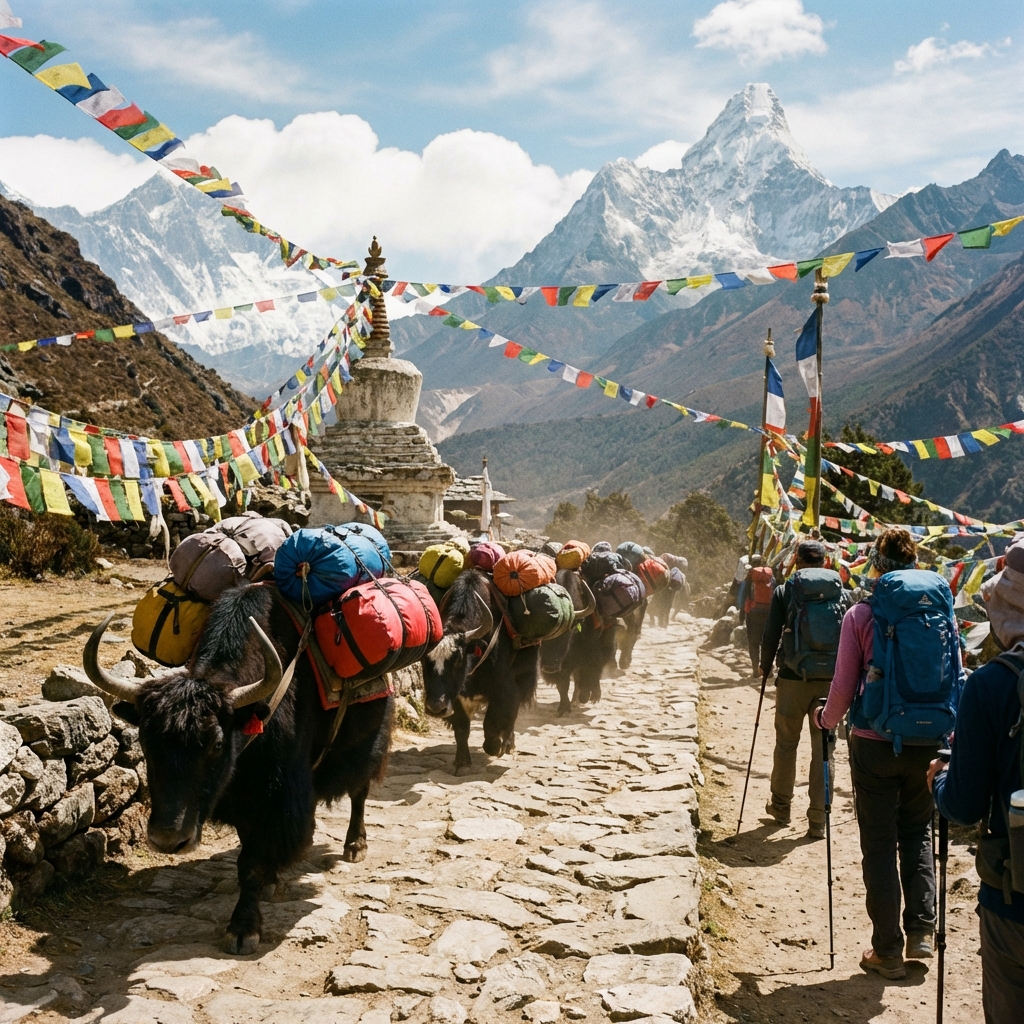
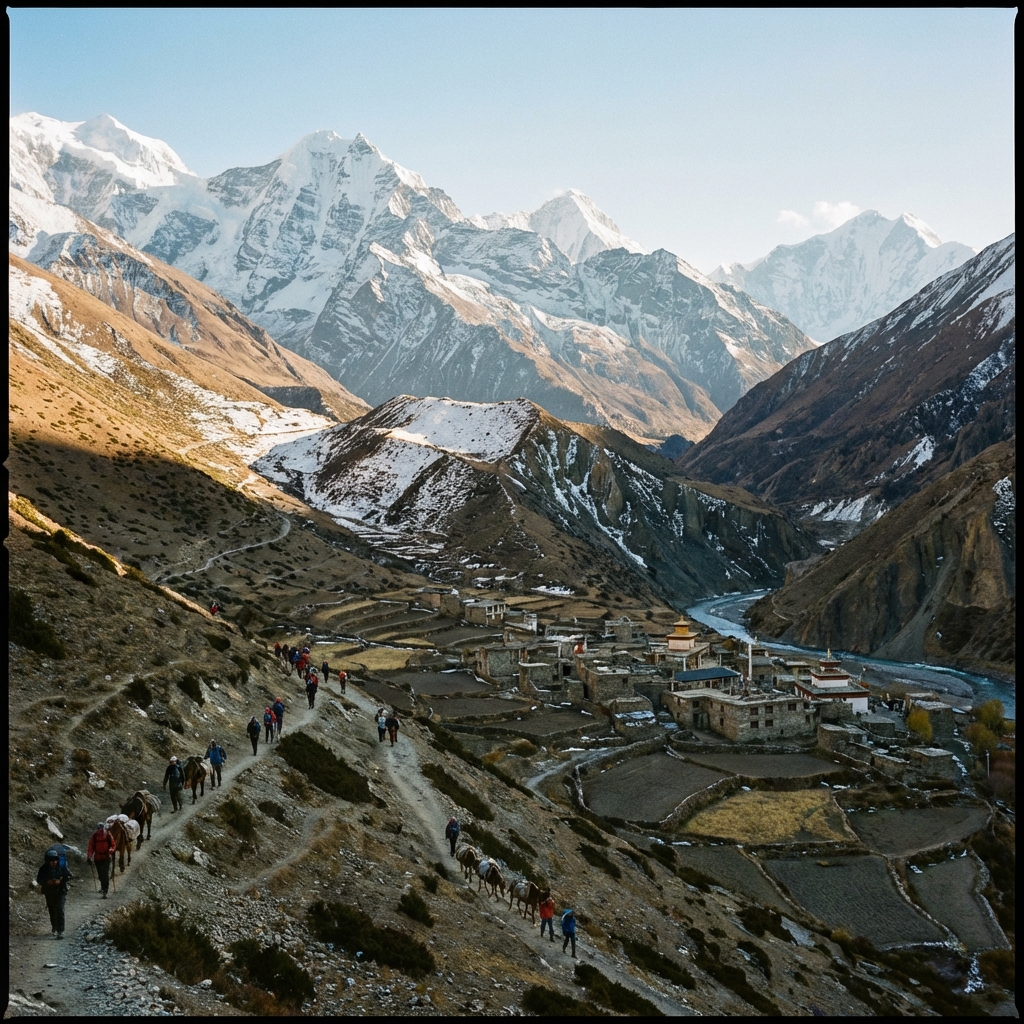
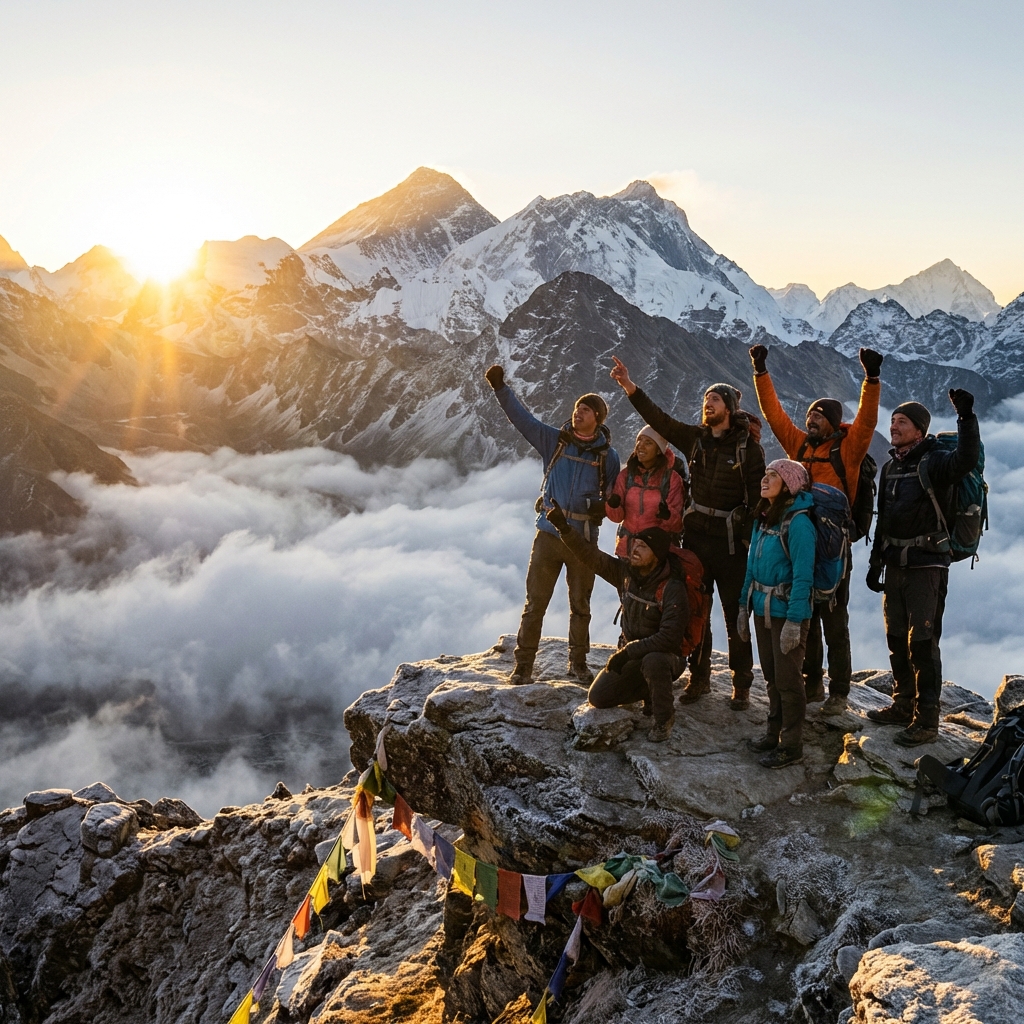
| Route | Duration | Max Altitude | Difficulty | Permits | Teahouses | Crowds |
|---|---|---|---|---|---|---|
| Helambu Circuit | 5-8 days | 3,650m | Easy-Moderate | $45 | Good | Very Low |
| Langtang Valley | 7-12 days | 5,033m | Moderate | $45 | Good | Low-Moderate |
| Poon Hill | 4-5 days | 3,210m | Easy-Moderate | $40 | Excellent | High |
| Annapurna Base Camp | 10-14 days | 4,130m | Moderate | $40-45 | Excellent | Moderate |
Helambu Trek: Nepal's Cultural Circuit Near Kathmandu
Helambu is a low-altitude cultural trekking region northeast of Kathmandu, home to the Hyolmo people and their Buddhist monasteries. The Helambu trek is a 5-8 day circuit from Sundarijal (1 hour from Kathmandu) to Melamchi Bazaar, topping out at 3,650m at Tharepati Pass. It is one of Nepal's easiest, quietest and most affordable major treks, with costs from around $250 and year-round access.
The Helambu Trek is Nepal's hidden gem for cultural immersion—a tranquil circuit through traditional Hyolmo Sherpa villages just a stone's throw from Kathmandu. While Everest Base Camp and Annapurna draw massive crowds, Helambu remains wonderfully uncrowded, offering authentic village experiences, ancient Buddhist monasteries, and stunning Himalayan panoramas without extreme altitude or lengthy drives.
In just 5-8 days, you'll traverse lush rhododendron forests, terraced farmlands, and ridge-top villages with 360-degree mountain views from Langtang Lirung to Ganesh Himal. But the real treasure is the Hyolmo culture—a unique Sherpa subgroup with their own language, traditions, and spiritual heritage rooted in Tibetan Buddhism. Villages like Tarkeghyang and Sermathang welcome you into centuries-old monasteries where monks still perform daily rituals, and local families serve butter tea in traditional stone homes.
Unlike the Langtang Valley trek which pushes higher into glacial terrain, Helambu keeps you in the cultural "sweet spot"—high enough for spectacular views but low enough to explore village life without altitude concerns. The circuit's maximum elevation of 3,650m at Tharepati Pass means minimal AMS risk, making it perfect for families, beginners, or trekkers seeking a gentle introduction to the Himalayas.
Starting from Sundarijal (just 1 hour from Kathmandu) and ending at Melamchi Bazaar, the Helambu Circuit offers exceptional value—expect to spend $600-$1,200 total, making it one of Nepal's most affordable major treks. Your visit directly supports Hyolmo communities, many still rebuilding from the 2015 earthquake that devastated the broader Langtang region.
This comprehensive guide covers everything: three itinerary options (5-day express to 8-day leisurely circuit), detailed village profiles, the sacred Ama Yangri extension, cost breakdowns, Helambu vs Langtang comparisons, connection options to Gosainkunda, and cultural etiquette for respectful monastery visits.
Route Snapshot
5-8 days
3,650m (11,975 ft) at Tharepati Pass
3,640m (11,942 ft) at Tharepati
75-85 km (47-53 miles)
Easy to Moderate
Oct-May (Year-round accessible)
Hyolmo Sherpa villages & monasteries
Sundarijal (1,350m)
Melamchi Pul Bazaar (870m)
Langtang NP + TIMS + Shivapuri NP
Family-run teahouses & homestays
$600-$1,200 (all-inclusive)
Key Route Variants:
| Variant | Duration | Highlights | Best For |
|---|---|---|---|
| Short Helambu | 5 days | Sundarijal-Tharepati-Tarkeghyang | Time-limited, fit trekkers |
| Standard Circuit | 7 days | Complete circuit with cultural immersion | Most trekkers, families, beginners |
| Helambu + Ama Yangri | 8 days | Sacred peak extension (3,771m) | Cultural enthusiasts, photographers |
| Helambu + Gosainkunda | 10-12 days | Sacred lakes via Laurebina La | Extended cultural & nature combination |
Why Helambu? Nepal's Most Authentic Cultural Trek
The Helambu region offers something increasingly rare in Nepal's trekking landscape: genuine cultural immersion without commercialization. While Everest sees 50,000+ annual trekkers and Poon Hill is often crowded even in shoulder seasons, Helambu maintains the intimate, village-based atmosphere that first attracted adventurers to Nepal in the 1960s.
Accessibility from Kathmandu: Maximum Reward, Minimal Logistics
Helambu's greatest practical advantage is its proximity to Nepal's capital. The trailhead at Sundarijal is just 17 kilometers from central Kathmandu—a scenic 1-hour drive through terraced farmland and pine forests. No expensive flights to Lukla, no 7-hour drives to Pokhara, no complex domestic logistics. Simply arrange permits, pack your bag, and start trekking the same day you leave Kathmandu.
This accessibility makes Helambu ideal for:
- Business travelers with 5-7 free days who want authentic Himalayan experiences
- Families with children needing lower altitude and flexible itineraries
- First-time Nepal visitors testing altitude tolerance before committing to longer treks
- Budget-conscious trekkers minimizing transport and accommodation costs
- Shoulder-season visitors taking advantage of year-round accessibility (unlike high passes that close in winter)
- Recovery trekkers building back fitness after illness or injury
Pro Tip
Combine Helambu with Kathmandu Valley cultural exploration. Visit Bhaktapur and Patan before your trek, then drive directly to Sundarijal from your hotel. You're trekking within 90 minutes of leaving the city—unmatched convenience.
The Hyolmo Sherpa: Nepal's Most Distinctive Cultural Community
The true treasure of Helambu is the Hyolmo people—often mistakenly grouped with Sherpas, but actually a distinct ethnic group with unique language, traditions, and spiritual practices. While Khumbu Sherpas became famous guiding Everest expeditions, the Hyolmo (also called Yolmo) maintained isolated mountain communities centered on Tibetan Buddhism, meditation, and sacred geography.
Key Cultural Distinctions:
Language: Hyolmo is a Tibetan-Burman dialect distinct from both Nepali and Sherpa Solu-Khumbu dialects. The language is still spoken daily in villages like Tarkeghyang and Melamchi Gaon, particularly among older generations and in religious contexts.
Spiritual Heritage: Hyolmo people trace their ancestry to Guru Rinpoche (Padmasambhava), the 8th-century master who brought Vajrayana Buddhism to Tibet. According to tradition, Guru Rinpoche designated Helambu as a beyul (hidden valley)—a sacred sanctuary where practitioners could retreat during times of persecution.
Monastic Tradition: Unlike the Khumbu region where monasteries often cater to trekkers, Helambu's gompas remain working religious institutions. The monastery at Tarkeghyang, dating to the 16th century, houses active monastic communities where young monks study Buddhist philosophy, perform daily pujas (prayer ceremonies), and maintain centuries-old traditions.
Architecture: Traditional Hyolmo homes feature distinctive stone construction with hand-carved wooden doorways, small windows (to retain heat), and flat roofs where barley and wheat are dried. The interior typically includes a central hearth for cooking and heating, Buddhist altars with butter lamps and offering bowls, and sleeping areas separated by wooden partitions.
Traditional Dress: During festivals and ceremonies, Hyolmo women wear bakkhu (traditional robes) with striped pangi (aprons) and elaborate jewelry including ghaum (necklaces) with coral and turquoise. Men wear chuba (long robes) and pancha (wrap skirts) similar to Tibetan dress.
Sacred Geography: Beyul Helambu
In Tibetan Buddhist tradition, beyul are hidden valleys concealed by mystical power, revealed only during times of need. Helambu is one of these sacred landscapes—believed to be protected by the deity Ama Yangri. Locals maintain that the valley's lush forests, abundant water, and fertile soil reflect this spiritual blessing. Many pilgrims still visit Ama Yangri Peak to receive blessings and hang prayer flags.
The "Forgotten Valley" Advantage: Solitude and Authenticity
Helambu's low tourist numbers create an entirely different trekking experience compared to mainstream routes:
Quiet Trails: On many days, you may encounter only a handful of other trekkers. Compare this to Everest Base Camp where hundreds walk the same path daily during peak season, or Poon Hill where sunrise viewpoints become crowded photo shoots.
Authentic Interactions: Because tourism hasn't overwhelmed local culture, village interactions feel genuine rather than transactional. Teahouse owners have time to share stories over evening meals. Children wave from school playgrounds rather than begging for candy. Monastery visits are spiritual experiences rather than tourist attractions.
Unhurried Atmosphere: The pace of life in Helambu villages follows traditional rhythms—farmers tend terraced fields, women weave traditional textiles, monks perform morning and evening prayers. You're witnessing living culture, not a heritage display maintained for tourists.
Photography Opportunities: Without crowds of trekkers in every frame, you can capture pristine images of prayer flags against mountain backdrops, ancient monastery architecture, and candid village life.
Year-Round Accessibility: Trek When Others Cannot
While high passes like Thorong La (Annapurna Circuit) and Cho La (Everest Three Passes) close in winter under deep snow, Helambu remains accessible year-round thanks to moderate elevations.
Winter (Dec-Feb) Advantages:
- Crystal-clear skies with exceptional mountain visibility
- Crisp, cold air but manageable daytime temperatures (10-15°C)
- Virtually empty trails—you may have villages to yourself
- Snow-dusted landscapes create magical photography conditions
- Lower accommodation costs and negotiable prices
Monsoon (Jun-Aug) Considerations:
- Lush, vibrant vegetation with waterfalls cascading from every cliff
- Wildflowers bloom in alpine meadows
- Fewer trekkers (you'll see only the hardiest adventurers)
- Rain typically falls afternoons/evenings—morning trekking is often clear
- Leech protection needed in lower forests (salt, leech socks)
Winter Preparation
While Helambu is accessible in winter, nighttime temperatures at Tharepati can drop to -10°C to -15°C. Bring a quality sleeping bag (rated to -10°C), warm layers, and insulated gloves. Some teahouses may have limited heating—the traditional hearth fire provides warmth but rooms can be cold. Consider this an advantage: you'll experience authentic village winter life.
Family-Friendly and Beginner-Perfect
Helambu's moderate difficulty makes it one of Nepal's most accessible Himalayan treks for families, older trekkers, and those new to high-altitude hiking.
Altitude Safety: With a maximum sleeping elevation of 3,640m (Tharepati), serious altitude sickness is rare. Most trekkers experience minimal symptoms beyond slight breathlessness during steep sections. Compare this to EBC (sleeping at 5,160m) or even ABC (sleeping at 4,130m) where AMS is a constant concern.
Daily Walking Duration: Most days involve 5-7 hours of walking at a comfortable pace. No marathon days, no extremely steep climbs, no dangerous sections requiring technical skills. Children as young as 8-10 with regular activity experience can complete this trek.
Teahouse Comfort: While simpler than Everest or Annapurna lodges, Helambu teahouses provide clean rooms, thick blankets, hearty meals, and warm hospitality. Many offer solar-powered charging stations and hot showers (for a small fee).
Flexible Itinerary: The circuit can be shortened (5 days), extended (8+ days), or modified based on fitness levels and weather. Feeling tired? Add a rest day in Tarkeghyang. Weather turns bad? Descend quickly via the Melamchi Valley. This flexibility reduces stress, especially for families.
Cultural Education: Children love learning basic Nepali and Hyolmo phrases, trying traditional foods like dhindo (buckwheat porridge) and tsampa (barley flour), and observing village life. Many families report that Helambu sparks lifelong interests in cultural anthropology and international travel.
Cost-Effectiveness: Maximum Value
Helambu is one of Nepal's most affordable major treks. Total costs for an organized trek typically range from $600-$1,200 depending on group size and service level—significantly less than Everest ($1,800-$3,000) or Annapurna Circuit ($1,200-$2,000).
Cost Breakdown (7-day standard circuit):
| Item | Budget Independent | Standard Organized | Premium Guided |
|---|---|---|---|
| Permits | $45 | $45 | $45 |
| Transport (KTM-Trail) | $15 | $30 | $50 |
| Accommodation | $140 | $175 | $245 |
| Meals | $105 | $140 | $210 |
| Guide | $0 | $175 | $245 |
| Porter | $0 | $140 | $175 |
| Gear Rental | $35 | $50 | Included |
| Contingency/Extras | $60 | $80 | $120 |
| TOTAL | $400 | $835 | $1,090 |
Prices in USD, based on 2026 rates
Lower costs stem from:
- Short transport distances (no expensive flights or long road transfers)
- Simple but comfortable teahouses (no luxury lodges inflating prices)
- Lower trail fees compared to restricted areas like Upper Mustang
- Local guide/porter rates (Hyolmo communities charge less than Sherpa guides in Khumbu)
- Shorter overall duration (fewer total nights of accommodation and meals)
Understanding Helambu's Sacred Geography
The Ama Yangri Sanctuary: Heart of Hyolmo Spirituality
Ama Yangri (3,771m) is not just the region's highest accessible peak—it's the spiritual center of Hyolmo culture. The name translates to "Mother of the Pure" and refers to a protective female deity who watches over the valley. According to Hyolmo beliefs, Ama Yangri prevents natural disasters, ensures good harvests, and protects travelers on mountain paths.
The summit features a small shrine where locals make offerings—prayer flags, khata (ceremonial scarves), incense, and sometimes food or chang (barley beer). During festivals, villagers from Tarkeghyang and neighboring communities make pilgrimages to the peak, carrying supplies for elaborate puja ceremonies.
From Ama Yangri's summit, the 360-degree panorama encompasses:
- North: Langtang Lirung (7,227m), Ganesh Himal range, Tibetan border peaks
- East: Dorje Lakpa (6,966m), Jugal Himal range
- South: Kathmandu Valley, Shivapuri Ridge
- West: Ganesh Himal II-IV, distant Manaslu (8,163m)
Pro Tip
For the full Ama Yangri experience, arrange a sunrise climb from Tarkeghyang. Start at 4:00 AM with headlamps, reach the summit by 6:30 AM, and watch the first light paint the Himalayan giants gold and pink. Carry a thermos of hot tea and breakfast—you'll want to linger at this magical viewpoint.
Meditation Caves: Helambu as a Buddhist Pilgrimage
Helambu is sometimes called a "Buddhist religious trek" because the valley holds sacred meditation caves linked to two towering figures of Himalayan Buddhism. As a beyul (hidden valley), it has drawn practitioners seeking solitary retreat for centuries.
- Milarepa Meditation Cave (Kharchung): Associated with Milarepa, the revered 11th-century Tibetan yogi-poet. Pilgrims visit to light butter lamps and meditate where, by tradition, he practiced in retreat.
- Guru Rinpoche Meditation Cave (Ripchung): Linked to Padmasambhava (Guru Rinpoche), the 8th-century master who first designated Helambu as a beyul. The cave remains an active site of prayer and offering.
These caves sit off the main circuit and require a short detour, so ask your guide or a Tarkeghyang teahouse host to point out the access trails. Combined with the working monasteries at Tarkeghyang and Sermathang, the caves make Helambu one of the most spiritually rich treks near Kathmandu. For deeper context on local Buddhist sites and customs, see our monastery etiquette guide and prayer flags and Buddhist symbols guide.
The Melamchi Valley: Water Source for Kathmandu
The Melamchi River, which the trek follows in its lower sections, plays a crucial role in Kathmandu's modern infrastructure. The Melamchi Water Supply Project—one of Nepal's largest development initiatives—diverts water from this valley to address Kathmandu's chronic water shortages.
You'll see evidence of this project: diversion tunnels, construction camps, and improved roads (which also benefit trekkers by reducing drive times). The project sparked controversy among Hyolmo communities who worried about environmental impacts and reduced compensation. Understanding this context adds depth to your appreciation of the region's complexity—balancing traditional lifestyles with national development needs.
Forest Ecosystems: From Subtropical to Alpine
Helambu showcases remarkable ecological diversity across relatively short distances:
Lower Elevations (1,350-2,000m): Subtropical forests dominated by chilaune (Himalayan oak), pine, and bamboo. These zones support langur monkeys, leopards (rarely seen), wild boar, and diverse bird species including the colorful yellow-throated martin. During monsoon, these forests become lush and steamy with epiphytic orchids, ferns, and moss-covered trees.
Mid Elevations (2,000-3,000m): Temperate forests of oak, rhododendron, maple, and magnolia. In spring (March-May), these hillsides explode in color as rhododendrons bloom—shades of red, pink, white, and yellow creating a natural flower exhibition. Himalayan black bears inhabit these areas (though encounters are rare), along with barking deer and dozens of bird species.
High Elevations (3,000-3,650m): Transition to alpine scrub—gnarled juniper, dwarf rhododendron, and hardy shrubs. Above tree line, meadows host medicinal plants used in traditional Tibetan medicine. Wildlife here includes Himalayan monal (the spectacular national bird), blood pheasant, and occasionally, musk deer in remote areas.
Threatened Species: Langtang National Park (which includes Helambu) provides habitat for endangered species including red pandas, Himalayan black bears, and snow leopards at higher elevations. While sightings are rare, their presence underscores the region's conservation importance.
Complete Itinerary Options: Choose Your Adventure
Helambu's flexibility allows you to customize your trek based on available time, fitness level, and cultural interests. Here are four proven itineraries:
Short Itinerary: 5 Days (Express Circuit for Time-Limited Trekkers)
This compressed schedule hits Helambu's highlights but requires good fitness and acceptance of longer days. Best for those with prior trekking experience.
| Day | Route | Altitude | Hours | Highlights |
|---|---|---|---|---|
| 1 | Kathmandu to Sundarijal, trek to Chisapani | 2,215m | 3-4 hrs trek + 1 hr drive | Shivapuri NP entry, sunset mountain views |
| 2 | Chisapani to Tharepati | 3,640m | 6-7 hrs | Steep climb through rhododendron forest, ridge walking |
| 3 | Tharepati to Tarkeghyang | 2,560m | 5-6 hrs | Descent through Melamchi Gaon, cultural immersion |
| 4 | Tarkeghyang to Sermathang | 2,610m | 4-5 hrs | Monastery visits, gentle forest trail |
| 5 | Sermathang to Melamchi Bazaar, drive to Kathmandu | 1,400m | 3-4 hrs trek + 2-3 hrs drive | Final descent, return to capital |
Rapid Altitude Gain Warning
This itinerary jumps from 2,215m to 3,640m in one day (1,425m gain). While the altitude itself isn't extreme, this violates ideal acclimatization guidelines. Watch carefully for AMS symptoms: headache, nausea, dizziness. If you experience severe symptoms, descend immediately. Consider the 7-day itinerary if you're new to altitude.
Pros: Maximum efficiency, fits into a busy schedule, still covers major cultural highlights Cons: Tiring pace, less time for cultural immersion, higher AMS risk Best For: Experienced trekkers, those with exactly 5 days available, fitness enthusiasts
Standard Itinerary: 7 Days (Recommended for Most Trekkers)
The optimal balance of cultural immersion, comfortable pacing, and proper acclimatization. This is the most popular Helambu itinerary.
| Day | Route | Altitude | Hours | Highlights |
|---|---|---|---|---|
| 1 | Kathmandu to Sundarijal, trek to Chisapani | 2,215m | 3-4 hrs trek + 1 hr drive | Forest ascent, Tamang villages, evening mountain views |
| 2 | Chisapani to Kutumsang | 2,470m | 5-6 hrs | Gentle acclimatization, Pathi Bhanjyang pass, first Hyolmo villages |
| 3 | Kutumsang to Tharepati | 3,640m | 5-6 hrs | Gradual ridge climb, rhododendron groves, 360° mountain panorama |
| 4 | Tharepati to Melamchi Gaon | 2,560m | 4-5 hrs | Descent through forest, first major Hyolmo village, monastery visit |
| 5 | Melamchi Gaon to Tarkeghyang | 2,560m | 3-4 hrs | Cultural heart of Helambu, ancient gompa, village exploration |
| 6 | Tarkeghyang to Sermathang | 2,610m | 4-5 hrs | Continue cultural immersion, visit Sermathang monastery, apple orchards |
| 7 | Sermathang to Melamchi Pul Bazaar, drive to Kathmandu | 1,400m | 3-4 hrs trek + 2-3 hrs drive | Final descent, market town, return to capital |
Daily Breakdown:
Day 1: Kathmandu to Chisapani (2,215m) After breakfast, drive 1 hour to Sundarijal, passing through Kathmandu's chaotic outskirts into peaceful terraced farmland. Obtain your Shivapuri-Nagarjun National Park permit at the entrance gate. The trail begins with stone stairs climbing past a large water reservoir and hydroelectric plant—this pipeline supplies Kathmandu's water.
Ascend through subtropical forest with frequent water points and small tea shops. The trail is well-maintained but steep in sections, gaining 865m over 3-4 hours. You'll pass the small settlement of Mulkharka (1,900m) where Tamang villagers sell snacks and fresh fruit.
Arrive at Chisapani in mid-afternoon, giving you time to explore this ridge-top village. "Chisapani" means "cold water" in Nepali, referring to the natural springs here. Teahouses cluster around a central area with prayer flags and basic shops. If weather is clear, walk to nearby viewpoints for your first Himalayan panoramas—Langtang, Ganesh Himal, and even distant Everest.
Evening: Sunset over the Himalayas is magical from Chisapani's viewpoints. Most teahouses have cozy dining rooms with wood stoves where trekkers gather for dal bhat and conversation. Sleep altitude: 2,215m.
Day 2: Chisapani to Kutumsang (2,470m) Begin with a gentle descent through meadows and scattered farms. The trail crosses several small passes—Pathi Bhanjyang and Gul Bhanjyang—offering glimpses of life in isolated mountain communities. You're now entering Hyolmo territory; notice the shift in house architecture, prayer flag colors, and language spoken by locals.
The route alternates between forest cover and open ridges. During spring, rhododendron blooms create tunnels of color. Pass through Chipling, a cluster of houses where you can stop for mid-morning tea. The final climb to Kutumsang is moderate, following a forested ridge.
Kutumsang is a small village with 4-5 teahouses catering to trekkers. Visit the local gompa (Buddhist monastery) in late afternoon—monks often welcome respectful visitors to observe evening prayers. The monastery's interior features colorful thangka paintings, butter lamps, and the deep sound of monks chanting sutras.
Evening: After dinner, your teahouse host may share stories of village life, the 2015 earthquake impact, and changes they've seen over decades. Sleep altitude: 2,470m.
Day 3: Kutumsang to Tharepati (3,640m) Today brings significant altitude gain (1,170m) but at a gradual pace through beautiful forest. The trail climbs steadily through rhododendron, oak, and fir forests. During spring, this section is spectacular as the forest canopy blooms in vibrant colors. Listen for the haunting call of the Himalayan monal—Nepal's national bird with iridescent plumage.
Pass through Yurin Danda, a scenic viewpoint where the forest opens to reveal surrounding peaks. Continue ascending to Tharepati Pass (3,640m)—a major junction where trails diverge to Gosainkunda, Langtang Valley, and onward into Helambu. The pass features extensive prayer flags, stone shelters, and panoramic views.
Tharepati's teahouses sit right on the ridge, exposed to wind but offering incredible sunsets and sunrises. This is the trek's highest point, so drink plenty of water, eat well, and monitor yourself for AMS symptoms (though at this moderate altitude, issues are rare).
Evening: Bundle up—temperatures drop significantly after sunset. The communal dining area's wood stove becomes the social center where trekkers from different routes (Gosainkunda, Langtang, Helambu) share stories. Sleep altitude: 3,640m.
Day 4: Tharepati to Melamchi Gaon (2,560m) Begin with a descent through dense conifer forest. The trail drops steeply in places—trekking poles help protect your knees. After 2-3 hours, you'll reach Melamchi Gaon, the first major Hyolmo village.
Melamchi Gaon sprawls across a sunny hillside with traditional stone houses, terraced fields, and a beautiful monastery. This village was heavily damaged in the 2015 earthquake but has been substantially rebuilt. Take time to explore—visit the monastery where monks maintain daily practice, walk through terraced barley and buckwheat fields, and observe traditional cheese-making at local homes.
The village name comes from the Melamchi River that originates from these mountains. Many residents work on the Melamchi Water Supply Project, supplementing traditional farming with construction jobs.
Afternoon: This is a shorter trekking day, giving you time for cultural activities. Your guide can arrange visits to local homes where families may demonstrate traditional weaving, food preparation, or Hyolmo language lessons. Some teahouses offer homestay experiences where you sleep in a village home rather than a lodge—this provides deeper cultural immersion.
Evening: Ask about local festivals or ceremonies. If you're lucky, you might witness a puja or family celebration. Sleep altitude: 2,560m.
Day 5: Melamchi Gaon to Tarkeghyang (2,560m) A relatively easy day with minimal elevation change, allowing you to focus on cultural exploration. The trail contours through forests and scattered villages, passing Nakote (a smaller settlement) before arriving at Tarkeghyang.
Tarkeghyang is the cultural and spiritual heart of Helambu. This large village features one of the oldest and most important Hyolmo monasteries, dating to the 16th century (some sources say even earlier). The monastery (gompa) sits at the village center, surrounded by traditional stone houses with elaborately carved wooden doorways and windows.
Monastery Visit: Spend at least an hour at Tarkeghyang Monastery. If monks are present, ask permission to observe their daily rituals. The monastery interior displays centuries-old Buddhist art—painted ceiling mandalas, large prayer wheels (spin them clockwise three times), and altars with butter lamps. Don't miss the library room where ancient texts written on pressed paper pages are preserved.
Village Exploration: Wander Tarkeghyang's narrow lanes. You'll encounter mani walls (stone structures carved with Buddhist prayers), chortens (small stupas), and prayer flag poles. Women often weave traditional textiles outside their homes—ask respectfully to watch and perhaps purchase a handmade scarf or bag.
Afternoon: If energy permits, take a short hike to nearby viewpoints overlooking the village. From these vantage points, you can appreciate Tarkeghyang's setting—surrounded by forested hills with snowy peaks beyond.
Evening: Many teahouses in Tarkeghyang have heated dining rooms and better menus than smaller villages. This is a good night to try local specialties like dhindo (buckwheat porridge), gundruk (fermented greens soup), or tongba (hot millet beer served in a wooden vessel). Sleep altitude: 2,560m.
Day 6: Tarkeghyang to Sermathang (2,610m) Another moderate day focusing on cultural sites. The trail descends slightly before climbing gently to Sermathang through mixed forest and terraced farmland. Along the way, pass several small monasteries and retreat sites where monks and nuns practice meditation in isolation.
Sermathang is famous for its apple orchards—in autumn (September-October), the harvest season brings fresh apples, apple cider, and dried apple rings sold at teahouses. The village monastery, while smaller than Tarkeghyang's, is beautifully maintained with vibrant prayer flag displays.
Afternoon Activity: Visit Sermathang's viewpoint, a 20-minute walk above the village. From here, you have clear views of the Jugal Himal range, Dorje Lakpa peak, and (on exceptional days) Gauri Shankar and even Everest in the distance.
Cultural Interaction: Sermathang is small enough that villagers recognize visitors and often invite trekkers for tea or conversation. Your guide can facilitate these interactions, which often become trek highlights—sharing stories over butter tea in a traditional kitchen, learning Hyolmo songs, or observing daily routines like yak milking or wool spinning.
Evening: Reflect on your journey—tomorrow you'll descend to the road and return to Kathmandu. Many trekkers feel bittersweet about leaving the mountains and the warm hospitality of Hyolmo villages. Sleep altitude: 2,610m.
Day 7: Sermathang to Melamchi Pul Bazaar to Kathmandu The final trekking day is a long descent (1,740m elevation loss) through terraced farmland and scattered villages. The trail is well-maintained but knee-straining in places—use trekking poles and take breaks to appreciate the changing landscape as you drop from alpine forests into subtropical agriculture zones.
Pass through several small settlements where daily life revolves around farming. During harvest season, you'll see families working fields, children carrying produce in dokos (woven bamboo baskets), and oxen pulling traditional plows. This glimpse of rural life provides context for the mountain economy that tourism supplements but doesn't dominate.
Arrive at Melamchi Pul Bazaar by early afternoon. This bustling market town sits beside the Melamchi River at the road junction connecting Helambu to Kathmandu. The bazaar features shops selling agricultural supplies, basic goods, and street food. You'll likely attract attention as one of few foreigners—locals are friendly and often curious about your trek experience.
Your vehicle meets you here for the 2-3 hour drive back to Kathmandu. The road follows the Melamchi and Indrawati rivers through dramatic gorges before climbing back to the Kathmandu Valley rim and descending into the city.
Evening: Celebrate your trek completion with a proper meal in Thamel—many restaurants specialize in post-trek feasts. Share photos with new trekking friends, reflect on experiences, and begin planning your next Nepal adventure.
Pros: Proper acclimatization, time for cultural immersion, comfortable daily distances Cons: None significant—this is the ideal itinerary Best For: First-time trekkers, families, those prioritizing cultural experiences, moderate fitness levels
Extended Itinerary: 8 Days (Helambu + Ama Yangri)
Add a day to climb the sacred Ama Yangri peak for exceptional 360-degree Himalayan panoramas and deeper spiritual experience.
| Day | Route | Altitude | Hours | Highlights |
|---|---|---|---|---|
| 1-5 | Same as 7-day itinerary | - | - | Chisapani-Kutumsang-Tharepati-Melamchi Gaon-Tarkeghyang |
| 6 | Tarkeghyang to Ama Yangri summit, return | 3,771m | 6-8 hrs | Sacred peak pilgrimage, 360° panorama, shrine visit |
| 7 | Tarkeghyang to Sermathang | 2,610m | 4-5 hrs | Recovery day, monastery visits |
| 8 | Sermathang to Melamchi Bazaar to Kathmandu | 1,400m | 3-4 hrs trek + 2-3 hrs drive | Final descent, return to capital |
Ama Yangri Day Details: Wake at 4:00 AM for a sunrise climb. The trail from Tarkeghyang to Ama Yangri gains 1,211m over 3-4 hours, initially through forest before emerging onto open ridges. As you climb, watch the sky lighten and the Himalayan giants slowly reveal themselves.
The final approach crosses alpine meadows with scattered junipers and prayer flags. The summit features a small shrine with offerings left by pilgrims—prayer flags, incense sticks, khata scarves, and sometimes food offerings. Local Hyolmo families often make this pilgrimage during festivals, carrying supplies for elaborate ceremonies.
From the 3,771m summit, the panorama encompasses:
- Langtang Lirung (7,227m) dominating the northern skyline
- Ganesh Himal range stretching west with four major peaks
- Dorje Lakpa (6,966m) and the Jugal Himal east
- Shivapuri Ridge and the entire Kathmandu Valley south
- On exceptional clear days: Cho Oyu (8,188m) and Everest (8,849m) visible in far distance
Spend 30-60 minutes at the summit before descending to Tarkeghyang by mid-morning. You'll have the afternoon to rest and explore the village.
Pros: Sacred peak experience, best panoramic views of entire trek, sunrise magic Cons: Early morning start, strenuous climb, weather-dependent Best For: Photography enthusiasts, spiritual seekers, those wanting summit experience without extreme altitude
Extended Connection: 10-12 Days (Helambu to Gosainkunda)
For trekkers with more time, connect Helambu with the sacred Gosainkunda lakes via Tharepati Pass. This combination offers cultural immersion plus high-altitude alpine lake pilgrimage.
Route Overview: Follow the standard 7-day Helambu itinerary, but instead of descending from Tharepati to Melamchi Gaon (Day 4), continue north to Gosainkunda Lake via Laurebina La Pass (4,610m). This adds 3-5 days and requires good acclimatization.
Extension Details:
| Day | Route | Altitude | Hours | Highlights |
|---|---|---|---|---|
| 4 | Tharepati to Ghopte | 3,430m | 3-4 hrs | Alternative route avoiding main trail |
| 5 | Ghopte to Gosainkunda Lake | 4,380m | 5-6 hrs | Sacred lake, pilgrimage site, alpine setting |
| 6 | Gosainkunda acclimatization/exploration | 4,380m | 3-5 hrs | Visit multiple lakes, Laurebina La viewpoint |
| 7 | Gosainkunda to Dhunche via Laurebina La | 1,960m | 6-7 hrs | Cross high pass, long descent to road |
| 8 | Dhunche to Kathmandu | 1,400m | 6-7 hrs drive | Return via Langtang road |
Important Considerations:
- Laurebina La (4,610m) is significantly higher than Tharepati (3,640m)
- AMS risk increases—proper acclimatization essential
- Weather can close the pass (heavy snow, whiteout conditions)
- Teahouses at Gosainkunda are basic and cold
- Full moon pilgrimage season (Aug) sees massive crowds
Full details on this route are covered in the dedicated Gosainkunda Trek Guide.
Pros: Maximum diversity, cultural + nature combination, sacred lake pilgrimage Cons: Longer commitment, higher altitude challenges, weather-dependent pass Best For: Experienced trekkers, those with 10-14 days available, adventure seekers
Altitude Profile: Gentle Ascent, Easy Acclimatization
The altitude profile shows why Helambu is perfect for beginners and families:
- Gradual initial ascent: Only 255m gain on Day 2, allowing gentle acclimatization
- Moderate high point: 3,640m at Tharepati—high enough for spectacular views, low enough to avoid serious AMS risk
- Sleep-high, walk-higher principle: The trek naturally follows good acclimatization practices
- Flexible descent: If someone struggles with altitude, you can descend quickly from Tharepati to lower elevations
Compare this to Everest Base Camp where you sleep at 5,160m, or even Annapurna Base Camp at 4,130m. Helambu's maximum sleeping altitude of 3,640m puts it in the "comfortable acclimatization zone" for most people.
Key Villages: Cultural Highlights of the Circuit
Information current as of January 2025.
Chisapani
2,215m
Highlights: Sunset mountain panoramasPrayer flag viewpointsLast major Tamang village before Hyolmo territory
Kutumsang
2,470m
Highlights: Traditional gompa visitsHyolmo language immersion beginsRhododendron forest surroundings
Tharepati
3,640m
Highlights: 360-degree Himalayan panoramaSpectacular sunrise/sunsetPrayer flag-draped ridgeWildflower meadows in spring
Melamchi Gaon
2,560m
Highlights: Active monasteryCheese-making demonstrationsTerraced barley fieldsHomestay opportunities
Tarkeghyang
2,560m
Highlights: Centuries-old monastery with Buddhist artCarved mani wallsTraditional stone architectureCultural festivalsBase for Ama Yangri pilgrimage
Sermathang
2,610m
Highlights: Apple orchards (harvest Sep-Oct)Monastery with vibrant prayer flagsJugal Himal viewpointsApple cider and dried apples
Monastery Etiquette: Respectful Cultural Engagement
Visiting Helambu's Buddhist monasteries is a trek highlight, but requires cultural sensitivity:
Monastery Visit Guidelines
Before Entering:
- Remove shoes and hats outside the monastery entrance
- Ask permission before entering if monks are present
- Turn off phone ringers and avoid loud conversations
Inside the Monastery:
- Walk clockwise around the interior (following Buddhist tradition)
- Don't touch religious artifacts, texts, or altars without permission
- Spin prayer wheels clockwise three times
- Photography: Always ask permission first. Many monks welcome photos but prefer you ask respectfully. Never use flash near altars or during ceremonies.
- If monks are performing prayers (puja), sit quietly in a designated area. Stand when they stand, sit when they sit. You may be offered blessed rice or water—accept with your right hand or both hands.
Appropriate Dress:
- Shoulders and knees covered (both men and women)
- Remove sunglasses and hats
- Avoid revealing or tight clothing
Donations:
- Small donations support monastery maintenance and monk livelihoods
- Place donations in designated boxes, never directly hand money to monks
- 100-500 Nepali rupees ($1-4 USD) is appropriate for monastery visits
Learning Opportunities:
- Many monks speak English and enjoy explaining Buddhism to interested visitors
- Ask about daily routines, prayer meanings, and monastery history
- Your respectful interest is welcomed and appreciated
Difficulty Assessment: Why Helambu is Perfect for Beginners
Easy-ModeratePhysical Requirements
Fitness Level: Moderate fitness with regular walking or light exercise is sufficient. If you can comfortably walk 5-7 hours per day (with breaks) and climb several flights of stairs without excessive breathlessness, you can complete this trek.
Elevation Gain: Daily altitude gains range from 200-1,200m, with the steepest day being the climb from Kutumsang to Tharepati (1,170m over 5-6 hours). While challenging, this is manageable for most people with proper pacing and breaks.
Technical Difficulty: None. The trail is well-maintained with clear paths, stone steps on steep sections, and sturdy bridges over streams. No scrambling, no exposure to dangerous drops, no glacier crossings.
Terrain: Mix of forest paths, stone stairs, ridge walking, and village lanes. Some sections can be muddy after rain, but conditions are generally excellent.
Altitude Challenges
Maximum Altitude: 3,640m (Tharepati Pass) or 3,771m (Ama Yangri summit extension)
AMS Risk: Low to moderate. At these elevations, most trekkers experience only mild symptoms—slight headache, breathlessness during climbs, or disrupted sleep. Serious altitude sickness is rare.
Acclimatization: The 7-day standard itinerary provides excellent acclimatization, ascending gradually over 3 days before reaching Tharepati. Spending one night at 3,640m, then descending to 2,560m follows the "climb high, sleep low" principle.
Symptoms to Monitor:
- Mild headache (common, treatable with aspirin/ibuprofen and hydration)
- Slight breathlessness during climbs (normal, just walk slowly)
- Difficulty sleeping (common at altitude, usually improves by second night)
- Loss of appetite (mild is normal, but eat anyway to maintain energy)
Warning Signs (require descent):
- Severe persistent headache not relieved by medication
- Nausea and vomiting
- Confusion or altered consciousness
- Loss of coordination (ataxia test: try walking heel-to-toe in straight line)
- Extreme fatigue preventing you from walking
See our comprehensive guide on Altitude Sickness Signs and Turnaround Rules for detailed safety information.
Pro Tip
The gradual descent from Tharepati to Melamchi Gaon (Day 4) is a built-in safety mechanism. If someone experiences altitude symptoms at Tharepati, you descend 1,080m the next day, which typically resolves symptoms completely. This makes Helambu much safer than treks that stay high for multiple consecutive nights.
Age Considerations
Children: Kids as young as 8-10 with regular physical activity can complete the standard 7-day itinerary. Consider:
- Shorter daily distances allow frequent breaks for rest and snacks
- Low altitude risk reduces parental stress
- Cultural experiences (monasteries, village life, trying new foods) keep kids engaged
- Family teahouses provide simple, kid-friendly meals (rice, noodles, eggs)
- Hiring a porter allows parents to carry minimal weight and focus on children
Older Trekkers: Helambu is popular with trekkers in their 60s and 70s. The moderate altitude, comfortable pace, and excellent teahouse infrastructure make it ideal for active seniors. Many older trekkers hire porters to carry their packs, allowing them to enjoy the scenery without physical strain.
Weather Challenges
Spring/Autumn: Minimal weather challenges. Days are pleasant (10-20°C), nights cool but comfortable in teahouses. Occasional afternoon showers possible but rarely disruptive.
Winter: Cold nights (down to -10°C to -15°C at Tharepati) require proper sleeping bags and warm layers. Daytime trekking is comfortable (10-15°C in sun). Snow is possible but rarely deep enough to block trails.
Monsoon: Heavy afternoon rains make trails muddy and slippery. Leeches are present in lower forests (wear leech socks, carry salt). Mountain views are obscured by clouds. However, vegetation is lush and waterfalls spectacular. Only recommended for adventurous trekkers comfortable with rain and mud.
Solo Trekking
Helambu can be trekked independently with a mandatory licensed guide, but hiring one significantly enhances the experience:
Benefits of Solo/Independent:
- Lower costs (no guide fees)
- Flexibility to change plans spontaneously
- Simpler logistics
Benefits of Hiring a Guide:
- Cultural interpretation (guide explains monastery traditions, Hyolmo customs, historical context)
- Language assistance (Hyolmo and Nepali translation)
- Navigation confidence (while the main trail is clear, side trails and shortcuts can be confusing)
- Safety (guides recognize altitude sickness symptoms and know emergency procedures)
- Teahouse selection (guides know which lodges treat staff well and provide clean accommodation)
- Employment support (your guide wages directly support Hyolmo families)
Guide Costs: $25-35 USD per day depending on experience and language skills. Many trekkers feel the cultural insights alone justify this cost.
Best Time to Trek: Year-Round Accessibility
| Month | High | Low | Conditions | Crowds | Notes |
|---|---|---|---|---|---|
| January3 | - | - | Clear, cold, dry | Crystal-clear views, cold nights at Tharepati, possible snow dusting. Bring warm sleeping bag. | |
| February3 | - | - | Clear, gradually warming | Excellent visibility, still cold. Late February begins warming trend. | |
| March5 | - | - | Clear, pleasant, spring arriving | Perfect temperatures, rhododendrons begin blooming at lower elevations. Excellent time. | |
| April5 | - | - | Clear, warm, peak bloom | Best month for rhododendron blooms. Clear skies, comfortable temperatures. Peak season begins. | |
| May4 | - | - | Warm, occasional afternoon clouds | Still excellent but warming. Afternoon clouds may obscure views. Late May approaches monsoon. | |
| June2 | - | - | Pre-monsoon humidity, increasing rain | Transition to monsoon. Frequent afternoon rain, leeches appear. Not recommended unless you enjoy rain. | |
| July1 | - | - | Heavy monsoon rain | Peak monsoon. Daily heavy rain, muddy trails, leeches, limited views. Only for hardy adventurers. | |
| August1 | - | - | Continued monsoon, occasional breaks | Similar to July. Lush vegetation but challenging conditions. Landslide risk on access roads. | |
| September4 | - | - | Monsoon ending, clearing skies | Late September is excellent. Early September still wet. Landscape lush after monsoon. Views improving. | |
| October5 | - | - | Clear, crisp, perfect | Peak autumn season. Crystal-clear skies, comfortable temperatures, harvest season colors. Best time. | |
| November5 | - | - | Clear, cooling | Excellent conditions, similar to October but cooler. Second peak season. Still very good. | |
| December3 | - | - | Clear, cold, dry | Clear views but cold nights. Early December pleasant, late December very cold at altitude. |
Seasonal Highlights and Considerations
Spring (March-May): Rhododendron Magic
This is many trekkers' favorite season for Helambu. Nepal's national flower—the rhododendron—blooms throughout these months, painting hillsides in shades of red, pink, white, and crimson. The forests between Chisapani and Tharepati become natural gardens, with some rhododendron trees reaching 15-20 meters tall.
Other Spring Benefits:
- Stable weather with minimal rain
- Comfortable trekking temperatures (10-20°C)
- Clear mountain views (slight afternoon haze possible in late May)
- Wildflowers bloom in alpine meadows near Tharepati
- Longer daylight hours (up to 13 hours in late May)
Spring Considerations:
- Peak season means more trekkers (though Helambu remains far less crowded than Everest/Annapurna)
- Teahouse booking advisable during Nepali festival periods
- Dust can accumulate on lower trails (bandana useful)
Autumn (September-November): Harvest Colors and Crystal Clarity
Post-monsoon Nepal offers the clearest atmospheric conditions of the year. After months of rain washing dust from the air, visibility reaches its annual maximum—making this prime time for photography and long-distance mountain views.
Other Autumn Benefits:
- Harvest season brings golden terraced fields
- Villages celebrate Dashain and Tihar festivals (October/November)
- Comfortable temperatures similar to spring
- Apple harvest in Sermathang (September-October)
- Consistent weather with low precipitation
Autumn Considerations:
- Peak season means higher teahouse occupancy
- Dashain and Tihar festivals (usually mid-October) see Nepali domestic tourists—book ahead
- Night temperatures drop in November at higher elevations
Winter (December-February): Solitude and Clarity
For trekkers who don't mind cold, winter offers Helambu at its most peaceful. You may have entire villages to yourself, creating an intimate experience of village life and monastery culture without tourist bustle.
Winter Benefits:
- Best atmospheric clarity—mountain views are sharpest
- Virtually empty trails and teahouses
- Lower accommodation costs (negotiable)
- Unique experience of Himalayan winter village life
- Snow-dusted landscapes create magical photography
Winter Challenges:
- Very cold nights at Tharepati (-10 to -15°C)
- Bring expedition-grade sleeping bag (-10°C minimum)
- Some teahouses at Tharepati may close (but enough remain open)
- Shorter daylight hours (10-11 hours)
- Occasional snow (rarely enough to block trails)
Monsoon (June-August): The Wild Season
Only recommended for adventurous souls who embrace rain, mud, and leeches. That said, monsoon Helambu has its own beauty—waterfalls cascade from every cliff, forests glow emerald green, and wildflowers bloom in profusion.
Monsoon Considerations:
- Heavy daily rain (typically afternoon/evening)
- Trails muddy and slippery
- Leeches present in forests below 2,500m (wear leech socks, carry salt)
- Mountain views limited by clouds
- Landslide risk on access road from Kathmandu to Sundarijal (though this road is generally safer than Langtang road)
- Teahouses may have fewer supplies
- Very few other trekkers
Monsoon Benefits (for the right person):
- Ultimate solitude
- Lush, vibrant landscapes
- Dramatic waterfall displays
- Lower costs
- Authentic village life without tourist influence
Cost Breakdown: Nepal's Most Affordable Trek
Helambu offers exceptional value compared to other major Nepali treks. Here's what you can expect to spend:
Permit Costs
Langtang National Park Entry Permit: NPR 3,000 (approximately $22 USD) for foreigners from SAARC countries, NPR 3,000 ($22) for other foreigners. Permits available at Nepal Tourism Board office in Kathmandu or at park entry point.
Shivapuri-Nagarjun National Park Permit: NPR 1,000 (approximately $7 USD). Required for the first day's trek from Sundarijal. Available at park gate.
TIMS Card (Trekkers' Information Management System): NPR 2,000 (approximately $15 USD) for independent trekkers, NPR 1,000 ($7) for trekkers with registered agencies. Available through Nepal Tourism Board or trekking agencies.
Total Permit Cost: Approximately $45-50 USD depending on exchange rates and whether you book independently or through an agency.
See our comprehensive guide: Nepal Trekking Permits Explained for detailed permit information.
Daily Costs on Trail
Accommodation (Per Night):
- Dormitory bed: NPR 200-400 ($1.50-3 USD)
- Private room: NPR 500-800 ($4-6 USD)
- Note: Many teahouses provide "free" accommodation if you eat breakfast and dinner there (standard practice)
Meals:
- Dal bhat (rice & lentils, unlimited refills): NPR 500-800 ($4-6 USD)
- Fried rice/chow mein: NPR 400-600 ($3-4.50 USD)
- Momo dumplings: NPR 300-500 ($2.25-3.75 USD)
- Eggs (fried/boiled): NPR 100-150 ($0.75-1.10 USD)
- Tea/coffee: NPR 50-150 ($0.40-1.10 USD)
- Breakfast (eggs, bread, tea): NPR 300-500 ($2.25-3.75 USD)
Daily Food Budget: $15-25 USD for three meals plus snacks/drinks
Other On-Trail Costs:
- Hot shower: NPR 200-300 ($1.50-2.25 USD)
- Battery charging: NPR 200-300 per charge ($1.50-2.25 USD)
- WiFi (where available): NPR 300-500 per day ($2.25-3.75 USD)
- Bottled water: NPR 100-200 ($0.75-1.50 USD) - recommend water purification instead
Guide and Porter Costs
Guide: NPR 3,000-4,500 per day ($22-35 USD) depending on experience, language skills, and whether meals/accommodation are included. Most arrangements include guide's meals and lodging—you pay only their wage.
Porter: NPR 2,000-2,800 per day ($15-21 USD). One porter carries up to 20-25kg (typically two trekkers' gear). Porter's meals and accommodation also included.
Guide-Porter Combination: Some younger guides offer combined services—guiding while carrying a moderate pack. Cost: NPR 3,500-4,000 per day ($26-30 USD).
Transport Costs
Kathmandu to Sundarijal:
- Private taxi: NPR 2,000-3,000 ($15-22 USD)
- Shared jeep: NPR 300-500 per person ($2.25-3.75 USD)
- Local bus: NPR 100-150 per person ($0.75-1.10 USD)
Melamchi Pul Bazaar to Kathmandu:
- Private taxi: NPR 3,500-5,000 ($26-37 USD)
- Shared jeep: NPR 500-700 per person ($3.75-5.25 USD)
- Local bus: NPR 200-300 per person ($1.50-2.25 USD)
Total Trek Cost Examples
Budget Independent Trekker (7-day standard circuit):
- Permits: $45
- Transport (shared): $10
- Accommodation (dormitory): $0 (covered by meal purchases)
- Meals: $140 (7 days × $20/day)
- Showers/charging: $20
- Contingency/snacks: $35
- TOTAL: $250
Standard Organized Trek (7-day standard circuit):
- Permits: $45
- Transport (private): $60
- Accommodation (private rooms): $35
- Meals (upgraded options): $175
- Guide: $175 (7 days × $25)
- Porter: $140 (7 days × $20)
- Showers/charging: $25
- Tips: $60
- TOTAL: $715
Premium Guided Experience (8-day with Ama Yangri):
- Permits: $45
- Transport (private, comfortable): $80
- Accommodation (best available rooms): $60
- Meals (full menu options): $210
- Experienced English-speaking guide: $245 (7 days × $35)
- Porter: $175 (7 days × $25)
- All extras (showers, WiFi, charging): $40
- Insurance and tips: $80
- TOTAL: $935
Cost-Saving Tips
- Trek independently if experienced—saves guide/porter costs but sacrifices cultural interpretation
- Eat dal bhat twice daily—unlimited refills make it most economical choice (and it's delicious)
- Use water purification—saves bottled water costs and reduces plastic waste
- Share rooms with fellow trekkers—split private room costs
- Charge devices at lower elevations—charging costs increase with altitude
- Negotiate accommodation in winter—teahouses offer discounts during low season
- Join a group trek—shared guide/porter costs reduce per-person expenses
- Carry power bank—reduces number of charges needed
- Skip WiFi—embrace digital detox and save $20-30
- Book guide/porter directly in Kathmandu—slightly cheaper than pre-booking through agencies
Pro Tip
The cultural value of hiring a local Hyolmo guide far exceeds the cost. Spend an extra $175-245 and gain deep insights into Hyolmo traditions, language lessons, monastery access, and village connections that transform the trek from a scenic walk into a profound cultural exchange. Many trekkers cite their guide as the trek's highlight.
Helambu vs. Langtang Valley: Choosing Your Trek
Both Helambu and Langtang Valley sit within the Langtang region, but offer quite different experiences. Here's how to choose:
Helambu Advantages
Cultural Focus: Helambu is primarily a cultural trek. You're visiting working monasteries, staying in family-run teahouses, and experiencing Hyolmo village life. Culture-focused trekkers prefer Helambu.
Lower Altitude: Maximum sleeping altitude of 3,640m vs. 3,870m in Langtang (or 5,033m if you climb Tserko Ri). Better for those concerned about altitude or trekking with children.
Circuit Route: You don't retrace your steps—the circuit keeps scenery fresh throughout. Langtang is out-and-back, covering the same ground twice.
Very Quiet: Even during peak season, you'll see few other trekkers. Langtang is busier (though still uncrowded by Everest/Annapurna standards).
Shorter Access: Sundarijal is closer to Kathmandu than Syabrubesi (Langtang's trailhead), shaving 2-3 hours off each transfer.
Langtang Valley Advantages
Higher Mountains: Langtang Valley penetrates deeper into the Himalayas, surrounded by 6,000-7,000m giants. Mountain views are more dramatic and immediate.
Glacier Access: You can walk directly onto the Langtang Glacier—a unique experience not available in Helambu.
Higher Viewpoints: Tserko Ri (5,033m) and Kyanjin Ri (4,773m) offer higher perspectives than anything in Helambu (except Ama Yangri at 3,771m).
Better Infrastructure: More teahouses, better facilities, more choices for accommodation and meals.
Yak Herding Culture: Kyanjin Gompa area features active yak pastures and traditional high-altitude herding life.
The Ideal Solution: Combine Both
If you have 12-16 days, consider trekking both regions:
Option 1: Helambu to Langtang Complete Helambu circuit, then from Tharepati head west into Langtang Valley via alternative trails. This creates a grand traverse of the entire region.
Option 2: Langtang to Helambu Trek Langtang Valley first, then cross to Helambu via Tharepati. This reverses the standard Helambu circuit but works equally well.
Option 3: Helambu-Gosainkunda-Langtang The ultimate combination: cultural Helambu villages, sacred Gosainkunda lakes, then glacial Langtang Valley. Requires 14-16 days but covers the best of all three areas.
Decision Matrix
Choose Helambu if you:
- Have limited time (5-8 days maximum)
- Prioritize cultural immersion over extreme scenery
- Want minimal altitude challenges
- Prefer very quiet trails
- Are trekking with children or older family members
- Want a circuit route (no retracing steps)
- Enjoy smaller, more intimate villages
Choose Langtang if you:
- Have 10-12+ days available
- Prioritize dramatic mountain scenery
- Want to reach higher viewpoints
- Are comfortable with moderate altitude (3,870m sleeping)
- Don't mind out-and-back routes
- Want better teahouse infrastructure
- Seek glacier experiences
Choose both if you:
- Have 12-16 days available
- Want comprehensive regional experience
- Are comfortable with longer commitment
- Seek maximum diversity (culture + nature)
Connecting Routes: Extended Adventures
Helambu + Gosainkunda (10-12 days)
From Tharepati, continue north to the sacred Gosainkunda lakes via Laurebina La Pass (4,610m). This combination offers:
- Hyolmo cultural villages (Helambu section)
- Sacred alpine lakes revered by Hindus and Buddhists
- High-altitude pass crossing (4,610m)
- Diverse landscapes from forest to alpine tundra
Route Overview: Follow standard Helambu itinerary to Tharepati (Day 3), then instead of descending to Melamchi Gaon, continue north through Ghopte to Gosainkunda. Cross Laurebina La and descend to Dhunche, or continue to Langtang Valley.
Considerations:
- Significantly higher altitude (4,610m pass vs. 3,650m in Helambu alone)
- More challenging with increased AMS risk
- Weather-dependent—Laurebina La can be snowbound in winter
- Adds 3-5 days to standard Helambu circuit
Full details in our dedicated Gosainkunda Trek Guide.
Helambu + Langtang Valley (14-16 days)
Traverse the entire Langtang region in one epic journey:
Route Option A: Helambu-to-Langtang
- Complete Helambu circuit to Tharepati
- From Tharepati, head west toward Ghopte and Thulo Syabru
- Descend to Langtang Valley and trek to Kyanjin Gompa
- Explore Kyanjin area (Tserko Ri, glaciers, viewpoints)
- Return via Syabrubesi
Route Option B: Langtang-to-Helambu
- Trek standard Langtang Valley to Kyanjin Gompa
- Return to Lama Hotel and branch east toward Thulo Syabru
- Climb to Ghopte and continue to Tharepati
- Complete Helambu circuit via Tarkeghyang
Benefits of Combination:
- Maximum regional diversity
- Cultural villages + glacial landscapes
- High viewpoints in both areas
- Complete sense of the Langtang region
- Excellent value (minimal additional permits)
Considerations:
- Long commitment (14-16 days trekking)
- Higher cumulative altitude exposure
- Requires good fitness for extended hiking
- More logistics to coordinate
Tamang Heritage Trail Connection
The Tamang Heritage Trail is a lesser-known circuit west of Helambu, focusing on Tamang culture and hot springs. Connections exist via Syabrubesi and Thulo Syabru.
Combined Route (16-18 days):
- Tamang Heritage Trail (Syabrubesi-Tatopani-Briddim-Syabrubesi)
- Langtang Valley
- Cross to Helambu via Tharepati
- Complete Helambu circuit
This creates an ultimate cultural and natural showcase of the entire Langtang region, though it requires significant time and strong fitness.
Cultural Highlights: Living Hyolmo Traditions
Monastery Life and Buddhist Practice
Helambu's monasteries (gompas) are not tourist attractions—they're living religious institutions where monks practice daily rituals, study Buddhist philosophy, and maintain centuries-old traditions.
Tarkeghyang Monastery: The spiritual center of Helambu, this monastery dates to at least the 16th century (some local traditions claim even earlier origins). The main prayer hall features:
- Elaborate painted ceiling mandalas depicting Buddhist cosmology
- Central altar with statues of Buddha, Guru Rinpoche, and protective deities
- Large prayer wheels containing written mantras (spin clockwise)
- Thangka paintings—religious scroll paintings on cloth depicting deities and religious stories
- Butter lamps—small oil lamps that burn continuously as offerings
Monks (usually 15-25 residents) maintain a daily schedule:
- 5:00 AM: Morning prayers and meditation
- 7:00 AM: Breakfast
- 8:00 AM-12:00 PM: Study sessions (Buddhist philosophy, ritual texts, debate practice)
- 12:00 PM: Main meal
- 2:00 PM-5:00 PM: Continued studies or temple maintenance
- 5:00 PM: Evening prayers
- 6:00 PM: Light meal, then private study or rest
Visitors are often welcome to observe morning or evening prayers. The deep, resonant chanting, accompanied by drums, cymbals, and long horns (dungchen), creates a profound spiritual atmosphere.
Sermathang Monastery: While smaller than Tarkeghyang's, this monastery is beautifully situated with expansive prayer flag displays. The surrounding village houses several meditation retreats where monks practice extended solitary meditation—sometimes for months at a time.
Traditional Architecture
Hyolmo homes reflect high-altitude life and Buddhist values:
Construction Materials:
- Stone walls (70-90cm thick) for insulation and durability
- Hand-carved wooden doorways and window frames
- Flat or slightly sloped roofs for drying grain and barley
- Mud mortar between stones
- Wooden upper floors in two-story homes
Interior Layout:
- Ground floor: animal shelter (yaks, cows, chickens) providing warmth and efficient land use
- Upper floor: living quarters with central hearth
- Buddhist altar room (gomde) with butter lamps, offering bowls, family religious texts
- Sleeping areas separated by wooden partitions
- Food storage areas for grain, dried meat, cheese
Decorative Elements:
- Carved wooden doorways with Buddhist symbols (lotus flowers, endless knots, dorje/vajra)
- Painted window frames (often red, blue, or green)
- Prayer flags on rooftops (renewed during festivals)
- Mani walls—stone structures with carved Buddhist mantras—near villages
Traditional Crafts and Economic Life
Agriculture: Helambu's economy traditionally centered on:
- Barley and buckwheat grown at higher elevations (2,500-3,500m)
- Wheat and potatoes at mid-elevations
- Corn and vegetables in lower valleys
- Apples in Sermathang (introduced in mid-20th century, now a major cash crop)
Cheese Production: Several Helambu villages produce traditional yak cheese (chhurpi). You can observe the process:
- Morning yak milking in high pastures
- Milk transport to village
- Heating and curdling with natural enzymes
- Pressing and aging in traditional stone rooms
Hard chhurpi is cut into small chunks and chewed as a protein-rich snack. Soft chhurpi is used in soups and traditional dishes.
Weaving: Hyolmo women maintain traditional textile skills:
- Wool spinning using traditional drop spindles
- Weaving on portable backstrap looms
- Natural dyes from plants and minerals
- Products: blankets, bags, clothing, ceremonial scarves
Watch for women working outside their homes on sunny afternoons. Many welcome visitors to observe and will sell finished products—purchasing directly supports their work.
Festivals and Ceremonies
If your trek coincides with local festivals, you'll witness Hyolmo culture at its most vibrant:
Losar (Tibetan New Year): Usually February/March. Multi-day celebrations with special prayers, monastery ceremonies, traditional foods, chang (barley beer), and community gatherings. Homes are cleaned, new clothes worn, and butter lamps lit in monasteries.
Sakela: Harvest festival (usually May/June) featuring traditional dances, music, and communal feasts. Not specifically Buddhist—this predates Buddhism in the region.
Gunla (Buddhist month): Usually August. Monks perform special ceremonies, villagers make pilgrimages to sacred sites, and devotees observe stricter religious practices.
Dashain and Tihar: October/November. While Hindu festivals, Hyolmo communities also celebrate with family gatherings, special foods, and blessings.
Festival Etiquette
If you're fortunate enough to witness a festival:
- Ask permission before photographing ceremonies
- Dress respectfully (shoulders and knees covered)
- Accept offered food or drink (refusing is impolite)—you can take small portions
- Don't enter religious dance spaces or interrupt ceremonies
- Small gifts (fruit, cookies, tea) for host families are appreciated during festivals
- Alcohol may be offered (chang or raksi)—it's polite to at least taste it
Language: A Window into Culture
Hyolmo is a Tibetan-Burman language distinct from both Nepali and the Sherpa dialects of Khumbu. Learning even basic phrases demonstrates respect and often unlocks deeper cultural exchanges.
Essential Hyolmo Phrases:
| English | Hyolmo | Pronunciation |
|---|---|---|
| Hello | ལ་སོ། | La-so |
| Thank you | ཐུགས་རྗེ་ཆེ། | Thuk-je-che |
| Yes | ཡིན། | Yin |
| No | མིན། | Min |
| How are you? | རྗེ་རང་དགའ་འམ། | Je-rang ga-am? |
| Good/well | དགའ། | Ga |
| Please | ཞུགས། | Zhuk |
| Delicious | རྒྱགས། | Gyak |
| How much? | ཀ་ཚོད་རེད། | Ka-tsö-re? |
| Water | ཆུ། | Chu |
| Food | ཁ་ལག | Kha-lak |
Cultural Note: Older generations (50+) often speak Hyolmo as their first language, Nepali as second, and may know limited English. Middle-aged villagers are typically fluent in Hyolmo and Nepali. Younger people (under 30) often speak Nepali primarily, with Hyolmo used at home and in religious contexts.
Your efforts to use Hyolmo phrases—however imperfect—will be warmly received. It signals that you view Hyolmo culture as valuable and distinct, not just "Sherpa culture" or generic "Nepali mountain people."
Practical Information: Planning Your Trek
Getting to the Trailhead
Kathmandu to Sundarijal (17 km, 1 hour drive):
Option 1: Private Taxi
- Most convenient for groups
- Cost: NPR 2,000-3,000 ($15-22 USD)
- Arrange through your hotel or trekking agency
- Departs at your chosen time
- Can stop for photos or supplies
Option 2: Shared Jeep
- Economical for solo travelers or pairs
- Cost: NPR 300-500 per person ($2.25-3.75 USD)
- Depart from Ratna Park bus station in Kathmandu
- Leave when full (usually 8-10 passengers)
- Less comfortable but very cheap
Option 3: Local Bus
- Most economical
- Cost: NPR 100-150 per person ($0.75-1.10 USD)
- Frequent departures from Ratna Park or Lainchaur
- Journey takes 1.5-2 hours with stops
- Crowded but authentic local experience
Pro Tip: Start early (7:00-8:00 AM departure from Kathmandu) to reach Chisapani with time to rest and enjoy sunset views. The drive passes through Kathmandu's suburbs—chaotic but fascinating glimpses of daily life—before entering agricultural areas and pine forests.
Returning from Melamchi Pul Bazaar
Melamchi Pul Bazaar to Kathmandu (65 km, 2-3 hours):
Similar options as above (private taxi, shared jeep, local bus). Most trekkers arrange private transport for the return journey as you'll be tired and carrying gear. Your guide or last teahouse can call a taxi to meet you at Melamchi Bazaar.
The return road is more developed than years past due to the Melamchi Water Supply Project, making the journey faster and more comfortable.
What to Pack
Refer to the comprehensive packing list in the Langtang Valley guide as the requirements are virtually identical. Key items:
Essential Clothing:
- Moisture-wicking base layers (2-3 sets)
- Warm mid-layer (fleece or down)
- Waterproof outer shell (jacket and pants)
- Trekking pants (quick-dry, 2 pairs)
- Warm hat and sun hat
- Gloves (liner gloves + warm gloves)
- Hiking socks (4-5 pairs, including warm wool for nights)
Essential Gear:
- Comfortable, broken-in hiking boots
- Trekking poles (highly recommended for knee protection)
- Sleeping bag (rated to -5°C for spring/autumn, -10°C for winter)
- Headlamp with extra batteries
- Water bottles (2 liters capacity) + purification (tablets, filter, or UV pen)
- Sunglasses (UV protection)
- Sunscreen (SPF 50+) and lip balm
- Personal first aid kit (see below)
- Toiletries (biodegradable soap, toothbrush/paste, hand sanitizer, toilet paper)
- Power bank for charging devices
Documents:
- Passport (original + 2 photocopies)
- Passport photos (4 copies for permits)
- Travel insurance information (including emergency evacuation coverage)
- Permits (keep in waterproof bag)
- Cash in Nepali rupees (no ATMs on trail)
Optional but Recommended:
- Camera and extra batteries
- Book or Kindle for evenings
- Playing cards (social activity at teahouses)
- Small gifts for host families (chocolates, postcards from your country)
- Ear plugs (teahouses can be noisy)
- Compression sacks for efficient packing
What NOT to Bring
Leave these behind:
- Excessive clothing (laundry can be done at teahouses)
- Heavy books (use e-reader)
- Cotton clothing (doesn't dry quickly)
- Unnecessary electronics
- Valuable jewelry
- Expensive camera equipment you're not experienced with
Remember: Every extra kilogram makes the trek harder. Be ruthless editing your pack—you'll thank yourself on day 3 when climbing to Tharepati.
First Aid and Medications
Personal First Aid Kit Should Include:
- Blister treatment (moleskin, tape, needle for draining)
- Painkillers (ibuprofen, acetaminophen)
- Altitude medication if prescribed (Diamox/acetazolamide)
- Antidiarrheal medication (Imodium/loperamide)
- Antibiotics if prescribed by your doctor
- Rehydration salts (ORS packets)
- Antiseptic cream
- Bandages and gauze
- Anti-inflammatory gel for muscle soreness
- Any personal prescription medications (bring extra supply)
Common Trek Ailments and Treatment:
Blisters: Most common complaint. Prevention is key—break in boots before the trek, change socks daily, apply tape to hotspots before they become blisters. If blisters form, drain carefully with sterile needle, apply antiseptic, and cover with specialized blister bandages.
Diarrhea: Usually caused by contaminated water or food. Drink only purified water, eat at reputable teahouses, wash hands frequently. Treat with rehydration salts and Imodium for symptom relief. If severe or bloody, consider antibiotics and descend.
Headaches: Common at altitude. Treat with ibuprofen, hydration, and rest. If headache is severe, persistent, or accompanied by other symptoms (nausea, disorientation), consider AMS and descend.
Muscle Soreness: Expected, especially in quads during descents. Stretch daily, use trekking poles, apply anti-inflammatory gel, and take ibuprofen if needed.
Sunburn: High-altitude sun is intense. Apply sunscreen (SPF 50+) every 2 hours, wear sun hat and sunglasses, cover shoulders during midday sun.
Insurance Requirements
Essential: Purchase comprehensive travel insurance that includes:
- Emergency medical evacuation by helicopter (minimum $100,000 USD coverage)
- Medical treatment abroad
- Trek cancellation/interruption
- Lost or stolen gear
- 24/7 emergency assistance hotline
Why Evacuation Coverage is Critical: If you suffer serious altitude sickness, injury, or medical emergency, the only fast treatment is helicopter evacuation to Kathmandu. This costs $3,000-$8,000 USD depending on pick-up location. Without insurance, you (or your family) must pay upfront before the helicopter will fly.
Recommended Insurers for Nepal Trekking:
- World Nomads (specializes in adventure travel)
- Global Rescue (premium option with excellent service)
- IMG Global (good value)
- Allianz Global Assistance
Important: Read policy details carefully. Confirm that:
- Trekking to 4,000m+ is covered (some policies exclude this)
- Helicopter evacuation is explicitly covered
- No requirement for government rescue to fail before helicopter allowed
- Coverage begins the day you leave home, not when you start trekking
Communication and Connectivity
Mobile Signal: Available intermittently throughout Helambu:
- Chisapani: Good signal (NCell, Ncell)
- Kutumsang: Intermittent
- Tharepati: Limited to no signal
- Melamchi Gaon: Good signal
- Tarkeghyang: Good signal
- Sermathang: Good signal
WiFi: Available at most teahouses for NPR 300-500 per day. Speed is slow but sufficient for messaging apps, email, and social media. Don't expect video streaming.
Satellite Communication: Consider renting a satellite phone or communication device (InReach, SPOT) if you want guaranteed emergency communication. Available from trekking equipment shops in Kathmandu.
Staying Connected: Download offline maps (Maps.me, OsmAnd) before departure. Inform family/friends of your itinerary and expected return date. Consider the trek a digital detox opportunity—you're here for mountains and culture, not Instagram.
Responsible Trekking: Leave Only Footprints
Environmental Considerations
Water: Never purchase bottled water—the plastic waste problem in Nepal's mountains is severe. Use:
- Water purification tablets (Aquatabs, Micropur)
- Pump/squeeze filters (Sawyer, LifeStraw)
- UV purifiers (SteriPEN)
- Boiled water from teahouses (ask for usilyako pani)
Trash: Pack out all non-biodegradable waste. Even if you see locals littering, don't follow suit—lead by example. Burn paper waste in teahouse stoves if allowed, but pack out all plastic, batteries, and packaging.
Toilets: Use designated toilets at teahouses. If you must go in nature:
- Get at least 50 meters from water sources
- Dig a hole 15-20cm deep
- Bury waste and toilet paper (or better, pack out paper)
- Use biodegradable soap for washing
Energy: Teahouse fuel (usually wood or kerosene) is precious at altitude. Minimize hot shower requests, charge devices during daylight when solar is available, and bundle up rather than requesting extra heat.
Supporting Local Communities
Teahouse Etiquette:
- Eat meals where you sleep (expected practice)
- Don't bargain aggressively—families depend on fair prices
- Order reasonable portions (wasteful leftover food bothers hosts)
- Be patient—cooking takes time at altitude
- Thank your hosts in Hyolmo: Thuk-je-che
Fair Employment:
- Pay guides and porters fairly (use minimum wage guidelines)
- Ensure porters have proper clothing and equipment
- Don't overload porters (maximum 20-25kg)
- Provide meals and accommodation for staff
- Tip generously if service is good (10-15% of total trek cost split between guide and porter)
Purchases:
- Buy handicrafts directly from artisans when possible
- Pay fair prices for hand-made goods (hours of work go into traditional items)
- Purchase local products (cheese, apples, handicrafts) rather than imported snacks
- Support teahouses equally—don't always choose the largest/nicest, rotate to support smaller operations
Cultural Respect:
- Ask permission before photographing people
- Dress modestly in villages (shoulders and knees covered)
- Remove shoes when entering homes or religious buildings
- Don't give money or candy to children (creates begging culture)
- Learn basic Hyolmo phrases
- Observe quietly during religious ceremonies
The Ripple Effect of Responsible Tourism
Every dollar you spend in Helambu directly impacts small-scale family economies. Teahouse owners save earnings to send children to school in Kathmandu. Guide wages support extended families. Your purchase of handmade textiles validates traditional skills that might otherwise disappear. By trekking respectfully and spending consciously, you become part of Helambu's success story—supporting communities while preserving culture and environment for future generations.
Frequently Asked Questions
Final Thoughts: Helambu's Quiet Magic
The Helambu Trek doesn't shout for attention like Everest or Annapurna. It doesn't appear on "Top 10 Nepal Treks" listicles or dominate social media feeds. And that's precisely its magic.
In Helambu, you experience Nepal as it was before mass tourism—villages where life revolves around harvest seasons and Buddhist festivals, not trekking groups. Monasteries where monks practice daily rituals, not performative displays for tourists. Teahouses run by families who remember your name and share stories over butter tea.
You'll walk through rhododendron forests in spring, their crimson blooms creating natural cathedrals. You'll stand on Tharepati Pass watching sunrise paint Langtang Lirung gold and pink. You'll sip apple cider in Sermathang orchards, learning Hyolmo phrases from children giggling at your pronunciation. You'll witness evening prayers at Tarkeghyang monastery, the deep chanting and butter lamp glow creating transcendent atmosphere.
But beyond scenery and cultural experiences, Helambu offers something rarer: connection. Connection to place, to people whose lives differ vastly from your own, to ancient traditions maintained against modern pressures, to landscapes that inspire humility and wonder.
Your visit matters. Every night spent at family-run teahouses, every meal purchased, every conversation shared supports communities rebuilding after catastrophic loss. You're not just a tourist passing through—you're a partner in recovery, a witness to resilience, a thread in the ongoing story of Hyolmo culture adapting and surviving.
When you return to Kathmandu after 7-8 days in the mountains, you'll carry more than photos and sore legs. You'll carry memories of genuine hospitality, insights into Buddhist practice, appreciation for the complexity of mountain life, and perhaps a shift in perspective about what matters most.
Welcome to Helambu—Nepal's quiet cultural jewel. May your journey be blessed by the goddess Ama Yangri, and may you return home changed by what you discover in these sacred valleys.
Plan Your Helambu Trek for 2026
Get a tailored 5-8 day Helambu itinerary, transparent pricing, and a licensed Hyolmo guide. Book with a verified local agency that keeps your spending in the villages you visit.
Related Guides for Your Helambu Trek
Ready to experience the authentic heart of Nepal? Contact our team to be matched with a verified local Helambu trekking agency for your cultural circuit, or begin planning your independent trek with the detailed itineraries and practical information in this guide. The Hyolmo people welcome you to their hidden valley—La-so (welcome), and Thuk-je-che (thank you) for choosing to support their remarkable communities.
The Route
Interactive Route Map
Explore the trek on a topographic map. Tap a waypoint for elevation, accommodation, and day-by-day detail. Scroll to zoom.
Loading interactive map…


