
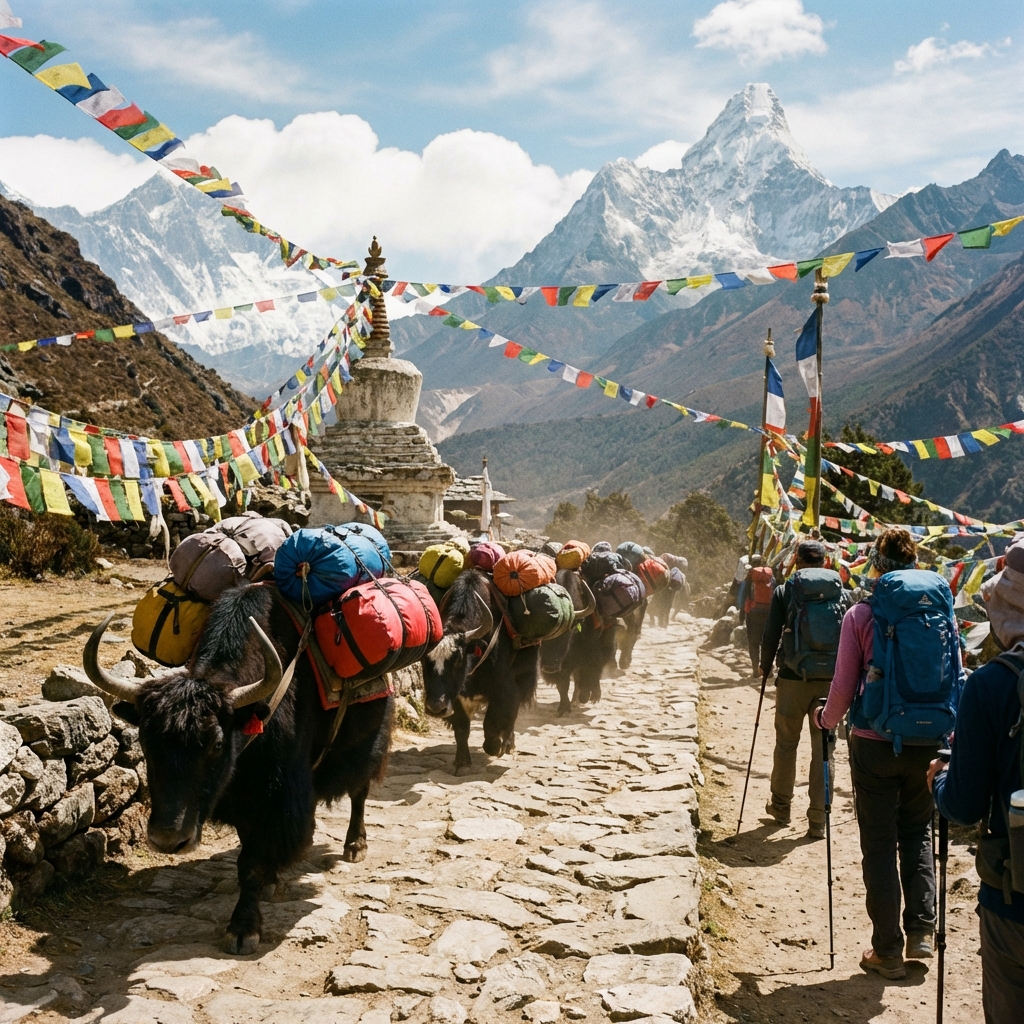
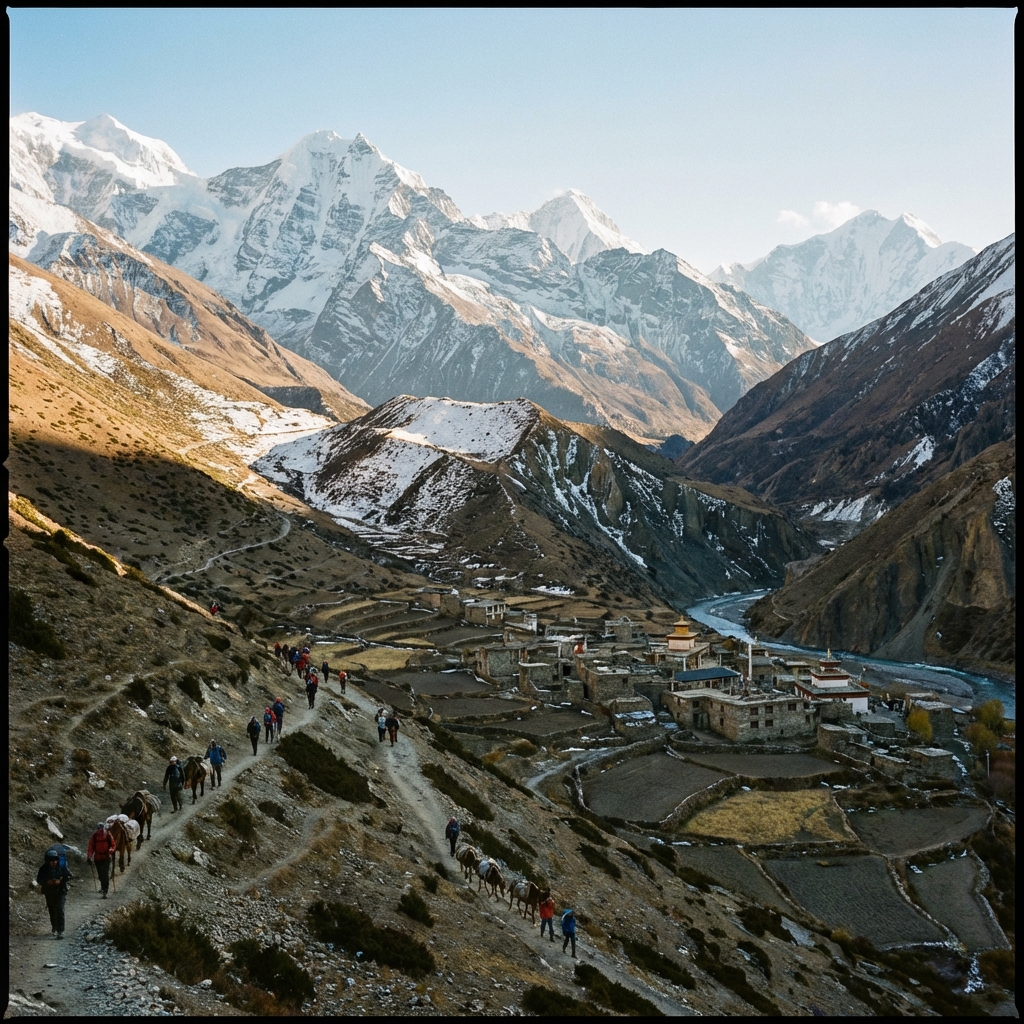
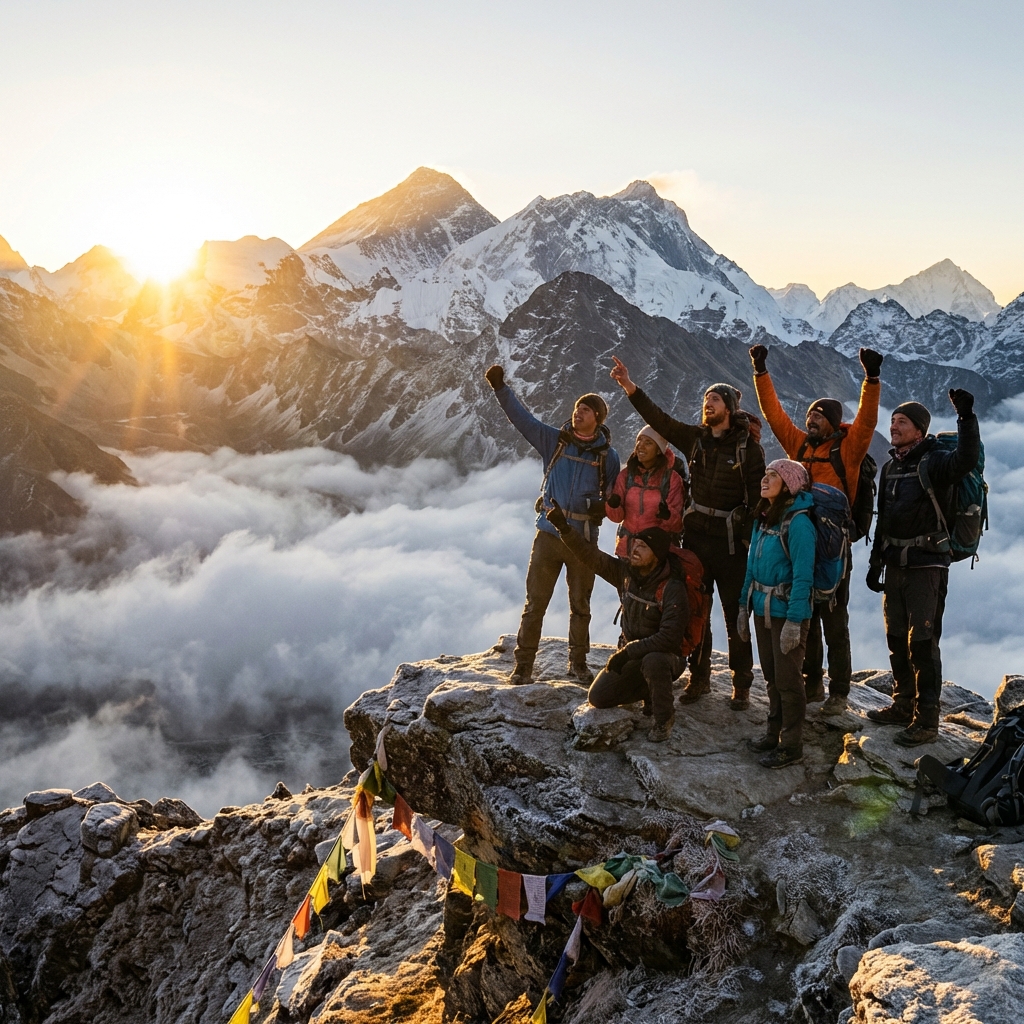
Nepal in September: Weather, Trekking & Costs
Nepal in September is a post-monsoon transition month. The first two weeks still bring rain and leeches, but from September 20 conditions reach near-October quality: clear mornings, warmer nights, 50-60% fewer crowds, and 25-35% lower costs than October.
September represents Nepal's most underrated trekking month—a transitional period when the monsoon gradually releases its grip, conditions improve dramatically week by week, and savvy trekkers capitalize on 50-60% fewer crowds than October while experiencing nearly identical weather quality during the month's final ten days. This is the shoulder season that rewards flexibility, strategic timing, and understanding of regional weather patterns.
While September's first two weeks still carry monsoon remnants—afternoon clouds, occasional rain, active leeches below 3,000m, and variable visibility—the month transforms remarkably by September 20. The final third of September (September 20-30) delivers what many experienced trekkers consider the year's best value proposition: October-quality weather with minimal crowds, 25-35% cost savings, and an authentic trail experience before peak season intensity arrives.
However, September demands strategic thinking that other months don't require. Rain shadow regions like Upper Mustang, Dolpo, and Upper Manang remain excellent throughout September (even better than peak season in some ways), while monsoon-affected areas like lower Everest, Annapurna foothills, and Langtang improve progressively. Understanding this regional and temporal variation—along with week-by-week progression—is essential for September success.
This comprehensive guide provides detailed week-by-week weather analysis, regional suitability ratings, leech reality and management strategies, crowd and cost comparisons, booking considerations, the September 20-30 sweet spot, Dashain Festival timing, early vs late month strategy, and honest assessments of when September excels and when it doesn't.
Good → Excellent (improves weekly)
Variable early, excellent late month
Sept 20-30 (approaching October quality)
Low-Moderate (40-50% of October)
25-35% below October prices
75-85% (excellent)
Common (60-70% of days)
Excellent all month
Why September Works: The Strategic Advantages
September's reputation as a challenging month is outdated and oversimplified. Modern trekkers who understand regional variations and temporal progression can leverage September's unique advantages for exceptional experiences. To see how September stacks up against the peak month, compare it directly with trekking Nepal in October, or browse the full Nepal trekking seasons overview.
1. The Week-by-Week Transformation: September's Dramatic Improvement
Unlike other months where conditions remain relatively consistent throughout, September improves dramatically on a weekly basis as the monsoon retreats and autumn high-pressure systems gradually dominate.
Early September (Sept 1-10): Monsoon tail end—afternoon thunderstorms still common (60-70% of days), morning clarity 60-70%, clouds typically develop by 10-11 AM, rain mostly afternoon/evening, leeches very active below 3,000m. This is genuinely challenging for most routes.
Mid-September (Sept 11-20): Transition accelerates—afternoon storms reduce to 40-50% of days, morning clarity improves to 70-80%, afternoon clouds still form but later (1-2 PM), rain lighter and less frequent, leeches declining but still present. Conditions become manageable for flexible trekkers.
Late September (Sept 21-30): Approaching peak season quality—afternoon storms rare (20-30% of days), morning clarity 80-90% (nearly October levels), afternoon clouds less dense, rain minimal (10-20mm for the week), leeches mostly dormant above 2,500m. This is the September sweet spot.
Practical Impact: A late September trek (starting Sept 20-25) experiences conditions nearly indistinguishable from early October—clear mornings, stunning visibility, dry trails, minimal rain—but with 50-60% fewer trekkers and 25-35% lower costs. This ten-day window is arguably Nepal's best trekking value.
Temperature Advantage: September is actually 3-5°C warmer than October at high elevations, making high camps more comfortable. Gorak Shep in late September averages -4 to 0°C at night versus -8 to -2°C in October—a significant comfort difference requiring less extreme sleeping gear.
2. Rain Shadow Regions: September's Hidden Gem
Nepal's rain shadow regions—areas behind the Himalayan wall where monsoon moisture rarely penetrates—are not just "acceptable" in September; they're often superior to peak season months.
What Are Rain Shadow Regions? When moisture-laden monsoon clouds from the Bay of Bengal push north, they hit the southern Himalayan barrier and drop their precipitation on the southern slopes. The northern leeward sides receive minimal rainfall, creating dry microclimates even during monsoon season.
Prime September Rain Shadow Regions:
-
Upper Mustang: Perhaps Nepal's best September trek. Monsoon barely reaches this Tibetan plateau region. September offers 0-15mm monthly precipitation (same as October), but with warmer temperatures (5-7°C warmer than October—significant at 3,800m elevation), no October crowds, and easier permit processing. The desert landscapes, Tibetan culture, and walled city of Lo Manthang are actually more pleasant in September's warmth.
-
Dolpo: Remote and spectacular, Dolpo's high desert receives almost no monsoon influence. September conditions are excellent (10-20mm precipitation), trails are virtually empty (5-10 trekkers/day vs. 20-30 in October), and warmer temps make high passes more comfortable. The turquoise waters of Phoksundo Lake contrast spectacularly against September's still-green vegetation at lower elevations.
-
Upper Manang (above Manang village): The Annapurna Circuit's northern section sits in rain shadow. While lower Manang receives monsoon rain, areas above Manang village (3,540m)—especially Tilicho Lake and approaches to Thorong La—experience dry conditions throughout September with minimal cloud buildup.
-
Nar-Phu Valley: This restricted area trek benefits from both rain shadow protection and September's warmth. Fewer permits issued in September means true solitude in stunning landscapes.
September Advantage: Rain shadow regions are actually BETTER in September than October due to: warmer temperatures (3-7°C difference at high altitudes), virtually no crowds (85-90% fewer trekkers), lower costs (30-40% savings), easier permit processing (less demand), and greener contrast at lower elevations enhancing photography.
Pro Tip
Rain Shadow Strategy: If your September dates are fixed (can't wait until late month), choose a rain shadow region trek instead of traditional monsoon-affected routes. Upper Mustang in September offers better value, warmer weather, and fewer crowds than the same trek in October—many consider it the optimal month for this route. Similarly, Dolpo's September conditions rival October but with genuine wilderness solitude.
3. Crowd Reality: September's Biggest Practical Advantage
September sees approximately 40-50% of October's trekker volume overall, but this varies dramatically by timing:
- Early September (1-15): 30-35% of October levels
- Late September (16-30): 55-65% of October levels (increasing as month progresses)
- September 27-30: 70-80% of October levels (Dashain festival beginning)
What This Means on Trail:
- Everest Base Camp: 200-300 trekkers/day starting route (vs. 600-800 in October)
- Annapurna Base Camp: 150-250/day (vs. 500-700 in October)
- Poon Hill: 100-200/day (vs. 400-600 in October)
- Manaslu Circuit: 20-40/day (vs. 70-100 in October)
- Upper Mustang: 5-15/day (vs. 30-50 in October)
Practical Benefits:
- Lodge bookings flexible—walk-up accommodation feasible at most locations
- Popular viewpoints (Kala Patthar, Poon Hill, Gokyo Ri) have 10-20 people at sunrise instead of 50-100
- Dining halls comfortable and conversational vs. packed and chaotic
- Trails feel like wilderness journeys rather than highway processions
- Guide/porter availability excellent (October books them out months ahead)
The Social Dimension: Some trekkers actually prefer October's bustling social atmosphere—meeting dozens of fellow adventurers, lively dining hall conversations, group energy on trails. Others find it overwhelming and commercial. September offers a middle ground: enough trekkers for safety and socializing (you're never truly alone), but not so many that it feels like a tourist highway. It's the difference between "shared adventure" and "crowded attraction."
4. Cost Savings: 25-35% Below October Rates
September pricing sits in shoulder season territory, offering substantial savings across all services. For a full breakdown of what a trek costs in any month, see our Nepal trekking costs guide and the budget trekking guide.
Specific Cost Comparisons (September vs October):
- Teahouse rooms: $3-5/night (vs. $5-8 in October) — 30-40% savings
- Dal bhat: $4-5 (vs. $6-7 in October) — 25-35% savings
- Guide rates: $25-$35 /day (vs. $28-35 in October) — 25-30% savings
- Porter rates: $20-$30 /day (vs. $22-28 in October) — 25-30% savings
- Agency packages: $800-1,200 for EBC (vs. $1,200-1,800 in October) — 30-35% savings
- Lukla flights: Similar official prices but more discounting/flexibility
Total Trek Cost Example (12-day Everest Base Camp):
-
September independent: $215-800
-
October independent: $900-1,200
-
Savings: $250-400 (30-35%)
-
September with agency: $1,000-1,300
-
October with agency: $1,500-2,000
-
Savings: $400-700 (30-35%)
Budget Impact: For a couple doing EBC with an agency, September saves $800-1,400 compared to October—enough for another week of travel in Nepal, upgraded flights, or significant discretionary spending.
Value Calculation: In late September (Sept 20-30), you get nearly identical conditions to October at 30-35% lower cost. This is arguably the best value window in the entire trekking calendar.
5. Morning Clarity: September's Underrated Advantage
While September is known for afternoon clouds, its morning clarity is exceptional and often overlooked—75-85% of mornings (even in early/mid-September) feature crystal-clear skies from sunrise until 10 AM-12 PM.
What This Means:
- Mountain views: Spectacular morning panoramas from viewpoints
- Photography: Golden hour and morning light are excellent for mountain photography
- Trekking strategy: Start early (6-7 AM), trek during optimal visibility, reach destination by noon-1 PM, avoid afternoon cloud buildup
- Summit/pass attempts: Most trekkers cross high passes early morning anyway—September's morning clarity makes this reliable
Visibility Quality: September's post-monsoon air has been washed clean of dust, pollution, and particulates—similar to October. Morning visibility frequently exceeds 80-100km, with crisp, sharp peak definition. The key difference from October isn't clarity quality but duration—September clarity lasts 4-6 hours (sunrise to 10 AM-noon) while October lasts 8-10 hours (sunrise to 3-4 PM).
Trekking Adaptation: Successful September trekkers adjust their rhythm: early starts (6-7 AM breakfast), morning trekking during clear conditions, arrive destination by noon-2 PM, afternoon rest during cloud buildup, enjoy social time in lodges. This pattern actually reduces midday heat stress and provides more rest time than all-day trekking.
6. Temperature Comfort: Warmer Than October at High Altitude
September is 3-7°C warmer than October across all elevations, with the most significant difference at high altitude where comfort matters most.
Temperature Comparison (September vs October):
Gorak Shep (5,164m):
- September days: 4-10°C (vs. Oct 2-6°C) — 2-4°C warmer
- September nights: -4 to 0°C (vs. Oct -10 to -6°C) — 6°C warmer
- Impact: -10°C sleeping bag sufficient vs. -15°C in October
Thorong High Camp (4,925m):
- September days: 6-12°C (vs. Oct 2-8°C) — 4°C warmer
- September nights: -2 to 2°C (vs. Oct -8 to -3°C) — 5°C warmer
- Impact: Much more comfortable pre-pass night
Namche Bazaar (3,440m):
- September days: 13-17°C (vs. Oct 10-12°C) — 3-5°C warmer
- September nights: 4-8°C (vs. Oct 0-3°C) — 4-5°C warmer
- Impact: Lighter evening layers needed
Practical Benefits:
- More comfortable sleeping at high camps (6°C warmer nights is massive for sleep quality)
- Less extreme cold-weather gear required (-10°C sleeping bags vs. -15°C to -20°C)
- More pleasant evenings in teahouses (warmer ambient temps)
- Reduced cold stress on the body (preserves energy for altitude acclimatization)
- Water doesn't freeze overnight in bottles
Cold-Sensitive Trekkers: If you struggle with cold weather, September offers a significant comfort advantage over October/November at high elevations. The 6-7°C warmer nighttime temperatures at places like Gorak Shep or Thorong High Camp translate to much better sleep, faster recovery, and overall comfort.
September Weather Breakdown: Week-by-Week Progression
Understanding September's weekly evolution is critical for timing decisions and realistic expectations.
Week 1 (September 1-7): Late Monsoon
Weather Pattern: Monsoon still active but weakening
Conditions:
- Morning clarity: 60-70% of days
- Afternoon storms: 60-70% of days (expect rain 4-5 days/week)
- Daily pattern: Clear 6-10 AM, clouds build 10 AM-noon, rain 2-6 PM
- Precipitation: 40-60mm for the week
- Visibility: 50-80km on clear mornings (good when clear, but inconsistent)
- Temperature: Warmest week of September
Leech Activity: Very active below 3,000m—peak season for leeches
Trail Conditions: Muddy and slippery, especially in forested areas; stream crossings higher due to recent rain
Best For:
- Rain shadow regions only (Upper Mustang, Dolpo—excellent conditions)
- Experienced monsoon trekkers who accept rain risk
- Flexible itineraries with buffer days
Avoid:
- Everest region (monsoon clouds obscure views, leeches below Namche)
- Lower Annapurna (ABC approach, Poon Hill heavily affected)
- Langtang (still receiving monsoon influence)
Realistic Assessment: This is genuinely challenging. Unless you're specifically choosing rain shadow regions or have extreme flexibility, this week is still too monsoon-affected for most trekkers.
Week 2 (September 8-14): Early Transition
Weather Pattern: Monsoon weakening, transition beginning
Conditions:
- Morning clarity: 70-75% of days
- Afternoon storms: 50-60% of days (3-4 days/week)
- Daily pattern: Clear 6-11 AM, gradual cloud buildup, rain less intense/frequent
- Precipitation: 25-40mm for the week
- Visibility: 70-90km on clear mornings
- Temperature: Still warm, very comfortable for trekking
Leech Activity: Active below 3,000m but declining (60-70% of Week 1 levels)
Trail Conditions: Improving but still muddy in sections; vegetation lush and green
Best For:
- Rain shadow regions (still excellent)
- Flexible trekkers willing to adapt to afternoon clouds
- Budget-conscious trekkers getting excellent value
- Those who prefer warm conditions
Consider With Caution:
- Everest region (conditions improving but still variable)
- Annapurna routes (passable but afternoon clouds likely)
- Langtang (better than Week 1 but not yet ideal)
Realistic Assessment: Noticeably better than Week 1. Morning clarity is reliable enough for good mountain views and pleasant trekking. Afternoon clouds and occasional rain are the price you pay for 30-40% cost savings and minimal crowds. Manageable for adaptable trekkers.
Week 3 (September 15-21): Rapid Improvement
Weather Pattern: Autumn systems beginning to dominate
Conditions:
- Morning clarity: 75-85% of days
- Afternoon storms: 35-45% of days (2-3 days/week, often light)
- Daily pattern: Clear 6 AM-1 PM, clouds build but less dense, rain less frequent
- Precipitation: 15-25mm for the week
- Visibility: 80-100km+ on clear mornings (approaching October quality)
- Temperature: Slightly cooling but still very comfortable
Leech Activity: Minimal above 2,500m; declining rapidly below (40-50% of Week 1)
Trail Conditions: Drying out, becoming excellent for trekking
Best For:
- All major routes now viable (Everest, Annapurna, Langtang all good)
- Value seekers getting October-quality mornings at shoulder prices
- Photographers (morning clarity excellent, afternoon clouds add drama)
- Trekkers avoiding peak crowds
Recommended:
- Everest Base Camp (conditions very good, crowds moderate)
- Annapurna Circuit (morning clarity superb for Thorong La views)
- Langtang Valley (excellent conditions emerging)
- All rain shadow regions (peak excellence)
Realistic Assessment: This is when September becomes genuinely excellent. The week-long window Sept 15-21 marks the transition from "acceptable with tradeoffs" to "approaching peak quality." Morning clarity rivals October, afternoon clouds are manageable, and crowds/costs remain 40-50% below peak season.
Week 4+ (September 22-30): Late September Sweet Spot
Weather Pattern: Autumn fully established
Conditions:
- Morning clarity: 80-90% of days (nearly identical to October)
- Afternoon storms: 20-30% of days (1-2 days/week, usually light)
- Daily pattern: Clear most of the day, occasional afternoon cloud wisps
- Precipitation: 8-15mm for the week
- Visibility: 100-120km on clear mornings (exceptional—October quality)
- Temperature: Cooling toward October levels but still 2-3°C warmer
Leech Activity: Dormant above 2,500m; minimal below (10-20% of Week 1)
Trail Conditions: Dry, excellent—indistinguishable from October
Best For:
- Everyone—this is peak-quality trekking
- Value maximizers (October conditions at September prices)
- Crowd avoiders (40-50% fewer trekkers than October)
- All routes across all regions
September 27-30 Consideration: Dashain festival typically begins Sept 28-30 (varies yearly). These final days see increasing crowds as Nepali domestic tourism surges and international trekkers targeting festival experience arrive. Still less crowded than October, but noticeably busier than Sept 20-26.
Recommended:
- Everest Base Camp (approaching peak conditions)
- Annapurna Circuit (Thorong La excellent, festival atmosphere at lodges)
- ABC, Langtang, Manaslu (all excellent)
- Rain shadow regions (still superb, warmer than October)
Realistic Assessment: The September 20-30 window, especially Sept 20-26 before Dashain crowds arrive, offers arguably the best value-to-quality ratio in Nepal's entire trekking calendar. You get 85-90% of October's weather excellence at 65-75% of October's cost with 50-60% fewer crowds. Experienced trekkers specifically target this window.
| Month | High | Low | Conditions | Crowds | Notes |
|---|---|---|---|---|---|
| Week 1 (Sept 1-7) | Warmest | Mild nights | High (40-60mm) | Very Low (30% of Oct) | Still monsoon-affected; rain shadow regions only |
| Week 2 (Sept 8-14) | Warm | Comfortable | Moderate (25-40mm) | Low (35% of Oct) | Improving but variable; flexible trekkers okay |
| Week 3 (Sept 15-21)Best | Pleasant | Cool evenings | Low (15-25mm) | Moderate (45% of Oct) | Rapid improvement; approaching peak quality |
| Week 4+ (Sept 22-30)Best | Ideal | Cool | Very Low (8-15mm) | Moderate-High (55-70% Oct) | October-quality weather; best value window |
The Leech Reality: Management and Context
Leeches are September's most notorious challenge—particularly psychological—but understanding context, timing, and management strategies transforms them from dealbreaker to manageable inconvenience.
Understanding Leech Season
Leech Biology: Himalayan leeches thrive in warm, humid conditions below approximately 3,000m elevation. Monsoon season (June-September) provides ideal conditions—moisture, vegetation, and ambient temperatures above 15-20°C. They detect vibration, heat, and CO2, then attach to passing mammals (including humans) for blood meals.
Seasonal Progression:
- Early September (1-14): Peak activity—very active below 3,000m, moderate activity 3,000-3,500m
- Mid-September (15-21): Declining—active below 2,500m, minimal above
- Late September (22-30): Low activity—mostly inactive above 2,500m, declining below
Temperature Threshold: Once nighttime temperatures drop consistently below 12-15°C (typically mid-September at 2,000-2,500m), leech activity drops dramatically. By late September, most trekking routes above 2,500m are effectively leech-free.
Regional Leech Exposure
High Leech Risk (Early-Mid September):
- Everest Region: Phakding to Namche trail (2,610-3,440m)—especially forested sections
- Annapurna Region: Nayapul to Ghandruk/Ghorepani trails, ABC approach below Sinuwa
- Langtang Region: Syabrubesi to Lama Hotel (2,470m)—heavily forested
- Lower Elevations Generally: Any trail below 3,000m with forest cover and moisture
Low/No Leech Risk:
- Rain Shadow Regions: Upper Mustang, Dolpo, Upper Manang—too dry for leeches
- High Altitude Start: Treks beginning above 3,000m (Jomsom-Muktinath, some Manaslu sections)
- Late September (22-30): Most routes above 2,500m essentially leech-free
Exposure Duration: On most treks, leech exposure is limited to 1-3 days at trek start. Examples:
- EBC: Day 1-2 (Phakding to Namche)—then above leech zone
- ABC: Day 1-3 (Nayapul to Chhomrong)—then above leech zone
- Langtang: Day 1-2 (Syabrubesi to Lama Hotel)—then above leech zone
Perspective: You endure leeches for 1-3 days, then enjoy 7-12 days of leech-free trekking at higher elevations. The exposure is limited, not continuous.
Leech Prevention Strategies
Physical Barriers (Most Effective):
-
Leech Socks: Purpose-designed waterproof socks that extend to knees—90%+ effective. Brands: SEA to SUMMIT, Outdoor Research. Cost: $20-40. Pull over regular socks and tuck pants into them.
-
Gaiters: Hiking gaiters provide similar protection—cover boot to knee. More versatile than leech socks (useful for snow, mud too). 80-90% effective against leeches.
-
Tight Tuck System: Tuck pants into socks, socks into boot tops, create no gaps. Wear tight long sleeves. 60-70% effective if done properly.
-
Closed-Toe Shoes/Boots: Never wear sandals or open footwear in leech zones—suicide. Fully enclosed boots essential.
Chemical Deterrents:
-
Permethrin Treatment: Treat clothing (pants, socks, shirt) with permethrin spray 24 hours before trek. Lasts 5-6 washes. 70-80% effective. Available: Kathmandu outdoor stores, Amazon pre-trip.
-
DEET or Picaridin: Apply 30%+ DEET or 20%+ Picaridin to skin and fabric. 50-60% effective against leeches (less than for insects). Reapply after 2-3 hours, more often if sweating heavily.
-
Salt: Some trekkers sprinkle salt around boot tops and pant cuffs. 30-40% effective—minimal deterrent but better than nothing.
Behavioral Strategies:
-
Trek During Warmer Hours: Leeches are most active in early morning dampness and evening. Midday (10 AM-3 PM) sees less activity—though still present.
-
Stay on Trail: Leeches concentrate in vegetation. Walking center trail reduces exposure versus brushing against wet leaves/grass.
-
Quick Breaks: During rest stops in leech zones, stay on rocks/logs rather than sitting on ground/vegetation. Keep moving.
-
Regular Checks: Every 20-30 minutes, check pants, socks, boots for leeches climbing. Remove before they attach (they search for 10-30 minutes before biting).
If a Leech Attaches: What to Do
Removal:
- DON'T PANIC: Leech bites are harmless—no disease transmission in Nepal, minimal blood loss (5-10ml), painless (they inject anesthetic)
- Slide fingernail under sucker: Leeches have suckers at both ends—slide fingernail under front sucker (narrow end) to break seal, then rear sucker
- Alternative methods: Apply salt, DEET, or lighter to leech—it will detach (though less dignified than manual removal)
- DON'T PULL: Yanking a leech can leave mouthparts embedded (infection risk) or cause more bleeding
Post-Bite Care:
- Bleeding: Leeches inject anticoagulant—bites bleed freely for 15-60 minutes (sometimes hours). This is normal.
- Apply Pressure: Use tissue/gauze with firm pressure for 5-10 minutes to encourage clotting
- Clean: Wash with soap and water once bleeding slows
- Bandage: Apply antiseptic and bandage if still bleeding
- Monitor: Check daily for infection signs (rare)—redness, swelling, pus
What NOT To Do:
- Don't use cigarettes, flames, or burning—risk of burns worse than leech
- Don't pour alcohol on attached leech—it may regurgitate (infection risk)
- Don't freak out—they're gross but harmless
Psychological Management: The Real Challenge
The honest truth: Leeches are psychologically challenging for many trekkers more than physically dangerous. Watching a bloodworm climb your boot or finding one attached to your ankle provokes visceral disgust.
Mindset Strategies:
-
Time-Limited Exposure: Remind yourself it's 1-3 days max, then you're above leech zone for rest of trek
-
Acceptance: September trekkers universally encounter some leeches—it's part of the experience, not a personal failing if one gets you
-
Humor: Trekking groups bond over leech stories—it becomes memorable adventure rather than traumatic experience
-
Distraction: Focus on stunning mountain views, cultural experiences, and the fact you're paying 30% less than October trekkers who see the same views
-
Preparation Reduces Anxiety: Proper leech gear (socks, DEET, permethrin) dramatically reduces encounters, which reduces psychological stress
Cultural Note: Nepali guides and porters are completely nonchalant about leeches—they've dealt with them their whole lives. Observing their casual attitude helps maintain perspective.
Should Leeches Stop You from September Trekking?
Probably NOT if:
- You're trekking late September (22-30)—leech activity minimal
- You're trekking rain shadow regions—no leeches
- You're willing to use leech socks/gaiters—highly effective
- You can mentally handle 1-3 uncomfortable days for 30% cost savings
- You have tolerance for nature's annoyances (bugs, rain, etc.)
Maybe YES if:
- You have severe hematophobia (fear of blood)
- You have extreme entomophobia (fear of worms/bugs)
- You're trekking early September and cannot shift dates
- You cannot mentally accept the possibility of leech encounters
- You're very sensitive to "gross" experiences
Honest Assessment: Most prepared trekkers encounter 0-5 leeches over 1-3 days, successfully prevent most attachments with barriers, and look back on it as a minor inconvenience rather than trek-ruining experience. Late September trekkers often see zero leeches. It's a real consideration but shouldn't be an automatic dealbreaker.
Leech Reality Check
Leeches are September's biggest psychological barrier. Early September (1-15) below 3,000m: expect encounters, be prepared. Late September (20-30) above 2,500m: minimal risk, mostly dormant. Rain shadow regions: zero leeches any time. With leech socks and permethrin treatment, most trekkers experience 0-2 actual bites over the entire trek. It's gross but manageable—don't let fear of leeches prevent you from experiencing September's exceptional value, especially late month.
September Weather by Region: Where to Trek When
September's transitional nature makes regional selection critical—some areas remain excellent all month, others improve progressively, and timing determines success.
Rain Shadow Regions: September Excellence
Upper Mustang in September
Overall Rating: Excellent ★★★★★ (Best Month Argument)
September Conditions:
- Precipitation: 0-15mm monthly (identical to October)
- Temperature: 15-22°C days (vs. Oct 10-16°C) — 5-7°C WARMER
- Night Temperature: 5-10°C (vs. Oct 0-5°C) — 5°C warmer
- Visibility: Exceptional (dry air, no monsoon clouds)
- Crowd Level: Very Low (5-15 trekkers/day vs. 30-50 in October)
- Cost: 30-40% below October
Why September is BETTER Than October:
- Warmer temps make high desert trekking more comfortable (significant at 3,800m avg elevation)
- Virtually empty trails (October sees 3-4x more trekkers)
- Easier permit processing (lower demand)
- Lower costs across all services
- Same excellent visibility and weather stability
- Greener lower elevations provide photographic contrast
September-Specific Advantages:
- No afternoon clouds (unlike monsoon-affected regions)
- Comfortable sleeping without extreme cold gear
- Cultural experiences more intimate with fewer tourists
- Tibetan festivals occasionally occur (check dates)
Best For:
- Trekkers with fixed September dates seeking guaranteed excellence
- Those wanting true solitude in stunning landscapes
- Cultural/photography trekkers (Tibetan culture, desert landscapes)
- Anyone willing to invest in expensive permit (USD 50/day (no minimum days)) for optimal experience
Booking: 2-3 months advance for permits and logistics; guide required
Dolpo Region in September
Overall Rating: Excellent ★★★★★
September Conditions:
- Precipitation: 10-25mm monthly (very low)
- Temperature: Warmer than October by 4-6°C
- Visibility: Exceptional (rain shadow protection)
- Crowd Level: Extremely Low (5-10 trekkers/day)
- Trail Conditions: Dry, excellent
September Advantages:
- Phoksundo Lake turquoise waters with surrounding greenery (stunning contrast)
- High passes (Kang La, Sela La) more comfortable in warmer conditions
- Genuine wilderness solitude (even fewer trekkers than October)
- Lower costs (though Dolpo is expensive regardless)
Challenges:
- Very remote (logistics complex)
- Expensive ($800-1,500 permits + logistics)
- Requires 3+ weeks
- Restricted area (guide mandatory)
Best For: Experienced trekkers seeking ultimate remote wilderness in September
Nar-Phu Valley in September
Overall Rating: Excellent ★★★★★
September Conditions:
- Protected from monsoon by Annapurna massif
- Dry conditions (20-30mm monthly)
- Warm days (12-18°C), cool nights (4-10°C)
- Very low crowds (restricted permits)
September Advantages:
- Combines rain shadow reliability with proximity to Annapurna Circuit
- September's warmth enhances high-altitude comfort
- Fewer trekkers than October
- Can combine with Annapurna Circuit
Best For: Trekkers wanting rain shadow reliability with better access than Mustang/Dolpo
| Month | High | Low | Conditions | Crowds | Notes |
|---|---|---|---|---|---|
| Upper Mustang SeptBest | 15-22°C (warmer) | 5-10°C | 0-15mm | Very Low (10/day) | Arguably BETTER than October—warmer, emptier, cheaper |
| Upper Mustang OctBest | 10-16°C (cooler) | 0-5°C | 5-20mm | Moderate (40/day) | Colder, more crowded, more expensive |
| Dolpo SeptemberBest | 12-18°C (warmer) | 2-8°C | 10-25mm | Extremely Low | Warmer temps, incredible solitude, lower costs |
| Nar-Phu SeptemberBest | 12-18°C | 4-10°C | 20-30mm | Very Low | Rain shadow protection, September warmth advantage |
Monsoon-Affected Regions: Timing is Everything
Everest/Khumbu Region in September
Overall Rating: Fair → Excellent (Week 1: ★★★☆☆ / Week 4: ★★★★★)
Early September (1-15):
- Morning clarity: 60-75%
- Afternoon clouds: Very likely
- Leeches: Active Phakding-Namche
- Crowds: Very low (200-250 trekkers/day starting)
- Conditions: Variable, improving weekly
Late September (20-30):
- Morning clarity: 85-90% (approaching October)
- Afternoon clouds: Occasional
- Leeches: Minimal/dormant
- Crowds: Moderate (350-400 trekkers/day starting)
- Conditions: Excellent, nearly indistinguishable from October
September Strategy for Everest:
- Target Sept 20+ start dates for optimal weather
- Accept leech encounter Days 1-2 (Phakding-Namche) but above leech zone Day 3 onward
- Early morning discipline: Start trekking 6-7 AM to maximize clear morning hours
- Flexible itinerary: Build 1-2 buffer days for weather variability if trekking before Sept 20
- Sleeping bag: -10°C sufficient (vs. -15°C in October)—warmer nights
Best Routes in September:
- Everest Base Camp—Late Sept excellent
- Gokyo Lakes—September's morning clarity spectacular
- Three Passes—Late Sept okay for experienced trekkers
September vs October:
- Temps: September 3-5°C warmer (significant comfort advantage at high camps)
- Crowds: September 50-60% fewer (major advantage)
- Costs: September 25-35% cheaper (substantial savings)
- Weather: Late Sept nearly equal; early Sept noticeably worse
- Visibility: Late Sept = October; early Sept = 70-80% as good
Booking Lead Time: 1-2 months for late September (vs. 4-5 months for October)
Annapurna Region in September
Overall Rating: Fair → Excellent (Week 1: ★★★☆☆ / Week 4: ★★★★★)
Annapurna Circuit:
- Lower sections (Besisahar-Chame): Monsoon-affected early Sept; excellent late Sept
- Upper sections (Manang-Thorong La): Rain shadow—good all month, excellent late month
- Thorong La crossing: Late September excellent (success rate 90%+)
- Strategy: Consider Jomsom start (reverse direction) to begin in rain shadow
Annapurna Base Camp:
- Approach (Nayapul-Chhomrong): Leechy early Sept; drying late Sept
- Higher sections (Deurali-ABC): Improving throughout month
- Late September (20-30): Excellent conditions, 50% fewer crowds than October
Poon Hill:
- Early Sept: Morning views good (70%), afternoon clouds likely
- Late Sept: Morning views excellent (85-90%), approaching October quality
- Advantage: Short trek (4-5 days) makes weather variability less impactful
Mardi Himal:
- September Pattern: Similar to ABC—early month variable, late month excellent
- Advantage: Less crowded than ABC; late Sept offers great value
September Strategy for Annapurna:
- Late September (20-30): All routes excellent
- Mid-September (15-21): Good for adaptable trekkers
- Early September (1-14): Consider rain shadow start (Jomsom) or wait
September vs October:
- Weather: Late Sept nearly equal; early Sept 70-80% as good
- Crowds: ABC sees 150-250/day (Sept) vs. 500-700/day (Oct)—huge difference
- Costs: 25-30% cheaper
- Thorong La: Late Sept = October quality
Langtang Region in September
Overall Rating: Fair → Very Good (Week 1: ★★★☆☆ / Week 4: ★★★★☆)
Early September (1-15):
- Monsoon tail end—morning clarity 65-75%, afternoon clouds/rain likely
- Leeches active Syabrubesi-Lama Hotel
- Views: Variable
Late September (20-30):
- Morning clarity 80-85%
- Afternoon clouds diminishing
- Leeches dormant
- Views: Very good to excellent
September Advantages:
- Close to Kathmandu (7-8 hour drive—no flight logistics)
- Moderate altitude (easier acclimatization)
- Budget-friendly (low premium pricing)
- Less crowded than Everest/Annapurna
September Strategy:
- Target late September (20-30) for best conditions
- Early starts maximize morning clarity
- Build flexibility for 1-2 weather days if trekking early month
Best For: September trekkers wanting accessible, budget-friendly option with late-month excellence
Manaslu Circuit in September
Overall Rating: Fair → Very Good (Week 1: ★★★☆☆ / Week 4: ★★★★☆)
September Conditions:
- Lower circuit: Monsoon-affected early month
- Upper circuit: Partially rain-shadowed, improving weekly
- Larkya La Pass (5,160m): Late Sept success rate 85-90% (vs. 95% in October)
Late September (22-30):
- Excellent conditions for pass crossing
- Weather windows reliable
- Warmer temps than October (significant at high pass)
Challenges:
- Requires guide (restricted area)
- Permits need 2-3 weeks processing
- Still moderate landslide risk early month
Best For: Experienced late-September trekkers wanting October-quality with fewer crowds
September Cost Analysis: The Budget Advantage
September's shoulder-season pricing delivers substantial savings across all trek components while providing excellent value, especially late month.
Detailed Cost Breakdown: September vs October
Teahouse Accommodations
Lower Elevations (Lukla, Phakding, Nayapul, etc.):
- September: $3-4/night
- October: $5-7/night
- Savings: 30-40%
Mid Elevations (Namche, Manang, Ghorepani, Kyanjin):
- September: $4-5/night
- October: $6-8/night
- Savings: 25-30%
High Elevations (Dingboche, Lobuche, Thorong High Camp):
- September: $5-6/night
- October: $8-10/night
- Savings: 35-40%
Extreme Elevations (Gorak Shep, Base Camps):
- September: $6-8/night
- October: $10-12/night
- Savings: 30-35%
Food & Beverages
Dal Bhat (standard trekker meal):
- September: $4-5
- October: $6-7
- Savings: 25-30%
Western meals (pizza, pasta, burgers):
- September: $5-7
- October: $7-10
- Savings: 25-30%
Hot drinks (tea, coffee):
- September: $1-1.50
- October: $1.50-2.50
- Savings: 20-30%
Bottled water (1L):
- September: $1-2
- October: $1.50-3
- Savings: 20-25%
Guide and Porter Services
Trekking Guide:
- September: $20-25/day
- October: $28-35/day
- Savings: 25-30%
Porter:
- September: $15-20/day
- October: $22-28/day
- Savings: 25-30%
Guide-Porter (single person doing both):
- September: $18-23/day
- October: $25-32/day
- Savings: 25-30%
Agency Packages
Everest Base Camp (12-14 days):
- September: $1,000-1,300
- October: $1,500-2,000
- Savings: $400-700 (30-35%)
Annapurna Circuit (15-18 days):
- September: $1,100-1,400
- October: $1,600-2,100
- Savings: $450-700 (30-35%)
Annapurna Base Camp (7-10 days):
- September: $700-950
- October: $1,000-1,400
- Savings: $250-450 (30-35%)
Langtang Valley (7-10 days):
- September: $600-800
- October: $900-1,200
- Savings: $250-400 (30-35%)
Lukla Flights
Official Price: Similar ($200-215 each way)
September Advantage:
- More discounting available (shoulder season)
- More negotiation flexibility
- Less demand = occasional deals
- Potential savings: 10-15%
Total Trek Cost Examples
Everest Base Camp (12 days, independent)
September:
- Accommodation: $60 (12 nights x $5 avg)
- Food: $240 (3 meals x $6 avg x 12 days + snacks)
- Permits: $50 (TIMS + Sagarmatha Park)
- Lukla flights: $215 roundtrip
- Gear rental: $50
- Miscellaneous: $40
- Total: ~$800
October:
- Accommodation: $96 (12 nights x $8 avg)
- Food: $336 (3 meals x $8 avg x 12 days + snacks)
- Permits: $50
- Lukla flights: $215 roundtrip
- Gear rental: $50
- Miscellaneous: $50
- Total: ~$980
September Savings: $180 (18%)
Everest Base Camp (12 days, with agency)
September:
- All-inclusive package: $1,200 (mid-range agency)
October:
- All-inclusive package: $1,750 (same agency, same service)
September Savings: $550 (31%)
Annapurna Circuit (16 days, independent)
September:
- Accommodation: $80 (16 nights x $5 avg)
- Food: $320 (3 meals x $6 avg x 16 days)
- Permits: $70 (TIMS + ACAP + Manang)
- Transportation: $80 (Kathmandu-Besisahar, Jomsom-Pokhara-Kathmandu)
- Gear rental: $60
- Miscellaneous: $50
- Total: ~$660
October:
- Accommodation: $128 (16 nights x $8 avg)
- Food: $448 (3 meals x $8 avg x 16 days)
- Permits: $70
- Transportation: $100
- Gear rental: $60
- Miscellaneous: $60
- Total: ~$866
September Savings: $206 (24%)
Value Calculation: Late September Sweet Spot
Late September (Sept 20-30) offers unique value proposition:
- Weather quality: 90-95% of October's excellence
- Costs: 25-35% below October
- Crowds: 50-60% fewer than October
Value Formula: (October weather quality × 0.90) / (October cost × 0.70) = 1.29x value ratio
Translation: Late September delivers approximately 30% better value than October when weather quality is weighted against cost. You get 90% of the quality at 70% of the price.
For Budget-Conscious Trekkers:
A couple doing Everest Base Camp with agency:
- September total cost: $2,400 (2 × $1,200)
- October total cost: $3,500 (2 × $1,750)
- Savings: $1,100
Alternative use of $1,100 savings:
- 7 additional nights in Kathmandu/Pokhara hotels ($50/night)
- Upgrade to business class flights from budget economy
- Add second shorter trek (Poon Hill, Ghorepani)
- Helicopter return from EBC ($1,200 split between couple)
- Extended cultural tourism (Chitwan, Lumbini, etc.)
When September's Lower Cost Matters Most
Budget Trekkers: Every dollar counts; 25-35% savings is massive
Couples/Families: Costs multiply with people; $1,000+ household savings significant
Multi-Trek Plans: Savings from Trek 1 funds Trek 2
Extended Nepal Travel: Trek savings allow more cultural tourism, longer stays
Tight Budgets: Difference between "can afford it" and "can't afford it"
Pro Tip
Value Maximization Strategy: Book late September trek (Sept 22-27 start) to get October-quality weather at September prices. Avoid Sept 28-30 (Dashain festival beginning crowds). This 5-day window offers peak value: excellent weather, moderate crowds, substantial savings. For a couple doing EBC with guide, this timing saves $800-1,200 versus October 5-10 while experiencing nearly identical conditions.
Dashain Festival: Cultural Opportunity and Crowd Consideration
Dashain, Nepal's biggest and most important festival, typically falls in late September to early October (dates vary yearly based on lunar calendar). Understanding its timing and impact helps September trekkers make informed decisions.
Dashain 2026: Mid-to-late October (Vijaya Dashami ~October 20)
The 15-day festival period falls in October in 2026, so September trekking is largely unaffected by Dashain crowds this year. In years when the lunar calendar pushes Dashain earlier, the final days of September (Sept 26-30) can see rising domestic travel.
Note: Exact dates shift yearly with the lunar calendar; confirm specific 2026 dates closer to your trek.
Impact on September Trekking
September 1-25: Pre-Dashain (Minimal Impact)
Conditions:
- Normal shoulder-season operations
- Standard September crowds (low-moderate)
- Regular pricing
- Full teahouse operations
Best For: Trekkers wanting September weather without festival complications
September 26-30: Dashain Beginning (Increasing Activity)
Conditions:
- Domestic tourism surges (Nepali families trekking together)
- International trekkers targeting festival experience
- Crowds increase 40-60% from mid-September levels
- Lodges filling up (book ahead)
- Festive atmosphere emerging in villages
Changes:
- Popular lodges (Namche, Manang, Ghorepani) may be booked
- Trails busier (though still less than October peak)
- Cultural preparations visible in villages
- Some teahouses/shops may close early (Sept 28-30) for family celebrations
Trekker Experience:
- More social/crowded than mid-September
- Cultural immersion opportunities
- Festive atmosphere, decorations
- Mixed domestic and international trekkers
Cultural Experience: The Dashain Advantage
For Trekkers Who Embrace It:
Cultural Immersion:
- Witness authentic Nepali festival celebrations in mountain villages
- Teahouse hosts perform traditional blessings (tika ceremony—red mark on forehead)
- Traditional foods, decorations, celebrations
- Chance to participate in cultural practices if invited
Community Atmosphere:
- Nepali families trekking creates intergenerational, festive vibe
- Different from typical international trekker demographic
- Warm, celebratory mood in villages
Unique Experience:
- Only happens once/year
- See Nepal beyond tourism—genuine cultural expression
- Memorable stories ("We trekked during Dashain")
Photography:
- Colorful decorations, traditional dress, ceremonies
- Cultural documentation opportunities
Dashain Challenges for Trekkers
Crowding:
- September's "fewer crowds" advantage diminishes during Dashain
- Still less than October peak, but noticeably busier than mid-September
Teahouse Availability:
- Popular villages book up quickly
- Walk-up accommodation more challenging
- May need to book 1-2 weeks ahead for Dashain period
Service Interruptions:
- Some shops, teahouses may close Sept 28-30 (main celebration days)
- Staff taking family time—limited hours or services
- Less flexibility in meal timing, services
Transportation:
- Buses/jeeps to trailheads busier
- Domestic flights more crowded
- Slight logistical challenges
Should You Trek During Dashain?
TREK DURING DASHAIN IF:
- You value cultural experiences and want authentic festival immersion
- You enjoy social, festive atmospheres
- You're flexible and can adapt to service variations
- You book accommodations 1-2 weeks ahead
- You see festival "chaos" as adventure rather than annoyance
AVOID DASHAIN IF:
- You specifically chose September for low crowds (major advantage lost)
- You prefer predictable, Western-style service
- You're doing walk-up independent trek without bookings
- You want serene, quiet mountain experience
- You have tight schedule with no flexibility for delays
Compromise Option: Trek September 15-27 (start and return before Dashain) to get:
- Late September's excellent weather
- Low-moderate crowds (no Dashain surge)
- Cost savings
- Avoid festival complications
Or: Trek October 8-onwards (after Dashain concludes) to get:
- Peak October weather
- Post-festival crowd reduction (20-30% fewer than Oct 1-7)
- Full services restored
- Miss festival but also miss crowds
Dashain in Different Regions
Everest Region:
- Sherpa communities celebrate Dashain but also have their own festivals
- Less impacted than Hindu-majority regions
- Some Sherpa teahouses remain fully operational
Annapurna Region:
- Heavily Hindu region—major Dashain celebrations
- More service interruptions Sept 28-30
- Strongest festive atmosphere
Langtang Region:
- Tamang/Buddhist communities—some celebrate Dashain, some don't
- Moderate impact
- Mixed experience
Upper Mustang/Dolpo:
- Buddhist/Tibetan regions—minimal Dashain celebration
- Largely unaffected by Hindu festival
- Normal operations continue
Dashain Strategy for September Trekkers
If your September trek dates are flexible, September 20-27 offers the sweet spot: late-month weather excellence, low-moderate crowds, cost savings, and you finish before Dashain crowds arrive (Sept 28+). If you specifically want cultural immersion, target Sept 28 - Oct 5 and embrace the festival experience. If you want lowest crowds, avoid Sept 26 onward and trek mid-September (15-25).
September Packing Considerations: Gear for Transitional Month
September's transitional nature requires slightly different gear emphasis than peak season months—balance between monsoon remnants and autumn dryness.
September-Specific Packing Priorities
Rain Protection (More Than October, Less Than Monsoon)
Essential:
- Rain jacket: Waterproof (10,000mm+) breathable shell—you'll likely use it 2-5 days
- Rain pants: Lightweight packable—optional but useful early September
- Pack cover: OR waterproof pack liner—protect gear from afternoon showers
- Dry bags: Separate bags for electronics, documents, clothes
When to Use:
- Early September (1-15): Rain gear used 40-60% of days
- Mid-September (15-21): Rain gear used 30-40% of days
- Late September (22-30): Rain gear used 10-20% of days (mostly insurance)
Strategy: Pack rain gear but don't over-invest. Late September trekkers rarely use it; early September trekkers use it moderately (not constantly like monsoon).
Leech Protection (Early-Mid September Essential)
Essential for Early/Mid September:
- Leech socks: Waterproof knee-high socks (SEA to SUMMIT, Outdoor Research)
- OR Gaiters: Hiking gaiters covering boot to knee
- Permethrin spray: Treat pants, socks, boots 24 hours before trek
- DEET/Picaridin: 30%+ concentration for skin/fabric application
- Salt: Small zip-lock for emergency leech deterrent
When to Pack:
- Trekking Sept 1-20: ESSENTIAL
- Trekking Sept 21-30: OPTIONAL (likely won't need but cheap insurance)
- Rain shadow regions: SKIP (no leeches)
Available in Kathmandu: Leech socks, permethrin, DEET all available in Thamel outdoor stores if you forget or want to buy locally ($15-40)
Temperature Layers (Warmer Than October)
Sleeping Bag:
- September requirement: -10°C comfort rating sufficient
- October requirement: -15°C comfort rating
- Difference: 5°C warmer September nights = lighter bag okay
Insulation:
- Down jacket: 600-fill power, lightweight (not expedition-weight)
- Fleece: Medium-weight fleece or synthetic insulation
- Base layers: Merino or synthetic, 1-2 sets
- Comparison to October: September needs slightly less insulation
Evening Wear:
- September's warmer evenings = comfortable with less bulk
- Light fleece + rain shell often sufficient at mid-elevations
- Down jacket essential for high camps but less extreme than October
Sun Protection (Critical Despite Clouds)
Essential:
- Sunscreen: SPF 50+, reapply frequently—UV intense at altitude even with clouds
- Glacier sunglasses: UV400, Category 3-4—critical for high elevations
- Sun hat: Wide brim for face/neck protection
- Lip balm: SPF 30+ to prevent cracking
September Reality: Morning clarity = strong sun exposure 6 AM-noon daily. Afternoon clouds reduce exposure but don't eliminate it. September's UV is identical to October—altitude matters more than season.
Quick-Dry Everything
Why It Matters in September:
- Higher humidity than October (monsoon remnants)
- Occasional rain = wet clothes
- Afternoon clouds = slower drying than October sun
- Warmer temps = more sweating
Essential Quick-Dry Items:
- Trekking pants: Synthetic, not cotton
- Shirts: Merino or synthetic base layers
- Underwear/socks: Quick-dry materials, bring extras
- Towel: Microfiber quick-dry, not cotton
Avoid: Cotton clothing (takes forever to dry in September humidity)
September Gear Comparison: What's Different from October
| Gear Item | September | October | Difference |
|---|---|---|---|
| Sleeping Bag | -10°C rating | -15°C rating | Warmer nights = lighter bag |
| Rain Gear | Essential | Optional | More rain risk |
| Leech Protection | Essential (early/mid) | Not needed | Monsoon remnant |
| Insulation | Medium-weight | Heavy-weight | Warmer temps = less bulk |
| Sun Protection | Essential | Essential | Equal priority |
| Quick-Dry Emphasis | High | Moderate | More moisture |
What You DON'T Need in September
Skip These (September-Specific):
- Extreme cold gear: Expedition gloves, face masks, extreme down—overkill for September
- Monsoon gear: Full rain suits, waterproof everything—too much for late September
- Winter boots: Regular trekking boots sufficient; no need for insulated boots
- Crampons/ice axes: Not required for standard treks in September (passes generally snow-free)
Rental vs. Purchase in Kathmandu
Best to Rent in Kathmandu (Thamel):
- Sleeping bags (-10°C available for $1-2/day = $12-20/trek)
- Down jackets (if you don't own one: $1-2/day)
- Trekking poles ($1/day)
- Duffel bags ($0.50-1/day)
Best to Bring from Home:
- Boots (rental boots often poor quality, fit critical)
- Technical layers (base layers, fleece—fit/comfort matters)
- Socks (foot health critical)
- Personal items (sunscreen, first aid, medications)
Best to Buy in Kathmandu:
- Leech socks ($20-40 one-time purchase)
- Cheap gloves, hats, buffs ($3-10)
- Trekking pants if you forgot ($20-50 for knockoff brands)
- Permethrin spray, DEET ($5-15)
Packing List: September Essentials
Clothing:
- Trekking pants (2)
- Base layer top (2)
- Base layer bottom (1-2)
- Fleece or synthetic insulation
- Down jacket (lightweight-medium)
- Rain jacket (essential)
- Rain pants (recommended early Sept)
- Trekking shirts (2-3)
- Underwear (4-5 quick-dry)
- Socks (5-6 pairs merino/synthetic)
- Warm hat
- Sun hat
- Gloves (medium-weight)
- Leech socks or gaiters (early/mid Sept)
Equipment:
- Backpack (50-65L)
- Sleeping bag (-10°C rating)
- Trekking poles
- Headlamp + extra batteries
- Water bottles (2L total) + purification
- Sunglasses (UV400)
- Sunscreen (SPF 50+)
- First aid kit
- Toiletries (quick-dry towel, etc.)
- Electronics (camera, phone, battery bank, charging cables)
- Documents (passport, permits, insurance)
- Cash (USD + NPR)
September-Specific Additions:
- Leech protection gear (if Sept 1-20)
- Pack cover or dry bags (rain protection)
- Extra quick-dry clothing (slower drying than Oct)
Pro Tip
September Packing Philosophy: Pack lighter than monsoon (you won't need full waterproofing), but more rain-ready than October. The -10°C sleeping bag versus -15°C makes a significant weight/bulk difference for trekkers carrying their own gear. If trekking late September (20-30), pack much closer to October than monsoon—minimal rain gear needed.
September Trekking Strategy: Early vs Late Month
September requires more strategic timing than stable months like October or November. Choosing when to trek within September dramatically affects experience quality.
Early September Strategy (Sept 1-14)
Weather Reality:
- Monsoon tail end—60-70% of days see afternoon rain
- Morning clarity good (60-75%) but inconsistent
- High precipitation (40-80mm for two weeks)
- Warm temperatures (warmest of September)
Best Routes:
- Rain shadow regions ONLY: Upper Mustang, Dolpo, Nar-Phu—excellent
- Avoid: Everest, Annapurna, Langtang (poor conditions)
Who Should Trek Early September:
- Fixed dates with no flexibility (work, family constraints)
- Rain shadow region trekkers (conditions excellent)
- Experienced monsoon trekkers comfortable with rain
- Extreme budget-consciousness (lowest prices of month)
- Those specifically avoiding crowds (absolutely minimal)
Strategy Tips:
- Build extensive flexibility—extra rest days, shorter daily distances
- Book refundable/flexible accommodations if possible
- Rain gear accessible always
- Accept afternoon rain as daily reality
- Focus on morning trekking, afternoon rest
- Strong leech protection essential
Realistic Expectations:
- You WILL experience rain (60-70% of days)
- You WILL encounter leeches below 3,000m
- You WILL have cloudy afternoons
- But: You'll save 35-40% on costs and see almost no other trekkers
Mid-September Strategy (Sept 15-21)
Weather Reality:
- Transition week—improving daily
- Morning clarity 75-85%
- Afternoon rain reducing to 35-45% of days
- Moderate precipitation (15-35mm for week)
- Very comfortable temperatures
Best Routes:
- Rain shadow regions: Still excellent
- Major routes: Becoming viable—Everest, Annapurna, Langtang improving
- Flexibility helps: Weather still variable enough that buffer days useful
Who Should Trek Mid-September:
- Moderate flexibility (can handle 1-2 weather days)
- Value seekers willing to accept some variability for 30% savings
- Avoiding extreme crowds but wanting some trekker community
- Transitioning from "challenging" to "excellent" window
Strategy Tips:
- Build 1-2 buffer days for weather variability
- Morning trekking emphasis (start 6-7 AM)
- Leech protection still important (but declining risk)
- Watch weather forecasts, be ready to adapt
- Book popular lodges 1 week ahead (moderate demand)
Realistic Expectations:
- 2-3 days will have afternoon clouds/rain
- Morning clarity excellent most days
- Leeches possible Days 1-3, then above leech zone
- Substantial cost savings with improving conditions
- Good balance of solitude and community
Late September Strategy (Sept 22-30)
Weather Reality:
- Approaching peak season quality
- Morning clarity 80-90% (nearly October levels)
- Afternoon rain rare (20-30% of days)
- Low precipitation (8-20mm for week)
- Comfortable temps (slightly warmer than October)
Best Routes:
- ALL ROUTES EXCELLENT: Everest, Annapurna, Langtang, Manaslu, rain shadow regions
- Approaching October quality across the board
Who Should Trek Late September:
- Everyone seeking optimal value-to-quality ratio
- October-quality weather seekers at September prices
- Crowd avoiders (still 40-50% fewer than October)
- First-time trekkers wanting forgiving conditions
- Budget-conscious without wanting to sacrifice quality
Strategy Tips:
- Book popular lodges 1-2 weeks ahead (demand increasing)
- Standard trekking schedule (no special morning emphasis needed)
- Minimal rain gear needed (but pack insurance)
- Leech protection optional/unnecessary (mostly dormant)
- Consider Sept 22-27 to avoid Dashain crowds (Sept 28-30)
Realistic Expectations:
- Weather nearly indistinguishable from October
- Occasional afternoon clouds (adds drama, not problem)
- Minimal rain (1-2 days max, often zero)
- Moderate crowds (more than mid-Sept, less than Oct)
- Excellent value (25-35% savings vs. October for same experience)
The September 20-27 Sweet Spot: This specific window offers:
- October-quality weather (90-95% equivalent)
- September pricing (25-35% savings)
- Moderate crowds (50-60% below October)
- Pre-Dashain (avoid festival surge Sept 28+)
- Warmth advantage (3-5°C warmer than October)
This may be the single best value week in Nepal's entire trekking calendar.
Flexibility: September's Most Important "Gear"
Unlike October (where itineraries run like clockwork), September rewards flexibility:
Build Buffer Days:
- Early Sept: 2-3 buffer days
- Mid Sept: 1-2 buffer days
- Late Sept: 1 buffer day (standard)
Flexible Itinerary:
- Shorter daily distances allow weather adaptation
- Alternative routes if conditions unfavorable
- "Climb high, sleep low" acclimatization with weather in mind
Accommodation Booking:
- Early/mid Sept: Keep flexible, walk-up generally fine
- Late Sept: Book 1-2 weeks ahead, especially popular spots
- Dashain period: Book 2-3 weeks ahead
Mental Flexibility:
- Accept that weather may require rest days
- Embrace afternoon lodge time (reading, socializing, resting)
- See weather variability as adventure, not failure
| Month | High | Low | Conditions | Crowds | Notes |
|---|---|---|---|---|---|
| Early Sept (1-14) | Warm (15-20°C) | Mild (5-10°C) | High (40-80mm) | Very Low (30% Oct) | Rain shadow only; monsoon tail end elsewhere |
| Mid Sept (15-21)Best | Pleasant (13-18°C) | Cool (3-8°C) | Moderate (15-35mm) | Low-Mod (45% Oct) | Improving rapidly; good value for flexible trekkers |
| Late Sept (22-27)Best | Ideal (12-16°C) | Cool (2-6°C) | Low (8-15mm) | Moderate (55% Oct) | BEST VALUE: Oct weather, Sept price, pre-Dashain |
| Late Sept (28-30)Best | Ideal (12-16°C) | Cool (2-6°C) | Low (5-12mm) | Mod-High (70% Oct) | Excellent weather; Dashain crowds beginning |
September FAQs: 25+ Common Questions Answered
Related Planning Resources
Seasonal Guides
- Best Time to Trek Nepal: Complete Seasonal Guide
- Trekking Nepal in October: Peak Season Guide
- Trekking Nepal in November: Autumn Excellence
- Trekking Nepal in December: Winter Begins
- Best Time to Trek Everest Region
Route-Specific Guides
- Everest Base Camp Trek — Complete Guide
- Annapurna Circuit Trek
- Annapurna Base Camp Trek
- Gokyo Lakes Trek
- Langtang Valley Trek
- Manaslu Circuit Trek
- Upper Mustang Trek
- Dolpo Circuit Trek
- Nar-Phu Valley Trek
- Mardi Himal Trek
- Poon Hill Trek
Regional Hubs
- Everest Region (Khumbu) — All Routes
- Annapurna Region — Complete Overview
- Langtang Region — Near Kathmandu
Practical Planning
- Nepal Trekking Permits Explained (2025)
- Altitude Sickness: Signs, Prevention & Turnaround Rules
- Complete Trekking Gear List for Nepal
- How to Choose a Trekking Agency in Nepal
- Budget Trekking Nepal: Complete Cost Guide
Is September a Good Time to Trek in Nepal?
September is excellent for strategic trekkers. The first two weeks still carry monsoon remnants, but the final ten days (September 20-30) deliver near-October quality weather at 25-35% lower cost. Rain shadow regions like Upper Mustang and Dolpo are superb all month. Standard routes like Everest Base Camp and the Annapurna Circuit improve dramatically week by week.
What's the Weather Like in Nepal in September?
Early September sees monsoon remnants — afternoon clouds, occasional rain, and active leeches below 3,000m. By late September, the monsoon retreats and conditions approach October quality. Morning clarity reaches 75-85% even mid-month. Rain shadow regions receive minimal precipitation throughout. For leech management, see our leeches and insects guide. For altitude preparation, read our acclimatization guide.
Frequently Asked Questions
Ready to Plan Your September Trek?
September offers exceptional value for strategic trekkers—especially late month. Whether you're targeting rain shadow regions for all-month excellence or late September's October-quality weather at shoulder-season prices, our trek planning wizard provides personalized recommendations based on your dates, priorities, and budget.
This comprehensive guide to Nepal in September is maintained by the Trek and Tour Nepal editorial team using data from Nepal Department of Hydrology and Meteorology, Nepal Tourism Board, regional weather stations, teahouse networks, rain shadow region specialists, and verified trekking agency reports. Weather represents historical September averages from 2015-2024 with emphasis on week-by-week progression patterns; actual conditions vary year to year. Dashain festival dates vary annually based on lunar calendar—in 2026 they fall in October. Climate change is affecting traditional patterns with monsoon retreat showing increased variability—always check recent conditions before departure. Leech activity data represents typical patterns but varies with local temperature and moisture conditions. Last updated June 2026.
Have questions about planning your September trek? Wondering if late September or early October is better for your specific priorities? Need help choosing between rain shadow and monsoon-affected routes? Contact our editorial team for personalized guidance on routes, timing, and booking strategies tailored to your September travel dates.