Choosing the right trekking agency in Nepal can make the difference between the trip of a lifetime and a dangerous, disappointing disaster. With over 2,000 registered trekking agencies operating across Nepal, the decision can feel overwhelming, especially for first-time trekkers.
This comprehensive guide will walk you through everything you need to know to select a safe, legitimate, and high-quality trekking operator. Whether you're planning to trek to Everest Base Camp, Annapurna Circuit, or any other route in the Himalayas, this guide will help you make an informed decision.
Why Your Agency Choice Matters
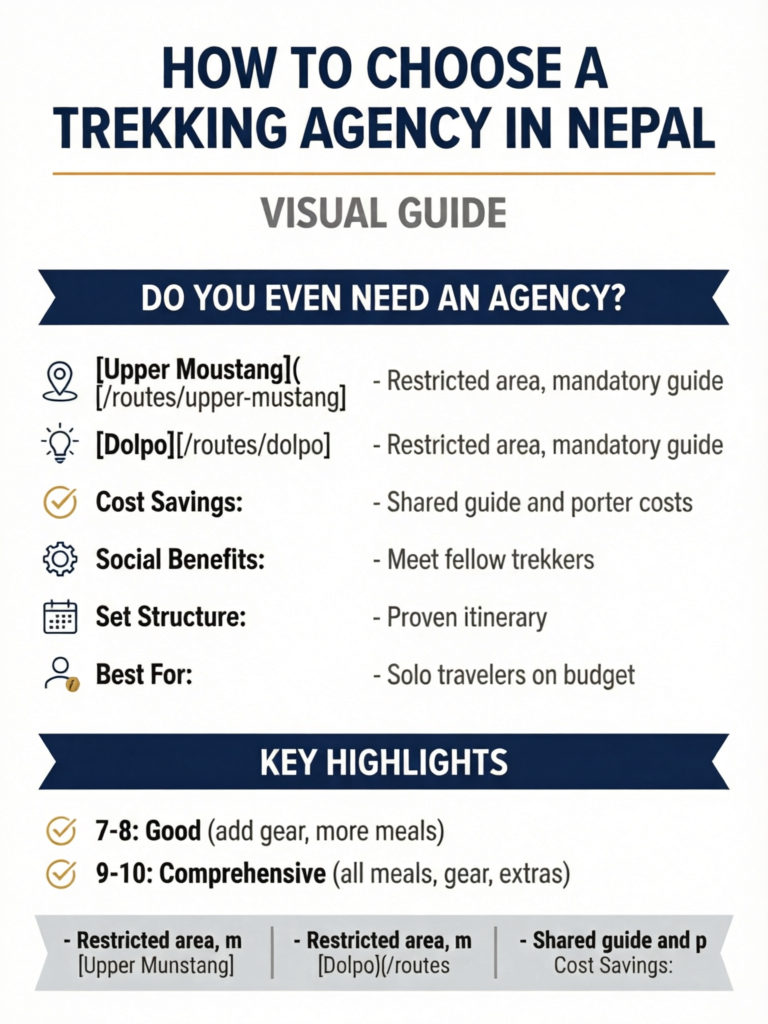
Your trekking agency choice determines everything from your safety at 17,000 feet to the authenticity of your cultural encounters. Poor company selection can lead to:
- Altitude sickness emergencies with untrained guides
- Substandard food and accommodation
- Unlicensed guides lacking emergency response skills
- Hidden costs that double your expected budget
- Unethical treatment of porters and guides
- Failed permits and checkpoint issues
- Inadequate insurance coverage
The stakes are high in the Himalayas. Let's ensure you make the right choice.
Do You Even Need an Agency?
Before we dive into agency selection, let's address whether you need one at all. This depends on your chosen trek and experience level.
When You MUST Use an Agency
Some treks legally require a registered guide from a licensed agency:
- Manaslu Circuit - Restricted area, mandatory guide
- Upper Mustang - Restricted area, mandatory guide
- Kanchenjunga Base Camp - Restricted area, mandatory guide
- Nar Phu Valley - Restricted area, mandatory guide
- Dolpo - Restricted area, mandatory guide
- Any peak climbing expedition
- Any restricted area trek
When you must trek with a licensed guide (mandatory since April 2023)
Popular teahouse routes can be done solo if you're experienced:
- Everest Base Camp (with proper acclimatization knowledge)
- Annapurna Base Camp
- Poon Hill
- Langtang Valley
- Gokyo Lakes
- Mardi Himal
However, even on non-restricted routes, using an agency provides:
- Expert guides who know weather patterns and safe routes
- Emergency support and evacuation coordination
- Cultural interpretation and local knowledge
- Permit facilitation and checkpoint navigation
- Porter support for gear
- Accommodation booking during peak season
First-Time Trekkers
If this is your first high-altitude trek, we strongly recommend using a reputable agency regardless of whether it's legally required. The Himalayas are unforgiving, and experienced guidance is invaluable.
Types of Trekking Agencies in Nepal
Understanding the agency landscape helps you know what to expect at different price points.
Budget Operators ($20-40 per day)
What You Get:
- Basic teahouse accommodation
- Nepali guide (often less experienced)
- Standard dal bhat meals
- Minimal English-language support
- Group departures only
- Limited emergency support
Best For:
- Experienced trekkers on popular routes
- Those comfortable with basic conditions
- Budget-conscious travelers who don't need luxury
Red Flags at This Price:
- Unlicensed guides
- No emergency insurance
- Poor porter treatment
- Hidden costs for "extras"
Pro Tip
Budget agencies can be excellent value IF they're properly licensed and ethical. The key is verification, not just price. Some of the best local agencies offer budget trips with exceptional guides.
Mid-Range Agencies ($50-80 per day)
What You Get:
- Better teahouse selection or lodges
- Experienced, English-speaking guides
- Varied meal options
- Flexible itineraries
- Small groups (4-10 people)
- Good emergency support
- Porter welfare compliance
Best For:
- Most first-time trekkers
- Those wanting comfort without luxury
- Trekkers who value guide expertise
- Families and couples
What to Expect:
- Proper licensing and insurance
- Responsive communication
- Detailed pre-trek briefings
- Quality equipment if needed
- Helicopter evacuation coordination
This is the sweet spot for most trekkers - adequate safety and comfort without paying for unnecessary luxury.
Luxury Operators ($100-200+ per day)
What You Get:
- Premium lodges when available
- Expert guides with medical training
- Gourmet meals and special diets
- Private treks or tiny groups
- Premium emergency support
- Helicopter options where possible
- Photography support
- Satellite communication
- Pre and post-trek luxury hotels
Best For:
- Older trekkers (50+) wanting comfort
- Those with limited time (helicopter shortcuts)
- Trekkers with medical concerns
- Photographers wanting prime positioning
- Honeymoon/celebration treks
Notable Operators:
- Ian Taylor Trekking
- Mountain Lodges of Nepal
- Ker & Downey
- Boundless Himalayas
Specialist Agencies
Solo Traveler Specialists:
- No single supplements
- Small group guaranteed departures
- Solo-friendly itineraries
- Social activities
Women-Only Trek Operators:
- All-female guide teams
- Women-friendly accommodation
- Safety focus for solo women
- Menstruation and hygiene support
Peak Climbing Specialists:
- Climbing permits and equipment
- Technical training
- High-altitude experience
- Safety gear and rope teams
Family Trek Specialists:
- Child-friendly itineraries
- Shorter days and lower altitudes
- Family porters and helpers
- Kid entertainment and education
| Trek | Duration | Max Altitude | Difficulty | Best For | Cost |
|---|---|---|---|---|---|
| Budget Agency | Set itinerary | Basic teahouses | $20-40/day | Experienced budget trekkers | Basic support |
| Mid-Range Agency | Flexible | Good teahouses | $25-$40 /day | First-timers, families | Full support |
| Luxury Agency | Customizable | Premium lodges | $100-200+/day | Comfort-focused, 50+ | Premium support |
Red Flags to Avoid
These warning signs indicate an agency you should NOT book with:
CRITICAL RED FLAGS - DO NOT BOOK
If you see ANY of these, walk away immediately:
- Price is less than half the market rate - Quality EBC treks cost $85-130/day. If someone quotes $40, they're cutting dangerous corners.
- Won't share guide credentials - Legitimate agencies proudly show guide licenses and experience.
- No TAAN or NTB registration - This is illegal operation.
- Upfront full payment only - Legitimate agencies accept deposits (30-50%).
- Vague about what's included - Professional operators provide detailed inclusions lists.
- No written contract - You need documentation of what you're paying for.
- Pressure tactics - "Book now or price increases tomorrow" is a scam tactic.
- Poor English communication - If they can't communicate now, imagine in an emergency.
Additional Warning Signs
Website and Communication Red Flags:
- Outdated website with broken links
- No physical office address in Kathmandu
- Gmail/Yahoo email instead of company domain
- Copy-pasted content from other sites
- No response within 24-48 hours
- Spelling and grammar errors throughout
- Stock photos instead of real trek photos
Business Practice Red Flags:
- Won't let you meet your guide beforehand
- Refuse to show you insurance documents
- Can't provide client references
- Not listed on TAAN member directory
- Offer "special" unregistered routes
- Suggest breaking trekking regulations
- Won't discuss emergency procedures
- Unclear about porter wages and treatment
Itinerary Red Flags:
- Everest Base Camp in 9 days (unsafe - needs 12-14)
- No acclimatization days built in
- Too many trekking hours per day (8+ hours)
- Overnight altitude gains over 500m above 3,000m
- "Weather permitting" evacuation plans
The Too-Cheap Agency Trap
Extremely cheap operators reduce costs through dangerous shortcuts: unlicensed guides lacking emergency training, inadequate food quality risking illness, poor porter treatment with low wages and no equipment, no emergency fund for evacuations, and fake insurance documents. A $200 saving isn't worth risking your life.
Green Flags - Quality Indicators
Look for these positive signs of a reputable agency:
EXCELLENT INDICATORS
These signs suggest a quality operator:
- TAAN membership verification - Listed on official TAAN directory
- Nepal Tourism Board license - Current and verifiable
- Years in operation - 7+ years with continuous operation
- Detailed, transparent pricing - Every cost broken down
- Professional communication - Quick, clear, helpful responses
- Comprehensive insurance - Covers guides, porters, and clients
- Client references readily provided - Multiple recent references
- Flexible itineraries - Willing to customize
- Emergency protocols documented - Written procedures provided
- Porter welfare policy - Documented standards for porter treatment
More Positive Signs
Professionalism Markers:
- Company website domain (@companyname.com)
- Physical office you can visit in Thamel/Kathmandu
- Listed on TripAdvisor, Google, Facebook with 50+ reviews
- Response to both positive and negative reviews
- Detailed FAQs that answer real questions
- Blog with useful trekking information
- Social media with regular updates and real photos
- Staff photos with names and roles
Operational Excellence:
- Pre-trek briefing offered (in-person or video)
- Gear checklist provided weeks in advance
- Option to rent missing gear
- Welcome/farewell dinners included
- Airport pickup included
- Kathmandu hotel coordination
- Flexibility for itinerary changes
- Clear cancellation policy
- Multiple payment options (not just cash)
Safety Focus:
- First aid kits described in detail
- Oximeter checks mentioned in itinerary
- Helicopter evacuation process explained
- Guide medical training certificates shown
- Satellite phone or communication device
- Acclimatization days clearly marked
- Alternative routes in case of weather
- Client medical questionnaire
Ethical Practices:
- Porter equipment lists (boots, jackets, etc.)
- Porter insurance documentation
- Fair wages disclosed
- Maximum porter loads (25kg max)
- Environmental policies (waste management)
- Local community support programs
- Responsible tourism certifications
20 Questions to Ask Before Booking
Ask these questions via email and on a call. How they answer tells you everything.
Licensing and Legal (MUST ASK)
- "Can you provide your TAAN membership number?" - Should give you a number you can verify at taan.org.np
- "What is your Nepal Tourism Board registration number?" - Should provide immediately
- "How long has your company been operating?" - Look for 5+ years
- "Do you have liability insurance, and can I see the certificate?" - Should say yes and provide
- "Are your guides government-licensed? Can I see their credentials?" - Should proudly share
Safety and Emergency
- "What is your emergency evacuation procedure?" - Should have detailed protocol
- "Do you carry satellite phones or communication devices?" - Essential for remote areas
- "What medical training do your guides have?" - Minimum: Wilderness First Aid
- "What happens if I get altitude sickness?" - Should describe descent protocol and helicopter coordination
- "What is the guide-to-client ratio?" - 1:6 maximum for high altitude, 1:4 ideal
Guides and Staff
- "Can I meet or video call with my guide before booking?" - Good agencies say yes
- "How experienced is the guide assigned to my trek?" - Should give specific years and treks completed
- "Does the guide speak English fluently?" - Critical for communication
- "What is your porter welfare policy?" - Should detail wages, equipment, insurance, load limits
- "How do you ensure porter safety and fair treatment?" - Should have written policy
Pricing and Inclusions
- "What exactly is included in the trek cost?" - Should provide itemized list
- "What are the common additional costs I should budget for?" - Honest agencies warn you about drinks, showers, charging, etc.
- "What is your payment schedule and cancellation policy?" - Should never ask for 100% upfront
- "Do you charge extra for solo trekkers?" - Many do, but should be transparent
- "Are permits included, and how do you handle permit applications?" - Should handle everything
Pro Tip
The quality of their answers matters more than the answers themselves. Vague responses, delays, or irritation at your questions are red flags. Professional agencies LOVE detailed questions because it shows you're a serious, prepared client.
Verification Checklist
Don't just take their word for it. Verify everything.
TAAN (Trekking Agencies Association of Nepal) Verification
How to Verify:
- Visit www.taan.org.np/members
- Search for the company name
- Verify membership is current (renewed annually)
- Call TAAN office: +977 1 4440921
- Email verification request: [email protected]
What TAAN Membership Means:
- Company is legally registered
- Required Rs 15,000 annual membership fee paid
- Subject to TAAN ethical guidelines
- Access to TAAN dispute resolution
- Insurance requirements met
Important Note: TAAN membership is not legally mandatory, but almost all legitimate agencies are members. Non-membership isn't automatically a red flag for very small operators, but it requires extra verification.
Nepal Tourism Board (NTB) Licensing
How to Verify:
- Ask for Department of Tourism license number
- Contact NTB Trade Division: +977 1 4256909
- Visit NTB office in Kathmandu (Bhrikuti Mandap) in person
- Check for tourism enterprise license
What NTB License Means:
- Legal authority to operate tourism business
- Minimum capital requirement met (NPR 25 lakh)
- Registered with government authorities
- Tax compliance verified
Insurance Coverage Verification
What to Check:
- Company liability insurance - Coverage amount, expiry date, insurance provider
- Guide and porter insurance - Medical, accident, death benefits for staff
- Client insurance requirements - What they require from you
Red Flag: If they say "insurance is your responsibility" for guides/porters, this indicates poor ethics.
Ask For:
- Copy of insurance certificate
- Insurance provider contact details
- Coverage limits and exclusions
- Claim procedure documentation
Safety Record Research
How to Research:
- TripAdvisor - Look for safety-related reviews
- Google Reviews - Check for incident mentions
- Facebook - Join Nepal trekking groups and ask
- Reddit - r/Nepal and r/Trekking communities
- LonelyPlanet Forum - Thorntree forums
What to Look For:
- Any mentions of accidents or emergencies
- How the company handled problems
- Guide competence in difficult situations
- Response to client medical issues
Warning Signs:
- Multiple mentions of altitude sickness
- Guides pushing clients too hard
- Inadequate emergency response
- Dismissing client concerns
Reviews and References
Where to Check:
- TripAdvisor - Most comprehensive, but can be gamed
- Google Reviews - Harder to fake, local verification
- Facebook Page Reviews - Good for recent feedback
- TourRadar - If they list tours there
- Trustpilot - International verification
How to Spot Fake Reviews:
- All 5-star reviews (suspicious)
- Reviews posted in clusters on same dates
- Generic language ("Great experience!")
- Similar writing styles across reviews
- No specific details about the trek
- Reviews from profiles with no other reviews
How to Evaluate Real Reviews:
- Look for recent reviews (last 6 months)
- Read the 3-star reviews (most honest)
- Check if company responds to complaints
- Look for specific details and trek names
- Verify photos match the company's offerings
Ask for Direct References:
- Request 3-5 recent client emails
- Ask for clients from your country
- Contact them directly with questions
- Ask about value, safety, and guide quality
Contract Review - What to Look For
Never trek without a written contract. Here's what it must include:
Essential Contract Elements
Trek Details:
- Exact itinerary with dates and locations
- Accommodation standard specified
- Meal plan clearly outlined
- Transportation details (flights, jeeps, buses)
- Number of guide(s) and porter(s) assigned
Pricing Breakdown:
- Base trek cost
- All included services itemized
- Excluded costs listed
- Payment schedule (deposit and final payment)
- Currency specified (USD, EUR, NPR)
- Exchange rate policy
Cancellation and Refunds:
- Cancellation deadlines with penalties
- Refund process and timeline
- Weather cancellation policy
- Medical emergency cancellation
- Force majeure clause (earthquakes, political unrest)
Responsibilities:
- Agency responsibilities clearly listed
- Client responsibilities outlined
- Equipment provision details
- Permit handling process
- Insurance requirements for both parties
Emergency Procedures:
- Evacuation process documented
- Emergency contact numbers
- Helicopter rescue coordination
- Medical care arrangements
- Cost coverage for emergencies
Liability and Insurance:
- Liability limitations clearly stated
- Insurance coverage amounts
- What is and isn't covered
- Client insurance requirements specified
Red Flags in Contracts
Contract Warning Signs
- Contract only in Nepali (you need English too)
- Vague "and other charges" clauses
- "Company reserves right to change itinerary" without limits
- No refund policy at all
- 100% payment before trek starts
- No signatures or company stamp
- Handwritten contracts (unprofessional)
- Different prices than quoted in email
Pro Tip
Take your time reading the contract. Don't sign the day you arrive in Kathmandu. Review it in your hotel, compare it to your email communications, and ask questions about anything unclear. Legitimate agencies expect this and respect it.
Payment Terms - Safe Practices
How you pay matters for protecting your money and ensuring service delivery.
Standard Payment Structure
Typical Deposit: 20-30% to confirm booking Typical Final Payment: 70-80% before trek starts (but NOT 100%) Hold-back Amount: Some agencies allow 10% after trek completion
Safe Payment Methods
International Booking (From Home Country):
✅ RECOMMENDED:
- Bank transfer to verified company account (get official bank details)
- PayPal (despite fees, offers protection)
- Credit card via secure payment gateway (dispute protection)
- Booking platforms (TourRadar, Viator - they hold payment)
⚠️ USE WITH CAUTION:
- Western Union (no protection, but widely used)
- Wise/TransferWise (cheaper than banks, minimal protection)
❌ AVOID:
- Cash sent by mail
- Cryptocurrency
- Personal accounts (must be company account)
In Nepal (After Arrival):
✅ RECOMMENDED:
- USD cash (easy, no fees, but carry risk)
- Bank transfer from Nepal bank account
- Credit card at office (2-4% fee typical)
⚠️ ACCEPTABLE:
- Cash to hotel for agency (if trusted hotel)
❌ AVOID:
- Cash to random "representatives"
- Payment at unauthorized locations
- Payment without receipt
Payment Red Flags
Payment Warning Signs
- Demand for 100% payment before trek
- Pressure to pay in cash only
- Won't provide official receipt
- Payment to personal account, not company
- Bank account in different name than company
- Won't accept any traceable payment method
- "Special discount for cash only"
- Payment to someone other than the company
Protection Strategies
Get Documentation:
- Official receipt for every payment
- Payment linked to specific contract number
- Email confirmation of payment received
- Bank transfer references saved
Split Payments:
- Deposit to book (30%)
- Second payment after arrival and office visit (60%)
- Final payment after trek (10%) - if agency agrees
Use Protection Methods:
- Credit card offers charge-back protection
- PayPal offers dispute resolution
- Document everything in writing
Keep Records:
- All email communications
- Payment receipts
- Contract copy
- Bank transfer confirmations
- Credit card statements
Group vs Private Treks - Comparison
Understanding the differences helps you choose the right booking type.
| Trek | Duration | Max Altitude | Difficulty | Best For | Cost |
|---|---|---|---|---|---|
| Group/Fixed Departure | Set dates only | 8-15 people typical | $800-1,500 (EBC) | Budget travelers, solo joiners | Less flexibility |
| Private Trek (2 people) | Any date | Just you + guide | $1,200-2,000 (EBC) | Couples, customization | Full flexibility |
| Private Trek (Solo) | Any date | Just you + guide | $1,500-2,500 (EBC) | Ultimate privacy | Maximum flexibility |
Group Trek Advantages
Cost Savings:
- Shared guide and porter costs
- 30-40% cheaper than private treks
- No solo supplement
Social Benefits:
- Meet fellow trekkers
- Built-in trekking buddies
- Shared experience and motivation
- Group photos and memories
Set Structure:
- Proven itinerary
- Regular departures
- Organized logistics
Best For:
- Solo travelers on budget
- Social people who enjoy groups
- First-time trekkers wanting community
- Flexible schedules
Group Trek Disadvantages
Fixed Schedule:
- Must match departure dates
- Pace set by slowest member
- Can't adjust itinerary
- Limited date options
Less Personal:
- Guide attention divided
- May not click with group
- Personality conflicts possible
- Less cultural interaction
Group Dynamics:
- Different fitness levels
- Various personalities
- Potential conflicts
- Pace compromises
Private Trek Advantages
Flexibility:
- Choose your own dates
- Customize itinerary
- Change plans if needed
- Set your own pace
Personal Service:
- Guide's full attention
- Deeper cultural exchanges
- More local interaction
- Better photos (guide helps)
Privacy:
- No strangers
- Intimate experience
- Quiet mornings and evenings
- Personal conversations
Safety:
- Guide focuses only on you
- Immediate response to issues
- Faster decision-making
- Customized acclimatization
Best For:
- Couples and families
- Those with specific dates
- Photographers wanting flexibility
- People seeking authentic experience
- Those who want custom pace
Private Trek Disadvantages
Higher Cost:
- Full guide/porter costs
- 30-40% more expensive
- Solo supplement very high (50-100% extra)
Less Social:
- No trekking buddies
- Only guide interaction
- Can feel lonely for solo trekkers
- No group energy
More Responsibility:
- Decision-making on you
- Less proven itinerary
- Must communicate needs clearly
Pro Tip
For first-time solo trekkers, we recommend a group departure. You'll save money, have built-in friends, and still get great guide support. Save private treks for when you have specific dates or are traveling with someone.
Fixed Departure vs Custom Itinerary
Related to but different from group vs private.
Fixed Departure Treks
What They Are:
- Set itinerary on specific dates
- Usually group treks (but can be "guaranteed departures")
- Published schedules (often months in advance)
- Same route each time
Advantages:
- Lower cost (economies of scale)
- Proven itinerary (tested many times)
- Guaranteed to run (minimum 2 people)
- Easy booking (click and pay)
- Other trekkers joining
- Regular seasonal timing
Disadvantages:
- No itinerary changes
- Fixed dates only
- Standard pace
- Can't extend or shorten
Best For:
- Budget-conscious trekkers
- Flexible schedules
- Popular routes (EBC, ABC, Annapurna Circuit)
- First-timers on proven routes
- Peak season travel
Typical Fixed Departures:
- Every Saturday for EBC (peak season)
- Every 2 weeks for Annapurna Circuit
- Monthly for remote treks
- Weekly for ABC
Custom Itinerary Treks
What They Are:
- Designed for your specific needs
- Any start date (weather permitting)
- Modified route options
- Extended or shortened
- Combined routes
Advantages:
- Perfect fit for your schedule
- Customized to fitness level
- Add or remove rest days
- Choose accommodation level
- Combine multiple routes
- Special requests accommodated
Disadvantages:
- Higher cost (20-40% more)
- Requires more planning
- Less "proven" than fixed routes
- Agency must create custom quote
- May require minimum group size
Customization Options:
- Start and end dates
- Number of rest days
- Accommodation standard
- Meal preferences
- Porter vs no porter
- Side trips and extensions
- Combined trek routes
- Helicopter options
Best For:
- Specific date requirements
- Unique fitness or health needs
- Families with children
- Photographers wanting extra days
- Those combining multiple routes
- Extended trips (3+ weeks)
- Special celebrations (birthdays, etc.)
Example Customizations:
- Everest Base Camp with extra acclimatization day
- Annapurna Circuit with Tilicho Lake extension
- Langtang + Gosainkunda combination
- ABC with helicopter return
- EBC with Gokyo Lakes combination
Porter and Guide Treatment - Ethical Considerations
This is crucial. How an agency treats staff tells you everything about their ethics.
Why Porter Welfare Matters
Porters are the backbone of Himalayan trekking. Many agencies exploit them with:
- Inadequate wages (as low as $10-15/day)
- No proper equipment (no jackets, boots, or gear)
- Overloading (30-40kg instead of legal 25kg max)
- No insurance coverage
- No accommodation or meals
- Working while sick or injured
Ethical trekking means ensuring porters are treated fairly.
Porter Welfare Standards
IPPG (International Porter Protection Group) Standards:
Equipment Required:
- Warm jacket or down coat
- Proper trekking boots (not sandals)
- Gloves and warm hat
- Sunglasses and sun protection
- Sleeping bag rated for altitude
- Weatherproof clothing
Working Conditions:
- Maximum load: 25kg (excluding porter's personal gear)
- Adequate food and accommodation
- Same lodging standard as clients (or nearby)
- Medical care if needed
- Insurance coverage
- Fair wages (minimum $18-20/day)
Your Responsibility:
- Check porter loads aren't excessive
- Ensure they have proper gear
- Observe if they're eating and sleeping well
- Report concerns to agency immediately
- Tip directly (don't rely on agency to distribute)
Questions to Ask About Porter Treatment
- "What is your porter welfare policy?" - Should have written policy
- "What equipment do you provide to porters?" - Should list boots, jacket, etc.
- "What is the maximum porter load?" - Should say 25kg maximum
- "Are porters insured? Can I see the insurance?" - Should say yes and provide proof
- "What wages do porters receive?" - Should be $18-20+ per day
- "Where do porters sleep and eat?" - Should be in teahouses with meals
- "What happens if a porter gets sick or injured?" - Should have medical protocol
Guide Treatment and Qualifications
Guide Certification Levels:
Trekking Guide:
- Basic level certification
- 21-day training course
- English language requirement
- First aid basics
- Suitable for established trails
Senior Trekking Guide:
- 5+ years experience required
- Advanced training
- Better English skills
- Leadership capabilities
- Emergency management
Mountain Guide:
- Technical climbing certification
- Required for peak climbing
- Rope and rescue training
- High-altitude expertise
- Medical training (Wilderness First Responder)
What to Verify:
- Government license number
- Years of experience (ask specific number)
- Number of times they've done your trek
- Language skills (test in phone call)
- First aid certification
- Emergency training
- Special skills (photography, birds, culture)
Fair Guide Treatment:
- Fair wages ($25-35/day for standard guide)
- Proper equipment provided
- Insurance coverage
- Reasonable working hours
- Rest days paid
- Accommodation and meals
- Tips expected but not required for fair service
Ethical Agency Indicators
Good Signs:
- Porter welfare policy prominently displayed on website
- IPPG or similar certification
- Photos show porters with proper gear
- Staff testimonials on website
- Long-term staff (low turnover)
- Training programs for staff
- Fair trade or B-Corp certification
Bad Signs:
- Won't discuss porter treatment
- "Porters are independent contractors" (avoiding responsibility)
- Extremely cheap prices (cutting costs via staff wages)
- No visible porter policy
- Can't show insurance documents
- High staff turnover
Responsible Porter Treatment
Look for agencies that are members of the Kathmandu Environmental Education Project (KEEP) or have IPPG certification. These organizations promote porter welfare and sustainable tourism practices.
What's Included vs Add-ons
Understanding what's in your package prevents budget surprises.
Typically Included in Trek Packages
Transportation:
- Kathmandu to trailhead (bus or flight)
- Return transportation
- Airport pickup (sometimes)
Accommodation:
- Teahouse/lodge during trek
- Twin-sharing basis
- Basic rooms (private or shared depending on package)
- Kathmandu hotel night(s) before/after trek (sometimes)
Meals:
- Breakfast, lunch, dinner during trek
- Tea or coffee with meals
- Limited menu from teahouse options
Staff:
- Licensed trekking guide
- Porter(s) (carrying 10-15kg of your gear per porter)
- Staff accommodation and meals
- Staff insurance
Permits and Fees:
- National park entry permits
- TIMS card
- Local area fees
- Guide and porter permits
Other:
- First aid kit
- Oximeter for altitude monitoring
- Duffel bag (usually must be returned)
- Company t-shirt or certificate
Typically NOT Included (Extra Costs)
Meals and Drinks:
- Bottled water ($1-3 per liter, increasing with altitude)
- Soft drinks and alcohol ($2-5)
- Hot drinks beyond basic tea/coffee ($2-4)
- Snacks and chocolate ($2-5)
- Meals in Kathmandu (except included nights)
Accommodation:
- Hot shower (£2-5 per shower, increasing with altitude)
- WiFi charging (£1-3 per device)
- Extra nights in Kathmandu
- Single room supplement ($200-300 for entire trek)
Flights:
- International flights to/from Kathmandu
- Domestic flights (Kathmandu-Lukla $300-370 return)
- Helicopter options (if not included)
Gear:
- Sleeping bag rental ($1-2 per day)
- Down jacket rental ($1-2 per day)
- Trekking poles rental ($1 per day)
- Personal gear purchases
Services:
- Visa on arrival ($30-50 depending on duration)
- Travel insurance (required, $80-150)
- Tips for guide and porters (budget $100-150)
- Laundry ($3-5 per load)
- Battery charging in remote areas ($2-5)
Emergency:
- Helicopter evacuation ($3,000-5,000) - covered by insurance
- Extra accommodation if delayed
- Extra porter if you can't carry your daypack
- Medical treatment
Budget Planning
For 14-Day EBC Trek (Mid-Range Agency):
Included in Package: $1,200
- Guide, porters, accommodation, basic meals, permits, transport
Additional Costs to Budget:
- Lukla flights: $215
- Hot showers: $30-50
- Bottled water: $40-60
- Snacks and drinks: $80-100
- Charging: $20-30
- Tips: $120-150
- Contingency: $200
- Total Extra: $840-940
Total EBC Cost: $2,040-2,140 (not including gear, insurance, visa)
Pro Tip
Ask agencies for a detailed "not included" list before booking. This transparency is a sign of an honest operator and helps you budget accurately.
Questions About Inclusions
- "Can you provide an itemized inclusions list?"
- "What meals are included - all three daily or just breakfast?"
- "Are hot showers included or extra?"
- "Is WiFi and charging included?"
- "What drinks are included with meals?"
- "Are domestic flights included?"
- "Is airport pickup included?"
- "How many nights in Kathmandu are included?"
- "Is single room supplement available and what's the cost?"
- "Are sleeping bags and down jackets provided or rental?"
Cancellation Policies - What to Check
Life happens. Understand cancellation terms before booking.
Standard Cancellation Terms
Typical Structure:
60+ Days Before Trek:
- Deposit forfeited or partial refund
- 10-20% cancellation fee
- Remainder refunded
30-59 Days Before:
- 30-50% of total cost forfeited
- Remainder refunded or credit for future
15-29 Days Before:
- 50-75% forfeited
- Little to no refund
Less Than 14 Days:
- 100% forfeited
- No refund
No-Show:
- 100% forfeited
- No refund
What Should Be Covered
Medical Cancellation:
- Doctor's note required
- May allow partial refund or rescheduling
- Travel insurance should cover this
Weather Cancellation:
- If trek can't start due to weather (flights cancelled)
- Usually allows rescheduling without penalty
- Full cancellation may forfeit deposit
Force Majeure:
- Earthquake, political unrest, pandemic
- Policies vary widely - this is crucial to clarify
- Some agencies offer full refund, others credit only
On-Trek Cancellation:
- If you must leave trek early due to illness
- Usually no refund for unused days
- Emergency evacuation costs separate
- Travel insurance may cover lost trip value
Questions About Cancellations
- "What is your cancellation policy with exact percentages and deadlines?"
- "Can I reschedule instead of cancel?"
- "What happens if flights to Lukla are cancelled for days?"
- "What if I get injured before the trek and have a doctor's note?"
- "What if Nepal closes to tourists (like COVID)?"
- "Do you offer any travel insurance or recommend providers?"
- "What happens if I get altitude sickness and must descend early?"
- "Can someone else take my place if I cancel?"
Travel Insurance Considerations
Why You Need It:
- Covers emergency helicopter evacuation ($3,000-5,000)
- Covers medical treatment in Kathmandu
- Covers trip cancellation for valid reasons
- Covers lost baggage and gear
- Provides emergency assistance
What to Look For:
- Coverage up to altitude of your trek (many cap at 5,000m - inadequate for EBC)
- Helicopter evacuation explicitly covered
- Pre-existing conditions clarity
- Adventure sports coverage (trekking included)
- Minimum $100,000 medical coverage
- Trip cancellation coverage matching your trek cost
Recommended Providers for Nepal Trekking:
- World Nomads (popular with trekkers)
- Global Rescue (premium, unlimited altitude)
- IMG Global (good value, high limits)
- SafetyWing (digital nomads)
- Allianz (widely available)
Insurance Reality Check
Don't skip insurance to save $100. A helicopter evacuation from Everest Base Camp costs $4,000-5,000. If you can't afford insurance, you can't afford to trek safely. Agencies should refuse to take uninsured clients above 4,000m.
Communication - Response Time, Language, Clarity
How an agency communicates tells you how they'll operate.
Response Time Expectations
Initial Inquiry:
- First response: 24-48 hours (considering time zones)
- Detailed quote: 2-3 days
- Follow-up questions: 12-24 hours
After Booking:
- Immediate confirmation: Within 24 hours
- Contract sent: Within 48 hours
- Pre-trek details: 2 weeks before trek
- Final confirmations: 1 week before
Red Flags:
- No response for 3+ days
- Inconsistent response times
- Different people giving different information
- Ignoring specific questions
Green Flags:
- Quick, comprehensive first response
- Proactive communication (sending information before asked)
- After-hours or weekend responses
- Multiple contact methods provided
Language Competency
Minimum Standard:
- Guide should speak conversational English
- Office staff should speak clear English for bookings
- Written communication should be clear and professional
Testing Language Skills:
- Have a phone or video call before booking
- Ask complex questions to test understanding
- Gauge whether you can communicate in emergencies
- Check if they understand your specific needs
Language Red Flags:
- Can't understand your questions
- Responses don't answer what you asked
- Many spelling/grammar errors suggesting poor English
- Reluctance to have a phone call
- Using translation tools for basic questions
Clarity and Professionalism
Good Communication Indicators:
- Answers all your questions in one response
- Volunteers important information
- Asks about your experience and fitness
- Provides detailed itineraries without asking
- Explains costs clearly
- Shares policies proactively
- Uses professional email addresses
Poor Communication Indicators:
- Vague, short answers
- Only answers one question at a time
- Provides different information than website
- Pushy sales tactics
- Won't answer specific questions
- Dismissive of concerns
- Unprofessional tone
Key Communication Checkpoints
Before Booking:
- Detailed quote with inclusions/exclusions
- Sample itinerary
- Agency credentials shared
- Questions answered thoroughly
After Booking:
- Booking confirmation with dates and package
- Contract provided
- Payment receipt
- Gear list sent
- Pre-trek preparation guide
Pre-Trek (2 weeks before):
- Final itinerary
- Guide contact information
- Airport pickup details
- Hotel information
- What to bring on trek day
During Trek:
- Emergency contact numbers work
- Agency reachable if needed
- Flexible to situation changes
Post-Trek:
- Follow-up asking about experience
- Certificate or completion documentation
- Request for review (politely)
- Open to feedback
Pro Tip
Save all email communication. If there's ever a dispute, having a paper trail of what was promised is essential. Take screenshots of website pages showing packages and prices before booking.
Best Time to Book - How Far in Advance
Timing your booking affects price, availability, and flexibility.
Peak Season Booking (October-November, March-May)
Book 3-6 Months in Advance:
Why:
- Limited teahouse rooms (especially nice ones)
- Lukla flights often fully booked
- Best guides get booked early
- Group departures fill up
- Helicopter evacuation capacity limited
Advantages of Early Booking:
- Better choice of agencies
- More flexibility in dates
- Often small early-bird discounts (5-10%)
- Time to prepare physically
- Better flight options
Last-Minute Booking (2-4 weeks before):
- Still possible but limited choices
- May have to join groups with random start dates
- Lower-quality guides available
- Teahouse options limited
- Last-minute flight booking expensive
- Sometimes desperate agencies offer discounts
Off-Season Booking (June-September monsoon, December-February winter)
Book 1-3 Months in Advance:
Why:
- Plenty of availability
- Agencies hungry for business
- Better negotiation leverage
- Good guides still available
Advantages:
- Better prices (10-20% discounts possible)
- Private treks at group prices sometimes
- Flexibility in start dates
- More customization options
- No crowds on trail
Restricted Area Treks
Book 4-12 Months in Advance:
Why:
- Permit applications take time (Manaslu, Mustang, Kanchenjunga)
- Very limited agency capacity
- Small number of departures annually
- Higher demand for limited spots
- Complex logistics requiring advance planning
Custom Itineraries
Book 3-6 Months in Advance:
Why:
- Time for itinerary design
- Back-and-forth communication
- Special accommodation booking
- Guide assignment
- Permit arrangement
Budget Considerations
Early Bird Discounts:
- Some agencies offer 5-10% for booking 6+ months ahead
- Most common for peak season group departures
- Usually limited spots at discount price
Last-Minute Discounts:
- 1-2 weeks before departure
- Agencies trying to fill group departures
- Typically 10-15% off
- Very risky strategy (might not find any trek)
Off-Season Pricing:
- 10-20% cheaper than peak season
- More negotiable
- Private trek deals more common
Pro Tip
The sweet spot is 3-4 months in advance for peak season treks. You get good selection without overcommitting too early, and you have time to train properly.
Where to Find Agencies
Different booking locations have different advantages.
Online (From Home Country)
Advantages:
- Time to research thoroughly
- Compare multiple agencies easily
- Read reviews extensively
- Email communication trail
- Payment protection options
- Book exact dates needed
Disadvantages:
- Can't meet guide in person
- No office visit verification
- Harder to verify legitimacy
- Payment fees (bank/PayPal)
- Less flexible negotiation
Best Online Platforms:
- Agency direct websites
- TourRadar (aggregator with protection)
- Viator (Tripadvisor company)
- GetYourGuide
- Google Maps (find agencies, read reviews)
How to Book Online Safely:
- Extensive review reading
- TAAN verification via website
- Video call with agency
- Written contract before payment
- Incremental payments
- Credit card or PayPal for protection
In Kathmandu (After Arrival)
Advantages:
- Meet guide face-to-face
- Visit physical office
- Verify credentials in person
- Better negotiation leverage
- Pay in cash (no fees)
- Last-minute flexibility
- Local recommendations
Disadvantages:
- Pressure to book quickly
- Limited time to research
- Jet-lagged decision-making
- May not get first-choice dates
- Peak season may be full
- Lose preparation time
Best Locations in Kathmandu:
- Thamel - Tourism district, 100+ agencies
- Jyatha - Just south of Thamel, quieter
- Chhetrapati - Mix of agencies and shops
How to Book in Kathmandu:
- Visit 3-5 offices in person
- Ask all your questions face-to-face
- Compare quotes and offerings
- Check TAAN membership at office
- Meet assigned guide if possible
- Sleep on it - don't book first day
- Return to preferred agency with questions
- Review contract carefully
- Book and get receipt
Timeline for Kathmandu Booking:
- Day 1-2: Recover from jet lag, initial visits
- Day 3: Compare notes, research online
- Day 4: Return visits, meet guides
- Day 5: Book chosen agency
- Day 6+: Final preparations, briefing
- Trek start: Day 7-10
Through Home Country Operators
Advantages:
- Local language support
- Familiar consumer protection laws
- Group departures from your country
- Meet fellow travelers beforehand
- All-inclusive packages (flights too)
- Higher accountability
Disadvantages:
- Significantly more expensive (30-50% markup)
- Less authentic experience
- Larger groups typically
- Less customization
- Extra middleman layer
When It Makes Sense:
- First-time international travelers
- Older trekkers (55+) wanting security
- Those uncomfortable with Asian travel
- Group departures from your city
- All-inclusive preference
- Travel agent relationship
Major International Operators:
- Intrepid Travel
- G Adventures
- REI Adventures
- KE Adventure Travel
- World Expeditions
Through Hotels in Nepal
Guest House Arrangements:
- Some guesthouses have agency partnerships
- Often commission-based (5-10% markup)
- Convenient but limited choice
- Quality varies widely
Use Carefully:
- Only book through established hotels
- Still verify TAAN membership yourself
- Meet guide before committing
- Check reviews of the agency (not just hotel)
Through Other Trekkers
Word-of-Mouth Recommendations:
- Meeting returning trekkers in Kathmandu
- Asking for guide contact
- Booking same guide independently
Advantages:
- Recent, direct experience
- Honest feedback
- Potentially cheaper (cutting agency)
Disadvantages:
- Guide might not be licensed for independent operation
- No agency backup or support
- Insurance complications
- Permit issues if guide isn't registered
- No recourse if problems arise
Best Practice:
- Get recommendation but book through guide's agency
- Verify guide has agency affiliation
- Ensure proper permits and insurance
- Don't pay guide directly unless registered business
Review Platforms - Where to Research
Not all review platforms are equally reliable.
TripAdvisor
Reliability: ★★★★☆ (4/5)
Advantages:
- Largest volume of reviews
- Detailed trek reports
- Photo verification
- Long history (can see multi-year patterns)
- Can filter by rating and date
Disadvantages:
- Some fake reviews
- Can be gamed by agencies
- Competitor sabotage (fake bad reviews)
- Pay-to-rank listings
How to Use:
- Read 3-star reviews (most honest)
- Look for detailed, specific reviews
- Check reviewer's profile (do they review other places?)
- Focus on recent reviews (last 6 months)
- Look for patterns in criticisms
- Check agency responses to negative reviews
Red Flags:
- All 5-star or all 1-star reviews
- Generic praise without specifics
- Reviews clustered on same dates
- Reviewer only reviewed this agency
- Agency doesn't respond to any reviews
Green Flags:
- Mix of 4 and 5 stars (realistic)
- Detailed trek descriptions
- Photos from various clients
- Agency responds professionally to criticism
- Consistent praise for specific guides (named)
Google Reviews
Reliability: ★★★★★ (5/5)
Advantages:
- Harder to fake (Google verification)
- Local guide reviews often included
- Location-based (can see office location)
- Recent reviews prioritized
- No pay-to-rank
Disadvantages:
- Fewer reviews for many agencies
- Less detailed than TripAdvisor
- Some agencies don't have profile
How to Use:
- Essential for verification
- Check if address matches claimed location
- Look for guide/porter reviews (very telling)
- Check photos uploaded by clients
- Look at how agency responds
Facebook Page Reviews
Reliability: ★★★★☆ (4/5)
Advantages:
- Linked to real profiles
- Recent activity visible
- Can message reviewers directly
- Hard to fake with active profiles
- Agency responsiveness visible
Disadvantages:
- Agencies can hide reviews
- Less formal than other platforms
- Fewer reviews typically
- Easier to filter out negatives
How to Use:
- Check if agency responds to messages
- Look at posted client photos
- Check if page is regularly updated
- Join Nepal trekking groups for questions
TourRadar
Reliability: ★★★★☆ (4/5)
Advantages:
- Verified bookings only (can't fake)
- Aggregates multiple agencies
- Payment protection
- Comparison tools
Disadvantages:
- Only for agencies listed on platform
- Smaller sample size
- Recent platform (less history)
- Markup prices
How to Use:
- Excellent for comparing similar treks
- Trust the ratings (verified purchases)
- Use for initial shortlist
- Book direct after finding agency (save money)
Reddit (r/Nepal, r/Trekking)
Reliability: ★★★★★ (5/5) for honesty
Advantages:
- Brutally honest feedback
- No commercial incentive
- Detailed trip reports
- Active community
- Can ask questions directly
Disadvantages:
- Unstructured information
- Small sample size
- Need to search through posts
- Sometimes overly negative
How to Use:
- Search for agency names
- Post asking for recommendations
- Read trip reports thoroughly
- Ask about specific concerns
- Very valuable for red flags
LonelyPlanet Thorn Tree Forums
Reliability: ★★★★☆ (4/5)
Advantages:
- Experienced travelers
- Detailed discussions
- Long-term perspective
- Independent community
- No agency incentive
Disadvantages:
- Less active than before
- Older information
- Requires searching
- Sometimes outdated advice
How to Use:
- Search for trek-specific forums
- Read multi-year discussions
- Look for veteran traveler advice
- Cross-reference with recent info
| Trek | Duration | Max Altitude | Difficulty | Best For | Cost |
|---|---|---|---|---|---|
| TripAdvisor | Highest volume | Some fake reviews | 4/5 | Initial research | Read 3-star reviews |
| Google Reviews | Medium volume | Hard to fake | 5/5 | Verification | Most trustworthy |
| Reddit/Forums | Low volume | Brutally honest | 5/5 | Red flags | Search needed |
What to Look For in Reviews
Good Reviews Mention:
- Specific guide names
- Exact trek dates
- Specific teahouse names
- Challenges faced and how handled
- Cost breakdowns
- What wasn't included
- Food quality specifics
- Communication quality
Bad Reviews to Trust:
- Detailed explanation of what went wrong
- Not overly emotional
- Mentions specific dates and locations
- Describes agency's response
- Provides evidence (photos, receipts)
- Other reviewers confirm similar issues
Reviews to Ignore:
- Generic praise ("best trek ever!")
- No specific details
- Overly emotional (extremely positive or negative)
- Mentions competitor agency in bad review
- Single-sentence reviews
- Reviewer has no other reviews
Agency Comparison Framework
Use this system to compare agencies objectively.
Create a Comparison Spreadsheet
Columns to Track:
- Agency Name
- TAAN Member (Y/N)
- Years in Operation
- Total Cost
- Inclusions (score 1-10)
- Guide Experience (years)
- Communication Quality (1-10)
- Review Average (TripAdvisor, Google)
- Response Time (hours)
- Flexibility (1-10)
- Porter Policy (Y/N)
- Insurance Verified (Y/N)
- Overall Score
Scoring System
Communication Quality (1-10):
- 1-3: Slow, unclear, unhelpful
- 4-6: Adequate, some delays
- 7-8: Prompt, clear, helpful
- 9-10: Exceptional, proactive, detailed
Inclusions Completeness (1-10):
- 1-3: Bare minimum
- 4-6: Standard (permits, basic meals, guide)
- 7-8: Good (add gear, more meals)
- 9-10: Comprehensive (all meals, gear, extras)
Flexibility (1-10):
- 1-3: Rigid, no changes possible
- 4-6: Some customization
- 7-8: Flexible on most items
- 9-10: Fully custom itinerary
Deal Breakers (Automatic Disqualification)
- Not TAAN registered (unless very small, verified otherwise)
- No NTB license
- Won't provide insurance proof
- Price less than 50% of average
- No porter welfare policy
- Poor communication (3+ days no response)
- Numerous recent bad reviews
- Can't verify any credentials
Decision Matrix
Once you have 3-5 shortlisted agencies:
Weight Your Priorities:
- Safety/Experience: 30%
- Cost: 20%
- Communication: 20%
- Flexibility: 15%
- Ethics (porter treatment): 15%
Score Each Category 1-10, multiply by weight, sum for total.
Example:
Agency A:
- Safety: 9 × 0.30 = 2.7
- Cost: 6 × 0.20 = 1.2 (expensive)
- Communication: 9 × 0.20 = 1.8
- Flexibility: 8 × 0.15 = 1.2
- Ethics: 10 × 0.15 = 1.5
- Total: 8.4/10
Agency B:
- Safety: 7 × 0.30 = 2.1
- Cost: 9 × 0.20 = 1.8 (budget)
- Communication: 6 × 0.20 = 1.2
- Flexibility: 5 × 0.15 = 0.75
- Ethics: 6 × 0.15 = 0.9
- Total: 6.75/10
Even though Agency B is cheaper, Agency A scores higher on priorities.
Pro Tip
Don't make price your top priority unless you must. Safety and guide quality matter more in the Himalayas. The difference between a $1,200 and $1,500 trek is negligible compared to the cost of getting there and the value of safety.
Frequently Asked Questions
How much should I budget for a trekking agency in Nepal?
Budget ranges by trek:
- Everest Base Camp (12-14 days): $800-1,500 (budget to luxury)
- Annapurna Circuit (15-18 days): $900-1,600
- Annapurna Base Camp (7-10 days): $500-900
- Langtang Valley (7-9 days): $450-800
- Manaslu Circuit (14-16 days): $1,200-2,000 (restricted area)
- Upper Mustang (10-12 days): $1,800-3,000 (restricted, expensive permits)
Quality mid-range agencies typically charge $60-80 per trekking day. Less than $50/day requires careful verification.
Can I hire a guide independently instead of using an agency?
Technically yes, but not recommended. Independent guides must have proper business registration and licenses. Most guides work for agencies for insurance, permit facilitation, and logistical support. If you hire independently:
- Verify guide has trekking guide license
- Ensure they carry insurance
- Confirm they can obtain permits
- Get written agreement on costs
- Understand you have no agency backup if issues arise
For restricted area treks, you MUST book through a registered agency.
How do I verify TAAN membership?
- Visit www.taan.org.np/members
- Search for agency name in member list
- Call TAAN office: +977 1 4440921
- Email: [email protected] with agency name
- Visit TAAN office in Kathmandu: Maligaun, near Pashupatinath
Ask the agency for their TAAN membership certificate - legitimate members have it readily available.
What if the agency goes out of business before my trek?
This is rare but possible. Protection strategies:
- Book with established agencies (5+ years operation)
- Pay deposit only initially (30%), balance before trek
- Use credit card or PayPal (chargeback protection)
- Book through platforms like TourRadar (payment protection)
- Get travel insurance with tour operator failure coverage
- Book closer to departure (3 months vs 12 months)
If it happens:
- Contact TAAN immediately (they may help find alternative)
- File chargeback with credit card
- Claim on travel insurance
- Report to Nepal Tourism Board
Should I book a group trek or private trek?
Choose GROUP if:
- Budget is primary concern
- You're traveling solo and want company
- You're flexible on dates
- You enjoy meeting new people
- First-time trekker wanting community
Choose PRIVATE if:
- You have specific dates
- Traveling with partner/family
- Want customized itinerary
- Prefer intimate experience
- Need flexible pace
- Photographer wanting flexibility
Cost difference: Private treks cost 30-40% more than group departures. For solo trekkers, private can be 50-100% more expensive.
How far in advance should I book?
Peak Season (Oct-Nov, Mar-May): 3-6 months Monsoon Season (Jun-Sep): 1-3 months Winter Season (Dec-Feb): 1-3 months Restricted Area Treks: 4-12 months Last-Minute: 2-4 weeks possible but limited choices
Booking 3-4 months ahead is ideal - good availability without over-committing too early.
What questions should I ask about guide qualifications?
Essential questions:
- "Is the guide government-licensed? License number?"
- "How many years of guiding experience?"
- "How many times has this guide done [specific trek]?"
- "What first aid or medical training does the guide have?"
- "What languages does the guide speak?"
- "Can I speak with or meet the guide before booking?"
- "Will this guide be with us the entire trek?"
- "What is the guide-to-client ratio?"
Request guide's CV or credentials if available.
Are cheap trekking agencies safe?
Price alone doesn't determine safety, but extremely cheap agencies ($20-40/day for EBC) often cut corners on:
- Guide training and licensing
- Insurance coverage
- Food quality
- Emergency support
- Porter treatment
- Equipment quality
Safe budget strategies:
- Book with verified TAAN members
- Check reviews extensively
- Verify insurance coverage
- Ensure guide is licensed
- Confirm emergency procedures
- Check porter treatment policy
Some excellent small agencies offer fair prices with quality service. The key is verification, not price.
What happens if I get sick or injured on the trek?
Reputable agencies should:
- Assess severity with guide (medical training)
- Administer basic first aid
- Arrange immediate descent if altitude sickness
- Contact emergency services if needed
- Coordinate helicopter evacuation if serious
- Stay with you or assign staff to accompany
- Handle hospital admission in Kathmandu
- Coordinate with insurance company
- Contact your emergency contacts
Before booking, ask:
- "What is your emergency procedure?"
- "Do you carry satellite communication?"
- "Have you coordinated helicopter rescues before?"
- "Who pays for evacuation upfront?" (You or insurance)
- "Will someone stay with me if I must descend?"
Your travel insurance should cover helicopter evacuation ($3,000-5,000).
How can I tell if reviews are fake?
Fake Review Red Flags:
- All 5-star ratings
- Generic, vague praise
- Posted in clusters (same dates)
- Reviewer has no other reviews
- Similar writing style across reviews
- No specific trek details
- Stock photos or no photos
- Overly emotional language
- Perfect grammar (copy-paste)
Real Review Indicators:
- Mix of ratings (4-5 stars mostly)
- Specific details (guide names, teahouses, dates)
- Unique photos from trek
- Reviewer has other location reviews
- Realistic complaints mentioned
- Balanced perspective
- Natural writing style
- Recent dates spread out
What should be in a trekking contract?
Essential contract elements:
Trek Details:
- Exact dates and itinerary
- Accommodation standard
- Meal plan
- Number of staff (guides, porters)
Pricing:
- Total cost broken down
- Payment schedule
- What's included/excluded
- Currency specified
Cancellation:
- Cancellation deadlines and penalties
- Refund process
- Force majeure policy
- Medical cancellation terms
Emergency:
- Evacuation procedures
- Insurance requirements
- Emergency contacts
Liability:
- Agency and client responsibilities
- Insurance coverage details
- Dispute resolution process
Request English contract, review carefully, don't sign until all questions answered.
Is it better to book online or in Kathmandu?
Book Online (From Home) if:
- Peak season trek (accommodation limited)
- Specific dates required
- Prefer thorough research time
- Want deposit protection
- Restricted area trek (long permit process)
Book in Kathmandu if:
- Off-season or shoulder season
- Flexible on dates
- Want to meet guide first
- Comfortable negotiating
- Want to verify office/credentials in person
Hybrid approach (best):
- Research and shortlist online
- Contact 3-5 agencies via email
- Pay deposit to hold dates
- Finalize details after arrival
- Meet guide before paying balance
How do I ensure porters are treated ethically?
Before Booking:
- Ask for written porter welfare policy
- Verify insurance coverage for porters
- Confirm maximum porter load (25kg)
- Ask what equipment is provided
- Check for IPPG or KEEP certification
During Trek:
- Observe porter gear (boots, jacket, etc.)
- Check load weight isn't excessive
- Ensure porters eat and sleep adequately
- Report concerns immediately
- Tip porters directly (don't rely on agency distribution)
Red Flags:
- Porter wearing sandals at altitude
- No warm clothing provided
- Overloaded baskets
- Porters eating separately (lower quality food)
- Porters sleeping outside
Ethical agencies proudly display porter policies. If they won't discuss it, they're hiding poor treatment.
What's included in trekking agency packages?
Typically Included:
- Licensed guide and porter(s)
- Accommodation (teahouse, twin-sharing)
- Meals during trek (breakfast, lunch, dinner)
- Permits and fees (TIMS, park entry)
- Transport to/from trailhead
- Staff insurance, meals, accommodation
- First aid kit
Typically NOT Included:
- International flights
- Nepal visa
- Travel insurance
- Domestic flights (Lukla, Pokhara)
- Bottled water and drinks
- Hot showers and WiFi charging
- Extra accommodation in Kathmandu
- Meals in Kathmandu
- Tips for guide/porters
- Personal gear
- Helicopter options
Always request detailed inclusions/exclusions list before booking.
Can I book directly with a guide instead of an agency?
Possible but not recommended unless:
Guide has:
- Business registration
- Trekking guide license
- Insurance coverage
- Permit acquisition ability
- Emergency support network
Risks:
- No agency backup if guide gets sick
- Permit complications for restricted areas
- Insurance coverage unclear
- No recourse if problems
- May violate regulations
Better approach:
- Book through guide's registered agency
- Request specific guide be assigned
- Verify agency affiliation
- Ensure proper insurance and permits
For non-restricted teahouse treks, experienced independent guides can work, but verify credentials thoroughly.
What if my flight to Lukla is cancelled?
Common scenario, especially in bad weather. Reputable agencies should:
Prepare with:
- Buffer days in itinerary (1-2 extra days built in)
- Alternative route options (helicopter, vehicle to Jiri)
- Flexible return flights
- Extra accommodation in Kathmandu covered
If Delayed:
- Daily weather updates
- Rescheduling assistance
- Hotel arrangements
- Alternative activities in Kathmandu
- Trek shortening if needed
Costs:
- Extra Kathmandu nights usually on you
- Helicopter alternative expensive ($500pp instead of $350)
- Shortened trek - no refund for missed days typically
- Travel insurance may cover some costs
Prevention:
- Build buffer days into schedule
- Book early morning flights (better weather)
- Peak season has better weather reliability
- Have flexible return flights
- Consider helicopter charter if time-critical ($2,500 shared)
How do I handle payments safely?
Best Practices:
Deposit (30%):
- Credit card via secure gateway (chargeback protection)
- PayPal (dispute resolution)
- Bank transfer to verified company account
- Get official receipt
Balance (70%):
- Pay after arrival and office verification
- Cash in Kathmandu (no fees)
- Meet guide before final payment
- Get detailed receipt
Never:
- Pay 100% before trek starts
- Send cash by mail
- Pay to personal accounts
- Pay without written contract
- Use untraceable methods without cause
Protection:
- Keep all email communications
- Save payment receipts
- Photo copy of contract
- Credit card statements
What insurance do I need for trekking?
Essential Coverage:
Medical:
- Minimum $100,000 medical coverage
- Altitude coverage matching trek (up to 6,000m for EBC)
- Helicopter evacuation explicitly covered
- Hospitalization in Kathmandu
- Medical repatriation home
Trip:
- Trip cancellation (medical reasons)
- Trip interruption (early descent)
- Lost/stolen baggage
- Flight delays and cancellations
- Travel delays
Adventure Sports:
- Trekking explicitly listed as covered
- High-altitude coverage
- No exclusions for Nepal
Recommended Providers:
- World Nomads (popular, up to 6,000m)
- Global Rescue (unlimited altitude, premium)
- IMG Global (good value)
- SafetyWing (budget option)
Cost: $120-$280 for 2-week trek depending on age and coverage.
Critical: Read policy exclusions. Some cap at 5,000m (inadequate for EBC summit 5,364m).
What are the signs of a reputable trekking agency?
Professional Indicators:
- TAAN membership (verifiable)
- 5+ years continuous operation
- Physical office you can visit
- Company email domain (@company.com)
- Professional website with details
- 50+ recent positive reviews
- Quick, helpful communication
- Transparent pricing breakdown
- Written contracts provided
- Insurance certificates shared
Safety Focus:
- Guide credentials readily shown
- First aid and medical protocols
- Emergency procedures documented
- Satellite communication mentioned
- Acclimatization days in itinerary
- Porter welfare policy displayed
Ethical Practices:
- Fair porter treatment documented
- Environmental policies
- Local community involvement
- Honest about challenges
- Willing to say no to unsafe requests
- Flexibility for weather/health
Red Flags:
- Can't verify any credentials
- Price significantly below market
- Pressure tactics to book
- Vague about inclusions
- Poor communication
- No physical office
- Gmail/Yahoo email only
Should I tip guides and porters, and how much?
Yes, tipping is customary and expected in Nepal. Wages are low, and tips are significant income.
Standard Guidelines:
Guide:
- $8-10 per day for good service
- $10-15 per day for exceptional service
- Total: $100-150 for 14-day EBC trek
Porter:
- $6-8 per day for good service
- $8-10 per day for exceptional service
- Total: $80-100 for 14-day trek
Assistant Guide (if present):
- $6-8 per day
Group Trekking:
- Pool tips with group members
- Present to guide/porters at farewell dinner
- Envelope with card is customary
When to Tip:
- End of trek at farewell dinner
- Directly to guide/porters (don't give to agency)
- Cash in Nepali Rupees or USD
- Can tip extra for exceptional situations
Tip More If:
- Guide saved you in emergency
- Exceptional cultural insights
- Went above and beyond
- Porter showed extra care
Don't Skip Tipping:
- It's factored into low base wages
- Shows appreciation for their care
- Significant income for their families
- Cultural expectation
Tip 10-15% of trek cost total, divided between staff.
Final Thoughts: Making Your Decision
Choosing a trekking agency in Nepal is one of the most important decisions you'll make for your Himalayan adventure. The right agency provides safety, cultural insight, logistical ease, and peace of mind. The wrong one can turn a dream trip into a nightmare.
Key Takeaways:
- Safety First - Never compromise on guide credentials, insurance, and emergency protocols to save money
- Verify Everything - Don't trust claims without verification (TAAN, NTB, insurance, reviews)
- Communication Matters - How they respond to questions predicts how they'll handle problems
- Ethics Count - Porter and guide treatment reveals agency character
- Price Reflects Value - Extremely cheap agencies cut corners dangerously
- Get It in Writing - Contracts, receipts, and email trails protect you
- Trust Your Gut - If something feels wrong, it probably is
The Himalayas are magnificent but unforgiving. Your agency choice determines whether you return with incredible memories or cautionary tales. Invest the time to choose wisely.
Your Next Steps
If You're Planning an Everest Region Trek:
- Read our Everest Base Camp Guide
- Learn about Everest permits and fees
- Check best time to trek Everest
- Understand altitude sickness warning signs
If You're Considering Annapurna:
- Explore Annapurna Base Camp
- Compare Annapurna Circuit
- Discover Poon Hill for shorter treks
- View Mardi Himal for off-the-beaten-path
If You're Looking at Other Regions:
- Langtang Valley - Close to Kathmandu
- Manaslu Circuit - Remote and challenging
- Gokyo Lakes - Alternative to EBC
- Upper Mustang - Desert mountain culture
Essential Planning Resources:
- Nepal Trekking Permits Explained
- Best Time to Trek Nepal
- Complete Trekking Packing List
- Altitude Sickness Safety Guide
Ready to Start Planning Your Trek?
Use our comprehensive trek comparison tools to find the perfect route for your experience level, timeline, and budget. Then apply everything you've learned to choose the right agency.
About This Guide
This guide was researched and written by the HimalayanNepal editorial team based on:
- Interviews with 150+ trekkers (2023-2025)
- Consultations with TAAN officials
- Conversations with 25+ trekking agency operators
- Review analysis from TripAdvisor, Google, and Reddit
- Personal experience with multiple agencies
- Nepal Tourism Board regulations and guidelines
- International Porter Protection Group standards
- Altitude sickness and mountain safety research
We update this guide quarterly to reflect changing conditions, new regulations, and emerging agencies. Last updated: January 29, 2025.
Did you find this guide helpful? If you've trekked with an agency (good or bad experience), please share your insights in the comments to help future trekkers make informed decisions.
Safe trekking, and namaste from the Himalayas.