
7 Gear Guides
Equipment & Accessories
From sleeping bags rated for -20C nights at high camp to the right duffel size for your porter, trekking poles for knee protection, and dry bags for the monsoon season — get the equipment decisions right before you leave home.
Make-or-Break Kit
Equipment That Makes or Breaks a Trek
While clothing choices affect your daily comfort, equipment decisions have more binary consequences — the wrong sleeping bag rating means miserable, sleep-deprived nights at altitude; a porter duffel that doesn't close properly means wet gear on a rainy pass crossing. The equipment guides in this section focus on Nepal-specific requirements: what the actual conditions demand versus what standard gear shop advice recommends.
Sleeping bag selection is the most critical equipment decision for most trekkers. Temperature ratings are complicated by the fact that manufacturers use optimistic "lower limit" ratings that assume a standard male metabolic rate — most sleepers need to add 5–10C to whatever the bag is rated for to get a realistic comfort figure. A bag rated "0C comfort" will feel cold to most people at 0C. For EBC tea houses where rooms regularly hit -10C overnight, a bag rated -15C comfort is a reasonable starting point. Weight and packability matter enormously — at altitude, every gram in your daypack costs oxygen.
The sleeping system extends beyond the bag itself. A sleeping bag liner made of silk, cotton, or fleece adds 3–8C of warmth depending on material, and means you always have a clean layer between you and the sleeping bag (important when using rental gear). A sleeping pad is essential for camping but often overlooked for tea house trekking — even on a tea house trek, there will be one or two nights where the mattress is thin enough that insulation from below matters more than warmth from the sleeping bag.
Packing organization tools — compression sacks, dry bags, and packing cubes — transform the experience of living out of a duffel for two weeks. Color-coded dry bags let you locate gear instantly without unpacking everything. Compression sacks shrink down jackets and sleeping bags to a fraction of their lofted size. A small 10L dry bag in your daypack keeps electronics and valuables protected in unexpected downpours.
For those extending their trek into peak climbing, the equipment list expands significantly. Crampons, an ice axe, a helmet, a harness, and locking carabiners are required for trekking peaks like Island Peak (6,189m) and Mera Peak (6,476m). These can be rented in Kathmandu through climbing shops in Thamel, but quality varies — for safety-critical technical gear, buying or renting from a reputable specialized shop is strongly recommended over general gear rental stalls.
Weight management across all equipment categories should be an active discipline. A realistic target is a daypack of 8–12kg (including water, rain gear, layers, and snacks) for a standard porter-supported trek. Every 500g reduction in daypack weight becomes meaningful by week two at altitude. Review each equipment choice through the lens of use frequency and weight cost — items carried every day justify their weight; items "just in case" rarely do.
Fast Facts
Equipment at a Glance
-10C to -20C
Sleeping Bag
for tea house and camping treks
60–80L
Duffel Size
for porter-carried main bag
$5–10/day
Rental Rate
sleeping bags, poles, packs
7 guides
Gear Guides
equipment & accessories focused
Gear Guides
Equipment & Accessories Guides
Each guide covers specific equipment categories with Nepal-tested recommendations, rent vs buy analysis, and what to look for when inspecting rental gear in Kathmandu.
Common Questions
Frequently Asked Questions
What temperature rating do I need for a sleeping bag on the EBC trek?
For Everest Base Camp, a sleeping bag rated to -10C (14F) comfort rating is the minimum. Most experienced EBC trekkers recommend a -15C to -20C bag for comfort sleeping in tea houses above 4,500m, where room temperatures can drop well below freezing overnight even when buildings have thin insulation. Tea houses provide blankets and sometimes quilts, but these vary in cleanliness and warmth — having your own sleeping bag means you're never relying on the tea house supply. For the Annapurna Circuit and Langtang, a -10C bag is generally adequate if you're sleeping in tea houses rather than camping. For any camping trek or winter trekking, -20C minimum.
What are the benefits of trekking poles on high-altitude treks?
Trekking poles provide three key benefits on Nepal treks. First, they significantly reduce knee stress on steep descents — studies show poles can reduce knee joint load by up to 25% on downhills, which is crucial over multi-week treks with thousands of meters of descent. Second, they improve balance and stability on rocky, uneven trail surfaces — particularly valuable when fatigued late in the day. Third, at altitude where each breath delivers less oxygen, the upper-body assistance poles provide reduces the overall metabolic load of trekking. Most trekkers who resist poles initially become converts by day 3. Rent them in Kathmandu for $1/day if you don't want to travel with them.
Should I use a duffel bag or backpack for a porter to carry?
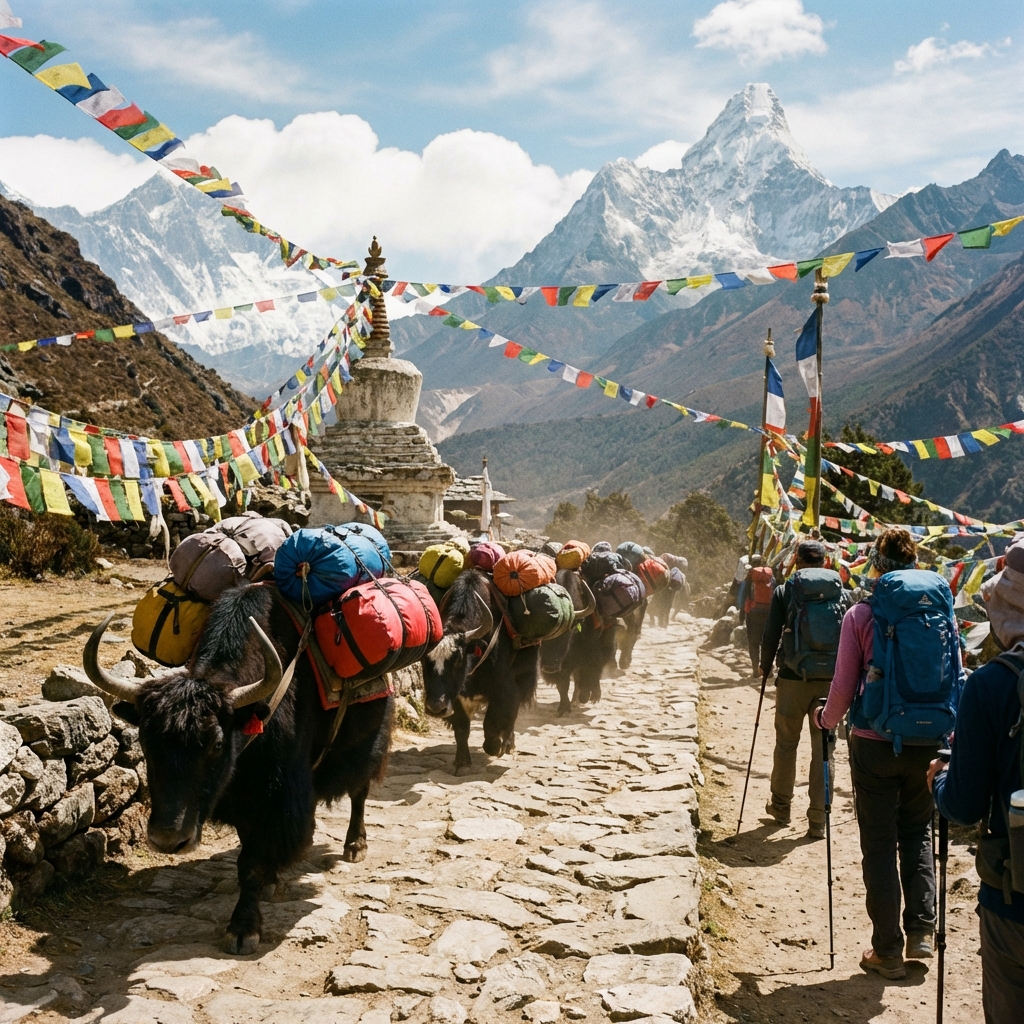
A 60–80L duffel bag is the standard choice for porter-carried luggage in Nepal. Porters carry loads using a tumpline (a strap across the forehead) or across their back, and the soft, collapsible shape of a duffel sits better against the body than a rigid backpack frame. Your separate daypack (20–30L) carries the items you need during each trekking day — water, rain jacket, snacks, camera, and layers. The duffel should not exceed 15kg (most agencies enforce a maximum weight limit for porters' health). Look for a duffel with a lockable zipper for security in tea houses, and pack a dry bag liner inside to keep contents dry during rain and river crossings.
Are dry bags necessary for Nepal trekking?
Dry bags are highly recommended, though not strictly essential on most tea house treks. Your sleeping bag and down jacket — the two items that become useless if saturated — should always travel in waterproof compression sacks or dry bags inside your duffel. Porters often carry loads uncovered in rain, and while most duffel bags offer some water resistance, a sustained monsoon downpour or river crossing can soak through. Electronics (camera, phone, power bank, e-reader) also benefit from a small dry bag in your daypack. On camping treks or river crossing routes, dry bags move from recommended to essential.
Do I need a sleeping pad for Nepal trekking?
For standard tea house trekking on the main Annapurna, Everest, and Langtang routes, you do not need to bring a sleeping pad — tea houses provide mattresses in their rooms. A sleeping pad becomes necessary for camping treks (Dolpo, some Kanchenjunga sections, above-base-camp peak climbing approaches) and for anyone doing a hybrid tea house and camping itinerary. If you're doing a peak climbing add-on to a tea house trek, you'll need a closed-cell foam or inflatable sleeping pad for the high camp nights. Closed-cell foam pads are lighter for strapping to the outside of a pack; inflatable pads (Therm-a-Rest, Sea to Summit) offer better insulation per weight.
Can I rent sleeping bags and equipment in Kathmandu?
Yes — Kathmandu's Thamel district has dozens of gear rental shops offering sleeping bags ($1–2/day), trekking poles ($0.50–1/day), and duffel bags ($1/day). Rental sleeping bags should be inspected carefully — check that the zipper works fully, the down or synthetic fill hasn't clumped, and the outer shell is clean. Many reputable rental shops wash gear between uses, but it's worth asking. A sleeping bag liner ($30–50 to buy, sometimes available for rent) is a practical addition that provides extra warmth and means you're always sleeping against a clean surface even in rental gear. Renting makes sense for one-time trekkers; buying makes sense if you trek more than twice.