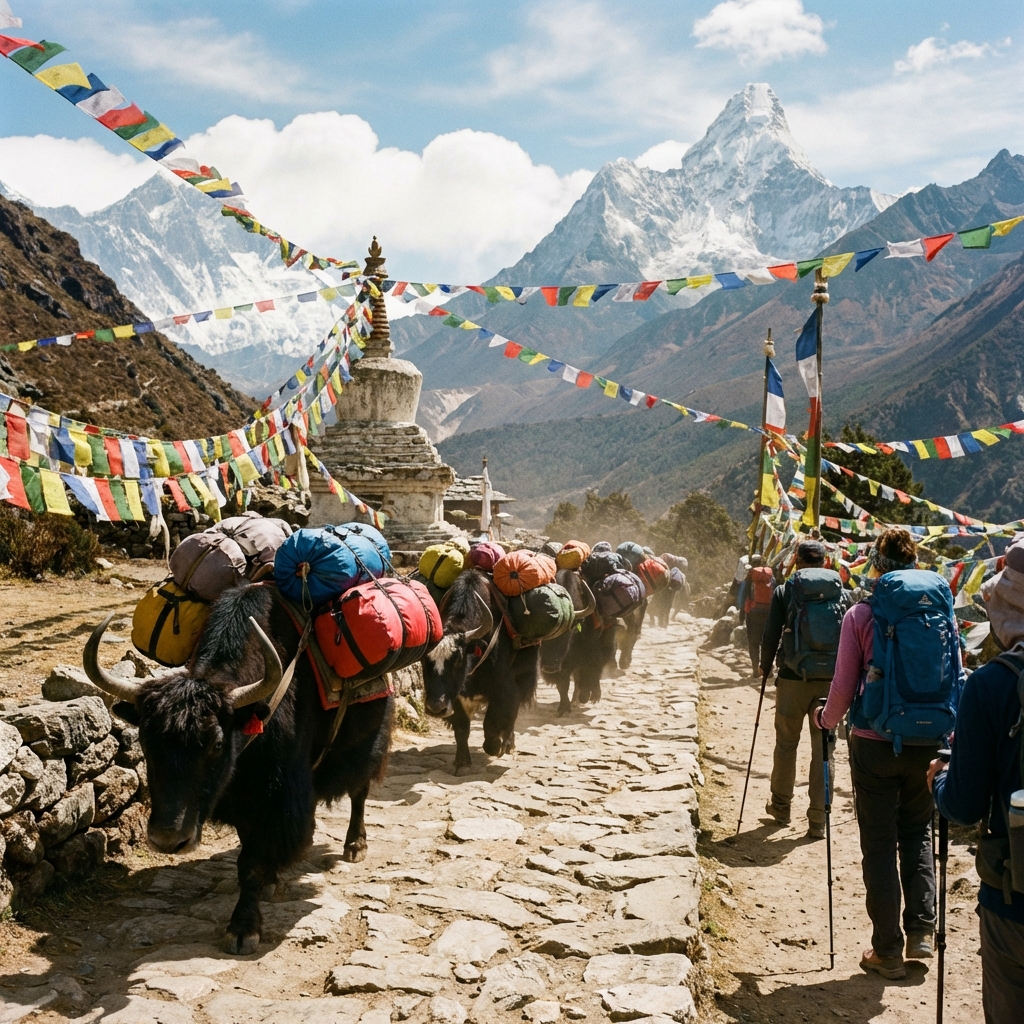
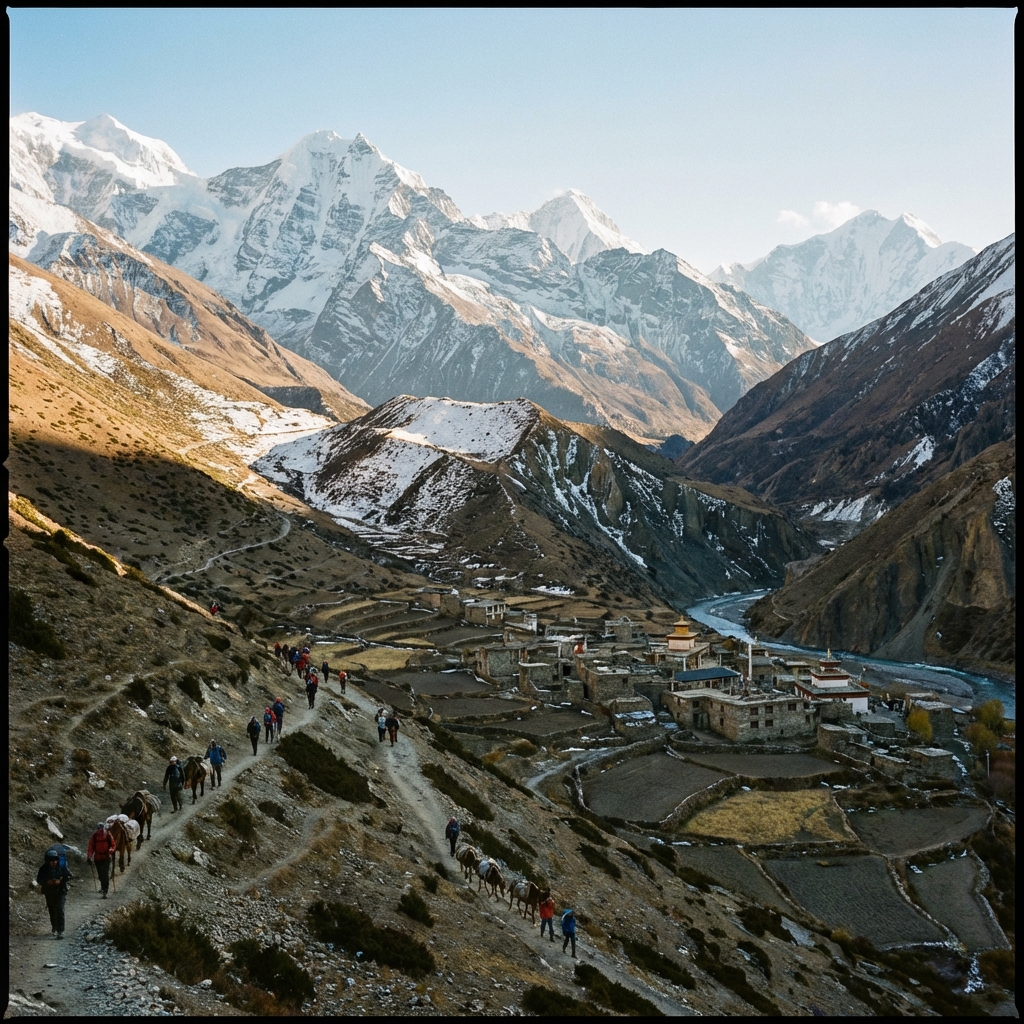
Nepal's trekking regions are among the most remote environments in which tourists regularly travel. The Khumbu region around Everest Base Camp, the Manaslu Circuit, and upper sections of the Annapurna Circuit place trekkers days of walking from the nearest road and hours of helicopter flight from definitive medical care in Kathmandu. This remoteness transforms medical situations that would be routine in urban settings into genuine emergencies. A broken ankle at 4,500 metres requires helicopter evacuation because there is no vehicle access. Severe altitude sickness at Gorak Shep requires immediate descent because the nearest hospital-grade facility is in Kathmandu, a 40-minute helicopter flight away. Understanding this risk environment — and preparing for it before your trek begins — is not pessimistic planning but essential preparedness that every responsible trekker undertakes.
High Altitude Pulmonary Edema (HAPE) and High Altitude Cerebral Edema (HACE) are the two life-threatening altitude emergencies that Nepal trekkers must understand. HAPE occurs when fluid leaks into the lungs due to increased pulmonary artery pressure at altitude, literally drowning the patient from within. It typically develops 2-4 days after arrival at a new altitude above 3,000 metres, and its hallmark symptom is breathlessness at rest — not just during exertion. A persistent cough that produces pink or frothy sputum is a late but unmistakable sign. HACE occurs when the brain swells due to fluid leaking through the blood-brain barrier under hypoxic stress. Ataxia — the inability to walk a straight line, tested by heel-to-toe walking — is the defining clinical sign that distinguishes HACE from severe AMS. Both conditions can progress from early warning signs to death within 12-72 hours if the patient remains at altitude. The single most effective treatment for both is immediate descent of at least 500-1,000 metres, combined with supplemental oxygen and medication (Nifedipine for HAPE, Dexamethasone for HACE) if available. No medication substitutes for descent — drugs buy time while you get the patient lower.
The helicopter rescue system in Nepal is both a lifesaving capability and a complex commercial operation that trekkers must understand to navigate effectively. Approximately 500-800 helicopter rescues occur during each main trekking season (October-November and March-May), with costs ranging from $3,000 to $10,000 or more depending on flight distance, altitude, and the number of patients. Several private helicopter companies operate in Nepal — Simrik Air, Fishtail Air, Kailash Helicopter, Air Dynasty, and others — and each has different aircraft capabilities, altitude ceilings, and pricing structures. The AS350 B3 (Airbus H125) is the workhorse of high-altitude rescue, capable of operating up to approximately 7,000 metres, while older models are limited to lower altitudes. Weather is the primary constraint: helicopters cannot fly in cloud, strong wind, or precipitation, meaning that evacuations from high-altitude locations may need to wait for a weather window. This delay can be hours or days, which is why beginning descent on foot while arranging helicopter pickup at a lower, more accessible location is often the best strategy.
Insurance documentation is the critical bridge between surviving an emergency and avoiding financial devastation afterward. A helicopter rescue that costs $5,000-$8,000, combined with hospital treatment in Kathmandu, changed flights, and extended accommodation, can easily total $15,000-$25,000. Claims are frequently denied for documentation failures, not because the emergency was not legitimate. The essential documents include: a medical report from the treating physician confirming the diagnosis and medical necessity of evacuation, an itemised invoice from the helicopter company, photographs of treatment and transport, receipts for all related expenses, and written statements from witnesses (guides, lodge owners, fellow trekkers). Begin collecting documentation immediately during the emergency — once you leave Nepal, it becomes exponentially harder to obtain missing paperwork. The ideal documentation window is 24-48 hours after the event, while you are still in proximity to the treating medical facility and the helicopter operator. Many experienced trekkers laminate a card with their insurance policy number, emergency assistance phone number, and claims procedure, keeping it in their hip belt pocket for immediate access.
The evacuation decision tree is the framework that determines whether a trekking situation requires helicopter rescue, guided descent on foot, or continued monitoring. The critical distinction is between conditions that will improve with descent versus conditions that prevent descent. Mild to moderate AMS with the patient ambulatory and coherent: descend on foot 500-1,000 metres with assistance from guides and fellow trekkers. Severe AMS, early HAPE, or early HACE with the patient ambulatory but deteriorating: begin immediate descent on foot while arranging helicopter pickup at the nearest feasible landing site. HACE with ataxia, HAPE with resting dyspnoea, or any condition rendering the patient unable to walk: administer emergency medications, supplemental oxygen if available, and evacuate by helicopter from current location. Trauma (fractures, dislocations, head injuries): stabilise, assess ability to walk, and arrange helicopter evacuation if the patient cannot safely descend on foot. In all cases, the decision to descend should never be delayed while waiting for a helicopter — conditions at altitude will continue to worsen, and ground-level descent improves outcomes regardless of whether helicopter rescue follows.
Emergency contacts and communication capabilities are your lifeline in the mountains. Nepal's national emergency number is 112, and the Tourist Police can be reached at +977-1-4247041. The Himalayan Rescue Association operates aid posts at Pheriche (Everest region, 4,371m) and Manang (Annapurna region, 3,540m) staffed by volunteer doctors during trekking season. Your trekking agency's Kathmandu office is often the most effective first contact, as they have established relationships with helicopter operators and can coordinate logistics. Mobile phone coverage on major trails has improved significantly — Ncell and Nepal Telecom provide coverage at most major stops on the EBC and Annapurna circuits, though coverage is unreliable above 5,000 metres and in side valleys. Satellite communicators (Garmin inReach Mini, Zoleo, SPOT Gen4) provide SOS capability anywhere on Earth via the Iridium satellite network and are strongly recommended for any trek that goes above 4,000 metres or off established routes. These devices connect to 24/7 rescue coordination centres that relay emergency information to local operators. The investment of $300-400 for a device and $15-50 per month for a subscription plan is negligible compared to the peace of mind and genuine safety capability they provide.
Preventive emergency planning before your trek dramatically improves outcomes if an emergency occurs. Register your travel plans with your embassy in Kathmandu. Provide your emergency contact at home with your itinerary, insurance policy details, and a copy of your passport. Carry a basic first-aid kit including medications for altitude (Diamox, Dexamethasone, Nifedipine — discuss with your doctor), wound care supplies, and anti-diarrhoeal medication. Know the location of HRA clinics and health posts along your route. Identify helicopter landing zones at each major stop — your guide will know these, but independent trekkers should research them in advance. Ensure your insurance policy is valid for the maximum altitude of your route plus 500 metres of margin. Keep digital and physical copies of all important documents: passport, insurance policy, emergency contacts, medication list, blood type, and known allergies. These preparations take an afternoon before your trek but can save your life, your finances, and your family's peace of mind in an emergency.