
Annapurna Villages
From the Gurung stone terraces of Chhomrong perched above the Modi Khola gorge to the wind-scoured Manangba settlements beneath Gangapurna's glaciers, Annapurna's villages span subtropical south slopes and rain-shadow trans-Himalayan highlands — each a distinct cultural world, each an essential node on Nepal's most-walked trekking routes.
A cultural cross-section
Understanding Annapurna's Villages
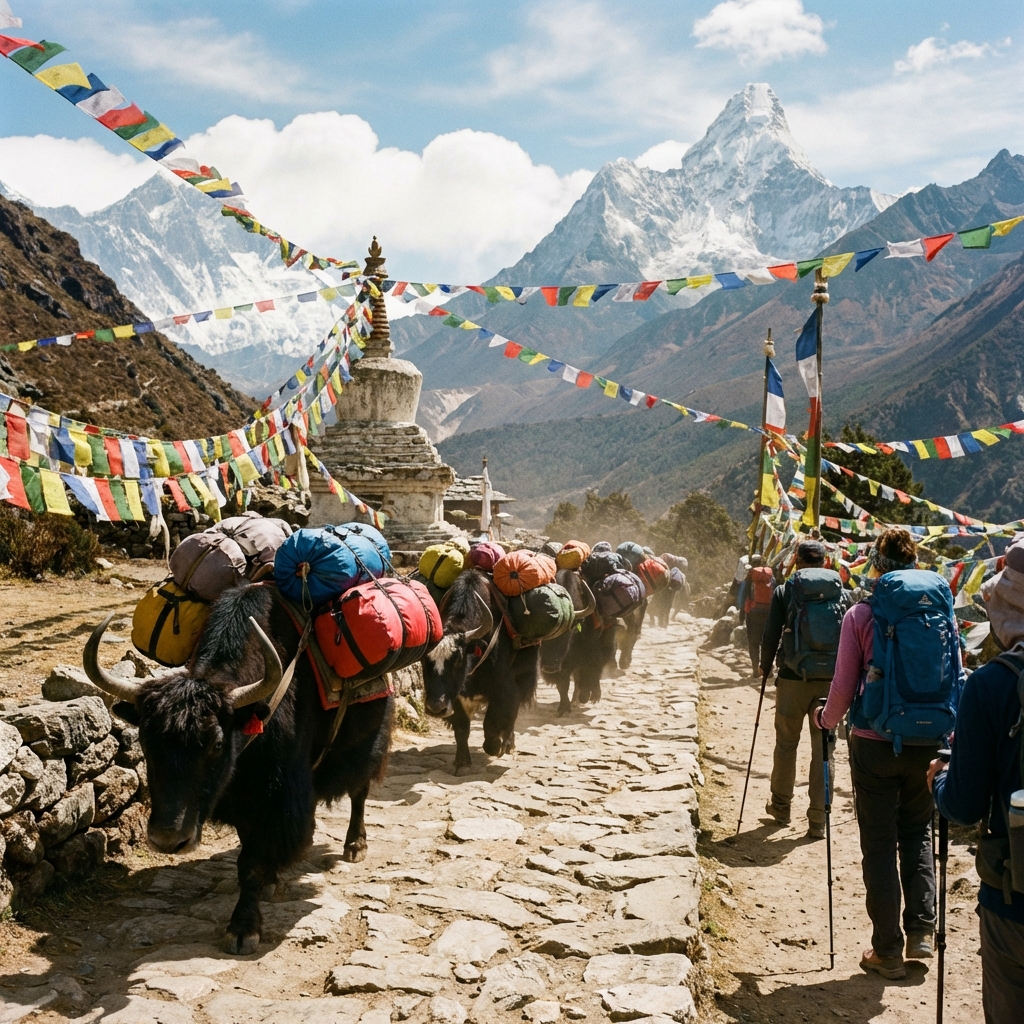
The Annapurna massif is Nepal's most trekked region, and much of that magnetism comes not only from its high Himalayan drama but from the extraordinary diversity of the communities that have made these valleys and ridges their home for centuries. The three villages covered in this guide — Chhomrong, Ghorepani, and Manang — could hardly be more different from one another. Chhomrong clusters on a steep south-facing hillside in lush subtropical terrain, sustained by the Gurung families who have farmed its terraces for generations. Ghorepani occupies a windswept ridge thick with rhododendron forest, a historic crossroads between the Modi Khola and Kali Gandaki valleys. Manang lies in an arid glacial basin north of the main Himalayan range, its Manangba inhabitants shaped by centuries of trans-Himalayan trade and high-altitude survival. Together they represent the full spectrum of Annapurna's human and natural landscape — from subtropical green to alpine tundra, from Buddhist gompas draped in prayer flags to stone-walled yards where yaks graze in the shadow of six-thousand-metre peaks.
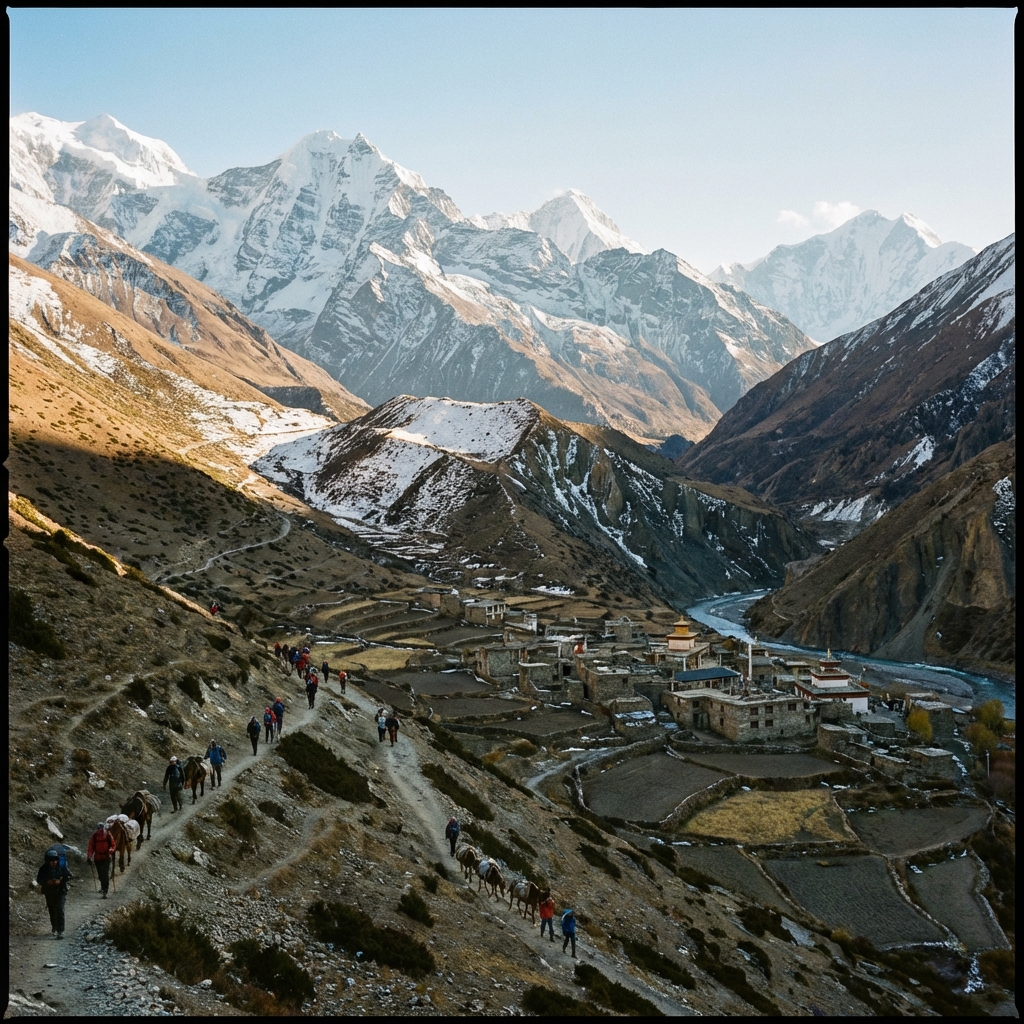
Chhomrong, sitting at 2,170 metres on a terraced hillside above the roaring Modi Khola gorge, occupies a pivotal position in the Annapurna region. It is the last major permanent settlement before the trail enters the Annapurna Sanctuary, and every trekker bound for Annapurna Base Camp passes through it. The village is quintessentially Gurung — traditional stone houses with slate roofs, narrow flagstone paths descending in steep staircases between lodges and homes, a small gompa above the village where incense mingles with mountain air. The ACAP checkpoint here registers all trekkers entering the sanctuary; its presence gives Chhomrong a slightly administrative feel that contrasts with the warm chaos of its lodge culture. Below the main village, the trail to Jhinu Danda leads thirty minutes down to natural hot springs on the riverbank — one of Nepal's most well-earned post-trek rewards, where trekkers returning from base camp soak aching legs in geothermal water with views of forest-covered ridges. Chhomrong is the emotional threshold: above it the landscape becomes progressively wilder, the forests denser, the human presence thinner, until the sanctuary opens into its extraordinary amphitheatre of ice and rock.
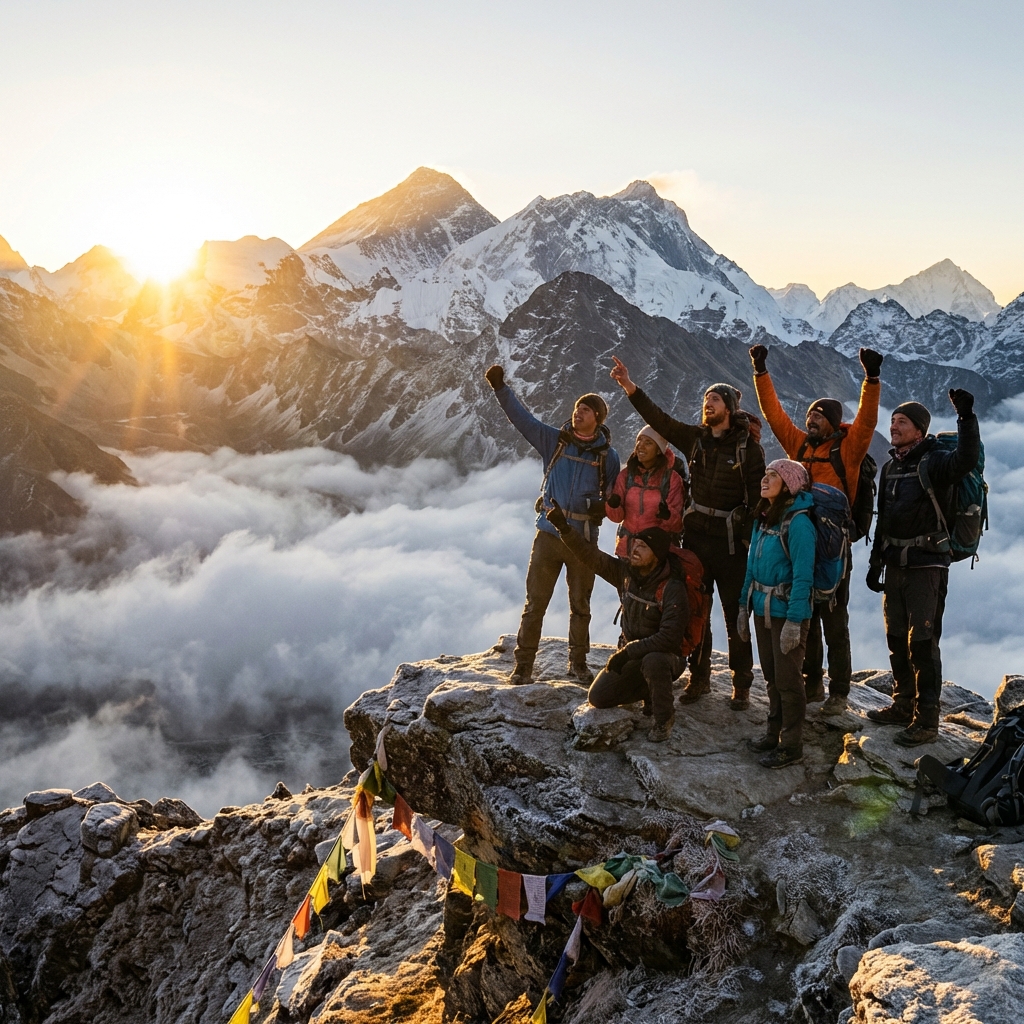
Ghorepani sits at 2,860 metres on a broad ridge between the Modi Khola and Kali Gandaki valleys, and its name — derived from a Nepali phrase meaning “horse water” — points to its ancient role as a rest stop on the salt-trading routes that once connected the Terai with Tibet. Today it is defined almost entirely by Poon Hill, the 3,210-metre viewpoint twenty minutes above the village that offers what many consider the finest panoramic sunrise view in Nepal. On clear mornings the sight from Poon Hill's concrete tower is staggering: Dhaulagiri to the west, the full Annapurna South and Annapurna I massif ahead, Machhapuchhre's perfect triangular summit to the east, and in excellent conditions the distant outlines of Manaslu and Himalchuli. The surrounding forests are among Nepal's finest rhododendron stands — in March and April they erupt in vivid crimson, pink, and white, transforming the ridge into a spectacle of colour that draws its own category of trekker. Ghorepani itself is now one of the most developed trekking villages in Nepal, with dozens of lodges, restaurants offering everything from dal bhat to apple pie, and WiFi connections that keep it permanently tethered to the outside world despite its ridge-top isolation.
Manang occupies a different universe entirely. At 3,540 metres in the rain shadow north of the Annapurna range, it receives dramatically less rainfall than the southern slopes and the landscape reflects it — arid hillsides dotted with juniper and pine, flat-roofed stone houses stacked against the valley wall, fields of buckwheat and barley rather than the lush terraces of the south. The backdrop is breathtaking: Gangapurna's glaciated face dominates the view above the village, its terminal moraine forming a natural dam behind Gangapurna Lake at the valley floor. Manang's importance on the Annapurna Circuit is twofold: it is the last significant settlement before Thorong La, the 5,416-metre pass that is the route's defining challenge, and it is where the Himalayan Rescue Association runs its celebrated daily altitude briefings. These free talks, held each afternoon, cover the physiology of altitude sickness, the symptoms of AMS, HACE, and HAPE, and the cardinal rule that descent is the only cure. For the dedicated rest day Manang demands, the day hikes to Ice Lake at 4,620 metres and Gangapurna Lake below offer both acclimatization gains and striking scenery.
The cultural contrast between the southern Gurung villages and northern Manang runs deep. The Gurung people of Chhomrong and Ghorepani practice a syncretic faith blending Tibetan Buddhism with an older animist shamanic tradition; their villages are oriented toward the lower valleys and the world of farming, monsoon, and seasonal migration to India and the Gulf. The Manangba of Manang are a distinct ethnic group historically granted special trading rights by the Nepalese crown, and their culture reflects centuries of commercial travel across Himalayan passes into Tibet and beyond. Their flat-roofed architecture echoes Tibetan building traditions, their religious practice is more consistently Tibetan Buddhist, and their economy was built not on soil but on trade routes. Even the food differs substantially: south of the Annapurna massif you eat rice and lentils and the produce of warm hillsides; north of it, you eat tsampa, buckwheat, and yak products. These architectural, culinary, and spiritual differences make traversing the full Annapurna Circuit — crossing from one cultural world to another over a single pass — one of the most culturally illuminating walks in Asia.
The teahouse and lodge culture of the Annapurna region has its own character, distinct from the more commercially intense Everest region and shaped significantly by ACAP, the Annapurna Conservation Area Project. ACAP operates a zonal pricing system that sets maximum prices for food and accommodation across the region, which moderates the price inflation that plagued earlier decades of unregulated tourism growth. Rooms in most Annapurna villages are simple but clean — typically twin beds with thin mattresses, wool blankets, and a shared bathroom down the hall. Hot showers are available almost everywhere for a small surcharge; the better lodges in Chhomrong and Ghorepani have attached bathrooms in their higher-priced rooms. WiFi is reliable in Ghorepani and available in Chhomrong and Manang, though speeds are modest by urban standards. The unwritten social contract of Annapurna teahouses is that lodging is cheap (sometimes provided free or at cost) because the lodge's revenue comes from meals. Eating at the lodge where you sleep is a courtesy that sustains the entire system; ordering substantial meals rather than nibbling snacks makes a material difference to families whose entire annual income compresses into the October-November trekking peak.
Understanding how these three villages connect as trekking nodes helps enormously in planning your itinerary. Ghorepani is the anchor of the classic five-to-seven day Poon Hill circuit from Pokhara, Nepal's most popular short trek. Chhomrong is the gateway to the ten-to-fourteen day Annapurna Base Camp trek, which typically departs from Nayapul or Tikhedhunga and returns via the Modi Khola valley. Manang sits at the midpoint of the Annapurna Circuit, the sixteen-to-twenty day circumnavigation of the entire massif that remains one of the world's great long-distance walks. These circuits are not mutually exclusive: a combined Poon Hill and ABC itinerary connects via the trail between Ghorepani and Tadapani and then down to Chhomrong, requiring twelve to sixteen days. Experienced trekkers sometimes link the full circuit from Besisahar to Pokhara with a Poon Hill extension at the southern end. Whichever combination you choose, these villages are not mere waypoints — they are places worth stopping in, lingering over, and coming to know through the people who have inhabited them long before the first foreign trekker appeared on their doorsteps.
Annapurna Region Village Guides
In-depth guides to the key villages along Annapurna trekking routes, from the ABC gateway at Chhomrong to the Circuit acclimatization hub at Manang.
Good to know
Frequently Asked Questions
What time should I leave Ghorepani for the Poon Hill sunrise?
Most trekkers depart Ghorepani village for Poon Hill between 4:30 and 5:00 AM, allowing roughly 45 to 60 minutes for the steep ascent of approximately 400 vertical metres. Sunrise times vary by season — in winter months it can be as late as 7:00 AM, while in summer it arrives closer to 5:30 AM. Lodge staff usually know the current sunrise time and will wake you accordingly. Bring a headlamp, warm layers, and a thermos of tea. Arriving at the viewpoint tower 15 to 20 minutes before sunrise gives you time to find a good vantage point before crowds gather. On clear mornings the panorama includes Dhaulagiri, Annapurna South, Hiunchuli, Machhapuchhre, and on exceptional days the full Annapurna massif stretching east to west.
How many rest days should I spend in Manang before attempting Thorong La?
The standard acclimatization protocol in Manang is one full rest day, though two days is strongly recommended if you are experiencing any symptoms of altitude adjustment. Manang sits at 3,540m, and Thorong La pass stands at 5,416m — a gain of nearly 1,900m in a single day's crossing. The Himalayan Rescue Association clinic in Manang runs free daily altitude sickness lectures at around 3:00 PM; attendance is considered essential. On your rest day, hike to Ice Lake at 4,620m or at minimum to Gangapurna Lake at 3,650m to encourage gradual adaptation. Arriving in Manang with even mild symptoms of AMS requires extending your stay. Do not be pressured by schedule to cross Thorong La before your body is ready — the pass is exposed, and the consequences of AMS at altitude are serious.
Is Chhomrong really the last village before Annapurna Base Camp?
Chhomrong at 2,170m is the last sizeable permanent village before Annapurna Base Camp, but it is not the last place to sleep. Beyond Chhomrong, the trail passes through Sinuwa, Bamboo, Dovan, Himalaya Hotel, and Deurali — all of which have teahouses catering to trekkers. However, these are seasonal settlements rather than true villages, with populations that depend almost entirely on trekking traffic and close in winter. Chhomrong is where you pass through the ACAP checkpoint and where the landscape begins its transition from terraced farmland to dense forest and eventually open sanctuary. It is the last point with reliable shops, pharmacies, ATMs, and an administrative presence. The emotional sense of entering the high wilderness begins here, which is why trekkers often speak of Chhomrong as the gateway rather than simply a waypoint.
What aspects of Gurung culture can I experience in Annapurna villages?
The Gurung people are one of Nepal's most prominent hill ethnic groups and form the dominant community in the southern Annapurna villages of Chhomrong and Ghorepani. Their culture blends Tibetan Buddhist and indigenous shamanistic traditions, visible in the small gompas and prayer flags adorning village ridgelines. Traditional Gurung stone houses with slate roofs are a distinctive architectural feature. In lodges run by Gurung families you may encounter local dishes such as dhido, a buckwheat or millet porridge, alongside standard trekking menus. The Gurung are historically associated with the British and Indian Gurkha regiments, and many families have male relatives who served abroad. Festivals such as Tamu Lhosar, the Gurung new year celebrated in December-January, offer the richest cultural immersion if your timing aligns. Engaging lodge owners with genuine curiosity is almost always warmly received.
Can I combine the Poon Hill trek with Annapurna Base Camp?
Yes, combining Poon Hill and Annapurna Base Camp into a single itinerary is entirely feasible and creates one of the most rewarding loops in Nepal. The classic approach is to trek from Nayapul or Tikhedhunga to Ghorepani for the Poon Hill sunrise, continue east via Tadapani to Chhomrong, then ascend to ABC and return via the Modi Khola valley to Pokhara. This circuit typically takes 12 to 16 days depending on your pace and acclimatization needs. Alternatively, you can do the route in reverse. The key logistical note is that there is no direct trail between Poon Hill and ABC — you descend from the ridge and cross through forested middle-altitude terrain via Tadapani and Chhomrong. This combined itinerary showcases both the classic rhododendron ridge country and the high glacial sanctuary, offering two very different visual and cultural landscapes within a single trip.
What food specialties should I try in Annapurna region villages?
Annapurna region villages offer some of the most varied and locally distinctive food on any Nepal trekking route. In Chhomrong and Ghorepani, look for local Gurung specialties including sel roti, a sweet fried rice-flour doughnut traditionally made during festivals, and tongba, a fermented millet drink served warm in a wooden vessel. Chhomrong is also known for its apple products — apple pie, apple juice, and apple brandy produced in nearby Tatopani. Manang in the north reflects its Tibetan cultural influence with tsampa porridge, yak butter tea, and hearty noodle thukpa. At any altitude, the standard dal bhat remains the most calorie-dense and cost-effective meal. The ACAP pricing system means menu prices are regulated and relatively consistent across lodges, so ordering what is cooked fresh that day rather than demanding elaborate western dishes leads to both better food and a better relationship with your hosts.