Ghorepani: Nepal's Premier Sunrise Destination
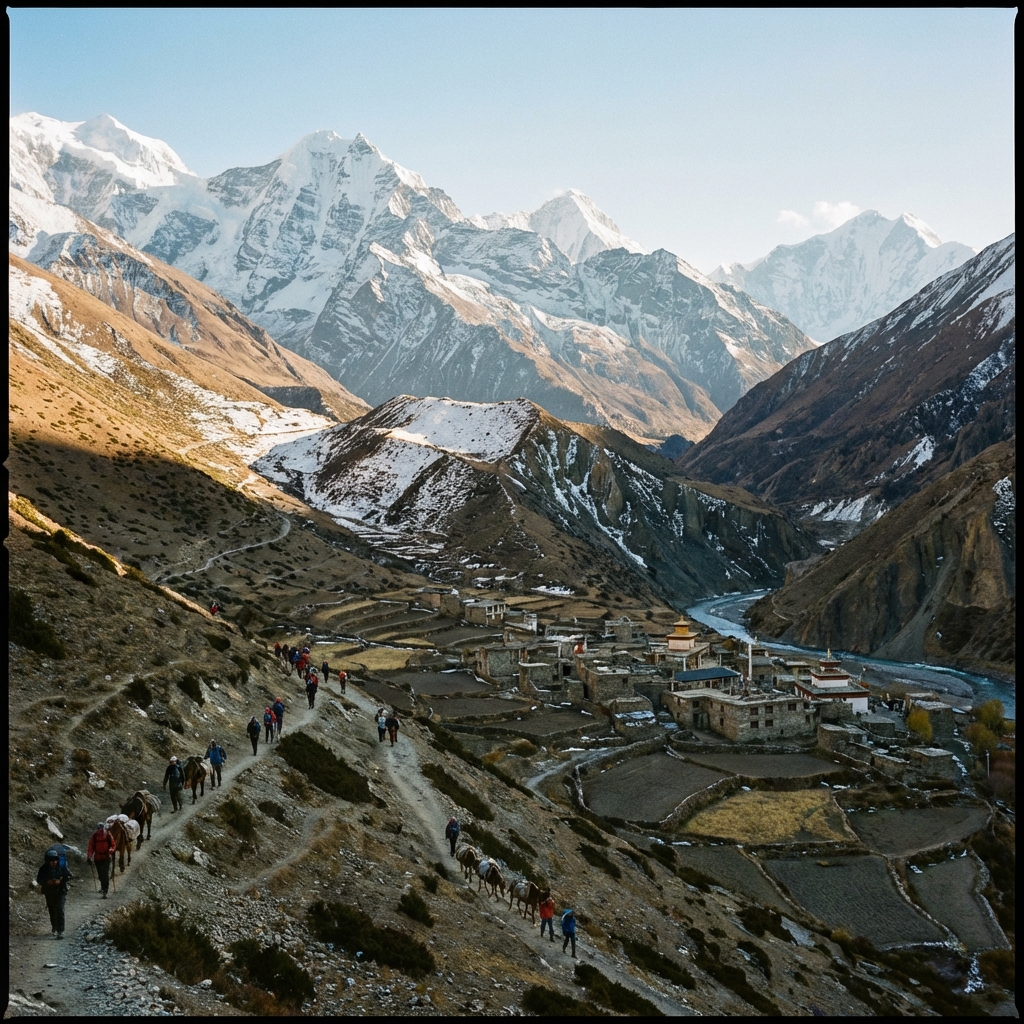
Ghorepani is perhaps the most famous viewpoint village in all of Nepal, renowned globally as the launching point for the pre-dawn climb to Poon Hill to witness one of the world's great mountain sunrises. Perched at 2,860 meters (9,383 feet) on a ridge between the Kali Gandaki and Modi Khola valleys, this substantial village serves as a crucial waypoint for trekkers on the Poon Hill circuit, those heading to Annapurna Base Camp via the alternative route, and travelers exploring the Annapurna Conservation Area's spectacular rhododendron forests.
The village name "Ghorepani" translates to "horse water" in Nepali, referring to its historical role as a watering stop for horse caravans traveling the ancient trade route between Pokhara and the trans-Himalayan regions. Today, the horses have largely been replaced by trekkers, and Ghorepani has transformed into one of Nepal's most developed trekking villages, with dozens of lodges, restaurants, and shops catering to the thousands of visitors who pass through annually.
What draws these visitors is the promise of the Poon Hill sunrise: a panorama encompassing the entire Annapurna range, Dhaulagiri (the world's seventh-highest peak), Nilgiri, Machhapuchhre (Fishtail), and dozens of other Himalayan giants, all illuminated by the first light of dawn. Combined with the stunning rhododendron forests that surround the village (spectacular during the March-May blooming season), Ghorepani offers accessible high-altitude beauty that ranks among Nepal's finest experiences.
2,860m (9,383ft)
Annapurna, Myagdi District
Approximately 400 residents
Mixed - Magar, Gurung, Thakali
1-2 nights
No - withdraw cash in Pokhara or Nayapul
Available at most lodges
Good NTC/Ncell coverage
March-May, September-November
45-60 minutes
Poon Hill Sunrise, Rhododendron Forests, Mountain Views
ACAP permit, TIMS card
Why Ghorepani Matters: Nepal's Accessible Himalayan Spectacle
Ghorepani holds a special place in Nepal's trekking landscape because it delivers world-class mountain scenery with relatively modest effort and altitude exposure. Unlike treks to Everest Base Camp or Annapurna Base Camp that require weeks of hiking and careful acclimatization to reach their climactic viewpoints, Ghorepani can be reached in just 2-3 days from Pokhara, making it accessible to trekkers with limited time, moderate fitness, or concerns about high altitude.
The Poon Hill sunrise, just 45-60 minutes' walk above Ghorepani, is regularly ranked among the world's top mountain viewing experiences. From this 3,210-meter vantage point, you witness the sun's first rays illuminate the white summits of the Annapurna massif and Dhaulagiri while the valleys below remain in shadow. The panorama spans over 300 degrees, encompassing virtually every major peak in western Nepal.
Beyond the famous sunrise, Ghorepani serves as a gateway to some of Nepal's finest forest trekking. The rhododendron forests surrounding the village contain trees up to 30 meters tall that explode in spectacular blooms during April and May, transforming the trails into tunnels of red, pink, and white flowers. This combination of accessible mountain views and botanical beauty makes the Ghorepani-Poon Hill trek Nepal's second-most popular route after Everest Base Camp.
The village also functions as a crucial junction point in the Annapurna trail network. From Ghorepani, trekkers can continue to Annapurna Base Camp via Tadapani and Chhomrong, complete the classic Poon Hill circuit loop back to Nayapul, or extend their journey toward Jomsom and the Mustang region. This connectivity makes Ghorepani a strategic planning point for various itinerary options.
Getting to Ghorepani: Route Options
Ghorepani can be reached by multiple routes, each with its own character and attractions. Understanding these options helps you plan an itinerary that matches your interests and available time.
Route 1: Nayapul - Tikhedhunga - Ulleri - Ghorepani (Most Popular)
The most common approach starts from Nayapul (1,070m), a small roadside town about 1.5 hours' drive from Pokhara. From Nayapul, the trail follows the Birethanti River to the charming village of Birethanti (1,025m), where ACAP permits are checked.
From Birethanti, the path heads up the Modi Khola valley, passing through traditional villages and gradually climbing to Tikhedhunga (1,540m), where most trekkers spend their first night. The following day involves the famous (or infamous) Ulleri stairs - approximately 3,767 stone steps climbing steeply from Tikhedhunga to Ulleri (1,960m). This demanding section gains about 1,400 meters of elevation in just 3-4 hours.
From Ulleri, the trail continues climbing through increasingly beautiful forest to Banthanti (2,250m) and finally Ghorepani. The section from Ulleri to Ghorepani is particularly stunning, passing through dense rhododendron forest that provides spectacular displays in spring.
Total time: 2 days from Nayapul Difficulty: Moderate to challenging (due to Ulleri stairs) Best for: Trekkers wanting the direct route with maximum forest exposure
Route 2: Nayapul - Birethanti - Ghandruk - Tadapani - Ghorepani (Scenic Alternative)
This longer route approaches Ghorepani from the east via the beautiful Gurung village of Ghandruk. From Birethanti, the trail heads up the Modi Khola toward Ghandruk (1,940m), one of the largest and most culturally interesting villages in the region.
From Ghandruk, the route climbs through forest to Tadapani (2,630m), then traverses westward through rhododendron forest to Ghorepani. This approach offers better cultural experiences (particularly in Ghandruk) and avoids the brutal Ulleri stairs, though it takes an extra day.
Total time: 3 days from Nayapul Difficulty: Moderate (more gradual climbing) Best for: Trekkers with extra time who want cultural experiences and easier ascent
Route 3: From Jomsom/Tatopani (Reverse Direction)
Trekkers walking the Annapurna Circuit or coming from the Jomsom/Mustang region often reach Ghorepani from the northwest via Tatopani hot springs and the Sikha/Chitre villages. This approach involves a substantial climb from Tatopani (1,190m) to Ghorepani, gaining nearly 1,700 meters over 6-8 hours of steady uphill walking.
Total time: 1 long day from Tatopani Difficulty: Challenging (significant elevation gain) Best for: Circuit trekkers or those combining with Jomsom/Mustang
Route 4: From Chhomrong (ABC Connection)
Trekkers combining Poon Hill with Annapurna Base Camp often connect through Tadapani, walking from Chhomrong (2,170m) to Tadapani and then to Ghorepani. This creates a comprehensive Annapurna itinerary hitting both major destinations.
Total time: 2 days from Chhomrong Difficulty: Moderate Best for: Combined ABC/Poon Hill itineraries
Route Selection Strategy
Poon Hill Sunrise: Nepal's Greatest Mountain Spectacle
The climb to Poon Hill (Nepali: Pun Hill) for sunrise is the primary reason most trekkers come to Ghorepani. This 3,210-meter viewpoint, reached by a well-maintained stone stairway from the village, offers one of the most accessible and spectacular mountain panoramas in the world.
The Poon Hill Experience
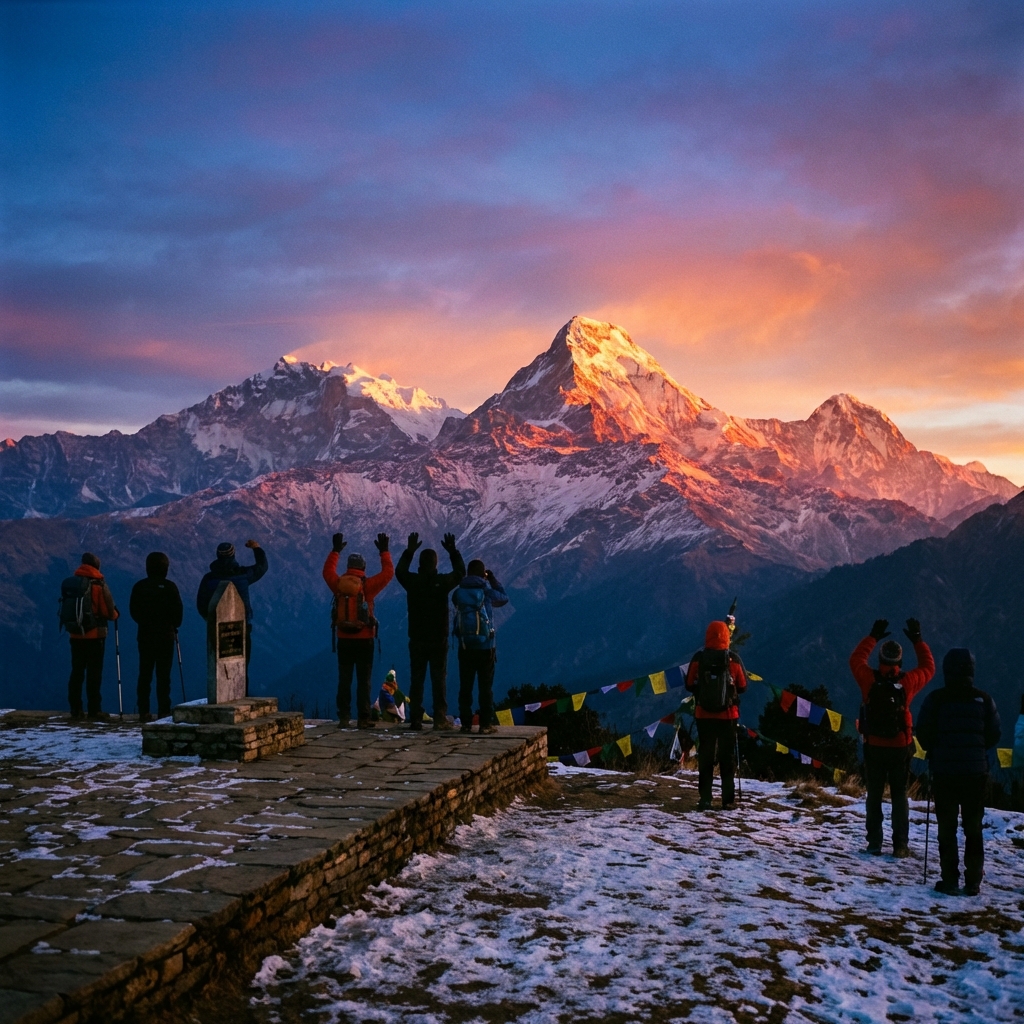
The pre-dawn wake-up call comes painfully early - typically 4:30-5:00 AM depending on season. You'll join the procession of headlamp-lit trekkers making their way up the approximately 400 stone steps from Ghorepani village to the summit viewing platform. The 45-60 minute climb in darkness, cold morning air burning in your lungs, builds anticipation for the spectacle ahead.
Arriving at the viewing platform before dawn, you'll find a crowd of fellow trekkers, hot beverage vendors, and an electric atmosphere of anticipation. As the eastern sky lightens, the snow peaks begin to emerge from the darkness, first as pale silhouettes, then gradually taking on color as the sun approaches the horizon.
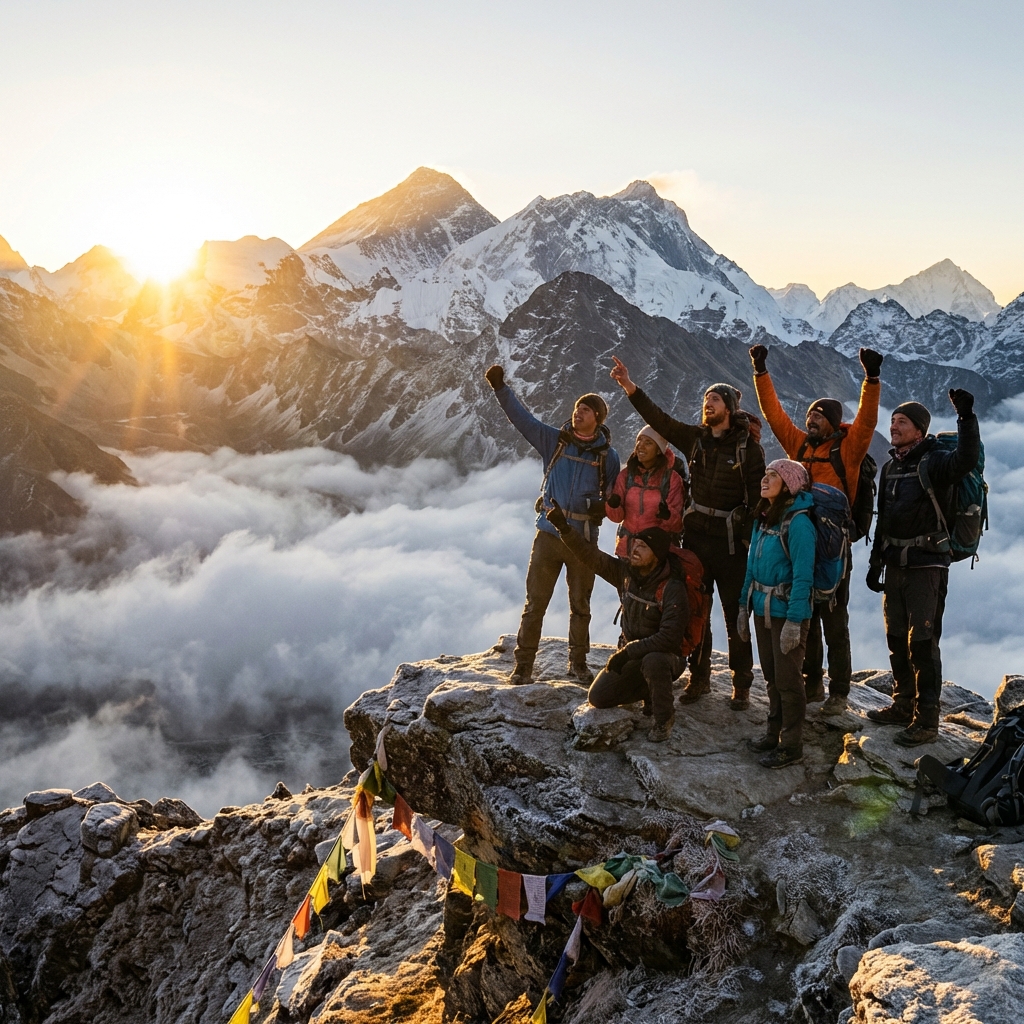
The actual sunrise moment is magical. The first rays of light strike the summit of Dhaulagiri, the world's seventh-highest mountain at 8,167 meters, turning its snow fields golden while everything else remains in shadow. Within minutes, the light spreads across the panorama - Tukuche Peak, Nilgiri, Annapurna I (8,091m, the world's tenth-highest), Annapurna South, Hiunchuli, Machhapuchhre (Fishtail), and dozens of other peaks join the illuminated display.
The transformation from pre-dawn darkness to full morning light takes about 30-45 minutes, during which the colors shift constantly through pinks, oranges, and golds before settling into the brilliant white of snow against deep blue sky. Photographers fire thousands of frames during this brief window.
What You'll See from Poon Hill
The Poon Hill panorama encompasses an extraordinary range of mountains:
Dhaulagiri Range (West):
- Dhaulagiri I (8,167m) - Seventh highest peak in the world
- Tukuche Peak (6,920m)
- Dhaulagiri II-V (various elevations)
Nilgiri and Central Peaks:
- Nilgiri North (7,061m)
- Nilgiri Central (6,940m)
- Nilgiri South (6,839m)
- Fang/Baraha Shikhar (7,647m)
Annapurna Massif (North/Northeast):
- Annapurna I (8,091m) - Tenth highest peak in the world
- Annapurna South (7,219m)
- Hiunchuli (6,441m)
- Annapurna III (7,555m)
- Annapurna IV (7,525m)
Machhapuchhre and East:
- Machhapuchhre (6,993m) - The iconic "Fishtail" peak
- Mardi Himal (5,587m)
- Lamjung Himal (6,983m)
On exceptionally clear days, you can see even further - peaks of the Manaslu range to the east and distant summits toward Dolpo in the west.
Sunrise Logistics and Tips
Timing: Sunrise time varies seasonally - approximately 5:45-6:15 AM in spring (March-May) and 6:00-6:30 AM in autumn (September-November). Winter sunrise is later (around 6:45 AM). Plan to start climbing 60-75 minutes before sunrise to allow time for the ascent and to secure a good viewing spot.
Entrance Fee: There is an entrance fee to Poon Hill (currently NPR 100 for ACAP permit holders). Pay at the gate on the way up.
Clothing: Morning temperatures at Poon Hill can be bitter, often below freezing in autumn and winter. Wear all your warm layers including down jacket, warm hat, gloves, and consider bringing a sleeping bag or blanket to wrap around yourself while waiting. Lodge staff sometimes rent blankets.
Hot Drinks: Vendors at the summit sell tea, coffee, and hot chocolate at inflated but worthwhile prices. A warm drink while watching the sunrise is part of the experience.
Crowds: Poon Hill can be extremely crowded during peak season (October-November, April). The viewing platform has limited space. Arrive early to secure a spot with unobstructed views. Consider visiting during shoulder season or mid-week for smaller crowds.
Photography Equipment: Bring your best camera, a tripod if you have one, and fully charged batteries (cold drains batteries faster). Wide-angle lenses capture the full panorama; telephoto lenses isolate individual peaks. Bring lens cleaning cloth - your breath will fog cold lenses.
Backup Plans: If weather doesn't cooperate on your designated sunrise day, consider staying a second night in Ghorepani for another attempt. Cloudy mornings are common, especially in spring when pre-monsoon moisture builds.
Sunset Alternative
If morning crowds aren't your thing, or if the morning was cloudy, consider climbing Poon Hill for sunset instead. The afternoon light illuminates the peaks differently, and you'll have the viewpoint largely to yourself. Sunset views can be equally spectacular, with the peaks turning pink and orange as the sun drops behind the mountains to the west.
Rhododendron Forests: Ghorepani's Botanical Wonder
The rhododendron forests surrounding Ghorepani constitute one of the finest botanical displays in the Himalayas. These ancient forests, part of the Annapurna Conservation Area, contain trees that have grown for centuries in perfect conditions, creating cathedral-like groves that transform spectacularly during the spring blooming season.
Understanding the Forests
The Ghorepani area sits within the temperate cloud forest zone, where consistent moisture from monsoon clouds and moderate temperatures create ideal conditions for rhododendrons. The dominant species are tree rhododendrons (Rhododendron arboreum and related species), which can grow to 30 meters tall with trunk diameters exceeding one meter.
These aren't the cultivated garden shrubs familiar from temperate gardens; they're massive forest trees with twisted, ancient trunks covered in lichens and mosses. The forest understory includes smaller rhododendron species, magnolias, orchids, and countless ferns, creating a layered ecosystem of remarkable biodiversity.
The Spring Bloom (March-May)
The rhododendron bloom is one of Nepal's great natural spectacles. Different species flower at different times and elevations, creating a prolonged season of color:
March: Lower elevation rhododendrons (below 2,500m) begin blooming with bright red flowers April: Peak bloom at Ghorepani elevation (2,500-3,000m), with red, pink, and white flowers May: Higher elevation species (above 3,000m) bloom, often mixed with late snow
During peak bloom (typically mid-April to early May), the trails between Ulleri and Ghorepani become tunnels of color. The forest floor is carpeted with fallen petals, and the air carries a subtle floral fragrance. Combined with mountain views through gaps in the forest canopy, it's an extraordinary sensory experience.
Forest Hiking Options
Deurali Ridge Walk (2-3 hours): Walk south from Ghorepani along the ridge toward Deurali pass for excellent forest immersion and views back toward the Annapurna peaks. The trail passes through dense rhododendron forest before opening to ridge-top meadows.
Chitre Forest Walk (2-3 hours): Walk northwest toward the village of Chitre through some of the finest old-growth rhododendron forest in the region. This trail offers excellent photography opportunities among ancient trees.
Poon Hill Loop (3-4 hours): Instead of returning directly from Poon Hill, traverse around the ridge through forest to approach Ghorepani from a different direction. This extended walk provides more forest exposure.
Tadapani Trail (5-6 hours): The trail east toward Tadapani and Chhomrong passes through extensive rhododendron forest, offering a full day of botanical immersion.
Wildlife in the Forests
The Ghorepani forests support diverse wildlife, though animals are shy and sightings require patience and luck:
- Birds: Nepal's national bird, the Danphe (Himalayan Monal), is relatively common. You may also see blood pheasants, laughing thrushes, and numerous smaller species.
- Mammals: Red pandas inhabit the forest but are rarely seen. Himalayan langurs, wild boar, and various deer species are occasionally spotted.
- Insects: The forests support remarkable butterfly diversity, especially in spring and early summer.
Forest Photography
Accommodation in Ghorepani
Ghorepani has developed into one of the most well-served trekking villages in Nepal, with numerous lodges offering varying levels of comfort. Competition has driven up quality, making Ghorepani lodges generally better than comparable-elevation facilities in less popular areas.
Lodge Categories
Premium Lodges (NPR 2,000-4,000 per night):
- Private rooms with attached bathrooms
- Hot showers (usually solar-heated)
- Comfortable beds with clean bedding
- Dining rooms with mountain views
- Good WiFi connectivity
- Examples: Sunny Hotel, Himalayan Deurali Guest House, Hotel Poon Hill
Mid-Range Lodges (NPR 800-1,500 per night):
- Private rooms, some with attached bathrooms
- Hot showers available (may be shared)
- Basic but comfortable bedding
- Communal dining areas
- Variable WiFi quality
- Examples: See View Lodge, Moonlight Guest House, Hotel Rhododendron
Budget Lodges (NPR 300-700 per night):
- Basic rooms with shared bathrooms
- Hot showers available for extra fee
- Simple bedding (bring sleeping bag)
- Basic dining facilities
- Limited or no WiFi
- Numerous smaller family-run establishments
What to Expect
Rooms: Even budget lodges in Ghorepani typically have private rooms with plywood walls and basic beds. Higher-end options have thicker walls, better mattresses, and more reliable heating. Most rooms are cold at night - bring a good sleeping bag or confirm heating availability.
Bathrooms: Many lodges now offer attached bathrooms, at least in their better rooms. Shared facilities are usually clean and well-maintained due to competition. Expect squat or western toilets depending on the lodge.
Hot Showers: Most lodges offer hot showers, typically heated by solar panels (best availability in afternoon after sunny days) or gas/electric systems. Prices range from NPR 200-400 per shower.
Heating: Dining rooms usually have bukhari stoves or gas heaters lit in the evening. Individual room heating is rare except in premium lodges. Common areas become the social hub in cold weather.
Electricity and Charging: Reliable electricity for lighting and charging devices. Most lodges include basic charging in the room price, though some charge NPR 100-200 per device during peak season.
WiFi: Available at most lodges, quality varies but is generally adequate for messaging and basic browsing. Free at some lodges; others charge NPR 200-500 for access.
Booking and Reservations
During peak season (October-November particularly), Ghorepani lodges fill up, especially the better ones. Options include:
- Book ahead: Premium lodges can be contacted by phone (numbers available from Pokhara agencies) or through trekking agencies
- Arrive early: If walking in without reservations, arrive by 2-3 PM to secure your preferred accommodation
- Be flexible: If your first choice is full, numerous alternatives exist
- Guided treks: Agencies typically pre-book lodges along the route
During shoulder seasons and off-peak periods, walk-in availability is rarely a problem, and you may negotiate better rates.
Lodge Selection Strategy
For Poon Hill sunrise, lodge location matters less than you'd think since everyone walks to the same viewpoint. Instead, prioritize good dining facilities (you'll eat dinner and breakfast there), reliable hot showers (appreciated after the cold morning), and a location that minimizes your pre-dawn walk. Lodges on the eastern side of the village are slightly closer to the Poon Hill trail.
Food and Dining in Ghorepani
Ghorepani's many lodges compete vigorously on food quality, making this one of the better eating stops on Annapurna treks. You'll find standard trekking menus with some lodges offering expanded options.
What's on the Menu
Nepali Staples:
- Dal Bhat: The national dish of rice, lentil soup, vegetables, and pickles (typically NPR 600-800 with free dal/vegetable refills)
- Thukpa: Tibetan noodle soup in various styles
- Momos: Dumplings with vegetable or buffalo filling
- Chapati: Flatbread served with curry
International Options:
- Pasta: Spaghetti, macaroni, and various pasta dishes
- Pizza: Basic pizzas cooked on stovetop or in lodge ovens
- Pancakes: Served for breakfast with honey or jam
- Sandwiches: Toast or chapati-based sandwiches
- Eggs: Prepared various ways - fried, scrambled, omelettes
Soups and Beverages:
- Various vegetable and noodle soups
- Tea and coffee (Nepali tea, black tea, coffee)
- Hot lemon, ginger honey lemon
- Hot chocolate
- Bottled water and soft drinks (more expensive due to transport)
Meal Pricing
Food prices at Ghorepani reflect the effort of transporting supplies to the village. Expect to pay:
- Dal Bhat: NPR 600-800
- Pasta/Noodle dishes: NPR 500-700
- Pizza: NPR 600-900
- Soups: NPR 250-400
- Tea/Coffee: NPR 100-200
- Bottled water: NPR 150-250
These prices are moderate for Annapurna region standards - lower than equivalent elevations on Everest treks.
Eating Strategy
- Stick with cooked food: Hot, freshly prepared dishes are safest
- Dal bhat for value: The free refills make this the best calorie-per-rupee option
- Carbohydrates for energy: You need fuel for the Poon Hill climb
- Stay hydrated: Drink 3-4 liters of fluids daily; hot drinks count
- Order early: Evening meal preparation takes time when lodges are full
Special Treats
Several Ghorepani lodges have developed reputations for particular dishes:
- Fresh apple pie (some lodges bake their own)
- Local honey (collected from forests below)
- Hot cinnamon rolls (select lodges)
- Yak cheese (brought from higher regions)
Ask your lodge staff about their specialties - competition means most have something they're proud of.
Practical Information and Services
Ghorepani is a well-developed trekking village with reasonable services for its elevation, though expectations should remain calibrated to the mountain environment.
Available Services
Shops: Several small shops sell basic trekking supplies, snacks, batteries, and toiletries. Selection is limited compared to Pokhara; prices are elevated.
Mobile Phone Coverage: Good NTC and Ncell coverage throughout the village. Most trekkers can make calls and use mobile data without difficulty.
WiFi: Available at most lodges, quality varies but generally sufficient for messaging and basic web browsing.
Electricity: Reliable (mostly) from local grid and solar systems. Charging devices is standard.
Porter Services: Can arrange porters in Ghorepani if needed for onward journey.
Medical: No clinic in Ghorepani. For health issues, descend to Birethanti or return to Pokhara. Basic first aid supplies available at some lodges.
Not Available
ATM: No banking facilities. Withdraw sufficient cash in Pokhara before the trek.
Medical Facilities: No clinic or pharmacy. Carry personal medications and first aid supplies.
Gear Shops: Very limited selection. Buy or rent gear in Pokhara.
Money Exchange: Not available. Handle currency matters in Pokhara.
ACAP Permit and Regulations
Ghorepani lies within the Annapurna Conservation Area, requiring an ACAP permit (currently NPR 3,000 for foreigners). Permits are checked at various points along the trails, including at Birethanti. Obtain permits in Pokhara at the ACAP office or tourist permit counter before starting your trek.
The conservation area has regulations regarding:
- No littering (carry all trash out)
- No wood fires (lodges use kerosene/gas/electric)
- No hunting or collecting wildlife/plants
- Staying on designated trails
- Respecting local culture and customs
Emergency Information
In case of emergency:
- Medical emergencies: Contact lodge owner for assistance; may need to organize porter/horse evacuation to Birethanti/Nayapul for vehicle transport to Pokhara
- Helicopter evacuation: Possible if weather permits; arrange through lodge or by phone (ensure travel insurance covers helicopter rescue)
- Contact numbers: Save local emergency numbers from Pokhara before trek
- Insurance: Essential - ensure policy covers trekking to at least 4,000m and helicopter evacuation
Packing for Ghorepani
Route Connections: Where to Go from Ghorepani
Ghorepani's position in the Annapurna trail network makes it a strategic planning point for various itinerary options.
Option 1: Classic Poon Hill Loop Return (2-3 days)
The most common continuation returns to Nayapul via different trails than the approach:
Day 1: Ghorepani to Tadapani (4-5 hours) The trail heads east through beautiful forest, crossing ridges and valleys to reach Tadapani (2,630m). Spectacular forest hiking and good mountain views.
Day 2: Tadapani to Ghandruk to Nayapul (6-7 hours) Descend through forest to the large Gurung village of Ghandruk (1,940m), explore the cultural museum and traditional architecture, then continue descending to Nayapul for vehicle return to Pokhara.
This loop creates a satisfying circuit, seeing new terrain each day rather than retracing steps.
Option 2: Continue to Annapurna Base Camp (4-5 additional days)
For trekkers combining Poon Hill with Annapurna Base Camp:
Ghorepani to Tadapani (4-5 hours): Forest trail east Tadapani to Chhomrong (5-6 hours): Descend to river, climb to Gurung village Chhomrong to Himalaya/Dovan (5-6 hours): Enter the Modi Khola gorge Himalaya to MBC to ABC (5-6 hours): Climb through moraine to Base Camp ABC to Chhomrong (6-7 hours): Return same route Chhomrong to Jhinu/Nayapul (6-8 hours): Descend via hot springs
This extended itinerary captures both major Annapurna region highlights.
Option 3: Northwest to Tatopani and Jomsom (2-3 days)
Trekkers heading toward the Kali Gandaki or Mustang region:
Day 1: Ghorepani to Sikha/Chitre (4-5 hours) Descend steeply through forest, passing through traditional villages.
Day 2: Sikha to Tatopani (3-4 hours) Continue descending to the Kali Gandaki river and the hot springs village of Tatopani (1,190m).
From Tatopani, the Annapurna Circuit continues north to Jomsom and Upper Mustang, or you can return to Pokhara by road.
Option 4: Direct Return via Ulleri (1.5-2 days)
The fastest return retraces the approach route:
Day 1: Ghorepani to Tikhedhunga/Birethanti (5-7 hours) The descent is much faster than the climb, though hard on knees. The Ulleri stairs are challenging downhill - trekking poles recommended.
Day 2: Continue to Nayapul (2-3 hours) if not completed Day 1
This option is fastest but least interesting, seeing the same terrain twice.
Planning Your Exit
Most trekkers plan their Poon Hill itinerary as a loop (up via Ulleri, down via Ghandruk, or vice versa) to maximize variety. If combining with ABC, the Tadapani-Chhomrong connection is the standard route. Always build in flexibility for weather - if your sunrise morning is cloudy, an extra night in Ghorepani might be worthwhile.
Weather and Best Times to Visit
Ghorepani's weather patterns significantly impact both the Poon Hill sunrise experience and overall trek enjoyment. Understanding seasonal conditions helps you plan appropriately.
Seasonal Weather Overview
Spring (March-May):
- Temperatures: Day 10-20°C, Night 0-10°C
- Conditions: Increasingly warm, afternoon clouds common
- Highlights: Rhododendron bloom (peak late March-early May)
- Considerations: Haze can affect long-range visibility; afternoon thunderstorms possible in May
Pre-Monsoon/Monsoon (June-August):
- Temperatures: Day 15-20°C, Night 10-15°C
- Conditions: Heavy rain, clouds, poor visibility
- Highlights: Lush green forests, few trekkers
- Considerations: Leeches on lower trails, slippery conditions, mountain views rare
Autumn (September-November):
- Temperatures: Day 10-20°C, Night 0-10°C
- Conditions: Clearing weather, excellent visibility
- Highlights: Best conditions for views, comfortable temperatures
- Considerations: Peak season crowds, especially October
Winter (December-February):
- Temperatures: Day 5-15°C, Night -5 to 5°C
- Conditions: Cold but often clear; possible snow at Ghorepani elevation
- Highlights: Clearest views, minimal crowds
- Considerations: Cold nights, some lodges may close, snow can block Poon Hill access
Best Months for Poon Hill
October-November: Optimal conditions - clear skies, stable weather, comfortable temperatures. Peak crowds but best odds of spectacular sunrise.
April-early May: Rhododendron bloom plus mountain views, though increasing afternoon cloud. Excellent combination of flowers and peaks.
March: Good views but cooler; early rhododendrons starting below Ghorepani.
Late November-February: Very clear views but cold. Snow possible. Fewer trekkers but some lodges close.
Daily Weather Patterns
Regardless of season, Ghorepani typically experiences:
Pre-Dawn: Cold and usually clear - best viewing conditions Morning: Clear, gradually warming Midday-Afternoon: Increasing cloud from the south; peaks may be obscured Evening: Sometimes partial clearing; clouds often persist Night: Usually clear if weather system isn't moving through
This pattern is why sunrise from Poon Hill works so well - the best visibility coincides with the most dramatic lighting.
Packing for Weather
For Ghorepani during trekking season:
- Base layers: Moisture-wicking synthetic or merino
- Insulation: Fleece or light down; warm hat and gloves
- Down jacket: Essential for Poon Hill pre-dawn
- Rain gear: Waterproof jacket (year-round)
- Sun protection: Strong UV at altitude; sunglasses, sunscreen, hat
- Sleeping bag: If budget lodging or uncertain about heating
Cultural Notes: The People of Ghorepani
Ghorepani and surrounding villages are home to a mix of ethnic groups who have shaped the region's character and traditions.
Ethnic Composition
Magar: One of Nepal's largest ethnic groups, Magars have inhabited these hills for centuries. Traditionally known as warriors (many serve in Gurkha regiments), they practice a blend of Hinduism, Buddhism, and animist traditions. Many Magar villages dot the trails below Ghorepani.
Gurung: Another prominent hill people, Gurungs are heavily represented in nearby Ghandruk and other villages. Like Magars, they have strong military traditions and practice syncretic religious beliefs. Gurung culture features distinctive round houses, elaborate festivals, and rich textile traditions.
Thakali: Historically traders on the trans-Himalayan salt routes, Thakalis are renowned for hospitality and business acumen. Their influence is stronger toward Tatopani and the Kali Gandaki corridor, but Thakali-run lodges exist throughout the region.
Cultural Experiences
While Ghorepani itself is tourism-focused, nearby villages offer cultural immersion:
Ghandruk: This large Gurung village (2-3 hours from Ghorepani) has a cultural museum, traditional architecture, and living cultural traditions. Many Ghandruk homes maintain traditional layouts and customs.
Traditional Villages: Smaller villages along the trails (Ulleri, Banthanti, Sikha) offer glimpses of traditional mountain life less affected by tourism.
Festivals: If your timing aligns with local festivals (Dashain in October, Tihar in October/November), you may witness celebrations, decorations, and traditional rituals.
Interacting Respectfully
- Ask permission before photographing local people
- Dress modestly, especially in villages
- Remove shoes when entering homes if invited
- Accept offered tea or food graciously (it's polite to at least taste)
- Don't give money or gifts directly to children (supports begging)
- Bargaining is normal in shops but be reasonable
- Learn a few Nepali phrases: "Namaste" (hello), "Dhanyabad" (thank you)
What Facilities Are Available in Ghorepani?
Ghorepani (2,860m) is well-developed for trekkers, offering numerous teahouses with comfortable rooms, hot showers, western menus, and charging stations. WiFi is available at most lodges. The village has small shops selling snacks, water, and basic trekking supplies. No ATM is available — carry cash from Pokhara. Ghorepani is the base for the famous Poon Hill sunrise hike (1-hour climb) and a key stop on the route to Annapurna Base Camp. Your ACAP permit is checked at Ghorepani.
Frequently Asked Questions
Related Guides
Final Thoughts: The Democratic Mountain Experience
Ghorepani and Poon Hill represent something special in Himalayan trekking: world-class mountain scenery accessible to almost anyone willing to make modest effort. You don't need weeks of vacation time, exceptional fitness, or high-altitude experience. You need only two or three days, reasonable health, and the willingness to climb some stairs.
This accessibility is not a compromise - the Poon Hill sunrise stands among the finest mountain viewing experiences on earth. The panorama of 8,000-meter peaks painted gold by first light has moved countless thousands of visitors to tears, laughter, and stunned silence. The rhododendron forests rival any botanical wonder. The culture and hospitality of the local people enrich every encounter.
For many travelers, Ghorepani serves as their introduction to Himalayan trekking - a gateway experience that proves these mountains are not just for elite athletes or hardcore adventurers. The grandmother who slowly ascends those stone steps to witness sunrise over Dhaulagiri gains the same view as the ultra-fit trail runner. The first-time trekker nervous about altitude stands beside the veteran of a dozen Himalayan expeditions, all of them equally awed by the spectacle of light and ice.
That democratic spirit, that accessibility without compromise, makes Ghorepani genuinely special. Come for the sunrise. Stay for the forests. Leave with memories that rival any mountain experience in the world.