Chhomrong Village: The Gurung Gateway to Annapurna Base Camp
Chhomrong is a Gurung village at 2,170m (7,120ft) on the Annapurna Base Camp trek, and the last major permanent settlement before the sanctuary. Trekkers stop here for comfortable lodges, the ACAP checkpoint, and quick access to the Jhinu Danda hot springs. Most spend one night up and one down.
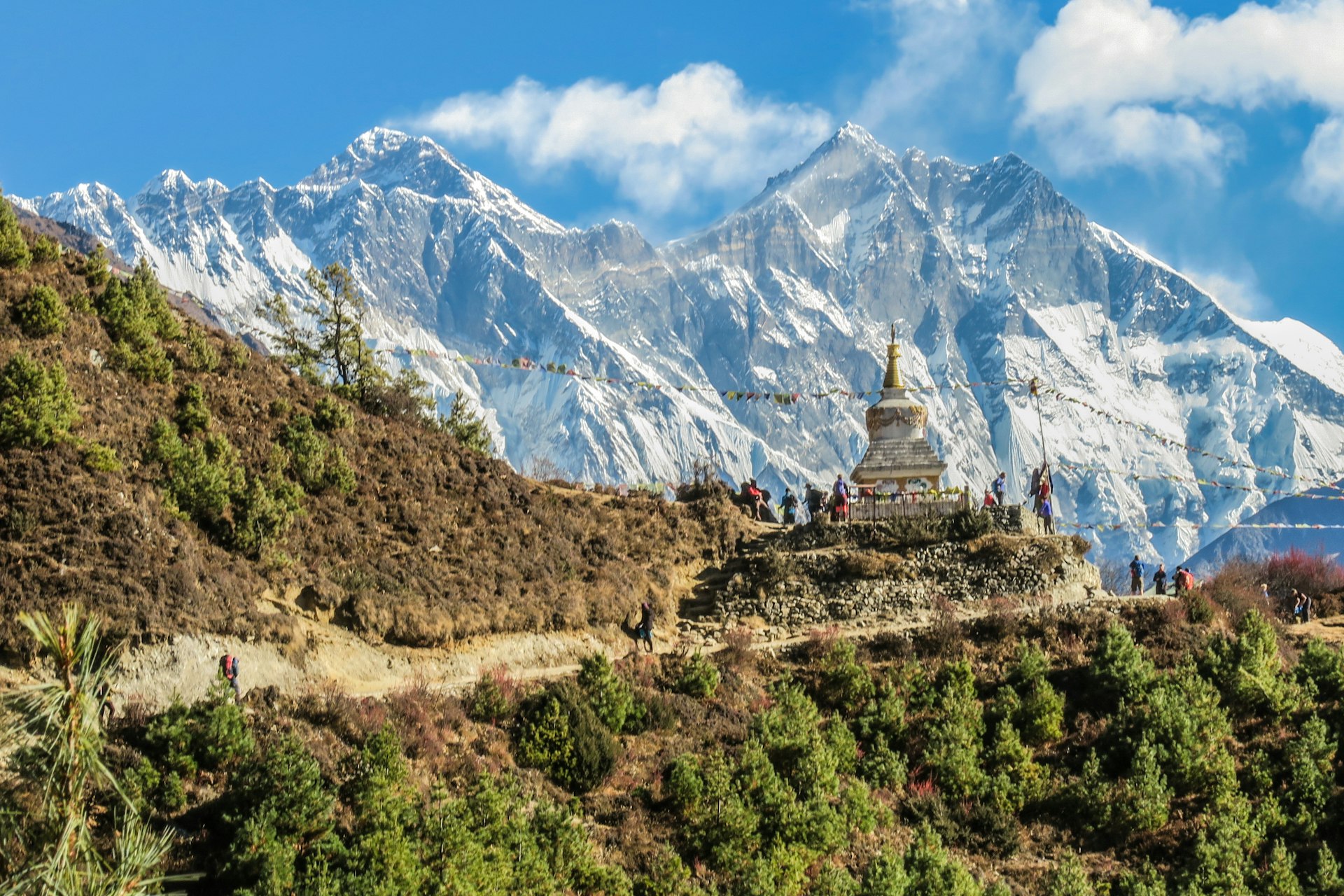
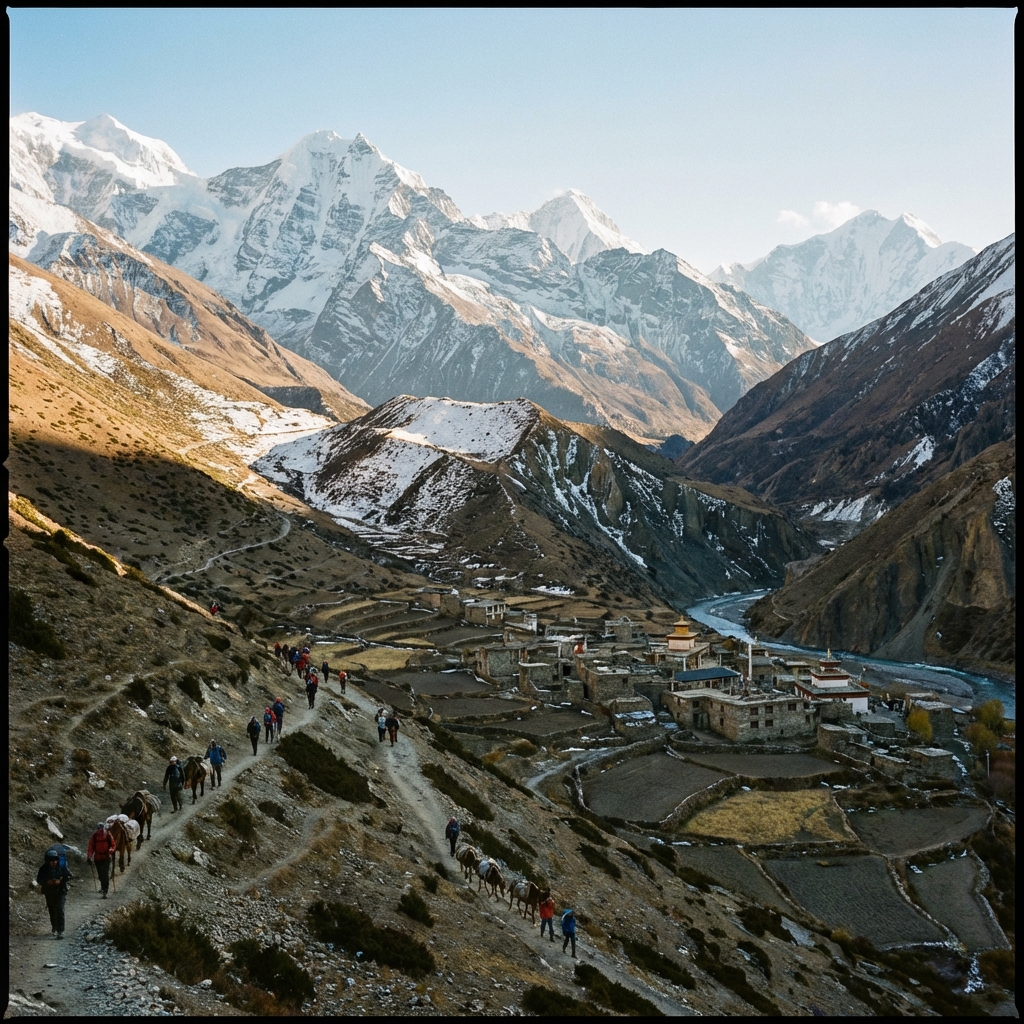
Chhomrong holds a unique position in Nepal's trekking landscape as the last major village before the wild sanctuary of Annapurna Base Camp and one of the finest examples of living Gurung culture in the Himalayan foothills. Perched dramatically at 2,170 meters (7,120 feet) on a steep hillside overlooking the Modi Khola gorge, this substantial settlement offers trekkers their final taste of mountain village life before the trail narrows into the increasingly stark terrain leading to the sacred amphitheater beneath Annapurna South.
The village name derives from the Gurung language, with various translations offered including "place of many birds" or "flat place on a mountain." Whatever its etymology, Chhomrong has served for centuries as a prosperous farming and trading community, its terraced fields cascading down the hillside in patterns that have remained essentially unchanged for generations. Today, the terraces still produce potatoes, barley, and millet, though tourism has become an equally important economic pillar.
For trekkers heading to Annapurna Base Camp, Chhomrong represents both a practical and psychological waypoint. Practically, it offers the last substantial facilities before ABC - the last ATM-style cash opportunity (though there's no actual ATM), the last reliable hot showers and comfortable lodges, and the ACAP checkpoint where permits are carefully checked. Psychologically, passing through Chhomrong marks the transition from the populated foothills into the increasingly isolated upper sanctuary, a shift that builds anticipation for the dramatic landscape ahead.
2,170m (7,120ft)
Annapurna, Kaski District
Approximately 800 residents
Predominantly Gurung
1-2 nights
No - withdraw cash in Pokhara
Available at most lodges
Good NTC/Ncell coverage
March-May, September-November
2-3 days
Gurung Culture, Mountain Views, Gateway to ABC
Jhinu Danda (1.5-2 hours below)
ACAP permit check
Why Chhomrong Matters: The Final Frontier Before Annapurna
Chhomrong's significance extends well beyond its role as a trekking waypoint. Understanding the village's multiple dimensions enriches your passage through it.
The Gateway Function
Every trekker heading to Annapurna Base Camp passes through Chhomrong, making it the undisputed gateway to the sanctuary. The ACAP checkpoint here verifies that all trekkers have proper permits, helping manage visitor numbers in the sensitive sanctuary environment. Beyond paperwork, Chhomrong represents the last chance for trekkers to stock up on supplies, address any gear deficiencies, or make decisions about their readiness to continue into more challenging terrain.
The trail changes character beyond Chhomrong. The broad, well-developed paths through populated areas give way to narrower trails through increasingly wild landscape. Lodges become smaller and more basic, spaced further apart. The comfort bubble of lower-elevation trekking gradually deflates as you ascend toward the glacial environment of ABC.
Living Gurung Culture
Chhomrong is one of the finest places to experience authentic Gurung culture without joining a dedicated cultural tour. The Gurung people, one of Nepal's largest ethnic groups, have inhabited these hills for over 2,000 years, developing sophisticated agricultural systems, distinctive architectural styles, and rich cultural traditions that persist into the present day.
Unlike some villages that have become entirely tourism-focused, Chhomrong maintains a functioning agricultural economy alongside its trekking services. Villagers still tend terraced fields, raise livestock, and observe traditional festivals and rituals. The village's relative size means it has enough critical mass to sustain cultural continuity even as tourism brings change.
Strategic Rest Point
The village's position on the ABC route makes it ideal for either an overnight stay or an extended rest. Trekkers ascending from Ghandruk or Jhinu Danda arrive having completed significant elevation changes, often ready for a comfortable stop. Those descending from ABC appreciate the transition from basic high-altitude lodges to Chhomrong's relatively comfortable facilities.
Many trekkers spend two nights in Chhomrong, either for acclimatization, to explore the village and surrounding area, or simply because it's one of the most pleasant places to stay on the entire route. The combination of cultural interest, comfortable lodges, spectacular views, and strategic location makes lingering worthwhile.
Getting to Chhomrong: Route Options
Chhomrong can be reached by several routes, each with distinct characteristics.
Route 1: From Ghandruk (The Classic Approach)
The most traditional route to Chhomrong comes from the Gurung village of Ghandruk (1,940m), itself reached by trail from Nayapul or Birethanti. From Ghandruk, the trail descends steeply to the Kimrong Khola (a tributary of the Modi Khola), then climbs even more steeply to Chhomrong. The total distance is only about 5-6 kilometers, but the elevation profile - descending 500m then climbing 700m - makes it a demanding 4-5 hour section.
Advantages: Allows visits to both major Gurung villages (Ghandruk and Chhomrong); follows traditional route Challenges: Significant descent followed by major climb; can be hot at lower elevations Best for: Cultural immersion; trekkers approaching from Poon Hill via Tadapani
Route 2: From Jhinu Danda/New Bridge (Hot Springs Route)
Many trekkers now access Chhomrong via the hot springs at Jhinu Danda (1,760m). From Nayapul/Birethanti, the trail follows the Modi Khola valley through Kimche and Ghandruk before descending to the river and the hot springs. From Jhinu, it's a steep 1.5-2 hour climb to Chhomrong, gaining about 400m.
Advantages: Option to soak in hot springs before or after ABC; more direct approach Challenges: Miss Ghandruk unless making a detour; steep climb to Chhomrong Best for: Those prioritizing the hot springs; most guided treks returning from ABC
Route 3: From Sinuwa/Bamboo (Descending from ABC)
Trekkers returning from ABC descend through Sinuwa (2,340m), Bamboo (2,310m), and Dovan (2,505m) before dropping to Chhomrong. This descent of about 1,700m vertical from ABC is spread over multiple days, with Chhomrong typically serving as the overnight stop before the final descent.
Distance from Sinuwa: 2-3 hours descending Considerations: After days at higher elevation, Chhomrong feels positively luxurious
Route 4: From Tadapani (Poon Hill Connection)
Trekkers combining Annapurna Base Camp with Poon Hill often connect via Tadapani (2,630m). From Tadapani, the trail descends through forest to the Kimrong Khola crossing, then climbs to Chhomrong - essentially the same approach as from Ghandruk but starting higher.
Time from Tadapani: 5-6 hours Best for: Combined Poon Hill/ABC itineraries
The Infamous Chhomrong Steps
Gurung Culture: Chhomrong's Living Heritage
The Gurung people (also spelled Ghurung) are one of Nepal's most significant ethnic groups, with a population of over 700,000 distributed primarily across the hills of the Annapurna and Manaslu regions. Chhomrong represents one of their traditional heartland villages, where cultural practices remain vibrant despite modernization pressures. For a deeper background, read our guide to Gurung culture in the Annapurna region.
Who Are the Gurung People?
The Gurung trace their origins to Tibet, with migration to Nepal occurring centuries ago. They developed a distinctive culture adapted to mid-hill environments, characterized by:
Language: Gurung (Tamu Kyi) is a Tibeto-Burman language with its own script, still spoken as the first language by most Chhomrong residents. Many also speak Nepali and some English.
Religion: Traditional Gurung religion is animist and shamanistic, featuring belief in local deities, nature spirits, and elaborate funerary rituals. Buddhism and Hinduism have been incorporated over centuries, creating a syncretic practice. Many Gurung homes have both Buddhist altars and Hindu shrines.
Social Structure: Traditional Gurung society was organized into clans with hereditary roles and complex marriage customs. Modern education and migration have modified these structures, but clan identity remains important.
Military Tradition: Gurungs have served as soldiers for centuries, initially in Nepali armies, later becoming famous as Gurkha soldiers in British and Indian forces. Military service has brought outside income and worldly experience to many Gurung families.
Traditional Architecture
Chhomrong's built environment reflects traditional Gurung architectural principles that you can observe throughout the village:
Stone Construction: Traditional homes use locally quarried stone for walls, providing thermal mass that keeps interiors cool in summer and warm in winter. Walls are thick and often whitewashed.
Slate Roofs: Traditional roofs use overlapping slate tiles, though corrugated metal has become common for newer buildings due to ease of construction and maintenance.
Compact Layout: Traditional Gurung homes are relatively small and compact, with multiple stories and efficient use of interior space. The ground floor often houses livestock, with human living quarters above.
Courtyard Organization: Many homes are organized around courtyards that provide work space for drying grain, preparing food, and socializing.
Decorative Elements: Look for carved wooden window frames, decorative paintings around doorways, and colorful prayer flags indicating Buddhist practice.
Cultural Practices You May Observe
Daily Life: Early morning and evening you may see villagers tending fields, driving livestock, or processing agricultural products. Women often spin wool or weave while supervising children or chatting with neighbors.
Prayer and Ritual: Listen for the sound of monastery bells and observe the smoke of juniper incense being burned as offerings. Prayer flags flutter from rooftops and trees.
Social Gathering: The village has several chautara (stone rest platforms) where people gather to talk, rest, and observe the world passing by. These traditional meeting spots remain important social institutions.
Seasonal Celebrations: If your visit coincides with major festivals (particularly Lhosar - Tibetan New Year in February/March, or Dashain/Tihar in October/November), you may witness elaborate celebrations, traditional dress, and special foods.
Interacting Respectfully
When engaging with Gurung culture in Chhomrong:
- Greet people with "Namaste" (hands pressed together, slight bow) or the Gurung greeting "Tamu Lho"
- Ask permission before photographing people, especially elders and women
- Remove shoes before entering homes if invited
- Accept offered food or tea graciously (at least taste it)
- Don't touch people's heads, particularly children (the head is sacred)
- Dress modestly, especially when visiting shrines or attending any ceremonies
- Don't point your feet at people, religious objects, or food
- Ask before entering religious spaces; some may be off-limits to outsiders
Cultural Museum
Ghandruk, a larger Gurung village about 4-5 hours from Chhomrong, has an excellent Gurung Cultural Museum with exhibits on traditional life, costumes, tools, and practices. If you have time and cultural interest, consider routing through Ghandruk and visiting the museum as part of your ABC trek.
Accommodation in Chhomrong
Chhomrong has developed extensive tourist facilities while maintaining village character. Numerous lodges offer varying comfort levels, and competition keeps quality reasonable.
Lodge Overview
The village has approximately 25-30 lodges spread along the main trail that winds through the settlement. Most are family-run establishments offering basic to mid-range facilities. There are no "luxury" lodges by international standards, but several offer genuine comfort by trekking lodge standards.
Lodge Categories
Upper-End Lodges (NPR 1,500-3,000 per night):
- Private rooms with attached hot-water bathrooms
- Comfortable beds with quality bedding
- Mountain-view dining rooms
- Reliable WiFi
- Examples: Gurung Cottage, Excellent View Point Lodge, International Guest House
Mid-Range Lodges (NPR 800-1,500 per night):
- Private rooms, some with attached bathrooms
- Hot showers available (shared or private)
- Good dining facilities
- Variable WiFi
- Examples: Capital Guest House, Snow View Lodge, Hotel Bright Star
Budget Lodges (NPR 300-700 per night):
- Basic private rooms with shared facilities
- Hot showers for extra fee
- Simple but adequate food
- Limited or no WiFi
- Numerous smaller family operations
What to Expect
Rooms: Private rooms with twin beds are standard. Walls are typically thin (wood or drywall). Better lodges have thicker walls and more privacy. Bring earplugs for early-rising trekkers.
Bathrooms: Mix of attached and shared facilities. Western-style toilets at most mid-range and better lodges. Squat toilets at budget options. Hot water reliability varies - afternoon is usually best after solar heating.
Heating: Dining rooms typically have bukhari (wood stoves) or gas heaters lit in evening. Individual room heating is rare. Bring warm sleepwear.
Views: Many lodges have excellent views of Annapurna South, Hiunchuli, and Machhapuchhre from their dining rooms or terraces. Ask about views when choosing.
Electricity: Generally reliable for lighting and charging. Most lodges include basic charging; some charge nominal fees during peak season.
WiFi: Available at most lodges with variable quality. Usually adequate for messaging and email. Often included or nominal fee (NPR 200-400).
Booking Considerations
During peak season (October-November, April), Chhomrong's better lodges fill up. Options:
- Book ahead: Contact through trekking agencies or directly by phone
- Arrive by mid-afternoon: Walk-in availability exists but best options go first
- Be flexible: If your first choice is full, alternatives are plentiful
- Consider two nights: If arriving late and finding limited options, stay two nights in what's available and enjoy the village
During off-peak periods, you'll have your pick of lodges and can negotiate rates.
Location Matters
Chhomrong stretches along the hillside, so lodge location affects your experience:
Upper Chhomrong: Closer to the trail continuing toward ABC; better mountain views in many cases; slightly higher elevation Lower Chhomrong: Closer to the trail toward Jhinu hot springs and Ghandruk; ACAP checkpoint is in this area; more concentrated services
Neither area is definitively "better" - choose based on your next destination and personal preference for views versus convenience.
Lodge Selection Strategy
Food and Dining in Chhomrong
Chhomrong offers the last substantial food options before ABC, making it worth enjoying a good meal (or two) before ascending to the more basic facilities above.
Menu Options
Lodge menus in Chhomrong are comprehensive by trekking standards:
Nepali Cuisine:
- Dal Bhat: The national dish with rice, lentil soup, vegetable curry, and condiments (NPR 600-800, usually with unlimited refills)
- Dhido: Traditional porridge made from buckwheat or millet, sometimes available
- Sel Roti: Traditional rice doughnut, occasionally available
- Momos: Dumplings with vegetable or buffalo filling (NPR 350-500)
Tibetan/Sherpa Dishes:
- Thukpa: Noodle soup (NPR 350-500)
- Tingmo: Steamed bread served with vegetable curry
- Tibetan bread: Deep-fried bread with honey
International Options:
- Pasta: Various preparations (NPR 450-650)
- Pizza: Basic pizzas (NPR 500-800)
- Sandwiches: Toast or chapati-based (NPR 300-500)
- Pancakes: Breakfast staple (NPR 300-450)
- Eggs: Prepared numerous ways (NPR 250-400)
Beverages:
- Tea: Nepali milk tea, black tea, herbal options (NPR 100-200)
- Coffee: Instant or filtered (NPR 150-250)
- Hot chocolate: Comfort drink for cold evenings (NPR 200-300)
- Fresh juice: Apple, orange when available (NPR 250-400)
Food Quality and Safety
Chhomrong's competition and relatively low elevation mean food quality is reasonable:
- Fresh vegetables are available (carried up from lower elevations)
- Eggs and dairy are generally fresh
- Meat dishes are riskier - stick to vegetarian or well-cooked chicken
- Dal bhat remains the safest, most nutritious option
- Drink bottled or treated water
Local Specialties
Several Chhomrong lodges are known for particular dishes:
- Local honey: Collected from nearby forests; excellent quality
- Apple products: Apple pie, apple juice (in season)
- Gurung specialties: Some lodges serve traditional Gurung dishes if requested in advance
Ask your lodge about their specialties - food is a point of pride and competition.
Eating Strategy
Before Ascending to ABC: Eat well in Chhomrong. Food above becomes more basic and expensive, and appetite often decreases at altitude. Stock up on calories.
Returning from ABC: Many trekkers reward themselves with a special meal in Chhomrong after days of more basic fare at higher lodges. Consider treating yourself.
Timing: Kitchens work slowly, especially when busy. Order dinner by 6 PM to avoid long waits. Breakfast similarly needs advance notice if you're leaving early.
Jhinu Danda Hot Springs: The Ultimate Post-Trek Reward
One of Chhomrong's great attractions is proximity to the Jhinu Danda hot springs, located about 1.5-2 hours below the village by steep trail. For trekkers returning from ABC, these natural hot springs offer one of Nepal's finest post-trek experiences.
About the Hot Springs
The hot springs at Jhinu Danda (also called Jhinu Hot Spring or Chhomrong Hot Spring) are natural thermal pools beside the Modi Khola river. The water emerges from the earth at naturally high temperatures and is channeled into several stone pools of varying temperatures, allowing bathers to choose their preferred heat level.
Location: Along the Modi Khola river, approximately 300-400m below Chhomrong village Elevation: Approximately 1,760m Facilities: Changing rooms, lockers, small snack shop Entry Fee: NPR 100-150 (as of 2026) Operating Hours: Generally sunrise to sunset; busiest in afternoon
The Experience
After days of cold lodges, high-altitude exertion, and limited bathing opportunities at ABC, sliding into the hot mineral water at Jhinu feels absolutely transcendent. The pools are set in a beautiful riverside location, with the roar of the Modi Khola providing natural soundtrack and forested hillsides rising steeply on all sides.
The water contains dissolved minerals believed by locals to have therapeutic properties. Whether or not this is scientifically proven, the combination of heat, buoyancy, and natural setting provides genuine physical and psychological restoration.
Most visitors spend 1-2 hours at the springs, alternating between hot pools and cooler spots, perhaps with a cold drink from the snack shop. The experience is social, with trekkers from various nationalities sharing stories and relaxing together.
Logistics for Visiting
From Chhomrong Going to Hot Springs: The trail descends steeply for 1.5-2 hours. It's the same punishing stairs that you'll climb to return, so factor this into your planning. Most trekkers visit the springs, then stay overnight in Jhinu before continuing to Nayapul the following day.
From Hot Springs Returning to Chhomrong: If based in Chhomrong and visiting springs as a day trip, the return climb takes 2-2.5 hours and is strenuous. Start early to avoid climbing in midday heat.
Recommended Approach: Most guides recommend descending to Jhinu from Chhomrong on your final full day, soaking in the springs, staying overnight at a Jhinu lodge, then completing the easy walk to Nayapul the following morning. This avoids having to climb back up to Chhomrong after your soak.
What to Bring
- Swimsuit/Quick-dry clothing: You'll need something to wear in the pools
- Towel: Small microfiber towel works well
- Sandals: For walking around the pool area
- Dry clothes: For after your soak
- Small valuables bag: Lockers are available but basic
- Cash: For entry fee and snacks
- Water bottle: Stay hydrated despite the relaxing environment
Hot Springs Strategy
The ACAP Checkpoint: Essential Permit Information
Chhomrong hosts one of the main Annapurna Conservation Area Project (ACAP) checkpoints, where permits are verified for all trekkers continuing toward ABC.
Required Permits
- Cost: NPR 3,000 for foreigners, NPR 200 for SAARC nationals
- Obtained: Pokhara ACAP office or Kathmandu tourism office
- Purpose: Conservation fee supporting area management
TIMS Card (Trekkers' Information Management System):
- Cost: NPR 2,000 for individual trekkers, included for organized groups
- Obtained: Pokhara tourism office or Kathmandu
- Purpose: Trekker registration and safety tracking
The Checkpoint Process
The ACAP checkpoint in Chhomrong is located in the lower part of the village, clearly marked. Officials will:
- Request your ACAP permit and TIMS card
- Record your details in a logbook
- Verify permit validity
- Answer questions about trail conditions if asked
The process typically takes only a few minutes. Ensure your permits are easily accessible (not buried in your pack) to avoid delays.
What If You Don't Have Permits?
Technically, it's not possible to obtain permits at Chhomrong - they should be arranged in Pokhara or Kathmandu before your trek. However, in practice, officials sometimes allow trekkers without permits to proceed after paying penalty fees. This is not guaranteed and should not be relied upon. Always obtain proper permits before starting your trek.
Beyond Chhomrong
After Chhomrong, there are no additional permit checkpoints until you return. However, lodge owners at higher elevations may ask to see permits as part of the registration process. Keep permits accessible throughout your trek.
Permit Check Warning
ACAP enforcement has increased in recent years due to concerns about unregistered trekkers and overtourism. Don't attempt to bypass checkpoints or trek without valid permits. Penalties can include fines, forced return, and potential legal issues. The permit fees directly support conservation efforts in the Annapurna region.
Practical Information and Services
Chhomrong offers the most comprehensive services you'll find until returning to the village. Understanding what's available helps you prepare appropriately.
Available Services
Shops:
- Several small shops selling snacks, basic supplies, batteries, toiletries
- A souvenir shop and limited trekking gear (emergency items, not full selection)
- Prices elevated compared to Pokhara but reasonable for the location
Drinking Water:
- A safe drinking-water refill station sells treated water by the litre (typically NPR 50-100)
- Refilling here is cheaper and greener than buying plastic bottles, which are discouraged in the conservation area
- Bring a refillable bottle plus purification tablets or a filter as backup
Communication:
- Mobile phone coverage good (NTC and Ncell)
- WiFi at most lodges
- IDD calling at some lodges (expensive)
Electricity:
- Reliable power for lighting and charging
- Charging facilities at all lodges (included or small fee)
Hot Water:
- Hot showers at most lodges (NPR 200-400)
- Best availability in afternoon after solar heating
Medical:
- No clinic in Chhomrong
- Basic first aid supplies at some lodges
- Nearest medical facility in Ghandruk (basic) or Pokhara (comprehensive)
Porter/Guide Services:
- Can arrange porters in Chhomrong if needed
- Some local guides available for hire
Not Available
ATM/Banking:
- No ATM or money exchange
- Withdraw sufficient cash in Pokhara before trek
- Some lodges may accept cards but don't rely on this
Pharmacy:
- No proper pharmacy
- Bring all required medications from Pokhara/Kathmandu
Gear Shops:
- Very limited selection
- Buy/rent gear in Pokhara before trek
Vehicle Access:
- Chhomrong is not accessible by road
- Nearest road head is at Ghandruk (jeep track) or Nayapul (paved)
Emergency Information
In case of emergency:
- Contact your lodge owner: They can help arrange assistance and have local knowledge
- Helicopter evacuation: Possible if weather permits; lodge can help arrange
- Walking evacuation: Descend toward Ghandruk or Jhinu where vehicle access is closer
- Insurance: Essential - ensure coverage for trekking to 5,000m+ and helicopter rescue
- Emergency contacts: Save relevant numbers (rescue services, embassy, insurance) before trek
Money Matters
Chhomrong operates primarily on cash. Budget for:
- Accommodation: NPR 300-3,000/night depending on choice
- Meals: NPR 600-1,000/day for three meals
- Hot showers: NPR 200-400/shower
- Charging: NPR 0-300/device
- WiFi: NPR 0-400/day
- Hot springs (Jhinu): NPR 100-150 entry
For an average trek, budget NPR 2,000-3,000 per day in Chhomrong area. Carry enough cash for this plus emergencies.
Mountain Views from Chhomrong
While Chhomrong's elevation means you're looking up at rather than across the major peaks, the views are nonetheless spectacular, particularly toward the peaks that guard the entrance to the Annapurna Sanctuary.
What You Can See
Annapurna South (7,219m): Dominates the northern skyline, its distinctive pyramid shape instantly recognizable. The peak appears massive from Chhomrong, providing a preview of the sanctuary environment.
Hiunchuli (6,441m): The "Jewel Peak" rises dramatically alongside Annapurna South. Its steep faces and hanging glaciers catch morning light beautifully.
Machhapuchhre (6,993m): The iconic "Fishtail" mountain is visible to the northeast from various points around Chhomrong. Its double summit, appearing as a fish tail from certain angles, is one of Nepal's most recognizable mountain silhouettes.
Modi Khola Valley: Looking north, the valley leading to ABC is visible, giving a sense of the terrain ahead. The valley narrows dramatically beyond Chhomrong as it enters the sanctuary.
Best Viewpoints
Lodge Terraces: Many upper Chhomrong lodges have excellent views from dining rooms or dedicated viewing terraces. Ask about views when checking in.
Upper Chhomrong Trail: Walking through the upper part of the village and continuing briefly toward Sinuwa provides increasingly open views of the peaks.
Morning Light: The best photography light on Annapurna South and Hiunchuli occurs in early morning when the peaks catch golden sunrise illumination.
Evening Alpenglow: On clear evenings, watch for the pink/orange alpenglow on the snow peaks as the sun sets behind you.
Continuing Your Trek: Routes from Chhomrong
Chhomrong sits at a junction point with routes leading in multiple directions.
To Annapurna Base Camp (2-3 days)
The primary continuation from Chhomrong heads into the sanctuary:
Day 1: Chhomrong to Dovan or Himalaya (6-7 hours) Descend to the river, climb to Sinuwa, then continue through bamboo forest to Dovan (2,505m) or Himalaya (2,920m). The trail follows the Modi Khola gorge through increasingly dramatic scenery.
Day 2: Dovan/Himalaya to MBC (Machhapuchhre Base Camp) (5-6 hours) Continue through Hinku Cave and Deurali (3,230m) to MBC (3,700m). The landscape transforms from forest to moraine as you enter the upper sanctuary.
Day 3: MBC to ABC and return toward Chhomrong The short climb from MBC to ABC (4,130m) is usually done early morning for best views. Most trekkers descend significantly the same day, often reaching Bamboo or Dovan.
To Jhinu Danda Hot Springs (1.5-2 hours)
The descent to the hot springs follows the main trail toward Ghandruk, then branches right at the signed junction. It's steep but well-marked. Most trekkers continue to Jhinu lodges after bathing.
To Ghandruk (4-5 hours)
The trail descends to the Kimrong Khola, crosses, then climbs steeply to Ghandruk (1,940m). This connects to routes toward Poon Hill or return to Nayapul.
To Tadapani (5-6 hours)
For trekkers combining ABC with Poon Hill, the route to Tadapani (2,630m) crosses via Kimrong Khola and climbs through forest. From Tadapani, continue to Ghorepani and Poon Hill.
Route Planning
The ABC trek can be done as an up-and-back or combined with side destinations. The most popular variations include returning via Jhinu hot springs (highly recommended) or continuing to Poon Hill via Tadapani (adds 2-3 days). Discuss options with your guide or plan carefully if trekking independently.
Weather and Best Times to Visit
Chhomrong's mid-elevation position (2,170m) provides relatively moderate conditions compared to higher points on the ABC trek.
Seasonal Conditions
Spring (March-May):
- Daytime: 15-25°C; Nighttime: 5-15°C
- Conditions: Warming, rhododendrons bloom, afternoon clouds increase toward May
- Highlights: Flowers, comfortable temperatures, clear mornings
- Considerations: Pre-monsoon haze can affect distant views; busy season
Monsoon (June-August):
- Daytime: 15-25°C; Nighttime: 10-18°C
- Conditions: Heavy rain, muddy trails, leeches on lower sections
- Highlights: Lush green landscapes, fewer trekkers
- Considerations: Trail conditions challenging; ABC often cloud-covered
Autumn (September-November):
- Daytime: 15-25°C; Nighttime: 5-15°C
- Conditions: Clearing weather, excellent visibility, comfortable temperatures
- Highlights: Best overall conditions, clear views, pleasant trekking
- Considerations: Peak season means crowds and busy lodges
Winter (December-February):
- Daytime: 10-20°C; Nighttime: 0-10°C
- Conditions: Cool, clear, occasional cold snaps
- Highlights: Clearest views, uncrowded trails
- Considerations: Higher elevations may have snow; some lodges closed above Chhomrong
Best Months for ABC via Chhomrong
October-November: Optimal conditions with clear skies, comfortable temperatures, and stable weather. Expect crowds during this period. See our best time to trek the Annapurna region guide for a month-by-month breakdown.
March-April: Excellent secondary season with warming temperatures and rhododendron blooms. Slightly more precipitation risk than autumn.
December-early February: Good for experienced trekkers seeking solitude and clear views. Cold nights but rewarding conditions.
Daily Weather Patterns
Typical daily pattern during trekking season:
- Dawn: Clear and cold
- Morning: Gradually warming, usually clear
- Midday-Afternoon: Clouds often develop from lower valleys
- Evening: Variable; sometimes clears
- Night: Usually clear, cold
Start hiking early to maximize views and avoid afternoon weather.
Why Is Chhomrong So Popular With Trekkers?
Chhomrong is popular because it combines three things in one place: it is the gateway village every Annapurna Base Camp trekker must pass through, it offers the best comfort (hot showers, varied food, WiFi) before the basic upper sanctuary lodges, and it has sweeping views of Annapurna South (7,219m), Hiunchuli (6,441m) and Machhapuchhre (6,993m). Add living Gurung culture and the nearby Jhinu Danda hot springs, and it earns its reputation as the finest overnight stop on the route. For the wider context, see the Annapurna Sanctuary region guide.
What Facilities Are Available in Chhomrong?
Chhomrong (2,170m) is the last major village before the Annapurna Sanctuary, offering well-equipped teahouses with hot showers, western-style toilets, varied menus including dal bhat, pasta, and baked goods, charging stations for electronics, and the ACAP checkpoint where your conservation area permit is verified. Basic pharmacies stock altitude medication. WiFi is available at most lodges. This is your last opportunity to stock up before the more basic facilities of the upper Modi Khola gorge. For gear advice, see our trekking packing list.
Frequently Asked Questions
Planning your Annapurna Base Camp trek?
Build Chhomrong into a well-paced ABC itinerary and book with a verified local agency.
Related Guides
Final Thoughts: The Last Taste of Village Nepal
Chhomrong represents a threshold, both geographical and experiential. Below lie the populated hills of central Nepal, with their villages, farms, and the rhythm of rural mountain life that has continued for centuries. Above waits the increasingly wild terrain of the Annapurna Sanctuary, where human presence becomes sparse and the mountains dominate completely.
Pausing in Chhomrong, you stand at the meeting point of these two worlds. The terraced fields cascading below, the Gurung homes with their slate roofs and prayer flags, the sound of village life - children playing, chickens scratching, neighbors calling to each other - all of this continues here as it has for generations. Yet looking up, the white ramparts of Annapurna South and Hiunchuli remind you that you're stepping toward something altogether different.
Take time to appreciate both dimensions. Walk through the village, not just along the main trail. Notice the traditional architecture, the agricultural patterns, the daily routines of people living their lives in one of the world's most dramatic landscapes. This is living culture, not museum exhibit, and your respectful attention honors both the people and place.
When you pass through the ACAP checkpoint and begin the climb toward Sinuwa, you carry with you the warmth of Chhomrong - its comfortable lodges, good food, and welcoming people. These memories will sustain you in the colder, more austere environment above, and make your return to village Nepal even sweeter.
Chhomrong is both gateway and destination, practical waypoint and cultural treasure. Give it the attention it deserves, and it will reward you with one of the richest experiences on the Annapurna Base Camp trek.