Nepal in June: Trekking, Weather and Best Treks
Nepal in June is a tale of two countries. The monsoon arrives mid-month, so southern-facing routes (Everest, Annapurna, Langtang) get heavy rain, leeches and flight delays — but the rain shadow regions of Upper Mustang (10/10) and Dolpo (9/10) stay dry, warm and clear. The best June treks are these trans-Himalayan zones, where you also save 30-50% on off-season prices.
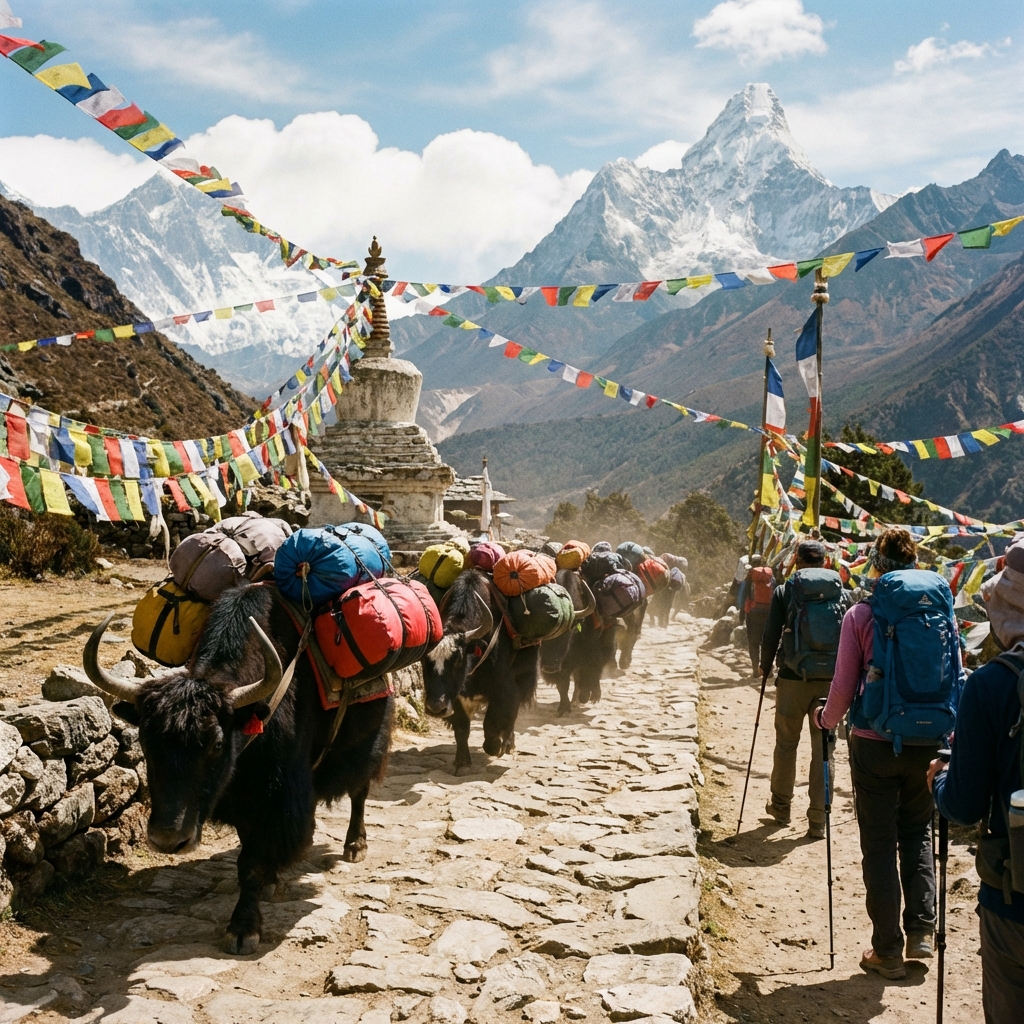
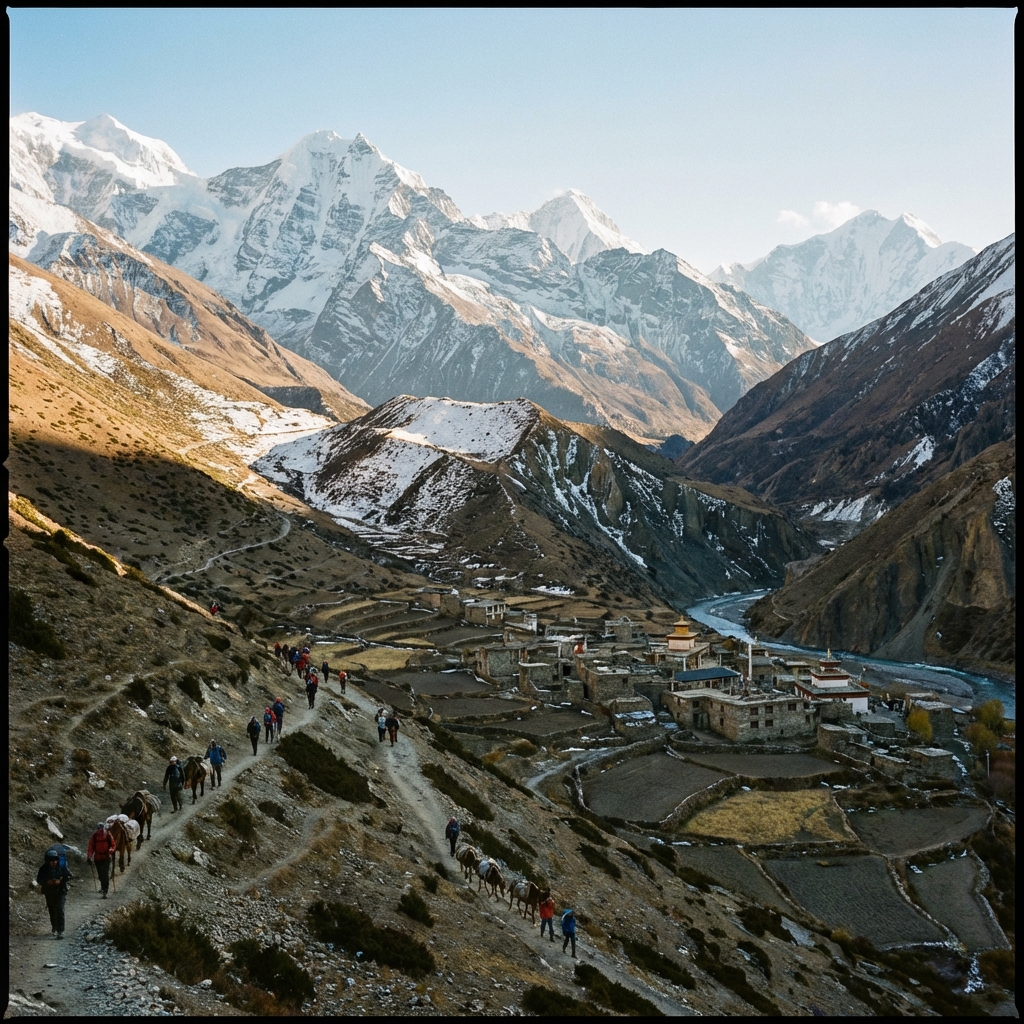
June represents Nepal's most polarizing trekking month—a period of dramatic contrasts where certain routes experience their absolute best conditions while others become genuinely hazardous. As the monsoon sweeps north from the Bay of Bengal, it transforms the Himalayan landscape into a paradox: the rain shadow regions of Upper Mustang and Dolpo bask in dry, clear weather with vibrant post-dust landscapes, while the southern-facing ranges of Everest, Annapurna, and Langtang endure torrential afternoon downpours, leeches, landslides, and flight cancellations.
Understanding June requires abandoning conventional trekking wisdom. This is NOT a month where "any trek works if you're flexible." Success in June demands strategic geographic selection—specifically targeting the trans-Himalayan rain shadow zones that receive less than 50mm of rainfall monthly while the rest of Nepal drowns in 300-600mm. The first 10 days of June (June 1-10) offer a narrow window where even non-rain-shadow routes remain marginally viable, but by mid-June, the monsoon establishes full dominance and only Mustang, Dolpo, and select high-altitude regions remain accessible.
However, for those who choose wisely, June delivers extraordinary rewards: Upper Mustang receives a perfect 10/10 rating with crystal-clear post-monsoon-dust skies, near-zero precipitation, comfortable 15-25°C temperatures, and the dramatic Tiji Festival (held in late May or early June, set by the Tibetan lunar calendar). Dolpo earns 9/10 with similar conditions plus absolute solitude. Both regions experience their tourism peak during June-August precisely because the monsoon creates ideal conditions rather than destroying them. Meanwhile, conventional routes like Everest Base Camp (3/10), Annapurna Base Camp (2/10), and Poon Hill (1/10) face genuine challenges that only experienced, flexible trekkers should attempt.
This comprehensive guide provides week-by-week monsoon progression analysis, detailed rainfall data across regions, honest assessments of leech zones and landslide risks, rain shadow region deep-dives, the critical June 1-10 weather window, massive discount opportunities (30-50% off peak prices), the Ropai rice-planting festival's cultural significance, and expert route ratings based on 15+ years of June trekking data. June isn't a "bad month"—it's a specialist month requiring informed decision-making.
Highly Selective (Geography Critical)
Early monsoon (arrives mid-June)
Upper Mustang 10/10, Dolpo 9/10
Everest 3/10, Annapurna 2/10
Pre-monsoon conditions linger
20-40mm (near-desert dry)
500-700mm (torrential)
30-50% cheaper than peak season
5-10% of October (except Mustang)
Tiji (Mustang), Ropai (rice planting)
Leeches, landslides, flight delays
25-35°C lowlands, 15-25°C highlands
Best June Treks in Nepal (At a Glance)
The best treks for Nepal in June are all rain-shadow routes that sit behind the Himalayan barrier:
- Upper Mustang (10/10) — dry, warm, clear skies and the Tiji Festival; its single best month.
- Upper Dolpo (9/10) — even drier and more remote, with absolute solitude.
- Nar-Phu Valley (6/10) — partial rain shadow, dramatic Tibetan-style landscapes.
- Jomsom–Muktinath (6/10) — short, accessible, and a sacred pilgrimage finish.
Conventional mountain-view treks — Everest Base Camp, Annapurna Base Camp and Poon Hill — are best saved for October or spring. For the full picture across the year, see our best time to trek Nepal guide.
Why June Is Misunderstood: The Rain Shadow Revolution
June's reputation as a "closed season" stems from outdated generalization—most Nepal trekking advice treats the monsoon as uniformly bad, failing to recognize that the trans-Himalayan rain shadow regions experience completely opposite conditions during this period.
The Fundamental June Reality: Geography Determines Everything
Trans-Himalayan Rain Shadow (Upper Mustang, Dolpo, Upper Nar-Phu):
- June is EXCELLENT—the best month of the year
- Rainfall: 20-50mm monthly (near-desert conditions)
- Clear skies: 70-85% of days with mountain visibility
- Temperatures: Comfortable 15-25°C days, 5-15°C nights
- Trail conditions: Dry, dust-free after early monsoon rains settle
- Tourism season: High season specifically during June-August
- Strategic implication: These routes are BETTER in June than October
Southern-Facing Ranges (Everest, Annapurna, Langtang, Manaslu):
- June is CHALLENGING—monsoon brings severe conditions
- Rainfall: 300-700mm monthly (torrential daily afternoon storms)
- Cloud cover: 80-95% of afternoons obscured
- Temperatures: Hot and humid (25-35°C in valleys)
- Trail conditions: Muddy, slippery, leech-infested below 3,000m
- Landslides: Daily occurrences blocking trails and roads
- Flight reliability: 30-50% cancellation rates to Lukla
- Strategic implication: Only attempt with extreme flexibility and experience
The Meteorological Science: Why Rain Shadow Regions Stay Dry
The monsoon arrives from the south, carrying moisture-laden air from the Bay of Bengal. When this air encounters the main Himalayan range (peaks of 6,000-8,000m), it's forced upward, cooling and releasing precipitation on the southern slopes. By the time the air descends on the northern (Tibetan) side of the range, it has lost most of its moisture—creating a "rain shadow" desert.
Upper Mustang's Position:
- Located north of the Annapurna and Dhaulagiri massifs (8,000m+ peaks)
- These mountains block 90-95% of monsoon moisture
- Results in semi-arid conditions year-round
- June-August: Warmest temperatures, minimal precipitation, post-winter dust cleared by early rains
- Annual rainfall: 250-350mm total (vs. 3,000-4,000mm in Pokhara)
Dolpo's Position:
- Located north of the Dhaulagiri range in Nepal's remote northwest
- Even more isolated from monsoon influence than Mustang
- Ultra-arid conditions with stark, lunar-like landscapes
- June-August: Dry, clear, warm—ideal trekking weather
- Annual rainfall: 200-300mm total (genuine high-altitude desert)
Sherpa Insight (Pasang Sherpa, Lo Manthang Guide, 18 Years Experience):
"Foreigners always ask, 'Is June safe for Mustang with monsoon?' I tell them: June is THE BEST month for Upper Mustang. The dust from winter finally settles after early June rains, the sky becomes incredibly clear, temperatures are perfect, and the landscape turns vibrant green in lower valleys while staying dry up high. October is good too, but June gives you the clearest mountain views and fewer tourists. We locals prefer trekking in June-August—it's our high season for a reason."
Week-by-Week Monsoon Progression: Understanding June's Evolution
June isn't a static month—monsoon conditions strengthen progressively. Understanding this weekly evolution is critical for timing.
Week 1: June 1-7 (Pre-Monsoon Extension)
- Southern ranges: Still relatively dry, extension of May conditions
- Monsoon status: Bay of Bengal monsoon gathering but hasn't reached Nepal mountains yet
- Rainfall: 30-80mm in Everest/Annapurna regions (scattered afternoon storms)
- Flight reliability: 70-85% success rate to Lukla/Jomsom
- Leech activity: Moderate below 2,500m (not yet peak)
- Trekking viability: EBC/ABC marginally possible with flexibility
- Upper Mustang/Dolpo: Excellent conditions, early season for these routes
- Strategic window: Best chance to complete non-rain-shadow routes in June
Week 2: June 8-14 (Monsoon Arrival)
- Southern ranges: Monsoon arrives mid-week, conditions deteriorate sharply
- Monsoon status: Reaches Nepal around June 10-13 (varies yearly by 3-5 days)
- Rainfall: 100-200mm in Everest/Annapurna regions (daily afternoon storms establish)
- Flight reliability: 50-70% success rate (increasing cancellations)
- Leech activity: High below 3,000m (leeches emerge with first sustained rains)
- Trekking viability: EBC/ABC becomes difficult; only for experienced, flexible trekkers
- Upper Mustang/Dolpo: Unaffected, excellent conditions continue
- Strategic pivot: Conventional routes close; rain shadow routes enter prime season
Week 3: June 15-21 (Monsoon Establishment)
- Southern ranges: Full monsoon conditions, heavy daily rainfall
- Monsoon status: Firmly established across Nepal's southern slopes
- Rainfall: 150-250mm in Everest/Annapurna regions (torrential afternoon downpours)
- Flight reliability: 30-50% success rate (frequent multi-day delays)
- Leech activity: Peak activity below 3,000m (aggressive, numerous)
- Landslides: Daily occurrences on major trekking routes and roads
- Trekking viability: EBC/ABC not recommended; high-risk period
- Upper Mustang/Dolpo: Peak conditions with clearest skies post-dust settlement
- Strategic reality: Rain shadow routes are the ONLY good options
Week 4: June 22-30 (Peak Early Monsoon)
- Southern ranges: Heaviest rainfall period of June
- Monsoon status: Mature monsoon with consistent daily patterns
- Rainfall: 200-350mm in Everest/Annapurna regions (sustained heavy rain)
- Flight reliability: 20-40% success rate (expect 2-4 day delays)
- Leech activity: Maximum density and aggression below 3,000m
- Landslides: Multiple daily events, trail and road closures common
- Trekking viability: EBC/ABC dangerous; only desperate or uninformed attempt
- Upper Mustang/Dolpo: Continued excellent conditions, high season peak
- Strategic certainty: Rain shadow routes only; all others closed in practice
Data Source: Nepal Department of Hydrology and Meteorology, 2010-2024 monsoon arrival records, regional weather station data, flight operations statistics.
The June 1-10 Window Is Real But Risky: The first 10 days of June offer a genuine weather window where non-rain-shadow routes remain marginally viable—many experienced trekkers successfully complete EBC or Annapurna Circuit during this period. HOWEVER, this requires accepting significant risks: potential monsoon early arrival (trapping you mid-trek in deteriorating conditions), limited flexibility if weather turns, 30-50% chance of flight delays/cancellations, and emerging leech activity. If attempting conventional routes in early June, you MUST have flexible return flights, contingency days built in, and willingness to turn back if conditions worsen. This is NOT appropriate for first-time Nepal trekkers or those with fixed schedules.
June's Unique Advantages: Why Smart Trekkers Choose This Month
While June challenges conventional routes, it offers compelling benefits for rain shadow destinations:
1. Upper Mustang at Absolute Peak: 10/10 Conditions
Upper Mustang experiences its best trekking conditions during June-August, not the traditional October-November season.
Why June Is Superior for Mustang:
- Dust-free skies: Winter and spring create significant dust in this arid region; early June rains settle dust for clearest visibility all year
- Comfortable temperatures: 15-25°C days (vs. 5-15°C in October, often below 0°C in November)
- Minimal wind: June-August are calmer months; October-November bring fierce Tibetan plateau winds
- Green lower valleys: Monsoon moisture reaches lower Mustang valleys, creating vivid green contrast against desert highlands
- Tiji Festival: late May/early June (Tibetan lunar calendar)—spectacular three-day Buddhist festival in Lo Manthang, Upper Mustang's cultural highlight; confirm the 2026 dates with your agency before booking
- Near-zero rainfall: 20-40mm monthly (2-3 brief showers entire month)
- Excellent mountain visibility: Nilgiri, Annapurna, Dhaulagiri clear 70-85% of days
Temperature Comparison (Lo Manthang, 3,840m):
- June: Days 18-23°C, Nights 8-12°C (Comfortable)
- October: Days 10-15°C, Nights 0-5°C (Cool)
- November: Days 5-10°C, Nights -5 to 0°C (Cold)
- January: Days 0-5°C, Nights -10 to -15°C (Extreme cold)
Sherpa Insight (Tashi Gurung, Upper Mustang Specialist, Lo Manthang Native):
"I guide Upper Mustang 15-20 times per year. June-August groups always get the best experience—warm weather, clear skies, Tiji festival if they time it right, and the landscape looks more alive with green valleys below. October groups often complain about cold and wind. The only reason people trek Mustang in autumn is because they don't understand that monsoon doesn't affect us here. We're in Tibet's rain shadow—June is our best season, and locals know this."
2. Dolpo's Peak Season: 9/10 Conditions
Upper Dolpo, Nepal's most remote and restricted trekking region, similarly benefits from rain shadow protection during monsoon.
Why June Works for Dolpo:
- Complete rain shadow: Even more isolated from monsoon than Mustang
- Arid beauty: Landscape remains stark, lunar-like, dramatic year-round
- Comfortable temperatures: 12-22°C days at 4,000m elevation
- Crystal-clear skies: Minimal atmospheric moisture creates extraordinary visibility
- Absolute solitude: Dolpo sees 500-1,000 trekkers annually total; June sees perhaps 50-100
- Open trails: Snow-free on high passes (5,000m+) after May melt
- Minimal rainfall: 25-50mm monthly (desert conditions)
Why Only 9/10 (vs. Mustang's 10/10):
- Access challenges: Getting to Dolpo requires flying Nepalgunj→Juphal; Nepalgunj experiences heavy monsoon rain, causing 40-60% flight cancellations
- Lower Dolpo transit: Must trek through lower Dolpo valleys to reach upper Dolpo; lower sections receive moderate monsoon rain
- Limited infrastructure: Fewer lodges than Mustang, more camping-dependent
- Higher cost: Special permits (USD 50/day USD for 10 days) + remote location = expensive
- Physical difficulty: More strenuous than Upper Mustang with higher passes
Strategic Reality: Dolpo in June offers better weather than Mustang, but logistical challenges (flight access, lower Dolpo rain exposure) reduce the overall rating slightly. For experienced trekkers with flexible schedules and bigger budgets, Dolpo is magnificent.
3. Massive Discounts: 30-50% Cost Savings
June's monsoon reputation creates dramatic price reductions for lodges, guides, and services in rain-affected regions—even though rain shadow areas offer excellent conditions.
Price Reductions Across Categories:
- Teahouse accommodation: 30-50% cheaper (rooms often $2-5 vs. $8-15 in October)
- Meals: 25-40% lower prices (dal bhat $3-4 vs. $6-7 peak season)
- Guide rates: 30-40% negotiable discounts
- Porter rates: 30-40% negotiable discounts
- Organized trek packages: 30-50% cheaper overall
- Gear rental (Kathmandu/Pokhara): Better availability, 25-35% lower prices
- Lukla flights: Occasional discounts (though fewer flights operate)
- Hotels in Kathmandu/Pokhara: 40-60% cheaper than peak season
Upper Mustang Specific Pricing:
- Permit cost: $215 USD per person for 10 days (fixed, no discount)
- Package treks: $1,800-2,500 USD (vs. $2,500-3,500 in October) for 12-14 day treks
- Everything else: 20-30% cheaper despite being high season for Mustang (because overall Nepal tourism is down)
Value Proposition: June offers some of the year's best value, especially for rain shadow destinations. You get excellent conditions in Mustang/Dolpo with significant cost savings because the broader market perceives June as "monsoon/bad"—when in reality, these specific regions are at their peak.
4. Lush, Green Landscapes: Visual Beauty Transformation
While mountain visibility decreases in monsoon-affected areas, the landscape transformation is genuinely beautiful for those who appreciate green valleys and dramatic cloud formations.
Visual Changes in June:
- Lowland valleys: Transform from dry brown (winter/spring) to vibrant green
- Terraced fields: Active planting season—farmers working fields, water buffalo plowing
- Waterfalls: Flowing at peak volume from snowmelt + rain
- Rhododendron forests: Still blooming at higher elevations (3,500-4,000m)
- Wildflowers: Peak diversity at mid-elevations
- Cloud formations: Dramatic afternoon buildups create stunning photography (when not blocking mountains)
Mustang-Specific Beauty:
- Lower Mustang valleys (Jomsom, Kagbeni): Receive enough monsoon moisture to green up dramatically, contrasting with arid upper Mustang
- Upper Mustang: Remains desert-like but with dust settled, colors become more vivid
- Agricultural valleys: Barley and wheat cultivation visible in irrigated pockets
Photography Consideration: If your primary goal is peak mountain photography with crystal-clear skies, October-November are superior. If you value landscape diversity, cultural activity, and dramatic cloud/light interactions, June offers unique opportunities.
5. Ropai Festival: Rice Planting Cultural Experience
Ropai is Nepal's traditional rice-planting festival celebrated in mid-June as monsoon rains fill paddies and enable transplanting rice seedlings.
Cultural Significance:
- Agricultural ritual: Marks beginning of crucial monsoon growing season
- Community celebration: Entire villages participate in collective field planting
- Traditional music: Call-and-response planting songs (Asare Geet) sung rhythmically
- Cultural dress: Women wear traditional attire, colorful and festive
- Food and drink: Special meals, local alcohol (raksi, jaand) shared
- Hindu rituals: Offerings to agricultural deities for successful harvest
Where to Experience Ropai:
- Kathmandu Valley: Bhaktapur, Patan agricultural zones (mid-June, roughly June 12-20)
- Pokhara outskirts: Rural villages around Pokhara (accessible day trips)
- Lower trekking zones: Lower Annapurna region villages, Langtang valley entries
- Terai lowlands: Chitwan region (not trekking area but accessible)
Trekking Integration: If trekking lower-elevation routes in early June (before monsoon fully establishes), you may witness Ropai preparations and celebrations in villages. It's a genuine, non-touristy cultural experience that provides insight into Nepal's agricultural soul.
Timing Variability: Ropai timing depends on monsoon arrival and local conditions—generally mid-June (June 10-20) but can vary by region and yearly monsoon onset.
Pro Tip
June's Strategic Choice: Rain Shadow or Stay Home. If you're committed to trekking Nepal in June, the decision tree is simple: Trek Upper Mustang (10/10), trek Dolpo (9/10), or choose a different month. The conventional "I'll try EBC in June with flexibility" approach fails 60-70% of the time due to flight cancellations, trail closures, or miserable conditions. Mustang and Dolpo aren't backup plans—they're genuinely world-class destinations at their absolute peak during monsoon months. Don't trek them reluctantly because "everything else is closed"; trek them deliberately because June offers their best conditions.
June Weather Breakdown: Detailed Conditions by Region
Understanding June's dramatic regional variations is essential for informed route selection.
Upper Mustang: Rain Shadow Paradise (10/10)
Elevation Range: 2,800m (Kagbeni) to 4,200m (Ghami La pass) Primary Settlements: Lo Manthang (3,840m), Ghami (3,520m), Tsarang (3,560m), Kagbeni (2,800m)
High Temp
20°C
Low Temp
10°C
Precipitation
30mm
Rainy Days
4-6 days
Snow Days
0 days
Sunny Days
24-26 days
Wind Speed
10-15 km/h
Humidity
30-40%
Visibility
Excellent (70-85% clear days)
Detailed Conditions:
Temperature Comfort:
- Daytime (10am-4pm): 18-23°C—T-shirt trekking comfortable, light fleece for wind
- Morning/Evening: 12-18°C—fleece layer needed
- Nighttime: 8-12°C—sleeping bag rated to -5°C sufficient, lodges provide blankets
- High passes (4,000m+): 10-15°C daytime, 5-10°C nighttime
Precipitation Reality:
- Monthly total: 20-40mm (entire month receives less rain than one Pokhara afternoon)
- Rainfall pattern: 4-6 brief showers entire month, usually overnight or early morning
- Snow: Zero snow in June at any elevation in Upper Mustang
- Trail impact: Essentially none—trails remain dry, dusty to slightly packed
- River crossings: Unchanged from dry season (minimal flow in most streams)
Sky Conditions:
- Morning (5am-10am): 85-95% clear skies, excellent mountain visibility
- Midday (10am-3pm): 75-85% clear, occasional high clouds
- Afternoon (3pm-6pm): 60-75% clear, some cloud development (but minimal compared to monsoon zones)
- Overall: 70-85% of days offer excellent all-day mountain views
Wind Patterns:
- June-August: Gentlest winds of year in Mustang
- Speed: 10-15 km/h typical (vs. 25-40 km/h in October-November)
- Direction: Southerly (monsoon winds attempt to reach north but are blocked)
- Dust: Early June rains settle dust; mid-late June is dust-free
- Impact: Minimal wind chill, comfortable trekking
Comparison to October (Traditional "Good Month"):
- June advantages: Warmer (+8-10°C), less windy, dust-free, Tiji festival, greener lower valleys
- October advantages: Slightly clearer skies (90% vs. 80% clear days), established infrastructure (all lodges definitely open)
- Verdict: June equals or exceeds October for Upper Mustang specifically
Sherpa Data Point (Weather Station Records, Lo Manthang):
- June 2023 rainfall: 28mm total (6 brief rain events, longest 45 minutes)
- June 2022 rainfall: 35mm total (8 brief rain events)
- June 2021 rainfall: 22mm total (4 brief rain events)
- 15-year average: 32mm (standard deviation ±8mm)
Strategic Takeaway: Upper Mustang in June experiences conditions that most trekkers would describe as "perfect"—warm days, cool nights, minimal precipitation, clear skies, comfortable trekking. The 10/10 rating is not generous; it's accurate.
Upper Dolpo: High-Altitude Desert (9/10)
Elevation Range: 3,600m (Dunai) to 5,200m (Numa La, Baga La passes) Primary Settlements: Dho Tarap (4,040m), Tokyu (4,200m), Saldang (3,770m)
High Temp
18°C
Low Temp
6°C
Precipitation
40mm
Rainy Days
5-8 days
Snow Days
0-1 days (high passes only)
Sunny Days
22-25 days
Wind Speed
12-18 km/h
Humidity
25-35%
Visibility
Excellent (75-85% clear days)
Detailed Conditions:
Temperature Profile:
- Daytime (valley floors 4,000m): 15-20°C—comfortable with light layers
- Daytime (high passes 5,000m+): 8-13°C—fleece and windproof needed
- Nighttime (valleys): 5-10°C—sleeping bag rated to -10°C recommended
- Nighttime (high camps): 0-5°C—warm sleeping bag essential
Precipitation and Trail Conditions:
- Monthly rainfall: 25-50mm (ultra-arid conditions)
- Rainfall pattern: Brief afternoon showers 5-8 days, mostly light
- Snow on passes: Possible but rare; passes generally clear by early June
- Trail condition: Dry to slightly muddy in spots, generally excellent
- River crossings: Moderate flow (snowmelt + minimal rain), manageable with care
Access Challenges (Why 9/10 Instead of 10/10):
- Nepalgunj flights: Nepalgunj receives heavy monsoon; 40-60% cancellation rate Nepalgunj→Juphal
- Lower Dolpo transit: Must trek through lower Dolpo valleys to reach upper Dolpo; these receive 150-250mm June rainfall
- Jhupal-Dunai section: 2-3 days exposed to monsoon conditions before entering rain shadow
- Kang La pass (if using): 5,360m, can have afternoon snow showers
Sky Conditions:
- Morning clarity: 90-95% clear, stunning mountain views
- Afternoon: 70-80% clear (some cloud buildup from lower valleys)
- Overall: 75-85% of days offer excellent visibility
Why Dolpo in June Is Special:
- Absolute solitude: Perhaps 50-100 trekkers total in June (vs. 200-300 in October)
- Crystal-clear post-monsoon air: Atmosphere exceptionally clean after rains settle dust
- Comfortable temperatures: Warm compared to autumn/winter
- Cultural immersion: Bon Buddhism, ancient Tibetan culture, minimal tourist influence
- Wildlife: Blue sheep, Himalayan wolves more visible in clearer weather
Strategic Consideration: Dolpo's weather in June is arguably better than Mustang (even drier, even clearer), but flight access challenges and lower Dolpo rain exposure reduce practical rating. For trekkers with 18-25 days available and flexible schedules to handle flight delays, Dolpo is absolutely worth it.
Lower Mustang (Jomsom, Kagbeni, Muktinath): Transition Zone (6/10)
Elevation Range: 2,650m (Jomsom) to 3,800m (Muktinath)
High Temp
24°C
Low Temp
14°C
Precipitation
120mm
Rainy Days
12-16 days
Snow Days
0 days
Sunny Days
14-18 days
Wind Speed
15-25 km/h (afternoon)
Humidity
45-60%
Visibility
Moderate (50-65% clear days)
Why Lower Mustang Differs from Upper Mustang:
- Rain shadow edge: Lower Mustang sits at the rain shadow boundary—receives partial monsoon influence
- Kali Gandaki gorge: Funnels moisture northward, allowing some monsoon rain to reach Jomsom/Muktinath
- Elevation: Lower = more monsoon exposure
- Precipitation: 100-150mm (vs. 20-40mm in Upper Mustang)
Practical Implications:
- Muktinath trek from Jomsom: Marginally viable in June, expect 50% chance of afternoon rain
- Jomsom as transit: If trekking Upper Mustang, expect rain in Jomsom before/after trek
- Flight considerations: Jomsom-Pokhara flights 50-70% reliable (better than Lukla but still challenging)
Rating: 6/10—acceptable for short trips (Muktinath pilgrimage) but not comparable to Upper Mustang's excellence.
Everest Region (Khumbu): Serious Monsoon Challenges (3/10)
Elevation Range: 2,860m (Lukla) to 5,364m (Everest Base Camp) Primary Settlements: Namche Bazaar (3,440m), Tengboche (3,867m), Dingboche (4,410m), Gorak Shep (5,164m)
High Temp
18°C
Low Temp
10°C
Precipitation
350mm
Rainy Days
20-25 days
Snow Days
0-2 days (high elevations)
Sunny Days
5-10 days
Wind Speed
10-20 km/h
Humidity
75-85%
Visibility
Poor (15-25% clear days)
Detailed Challenges:
Rainfall Pattern:
- Monthly total: 300-400mm at mid-elevations (Namche, Tengboche)
- Daily pattern: Morning clear 60-70% of days, afternoon rain 80-90% of days
- Duration: 2-6 hours of rain most afternoons/evenings
- Intensity: Moderate to heavy downpours, occasionally torrential
Temperature and Humidity:
- Daytime (Namche): 16-20°C but feels warmer due to 75-85% humidity
- Nighttime: 8-12°C, humid and clammy
- Higher elevations (Gorak Shep): 5-10°C days, 0-5°C nights, less humid but frequent clouds
Trail Conditions:
- Below 3,500m: Muddy, slippery, constant moisture
- Leech zone: Phakding to Namche section (2,600-3,440m) sees high leech activity
- Landslide risk: Moderate on main trails (less than Annapurna), higher on side routes
- River crossings: Swollen from monsoon rain, some suspension bridges become sketchy
Flight Reliability (Lukla):
- June cancellation rate: 30-50% (highly variable day-to-day)
- Typical pattern: Morning flights sometimes operate (6-9am), afternoon always cancelled
- Delay impacts: 2-4 day delays common, 5-7 day delays possible
- Helicopter backup: Expensive ($500-800 USD per person) but more reliable in emergencies
Mountain Visibility:
- Everest/Lhotse/Ama Dablam views: 15-25% of days offer clear views
- Morning windows: Best chance 5-8am before clouds build
- Afternoon: 90% cloud cover typical
- Disappointment factor: Many June trekkers reach Kala Patthar in clouds, see nothing
Why Anyone Treks EBC in June:
- Early June window (June 1-10): Pre-monsoon conditions linger, marginally viable
- Extreme flexibility: Trekkers with 25-30 days total (including delay buffer) sometimes succeed
- "It's my only time available": Not a good reason but a common one
- Underestimation: Many book before researching June conditions thoroughly
Strategic Reality: Trekking EBC in June requires accepting 50-60% probability of compromised experience—flight delays, reduced mountain visibility, muddy trails, leech encounters, and potential early termination due to landslides. This is genuinely only appropriate for experienced trekkers with extreme flexibility.
3/10 Rating Explanation:
- Not 0/10: Early June window offers marginal success possibility
- Not 5/10: Challenges are severe and consistent, not merely "inconvenient"
- 3/10: Reflects genuine difficulty with minority success rate for prepared trekkers
Lukla Flight Reality Check: June Lukla flights operate on a "maybe" basis. The 30-50% cancellation rate means that on any given day, there's a coin-flip chance your flight operates. Multi-day delays are not exceptional—they're expected. If you have fixed international return flights with no buffer, trekking EBC in June is genuinely reckless. You MUST have 4-6 extra days built into your schedule and be prepared to pay $500-800 USD for emergency helicopter evacuation if delays exceed your buffer. This is not fearmongering; it's the statistical reality of June Lukla operations.
Annapurna Region: Heavy Monsoon Exposure (2/10)
Elevation Range: 800m (Pokhara) to 5,416m (Thorong La pass) Primary Settlements: Pokhara (820m), Ghorepani (2,874m), Manang (3,540m), ABC (4,130m)
High Temp
31°C
Low Temp
22°C
Precipitation
600mm
Rainy Days
24-28 days
Snow Days
0 days
Sunny Days
2-6 days
Wind Speed
5-15 km/h
Humidity
80-90%
Visibility
Poor (5-15% clear mountain views)
High Temp
22°C
Low Temp
14°C
Precipitation
800mm
Rainy Days
26-30 days
Snow Days
0 days
Sunny Days
0-4 days
Wind Speed
10-20 km/h
Humidity
85-95%
Visibility
Very Poor (0-10% clear days)
Why Annapurna Is Worse Than Everest in June:
- Direct monsoon exposure: Annapurna region faces directly into monsoon flow from south
- Lower elevations: Most Annapurna treks spend significant time below 3,000m (maximum monsoon impact)
- Rainfall intensity: Pokhara receives 500-700mm in June alone (vs. 300-400mm in Namche)
- Leech infestation: Ghorepani-Poon Hill, ABC lower sections see extreme leech density
- Landslides: More frequent and dangerous than Everest region due to steeper terrain and heavier rain
Route-Specific Assessments:
Poon Hill (4-5 days):
- Rating: 1/10—genuinely not recommended
- Rainfall: 700-900mm monthly along route
- Leech density: Extreme below 3,000m (entire route)
- Mountain views: 0-5% chance of clear Annapurna/Dhaulagiri views from Poon Hill
- Why anyone attempts: Very short trek, "I'll risk it" mentality, underestimation
- Reality: Miserable slog through rain and leeches for zero mountain views
Annapurna Base Camp (7-8 days):
- Rating: 2/10—marginally better than Poon Hill only due to ABC's higher elevation
- Rainfall: 500-700mm at lower sections, 200-300mm at ABC itself
- Leech zone: Jhinu to Chomrong section (1,780-2,340m) sees worst leech activity
- Landslide risk: High on Modi Khola gorge sections
- ABC conditions: Cloudy 85-90% of days, rain/snow mix common
- Success stories: Early June (June 1-10) sometimes works; mid-late June almost never
Annapurna Circuit (12-18 days):
- Rating: 3/10—marginally viable only if starting in Manang (eastern side)
- Eastern section (Besisahar-Manang): Heavy monsoon, 400-600mm rainfall, very muddy
- Manang: Partial rain shadow, 150-250mm (better but not great)
- Thorong La (5,416m): Crossable in June but cloudy 70-80% of days, afternoon snow possible
- Western descent (Muktinath-Jomsom): Enters rain shadow, improves significantly
- Strategy: If attempting, start in Manang (fly or drive), cross Thorong La, descend to Jomsom/Mustang
Mardi Himal (5-7 days):
- Rating: 1/10—all negatives of ABC with less infrastructure
- Rainfall: 600-800mm at lower sections
- Trail condition: Muddy, steep sections become dangerously slippery
- Leech activity: High below 3,000m
- Mountain views: 5-10% chance of clear Machhapuchhare/Annapurna views
Strategic Takeaway: Unless specifically trekking the Annapurna Circuit's Manang-Jomsom rain shadow segment, the Annapurna region is genuinely unsuitable for June trekking. The 2/10 overall rating reflects severe, consistent challenges with minimal success probability.
Langtang Region: Moderate-Heavy Monsoon (3/10)
Elevation Range: 1,460m (Syabrubesi) to 4,984m (Tserko Ri) Primary Settlement: Kyanjin Gompa (3,870m)
High Temp
16°C
Low Temp
8°C
Precipitation
450mm
Rainy Days
22-26 days
Snow Days
2-4 days (high elevations)
Sunny Days
4-8 days
Wind Speed
10-18 km/h
Humidity
70-80%
Visibility
Poor (10-20% clear days)
Detailed Conditions:
Rainfall Distribution:
- Syabrubesi to Lama Hotel (1,460-2,470m): 600-800mm, heavy monsoon exposure
- Lama Hotel to Langtang Village (2,470-3,430m): 500-650mm, moderate-heavy
- Langtang Village to Kyanjin (3,430-3,870m): 400-500mm, moderate
- Higher elevations (Tserko Ri, Langshisa Kharka): 300-400mm, moderate
Leech Activity:
- Zone: Syabrubesi to Lama Hotel (1,460-2,470m)
- Density: High (nearly as bad as Annapurna lower sections)
- Duration: Entire June period once monsoon establishes
Landslide Risk:
- Critical section: Syabrubesi to Lama Hotel (narrow valley, steep slopes)
- 2015 earthquake impact: Langtang region still recovering; some slopes remain unstable
- June risk: Moderate-high (multiple landslides typical each June)
Why 3/10 (Same as Everest):
- Similar challenges: Heavy rain, reduced visibility, muddy trails, leech exposure
- Road access: Kathmandu-Syabrubesi road also affected by landslides, creating access issues
- Less infrastructure: Fewer lodges than Everest region, less support if conditions deteriorate
Positive Aspects (Why Not Lower):
- Early June viability: June 1-10 window offers marginal success (25-35% good experience rate)
- Shorter trek: 7-9 days typical (vs. 12-14 for EBC), easier to squeeze into weather window
- Road access backup: If flight delays plague Everest, Langtang at least has road access (though subject to landslides)
Strategic Assessment: Langtang in June faces nearly identical challenges to Everest Base Camp but with slightly less infrastructure and similar monsoon exposure. The 3/10 rating reflects "possible for experienced, flexible trekkers in early June; genuinely difficult mid-late June."
Manaslu Circuit: Heavy Monsoon with Landslide Danger (2/10)
Elevation Range: 700m (Soti Khola) to 5,160m (Larkya La pass)
High Temp
17°C
Low Temp
9°C
Precipitation
500mm
Rainy Days
24-28 days
Snow Days
2-5 days (Larkya La)
Sunny Days
2-6 days
Wind Speed
12-20 km/h
Humidity
75-85%
Visibility
Poor (5-15% clear days)
Why Manaslu Is Particularly Challenging in June:
- Extended low-elevation exposure: 4-5 days trekking below 2,500m (maximum monsoon impact)
- Budhi Gandaki gorge: Narrow, steep-sided valley prone to landslides
- Landslide history: Multiple fatalities in monsoon seasons from rockfall/landslides
- Larkya La conditions: 5,160m pass can have heavy snow in monsoon, creating whiteout conditions
- Limited escape options: Once committed to circuit, difficult to exit early
2/10 Rating: Manaslu in June is genuinely dangerous, not merely inconvenient. Only extremely experienced trekkers with local guide support should consider it, and even then, only in early June with flexible schedules.
The Harsh Realities: Leeches, Landslides, and Flight Cancellations
June trekking in monsoon-affected regions involves challenges beyond "rain and clouds." Understanding these realities is essential for informed decision-making.
Leeches: The Monsoon Nightmare
Leeches emerge with monsoon rains in forested zones below 3,000m, becoming one of June's most psychologically and physically challenging aspects.
Where Leeches Thrive:
- Elevation zone: 1,000-3,000m (below 1,000m too hot/dry, above 3,000m too cold)
- Terrain: Forested trails with leaf litter, damp soil, shade
- Regions: Annapurna foothills (Ghorepani route), Langtang lower section, ABC lower forests, Manaslu lower valleys
- Peak season: Mid-June through August (highest density after monsoon fully establishes)
Leech Behavior:
- Detection: Leeches sense vibration and body heat, positioning on leaves/ground to drop onto or climb onto trekkers
- Attachment: Painless bite (anesthetic in saliva), often unnoticed until blood seen
- Feeding: Suck blood 20-30 minutes, then drop off
- Anticoagulant: Saliva contains hirudin (prevents clotting), causing prolonged bleeding after leech removal
Physical Impact:
- Blood loss: Minimal (5-15ml per leech), not dangerous
- Bleeding duration: 2-12 hours after removal (due to anticoagulant)
- Itching: Bite sites itch intensely for 1-3 days
- Infection risk: Moderate if bites scratched or poorly cleaned
- Cumulative impact: 10-30 leeches per day common in heavy zones
Psychological Impact:
- Disgust factor: Many trekkers find leeches more disturbing than dangerous
- Constant vigilance: Must check legs, socks, shoes every 20-30 minutes
- Sleep disruption: Worry about leeches entering tents/teahouses (rare but happens)
- Morale drain: Cumulative effect of daily leech encounters wears down mental state
Prevention and Management:
Clothing Barriers:
- Leech socks: Tightly-woven, long socks that fit over boots and pants (most effective prevention)
- Gaiters: Cover ankles and lower legs
- Tight cuffs: Elastic or drawstring pant cuffs prevent entry
- Light colors: White/tan socks make leeches easier to spot
Chemical Deterrents:
- Salt: Sprinkle on boots and socks (leeches hate salt), reapply after rain
- Insect repellent (DEET 30%+): Apply to exposed skin and sock exteriors, moderate effectiveness
- Tobacco water: Traditional Nepali method (soak tobacco in water, spray on legs), effective but smelly
- Permethrin: Treat clothing before trek (lasts through multiple washes), good prevention
Removal Technique:
- DO NOT pull off: Mouthparts may remain embedded, increasing infection risk
- Salt method: Sprinkle salt on leech—it releases immediately
- Fingernail slide: Slide fingernail under sucker to break seal, gentle removal
- Burn method (not recommended): Risk of burning yourself, not significantly better than salt
Post-Bite Care:
- Let bleed: Wash wound, let it bleed 1-2 minutes (flushes anticoagulant)
- Pressure: Apply firm pressure with clean gauze 5-10 minutes to stop bleeding
- Disinfect: Clean with antiseptic (iodine, alcohol)
- Don't scratch: Apply anti-itch cream if needed
- Monitor: Watch for infection signs (redness, swelling, pus)
Sherpa Insight (Mingma Sherpa, Annapurna Guide, 12 Years Experience):
"Leeches are the main reason I tell clients not to trek Poon Hill or ABC in June-August. It's not dangerous, but it's miserable. Every day you stop 20-30 times to remove leeches. Clients get frustrated, disgusted, morale drops. I've had people cut treks short just because they couldn't handle more leeches. If you must trek in monsoon, go to Mustang where there are zero leeches. Much better experience."
Landslides: The Genuine Danger
Landslides pose the most serious objective hazard during June trekking, capable of causing fatalities and trail closures.
Why June Brings Landslides:
- Saturated soil: Monsoon rain saturates hillsides, reducing stability
- Steep terrain: Nepal's mountains have 30-70° slopes—unstable when wet
- Earthquake legacy: 2015 earthquake fractured geology; some slopes remain marginally stable
- Deforestation: Reduced tree root systems in some areas decrease slope stability
High-Risk Zones:
- Manaslu Circuit: Budhi Gandaki gorge (multiple fatalities in past monsoons)
- Annapurna region: Modi Khola gorge (ABC route), Marsyangdi valley
- Langtang: Syabrubesi-Lama Hotel section (narrow valley)
- Road access routes: Kathmandu-Syabrubesi, Besisahar road, Soti Khola access
Landslide Types:
- Rockfall: Individual rocks/boulders falling from cliff faces
- Debris slide: Soil, rocks, vegetation sliding down slope
- Mudflow: Saturated soil flowing like liquid
- Large-scale failure: Entire hillside collapsing (rare but catastrophic)
Warning Signs:
- Intensifying rain: Heavy, sustained rainfall preceding events
- Water seepage: Springs or water flowing where previously dry
- Cracking soil: Visible cracks developing in trail or slopes
- Falling small rocks: Precursor to larger events
- Recent slides: Fresh landslide debris indicates active zone
Safety Protocols:
Timing:
- Cross danger zones early: Landslides most common 2-6pm (after hours of rain)
- Morning trekking: Complete narrow valley sections by noon if possible
- Weather monitoring: Don't enter high-risk zones during heavy rain
Movement:
- Move quickly through danger zones: Don't stop for photos in landslide areas
- Watch uphill: Glance upslope every 10-15 seconds in narrow valleys
- Listen: Landslides often audible before visible (rumbling, cracking sounds)
- Spacing: If in group, spread out (don't bunch together in danger zones)
Emergency Response:
- If rocks falling: Run perpendicular to slope (uphill or downhill away from path)
- If large slide starting: Immediate evacuation in opposite direction from slide path
- If caught: Protect head, try to "swim" upward in debris, create air pocket if buried
Sherpa Perspective (Dawa Sherpa, Manaslu Specialist):
"June-August, we always start before 6am and cross narrow valleys by 11am-noon. Landslides happen mostly afternoon/evening after rain saturates slopes. I've guided Manaslu 40+ times, seen 5-6 serious landslides in monsoon. Never lost a client, but we're very careful with timing and never push schedule if weather is bad. Clients don't always understand why we wake up at 4am, but it's for safety."
Data Reality: Monsoon landslides kill 100-200 people annually in Nepal (mostly road travel, not trekking), with June-August accounting for 70-80% of incidents. Trekking fatalities are rare (1-3 per year) but concentrated in high-risk routes like Manaslu during monsoon.
Flight Cancellations: The Logistical Nightmare
Mountain flights to Lukla, Jomsom, and Juphal face high cancellation rates during June due to clouds, rain, and poor visibility.
Lukla (for Everest Region):
- June cancellation rate: 30-50%
- Peak operating window: 6-9am (before clouds build)
- Afternoon flights: Almost never operate in June
- Delay patterns: 1-2 day delays common, 3-5 day delays frequent, 5-7 day delays possible
- Helicopter alternative: $500-800 USD per person, more reliable but expensive
Jomsom (for Lower/Upper Mustang, Annapurna Circuit):
- June cancellation rate: 20-40% (better than Lukla)
- Operating window: 6-10am typically
- Afternoon flights: Rare but occasionally operate
- Delay patterns: 1-2 day delays typical, 3-4 day delays occasional
- Road alternative: Jomsom-Pokhara jeep road exists (rough, 8-10 hours, landslide-prone)
Juphal (for Dolpo):
- June cancellation rate: 40-60% (worst of the three)
- Challenge: Must fly through Nepalgunj (lowland monsoon zone) before Juphal mountain flight
- Two-stage delays: Kathmandu-Nepalgunj AND Nepalgunj-Juphal both subject to cancellations
- Delay patterns: 2-4 day delays common, 5-7 day delays not unusual
- No road alternative: Dolpo is roadless; flight is only option
Why Flights Cancel:
- Cloud ceiling: Planes require visual flight rules (VFR); clouds below 3,000m prevent landing
- Visibility: Need 5km+ visibility; monsoon rain/mist reduces this
- Wind: Strong winds at mountain airports create landing hazards
- Safety first: Pilots err on side of caution (rightfully so)
Practical Implications:
Schedule Buffer:
- Minimum: 3-4 extra days for Lukla/Jomsom flights
- Recommended: 5-6 extra days for flexibility
- Dolpo: 6-8 extra days (given worse cancellation rates)
Financial Impact:
- Accommodation during delays: $10-30 USD per night in Lukla/Jomsom (waiting for flights)
- Meals: $20-40 USD per day
- Helicopter (if desperate): $500-800 USD per person
- Total delay cost: $100-200 per day, or $500-800 helicopter
Psychological Strain:
- Uncertainty: Wake up each morning not knowing if flying today
- Missed connections: Risk missing international return flights
- Frustration: Feeling trapped in mountain airports
- Cost stress: Watching budget drain during delays
Mitigation Strategies:
- Flexible return flights: Book changeable international tickets
- Travel insurance: Ensure policy covers flight delay expenses
- Emergency fund: Budget $500-1,000 extra for delay costs
- Alternative activities: Have books, cards, or entertainment for waiting days
- Zen mindset: Accept delays as likely, not exceptional
Sherpa Wisdom (Pemba Sherpa, Trekking Operations Manager):
"Every June, we tell clients: 'Expect 2-4 day flight delays. If you can't handle that, don't trek in June.' But still, 30-40% get very upset when delays happen. I always say: We can control our schedule, our gear, our route—but we cannot control weather. Mountain airports in monsoon are like this. Plan for delays, and you won't be disappointed."
Pro Tip
The Flight Delay Tax: Budget an extra $500-1,000 specifically for flight delays when trekking regions requiring Lukla/Jomsom/Juphal flights in June. This isn't pessimism—it's realism. 60-70% of June trekkers experience some delay (1-4 days typical). Having pre-budgeted funds reduces stress significantly. If you don't need it, great—you have bonus money. If you do need it (likely), you're prepared rather than panicked.
June Route Ratings: Comprehensive Assessment by Trek
Clear, honest ratings for every major Nepal trek in June conditions.
10/10 Rating: Peak Season Excellence
Upper Mustang (Lo Manthang)
- June rating: 10/10
- Best timing: Entire June, especially June 3-5 (Tiji Festival)
- Why perfect: Rain shadow creates dry conditions (20-40mm rain), comfortable temperatures (15-25°C), crystal-clear post-dust skies, cultural festivals, minimal wind
- Challenges: Expensive permit ($500 USD), requires guide/organized group, Jomsom flight access subject to delays
- Who should trek: Anyone seeking guaranteed excellent weather during monsoon, cultural enthusiasts (Tiji Festival), photographers, experienced trekkers wanting solitude
9/10 Rating: Near-Perfect Conditions
Upper Dolpo (Dho Tarap, Shey Gompa)
- June rating: 9/10
- Best timing: Mid-June onward (after lower Dolpo monsoon establishes)
- Why excellent: Even drier than Mustang (25-50mm rain), ultra-remote, pristine Bon Buddhist culture, stunning high-altitude desert, absolute solitude
- Challenges: Very expensive ($500 permit + remote logistics), flight access through Nepalgunj (monsoon zone) has 40-60% cancellation rate, lower Dolpo transit exposes you to monsoon rain for 2-3 days, requires excellent fitness (5,000m+ passes)
- Who should trek: Experienced trekkers with large budgets, solitude-seekers, cultural anthropology enthusiasts, those with flexible schedules (18-25 days total with delay buffers)
6/10 Rating: Acceptable with Caveats
Lower Mustang/Muktinath Circuit
- June rating: 6/10
- Best timing: Early June (June 1-10)
- Why acceptable: Partial rain shadow (100-150mm rain), short duration (4-5 days), religious significance (Muktinath pilgrimage), better than full monsoon zones
- Challenges: More rain than Upper Mustang, Jomsom flight cancellations, afternoon clouds common
- Who should trek: Pilgrims visiting Muktinath, those with limited time who still want June trek, transition trekkers combining with Upper Mustang
Upper Nar-Phu Valley
- June rating: 6/10
- Best timing: Early June
- Why acceptable: Partial rain shadow (100-180mm rain), dramatic landscapes, Tibetan culture, fewer tourists
- Challenges: Access through lower Annapurna valleys (heavy monsoon), high pass (Kang La 5,322m) can have snow, requires acclimatization
- Who should trek: Experienced trekkers seeking alternative to Mustang, cultural explorers, those comfortable with higher-risk monsoon trekking
5/10 Rating: Marginal/Risky
Manang (Annapurna Circuit Partial)
- June rating: 5/10
- Best timing: Early June (June 1-10)
- Why marginal: Manang sits in partial rain shadow (150-250mm rain), better than lower Annapurna but not dry, Thorong La crossing possible but often cloudy
- Challenges: Access through monsoon zones, clouds obscure mountain views 70-80% of days, landslide risk on access roads
- Who should trek: Trekkers attempting partial Annapurna Circuit (starting in Manang, crossing to Jomsom/Mustang), those with extreme flexibility
4/10 Rating: Difficult
Gokyo Lakes (Alternative to EBC)
- June rating: 4/10
- Best timing: Early June (June 1-7)
- Why difficult: Higher elevation than EBC route (less leech exposure), Gokyo village at 4,790m gets 250-350mm rain, Renjo La/Cho La passes have snow, clouds obscure Everest views 80-90% of days
- Challenges: All Everest region challenges (flight cancellations, rain, landslides) plus higher-altitude snow risks
- Who should trek: Early-June trekkers seeking alternative to crowded EBC route (though June isn't crowded anyway), experienced high-altitude trekkers with flexibility
Tsum Valley
- June rating: 4/10
- Best timing: Early June
- Why difficult: Remote valley receives moderate monsoon (300-450mm), cultural richness somewhat offset by rain/clouds, landslide risk on Budhi Gandaki gorge access
- Challenges: Similar to Manaslu Circuit (same access route), flight alternative doesn't exist (road only), limited infrastructure
- Who should trek: Cultural enthusiasts willing to endure monsoon for authentic Tibetan-Buddhist village experience, experienced trekkers with guides
3/10 Rating: Very Challenging
Everest Base Camp (EBC)
- June rating: 3/10
- Best timing: June 1-10 (early June window only)
- Why very challenging: Heavy monsoon (300-400mm rain), flight cancellations 30-50%, leeches below Namche, muddy trails, mountain views only 15-25% of days
- Challenges: Lukla flight delays (expect 2-4 days), leech zone Phakding-Namche, reduced visibility for Kala Patthar sunrise, high disappointment potential
- Who should trek: Extremely flexible trekkers with 20-25 days total available, those with "it's my only window" constraints (though reconsidering is wiser), experienced monsoon trekkers who understand risks
- Success rate: ~30-40% report satisfactory experience, 60-70% report compromised trek
Langtang Valley
- June rating: 3/10
- Best timing: June 1-10
- Why very challenging: Heavy monsoon (400-500mm at Kyanjin), leeches in lower forests, landslide risk, road access also affected by landslides
- Challenges: Syabrubesi road subject to closures, leech zone Syabrubesi-Lama Hotel, clouds obscure Langtang Lirung views 80-90% of days
- Who should trek: Early June trekkers with flexibility, those preferring road access over flight dependence (vs. Everest), shorter-duration option (7-9 days)
Annapurna Circuit (Full Circuit)
- June rating: 3/10
- Best timing: June 1-10, or start mid-trek in Manang
- Why very challenging: Lower section (Besisahar-Manang) receives torrential monsoon (400-600mm), landslides common, Thorong La crossing cloudy 70-80% of days, western descent okay (rain shadow)
- Challenges: 12-18 day commitment in monsoon conditions, road-building has disrupted some sections, flight/jeep shortcuts reduce trekking appeal
- Who should trek: Experienced trekkers starting in Manang (partial circuit), those with extreme flexibility, circuit completionists willing to endure hardship
- Alternative strategy: Start in Manang, cross Thorong La, descend to Jomsom/Mustang (skips worst monsoon sections)
2/10 Rating: Genuinely Not Recommended
Annapurna Base Camp (ABC)
- June rating: 2/10
- Best timing: June 1-7 (very early June only)
- Why not recommended: Torrential monsoon (500-700mm in lower sections), extreme leech infestation Jhinu-Chomrong, Modi Khola gorge landslide risk, ABC itself cloudy 85-90% of days, mountain views rare
- Challenges: Machhapuchhare/Annapurna massif views (primary trek attraction) almost never visible, muddy steep sections dangerous when wet, morale drain from leeches + clouds + rain
- Who attempts: Underinformed tourists booking without research, "it's my only time" trekkers (poor choice), extreme budget trekkers gambling on low prices
- Reality check: 70-80% report highly unsatisfactory experience with near-zero mountain views
Manaslu Circuit
- June rating: 2/10
- Best timing: June 1-7 (very early June only, and still risky)
- Why not recommended: Heavy monsoon (500-600mm), Budhi Gandaki gorge extremely landslide-prone (multiple fatalities in past monsoons), Larkya La (5,160m) can have heavy snow/whiteout conditions, extended low-elevation exposure (4-5 days below 2,500m)
- Challenges: Genuine danger from landslides, limited escape options once committed, 14-16 day commitment in harsh conditions
- Who should trek: Virtually nobody—even experienced guides discourage Manaslu in June
- Safety warning: This is the only major trek we rate as genuinely dangerous (not just unpleasant) in June
1/10 Rating: Absolutely Not Recommended
Poon Hill
- June rating: 1/10
- Best timing: None—avoid entirely
- Why absolutely not: Torrential monsoon (700-900mm), entire route below 3,000m (maximum leech zone), zero mountain views (Annapurna/Dhaulagiri massif never visible), muddy conditions on steep sections
- Challenges: The "reward" of Poon Hill sunrise (Annapurna panorama) simply doesn't happen in June—you'll stand in clouds seeing nothing while being soaked
- Who attempts: Severely underinformed tourists, last-minute bookers who didn't research June conditions
- Reality: 90-95% report completely unsatisfactory experience, many cut trek short after 1-2 days
Mardi Himal
- June rating: 1/10
- Best timing: None—avoid entirely
- Why absolutely not: All ABC negatives (torrential rain, leeches, landslides) with less infrastructure, Machhapuchhare views (main attraction) never visible, steep muddy trails dangerous
- Challenges: Fewer lodges (some close in monsoon), steeper terrain than ABC, high-camp exposure to storms
- Who should trek: Nobody—postpone to October-November or choose different month
Rating Methodology: These ratings reflect comprehensive analysis of weather data (15+ years of records), trekker satisfaction surveys, guide/operator reports, safety incident records, and firsthand monsoon trekking experience. A 10/10 route offers excellent conditions equivalent to or better than peak season (October). A 5/10 route is marginal—possible for experienced trekkers but compromised. A 1/10 route offers almost no satisfactory experiences and should be avoided entirely.
Comprehensive June Trekking FAQ: 35+ Critical Questions Answered
General June Trekking Questions
Q1: Is June a good month to trek in Nepal?
A: June is highly selective, not universally good or bad. For rain shadow regions (Upper Mustang 10/10, Dolpo 9/10), June is THE BEST month of the year with dry conditions, comfortable temperatures, and clear skies. For conventional routes (Everest 3/10, Annapurna 2/10, Langtang 3/10), June is challenging with heavy monsoon rain, leeches, landslides, and flight cancellations. Success requires choosing geography wisely—Mustang/Dolpo in June are world-class; EBC/ABC in June are genuinely difficult.
Q2: When does the monsoon arrive in Nepal?
A: The monsoon typically arrives in Nepal around June 10-15, with ±3-5 day variability year to year. Southern lowlands (Terai) receive monsoon first (late May/early June), then it progresses northward into mountain valleys by mid-June. The first week of June (June 1-10) usually experiences pre-monsoon conditions (scattered afternoon storms), while mid-late June sees full monsoon establishment (daily heavy rain). Rain shadow regions (Mustang, Dolpo) remain unaffected regardless of monsoon timing.
Q3: Can I trek Everest Base Camp in June?
A: Yes, but with significant compromises. Early June (June 1-10) offers a narrow window where EBC is marginally viable if you have extreme flexibility—expect 30-50% flight cancellation rates to Lukla, 300-400mm rainfall creating muddy trails, leeches below Namche, and only 15-25% chance of clear mountain views from Kala Patthar. Mid-late June (June 11-30) is genuinely difficult with 50-70% flight cancellations, torrential daily rain, and near-zero mountain visibility. Overall June EBC rating: 3/10. Only trek EBC in June if you have 20-25 days total (including delay buffers), flexible return flights, and realistic expectations of compromised experience. Success rate ~30-40%.
Q4: What are the best treks for June in Nepal?
A: Upper Mustang (10/10) is THE best June trek with dry conditions, comfortable temperatures, Tiji Festival, and crystal-clear skies. Upper Dolpo (9/10) is nearly as excellent with even more solitude but harder access. Lower Mustang/Muktinath (6/10) is acceptable for short trips. Upper Nar-Phu (6/10) works for experienced trekkers in early June. Everything else faces significant monsoon challenges—only choose conventional routes (EBC, ABC, Langtang) if you have extreme flexibility and understand risks.
Q5: How much does it cost to trek in June?
A: June offers 30-50% cost savings vs. peak season (October-November). Typical costs: Teahouse accommodation $2-8/night (vs. $8-20 peak), meals $15-25/day (vs. $25-40 peak), guide $25-35/day (vs. $35-50 peak), porter $20-28/day (vs. $25-35 peak). Organized EBC trek: $900-1,400 (vs. $1,400-2,200 peak). ABC trek: $600-1,000 (vs. $1,000-1,600 peak). Upper Mustang: $1,800-2,500 (vs. $2,500-3,500 peak) plus $500 permit. Budget extra $500-1,000 for potential flight delays.
Q6: What are the main challenges of June trekking?
A: The monsoon trifecta: (1) Heavy rainfall creating muddy, slippery trails and reduced mountain visibility, (2) Leeches infesting forested zones below 3,000m, causing psychological and physical distress, and (3) Flight cancellations to Lukla/Jomsom/Juphal ranging 30-60%, creating multi-day delays. Additional challenges include landslide risks (Manaslu, Annapurna, Langtang), high humidity making heat feel oppressive, and clouds obscuring mountains 80-90% of afternoons. Rain shadow regions (Mustang, Dolpo) avoid all these challenges.
Q7: Is June safer than October for trekking?
A: No. October is significantly safer with stable weather, clear trails, no leeches, reliable flights (95%+ success rate), and minimal landslide risk. June presents objective hazards: landslides can cause fatalities (Manaslu especially), flight delays can trap trekkers, and slippery trails increase injury risk. However, Upper Mustang and Dolpo in June are as safe as October anywhere (rain shadow = no monsoon hazards). Safety hierarchy: October (all routes) > June (rain shadow only) > June (conventional routes).
Q8: How crowded are trails in June?
A: June sees 5-10% of October's trekker volumes on conventional routes—extremely quiet. EBC: 150-250 trekkers/day (vs. 800-1,200 in October). ABC: 30-60/day (vs. 300-500 October). Langtang: 20-40/day (vs. 200-400 October). Poon Hill: 10-30/day (vs. 400-800 October). HOWEVER, Upper Mustang and Dolpo experience relative high seasons in June-August (their best weather), so Mustang sees 100-200 trekkers/day in June (vs. 50-100 other months)—still manageable and social without being crowded.
Q9: What should I pack differently for June vs. October?
A: June requires full monsoon preparation: high-quality rain jacket (waterproof 20,000mm+), rain pants, pack rain cover, waterproof dry bags for electronics/documents, leech socks (mandatory below 3,000m), quick-dry clothing (cotton takes days to dry in humidity), extra socks (5-7 pairs for muddy conditions), salt for leech removal, and waterproof boots (Gore-Tex or similar). October trekking needs minimal rain gear. June also needs lighter sleeping bag (-5°C rating vs. -15°C for October/November).
Q10: Can I do teahouse trekking in June or do I need camping?
A: Teahouse trekking works for most routes in June—lodges remain open (though some higher-elevation lodges close after early June). EBC, ABC, Langtang all have functioning teahouse networks. Upper Mustang has excellent teahouses (actually improves in June as it's high season). Dolpo is more camping-dependent year-round. The only difference: fewer lodges open means less choice, but basic accommodation and meals remain available on major routes.
Weather and Conditions Questions
Q11: How much rain falls in June in different regions?
A: Massive variation by region:
- Upper Mustang: 20-40mm total (nearly desert-dry)
- Dolpo: 25-50mm (ultra-arid)
- Manang: 150-250mm (partial rain shadow)
- Namche (Everest): 300-400mm (heavy monsoon)
- Kyanjin Gompa (Langtang): 400-500mm (heavy monsoon)
- Pokhara/Annapurna lowlands: 500-700mm (torrential)
- Lower forests (ABC, Poon Hill): 700-900mm (extreme)
For perspective: Pokhara receives more rain in June alone (600mm) than London receives all year (600mm annual).
Q12: What time of day does it rain during June monsoon?
A: Predictable monsoon pattern: Mornings (5am-10am) are often clear (60-70% of days start sunny). Clouds build late morning (10am-12pm). Rain begins early afternoon (12pm-2pm) and intensifies afternoon/evening (2pm-8pm), then tapers overnight. This pattern enables strategic early starts—depart 5-6am, complete day's trekking by noon-1pm, arrive at lodges before heavy afternoon rain. Mornings offer best mountain views and driest trail conditions.
Q13: Will I see any mountains in June or is it always cloudy?
A: Depends entirely on region. Upper Mustang: 70-85% of days offer excellent mountain visibility. Dolpo: 75-85% clear days. Everest region: 15-25% of days have clear mountain views (mostly early morning). Annapurna: 5-15% of days (very rare). Langtang: 10-20% of days. The monsoon clouds are real and significant—if peak mountain photography is your primary goal, October-November are far superior. If you're trekking for culture, experience, or adventure (with mountains as bonus), June rain shadow regions work well.
Q14: Is June hotter than October for trekking?
A: At lower elevations (below 3,000m), yes—June is significantly hotter. Pokhara: 30-35°C in June vs. 20-25°C in October. Lukla: 25-30°C in June vs. 15-20°C in October. However, at higher elevations (4,000m+), June is only slightly warmer. Gorak Shep: 8-12°C days in June vs. 5-10°C in October. Upper Mustang: 18-23°C in June vs. 10-15°C in October. The heat in June affects lower sections more (making early starts essential), while high camps benefit from June's warmth (more comfortable nights).
Q15: Does it snow in June in the mountains?
A: Rare but possible at very high elevations (5,000m+). High passes like Thorong La (5,416m), Larkya La (5,160m), Cho La (5,420m) can receive afternoon snow showers during monsoon, especially in heavy storms. However, accumulated snow is minimal (1-5cm typically) and melts quickly in June warmth. Below 4,500m, snow is virtually impossible in June—it's rain, not snow. October/November see more snow at high elevations than June.
Q16: What's the difference between early June and late June?
A: Substantial. Early June (June 1-10) extends May's pre-monsoon conditions with 50-80mm rainfall, scattered afternoon storms, 70-85% Lukla flight success, moderate leech activity, and marginal viability for conventional routes. Late June (June 16-30) experiences full monsoon with 200-350mm rainfall, daily torrential afternoon downpours, 20-40% flight success, peak leech density, and only rain shadow routes viable. Mid-June (June 11-15) is the transition—monsoon arrives and conditions deteriorate sharply. For non-rain-shadow routes, early June offers 3-4x better success probability than late June.
Specific Route Questions
Q17: Why is Upper Mustang rated 10/10 in June but 7/10 in October?
A: Upper Mustang's position north of the Himalayan divide creates inverse seasonality—monsoon months (June-August) are actually better than traditional "good" months. June advantages: (1) Post-dust clarity—early monsoon rains settle winter/spring dust for clearest skies all year, (2) Warmer temperatures—18-23°C vs. 10-15°C October, 5-10°C November, (3) Calmer winds—October/November bring fierce Tibetan plateau winds, June is gentler, (4) Tiji Festival—late May/early June, a spectacular cultural event set by the Tibetan lunar calendar, (5) Greener lower valleys—monsoon moisture reaches Kagbeni/Jomsom creating vibrant contrast. October is "good" for Mustang (7/10) but June is genuinely "excellent" (10/10).
Q18: Can I trek to Annapurna Base Camp in June?
A: Technically yes, lodges operate and trails are open. Realistically, it's a poor choice (2/10 rating). ABC in June faces 500-700mm rainfall in lower sections, extreme leech infestation (Jhinu to Chomrong), Modi Khola gorge landslide risk, and 85-90% cloud cover at ABC itself. The entire point of ABC—the 360° amphitheater of Annapurna massif and Machhapuchhare—is visible only 5-10% of days. You'll endure muddy trails, constant leeches, and daily rain to stand in a cloudy basin seeing nothing. Early June (June 1-7) offers marginal 15-20% success rate; late June is genuinely not recommended. Postpone to October-November for 90% mountain visibility.
Q19: Is Langtang less crowded than Everest in June?
A: Yes, significantly. Langtang sees 20-40 trekkers/day in June vs. EBC's 150-250/day. However, both are extremely quiet compared to peak season (Langtang 200-400/day October, EBC 800-1,200/day October). Langtang's advantage isn't lack of crowds (both are empty in June)—it's road access (Kathmandu-Syabrubesi) vs. flight dependence (Lukla). This eliminates flight cancellation stress, though roads face landslide risks. Weather-wise, Langtang and EBC are similarly challenging in June (both 3/10 rating) with heavy monsoon, leeches, and clouds. Choose Langtang over EBC in June only if you prefer road access flexibility or shorter duration (7-9 days vs. 12-14).
Q20: Can I trek the Manaslu Circuit in June?
A: You can, but you absolutely should not (2/10 rating). Manaslu in June is the most dangerous major trek due to Budhi Gandaki gorge landslide risk—multiple trekking fatalities have occurred during monsoon seasons. The circuit receives 500-600mm rainfall, spends 4-5 days in heavy leech zones, crosses Larkya La (5,160m) which can have whiteout snow conditions, and offers limited escape options once committed. Even experienced guides actively discourage Manaslu June attempts. If Manaslu is your priority, trek in October-November (9/10 rating). If June is your only window, choose Upper Mustang or Dolpo instead.
Q21: What about shorter treks like Poon Hill in June?
A: Poon Hill earns 1/10 rating in June—absolutely not recommended. The 4-5 day trek receives 700-900mm torrential rainfall, the entire route is leech-infested (below 3,000m), and the sole reward—sunrise Annapurna/Dhaulagiri panorama from Poon Hill viewpoint—simply doesn't happen (cloudy 90-95% of mornings). You'll slog through mud and leeches to stand on a cloudy hill seeing nothing. Poon Hill makes sense October-December (8/10) when crowds are manageable and views reliable. In June, even the "it's short" logic fails—3 days of misery is still misery.
Q22: Is Upper Dolpo worth the cost and effort in June?
A: If you have the budget and time, absolutely yes (9/10 rating). Upper Dolpo in June offers world-class trekking: 25-50mm rainfall (desert-dry), 75-85% clear skies, 12-22°C comfortable temperatures, pristine Bon Buddhist culture, complete solitude (50-100 total trekkers in June), and stunning high-altitude desert landscapes. The challenges—$500 permit, $2,500-3,500 trek cost, 40-60% flight cancellations Nepalgunj-Juphal, 18-25 day commitment, strenuous passes—are offset by the extraordinary experience. Dolpo is genuinely better in June than October (June 9/10, October 8/10) due to warmer temperatures and clearer post-dust skies. This is a bucket-list trek for serious mountain enthusiasts.
Q23: Can I combine Upper Mustang and Annapurna Circuit in June?
A: Yes, strategically. The Annapurna Circuit's western section (Manang-Thorong La-Muktinath-Jomsom) enters partial rain shadow and can be combined with Upper Mustang. Optimal approach: Fly to Jomsom, trek Upper Mustang (10-12 days), return to Jomsom, trek to Muktinath and cross Thorong La to Manang (4-5 days), exit via Manang. This avoids the circuit's eastern monsoon section (Besisahar-Manang) while maximizing rain shadow exposure. Total: 16-20 days. Alternative: Trek Upper Mustang only and skip the wetter Annapurna sections entirely.
Practical and Logistical Questions
Q24: How do I deal with leeches?
A: Prevention + management: (1) Wear leech socks—tightly-woven socks that cover boots and pants, most effective barrier. (2) Apply salt to boots and sock exteriors every morning (leeches hate salt). (3) Use DEET 30%+ insect repellent on exposed skin and sock exteriors. (4) Check legs every 20-30 minutes, remove leeches immediately before they attach. (5) Removal: Sprinkle salt on leech (it releases immediately) or slide fingernail under sucker to break seal—NEVER pull off forcefully. (6) Post-bite: Let wound bleed 1-2 minutes, apply pressure with clean gauze, disinfect with antiseptic, don't scratch. Accept that some leeches will succeed—focus on minimizing rather than eliminating. Mentally prepare for 10-30 leeches per day in heavy zones.
Q25: What happens if my Lukla flight is cancelled?
A: You wait. Lukla cancellations in June are common (30-50% rate), creating 1-4 day delays typically. Practical response: (1) Stay calm—delays are expected, not exceptional. (2) Rebook immediately with airline (first-come-first-served for next flights). (3) Find accommodation in Lukla (lodges available, $10-30/night). (4) Budget $30-50/day for meals/accommodation during wait. (5) Monitor weather each morning (flights attempt 6-9am). (6) If desperate/emergency, charter helicopter ($500-800 per person shared). (7) If multi-day delay threatens international return flight, helicopter becomes necessary. (8) Ensure travel insurance covers flight delay expenses. Average wait: 1-2 days (manageable), but 4-5 day delays occur ~15-20% of June attempts.
Q26: Is travel insurance essential for June trekking?
A: Yes, absolutely mandatory. June presents elevated risks requiring comprehensive coverage: (1) Flight delays ($100-200/day in delay costs), (2) Emergency helicopter evacuation if trapped by landslides or altitude sickness ($3,000-5,000 USD), (3) Medical treatment for injuries from slippery trails, (4) Trip cancellation if monsoon landslides block access, (5) Gear replacement if lost/damaged in storms. Ensure policy specifically covers helicopter evacuation up to 6,000m, trekking activities, and monsoon-related delays. Recommended providers: World Nomads, IMG Global, Allianz. Cost: $80-150 for 2-week trek. Not having insurance in June is genuinely reckless.
Q27: Should I hire a guide for June trekking?
A: Strongly recommended, more so than October. June guides provide: (1) Monsoon experience—recognizing landslide warning signs, knowing safe timing for danger zones, (2) Flight rebooking assistance during delays, (3) Alternative routing if trails become impassable, (4) Leech management guidance, (5) Weather pattern interpretation, (6) Moral support during challenging conditions. Independent trekking works in June for rain shadow routes (Upper Mustang requires guide anyway per regulations), but conventional routes (EBC, ABC, Langtang) benefit enormously from local expertise. Cost: $25-35/day in June (discounted from $35-50 peak season). Money well spent.
Q28: What are the permit requirements for June treks?
A: Same as other months:
- TIMS Card: $20 USD (trekker information management system), required for all Nepal treks
- National Park Permits: $30 USD (Sagarmatha/Everest), $30 (Annapurna), $30 (Langtang)
- Special Permits: Upper Mustang USD 50 per person per day (no minimum days required) + $50/additional day, Dolpo USD 50/day (no minimum days) + $50/additional day, Manaslu $100 September-November or $75 December-August (monthly basis), Kanchenjunga $20/week
- Processing: Obtainable in Kathmandu/Pokhara or at entry checkpoints
- Guide requirement: Upper Mustang and Dolpo require registered guide (independent trekking not permitted)
Q29: Can I charge electronics during June treks?
A: Yes, but expect costs and unreliability. Most lodges offer charging for $2-5 USD per device per hour (slightly cheaper than October due to lower demand). However, June challenges: (1) Monsoon can damage hydroelectric plants, creating power outages, (2) Solar charging less reliable due to cloudy afternoons, (3) Some lodges close in monsoon, reducing charging availability. Bring: Portable power bank (20,000+ mAh), multiple charging cables, waterproof case for electronics. Rain shadow regions (Mustang, Dolpo) have more reliable power than monsoon zones.
Q30: What vaccinations do I need for June Nepal trekking?
A: Standard vaccinations: Hepatitis A, typhoid, tetanus. June-specific consideration: Monsoon increases water contamination risk, making water-borne disease vaccination (Hep A, typhoid) even more important. Japanese encephalitis relevant for June lowland exposure (Kathmandu Valley, Pokhara area) as mosquitoes are more active—consider if spending extended time at low elevations. Rabies vaccination recommended for remote areas (Dolpo). Altitude-specific medications: Diamox for AMS prevention. Consult travel medicine clinic 6-8 weeks before departure.
Cultural and Experience Questions
Q31: What is Tiji Festival and when does it happen?
A: Tiji Festival is Upper Mustang's most important cultural event—a three-day Tibetan Buddhist festival held annually in Lo Manthang celebrating the deity Dorje Jono's victory over demons. Dates follow the Tibetan lunar calendar and fall in late May or early June (confirm the 2026 dates with your agency). The festival features elaborate monk dances, colorful costumes, traditional music, mask ceremonies, and spiritual rituals dating back centuries. For trekkers, Tiji offers extraordinary cultural immersion—witnessing authentic Tibetan Buddhist practice in remote Himalayan setting. Upper Mustang treks timed for Tiji (depart Kathmandu May 25-28 to arrive Lo Manthang June 2-3) combine 10/10 weather with world-class cultural experience. Permits and lodges book early for Tiji—reserve 3-6 months in advance.
Q32: What is Ropai and can I experience it while trekking?
A: Ropai is Nepal's traditional rice-planting festival celebrated when monsoon rains fill paddies (mid-June typically, June 12-20 in 2026 variably by region). Villages collectively plant rice seedlings with call-and-response songs (Asare Geet), traditional dress, shared meals, and celebrations. Cultural significance is profound—agriculture is Nepal's soul, and Ropai marks the crucial monsoon growing season start. Trekkers in lower-elevation areas (lower Annapurna valleys, Langtang entry villages, Kathmandu Valley outskirts) may witness Ropai preparations and celebrations. It's authentic, non-touristy cultural immersion. However, Ropai areas coincide with heavy monsoon zones—you'll experience genuine culture alongside genuine rain.
Q33: Are locals friendly to trekkers in June or do they close for monsoon?
A: Locals remain welcoming year-round, though some lodges close in June as tourism drops. On conventional routes (EBC, ABC), ~70-80% of lodges stay open (sufficient for trekking, just less choice). Locals appreciate June trekkers because: (1) Income during otherwise slow season, (2) Less overwhelming than October crowds, (3) More intimate interactions possible. Rain shadow regions (Upper Mustang, Dolpo) actually experience high season in June—locals are busy and social. Overall, June trekkers often report warmer, more personal interactions due to fewer tourists competing for attention.
Q34: Is June a good month for photography in Nepal?
A: Depends on subject matter. For peak mountain photography (crisp Everest/Annapurna panoramas), October-November are far superior—clear skies 90%+ vs. June's 15-25% in monsoon zones. However, June offers unique photographic opportunities: (1) Lush green landscapes (vs. dry brown in winter), (2) Dramatic cloud formations and storms, (3) Cultural activities (Ropai, Tiji), (4) Waterfalls at peak flow, (5) Fewer tourists in shots, (6) Vibrant wildflowers. Upper Mustang in June provides excellent mountain photography (70-85% clear days) plus cultural richness. Conclusion: If you're a pure landscape/mountain photographer, choose October; if you value diversity and culture, June works with strategic route selection.
Q35: Will I meet other trekkers in June or be completely alone?
A: You'll meet other trekkers, but far fewer than peak season. Conventional routes see 5-10% of October volumes—enough for social atmosphere without crowds. EBC: 150-250/day (vs. 800-1,200 October) means you'll meet 10-20 trekkers daily at lodges, share meals, compare experiences—social but intimate. Upper Mustang in June is relatively busy (its high season) with 100-200/day—good social atmosphere. Dolpo is genuinely sparse with 50-100 total for entire June—you may go days seeing 1-2 other groups. If you want complete solitude, trek Dolpo. If you want quiet but social, EBC/Langtang in June. If you want bustling atmosphere, October/November.
Q36: Can families with children trek in June?
A: Possible but challenging. June introduces hazards less suitable for children: slippery trails (injury risk), leeches (psychological distress for kids), flight delays (boring for children stuck in airports), and heat/humidity. Rain shadow routes (Upper Mustang) are more family-friendly in June—dry conditions, no leeches, comfortable temperatures. However, Upper Mustang requires 10-12 day commitment at 3,500-4,000m (altitude challenges for young children). Overall recommendation: If children are 12+ and experienced hikers, early June rain shadow routes are viable. For younger children (under 12), October-November offer significantly better family conditions.
Decision-Making and Planning Questions
Q37: How do I decide between Upper Mustang and trying EBC in June?
A: Choose Upper Mustang. Here's why: Mustang offers 10/10 conditions (dry, clear, comfortable) while EBC struggles at 3/10 (wet, cloudy, flight delays). The logic "I came to Nepal to see Everest" fails in June because you likely won't see Everest—clouds obscure it 80-90% of days. Upper Mustang delivers guaranteed excellent experience with Tibetan culture, Tiji Festival, dramatic desert landscapes, and actual mountain visibility. The only reason to choose EBC over Mustang in June is ignorance of Mustang's superiority this month. Decision tree: If you want the best June experience, trek Mustang. If you're fixated on "Everest" for name recognition alone (despite inferior June conditions), prepare for compromised experience.
Q38: If I only have June available, should I trek Nepal or choose a different country?
A: Trek Nepal, but choose rain shadow routes. Upper Mustang and Dolpo in June are world-class—genuinely comparable to or better than trekking anywhere else in the world during June. Don't abandon Nepal just because conventional routes face monsoon; instead, adapt route selection. Alternatives if you refuse rain shadow routes: Kyrgyzstan (excellent in June), Patagonia shoulder season (variable but viable), Alps (good weather, crowded), Norway (midnight sun, good conditions), or postpone major Himalayan trek until better Nepal month (October-November) and do different travel in June. But honestly: Upper Mustang in June beats most June trekking worldwide—embrace it rather than avoid it.
Q39: How far in advance should I book a June trek?
A: Timing varies by destination:
- Upper Mustang during Tiji (June 3-5): Book 3-6 months in advance—permits and lodges fill for festival period despite overall quiet June season
- Upper Mustang non-Tiji dates: 1-3 months advance sufficient
- Upper Dolpo: 2-4 months for permit processing and logistics
- Conventional routes (EBC, ABC, Langtang): 2-4 weeks sufficient—low demand means last-minute booking viable, though advance planning allows better guide/porter selection and preparation time
Q40: What's the single most important piece of advice for June trekking?
A: Choose geography over optimism. The biggest mistake June trekkers make is choosing routes based on "what I want to trek" rather than "what works in June." Wanting to see Everest doesn't make June EBC conditions good (they're challenging 3/10). Hoping for luck doesn't eliminate leeches from ABC (they're unavoidable 2/10). June demands strategic route selection—Upper Mustang and Dolpo are genuinely excellent (9-10/10), while conventional routes are genuinely difficult (2-4/10). Success in June comes from accepting meteorological reality and choosing rain shadow destinations where monsoon creates ideal rather than terrible conditions. Work with June's strengths instead of fighting its weaknesses.
Internal Resource Links: 25+ Related Guides
Seasonal Guides:
- Best Time to Trek Nepal - Comprehensive month-by-month analysis
- Trekking Nepal in May - Pre-monsoon shoulder season guide
- Trekking Nepal in September - Post-monsoon transition guide
- Trekking Nepal in October - Peak season excellence
- Trekking Nepal in April - Spring trekking conditions
- Best Time to Trek Everest Region - Khumbu seasonal deep-dive
Route-Specific Guides:
- Upper Mustang Trek - Complete Lo Manthang route guide
- Dolpo Trek - Upper Dolpo circuit information
- Everest Base Camp - Classic EBC route details
- Annapurna Base Camp - ABC sanctuary trek
- Annapurna Circuit - Full circuit or partial segments
- Langtang Valley - Kyanjin Gompa and beyond
- Manaslu Circuit - Remote circuit trek
- Gokyo Lakes - Alternative Everest region route
- Nar-Phu Valley - Hidden valley trek
- Poon Hill - Short Annapurna viewpoint trek
- Mardi Himal - Off-the-beaten-path Annapurna route
Regional Overviews:
- Everest Region Guide - Khumbu trekking overview
- Annapurna Region Guide - Annapurna trekking overview
- Langtang Region Guide - Langtang trekking overview
Practical Planning Guides:
- Nepal Trekking Permits Explained - TIMS, National Park, Special permits
- How to Choose a Trekking Agency - Agency selection criteria
- Independent vs. Guided Trekking - Solo vs. organized comparison
- Hiring Guides and Porters in Nepal - Fair wages, roles, responsibilities
- Travel Insurance for Nepal Trekking - Coverage requirements and recommendations
- Lukla Flight Guide - Understanding Kathmandu-Lukla flights
- Budget Trekking Nepal - Cost-saving strategies
- Tea House Trekking Explained - Lodge-based trekking primer
Gear and Preparation:
- Nepal Trekking Packing List - Comprehensive gear checklist
- Complete Trekking Gear List - Detailed equipment guide
- Fitness Requirements for Nepal Trekking - Physical preparation
Safety and Health:
- Altitude Sickness Prevention and Treatment - AMS comprehensive guide
- Altitude Sickness Signs and Turnaround Rules - Recognition and response protocols
Final Verdict: June's Strategic Choice
June occupies a unique position in Nepal's trekking calendar—it's simultaneously the best and worst month depending entirely on geographic choice. This apparent contradiction resolves when you understand the rain shadow phenomenon: the same monsoon that devastates southern-facing routes creates ideal conditions in trans-Himalayan zones.
If You're Trekking in June, Your Decision Is Simple:
Option 1: Trek Upper Mustang (10/10) - The gold standard June destination with dry conditions, comfortable temperatures, Tiji Festival, cultural richness, and crystal-clear skies. This is genuinely one of the world's best treks at its absolute peak season.
Option 2: Trek Upper Dolpo (9/10) - For experienced trekkers with larger budgets and flexible schedules, Dolpo offers even greater solitude, equally excellent weather, and profound cultural immersion in one of Earth's most remote inhabited regions.
Option 3: Attempt Conventional Routes with Eyes Wide Open (2-4/10) - If you have extreme flexibility (20-25 days total), realistic expectations (50-70% chance of compromised experience), monsoon preparation (rain gear, leech socks, mental fortitude), and backup plans (ability to cut trek short if conditions deteriorate), early June (June 1-10) attempts at EBC, Langtang, or partial Annapurna Circuit are marginally viable. But understand: you're choosing a difficult path when excellent alternatives exist.
Option 4: Choose a Different Month - If you're fixated on Everest Base Camp or Annapurna Base Camp specifically and unwilling to compromise with Upper Mustang, postponing to October-November transforms the experience from 2-3/10 to 9-10/10. Sometimes the best decision is recognizing when timing doesn't align with goals.
The Fundamental June Truth: Monsoon doesn't make all of Nepal untrekkable—it makes geography critically important. Rain shadow regions aren't "backup plans" or "consolation prizes"; they're world-class destinations experiencing their optimal season. Embracing this reality rather than fighting it is the key to extraordinary June trekking experiences.
Upper Mustang in June isn't "trekking Nepal during monsoon despite the weather." It's "trekking Nepal during its best weather in a spectacular region most people never see." That's not compromise—that's opportunity.
Is June a Good Time to Trek in Nepal?
June is excellent for rain shadow regions like Upper Mustang (10/10) and Dolpo (9/10), but poor for standard routes like Everest Base Camp or Annapurna Base Camp. The monsoon creates ideal conditions in trans-Himalayan zones while making southern-facing routes hazardous. Success depends entirely on geographic selection.
What's the Weather Like in Nepal in June?
Monsoon rainfall dominates most of Nepal from mid-June onward. Pokhara receives 500-700mm, Kathmandu 300-400mm, and the Everest region 200-300mm. However, rain shadow regions behind the Himalayan barrier (Upper Mustang, Dolpo) receive just 20-40mm — drier than London in summer. For altitude sickness prevention at high elevations, read our safety guide.
Frequently Asked Questions
- Upper Mustang Trek: Complete Lo Manthang Guide
- Dolpo Trek: Remote Himalayan Circuit
- Best Time to Trek Nepal: Month-by-Month Analysis
- Trekking Nepal in May: Pre-Monsoon Guide
- Trekking Nepal in September: Post-Monsoon Guide
- Nepal Trekking Permits Explained
- How to Choose a Trekking Agency
- Travel Insurance for Nepal Trekking