
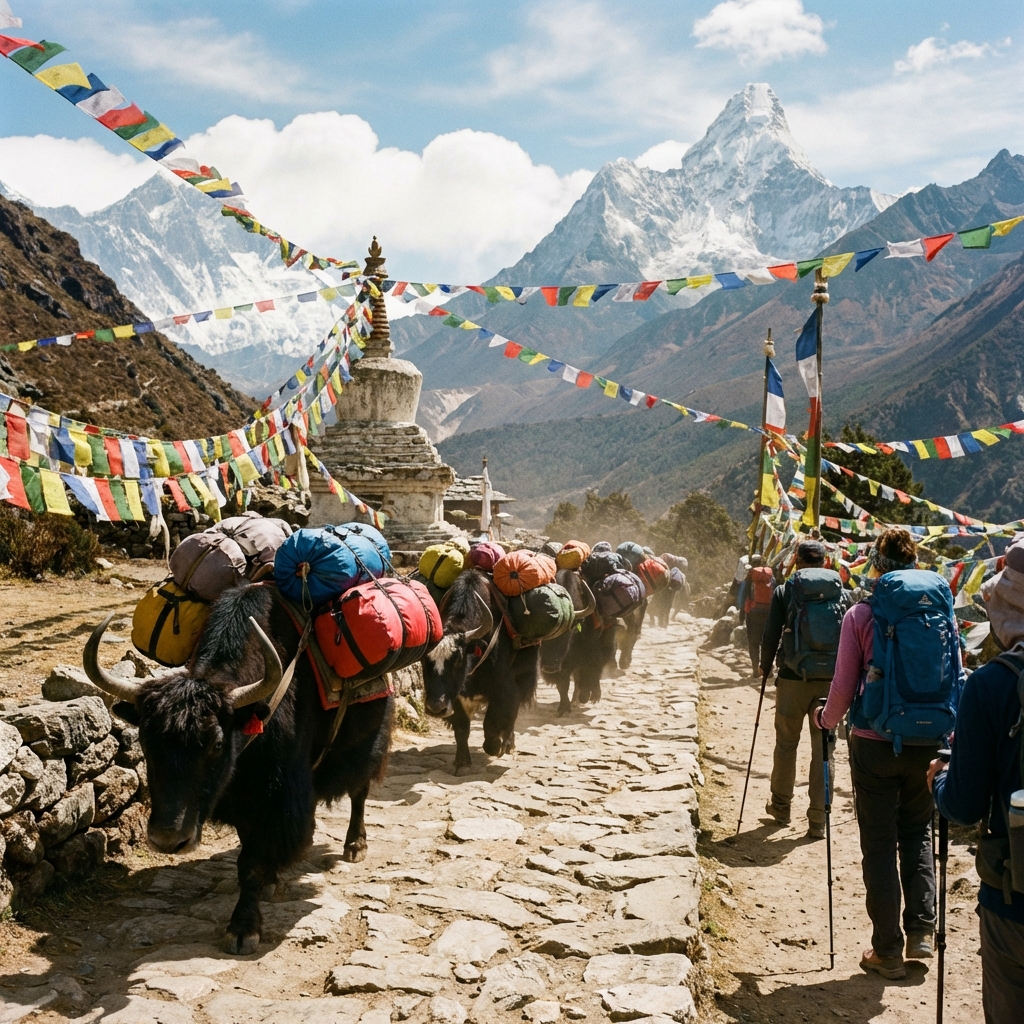
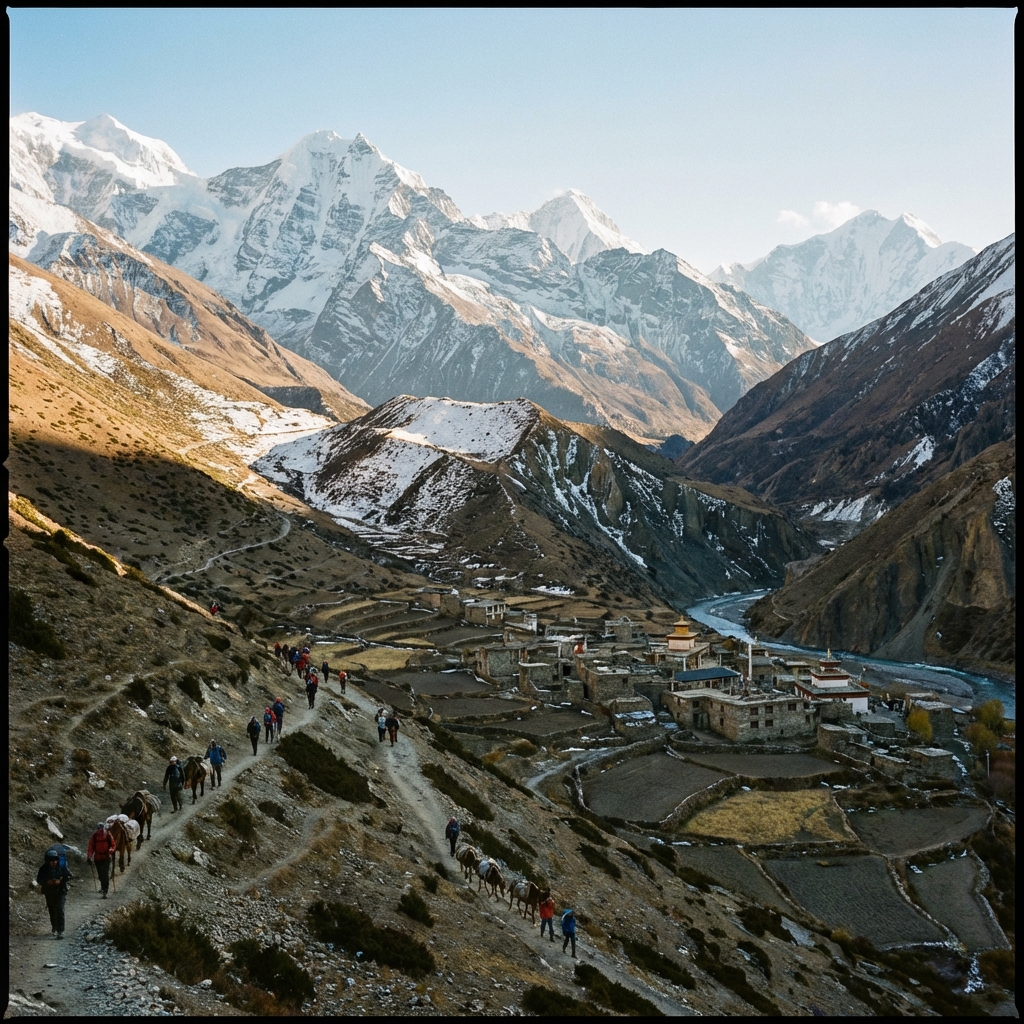
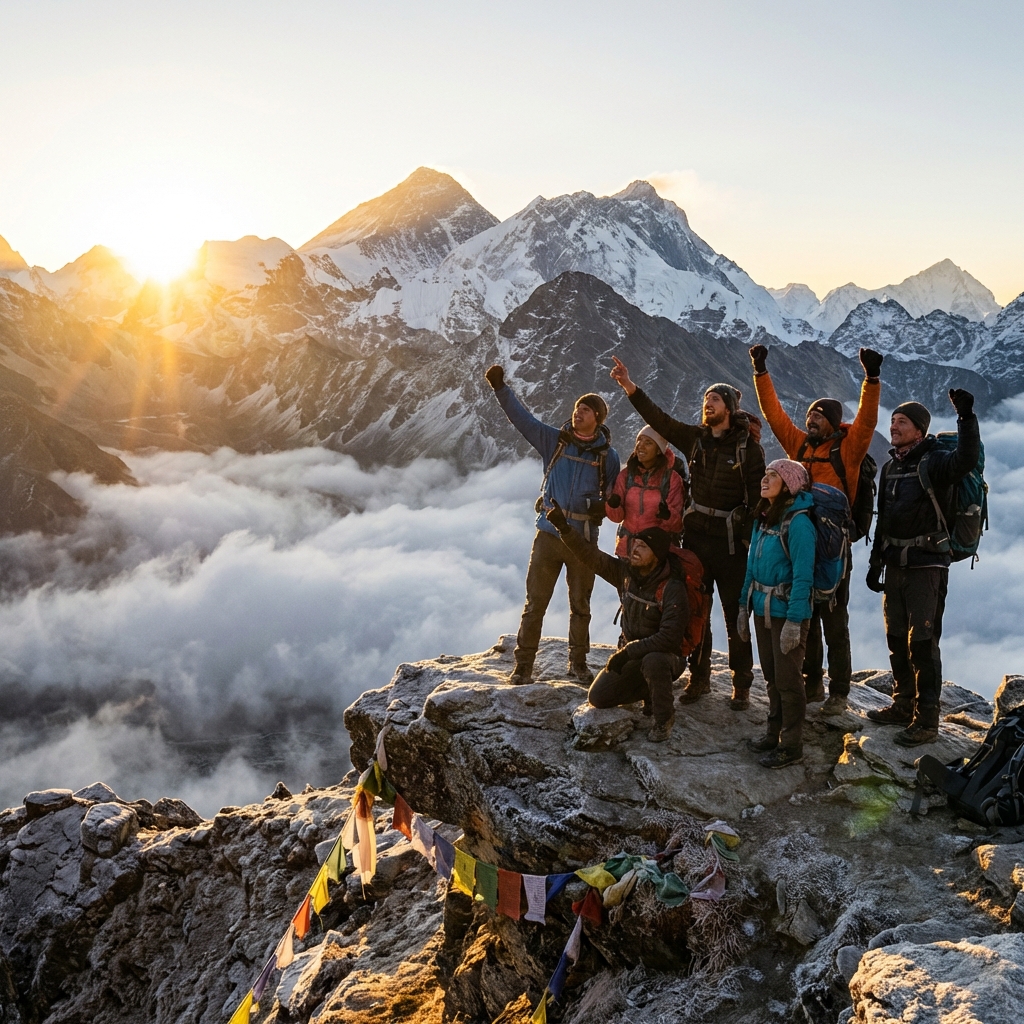
Trekking through Nepal's magnificent Himalayas is more than a physical journey—it's an immersion into ancient cultures, sacred landscapes, and deeply held traditions that have endured for millennia. The mountains you'll traverse aren't just geological wonders; they're living spiritual landscapes inhabited by Buddhist and Hindu communities whose customs, beliefs, and daily practices are woven into every trail, every prayer flag, and every stone stupa.
Understanding and respecting local cultural etiquette isn't just polite—it's essential for responsible tourism, meaningful connections with local communities, and ensuring that trekking in Nepal remains sustainable for future generations. This comprehensive guide provides everything you need to know about cultural respect while trekking in Nepal, from the proper way to circumambulate a monastery to the significance of not pointing your feet at sacred objects, from understanding Sherpa hospitality customs to knowing which hand to use when eating dal bhat.
Whether you're planning your first trek to Everest Base Camp, exploring the Annapurna Circuit, discovering the Langtang Valley, or venturing onto lesser-known trails like the Tamang Heritage Trail, this guide will help you navigate the cultural landscape with respect, sensitivity, and genuine appreciation for the remarkable people who call these mountains home.
Why Cultural Etiquette Matters
Nepal's trekking industry brings vital income to mountain communities, but it also brings cultural challenges. Disrespectful behavior—photographing monks without permission, touching sacred objects, dressing immodestly at temples, or treating porters poorly—damages the fabric of local culture and can lead to resentment toward tourism. Respectful trekkers help preserve both the natural environment and the cultural heritage that makes Nepal extraordinary.
Understanding Nepal's Cultural and Religious Landscape
The Religious Foundation of Nepali Culture
Nepal is a deeply spiritual nation where religion permeates every aspect of daily life. Understanding the religious context is essential for respectful trekking behavior.
Buddhism in the Mountains
The high-altitude regions you'll trek through—particularly in the Everest, Langtang, and Manaslu areas—are predominantly Buddhist, specifically Tibetan Buddhism. The Sherpa, Tamang, Gurung, and other mountain ethnic groups practice Buddhism that blends with indigenous Bon traditions, creating a unique spiritual culture expressed through:
- Monasteries (Gompas): Sacred centers of Buddhist learning and meditation
- Stupas and Chortens: Memorial monuments containing relics and sacred texts
- Prayer Flags: Colorful flags carrying mantras that bless the landscape
- Mani Stones and Walls: Carved stones inscribed with "Om Mani Padme Hum" and other mantras
- Prayer Wheels: Cylinders containing written prayers, spun clockwise to send blessings
Regional Religious Variations
Lower altitude regions, particularly in the Annapurna area, have mixed Buddhist and Hindu populations. The Muktinath valley is sacred to both religions. Understanding which religion predominates in your trekking area helps you show appropriate respect.
Hinduism in Nepal
While mountain regions are predominantly Buddhist, Nepal as a nation has deep Hindu roots. You'll encounter Hindu temples, particularly in lower valleys and near villages. Hindu beliefs influence social customs throughout the country:
- Caste system influences (though less rigid in mountain communities)
- Purity and pollution concepts (affecting hand usage, food sharing)
- Sacred animals (cows are sacred; you'll see them on trails)
- River sacredness (many rivers have spiritual significance)
Syncretic Traditions
Many Nepali people practice a blend of Buddhism and Hinduism, particularly in mixed communities. Sites like Muktinath Temple are sacred to both religions. This syncretic spirituality creates a rich, complex cultural landscape that deserves respect regardless of your own beliefs.
The Major Ethnic Groups You'll Encounter
Understanding the different ethnic communities along trekking routes helps you appreciate cultural variations and show appropriate respect.
Sherpa People - Guardians of Everest
The Sherpa people are perhaps the most famous mountain community, renowned worldwide for their mountaineering skills and hospitality. Originally migrating from Tibet centuries ago, Sherpas primarily inhabit the Solu-Khumbu (Everest) region.
Cultural Characteristics:
- Tibetan Buddhist practitioners with strong monastery traditions
- Clan-based social structure with hereditary leadership
- Traditional occupations: high-altitude herding (yak), trading, mountaineering
- Distinctive language (Sherpa, related to Tibetan) alongside Nepali
- Warm hospitality culture—welcoming guests is a sacred duty
Important Cultural Practices:
- The family hearth is sacred; never throw rubbish into the fire
- "Tashi Delek" (meaning "blessings and good luck") is the traditional greeting
- Respect for elders is paramount in Sherpa culture
- Traditional foods: butter tea, tsampa (roasted barley flour), potatoes
- Festivals like Dumje and Mani Rimdu are important religious celebrations
Learn more about Sherpa culture on Everest treks
Tamang People - Artists of the Hills
The Tamang are one of Nepal's largest indigenous groups, inhabiting regions from Langtang to the hills surrounding Kathmandu Valley. The name possibly derives from Tibetan words meaning "horse warrior."
Cultural Characteristics:
- Approximately 90% practice Tibetan Buddhism
- Rich artistic traditions: thangka painting, wood carving, stone masonry
- Musical heritage: Damphu (hand drum) and Selo music
- Traditional weaving and textile crafts
- Strong community-based tourism initiatives
Important Cultural Practices:
- Welcome visitors with ceremonial khada (white scarves) as a blessing
- Traditional dances and music are integral to festivals and celebrations
- Homestay culture allows authentic cultural immersion
- Polyandry (one woman married to multiple brothers) historically practiced in some communities
- Respect for natural landscape elements believed to house spirits
Discover the Tamang Heritage Trail
Gurung People - Warriors and Farmers
The Gurung people inhabit the Annapurna and Manaslu regions, known both as fierce Gurkha soldiers and skilled farmers who terrace mountain slopes.
Cultural Characteristics:
- Mix of Buddhism, Hinduism, and Bon (shamanic) practices
- Famous for Gurkha military service in British and Indian armies
- Matrilineal inheritance traditions in some communities
- Skilled honey hunters (collecting cliff honey)
- Rodhi houses—traditional community centers for youth social gatherings
Rai, Limbu, Magar, and Other Groups
You'll encounter many other ethnic groups depending on your trekking route, each with distinct languages, customs, and traditions. All share common values: hospitality to guests, respect for elders, reverence for the natural and spiritual landscape, and community-oriented living.
Tibetan Buddhism (60%+)
Hinduism (80%+)
130+ distinct groups
123+ languages and dialects
68% (2026)
~15% of national population
30-70% of income in trekking areas
4 UNESCO World Heritage Cultural Sites
Essential Greetings and Social Interactions
The Power of Namaste
"Namaste" (नमस्ते) is far more than a simple greeting—it's a spiritual acknowledgment that translates to "I bow to the divine in you" or "The divine in me honors the divine in you." This universal greeting is appropriate across all ethnic groups, religions, and social situations in Nepal.
How to Perform Namaste Properly:
- Hand Position: Press your palms together firmly in front of your chest, fingers pointing upward
- Head Movement: Bow your head slightly forward toward the person (not just nodding)
- Eye Contact: Make respectful eye contact, then lower your eyes during the bow
- Verbal Greeting: Say "Namaste" clearly and warmly
- Sincerity: Perform the gesture slowly and genuinely, not as a rushed formality
When to Use Namaste:
- Greeting anyone you meet on the trail (local people, porters, guides, fellow trekkers)
- Entering shops, tea houses, or someone's home
- Saying goodbye when leaving
- Thanking someone (combined with "Dhanyabad")
- Asking for permission (to photograph, enter a space)
Namaste vs. Other Greetings
While Namaste is universally understood and appreciated, learning ethnic-specific greetings shows extra respect. In Sherpa communities, "Tashi Delek" is the traditional greeting. In some Gurung areas, you might hear "Nala-chha?" (How are you?). When in doubt, Namaste is always appropriate and respectful.
Physical Contact Guidelines
Nepali culture, particularly in conservative mountain communities, has strict norms about physical contact:
Avoid Physical Contact:
- No handshaking with elders or in formal situations (Namaste is preferred)
- No hugging or kissing in greeting (considered extremely intimate)
- No back-patting or shoulder-grabbing (invasive and disrespectful)
- No touching monks or nuns (especially important—physical contact breaks their vows)
- Minimal contact between opposite genders (particularly in conservative communities)
Exceptions:
- Handshakes have become more common with guides, porters, and younger urbanized Nepalis who work extensively with tourists
- A light handshake is often acceptable if a Nepali person initiates it
- Among same-gender friends, you may see hand-holding or arms around shoulders (platonic affection)
The Sacred Head and Impure Feet
This is one of the most important cultural concepts in Nepal, rooted in Hindu and Buddhist beliefs about the body's spiritual hierarchy.
The Head is Sacred:
- The head is considered the most pure and sacred part of the body, the seat of the soul
- Never touch anyone's head, even children (Western hair-ruffling is offensive)
- Never touch an adult's head under any circumstances
- Don't reach over someone's head to grab something
- Remove hats when entering temples or homes (depending on the specific site)
The Feet are Impure:
- Feet are considered the dirtiest, most impure part of the body
- Never touch anything with your feet (books, food, sacred objects, people)
- Don't point your feet at people or religious symbols (altars, statues, monks)
- Sit cross-legged or with feet tucked when sitting on the floor
- If you accidentally touch someone with your feet, immediately apologize ("Maaf garnus!")
- Being hit with someone's shoe is one of the most degrading acts imaginable
- Remove shoes before entering homes, temples, and monasteries
Stepping Over People or Objects:
- Never step over people seated or lying on the ground—it's extremely disrespectful
- Never step over food or sacred objects
- Ask people to move rather than stepping over them, even in cramped tea houses
- Stepping over someone brings them bad luck and shows terrible disrespect
Common Tourist Mistakes
Western trekkers often unintentionally offend by: touching children's heads affectionately, pointing feet at people while resting with legs extended, stepping over porters sitting on trails, or casually touching objects with feet. These actions are deeply offensive in Nepali culture, even when unintentional. Be mindful of your body position, especially in tea houses and temples.
Tone, Volume, and Communication Style
Nepali culture values calm, humble, polite communication. Loud, aggressive, or demanding behavior is deeply offensive and will immediately create negative impressions.
Communication Guidelines:
Speaking Style:
- Speak quietly and calmly at all times
- Never raise your voice in anger or frustration
- Avoid confrontational tones even when making complaints
- Use indirect, polite phrasing rather than direct demands
- Smile frequently—it's a universal language that transcends verbal barriers
Requesting Help or Service:
- Frame requests politely: "Could you possibly help me?" rather than "I need this now"
- Accept delays or problems with patience and good humor
- Remember that guides and tea house owners are doing their best with limited resources
- Thank people repeatedly—gratitude is never excessive
If Problems Arise:
- Discuss issues privately, never publicly shame someone
- Stay calm and solution-focused
- Accept that some things cannot be changed (weather, trail conditions, etc.)
- Maintain perspective—you're a guest in their homeland
Learning Key Phrases: Making even a small effort to speak Nepali is deeply appreciated. See the Essential Nepali Phrases section later in this guide.
Dress Code and Modesty Requirements
General Dress Guidelines for Trekking
Nepal is a conservative society where modest dress is not just recommended—it's a sign of respect that significantly impacts how locals perceive and interact with you.
For All Trekkers (Men and Women):
What to Wear:
- Long trekking pants (zip-off pants are practical; shorts component for above 4,000m where fewer people live)
- T-shirts or long-sleeve shirts that cover shoulders
- Layers that cover your body (fleece jackets, down jackets are fine)
- Sports bras or tank tops ONLY as base layers under covering shirts
- Modest athletic wear (not revealing or skin-tight)
What NOT to Wear:
- Short shorts or very short trekking shorts (mid-thigh or shorter)
- Sleeveless tops or tank tops worn alone
- Low-cut or revealing tops
- See-through clothing
- Extremely tight leggings or yoga pants worn alone (fine as a base layer)
- Beach-style clothing anywhere on the trail
Practical Modesty
Zip-off pants are excellent compromises—wear them as long pants through villages and lower elevations where you'll encounter more people, convert to shorts above 4,000m or when you're far from villages. This respects local sensibilities while allowing comfort during challenging ascents.
For Women Trekkers:
Women face stricter modesty expectations in Nepal's conservative culture:
Essential Guidelines:
- Cover shoulders and knees in all villages and religious sites
- Sports bras alone are never acceptable on the trail or in tea houses
- Bra straps showing is fine, but the bra itself should be covered
- Leggings should be worn with a long shirt that covers your bottom
- Swimming attire should be modest if bathing in public areas (hot springs, etc.)
- In tea houses, don't walk around in just underwear or sports bra, even in your room if doors/windows are open
For Men Trekkers:
While standards are more relaxed for men, modesty still matters:
Guidelines:
- Shirts should be worn in villages and tea houses (going shirtless is disrespectful)
- Shorts can be shorter than women's, but mid-thigh is the minimum length
- Tank tops are acceptable but t-shirts are better in villages
- Going shirtless is only acceptable far from villages, at very high altitudes, or in your private tea house room
- Full nudity is absolutely unacceptable anywhere, ever
Dress Requirements at Religious Sites
Religious sites have strict dress codes that must be followed:
Monasteries, Temples, and Gompas:
Required:
- Remove shoes before entering (leave them outside the entrance)
- Cover shoulders (no sleeveless tops, even for men)
- Cover knees (long pants or long skirts for women)
- Remove hats inside the main prayer hall (outdoor courtyards may be fine)
- Cover heads for women at some Hindu temples (bring a scarf)
Prohibited:
- Tank tops or sleeveless shirts
- Shorts (for anyone)
- Short skirts or dresses
- Revealing clothing of any kind
- Footwear inside sacred buildings
At Stupas and Chortens:
- Shoes can stay on (you're walking around them, not entering them)
- Modest dress still required (shoulders and knees covered)
At Natural Sacred Sites:
- Hot springs may have separate bathing areas for men and women
- Modest swimwear required (not bikinis or revealing suits)
- Some sacred lakes or springs prohibit bathing entirely
Carrying Extra Clothing
Always carry a long-sleeve shirt or shawl in your day pack, even if it's hot. This allows you to cover up quickly when entering villages or sacred sites. Many female trekkers carry a large scarf specifically for covering shoulders or heads when visiting temples.
Monastery and Gompa Etiquette
Monasteries are the spiritual heart of Buddhist communities. Showing proper respect at these sacred sites is essential for responsible trekking.
Before Entering a Monastery
Preparation:
- Remove shoes at the entrance and leave them in the designated area
- Remove hats before entering the main prayer hall
- Turn off phone ringers (or leave phones outside)
- Check photography rules at the entrance—many ban interior photos
- Make sure your clothing is modest (shoulders and knees covered)
- Remove sunglasses
- Remove backpacks if they're large (leave outside or set down)
Mental Preparation:
- Remember this is a active place of worship, not just a tourist attraction
- Approach with reverence and quiet respect
- Set aside your tourist mindset and honor the sacred space
Walking and Movement in Monasteries
The Clockwise Rule:
This is the most important physical etiquette rule at Buddhist sites:
- Always walk clockwise around monasteries, stupas, chortens, and prayer wheels
- "Clockwise" means keeping the sacred object on your right side as you walk
- Counter-clockwise movement is deeply disrespectful in Buddhist tradition
- This applies whether you're walking around the outside of a building or inside a prayer hall
Why Clockwise Matters: In Buddhist cosmology, clockwise movement (called "circumambulation" or "kora") is the direction of the universe's movement, the direction of the sun, and the proper way to show respect. Counter-clockwise movement is associated with Bon (pre-Buddhist) dark magic practices and is considered extremely disrespectful.
Movement Guidelines:
- Walk slowly and quietly (don't rush or jog)
- Don't stand in doorways (Buddhist belief says this is like stepping on Buddha's shoulder)
- Give monks the right of way on narrow paths
- Don't point at statues or religious objects (gesturing with your whole hand is fine)
- Don't turn your back on the main altar when leaving (back out respectfully or walk sideways)
Inside the Prayer Hall
Respectful Behavior:
Do:
- Sit quietly if you wish to observe meditation or prayers
- Sit cross-legged or with feet tucked (never with feet pointing toward the altar or monks)
- Observe in silence during ceremonies
- Stay near the walls or back (don't walk through the middle during prayers)
- Bow slightly when leaving the presence of the altar
Don't:
- Talk loudly or whisper conspicuously
- Point at things with your fingers
- Touch statues, ritual objects, or altars (looking is fine; touching is forbidden)
- Lean against walls with religious paintings
- Walk between monks and the altar during prayers
- Interrupt monks who are meditating or praying
- Sit higher than monks if you're in the same space
Participating in Ceremonies
If you're present during prayer ceremonies (puja), you're welcome to observe quietly from the back or sides. You may sit on the floor with locals, but ensure your feet are tucked and not pointing toward anyone. When monks offer blessed items (rice, string bracelets, blessed water), you may respectfully accept them with both hands. This doesn't convert you to Buddhism—it's simply accepting a blessing.
Photography Rules at Monasteries
Photography rules vary dramatically between monasteries. Some welcome respectful exterior photos; others ban all photography. Violating these rules is seriously disrespectful.
General Photography Etiquette:
ALWAYS ASK PERMISSION:
- Check at the entrance whether photography is allowed
- Ask monks or caretakers specifically about interior photography
- Respect "no photography" signs absolutely
- If you're told no, put your camera away without argument
Common Photography Rules:
- Exterior photos usually allowed (buildings, courtyards, architecture)
- Interior photos often prohibited (main halls, altars, religious art)
- Photos of monks require individual permission—ALWAYS ask first
- Flash photography almost always prohibited (damages ancient paintings)
- Photos during ceremonies usually prohibited
- Selfies at altars are disrespectful even if photography is technically allowed
How to Ask Permission:
- Use Namaste gesture and ask clearly: "Photo okay?" or "Photo allowed?"
- If a monk shakes their head or says no, thank them and put your camera away
- Offer to show people the photos you've taken of them (many appreciate this)
- Never photograph without permission and argue if caught
Why Some Monasteries Prohibit Photography:
- Flash damages ancient thangka paintings and frescoes
- Photography can distract from the sacred nature of the space
- Commercialization of sacred images is considered disrespectful
- Monks and practitioners deserve privacy during meditation and worship
Famous Monastery Photography Rules:
- Tengboche Monastery (Everest region): Exterior photos usually allowed; interior requires permission; monk photos require individual permission
- Khumjung Monastery (near Namche Bazaar): Usually allows respectful photography with permission
- Muktinath Temple: Photography restrictions vary; always ask at entrance
Learn more about visiting Tengboche Monastery
Interacting with Monks and Nuns
Respectful Interaction:
Physical Boundaries:
- Never touch monks or nuns (handshakes, hugs, back pats are all forbidden)
- Especially strict for opposite-gender contact (women never touch monks; men never touch nuns)
- Physical contact can break their vows and require purification rituals
- Maintain personal space when speaking with them
Communication:
- Monks are happy to talk with respectful visitors about Buddhism, their lives, and practices
- Ask permission before approaching ("May I ask you a question?")
- Speak quietly and respectfully
- Many monks speak some English and enjoy practicing
- Don't interrupt prayers, meditation, or studies
- Don't ask overly personal questions about their past lives before ordination
Respect Their Time:
- Remember that monasteries are their homes and workplaces, not tourist attractions
- If monks seem busy or uninterested in conversation, politely thank them and leave
- Don't expect monks to pose for photos or entertain you
Offering Donations:
- Most monasteries have donation boxes near the entrance
- Modest donations (100-500 NPR, $1-5 USD) support monastery maintenance
- Offer donations with your right hand or both hands
- Don't make a show of how much you're donating
Female Trekkers and Monk Interaction
Women must be especially careful about physical boundaries with monks. Never touch a monk, even accidentally. When receiving blessed items from monks, women should cup their hands together and hold them low so the monk can drop the item in without risk of contact. Some monasteries have separate entrances or sections for women.
Prayer Flags, Mani Stones, and Sacred Objects
The landscape you trek through is filled with sacred objects that deserve respect and understanding.
Prayer Flags (Lung Ta)
Prayer flags are one of the most iconic features of Himalayan trekking—vibrant colored flags fluttering from every pass, bridge, and monastery.
Understanding Prayer Flags:
The Five Colors (Always in Order):
- Blue - Sky/Space
- White - Air/Wind
- Red - Fire
- Green - Water
- Yellow - Earth
These represent the five elements in Buddhist cosmology. The proper order should never be disrupted.
What They Do:
- Flags contain sacred mantras, prayers, and images
- Wind carries these prayers and blessings across the landscape
- They bless all beings: humans, animals, spirits, and the land itself
- As flags fade and fray, the prayers are being released—this is intentional
Respectful Behavior Around Prayer Flags:
Do:
- Walk under or around them respectfully
- Admire them and photograph them
- Understand their sacred purpose
- Pass to the left of prayer flag poles when possible
Don't:
- Never remove prayer flags or take them as souvenirs (this is theft of sacred objects)
- Don't touch or pull on flags unnecessarily
- Don't step on flags that have fallen (walk around them)
- Don't throw away old prayer flags (Nepalis burn them ceremonially; if you find fallen ones, leave them)
- Don't hang your own prayer flags unless you're Buddhist and know the proper prayers and procedures
- Never let prayer flags touch the ground if you're helping hang them
Buying Prayer Flags:
- Many shops sell prayer flags as souvenirs—this is acceptable
- If you buy them to hang at home, treat them with respect (not as decoration for parties, bars, etc.)
- Never use prayer flags as clothing or let them touch the floor
Mani Stones and Mani Walls
Mani stones are rocks carved with Buddhist mantras, most commonly "Om Mani Padme Hum" (the mantra of compassion). Mani walls are long structures of these carved stones.
Understanding Mani Stones:
What They Are:
- Sacred stones carved with mantras and sacred symbols
- Some are simple with basic text; others are intricately carved masterpieces
- Created as offerings by devotees, often in memory of deceased loved ones
- Considered powerful spiritual objects that bless the landscape
The Critical Rule: Always Pass with Mani on Your LEFT
This is one of the most important etiquette rules on trekking trails:
- Pass all mani walls on the LEFT side (keeping the wall on your right)
- This means you're walking clockwise relative to the sacred object
- Passing on the right is deeply disrespectful in Buddhist tradition
- This applies even if the right side has a better path—respect trumps convenience
Other Guidelines:
- Never sit on mani stones or walls (they're sacred, not benches)
- Don't take mani stones as souvenirs (this is theft and desecration)
- Don't place anything on top of mani walls (backpacks, water bottles, etc.)
- Don't deface or add your own carvings to mani stones
- Admire the craftsmanship respectfully (close looking is fine)
Trail Direction and Mani Walls
On popular trails like the Everest Base Camp route, mani walls are positioned so that the correct direction (clockwise/mani on left) aligns with the uphill direction to base camp. However, when descending, you'll need to switch sides of the trail to maintain the mani wall on your left. Pay attention to which side local people use—follow their example.
Stupas and Chortens
Stupas (also called chortens in Tibetan tradition) are dome-shaped monuments that contain relics, sacred texts, or mark important sites.
Understanding Stupas:
What They Represent:
- Buddha's presence in the physical world
- Enlightened mind
- Memorial to deceased lamas or important Buddhist figures
- Geographic markers of power places in the landscape
Circumambulation Rules:
The Golden Rule: Always Walk Clockwise
- Keep the stupa on your right side as you walk around it
- Complete full circles (don't cut partway through)
- Walk mindfully, not rushing
- Spin prayer wheels (if present) clockwise as you pass
- Counter-clockwise is forbidden
Other Etiquette:
- Don't climb on stupas (extremely disrespectful)
- Don't lean against them to rest
- Remove sunglasses when circumambulating (sign of respect)
- You may leave offerings at the base if you wish (flowers, rice, incense)
- Photography is usually allowed but be respectful
- Don't touch religious objects placed on stupas
Famous Stupas You May Visit:
- Boudhanath Stupa (Kathmandu): Before/after treks; walk with local Tibetan community
- Swayambhunath (Monkey Temple, Kathmandu): Sacred to both Buddhists and Hindus
- Stupas in Namche Bazaar: Easy circumambulation paths
- Tengboche Stupa: Near the famous monastery
- Various mountain pass stupas: Mark high points on trekking routes
Prayer Wheels
Prayer wheels are cylindrical wheels inscribed with mantras, mounted on spindles at monasteries, stupas, and along trails.
How to Use Prayer Wheels:
The Correct Method:
- Spin clockwise (toward yourself as you walk, or left to right)
- Use your right hand (left hand is impure)
- Walk clockwise past the row of wheels
- Spin each wheel as you pass (one gentle push per wheel)
- Don't spin frantically or backwards
Why Spin Prayer Wheels:
- Each revolution sends the prayers written inside out into the world
- Spinning a prayer wheel has the same spiritual merit as reciting the prayers yourself
- It's a form of meditation and blessing for all beings
Etiquette:
- Never spin counter-clockwise (very disrespectful)
- Don't spin them forcefully or competitively (it's not a game)
- Don't stop wheels that are spinning
- One gentle revolution is enough for each wheel as you pass
Religious Site Etiquette: Specific Guidelines
Tengboche Monastery (Everest Region)
Tengboche is the spiritual heart of the Khumbu region and one of the most important monasteries trekkers visit.
Location: Everest Base Camp Trek, 3,867m elevation, approximately 2 days' walk from Namche Bazaar
Special Etiquette at Tengboche:
Entering the Monastery:
- Remove shoes at the entrance (designated shoe storage area provided)
- Remove hats before entering the main hall
- Dress modestly (shoulders and knees covered)
- No entry during certain times when monks are in private prayer
- Follow guide instructions about where you can go
Photography Rules:
- Exterior photography of the building is generally allowed
- Interior photography often prohibited (ask at entrance)
- Photos of monks require individual permission
- No flash photography ever (damages ancient frescoes and thangkas)
- Monastery courtyard photos usually acceptable
During the Mani Rimdu Festival:
- Extremely crowded with pilgrims and tourists
- Photography rules may be stricter during ceremonies
- Sit where directed (usually designated tourist section)
- Silence during dances and rituals is mandatory
- Don't block local worshippers' views
Donation and Support:
- Donation box at entrance (suggested 100-500 NPR)
- Donations support monastery reconstruction (destroyed by 2015 earthquake, rebuilt)
- No photography fee, but donations appreciated if you photograph
Surrounding Area:
- The entire Tengboche village area is sacred land
- Speak quietly and respectfully throughout the village
- Don't litter (this area has strict waste management)
Complete Tengboche Monastery guide
Muktinath Temple (Annapurna Circuit)
Muktinath is unique as a sacred site for both Buddhists and Hindus, making it particularly important for respectful behavior.
Location: Annapurna Circuit, 3,710m elevation, Mustang region
Religious Significance:
- Hindu Importance: One of the 108 Divya Desam (sacred Vishnu temples); contains a naturally occurring eternal flame
- Buddhist Importance: Associated with Guru Rinpoche (Padmasambhava)
- Both faiths consider it a site of moksha (liberation from cycle of rebirth)
Specific Etiquette:
Clothing Requirements:
- Strictly modest dress (shoulders and knees covered for everyone)
- Remove shoes before entering the main temple
- Head covering for women at certain times (bring a scarf)
- No leather items inside (Hindu purity laws)
The 108 Water Spouts:
- These sacred water spouts represent purification
- Bathing ritual: Walk under each spout for spiritual cleansing
- Men bathe separately from women (different times or sections)
- Modest clothing required even while bathing (long shirt, long pants)
- Non-believers are welcome to participate respectfully
Photography:
- Outside photography generally allowed
- Inside the main temple often prohibited (ask specifically)
- No photography of people bathing without explicit permission
- Respectful distance when photographing pilgrims
Hindu-Buddhist Harmony:
- Respect both traditions present at the site
- Don't touch offerings left by devotees
- Hindu pilgrims may be performing complex rituals—give them space
- Buddhist pilgrims will circumambulate clockwise—don't block paths
Environmental Concerns:
- Muktinath area has significant waste problems from tourism
- Pack out all trash
- Use toilets provided (not outdoor areas)
- Respect the sacred landscape
Other Important Religious Sites
Gompas (Small Village Monasteries):
Throughout trekking routes, you'll encounter small village gompas:
General Guidelines:
- All the same etiquette applies (shoes off, clockwise walking, no touching, modest dress)
- Often locked when not in use—ask locals for the caretaker if you wish to enter
- Small donations appreciated (50-100 NPR)
- Some are active worship sites; others are historical monuments
- Respect them equally regardless of size or condition
Hindu Temples in Lower Valleys:
- Remove shoes before entering
- Photography often prohibited inside
- Don't touch murtis (god statues)
- Leather belts and items may need to be removed
- Animal sacrifice areas may be present (culturally important; view respectfully even if it makes you uncomfortable)
Caves and Hermitages:
- Some trails pass meditation caves where hermits live in retreat
- Do not disturb hermits in meditation
- Don't enter without explicit invitation
- Silence is essential near these sites
- Leave offerings outside if you wish (food, money), but don't expect interaction
Natural Sacred Sites:
- Certain lakes, waterfalls, and mountains are considered deity homes
- Don't pollute these sites (no bathing, washing clothes, or disposing waste)
- Don't remove rocks, water, or plants as souvenirs
- Respect signs indicating sacred status
When in Doubt, Ask
If you're unsure about the rules at any religious site, ask your guide, ask locals, or observe what Nepali visitors do and follow their example. Respectful curiosity is appreciated; presumptuous behavior is not.
Tea House and Lodge Etiquette
Tea houses are the backbone of trekking in Nepal—these family-run lodges provide accommodation, meals, and social spaces throughout popular routes. Understanding tea house etiquette ensures harmonious stays and supports the local economy.
The Business Model of Tea Houses
Understanding the economics helps you behave appropriately:
How Tea Houses Make Money:
- Rooms: Minimal profit (often 200-500 NPR/$1.50-4 USD per night)
- Food: Primary income source (dal bhat, hot drinks, snacks)
- Drinks: Significant income (bottled water, beer, tea/coffee)
- Other services: Charging electronics, hot showers, WiFi
The Cardinal Rule: Eat Where You Sleep
This is the most important tea house etiquette rule:
- When you stay at a tea house, order dinner and breakfast there
- Don't stay at one lodge and eat at another (this kills the host's profit)
- Tea houses rely on food sales to subsidize cheap rooms
- Eating elsewhere is considered very disrespectful
Budget-Friendly Trekking
If you're on a tight budget, tea house owners understand. Order dal bhat (always the most economical choice), drink black tea instead of expensive coffee, skip alcohol, and explain you're budget trekking. They'll appreciate your honesty and you're still supporting their business.
Arrival and Check-In Etiquette
Arriving at a Tea House:
Proper Procedure:
- Remove shoes at the entrance (put them in the designated shoe area)
- Greet the owners with Namaste
- Ask if they have rooms available (even if you have a booking, be polite)
- Inspect the room if you wish (this is normal and expected)
- Confirm the room price before agreeing
- Ask about meal times and menu
Room Inspection:
- Looking at rooms before committing is completely normal
- Check for cleanliness, number of blankets, window quality
- Tea house owners expect this and won't be offended
Booking in Advance:
- During peak season, guides often call ahead to book
- If booking yourself, still greet warmly and confirm politely
- Pre-booking doesn't mean you're entitled to special treatment
Dining Hall Etiquette
The dining hall is the social heart of tea houses—a communal space where trekkers, guides, porters, and family members gather.
The Bukhari (Central Stove):
Most tea houses have a wood-burning stove (bukhari) in the center of the dining hall:
Bukhari Etiquette:
- Sitting near the bukhari is prime real estate (it's the only heat source)
- Share the warmth (don't monopolize the closest seats if others arrive)
- Never throw trash in the bukhari (it's not a garbage incinerator)
- Don't touch or adjust the fire (let the owner manage it)
- Bukhari fuel costs money (wood is scarce at altitude)—some tea houses charge for extended evening fires
Dining Behavior:
Do:
- Wait to be seated or ask where you should sit
- Share tables (tea houses are communal; you'll likely share with other trekkers)
- Be friendly to other trekkers—conversation and story-sharing is encouraged
- Thank the owner and staff repeatedly
- Be patient with meal preparation (everything is cooked fresh; expect 30-60 min waits)
- Clean your plate if possible (wasting food is disrespectful at altitude where everything is porter-carried)
Don't:
- Don't occupy large tables if you're a small group and it's crowded
- Don't play loud music or videos (earphones for personal entertainment)
- Don't be drunk and rowdy (alcohol hits harder at altitude; stay respectful)
- Don't criticize the food publicly (if there's a problem, speak privately to the owner)
- Don't spread out all your gear (keep your belongings contained)
Interaction with Porters and Guides:
- In some tea houses, guides and porters eat separately (often in the kitchen)
- This is cultural hierarchy, not mistreatment
- Don't insist they eat with you if they prefer separate arrangements
- However, welcoming guides to eat with you is also perfectly acceptable
Room Etiquette
Inside Your Room:
Cleanliness and Respect:
- Don't track mud into the room (clean boots outside)
- Keep your belongings organized (not spread everywhere)
- Don't move furniture without asking
- Shake out sleeping bags outside (not in the room)
- Don't damage walls (hanging gear, scraping against walls)
Noise Consideration:
- Tea house walls are paper-thin (literally plywood)
- Speak quietly in rooms, especially early morning and late evening
- Intimate activities should be silent (everyone can hear everything)
- Early risers: pack quietly (bring a headlamp to avoid turning on lights)
- Earplugs are essential (you'll hear snoring from neighbors)
Bathroom and Washing:
Bathroom Etiquette:
- Shared bathrooms: Leave them clean for the next person
- Squat toilets: Proper usage is important (your guide can explain if you're unfamiliar)
- Toilet paper: Dispose in bins, not toilets (sewage systems can't handle paper)
- Hot showers cost extra (200-500 NPR)—this is normal at altitude
- Washing clothes: Ask where you can wash/dry (not in rooms unless permitted)
Charging Electronics:
- Charging costs extra (50-300 NPR per hour, increases with altitude)
- Limited electrical capacity—don't plug in multiple devices without asking
- Share outlets with other trekkers
- Unplug when charged (don't monopolize overnight)
Ordering Food and Drinks
Menu Considerations:
Strategic Ordering:
- Dal bhat is always the best value and supports local economy (rice and lentils are local)
- Order items other trekkers are ordering (helps the kitchen cook in batches)
- Avoid exotic menu items at altitude (they won't have fresh ingredients; will be lower quality)
- Timing matters: Order dinner early so you're not waiting until 9pm
- Complex orders slow everyone down (simple is better)
Pricing Reality:
- Prices increase with altitude (everything is porter-carried; this is fair)
- Bottled water at 5,000m costs more than at 3,000m (use water purification instead of bottled)
- Beer and snacks have highest markup (luxury items)
- Don't complain about prices (the economics of altitude trekking justify them)
Menu Translation:
- Menus often have English, but ask your guide about unfamiliar items
- "Mo:mo" = dumplings (Tibetan style)
- "Dal bhat" = rice and lentil soup with vegetables
- "Chow mein" = fried noodles
- "Sherpa stew" = potato and vegetable stew
Food Safety
At high altitudes, stick to simple, well-cooked foods. Avoid meat dishes (refrigeration is limited), raw vegetables, and dairy products unless you're confident in the tea house. Dal bhat is the safest choice—rice and lentils are boiled, fresh, and nutritious.
Payment Etiquette
Paying Your Bill:
When to Pay:
- Pay at checkout (morning of departure after breakfast)
- Keep track of your orders (write them down)
- Check the bill for accuracy (mistakes happen, not malice)
- Ask about discrepancies politely ("I think I only had one tea, not two")
Payment Methods:
- Cash is essential (very few places take cards)
- Carry small bills (making change for large bills is difficult)
- Nepali Rupees only (some places at lower elevations take USD, but NPR is preferred)
- Mobile payment becoming more common (eSewa, Khalti), but cash remains king
Tipping:
- Tipping is mandatory since April 2023 at tea houses (unlike guides/porters)
- Rounding up is appreciated (if bill is 2,450 NPR, pay 2,500)
- Exceptional service deserves thanks and a small extra (100-200 NPR)
WiFi and Communication
WiFi Expectations:
Reality Check:
- WiFi costs money (200-500 NPR per hour or per day)
- WiFi is slow (often barely enough for messaging)
- WiFi doesn't work like at home (limited bandwidth, frequent outages)
- Everyone shares limited bandwidth (don't stream videos)
Appropriate WiFi Use:
- Messages and emails (reasonable)
- Photo uploads (very slow; be patient)
- Video calls (usually impossible; stick to audio)
- Work/streaming (forget it; you're in the Himalayas)
Communication Etiquette:
- Don't monopolize the WiFi complaining it's slow
- Be patient
- Understand the technical limitations of altitude internet
- Embrace digital detox (this is part of the trekking experience)
Guide and Porter Etiquette
Your guides and porters are the backbone of your trek. Treating them with respect and fairness is a moral imperative, not optional.
Understanding the Roles
Trekking Guide:
- Licensed professional who navigates, provides information, handles logistics
- Usually speaks English well
- Experienced in altitude sickness recognition and first aid
- Your primary liaison with local communities
Porter:
- Carries trekking gear (up to 20-25 kg per porter typically)
- May speak limited or no English
- Essential to making trekking accessible
- Often from lower-income communities
Porter-Guide:
- Combination role: carries some gear and provides basic guiding
- Common for solo trekkers or small groups
Fair Treatment Requirements
Weight Limits:
The 25kg Maximum:
- Responsible agencies limit porters to 20-25kg maximum
- This includes the porter's own gear (so your gear should be ≤20kg for a 25kg limit)
- Overloading is exploitation and causes serious long-term health damage
- If using two porters, distribute weight evenly
Checking Your Impact:
- Weigh your duffel bag before the trek
- If it's over 20kg, reduce or hire an additional porter
- Don't rationalize "well, he looks strong"—limits exist for safety
Fair Wages:
Current Standards (2026):
- Guides: NPR 2,500-3,500 per day ($20-28 USD)
- Porters: NPR 1,500-2,500 per day ($12-20 USD)
- Higher wages for technical routes (Everest, Manaslu)
Your Responsibility:
- Book through agencies that pay fair wages (ask specifically)
- Hiring independently can exploit porters (no insurance, no standards)
- Cheap trek prices = exploitation somewhere in the chain
Insurance:
Non-Negotiable:
- All guides and porters must be insured for high-altitude rescue and medical care
- Ask your agency for proof of insurance coverage
- Independent hiring requires separate insurance purchase
- 2,500-4,000 NPR per person for proper coverage
Equipment:
Agency Responsibility:
- Proper footwear (not sandals at altitude)
- Warm clothing (down jackets for high passes)
- Sunglasses (snow blindness prevention)
- Rain gear
Your Responsibility:
- Check that your porter has adequate gear before departure
- If they don't, refuse to start until the agency provides it (or provide it yourself)
- Don't assume "they're used to the cold"—they're human and suffer hypothermia like anyone
Daily Interaction Etiquette
Respectful Communication:
Do:
- Learn your guide/porter's names and use them
- Say "Namaste" every morning and show basic respect
- Ask about their families and lives (they're people, not just workers)
- Share meals when appropriate (invite guides to eat with you)
- Thank them frequently
- Listen to their advice (especially guides—they know the mountains)
Don't:
- Don't treat them as servants ("fetch this," "carry that" beyond agreed duties)
- Don't be condescending or patronizing
- Don't ignore them socially while being friendly to other Western trekkers
- Don't take photos without asking (they may not want photos)
Walking Pace and Rest:
On the Trail:
- Porters set their own pace (often faster than trekkers since they want to arrive early)
- Don't delay porters with excessive photo stops (they have schedules)
- If porters are struggling, insist on rest breaks (don't let them push too hard)
- On narrow trails, step aside for porters (right of way goes to loaded porters)
Accommodation:
Separate but Equal:
- Guides/porters often sleep in different rooms (cultural norm, not mistreatment)
- Ensure they have adequate accommodation (some agencies under-provide)
- They should have the same meal access you do
- Check that they're staying warm and fed
Tipping Guidelines
Tipping guides and porters is customary and expected—it's a significant part of their income.
Standard Tipping Amounts (2026):
For Guides:
- 10-15% of total trek cost is standard
- $10-15 USD per day of trekking
- More for exceptional service (route changes, emergency assistance, going above and beyond)
For Porters:
- $7-10 USD per day of trekking
- Slightly less percentage than guides (but still essential)
Group Tipping:
- Pool tips from all group members and present together
- Don't give individual small amounts (one collective tip is better)
Timing:
- Give tips at the end of the trek (final day, usually at last accommodation)
- Private presentation (don't make a public show)
- Include a thank-you card if you're so inclined (very appreciated)
Cash in NPR:
- Give tips in Nepali Rupees (more useful than USD)
- Ensure you have enough cash at trek end (plan ahead)
Tipping Calculation Example
For a 12-day Annapurna Base Camp trek costing $1,200 with one guide and one porter:
- Guide tip: $140-180 (based on $12-15/day)
- Porter tip: $85-120 (based on $7-10/day)
- Total tips: ~$225-300 (budgeted separately from trek cost)
Supporting Porter Welfare
Responsible Trekking Companies:
Look for agencies that:
- Are members of IPPG (International Porter Protection Group)
- Provide insurance documentation
- Limit weight strictly
- Provide equipment
- Pay fair wages
- Have porter welfare policies
Red Flags:
- Suspiciously cheap treks (under $40-50 per day all-inclusive)
- No insurance mentioned
- Porters without proper gear
- Overloaded porters
- Agencies that dismiss welfare concerns
On the Trail:
If You See Porter Mistreatment:
- Document it (photos if appropriate, written notes)
- Report to agency immediately
- Report to TAAN (Trekking Agencies Association of Nepal)
- Don't continue with the trek if serious abuse is occurring
- Leave reviews warning other trekkers
Supporting Porter Organizations:
- Consider donating to porter support organizations
- The Himalayan Rescue Association supports porter welfare programs
- IPPG accepts donations for porter safety and equipment programs
Photography Etiquette
Photography is a major part of trekking for most people, but it comes with significant cultural considerations.
The Golden Rule: Always Ask Permission
Why Permission Matters:
- People are not tourist attractions (they're living their lives in their homes)
- Cultural beliefs about photographs vary (some believe photos capture the soul)
- Privacy is a basic human right (even in "exotic" locations)
- Respect creates positive tourism interactions
How to Ask Permission:
The Proper Method:
- Make eye contact and smile
- Use the Namaste gesture
- Point to your camera and make a questioning gesture
- Say "Photo okay?" or "Photo ramro?" (ramro = good/okay in Nepali)
- Wait for clear yes (smile and nod) or no (head shake or hand wave)
- Thank them afterward ("Dhanyabad!")
Reading Non-Verbal Cues:
- Smile and nod = yes
- Head shake, hand wave, turning away = no
- Uncertain expression = probably no (err on the side of caution)
If Someone Says No:
- Smile, thank them anyway, and put your camera away immediately
- Don't argue or try to convince them
- Don't take "secret" photos (extremely disrespectful)
- Respect their decision completely
Who Requires Special Permission
Children:
- ALWAYS ask parents before photographing children
- Never photograph children without adult permission present
- Don't give children candy or money for photos (creates begging culture)
- School children may pose enthusiastically—still ask teachers
Monks and Nuns:
- Always ask individually, even if photography is generally allowed
- During prayers or meditation, assume no unless explicitly permitted
- Some monks welcome photos; others don't—respect individual preferences
Elderly People:
- Extra respect required for elders
- May have traditional beliefs about photography
- Ask especially politely
Porters:
- Don't treat porters as photography subjects without permission
- "Poverty tourism" photos are exploitative (photos emphasizing hardship without consent)
- If you photograph your porter, share the photos with them
Women:
- Extra sensitivity required in conservative communities
- Ask husbands or male family members in very conservative areas
- Young women may need family permission
- Respect modesty concerns
What NOT to Photograph
Prohibited Subjects:
Sacred Sites:
- Interior of monasteries (often explicitly forbidden)
- Altars and religious objects in temples
- Ceremony participants without permission
- Monks during prayers (interrupts their practice)
Private Moments:
- People bathing (at water sources, hot springs)
- People using toilets or changing clothes
- Inside homes without invitation
- Arguments or private conversations
Sensitive Subjects:
- Poverty without consent (exploitative "misery tourism")
- Children in vulnerable situations
- Military or police installations (illegal)
- Border areas (may be illegal depending on location)
Animal Welfare Concerns:
- Chained or mistreated animals for tourism (don't support with photos)
- Yak/donkey suffering on trails (document for reporting, but don't treat as entertainment)
Sharing Photos Responsibly
With Photo Subjects:
Best Practices:
- Show photos to people immediately after taking them (many appreciate this)
- Offer to send copies (get email addresses or social media)
- Actually follow through and send photos (don't promise and forget)
- Instant cameras are magical for sharing (consider bringing Instax or similar)
On Social Media:
Responsible Posting:
- Don't post unflattering or mocking photos of local people
- Avoid "poverty porn" captions ("Look how poor they are but so happy!")
- Credit locations and people when appropriate
- Consider people's privacy (will they want this photo online?)
- Avoid geotagging sacred sites (reduces over-tourism pressure)
Captions to Avoid:
- "So poor but so happy!" (patronizing)
- "These people have nothing but smile so much" (dehumanizing)
- "Primitive lifestyle" (offensive)
- "Exotic natives" (othering)
Better Captions:
- "Met this incredible [name] in [village]—thanks for sharing stories!"
- "Grateful for the hospitality of families in [region]"
- "Honored to experience [cultural practice] with permission"
Photography Best Practices
Technical Considerations:
Respectful Photography Techniques:
- Shoot at eye level, not looking down on people (shows respect)
- Include context (environment, activities) not just close-up faces
- Capture dignity and strength, not just "exotic" or "other"
- Tell complete stories rather than just extracting images
Cultural Sensitivity:
- Dress modestly while photographing (you're a guest)
- Don't interrupt activities to get photos
- Be quick (don't make people hold poses for minutes)
- Photograph landscapes and architecture when unsure about people
Building Trust:
- Spend time talking before asking for photos
- Buy from vendors before asking for their photo
- Return to the area and build relationships over days
- Learn names and use them
The Best Photos Require Relationships
The most powerful, authentic photographs of people come from taking time to build genuine relationships. Spend time in villages, share meals in tea houses, hire local guides who can introduce you respectfully, and photograph people as friends, not subjects. The patience required to build trust results in far better images than rushed, extractive photography.
Food and Dining Etiquette
Food culture in Nepal has strict rules rooted in Hindu and Buddhist beliefs about purity, pollution, and respect.
The Left Hand Taboo
This is one of the most important and commonly violated rules by Western trekkers:
The Rule:
- The left hand is considered unclean (used for personal hygiene after using the toilet)
- Never eat with your left hand
- Never pass food, drink, or objects with your left hand
- Never touch shared food with your left hand
What to Do Instead:
Eating:
- Use your right hand only for eating
- Use utensils if you're uncomfortable eating with hands (perfectly acceptable)
- Keep left hand in your lap while eating with your right hand
Passing Objects:
- Use your right hand or both hands together
- Both hands shows extra respect (especially when giving money, gifts, receiving food)
- Never use left hand alone for passing anything
Exceptions:
- Using a spoon in your right hand to eat is standard for many dishes
- Holding a cup in your left hand is okay if you're not actively drinking
- Supporting with your left while right hand does the main action is acceptable
Left-Handed Trekkers
If you're left-handed, you'll need to adapt in Nepal. Practice eating with your right hand before your trek. Use utensils if necessary. This isn't discrimination—it's a deeply held cultural practice about purity and cleanliness that you must respect as a guest.
Dal Bhat Etiquette
Dal bhat (lentil soup over rice with vegetable curry) is Nepal's national dish and the trekking staple. Eating it properly shows cultural respect.
How Dal Bhat is Served:
- Large plate of rice in the center
- Dal (lentil soup) poured over or beside the rice
- Vegetable tarkari (curry) on the side
- Achar (pickle) for flavor
- Sometimes papad (crispy lentil wafer)
- Unlimited refills are standard ("dal bhat power, 24 hour!" is the trekking motto)
Eating Dal Bhat Properly:
The Traditional Method (with hands):
- Wash your hands thoroughly before eating
- Use right hand only
- Mix rice and dal together with your fingers
- Add small amounts of tarkari and mix
- Form a small ball with rice/dal mixture using fingers
- Use your thumb to push the ball into your mouth
- Don't let food go past your first knuckle (keeping palm clean is important)
- Lick fingers only after finishing, not during eating
The Modern Method (with spoon):
- Perfectly acceptable for visitors
- Use right hand to hold spoon
- Mix rice and dal on your plate before eating
- Left hand stays in lap or lightly supporting plate edge
Important Rules:
Do:
- Eat everything you take (wasting food at altitude is disrespectful)
- Accept refills if you want more (dal bhat is designed for multiple servings)
- Say "Pugyo" (enough) when you're full and don't want more
- Compliment the food ("Mitho cha!" = It's delicious!)
Don't:
- Don't touch communal serving dishes with your personal spoon or hand
- Don't double-dip your spoon in shared dishes
- Don't waste food (take smaller portions if you're unsure)
- Don't blow on hot food (considered impolite)
Sharing Food and Jutha
Jutha (जुठो) - The Concept of Pollution:
Jutha refers to food that has been "polluted" by someone's mouth or saliva:
Understanding Jutha:
- Once your lips touch something, it becomes jutha (impure for others)
- You cannot share jutha food with others (offering someone a bite of your sandwich is offensive)
- Separate plates/cups are essential
- This isn't about germs—it's about spiritual purity
Practical Applications:
Don't:
- Offer someone a bite of your food (share from the serving dish before anyone eats)
- Share drinks from the same bottle/cup (pour into separate cups)
- Touch someone else's food after touching your mouth
- Use your spoon to serve from a communal dish (use the serving spoon)
Water Sharing:
- Pour water into your mouth without letting the bottle touch your lips
- This prevents the bottle from becoming jutha so others can share it
- Practice this technique—it's used constantly
Exceptions:
- Family members and very close relationships may share jutha
- Modern urban Nepalis may be more relaxed about this
- In trekking tea houses serving Westerners, rules may be more flexible
- However, traditional communities strictly observe jutha rules
Tea House Dining Customs
Communal Dining:
Appropriate Behavior:
- Share tables with other trekkers
- Offer to share large dishes (spring rolls, momos) with tablemates before eating
- Don't monopolize condiments (hot sauce, salt, etc.)
- Pass items with right hand or both hands
Meal Times:
Standard Schedule:
- Breakfast: 7-8 AM (allow time for preparation)
- Lunch: 12-1 PM (on the trail, when you arrive at your lunch stop)
- Dinner: 6-7 PM (order early; cooking takes time)
Patience:
- Everything is cooked fresh at altitude with limited equipment
- 30-60 minutes is normal for meals
- Groups ordering the same thing speeds up service
- Complaining about wait times is rude
Special Dietary Needs
Communicating Dietary Restrictions:
Common Restrictions:
- Vegetarian: "Maasu chaina" (no meat)
- Vegan: More difficult (explain: no meat, milk, eggs, butter, cheese)
- Gluten-free: Very difficult (rice-based foods help)
- Allergies: Explain clearly ("I am allergic to..." with seriousness)
Reality Check:
- Cross-contamination is common in tea house kitchens
- "Vegetable" dishes may include meat broth
- Understanding of veganism is limited
- Bring supplements if your diet is very restricted
Being Respectful About Food:
- Don't criticize traditional foods (yak butter tea might not suit you, but it's culturally important)
- Try local foods when safe/appropriate for your diet
- Express appreciation even if it's not your favorite cuisine
- Remember that food at altitude is impressive—appreciate the effort
Altitude and Appetite
Altitude significantly reduces appetite for many trekkers. However, you must maintain calorie intake for energy and altitude adaptation. Dal bhat, though large, is the best choice—complex carbohydrates with protein. Eat what you can, but don't waste food. Order smaller portions if you know you can't finish.
Gift Giving and Begging
Gift giving in Nepal requires cultural sensitivity to avoid creating problems while still showing generosity appropriately.
The Problem with Giving to Children
Why "Giving Pens" and "Chocolate" is Harmful:
Western trekkers often give children on trails pens, candy, or money with good intentions. This creates serious problems:
The Damage:
- Creates begging culture (children learn to ask foreigners for things rather than working in school or helping families)
- Dental problems (candy causes cavities; dental care is limited in mountains)
- School disruption (children skip school to wait on trails for tourists)
- Devalues education (getting handouts becomes more profitable than learning)
- Creates inequality (children in tourist areas get gifts; others don't)
- Perpetuates stereotypes (reinforces idea that Westerners are walking ATMs)
What Happens: Children along popular trails now routinely ask trekkers: "Chocolate? Pen? Rupee?" This begging behavior was created by well-meaning tourists and now disrupts community life.
The Better Approach:
Don't:
- Give candy, pens, money, or gifts directly to children on trails
- Give in to begging (it reinforces the behavior)
- Take photos of children and "pay" them (exploitative)
- Give money to children in exchange for posing (creates child commodification)
Do Instead:
- Donate to schools directly (visit schools and give supplies to teachers)
- Support community projects (ask your guide about legitimate projects)
- Buy crafts from adults (supports family income)
- Smile and interact kindly without giving material things
- Say "Chaina" (I don't have any) if asked, then engage in friendly conversation
Teaching Moments:
- If children ask for chocolate, ask them about their schoolwork instead
- Praise their English skills and encourage education
- Engage as equals, not as charity cases
Appropriate Gift Giving
When Gift Giving is Appropriate:
Homestays and Dinner Invitations:
If invited to someone's home or staying in a homestay:
Appropriate Gifts:
- Fresh fruit (especially at higher elevations where it's scarce)
- Small token from your country (postcards, small flag, photos of your hometown)
- Tea or coffee (if they drink it)
- School supplies (given to parents, not children directly)
- Money (as payment for homestay meals, given to adults)
Presentation:
- Use both hands or your right hand supported by left
- Present formally with Namaste
- Modest gifts are best (don't make people feel inadequate with expensive items)
- Gifts should be useful, not just decorative
Gifts to Avoid:
- Alcohol (unless you know the family drinks; many Buddhists don't)
- Pork products (avoided by many Muslims and some Hindus)
- Leather items (offensive to some Hindus)
- Revealing clothing (culturally inappropriate)
- Anything requiring batteries or electricity (impractical in remote areas)
Gifts to Guides and Porters:
At Trek End:
- Tips in cash (see Guide/Porter section)
- Gear you don't need (extra warm layers, headlamps, etc.)—very appreciated
- Photos from the trek (send electronically or print and mail)
- Thank you card (handwritten in English is touching; they often save these)
Presentation:
- Private presentation (not in front of other staff or trekkers)
- With genuine thanks
- Acknowledge specific help ("Thank you for your patience teaching me about prayer flags")
Supporting Communities Appropriately
How to Give Back Responsibly:
Education Support:
- Porter Education Support Fund and similar organizations
- Community schools (visit with your guide to donate directly to headmaster)
- Library projects in mountain villages
- Scholarship programs for mountain children
Health and Infrastructure:
- Himalayan Rescue Association (medical posts at altitude)
- Clean water projects
- Solar power initiatives
- Waste management programs
Economic Support:
- Stay in locally-owned tea houses, not foreign-owned lodges
- Buy crafts directly from makers
- Hire local guides and porters
- Eat local foods (dal bhat, not imported snacks)
- Use local services (porters rather than pack animals when possible)
How to Find Legitimate Projects:
- Ask your trekking guide for recommendations
- Research before your trek (many established organizations)
- Avoid spontaneous roadside "donations" (often scams)
- Get receipts from established organizations
The Most Powerful Gift: Respect
The most meaningful gift you can give mountain communities isn't material—it's treating people with dignity, respecting their culture, learning about their lives, and sharing their story respectfully when you return home. This creates understanding and sustainable tourism far more effectively than handouts.
Gender Norms and Considerations
Nepal has distinct gender norms, particularly in rural and mountain communities. Understanding these helps you navigate social interactions appropriately.
Gender Roles in Nepali Society
Traditional Structure:
Nepal remains a largely patriarchal society where gender roles are clearly defined:
Traditional Men's Roles:
- Leadership in family and community decisions
- Outside work (farming, trading, trekking industry)
- Public sphere activities
- Religious leadership in many contexts
Traditional Women's Roles:
- Household management and child-rearing
- Agricultural work (women do most farming in mountains)
- Food preparation and service
- Supporting roles in family businesses
Reality in Mountain Communities:
Mountain communities often have more gender balance than urban areas:
- Women manage tea houses while men guide or porter
- Women carry heavy loads (often equal to men)
- Women are often highly educated in younger generations
- Economic necessity creates more egalitarian work distribution
Change in Progress:
- More women becoming trekking guides (breaking stereotypes)
- More girls attending school at equal rates to boys
- Women's cooperatives and economic empowerment programs
- However, deep traditional norms still influence daily life
Guidelines for Female Trekkers
Social Interaction:
With Local Men:
- Maintain polite distance (don't be overly friendly in ways that could be misinterpreted)
- Handshakes may be awkward (Namaste is safer)
- Avoid being alone with local men in isolated areas (trek with guides/groups)
- Casual Western friendliness can be misunderstood as romantic interest
With Local Women:
- Women are often more accessible for female trekkers
- Tea house owners' wives often welcome conversation
- Asking about children, family is always appropriate
- Sharing food preparation can create connections
Dress Modesty:
- Even stricter for women than men (see Dress Code section)
- Conservative dress prevents unwanted attention and shows respect
- In very traditional areas, women should be especially modest
Safety Considerations:
- Solo female trekking is increasingly common but hire a guide
- Join groups for more remote treks
- Don't trek alone at night between tea houses
- Trust instincts about uncomfortable situations
Guidelines for Male Trekkers
Social Interaction:
With Local Women:
- Maintain respectful distance (no physical contact)
- Don't misinterpret hospitality as romantic interest
- Women may not make direct eye contact (cultural modesty, not rudeness)
- Interactions may be through husbands or male family members in conservative areas
With Local Men:
- Easier social interaction generally
- Guides and porters are predominantly male; connection is straightforward
- Tea house owners are often male; business transactions are direct
Behavior to Avoid:
- Staring at local women
- Asking personal questions about women to male relatives
- Commenting on women's appearance
- Attempting romantic/sexual relationships with local women (extremely inappropriate)
LGBTQ+ Considerations
Legal Status:
- Homosexuality is legal in Nepal
- Third gender officially recognized
- Progressive laws compared to regional neighbors
Social Reality:
- Urban areas are increasingly accepting (Kathmandu, Pokhara)
- Rural and mountain areas remain conservative
- Public displays of affection (any orientation) are inappropriate
- Discretion recommended in traditional communities
For LGBTQ+ Trekkers:
- Same-gender trekking pairs are common (friends trekking together; no assumptions)
- Don't publicly discuss sexuality in conservative tea houses
- Save affection for private spaces
- Guides are usually understanding if you discuss discreetly
Couples Trekking Together
Married Couples:
- Heterosexual married couples face no issues
- Sharing rooms is expected
- Modest public affection is acceptable (holding hands)
- Excessive PDA (kissing, embracing) is inappropriate
Unmarried Couples:
- Increasingly accepted in tourist areas
- May face questions in very traditional areas
- Sometimes helpful to say you're married (white lie for social ease)
- Sharing rooms is standard in tea houses (owners don't inquire about marital status)
Changing Norms
Nepal is changing rapidly, especially in tourist areas. Younger generations are more liberal, educated, and exposed to global cultures. However, respect for traditional norms—especially in older generations and remote areas—remains essential. When in doubt, err on the conservative side of behavior and dress.
Environmental Etiquette and Leave No Trace
The Himalayas are sacred landscapes environmentally and spiritually. Responsible trekking requires serious environmental consciousness.
The Leave No Trace Principles
Adapted for Himalayan Trekking:
1. Plan Ahead and Prepare
- Research waste management on your route
- Bring necessary supplies (reusable water bottles, purification, waste bags)
- Understand toilet facilities at different elevations
2. Travel and Camp on Durable Surfaces
- Stay on established trails (shortcuts cause erosion)
- Don't create new trails or cut switchbacks
- Camp only in designated areas (if camping)
3. Dispose of Waste Properly
- Pack out ALL trash (even biodegradable items like orange peels)
- Use toilet facilities provided at tea houses
- Above the treeline, pack out toilet paper (doesn't decompose at altitude)
- Never burn trash in bukharis (toxic fumes, incomplete burning)
4. Leave What You Find
- Don't take rocks, plants, or artifacts as souvenirs
- Don't remove prayer flags or mani stones
- Don't pick wildflowers (especially rare rhododendrons)
5. Minimize Campfire Impacts
- Use tea house bukharis rather than demanding more fire
- Wood is scarce at altitude (every piece counts)
- Never request campfires outside designated areas
6. Respect Wildlife
- Don't feed animals (monkeys, yaks, birds)
- Give yaks the uphill side on narrow trails
- Don't chase or harass wildlife for photos
- Keep food secured from scavenging animals
7. Be Considerate of Other Visitors
- Keep noise levels low (nature's silence is valuable)
- Yield trail to uphill hikers and loaded porters
- Don't monopolize viewpoints for extended photo sessions
Waste Management on the Trail
The Plastic Problem:
Plastic waste is the single greatest environmental crisis in the Himalayas:
Why It's So Bad:
- Plastic doesn't decompose at high altitude (cold temperatures prevent breakdown)
- No recycling infrastructure exists in mountains
- Burning plastic is toxic and incomplete
- Accumulates indefinitely in the landscape
- Damages sacred mountains
Your Responsibility:
Minimize Plastic:
- Bring reusable water bottles (1-2 liters capacity)
- Use water purification (tablets, filters, SteriPEN, UV systems)
- Refuse bottled water from tea houses (ask for boiled water instead; small fee)
- Bring reusable bags for snacks
- Avoid plastic-wrapped snacks when possible
Pack It Out:
- Carry a trash bag in your daypack
- Collect your own trash (wrappers, tissues, etc.)
- Carry trash to proper disposal (usually lower elevations with pickup systems)
- Don't leave trash in tea houses (their systems are overwhelmed)
Toilet Paper:
- Most tea houses have bins for used toilet paper (toilet systems can't handle paper)
- In wilderness areas, pack out toilet paper in sealed bags
- Bury it only if absolutely necessary (6+ inches deep, far from water)
Water and Hygiene
Water Sources:
Tea House Water:
- Boiled water is available (safer than bottled, less waste)
- Small fee (100-200 NPR per liter)
- Let it cool before drinking or adding to bottles
- More eco-friendly than bottled
Stream Water:
- Never drink untreated (giardia and other parasites common)
- Purify with tablets, filters, or UV before drinking
- Cold water slows chemical purification (allow extra time)
Washing:
Personal Hygiene:
- Use biodegradable soap sparingly
- Wash at least 200 feet from water sources
- Dispose of wash water on land, not in streams
- Minimize water usage (it's precious at altitude)
Laundry:
- Wash clothes rarely on trek (wear multiple times)
- If washing, use designated wash areas at tea houses
- Biodegradable soap only
- Minimize detergent (pollutes water sources)
Toilet Etiquette and Hygiene
Tea House Toilets:
Types:
- Squat toilets are standard (Western toilets rare)
- Toilet paper goes in bins, not in toilet
- Flush with water (bucket or simple flush system)
- Clean up after yourself
Outdoor Toileting (When Necessary):
If you absolutely must go outdoors:
Location:
- At least 200 feet from water sources, trails, and campsites
- Below snow line (where decomposition can occur)
- In discreet location (behind rocks, away from views)
Method:
- Dig cat hole 6-8 inches deep (carry a trowel)
- Pack out toilet paper in sealed bag (or burn completely if safe and legal)
- Cover and disguise the cat hole when done
Above 4,500m:
- Decomposition doesn't occur (frozen ground, no bacteria)
- Pack out ALL waste including solid waste (dedicated waste bag systems exist)
- Use toilet facilities whenever available, even if smelly/basic
Female Hygiene:
- Pack out all sanitary products (never bury or burn)
- Bring opaque disposal bags
- Most tea houses have bins (but carrying your own backup is wise)
The Human Waste Crisis
Popular trails like Everest Base Camp face serious human waste problems. Facilities can't keep up with tourist volume. Using proper toilets, packing out waste when necessary, and supporting sanitation infrastructure (through donations to organizations building facilities) are essential for sustainable trekking.
Respecting Sacred Landscapes
Environmental Protection as Spiritual Practice:
For Buddhist and Hindu communities, mountains are deities' homes, and environmental protection is a religious duty:
Sacred Peaks:
- Some peaks are forbidden to climb (Machapuchare, Ama Dablam summit routes restricted)
- Mountains are deities (Sagarmatha/Chomolungma/Everest is a goddess)
- Pollution is sacrilege
Sacred Waters:
- Rivers originate from deities (Ganga from Shiva's hair, etc.)
- Pollution is religious offense, not just environmental
- Bathing in sacred rivers should be respectful (proper clothing, no soap)
Your Responsibility:
- Respect local environmental practices (even if based on religion, not ecology)
- Support local clean-up efforts
- Participate in clean-up treks if available
- Donate to environmental projects (Sagarmatha Pollution Control Committee, etc.)
Essential Nepali Phrases for Respectful Trekking
Learning even basic Nepali shows respect and creates meaningful connections. Here are the essential phrases every trekker should know.
Basic Greetings and Pleasantries
Essential Greetings:
| Nepali | Pronunciation | English | When to Use |
|---|---|---|---|
| Namaste (नमस्ते) | Nah-mah-stay | Hello/Goodbye | All situations, all people |
| Tashi Delek | Tah-shee de-lek | Blessings and good luck | Sherpa communities specifically |
| Dhanyabad (धन्यवाद) | Dhan-ya-baad | Thank you | After receiving help, service, gifts |
| Maaf Garnus (माफ गर्नुस्) | Maaf gar-nus | Excuse me/Sorry | Apologizing, getting attention politely |
| Tapai lai kasto cha? | Ta-pie lie kas-to cha | How are you? | Greeting people you know |
| Sanchai chu | San-chai chu | I am fine | Response to "How are you?" |
Polite Phrases:
| Nepali | Pronunciation | English | When to Use |
|---|---|---|---|
| Kripaya | Kri-pa-ya | Please | Making requests |
| Ramro | Ram-ro | Good/Nice | Complimenting, agreeing |
| Mitho cha | Mee-tho cha | It's delicious | Complimenting food |
| Dherai ramro | Dheh-rai ram-ro | Very good | Strong compliment |
Trekking-Specific Phrases
On the Trail:
| Nepali | Pronunciation | English | When to Use |
|---|---|---|---|
| Jam Jam | Jahm jahm | Let's go | Starting the day, encouragement |
| Bistarai Bistarai | Bis-ta-rai bis-ta-rai | Slowly slowly | Asking to go slower, patience |
| Thakai Lagyo | Tha-kai lag-yo | I'm tired | Requesting a rest break |
| Mathi | Maa-thi | Up/Upward | Asking about direction |
| Tala | Ta-la | Down/Downward | Asking about direction |
| Kati tadha? | Ka-ti ta-dha | How far? | Asking distance |
| Kati samaya? | Ka-ti sa-ma-ya | How much time? | Asking duration |
At Tea Houses:
| Nepali | Pronunciation | English | When to Use |
|---|---|---|---|
| Kothaa cha? | Ko-thaa cha | Room available? | Asking for accommodation |
| Kati paisa? | Ka-ti pai-sa | How much money? | Asking price |
| Pugyo | Pug-yo | Enough/Sufficient | When you're full (refusing more food) |
| Pani | Paa-ni | Water | Requesting water |
| Chiya | Chi-ya | Tea | Ordering tea |
| Khana | Kha-na | Food | Requesting food |
Emergency and Need:
| Nepali | Pronunciation | English | When to Use |
|---|---|---|---|
| Madhat garnus! | Ma-dhat gar-nus | Help please! | Emergency situations |
- Madat garnus | Ma-dat gar-nus | Help me | Emergency situations | | Malai biramee cha | Ma-lai bi-ra-mee cha | I am sick | Medical problems | | Toilet kaha cha? | Toilet ka-ha cha | Where is the toilet? | Obvious necessity | | Doctor kaha cha? | Doctor ka-ha cha | Where is the doctor? | Medical emergency |
Useful Expressions
Yes, No, and Questions:
| Nepali | Pronunciation | English | When to Use |
|---|---|---|---|
| Ho | Ho | Yes | Affirmative response |
| Hoina | Hoi-na | No | Negative response |
| Chaina | Chai-na | Don't have/No | When you don't have something requested |
| Cha | Cha | Have/Yes | When something is available |
| Bujhina | Buj-hi-na | I don't understand | Communication difficulty |
| Ali ali | A-li a-li | A little bit | Describing your Nepali language skills |
| Kaha? | Ka-ha | Where? | Asking location |
| Kahile? | Ka-hi-le | When? | Asking time |
Cultural Understanding:
| Nepali | Pronunciation | English | When to Use |
|---|---|---|---|
| Garna milcha? | Gar-na mil-cha | May I?/Is it allowed? | Asking permission (photography, entering) |
| Thiik cha | Teek cha | Okay/Alright | Agreement, acceptance |
| Chala | Cha-la | Cold | Describing weather |
| Garmi | Gar-mi | Hot | Describing weather |
| Dhulo | Dhu-lo | Dust | Describing trail conditions |
Numbers and Money
Essential Numbers:
| Nepali | Pronunciation | English |
|---|---|---|
| Ek | Ek | One |
| Dui | Doo-ee | Two |
| Teen | Teen | Three |
| Char | Char | Four |
| Paach | Paach | Five |
| Chha | Chha | Six |
| Saat | Saat | Seven |
| Aath | Aath | Eight |
| Nau | Nau | Nine |
| Das | Das | Ten |
| Bis | Bees | Twenty |
| Sau | Sau | Hundred |
| Hajaar | Ha-jaar | Thousand |
Using Numbers:
- Combine words: "Teen sau" = 300 (three hundred)
- "Paach hajaar" = 5,000 (five thousand)
- Useful for negotiating prices, asking for change
Pronunciation Tips
Key Sounds:
The Aspirated Consonants:
- "Chh" sounds like "ch" with a strong breath
- "Th" is not like English "th"—it's a soft "t" with breath
- "Dh" is a soft "d" with breath
Vowel Sounds:
- "A" sounds like "ah" (not "ay")
- "I" sounds like "ee"
- "U" sounds like "oo"
- "Aa" is long "ah" sound
Practice:
- Speak slowly and clearly
- Nepalis appreciate effort even with bad pronunciation
- Repeat what you hear from locals
- Don't be afraid of mistakes—trying is what matters
Language Learning on the Trek
Your guide is an excellent language teacher. Ask them to teach you phrases during walking times. Practice with tea house owners. Listen to how local people greet each other. By the end of a two-week trek, you'll have learned far more than these basics, and the cultural connections you make through language will be the highlights of your journey.
Frequently Asked Questions (FAQ)
General Cultural Etiquette
Q: What's the single most important cultural rule to follow in Nepal? A: Always show respect through your behavior, dress, and attitude. Namaste, modest clothing, asking permission for photos, and treating people with dignity cover 90% of situations.
Q: Is it okay to trek in Nepal if I don't know any Nepali? A: Yes, absolutely. Most guides speak English, and many tea house owners know basic English. However, learning even 5-10 basic phrases (Namaste, Dhanyabad, Pugyo) shows respect and enhances your experience significantly.
Q: How conservative is Nepal really? Will I offend people easily? A: Nepal is moderately conservative, especially in mountain areas. You won't offend people with honest mistakes if your overall demeanor is respectful. Locals are forgiving of cultural missteps when they see genuine respect and effort.
Q: Can I hug or shake hands with Nepali people? A: Namaste (hands pressed together) is the traditional and preferred greeting. Handshakes are becoming more common with guides and younger urbanized Nepalis, especially if they initiate. Hugging is generally inappropriate except between close same-gender friends.
Q: What do I do if I accidentally offend someone? A: Apologize immediately with "Maaf garnus" (excuse me/sorry), show genuine regret through body language (hands together, slight bow), and correct your behavior. Nepalis are forgiving of unintentional mistakes.
Monastery and Religious Site Questions
Q: Can non-Buddhists visit monasteries? A: Yes! Monasteries welcome respectful visitors of all faiths. Follow the etiquette rules (shoes off, clockwise walking, modest dress, no touching sacred objects), and you'll be welcomed.
Q: Is it disrespectful to take photos outside monasteries? A: Exterior photography is usually fine, but always check for posted signs and ask if you're unsure. Interior photography is often prohibited. When in doubt, ask monks or caretakers.
Q: What does "clockwise" mean practically? A: Keep the sacred object (monastery, stupa, mani wall) on your right side as you walk around or past it. If you're facing the object, walk from left to right.
Q: Can I participate in Buddhist ceremonies I observe? A: You're welcome to observe quietly from the back or sides. If monks offer blessed items (rice, string bracelets, blessed water), you may respectfully accept them with both hands. Observing doesn't convert you to Buddhism.
Q: What should I wear to Tengboche Monastery? A: Long pants (knees covered), shirt with shoulders covered, and remove shoes and hats before entering the main hall. This dress code applies to all monasteries.
Q: Are women restricted from any religious sites in Nepal? A: Some Hindu temples restrict menstruating women (traditional purity laws), but this rarely affects trekkers. Buddhist monasteries generally have no gender restrictions, though some areas may be separated by gender.
Q: Can I light butter lamps or incense at monasteries? A: Usually yes, if you do so respectfully. Small donations (20-50 NPR) are appropriate when lighting butter lamps. Follow what you see local people doing.
Q: Why can't I photograph inside monasteries? A: Flash damages ancient thangka paintings and frescoes. Additionally, many believe the commercialization of sacred images through photography is disrespectful to the spiritual nature of the space.
Photography Questions
Q: How do I ask permission for photos in Nepali? A: Use Namaste gesture, point to your camera, and say "Photo okay?" or "Photo ramro?" (ramro = good). Wait for a clear yes (smile and nod) before photographing.
Q: What if someone asks for money after I take their photo? A: This is increasingly common in very touristy areas. If you agreed to payment beforehand, pay fairly (50-100 NPR). If you didn't agree, politely explain you understood it was free. Avoid this situation by clearly asking permission and clarifying no payment beforehand.
Q: Can I take photos of yaks and animals on the trail? A: Yes, animals and landscapes are fine to photograph without permission. However, if the animals have handlers/owners present, it's polite to ask.
Q: Should I show people the photos I take of them? A: Yes! Many people love seeing photos of themselves, especially on digital camera screens. It's a kind gesture that often leads to smiles and positive interactions.
Q: Is it okay to take photos of poverty or poor conditions? A: This is ethically questionable. If you're documenting for legitimate reporting or awareness purposes, ensure you have consent and context. Casual "poverty tourism" photos shared on social media without consent are exploitative.
Food and Dining Questions
Q: I'm left-handed. How do I eat properly with my right hand? A: Practice before your trek. Use utensils if necessary (perfectly acceptable). Over time, you'll adapt. The key is making the effort to respect the cultural practice even if it's awkward initially.
Q: What is dal bhat and do I have to eat it every day? A: Dal bhat is rice with lentil soup, vegetable curry, and pickle. You don't have to eat it every day, but it's the most economical, nutritious, and culturally appropriate choice. The saying "dal bhat power, 24 hour!" reflects that it provides sustained energy for trekking.
Q: Can I share my water bottle with other trekkers? A: In Nepali culture, this would make it "jutha" (polluted). Pour water into someone else's cup/bottle rather than having them drink from yours. However, Western trekkers often share more casually—use your judgment based on your company.
Q: Is vegetarian food easy to find? A: Yes! Most Nepali food is naturally vegetarian. Dal bhat, momos (vegetable), fried rice, chow mein, and vegetable curries are available everywhere.
Q: How do I politely refuse food when I'm full? A: Say "Pugyo" (enough/sufficient) clearly while gesturing you're full. Tea house owners will keep offering refills (especially with dal bhat)—be polite but firm when you've had enough.
Q: Is it safe to eat meat in tea houses? A: Refrigeration is limited at altitude, so meat dishes carry higher food safety risks. Vegetarian options are safer. If you eat meat, choose recently prepared dishes and avoid meat at higher elevations (above 4,000m).
Q: Should I tip at tea houses after meals? A: Tipping at tea houses is not expected (unlike tipping guides/porters). Paying your bill fully supports the business. However, rounding up or leaving small extra amounts for exceptional service is appreciated.
Guide and Porter Questions
Q: How much should I tip my guide and porter? A: Standard tipping is 10-15% of trek cost for guides ($10-15 USD per day) and $7-10 USD per day for porters. Pool tips if you're in a group and present together at trek end.
Q: Should I share my snacks with my guide and porter? A: Yes, sharing snacks, tea, and meals is a kind gesture that builds relationships. However, they should also have their own adequate food provided by the agency.
Q: What if I notice my porter is being mistreated (overloaded, no warm gear)? A: Speak to your agency immediately. Refuse to continue the trek if serious abuse is occurring. Report to TAAN (Trekking Agencies Association of Nepal) and IPPG (International Porter Protection Group). Leave reviews warning other trekkers.
Q: Can I give my guide/porter my used trekking gear? A: Yes! Used gear (warm layers, headlamps, sleeping bags, boots if they fit) is highly valued and appreciated. Offer respectfully—don't assume they need charity, but recognize that quality gear is expensive in Nepal.
Q: Should guides and porters eat with me or separately? A: This varies. Some guides prefer eating with trekkers; others prefer separate arrangements (cultural hierarchy). Follow your guide's preference. If they eat separately, ensure they have adequate food and accommodation.
Q: What if my guide suggests skipping parts of the itinerary? A: Trust experienced guides on safety decisions (weather, altitude sickness). However, if changes seem motivated by laziness or cutting corners, clarify expectations politely. You paid for a specific trek; compromises should be mutual.
Q: Are female trekking guides common? A: Female guides exist and are increasing in number, but they're still a small percentage. You can specifically request female guides from agencies that employ them. This supports women breaking into the male-dominated trekking industry.
Tea House Questions
Q: Can I choose which tea house to stay at, or does my guide decide? A: Guides usually recommend tea houses based on relationships, quality, and availability. You can express preferences, but guides know which tea houses are reputable. Trust their judgment unless you have specific concerns.
Q: What if the tea house my guide chooses is dirty or uncomfortable? A: Inspect rooms before committing. If it's genuinely problematic (filthy, unsafe), politely ask your guide to find alternatives. However, remember that tea houses at altitude are basic—lower your expectations appropriately.
Q: Can I eat at a different tea house than where I'm sleeping? A: This is very poor etiquette and harms the tea house owner's livelihood. The business model relies on food sales to subsidize cheap rooms. Always eat where you sleep unless there's a genuine emergency.
Q: How do I know what extra charges to expect at tea houses? A: Ask upfront: room price, hot shower price (if available), charging electronics price, WiFi price. These vary by altitude and tea house. There are no hidden fees—just ask before using services.
Q: Is WiFi reliable enough for work? A: Generally no. WiFi at altitude is slow, expensive, and unreliable. It's sufficient for messaging and email but not video calls, large uploads, or sustained work. Embrace the digital detox opportunity.
Q: Can I wash clothes at tea houses? A: Usually yes, either self-service with a bucket or paid laundry service. Ask where you can wash and dry clothes. Use minimal soap (biodegradable if possible) and be conscious of water usage.
Q: What if I have altitude sickness—will tea houses help? A: Tea house owners are experienced with altitude sickness and will assist (providing warm drinks, extra blankets, oxygen if available). Your guide manages medical decisions. Serious cases require descent, which your guide will arrange.
Q: Are tea house beds clean? Should I bring a sleeping bag liner? A: Cleanliness varies. Blankets are provided but may not be washed frequently. A sleeping bag liner is highly recommended for hygiene and warmth. Many trekkers also bring their own sleeping bags for higher elevations.
Environmental Questions
Q: Can I drink the water from streams? A: No! Always purify stream water (tablets, filters, UV systems). Giardia and other parasites are common. Boiled water from tea houses or purified water are safe options.
Q: Where do I throw away trash on the trek? A: Carry trash in your daypack to designated disposal points (usually at tea houses or lower-elevation villages with waste systems). Don't leave trash in tea houses at high altitude—their disposal systems are overwhelmed. Pack it out to lower elevations.
Q: Is it okay to pee outside on the trail? A: Yes, if you're away from the trail (at least 200 feet from water sources) and discreet. Use tea house toilets when available.
Q: What do I do with toilet paper in tea houses? A: Most tea houses have bins next to toilets specifically for used toilet paper (plumbing can't handle paper). In wilderness areas, pack out toilet paper in sealed bags.
Q: Can I buy bottled water or should I purify? A: Purifying your own water (from boiled tea house water or streams) is far more environmentally responsible. Bottled water creates enormous plastic waste at altitude where it can't be properly disposed of.
Q: How do I minimize my environmental impact on a trek? A: Use reusable water bottles with purification, pack out all trash, use toilets provided, don't buy plastic-bottled water, minimize waste from snacks, eat local foods, and support environmental initiatives through donations.
Gift Giving and Begging Questions
Q: Should I give pens and pencils to children on the trail? A: No. This creates begging culture, disrupts education, and creates inequality. Donate school supplies to schools (through headmasters/teachers), not directly to children on trails.
Q: What if children ask me for chocolate or money? A: Politely say "Chaina" (I don't have any) and engage in friendly conversation instead. Ask about their schoolwork, praise their English, and interact as equals rather than charity cases.
Q: Can I give candy to children if they don't ask for it? A: No. Candy causes dental problems (limited dental care in mountains), creates begging expectations, and is culturally problematic. Gifts to children should go through parents or schools, not directly.
Q: What's an appropriate gift for a homestay family? A: Fresh fruit (especially at higher elevations), tea or coffee, small tokens from your country (postcards, photos), or school supplies (given to parents, not children). Present formally with both hands.
Q: Should I pay for photos of people? A: Only if you agreed on payment beforehand. Some professional subjects (people in traditional dress at tourist sites) expect payment. Candid photos of regular people on the trail should not involve payment—it commodifies culture.
Dress Code Questions
Q: Can I wear shorts while trekking? A: Shorts are acceptable at higher elevations (above 4,000m) and far from villages where fewer people live. In villages and lower elevations, long pants are more respectful, especially for women.
Q: Can women wear leggings on the trek? A: Leggings are acceptable if worn with a long shirt that covers your bottom. Leggings alone (with short shirts) are considered too revealing in conservative areas.
Q: What should I wear to sleep in tea houses? A: Full coverage clothing (long pants, long-sleeve shirt) since tea house walls are thin and privacy is limited. Don't walk around communal areas in underwear or sports bra.
Q: Do I need to cover my head at religious sites? A: Not at Buddhist sites (though hats are removed indoors). Some Hindu temples require women to cover heads with scarves. Ask at entrances or follow what you see local women doing.
Q: Can men go shirtless while trekking? A: Only at very high elevations far from villages. In villages and tea houses, shirts should be worn. Going shirtless is disrespectful in inhabited areas.
Miscellaneous Etiquette Questions
Q: Should I bring gifts for my guide and porter at the start of the trek? A: Not necessary. Tips and gifts are given at trek end. However, sharing snacks, tea, and conversation throughout the trek builds relationships.
Q: Is it okay to drink alcohol on the trek? A: Yes, but in moderation. Alcohol hits harder at altitude and can worsen altitude sickness. Be respectful in tea houses (don't get drunk and rowdy). Some Buddhist communities don't drink alcohol—be sensitive to local norms.
Q: Can I wear religious symbols (like prayer beads) even though I'm not Buddhist? A: Wearing religious symbols you don't understand or practice is generally considered cultural appropriation and disrespectful. Appreciate sacred objects without appropriating them as fashion.
Q: What if locals invite me to their home for tea or a meal? A: Accept graciously! This is a genuine honor. Bring a small gift (fruit, tea), remove shoes at the entrance, eat/drink what's offered even if just a small amount, and thank them profusely with Namaste and "Dhanyabad."
Q: How do I politely decline tea house owners' frequent tea offers? A: Say "Pugyo, dhanyabad" (enough, thank you) with a smile. They're being hospitable, but you can decline politely. If you do accept, you'll be charged for it (which is fair).
Q: Is bargaining expected in Nepal? A: In markets and shops in Kathmandu/Pokhara, mild bargaining is normal. On the trek, tea house prices are generally fixed. Don't aggressively bargain for accommodations or food—prices are already very reasonable for what's provided at altitude.
Q: What if I witness animal cruelty (overloaded donkeys, mistreated yaks)? A: Loaded pack animals are essential to mountain economies, but true abuse (overloading, beating, poor condition) should be reported to SPANA (Society for the Protection of Animals Abroad) Nepal or local authorities. Document with photos if safe to do so.
Q: Can I help porter carry their load if they seem to be struggling? A: Well-intentioned but potentially insulting. If a porter seems genuinely in distress, insist on a rest break. Offer water or snacks. If they're seriously overloaded, speak to your guide about redistributing weight or hiring an additional porter.
Q: How do I find the balance between being respectful and being myself? A: Be yourself within the bounds of respectful behavior. You don't need to pretend to be someone else, but you do need to adapt your behavior to respect local norms around dress, physical contact, tone, and sacred sites. Authenticity and respect can coexist.
Related Links and Resources
- Everest Base Camp Trek Complete Guide
- Annapurna Circuit Trek Guide
- Langtang Valley Trek Guide
- Tamang Heritage Trail Trek
- Manaslu Circuit Trek Guide
- Poon Hill Trek Guide
- Annapurna Base Camp Trek
- Upper Mustang Trek Guide
- Gokyo Lakes Trek
- Three Passes Trek
- Best Time to Trek in Nepal
- Altitude Sickness Prevention Guide
- Nepal Trekking Permits Guide
- Best Trekking Agencies in Nepal
- Sherpa Culture Guide
- Tengboche Monastery Visitor Guide
- Nepal Packing List
- Trekking Boots Buying Guide
- Sleeping Bag Guide for Nepal
- Nepal Trekking Costs and Budget
- Solo Trekking in Nepal Guide
- Female Trekkers Safety Guide
- Nepal Visa Information
- Kathmandu to Pokhara Transportation
- Best Beginner Treks in Nepal
- Tea House Trekking Guide
- Porter Welfare and Fair Treatment
Sources and Further Reading
This guide was researched using information from cultural organizations, trekking agencies, monastery guidelines, and responsible tourism initiatives. Key sources include:
Cultural Etiquette Sources
- Active Adventures: Nepal Culture and Customs
- Exciting Nepal: Cultural Etiquette on the Trek
- Explore Himalaya: Cultural Etiquette Guide
- Himalayan Trekkers: Dos and Don'ts
- Breathe Nepal: Nepal Etiquette Guide
- Green Lotus Trekking: Cultural Etiquette for Trekkers
- Places Nepal: Cultural Etiquette Tips
Monastery and Religious Sites
- Happy Mountain Nepal: Permitted Acts in Nepal
- Himalayan Magic Trekking: Cultural Etiquette
- Highland Expeditions: Do's and Don'ts
- Himalayas Adventure Treks: Tengboche Monastery Guide
- Sublime Trails: Tengboche Monastery
- Luxary Holiday Nepal: Spiritual Sites
Sherpa and Tamang Culture
- High Route Adventure: Sherpa People and Culture
- Mount Elegance Treks: Understanding Sherpa Culture
- College NP: Sherpa Culture
- Radiant Treks: Tamang Community
- Langtang Treks: Tamang Heritage Trek
- Land Nepal: Tamang Culture
Prayer Flags and Sacred Objects
- Explore All About Nepal: Significance of Prayer Flags
- Anita's Feast: Prayer Flags, Wheels, and Mani Stones
- Heaven Himalaya: Buddhist Prayer Flags
- Tibetan Nuns Project: 5 Things About Prayer Flags
Porter and Guide Ethics
- Nepal Independent Guide: Trekking Porter
- Places Nepal: Hiring Guide and Porter
- Nepal Trekking Planner: How to Treat Staff
- Mountain Rock Treks: Porter Support
- Responsible Travel: Porters Rights
Tea House Etiquette
- OneSeed Expeditions: Tea Houses in Nepal
- Nepal Eco Adventure: Tea House Trekking
- Mountain IQ: Nepal Tea Houses
- Full Time Explorer: Tea Houses
Food Etiquette
- Open World Cause: Nepali Customs
- Cultural Atlas: Nepalese Etiquette
- Full Time Explorer: Nepal Customs Guide
- Foods of Nepal: Spiritual and Cultural Dimensions
Environmental Responsibility
- Himalayan Masters: Responsible Trekking
- Wonder Nepal: Eco-Trekking
- Responsible Adventures: Leave No Trace
- Ace the Himalaya: Responsible Trekking
- Nepal Trekking Planner: Leave No Trace Principles
Language and Communication
- Frolic Adventure: Useful Nepali Phrases
- Hopping Feet: Learn Basic Nepali
- Icicles Adventure: Useful Nepali Phrases
- Overland Trek Nepal: Basic Nepali Words
- Luxury Holiday Treks: Essential Nepali Phrases
About This Guide:
This comprehensive cultural etiquette guide was created to support responsible, respectful trekking in Nepal. It's based on extensive research from cultural organizations, monastery guidelines, trekking agencies, porter welfare organizations, and responsible tourism initiatives, combined with input from Nepali guides and local communities.
Culture is living and evolving. While this guide represents current best practices (2026), please remain open to learning from your guides, tea house owners, and local people you meet. They are the ultimate authorities on their own culture.
Trekking in Nepal is a privilege that comes with responsibility. By following these guidelines, you contribute to sustainable tourism that benefits local communities, preserves cultural heritage, and protects the sacred landscape of the Himalayas for future generations.
Trek responsibly. Trek respectfully. Trek with an open heart.