
Food is one of the most underrated aspects of trekking in Nepal. The phrase "dal bhat power, 24 hour" isn't just a catchy slogan—it's a testament to how the right fuel can transform your trekking experience. After guiding hundreds of trekkers through the Himalayas and spending over 500 nights in tea houses across Nepal, I've learned that understanding the food landscape can make or break your trek.
This comprehensive guide covers everything you need to know about eating well while trekking in Nepal, from navigating tea house menus to managing nutrition at altitude, avoiding food poisoning, and respecting local dining customs.
Understanding the Trekking Food Landscape
The Tea House System
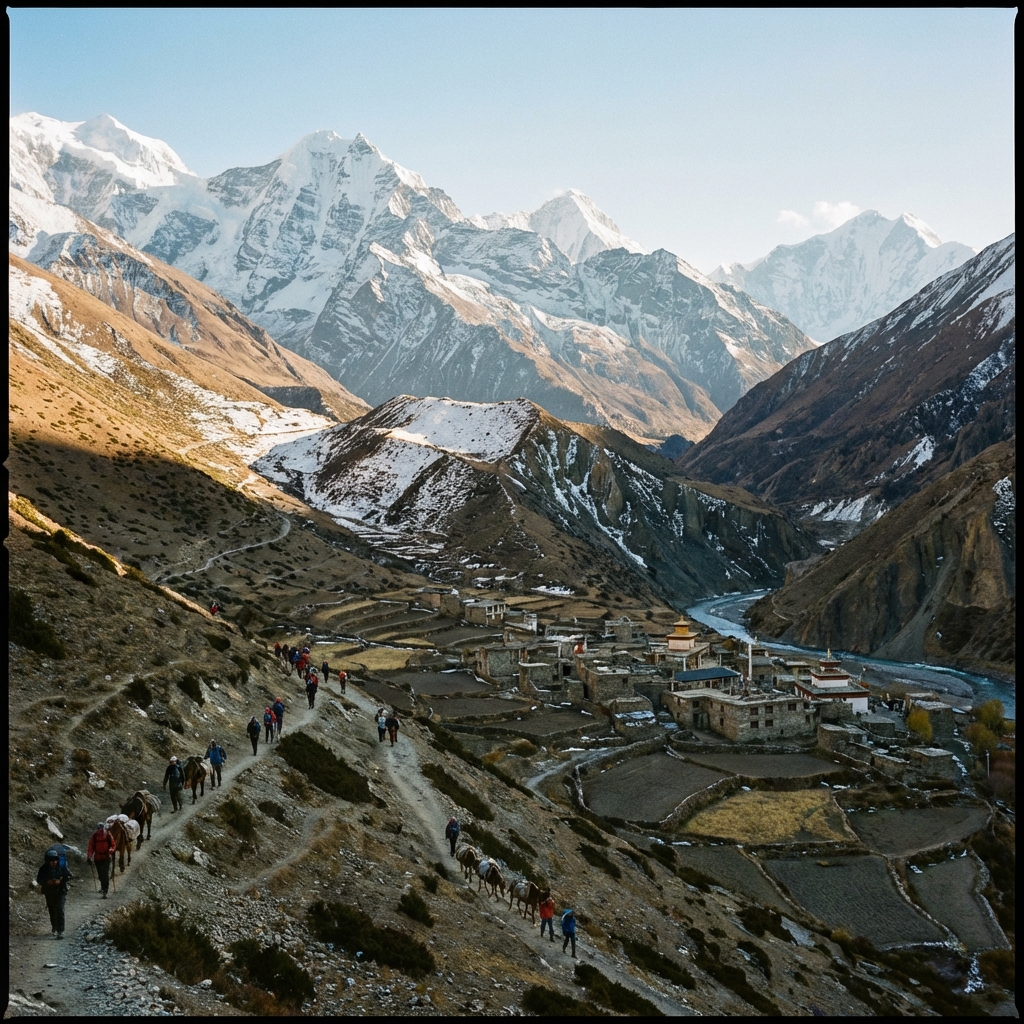
Nepal's trekking routes are supported by a sophisticated network of tea houses (also called lodges or guest houses) that have evolved over decades to meet trekker needs. Unlike wilderness backpacking where you carry all your food, trekking in Nepal means you'll eat three meals a day at these establishments.
Tea house dining characteristics:
- Kitchen-dining room combination (smoke can be an issue)
- Communal dining tables (social atmosphere)
- Menus featuring 30-60 items (Nepali, Indian, Western, Chinese, Tibetan)
- Food cooked to order (expect 30-60 minute wait times)
- No refrigeration above 3,500m (limited fresh ingredients)
- Wood or gas-fired cooking (affects environmental impact)
The quality and variety of food available directly correlates with altitude, accessibility, and competition. In popular areas like Namche Bazaar, you'll find remarkably sophisticated menus with excellent execution. At remote high-altitude locations, expect simpler fare with limited ingredients.
Order Early and Order the Same
The Economics of Mountain Food
Understanding the economics of mountain food helps explain pricing and availability:
Supply chain realities:
- Below 3,000m: Road access or short porter hauls (reasonable prices)
- 3,000-4,000m: Multi-day porter hauls (prices increase 30-50%)
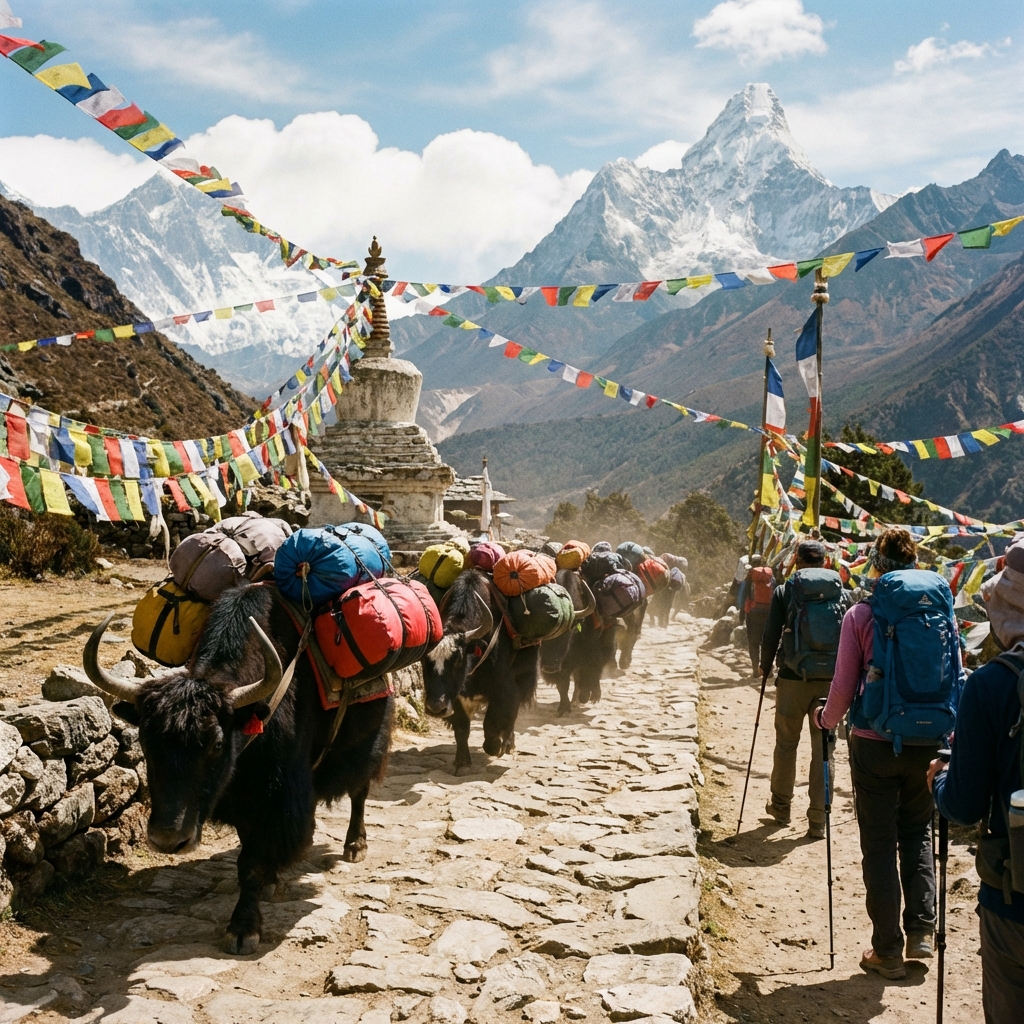
- Above 4,000m: Yak trains or porter hauls of 5-7 days (prices double or triple)
- Remote areas: Helicopter resupply during busy season (extreme prices)
Every ingredient at Everest Base Camp has been carried on someone's back or a yak's load for 7-10 days from Lukla. That $15 pizza represents not just the ingredients and labor, but the extraordinary logistics of Himalayan supply chains.
Price factors by altitude:
Food Cost Comparison by Altitude Zone
| Name | Breakfast | Lunch | Dinner | Daily Total | Notes |
|---|---|---|---|---|---|
| Kathmandu/Pokhara (1,400m) | $2-4 | $3-6 | $4-8 | $10-18 | City restaurants, full variety, Western standards available |
| Low Altitude Treks (2,000-2,800m) | $4-6 | $5-8 | $6-10 | $15-24 | Road access nearby, fresh vegetables, good variety |
| Mid Altitude (2,800-3,500m) | $5-8 | $6-10 | $8-14 | $19-32 | Porter resupply, limited fresh produce, staples well-stocked |
| High Altitude (3,500-4,500m) | $6-10 | $8-14 | $10-18 | $24-42 | Yak transport, no fresh vegetables, canned/dried goods |
| Extreme Altitude (Above 4,500m) | $8-15 | $10-18 | $12-25 | $30-58 | Long supply chains, limited options, seasonal availability |
Dal Bhat Power: The Trekker's Superfood
Why Dal Bhat Dominates
"Dal bhat power, 24 hour!" This phrase, shouted enthusiastically by guides and porters, captures the cultural reverence for Nepal's national dish. But beyond the catchy slogan lies nutritional wisdom perfectly suited to the demands of high-altitude trekking.
What is dal bhat?
- Bhat: Steamed white rice (occasionally brown rice at tourist areas)
- Dal: Lentil soup (usually yellow lentils, sometimes black or mixed)
- Tarkari: Vegetable curry (seasonal vegetables in spiced sauce)
- Achar: Pickle condiment (fermented vegetables or fruits, spicy)
- Sometimes included: Papad (crispy lentil wafer), small portion of meat curry, fermented vegetables
The dal bhat advantage:
-
Unlimited refills: Most tea houses offer unlimited refills of rice, dal, and vegetables (not meat or special items). Eat until you're genuinely full.
-
Nutritional completeness:
- Rice provides quick-burning carbohydrates for energy
- Lentils offer complete protein and fiber
- Vegetables supply vitamins and minerals
- Spices aid digestion and palatability
- Achar provides probiotics and flavor variety
-
Altitude-appropriate:
- Easy to digest (important when appetite is suppressed)
- Warm and comforting
- High calorie density from rice
- Protein supports muscle recovery
- Salt content helps with electrolyte balance
-
Economic value:
- $5-7 at lower altitudes (2,000-3,000m)
- $8-10 at mid altitudes (3,000-4,000m)
- $10-15 at high altitudes (4,000-5,000m)
- With unlimited refills, potentially 2,000+ calories for one price
-
Consistency: Even at remote tea houses where Western food quality suffers, dal bhat maintains reasonable standards because it's what the staff eats daily.
-
Fastest service: Since dal bhat is typically being prepared for staff anyway, it's usually ready first.
Nutritional Analysis of Dal Bhat
Let me break down the nutritional profile of a typical dal bhat serving:
Standard serving (before refills):
- White rice (300g cooked): 390 calories, 86g carbs, 7g protein
- Dal (250ml): 180 calories, 30g carbs, 12g protein, 10g fiber
- Vegetable curry (150g): 120 calories, 15g carbs, 4g protein, 5g fiber
- Achar (50g): 30 calories, 6g carbs, 1g protein
- Total first serving: ~720 calories, 137g carbs, 24g protein, 15g fiber
With typical refills (1.5x more rice, 1x more dal, 0.5x more vegetables):
- Total meal: ~1,300 calories, 240g carbs, 40g protein, 25g fiber
This macronutrient profile is nearly ideal for trekking:
- 70-75% carbohydrates (primary fuel at altitude)
- 12-15% protein (muscle maintenance and recovery)
- 10-15% fat (sustained energy, vitamin absorption)
Micronutrient benefits:
- Iron: Lentils provide non-heme iron (important for oxygen transport)
- B vitamins: Rice and lentils offer B-complex vitamins (energy metabolism)
- Potassium: Vegetables and dal support electrolyte balance
- Folate: Lentils are rich in folate (cell function and growth)
- Magnesium: Helps prevent altitude-related muscle cramps
Dal Bhat Cultural Protocols
Respecting dal bhat customs enhances your cultural experience:
Eating etiquette:
- Traditionally eaten with the right hand (left hand is considered unclean)
- Mix rice, dal, and vegetables together on your plate
- Achar is used as a flavor accent, not consumed alone
- Take refills when offered - refusing is considered wasteful
- Finish what's on your plate before asking for more
- It's acceptable to eat only rice and dal if vegetables don't appeal
Ordering considerations:
- Specify "vegetable dal bhat" (standard) or "chicken/buffalo dal bhat" (premium)
- Ask about spice level: "Not spicy" (ali piro chaina), "Medium spicy" (ali ali piro), "Very spicy" (dherai piro)
- Some tea houses offer "special dal bhat" with extra items for $2-3 more
- At high altitudes, dal bhat may be the only meal cooked twice daily (lunch and dinner)
Dal Bhat Refill Exceptions: Not all tea houses offer unlimited refills. In very remote or high-altitude locations (above 4,500m), some tea houses charge for refills or limit them to one additional serving. Always ask about refill policy when ordering. Additionally, meat portions are never unlimited - you get one serving only.
Strategic Dal Bhat Timing
When to choose dal bhat:
- Dinner: Almost always the best choice (warmest, most filling, best value)
- Lunch: Good choice on cold days or when you need maximum calories
- At altitude: Above 4,000m when appetite is suppressed but calories are needed
- When on a budget: Provides the most calories per dollar spent
- Remote locations: Quality is most consistent
When to choose alternatives:
- Breakfast: Western options or Tibetan bread usually better
- Hot sunny days: Lighter fare may be more appealing
- Variety needs: After 5+ consecutive dal bhat meals, mental fatigue sets in
- Stomach issues: Blander Western options may be easier to digest
Tea House Menu Deep Dive
Breakfast Options
Breakfast is crucial on trekking days - you'll need sustained energy for 4-7 hours of uphill hiking. Most tea houses serve breakfast from 6:30-8:30 AM.
Porridge and Cereal Options:
-
Porridge (Tibetan, oatmeal, or muesli): $3-6
- Usually made with milk powder and water
- Can request honey, sugar, or fruit (if available)
- Warm, filling, easy to digest
- Oatmeal provides slow-burning carbs (ideal for morning energy)
- Nutrition: ~300-400 calories, high fiber
- Verdict: Excellent choice for cold mornings
-
Muesli with yogurt: $4-7
- Yogurt is usually made in-house from buffalo milk
- Muesli varies in quality (check freshness)
- Sometimes includes fruit (apple, banana, dried fruits)
- Nutrition: ~350-450 calories, good protein and probiotics
- Verdict: Good choice at lower altitudes with fresh yogurt
Egg Dishes:
-
Scrambled eggs: $4-7
- Quality varies significantly by altitude
- Fresh eggs available below 3,500m
- Above 3,500m, eggs may be transported for weeks
- Request "well cooked" to avoid food safety issues
- Nutrition: ~250-300 calories (2-3 eggs), high protein
- Verdict: Reliable protein source at mid altitudes
-
Omelet: $5-8
- Can include cheese, vegetables, or meat
- Larger portion than scrambled eggs
- Cheese is usually processed (safe at altitude)
- Nutrition: ~300-400 calories, excellent protein
- Verdict: Best egg option for calorie density
-
Boiled eggs: $2-4
- Safest egg preparation (fully cooked)
- Often available even when other egg dishes aren't
- Can be packed for trail snacks
- Nutrition: ~140 calories per egg, pure protein
- Verdict: Most reliable egg choice at high altitude
-
Fried eggs: $4-7
- Specify "sunny side up" or "over easy/hard"
- Oil quality varies (can be heavy)
- Nutrition: ~200-300 calories
- Verdict: Decent option if you want something different
Bread and Pancakes:
-
Tibetan bread: $2-5
- Deep-fried flat bread, served hot
- Excellent with honey, jam, or peanut butter
- Very filling and calorie-dense
- Best breakfast choice for many experienced trekkers
- Nutrition: ~400-500 calories, high carbs and fat
- Verdict: Outstanding for energy, addictively delicious
-
Toast: $2-4
- Usually white bread (locally baked)
- Butter and jam typically included
- Quality of bread varies significantly
- Nutrition: ~200-300 calories
- Verdict: Safe but uninspiring choice
-
Pancakes: $5-8
- American-style (thick) or European-style (thin/crepe)
- Toppings: honey, jam, sugar, apple, banana, chocolate
- Made with milk powder, eggs, and flour
- Very popular but inconsistent quality
- Nutrition: ~450-600 calories depending on toppings
- Verdict: Good occasional treat, heavy on stomach
-
French toast: $5-8
- Quality depends heavily on bread and egg freshness
- Usually served with honey or syrup
- Nutrition: ~400-500 calories
- Verdict: Hit or miss - try at well-reviewed tea houses only
Specialty Breakfast Items:
-
Breakfast burrito: $6-10
- Available at tourist-focused tea houses
- Tortilla, eggs, cheese, vegetables
- Quality highly variable
- Nutrition: ~500-700 calories
- Verdict: Modern addition, best at places like Namche or Lukla
-
Hash browns: $4-6
- Fried potato patties
- Available at select tea houses
- Nutrition: ~300-400 calories
- Verdict: Good carb option when available
Hot Beverages (Breakfast):
All breakfast orders typically include one hot beverage:
- Milk tea (chiya): $1-3 - Sweet milky tea, Nepali staple
- Black tea: $1-3 - Usually Nepali or Assam tea
- Coffee: $2-5 - Instant Nescafe or filter coffee (rare)
- Hot lemon: $2-4 - Lemon juice and hot water (refreshing, vitamin C)
- Hot chocolate: $3-6 - Made from powder, sometimes with milk
Breakfast Strategy:
The 700-Calorie Breakfast Formula
Recommended breakfast combos by altitude:
Below 3,000m: Muesli with yogurt + fruit + coffee ($8-12)
- Fresh dairy available, fruits possible, variety enjoyable
- ~500 calories - supplement with biscuits on trail
3,000-4,000m: Tibetan bread + scrambled eggs + milk tea ($10-14)
- Reliable options, good calorie density, culturally authentic
- ~700 calories - satisfies until lunch
Above 4,000m: Porridge + boiled eggs + hot lemon ($9-13)
- Easy to digest, warm and comforting, safe preparation
- ~600 calories - at altitude, appetite is suppressed anyway
Lunch Options
Lunch on trekking days typically happens at a tea house along the route, taken 3-5 hours after breakfast. Since you'll continue trekking after lunch, you want something satisfying but not so heavy that it causes afternoon sluggishness.
Fried Rice and Noodle Dishes:
-
Fried rice (vegetable, egg, chicken, or mixed): $5-10
- Reliable lunch choice at virtually every tea house
- Rice fried with vegetables, egg, and sometimes meat
- Specify spice level (often comes with chili sauce)
- Nutrition: ~600-800 calories, high carbs
- Verdict: Excellent lunch choice - filling but not heavy
-
Chow mein (fried noodles): $5-10
- Similar to fried rice but with wheat noodles
- Vegetable, egg, chicken, or buffalo varieties
- More filling than fried rice
- Nutrition: ~650-850 calories
- Verdict: Very popular, slightly heavier than fried rice
-
Thukpa (Tibetan noodle soup): $5-9
- Noodles in hot broth with vegetables and sometimes meat
- Comfort food on cold days
- Hydrating (helps with altitude acclimatization)
- Nutrition: ~500-700 calories
- Verdict: Outstanding on cold or rainy days
-
Pasta: $6-12
- Various styles: spaghetti, penne, macaroni
- Tomato sauce, cheese sauce, or mixed
- Quality highly variable
- Nutrition: ~600-800 calories
- Verdict: Good if you're craving Western food
Rice and Curry Dishes:
-
Fried potatoes with vegetables: $5-8
- Potatoes fried with seasonal vegetables
- Less heavy than fried rice
- Nutrition: ~500-600 calories
- Verdict: Light lunch option
-
Sherpa stew: $6-10
- Traditional Sherpa dish with potatoes, vegetables, and sometimes meat
- Thick, hearty stew
- Excellent at higher altitudes
- Nutrition: ~550-750 calories
- Verdict: Authentic choice, very warming
Bread and Light Options:
-
Sandwiches: $4-8
- Cheese, egg, vegetable, or chicken
- Bread quality varies
- Usually served with french fries or chips
- Nutrition: ~400-600 calories
- Verdict: Light option, good if appetite is low
-
Spring rolls: $5-8
- Deep-fried vegetable or chicken rolls
- Usually served with sauce
- Nutrition: ~450-550 calories
- Verdict: Tasty but not particularly filling
Momo (Dumplings):
-
Steamed momos: $6-10 (typically 8-10 pieces)
- Dumplings filled with vegetables, chicken, or buffalo
- Served with spicy tomato chutney
- National snack of Nepal
- Light and less oily than fried versions
- Nutrition: ~400-600 calories
- Verdict: Excellent choice, culturally authentic
-
Fried momos: $6-11
- Same as steamed but deep-fried
- Crispier, more calorie-dense
- Heavier on the stomach
- Nutrition: ~550-750 calories
- Verdict: Delicious but rich - better as dinner appetizer
-
Jhol momos: $7-12
- Momos served in spicy soup/gravy
- Specialty item not available everywhere
- Very popular in Kathmandu
- Nutrition: ~500-700 calories
- Verdict: Comfort food if available
Soup Options:
-
Vegetable soup: $3-6
- Clear or cream-based vegetable soup
- Light and warming
- Nutrition: ~150-300 calories
- Verdict: Good starter, not sufficient as main lunch
-
Garlic soup: $4-7
- Believed to help with altitude acclimatization
- Strong flavor
- Nutrition: ~200-350 calories
- Verdict: Popular among trekkers, medicinal benefits debated
Lunch Strategy:
The ideal lunch provides 600-800 calories, doesn't sit too heavily, and gives you energy for afternoon trekking. I typically recommend:
Standard trekking day: Vegetable fried rice + hot lemon tea ($7-12)
- Provides sustained energy without heaviness
- Quick to prepare (20-30 minutes)
- Reliable at any altitude
Cold weather day: Thukpa + milk tea ($7-12)
- Hot soup warms you up
- Hydration supports altitude acclimatization
- Comfort food factor
Low appetite day (altitude): Steamed momos + garlic soup ($9-15)
- Lighter but still adequate calories
- More appealing when appetite is suppressed
- Garlic soup may help with altitude
Rest day or short hiking day: Dal bhat ($8-14)
- Take advantage of unlimited refills
- Maximum calories for afternoon activities
- When you have time to digest
Lunch Timing Matters: Try to have lunch between 11:30 AM and 1:00 PM. Arriving earlier means kitchens may not be fully ready; arriving later means you'll be eating when you should be at your destination for the day. Early lunch also gives you time to digest before afternoon trekking.
Dinner Options
Dinner is the main meal of the day when trekking. You've reached your destination, can eat leisurely, and need to refuel after 5-8 hours of hiking. Most trekkers arrive at tea houses between 2:00-4:00 PM, with dinner served from 6:00-8:00 PM.
Why dinner matters most:
- You can eat more without worrying about hiking afterward
- Socialization happens over dinner (meeting other trekkers)
- You have time to digest before sleep
- Your body needs maximum calories for overnight recovery
- Target: 1,000-1,500 calories at dinner
Dinner is dal bhat time: As discussed extensively above, dal bhat is the optimal dinner choice for most trekking days. With unlimited refills, you can easily consume 1,200-1,800 calories, making it the most efficient way to refuel.
Western Dinner Options (when you need variety):
-
Pizza: $8-18
- Available at tourist tea houses
- Quality ranges from surprisingly good to disappointing
- Cheese is usually processed (shelf-stable)
- Toppings limited by altitude: vegetables, cheese, sometimes salami
- Takes 40-60 minutes to prepare
- Nutrition: ~1,200-1,800 calories (whole pizza)
- Best locations: Namche Bazaar, Lukla, Gorak Shep (Everest region); Ghorepani, Tadapani (Annapurna)
- Verdict: Good treat every 3-4 days, share with trekking partners
-
Sizzler: $10-16
- Meat or vegetables served on hot iron plate
- Dramatic presentation (arrives sizzling)
- Usually includes rice or fries
- Nutrition: ~900-1,200 calories
- Verdict: Fun experience, decent quality
-
Burgers: $7-12
- Buffalo burger most common (chicken less so)
- Quality variable
- Usually served with fries
- Nutrition: ~700-1,000 calories
- Verdict: Satisfies Western cravings, middling quality
-
Steak: $12-20
- Buffalo steak (yak steak extremely rare and expensive)
- Quality depends on meat storage (limited above 4,000m)
- Usually tough at high altitude
- Nutrition: ~600-900 calories depending on size
- Verdict: Occasional protein craving satisfier, best below 3,500m
Nepali Dinner Specialties:
-
Dal bhat (discussed extensively above): $6-15
- Always the best value and nutrition
- Unlimited refills
- Verdict: Default dinner choice
-
Curry and rice combinations: $8-14
- Chicken curry, buffalo curry, or vegetable curry with rice
- No unlimited refills (unlike dal bhat)
- Nutrition: ~700-1,000 calories
- Verdict: Good option but dal bhat is better value
-
Traditional thalis: $10-16
- Assortment of small dishes (multiple curries, rice, bread, pickle)
- Similar to dal bhat but more variety
- Not always unlimited refills
- Nutrition: ~800-1,200 calories
- Verdict: Special occasion choice
Tibetan Dinner Options:
-
Thenthuk: $6-10
- Hand-pulled noodle soup with vegetables and meat
- Traditional Sherpa comfort food
- Very filling
- Nutrition: ~650-850 calories
- Verdict: Excellent choice on cold nights
-
Tingmo: $5-9
- Tibetan steamed bread
- Usually served with vegetable curry or meat stew
- Nutrition: ~600-800 calories
- Verdict: Interesting alternative to rice-based meals
Dinner Beverages:
Beer and alcohol are discussed in detail in a later section, but dinner beverage choices:
- Ginger lemon honey tea: $3-5 - Soothes throat, aids digestion, warms body
- Masala tea: $2-4 - Spiced milk tea, comforting
- Hot apple cider: $4-7 - When available, delicious treat
- Mint tea: $2-4 - Aids digestion
- Beer (below 3,500m): $4-8 - Social, but avoid at altitude
Strategic Dinner Planning:
The 5-1 Dinner Rotation
My recommended dinner rotation for a 10-day trek:
- Day 1: Dal bhat (get familiar with it)
- Day 2: Dal bhat (embrace it)
- Day 3: Pizza at Namche Bazaar (variety, celebration of reaching Namche)
- Day 4: Dal bhat
- Day 5: Dal bhat
- Day 6: Thukpa or thentuk (Tibetan variety)
- Day 7: Dal bhat
- Day 8: Dal bhat
- Day 9: Pizza at Gorak Shep (celebrate reaching high point)
- Day 10: Dal bhat
This rotation provides:
- Consistent nutrition from dal bhat
- Variety to prevent mental fatigue
- Cultural culinary experiences
- Budget optimization
- Energy for demanding days
Snacks and Desserts
While three main meals provide most calories, snacks play an important supporting role:
Tea house snacks:
-
Chocolate bars: $2-5
- Snickers, Mars, Kit-Kat commonly available
- Prices increase significantly with altitude
- Quick energy during trekking
- Store in inside pocket during winter (frozen chocolate is hard to eat)
-
Biscuits and cookies: $1-4 per package
- Oreos, glucose biscuits, digestive biscuits
- Lightweight trail snacks
- Good for emergency energy
-
Potato chips/crisps: $2-5
- Local brands and Pringles
- Satisfying salty craving
- Bags inflate at altitude (air pressure difference)
-
Popcorn: $2-4
- Often made fresh at tea houses
- Light, crunchy, satisfying
-
Peanuts and mixed nuts: $3-6
- Excellent protein and fat source
- Buy in Kathmandu/Pokhara before trekking (better prices)
- Bring Ziploc bags to portion out
-
Dried fruit: $4-8
- Raisins, apricots, apple chips
- Natural sugars for quick energy
- Better purchased in cities
-
Energy bars: $3-7
- Limited availability, expensive
- Bring from home for better selection and price
Dessert options:
-
Apple pie: $5-10
- Famous in the Annapurna region (Pisang, Manang)
- Made with local apples
- Best served warm with custard or ice cream
- Verdict: Must-try in apple-growing regions
-
Snickers pie: $6-12
- Popular in Everest region
- Decadent chocolate-peanut dessert
- Verdict: Novelty worth trying once
-
Pancakes: $5-8 (as dessert, smaller portion than breakfast)
- With honey, jam, or chocolate
- Verdict: Reliable sweet treat
-
Brownies: $4-8
- When available, quality varies
- Verdict: Hit or miss
Dessert Reality Check: While desserts appear on menus, availability above 4,000m is limited. Many tea houses simply don't have the ingredients or time to prepare desserts. Don't get your hopes up for apple pie at Gorak Shep - dal bhat is what's reliably available.
Snacking strategy:
- Buy nuts, dried fruit, and energy bars in Kathmandu/Pokhara before trekking
- Bring one chocolate bar per trekking day
- Purchase biscuits at tea houses as backup energy
- Save desserts for rest days or special locations
- Aim for 300-500 snack calories per day
Food Costs By Altitude: Detailed Price Analysis
Understanding how prices change with altitude helps you budget accurately and make informed choices.
Price Increase Pattern
The general rule: Prices increase 20-30% per 1,000m elevation gain above 2,500m, but this varies by route accessibility and competition.
Factors affecting prices:
- Transport cost: Road access vs. porter haul vs. yak train vs. helicopter
- Distance from supply hub: Days of transport from Lukla, Jiri, Besi Sahar, etc.
- Competition: More tea houses = competitive pricing
- Seasonality: Peak season (Oct-Nov, Mar-Apr) vs. off-season
- Product type: Imported items (chocolate, cheese, alcohol) inflate more than basics
Region-by-Region Price Analysis
Everest Region (Lukla to EBC):
Lukla (2,860m) - Entry point:
- Dal bhat: $6-8
- Fried rice: $6-8
- Momos: $6-8
- Pizza: $10-14
- Beer: $4-5
- Chocolate bar: $2-3
- Breakfast: $5-8
- Daily food budget: $20-30
Phakding (2,610m):
- Dal bhat: $5-7
- Fried rice: $5-7
- Momos: $5-7
- Pizza: $9-13
- Beer: $4-5
- Daily food budget: $18-28
Namche Bazaar (3,440m) - Major hub:
- Dal bhat: $8-10
- Fried rice: $7-9
- Momos: $7-9
- Pizza: $12-16
- Burger: $10-13
- Beer: $5-7
- Chocolate bar: $3-4
- Coffee: $3-5
- Daily food budget: $25-38
- Notes: Most competitive pricing on route due to 30+ tea houses; quality is also highest
Tengboche (3,860m):
- Dal bhat: $9-11
- Fried rice: $8-10
- Momos: $8-10
- Pizza: $14-17
- Beer: $6-8
- Daily food budget: $27-40
Dingboche (4,410m):
- Dal bhat: $10-13
- Fried rice: $9-12
- Momos: $9-12
- Pizza: $15-20
- Beer: $7-10 (not recommended at this altitude)
- Chocolate bar: $4-6
- Daily food budget: $30-45
Lobuche (4,940m):
- Dal bhat: $12-15
- Fried rice: $11-14
- Momos: $11-14
- Pizza: $18-23 (limited availability)
- Chocolate bar: $5-7
- Daily food budget: $35-52
Gorak Shep (5,164m) - Highest permanent settlement:
- Dal bhat: $14-18
- Fried rice: $13-16
- Momos: $12-15
- Pizza: $20-25 (1-2 tea houses only)
- Chocolate bar: $6-8
- Daily food budget: $40-58
- Notes: Limited menu options; dal bhat is most reliable
Annapurna Circuit:
Besisahar/Bhulbule (760-840m) - Starting points:
- Dal bhat: $4-6
- Fried rice: $4-6
- Daily food budget: $12-20
Chame (2,710m):
- Dal bhat: $6-8
- Fried rice: $6-8
- Pizza: $10-14
- Daily food budget: $20-30
Manang (3,540m) - Acclimatization hub:
- Dal bhat: $8-11
- Fried rice: $7-10
- Momos: $7-10
- Pizza: $12-16
- Apple pie: $6-9 (famous here)
- Beer: $5-7
- Daily food budget: $25-40
- Notes: Similar to Namche - good competition, quality options
Thorong Phedi (4,450m):
- Dal bhat: $11-14
- Fried rice: $10-13
- Daily food budget: $32-48
- Notes: Limited options, high prices due to strategic location before pass
Muktinath (3,710m) - After pass:
- Dal bhat: $7-10
- Fried rice: $6-9
- Daily food budget: $22-35
- Notes: Road access, so prices drop significantly
Annapurna Base Camp Trek:
Ghorepani (2,874m):
- Dal bhat: $7-9
- Pizza: $11-15
- Daily food budget: $22-32
Tadapani (2,630m):
- Dal bhat: $6-8
- Pizza: $10-14
- Daily food budget: $20-30
Chhomrong (2,170m):
- Dal bhat: $6-8
- Fried rice: $6-8
- Daily food budget: $18-28
Deurali (3,230m):
- Dal bhat: $9-12
- Fried rice: $8-11
- Daily food budget: $26-38
Annapurna Base Camp (4,130m):
- Dal bhat: $12-16
- Fried rice: $11-14
- Pizza: $16-22
- Chocolate bar: $5-7
- Daily food budget: $35-50
Budget Optimization Strategies
Save 30-40% on Food Costs
Budget breakdown for 12-day EBC trek:
Budget approach (dal bhat focus, minimal Western food):
- Average daily cost: $22-28
- 12-day total: $264-336
Moderate approach (dal bhat dinners, Western lunches, occasional treats):
- Average daily cost: $28-38
- 12-day total: $336-456
Comfort approach (variety, Western options, alcohol, desserts):
- Average daily cost: $38-55
- 12-day total: $456-660
Most independent trekkers spend $300-450 on food for a 12-day EBC trek.
Vegetarian Trekking in Nepal
Nepal is a paradise for vegetarian trekkers. Hindu and Buddhist dietary practices mean vegetarian food is the default in most tea houses, not a special request.
Why Nepal is Perfect for Vegetarians
Cultural factors:
- 40%+ of Nepal's population is vegetarian
- Dal bhat (national dish) is inherently vegetarian
- Hindu dietary laws support meat-free eating
- Sherpa Buddhist communities eat primarily vegetarian
- No cultural stigma or inconvenience requesting vegetarian options
Practical advantages:
- Every single tea house menu has 10-20 vegetarian options
- Vegetarian food is fresher at altitude (meat quality degrades)
- Lower food poisoning risk (meat safety is questionable above 4,000m)
- Usually cheaper than meat options ($1-3 less per dish)
- Faster preparation (no meat cooking time)
Vegetarian Protein Sources on the Trail
Meeting protein needs (50-75g per day) while trekking vegetarian requires intentional choices:
Primary protein sources:
-
Dal (lentils): 12-18g protein per serving
- Available at every meal
- Dal bhat provides 40g+ protein with refills
- Complete protein when combined with rice
-
Eggs: 6g protein per egg
- Widely available below 4,000m
- Order omelets (2-3 eggs) for breakfast
- Boiled eggs are safest at altitude
-
Cheese: 5-8g protein per serving
- Processed cheese available everywhere
- Cheese omelets, cheese momos, pizza
- Shelf-stable varieties safe at altitude
-
Momos: 8-12g protein per order (if cheese or vegetable)
- Wheat wrappers plus cheese/paneer filling
- Substantial protein contribution
-
Nuts and peanut butter: 7g protein per serving
- Bring from Kathmandu
- Peanut butter on Tibetan bread = excellent breakfast
-
Yogurt: 8-12g protein per serving
- Available below 3,500m (requires refrigeration)
- Breakfast option: muesli with yogurt
Sample high-protein vegetarian day:
- Breakfast: Cheese omelet (3 eggs) + Tibetan bread with peanut butter + milk tea = 35g protein
- Lunch: Cheese momos (10 pieces) + vegetable soup = 15g protein
- Dinner: Dal bhat with extra dal (2 refills) = 50g protein
- Snacks: Mixed nuts (2 servings) = 14g protein
- Daily total: 114g protein (more than sufficient)
Best Vegetarian Dishes
Nutritionally optimal:
- Dal bhat (complete protein, high calories, unlimited refills)
- Cheese momos (protein + carbs)
- Vegetable fried rice with egg (complete meal)
- Tibetan bread with peanut butter and eggs (breakfast)
- Thukpa with vegetables and egg (warming, hydrating)
Variety options:
- Vegetable chow mein
- Vegetable pizza (when you need a break from dal bhat)
- Pasta with cheese sauce
- Vegetable curry with rice
- Spring rolls
- Fried potatoes with vegetables
Vegetarian Trekking Tips
- Emphasize dal bhat: It's nutritionally complete, culturally authentic, and the best value
- Add eggs liberally: They're available almost everywhere and boost protein
- Bring protein supplements: If concerned about protein intake, bring protein powder
- Stock up on nuts: Buy in Kathmandu, pack in Ziploc bags, eat daily
- Don't worry: Vegetarian trekking in Nepal is easier than in most Western countries
Vegetarian Advantage: Vegetarian trekkers often have better experiences than meat-eaters in Nepal. You'll eat what the locals eat, experience authentic cuisine, have faster meal service, lower costs, and significantly reduced food safety risks. There's absolutely no disadvantage to trekking vegetarian in Nepal.
Vegan Trekking in Nepal
Vegan trekking in Nepal is entirely possible but requires more awareness and proactive ordering than vegetarian trekking.
Challenges for Vegans
Tea house menu challenges:
- Milk tea is default (black tea must be requested)
- Many dishes include ghee, butter, or milk
- Bread and pancakes often contain eggs or milk
- Cheese appears in many vegetable dishes
- Cross-contamination in kitchens
Communication challenges:
- "Vegetarian" doesn't convey vegan in Nepal
- Limited understanding of vegan restrictions
- Dairy is considered vegetarian (Hindu tradition)
- Need to explain "no milk, no eggs, no butter, no cheese, no ghee"
Naturally Vegan Dishes
Reliably vegan options:
-
Dal bhat (verify no ghee): Ask "No ghee, no butter"
- Rice is always vegan
- Dal is usually vegan (verify no butter tadka/tempering)
- Vegetable curry is usually vegan
- Achar is vegan
- Make this your staple meal
-
Steamed momos (vegetable, no butter): Verify no butter on momos
- Wheat wrappers are vegan
- Vegetable filling is vegan
- Confirm they don't brush momos with butter after steaming
-
Fried rice (vegetable, no egg): "Vegetable fried rice, no egg, no butter"
- Simple and widely available
- Filling lunch option
-
Chow mein (vegetable, no egg): "Vegetable chow mein, no egg, no butter"
- Similar to fried rice
- Good variety option
-
Thukpa (vegetable, confirm broth): Ask if broth is vegetable-based
- Sometimes made with chicken broth
- When vegetable-based, excellent vegan option
-
Tibetan bread: Usually vegan (fried in oil)
- Verify no milk in dough (rare, but possible)
- Excellent with jam (usually vegan)
-
Boiled potatoes: Always vegan
- Can request seasoning without butter
-
Plain rice: Always vegan
-
Vegetable curry (no cream, no ghee): Specify "no ghee, no cream"
- Usually coconut oil or vegetable oil based
Vegan breakfast options:
- Porridge made with water (specify "no milk")
- Tibetan bread with jam
- Boiled potatoes
- Fruit when available (lower altitudes)
- Toast with jam (verify no butter on toast)
Vegan snacks:
- Most biscuits are vegan (check packages)
- Potato chips
- Popcorn (verify butter)
- Dried fruit and nuts
- Dark chocolate (check ingredients)
Communicating Vegan Needs
Essential Nepali phrases:
"Ma sakan haru matra khanchu" = I eat only vegetables "Dudh chaina, dim chaina, ghee chaina" = No milk, no eggs, no ghee "Tel ma pakako" = Cooked in oil (not butter/ghee)
Ordering script: "I'm vegan - I don't eat meat, eggs, milk, cheese, butter, or ghee. Can you make [dish name] with only vegetables and oil? No dairy products, no eggs, no butter, no ghee."
Point to ingredients on the menu and explicitly state what to exclude.
Vegan Nutrition Concerns
Protein on a vegan trek: Meeting 50-70g protein daily is challenging but possible:
- Dal: 12-18g per serving (unlimited with dal bhat)
- Nuts and nut butter: 7-10g per serving (bring from Kathmandu)
- Chickpeas: Sometimes available in curries
- Lentils in various forms: Dal, soups
- Protein powder: Bring from home, mix with water
Sample vegan day:
- Breakfast: Porridge with water + Tibetan bread with peanut butter = 18g protein
- Lunch: Vegetable fried rice (no egg) with extra vegetables + mixed nuts = 15g protein
- Dinner: Dal bhat (3 servings of dal, 2 of rice, unlimited vegetables) = 45g protein
- Snacks: Protein powder shake + peanuts = 30g protein
- Daily total: 108g protein
B12 supplementation: Bring B12 supplements from home - unavailable on the trail.
Iron absorption: Lentils provide iron, but combine with vitamin C for better absorption:
- Drink hot lemon water with meals
- Eat tomato-based sauces when available
Omega-3s: Bring flax seeds or chia seeds from Kathmandu; add to porridge.
Vegan Trekking Strategy
Vegan Success Formula
Preparation checklist:
- Buy nuts, nut butter, protein powder, energy bars in Kathmandu
- Bring B12 supplements and multivitamin
- Carry soy milk powder or plant milk powder (if desired)
- Learn Nepali ordering phrases
- Download offline translation app
- Bring Ziploc bags for portioning snacks
Daily eating pattern:
- Breakfast: Tibetan bread + peanut butter, or porridge (with water)
- Lunch: Fried rice (no egg) or chow mein (no egg), specify no butter
- Dinner: Dal bhat (verify vegan, load up on refills)
- Snacks: Nuts, protein bars, fruit when available
Tea house selection: Stay at tea houses where you're eating. When you arrive:
- Immediately tell the kitchen staff you're vegan
- Ask what vegan options they can prepare
- Pre-order dinner (gives them time to plan)
- Be friendly and patient - they want to help
Is Vegan Trekking Worth It?
Honest assessment:
Pros:
- Completely possible with planning
- Dal bhat naturally vegan (mostly)
- Builds cultural connection through food discussions
- Lighter feeling, less food poisoning risk
Cons:
- Requires constant vigilance and communication
- Limited variety compared to vegetarians
- Some tea houses have very limited vegan options
- Can be stressful if you're not proactive
Verdict: Vegan trekking in Nepal is absolutely doable and many vegans trek Nepal successfully every year. However, it requires more effort, planning, and communication than vegetarian or omnivore trekking. If you're committed to veganism, you can trek Nepal comfortably - just be prepared to advocate for yourself, embrace dal bhat, and bring supplemental foods.
Food Safety and Preventing Food Poisoning
Food poisoning is one of the most common health issues for trekkers in Nepal. The good news: it's largely preventable with proper precautions.
Understanding the Risks
Why food safety is challenging in mountain tea houses:
- No refrigeration above 3,500m
- Limited water for washing dishes and hands
- Cross-contamination in kitchens
- Variable hygiene standards
- Long supply chains (food may be old)
- Altitude affects food preservation
- Flies and pests in warmer months
Common causes of trekker stomach issues:
- Contaminated water: #1 cause (60%+ of cases)
- Unwashed vegetables: Especially salads
- Undercooked meat: Particularly at altitude
- Dairy products: Yogurt, milk, cheese at altitude
- Reheated rice: Bacterial growth
- Cross-contamination: Cutting boards, utensils
- Poor hand hygiene: Your own or kitchen staff
What to Eat Safely
Safest food choices:
Green light (eat freely):
- Dal bhat (cooked fresh, served hot)
- Steamed rice (always safe when hot)
- Boiled lentils/dal (high cooking temperature kills bacteria)
- Freshly cooked vegetables in curry (served hot)
- Boiled eggs (fully cooked)
- Tibetan bread (deep fried, served hot)
- Momos (steamed fresh, served hot)
- Thukpa (boiling soup)
- Freshly cooked noodles
- Porridge (boiled)
- Toast (if bread is fresh)
Yellow light (exercise caution):
- Eggs (scrambled, fried): Ensure fully cooked, no runny parts
- Cheese: Only processed, packaged cheese (not fresh)
- Meat at mid-altitude (below 3,500m): Only if well-cooked
- Pizza: Safe if cheese is processed, cooked thoroughly
- Pasta: Safe if freshly cooked
- Yogurt below 3,000m: Only if refrigeration available and tastes fresh
- Fresh fruit below 3,000m: Peel yourself, don't eat pre-cut
Red light (avoid):
- Raw vegetables and salads (especially above 3,000m)
- Ice (made from potentially contaminated water)
- Tap water (never drink)
- Unpasteurized dairy
- Meat above 3,500m (storage issues)
- Reheated rice (unless steaming hot)
- Pre-cut fruit
- Mayonnaise and cream sauces at altitude
- Uncooked desserts
- Ice cream above 3,000m
- Rare or medium-cooked meat
- Buffet food that's been sitting out
Water Safety
Critical rule: Never drink tap water in Nepal. Period.
Safe water options:
-
Boiled water from tea houses: $1-2 per liter
- Ask for "oomaleko paani" (boiled water)
- Let it cool before drinking
- Most reliable option
- Environmentally friendly (no plastic bottles)
- Verdict: Best option for budget and environment
-
Purification tablets (Aquatabs, chlorine dioxide): $0.10-0.20 per liter
- Lightweight, inexpensive
- 30-minute wait time
- Slight chemical taste
- Doesn't remove sediment
- Verdict: Good backup option
-
Water filters (Sawyer, LifeStraw, SteriPEN): $0.05 per liter (after initial cost)
- Initial investment: $30-100
- Immediate use
- No chemical taste
- Removes sediment and particles
- SteriPEN uses UV (battery dependent)
- Verdict: Excellent for frequent trekkers
-
Bottled water: $1-5 per liter (increases with altitude)
- Convenient but expensive
- Environmental impact (plastic waste)
- Fake bottles are common
- Verdict: Avoid if possible; use only as emergency backup
Water consumption needs:
- 3-4 liters per day while trekking
- More at altitude (5+ liters above 4,500m)
- Urine should be pale yellow (hydration indicator)
Boiled Water Strategy
Hand Hygiene
Your hands are vectors for contamination. Rigorous hand hygiene prevents 50%+ of stomach issues.
Hand washing protocol:
- Before eating (every single time)
- After toilet use
- After touching shared surfaces (doorknobs, dining tables)
- Before handling food or snacks
Hand washing method:
- Soap and water (best): Scrub for 20 seconds minimum
- Hand sanitizer (backup): 60%+ alcohol, use liberally
- Carry both: Soap for when water available, sanitizer for trail use
Bring from home:
- Hand sanitizer (100ml+ bottle)
- Soap sheets or small bar soap
- Wet wipes for when water is scarce
Altitude-Specific Food Safety
Below 3,000m:
- Most foods safe if properly cooked
- Fresh vegetables available and generally safe (if washed properly)
- Yogurt and dairy relatively safe
- Meat quality good
3,000-4,000m:
- Avoid raw vegetables
- Stick to well-cooked foods
- Dairy should be processed only
- Meat quality variable - choose carefully
Above 4,000m:
- Strict hot food only
- No meat (storage issues)
- No dairy except processed cheese
- No raw anything
- Dal bhat becomes your safest bet
Kitchen Hygiene Assessment
When you arrive at a tea house, observe the kitchen (if visible):
Good signs:
- Clean cooking area
- Food stored in covered containers
- Staff washing hands
- Fresh ingredients visible
- Organized space
- No flies or pests
Warning signs:
- Visibly dirty surfaces
- Uncovered food
- Strong smell of rot or decay
- Flies everywhere
- Staff not washing hands
- Disorganized clutter
If kitchen hygiene looks questionable, stick to absolutely safe choices (dal bhat, boiled eggs, Tibetan bread) or consider staying elsewhere.
If You Get Food Poisoning
Despite precautions, stomach issues can happen. Most cases are mild and resolve in 24-48 hours.
Symptoms of food poisoning:
- Nausea and vomiting
- Diarrhea
- Stomach cramps
- Fever (sometimes)
- Dehydration
Treatment protocol:
- Stop trekking: Rest for 24-48 hours
- Hydrate aggressively: Oral rehydration solution (ORS) - mix packets with safe water
- Eat bland foods: Rice, toast, bananas (when you can tolerate food)
- Medications:
- Oral rehydration salts (Jeevan Jal packets, available everywhere)
- Loperamide/Imodium (stops diarrhea - use only if no fever)
- Azithromycin (antibiotic - for severe cases, 3-day course)
- Monitor symptoms: If severe or worsening, descend and seek medical care
When to descend immediately:
- High fever (>38.5°C/101.3°F)
- Blood in stool
- Severe dehydration (dark urine, dizziness)
- Symptoms lasting >3 days
- Inability to keep fluids down
Prevention is 100x better than treatment. Follow food safety rules religiously.
Nutrition at Altitude
Your body's nutritional needs change dramatically at altitude. Understanding these changes helps you fuel effectively.
Caloric Needs While Trekking
Energy expenditure factors:
- Hiking with backpack: 300-500 calories per hour
- Altitude metabolism increase: 15-30% more calories needed above 3,500m
- Cold temperature: Additional 100-300 calories for thermoregulation
- Body weight and fitness level
Daily caloric needs by altitude:
- 2,000-3,000m: 2,500-3,200 calories/day
- 3,000-4,000m: 3,000-3,800 calories/day
- Above 4,000m: 3,500-4,500 calories/day
Average trekker caloric intake reality: 2,000-2,800 calories/day
This creates a caloric deficit of 500-1,700 calories per day, which is why most trekkers lose 2-5 kg during a 2-week trek. This is normal and not dangerous, but maximizing caloric intake helps maintain energy.
Caloric Density of Common Trekking Meals
| Name | Calories | Protein | Carbs | Cost Efficiency |
|---|---|---|---|---|
| Dal Bhat (with refills) | 1,200-1,800 | 40-60g | 220-340g | Excellent |
| Fried Rice (vegetable) | 600-800 | 12-18g | 110-140g | Good |
| Chow Mein | 650-850 | 15-22g | 100-130g | Good |
| Pizza (whole) | 1,200-1,800 | 40-60g | 140-200g | Poor |
| Momos (10 pieces) | 400-600 | 12-18g | 60-80g | Fair |
| Thukpa | 500-700 | 15-25g | 80-110g | Good |
| Porridge (breakfast) | 300-450 | 8-12g | 55-75g | Good |
| Tibetan Bread (1 piece) | 400-550 | 8-12g | 60-80g | Excellent |
Macronutrient Balance
Optimal macronutrient ratio for high-altitude trekking:
- Carbohydrates: 60-70% of calories
- Protein: 15-20% of calories
- Fat: 15-25% of calories
Why carbs dominate at altitude:
- Carbohydrates require less oxygen to metabolize than fats
- At altitude, oxygen is limited
- Carbs provide quick energy for sustained exertion
- Rice, noodles, bread are readily available
Protein importance:
- Muscle recovery after daily trekking
- Immune function support
- Tissue repair
- Target: 50-80g per day
Healthy fats:
- Sustained energy release
- Vitamin absorption (A, D, E, K)
- Hormone production
- Sources: nuts, nut butter, ghee, oil in cooking
Altitude-Induced Appetite Suppression
Above 3,500m, most trekkers experience appetite suppression:
- Food becomes less appealing
- Feeling full after small amounts
- Nausea (sometimes)
- Taste changes (food seems bland)
This is normal and related to:
- Hypoxia (low oxygen)
- Hormonal changes (leptin increase)
- Altered digestion
Strategies to maintain intake:
- Eat even when not hungry: Think of food as fuel, not pleasure
- Choose familiar comfort foods: Dal bhat, soups, warm dishes
- Eat smaller, more frequent meals: Snack continuously
- Drink warm beverages: Tea, soup, hot lemon (stimulates appetite)
- Add flavor: Ask for extra spice, salt, or achar
- Prioritize breakfast: Appetite is usually better in morning
- Don't skip meals: Even if you eat half portions, eat something
The Descent Effect: Within 12 hours of descending from high altitude, appetite returns with vengeance. Many trekkers experience ravenous hunger once they drop below 3,500m. This is normal - your body is trying to recover the caloric deficit.
Micronutrients and Altitude
Critical vitamins and minerals:
Iron: Essential for oxygen transport
- Sources: Lentils, eggs, spinach (when available)
- Consider bringing iron supplements
- Especially important for women
Vitamin C: Immune support, iron absorption
- Sources: Hot lemon drinks, tomatoes, achar
- Bring vitamin C tablets
B-Complex: Energy metabolism
- Sources: Rice, lentils, eggs
- Many trekkers bring B-complex supplements
Magnesium: Prevents muscle cramps
- Sources: Nuts, lentils, leafy greens
- Consider magnesium supplements (prevents altitude headaches for some)
Electrolytes (sodium, potassium):
- Lost through sweat despite cold
- Sources: Dal, achar (salty), ORS packets
- Bring electrolyte powder
Antioxidants: Combat oxidative stress from altitude
- Sources: Garlic soup, ginger tea, vegetables
- Green tea when available
Hydration at Altitude
Proper hydration is critical and often neglected.
Why hydration matters more at altitude:
- Increased respiratory water loss (dry air)
- Diuretic effect of altitude
- Easier to miss thirst cues
- Dehydration impairs acclimatization
- Increases altitude sickness risk
Hydration targets:
- 3-4 liters per day at 2,000-3,500m
- 4-5 liters per day at 3,500-5,000m
- 5-6 liters per day above 5,000m
Hydration indicators:
- Urine color: Should be pale yellow (clear to light straw)
- Frequency: Should urinate every 3-4 hours
- Dark urine = dehydrated (drink more)
Hydration strategies:
- Start drinking early (don't wait until thirsty)
- Carry 1-2 liters while trekking
- Drink 500ml every hour while hiking
- Warm beverages are more appealing (tea, soup, hot lemon)
- Set phone reminders to drink
- Track intake with tick marks on water bottle
Beverages that count:
- Water (best)
- Herbal tea
- Hot lemon
- Soup
- Dal (broth)
Beverages to limit:
- Caffeinated drinks (mild diuretic - but benefits outweigh drawbacks)
- Alcohol (significant diuretic - avoid above 3,500m)
- Sugary drinks (can cause energy crashes)
Cultural Eating Etiquette
Respecting Nepali dining customs enhances your cultural experience and builds rapport with tea house hosts.
Hand Use and Dal Bhat Protocols
Right hand rule:
- In Hindu and Buddhist cultures, the right hand is for eating, greeting, giving/receiving
- Left hand is considered unclean (used for toilet hygiene)
- Always eat with right hand only
- If you must use utensils, that's acceptable (many Nepalis use spoons)
Traditional dal bhat eating method:
- Rice is placed in center of plate
- Dal is poured over rice
- Vegetable curry is served beside rice
- Achar is added as small condiment
- Mix rice, dal, and vegetables with right hand
- Form small balls with fingers
- Use thumb to push food into mouth
- Lick fingers between bites
Modern practice: Most tea houses provide spoons for tourists. Using a spoon is perfectly acceptable and expected. Don't feel pressured to eat with your hand unless you want to.
Refill etiquette:
- When you want more, hold out your plate with right hand
- Support your right forearm with your left hand (sign of respect)
- Say "ali arko, please" (a little more, please)
- Take refills when offered (refusing is seen as wasteful)
- Stop when genuinely full (they'll understand)
Communal Dining Customs
Table sharing:
- Tea house dining is communal (you'll share tables with other trekkers)
- It's polite to greet others: "Namaste" or "Hello"
- Conversation is encouraged (trekking stories, route advice)
- Respect others' space and noise levels (especially at dinner after long days)
Meal timing:
- Breakfast: 6:30-8:30 AM (most tea houses)
- Lunch: 11:30 AM - 2:00 PM
- Dinner: 6:00-8:00 PM
- Arriving outside these times may inconvenience staff
Kitchen interaction:
- Greet kitchen staff when ordering
- Learn basic Nepali: "Dhanyabad" (thank you), "Mitho cha" (delicious)
- Be patient (cooking takes time, especially when many trekkers arrive simultaneously)
- Compliment the food (even if mediocre - kindness goes far)
Waste and Leftovers
Nepali perspective on waste:
- Wasting food is culturally frowned upon
- Take only what you can eat
- Finish what's on your plate before asking for refills
What to do with leftovers:
- With dal bhat refills, stop taking more when you're full
- If you can't finish a dish, apologize: "Maaf garnus, pet bharyo" (Sorry, I'm full)
- Don't order excessive amounts of food
Garbage:
- Dispose of trash properly (most tea houses have bins)
- Plastic waste is a major problem - minimize packaging
- Some tea houses compost food waste
Tipping and Gratitude
Tipping at tea houses:
- Not traditionally expected but increasingly appreciated
- For good service over multiple days: $5-10 USD per person to kitchen staff
- Present tips in envelope at departure
- Include a thank you note if possible
Verbal gratitude:
- "Dhanyabad" (thank you) after every meal
- "Dherai mitho thiyo" (it was very delicious)
- "Tapai lai dherai dhanyabad" (thank you very much)
Small gestures of respect create positive experiences for you and future trekkers.
Dietary Restrictions and Communication
Communicating restrictions clearly:
- Vegetarian: "Ma sakan matra khanchu" (I eat only vegetables)
- No spicy: "Ali piro chaina" (not spicy)
- Allergies: "Ma lai ____ khada allergy huncha" (I'm allergic to ____) - write it down
- Gluten-free: More challenging - explain "no wheat, no bread, no noodles"
Patience and flexibility:
- Tea house staff want to accommodate you, but options are limited
- Be flexible when possible
- Express gratitude for efforts to meet your needs
Typical Daily Meal Patterns
Understanding common meal patterns helps you plan your trekking days.
Standard Trekking Day
6:00 AM: Wake up, pack 6:30-7:30 AM: Breakfast at tea house (order night before for faster service)
- Porridge or Tibetan bread + eggs + tea
- 700-900 calories
- Eat leisurely, hydrate
7:30-8:00 AM: Begin trekking
- Carry 1-2 liters water, trail snacks
10:00-10:30 AM: Mid-morning snack break
- Chocolate bar or energy bar
- 200-300 calories
- Hydrate
12:00-1:00 PM: Lunch at tea house
- Fried rice or chow mein
- 600-800 calories
- 45-60 minute break
2:00-4:00 PM: Afternoon trekking
- Snack on trail if needed
- Arrive at destination tea house
4:00-6:00 PM: Rest, wash up, socialize, pre-order dinner
6:30-7:30 PM: Dinner
- Dal bhat with refills
- 1,200-1,600 calories
- Social time with other trekkers
8:00-9:00 PM: Tea, journal, chat
9:00-9:30 PM: Sleep
Total daily intake: ~2,700-3,800 calories
Rest Day / Acclimatization Day
7:00-8:00 AM: Leisurely breakfast
- Larger breakfast (pancakes, eggs, Tibetan bread)
- 800-1,000 calories
9:00 AM - 12:00 PM: Acclimatization hike (hike high, sleep low)
- Carry snacks and water
12:00-1:00 PM: Lunch
- Dal bhat (take advantage of rest day appetite)
- 1,000-1,400 calories
1:00-4:00 PM: Rest, read, explore village, socialize
4:00-5:00 PM: Snack time
- Snacks from tea house or your supply
- 300-500 calories
6:30-7:30 PM: Dinner
- Try a Western option (pizza, burger) for variety
- 800-1,200 calories
Evening: Cards, conversation, early sleep
Total daily intake: ~3,200-4,500 calories (easier to eat on rest days)
High Altitude Day (Above 4,500m)
6:00 AM: Wake up (appetite suppressed)
6:30-7:30 AM: Force breakfast
- Simple options: porridge, toast, boiled eggs
- 500-700 calories (less than usual due to altitude)
7:30 AM: Begin trekking (slow pace at altitude)
10:00 AM: Snack break
- Chocolate or nuts
- 200-300 calories
12:00-1:00 PM: Lunch
- Simple warm food: soup + fried rice
- 500-700 calories
2:00-3:00 PM: Arrive at tea house (shorter trekking days at extreme altitude)
3:00-6:00 PM: Rest, hydrate aggressively, pre-order dinner early
6:00-7:00 PM: Dinner
- Dal bhat (eat what you can, even if appetite is low)
- 800-1,200 calories
Evening: Hydrate, rest, sleep early
Total daily intake: ~2,000-3,000 calories (below needs, but appetite is suppressed - this is normal)
Altitude Eating Strategy
Snacks and Trail Food
Strategic snacking maintains energy between meals and combats caloric deficits.
Tea House Snacks (What to Buy Along the Way)
Chocolate bars: $2-5 (increases with altitude)
- Snickers, Mars bars, Kit-Kat widely available
- Quick energy from sugar and fat
- One bar per trekking day is standard
- Store in inside jacket pocket in winter (prevents freezing)
Biscuits: $1-4 per package
- Glucose biscuits (plain sweet biscuits) - excellent energy
- Digestive biscuits (slightly less sweet)
- Oreos (heavier, more indulgent)
- Buy a package every 2-3 days
Energy bars: $3-7 each
- Limited availability, expensive
- Bring from Kathmandu or home country
Nuts:
- Peanuts: $3-5 per bag
- Mixed nuts: $5-8
- Good protein and fat
- Availability decreases above 4,000m
Potato chips: $2-5
- Satisfies salt cravings
- Bags inflate at altitude (fun physics demonstration)
Popcorn: $2-4
- Sometimes made fresh at tea houses
- Light, crunchy, satisfying
Dried fruit: $4-8
- Raisins most common
- Sometimes apricots or apple chips
- Good for natural sugars
Snacks to Bring from Kathmandu
Why buy in Kathmandu:
- 50-70% cheaper than on trail
- Better selection
- Can choose brands you trust
- Weight is negligible for porters or if you're hiring one
Recommended Kathmandu purchases (for 12-day trek):
-
Mixed nuts: 500g bag ($6-8)
- Portion into Ziploc bags (50g per day)
- Excellent protein and fat source
-
Peanut butter: Small jar ($4-6)
- Spread on Tibetan bread at breakfast
- Direct spoons on trail (instant protein)
-
Energy bars: 12-15 bars ($25-35)
- One per day
- Look for high calorie (200+ cal) and protein (10g+)
-
Electrolyte powder: 1 container ($8-12)
- Add to water for flavor and electrolytes
- Helps with hydration
-
Protein powder: Optional ($15-25)
- For vegans or those concerned about protein
- Mix with water at tea houses
-
Dried fruit: 300-500g ($8-12)
- Raisins, apricots, dates
- Natural sugars for energy
-
Trail mix: Make your own ($10-15)
- Combine nuts, dried fruit, chocolate chips, seeds
Where to buy in Kathmandu:
- Thamel supermarkets (multiple options)
- Bhat Bhateni Supermarket (best selection)
- North Face/outdoor stores (expensive but quality selection)
Packing strategy:
- Use Ziploc bags to portion out daily snacks
- Keep 2-3 days of snacks accessible in daypack
- Resupply from main bag every few days
- Porters can carry bulk snacks in duffel
Snacking Strategy by Altitude
Below 3,500m:
- Rely primarily on tea house snacks (widely available, affordable)
- Supplement with nuts and energy bars from Kathmandu stash
- Fresh fruit sometimes available at tea houses (apples, oranges)
3,500-4,500m:
- Use your Kathmandu snacks more heavily (tea house selection limited)
- One chocolate bar + one energy bar per trekking day
- Nuts and dried fruit between meals
- Total snack calories: 500-700 per day
Above 4,500m:
- Snack continuously (appetite suppression makes large meals difficult)
- Chocolate, nuts, energy bars, dried fruit
- Whatever appeals to you (taste preferences change at altitude)
- Don't worry about balanced nutrition in snacks - just get calories in
Snacking timing:
- Mid-morning (10:00 AM): Chocolate bar or energy bar
- Mid-afternoon (3:00 PM): Nuts or trail mix
- Evening (before bed): Handful of nuts or dried fruit
- On trail: Nibble continuously if appetite allows
Snack Liberation: At altitude, eat whatever snacks appeal to you whenever you want. Normal rules about "too much sugar" or "unhealthy snacks" don't apply. You're burning 3,500-4,500 calories per day - your body needs fuel in any form you can stomach. If Snickers bars and Oreos keep you energized, embrace them guilt-free.
Tea Culture: More Than Just a Beverage
Tea is the social lubricant of Nepali trekking culture. Understanding tea customs enriches your experience.
Types of Tea
1. Milk tea (chiya): $1-4
- Black tea boiled with milk, sugar, and sometimes spices
- Nepali national beverage
- Served throughout the day
- Sweet and comforting
- When to drink: Breakfast, mid-afternoon, evening
- Verdict: Essential cultural experience, delicious
2. Black tea: $1-3
- Plain tea without milk
- Usually Nepali or Assam tea
- Can request sugar or drink plain
- When to drink: Anytime, especially if avoiding dairy
- Verdict: Reliable, simple option
3. Lemon tea: $2-4
- Hot water with fresh lemon juice
- Sometimes includes honey
- Refreshing, high in vitamin C
- When to drink: Morning (vitamin C boost), with meals (aids digestion)
- Verdict: Excellent for health and hydration
4. Ginger tea: $2-4
- Fresh ginger boiled in water
- Sometimes with lemon and honey
- Aids digestion, warms body
- When to drink: Evening, when stomach feels unsettled
- Verdict: Medicinal benefits, delicious
5. Ginger lemon honey tea: $3-5
- Combination of all three
- Trekker favorite
- Soothes sore throats (common from breathing dry air)
- When to drink: Evening after trekking
- Verdict: Ultimate comfort tea
6. Masala tea: $2-4
- Spiced milk tea (cardamom, cinnamon, ginger, cloves)
- Rich and aromatic
- When to drink: Breakfast or afternoon
- Verdict: Special treat
7. Mint tea: $2-4
- Fresh mint leaves in hot water
- Refreshing, aids digestion
- When to drink: After large meals
- Verdict: Light and pleasant
8. Herbal teas: $2-5
- Chamomile, green tea (when available)
- Limited availability
- Verdict: Nice when available but inconsistent
Tea as Social Ritual
Tea house gathering times:
- Morning (before breakfast): Early risers gather in dining room
- Mid-afternoon (arriving at tea house): First order is always tea
- After dinner: Longest social period over tea
Communal tea drinking:
- Tea houses have central dining areas (often with wood stoves)
- Trekkers gather around stove with tea
- Stories are exchanged, route advice is shared
- Friendships form over tea
- Multi-day tea house conversations create trekking community
Guide and porter tea culture:
- Guides and porters have their own tea rituals
- Often drink in kitchen with tea house staff
- "Guides' tea" is sometimes stronger and spicier than tourist tea
- Offering tea to your guide/porter is polite gesture
Strategic Tea Drinking
Hydration benefits:
- Warm liquids are more appealing at altitude than cold water
- Tea consumption helps meet daily hydration targets
- Counts toward your 4-5 liter daily goal
Warmth benefits:
- Unheated tea house rooms are cold (especially above 3,500m)
- Hot tea warms you from inside
- Holding warm cup warms hands
Digestive benefits:
- Ginger tea aids digestion
- Mint tea reduces bloating
- Warm liquids generally support digestion at altitude
Caffeine considerations:
- Black tea contains moderate caffeine
- Can help with morning energy and altitude headaches (for some)
- Mild diuretic effect (but hydration benefits outweigh this)
- Avoid excessive caffeine late at night (can interfere with sleep)
My daily tea pattern:
- Morning (6:30 AM): Milk tea with breakfast
- Mid-morning (10:30 AM): Hot lemon tea at snack break
- Lunch (12:30 PM): Black tea with meal
- Afternoon arrival (3:00 PM): Ginger lemon honey tea
- After dinner (7:30 PM): Mint tea or herbal tea
Total daily tea: 5-6 cups, contributing 1.5-2 liters to hydration
The Tea House Order Efficiency Trick
Tea Etiquette
Ordering:
- "Ek chiya, please" (One tea, please)
- "Dui chiya" (Two teas)
- Specify type: "Milk tea" / "Lemon tea" / "Ginger tea"
Payment:
- Pay at checkout (usually next morning with room and all meals)
- Some tea houses track on chits (paper slips)
Refills:
- Additional cups are additional charges (unlike dal bhat)
- Asking for "more hot water" for your tea is sometimes free
Serving yourself:
- Tea is brought to your table
- You serve yourself from teapot (if provided) or it comes in individual cups
Alcohol at Altitude
Alcohol and altitude don't mix well. Understanding why helps you make informed choices.
Why Alcohol is Problematic at Altitude
Physiological issues:
-
Dehydration: Alcohol is a diuretic (increases urine production)
- At altitude, you're already fighting dehydration
- Dehydration worsens altitude sickness
- Doubles your dehydration problem
-
Impaired acclimatization: Alcohol affects hypoxic ventilatory response
- Your body's breathing response to low oxygen is blunted
- Reduces oxygen saturation further
- Slows acclimatization process
-
Intensified effects: Alcohol hits harder at altitude
- Lower oxygen means faster intoxication
- Hangovers are significantly worse
- Cognitive impairment is dangerous (need judgment for terrain navigation)
-
Sleep disruption: Alcohol reduces sleep quality
- Sleep is when your body acclimatizes
- REM sleep is already disrupted at altitude
- Alcohol makes this worse
-
Hypothermia risk: Alcohol creates false sense of warmth
- Dilates blood vessels (heat loss)
- Impairs judgment about cold exposure
General Recommendations
Below 3,000m: Moderate alcohol is fine
- One or two beers with dinner is safe
- Enjoy responsibly
- Still hydrate with water
3,000-3,500m: Limit to one drink
- Occasional beer with dinner acceptable
- Monitor how you feel
- Double your water intake
Above 3,500m: Avoid alcohol entirely
- Risks outweigh enjoyment
- Wait until you descend
- Focus on hydration and acclimatization
Above 4,500m: Absolutely no alcohol
- Seriously dangerous
- Can trigger altitude sickness
- Can be life-threatening
Real Talk on Altitude and Alcohol: I've seen trekkers who "just had a couple beers" at 4,000m+ wake up with splitting headaches, nausea, and severe altitude sickness symptoms. What would be a mild hangover at sea level becomes a dangerous situation at altitude. It's not worth it. Save the celebration drinks for Lukla or Namche on your descent.
Types of Alcohol Available
Beer: $4-8 (increases dramatically with altitude)
- Nepal Ice, Everest Beer, Gorkha Beer (local brands)
- Tuborg, Carlsberg (imported)
- Served room temperature (no refrigeration above 3,500m)
- Lukla: $4-5
- Namche: $5-7
- Tengboche: $6-8
- Dingboche: $7-10
- Higher: $10-15 (when available at all)
Raksi (local spirit): $3-6 per glass
- Traditional Nepali distilled alcohol
- Made from rice or millet
- Strong (30-40% alcohol)
- Cultural experience, but harsh
- Not recommended above 3,000m
Tongba (millet beer): $4-7
- Fermented millet in wooden container
- Hot water added and drunk through bamboo straw
- Warming, social drink
- Lower altitude areas
- Interesting cultural experience
Whisky/Rum: $5-12 per shot
- Limited availability
- Usually low-quality
- Very expensive at altitude
Wine: Rarely available, expensive, poor quality
Safe Drinking Strategy (If You Choose to Drink)
If drinking below 3,500m:
- Timing: Drink with or after dinner (not on empty stomach)
- Quantity: Maximum 1-2 drinks
- Hydration: Drink 500ml water for every alcoholic beverage
- Food: Eat substantial meal
- Monitor: Pay attention to how you feel next day
- Rest days: Only drink on rest days, never before a trekking day
Signs you should stop drinking:
- Headache developing
- Feeling dizzy
- Shortness of breath
- Rapid heartbeat
- Any altitude sickness symptoms
Celebration strategy:
- Save major celebration for Kathmandu/Pokhara
- If celebrating on trail, do it on descent (Lukla, Namche when coming down)
- Never celebrate reaching high point (EBC, ABC) with alcohol at that altitude - wait until you descend
Cultural Perspective on Alcohol
Sherpa and mountain culture:
- Moderate drinking is socially normal
- Raksi and tongba have cultural significance
- Sherpas and guides often drink moderately even at altitude (they're acclimatized)
- As a trekker, you're not acclimatized - different rules apply to you
Tea house alcohol service:
- They will serve you alcohol at any altitude if you ask
- Responsibility is yours (they won't refuse service)
- Don't assume "if they serve it, it's safe"
What NOT to Eat
Knowing what to avoid is as important as knowing what to choose.
Absolute Don'ts
1. Tap water: Never, ever drink tap water
- Contaminated with bacteria and parasites
- Guaranteed stomach issues
- Always purify or buy boiled water
2. Ice: Avoid ice in all drinks
- Made from tap water
- Cannot trust purification
- Unnecessary risk
3. Raw vegetables and salads above 3,000m:
- Washed in tap water
- Cannot be adequately cleaned
- High food poisoning risk
- Particularly dangerous: lettuce, tomatoes, cucumbers
4. Unpasteurized dairy above 3,500m:
- Fresh milk spoils quickly without refrigeration
- Fresh cheese risky
- Yogurt questionable
- Stick to processed cheese only
5. Rare or undercooked meat:
- Storage conditions are poor at altitude
- Cooking is only safety measure
- Always request well-done
6. Meat above 4,000m: Avoid entirely
- No refrigeration, long storage times
- High risk of spoilage
- Vegetarian is safer
Situational Don'ts
7. Buffet food: If you encounter buffets (rare), be cautious
- Food sitting out at room temperature
- Unknown how long it's been there
- Bacteria multiply rapidly
8. Pre-cut fruit:
- Cut with potentially contaminated knives
- Washed in tap water
- If eating fruit, peel it yourself
9. Mayonnaise and cream sauces at altitude:
- Require refrigeration (unavailable above 3,500m)
- Spoil quickly
- High risk ingredients
10. Leftover or reheated food:
- Rice in particular (Bacillus cereus bacteria)
- Unless reheated to steaming hot throughout
11. Street food in Kathmandu/Pokhara (before your trek):
- Tempting but risky
- Getting sick before your trek ruins the trip
- Save adventurous eating for after the trek
12. Drinks from sketchy sources:
- Juice from questionable vendors (may be diluted with tap water)
- "Fresh" juice at altitude (no fresh fruit available - suspicious)
Foods That Seem Safe But Aren't
Washed fruit: You might think apples washed in tap water are fine
- Water contamination transfers to fruit surface
- Always peel fruit yourself
Bottled water (fake): Bottles can be refilled and resealed
- Check seal carefully
- Prefer branded bottles from reputable tea houses
- Better: boiled water from tea house
"Boiled" vegetables: If vegetables are boiled then cooled and served cold
- May have been contaminated after cooking
- Always eat hot, freshly cooked vegetables
Packaged snacks that seem safe:
- Sometimes stored in unsanitary conditions
- Check expiration dates
- Examine packaging for tampering
Foods to Limit (Not Avoid Entirely, But Use Caution)
Fried foods:
- Oil quality variable
- Re-used oil (common)
- Heavy on stomach
- Occasional consumption fine, not daily
Very spicy food:
- Can irritate stomach
- Altitude already affects digestion
- Start mild, increase spice gradually if desired
Heavy Western foods:
- Pizza, burgers, pasta in excess
- Harder to digest than dal bhat
- Occasional treat fine, not daily staple
Excessive sugar:
- Energy crashes after sugar highs
- Can suppress appetite for nutritious food
- Moderation is key
Trust Your Gut (Literally)
Sample Menu Prices: Lukla to Everest Base Camp
This detailed price breakdown helps you budget accurately for the EBC trek.
Lukla (2,860m):
- Porridge: $4-5
- Eggs (scrambled): $5-6
- Tibetan bread: $3-4
- Fried rice: $6-7
- Chow mein: $6-7
- Momos: $6-7
- Dal bhat: $6-8
- Pizza: $10-14
- Burger: $8-11
- Thukpa: $6-7
- Milk tea: $2
- Lemon tea: $2-3
- Beer: $4-5
- Chocolate bar: $2-3
Phakding (2,610m):
- Similar to Lukla, slightly lower (road elevation difference minimal)
- Dal bhat: $5-7
- Fried rice: $5-7
- Pizza: $9-13
- Beer: $4-5
Monjo (2,835m):
- Breakfast items: $4-7
- Lunch items: $6-8
- Dal bhat: $6-8
- Pizza: $10-14
- Beer: $4-5
Namche Bazaar (3,440m) - Major hub:
- Porridge: $5-7
- Eggs: $6-8
- Tibetan bread: $4-5
- Fried rice: $7-9
- Chow mein: $7-9
- Momos: $7-9
- Dal bhat: $8-10
- Pizza: $12-16
- Burger: $10-13
- Pasta: $9-13
- Thukpa: $7-9
- Steak: $15-20
- Milk tea: $2-3
- Lemon tea: $3-4
- Ginger lemon honey tea: $4-5
- Coffee: $3-5
- Beer: $5-7
- Chocolate bar: $3-4
Tengboche (3,860m):
- Porridge: $6-8
- Eggs: $7-9
- Fried rice: $8-10
- Dal bhat: $9-11
- Pizza: $14-17
- Momos: $8-10
- Tea: $3-4
- Beer: $6-8 (not recommended)
- Chocolate: $4-5
Dingboche (4,410m):
- Porridge: $7-9
- Eggs: $8-10
- Fried rice: $9-12
- Dal bhat: $10-13
- Pizza: $15-20 (limited)
- Momos: $9-12
- Tea: $3-5
- Chocolate: $4-6
- Beer: $7-10 (strongly not recommended)
Lobuche (4,940m):
- Porridge: $8-11
- Eggs: $9-12
- Fried rice: $11-14
- Dal bhat: $12-15
- Pizza: $18-23 (rare)
- Momos: $11-14
- Tea: $4-6
- Chocolate: $5-7
- Menu options limited
Gorak Shep (5,164m) - Highest:
- Porridge: $9-13
- Eggs: $10-14
- Fried rice: $13-16
- Dal bhat: $14-18
- Pizza: $20-25 (only 1-2 tea houses)
- Momos: $12-15
- Tea: $5-7
- Chocolate: $6-8
- Very limited menu options
- Dal bhat most reliable
Price increase pattern: From Lukla to Gorak Shep (2,860m to 5,164m = 2,304m elevation gain):
- Dal bhat: $6 to $16 (167% increase)
- Fried rice: $6 to $14 (133% increase)
- Pizza: $12 to $24 (100% increase)
- Chocolate bar: $2 to $7 (250% increase)
Energy Drinks and Supplements
Modern trekkers often ask about energy drinks and supplements. Here's what you need to know.
Energy Drinks
Availability:
- Red Bull: Sometimes available at lower altitudes, $3-6
- Local energy drinks: Occasionally available
- Generally rare above 3,500m
Should you rely on energy drinks? No. Here's why:
- Caffeine causes diuretic effect (dehydration risk)
- Sugar crashes after initial boost
- Limited availability means you can't depend on them
- Expensive at altitude
- Tea provides steadier caffeine with hydration benefits
If you want caffeine:
- Coffee: Available at many tea houses ($2-5), usually instant Nescafe
- Tea: More reliable caffeine source
- Bring caffeine tablets from home if you depend on caffeine (cheaper, lighter)
Supplements Worth Bringing
1. Electrolyte powder: Highly recommended
- Brands: Nuun, Hydralyte, Gatorade powder
- Add to water for flavor and electrolyte replacement
- Helps with hydration compliance (flavored water is more appealing)
- Cost: $8-15 for trek supply
2. Multivitamin: Helpful
- One daily multivitamin fills micronutrient gaps
- Particularly useful if appetite is suppressed at altitude
- Cost: $10-15 for trek supply
3. Vitamin C: Recommended
- Supports immune system
- Aids iron absorption (important for oxygen transport)
- 500-1000mg daily
- Cost: $5-10
4. Magnesium: Consider bringing
- Some trekkers find it prevents altitude headaches
- Prevents muscle cramps
- 200-400mg before bed
- Cost: $8-12
5. Omega-3: Optional
- Anti-inflammatory benefits
- Cardiovascular support at altitude
- Cost: $15-25
6. Probiotics: Potentially helpful
- May support gut health
- Some evidence for preventing traveler's diarrhea
- Cost: $20-30
7. Iron (especially for women): Consider if prone to anemia
- Supports oxygen transport
- Take with vitamin C for absorption
- Cost: $8-12
8. Altitude sickness prevention (Diamox/Acetazolamide):
- Not a supplement, but prescription medication
- Consult doctor before trek
- Helps acclimatization
- See separate medical guide for details
Supplements NOT Worth Bringing
1. Protein powder: Bulky, unnecessary
- Unless vegan with concerns about protein
- Food provides adequate protein
2. Pre-workout supplements: Pointless
- You're already doing extreme exercise
- Stimulants problematic at altitude
3. BCAAs (branched-chain amino acids): Unnecessary
- Food provides adequate amino acids
- Extra weight and expense
4. Fat burners / weight loss supplements: Dangerous
- You'll lose weight naturally (caloric deficit)
- Stimulants dangerous at altitude
5. Exotic supplements with unproven benefits: Skip them
- Stick to evidence-based basics
- Don't experiment with your health at altitude
Supplement Strategy
Minimalist approach (adequate for most):
- Electrolyte powder
- Multivitamin
- Diamox (if recommended by doctor)
Comprehensive approach:
- Electrolyte powder
- Multivitamin
- Vitamin C
- Magnesium
- Omega-3
- Probiotics
- Iron (if needed)
- Diamox (if recommended)
Cost: $30-100 for trek supply depending on approach
Whole Foods First: Supplements supplement - they don't replace food. Your primary nutrition should come from meals. Supplements fill gaps, not foundations. Eat dal bhat, drink tea, stay hydrated, and let supplements play a supporting role.
Dietary Restrictions: Navigating Challenges
Beyond vegetarian and vegan (covered earlier), other dietary restrictions require specific strategies.
Gluten-Free Trekking
Challenge level: Moderate to difficult
Nepali cuisine naturally gluten-free options:
- Dal bhat (rice and lentils) - naturally gluten-free
- Plain rice dishes
- Potato-based dishes
- Eggs
- Meat (when available)
- Most curries (verify no flour thickeners)
Hidden gluten sources:
- Momos (wheat wrappers)
- Tibetan bread (wheat)
- Chow mein (wheat noodles)
- Pasta (wheat)
- Pizza (wheat crust)
- Most bread and baked goods
- Some sauces (flour thickeners)
- Beer (barley)
Gluten-free strategy:
- Embrace dal bhat: Your staple meal
- Breakfast: Porridge (oats - check if you tolerate), eggs, fruit
- Lunch/Dinner: Fried rice (verify no soy sauce with gluten), dal bhat, potato dishes
- Communicate: "Ma lai wheat allergy cha" (I have wheat allergy)
- Bring snacks: Gluten-free bars, nuts, dried fruit from Kathmandu
- Accept limited variety: You'll eat more repetitively than others
Honest assessment: Gluten-free is doable but limits variety significantly. You'll eat dal bhat more frequently than others (which is actually good for nutrition).
Nut Allergies
Challenge level: Moderate
Nut presence in Nepali cuisine:
- Generally low (nuts aren't primary ingredients)
- Peanuts used occasionally
- Cashews in some curries (rare)
Strategy:
- Learn phrase: "Ma lai masukka allergy cha" (I have nut allergy)
- Ask about every dish: "Yo ma masukka cha?" (Does this have nuts?)
- Avoid: Pad Thai, some curries, certain desserts
- Safe bets: Dal bhat (rarely contains nuts), plain rice dishes, momos
- Bring nut-free snacks: No relying on trail mix
- Carry EpiPen: If severe allergy
Honest assessment: Manageable because nuts aren't ubiquitous in Nepali food, but communication is critical.
Lactose Intolerance
Challenge level: Easy
Dairy in Nepali cuisine:
- Milk tea (chiya)
- Yogurt
- Cheese (mostly processed)
- Butter/ghee in some preparations
Strategy:
- Drink black tea: "Dud chaina" (no milk)
- Avoid yogurt: Skip muesli with yogurt
- Specify no cheese: On pizza, momos
- Ask about ghee/butter: "Ghee cha?" (Is there ghee?)
- Dal bhat: Usually dairy-free (verify no ghee)
Honest assessment: Very easy to manage. Dairy isn't essential to Nepali cuisine. Many dishes are naturally dairy-free.
Diabetic Trekking
Challenge level: Moderate (requires careful management)
Challenges:
- Carb-heavy cuisine (rice, bread, noodles dominant)
- Irregular meal timing
- Unpredictable exertion levels
- Limited protein options at altitude
- Sugar in tea (default)
Strategy:
- Consult doctor before trek: Adjust insulin/medication for activity
- Monitor blood sugar frequently: Bring extra test strips
- Carry fast-acting sugar: Glucose tablets, juice boxes
- Choose protein-rich meals: Eggs, dal (lentils), cheese when available
- Request "no sugar" tea: "Chini chaina"
- Control portions: Take advantage of dal bhat refills to control rice portions
- Snack strategically: Nuts for sustained energy
- Communicate with guide: They need to know your condition
- Carry extra supplies: Medication, testing supplies
Honest assessment: Possible but requires diligence. Don't trek solo - guide should know your condition.
Food Allergies (General)
Communication essentials:
- Write down your allergy in English AND Nepali
- Show tea house staff
- Ask to speak with cook directly
- Be prepared to eat very simple foods (plain rice, boiled eggs)
Safety:
- Carry emergency medication (antihistamines, EpiPen)
- Travel with guide who knows your allergy
- Consider travel insurance that covers allergy emergencies
- Have evacuation plan
Frequently Asked Questions (30+)
Related Resources and Internal Links
To further prepare for your Nepal trekking adventure, explore these comprehensive guides:
Essential Planning Guides:
- Complete Everest Base Camp Trek Guide - 14-day itinerary, permits, costs
- Annapurna Circuit Trekking Guide - Route planning, tea houses, weather
- Annapurna Base Camp Trek - Shorter trek option, family-friendly
- Best Time to Trek in Nepal - Season comparison, weather patterns
- Nepal Trekking Permits Guide - TIMS, National Park permits, costs
Health and Safety:
- Altitude Sickness Prevention Guide - AMS, HACE, HAPE symptoms and treatment
- Nepal Trekking Fitness Preparation - 12-week training plan
- Trekking First Aid and Medical Kit - Essential medications and supplies
- Water Purification Methods for Trekking - Filters, tablets, UV systems
Gear and Packing:
- Complete Nepal Trekking Packing List - Gear checklist by season
- Budget Trekking in Nepal - Save money without sacrificing safety
- Luxury Lodge Trekking in Nepal - Upscale tea house options
- Trekking Gear Rental in Kathmandu - What to bring vs. rent
Specific Treks:
- Gokyo Lakes Trek Guide - Alternative to EBC, stunning lakes
- Langtang Valley Trek - Close to Kathmandu, excellent views
- Manaslu Circuit Trek - Remote, less crowded alternative to Annapurna
- Upper Mustang Trek - High desert landscape, Tibetan culture
Cultural Preparation:
- Nepali Language Basics for Trekkers - Essential phrases
- Cultural Etiquette in Nepal - Customs, dos and don'ts
- Tea House Culture and Customs - What to expect in mountain lodges
- Sherpa Culture and Buddhism - Understanding local communities
Logistics:
- Kathmandu to Lukla Flight Guide - Booking, delays, alternatives
- Nepal Visa and Entry Requirements - Updated for 2026
- Trekking Insurance for Nepal - Coverage needs, recommendations
- Hiring Guides and Porters - Costs, agencies, ethics
Additional Food Resources:
- Kathmandu Restaurant Guide - Pre and post-trek dining
- Pokhara Food Scene - Lakeside dining options
- Nepali Cuisine Introduction - Beyond dal bhat
- Vegetarian Nepal Travel Guide - City and trekking options
Final Thoughts: Embrace the Fuel
Food on a Nepal trek is fuel for one of the most extraordinary experiences of your life. While it may not rival Michelin-starred cuisine, it serves a critical purpose: powering you through dramatic landscapes, facilitating acclimatization, and connecting you with local culture.
Key takeaways:
-
Dal bhat is your friend: Unlimited refills, complete nutrition, best value, and cultural authenticity make it the optimal choice for most dinners.
-
Safety first: Contaminated water causes more problems than anything else. Always purify water, avoid raw vegetables at altitude, and stick to hot, freshly cooked foods.
-
Budget realistically: Food costs increase dramatically with altitude. Budget $25-35/day for moderate eating, more for comfort/variety.
-
Vegetarians thrive: Nepal is vegetarian paradise. You'll have excellent options everywhere.
-
Vegans can succeed: With planning, clear communication, and dal bhat as your base, vegan trekking is entirely possible.
-
Altitude changes everything: Appetite suppression is normal. Eat even when not hungry. Choose carb-heavy foods. Stay hydrated obsessively.
-
Skip alcohol above 3,500m: Seriously. The risks far outweigh the enjoyment. Save celebrations for your descent.
-
Bring strategic snacks: Nuts, energy bars, and electrolyte powder from Kathmandu fill crucial gaps.
-
Embrace cultural customs: Eating with your right hand, accepting refills graciously, and appreciating tea culture enriches your experience.
-
Lower expectations at altitude: At 5,000m, hot dal bhat tastes like gourmet food because it's providing exactly what your body needs.
The beauty of Nepal trekking is that you don't carry food - you eat at tea houses, enjoying hot meals and social atmosphere after each day's hiking. This system has evolved over decades to meet trekker needs while supporting mountain communities economically.
Yes, you'll eat dal bhat repeatedly. Yes, pizza at 5,000m costs $25. Yes, chocolate bars are expensive. But you'll also experience the warmth of communal dining, the satisfaction of unlimited refills when you're ravenously hungry, and the simple pleasure of hot ginger lemon honey tea after a hard day's trek.
Food is more than nutrition on a trek - it's social connection, cultural exchange, and daily comfort in challenging environments. Embrace it, enjoy it, and let it fuel your Himalayan adventure.
Namaste and happy trekking!
Last updated: February 2026. Prices and availability subject to change. Always verify current information with tea houses, guides, or recent trekkers.