
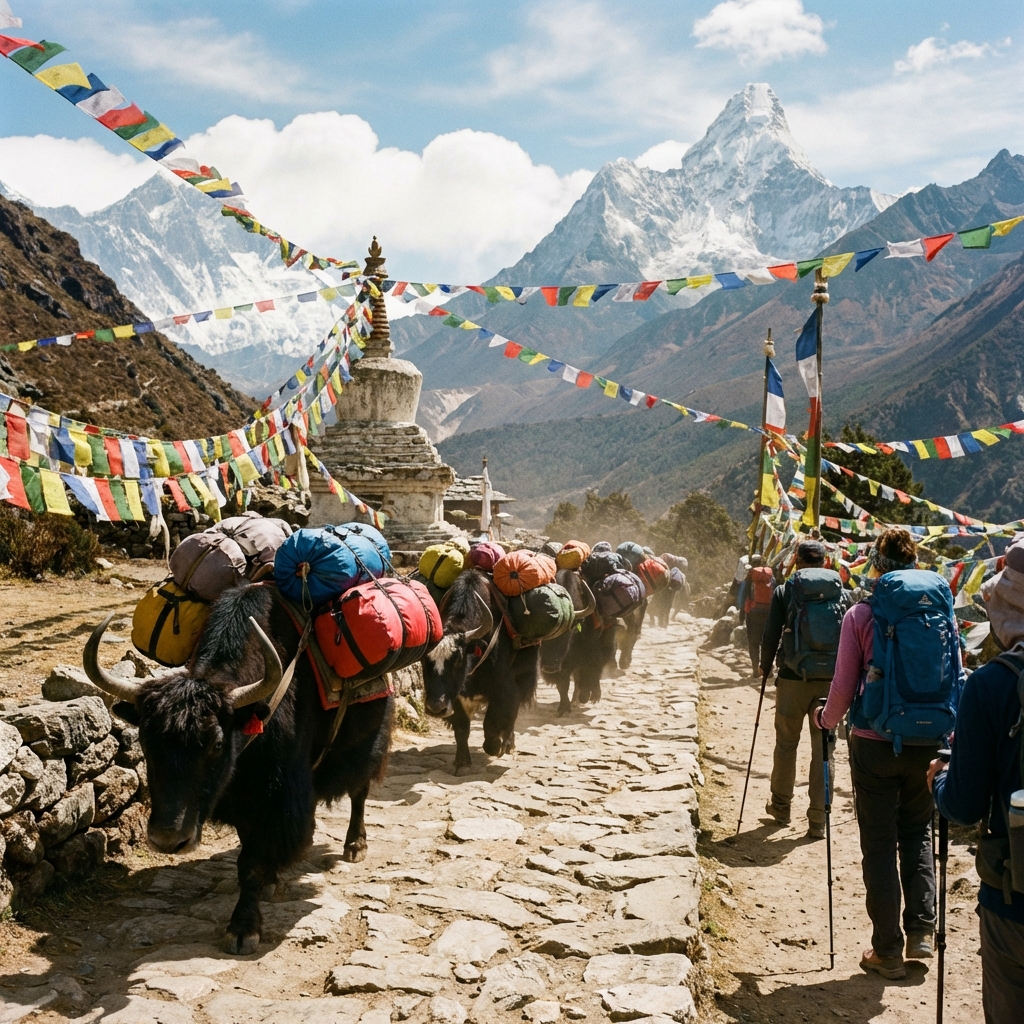
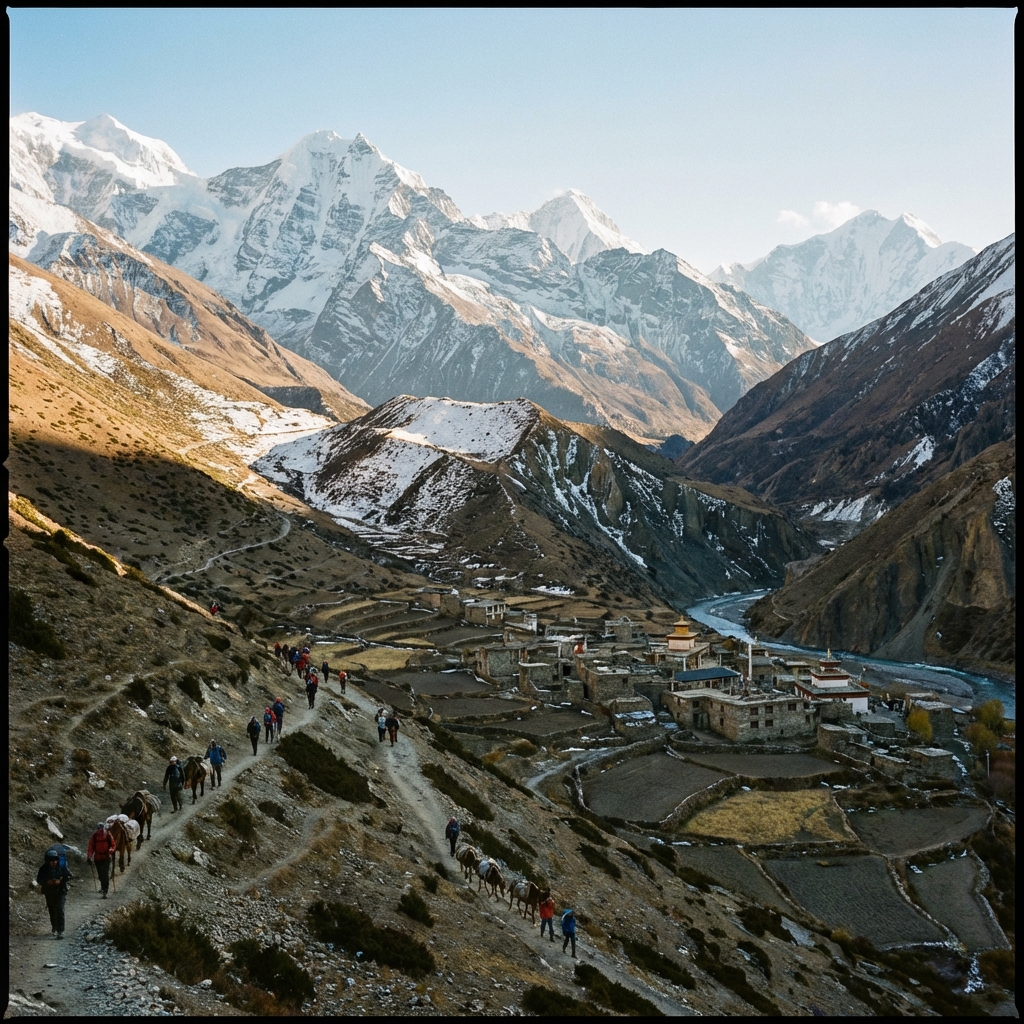
Kathmandu to Lukla Flights: The Complete 2026 Guide to the World's Most Dangerous Airport
Flying into Tenzing-Hillary Airport in Lukla is an adventure before your Everest Base Camp trek even begins. This short 30-minute flight from Kathmandu takes you to one of the most extreme airports on Earth, landing on a 527-meter runway that drops off into a 600-meter gorge. Understanding how to navigate this critical logistics challenge can make or break your EBC trek experience.
This comprehensive guide covers everything from booking strategies and airline comparisons to dealing with the notorious weather delays that affect 50-70% of peak season flights. Whether you're planning your first trek to Everest or returning for another adventure, this guide will help you make informed decisions about getting to and from Lukla.
30-40 minutes
139 km (86 miles)
$215-220 USD
$360-440 USD
2,845m (9,334ft)
527m (1,729ft)
12% incline
50-70%
Tara Air, Summit Air, Sita Air
10-15kg strictly enforced
6:00-9:00 AM
Manthali/Ramechhap (Oct-Nov)
Understanding Tenzing-Hillary Airport: The World's Most Extreme Gateway
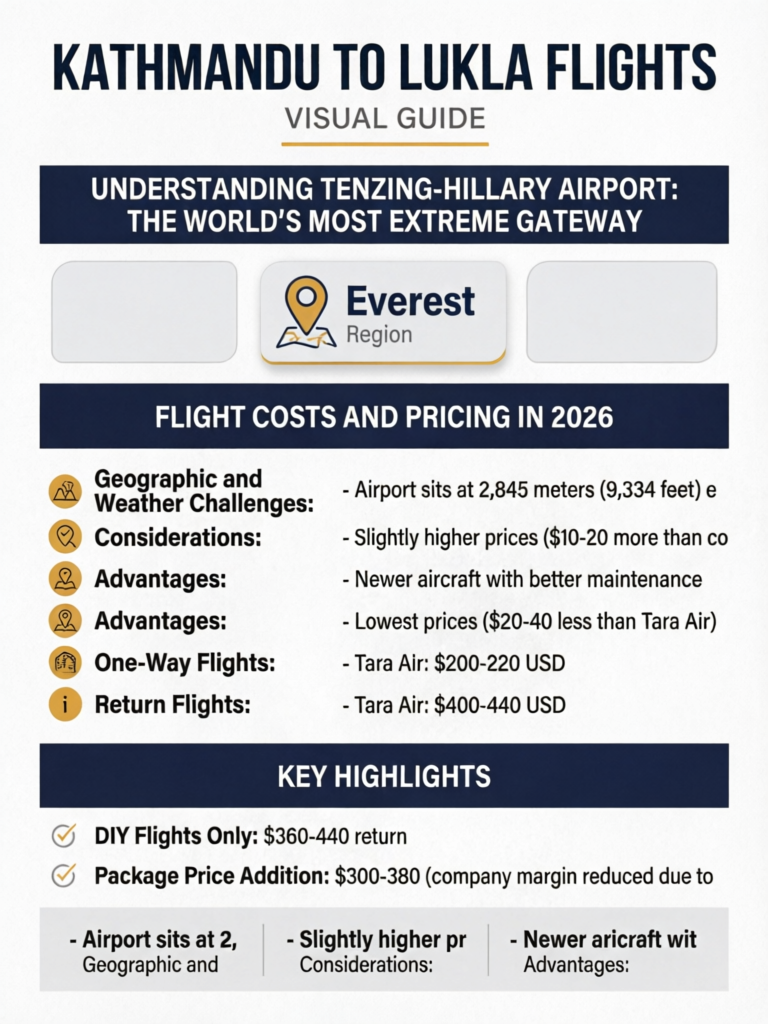
Lukla Airport, officially named Tenzing-Hillary Airport after the first climbers to summit Everest, consistently ranks among the world's most dangerous airports. Built in 1964 with funding from Sir Edmund Hillary, this mountain airstrip serves as the primary gateway to the Everest region, handling approximately 50,000 passengers annually during the trekking seasons.
Why Lukla Airport Is So Dangerous
The extreme nature of Lukla Airport stems from multiple factors that make it uniquely challenging:
The Runway Specifications:
- Only 527 meters (1,729 feet) in length - one of the world's shortest commercial runways
- 12% gradient incline running uphill from south to north
- Width of just 30 meters (98 feet)
- No go-around possible - pilots must land successfully on first approach
- Runway ends in a stone wall at the upper end and drops into a 600-meter gorge at the lower end
Geographic and Weather Challenges:
- Airport sits at 2,845 meters (9,334 feet) elevation where air density is lower
- Surrounded by mountains on three sides with peaks reaching over 6,000 meters
- Subject to rapid weather changes with morning clarity often giving way to afternoon clouds
- Strong winds funnel through the valley, particularly in afternoons
- Fog and cloud cover can develop within minutes
- No radar or instrument landing systems - all flights operate under Visual Flight Rules (VFR) only
Operational Limitations:
- Only small aircraft (maximum 18-19 passengers) can operate
- Single runway serves both arrivals and departures
- No air traffic control tower until 2019 (now has basic tower)
- Pilots require special mountain flying certification
- Operations limited to daylight hours only
- Weather window typically only 6:00 AM to 9:00 AM in peak season
Despite its fearsome reputation, Lukla has a relatively good safety record when you consider the sheer volume of flights. The airport handles 100+ flights per day during peak season, and serious incidents are rare relative to operations. The 2019 Summit Air crash that killed three people was the first fatal accident in over a decade.
Best Seat for Mountain Views
Request a seat on the LEFT side of the aircraft when flying from Kathmandu to Lukla (right side on the return). On clear days, you'll have spectacular views of the Himalayan range, including potential glimpses of Everest, Lhotse, and Ama Dablam. The views alone make this one of the world's most scenic flights.
The Landing Experience
Landing at Lukla is an experience trekkers never forget. The approach takes you through a narrow valley with mountains towering on both sides. As the aircraft descends, the short runway appears suddenly, angled sharply upward. Pilots aim for the very beginning of the runway - there's no room for error.
The uphill gradient actually helps slow the aircraft naturally after touchdown. On takeoff, the opposite is true: planes accelerate downhill before lifting off over the gorge edge. Experienced mountain pilots describe it as one of the most technically demanding airports they fly into, requiring complete focus and perfect timing.
First-time passengers often describe the landing as thrilling but nerve-wracking. The aircraft makes steep banking turns through the valley, the runway appears alarmingly short, and the touchdown can be firm as pilots commit to the landing. But remember: these pilots do this multiple times every day during the season and are among the most experienced mountain aviators in the world.
Airlines Operating Kathmandu-Lukla Flights
Three main airlines operate scheduled passenger flights between Kathmandu and Lukla, all using small twin-engine aircraft suited to mountain operations. Understanding the differences between these carriers can help you make informed booking decisions.
Lukla Airlines Comparison 2026
| Name | Aircraft Types | Fleet Age | Passenger Capacity | Safety Record | One Way Price | On Time Performance | Booking Reliability | Flight Frequency | Online Booking | Baggage Allowance |
|---|---|---|---|---|---|---|---|---|---|---|
| Tara Air | Dornier 228, Viking DHC-6 Twin Otter | Mixed (5-15 years) | 18-19 passengers | Good - no fatal accidents since 2016 | $200-220 | 65% (peak season) | Excellent - largest operator | 15-20 daily (peak season) | Yes - reliable system | 15kg checked + 5kg carry-on |
| Summit Air | Dornier 228 (Let L-410 retired) | Newer fleet (3-8 years) | 18 passengers | 1 fatal accident (2019) - 3 deaths | $190-210 | 60% (peak season) | Good - growing operations | 8-12 daily (peak season) | Yes - improving system | 15kg checked + 5kg carry-on |
| Sita Air | Dornier 228 | Mixed (4-12 years) | 18 passengers | 1 fatal accident (2012) - 19 deaths, improved since | $180-200 | 58% (peak season) | Moderate - smaller operator | 6-10 daily (peak season) | Limited - book through agents | 10kg checked + 5kg carry-on |
Tara Air: The Largest Operator
Tara Air dominates the Kathmandu-Lukla route with the most flights and largest fleet. As the most established operator, they have the best track record for actually getting passengers to Lukla, even in challenging conditions. Their pilots are highly experienced, and the airline has invested in newer aircraft including the reliable Viking DHC-6 Twin Otter, specifically designed for short mountain runways.
Advantages:
- Most flights = more flexibility when weather causes delays
- Strong safety culture and pilot training programs
- Best online booking system with reliable confirmations
- Generally honored bookings even during peak chaos
- Good customer service and rebooking assistance
Considerations:
- Slightly higher prices ($10-20 more than competitors)
- Popular flights book out earliest in peak season
- Sometimes overbook flights (rare, but happens)
Tara Air is the preferred choice for trekkers who want reliability and are willing to pay a small premium. If you're on a tight schedule or have inflexible international flights, Tara Air's larger operation gives you better odds of getting rebooked quickly if delays occur.
Summit Air: The Middle Ground
Summit Air operates a newer fleet and has grown significantly in recent years. They offer competitive pricing and generally good service, though they're still building the operational depth of Tara Air. The airline suffered a fatal accident in 2019 when an aircraft crashed during takeoff from Lukla in poor weather, killing three people (the two pilots and one airport official - no passengers were aboard). Since then, they've improved safety protocols and replaced older Let L-410 aircraft with more modern Dornier 228s.
Advantages:
- Newer aircraft with better maintenance
- Competitive pricing ($10-20 less than Tara Air)
- Good pilot training and safety emphasis post-2019
- Increasing flight frequency
- Responsive customer service
Considerations:
- Fewer daily flights than Tara Air = less rebooking flexibility
- 2019 accident still concerns some travelers (though safety has improved)
- Slightly lower on-time performance in challenging weather
Summit Air represents a solid middle-ground choice. They offer good value with modern aircraft and professional operations. The 2019 accident was tragic but led to meaningful safety improvements, and their current record is comparable to other operators.
Sita Air: The Budget Option
Sita Air operates fewer flights with a smaller fleet, typically offering the lowest prices on the route. They target budget-conscious trekkers and often work with trekking companies for group bookings. However, their smaller operation means less flexibility during delay periods.
Advantages:
- Lowest prices ($20-40 less than Tara Air)
- Good option when booking with trek packages
- Adequate safety record since fleet renewal
- Less crowded flights sometimes available
Considerations:
- Fewest daily flights = limited rebooking options during delays
- Lower baggage allowance (10kg vs 15kg)
- 2012 accident history (though fleet completely renewed since)
- Less robust online booking - often requires agent
- Flights more likely to be cancelled vs delayed
Sita Air works well for budget travelers who have flexible schedules and extra buffer days. If you're booking an all-inclusive trek package, the airline is often chosen by the trekking company, and Sita Air performs adequately in that context.
Safety Considerations Across All Airlines
It's important to maintain perspective on Lukla flight safety. While the airport has a dramatic reputation, the actual accident rate relative to the number of operations is quite low. All three airlines:
- Use experienced pilots with special mountain flying certifications
- Maintain aircraft to international standards (required for insurance)
- Follow strict weather minimums (won't fly in dangerous conditions)
- Operate under Civil Aviation Authority of Nepal oversight
- Use similar or identical aircraft types (Dornier 228 is the workhorse)
The greatest risk isn't actually flying - it's the frustration of delays. Weather-related cancellations and delays are operational realities, not safety failures. When pilots refuse to fly due to weather, they're making the right decision for passenger safety.
Important: Helicopter Alternatives
If flights are cancelled for multiple consecutive days and you're facing international flight deadlines, helicopter charter services become a valuable backup. Several companies operate Kathmandu-Lukla helicopter flights for $500-800 per seat (5-6 passenger helicopters) or $3,500-4,500 for a private charter. Helicopters have more flexibility in marginal weather and can sometimes fly when fixed-wing aircraft cannot. Keep contact information for helicopter companies as a contingency plan.
Flight Costs and Pricing in 2026
Understanding the pricing structure for Kathmandu-Lukla flights helps you budget accurately and identify the best booking strategies.
Standard Pricing (2026)
One-Way Flights:
- Tara Air: $200-220 USD
- Summit Air: $190-210 USD
- Sita Air: $180-200 USD
Return Flights:
- Tara Air: $400-440 USD
- Summit Air: $380-420 USD
- Sita Air: $360-400 USD
These prices represent standard retail rates for individual bookings made directly with airlines or through travel agencies. Prices have increased approximately 8-10% compared to 2026/2027, reflecting increased fuel costs and aircraft lease expenses.
What's Included in the Ticket Price
Your Kathmandu-Lukla flight ticket includes:
- 30-40 minute flight from Kathmandu (Tribhuvan International Airport) to Lukla
- Standard baggage allowance (10-15kg checked + 5kg carry-on, depending on airline)
- Basic flight insurance (check policy limits)
- Airport taxes for both Kathmandu and Lukla
What's NOT Included
- Transportation to Tribhuvan International Airport (domestic terminal) or Manthali Airport
- Meals or refreshments (flight is too short for service)
- Excess baggage fees ($3-5 per kilogram over limit)
- Trip cancellation or delay insurance
- Accommodation if flights are delayed
- Helicopter upgrade if you choose to charter instead
Price Variations Throughout the Year
Flight prices remain relatively stable year-round, but availability and booking flexibility vary dramatically:
Peak Season (March-May, October-November):
- Highest demand but prices don't increase significantly
- Flights book out 4-6 weeks in advance
- Less room for negotiation or discounts
- Trekking companies may charge premiums in packages
Shoulder Season (February, early March, late November, early December):
- Better availability at standard prices
- Sometimes 5-10% discounts available through agencies
- More flight options and easier rebooking if delayed
Off-Season (June-August - monsoon, December-January - winter):
- Lowest demand but weather challenges increase
- Occasional 10-15% discounts from airlines seeking to fill seats
- Fewer daily flights (airlines reduce frequency)
- Higher cancellation rates due to weather
Booking Independently vs. Trek Package
One of the biggest pricing decisions is whether to book flights independently or as part of a trek package:
Independent Booking:
- Advantages: Choose specific airline and times, direct communication with airline, easier to modify, potential cost savings
- Disadvantages: You handle all rebooking during delays, no package support, pay retail prices
- Best for: Experienced travelers with flexible schedules and delay buffers
Trek Package Inclusion:
- Advantages: Trekking company handles delays and rebooking, often better group rates, seamless logistics, company absorbs delay costs
- Disadvantages: Less control over airline/timing, may use budget carriers, harder to modify independently
- Best for: First-time trekkers, those on fixed schedules, anyone wanting full-service support
Pricing Comparison Example (14-Day EBC Trek):
- DIY Flights Only: $360-440 return
- Package Price Addition: $300-380 (company margin reduced due to group rates)
- Net Effect: Roughly similar costs, but package includes delay management
Most experienced trekking companies have standing agreements with airlines and can often rebook clients faster than individuals can during mass delay situations. This service value often justifies booking flights as part of your trek package.
Hidden Package Value
When flights are delayed and hundreds of trekkers are scrambling for seats, trekking companies with established airline relationships can often get their clients on flights before individual bookers. During a 3-day weather delay in October 2026, package clients generally got rebooked within 24 hours while independent travelers waited 4-5 days. This "priority rebooking" isn't officially advertised but is a real advantage of package bookings during peak season chaos.
Children and Infant Pricing
- Children 2-11 years: Typically 75% of adult fare ($270-330 return)
- Infants under 2 years: Usually $50-75 return (lap seat, no baggage allowance)
- Children baggage: Same limits as adults (10-15kg depending on airline)
Foreigner vs. Nepali Pricing
Nepal maintains a dual pricing system for many tourism services, and flights are no exception:
- Foreign tourists: Prices listed above ($360-440 return)
- Nepali citizens: Approximately 40-50% lower ($180-220 return)
- SAARC nationals: Sometimes receive 10-15% discount (varies by airline)
This pricing structure is standard across Nepal tourism and helps subsidize domestic travel. Foreigners should expect to pay the higher tourist rate.
Extra Costs to Budget
Excess Baggage:
- $3-5 per kilogram over your allowance
- Strictly enforced at Lukla (weight and balance critical for mountain flying)
- Sometimes negotiable in off-season, never in peak season
Manthali Transport (October-November):
- During peak autumn season, flights operate from Manthali/Ramechhap instead of Kathmandu
- Add $20-30 per person for shared jeep transport (5 hours each way)
- Private vehicle: $150-200 each way
Delay Accommodation:
- Kathmandu hotel: $30-80 per night (if you need to extend stay)
- Lukla hotel: $20-40 per night (often free or discounted if waiting for return flight)
Helicopter Charter (if needed):
- Shared seat: $500-800 per person
- Private charter: $3,500-4,500 (5-6 passengers)
Money-Saving Strategies
- Book with your trek package - Companies get volume discounts and you get delay support
- Book 6-8 weeks ahead in peak season - Prices don't change, but availability does
- Consider shoulder season - Same prices, better availability, less stress
- Join trekking groups - Agencies sometimes offer package discounts for groups of 4+
- Build in buffer days - Paying for 2 extra Kathmandu hotel nights ($60-160) is cheaper than missing a $1,200 international flight
- Pack light - Avoid excess baggage fees by staying within limits
2026 Price Trends
Flight prices have stabilized after post-pandemic volatility. Expect prices to remain in the $360-440 return range through 2026 unless significant fuel price increases occur. The Nepal government has discussed regulating prices to prevent peak season gouging, but no firm policies have been implemented as of early 2026.
Booking Strategy: When and How to Book
How you book your Kathmandu-Lukla flights can significantly impact your trek success. Here's what you need to know about timing, methods, and strategies.
How Far in Advance to Book
Peak Season (October-November, March-May):
- Recommended: 6-8 weeks before your trek
- Minimum: 4 weeks (closer than this, you risk being shut out)
- Maximum: 12 weeks (too early and you lack flexibility if plans change)
During October and early November - the absolute peak Everest season - flights often sell out 8-10 weeks in advance. If you're trekking October 15-30, book your flights by early August at the latest. The same applies to late March through early May.
Shoulder Season (February, early March, late November, early December):
- Recommended: 3-4 weeks before your trek
- Minimum: 2 weeks
- Comfortable buffer: 4-6 weeks
Shoulder season offers more flexibility. You can usually book 2-3 weeks out and still get your preferred flights, though earlier booking gives you better time slot choices.
Off-Season (June-August monsoon, December-January winter):
- Recommended: 2-3 weeks before your trek
- Minimum: 1 week
- Last minute: Sometimes even 3-5 days possible
Off-season has plenty of availability, but fewer daily flights. Book far enough ahead to ensure flights operate on your preferred dates (airlines sometimes cancel routes on specific days if demand is very low).
Booking Methods
1. Direct with Airlines (Online):
Best for: Travelers who want control and can manage delays independently
Process:
- Visit airline website (Tara Air has the best online system)
- Select dates and flights
- Pay with credit card (Visa/Mastercard accepted)
- Receive e-ticket confirmation via email
- Print or save digital copy of ticket
Advantages:
- No agent markup
- Direct communication with airline
- Immediate confirmation
- Easy to modify bookings (subject to availability)
Disadvantages:
- You handle all delay rebooking yourself
- No local support if problems arise
- May not know best practices for timing
2. Through Trekking Company (Package):
Best for: First-time trekkers and those wanting full-service support
Process:
- Book complete trek package including flights
- Company handles all booking logistics
- You provide passport details and preferences
- Receive flight confirmation as part of package documents
Advantages:
- Company manages delays and rebooking
- Often priority access during mass delays
- Seamless coordination with trek schedule
- Local expertise and support
- No hidden costs if delays extend stay
Disadvantages:
- Less control over specific airline/timing
- Harder to modify just flights without affecting package
- Company typically uses their preferred airline relationship
3. Through Travel Agency in Kathmandu:
Best for: Travelers already in Nepal who want agent support without full package
Process:
- Visit reputable agency in Thamel
- Book flights 2-7 days before trek
- Pay in cash (USD or NPR) or card (3-5% fee often added)
- Receive paper ticket or e-ticket
Advantages:
- Can book very close to departure
- Agent provides local knowledge
- Can bundle with permits and other logistics
- Face-to-face service
Disadvantages:
- Small markup (usually $10-30 per ticket)
- Quality varies by agency
- Must be in Kathmandu to book this way
- Some agencies are unreliable during peak chaos
4. Through International Travel Agency:
Best for: Those booking complete Nepal trip from abroad
Process:
- Book through your home country travel agent
- Agent coordinates with Nepal partners
- Receive confirmation along with other trip documents
Advantages:
- One-stop booking for entire trip
- Agent handles all coordination
- Good for complex multi-destination itineraries
Disadvantages:
- Highest markup (often $50-80 per ticket)
- Multiple middlemen can complicate changes
- Less direct control
Optimal Booking Strategy by Traveler Type
First-Time EBC Trekkers: Book complete trek package including flights with established company. The peace of mind and delay management support is worth any small premium. Companies like Asian Trekking, Himalayan Glacier, and World Expeditions have excellent track records.
Experienced Trekkers with Flexible Schedules: Book flights independently 4-6 weeks ahead, allowing 4-5 buffer days for delays. You'll save money and maintain control while having enough schedule flexibility to handle weather delays.
Time-Constrained Travelers with Tight International Connections: Book through trekking company for priority rebooking support, OR build in substantial buffer (4-5 days minimum before international flight) if booking independently. Consider having helicopter charter contacts as backup.
Budget Travelers: Book independently in shoulder or off-season when prices are lowest and delay risks are reduced. Build in extra buffer days instead of relying on expensive rebooking or helicopter rescues.
Groups of 4+ People: Book through trekking company as a group package. Companies can often negotiate better rates for groups and will coordinate all logistics together, ensuring everyone stays on same flights.
What Information You Need to Book
Have this ready when booking:
- Full name as it appears on passport
- Passport number and expiration date
- Date of birth
- Nationality
- Contact phone number (local Nepal number if available)
- Email address
- Preferred travel dates (be flexible if possible)
- Weight of passengers (for weight and balance calculations)
- Special requirements (medical conditions, oxygen needs, etc.)
Confirmation and Reconfirmation
After Booking:
- Receive e-ticket or booking confirmation (usually within 24 hours)
- Print or save digital copy
- Note airline contact information
- Save booking reference number
Reconfirmation (Important!):
- Call airline 48 hours before flight to reconfirm
- Reconfirm again 24 hours before flight
- Check flight status morning of departure (weather delays common)
- Arrive at airport 60-90 minutes before scheduled departure
During peak season, "confirmed" bookings sometimes face last-minute changes due to aircraft swaps, weather-driven schedule changes, or (rarely) overbooking. Reconfirming helps you catch these issues early.
Screenshot Everything
Take screenshots of your booking confirmation, e-ticket, and all communications with airlines or agents. Save these offline on your phone. During delays when internet might be limited and stress is high, having offline access to your booking details is invaluable. Include airline phone numbers in your screenshots.
Modifying and Cancelling Bookings
Modification Policies (vary by airline):
- More than 7 days before flight: Usually free or small fee ($10-20)
- 3-7 days before flight: $20-40 change fee typical
- Less than 3 days before flight: $40-60 change fee or sometimes not allowed
- No-show: Forfeit ticket value in most cases
Cancellation Policies:
- More than 14 days before: 80-90% refund typical
- 7-14 days before: 50-70% refund
- Less than 7 days: 25-50% refund
- Less than 3 days: Often no refund or admin fee only
Weather Delays/Cancellations:
- If airline cancels due to weather, no penalty for rebooking
- Airlines obligated to rebook you on next available flight
- No refund for your delay accommodation costs (unless you have insurance)
- Can request full refund if waiting time exceeds acceptable limits (varies)
Policies vary between airlines and booking methods. Direct bookings usually have clearer policies than agent bookings. Always check specific terms when booking.
Manthali/Ramechhap Alternative Airport (Peak Season)
During the busy October-November autumn season, flight congestion at Kathmandu's Tribhuvan International Airport becomes severe. To manage demand and improve efficiency, many Lukla flights operate from Manthali Airport (also called Ramechhap Airport) instead of Kathmandu. Understanding this alternative is essential for autumn trekkers.
When Manthali Is Used
Mandatory Manthali Operations:
- October 1 - November 30 (peak autumn season)
- Sometimes extended into early December if demand remains high
- Applied to most or all Lukla flights during this period
Kathmandu Operations Continue:
- March-May spring season (usually remains Kathmandu-based)
- December-February winter season
- June-September monsoon season
- Late November through September (depending on demand)
The Nepal government mandates the Manthali routing during peak autumn to reduce congestion at Kathmandu airport and improve on-time performance for Lukla flights. Whether this improves your experience is debatable - you avoid airport congestion but add a 5-hour drive.
Manthali Airport Logistics
Location and Access:
- 132 km (82 miles) southeast of Kathmandu
- 4.5-5 hour drive via Sindhuli road
- Elevation: 474m (1,555 feet) - much lower than Lukla
- Small regional airport with basic facilities
The Drive from Kathmandu:
- Depart Kathmandu: Usually 11 PM - 2 AM (night drive)
- Arrival at Manthali: 4-6 AM
- Morning flight: 6-9 AM
- Return journey: Afternoon after arrival flight
The drive is long and uncomfortable, typically done overnight to arrive for early morning flights. Roads are winding mountain highways with variable conditions. Most travelers find the drive the worst part of the Manthali experience.
Transport Options:
-
Trekking Company Arrangement (Most Common):
- Included in package price or small surcharge ($20-30 per person)
- Shared jeep or bus with other trekkers
- Company coordinates timing and pickup
- Most stress-free option
-
Shared Tourist Jeep:
- $20-30 per person
- Available from Thamel travel agencies
- Leaves Kathmandu around midnight
- 8-12 passengers per jeep
-
Private Vehicle:
- $150-200 for entire vehicle
- Flexible departure timing
- Most comfortable option
- Best for groups of 4-6 people
-
Local Bus:
- $5-8 per person (extremely budget option)
- Very uncomfortable overnight journey
- Not recommended with luggage
- Timing often doesn't align with flights
Manthali Airport Facilities:
- Small terminal building with basic waiting area
- Limited food options (tea shops, basic snacks)
- Bathroom facilities (basic)
- No ATMs (bring cash)
- Minimal seating for waiting passengers
- Can get very crowded during delays
Manthali vs. Kathmandu: Pros and Cons
Manthali Advantages:
- Less airport congestion
- Slightly better on-time performance (65% vs 60% in peak season)
- Lower elevation departure = better aircraft performance
- Usually better early morning weather
- More consistent flight operations
Manthali Disadvantages:
- 5-hour drive each way (10 hours total)
- Overnight drive is exhausting
- Uncomfortable transport
- Limited facilities at airport
- If delayed, waiting in small town with limited hotels
- Total journey time longer than Kathmandu flights
Cost Comparison:
- Kathmandu flight only: $360-440 return
- Manthali flight + transport: $400-500 total
- Time cost: Add 10 hours to total journey
- Energy cost: Arrive at trek already tired from overnight drive
Managing the Manthali Experience
Before You Go:
- Confirm with airline or trekking company whether flights operate from Manthali or Kathmandu
- Book transport in advance (don't assume it's automatically included)
- Pack day bag with essentials for overnight drive
- Have warm layers (nighttime drive can be cold)
- Bring snacks and water (limited options during drive)
During the Drive:
- Try to sleep despite discomfort
- Take motion sickness medication if prone to car sickness
- Bathroom stops are infrequent - plan accordingly
- Keep valuables secure (crowded jeeps can attract pickpockets)
At Manthali Airport:
- Arrive with 60-90 minutes before flight
- Check in opens 60 minutes before departure
- Boarding is first-come, first-served for specific seats
- Prepare for potential delays (bring book, chargers, snacks)
If Delayed at Manthali:
- Basic hotels available in Manthali town (15 minutes from airport)
- $10-25 per night for simple accommodation
- Limited restaurant options
- Less to do than waiting in Kathmandu
- Trekking companies usually arrange accommodation if needed
Is Manthali Worth It?
For autumn trekkers, Manthali isn't optional - it's mandated. But the question is whether the overall system improves your experience:
The System Works Better For:
- Those booking through trekking companies (seamless transport coordination)
- Groups traveling together (share private vehicle cost)
- Trekkers who simply want to get to Lukla efficiently
- Those who can sleep during drives
The System Is Harder For:
- Independent travelers (must arrange own transport)
- Light sleepers (overnight drive is uncomfortable)
- Travelers with mobility issues (long cramped drive)
- Those who value comfort (airport facilities are basic)
Overall, Manthali flights do have slightly better on-time performance - perhaps 5-10% better than Kathmandu flights during the same period. Whether this marginal improvement justifies the 10-hour drive depends on your priorities and how your trip is organized.
Spring Season Benefits
If you have flexibility in timing your EBC trek, consider March-May spring season instead of October-November autumn. You'll avoid the Manthali requirement entirely, flying directly from Kathmandu. Weather is comparable (spring can actually be clearer), trails are less crowded, and overall logistics are simpler. The main trade-off is that spring can be slightly warmer at lower elevations and there's more snowmelt on high passes.
The Reality of Flight Delays: What to Expect
The single most important thing to understand about Kathmandu-Lukla flights is this: delays are not the exception, they are the norm. Setting realistic expectations about delays will save you enormous stress and help you plan effectively.
Delay Statistics (2026/2027 Data)
Peak Season (October-November, April-May):
- 50-70% of flights experience some delay
- Average delay: 3-6 hours
- 20-30% of flights delayed 1-2 days
- 5-10% of flights delayed 3+ days
- Weather causes 90% of delays
Shoulder Season (March, early April, late November):
- 30-40% of flights experience delays
- Average delay: 2-4 hours
- 10-15% delayed 1-2 days
- Less than 5% delayed 3+ days
Off-Season (Monsoon and Winter):
- 40-60% of flights delayed (weather more variable)
- Average delay: 4-8 hours
- 15-25% delayed 1-2 days
- Higher cancellation rate overall
These statistics reveal a critical truth: If you're trekking in peak season, you should expect your flights to be delayed. Plan for it, budget for it, and build buffer days into your itinerary.
Why Delays Happen
1. Weather (90% of delays):
Morning weather windows are essential for Lukla operations. The typical pattern:
- 6:00-9:00 AM: Clear skies, good visibility, low wind
- 9:00 AM-12:00 PM: Clouds begin forming, winds increase
- 12:00 PM onward: Fog/clouds/wind too severe for safe operations
If morning weather doesn't cooperate, flights don't operate until conditions improve - which often means the next morning. Weather can deteriorate within minutes at Lukla, and pilots won't take risks.
2. Airport Congestion (5% of delays):
During peak season, 100+ flights need to operate through a single runway with limited parking space. Even when weather is good, the sheer volume creates delays as aircraft queue for takeoff and landing slots.
3. Technical Issues (3% of delays):
Small aircraft require frequent maintenance. Technical issues occasionally ground aircraft, causing schedule disruptions across the day's operations.
4. Cascade Effects (2% of delays):
When morning flights are delayed, afternoon schedules collapse. Aircraft are out of position, crews exceed duty hours, and the entire day's schedule becomes disrupted.
The Delay Experience: Kathmandu Side
Morning of Departure:
- Arrive at domestic terminal 60-90 minutes early
- Check in and receive boarding pass (if flight is confirmed)
- Wait in terminal area
- Watch weather reports and flight boards
- Experience repeated "30-minute delay" announcements
- Eventually: Either board flight, or get told to return tomorrow
If Delayed:
- Flight cancelled for the day (usually announced by 11 AM - 1 PM)
- Told to return next morning
- Must arrange own accommodation (unless package includes delay coverage)
- Repeat process next day
Extended Delays: During multiple-day delays:
- Check in each morning to claim priority position
- Airlines theoretically rebook in original booking order
- Reality: Chaos, with unclear priority systems
- Trekking company clients often get preferential rebooking
- Independent travelers may wait 3-5 days during peak season mass delays
Where to Wait:
- Airport terminal (basic seating, limited food)
- Nearby hotel if you've arranged accommodation
- Return to Thamel (15-minute drive) and come back next morning
The Delay Experience: Lukla Side
Delays on the return from Lukla are psychologically harder. You've finished your trek, you're tired, and you're anxious about making international flights.
Morning of Departure:
- Check in at Lukla Airport (small terminal, basic facilities)
- Wait in terminal or outside (often crowded)
- Watch weather conditions (you can literally see the fog roll in)
- Experience uncertainty about whether flights will operate
If Delayed:
- Return to your Lukla hotel (5-minute walk from airport)
- Wait for afternoon updates (sometimes flights operate 2-4 PM if weather clears)
- Usually told to return next morning if no afternoon clearing
Extended Delays in Lukla:
- Return to hotel each day
- Many hotels offer free/discounted rates for stranded trekkers
- Limited activities in Lukla (small town with basic facilities)
- Can be frustrating watching weather clear for 30 minutes then close again
- Some trekkers hike down to Phakding or Monjo to wait there (better hotels)
Lukla Waiting Options:
- Stay near airport at basic lodge ($20-40/night)
- Hike down to Phakding (2-3 hours, nicer lodges, less altitude)
- Consider helicopter if delays extend beyond 2-3 days and you have flight deadlines
The Cascade Effect of Delays
A single day's weather delay creates ripple effects:
Day 1 Delay:
- 500-800 passengers stranded in Kathmandu
- 300-500 passengers stranded in Lukla
- Airlines must rebook everyone over subsequent days
Day 2 After Delay:
- Original Day 2 passengers + Day 1 stranded passengers all need flights
- 1,000+ people competing for limited seats
- Even with good weather, can't clear backlog in one day
Day 3-4:
- Gradual clearing of backlog
- Priority systems break down
- Chaos at airports
- Some passengers waiting 4-5 days total
This cascade is why even one weather day can cause multi-day delays for individual passengers. It's not just about weather clearing - it's about clearing the backlog of stranded trekkers.
Emotional and Practical Impact
Emotional Toll:
- Anxiety about making international connections
- Frustration with lack of control
- Stress from unclear information
- Fatigue from daily early morning airport visits
- Disappointment if trek gets shortened or cancelled
Practical Impact:
- Extra accommodation costs ($30-80/night Kathmandu, $20-40/night Lukla)
- Meal costs during delay period
- Potential missed international flights ($200-500+ rebooking fees)
- Lost work days if delayed returning home
- Trip insurance claims and documentation
Financial Impact of a 3-Day Delay:
- Accommodation: $90-240
- Meals: $45-90
- Transportation to/from airport: $20-40
- Potential international flight change fee: $200-500
- Total: $355-870 (not including lost time value)
This is why trip insurance that covers flight delays is essential for Lukla treks.
The Buffer Day Strategy
The single most important planning decision is building adequate buffer days. Here's the recommended strategy: For peak season treks, build 2-3 buffer days between your planned trek end and your international flight departure. Yes, this adds hotel costs ($60-240), but it's far cheaper than missing a $1,200 international flight or paying $800 for an emergency helicopter charter. Use your buffer days to explore Kathmandu, process the trek experience, and buy souvenirs. If you get lucky and don't need them, you have unexpected bonus time in Nepal.
How to Minimize Delay Impact
While you can't control weather, you can control your response:
Pre-Trip Planning:
- Build 2-3 buffer days before international flights (non-negotiable for peak season)
- Purchase comprehensive trip insurance covering flight delays
- Book flexible international tickets when possible
- Download airline contact info and save offline
- Join trekking company WhatsApp groups for real-time updates
During Delays:
- Stay calm - stress doesn't change weather
- Reconfirm daily with airline to maintain priority position
- Make friends with other trekkers (share information and support)
- Have helicopter contacts saved (backup option if deadlines loom)
- Document everything for insurance claims
Financial Protection:
- Trip insurance with $1,000+ delay coverage
- Credit card with travel protection benefits
- Emergency fund for unexpected costs
- Keep all receipts during delay period
Weather Windows and Flight Timing
Understanding Lukla weather patterns helps you set realistic expectations and make strategic decisions about your flights.
Daily Weather Pattern
The typical weather cycle at Lukla follows a predictable pattern, especially during peak seasons:
6:00-9:00 AM - Prime Flight Window:
- Clearest conditions of the day
- Minimal wind
- Best visibility
- 80% of flights operate in this window
- If weather is going to cooperate, this is when
9:00 AM-12:00 PM - Deteriorating Conditions:
- Clouds begin forming in valleys
- Wind picks up as sun heats mountains
- Visibility decreases
- Some flights still operate if morning was delayed
- By noon, conditions often too marginal
12:00 PM-6:00 PM - Usually Closed:
- Afternoon clouds and fog common
- Strong winds funnel through valley
- Very few flights operate
- Occasional clear windows but unpredictable
- Pilots won't risk afternoon weather volatility
Evening/Night - No Operations:
- Airport has no night flying capability
- Too dangerous even if weather cooperates
- All operations cease by 5-6 PM
This pattern is why flights are scheduled for early morning. If you're told your flight is at 6:00 AM, this isn't arbitrary - it's strategically timed for the best weather window.
Seasonal Weather Patterns
October-November (Peak Autumn):
- Generally clearest months of the year
- Best weather windows
- Still 50-60% delay rate due to high volume and occasional storms
- Morning weather usually good, afternoon clouds common
- Occasional multi-day weather systems
March-May (Spring Season):
- Very good weather overall
- Slightly more afternoon cloud development than autumn
- Occasional spring storms (especially late May)
- Generally excellent flying conditions March-April
- Late May can be unstable as monsoon approaches
December-February (Winter):
- Crystal clear skies on most days
- Coldest temperatures
- Occasional winter storms bring multi-day closures
- When clear, flying conditions are excellent
- Less predictable than spring/autumn
- Fewer flights due to lower demand
June-September (Monsoon):
- Most challenging weather
- Daily afternoon rain common
- Morning windows can still be good
- High cancellation rates
- Unpredictable day-to-day
- Lowest demand, reduced flight frequency
Weather Forecasting for Lukla
Unlike most airports, Lukla has no sophisticated meteorological equipment. Weather assessment is mostly visual:
- Pilots and airport staff observe conditions
- Satellite weather data used but limited
- Kathmandu weather doesn't predict Lukla weather
- Conditions can change in 10-15 minutes
- Extremely local microclimate
This is why you'll hear "check back in 30 minutes" repeatedly during delays. Weather is assessed in real-time, not predicted hours ahead with certainty.
Strategic Timing Decisions
Booking Morning vs. Afternoon Flights: Always book the earliest available flight (usually 6:00-7:00 AM). Here's why:
- Morning has best weather odds (80% vs 20% for afternoon)
- If morning flight delays, you might still fly in late morning
- Afternoon flights often cancel when morning flights succeed
- Being first in line for the day gives you priority
- Early flights leave you the day to wait if delayed
First Flight of the Day: The very first flight (often 6:00 AM) has advantages:
- Pilots take off in best conditions
- No backlog from earlier delays
- Aircraft is ready and positioned
- You don't wait for preceding flights
But also disadvantages:
- Extremely early airport arrival (4:30-5:00 AM)
- If weather isn't perfect yet, might delay while later flights succeed
- More pressure on crew as trend-setter
Generally, aim for flights in the 6:00-7:30 AM window - early enough for good weather, not necessarily the very first.
Avoiding Last Flights: Last scheduled flights of the morning (9:00-10:00 AM slots) often cancel even when earlier flights succeeded. Weather is deteriorating, and airlines won't risk it.
Baggage Limits and Weight Restrictions
Weight and balance are critical safety factors for mountain flying. Lukla's weight restrictions are strictly enforced - much more so than typical commercial flights.
Standard Baggage Allowances
Checked Baggage:
- Tara Air: 15 kg (33 lbs)
- Summit Air: 15 kg (33 lbs)
- Sita Air: 10 kg (22 lbs)
- Strictly weighed and enforced
- No flexibility during peak season
Carry-On Baggage:
- All airlines: 5 kg (11 lbs)
- Small bag or daypack only
- Also weighed at check-in
- Must fit under seat
Total Allowance:
- Most airlines: 20 kg (44 lbs) total
- Sita Air: 15 kg (33 lbs) total
These limits are firm. Unlike international flights where you might negotiate 1-2 kg overage, Lukla flights enforce limits strictly for safety reasons.
Why Weight Matters So Much
Aircraft Performance:
- Small aircraft have strict weight and balance limits
- High-altitude operations require more power
- Short runway means less margin for error
- Weight distribution affects center of gravity
- Overweight aircraft literally cannot take off safely from Lukla's short runway
Safety Implications:
- Extra weight reduces climb performance
- Affects ability to clear mountains after takeoff
- Impacts landing distance needed
- Critical for go-around capability (though go-arounds aren't really possible at Lukla)
This isn't airline bureaucracy - it's physics and safety.
Excess Baggage Fees
Costs:
- $3-5 per kilogram over limit
- Calculated at check-in
- Paid in cash (USD or NPR)
- No advance booking of excess baggage
Peak Season Reality: During October-November, some airlines simply refuse excess baggage regardless of payment. Aircraft are full, and they can't accommodate extra weight safely.
Alternative for Excess Baggage:
- Leave extra items in Kathmandu hotel storage (free at most hotels)
- Ship excess items separately (porter services available but expensive)
- Carry absolute minimum to Lukla, retrieve extras on return
What to Pack for Lukla Flights
Essential Items for Carry-On:
- Passport and permits
- Money and credit cards
- Medications (especially altitude meds)
- Warm layer (aircraft can be cold)
- Snacks and water
- Phone and chargers
- Booking confirmations
- Any valuables
Checked Baggage:
- Trekking clothes and gear
- Sleeping bag (if not renting)
- Non-essential items
- Toiletries over 100ml
- Trekking poles (sometimes allowed in cabin, sometimes not)
Items to Leave in Kathmandu:
- City clothes for after trek
- Extra shoes
- Books and entertainment for Kathmandu
- Souvenirs already purchased
- Anything not essential for trek
Weight-Saving Strategies
For Budget Travelers Avoiding Fees:
- Pack minimalist - every gram counts
- Wear heaviest clothes and boots on flight
- Distribute weight between passengers if traveling as couple/group
- Use compression bags to minimize volume (doesn't reduce weight but helps organization)
- Buy/rent gear in Namche Bazaar if needed rather than carrying from Kathmandu
Realistic Packing:
- Clothing: 3-4 kg
- Sleeping bag: 1-2 kg
- Toiletries and first aid: 1 kg
- Electronics and batteries: 1 kg
- Misc (books, snacks, etc.): 1-2 kg
- Total: 7-10 kg
This leaves you comfortably within limits with room for a few extras.
Special Equipment
Photography Gear:
- Camera equipment counts toward weight limit
- No special allowances for professional gear
- Consider weight vs. photo importance trade-off
- Many trekkers regret bringing heavy camera gear
Trekking Poles:
- Usually allowed in checked baggage
- Sometimes allowed in cabin (airline discretion)
- Collapsible poles pack easier
- Can buy/rent in Namche if you don't want to carry
Drones:
- Subject to Nepal drone regulations (permit required)
- Count toward baggage weight
- Battery restrictions apply (lithium batteries have limits)
- Not worth hassle for most trekkers
Peak Season Weight Enforcement
During October-November peak season, airlines are extremely strict about weight limits. They will make you repack, pay excess fees, or even refuse boarding if you're significantly over limits. Plan to be well within allowances, and weigh your bags before arriving at the airport. Some Thamel hotels have luggage scales available for guests.
The In-Flight Experience
The flight itself is an unforgettable experience - for many trekkers, it's as memorable as the trek itself.
Aircraft Types
Dornier 228:
- Most common aircraft (all three airlines use them)
- Twin turboprop, 18-19 passengers
- German-manufactured, reliable design
- Cruising speed: 340 km/h (211 mph)
- Service ceiling: 28,000 feet
- Unpressurized cabin
Viking DHC-6 Twin Otter (Tara Air):
- Legendary mountain aircraft
- 16-19 passengers
- Canadian design, purpose-built for short runways
- Slower but extremely reliable
- Often used for more challenging conditions
Let L-410 (Retired):
- Previously used by Summit Air
- Czech-manufactured
- Now largely retired from Lukla route
- Replaced by Dornier 228s
All aircraft are twin-engine for safety - if one engine fails, the other can sustain flight. This is required for mountain operations.
Typical Flight Timeline
Pre-Flight (Kathmandu or Manthali):
- Check-in: 60-90 minutes before departure
- Baggage weighed and tagged
- Boarding pass issued
- Waiting in terminal
- Boarding call: Usually 15-20 minutes before departure
- Walk to aircraft on tarmac
- Assigned seating (often first-come, first-served for sides)
The Flight Itself:
- Takeoff from Kathmandu/Manthali
- Initial climb to cruising altitude (10,000-14,000 feet)
- Views of terraced hills and river valleys
- Approximately 20 minutes: Himalayan peaks come into view
- Left side: Best views of major peaks (Everest region)
- Right side: River valleys and villages
- Final approach: Descend into narrow valley
- Banking turns through mountains
- Runway appears suddenly
- Firm landing on uphill slope
- Reverse thrust and braking
- Taxi to terminal
- Disembark via stairs
Total Time:
- Scheduled: 30-40 minutes
- Actual flight time: 25-35 minutes
- Ground time at Lukla: 15-20 minutes (quick turnaround)
What You'll See
From Kathmandu to Lukla:
Early flight phase:
- Kathmandu Valley spreading below
- Terraced hillsides in intricate patterns
- Rivers winding through valleys
- Small villages and farming communities
Mid-flight (clear days only):
- Himalayan range emerging on horizon
- Snow-capped peaks becoming visible
- Potentially: Everest, Lhotse, Nuptse, Ama Dablam, Thamserku
- Deep river gorges below
Final approach:
- Narrow valley closing in
- Mountains on both sides
- Dudh Kosi river below
- Small settlements along slopes
- Lukla appearing on hillside
- Tiny runway becoming visible
Best Views:
- Left side Kathmandu to Lukla: Himalayan peaks
- Right side Lukla to Kathmandu: Same peaks, different angle
- Clear autumn mornings: Spectacular panoramas
- Spring mornings: Excellent visibility
- Any other time: Variable, sometimes just clouds
In-Flight Conditions
Comfort Level:
- Basic seating (not luxury)
- Limited legroom
- No in-flight service (too short)
- Can be cold (bring warm layer)
- Can be bumpy (mountain turbulence)
- Noise from engines (earplugs helpful)
Turbulence: Mountain flying inherently involves turbulence. Expect:
- Light to moderate bumps most flights
- Occasionally stronger turbulence near Lukla
- Banking turns that feel dramatic
- Altitude changes that affect ears
- Generally safe but can be uncomfortable for nervous flyers
For Nervous Flyers:
- Focus on views, not sensations
- Remember: Pilots do this daily, they're experts
- Turbulence is normal in mountains, not dangerous
- Flight is short (30 minutes max)
- Landing looks scary but is controlled and practiced
- Safety record is good considering extreme conditions
Photography Tips
Best Shots:
- Window seats essential (request early)
- Left side Kathmandu to Lukla for peaks
- Shoot through window (unavoidable reflections)
- Fast shutter speed (vibration from engines)
- High ISO acceptable (better than motion blur)
- Wide angle to capture scene through small window
- Zoom for peak details
- Morning light is best (golden hour before 8 AM)
What to Photograph:
- Terraced hillsides below
- Himalayan panorama
- Lukla runway on approach (if pilot allows devices)
- Your reaction to landing (selfie mode)
- Aircraft exterior after landing (dramatic backdrop)
Restrictions:
- Keep devices stowed during takeoff/landing (technically)
- Reality: Most passengers photograph the landing approach
- Don't use flash
- Don't obstruct windows or aisles
- Be respectful of other passengers' views
Video the Landing
If you want one memorable souvenir from your trek, video the Lukla landing. Set your phone to video mode as the aircraft begins final approach. Capture the valley approach, the runway appearing, and the landing itself. The footage will be shaky and maybe not professional quality, but it perfectly captures the drama of the experience. Just hold your phone steady and don't obstruct other passengers.
Helicopter Alternative
When flights are delayed beyond acceptable limits, or if you simply want a more exclusive experience, helicopter charter is a viable alternative.
When to Consider Helicopters
Delay-Driven Decisions:
- Flights cancelled 2+ consecutive days
- International flight deadline approaching
- Can't afford more delay time
- Weather forecast shows continued closure
- Backlog of 500+ stranded passengers
Preference-Driven Decisions:
- Want more reliable scheduling
- Willing to pay premium for convenience
- Traveling with group who can split costs
- Seeking luxury experience
- Photography enthusiasts wanting guaranteed clear views
Emergency Situations:
- Medical evacuation (covered by insurance usually)
- Family emergency requiring immediate return
- Extreme weather closing fixed-wing for extended period
Helicopter Services and Costs
Shared Helicopter Seats:
- $500-800 per person
- 5-6 passengers per helicopter
- Scheduled when enough passengers book
- Share costs with other trekkers
- Book through Kathmandu agencies
Private Charter:
- $3,500-4,500 for entire helicopter
- 5-6 passenger capacity
- Immediate departure when weather allows
- Your group only
- Flexible scheduling
What's Included:
- Flight Kathmandu or Manthali to Lukla (or reverse)
- Higher baggage allowance (varies by provider)
- More reliable in marginal weather
- Better views (often fly higher and slower)
- Professional helicopter pilots
Helicopter Advantages
Operational Flexibility:
- Can fly in conditions that ground fixed-wing aircraft
- Don't need full runway (can land anywhere)
- Can take off/land in shorter weather windows
- Less affected by wind (to a degree)
- Sometimes operate when planes are grounded
Experience Quality:
- More spacious seating
- Better views (larger windows, can fly higher)
- Smoother flight in some conditions
- Feels more exclusive
- Great photography opportunities
Time Efficiency:
- Similar flight time (30-40 minutes)
- Less waiting (private charters leave when ready)
- Can fly mid-day sometimes (not just morning windows)
- Priority positioning
Helicopter Disadvantages
Cost: The obvious one - 3-4x more expensive than fixed-wing flights. For solo travelers or couples, this is prohibitive unless emergency situation.
Availability:
- Limited number of helicopters
- High demand during mass delays
- May need to book 1-2 days ahead even for "immediate" charter
- Weather still grounds helicopters (just less often than planes)
Weight Restrictions:
- Still have weight limits (though often more generous)
- Passenger weight affects fuel capacity
- May restrict baggage if heavy passengers
How to Book Helicopter Charters
Pre-Trek Preparation: Save contact information for helicopter companies:
- Fishtail Air
- Simrik Air
- Kailash Helicopter
- Manang Air
- Altitude Air
During Delays:
- Contact multiple providers for availability and quotes
- Confirm weather forecast (don't pay for charter that can't fly)
- Negotiate pricing (some flexibility, especially for full charter)
- Provide passenger details and weights
- Confirm pickup location and timing
- Pay (usually cash or card with fees)
- Receive confirmation
Shared Seat Booking:
- Check with your trekking company first (they may organize shared helicopters)
- Visit travel agencies in Thamel (they coordinate shared charters)
- Ask at your hotel (staff often know helicopter coordinators)
- Connect with other stranded trekkers to share charter
Typical Wait:
- Shared seats: 6-24 hours to organize full helicopter
- Private charter: 2-6 hours for helicopter availability
- Weather dependent in both cases
Is Helicopter Worth It?
When It Makes Sense:
- Missing $1,500+ international flight if you don't get back
- Splitting cost among 5-6 people ($580-750 each for $3,500 charter)
- Already waited 3+ days with no clear end to delays
- Important deadline (work, family emergency, non-refundable plans)
- Weather forecast shows multi-day continued closure
When to Wait It Out:
- You have sufficient buffer days
- Cost is prohibitive for your budget
- Weather forecast shows improvement in 24 hours
- Peak season backlog will clear soon
- No critical deadline pressuring you
Break-Even Analysis:
- 3 extra days hotels/meals: $150-300
- International flight change fee: $200-500
- Lost work days value: Variable
- Stress and anxiety: Invaluable
- Helicopter shared seat: $500-800
If the total cost of waiting approaches helicopter cost, and you have a deadline, the helicopter becomes rational.
Insurance Coverage
Most comprehensive travel insurance policies do NOT cover helicopter charter for convenience or flight delays. They typically only cover medical evacuation helicopters. Read your policy carefully. You'll likely pay helicopter costs out-of-pocket, though you can claim delay accommodation and meals. Some premium travel insurance includes "trip interruption" coverage that might help offset costs if delays cause you to miss connections.
Alternative: Overland Route via Jiri
Before Lukla Airport existed, the only way to reach Everest Base Camp was to walk from Jiri or Kathmandu. This overland alternative still exists and offers advantages for travelers wanting to avoid flight logistics entirely.
The Jiri to EBC Trek
Route Overview:
- Bus Kathmandu to Jiri: 7-8 hours (188 km)
- Trek Jiri to Lukla: 6-8 days
- Trek Lukla to EBC and return: Standard 12-14 day route
- Trek back to Jiri: 5-6 days
- Total: 23-30 days instead of 12-14 days
Extended Trek Benefits:
- No flight stress or delays
- Better acclimatization (gradual altitude gain)
- Less crowded trails (few trekkers take this route)
- More cultural immersion (pass through many villages)
- Lower overall cost (no flights)
- Guaranteed start (not weather-dependent)
- Greater sense of achievement
Challenges:
- Requires 2-3 weeks extra time
- Very strenuous (constant up and down before reaching Lukla)
- Less developed teahouse infrastructure initially
- Physically demanding early sections
- Monsoon leeches (if trekking in summer)
Jiri Route Logistics
Getting to Jiri:
- Local bus from Kathmandu: $8-12 (7-8 hours, uncomfortable)
- Tourist bus: $15-20 (better seats, still long)
- Private jeep: $150-200 (flexible timing, more comfortable)
- Road quality: Improving but still rough in sections
Trekking Jiri to Lukla: Day-by-day typical itinerary:
- Jiri to Shivalaya (7-8 hours)
- Shivalaya to Bhandar (6-7 hours)
- Bhandar to Sete (6-7 hours)
- Sete to Junbesi (5-6 hours)
- Junbesi to Nunthala (5-6 hours)
- Nunthala to Bupsa (6-7 hours)
- Bupsa to Phakding (7-8 hours)
- Phakding to Lukla (3-4 hours)
Some trekkers combine days 7-8 and reach Lukla in 7 days total from Jiri.
Elevation Profile: Unlike the Lukla-EBC route which gradually gains altitude, Jiri-Lukla involves constant dramatic ups and downs:
- Jiri: 2,000m
- Multiple ridges: 2,500-3,000m
- Valley bottoms: 1,500-1,800m
- Cumulative elevation gain: Much greater than Lukla-EBC section
- Physically exhausting but excellent acclimatization
Who Should Consider the Jiri Route
Ideal For:
- Trekkers with 4+ weeks available
- Those wanting authentic cultural experience
- Anyone anxious about Lukla flights
- Budget travelers (saves $215-440 in flight costs)
- Peak season trekkers avoiding flight chaos
- Fitness enthusiasts wanting maximum challenge
- Solo trekkers comfortable with less-traveled routes
Not Ideal For:
- Time-limited travelers
- Those with modest fitness levels
- Trekkers wanting more comfort (teahouses are more basic early on)
- Anyone prone to knee issues (constant up/down is hard on joints)
- Monsoon trekkers (leech problems)
Modern Alternative: Salleri/Phaplu
An intermediate option exists between Jiri and Lukla:
Phaplu Airport Route:
- Small airport at Phaplu/Salleri
- Limited flights from Kathmandu (less reliable than Lukla)
- 3-4 day trek from Phaplu to Lukla
- Avoids longest Jiri section
- Still provides acclimatization benefits
- Less traffic than Lukla flights
When to Use:
- Want some flying convenience but not total dependence on Lukla
- Willing to trek 3-4 extra days
- Peak season when Lukla is chaos
- Backup option if Lukla flights are delayed beyond tolerance
Cost Comparison: Flying vs. Jiri Trek
Flying (Kathmandu-Lukla return):
- Flights: $360-440
- Total trek time: 12-14 days
- Guide/porter for 12-14 days: $450-700
- Permits and accommodation: $500-800
- Total: $1,310-1,940
Jiri Route:
- Bus to Jiri: $20 return
- Total trek time: 25-30 days
- Guide/porter for 25-30 days: $950-1,400
- Permits and accommodation: $950-1,500
- Total: $1,920-2,920
The Jiri route is actually more expensive overall due to extended trek duration, but you save the $360-440 in flight costs and trade that for additional guiding, food, and accommodation.
Budget Savings Perspective: If you're ultra-budget and trekking independently with a mandatory licensed guide/porter:
- Jiri route saves $360-440 in flights
- Adds approximately $300-450 in food and accommodation (extra days)
- Net savings: $60-140 plus the adventure value
Classic Route Prestige
The Jiri to Everest route is the "classic" approach that Hillary and Tenzing's porters used in 1953 (though they started even farther back). Completing the full Jiri-EBC-Jiri trek puts you in elite company. You'll have better acclimatization, deeper cultural experience, and genuine bragging rights. If you have the time and fitness, seriously consider it - you'll likely never have this opportunity again.
Travel Insurance for Flight Delays
Given the 50-70% delay rate in peak season, travel insurance isn't optional - it's essential for Lukla flights.
What to Look For in Policies
Essential Coverage:
-
Trip Delay Coverage:
- Minimum: $1,000 per person
- Preferred: $1,500-2,000 per person
- Covers accommodation, meals, transportation during delays
- Usually kicks in after 6-12 hour delay
-
Trip Interruption:
- Covers costs if you miss international flights due to Lukla delays
- Should cover rebooking fees
- May cover unused portions of pre-paid trip
- Critical protection for the cascade effect of delays
-
Emergency Medical and Evacuation:
- Separate from flight delays but essential for trekking
- Medical evacuation: $100,000+ minimum
- Should cover helicopter rescue
- Emergency medical: $50,000+ minimum
-
Baggage Loss/Delay:
- Nice to have, less critical for Lukla flights
- Lost baggage rare on these small flights
- Delayed baggage also rare (you're on the same plane)
Policy Specifics:
- "Named storm" exclusions - make sure general weather delays are covered
- Pre-existing condition waivers if applicable
- Adventure sports coverage for trekking
- Read fine print on "trip delay" vs "trip interruption"
Recommended Insurance Providers
Specialized Adventure Travel Insurance:
- World Nomads: Popular with trekkers, good coverage, reasonable pricing
- IMG Global: Comprehensive plans, higher limits available
- Allianz Global Assistance: Mainstream but covers adventure travel
- Travel Guard: Good trip delay coverage
- Trekking Agencies Insurance: Some companies offer group policies
Annual Policies: If you travel multiple times yearly, annual policies often more economical than per-trip policies.
What Insurance Typically Does NOT Cover
Common Exclusions:
- Helicopter charter for convenience (only medical evacuation)
- "Foreseen circumstances" - if you book during monsoon knowing delays are likely
- Missed flights due to your own late arrival (must allow reasonable connection time)
- Luxury accommodation during delays (policies cover "necessary" accommodation)
- Lost work income (unless you buy specific coverage)
- Missed cruises or tours not part of your insured trip
Reading the Fine Print:
- "Trip delay" usually has time threshold (6-12 hours before coverage starts)
- Per-day limits on meal reimbursement ($50-100/day typical)
- Receipts required for all claims
- Must file claims within specific timeframes (usually 30-90 days)
Making Insurance Claims
During the Delay:
- Keep ALL receipts (hotels, meals, transportation)
- Get written confirmation from airline about delay and cause
- Document everything (photos, emails, booking confirmations)
- Keep notes with dates, times, and expenses
- Contact insurance provider if delay exceeds 24 hours (check your policy)
After Returning Home:
- File claim within required timeframe
- Submit all documentation and receipts
- Include airline delay confirmation
- Provide original itinerary and revised itinerary
- Be patient - claims can take 4-8 weeks
Claim Success Tips:
- Buy insurance immediately after booking trip (some benefits require this)
- Keep receipts organized chronologically
- Only claim reasonable expenses (not luxury splurges)
- Be honest and complete in claim forms
- Follow up if you don't hear back in 4 weeks
Cost vs. Benefit Analysis
Insurance Cost:
- Typical comprehensive policy: $150-300 for 2-week Nepal trip
- Varies by age, trip cost, coverage limits
- Annual policies: $500-800 (if you travel 3+ times yearly)
Potential Savings:
- Hotel during 3-day delay: $90-240
- Meals during delay: $45-90
- Missed international flight rebooking: $200-500
- Helicopter charter (worst case): $500-800
- Total potential exposure: $835-1,630
Verdict: Insurance is clearly worth it. For $150-300, you protect against $800-1,600 in potential delay costs. Even if you never need to claim, peace of mind is valuable.
Buy Insurance Early
Many trip delay and cancellation benefits only apply if you purchase insurance within 14-21 days of making your first trip payment. If you book your flights and trek, buy insurance immediately - not weeks later when you're finalizing plans. Waiting can disqualify you from important coverage provisions.
Safety Record and Accident History
Despite Lukla's reputation as the world's most dangerous airport, it's important to understand the actual safety statistics and context.
Historical Accidents
Notable Incidents:
-
2008 - Yeti Airlines Crash:
- Twin Otter crashed on approach in bad weather
- 18 deaths (including crew and passengers)
- Weather-related accident
- Led to improved weather protocols
-
2010 - Agni Air Crash:
- Dornier 228 crashed during bad weather landing
- 14 deaths
- Again, weather was primary factor
-
2012 - Sita Air Crash:
- Dornier 228 crashed shortly after takeoff from Kathmandu (not Lukla)
- 19 deaths
- Bird strike suspected but never confirmed
- Led to enhanced bird strike prevention
-
2017 - Summit Air/Cargo Incident:
- Cargo plane (no passengers) crashed on landing
- 2 crew deaths
- Reinforced need for precise landings
-
2019 - Summit Air Accident:
- Dornier 228 crashed during takeoff from Lukla
- 3 deaths (2 pilots, 1 airport worker)
- No passengers aboard
- Weather factor suspected
- Led to improved safety protocols at Summit Air
Safety Improvements
Since 2010:
- Better pilot training and certification requirements
- Improved weather monitoring (limited but better than before)
- Air traffic control tower built (opened 2019)
- Stricter weather minimums for operations
- Better aircraft maintenance standards
- International oversight and audits
- Enhanced emergency response capabilities at Lukla
Current Safety Measures:
- All pilots require special mountain flying certification
- Minimum 100+ hours mountain flying experience
- Regular simulator training
- Strict weather minimums (won't fly in marginal conditions)
- Enhanced pre-flight safety checks
- Better communication between Kathmandu and Lukla
Statistical Reality
Context:
- Approximately 3,500-4,000 flights monthly during peak season
- 40,000-50,000 flights annually
- 50,000+ passengers annually
- In last 10 years: 1 passenger-carrying fatal accident
- Fatality rate: Approximately 1 in 500,000 passengers
Comparison:
- More people die annually from altitude sickness on EBC trek than in Lukla crashes
- Road accidents in Nepal kill 2,000+ annually
- Driving Kathmandu to Jiri is statistically more dangerous than flying to Lukla
- Your trek itself has more health risks than the flight
The Reality: Lukla appears dangerous because:
- Dramatic runway and setting
- High-profile when accidents do occur
- "World's most dangerous airport" media narrative
- Vivid video of landings/takeoffs spreads on social media
But actual risk is quite low given the volume of operations and extreme conditions.
What Keeps Flying Safe
Human Factors:
- Experienced, well-trained pilots who fly this route hundreds of times
- Pilots personally invested in safety (they're on the aircraft too)
- Mountain flying culture that prioritizes caution
- Willingness to delay/cancel when conditions aren't perfect
Operational Factors:
- Conservative weather minimums
- Morning-only operations when conditions are best
- Strict weight and balance enforcement
- Regular aircraft maintenance
- Small aircraft size (more maneuverable)
Regulatory Factors:
- Civil Aviation Authority of Nepal oversight
- International insurance requirements drive safety standards
- Tourism industry depends on safety record
- Government investment in airport improvements
Managing Your Concerns
If You're Nervous:
- Remember the statistics - fatality risk is extremely low
- Trust that pilots won't fly in dangerous conditions
- Delays are safety working, not safety failing
- The aircraft are well-maintained (insurance requires it)
- Thousands of trekkers do this safely every week
Red Flags to Watch For:
- Airline pressuring pilots to fly in bad weather (rare, but has happened)
- Aircraft that appear poorly maintained (unlikely with major carriers)
- Pilot seeming rushed or stressed
- Other passengers expressing serious safety concerns
When to Reconsider:
- If weather is clearly marginal and airline is pushing to operate
- If you observe maintenance issues with aircraft
- If pilot or crew seem unprofessional
- Your gut feeling strongly says something is wrong
In reality, you're very unlikely to encounter these red flags. The current operators are professional and safety-conscious.
Trust the Delays
Counterintuitively, flight delays are a sign the system is working correctly. When pilots refuse to fly due to weather, they're prioritizing your safety over schedule convenience. Be frustrated about delays, but also recognize that conservative decision-making keeps the safety record good. A delayed flight is infinitely better than an unsafe flight.
Frequently Asked Questions (FAQ)
Booking and Costs
1. How much do Kathmandu to Lukla flights cost in 2026?
One-way flights range from $215-220 USD depending on airline (Tara Air, Summit Air, or Sita Air). Return flights cost $360-440. Prices have increased approximately 8-10% from 2026 due to fuel costs and operational expenses. Book early in peak season as prices don't change, but availability disappears.
2. Should I book flights independently or through a trekking company?
For first-time trekkers, book through your trekking company. They handle delays and rebooking, often get priority access during mass delays, and absorb additional accommodation costs if flights are delayed. Experienced trekkers with flexible schedules can book independently to save slight costs and maintain control, but must manage delays themselves.
3. How far in advance should I book Lukla flights?
Peak season (Oct-Nov, Mar-May): Book 6-8 weeks ahead minimum. Shoulder season: 3-4 weeks. Off-season: 2-3 weeks. October and early November flights often sell out 8-10 weeks in advance. Don't book too early (12+ weeks) as you lose flexibility if plans change.
4. Can I use airline miles or credit card points for Lukla flights?
No. These are domestic Nepali flights operated by small local airlines that don't participate in international frequent flyer programs. You must pay cash or credit card for standard fares.
5. Do children and infants get discounted fares?
Yes. Children aged 2-11 typically pay 75% of adult fare ($270-330 return). Infants under 2 years pay $50-75 return for a lap seat with no baggage allowance.
Weather and Delays
6. What percentage of Lukla flights are delayed?
Peak season (Oct-Nov, Apr-May): 50-70% experience some delay. Average delay is 3-6 hours, with 20-30% delayed 1-2 days and 5-10% delayed 3+ days. Shoulder and off-seasons have slightly better rates (30-40% delayed) but weather is more variable. Always build 2-3 buffer days before international flights.
7. What time of day do flights operate?
Almost all flights operate 6:00-9:00 AM when weather windows are best. A few flights may operate 9:00-11:00 AM if morning delays occurred. Afternoon flights (after noon) are extremely rare - weather deteriorates by midday. There are no evening or night flights.
8. What happens if my flight is cancelled?
The airline will rebook you on the next available flight, which could be later that day (rare) or the next morning (common). You're responsible for your own accommodation and meals during the delay unless you booked through a trekking package that includes delay coverage. Keep all receipts for insurance claims.
9. How many buffer days should I have before my international flight?
Minimum 2 days, ideally 3 days in peak season. This means if you plan to finish your trek on Day 12, fly back to Kathmandu Day 13, your international flight should be Day 15 or 16. This protects against typical 1-2 day delays. If you have zero buffer, there's a 20-30% chance you'll miss your international flight in peak season.
10. Can helicopters fly when planes are grounded?
Sometimes, yes. Helicopters have more flexibility in marginal weather and can sometimes operate when fixed-wing aircraft cannot. However, severe weather grounds helicopters too. Helicopter charter costs $500-800 per seat (shared) or $3,500-4,500 for private charter, making it a useful backup option when facing international flight deadlines.
Manthali/Ramechhap Alternative
11. What is Manthali Airport and when is it used?
Manthali (also called Ramechhap) is an alternative airport 132 km southeast of Kathmandu. During peak October-November season, most or all Lukla flights operate from Manthali instead of Kathmandu to reduce congestion. This requires a 5-hour overnight drive from Kathmandu, adding cost ($20-30) and discomfort but potentially improving on-time performance.
12. Do I have a choice between Kathmandu and Manthali flights?
No. When the Nepal government mandates Manthali operations (typically Oct 1 - Nov 30), you must use Manthali regardless of preference. Outside this period, flights operate from Kathmandu. You can't opt out - it's a system-wide routing decision.
13. Is the Manthali drive really necessary?
During October-November, yes. The 5-hour overnight drive is uncomfortable but unavoidable. Most trekking companies include transport in packages or charge small surcharge ($20-30). The alternative is to trek in a different season when Kathmandu flights operate, or take the overland Jiri route entirely.
Baggage and Weight
14. How strictly are baggage limits enforced?
Very strictly, especially in peak season. Limits are 10-15kg checked (depending on airline) plus 5kg carry-on. Every bag is weighed, and excess baggage costs $3-5 per kilogram. During peak season, airlines sometimes refuse excess baggage entirely regardless of payment due to aircraft weight limitations. Pack within limits.
15. Can I leave extra luggage in Kathmandu?
Yes. Most Kathmandu hotels offer free luggage storage for trekking guests. Leave city clothes, extra shoes, souvenirs, and non-trek items in storage. Retrieve them when you return. This is standard practice and very safe with reputable hotels.
16. What if I'm slightly over the weight limit?
Be prepared to pay excess baggage fees ($3-5 per kg) or repack at the airport. You can wear heavy items (boots, jacket) on the flight to reduce checked weight, distribute weight among travel companions, or ship items separately. Don't count on "negotiating" - weight limits are safety requirements, not arbitrary rules.
The Flight Experience
17. Is the Lukla landing really that dangerous?
It's dramatic and exciting, but the safety record is quite good relative to the number of operations. The approach is through a narrow valley with steep banking turns, and the runway is short with an uphill gradient. Pilots are specially trained for this and do it multiple times daily. While accidents have occurred (primarily weather-related), the fatality rate is approximately 1 in 500,000 passengers.
18. Which side of the plane has the best views?
Left side from Kathmandu to Lukla offers best views of the Himalayan peaks including potential glimpses of Everest, Lhotse, and Ama Dablam (weather permitting). Right side on the return flight offers similar views. Request left-side window seats when checking in for the outbound flight.
19. Can I take photos and videos during the flight?
Technically, devices should be stowed during takeoff and landing. In reality, most passengers photograph the landing approach and most pilots tolerate it. Don't use flash, don't obstruct aisles or windows, and be respectful of other passengers. Video of the Lukla landing is a great souvenir.
20. Are there bathrooms on the planes?
No. The flight is only 30-40 minutes and aircraft are small (18-19 passengers). Use airport bathrooms before boarding. If you have bladder concerns, limit fluids before the flight.
Alternatives and Options
21. Can I trek to Lukla instead of flying?
Yes. The traditional route starts from Jiri (7-8 hour bus from Kathmandu) and takes 6-8 days of trekking to reach Lukla. This adds 12-16 days to your total trek but provides better acclimatization, cultural immersion, and avoids flight logistics entirely. It's very strenuous with constant ups and downs, but doable for fit trekkers.
22. Is it possible to fly one way and trek the other?
Yes, this is popular. Fly to Lukla, trek to EBC, then trek back via Jiri or Salleri. This gives you acclimatization benefits of gradual descent and avoids return flight delays. The reverse (trek from Jiri, fly from Lukla) is less ideal as you're still subject to return flight delays and miss the gradual altitude gain benefits.
23. Are there any other airports in the Everest region?
Phaplu/Salleri has a small airport with limited flights from Kathmandu. It's less reliable than Lukla but offers an intermediate option - fly to Phaplu, trek 3-4 days to Lukla, continue to EBC. This reduces total flying dependence while avoiding the full Jiri route.
24. What about flying into Lukla and getting stranded - is there a backup plan?
If return flights are delayed beyond your tolerance, options include: (1) Wait it out with buffer days, (2) Helicopter charter ($500-800 per seat shared), (3) Trek down to Jiri and bus to Kathmandu (6-7 days trekking), or (4) Trek to Phaplu and attempt flights from there. Most trekkers choose option 1 or 2.
Safety and Insurance
25. Do I need special insurance for Lukla flights?
You need comprehensive travel insurance that covers trip delays, trip interruption, and emergency medical evacuation. Trip delay coverage ($1,000-2,000) reimburses accommodation and meals during flight delays. Trip interruption covers costs if delays cause you to miss international connections. Standard policies usually cover Lukla flights, but verify that adventure travel and high-altitude trekking are included.
26. What if I have a medical emergency in Lukla?
Lukla has basic medical facilities and several clinics staffed by doctors familiar with altitude issues. For serious emergencies, helicopter evacuation to Kathmandu is available (covered by travel insurance emergency medical evacuation benefit). Response time is typically 2-4 hours in good weather. This is why $100,000+ medical evacuation coverage is essential.
27. Has there ever been a crash with all passengers killed?
Yes. The 2008 Yeti Airlines crash killed all 18 aboard (16 passengers, 2 crew), and the 2010 Agni Air crash killed all 14 aboard. Both were weather-related. However, these occurred before significant safety improvements implemented since 2010-2012. The 2019 Summit Air crash killed 3 but had no passengers aboard (was positioning flight). Current safety standards are better than during those earlier accidents.
28. Should I be more concerned about the flight or the trek itself?
Statistically, the trek poses greater health risks than the flight. Altitude sickness, hypothermia, falls, and heart attacks kill more trekkers annually than Lukla crashes. Your energy should focus on trek preparation: physical fitness, proper acclimatization, appropriate gear, and comprehensive insurance. The flight risk is real but relatively low.
Practical Details
29. Where exactly do flights depart from in Kathmandu?
Tribhuvan International Airport domestic terminal (not the international terminal). It's about 15-20 minutes drive from Thamel. Arrive 60-90 minutes before departure. During Oct-Nov, flights depart from Manthali Airport instead, requiring a 5-hour overnight drive from Kathmandu.
30. Do I need permits before booking flights?
No. You can book flights before obtaining trekking permits. However, you'll need permits before actually trekking: TIMS card and Sagarmatha National Park entry permit. Most trekking companies handle permits as part of packages. Independent trekkers can obtain permits in Kathmandu or at entry points (Monjo for Sagarmatha permit).
31. Can flights be booked last-minute?
In off-season and shoulder season, yes - sometimes even 3-7 days ahead. In peak season (Oct-Nov, Mar-May), last-minute booking is difficult to impossible. Flights sell out 6-8 weeks ahead. Don't count on last-minute availability during peak times.
32. What's the youngest/oldest person who can fly to Lukla?
There's no official age restriction. Infants a few months old fly to Lukla regularly. Elderly trekkers in their 70s and 80s also fly. The question isn't whether you CAN fly but whether you should trek at high altitude. Consult doctors about altitude trekking for very young children or elderly individuals with health conditions.
33. Are there meal or snack services on flights?
No. The flight is too short (30 minutes) for any service. Some airlines offer a piece of candy or gum. Bring your own snacks and water bottle for the journey, especially since you'll likely wake early and may not have time for breakfast before heading to the airport.
34. Can I charge my phone/camera on the plane?
No. There are no power outlets on these small aircraft. Charge all devices fully the night before. Bring backup batteries for cameras. The flight is short enough that device battery isn't usually an issue, but you'll want fully charged devices for photography during the trek.
35. Is there WiFi on the flights?
No. These are basic mountain aircraft with no WiFi connectivity. You'll have 30 minutes of digital detox - enjoy the views instead of screens. Lukla and most trek lodges have WiFi (though expensive and slow), but the flights themselves are offline.
Related Resources and Links
Essential Planning Guides
- Everest Base Camp Trek Complete Guide - Comprehensive EBC trekking information
- When to Trek to EBC: Season Guide - Detailed season comparisons
- EBC Packing List - What to bring on your trek
- Altitude Sickness Prevention - Critical health information
- Nepal Trekking Permits Guide - TIMS and National Park permits explained
Accommodation Planning
- Kathmandu Hotels Near Airport - Where to stay for early flights
- Lukla Lodge Guide - Accommodation in Lukla
- EBC Teahouse Guide - Where you'll stay on the trek
Logistics and Transportation
- Kathmandu Airport Guide - Navigating Tribhuvan International Airport
- Getting to Tribhuvan Domestic Terminal - Transport from Thamel
- Jiri Overland Route Guide - Alternative to flying
- Nepal Domestic Flights Overview - Other mountain flights
Company and Service Providers
- Best EBC Trekking Companies - Vetted operators
- Helicopter Charter Services Kathmandu - Emergency backup options
- Travel Insurance for Nepal Trekking - Policy recommendations
Regional Trekking Options
- Gokyo Lakes Trek - Alternative Everest region trek
- Three Passes Trek - Extended Everest circuit
- Annapurna Base Camp vs Everest Base Camp - Comparing major treks
- Manaslu Circuit Trek - Alternative to Everest region
Safety and Health
- Nepal Trekking Safety Guide - Comprehensive safety information
- Emergency Contacts Nepal - Important phone numbers
- Helicopter Rescue in Nepal - How evacuation works
- Travel Insurance Claims Process - Filing delay claims
Cultural and Destination Information
- Lukla Town Guide - What to see and do in Lukla
- Namche Bazaar Guide - First major stop after Lukla
- Sherpa Culture Guide - Understanding local communities
- Sagarmatha National Park - UNESCO World Heritage Site
Seasonal Planning
- October EBC Trekking - Peak autumn season
- November EBC Trekking - Late autumn considerations
- March EBC Trekking - Early spring season
- April-May EBC Trekking - Peak spring season
Budget and Costs
- EBC Trek Cost Breakdown - Complete budget planning
- Budget EBC Trek Guide - How to trek cheaply
- Independent vs Guided EBC Trek - Cost comparison
Additional Resources
- EBC Trek Training Guide - Physical preparation
- EBC Photography Guide - Capturing the journey
- Solo Trekking to EBC - Going alone considerations
- EBC Trek with Family - Trekking with children
Final Thoughts: Embracing the Lukla Experience
Flying to Lukla is far more than a simple transportation logistics challenge - it's an integral part of the Everest Base Camp adventure. The dramatic flight, the anxiety about delays, the relief of successful landing, the contingency planning, and ultimately the stories you'll tell afterward all contribute to the complete EBC experience.
Yes, the 50-70% delay rate in peak season is frustrating. Yes, it's expensive at $360-440 return. Yes, the 527-meter runway hanging on a mountainside seems insane. But this is also what makes reaching Everest Base Camp achievable for ordinary trekkers. Without Lukla Airport, you'd face a 10-12 day approach trek from Jiri just to reach the starting point that the flight delivers you to in 30 minutes.
The key to managing Lukla flights successfully is setting realistic expectations, building adequate buffer days into your itinerary, purchasing comprehensive insurance, and maintaining flexibility when delays occur. Thousands of trekkers navigate these same logistics every week during the season - you can too.
Whether you choose to fly, trek overland from Jiri, or combine approaches, you're about to embark on one of the world's classic adventure treks. The journey to Lukla - however it unfolds - is the first chapter of an incredible story you'll carry for life.
Safe travels, and may you have clear skies for your Lukla flight.
Last updated: January 2026. Flight costs, airline information, and statistics reflect current 2026 data. Policies and procedures may change - always verify critical information with airlines directly.