
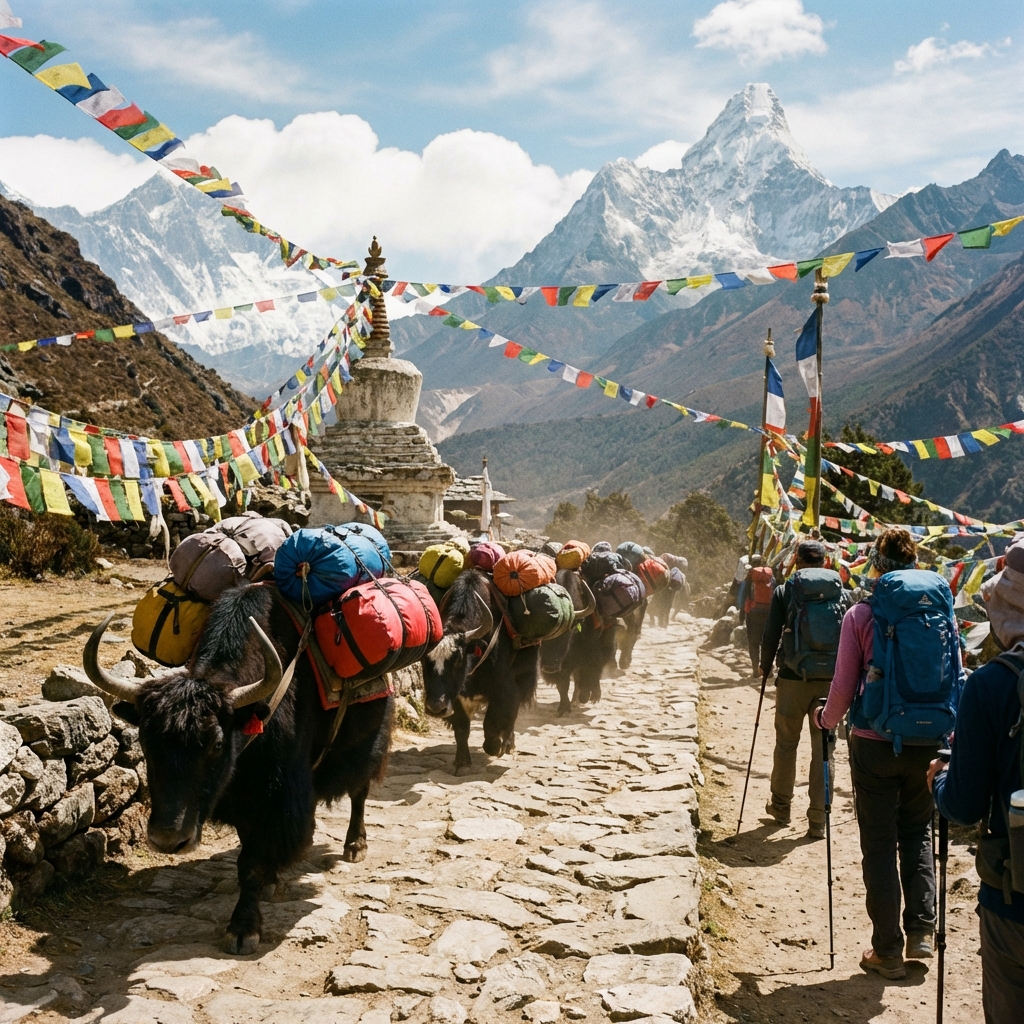
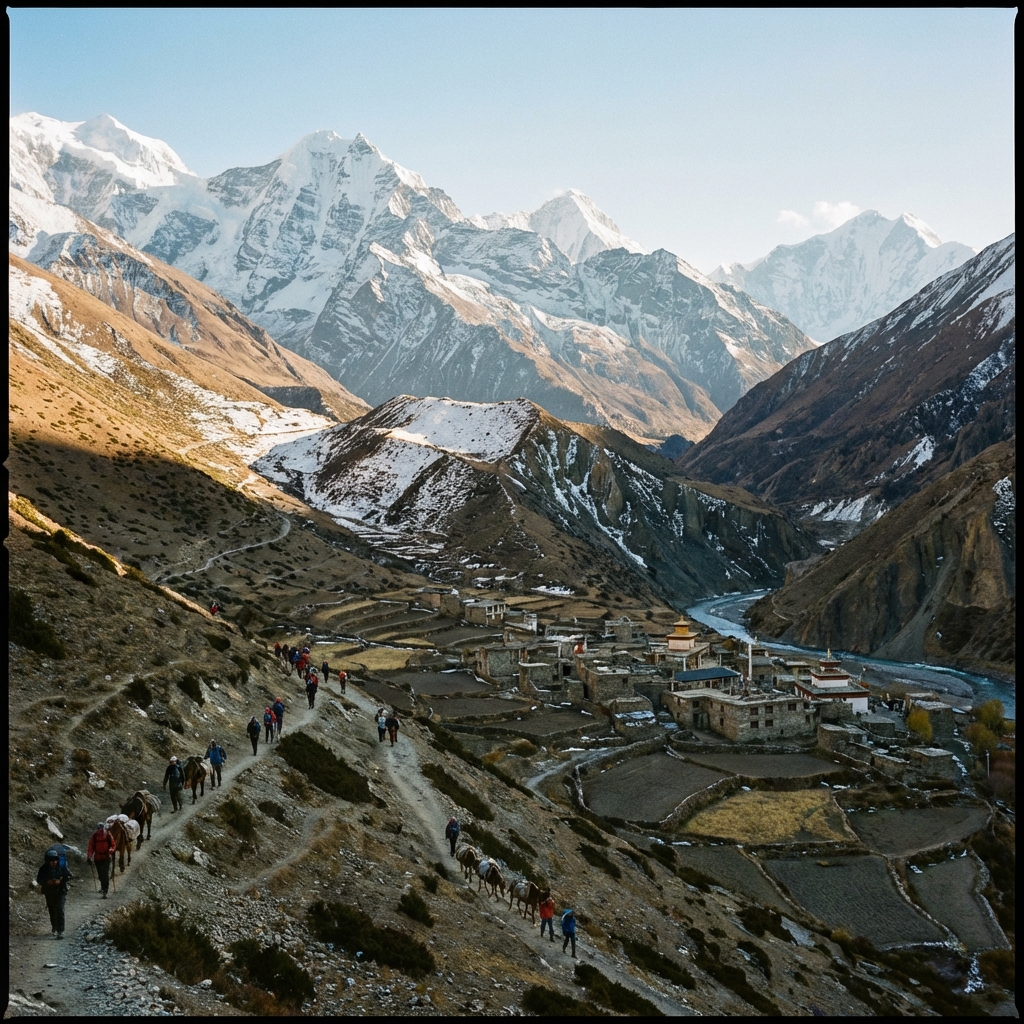
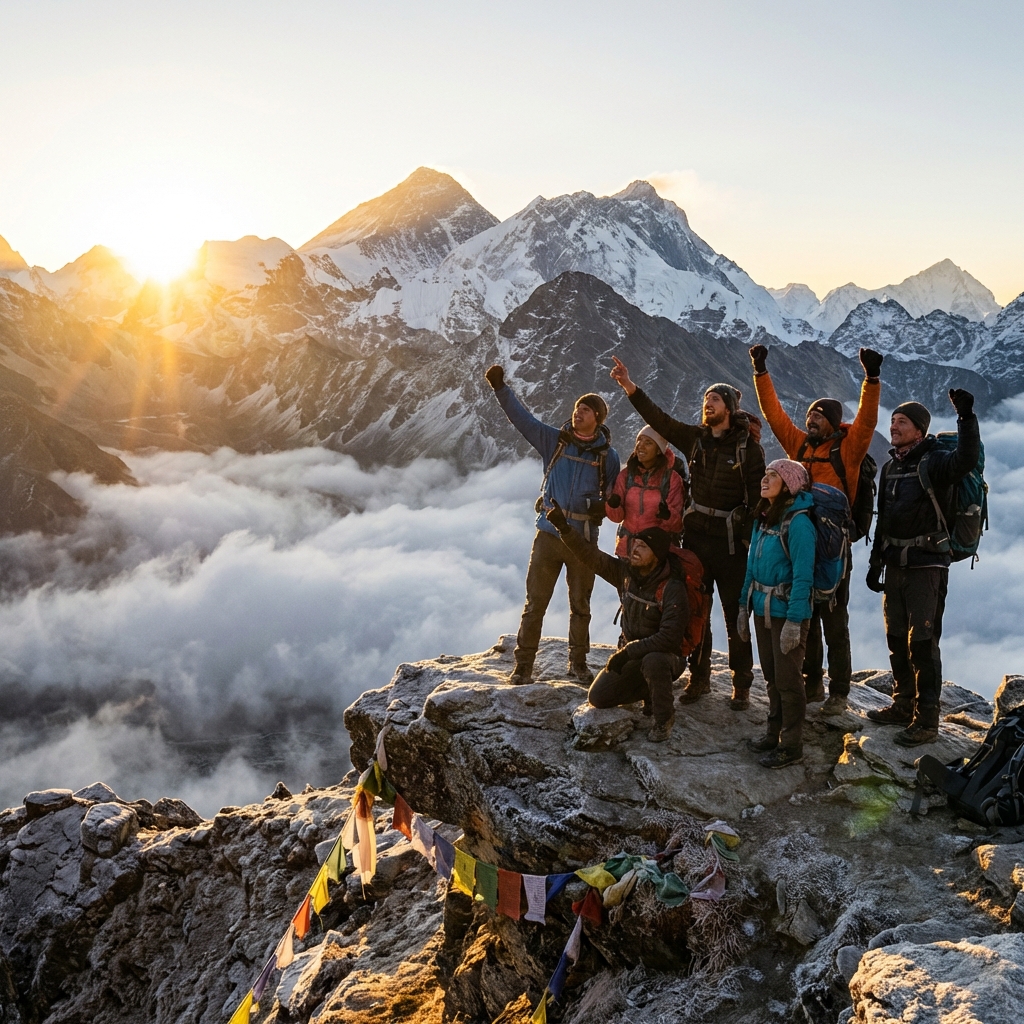
Buddhist monasteries—known locally as gompa—are among the most profound and memorable encounters on any Nepal trek. Perched on ridgelines above cloud-filled valleys, tucked into cliffs overlooking glacial rivers, or anchoring ancient villages beneath towering peaks, these monasteries are not museums or tourist attractions. They are living religious institutions where monks and nuns practice daily devotion, where communities gather for ceremonies that have continued unbroken for centuries, and where the spiritual traditions of Tibetan Buddhism breathe alongside the Himalayan wind.
For trekkers, a monastery visit can be the highlight of a journey—a moment of stillness amid the physical challenge of the trail, a window into a spiritual world far removed from everyday life. But this experience is only enriching when approached with genuine respect. The monks and communities who maintain these gompa welcome visitors, but they expect—and deserve—behavior appropriate to a sacred space.
This guide provides comprehensive monastery etiquette for Nepal trekkers: how to dress, how to behave, what to photograph (and what not to), how to interact with monks, and the cultural context that makes these guidelines meaningful rather than arbitrary. Whether you're planning to visit Tengboche Monastery on the Everest Base Camp trek, Muktinath on the Annapurna Circuit, or any of the dozens of smaller gompa that dot the trails, this guide will prepare you to visit respectfully and connect meaningfully.
Always remove shoes before entering
Always walk clockwise around sacred objects
Ask permission first; no flash inside
Cover shoulders and knees
NPR 100-500 appreciated, mandatory since April 2023
Quiet voices, phones silenced, no smoking
Tengboche (EBC), Muktinath (AC)
Attend morning or evening puja
Table of Contents
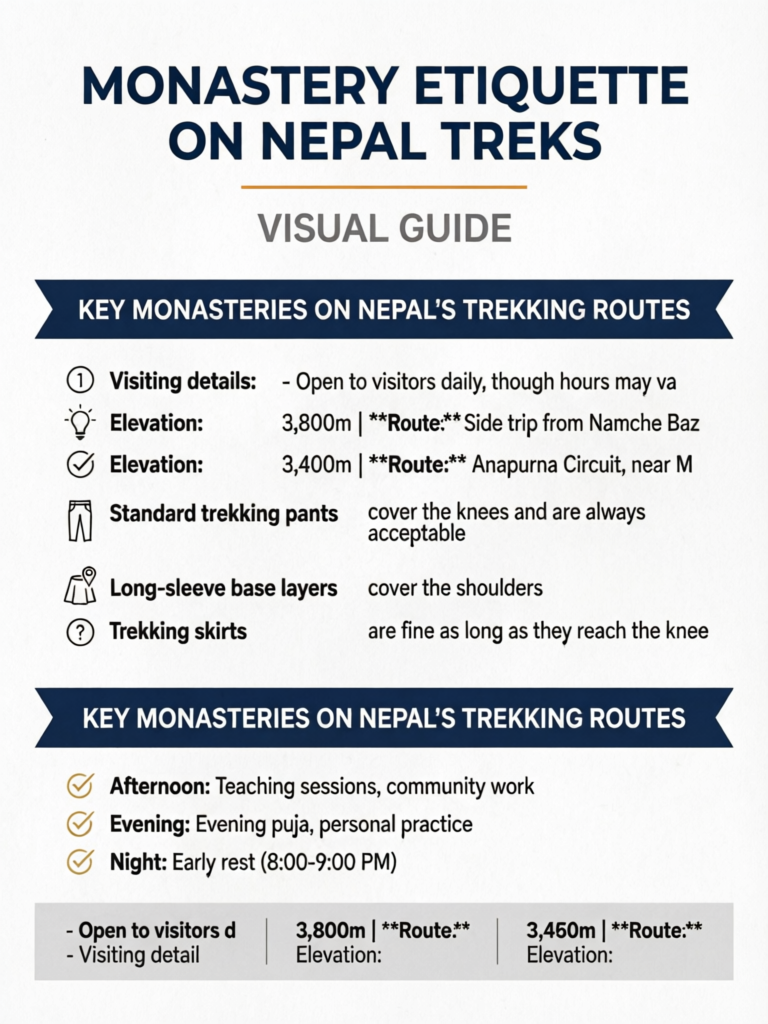
- Key Monasteries on Nepal's Trekking Routes
- General Etiquette Rules
- Dress Code for Monastery Visits
- Photography Rules and Guidelines
- Donation Protocol
- Prayer Wheel Etiquette
- Mani Wall Etiquette
- Understanding Rituals You May Witness
- Mani Rimdu Festival at Tengboche
- What to Do If Invited for Tea
- Gift Giving Etiquette
- Common Mistakes Tourists Make
- Frequently Asked Questions
Key Monasteries on Nepal's Trekking Routes
Nepal's trekking trails pass through or near dozens of Buddhist monasteries, ranging from grand institutions to tiny village gompa. Here are the most significant ones you're likely to encounter on popular routes.
Tengboche Monastery (Everest Region)
Elevation: 3,867m | Route: Everest Base Camp
Tengboche (also spelled Thyangboche) is the most famous monastery in the Khumbu region and arguably the most dramatically situated gompa in all of Nepal. Perched on a forested ridge with direct views of Everest, Ama Dablam, and Thamserku, the monastery has been the spiritual center of the Khumbu Sherpa community since its founding in 1916.
The current structure was rebuilt after a devastating fire in 1989, with funds from the Himalayan Trust and international donors. Tengboche is home to the annual Mani Rimdu festival, one of the most significant cultural events in the Everest region.
Visiting details:
- Open to visitors daily, though hours may vary
- Morning and evening puja (prayer ceremonies) are sometimes open to respectful observers
- A small museum adjacent to the monastery provides cultural context
- Accommodation available in Tengboche village lodges
Muktinath Temple Complex (Annapurna Region)
Elevation: 3,710m | Route: Annapurna Circuit
Muktinath is unique in Nepal as a pilgrimage site sacred to both Hindus and Buddhists. The Buddhist name is Chumig Gyatsa ("Hundred Waters"), and the Tibetan Buddhist monastery sits within the broader temple complex. The site features 108 water spouts and an eternal natural gas flame burning behind a waterfall—a convergence of earth, water, and fire that has drawn pilgrims for centuries.
Visiting details:
- Heavily visited by both trekkers and Hindu/Buddhist pilgrims
- Shoes must be removed at multiple points within the complex
- Respectful behavior is especially important given the multi-faith nature of the site
- Allow 1-2 hours for a complete visit
Pungyen Gompa (Manaslu Region)
Elevation: 3,870m | Route: Manaslu Circuit
Located near Samagaun village, Pungyen Gompa offers stunning views of Manaslu (8,163m) and is an important spiritual center for the Nubri community. The monastery is less touristed than Tengboche, offering a more intimate and authentic visiting experience.
Thame Monastery (Everest Region)
Elevation: 3,800m | Route: Side trip from Namche Bazaar
Thame Gompa sits above the village of Thame in a spectacular setting overlooking the valley. This is the monastery where Tenzing Norgay, the first person (along with Edmund Hillary) to summit Everest, was once a student. The monastery holds its own Mani Rimdu celebration, typically in May.
Braga Monastery (Annapurna Region)
Elevation: 3,450m | Route: Annapurna Circuit, near Manang
One of the oldest monasteries in the Manang District, Braga Gompa dates back approximately 500 years. The monastery houses an impressive collection of Buddhist statues and wall paintings. The caretaker monk sometimes offers guided tours for a small donation.
Other Notable Monasteries
- Pangboche Monastery (Everest region, 3,985m) — The oldest monastery in the Khumbu, dating to the 17th century
- Namche Gompa (Everest region, 3,440m) — Small but significant, overlooking Namche Bazaar
- Muktinath Ranipauwa (Annapurna region) — Multiple small gompa in the village complex
- Lo Manthang Monasteries (Upper Mustang) — Four major monasteries within the walled city, including Jampa Lhakhang and Thubchen Gompa, with extraordinary 15th-century murals
Pro Tip
General Etiquette Rules
These fundamental rules apply to every Buddhist monastery, temple, and sacred site you encounter on Nepal's trekking trails.
Remove Your Shoes
Before entering any monastery building, remove your shoes and leave them at the entrance. This is non-negotiable and universal. Most monasteries have a designated area or shelf near the door for footwear. In cold weather, wearing thick trekking socks inside is perfectly acceptable.
Walk Clockwise
The direction of movement around Buddhist sacred spaces is always clockwise. This applies to:
- Walking around the interior of a monastery
- Circumambulating (walking around) a stupa or chorten
- Passing prayer wheels
- Walking around the monastery building itself
This clockwise movement (called kora in Tibetan) follows the path of the sun and symbolizes alignment with the natural order. Going counter-clockwise is considered disrespectful.
Don't Point Your Feet at Altars or Statues
In Buddhist culture, the feet are considered the lowest and least clean part of the body. Never sit with your feet pointing toward the altar, statues of the Buddha, sacred texts, or monks. If you sit on the floor inside a monastery, tuck your feet beneath you or to the side.
Remove Your Hat
Take off your hat, cap, or headband when entering a monastery. This applies to all headwear, including sun hats and beanies. The exception is if monks are wearing head coverings during a particular ceremony—in which case follow their lead.
Silence Your Phone
Turn your phone to silent mode (not vibrate) before entering. Better yet, put it on airplane mode. A ringing phone during a prayer ceremony is deeply disruptive and disrespectful.
Speak Quietly
Keep your voice low inside monastery buildings. This is a place of meditation and prayer, not a social gathering space. Brief, quiet conversation is fine, but loud talking, laughing, or calling to companions across the room is inappropriate.
Don't Touch Sacred Objects
Unless specifically invited to do so by a monk, don't touch statues, paintings, religious texts, butter lamps, or ritual objects. Many of these items are centuries old and irreplaceable. Oils from human hands can damage ancient pigments and metals.
Bow Respectfully
A slight bow when entering and leaving the main prayer hall shows respect. You don't need to prostrate (full-body bow) as Tibetan Buddhists do—a simple, genuine inclination of the head is appropriate and appreciated.
Don't Smoke or Consume Alcohol
This should go without saying, but smoking and alcohol are prohibited in and around monastery grounds. This extends to the immediate vicinity of the monastery, not just the interior.
When Monasteries Are Closed
Monasteries are not tourist attractions with fixed opening hours. They may be closed during certain religious observances, during meals, or simply because the resident monks are elsewhere. If you arrive and find a monastery closed, accept it gracefully. Ask at a nearby lodge or tea house when it might reopen, or return later. Never force or pry open a monastery door.
Dress Code for Monastery Visits
Appropriate dress for monastery visits is straightforward but important.
Cover Your Shoulders
Sleeveless shirts, tank tops, and sports bras as outer garments are inappropriate inside monasteries. Wear a shirt or layer that covers your shoulders. On trekking days, this usually isn't an issue since most trekkers wear layers, but during warm weather at lower elevations, remember to add a layer before entering.
Cover Your Knees
Shorts above the knee are not appropriate in monasteries. Trekking pants or three-quarter-length pants are fine. If you're trekking in shorts, carry a lightweight sarong or wrap that you can tie around your waist before entering.
Practical Advice for Trekkers
Since most trekkers are dressed in functional trekking clothing, meeting the dress code is usually easy:
- Standard trekking pants cover the knees and are always acceptable
- Long-sleeve base layers cover the shoulders
- Fleece or down jackets (which you'll likely be wearing at altitude) provide full coverage
- Trekking skirts are fine as long as they reach the knee
The key items to avoid:
- Sleeveless tops as sole upper body coverage
- Very short shorts
- Clothing with offensive imagery or slogans
- Excessively tight or revealing clothing
Head Coverings
As noted above, remove hats inside the monastery. However, if you have a shaved head or very short hair, no head covering is needed—monks themselves have shaved heads, so this is culturally appropriate.
Pro Tip
Photography Rules and Guidelines
Photography is one of the most sensitive aspects of monastery visits. The rules vary by monastery, but these guidelines apply broadly.
Always Ask Permission First
Before taking any photographs inside a monastery, ask permission. A simple "Photo okay?" with a gesture toward your camera is universally understood. In many monasteries, a resident monk or caretaker is present and can give or deny permission clearly.
- If permission is granted: Photograph quietly and discreetly, without disrupting the space
- If permission is denied: Respect the decision completely, without negotiation or sneaking photos
No Flash Photography
Flash is almost universally prohibited inside monasteries. The intense burst of light:
- Disturbs meditating monks
- Can damage ancient pigments on wall paintings and thangka (scroll paintings)
- Disrupts the contemplative atmosphere
- May startle people in prayer
Modern smartphones and cameras perform well in low light without flash. If the interior is too dark for your camera, accept that some moments are meant to be experienced rather than captured.
Never Photograph Monks Without Consent
Monks are not photo subjects. They are people engaged in religious practice. Never photograph monks without their explicit permission, whether inside or outside the monastery. This includes:
- Monks in prayer or meditation (never photograph this)
- Monks performing daily tasks
- Groups of monks walking or sitting
- Young monk students (photography of children requires particular sensitivity)
Many monks are happy to pose for a photo if asked politely. Some prefer not to be photographed at all. Respect either response.
Some Interiors Are Strictly No-Photo Zones
Certain monastery interiors—particularly those containing ancient murals, sacred relics, or consecrated statues—are designated as no-photography zones regardless of other permissions. Look for signs or ask. When in doubt, don't photograph.
Video Recording
The same rules that apply to still photography apply to video, often more strictly. Continuous video recording can be more disruptive than occasional still shots. Always ask permission specifically for video if you want to record.
What You Can Usually Photograph Freely
- The monastery exterior and grounds
- General views of the monastery from a distance
- Prayer flags, mani walls, and stupas outside the monastery
- Architectural details of the building exterior
- The surrounding landscape
Drone Photography
Flying drones near or over monasteries is almost always inappropriate and potentially illegal. The noise is disruptive, the presence is invasive, and many monasteries and national parks prohibit drone use. Leave the drone in your pack when visiting sacred sites.
Donation Protocol
Most monasteries welcome small donations from visitors, but the protocol around giving varies.
How Much to Donate
A donation of NPR 100-500 (roughly $0.75-$3.75 USD) is appropriate and appreciated for a casual visit. This is a gesture of respect and support, not a fee. Larger donations are welcome but never expected.
Where to Leave Donations
- Most monasteries have a donation box near the entrance or altar
- Some have a designated offering plate on or near the altar
- In smaller gompa, you may hand a donation directly to the caretaker monk
Donation Etiquette
- Never throw money toward the altar or donation box—place it respectfully
- Nepali Rupees are preferred over foreign currency (monks can't easily exchange dollars)
- Don't make a show of your donation—place it quietly without drawing attention
- Donations are voluntary—there is no obligation, and no one should pressure you
What Donations Support
Your contribution supports:
- Monastery maintenance and repairs (these remote buildings endure extreme weather)
- Butter lamps and incense (consumed daily in rituals)
- Food and provisions for resident monks
- Religious education for young monks
- Community programs and festivals
Pro Tip
Prayer Wheel Etiquette
Prayer wheels (mani wheels) are cylindrical devices containing tightly wound scrolls of mantras—most commonly "Om Mani Padme Hum." Spinning the wheel is believed to release the mantras into the universe, generating the same spiritual merit as reciting them aloud.
How to Use Prayer Wheels
- Approach from the left — Walk in the direction that allows you to spin the wheel with your right hand
- Spin clockwise — Always spin prayer wheels in a clockwise direction (when viewed from above). Counter-clockwise is considered disrespectful and symbolically reverses the prayers
- Spin gently but deliberately — A smooth, intentional spin shows respect. Don't slap, hit, or aggressively spin the wheel
- You may recite the mantra — Saying "Om Mani Padme Hum" (silently or quietly) while spinning is traditional but not required for visitors
- Continue walking clockwise — After spinning, continue walking in the clockwise direction
Types of Prayer Wheels You'll Encounter
- Hand-held wheels: Small cylinders on a stick, spun by a wrist rotation. You'll see monks and locals spinning these while walking.
- Wall-mounted wheels: Rows of prayer wheels set into walls outside monasteries, designed to be spun as you walk past. Spin each one as you pass.
- Large standing wheels: Giant cylinders, sometimes taller than a person, found in and around major monasteries. These may require both hands to spin.
- Water-powered wheels: Ingenious devices placed in streams or near water sources, spun continuously by flowing water. These don't require human interaction—they generate merit through the power of water.
Prayer Wheel Don'ts
- Don't spin counter-clockwise
- Don't treat prayer wheels as toys or fidget devices
- Don't let children bang on or play with prayer wheels
- Don't attempt to open a prayer wheel to see what's inside
Mani Wall Etiquette
Mani walls are stone walls or piles composed of flat stones carved or painted with Buddhist mantras, most commonly "Om Mani Padme Hum." These are some of the most ubiquitous sacred features along Nepal's trekking trails. For deeper understanding of these and other Buddhist symbols, see our guide to prayer flags, mani walls, and Buddhist symbols.
The Cardinal Rule: Pass on the Left
When approaching a mani wall, always pass it on the left side, keeping the wall to your right. This means you walk around mani walls in a clockwise direction, consistent with the Buddhist principle of clockwise circumambulation.
This rule also applies to:
- Chortens (stupas) — Pass on the left
- Prayer flag poles — Pass on the left
- Any sacred stone pile — Pass on the left
Why This Matters
The clockwise circumambulation of sacred objects is one of the most fundamental practices in Tibetan Buddhism. By passing on the left (keeping the sacred object to your right), you're performing a small act of devotion and respect—or at minimum, not actively disrespecting the tradition.
For many locals, seeing a trekker deliberately pass on the correct side signals cultural awareness and respect. Passing on the wrong side, while not catastrophic, is noticed and can be disappointing to the communities you're visiting.
Additional Mani Wall Guidelines
- Don't remove stones from mani walls—each stone was carved and placed as an act of devotion
- Don't sit or stand on mani walls
- Don't stack your own stones on carved mani walls (trail-marker cairns are different from mani walls)
- Do pause and observe the craftsmanship—some mani stones are extraordinary works of art
Trail Navigation Aid
Mani walls and chortens serve a practical function as well as a spiritual one: they mark the trail. In foggy or snowy conditions, following the mani walls and passing on their left side keeps you on the correct path. In this way, cultural respect and practical navigation align perfectly.
Understanding Rituals You May Witness
Part of the richness of monastery visits is the possibility of witnessing living religious practice. Here's context for the rituals you might encounter.
Puja (Prayer Ceremony)
Puja is the daily prayer ceremony performed by monks, typically in early morning (around 6:00-7:00 AM) and late afternoon/evening. A puja involves:
- Chanting of sutras and mantras, often accompanied by rhythmic drumming
- Blowing of long horns (dungchen) and conch shells
- Ringing of bells and cymbals
- Offering of butter tea to monks during the ceremony
- Burning of incense (juniper branches are common in the Himalaya)
Can you watch? At many monasteries, visitors can sit quietly at the back of the prayer hall during puja. Enter before the ceremony begins or during a natural pause—don't walk in during intense chanting. Sit on the floor (never on monks' cushions), keep your feet tucked away from the altar, and remain completely silent. Leave quietly if you need to go before it ends.
Butter Lamp Lighting
Rows of butter lamps (small bowls filled with clarified yak butter and a wick) burn before altars in every monastery. Lighting a butter lamp is an act of devotion that symbolizes the dispelling of darkness (ignorance) with light (wisdom). Visitors are sometimes invited to light a lamp—if so, a small donation is appropriate.
Mantra Recitation
You may hear monks engaged in repetitive mantra recitation, most commonly "Om Mani Padme Hum" (the mantra of Avalokiteshvara, the bodhisattva of compassion). This practice may go on for hours and is a form of meditation. Don't interrupt or try to engage monks who are reciting.
Sand Mandala Creation
On rare occasions, you might witness monks creating an intricate sand mandala—a geometric design made from colored sand that takes days to complete and is then ceremonially destroyed. This practice symbolizes the impermanence of all things. If you encounter a mandala in progress, you are witnessing something extraordinary. Watch silently, don't touch, and don't blow on the sand.
Prostrations
Full-body prostrations—where a practitioner stretches fully on the ground toward the altar, then rises and repeats—are a common devotional practice. You'll see this outside monasteries and along trails, especially near sacred sites. Don't step over or walk through the path of someone performing prostrations.
Pro Tip
Mani Rimdu Festival at Tengboche
The Mani Rimdu festival is the most significant cultural event in the Khumbu region and one of the most extraordinary experiences available to trekkers in Nepal. If your Everest Base Camp trek timing allows, witnessing Mani Rimdu at Tengboche Monastery is unforgettable.
What Is Mani Rimdu?
Mani Rimdu is a Buddhist festival that involves three days of ceremonies culminating in elaborate masked dances performed by monks in the monastery courtyard. The festival celebrates the victory of Buddhism over the ancient Bon religion and invokes blessings for all sentient beings.
When Does It Occur?
Mani Rimdu at Tengboche takes place in October-November, following the Tibetan lunar calendar (the exact dates change each year). The main masked dances typically occur on the full moon day of the 9th Tibetan month.
A smaller Mani Rimdu celebration takes place at Thame Monastery in May, following the same format but with fewer visitors.
For detailed timing information, see our Nepal festivals and trekking calendar.
The Three Days of Mani Rimdu
Day 1: Wong (Blessing Ceremony) Monks perform rituals inside the monastery, creating sacred pills (rilbu) and offering prayers. Visitors may watch from outside or from the edges of the prayer hall if space allows.
Day 2: Cham (Masked Dances) The main event. Monks wearing elaborate masks and costumes perform a series of dances in the monastery courtyard, each representing different aspects of Buddhist teaching. Characters include wrathful deities, compassionate bodhisattvas, clowns who provide comic relief, and symbolic representations of good triumphing over evil. Hundreds of spectators—Sherpas, trekkers, monks from other monasteries—gather in the courtyard.
Day 3: Fire Puja A fire ceremony that symbolizes the purification and burning away of negative forces. This is the ceremonial conclusion of the festival.
Etiquette for Mani Rimdu
- Arrive early for a good viewing position—the courtyard fills up
- Sit where directed; certain areas are reserved for monks and community elders
- Photography is generally permitted during outdoor dances but ask before shooting close-ups
- Don't walk between the dancers and the audience
- Accept any blessed rice, pills, or tea offered to you—this is a spiritual blessing
- Dress warmly—the festival takes place at 3,867m and temperatures drop quickly
Planning Around Mani Rimdu
If witnessing Mani Rimdu is a priority, build your trek schedule around the festival dates (announced annually by the monastery). This may mean adjusting your acclimatization schedule to be at Tengboche on the right day. Your trekking agency should be able to confirm dates and plan accordingly. For more on how festivals affect trekking, see our festivals and trekking calendar.
What to Do If Invited for Tea
One of the most genuine cultural experiences on a Nepal trek is being invited for tea by monks. This happens more often than you might expect, particularly at smaller, less-touristed monasteries.
Accepting the Invitation
Always accept if your schedule allows. An invitation for tea from a monk is a gesture of hospitality and openness. Declining without good reason can be perceived as a rejection of friendship.
During the Tea Visit
- Sit where directed — Your host will indicate where to sit
- Accept what's offered — Butter tea (po cha) is traditional in Tibetan Buddhist communities. It's made with tea, yak butter, and salt. The taste is unfamiliar to most Westerners (salty and rich rather than sweet), but drinking at least some is respectful
- Don't refuse immediately — If butter tea isn't to your taste, sip slowly and politely. Your host won't be offended if you don't finish, but an immediate refusal of the first cup is less gracious
- Your cup will be refilled — In Tibetan tradition, the host keeps your cup full. If you don't want more, leave your cup mostly full. An empty cup signals you want a refill
- Conversation — Monks may speak some English, or your guide can translate. Common topics include where you're from, your trek, and your impressions of Nepal. Avoid contentious political or religious debates
- Duration — Tea visits can last 15 minutes to over an hour depending on the monk's availability and your mutual interest in conversation
Thank Your Host
A sincere "thank you" (dhanyabad in Nepali, or tuchi che in Tibetan/Sherpa) and a slight bow of the head when leaving shows gratitude. A small donation to the monastery is also appropriate after a tea visit.
Gift Giving Etiquette
If you want to bring a gift to a monastery or monk, certain items are more appropriate than others.
Appropriate Gifts
- Kata (white ceremonial scarf) — The most traditional and universally appropriate gift. Available at shops in Kathmandu, Namche, and other trekking towns for NPR 100-500
- Incense — Good quality incense is always welcome
- Butter for lamps — Practical and directly supports daily rituals
- Tea or coffee — Packaged tea is useful and appreciated
- Fruit — Fresh fruit is a treat in remote mountain monasteries
- School supplies — Notebooks, pens, and pencils for young monk students
Gifts to Avoid
- Money handed directly to individual monks — Donate to the monastery through the donation box instead
- Alcohol — Inappropriate in a monastic setting
- Meat products — Many monasteries are vegetarian
- Clothing with logos or images — Especially anything that could be considered disrespectful
- Sweets and candy for young monks — Dental care is limited in remote areas; don't contribute to health problems
How to Give
If presenting a kata, drape it over both your hands (palms up) and offer it with a slight bow. The recipient may place it around your neck as a blessing, or accept it for the monastery. For other gifts, offer with both hands or your right hand, never your left hand alone.
Common Mistakes Tourists Make
These errors are all too common and easily avoided with awareness.
Mistake 1: Treating Monasteries as Photo Opportunities
Some trekkers rush through monasteries, snapping photos without pausing to absorb the atmosphere or show respect. The monastery is a place of worship first; a photography location is a distant secondary function. Spend time observing before reaching for your camera.
Mistake 2: Wearing Shorts and Tank Tops
At lower elevations in warm weather, some trekkers arrive at monasteries in minimal clothing. Keep a light cover-up in your daypack specifically for monastery visits.
Mistake 3: Sitting with Feet Toward the Altar
This is one of the most common mistakes and one of the most culturally significant. When sitting inside a monastery—whether on the floor or on a bench—ensure your feet point away from the altar and religious images.
Mistake 4: Touching Everything
The impulse to touch ancient artifacts, spin prayer wheels aggressively, or handle religious objects is strong but should be resisted unless specifically invited.
Mistake 5: Walking Counter-Clockwise
Entering from the wrong side and walking counter-clockwise around the prayer hall, stupas, or mani walls is a frequent error. Remember: always clockwise.
Mistake 6: Interrupting Prayers or Ceremonies
Walking into the middle of a puja, talking loudly during chanting, or placing yourself between monks and the altar disrupts the ceremony. Sit quietly at the back or wait until the ceremony concludes.
Mistake 7: Ignoring "No Photo" Signs
Some monasteries post clear signs prohibiting photography in certain areas. These signs exist for a reason—the content may be sacred, fragile, or both. Respect them completely.
Mistake 8: Leaning Against or Sitting on Religious Structures
Mani walls, chortens, and monastery walls are not benches or backpacking rest stops. Don't lean your pack against them or use them as seats.
Mistake 9: Entering Restricted Areas
Some parts of monasteries are off-limits to visitors—monks' quarters, private meditation rooms, and areas containing especially sacred items. If a door is closed or an area is cordoned off, don't enter.
Mistake 10: Comparing Monasteries Unfavorably
Comments like "This one isn't as good as Tengboche" or "This is smaller than I expected" can be overheard and are hurtful to communities that maintain these sacred spaces with great effort and devotion. Each gompa has its own significance and history.
Cultural Sensitivity Goes Both Ways
While this guide focuses on visitor behavior, it's worth noting that most Sherpa and Tibetan Buddhist communities are remarkably welcoming and forgiving of honest cultural mistakes. If you accidentally pass on the wrong side of a mani wall or forget to remove your shoes, a genuine apology and correction are always sufficient. The intent behind your behavior matters more than perfection. What's important is making the effort to learn and respect these traditions.
Beyond the Monastery: Cultural Context
Understanding why these etiquette guidelines exist enriches the entire experience. The monasteries you visit on Nepal treks are not relics of the past—they are active centers of a living spiritual tradition.
The Role of Monasteries in Mountain Communities
In Sherpa, Nubri, and other Tibetan Buddhist communities along trekking routes, the monastery serves as:
- Spiritual center — Where the community gathers for prayers, blessings, and religious instruction
- Educational institution — Where young monks (and increasingly nuns) receive religious and secular education
- Social hub — Where community decisions are made, disputes are mediated, and festivals are celebrated
- Cultural repository — Where ancient texts, art, and traditions are preserved
- Economic anchor — Monasteries generate economic activity through festivals, pilgrimages, and increasingly through tourism
The Monastic Life You're Witnessing
The monks and nuns who live in these monasteries follow rigorous daily schedules:
- Pre-dawn (4:00-5:00 AM): Rising, personal prayers, preparation
- Morning (6:00-7:00 AM): Morning puja (group prayers)
- Daytime: Study, memorization of texts, meditation, monastery maintenance
- Afternoon: Teaching sessions, community work
- Evening: Evening puja, personal practice
- Night: Early rest (8:00-9:00 PM)
When you visit a monastery, you're stepping briefly into this world. The respect you show acknowledges the dedication of the people who maintain these spaces.
For More Cultural Context
- Nepal trekking cultural etiquette — Broader cultural guidelines for trekking in Nepal
- Sherpa culture complete guide — Deep dive into Sherpa traditions and history
- Prayer flags, mani walls, and Buddhist symbols — Understanding the sacred symbols along the trail
Frequently Asked Questions
Can non-Buddhists visit monasteries in Nepal?
Yes, absolutely. Nepal's Buddhist monasteries generally welcome visitors of all faiths (or no faith). The key requirement is respectful behavior, not religious affiliation. Monks appreciate genuine interest in their traditions regardless of the visitor's background.
Is there an entrance fee for monasteries?
Most monasteries do not charge a formal entrance fee. However, a voluntary donation (NPR 100-500) is customary and appreciated. Some larger monasteries or those with museums may have a small suggested donation posted at the entrance.
Can women visit all monasteries?
Yes. Unlike some religious traditions that restrict women's access, Tibetan Buddhist monasteries in Nepal are open to women visitors. There are no gender-based restrictions. That said, women should be particularly attentive to dress code guidelines (covering shoulders and knees).
What time should I visit a monastery?
Early morning (after the morning puja, typically 7:00-8:00 AM) or late afternoon (before evening puja, typically 3:00-4:00 PM) are ideal for quiet visits. If you want to observe a puja, arrive before it begins. Midday visits are fine but may coincide with the busiest tourist period.
Can I attend a puja ceremony?
At many monasteries, visitors can observe the morning or evening puja by sitting quietly at the back of the prayer hall. Not all monasteries allow this, so ask first. Enter before the ceremony begins and remain seated and silent throughout. Don't enter or leave during the ceremony unless absolutely necessary.
What if I accidentally break etiquette?
Don't panic. A sincere apology and immediate correction are always sufficient. Monks and local communities understand that foreign visitors are learning about their culture. The fact that you made the effort to visit respectfully is what matters most. If someone corrects you, thank them and adjust your behavior.
Are there any days when monasteries are closed?
Monasteries may be closed on certain religious observances or during intensive retreat periods. There are no fixed "closing days" across all monasteries—each operates on its own schedule. Ask at your lodge or tea house if you're unsure about a specific monastery's availability.
Can I meditate inside a monastery?
Sitting quietly in meditation inside a monastery is generally welcome as long as you're not occupying space needed by monks or other practitioners. If the monastery is empty, you might sit for a period of quiet reflection. During ceremonies, sit respectfully but don't attempt your own separate meditation practice that might be incongruent with the ongoing ceremony.
Should I hire a guide specifically for monastery visits?
A knowledgeable guide can enormously enrich a monastery visit by explaining the iconography, history, and significance of what you're seeing. If your trekking guide has cultural knowledge (which good guides do), take advantage of their expertise. At some larger monasteries, caretaker monks also offer informal guided tours for a small donation.
Is it okay to give money directly to a monk?
It's generally more appropriate to donate through the monastery's donation box rather than handing money directly to an individual monk. Monks take vows that may include renunciation of personal wealth, and institutional donations support the entire monastery community. However, if a monk has spent significant time showing you around or providing cultural explanation, a small personal gift (tea, incense, a kata) is appropriate.
What should I do if a monastery is undergoing renovation?
Many monasteries in Nepal are in various stages of renovation or reconstruction. If a monastery is partially closed for renovation, respect the construction zones and don't enter areas marked as off-limits. The portions open to visitors are still worth seeing, and your donation during this period is especially valuable.
Can I bring my trekking poles inside?
Leave trekking poles outside the monastery, ideally leaned against the wall near the shoe-removal area. Carrying poles inside a prayer hall is inappropriate and risks damaging floors, walls, or sacred objects.
Final Thoughts
Visiting monasteries on Nepal's trekking trails is a privilege. These ancient institutions open their doors to strangers from around the world, sharing sacred spaces that have held meaning for centuries. The etiquette described in this guide isn't burdensome—it's a framework for engaging with another culture's most cherished traditions in a way that honors both the tradition and the people who maintain it.
The irony of monastery etiquette is that the guidelines themselves lead to a better experience. By slowing down, observing carefully, putting away the camera initially, sitting quietly, and absorbing the atmosphere, you receive far more from the visit than a rushed photo-taking sprint ever provides. The scent of juniper incense, the sound of distant chanting, the play of light on ancient wall paintings, the weight of centuries of devotion in the air—these are the experiences that stay with you long after the trek is over.
Trek with respect, visit with curiosity, and leave with gratitude. The monasteries of Nepal will reward you immensely in return.