
Tengboche: Where Spirituality Meets the World's Highest Peaks
Tengboche occupies one of the most spectacular locations in the entire Himalayan range, perched on a forested ridge at 3,867 meters (12,687 feet) with unobstructed views of Mount Everest, Ama Dablam, Nuptse, Lhotse, and numerous other iconic peaks. This small settlement is dominated by Tengboche Monastery (also spelled Thyangboche), the largest and most important Buddhist monastery in the Khumbu region, making it both a crucial waypoint on the Everest Base Camp trek and a deeply significant spiritual center for the Sherpa people.
The village itself is remarkably small, consisting primarily of the magnificent monastery complex, a handful of teahouses and lodges, and the homes of resident monks. Unlike the bustling atmosphere of Namche Bazaar, Tengboche offers a contemplative environment where the sound of monastery horns and chanting monks mingles with the wind through ancient juniper and rhododendron forests. For many trekkers, arriving at Tengboche marks the moment when their Everest journey transforms from a physical adventure into something more profound.
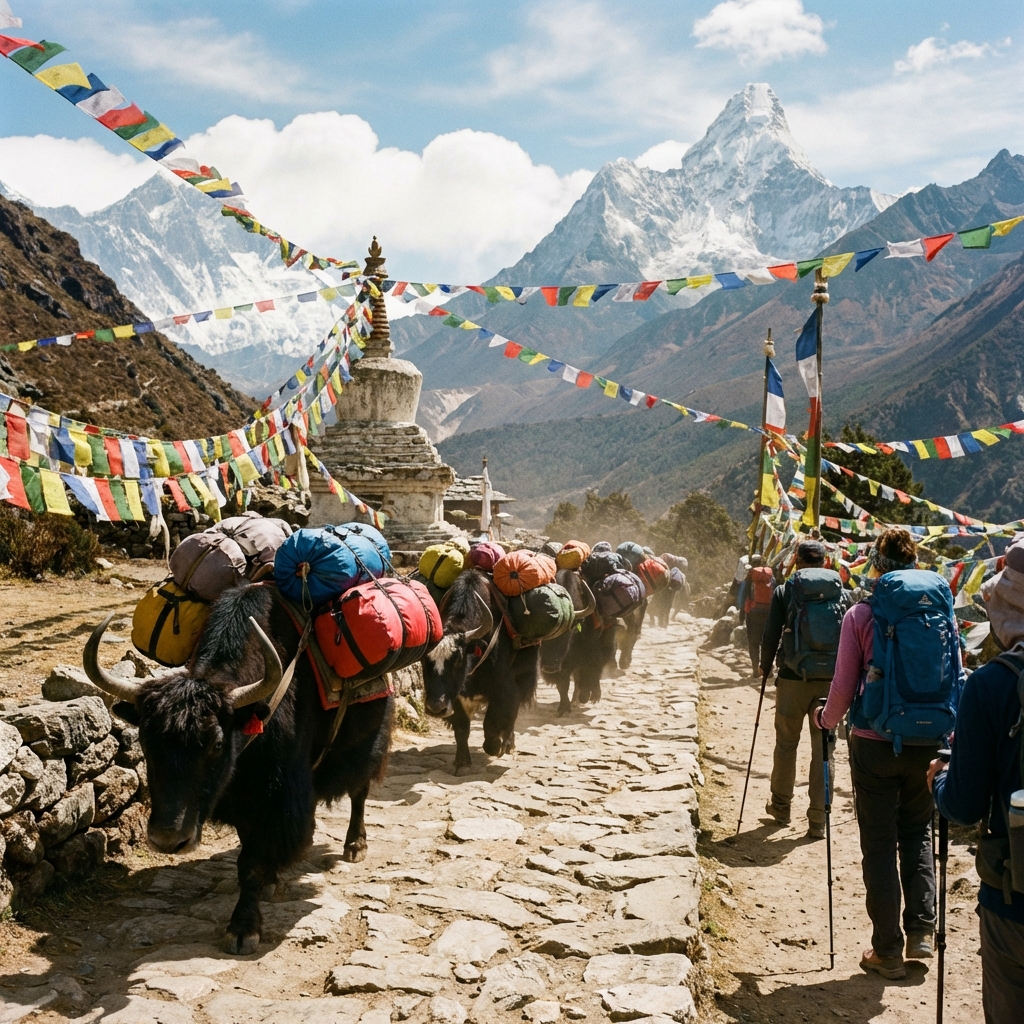
The panoramic mountain views from Tengboche are arguably the finest accessible by trail in the entire Everest region. The sight of Ama Dablam rising directly above the monastery's golden roof has become one of the most iconic images in Himalayan photography. Early morning, when the peaks catch the first rays of sunlight while the valley below remains in shadow, offers particularly magical photography opportunities that draw both casual photographers and serious professionals to this extraordinary location.
3,867m (12,687ft)
Khumbu, Solukhumbu District
Approximately 50 residents plus monks
Sherpa
1-2 nights
No - withdraw cash in Namche
Limited availability at lodges
Intermittent NTC/Ncell coverage
March-May, September-November
5-6 hours
Tengboche Monastery, Mani Rimdu Festival, Mountain Views
Mani Rimdu Festival (October/November)
Why Tengboche Matters: More Than Just a Trekking Stop
Tengboche holds immense significance on multiple levels. For trekkers heading to Everest Base Camp, it represents an important acclimatization point where you gain another 400+ meters of sleeping elevation above Namche Bazaar. The relatively gentle pace from Namche to Tengboche, combined with the inspiring mountain environment, makes it an ideal location for your body to continue adjusting to increasing altitude.
For the Sherpa people, Tengboche Monastery is the spiritual center of their world. Founded in 1916 by Lama Gulu, the monastery belongs to the Nyingmapa school of Tibetan Buddhism and serves as the mother monastery for all other religious institutions in the Khumbu. The current incarnation of the monastery was rebuilt in 1989 after a devastating fire destroyed the previous structure in 1989, with contributions from international donors and the mountaineering community.
Historically, Tengboche has been intertwined with Himalayan mountaineering since the earliest expeditions. The 1953 British Everest Expedition, which put Edmund Hillary and Tenzing Norgay on the summit, received blessings at Tengboche Monastery before their successful ascent. This tradition continues today, with virtually every climbing expedition seeking the monastery's blessing before attempting Everest or other peaks in the region.
The monastery's abbot, known as the Tengboche Rinpoche, is one of the most revered religious figures in the Khumbu. The current Rinpoche, Ngawang Tenzin Zangbu, has been instrumental in preserving Sherpa Buddhist traditions while also engaging with the international community through environmental and cultural preservation efforts. His role extends beyond the purely religious, making him a key figure in Khumbu governance and community affairs.
The Journey to Tengboche: Trail Description
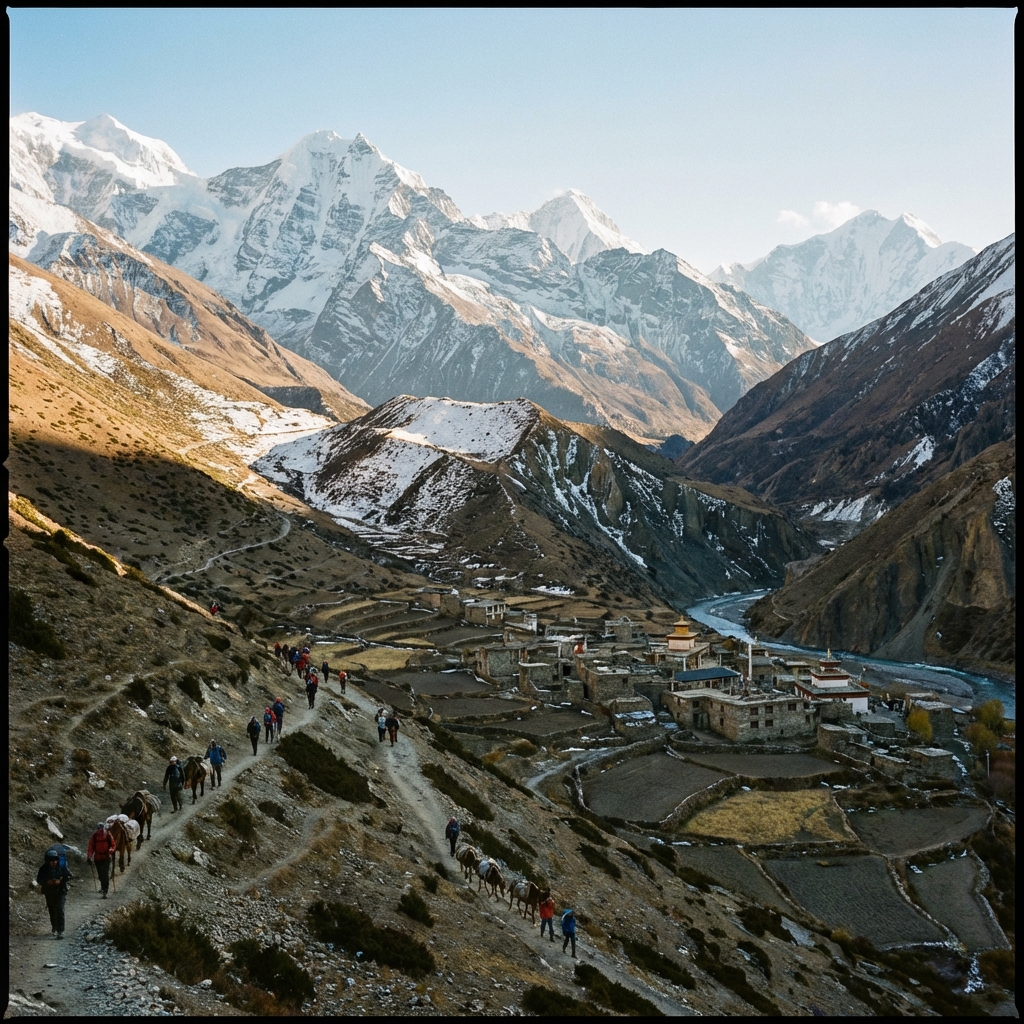
The trek from Namche Bazaar to Tengboche typically takes 5-6 hours and covers approximately 10 kilometers. The trail offers constantly changing scenery and several memorable viewpoints, making it one of the most enjoyable hiking days on the entire Everest Base Camp route despite the significant elevation gain.
Namche to Sanasa/Kyanjuma Junction (2-2.5 hours)
Leaving Namche, the trail initially climbs steeply out of the village bowl, passing the army checkpoint and beginning to contour around the mountainside. This section offers increasingly impressive views back toward Namche and across the valley to Kongde Ri and Thamserku. The trail is well-maintained and relatively wide, passing through scattered juniper and rhododendron forest.
After approximately 45 minutes of climbing, you'll reach the junction at Sanasa (also called Kyanjuma), where the trail to Gokyo Lakes branches off to the left. For Tengboche and Everest Base Camp, continue straight/right. This junction is well-marked, and there are several teahouses where you can stop for refreshments.
The trail from Sanasa continues contouring around the mountainside, offering spectacular views of Everest, Lhotse, and especially Ama Dablam, which begins to dominate the skyline ahead. This section of trail is relatively flat and provides excellent photography opportunities. You'll pass through the small settlements of Kyangjuma and reach the viewpoint area where Everest and Ama Dablam are visible together.
Descent to Phunki Tenga (1-1.5 hours)
From the viewpoint area, the trail begins a significant descent through beautiful forest to the Dudh Koshi river at Phunki Tenga (3,250m). This descent of approximately 600 meters is the "down" part of the day's journey, and you'll need to regain all this elevation plus more to reach Tengboche.
Phunki Tenga is a small settlement at the river crossing, with several teahouses popular for lunch stops. The settlement sits in a deep, forested valley, and during spring months the rhododendron forests in this area explode with color. A water-driven prayer wheel operates near the bridge, spinning continuously as the river flows past.
Cross the suspension bridge over the Dudh Koshi and prepare yourself mentally for the climb ahead. The trail immediately begins ascending the steep forested hillside toward Tengboche.
The Climb to Tengboche (1.5-2 hours)
The final section from Phunki Tenga to Tengboche involves approximately 600 meters of elevation gain over about 3 kilometers. This is a sustained, steep climb through one of the most beautiful forests in the Khumbu, with ancient rhododendron trees creating a mystical atmosphere, especially when blooming in April-May or when shrouded in mist.
The trail switches back and forth up the hillside, occasionally opening to reveal views of the peaks above. As you gain elevation, the vegetation changes, with birch and pine becoming more prominent. The forest floor is often carpeted with mosses and ferns, creating a green fairyland that contrasts dramatically with the stark peaks above.
Near the top of the climb, you'll enter a forest of ancient juniper trees, some estimated to be over 400 years old. These gnarled, twisted trees are considered sacred and are protected by the monastery. The sweet smell of juniper incense, used in Buddhist ceremonies throughout the region, originates from these very trees.
As you emerge from the forest onto the Tengboche ridge, the monastery appears before you with the dramatic backdrop of Ama Dablam, Everest, and the surrounding peaks. This is one of the most memorable moments of the entire trek, and virtually every trekker pauses here to absorb the scene and take photographs.
Timing Your Arrival
Tengboche Monastery: The Spiritual Heart of the Khumbu
Tengboche Monastery (formally known as Dawa Choling Gompa) is the most important monastery in the Everest region and one of the most significant in Nepal. Understanding its history, practices, and protocols enriches your visit far beyond simple tourism.
History and Significance
The original Tengboche Monastery was founded in 1916 by Lama Gulu, a monk from the Rongbuk Monastery on the Tibetan side of Everest. He chose this spectacular ridgeline location, which Sherpa tradition holds to be blessed by Guru Rinpoche (Padmasambhava), the saint who brought Buddhism to the Himalayan region in the 8th century. According to legend, Guru Rinpoche meditated on this very spot, and the ground is considered especially sacred.
The monastery grew in importance throughout the 20th century, becoming the center of religious life for the Khumbu Sherpas. However, tragedy struck in 1934 when an earthquake severely damaged the structure, and again in 1989 when an electrical fire destroyed the main temple, including irreplaceable ancient scriptures, thangka paintings, and religious artifacts.
The international mountaineering community, grateful for decades of Sherpa support on Himalayan expeditions, contributed significantly to the reconstruction effort. Sir Edmund Hillary's Himalayan Trust was among the major donors. The rebuilt monastery, completed in 1993, incorporated both traditional Tibetan Buddhist architectural elements and modern fire safety features.
Architecture and Layout
The monastery complex consists of several buildings arranged around a central courtyard. The main temple (dukhang) is the largest structure, featuring a traditional Tibetan design with thick stone walls, small windows, and a golden roof visible from miles away. Inside, the temple houses impressive murals depicting Buddhist deities and scenes from the life of Buddha, large bronze statues, and the throne of the Tengboche Rinpoche.
The monastery also includes a library containing Buddhist texts (many reconstructed after the fire), residential quarters for monks, a kitchen, and various smaller shrine rooms. The monks' residences and administrative buildings surround the central courtyard, where ceremonies and festivals are held.
Outside the main temple, you'll find numerous mani stones (stones carved with Buddhist prayers), prayer wheels, chortens (Buddhist stupas), and strings of colorful prayer flags connecting various structures. The entire complex is designed according to Buddhist principles of sacred geometry and orientation.
Visiting the Monastery
The monastery welcomes respectful visitors, though certain protocols must be observed. The main temple is generally open to visitors between 7 AM and 5 PM, with closures during monks' meal times and certain ceremonies. There is no formal entrance fee, but donations are appreciated and help support the monastery's operations and the monks' welfare.
When visiting the temple:
- Remove shoes before entering (there's a rack outside the door)
- Remove hats and sunglasses
- Dress modestly (cover shoulders and knees)
- Walk clockwise around the interior, keeping religious objects on your right
- Do not photograph during prayer services
- Photography inside may require permission and/or a donation
- Speak quietly and turn off phone ringers
- Do not touch religious objects, statues, or thangkas
- Sit quietly if prayers are in progress; feel free to stay and observe
The monastery's interior is dimly lit and heavily decorated with colorful murals, hanging silk banners, and numerous religious objects. The centerpiece is a large gilded statue of Buddha Shakyamuni, flanked by statues of Guru Rinpoche and other important figures in Sherpa Buddhism. The Rinpoche's throne sits to one side, used during important ceremonies.
Prayer Ceremonies
Attending a prayer ceremony at Tengboche is a powerful experience that connects you to centuries of Buddhist tradition. The main prayer sessions typically occur in the early morning (around 6 AM) and late afternoon (around 3-4 PM), though times vary based on the season and ceremonial calendar.
During prayers, monks sit in rows facing the center of the temple, chanting sutras accompanied by drums, horns, cymbals, and other traditional instruments. The deep resonance of the long Tibetan horns, the rhythmic chanting, and the smell of incense create an atmosphere of profound spirituality. Visitors are welcome to observe quietly from the back of the temple.
The afternoon prayer session is most accessible for trekkers, as it occurs after most people have arrived in Tengboche. Plan to be at the monastery by 3 PM to secure a spot and settle in before the ceremony begins. Sessions typically last 45-60 minutes.
Photography Etiquette
Photography policies at Tengboche have evolved over the years. Generally, photography is permitted in the monastery courtyard and exterior areas, but may be restricted or require permission (and a small donation) inside the temple itself. Never photograph monks without permission, and never use flash photography inside the temple. During prayer ceremonies, photography is not permitted. When in doubt, ask a monk or check for posted signs.
The Mani Rimdu Festival: Tengboche's Greatest Celebration
The Mani Rimdu festival is the most important religious celebration in the Khumbu, held annually at Tengboche Monastery in October or November (the exact dates follow the Tibetan lunar calendar). For trekkers lucky enough to witness this event, it offers an unforgettable window into Sherpa Buddhist culture.
Understanding Mani Rimdu
Mani Rimdu is a three-day festival that celebrates the establishment of Buddhism in Tibet by Guru Rinpoche. The name combines "Mani" (the sacred mantra "Om Mani Padme Hum") with "Rimdu" (a sacred pill made from blessed substances). The festival involves elaborate masked dances (cham), religious rituals, blessings, and community gatherings.
The festival dates back to the founding of Tengboche Monastery and represents a direct link to the religious traditions of Tibet. Each dance and ritual has specific spiritual meanings, telling stories from Buddhist mythology and symbolically defeating negative forces while invoking blessings and protection.
The Three Days of Mani Rimdu
Day One (Life Consecration Ceremony): The first day focuses on consecration rituals performed inside the monastery. Monks prepare sacred objects and substances, including the rimdu pills that will be distributed to participants. This day is primarily ceremonial and less accessible to visitors.
Day Two (Main Masked Dances): The second day features the spectacular masked dances performed in the monastery courtyard. Monks dressed in elaborate costumes and masks representing various Buddhist deities and demons perform choreographed dances that tell religious stories. The dances can last 6-8 hours, with the entire community and hundreds of visitors watching. This is the most visually impressive day of the festival.
Day Three (Fire Blessing Ceremony): The final day involves the fire blessing ceremony (cheppu), where negative influences are symbolically burned. The Rinpoche distributes blessed rimdu pills to all attendees, believed to grant protection and spiritual merit. The festival concludes with community feasting and celebration.
Attending Mani Rimdu
If you hope to witness Mani Rimdu, plan your Everest Base Camp trek around the festival dates (typically in October or early November - check specific dates as they vary annually). Keep in mind:
- Accommodations in Tengboche fill up completely during the festival
- Book lodges well in advance or be prepared to stay in Deboche or Pangboche
- The courtyard becomes extremely crowded on the main dance day
- Arrive early (by 9 AM) on day two to secure a good viewing spot
- Bring warm clothes - you'll be sitting for hours at nearly 4,000m
- Photography is generally permitted during outdoor ceremonies
- Show respect - this is a religious ceremony, not a tourist show
The atmosphere during Mani Rimdu is unlike anything else you'll experience in Nepal. Local Sherpas dressed in their finest traditional clothing, monks in elaborate costumes, the sound of horns and drums echoing off the mountains, and the backdrop of Ama Dablam create an unforgettable scene.
Mani Rimdu Logistics
Best Viewpoints and Photography Spots
Tengboche offers some of the finest mountain photography opportunities in the Himalayas. The combination of the monastery's golden roof, prayer flags, and the dramatic backdrop of some of the world's highest peaks creates endless photographic possibilities.
Primary Viewpoints
The Monastery Meadow: The large grassy meadow in front of the monastery offers the classic shot of Tengboche with Ama Dablam rising dramatically behind. This viewpoint works throughout the day but is particularly spectacular at sunrise when the first light hits Ama Dablam's summit while the monastery remains in soft shadow.
Ridge Above the Monastery: A short climb (10-15 minutes) to the ridge northwest of the monastery provides elevated views encompassing the monastery, Ama Dablam, and Everest together in one frame. This is the best location for photos showing the geographic relationship between the monastery and the great peaks.
The Helipad Area: The helicopter landing pad on the south side of the ridge offers unobstructed views toward Everest, Lhotse, and Nuptse. Without the monastery in the frame, this location provides clean mountain shots with no foreground distractions.
Behind the Monastery: Walking behind (north of) the monastery complex provides different angles of both the buildings and mountains. The afternoon sun lights the monastery from this direction, making it good for late-day photography.
Mountain Views from Tengboche
The mountain panorama visible from Tengboche is extraordinary:
-
Everest (8,849m): The world's highest peak appears as a dark pyramid rising behind the Nuptse-Lhotse ridge. From Tengboche, you see Everest's southwest face.
-
Ama Dablam (6,812m): The "Mother's Necklace" dominates the view to the east, its dramatic ridges and hanging glaciers creating one of the most beautiful mountain profiles in the world.
-
Nuptse (7,861m): The massive wall of Nuptse stretches across the horizon, connected to Everest by the South Col.
-
Lhotse (8,516m): The world's fourth-highest peak appears as Nuptse's neighbor, its summit barely visible above the connecting ridge.
-
Thamserku (6,623m): This striking peak with its dramatic fluted ridges dominates the view back toward Namche.
-
Kongde Ri (6,187m): Visible across the valley, this beautiful peak catches golden light at sunset.
-
Kwangde (6,011m): Another striking peak visible in the panorama toward the southwest.
Photography Tips
Timing: The best light for photography occurs at sunrise (approximately 5:30-7:00 AM in trekking season) when peaks catch golden light and shadows are dramatic. Evening light (4:00-5:30 PM) provides good opportunities as the sun illuminates the western faces of peaks.
Weather: Clear conditions are most common in early morning before clouds build. By afternoon, peaks are often obscured by clouds, particularly during the monsoon transition periods (late September, early May).
Equipment: Bring a wide-angle lens (16-35mm equivalent) for monastery-and-mountain compositions, and a telephoto (70-200mm or longer) for detailed peak shots. A tripod is valuable for low-light dawn photography.
Composition: Include foreground elements like prayer flags, mani stones, or monastery architecture to add depth and context to mountain shots. The golden monastery roof against blue sky and white peaks creates striking color contrasts.
Early Morning Magic
Set your alarm for pre-dawn (around 5:00 AM) and walk to the meadow in front of the monastery before sunrise. Watch as the first light touches Ama Dablam's summit, then gradually illuminates more of the peak while the monastery remains in shadow. This progression creates constantly changing photo opportunities over about 30 minutes. Bring a headlamp for the walk and dress warmly - it's cold before sunrise at 3,867m.
Accommodation in Tengboche
Tengboche has limited accommodation compared to larger villages like Namche Bazaar, but the options available provide adequate comfort for overnight stays. During peak season and especially during Mani Rimdu festival, lodges fill quickly, so arriving by early-mid afternoon is advisable.
Lodge Options
Tashi Delek Lodge: One of the larger establishments in Tengboche, offering good views and a spacious dining room. Rooms are basic but comfortable, with attached bathrooms in some units. The dining room features large windows with mountain views.
Tengboche Guest House: Located near the monastery, this lodge offers convenient access to morning and evening prayer ceremonies. Rooms range from basic shared-bathroom to slightly better attached-bathroom options.
Himalayan Lodge: Another solid option with typical teahouse-style rooms and a warm dining area. Known for good food and friendly service.
Rivendell Lodge: Named for the Tolkien location, this lodge offers good mountain views from its dining room and rooms. Popular with trekkers who appreciate the literary reference.
What to Expect
Tengboche lodges are typical of mid-elevation Khumbu teahouses:
-
Rooms: Simple twin or double rooms with basic beds and bedding. Walls are typically thin plywood. Bring your own sleeping bag for warmth.
-
Bathrooms: A mix of attached and shared bathrooms. Shared toilets are usually squat style. Some lodges have western toilets.
-
Hot Showers: Available at most lodges for an additional fee (around NPR 400-500). Water is heated by solar or gas.
-
Heating: Dining rooms have bukhari stoves lit in the evening. Rooms are unheated - expect temperatures near freezing on cold nights.
-
Electricity: Available for charging devices (usually NPR 300-400 per device). Power comes from solar or micro-hydro.
-
WiFi: Limited availability at some lodges. Don't expect reliable internet at this elevation.
-
Prices: Rooms range from NPR 500-1,500 depending on room type and whether you commit to eating meals at the lodge. Food prices are higher than in Namche.
Deboche Alternative
Some trekkers choose to stay in Deboche, a small settlement about 30 minutes below Tengboche. Deboche offers a few lodges (including the popular Ama Dablam Garden Lodge) and has the advantage of being slightly lower elevation (3,700m), which some find better for sleep and acclimatization. The drawback is that you'll need to climb up to Tengboche for monastery visits and miss the convenience of being right at the monastery for sunrise or evening prayers.
Booking and Reservations
During peak season, particularly during Mani Rimdu festival, advance reservations are strongly recommended. Contact lodges directly via phone (numbers can be obtained from trekking agencies) or ask your trekking agency to book ahead. During off-peak periods, walk-in availability is usually fine if you arrive by early afternoon.
Strategic Accommodation Choice
Acclimatization at Tengboche
At 3,867 meters, Tengboche represents a significant elevation gain from Namche Bazaar (3,440m) and requires thoughtful acclimatization planning. Most trekkers spend one night in Tengboche on the way up, though spending two nights (with an acclimatization hike) is an option for those who want extra time or are experiencing mild altitude symptoms.
The Acclimatization Challenge
The hike from Namche to Tengboche involves descending to Phunki Tenga (3,250m) and then climbing to Tengboche (3,867m). While the net elevation gain from Namche is about 430 meters, the actual climbing is significantly more due to the descent and re-ascent. This profile generally works well for acclimatization - the descent provides some relief, and the final climb happens gradually through the forest.
However, some trekkers find the jump from sleeping at 3,440m to 3,867m challenging. If you experienced any altitude symptoms in Namche, monitor yourself carefully in Tengboche. Mild headache and sleep disruption are common and usually not concerning if they don't worsen.
Signs of Good Acclimatization
- Appetite returns after the day's hike
- Able to eat a full dinner without nausea
- Headache (if any) responds to ibuprofen and hydration
- Sleep is only mildly disrupted (some difficulty is normal)
- Wake feeling reasonably rested
- No symptoms of severe AMS (confusion, loss of coordination, severe headache, vomiting)
If You Need Extra Time
If you're struggling with altitude in Tengboche, options include:
-
Rest day in Tengboche: Spend an extra night with a gentle acclimatization walk to the ridge above the monastery or to Deboche.
-
Descend to Deboche: Sleep at the slightly lower elevation of Deboche (3,700m), then continue your trek the next day.
-
Return to Namche: If symptoms are worsening, descend to Namche where better medical facilities are available.
Most healthy trekkers do fine with one night in Tengboche, especially if they properly acclimatized in Namche. Listen to your body and don't push through worsening symptoms.
Acclimatization Hike Options
If you're spending an extra day in Tengboche or want to explore on your arrival afternoon:
Upper Ridge Walk (1-2 hours): Climb the ridge northwest of the monastery for better views and altitude exposure. This short hike takes you to about 4,000m.
Trail toward Pangboche (2-3 hours round trip): Walk along the trail toward Pangboche for an hour or so, gaining elevation gradually, then return to Tengboche. This follows the standard trekking route and lets you preview the next day's terrain.
Deboche Forest Walk (1-2 hours): Descend through the beautiful forest toward Deboche, exploring the trails among ancient rhododendrons, then return to Tengboche. This doesn't provide altitude gain but offers a pleasant forest walk.
Food and Dining at Tengboche
Food options in Tengboche are limited to lodge dining rooms, but the quality is reasonable for the elevation. Expect standard Nepali teahouse menus with some variations in execution quality between establishments.
What's on the Menu
Typical Tengboche lodge menus include:
-
Dal Bhat: The Nepali staple of rice, lentil soup, vegetable curry, and pickles. Usually available with unlimited refills of dal and vegetables.
-
Noodle Dishes: Various fried noodles, thukpa (noodle soup), and chow mein variations.
-
Rice Dishes: Fried rice and vegetable rice combinations.
-
Potatoes: Potato curry, hash browns, french fries, and various potato dishes are common at this altitude.
-
Eggs: Fried eggs, scrambled eggs, omelettes, and egg dishes are reliable protein sources.
-
Bread: Tibetan bread, chapati, and sometimes basic toast or pancakes.
-
Soups: Various vegetable soups, tomato soup, and noodle soups - excellent for hydration and warmth.
-
Hot Drinks: Tea, coffee, hot lemon, ginger honey lemon, and hot chocolate.
Pricing
Food prices at Tengboche are notably higher than in Namche or lower elevations due to the difficulty of transporting supplies. Expect to pay:
- Dal Bhat: NPR 700-900
- Noodle dishes: NPR 500-700
- Rice dishes: NPR 500-700
- Soups: NPR 300-500
- Tea/Coffee: NPR 150-300
- Bottled water (1 liter): NPR 200-300
These prices increase as you go higher toward Everest Base Camp, so Tengboche is actually moderate compared to Lobuche or Gorak Shep.
Food Safety and Hydration
- Stick to freshly cooked, hot food rather than cold items or salads
- Drink plenty of water and hot beverages (3-4 liters daily at this altitude)
- Avoid meat dishes at high altitude as refrigeration is unreliable
- Dal bhat is generally the safest and most nutritious option
- Bring water purification tablets or a filter as backup
The Bakery
Tengboche has a small bakery (sometimes operating from one of the lodges) that produces basic bread and baked goods. Quality and availability vary, but fresh bread is a nice treat if available. Check with your lodge about bakery options.
Dining Strategy
Order your dinner early (by 6 PM) as kitchens work slowly at altitude and multiple trekker groups create long wait times. Use meal times to hydrate extensively - soups and tea count toward your daily fluid intake. Consider ordering the same dish as others at your table, as this speeds up kitchen preparation.
Practical Information and Services
Tengboche is a small settlement with limited services compared to larger villages. Understanding what's available (and what isn't) helps you prepare appropriately.
What's Available
- Monastery visitor center: Provides information about the monastery, Buddhism, and local culture
- Small shops: Basic supplies, snacks, and limited trekking gear
- Helicopter pad: Emergency evacuation possible if weather permits
- Mobile phone signal: Intermittent NTC and Ncell coverage
- Electricity: Solar and micro-hydro power available at lodges
- Hot showers: Available at lodges for additional fee
- Device charging: Available at lodges for additional fee
What's NOT Available
- ATM: No banking facilities - withdraw cash in Namche
- Medical facilities: No clinic - nearest is in Pheriche or Namche
- Reliable WiFi: Some lodges offer intermittent connection
- Gear shops: Very limited selection - buy in Namche
- Restaurants outside lodges: Eat at your lodge or others' dining rooms
Emergency Information
In case of medical emergency at Tengboche:
- Contact your lodge owner immediately
- If severe altitude sickness, descend toward Deboche/Namche immediately
- Helicopter evacuation can be arranged if weather permits (expensive - ensure you have travel insurance)
- The nearest HRA (Himalayan Rescue Association) clinic is in Pheriche (about 6-7 hours further up the trail)
- Namche has basic medical facilities (about 5-6 hours back down the trail)
Carry comprehensive travel insurance that covers helicopter evacuation up to at least 6,000m elevation.
Cultural Sensitivity and Monastery Etiquette
Tengboche is first and foremost a religious community. The monastery is an active place of worship, not a museum. Respectful behavior is essential to maintain positive relationships between trekkers and the local community.
General Guidelines
- Dress modestly: Cover shoulders and knees, especially when visiting the monastery
- Remove shoes: Before entering any monastery building
- Walk clockwise: Around religious structures (chortens, mani walls, prayer wheels)
- Never touch: Religious objects, statues, or thangka paintings without permission
- Ask permission: Before photographing monks or religious ceremonies
- Keep quiet: Near the monastery, especially during prayer times
- Don't point: Your feet or finger at religious objects or people
- Donations appreciated: If you visit the monastery, a small donation supports the monks
Interacting with Monks
The monks at Tengboche are friendly and often curious about visitors, but respect their religious commitments:
- Don't interrupt monks during prayers or meditation
- Ask permission before photographing any monk
- If a monk engages you in conversation, feel free to chat respectfully
- Don't offer food or drink to monks after noon (they don't eat after midday)
- Small gifts like photos of their monastery (printed) are often appreciated
- Don't touch monks' robes or religious items they carry
Sacred Objects and Spaces
- Mani stones (prayer stones): Walk to the left, keeping them on your right
- Prayer wheels: Spin clockwise as you pass
- Chortens: Walk clockwise around them
- Prayer flags: Don't step on fallen flags; they should be burned when old, not trampled
- Monastery grounds: Consider the entire Tengboche area as sacred space
- Juniper trees: These are sacred; don't damage or climb them
Weather and Best Times to Visit
Tengboche's weather follows the general Khumbu patterns but with increased exposure to wind and cold due to its ridgeline location.
Seasonal Patterns
Spring (March-May):
- Temperatures: Day 5-15°C, Night -5 to 5°C
- Conditions: Generally clear mornings, afternoon clouds common
- Highlights: Rhododendrons bloom (April-May), pre-monsoon clarity
- Considerations: Late May can see pre-monsoon precipitation
Pre-Monsoon/Monsoon (June-August):
- Temperatures: Day 10-15°C, Night 5-10°C
- Conditions: Cloudy, frequent rain, obscured mountain views
- Highlights: Green forests, fewer trekkers
- Considerations: Views often hidden, trails can be slippery
Autumn (September-November):
- Temperatures: Day 5-15°C, Night -5 to 5°C
- Conditions: Clear skies, excellent visibility, stable weather
- Highlights: Best views, Mani Rimdu festival, peak trekking season
- Considerations: Crowded during peak October period
Winter (December-February):
- Temperatures: Day 0-8°C, Night -10 to -5°C
- Conditions: Clear but very cold, possible snowfall
- Highlights: Empty trails, clear views, pristine snow
- Considerations: Very cold, some lodges may close
Daily Weather Patterns
- Morning: Usually clear with best mountain views
- Midday: Clouds often build from valleys below
- Afternoon: Peaks frequently obscured by cloud
- Evening: Sometimes clears partially before sunset
- Night: Usually clear, excellent stars if no cloud cover
What to Wear
At Tengboche, you'll need:
- Multiple warm layers (down jacket for evenings)
- Warm hat and gloves
- Good hiking boots
- Rain jacket (useful year-round)
- Warm sleeping clothes
- Sunglasses and sunscreen (UV is strong at altitude)
Continuing Your Trek: Routes From Tengboche
Most trekkers spend one night in Tengboche before continuing toward Everest Base Camp. The standard route heads to Dingboche or Pheriche the following day.
To Pangboche (2-2.5 hours)
The trail descends slightly from Tengboche, passes through Deboche, crosses the river, and climbs to Pangboche (3,930m). This relatively short section makes a good first part of the day, with many trekkers continuing to Dingboche or Pheriche.
Pangboche is the highest year-round settlement in the Khumbu and has an ancient monastery said to contain a yeti scalp (though this is disputed). The village offers several good lodges and makes an alternative overnight stop if you want a shorter day from Tengboche.
To Dingboche (4-5 hours)
Most trekkers continue from Pangboche to Dingboche (4,410m), a popular acclimatization stop with excellent views of Island Peak, Ama Dablam, and the Khumbu peaks. The trail climbs steadily through increasingly sparse vegetation as you enter the higher altitude zone.
Dingboche has numerous lodges and is one of the main acclimatization points on the EBC route. Many trekkers spend two nights here with an acclimatization hike.
To Pheriche (4-5 hours)
An alternative to Dingboche is the village of Pheriche (4,371m), located in the parallel Khumbu valley. Pheriche has the advantage of the HRA (Himalayan Rescue Association) clinic, which offers daily altitude sickness talks at 3 PM. The route to Pheriche diverges from the Dingboche route at Upper Pangboche.
Route Decision
The choice between Dingboche and Pheriche routes is largely personal preference:
- Dingboche: Better views of Ama Dablam, slightly higher for acclimatization, more lodges
- Pheriche: HRA clinic with altitude talks, slightly lower elevation, quieter atmosphere
Both routes rejoin above Dughla for the final section to Everest Base Camp.
What Facilities Are Available in Tengboche?
Tengboche (3,867m) offers a handful of well-maintained teahouses clustered around the famous Tengboche Monastery, with dining rooms offering views of Everest and Ama Dablam. Hot showers, WiFi, and device charging are available at most lodges. The monastery is the cultural highlight — visitors can attend morning and evening prayer ceremonies. No ATM or medical facilities; the nearest are in Namche Bazaar. During the Mani Rimdu festival (October-November), the village is transformed by sacred Sherpa dances and rituals. For Everest region permits, ensure you have them before arriving.
Frequently Asked Questions
Related Guides
Final Thoughts: The Spiritual Summit of Your Journey
Tengboche offers something that few places on earth can match: the combination of extraordinary natural beauty and profound spiritual significance. Here, at 3,867 meters on a forested ridge between some of the world's highest peaks, the physical and spiritual dimensions of the Himalayan experience merge into something greater than either alone.
For most trekkers, Tengboche is far more than a waypoint on the journey to Everest Base Camp. The sight of Ama Dablam rising above the monastery's golden roof, the sound of monks chanting in the dimly lit temple, the smell of juniper incense drifting on mountain air - these sensory experiences stay with travelers long after they've returned home.
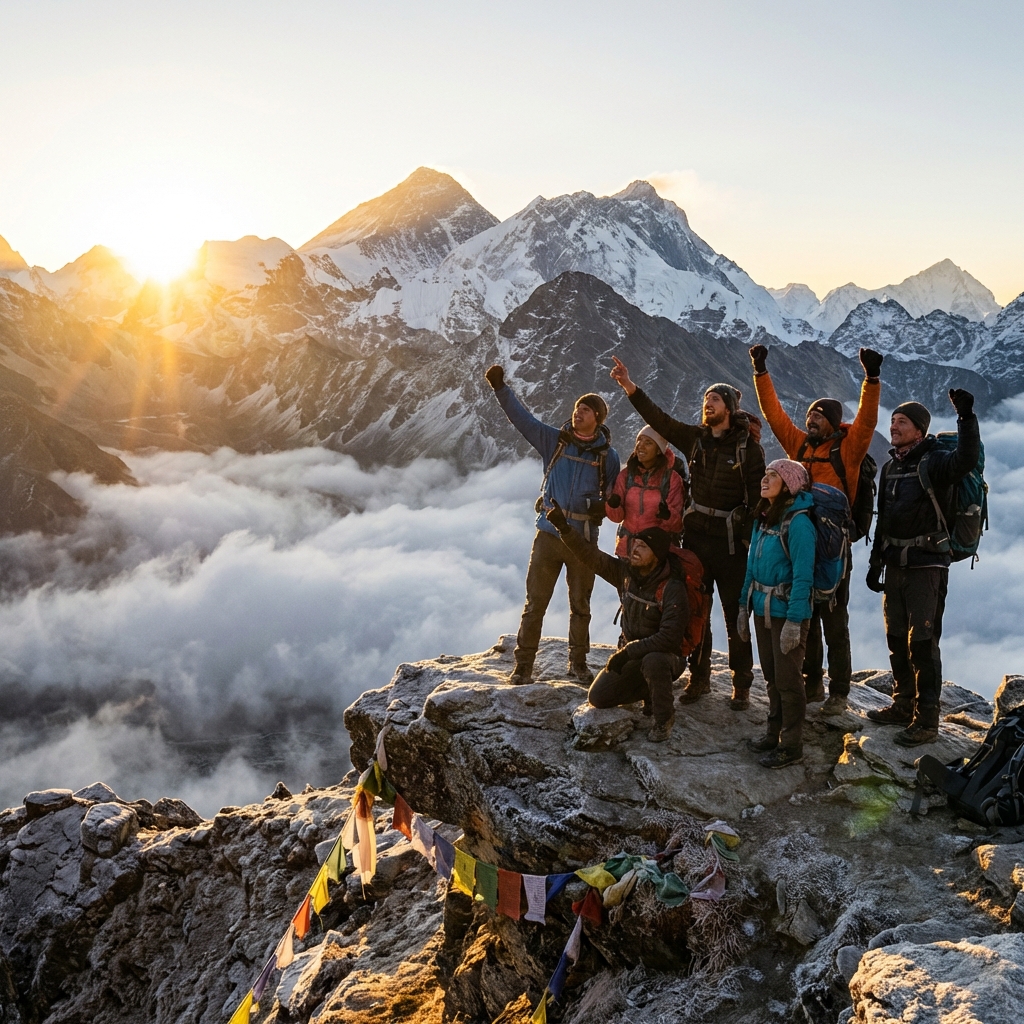
Take time here. Watch the sunrise paint Ama Dablam gold. Attend an afternoon prayer ceremony. Sit on the monastery steps as stars emerge over Everest. Let the pace slow from physical journey to spiritual pilgrimage. The Sherpa people have known for centuries what many trekkers discover here: that mountains offer not just physical challenges but opportunities for reflection, wonder, and renewal.
Whether you're seeking adventure, spirituality, photography, or simply the satisfaction of walking among giants, Tengboche delivers. It is, quite simply, one of the most remarkable places you will ever visit.

