Namche Bazaar: The Beating Heart of the Khumbu
Namche Bazaar (नाम्चे बजार) is a Sherpa town in Nepal's Khumbu region, sitting at 3,440m (11,286ft) about 137km northeast of Kathmandu and 13km north of Lukla airport. Known as the "Sherpa capital," it is the main trading hub and the essential acclimatization stop for every Everest Base Camp, Gokyo and Three Passes trek.
Namche Bazaar stands as the undisputed capital of the Sherpa people and the most important settlement in the entire Everest region. Perched dramatically at 3,440 meters (11,286 feet) in a natural amphitheater carved into the mountainside, this bustling town serves as the crucial acclimatization stop for virtually every trekker heading to Everest Base Camp, Gokyo Lakes, or any other destination in the Khumbu Valley. With its colorful lodges cascading down the hillside, vibrant Saturday market, numerous bakeries and restaurants, and reliable amenities that wouldn't look out of place in Kathmandu, Namche offers a fascinating blend of traditional Sherpa culture and modern trekking infrastructure.
The town's strategic location has made it wealthy by Himalayan standards. For centuries, Namche served as a vital trading hub between Tibet and the lowlands of Nepal, with Sherpa traders crossing high passes to exchange Tibetan salt, wool, and livestock for grain, sugar, and manufactured goods from below. Today, while some traditional trade continues, tourism has become the primary economic driver, transforming Namche into a sophisticated mountain town that manages to retain its authentic character despite hosting thousands of international visitors each year.
First-time visitors are often surprised by the sheer scale and amenities available in Namche Bazaar. This is no simple mountain village with basic teahouses. Instead, you'll find multi-story lodges with hot showers and western-style toilets, restaurants serving everything from traditional dal bhat to pizza and apple pie, gear shops stocked with North Face and other premium brands, ATMs dispensing Nepali rupees, and WiFi packages that actually work reasonably well. Yet despite these modern conveniences, the town maintains its cultural authenticity, with Buddhist monasteries, prayer wheels, colorful prayer flags, and the warm hospitality of the Sherpa people creating an atmosphere that is distinctly Himalayan.
3,440m (11,286ft)
Khumbu, Solukhumbu District
Approximately 1,600 residents
Primarily Sherpa
2 nights for acclimatization
Yes - last reliable one before EBC
Best in Khumbu region
Basic clinic (HRA clinic in nearby Pheriche)
March-May, September-November
6-8 hours (11km)
Sherpa Culture Museum, Everest View Hotel, Saturday Market
Sagarmatha National Park Office
Why Namche Bazaar Matters: The Gateway to Everest
Every single trekker heading into the upper Khumbu region passes through Namche Bazaar, making it the most important settlement in the entire Everest region. The town sits at a critical elevation where proper acclimatization becomes essential. At 3,440 meters, you're already well into the altitude zone where acute mountain sickness (AMS) becomes a real concern, yet you still have another 2,000+ meters of elevation gain ahead if you're heading to Everest Base Camp at 5,364 meters.
This strategic position has made Namche the natural acclimatization hub for the region. The standard advice from high-altitude medicine experts and experienced guides is to spend at least two nights in Namche, with one full rest day devoted to an acclimatization hike. This "climb high, sleep low" strategy allows your body to begin producing more red blood cells and adjusting to the decreased oxygen levels, significantly reducing your risk of altitude sickness as you continue higher.
But Namche is far more than just an obligatory acclimatization stop. For many trekkers, it becomes a highlight of their journey. The town's vibrant atmosphere, with Sherpa locals going about their daily business while international trekkers browse gear shops and sip coffee in bakeries, creates a unique cultural crossroads. The spectacular mountain views from various vantage points around town, particularly the incredible panorama of Kongde Ri, Thamserku, and on clear days even Everest itself, provide a tantalizing preview of what lies ahead.
The town serves multiple crucial functions beyond acclimatization. It's the last place to withdraw significant amounts of cash from a reliable ATM before heading higher. It's where you can buy or rent any last-minute gear you forgot or didn't bring. It's where you can get the best WiFi connection in the entire Khumbu region to update family and friends. It's where the Sagarmatha National Park office checks your permits. And it's where you can visit excellent museums and monasteries to learn about Sherpa culture and Himalayan natural history before venturing deeper into their homeland.
Where Is Namche Bazaar in Nepal?
Namche Bazaar lies in the Khumbu area of Solukhumbu District, Koshi Province, in northeastern Nepal, within Khumbu Pasanglhamu Rural Municipality (postal code 56002). It sits roughly 137km (85 miles) northeast of Kathmandu and 13km north of the Tenzing-Hillary Airport at Lukla. The town populates the sides of a steep hill at 3,440m, forming its distinctive natural amphitheatre.
The setting is dramatic. Immediately west rises the Kongde Ri peak at 6,187m (20,299ft), while to the east stands Thamserku at 6,623m (21,729ft). On a hill overlooking the town is the disused Syangboche Airstrip at roughly 3,750m, no longer used for passenger flights but still receiving occasional helicopter and charter traffic. Namche has had mains electricity since October 1995, when the 600kW Thame-Namche hydropower plant near Thame came online, which is why this Himalayan town can run hot showers, WiFi and bakeries at altitude.
How to Get to Namche Bazaar
Almost everyone reaches Namche on foot. The standard route is a flight from Kathmandu to Lukla (2,860m), then a two-day walk via Phakding to Namche. A growing alternative is "Lukla by road," driving Kathmandu to Salleri or Surke (a long, rough off-road journey of 8-10 hours plus) before joining the trail at Phakding, which avoids the Lukla flight but adds days. See our Kathmandu to Lukla flights guide and Lukla flight delays and alternatives when you plan your trek to Nepal's Everest region.
The Climb to Namche: Preparing for Your Arrival
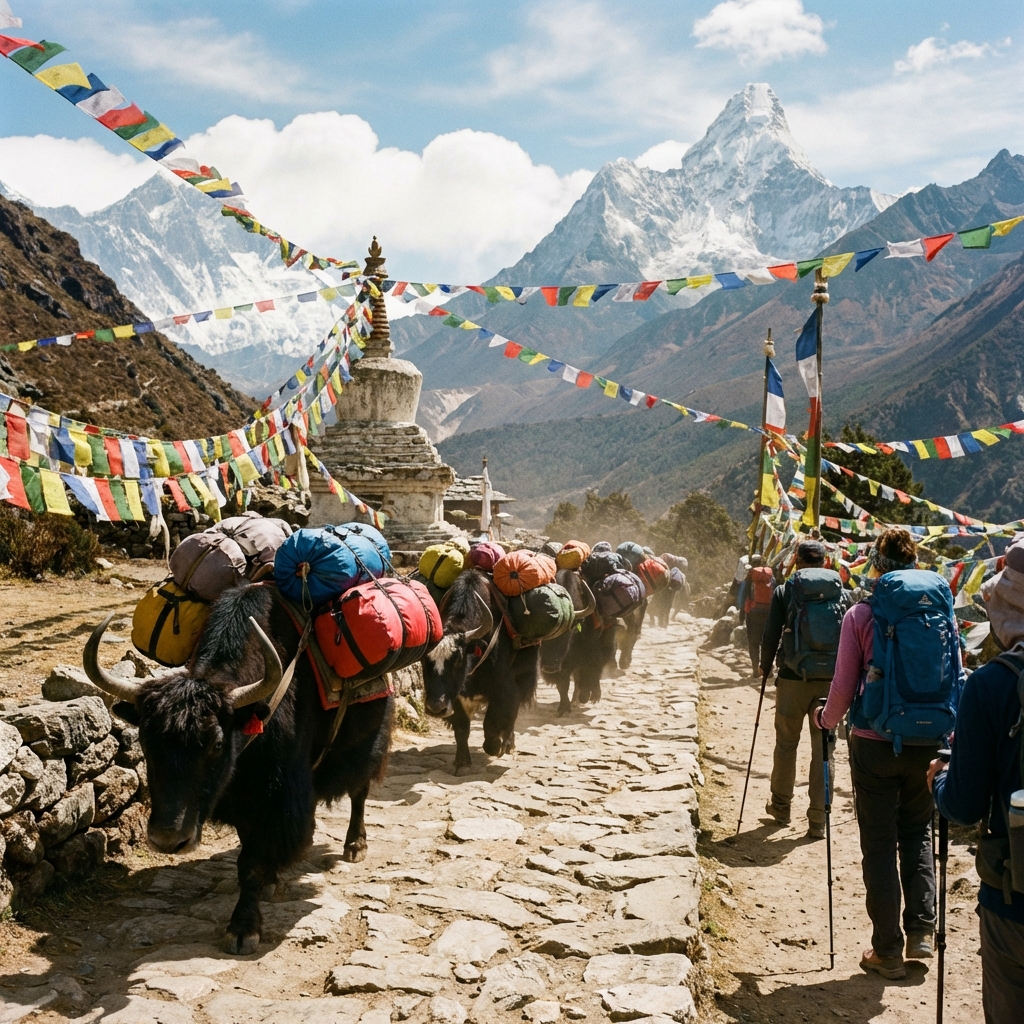
The journey to Namche Bazaar typically begins with the dramatic mountain flight to Lukla at 2,860 meters, one of the world's most thrilling airport landings on a tiny airstrip perched on a mountainside. From Lukla, the trail to Namche covers approximately 11 kilometers and takes most trekkers between 6 to 8 hours, though this varies considerably based on fitness level, acclimatization status, and how many photo stops you make along the spectacular route.
The trail initially descends from Lukla to Phakding at 2,610 meters, where many trekkers spend their first night to ease into the altitude gain. From Phakding, the route follows the Dudh Koshi (Milk River) valley, crossing several exciting suspension bridges decorated with prayer flags and passing through small Sherpa villages like Monjo and Jorsale. The trail is well-maintained but involves numerous ups and downs as it contours around the steep valley walls.
The real challenge comes in the final approach to Namche. After crossing the confluence of the Dudh Koshi and Bhote Koshi rivers at Jorsale (2,740m), the trail begins the infamous Namche Hill, a relentless climb of 700 vertical meters over approximately 2 kilometers. This steep, zig-zagging ascent is many trekkers' first real taste of Himalayan altitude, and it's not uncommon to see people taking frequent rest stops, breathing heavily in the thin air.
About halfway up the climb, you'll reach a bend in the trail where, on clear mornings, you get your first stunning view of Mount Everest's peak rising above the Lhotse-Nuptse ridge. This viewpoint causes massive trekker traffic jams as everyone stops to photograph the world's highest mountain. The sight provides incredible motivation for the remaining climb to Namche.
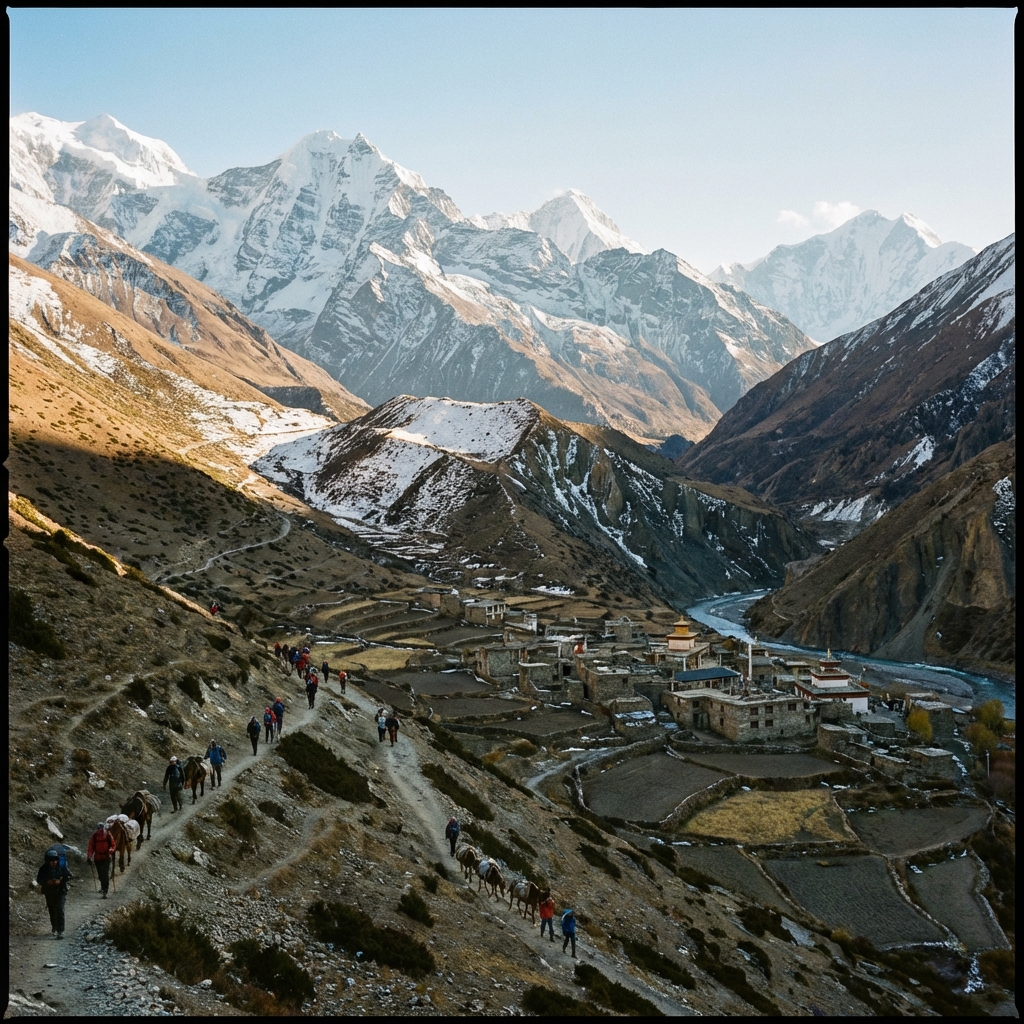
As you finally crest the ridge and enter Namche Bazaar, the sight is quite remarkable. The town sprawls across a natural amphitheater, with colorful lodges and buildings stacked in terraces up the hillside. Prayer flags flutter everywhere, and the buzz of activity from the town center rises to meet you. Despite your exhaustion from the climb, there's a palpable sense of arrival and accomplishment. You've reached the gateway to Everest, and your real adventure is about to begin.
Time Your Arrival Right
Acclimatization in Namche: Why Two Nights Matters
The most important thing to understand about Namche Bazaar is that you should spend two nights here, not just one. This isn't a suggestion or optional upgrade - it's a critical component of safe high-altitude trekking that can make the difference between a successful trek and a dangerous case of altitude sickness. Every reputable trekking company builds two nights in Namche into their Everest Base Camp trek itineraries, and solo trekkers should absolutely do the same.
At 3,440 meters, Namche sits right at the elevation where altitude sickness begins to become a significant concern. The air contains approximately 65% of the oxygen available at sea level, and your body needs time to adjust. The primary adaptation mechanism is increased production of red blood cells to carry oxygen more efficiently, but this process takes time. Spending two nights at this elevation, with an active acclimatization day in between, allows your body to begin this crucial adjustment.
The physiological principle behind acclimatization is "climb high, sleep low." On your rest day in Namche, you should hike to a higher elevation, typically 3,800-3,900 meters, and then return to sleep at 3,440 meters. This signals your body to increase red blood cell production while not forcing you to sleep at an elevation you haven't adapted to yet. The most popular acclimatization hikes from Namche are to the Everest View Hotel (3,880m), the villages of Khumjung and Khunde (3,790m), or the Namche viewpoint above town.
Studies by high-altitude medicine researchers have shown that trekkers who spend two nights acclimatizing in Namche have significantly lower rates of acute mountain sickness (AMS) at Everest Base Camp compared to those who only spent one night. The additional day allows your respiration rate to increase, your body to adjust its pH balance, and initial red blood cell production to begin. Perhaps equally importantly, it gives you a chance to recognize early AMS symptoms in a relatively safe environment with good facilities and evacuation options.
Don't make the mistake of thinking you can skip the acclimatization day because you feel fine. Altitude sickness doesn't care about your fitness level, age, or previous trekking experience. Symptoms can strike anyone, and they often appear suddenly at higher elevations if you haven't acclimatized properly. That day you "saved" by skipping Namche acclimatization often costs you three or four days later when you have to descend from Lobuche or Gorak Shep with severe AMS symptoms.
Acclimatization Hikes: Making the Most of Your Rest Day
Your rest day in Namche should definitely not be spent entirely resting. An active acclimatization hike to a higher elevation is essential for helping your body adjust to the altitude. Fortunately, Namche offers several excellent options, each with its own attractions beyond just the altitude gain.
Everest View Hotel (3,880m)
The most popular acclimatization hike from Namche leads to the famous Everest View Hotel, perched at 3,880 meters with arguably the most spectacular mountain panorama accessible via a moderate day hike. The hotel holds the Guinness World Record for the highest-placed hotel in the world, though it has since been surpassed by a hotel in Peru. Nevertheless, the views are absolutely stunning, with Everest, Lhotse, Ama Dablam, Thamserku, and numerous other peaks visible on clear days.
The hike takes approximately 2-3 hours uphill from Namche, following a well-maintained trail that climbs steadily through rhododendron and pine forests. The route passes through several small settlements and offers increasingly impressive mountain views as you gain elevation. The path is well-marked and heavily trafficked, so navigation is straightforward. The total elevation gain is about 440 meters from Namche, perfect for acclimatization purposes.
At the hotel itself, you don't need to book a room to enjoy the views and facilities. The management welcomes day hikers to use the restaurant and viewing terrace, though they appreciate if you order something. Coffee, tea, or lunch typically costs $5-15, which is entirely reasonable given the location and views. The hotel has both indoor and outdoor seating areas, with the outdoor terrace offering the best photography opportunities.
The return journey to Namche takes 1.5-2 hours, mostly downhill. The entire round trip covers approximately 8 kilometers and takes 4-5 hours total, making it a perfect half-day acclimatization hike. Many trekkers do this hike in the morning, return to Namche for lunch, and spend the afternoon exploring the town, visiting museums, or simply relaxing at their lodge.
Khumjung and Khunde Villages (3,790m)
An equally excellent but less crowded acclimatization option is hiking to the twin villages of Khumjung and Khunde, located at 3,790 meters on a plateau above Namche. These authentic Sherpa villages offer a glimpse into traditional mountain life while providing the necessary altitude gain for acclimatization. The villages are home to about 1,500 residents who maintain traditional farming practices while also participating in the trekking industry.
The hike from Namche takes approximately 1.5-2 hours uphill, following a trail that climbs steeply out of the Namche bowl before traversing across the hillside. The route offers excellent views back toward Namche and across to Kongde Ri and Thamserku. The total elevation gain is about 350 meters, providing good acclimatization benefits.
Khumjung village is particularly notable for the Khumjung Hillary School, established by Sir Edmund Hillary in 1961 as part of his extensive development work in the Khumbu region. The school continues to provide education to Sherpa children from throughout the region, and visitors can usually observe classes from outside the windows. The village also has a monastery that claims to house a yeti scalp, though visitors should be respectful and ask permission before entering or photographing.
Khunde, the slightly higher village, has a small hospital established by Sir Edmund Hillary and his Himalayan Trust. The hospital provides basic medical care to local residents and serves as an important backup facility for trekkers experiencing health issues. The village has several teahouses where you can have lunch before returning to Namche.
The round trip to Khumjung and Khunde covers approximately 7 kilometers and takes 4-5 hours total. Many trekkers prefer this route to the Everest View Hotel because it's less touristy and offers more cultural immersion. You can also combine the two routes, hiking up to the Everest View Hotel and descending via Khumjung and Khunde, creating a longer loop hike of 6-7 hours.
Namche Viewpoint and Syangboche (3,700-3,800m)
A shorter but still effective acclimatization option is hiking to the viewpoint above Namche or to the small airstrip at Syangboche. These routes involve less total distance than the Everest View Hotel or Khumjung hikes but still provide valuable altitude gain. The viewpoint hike takes you to approximately 3,700 meters, about 260 meters higher than Namche, and offers spectacular views across the town and surrounding mountains.
The trail climbs steeply above the main Namche bowl, passing through the upper part of town and then following a ridge line. The path is well-marked with prayer flags and small chortens (Buddhist shrines). The views improve with every step, and on clear days you can see Everest, Lhotse, Ama Dablam, and the entire Namche amphitheater spread below you.
Syangboche, site of a small helicopter and charter flight airstrip, sits at approximately 3,800 meters and can be reached in about 1.5 hours from Namche. The airstrip itself isn't particularly interesting, but the walk offers good acclimatization and views. Some trekkers combine this with a visit to the Everest View Hotel, as they're located close to each other.
Just above Syangboche, the open Shangbouche Hill (around 3,900m) is the local guides' tip for the best panorama in the area while avoiding the Everest View Hotel crowds. From here you get clear, uncrowded views of Everest, Lhotse, Ama Dablam, Thamserku, Kongde Ri and Khumbila, and it is a wonderful, quiet spot to sit for an hour and soak up the Himalayan atmosphere on your acclimatization day.
These shorter hikes are ideal if you're not feeling 100%, if weather conditions aren't perfect for a longer hike, or if you want to spend more of your rest day exploring Namche itself. Even a 2-3 hour hike to 3,700-3,800 meters provides significant acclimatization benefits and is far better than spending the entire day at lodge level.
Acclimatization Hike Strategy
Accommodation in Namche: From Budget to Premium
Namche Bazaar offers the widest range of accommodation in the entire Khumbu region, with everything from basic budget lodges to surprisingly upscale hotels with amenities that rival city hotels. The competition among lodge owners is fierce, which benefits trekkers with better facilities, service, and value than you'll find higher up the trail. During peak season (March-May and October-November), Namche has dozens of lodges operating, though many close during the harsh winter months.
Understanding the accommodation landscape helps you choose the right lodge for your needs and budget. Budget lodges typically charge $5-10 per person per night for a basic room, mid-range places charge $15-30, and premium lodges can charge $40-80 or more. However, these prices are often negotiable, especially if you commit to eating meals at the lodge. Many lodges will offer free or very cheap rooms if you agree to have breakfast and dinner there, which is often a good deal since you need to eat anyway.
Premium Lodges and Hotels
At the top end of Namche's accommodation spectrum, you'll find several lodges that offer genuine comfort by any standard, not just "for the altitude." These establishments feature well-appointed rooms with comfortable beds, attached bathrooms with hot showers (usually solar or gas-heated), quality bedding, and sometimes even heating. They typically have excellent restaurants, spacious common areas, and professional service.
The Yeti Mountain Home is probably Namche's most upscale option, part of a small chain of premium lodges in the Khumbu. The lodge features traditionally decorated rooms with comfortable beds, attached bathrooms with hot showers, a cozy dining room with a fireplace, and excellent food. Rooms cost $60-100 per night depending on season and room type, but the comfort level justifies the price for many trekkers. The lodge also has a small spa offering massages, which can be wonderful after several days of trekking.
Hotel Namche is another premium option, located in a prime position with excellent mountain views. The hotel features attached bathroom rooms, solar-heated showers, a large restaurant with diverse menu options, and very professional service. The building is well-maintained and clean, with traditional Sherpa architectural elements combined with modern amenities. Rooms cost $50-80 per night.
Khumbu Lodge is a popular choice among guided groups, offering good facilities including attached bathrooms, hot showers, a large dining hall with fireplace, and reliable WiFi. The lodge is family-run but operates with professional efficiency. Rooms cost $40-60 per night, and the food quality is consistently good. The location in the center of Namche makes it convenient for exploring the town.
These premium lodges typically include breakfast in the room rate, offer extensive food menus with western and local options, have the best WiFi in town (often included or at reduced rates), and maintain very clean facilities. They're excellent choices for trekkers who want maximum comfort during their acclimatization days or who are doing a shorter luxury trek.
Mid-Range Lodges
The mid-range category represents the sweet spot for most independent trekkers, offering solid comfort without the premium prices. These lodges typically have a mix of attached and shared bathroom rooms, reliable hot showers (for a fee), comfortable common areas, good food, and decent WiFi. Prices range from $15-40 per night depending on room type and season.
Panorama Lodge and Restaurant is a longtime favorite, located on the lower side of Namche with excellent views across the valley. The lodge has both attached and shared bathroom options, a large restaurant with windows offering mountain views, and consistently good food. The family owners are friendly and helpful, and the lodge maintains high cleanliness standards. Rooms cost $20-35 per night.
Namche Nest is another excellent mid-range choice, positioned on the upper part of town with spectacular views. The lodge features traditionally decorated rooms, a cozy restaurant with a bukhari (wood stove), and a rooftop terrace perfect for sunrise mountain views. The owner is particularly knowledgeable about the region and happy to share information. Rooms cost $20-30 per night.
Hotel Mount Kailash offers good facilities in a convenient central location. The lodge has both attached and shared bathroom rooms, hot showers available throughout the day, a large restaurant serving diverse food options, and friendly service. It's popular with both independent trekkers and smaller guided groups. Rooms cost $15-30 per night.
Other solid mid-range options include Hotel Everest View (not to be confused with the famous hotel above town), Namche Hotel, and Tashi Delek Lodge. All offer similar facilities and prices, and choosing among them often comes down to availability, specific location preferences, or personal recommendations from other trekkers.
Budget Lodges
Budget accommodation in Namche typically means basic rooms with shared bathrooms, cold water in the sinks (with hot showers available for $3-5), simple but clean facilities, and more basic common areas. However, even budget lodges in Namche are generally clean and well-maintained by the standards of mountain teahouses. Rooms cost $5-15 per night, often negotiable if you eat meals there.
Namaste Lodge is a reliable budget option, family-run with clean rooms and a friendly atmosphere. The shared bathrooms are well-maintained, the restaurant serves good dal bhat and basic western dishes, and the location in the heart of town is convenient. Rooms cost $8-12 per night.
Trekkers Lodge offers basic but adequate facilities at budget prices. The lodge is particularly popular with solo trekkers and those on tight budgets. Rooms are small but clean, shared bathrooms are functional, and the common area has a bukhari that creates a social atmosphere in the evenings. Rooms cost $5-10 per night.
Other budget options include Sherpa Guest House, Himalayan Guest House, and several smaller family-run lodges throughout town. At this price level, the main differences are location, how recently the lodge has been renovated, and the personality of the owners. Don't be afraid to look at rooms before committing, and negotiate if you're staying multiple nights.
Booking and Reservations
During peak season (late March to May and late September to November), Namche's lodges can fill up, especially the premium and popular mid-range options. It's increasingly common for trekkers to make advance reservations, either directly via email or phone, through their trekking agency, or even via booking websites. However, most lodges still accept walk-ins and typically have some availability, even in peak season.
If you're trekking independently without reservations, arrive in Namche by early afternoon to have the best selection of available rooms. Lodge owners often send staff to meet trekkers on the trail as they arrive, offering rooms and competing for business. Don't feel pressured to accept the first offer - you can look at several lodges before deciding.
During off-season (June-August monsoon and December-February winter), many lodges close, but those that remain open offer excellent availability and often negotiable prices. You definitely don't need reservations during these periods, and you may be able to negotiate very good deals, especially for extended stays.
Lodge Selection Strategy
Dining in Namche: Bakeries, Restaurants, and Sherpa Cuisine
One of the great pleasures of Namche Bazaar is the diverse and high-quality food scene, which far exceeds what you'll find anywhere else in the Khumbu region. The town has numerous excellent restaurants, bakeries, and cafes serving everything from traditional Sherpa dishes to pizza, pasta, burgers, and elaborate coffee drinks. This culinary diversity is partly driven by trekker demand and partly by the relative ease of transporting supplies to Namche compared to higher elevations.
Understanding the food landscape helps you make the most of your time in Namche. Most lodges have attached restaurants serving standard trekking menus, but you're not obligated to eat where you sleep (unless you negotiated a meal-inclusive room rate). Exploring different restaurants and bakeries is part of the Namche experience, and the quality and variety might surprise you if you're expecting only basic mountain food.
Bakeries and Cafes
Namche's bakeries are legendary among Everest trekkers, offering fresh bread, pastries, cakes, excellent coffee, and cozy atmospheres where you can spend hours relaxing, reading, or catching up on your journal. These establishments have become social hubs where trekkers from around the world gather to swap stories, advice, and trail conditions.
Hermann Helmers Bakery is probably the most famous, established by a German baker who fell in love with the Khumbu and decided to stay. The bakery produces arguably the best bread, cinnamon rolls, and apple strudel in the entire Himalayan region. The coffee is excellent, made with imported beans and a proper espresso machine. The atmosphere is cozy, with comfortable seating, good music, and a relaxed vibe. Expect to pay $3-5 for pastries and $3-4 for coffee drinks, expensive by Nepali standards but reasonable given the location and quality.
Himalayan Java Coffee is a Nepali coffee chain that has a branch in Namche, bringing their excellent coffee and professional service to the mountains. The cafe serves espresso drinks, smoothies, sandwiches, and pastries in a bright, modern space with good WiFi. It's more expensive than local alternatives ($4-6 for coffee) but popular with trekkers craving a taste of city life.
The Nest Cafe and Bar offers good coffee, bakery items, and light meals in a relaxed atmosphere with excellent views. The cafe is particularly nice for breakfast or afternoon coffee, with both indoor and outdoor seating. Prices are moderate, around $2-4 for coffee and $3-6 for breakfast items.
Other notable bakeries and cafes include Cafe Danfe, known for good coffee and cakes, and several smaller local bakeries scattered throughout town. You'll also find that many lodge restaurants now offer decent coffee and some bakery items, though the dedicated bakeries generally have better quality and selection.
Restaurants and Dining
Beyond the bakeries, Namche has numerous excellent restaurants, both standalone establishments and lodge dining rooms that welcome non-guests. The menu variety is impressive, with options ranging from traditional dal bhat to pizza, pasta, Mexican food, and elaborate multi-course meals. Quality is generally high, though prices reflect the difficulty of transporting ingredients to 3,440 meters.
The Irish Pub is a Namche institution, often billed as the highest and most remote Irish pub in the world. It serves hearty meals, cold beer, and Irish-themed pub food in a lively atmosphere. Despite the name, it's Sherpa-owned and operated, but the concept translates surprisingly well to the Himalayas. A traditional local favourite to look out for on Namche menus is yak steak, a lean, gamey alternative to buffalo. The pub serves burgers, fish and chips, shepherd's pie, and other comfort food favorites, along with a good selection of beer and spirits. Expect to pay $8-15 for main dishes. The atmosphere is particularly fun in the evenings when the pub fills with trekkers celebrating successful climbs or drowning their altitude sorrows in Everest Beer.
Cafe Danfe is another popular spot, known for excellent traditional Nepali and Sherpa cuisine alongside western options. The restaurant has a warm atmosphere with traditional decor, and the food quality is consistently high. Their thukpa (noodle soup), momos (dumplings), and dal bhat are all excellent, and they also make good pizza and pasta. Prices are moderate, $6-12 for main dishes.
Several lodge restaurants are excellent enough to attract non-guests. Khumbu Lodge's restaurant serves very good food in a spacious dining hall with a fireplace. Panorama Lodge's restaurant offers excellent views alongside quality meals. Namche Bakery and Breads (different from Hermann Helmers) serves good breakfast and lunch items in addition to fresh bread.
For budget dining, local Sherpa family restaurants scattered throughout town serve simple but filling dal bhat for $5-7, usually with free refills of dal (lentils) and vegetables. These are excellent value and provide the carbohydrates and protein you need for trekking. The dal bhat quality in Namche is generally better than what you'll find higher up, with more variety in the vegetable dishes and better-quality rice.
Traditional Sherpa Cuisine
While you're in the Sherpa capital, it's worth seeking out authentic traditional Sherpa dishes beyond the standard trekking menu. Sherpa cuisine reflects the harsh mountain environment, emphasizing hearty, high-calorie foods that provide energy for working at altitude.
Sherpa stew is a traditional dish of potatoes, meat (usually buffalo or yak), and vegetables in a thick broth, served with rice or buckwheat pancakes. It's filling and delicious, perfect for cold mountain evenings. Most traditional Sherpa restaurants in Namche serve it, usually for $8-10.
Rildok, a traditional Sherpa potato curry made with local potatoes, cheese, and spices, is another specialty worth trying. The dish has a distinctive flavor from the yak cheese and is usually served with buckwheat pancakes or rice.
Tongba is a traditional Sherpa alcoholic beverage made from fermented millet. It's served in a wooden or bamboo container filled with fermented grains, and hot water is added multiple times to extract the alcohol. You drink it through a bamboo straw, filtering the grains. It's an acquired taste but an authentic cultural experience. Most restaurants serve it for $3-5.
Tibetan bread (often called Sherpa bread in the Khumbu) is a deep-fried bread that's crispy on the outside and soft inside, typically served with honey, jam, or cheese for breakfast. It's delicious but heavy, so save it for days when you're not climbing steep hills.
Altitude Nutrition Strategy
Essential Facilities and Services in Namche
One of Namche Bazaar's greatest advantages is its superior facilities and services compared to anywhere else in the Khumbu region. Understanding what's available and how to access it helps you make the most of your time in town and prepare for the more limited options at higher elevations.
ATM and Money Matters
Namche has the last reliable ATM before Everest Base Camp, making it crucial to withdraw enough cash to cover your expenses for the remainder of your trek. The Himalayan Bank ATM, located in the main bazaar area, accepts international cards (Visa, Mastercard, Maestro, Cirrus) and dispenses Nepali rupees. However, the machine can be temperamental, sometimes running out of cash during peak season, experiencing technical problems, or refusing foreign cards for unclear reasons.
The ATM maximum withdrawal is typically 35,000 rupees per transaction (about $260 USD at current exchange rates), though some cards may have lower limits. You can make multiple transactions if needed. Be aware that your bank at home will likely charge an international ATM fee ($3-5) plus a foreign transaction fee (1-3%), and the Himalayan Bank may also charge a fee (around 500 rupees), so minimize the number of transactions.
As a backup, several money exchange services operate in Namche, though rates are less favorable than in Kathmandu. If you're completely out of cash and the ATM isn't working, some lodges will exchange US dollars or euros, again at unfavorable rates. A few upscale lodges and restaurants accept credit cards, but they typically add a 3-5% processing fee and the service is unreliable due to connectivity issues.
How much cash to withdraw depends on your remaining itinerary and spending style. For a standard Everest Base Camp trek from Namche to EBC and back, budget approximately $50-70 per day for budget trekkers (basic lodges, dal bhat meals), $80-120 per day for mid-range (nicer lodges, varied meals, some treats), or $150+ per day for premium trekking (best available lodges, all meals, WiFi, hot showers, etc.). Add extra for emergencies, souvenirs, tips, and contingencies.
WiFi and Connectivity
Namche offers the best WiFi connectivity in the entire Khumbu region, with most lodges, cafes, and restaurants providing WiFi access. However, this doesn't mean fast, reliable internet like you'd expect in a city. Namche's internet comes via satellite or line-of-sight wireless links, which are expensive to operate and limited in bandwidth. Weather, time of day, and number of users all affect performance.
Most lodges offer WiFi packages ranging from $5-10 per day for unlimited access, or sometimes $2-3 per hour. Premium lodges sometimes include WiFi in the room rate. The cafes and bakeries often have free WiFi for customers, though speeds may be limited. Everlink, a local internet provider, sells WiFi vouchers that work at many locations throughout Namche and even some higher villages - these can be good value at around $30-40 for unlimited use for 2-3 weeks.
Expect download speeds of 1-5 Mbps on a good day, which is adequate for messaging apps, email, uploading photos to social media, and basic web browsing. Video calls are sometimes possible during off-peak hours (early morning or late evening), but don't count on it. Downloading large files or streaming video is generally not practical. Higher up the trail, WiFi becomes more expensive and less reliable, so take advantage of Namche's relatively good connectivity.
Nepali mobile phone networks (Ncell and Nepal Telecom) provide coverage in Namche, with 3G and sometimes 4G data available. If you have a Nepali SIM card with data package, you may get better performance than WiFi during peak hours when lodge networks are congested. Purchase Nepali SIM cards in Kathmandu before flying to Lukla.
Charging Facilities
Most lodges in Namche offer phone and device charging facilities, typically for a fee of $2-5 per charge depending on device size. Budget lodges often have a central charging station in the common area, while mid-range and premium lodges may offer charging in your room. Some places charge by time (per hour) while others charge per device.
Charging reliability depends on the lodge's power source. Most Namche lodges use solar power supplemented by hydroelectric power from micro-hydro installations on nearby rivers. Solar power obviously depends on sunny weather, so charging may be limited on overcast days. Some lodges have backup generators, but these are expensive to run and usually reserved for essential uses.
Bring a portable power bank (fully charged) and your own charging cables. Consider bringing an extra charging cable and adapter, as replacements are expensive in Namche if you lose or break yours. Some lodges have USB charging ports, but most still use standard electrical outlets (220V, European-style two-pin plugs), so bring an appropriate adapter.
Multi-device charging hubs or power strips are useful if you have multiple devices, though some lodges prohibit them to prevent overloading circuits. Be courteous about charging - don't leave devices plugged in for hours after they're fully charged when others are waiting. Charging becomes more expensive and less available at higher elevations, so fully charge everything in Namche.
Showers and Hygiene
Most lodges in Namche offer hot showers, a luxury you'll increasingly appreciate as you go higher and it becomes more expensive and less available. Hot water is typically solar-heated (requiring sunny weather) or gas-heated (more reliable but more expensive). Budget lodges charge $3-5 per shower, mid-range lodges $2-4, and premium lodges sometimes include hot showers or charge minimal fees.
Shower availability and water pressure vary significantly. Solar-heated showers are usually best in the late afternoon after the sun has warmed the water all day, but this is also peak demand time when tanks may run low. Morning showers from solar systems may be lukewarm at best. Gas-heated showers can be taken anytime but cost more. Premium lodges generally have the most reliable hot water systems.
Consider shower timing strategically. You'll be in Namche for two nights, so you don't need to shower both days if you want to save money. Some trekkers shower on arrival after the dusty climb from Lukla, others wait until their second night after the acclimatization hike. Shower facilities and hygiene generally decline at higher elevations, so many trekkers make Namche their last real shower before reaching Everest Base Camp and back.
Western-style laundry service is available at several shops in Namche, charging approximately $2-3 per kilogram with next-day return. This is much cheaper than lodge laundry service and more convenient than hand-washing. However, weather needs to cooperate for clothes to dry properly. Some trekkers do a laundry load in Namche to have clean clothes for the upper part of the trek.
Medical Facilities
Namche has a small health post providing basic medical care for minor injuries and illnesses. However, for serious altitude sickness or other significant medical issues, you'll need to descend to Khunde (where Sir Edmund Hillary's hospital operates) or be evacuated to Kathmandu. The nearest Himalayan Rescue Association (HRA) clinic is in Pheriche at 4,371m, which you'll pass through if continuing to Everest Base Camp.
Several pharmacies in Namche sell basic medications, including altitude sickness medications like Diamox (acetazolamide), painkillers, antibiotics, and common trekking first-aid items. However, prices are high and selection is limited, so it's better to bring a comprehensive first-aid kit from Kathmandu. That said, if you forgot something important or run out, you can usually find it in Namche.
The town has a dental clinic, which is remarkable for 3,440 meters. It provides basic dental care for locals and emergency services for trekkers who break a tooth or experience other dental problems. Quality is reportedly reasonable, though most trekkers would prefer to deal with dental issues back in Kathmandu if possible.
For evacuation purposes, Namche has a helicopter landing pad. In case of serious altitude sickness or other medical emergencies, helicopter evacuation to Kathmandu can usually be arranged within a few hours if weather permits. However, this costs $5,000-10,000 USD and requires either cash payment or guaranteed travel insurance coverage. This is why comprehensive travel insurance including helicopter evacuation is absolutely essential for Everest region trekking.
Post Office and Communications
Namche has a post office where you can mail postcards and letters, a fun way to surprise friends and family with mail from the gateway to Everest. The post office sells stamps and postcards, and mail is reasonably reliable, though it may take 2-4 weeks to reach destinations outside Nepal. Mailing costs around 50-100 rupees per postcard depending on destination.
International phone calls can be made from several communication shops in town, though with WiFi and internet calling apps, few people use this service anymore. If you do need it, costs are around $1-2 per minute for most countries.
Shopping and Supplies
Namche's shops offer the last chance to buy or rent trekking gear before heading higher. Several shops sell genuine North Face, Mountain Hardwear, and Sherpa Adventure Gear products, while others sell convincing knock-offs at lower prices. You can find sleeping bags, down jackets, gloves, hats, trekking poles, backpacks, headlamps, and virtually any other trekking gear you might need or have forgotten.
Prices are higher than Kathmandu but reasonable considering the location. A knock-off North Face down jacket costs around $30-50, genuine Sherpa Adventure Gear $80-150. Sleeping bag rental is available for around $1-2 per day for the duration of your trek. If you realize you under-packed for the cold, this is the place to remedy that before going higher where it's even colder and gear is more expensive or unavailable.
Numerous souvenir shops sell traditional Sherpa handicrafts, clothing, prayer flags, singing bowls, jewelry, and other items. Quality varies widely, and bargaining is expected. Popular items include woolen socks and gloves (very useful for the trek), prayer flags (lightweight and meaningful souvenirs), and locally-made silver jewelry.
Small grocery stores sell snacks, chocolate, energy bars, toiletries, batteries, and other supplies. Prices are 2-3 times Kathmandu rates but much cheaper than higher elevations. Stock up on your favorite snacks, extra batteries, hand sanitizer, toilet paper, sunscreen, and other consumables you'll need for the next week or two.
Namche Shopping Strategy
Sherpa Culture Museum: Understanding the Mountain People
The Sherpa Culture Museum, located on the upper edge of Namche, is an excellent way to spend part of your acclimatization day. The museum provides comprehensive information about Sherpa culture, history, mountaineering achievements, and the natural environment of the Khumbu region. It's professionally curated with English-language exhibits and offers context that greatly enriches your understanding of the region you're trekking through.
The museum is housed in a traditional Sherpa-style building and was established with support from various international mountaineering organizations. Entrance costs around 300 rupees ($2-3), a bargain for the quality of the exhibits and information provided. The museum is usually open daily from 9 AM to 5 PM, though hours can vary, especially in the off-season.
Mountaineering History Exhibits
A major section of the museum is devoted to the history of Himalayan mountaineering, particularly expeditions to Mount Everest. Exhibits detail the 1953 first ascent by Sir Edmund Hillary and Tenzing Norgay Sherpa, including photographs, equipment replicas, and detailed accounts. The museum honors Tenzing Norgay, who was from the nearby village of Thame, and explains his role in opening the Himalayas to mountaineering tourism.
Additional exhibits cover other significant mountaineering achievements by Sherpas, including the fact that Sherpas hold most of the Everest summiting records. Apa Sherpa and Phurba Tashi Sherpa both summited Everest 21 times, Kami Rita Sherpa holds the current record with 28+ summits, and numerous other Sherpas have summited 10, 15, or 20 times. The museum puts these achievements in context, explaining both the economic motivations and the cultural significance.
The exhibit includes vintage mountaineering equipment, photographs from historic expeditions, maps showing various climbing routes, and information about the evolution of high-altitude climbing techniques. It's fascinating to see how much equipment has improved since the early expeditions, when climbers wore leather boots, wool clothing, and used rudimentary oxygen systems.
Sherpa Culture and History
Another major section focuses on traditional Sherpa culture, including religious practices, daily life, agricultural systems, and social structures. Exhibits explain the origins of the Sherpa people, who migrated from Tibet about 500 years ago, crossing high passes to settle in the Khumbu region. The name "Sherpa" actually means "people from the east," referring to their eastern Tibetan origins.
The museum details traditional Sherpa livelihoods, which historically included high-altitude agriculture (potatoes, barley, buckwheat), yak herding, and trans-Himalayan trade with Tibet. Exhibits show traditional tools, clothing, and household items, helping visitors understand how Sherpas adapted to the harsh mountain environment long before tourism transformed the region.
Religious practices receive significant attention, with explanations of Sherpa Buddhism, monastery life, religious festivals, and the significance of various Buddhist symbols and practices you'll see throughout your trek. The museum explains the meaning of prayer flags, mani stones, chortens, and other religious structures, helping you appreciate their spiritual significance rather than viewing them as mere colorful decorations.
Natural History Section
The museum's natural history section covers the flora, fauna, and geology of Sagarmatha National Park. Exhibits detail the various ecological zones you pass through while trekking, from subtropical forests below Lukla through temperate forests, alpine meadows, and finally to the barren high-altitude landscape near Everest Base Camp.
Information about Himalayan wildlife includes the endangered snow leopard, Himalayan black bear, musk deer, red panda, and numerous bird species. While you're unlikely to see most of these animals during your trek (they're shy and rare), understanding their presence adds another dimension to the landscape.
The geology section explains how the Himalayas formed through the collision of the Indian and Eurasian tectonic plates, a process that continues today with the mountains rising about 1cm per year. Exhibits include rock samples and explain why you can find marine fossils at high elevations (the rocks were once on an ancient ocean floor before being uplifted).
Visiting Logistics
The museum is located on the upper part of Namche, about a 10-15 minute walk from the center of town. The walk itself serves as useful acclimatization, bringing you to approximately 3,500m elevation. The building is well-signed, and locals can provide directions if you get confused in Namche's winding streets.
Plan to spend 1-2 hours at the museum for a thorough visit. The exhibits are well-organized and informative, with enough detail to be educational but not so much that it becomes overwhelming. Photography is usually allowed inside, though check with staff. The museum has basic toilet facilities and sometimes a small gift shop selling books and handicrafts.
Combining the museum visit with the acclimatization hike to the Everest View Hotel or Khumjung works well logistically, as the museum is on the route to both destinations. Alternatively, visit the museum on a weather day when views from the acclimatization hike would be obscured by clouds.
Sagarmatha National Park Office and Permits
The Sagarmatha National Park office in Namche is where officials check your park entry permit and TIMS (Trekkers' Information Management System) card. These permits should have been obtained in Kathmandu before flying to Lukla, but if you somehow missed getting them, the Namche office can theoretically issue them, though this is much more expensive and complicated than arranging permits in Kathmandu.
The park office is located on the main trail entering Namche from Lukla, and you'll almost certainly stop there on your first day arriving in Namche. Officials check your permit, record your information in a logbook, and may provide a brief orientation about park rules and regulations. The process usually takes just a few minutes unless there's a large group ahead of you.
Sagarmatha National Park Information
Sagarmatha National Park, established in 1976 and designated a UNESCO World Heritage Site in 1979, encompasses 1,148 square kilometers of the Khumbu region including Mount Everest itself. The park protects the unique high-altitude ecosystem and wildlife while also allowing traditional Sherpa settlements and religious sites to continue operating within its boundaries.
Park regulations include prohibitions on littering (carry all trash out), cutting live wood (all lodges use kerosene, gas, or electricity for cooking and heating), disturbing wildlife, and removing any natural or cultural artifacts. The park also restricts where trekking groups can camp, requiring most to use designated campsites or lodges to minimize environmental impact.
The park entrance fee is 3,000 rupees (about $22-25 USD) for foreign nationals, which should be paid when obtaining your permit in Kathmandu. The fee supports park management, trail maintenance, environmental protection programs, and community development projects in Sherpa villages.
TIMS Card Information
The TIMS (Trekkers' Information Management System) card is a separate requirement from the park permit, costing around $10 USD for independent trekkers or $20 for those on organized treks. The card's purpose is to maintain a database of trekkers for safety and security purposes, theoretically allowing authorities to track who's in the mountains and initiate search and rescue if someone goes missing.
In practice, the system's effectiveness is questionable, and many trekkers view TIMS as primarily a revenue-collection mechanism. Nonetheless, it's mandatory, and you'll be checked at multiple points along the trail. The TIMS office in Namche can verify your card and sometimes make corrections if there are errors in your information.
Saturday Market: A Slice of Traditional Life
If you're fortunate enough to be in Namche on a Saturday, don't miss the weekly market in the center of town. This traditional market has operated for centuries, long predating trekking tourism, and offers a fascinating glimpse into traditional Himalayan trade and daily Sherpa life. It's one of the few remaining authentic weekly markets in the Khumbu region, and it operates regardless of tourist presence.
The market runs from early morning (7-8 AM) until early afternoon (2-3 PM), with peak activity around 10 AM-noon. Vendors come from surrounding villages and even from lower elevations, bringing fresh produce, meat, dried goods, household items, clothing, and various other merchandise. Locals come to buy supplies they can't get in their home villages, sell their own products, and socialize with friends and family they might not see regularly.
What You'll See at the Market
The produce section is particularly interesting, with vendors selling fresh vegetables that have been carried up from lower elevations: cabbage, cauliflower, potatoes, spinach, onions, garlic, tomatoes, and more. The variety is impressive given the altitude and transport difficulties. Locals do serious shopping here, buying a week's worth of vegetables to carry back to their villages.
Meat vendors sell buffalo and yak meat, often displaying whole or half carcasses that make western visitors squeamish but are perfectly normal in this context. The meat is fresh (no refrigeration at this altitude) and will be cooked and eaten within a day or two. Some vendors also sell dried yak meat, a traditional preservation method.
Dry goods stalls offer rice, lentils, flour, salt, sugar, cooking oil, and other staples. Some of these items come from the lowlands, while others (particularly barley and buckwheat) are produced locally. Spice vendors sell the various seasonings essential to Nepali and Sherpa cooking.
Household goods and sundries include everything from cooking pots to batteries, soap to matches, fabric to sewing supplies. These stalls serve the practical needs of mountain villagers who can't just run to a convenience store when they need something.
Clothing vendors sell both traditional Sherpa garments and modern clothing. You'll see wool items hand-knitted from yak wool, traditional Sherpa boots, hats, and accessories, alongside knock-off North Face jackets and other modern clothing.
Cultural Etiquette at the Market
The Saturday market is primarily for locals, not tourists, and it's important to be respectful of that. Photography is generally tolerated but ask permission before photographing people, especially close-up portraits. Many Sherpas don't appreciate having cameras thrust in their faces without permission.
Feel free to look around and observe, but be mindful that you're a guest at a working market. Don't block aisles or prevent locals from conducting their business. If you want to buy something, that's fine - vendors are happy to sell to anyone - but don't waste their time with extensive browsing if you have no intention of purchasing.
Bargaining is normal at the market for some items but not others. Fresh produce and meat have relatively fixed prices, while clothing and household goods may be negotiable. Watch how locals interact with vendors to get a sense of appropriate behavior. Don't try to bargain down elderly women selling vegetables they carried up the mountain on their backs for the equivalent of a few cents.
The market is also a social event where Sherpas meet friends, exchange news and gossip, and maintain social connections. You'll see people catching up over tea, children playing between the stalls, and groups of elderly women sitting together. This social dimension is as important as the commercial aspect.
Market Timing and Trek Planning
If you have flexibility in your trek schedule, consider timing your arrival in Namche to catch the Saturday market. This means arriving in Namche on Friday and spending Saturday as your acclimatization day. The market adds cultural richness to your Namche experience and provides excellent photography opportunities if you're respectful about it.
However, don't alter your entire trek schedule just to see the market, especially if it would compromise your acclimatization plan. The market is interesting but not so extraordinary that it's worth risking altitude sickness. If you happen to be in Namche on Saturday, great. If not, you'll have plenty of other cultural experiences along the trek.
Market Photography
Namche as the Khumbu Hub: All Routes Pass Through
One of Namche's most important roles is as the hub where all trekking routes in the Everest region converge and diverge. No matter which trek you're doing - Everest Base Camp, Gokyo Lakes, Everest Three Passes, Island Peak climbing, or any other Khumbu destination - you will pass through Namche Bazaar. This central position has made it the natural service center for the entire region.
Understanding the various routes helps you appreciate Namche's strategic importance and also helps with planning your own trek. From Namche, trekkers disperse in several directions depending on their chosen route.
The Main Route: Everest Base Camp
The classic Everest Base Camp trek route continues from Namche toward Tengboche, following the main trail up the Dudh Koshi valley. This is by far the most popular route, taken by probably 80% of trekkers passing through Namche. After leaving Namche, the trail climbs to Tengboche (3,860m) with its famous monastery, then continues through Pangboche, Dingboche, Lobuche, Gorak Shep, and finally Everest Base Camp at 5,364m.
Most trekkers doing this route spend 2 nights in Namche for acclimatization, then continue upward, spending additional acclimatization nights at Dingboche or Pheriche around 4,400m. The entire trek to Base Camp and back to Lukla typically takes 12-14 days from Kathmandu.
Alternative Route: Gokyo Lakes
The Gokyo Lakes route diverges from the main trail at Sanasa or Mong La, about 2 hours above Namche. Instead of descending to cross the river toward Tengboche, this route continues contouring around the hillside and eventually enters the Gokyo valley. The route leads to the stunning turquoise Gokyo Lakes and Gokyo Ri (5,357m), offering incredible views of Everest, Cho Oyu, and massive glaciers.
The Gokyo route is less crowded than the standard Everest Base Camp route but equally spectacular in different ways. Many trekkers combine both routes by crossing the Cho La pass (5,420m) between the Gokyo and Khumbu valleys, creating a longer loop trek.
Three Passes Trek
The ambitious Everest Three Passes trek crosses three high passes - Renjo La (5,360m), Cho La (5,420m), and Kongma La (5,535m) - while circling the Khumbu region. This route visits both Everest Base Camp and Gokyo Lakes, along with numerous other spectacular locations. It's one of the most challenging tea-house treks in Nepal, requiring excellent fitness, proper acclimatization, and typically 18-21 days total.
Trekkers doing the Three Passes route still spend time in Namche for acclimatization, but their subsequent route is more complex, often involving multiple nights in various villages as they navigate between valleys and over passes.
Other Routes and Destinations
Several other routes radiate from Namche. The trail to Thame and the Renjo La pass heads west from Namche, leading to a quieter valley with fewer trekkers. The trail to Khumjung and Khunde (discussed earlier as acclimatization hikes) actually continues further, eventually connecting to the Gokyo valley via a less-used route.
Climbing expeditions heading to Island Peak, Mera Peak, or other trekking peaks also pass through Namche, though their routes then diverge to approach their respective mountains. Commercial Everest expeditions have traditionally used Namche as a logistics base, with supplies being organized and porters hired here before continuing to Base Camp.
Namche on the Return Journey
Just as all routes into the upper Khumbu pass through Namche on the way up, they also pass through on the way down. Most trekkers spend another night in Namche on their return journey, enjoying the town's amenities after a week or more at higher, more basic elevations. That hot shower, bakery apple pie, and reliable WiFi feel especially luxurious after nights at 5,000+ meters.
The return night in Namche is often celebratory, with trekkers who've successfully reached their goals enjoying beer at the Irish Pub or treating themselves to nice meals. It's also an opportunity to buy souvenirs you might have skipped on the way up, knowing you won't have to carry them all the way to Everest Base Camp and back.
Some trekkers who are feeling strong and acclimatized skip Namche on the return journey, descending directly from Namche to Lukla in a single long day of 6-8 hours. This is physically possible since you're descending and already acclimatized, but it's a long, knee-pounding day, and you miss the chance to enjoy Namche's comforts one more time.
Weather and Climate in Namche Bazaar
Understanding Namche's weather patterns helps you plan your visit and know what to expect at 3,440 meters elevation. The climate is influenced by the monsoon patterns that affect all of Nepal, but with important modifications due to altitude and the mountain environment.
Seasonal Weather Patterns
Spring (March-May) is one of the two peak trekking seasons and generally offers excellent weather conditions. Temperatures during the day can reach 10-15°C (50-59°F) in Namche, pleasant for being outdoors. Nights are cold, dropping to -5 to 5°C (23-41°F), so warm sleeping bags are essential. Skies are often clear in the morning with afternoon clouds developing, and precipitation is minimal until late May when pre-monsoon showers begin.
Spring also brings blooming rhododendrons at lower elevations, and the weather is stable enough for comfortable trekking. However, March can still be quite cold with occasional snow, while late May sees increasing cloud cover and afternoon thunderstorms as the monsoon approaches. Mid-April to early May is generally considered optimal within the spring season.
Summer Monsoon (June-August) brings heavy rain to most of Nepal, though the Khumbu region sits in a rain shadow and receives less precipitation than areas further south. Nonetheless, it's the low season for trekking due to clouds obscuring mountain views, muddy trails, dangerous landslides at lower elevations, and leeches in forested areas. Namche itself gets regular afternoon rain and thunderstorms during monsoon months.
Temperatures are relatively warm by Himalayan standards during monsoon, with daytime temperatures of 10-15°C (50-59°F) and nights around 5-10°C (41-50°F) in Namche. However, the near-constant cloud cover and rain make trekking miserable, and domestic flights to Lukla are frequently cancelled due to weather. Few international trekkers visit during monsoon, though some adventurous souls enjoy the solitude and lower lodge prices.
Autumn (September-November) is the other peak trekking season and generally offers the best weather of the year. After the monsoon clears in mid-September, the air is crystal clear, having been washed clean by months of rain. Mountain views are spectacular, often extending for hundreds of kilometers. Temperatures are comfortable, with Namche experiencing daytime temperatures of 10-15°C (50-59°F) in September-October, cooling to 5-10°C (41-50°F) by November.
Nights are cold, dropping to -5 to 5°C (23-41°F) in October and -10 to 0°C (14-32°F) by late November. October is generally considered the single best month for Everest region trekking, offering perfect weather, comfortable temperatures, clear skies, and stable conditions. The main downside is that this is also the busiest month, with lodges in Namche often fully booked and trails crowded with trekkers.
Winter (December-February) brings very cold temperatures and occasional heavy snowfall, though it's still possible to trek to Everest Base Camp with proper preparation. Namche experiences daytime temperatures of 0-8°C (32-46°F) when sunny, dropping to -10 to -5°C (14-23°F) at night. Skies are often clear, providing spectacular mountain views, but the cold is serious and requires excellent gear.
Major snowfalls can close high passes and make trails dangerous. Many lodges at higher elevations close for winter, though Namche maintains good services year-round due to its large resident population. Domestic flights to Lukla are less reliable due to weather. However, winter trekkers enjoy empty trails, lower prices, and a more authentic experience without tourist crowds.
Daily Weather Patterns
Regardless of season, Namche typically experiences predictable daily weather patterns. Mornings are usually clear and calm, with the best mountain views occurring between sunrise and mid-morning. As the day progresses and the sun heats the valleys, clouds form and rise up the mountains, often obscuring peaks by afternoon.
During trekking seasons, afternoons in Namche are often partly cloudy, sometimes with light rain or snow showers, though these typically clear by evening. This daily pattern is why most trekkers start hiking early, aiming to complete the day's walk and reach their destination by early afternoon before weather deteriorates.
Winds are generally light in Namche compared to higher elevations, though the town's amphitheater shape can create swirling wind patterns. Temperature variations between sun and shade are extreme due to the thin atmosphere - you can be uncomfortably hot in direct sun while simultaneously cold in the shade.
Weather Preparation and Clothing
For Namche specifically, you need layered clothing that allows you to adjust to changing temperatures and conditions. During the day when active and in sun, you might wear just a t-shirt and light pants. In shade or when resting, add a fleece or light down jacket. In the evening and night, you'll want a heavier down jacket, warm hat, and gloves.
Rain gear is essential, even in dry seasons, as afternoon showers can occur anytime. A good rain jacket (preferably breathable Gore-Tex or similar) and rain pants or pack cover protect both you and your gear. At higher elevations, precipitation often falls as snow rather than rain, so your rain jacket serves double duty as a windproof layer.
Sleeping bags rated to -10°C (14°F) are recommended for spring and autumn trekking, -15 to -20°C (5 to -4°F) for winter. While most Namche lodges provide blankets, they're often insufficient for cold nights, especially in unheated rooms. Having a good sleeping bag ensures comfortable sleep, which is crucial for acclimatization and recovery.
Morning View Strategy
Cultural Sensitivity and Monastery Etiquette
Namche Bazaar sits in the heart of Sherpa Buddhist culture, and respectful behavior is essential. While Sherpas are generally friendly and welcoming to visitors, they also expect basic cultural sensitivity and respect for their traditions and religious practices.
General Cultural Guidelines
Dress modestly, especially when visiting religious sites. While trekking clothes are acceptable on the trail, avoid wearing revealing clothing in the town center or in monasteries. Women should keep shoulders covered and avoid short shorts or revealing tops. Men should wear shirts and avoid being bare-chested in the town.
Remove shoes before entering homes, monasteries, and sometimes shops or restaurants (follow local example). This is a fundamental cultural practice showing respect. Hat removal is also expected when entering religious buildings.
When walking around the town or on trails, always pass Buddhist religious structures (chortens, mani walls, prayer wheels) on the left side, keeping them on your right. This clockwise circumambulation is the proper Buddhist practice. Prayer wheels should be spun clockwise as you pass, not counterclockwise.
Avoid touching religious objects, prayer flags, or Buddhist statues unless you're certain it's permitted. Never sit on religious structures or place objects on them. Don't point your feet at religious objects, Buddha images, or people, as feet are considered impure in Sherpa culture.
Monastery Visit Etiquette
Namche has several small monasteries and Buddhist shrines that welcome respectful visitors. When visiting, follow these guidelines to avoid offending local religious sensibilities.
Ask permission before entering a monastery if it's not obviously open to visitors. Look for signs or ask locals. Remove shoes and hats before entering. Move quietly and speak in whispers - these are active places of worship, not museums.
Photography may or may not be permitted inside monasteries. Some allow it, others prohibit it, and some allow it with permission or a small donation. Always ask before taking photos, and respect any refusals. Never use flash photography near Buddhist artworks or statues, as it can damage them.
If monks are conducting prayers or ceremonies, observe quietly from the side or back. Don't interrupt, take flash photos, or make noise. Donations are appreciated but not required - if you feel moved to contribute, donation boxes are usually visible. Small amounts (100-500 rupees) are appropriate.
Don't touch Buddhist texts, ritual objects, or thangka paintings unless specifically invited to do so. These items are sacred, and improper handling is offensive. If offered blessed items or protection cords by monks, accept them respectfully with both hands.
Interacting with Local Sherpas
Sherpas are generally friendly and happy to interact with visitors, but respect basic social norms. Don't assume that every Sherpa wants to be photographed, especially in close-up portraits. Always ask permission first, and gracefully accept refusals.
Learn a few basic Nepali or Sherpa phrases - "Namaste" (hello/goodbye), "Dhanyabad" (thank you), "Mitho chha" (delicious), and "Kati ho?" (how much?). Locals appreciate the effort, even if your pronunciation is imperfect.
Be patient with service staff at lodges and restaurants. English proficiency varies, and sometimes communication requires patience and creativity. Sherpas generally work very hard in the trekking industry, carrying heavy loads, cooking, cleaning, and serving trekkers all day. Treat them with respect and appreciation.
Tipping is customary for guides and porters, with recommendations of $5-10 per day for guides and $3-5 per day for porters at the end of your trek. Restaurant tips aren't mandatory but are appreciated - rounding up the bill or leaving 10% is generous by local standards.
Environmental Responsibility
While not strictly cultural, environmental responsibility is crucial in Namche and throughout the Khumbu. The Sherpa people have stewarded this landscape for 500 years, and they expect visitors to respect the environment.
Never litter. Carry all trash to proper disposal points or pack it out. Don't leave plastic bottles, wrappers, or any other trash on trails or around town. Many lodges have trash separation systems - cooperate with them.
Don't waste water or energy. Take reasonably quick showers, turn off lights when leaving rooms, and don't leave chargers plugged in unnecessarily. These resources are precious at 3,440 meters.
Stay on established trails to prevent erosion and vegetation damage. Don't cut switchbacks or create shortcuts. The trails have been carefully routed to minimize environmental impact.
Respect wildlife and vegetation. Don't pick flowers, especially rhododendrons which are Nepal's national flower. Don't chase or feed wild animals. Observe from a distance and let them go about their natural behaviors.
Medical Considerations and Altitude Sickness
At 3,440 meters, Namche Bazaar sits at an elevation where altitude sickness becomes a real concern. Understanding the symptoms, prevention, and treatment of acute mountain sickness (AMS) is crucial for a safe and successful trek.
Understanding Acute Mountain Sickness (AMS)
AMS occurs when you ascend too quickly for your body to adapt to decreased oxygen levels. Symptoms typically begin 6-12 hours after reaching a new elevation and include headache, nausea, fatigue, dizziness, and difficulty sleeping. Mild AMS is extremely common and affects about 50% of trekkers to some degree at Everest Base Camp elevations.
The key to preventing AMS is proper acclimatization - ascending gradually, taking rest days, and allowing your body time to adjust. The standard recommendation is not to increase your sleeping elevation by more than 300-500 meters per day once above 3,000 meters, and to take a rest day every 1,000 meters of elevation gain.
This is why spending two nights in Namche is so important. You've just climbed from 2,860 meters (Lukla) or 2,610 meters (Phakding) to 3,440 meters, a significant elevation gain. Your body needs time to adjust before you continue higher to Tengboche (3,860m), Dingboche (4,400m), and beyond.
Recognizing AMS Symptoms in Namche
During your time in Namche, pay attention to how you feel. Mild symptoms like slight headache, reduced appetite, and difficulty sleeping are common and usually not concerning if they don't worsen. These symptoms should improve or resolve during your second day in Namche, especially if you do an acclimatization hike.
Warning signs that require action include severe headache that doesn't respond to ibuprofen, persistent vomiting, increasing fatigue and weakness, shortness of breath at rest, confusion or altered mental state, or loss of coordination. These symptoms indicate moderate to severe AMS and require immediate response.
The treatment for AMS symptoms that aren't improving is to stop ascending and, if they're worsening, to descend to a lower elevation. Fortunately, Namche is an excellent place to be if you experience AMS symptoms because descent to Lukla or Phakding is straightforward, medical facilities are available, and helicopter evacuation is possible if necessary.
Diamox (Acetazolamide) Use
Many trekkers take Diamox (acetazolamide) as a preventive medication for altitude sickness. Diamox is a carbonic anhydrase inhibitor that speeds up acclimatization by increasing respiration rate and helping the kidneys excrete bicarbonate, making blood more acidic and stimulating breathing.
The standard preventive dosing is 125mg taken twice daily, starting the day before ascending above 3,000 meters and continuing until you begin descending. Some doctors recommend 250mg twice daily, but this higher dose increases side effects without clearly improving prevention.
Common side effects include tingling in fingers, toes, and lips (almost universal), increased urination (requiring more frequent bathroom trips), and altered taste, particularly making carbonated beverages taste flat. These side effects are annoying but not dangerous.
Diamox is not a substitute for proper acclimatization. It helps your body adjust faster, but it doesn't prevent altitude sickness if you ascend too quickly. You still need to follow acclimatization guidelines, including spending two nights in Namche.
Whether to take Diamox is a personal decision made in consultation with your doctor. Some trekkers prefer not to take medications and rely on proper acclimatization alone. Others find Diamox provides helpful insurance against AMS. There's no single right answer, but if you do take it, start before leaving Namche to assess side effects in a safe environment.
Hydration and Altitude
Proper hydration is crucial at altitude. The dry mountain air, increased respiration rate, and physiological changes associated with altitude all increase fluid loss. Dehydration worsens altitude sickness symptoms and impairs acclimatization.
Aim to drink 3-4 liters of fluid daily at Namche and higher elevations. Your urine should be clear or light yellow - dark yellow indicates inadequate hydration. Carry a water bottle and drink regularly throughout the day rather than drinking large amounts infrequently.
Most Namche lodges provide boiled or filtered water for free or for a small charge (around 100-200 rupees per liter). This is much cheaper and more environmentally friendly than buying bottled water. Bring water purification tablets or a filter as backup, but you can usually trust lodge water in Namche.
Herbal tea, particularly ginger tea, is excellent for hydration and can help settle altitude-related nausea. Most lodges offer unlimited hot water for tea. Avoid excessive alcohol consumption, as it worsens dehydration and can mask altitude sickness symptoms.
Other Health Considerations
Beyond altitude sickness, other health issues to be aware of in Namche include respiratory infections (common due to dry air, wood smoke from bukharis, and close quarters in lodge common areas), gastrointestinal problems (usually from inadequate hand hygiene), and minor injuries like blisters or twisted ankles.
Bring a comprehensive first-aid kit including blister treatment, painkillers, anti-diarrheal medication, antibiotics (prescribed by your doctor), and any personal medications. While you can buy basic supplies in Namche, having your own supplies is more convenient and reliable.
Hand sanitizer is essential and should be used before every meal and after bathroom use. Gastrointestinal infections spread easily in lodge environments, and prevention is much easier than treatment. Toilet paper is sometimes not available in Namche bathrooms, so carry your own.
Helicopter Pad and Emergency Evacuation
Namche Bazaar has a helicopter landing pad located on a flat area below the main town. This pad is used primarily for emergency medical evacuations, though some chartered scenic flights and supply helicopters also use it. Understanding the evacuation system is important for all trekkers, even though you hopefully won't need it.
When Evacuation Becomes Necessary
Helicopter evacuation from Namche or higher elevations becomes necessary when trekkers experience serious medical emergencies that can't be managed on-site and require descent beyond what's possible by walking. The most common reason is severe altitude sickness (HACE or HAPE) requiring immediate descent, but evacuations also occur for severe injuries, heart attacks, strokes, or other serious medical emergencies.
The decision to evacuate should be made in consultation with medical professionals if possible, though in severe cases the decision may be obvious. In Namche, you can sometimes consult with staff at the health post or contact the HRA clinic in Pheriche via radio or phone for advice on whether evacuation is necessary.
Helicopter evacuation is expensive, typically costing $5,000-10,000 USD depending on weather conditions, exact pickup location, and whether you're going to Kathmandu or a closer facility. This is why comprehensive travel insurance including emergency helicopter evacuation is absolutely essential for Everest region trekking.
How the Evacuation Process Works
If you need emergency evacuation from Namche, your lodge owner, guide, or trekking agency will contact helicopter companies via phone or satellite phone. Several companies operate rescue helicopters in the Khumbu region, including Simrik Air, Fishtail Air, and Air Dynasty. They maintain helicopters on standby during trekking season specifically for rescues.
The helicopter company will verify that you have travel insurance that covers evacuation (they will want your policy number and insurance company contact information) or that someone can guarantee payment in cash. This is done before dispatching the helicopter because of the high cost and history of disputes over payment.
Weather permitting, helicopters can usually reach Namche within 30-60 minutes of being dispatched from Kathmandu. However, mountain weather changes rapidly, and flights may be delayed or cancelled if conditions are unsafe. Morning evacuations are more reliable than afternoon ones due to typical weather patterns.
The helicopter will land at the Namche pad, collect the patient (possibly along with a companion), and fly directly to Kathmandu, usually to CIWEC Clinic or another facility equipped to handle altitude-related emergencies. Flight time from Namche to Kathmandu is approximately 45 minutes.
Insurance Considerations
Before trekking to Everest Base Camp or anywhere in the Khumbu region, purchase comprehensive travel insurance that specifically covers trekking to the elevations you plan to reach and includes emergency helicopter evacuation. Many standard travel insurance policies don't cover trekking above 3,000-4,000 meters, so carefully check the policy details.
Recommended insurance providers for Nepal trekking include World Nomads, Global Rescue, IMG Global, and several others. Ensure your policy covers the maximum elevation you'll reach (Everest Base Camp is 5,364m, Kala Patthar is 5,545m) and specifically includes helicopter evacuation.
Carry your insurance policy information with you - keep both paper and digital copies. Make sure your trekking companions or guide have access to this information in case you're incapacitated and can't communicate it yourself.
Be aware that insurance companies may require medical documentation justifying the evacuation before they'll approve payment. This is why consultation with medical professionals, even if just via phone or radio, is important when possible. Document your symptoms, who you consulted with, and the recommendations given.
Planning Your Time in Namche: Sample Itineraries
To help you make the most of your two nights in Namche, here are sample itineraries for different interests and weather conditions.
Standard Acclimatization Itinerary
Day 1 (Arrival Day):
- Arrive in Namche by early afternoon after the climb from Lukla/Phakding
- Check into your lodge and have lunch
- Take a short acclimatization walk around upper Namche (30-60 minutes)
- Visit the Sagarmatha National Park office if you haven't already
- Explore the main bazaar area and orient yourself to the town
- Early dinner and rest - you'll be tired from the climb
Day 2 (Full Acclimatization Day):
- Early breakfast (7-8 AM)
- Acclimatization hike to Everest View Hotel or Khumjung/Khunde (4-6 hours total)
- Return to Namche for lunch
- Visit Sherpa Culture Museum (1-2 hours)
- Explore shops, cafes, and bakeries
- Withdraw cash from ATM
- Charge all devices
- Dinner and early rest
Day 3 (Departure Day):
- Breakfast and pack up
- Continue trek toward Tengboche and higher elevations
- Depart Namche by 8-9 AM
Cultural Focus Itinerary
Day 1 (Arrival Day):
- Arrive in Namche by early afternoon
- Check into lodge and lunch
- Short acclimatization walk to upper Namche
- Visit Sagarmatha National Park office and information center
- Explore the town center and main bazaar
- Dinner and rest
Day 2 (Full Acclimatization Day):
- Early breakfast
- Acclimatization hike to Khumjung and Khunde villages (4-5 hours)
- Visit Khumjung Hillary School and monastery
- Return to Namche for late lunch
- Visit Sherpa Culture Museum (1-2 hours)
- Explore local monasteries and Buddhist sites in Namche
- Attend evening prayers at a monastery if possible
- Dinner and rest
Day 3 (Departure Day):
- Early breakfast
- Continue trek to higher elevations
Saturday Market Itinerary
Day 1 (Friday Arrival):
- Arrive in Namche by early afternoon
- Check into lodge and lunch
- Acclimatization hike to Everest View Hotel (4-5 hours total)
- Return for early dinner
- Rest and prepare for market visit tomorrow
Day 2 (Saturday Acclimatization Day):
- Early morning visit to Saturday Market (8 AM-noon)
- Photography and cultural observation at market
- Lunch at a bakery or cafe
- Visit Sherpa Culture Museum
- Withdraw cash, charge devices, handle practical matters
- Dinner and rest
Day 3 (Sunday Departure):
- Breakfast and continue trek upward
Bad Weather Itinerary
Day 1 (Arrival Day):
- Arrive in Namche by early afternoon
- Check into lodge and lunch
- Short walk around town if weather permits
- Otherwise, rest in lodge
- Dinner and early rest
Day 2 (Acclimatization Day with Poor Weather):
- Breakfast at lodge
- If weather is too poor for long hike, do shorter walk to Namche viewpoint (2-3 hours)
- Spend extended time at Sherpa Culture Museum
- Visit bakeries and cafes
- Do practical tasks: ATM, shopping, charging, WiFi
- Read, journal, rest at lodge
- Socialize with other trekkers in lodge common room
- Dinner and rest
Day 3 (Departure Day):
- Assess weather and trail conditions
- Either continue upward if safe, or wait another day if conditions are dangerous
- Don't risk safety to stick to a schedule
Flexibility Is Key
Final Thoughts: Appreciating Namche Bazaar
Namche Bazaar is far more than just a mandatory acclimatization stop on the way to Everest Base Camp. It's a vibrant mountain town with centuries of history, deep cultural significance, and a unique position as the meeting point between traditional Sherpa life and international mountaineering tourism. Taking the time to truly explore Namche, understand its role in the region, and appreciate both its traditional culture and modern amenities will enrich your entire Everest region trekking experience.
The two nights you spend in Namche serve a critical physiological purpose, allowing your body to begin adapting to altitude. But they also serve an equally important psychological and educational purpose. By learning about Sherpa culture at the museum, experiencing the vibrant atmosphere of the Saturday market if you're lucky, exploring the maze of shops and cafes, and simply observing daily life in this remarkable town, you gain context and appreciation for the region you're trekking through.
When you return to Namche on your way back down from Everest Base Camp or wherever your trek takes you, you'll see the town with new eyes. That hot shower feels even more luxurious after a week at higher elevations. That apple pie at Hermann Helmers Bakery tastes even better. The relatively thick air at 3,440 meters feels positively rich after time spent above 5,000 meters. And the accomplishment of having ventured deep into the Himalayan heartland and returned safely will make you appreciate the hub that made it all possible.
Namche Bazaar represents the best of what mountain tourism can be - a place where visitors and local people interact respectfully, where traditional culture is maintained while also adapting to modern realities, and where the natural environment is protected while also being shared with those who travel far to experience its magnificence. Treat it with the respect it deserves, follow acclimatization guidelines, engage respectfully with Sherpa culture, and you'll have not just a successful trek, but a truly meaningful Himalayan experience.
What Facilities Are Available in Namche Bazaar?
Namche offers the most developed facilities in the Khumbu: multi-story lodges with hot showers and western toilets, restaurants serving international cuisine, a Himalayan Bank ATM (last reliable ATM before higher elevations), gear shops selling and renting everything from down jackets to trekking poles, WiFi at most lodges, a health post, pharmacies, a Saturday market, and the Sherpa Culture Museum. For full Everest Base Camp trek planning, stock up on any missing gear here. See our altitude sickness guide for acclimatization advice during your mandatory rest day.
Frequently Asked Questions
- Everest Base Camp Trek Complete Guide
- Lukla Village Guide - Gateway to Everest
- Tengboche Monastery Village Guide
- Dingboche Village and Acclimatization
- Altitude Sickness Prevention Guide
- Sherpa Culture and Buddhism
- Khumbu Region Overview
- Gokyo Lakes Trek
- Everest Three Passes Trek
- What to Pack for Everest Base Camp
- Sagarmatha National Park Guide
- Everest View Hotel Day Hike
- Khumjung and Khunde Villages
- Hillary Schools and Legacy
- Trekking Seasons in Nepal
- Lodge Trekking in the Khumbu
- Sherpa Mountaineering History
- Photography Tips for Everest Region
- Budget Trekking in the Khumbu
- Thame Village and Renjo La
- Emergency Evacuation Procedures
- WiFi and Connectivity in the Himalayas
- Himalayan Food and Nutrition
- Responsible Trekking Practices
- Travel Insurance for Nepal

