
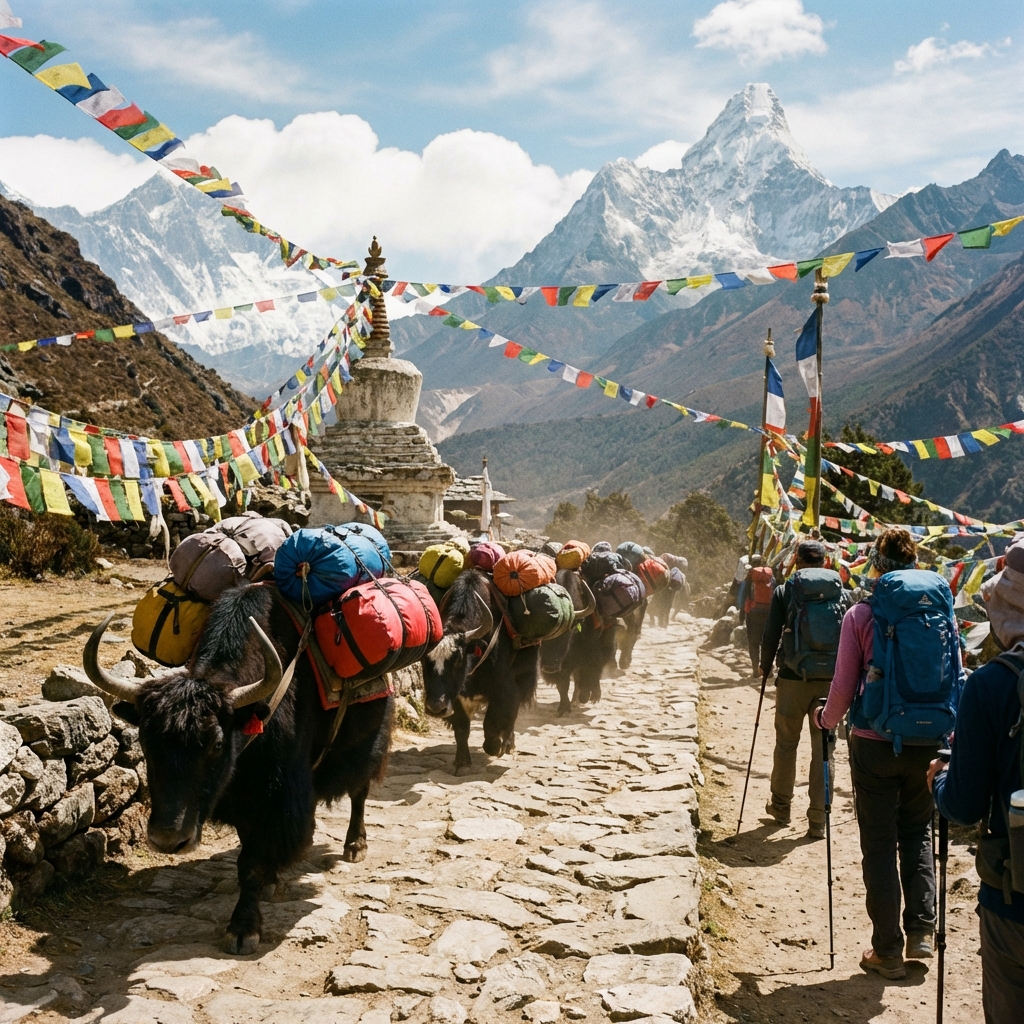
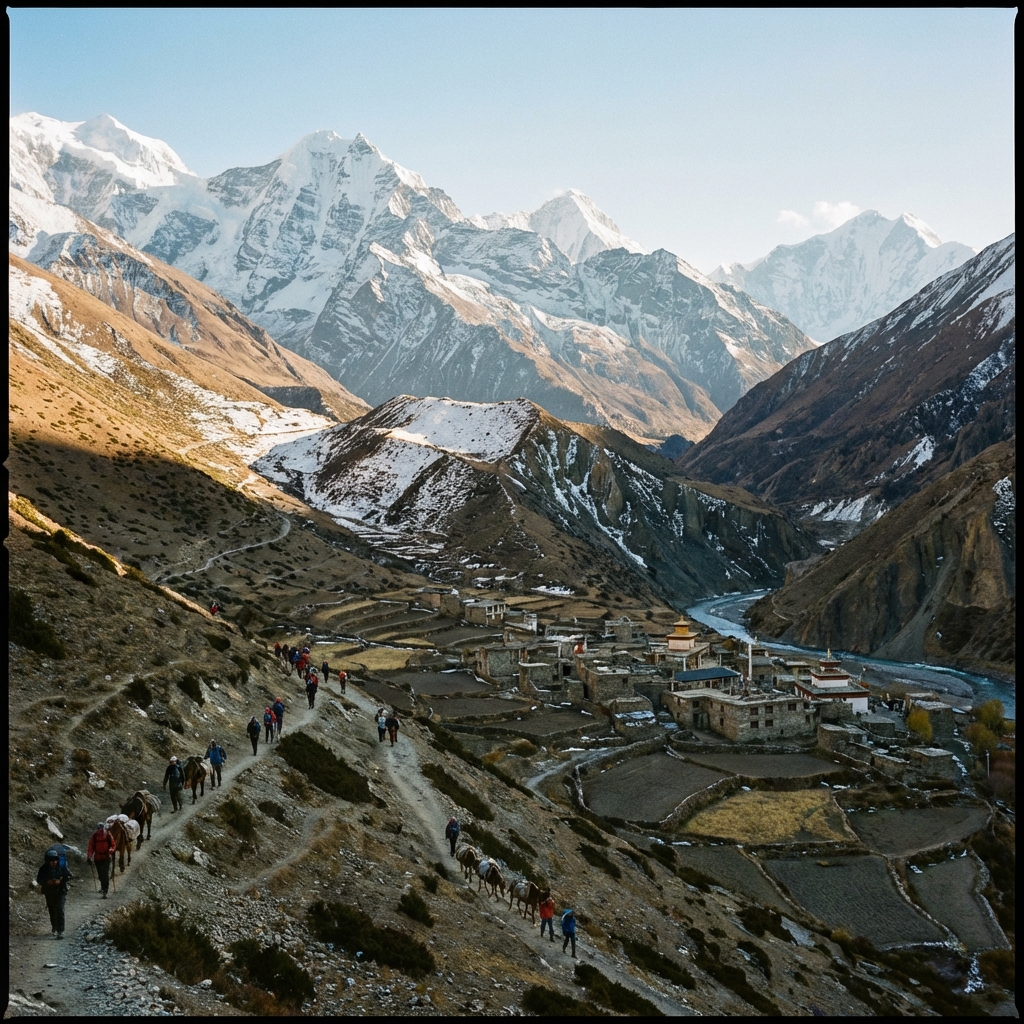
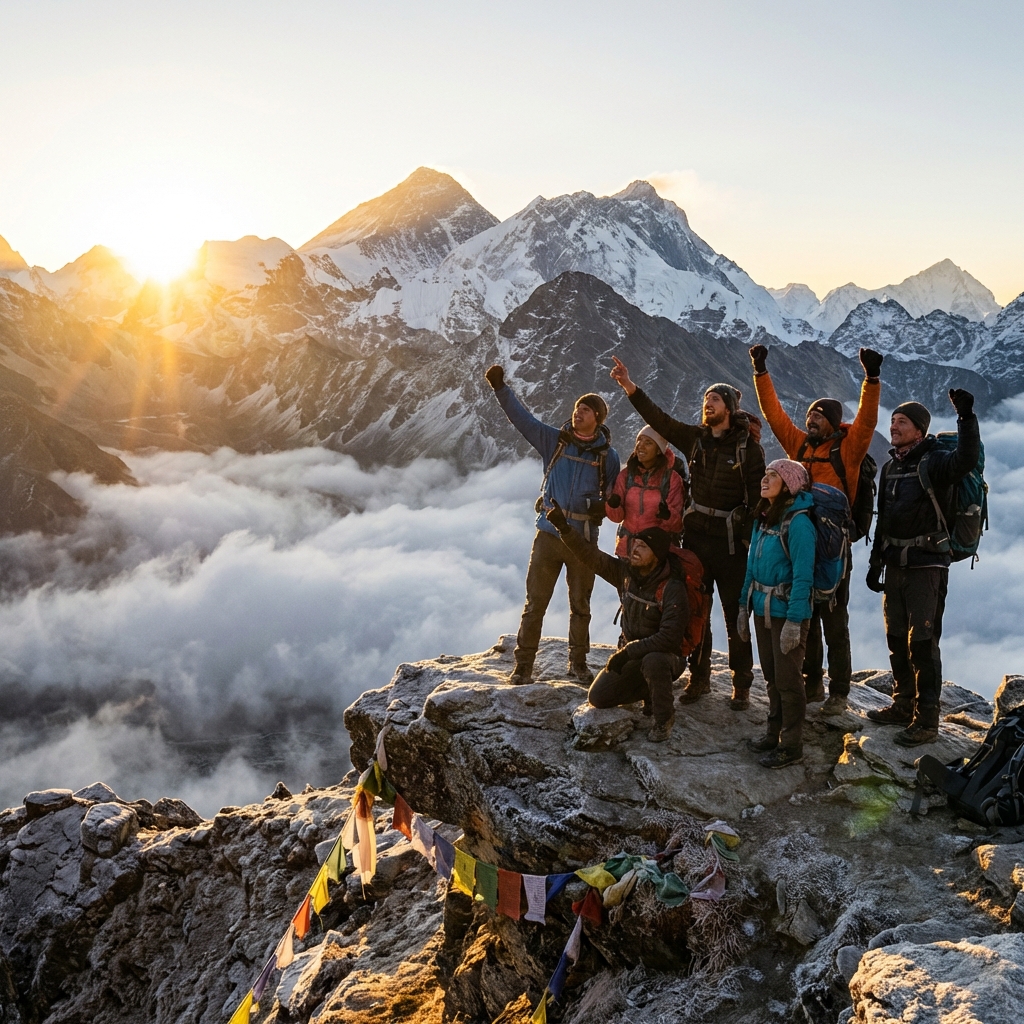
The Tamang Heritage Trail is Nepal's finest cultural trek, and one of its best-kept secrets. While thousands of trekkers head to the neighboring Langtang Valley each season, the Tamang Heritage Trail quietly offers something that the more famous route cannot: deep, genuine immersion in living Tamang Buddhist culture through a network of community-managed homestays, ancient monasteries, traditional cheese factories, and hilltop viewpoints with panoramic Himalayan views.
This 5-7 day trek winds through the northern Rasuwa District, following ancient trade routes that once connected Nepal and Tibet. The villages along the trail are populated by Tamang people, one of Nepal's largest ethnic groups, whose Tibetan Buddhist traditions, distinctive stone architecture, and warm hospitality create a trekking experience that is as much about people as it is about mountains.
At a maximum altitude of approximately 3,165m (Nagthali Viewpoint), the trail is accessible to trekkers of moderate fitness without the altitude concerns that accompany higher routes. Yet the mountain views are outstanding. From Nagthali, you see a panoramic sweep from Langtang Lirung (7,227m) to Ganesh Himal (7,422m), Manaslu (8,163m), and on clear days, even the Annapurna range.
The Tamang Heritage Trail was developed in 2002 as a community-based tourism project, and it remains one of the most successful examples of sustainable tourism in Nepal. Revenue from homestays and guide fees goes directly to local families and village development funds. When you trek this trail, your tourism dollars support the communities you are walking through, not distant hotel chains or Kathmandu-based corporations.
Quick Facts
5-7 days (trek only)
3,165m (Nagthali Viewpoint)
Moderate (Grade 2 of 5)
Oct-Nov and Mar-May
Syabrubesi (7-8 hours drive from Kathmandu)
Community homestays throughout
Langtang National Park Entry Permit + TIMS Card
$350-800 (independent to guided)
Under 3,000
Why Choose the Tamang Heritage Trail?
A Cultural Immersion You Cannot Get on Mainstream Treks
The mainstream Nepal treks offer cultural encounters, but they are typically brief and transactional. You pass through a Sherpa village, admire the architecture, and stay in a commercial tea house. On the Tamang Heritage Trail, culture is the entire point of the trek.
You sleep in Tamang family homes, eat meals prepared by your hosts, watch traditional dances organized by the community, visit working monasteries where monks chant daily prayers, tour small-scale cheese factories producing yak and chauri cheese using traditional methods, and learn about Tamang history and traditions from the people who live them.
The homestay experience is managed by community tourism committees in each village, ensuring that tourism benefits are distributed equitably. Families rotate hosting duties so that no single household bears the burden or takes all the income. The system has been operating for over two decades and is well-organized and reliable.
A Less Crowded Alternative to Langtang Valley
The Langtang Valley trek is a wonderful trek in its own right, but it has become increasingly popular, especially since the 2015 earthquake recovery. During peak season, Langtang Valley tea houses can be crowded and rooms may be scarce.
The Tamang Heritage Trail, running parallel to the Langtang Valley on the opposite (western) side of the Langtang Khola, sees a fraction of the traffic. You may share your homestay with one or two other groups at most. Many days, you will have the trail entirely to yourself.
Accessible for Moderate Fitness Levels
With a maximum altitude of 3,165m, the Tamang Heritage Trail avoids the serious altitude concerns that define higher treks. Acute Mountain Sickness (AMS) is extremely unlikely at these elevations for healthy trekkers who are moderately acclimatized. This makes the trail suitable for:
- First-time trekkers with basic fitness
- Older trekkers who want a rewarding experience without extreme physical demands
- Families with older children (12+ years recommended)
- Trekkers recovering from altitude-related issues on other routes
- Anyone seeking a short, satisfying trek between longer adventures
Perfect Pre-Langtang Acclimatizer
If you are planning to trek the Langtang Valley afterward, doing the Tamang Heritage Trail first serves as an excellent acclimatization buffer. You spend 5-7 days at moderate altitude (2,000-3,165m), getting your body adjusted to reduced oxygen before heading into the higher Langtang Valley where you will reach 3,870m at Kyanjin Gompa. This combination also gives you the broadest possible experience of the Langtang region.
Route Overview
The standard Tamang Heritage Trail starts and ends in Syabrubesi, the gateway town for the Langtang region. The trail forms a rough loop through villages on the western slopes above the Bhote Koshi river valley.
Day-by-Day Itinerary: 7-Day Version
| Day | Route | Altitude | Hours | Highlights |
|---|---|---|---|---|
| 1 | Kathmandu to Syabrubesi | 1,460m | 7-8h drive | Scenic mountain highway, river valley entry |
| 2 | Syabrubesi to Gatlang | 2,238m | 5-6h | First Tamang village, stone houses, monastery |
| 3 | Gatlang to Tatopani | 2,607m | 5-6h | Hot springs, Chilime Valley, rice terraces |
| 4 | Tatopani to Thuman via Nagthali | 2,338m | 6-7h | Nagthali Viewpoint (3,165m), panoramic views |
| 5 | Thuman to Timure | 1,760m | 4-5h | Tibetan border area, Rasuwagadhi fort ruins |
| 6 | Timure to Briddim | 2,229m | 5-6h | Briddim monastery, cheese factory |
| 7 | Briddim to Syabrubesi | 1,460m | 3-4h | Descent through forest, return to road |
5-Day Shortcut
If you have limited time, you can condense the trek to 5 days by combining Days 2-3 (Syabrubesi to Tatopani via Gatlang in one long day) and Days 6-7 (Timure to Syabrubesi directly). This is more demanding but feasible for fit trekkers. You will still hit all the major cultural highlights and the Nagthali Viewpoint.
Village-by-Village Guide
Gatlang (2,238m) - The Stone Village
Gatlang is the largest and most architecturally impressive village on the trail. Its traditional stone houses, built with thick walls and flat roofs weighted with stones, are among the finest examples of Tamang vernacular architecture in Nepal. The village sits on a hillside overlooking the valley, with terraced fields cascading below and forested ridges above.
Cultural highlights in Gatlang:
- Parvati Kunda: A sacred lake above the village used for ritual ceremonies
- Village monastery: Active Buddhist monastery with daily prayers
- Traditional stone architecture: Photo-worthy lanes and courtyards
- Tamang dance performances: Often organized for trekking groups in the evening
- Local cheese production: Small-scale yak and chauri cheese-making
The homestays in Gatlang are among the best-organized on the trail. You sleep in a clean room in the family house, eat with the family (dal bhat, seasonal vegetables, sometimes freshly made cheese), and have access to basic bathroom facilities. Expect warm hospitality but simple conditions.
Tatopani (2,607m) - The Hot Springs Village
Not to be confused with the more famous Tatopani on the Annapurna Circuit, this smaller settlement takes its name from the natural hot springs (tato pani literally means "hot water" in Nepali) that emerge from the hillside. After a day of trekking, soaking in the naturally heated pools is one of the trail's most enjoyable experiences.
What to expect:
- Natural hot spring pools with basic changing facilities
- Stunning views of Langtang Lirung and surrounding peaks from the pools
- Smaller, quieter village than Gatlang
- Good homestay options with attentive hosts
Hot Springs Timing
Visit the hot springs in the late afternoon when the light on Langtang Lirung is golden and the temperature contrast between the cool air and hot water is at its best. Bring a headlamp for the short walk back to your homestay if you stay until dark. The springs are busiest in the middle of the day when local villagers use them, so late afternoon also gives you more space.
Nagthali Viewpoint (3,165m) - The Panoramic Crown
The climb to Nagthali is the physical highlight of the trek. The viewpoint sits on a ridge above the trail between Tatopani and Thuman, offering a 360-degree panorama that ranks among the best viewpoints in the Langtang region.
What you can see from Nagthali:
- Langtang Lirung (7,227m) and the Langtang range
- Ganesh Himal (7,422m)
- Manaslu (8,163m) on clear days
- The Tibetan plateau to the north
- The green valleys and terraced fields of Rasuwa District below
The ascent from Tatopani to Nagthali gains approximately 560m and takes 2-3 hours. The trail is well-marked but steep in sections. Most trekkers reach the viewpoint by mid-morning, spend an hour photographing and absorbing the views, then continue the descent to Thuman.
Nagthali Weather Window
The Nagthali Viewpoint is most likely to be clear in the early morning. Clouds typically build from mid-morning onward, especially in spring. Plan your itinerary so you reach the viewpoint before 9:00 AM for the best chance of clear mountain panoramas. If you are trekking in the 5-day format, this means a very early start from Tatopani. In the 7-day format, some trekkers camp near the viewpoint the night before, though this requires carrying camping gear.
Thuman (2,338m) - The Welcoming Village
Thuman is often described as the friendliest village on the trail. Smaller than Gatlang but equally charming, Thuman has embraced community tourism with enthusiasm. The village monastery is worth visiting, and the surrounding forest hikes offer pleasant afternoon explorations.
What makes Thuman special:
- Exceptionally warm homestay hospitality
- Active community tourism committee
- Beautiful monastery with painted walls and prayer wheels
- Quiet, peaceful atmosphere
- Excellent sunset views from the village ridge
Timure (1,760m) - The Border Village
Timure sits near the Nepal-Tibet border crossing at Rasuwagadhi. The village has historical significance as a trade gateway between Nepal and Tibet, and remnants of the old Rasuwagadhi fort (Dzong) can be explored nearby. The new Rasuwagadhi Highway connecting Nepal and China passes through this area, bringing visible development.
Briddim (2,229m) - The Monastery Village
Briddim features a large, well-maintained Buddhist monastery and a small-scale cheese factory producing yak and chauri cheese. The monastery is one of the most important in the Rasuwa District, and the monks are generally welcoming of respectful visitors.
Briddim highlights:
- Dukchu Gompa: The main monastery, with impressive thangka paintings and statues
- Cheese factory: You can watch the cheese-making process and purchase fresh cheese
- Viewpoint hike: A short climb above the village offers excellent Langtang range views
- Tamang weaving: Some homes produce traditional textiles
Briddim Cheese
The cheese factory in Briddim produces both soft and hard varieties of yak and chauri (yak-cow crossbreed) cheese. Buy some fresh cheese to eat with your dal bhat dinner that evening. The hard variety keeps well for several days and makes an excellent trail snack for subsequent treks. Cheese production is highest during the monsoon months when the animals produce the most milk, so spring and autumn visitors may find limited fresh stock.
Cultural Highlights
Tamang People and Their Traditions
The Tamang are one of Nepal's largest ethnic groups, with an estimated population of 1.5 million. Despite their numbers, the Tamang have historically been among Nepal's most marginalized communities, excluded from political power and economic opportunity. The Tamang Heritage Trail is, in part, an effort to address this inequality through tourism-based economic development.
Key aspects of Tamang culture you will encounter:
- Religion: Tamang practice Tibetan Buddhism mixed with Bon (pre-Buddhist shamanic) traditions. Monasteries, prayer flags, mani walls, and chortens are found throughout the trail
- Language: Tamang language belongs to the Tibeto-Burman family and is distinct from Nepali. Most villagers along the trail speak both Tamang and Nepali, and younger people increasingly speak some English
- Music and dance: Traditional Tamang selo music features the damphu (a flat drum) and melodic singing. Performances are commonly organized for trekking groups
- Architecture: Traditional stone houses with flat, slate roofs are built to withstand the cold winters and occasional earthquakes of the region
- Social structure: Tamang society follows a clan (thar) system with specific rules about marriage, inheritance, and community obligations
Monastery Etiquette
When visiting the monasteries along the trail:
- Remove shoes before entering prayer halls
- Walk clockwise around stupas, mani walls, and prayer wheels
- Do not touch religious statues or paintings without permission
- Ask before photographing monks or religious ceremonies
- Sit lower than the head monk or religious paintings
- A small donation (NPR 100-200) is appropriate when visiting monasteries
The Homestay Experience in Detail
Homestays on the Tamang Heritage Trail are not luxury accommodations. Here is what to expect:
Sleeping: A private room with a mattress, pillows, and blankets in the family home. Rooms are clean but basic. Bring a sleeping bag liner for extra comfort and hygiene
Eating: Meals are typically dal bhat (rice, lentil soup, vegetables, pickles) with seasonal variations. Breakfast is often chapati or tibetan bread with tea. Your hosts may also serve homemade cheese, butter tea, or local specialties. Meals are eaten together, sometimes with the family
Bathroom: Basic toilets, usually squat-style. Running hot water is not standard. Some villages have shared washing facilities
Electricity: Available in most villages but may be intermittent. Charging phones is generally possible but bring a power bank as a backup
Cost: Homestay rates are typically NPR 1,500-2,500 per person per night including meals (approximately $12-19). Rates are standardized within each village by the community tourism committee
What to Bring for Your Hosts
A thoughtful small gift for your homestay hosts goes a long way. Practical items are most appreciated: children's school supplies (notebooks, pens), fruit from the market in Syabrubesi, or photographs printed from a previous visit. Avoid giving sweets or money directly to children, as this creates dependency. Instead, contribute to the village development fund if you want to help more broadly.
Permits and Costs
Required Permits
-
Langtang National Park Entry Permit: NPR 3,000 for foreign trekkers (approximately $23). Obtained at the park entrance or in advance in Kathmandu. See our detailed Langtang National Park permit guide for current fees and procedures
-
TIMS Card: NPR 1,000-2,000 depending on whether arranged through an agency or independently. Obtained at the Nepal Tourism Board office in Kathmandu
Cost Breakdown
| Expense | Budget Range | Notes |
|---|---|---|
| Kathmandu-Syabrubesi transport | $15-30 | Public bus vs. private jeep |
| Homestay (per night with meals) | $12-19 | 5-7 nights |
| Langtang National Park permit | $23 | NPR 3,000 |
| TIMS Card | $8-16 | Individual vs. agency rate |
| Guide (optional) | $20-30/day | Recommended but mandatory since April 2023 |
| Tips and incidentals | $30-60 | Hot springs, snacks, donations |
| Travel insurance | $40-80 | For the trek duration |
| Total (independent) | $200-400 | with a mandatory licensed guide |
| Total (with guide) | $350-600 | Including guide fees |
| Total (agency package) | $500-800 | All-inclusive from Kathmandu |
Best Value Approach
The Tamang Heritage Trail is one of the few Nepal treks where independent trekking is genuinely easy and safe. The trail is well-marked, the homestay system is organized, altitude is moderate, and English-speaking locals are common. If you are on a budget and have some trekking experience, going independent (with a mandatory licensed guide) is feasible and will save you $150-250. However, having a local guide enriches the cultural experience enormously, as they can facilitate conversations with your hosts, explain traditions, and share local knowledge that you would otherwise miss.
Best Season
Autumn (October-November) - Prime Season
Autumn offers the best combination of weather, visibility, and cultural activity:
- Clear skies with excellent mountain views from Nagthali
- Comfortable trekking temperatures (15-20 degrees Celsius during the day)
- Harvest season adds color and activity to the villages
- Post-monsoon freshness with clean air
- Dashain and Tihar festivals may coincide, adding cultural events
Spring (March-May) - Excellent Alternative
Spring brings warmer temperatures and stunning natural beauty:
- Rhododendron blooms in the forests above 2,500m (March-April)
- Warmer temperatures than autumn
- Longer daylight hours
- Slightly more haze than autumn, but views are still good
- Fewer trekkers than autumn
Winter (December-February) - Possible but Cold
Winter trekking is feasible but cold:
- Clear skies and excellent visibility
- Very few other trekkers
- Cold nights in homestays (below freezing at higher villages)
- Some homestays may be closed in the coldest months
- Snow possible on the Nagthali section
Monsoon (June-September) - Not Recommended
The monsoon brings heavy rain, leeches, landslide risk, and obscured mountain views. The trail can become slippery and hazardous. Not recommended for this trek.
Combining with Langtang Valley Trek
The Tamang Heritage Trail and Langtang Valley trek share a starting point at Syabrubesi, making them natural companions for a 12-15 day combined itinerary. This combination gives you the most comprehensive experience of the Langtang region.
Recommended Combination Itinerary
Days 1-7: Tamang Heritage Trail (as described above) Day 8: Rest day in Syabrubesi Days 9-13: Syabrubesi to Kyanjin Gompa and return (standard Langtang Valley trek) Day 14: Drive Syabrubesi to Kathmandu
This order works well because:
- The Tamang Heritage Trail acclimatizes you for the higher Langtang Valley altitudes
- You experience culture first, then transition to mountain scenery
- The Langtang Valley provides a strong finish with dramatic glacier views
Post-Earthquake Recovery Status
The Langtang region was heavily impacted by the 2015 earthquake, which caused a devastating landslide that buried the village of Langtang. The trail and villages have been rebuilt, but some sections show ongoing recovery. The Tamang Heritage Trail villages were less affected than the main Langtang Valley, but check current conditions before your trek. Local communities have shown remarkable resilience, and trekking in the region directly supports ongoing recovery efforts.
Difficulty and Fitness Requirements
Physical Demands
The Tamang Heritage Trail is rated Grade 2 (Moderate) difficulty. This means:
- Daily trekking of 4-7 hours at moderate pace
- Total daily elevation gain typically between 500-800m
- Well-maintained trails with some steep sections
- No technical terrain or high-altitude challenges
- Manageable for most people with basic fitness
Who Can Do This Trek?
The Tamang Heritage Trail is suitable for:
- First-time trekkers with regular exercise habits
- Hikers who can walk 5-6 hours per day with a daypack
- Older trekkers in good general health
- Families with children aged 12 and above (with appropriate pacing)
- Trekkers looking for a recovery or relaxation trek between harder routes
Altitude Considerations
With a maximum altitude of 3,165m (reached briefly at Nagthali Viewpoint) and sleeping altitudes of 1,460-2,607m, altitude sickness is very unlikely on this trek. Mild symptoms such as slight breathlessness or headache are possible at Nagthali but should not be a significant concern for healthy trekkers. Standard hydration and pacing precautions are sufficient.
Getting There: Kathmandu to Syabrubesi
By Bus
Public buses depart from Kathmandu's Machhapokhari bus station each morning for Syabrubesi. The journey takes 7-8 hours on a mostly paved but winding mountain road. Cost is approximately NPR 800-1,200 ($6-9).
By Private Jeep
A private jeep from Kathmandu to Syabrubesi takes 6-7 hours and costs approximately $80-120 for the vehicle (can be split between passengers). This is more comfortable and allows stops for photography along the scenic road.
By Tourist Bus
During peak season, tourist bus services operate between Kathmandu and Syabrubesi. These are more comfortable than public buses and typically cost $15-25 per person.
Road Conditions
The road from Kathmandu to Syabrubesi passes through landslide-prone terrain, especially during and just after monsoon season. Occasional road closures can add hours to the journey or require detours. Check road conditions before departure and maintain flexible timing. The road has been progressively improved but is not fully reliable year-round.
Frequently Asked Questions
Is a guide necessary for the Tamang Heritage Trail?
A a licensed guide is mandatory (since April 2023) by regulation and the trail is well-marked enough for independent trekking. However, a local guide adds significant cultural value by facilitating interactions with homestay families, translating conversations, explaining traditions, and sharing local knowledge. For a cultural trek, the guide's role as cultural interpreter may be more valuable than their navigation expertise.
How do I book homestays in advance?
You generally do not need to book homestays in advance. The community tourism committees in each village manage the distribution of guests among participating families. Simply arrive in the village and you will be directed to a homestay. During peak season (October), it can help to have your guide contact villages ahead, but even then, accommodation is rarely an issue.
Can I combine the Tamang Heritage Trail with Gosaikunda?
Yes, though this requires additional planning and fitness. From Thuman or Timure, it is possible to connect to the Gosaikunda trail via Briddhim and Shin Gompa. This adds 4-5 days and takes you to altitudes above 4,600m at Gosaikunda lakes, significantly increasing the difficulty.
Is the Tamang Heritage Trail suitable for children?
Yes, for children aged 12 and above who have some hiking experience. The moderate altitude, short daily distances, and cultural engagement keep children interested. Younger children may find the 5-7 hour daily walking tiring. The homestay experience is generally delightful for children, who often end up playing with local children.
What food is available on the trail?
All meals are provided by your homestay hosts. Expect dal bhat (rice, lentils, vegetables) as the staple, supplemented with chapati, seasonal vegetables, potatoes, eggs, and occasionally meat. Fresh cheese and butter tea may be available at some homestays. Carry your own snacks (energy bars, nuts, dried fruit) for trail munching. Vegetarian food is always available and often the default.
Is there WiFi or mobile signal on the trail?
Mobile signal (Nepal Telecom and Ncell) is available intermittently in some villages, particularly Syabrubesi, Gatlang, and Briddim. WiFi is available in Syabrubesi but not reliably in trail villages. Consider this a digital detox opportunity. Carry a power bank for your phone.
How does the Tamang Heritage Trail compare to the Poon Hill trek?
Both are moderate, short treks suitable for beginners. Poon Hill offers more dramatic mountain views (especially the Annapurna sunrise panorama) and better-established tea house infrastructure. The Tamang Heritage Trail offers deeper cultural immersion through the homestay system and far fewer crowds. If your priority is cultural experience, choose Tamang Heritage. If your priority is mountain scenery with comfort, choose Poon Hill. See our best cultural treks guide for a broader comparison.
What is the best time of year for photography on this trail?
Late October offers the clearest mountain views and golden harvest light. Mid-April brings rhododendron blooms and green terraces. Both are excellent for photography. The Nagthali Viewpoint is best photographed at sunrise or early morning before clouds build.
Can I do this trek in winter?
Yes, but expect cold temperatures at night (below freezing in most villages) and ensure your homestay hosts are expecting guests. Some homestays close during the coldest months (January-February). The trail itself is usually snow-free, though the Nagthali section may have patches of snow. Views are often exceptionally clear in winter.
What makes this trail different from other cultural treks in Nepal?
Three things distinguish the Tamang Heritage Trail: the organized community homestay system (which ensures authentic, equitable cultural engagement), the relatively low altitude (making it accessible to a wide range of trekkers), and the proximity to Kathmandu (making it feasible even for those with limited time). Other cultural treks in Nepal such as Upper Mustang or Tsum Valley offer equally rich cultural experiences but require significantly more time, expense, and physical effort.
Final Thoughts
The Tamang Heritage Trail proves that Nepal trekking is not only about altitude records and mountain summits. Sometimes the most rewarding trek is the one that brings you into genuine human connection with communities whose way of life is both ancient and alive.
For trekkers who want to go beyond the mountains and understand the people who live among them, the Tamang Heritage Trail delivers an experience that is honest, warm, and deeply memorable. It is short enough to fit into a tight schedule, accessible enough for most fitness levels, and rich enough to stand alongside any trek in Nepal as a meaningful travel experience.
Related guides: