NPR 3,000 (~$23 USD)
NPR 1,500 (~$11 USD)
Free
Kathmandu DNPWC office or Dhunche entry point
Passport, 2 passport photos
1976
1,710 sq km
TIMS card
Langtang National Park Permit Guide 2026: Cost and Process
The Langtang National Park permit costs NPR 3,000 (about $23) for foreign nationals, NPR 1,500 for SAARC nationals, and NPR 100 for Nepali citizens in 2026; children under 10 enter free. You buy it at the DNPWC office in Kathmandu (Babarmahal) or at the Dhunche entry checkpoint, with your passport and two photos, and you also need a TIMS card.
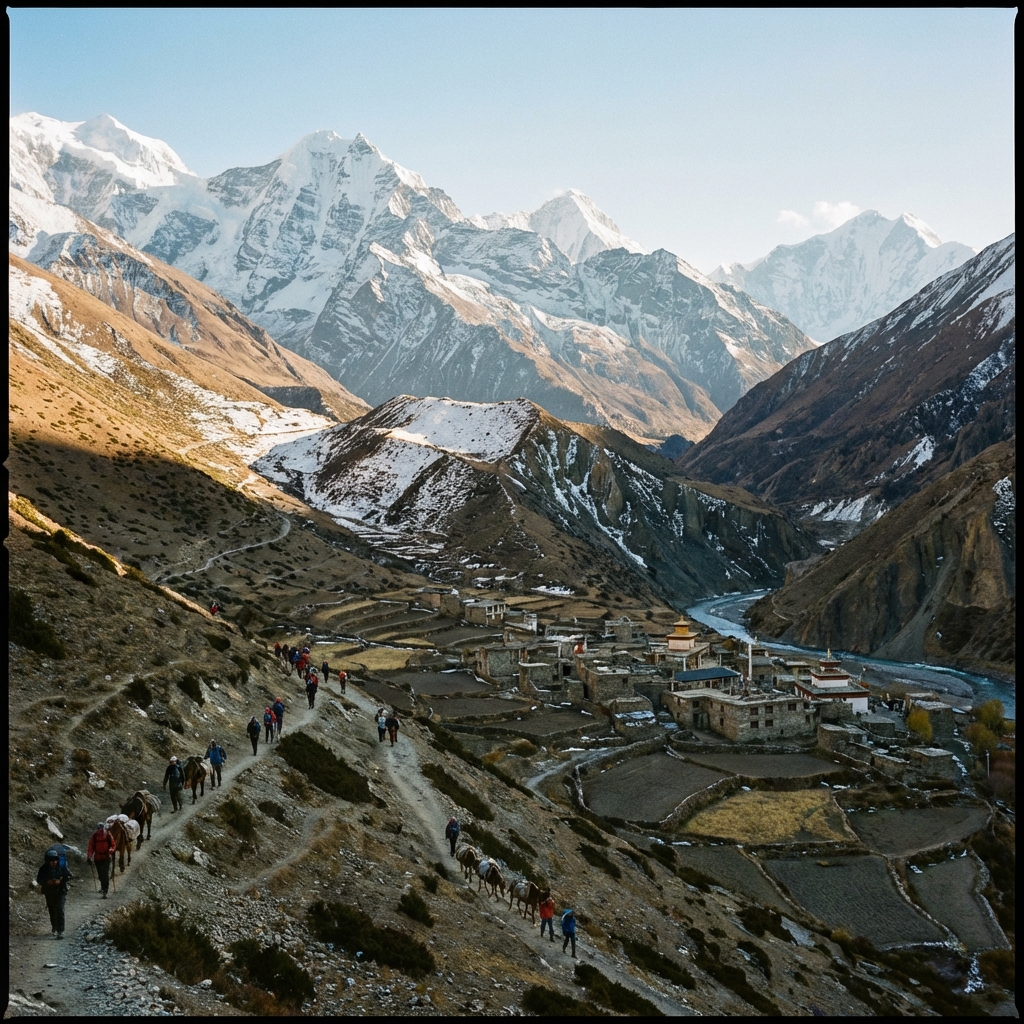
Langtang National Park, Nepal's first Himalayan national park, protects one of the most accessible and rewarding trekking regions in the country. Located just 30-50 kilometers north of Kathmandu as the crow flies, the Langtang region offers spectacular mountain scenery, rich cultural heritage, and diverse wildlife -- all without the crowds and logistical complexity of the Everest and Annapurna regions.
If you are planning to trek the Langtang Valley, hike to the sacred Gosaikunda Lakes, or traverse the Helambu region through the park, you need a Langtang National Park entry permit. This guide covers everything you need to know about this permit in 2026: current costs, where and how to obtain it, which treks require it, checkpoint information, park rules, and practical tips for a smooth process.
What Is Langtang National Park?
Langtang National Park was established in 1976, making it one of Nepal's oldest national parks. It was the first national park created in the Himalayan zone and remains one of the most ecologically significant protected areas in Nepal.
Key Facts About the Park
- Established: 1976
- Location: Rasuwa, Nuwakot, and Sindhupalchok districts, Bagmati Province
- Area: 1,710 square kilometers (660 square miles)
- Buffer Zone: 420 square kilometers
- Altitude Range: 1,000m (subtropical forests) to 7,245m (Langtang Lirung summit)
- Managed By: Department of National Parks and Wildlife Conservation (DNPWC)
- Nearest Town: Dhunche (district headquarters of Rasuwa)
Notable Peaks Within the Park
| Peak | Elevation | Notes |
|---|---|---|
| Langtang Lirung | 7,245m | Highest peak in the Langtang Himal |
| Ganesh Himal | 7,422m | On the park's western boundary |
| Dorje Lakpa | 6,966m | Prominent peak visible from Kathmandu Valley |
| Yala Peak | 5,520m | Popular trekking peak |
| Naya Kanga | 5,844m | Technical trekking peak |
| Tsergo Ri | 5,033m | Popular viewpoint, no permit needed |
Ecological Significance
Langtang National Park spans an extraordinary elevation range, from subtropical forests at 1,000m to alpine zones above 5,000m. This creates remarkable biodiversity:
- Subtropical zone (1,000-2,000m): Sal forests, bamboo, tropical birds
- Temperate zone (2,000-3,000m): Oak, maple, rhododendron forests
- Subalpine zone (3,000-4,000m): Silver fir, birch, juniper, rhododendron
- Alpine zone (4,000-5,000m): Dwarf shrubs, alpine meadows, medicinal herbs
- Nival zone (above 5,000m): Lichens, mosses, bare rock and ice
The park is home to the endangered red panda, Himalayan black bear, snow leopard (extremely rare), Himalayan tahr, musk deer, and over 250 bird species including the impeyan pheasant (danphe, Nepal's national bird).
Cultural Significance
The Langtang Valley is home to Tamang communities whose culture blends Tibetan Buddhism with local traditions. Langtang Village was devastated by the 2015 earthquake -- a massive avalanche and landslide buried the village in one of the single deadliest events of the entire disaster. It has since been fully rebuilt with earthquake-resistant structures on a site roughly 100m higher than the original village, and trails and teahouses are fully restored and safe for trekking. The rebuilt Langtang village and the resilience of its community are a powerful part of any trek in the region.
The Gosaikunda Lakes are one of Nepal's most sacred pilgrimage sites, associated with Hindu mythology (Lord Shiva) and attracting thousands of Nepali pilgrims during the Janai Purnima festival in August.
Who Needs This Permit?
Every trekker entering Langtang National Park requires this permit. This includes:
- Foreign nationals (all countries)
- SAARC nationals (India, Bangladesh, Sri Lanka, Pakistan, Bhutan, Maldives, Afghanistan)
- Nepali citizens trekking for recreation (different, lower fee)
- Climbing expedition members
- Researchers and filmmakers (additional permits may apply)
The only exemption is children under 10 years of age, who enter free but should still be registered at the checkpoint.
Solo trekkers do not need to join a company or group to get this permit. Unlike Nepal's restricted areas (such as Manaslu or Upper Mustang), Langtang National Park is not a restricted zone, so you can buy the permit yourself at the DNPWC office or checkpoint and trek independently with or without a guide. For how this compares across regions, see our restricted area permits overview.
What Happens If You Trek Without a Permit
Trekking permits are compulsory, and checkpoints at Dhunche and Syabrubesi strictly enforce them. If you are caught on the trail without a valid Langtang National Park permit, you will be required to buy one on the spot, often with an added fine on top of the standard fee. In serious cases, repeated or deliberate evasion can lead to being turned back or facing legal penalties. The simple, far cheaper path is to obtain your permit before you start walking.
Permit Cost (2026 Rates)
| Category | Fee (NPR) | Fee (USD approx.) |
|---|---|---|
| Foreign national | NPR 3,000 | ~$23 |
| SAARC national | NPR 1,500 | ~$11 |
| Nepali citizen | NPR 100 | ~$0.75 |
| Children under 10 | Free | Free |
Important notes on fees:
- Fees are set by the DNPWC and are subject to change (though they have been stable for several years)
- Payment must be in Nepali Rupees (NPR) -- USD or other currencies are generally not accepted
- The fee is a one-time entry fee, valid for the duration of your trek (you do not pay per day)
- There is no separate fee for different areas within the park
- Some agencies quote the foreign fee as roughly $30 and the SAARC fee as roughly $15 "excluding VAT." Nepal's 13% Value Added Tax can be added to the base NPR 3,000 / NPR 1,500 rate, which is why USD estimates vary slightly between sources. When the DNPWC issues your permit directly, you pay the official NPR rate; when an agency arranges it, confirm whether their quote is inclusive of VAT so there is no surprise on your invoice.
Fee Increases
The Nepal government periodically reviews national park entry fees. While the current fee of NPR 3,000 has been stable, always verify the current rate at the DNPWC website or through your agency before your trek. Fee increases are typically announced well in advance.
Where to Obtain the Permit
You have two primary options for obtaining the Langtang National Park permit.
Option 1: DNPWC Office in Kathmandu (Recommended)
Location: The Department of National Parks and Wildlife Conservation office is located at Babarmahal, Kathmandu (near the National Stadium and Singha Durbar).
Office Hours:
- Sunday to Thursday: 10:00 AM - 5:00 PM (winter: 10:00 AM - 4:00 PM)
- Friday: 10:00 AM - 3:00 PM
- Saturday: Closed
- Closed on public holidays
Process:
- Bring your passport and two passport-sized photos
- Fill out the application form (available at the office)
- Pay the fee in NPR (cash)
- Receive your permit card (issued same day, usually within 30 minutes)
Why this is recommended: Getting the permit in Kathmandu avoids any potential issues at the park entry point. The Kathmandu office is well-organized and accustomed to processing tourist permits. It also allows you to get your TIMS card at the nearby Nepal Tourism Board office on the same trip, saving time.
Option 2: Park Entry Checkpoint at Dhunche
Location: The Langtang National Park checkpoint is at Dhunche, the district headquarters of Rasuwa, which is the gateway town for most treks entering the park.
Process: Same as Kathmandu -- bring your passport, two photos, and NPR cash. The permit is issued on the spot.
Considerations:
- Dhunche has limited facilities; arriving without a permit means additional administrative time before starting your trek
- During peak season, there may be a queue
- The checkpoint may occasionally have limited staffing
- If you are traveling by local bus from Kathmandu, you will pass through Dhunche anyway
Option 3: Through Your Trekking Agency
If you are trekking with an agency, they will typically obtain the Langtang National Park permit on your behalf as part of their service. This is the most convenient option.
What to confirm with your agency:
- That the permit cost is included in your package price (not an unexpected extra)
- That they will obtain it before you depart for Dhunche (not at the checkpoint, which wastes trekking time)
- That they will provide you with the physical permit card (you need to show it at checkpoints)
Pro Tip
Documents Required
To obtain the Langtang National Park permit, bring:
- Valid passport (original, not a photocopy)
- Two passport-sized photos (recent, standard dimensions)
- Cash in Nepali Rupees (the exact fee amount)
- TIMS card (if already obtained -- not required to get the national park permit, but you will need both for your trek)
Tips on photos:
- Bring extra passport photos from home (at least 6 for your entire Nepal trip, as you will need them for multiple permits and your visa)
- If you run out, photo shops in Thamel and near the DNPWC office can produce passport photos in minutes for about NPR 200-300
- Photos should be white or light-colored background, no sunglasses, facing forward
Which Treks Require the Langtang National Park Permit?
Any trek that enters the boundaries of Langtang National Park requires this permit. The major treks include:
Langtang Valley Trek
The most popular trek in the Langtang region, following the Langtang Khola (river) up to Kyanjin Gompa at 3,870m. This is a moderate trek suitable for most fitness levels.
- Duration: 7-10 days
- Maximum altitude: 5,033m (if climbing Tsergo Ri viewpoint)
- Starting point: Syabrubesi
- Highlights: Langtang village, Kyanjin Gompa, Tsergo Ri viewpoint, cheese factory, Tamang culture
- Permits needed: Langtang NP permit + TIMS card
Gosaikunda Lake Trek
A trek to the sacred alpine lakes at 4,380m, considered one of Nepal's holiest sites. Can be combined with the Langtang Valley trek or done independently.
- Duration: 5-7 days (from Dhunche or Sundarijal)
- Maximum altitude: 4,610m (Laurebina La pass, if crossing to Helambu)
- Starting point: Dhunche or Sundarijal (via Chisapani)
- Highlights: Gosaikunda Lake, Saraswati Kunda, Bhairav Kunda, panoramic mountain views
- Permits needed: Langtang NP permit + TIMS card
Helambu Trek (When Entering the Park)
The Helambu region lies partly within and partly outside Langtang National Park. If your Helambu trek crosses into the park boundary (which the classic Gosaikunda-Helambu crossing does), you need the national park permit.
- Duration: 5-7 days
- Maximum altitude: 4,610m (Laurebina La, if crossing from Gosaikunda)
- Starting point: Sundarijal (on Kathmandu's outskirts)
- Highlights: Sherpa and Tamang villages, rhododendron forests, mountain views
- Permits needed: Langtang NP permit + TIMS card (if entering the park boundary)
Sundarijal Start: A Second Park Fee
If you begin a Helambu or Gosaikunda trek from Sundarijal, the trail passes through Shivapuri Nagarjun National Park on Kathmandu's northern rim. This is a separate protected area with its own small entry fee (around NPR 1,000 for foreign nationals), paid at the Sundarijal checkpoint, in addition to your Langtang National Park permit further along the route. Treks starting from Syabrubesi or Dhunche do not pass through Shivapuri Nagarjun and avoid this extra fee.
Langtang-Gosaikunda-Helambu Crossing
The classic combination trek that connects the Langtang Valley with the Gosaikunda Lakes and descends through Helambu. One of the best extended treks near Kathmandu.
- Duration: 14-18 days
- Maximum altitude: 5,033m (Tsergo Ri) or 4,610m (Laurebina La)
- Starting point: Syabrubesi
- Ending point: Sundarijal (Kathmandu outskirts)
- Permits needed: Langtang NP permit + TIMS card
Tamang Heritage Trail
A cultural trek through Tamang villages on the western side of the Langtang region. Parts of this trail enter the national park buffer zone.
- Duration: 5-7 days
- Maximum altitude: 3,165m (Nagthali viewpoint)
- Starting point: Syabrubesi
- Highlights: Authentic Tamang culture, fewer tourists, mountain views, Buddhist monasteries
- Permits needed: Langtang NP permit (check current boundary requirements) + TIMS card
Combined Permits
If your trek combines the Langtang Valley with Gosaikunda and/or Helambu, you need only one Langtang National Park permit for the entire trek, as these areas are all within the same national park. You do not need to purchase separate permits for different sections. For a complete overview of all permit types, see our Nepal trekking permits guide.
Checkpoints and Verification Points
Your Langtang National Park permit will be checked at several points during your trek. Be prepared to show it (along with your TIMS card and passport) at:
Primary Checkpoints
-
Dhunche Checkpoint: The main entry checkpoint for treks starting from Dhunche. All trekkers entering the park from this direction pass through here. If you do not already have your permit, you can purchase it here.
-
Syabrubesi Checkpoint (near the park boundary): For treks starting from Syabrubesi (the standard Langtang Valley trek starting point). Your permit and TIMS card are checked here.
-
Thulo Syabru Checkpoint: Located between Dhunche and the Gosaikunda trail. Primarily for trekkers heading to Gosaikunda from Dhunche.
Secondary Checkpoints
- Lama Hotel area: Informal check during the Langtang Valley trek
- Langtang Village area: Check by park staff or local authorities
- Kyanjin Gompa area: Occasional checks
- Laurebina area: For trekkers on the Gosaikunda route
- Gosaikunda area: Checks near the lakes
What Happens at Checkpoints
At each checkpoint, expect:
- A park staff member or military personnel requesting to see your permits
- Your name, nationality, and permit number recorded in a register
- A brief inspection (usually takes 2-5 minutes)
- Sometimes questions about your itinerary and destination
Pro Tip
TIMS Card: The Second Required Permit
The Langtang National Park permit alone is not sufficient for trekking in the Langtang region. You also need a TIMS (Trekkers' Information Management System) card.
TIMS Card Quick Summary
| Detail | Information |
|---|---|
| Cost (individual trekker) | NPR 2,000 (~$15 USD) |
| Cost (through an agency) | NPR 1,000 (~$8 USD) |
| Where to get it | NTB office (Kathmandu or Pokhara) or through agency |
| Documents needed | Passport, 2 photos, travel insurance details |
| Purpose | Safety tracking system for trekkers |
The TIMS card registers your trek details in a central database, which is used for search and rescue coordination if you go missing. It is a safety system, not just a revenue mechanism.
For complete details on the TIMS card, see our TIMS card guide.
Getting Both Permits Efficiently
If arranging yourself:
- Morning: Visit the NTB office at Pradarshani Marg for the TIMS card
- Afternoon: Visit the DNPWC office at Babarmahal for the national park permit
- Total time: Half a day (allow a full day to be safe)
If using an agency:
- Confirm both permits are included in your package
- Provide your passport and photos to the agency at least 1-2 days before departure
- Verify you receive both physical permit cards before departing Kathmandu
Online Application Status
As of early 2026, the Langtang National Park permit does not have a fully online application system. The DNPWC has been working on digitizing permit processes, but the current system still requires in-person application and issuance.
What is available online:
- Downloadable application forms from the DNPWC website
- Current fee information
- Park rules and regulations
- Contact information for the permit office
Future plans:
- Nepal has announced plans to implement an online national park permit system
- When implemented, this would allow advance purchase from your home country
- Check the DNPWC website for the latest status before your trek
Digital Permit Plans
Nepal is gradually moving toward digital permit systems. The TIMS card system has already gone through several modernization phases. When online permits become available for Langtang National Park, we will update this guide. For now, plan to obtain permits in person in Kathmandu or at the park entry point.
What Your Permit Fee Funds
Understanding where your NPR 3,000 goes provides context for why the permit matters beyond being a bureaucratic requirement.
Conservation Programs
- Anti-poaching patrols: Rangers patrol for illegal hunting of red pandas, musk deer, and other protected species
- Habitat restoration: Reforestation programs, particularly in areas damaged by the 2015 earthquake landslides
- Wildlife monitoring: Camera trap programs, population surveys, and scientific research
- Invasive species management: Control of invasive plants threatening native ecosystems
Community Development
- Buffer zone community programs: 30-50% of park revenue is allocated to buffer zone communities for schools, health posts, and infrastructure
- Sustainable livelihood programs: Training for local communities in eco-tourism, sustainable agriculture, and alternative energy
- Post-earthquake reconstruction: Ongoing support for communities devastated by the 2015 earthquake
Infrastructure Maintenance
- Trail maintenance: Repair and improvement of trekking trails, bridges, and signage
- Checkpoint facilities: Staffing and maintaining park entry and monitoring stations
- Waste management: Rubbish collection programs along major trekking routes
Park Rules and Regulations
When you enter Langtang National Park, you agree to follow these rules:
Strictly Prohibited
- Hunting or harming wildlife of any kind
- Collecting or removing plants, flowers, rocks, fossils, or other natural materials
- Carrying firearms or explosives (special permits exist for security personnel)
- Setting fires outside designated areas
- Playing loud music or making excessive noise
- Flying drones without a special permit from the DNPWC
- Feeding wildlife
- Littering -- carry out all waste you carry in
Best Practice Guidelines
- Stay on marked trails to minimize erosion and habitat disturbance
- Use established campsites if camping (most trekkers use tea houses)
- Dispose of human waste properly -- use toilets at tea houses or dig a cat hole at least 30 meters from water sources when no facilities are available
- Minimize plastic waste -- carry reusable water bottles and use water purification methods rather than buying bottled water
- Respect cultural sites -- remove shoes before entering monasteries, ask before photographing religious ceremonies
- Do not approach or feed wildlife -- maintain safe distances, especially from Himalayan black bears if encountered at lower elevations
- Follow your guide's instructions regarding trail conditions and safety
Pro Tip
The 2015 Earthquake and Langtang's Recovery
Any discussion of Langtang National Park must acknowledge the devastating impact of the April 25, 2015, earthquake. The Langtang Valley was one of the hardest-hit areas:
- A massive landslide and avalanche triggered by the earthquake completely buried the village of Langtang, killing approximately 350 people, including trekkers and guides
- The village of Langtang was located in a narrow section of the valley, and the debris field covered the entire settlement
- Multiple other villages in the valley suffered significant damage
- Trail infrastructure was extensively damaged throughout the park
Recovery and Rebuilding
Since 2015, the Langtang region has undergone remarkable recovery:
- Langtang village has been rebuilt on higher ground adjacent to the original site
- Memorial sites mark the location of the original village and honor those who perished
- Trail infrastructure has been repaired and in many cases improved
- Tea houses have been rebuilt along the trekking routes
- Community resilience programs have helped local Tamang communities rebuild their livelihoods
Trekking in the Langtang region today is both safe and an important way to support communities that depend on trekking tourism for their economic survival. Your permit fees and spending in local tea houses directly contribute to the ongoing recovery.
Getting to Langtang National Park
From Kathmandu by Bus
The most common approach to the park:
- Destination: Syabrubesi (for Langtang Valley trek) or Dhunche (for Gosaikunda)
- Duration: 7-10 hours by local bus, 5-7 hours by private jeep
- Bus departure: Local buses depart from Kathmandu's Machhapokhari bus station (Gongabu) early morning (around 7:00-8:00 AM)
- Road condition: The road has been significantly improved since the earthquake but can be rough in sections, especially during monsoon
- Cost: NPR 800-1,200 by local bus, $120-180 for a private jeep (per vehicle)
From Kathmandu via Sundarijal (for Helambu/Gosaikunda approach)
- Destination: Sundarijal (on the northeastern outskirts of Kathmandu)
- Duration: 45 minutes by taxi from Thamel
- Cost: NPR 1,500-2,000 by taxi
- Trek entry: The trail from Sundarijal leads to Chisapani and then toward Gosaikunda or Helambu
Road Conditions
The Kathmandu-Dhunche-Syabrubesi road is a mountain road subject to landslides, especially during monsoon season (June-September). During heavy rains, the road may be temporarily blocked. Allow extra time in your itinerary for potential travel delays. Check road conditions before departure, especially during the monsoon and immediately after heavy rainfall.
Best Time to Visit Langtang National Park
| Season | Months | Conditions | Recommendation |
|---|---|---|---|
| Autumn | October-November | Clear skies, excellent visibility, moderate temperatures | Best time for trekking |
| Winter | December-February | Cold at altitude, clear skies, few trekkers, some passes may be snowed in | Good for lower-altitude treks |
| Spring | March-May | Warming temperatures, rhododendron blooms (spectacular in Langtang), slightly hazy | Excellent, especially March-April |
| Monsoon | June-September | Heavy rain, leeches, cloudy, trails slippery, landslide risk | Not recommended for most trekkers |
The permit is valid year-round, and the park does not close during any season. However, conditions during monsoon make trekking difficult and potentially dangerous due to landslide risk on the access road and within the valley.
For detailed seasonal information, see our Nepal trekking seasons guide.
Comparing Langtang with Other National Park Permits
| National Park | Permit Cost (Foreign) | Region | Main Treks |
|---|---|---|---|
| Langtang | NPR 3,000 | North of Kathmandu | Langtang Valley, Gosaikunda, Helambu crossing |
| Sagarmatha | NPR 3,000 | Everest region | EBC, Gokyo, Three Passes |
| Annapurna (ACAP) | NPR 3,000 | Annapurna region | ABC, Circuit, Poon Hill |
| Manaslu (MCAP) | NPR 3,000 | Manaslu region | Manaslu Circuit |
Note that the Annapurna and Manaslu regions use Conservation Area permits rather than National Park permits, but the cost and process are similar. For comprehensive permit information, see our Nepal trekking permits explained guide.
Practical Tips for a Smooth Permit Experience
- Get your permits in Kathmandu rather than at the park checkpoint. It saves time on your first trekking day.
- Bring exact change in NPR. The DNPWC office and checkpoints may not have change for large denominations.
- Carry at least 6 passport photos from home for your entire Nepal trip (visa, TIMS, national park permits).
- Photograph your permit (front and back) and store the photos on your phone and in cloud storage.
- Keep permits accessible -- you will show them at multiple checkpoints. A ziplock bag in your jacket pocket works well.
- Check current fees before your trip at the DNPWC website or through your agency.
- Allow a full day in Kathmandu for permit errands if you are arranging them yourself.
Pro Tip
If You Lose Your Permit
Losing your permit during a trek is inconvenient but manageable:
- Report the loss to the nearest park ranger station or checkpoint
- Show your passport as identification -- rangers can check their entry logs
- A replacement may be issued at a checkpoint (subject to staff availability)
- A replacement fee may apply (typically the same as the original permit cost)
- Having a photo of your permit on your phone significantly speeds up the process
Frequently Asked Questions
Can I enter Langtang National Park without a permit?
No. The checkpoints at Dhunche and Syabrubesi strictly control entry. You will not be allowed past without a valid Langtang National Park permit. There are no practical alternative entry points that bypass the checkpoint system.
Is the national park permit the only permit I need for the Langtang Valley trek?
No. You also need a TIMS card. Together, these two permits cover all requirements for the standard Langtang Valley trek. See our TIMS card guide for details.
Can I get the permit at Syabrubesi?
The primary checkpoint for permit issuance is at Dhunche. However, there is a checkpoint near Syabrubesi where permits are checked. Whether you can purchase a new permit at Syabrubesi depends on staffing. To be safe, get your permit in Kathmandu or at Dhunche.
How long is the permit valid?
The permit is valid for the duration of your trek as specified on the permit card. There is no daily fee -- it is a one-time entry fee regardless of how many days you spend in the park. However, if you exit the park and re-enter (for example, going to Dhunche and coming back), you may need to show your permit again.
Do I need a separate permit for Gosaikunda?
No. Gosaikunda Lakes are within Langtang National Park. The same national park permit covers the Langtang Valley, Gosaikunda, and any other area within park boundaries.
Can I do the Langtang Valley trek with a mandatory licensed guide?
Yes. The Langtang Valley trek is not in a restricted area and does not legally require a guide. However, a guide is highly recommended, especially given the region's earthquake history and the potential for changed trail conditions. For more on this decision, see our guide on independent vs. guided trekking.
What is the best time to get the permit in Kathmandu?
Weekday mornings are best. The DNPWC office opens at 10:00 AM. Arriving at 10:00-10:30 AM typically means minimal waiting. Avoid Fridays (early closing) and Saturdays (closed). Check for public holidays on the Nepali calendar.
Is the Tamang Heritage Trail within the national park?
The Tamang Heritage Trail runs along the western edge of the Langtang region, and portions of it enter the national park buffer zone or the park itself. You will need the national park permit. Check with your agency or the DNPWC office for the latest boundary information.
Can I pay the permit fee in USD or euros?
The DNPWC office and park checkpoints primarily accept Nepali Rupees. Do not count on being able to pay in foreign currency. Exchange money at a bank or licensed money changer in Kathmandu before visiting the DNPWC office.
What happens if the road to Dhunche is blocked?
Road blockages due to landslides are possible, especially during monsoon. If the road is blocked, you have several options: wait for the road to be cleared (sometimes hours, sometimes days), hire a jeep that may be able to navigate partial blockages, or start your trek from an alternative point (such as Sundarijal for the Helambu/Gosaikunda approach). Having flexible dates in your itinerary helps.
Do I need a permit for Tsergo Ri?
No additional permit is needed for Tsergo Ri (5,033m). It is within Langtang National Park and is considered a viewpoint/trekking peak that does not require a climbing permit. Your national park permit covers it. However, if you plan to climb Yala Peak (5,520m) or Naya Kanga (5,844m), you will need an additional climbing permit from the Nepal Mountaineering Association.
Can my trekking agency handle all permits?
Yes. Most reputable agencies include all required permits (national park permit and TIMS card) in their package. Confirm this is included in your package price and ensure the agency provides you with the physical permit cards before departure. For help choosing an agency, see our questions to ask trekking agencies guide.
Does the Langtang permit cost more in peak season?
No. The Langtang National Park entry fee is the same in autumn, spring, winter, and monsoon -- NPR 3,000 for foreign nationals, NPR 1,500 for SAARC nationals, year-round. The only way to "pay more" is to trek without a permit and incur a fine, which always costs more than the standard fee.
Do I need a restricted area permit for the Langtang trek?
No. The Langtang region is not a restricted area, so no Restricted Area Permit (RAP) is required and there is no two-person minimum. This is different from Manaslu, Upper Mustang, or Tsum Valley. You can trek Langtang solo. See our restricted area permits overview for the regions that do require a RAP.
Can I apply for the Langtang National Park permit online?
Not yet. As of 2026 there is no fully online application or advance purchase for the Langtang National Park permit. You apply in person at the DNPWC office in Kathmandu or at the Dhunche checkpoint. Nepal has announced plans to digitize national park permits, and we will update this guide when online purchase becomes available.
Is there a separate fee if I start from Sundarijal?
Yes. The Sundarijal approach for Helambu and Gosaikunda passes through Shivapuri Nagarjun National Park, which charges its own small entry fee (around NPR 1,000 for foreigners) at the Sundarijal checkpoint, in addition to your Langtang National Park permit. Treks starting from Syabrubesi or Dhunche avoid this extra fee.
Summary
The Langtang National Park permit is a straightforward and essential requirement for any trek in the Langtang region. At NPR 3,000 (approximately $23 USD), it provides access to one of Nepal's most spectacular and accessible national parks -- a region of extraordinary biodiversity, rich Tamang culture, and stunning Himalayan scenery just hours from Kathmandu.
The simplest approach is to have your trekking agency arrange the permit as part of your package. If you prefer to arrange it yourself, visit the DNPWC office at Babarmahal in Kathmandu the day before you depart, bringing your passport, two photos, and NPR cash.
Your permit fee directly supports the conservation of endangered species, the rebuilding of earthquake-affected communities, and the maintenance of the trails and infrastructure that make trekking in this remarkable region possible.
For the full picture of all permits required for trekking in Nepal, see our comprehensive Nepal trekking permits guide. For detailed information on the Langtang region, see our Langtang region guide. And for guidance on the TIMS card you will also need, see our TIMS card guide.
Planning a Langtang trek?
Get your Langtang National Park permit and TIMS card sorted by a verified local agency, so you can start trekking the day you reach Syabrubesi.