
Tea House Trekking Nepal: Complete Guide to Lodge-Based Trekking
Family-run mountain lodges along trekking routes
$2-10/night (increases with altitude)
$3-12/meal (varies by altitude)
Cheap rooms, profit from meals
Everest Base Camp, Annapurna Circuit, ABC, Langtang
Peak season only (Oct-Nov, Mar-May)
Twin beds, dining room, shared bathrooms
Solar panels (most locations)
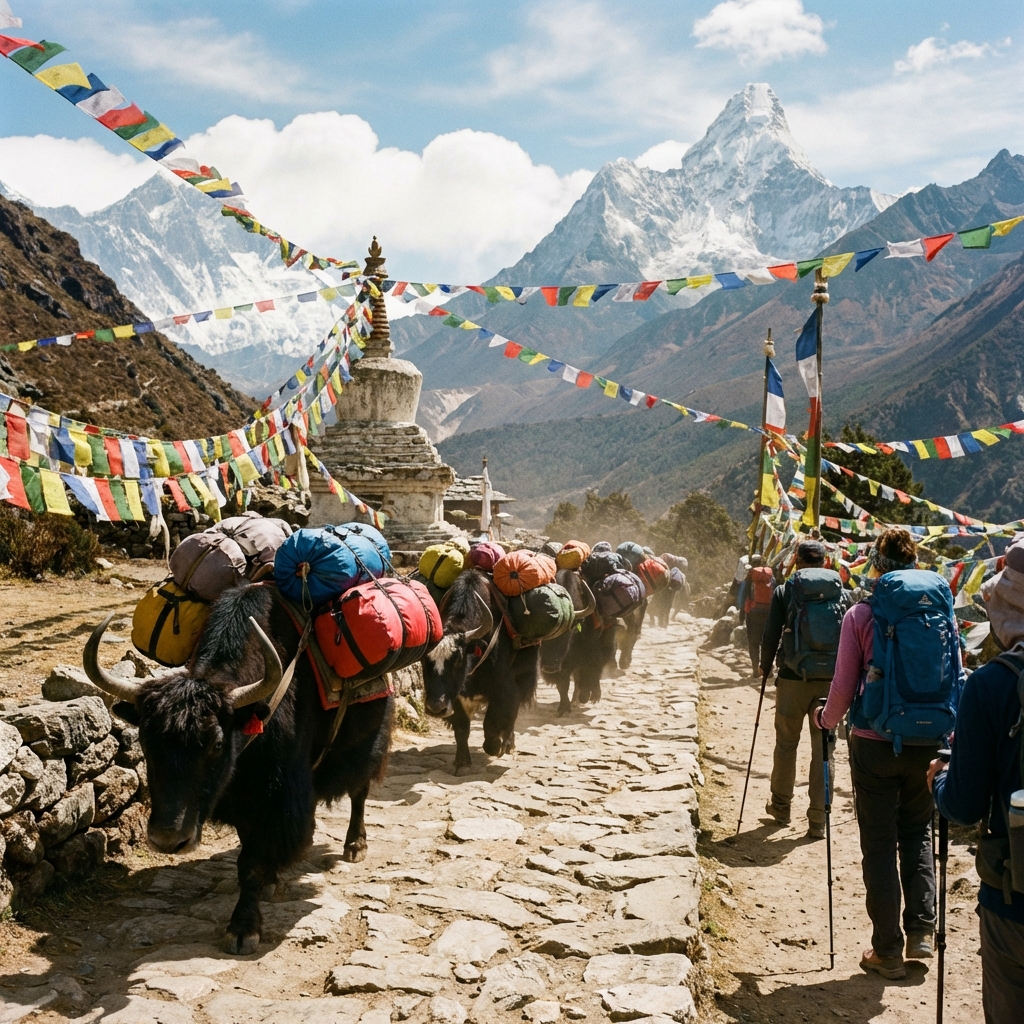
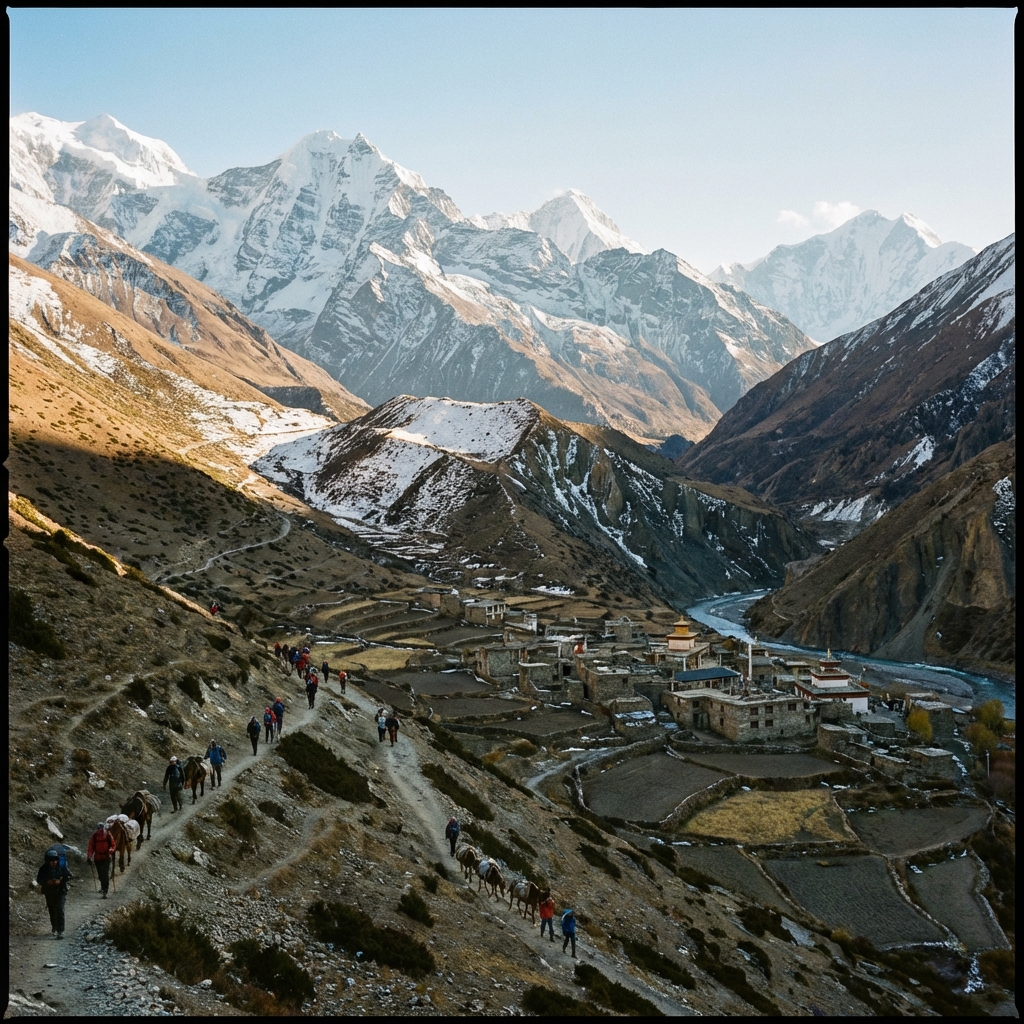
Tea house trekking revolutionized how people experience the Himalayas. Instead of carrying tents, cooking equipment, and weeks of food supplies like expeditions of the past, modern trekkers can walk from village to village staying in family-run lodges, eating fresh-cooked meals, and experiencing authentic mountain culture. This complete guide explains everything you need to know about the tea house system in Nepal.
What Are Tea Houses?
Tea houses (also spelled "teahouses") are small mountain lodges located along trekking routes throughout Nepal that provide basic accommodation, meals, and drinks to trekkers. More specifically, teahouses are mountain lodges run by local families or communities that offer meals and lodging along established trekking routes.
The name "tea house" originates from their historical purpose - they were simple rest stops where travelers could get tea and basic refreshments. Over decades, as trekking tourism developed, these evolved into overnight lodging facilities while retaining the traditional name.
Today's tea houses range from very basic two-room buildings at high altitudes to comfortable multi-story lodges with hot showers, WiFi, and western toilets at lower elevations. Despite the variation, they all share a common model: provide inexpensive accommodation and make profit from food and beverage sales.
The History and Evolution of Tea Houses
The tea house system emerged in the 1970s as trekking tourism began developing in Nepal. Prior to this, the only way to trek in the Himalayas was through expensive camping expeditions with porters carrying all supplies.
Enterprising Sherpa families and local villagers recognized an opportunity. They began offering simple accommodation to trekkers - initially just a place to spread a sleeping bag in a spare room. As demand grew, purpose-built lodges appeared along popular routes.
The 1980s and 1990s saw rapid expansion, particularly along the Everest Base Camp and Annapurna Circuit routes. What started as basic shelter evolved into an entire hospitality infrastructure. By the 2000s, tea houses had standardized pricing structures, menu systems coordinated by local committees, and established standards for facilities.
Historical Naming
Today, the tea house network has made trekking accessible to hundreds of thousands of people annually who couldn't afford or didn't want the logistics of camping treks. This democratization of Himalayan trekking is one of the great successes of Nepal's tourism industry.
How Tea Houses Transformed Himalayan Trekking
Before tea houses, trekking in Nepal meant:
- Expensive camping expeditions: Required hiring full crew (guide, cook, porters, kitchen staff)
- Heavy logistics: Carrying tents, cooking equipment, food for entire trek
- Limited cultural interaction: Camping separate from villages
- Higher environmental impact: Cooking fuel, waste from camping groups
- Restricted access: Only wealthy adventurers could afford multi-week expeditions
Tea houses changed everything by enabling:
- Budget trekking: Walk independently or with just a guide, no camping crew needed
- Lighter packing: Carry only personal gear, no tents or cooking equipment
- Cultural immersion: Stay with local families, eat in their dining rooms, learn about mountain life
- Economic benefits: Tourism money directly to mountain communities
- Accessibility: Middle-class travelers can afford Himalayan treks
- Flexibility: Change plans easily, extend or shorten treks without complex logistics
This transformation made Nepal one of the world's premier trekking destinations and created livelihoods for thousands of mountain families.
Tea House vs Camping: Comparing Trekking Styles
Understanding the differences between tea house and camping treks helps you choose the right style for your adventure.
Tea House Trekking
How It Works: Stay in mountain lodges, eat meals prepared by lodge kitchens, walk village to village along established routes.
Advantages:
- Lighter load: No tents, sleeping bags (sometimes), or cooking gear to carry
- Cultural immersion: Stay with local families, experience authentic mountain hospitality
- Comfort: Beds (not ground), dining rooms (not tents), prepared meals
- Flexibility: Change plans easily, extend or shorten trek without major logistics
- Social experience: Meet other trekkers in communal dining rooms
- Cost-effective: Significantly cheaper than camping treks
- Support local economy: Money goes directly to mountain communities
Disadvantages:
- Limited to established routes: Can only trek where tea houses exist
- Less wilderness: More developed trails with regular facilities
- Less privacy: Shared dining spaces, thin walls between rooms
- Peak season crowding: Popular lodges fill up October-November
- Fixed menu options: Limited choice compared to camping with a cook
- Noise levels: Thin walls mean you hear neighboring rooms
Best For: EBC, ABC, Annapurna Circuit, Langtang Valley, Poon Hill, Ghorepani, Mardi Himal, most popular treks
Camping Trekking
How It Works: Carry all equipment (tents, cooking gear, food), set up camp each night, full crew of guide, cook, and porters.
Advantages:
- Go anywhere: Trek remote regions without lodge infrastructure
- Wilderness experience: Camp in pristine locations away from villages
- Privacy: Your own tent, your own space
- Flexible camping spots: Choose scenic locations for camps
- Customized meals: Cook prepares food to your preferences and dietary needs
- No accommodation worries: Always have a place to sleep regardless of crowding
Disadvantages:
- Expensive: Must hire full crew (guide, cook, kitchen staff, porters)
- Heavy logistics: Carrying tents, cooking equipment, food for entire trek
- Less cultural interaction: Camping separate from villages
- More preparation: Requires booking agency, organizing full crew
- Environmental considerations: Cooking fuel, waste management
- Weather dependent: Camping in rain or snow is challenging
Best For: Upper Dolpo, Makalu, Kanchenjunga, remote regions, off-season when tea houses close
Tea House vs Camping Comparison
| 0 | 1 | 2 |
|---|---|---|
| Daily Cost | $35-60 (independent) | $90-150 (with full crew) |
| Pack Weight | 8-12kg (personal gear only) | 8-12kg (crew carries tents/food) |
| Cultural Interaction | High (stay with families) | Low (separate camps) |
| Flexibility | Very high (change plans easily) | Medium (crew logistics) |
| Comfort | Beds, dining rooms | Sleeping on ground in tent |
| Available Routes | Popular established routes | Can go anywhere |
| Environmental Impact | Lower (solar power, waste systems) | Higher (fuel, waste) |
| Social Experience | High (meet trekkers) | Low (isolated with group) |
| Privacy | Low (thin walls) | High (own tent) |
| Best Season | Year-round on major routes | Better for remote/off-season |
Hybrid Approach
How Tea Houses Work: The Business Model
Understanding the tea house business model helps you make sense of pricing, etiquette, and expectations.
The Accommodation Pricing Strategy
Tea houses operate on a simple principle: cheap rooms, expensive food.
Room rates are deliberately kept very low ($2-10/night depending on altitude) to attract trekkers. The real profit comes from meals, drinks, snacks, hot showers, WiFi, device charging, and other services.
This model benefits everyone:
- Trekkers: Affordable accommodation, flexibility to choose lodges
- Tea house owners: Reliable income from food service, customer loyalty
- Competition: Owners compete on food quality and hospitality, not just price
The economics work because:
- Trekkers need to eat regardless of where they stay
- Cooking fuel, food supplies, and labor are the real costs at altitude
- Building maintenance costs are fixed whether charging $3 or $10 for rooms
- Happy, well-fed guests tell other trekkers and return business comes from reputation
Walk-In vs Advance Booking
Low/Mid Season (Dec-Feb, Jun-Sep):
- Walk-in works: Tea houses rarely fill completely
- Flexibility: Choose lodges based on arrival time, fatigue level, word-of-mouth
- Negotiation: Sometimes possible to negotiate prices during very quiet periods
- No stress: Don't worry about reservations
Peak Season (Oct-Nov, Mar-May):
- Booking recommended: Popular locations fill by afternoon
- Critical spots: Gorak Shep (EBC), Dingboche, Namche, Tengboche, Deurali (ABC)
- How to book: Through guide/agency, direct phone calls, or arrive early
- Consequences of not booking: May end up sleeping on dining room benches or in storage rooms
Peak Season Accommodation Crisis
Family-Run vs Commercial Lodges
Family-Run Tea Houses (majority):
- Owned and operated by local families
- Often multigenerational (grandparents, parents, children all help)
- Personal hospitality and attention
- Traditional home-style cooking
- More cultural interaction
- Support goes directly to the family
Commercial Lodge Chains:
- Business-operated properties with hired staff
- More standardized services and facilities
- Consistent quality across locations
- Professional management
- Example: Hotel Everest View network in Khumbu
Which to Choose:
- Family lodges: Better cultural experience, more authentic, directly support communities
- Commercial lodges: More predictable quality, better facilities at high altitudes, professional service
Most trekkers end up using a mix of both without realizing it. The experience differences are usually minimal - both provide good hospitality.
Supporting Local Communities
The Unwritten Rules of Tea House Business
Several important but often unspoken customs govern tea house operations:
-
Eat where you sleep: If you stay at a lodge, you're expected to eat dinner and breakfast there. This is the core of their business model.
-
Order hot drinks regularly: Particularly in cold weather when gathering in the dining room. Tea, coffee, and hot chocolate orders keep the business running.
-
Don't bring outside food to dining rooms: This violates the business model and is considered rude.
-
Pay for services used: Hot showers, device charging, WiFi - these aren't free amenities, they're important revenue sources.
-
Tipping is optional but appreciated: Not expected like in Western countries, but small tips for exceptional service help low-paid staff.
Understanding these principles helps you be a respectful guest and ensures the tea house system remains viable for future trekkers.
What to Expect: Tea House Accommodations
Tea house facilities vary significantly by altitude, route popularity, and individual lodge quality. Here's what you'll typically encounter.
Room Types and Configurations
Twin/Double Rooms (most common):
- Two single beds with thin mattresses
- Shared between two trekkers
- Some locations offer double beds for couples (ask when booking)
- Typical size: 8-12 square meters
- Window (sometimes with mountain views)
- Door lock with key
- Sometimes a small shelf or hooks for gear
Single Rooms (limited availability):
- Same size as twin rooms but one bed
- Usually available at lower altitudes
- May cost slightly more ($1-2 extra)
- Often fill first during peak season
- Good for solo trekkers willing to pay a bit more
Dormitory Rooms (rare, high altitudes only):
- 4-8 beds in one room
- Cheapest option ($1-3/night)
- Less common than in the past
- Found at very high or very remote locations
- Bring earplugs!
What's Included:
- Bed frame with foam mattress (5-10cm thick)
- Pillow (bring pillowcase or use sleeping bag hood)
- Blankets (1-3 depending on altitude and season)
- Sometimes: sheets (lower altitudes only)
What's NOT Included:
- Sleeping bag (bring your own, especially high altitude)
- Sleeping bag liner (recommended for hygiene)
- Pillowcase (most trekkers don't use pillow directly)
- Room heating (except some luxury lodges at low altitude)
Bedding and Staying Warm
One of the biggest surprises for first-time tea house trekkers: rooms are not heated.
At altitudes above 3,000m, nighttime temperatures drop significantly. Your room will be as cold as the outside air. The provided blankets help, but at high altitude in winter, you absolutely need a proper sleeping bag.
Sleeping Bag Requirements by Season and Altitude:
Spring/Autumn (Oct-Nov, Mar-May):
- Below 3,000m: Blankets might suffice, or thin sleeping bag
- 3,000-4,000m: -5°C to -10°C rated sleeping bag
- Above 4,000m: -10°C to -15°C rated sleeping bag
Winter (Dec-Feb):
- Below 3,000m: -5°C sleeping bag
- 3,000-4,000m: -15°C sleeping bag
- Above 4,000m: -20°C sleeping bag or warmer
Monsoon Summer (Jun-Aug):
- Below 3,000m: Blankets usually sufficient
- Above 3,000m: Light sleeping bag for hygiene
Rent in Kathmandu
Staying Warm at Night:
- Sleeping bag liner: Adds warmth and hygiene barrier
- Hot water bottle: Ask tea house for thermos of hot water at bedtime ($1-2), place in sleeping bag
- Wear layers: Thermal underwear, fleece, hat to bed
- Chemical heat packs: Disposable warmers for extra cold nights
- Sleep with tomorrow's clothes: Keeps them warm for morning, provides extra insulation
Bathroom Facilities
Tea house bathrooms are shared (except rare luxury lodges) and vary dramatically by altitude and lodge quality.
Toilet Types:
Western (Sit) Toilets:
- Common at lower altitudes (below 3,000m)
- Increasingly rare above 4,000m
- Standard flush toilets at low altitude
- Pour-flush systems at mid altitude (bucket of water to flush)
- May be heated in some nicer lower-altitude lodges
Squat Toilets:
- Traditional Asian style
- More common at higher altitudes
- More hygienic (no seat contact)
- Can be challenging if not accustomed
- Easier with strong legs (all that trekking helps!)
The Reality at High Altitude:
- Basic facilities, often unheated
- Can be very cold in winter
- Bring headlamp for nighttime bathroom runs
- Keep toilet paper in waterproof bag (bathrooms may be damp)
- Have hand sanitizer available
Bathroom Location:
- Lower altitude: Often inside lodge building, short walk from room
- Higher altitude: Frequently outdoor facilities, may require going outside
- Some lodges: Bathroom facilities in separate building across courtyard
Toilet Paper Situation
Shower Facilities:
- Not included in room price (charged separately)
- $2-5 per shower depending on altitude
- Hot water from solar (sunny days only), gas heater, or wood-fired system
- Often only available certain hours (2-4pm when solar is warmest)
- Get progressively more expensive and rare above 4,000m
- At highest altitudes (Gorak Shep, Thorong Phedi), hot showers may not exist
Shower Strategy:
- Time showers for early afternoon (warmest water, warmest air)
- Shower at lower altitudes before going higher
- Many trekkers don't shower above 4,000m (cold, exhausting, acclimatization concerns)
- Wet wipes are your friend at high altitude
- Washing hair particularly difficult at altitude (takes forever to dry in cold)
Communal Dining Rooms: The Heart of Tea Houses
The dining room is where tea house trekking's social magic happens.
Typical Setup:
- Large communal space with long tables and benches
- Central heating source (wood stove, yak dung stove, or gas heater)
- Opens early morning (6-7am) and stays open until bedtime (9-10pm)
- Sometimes decorated with prayer flags, photos, trekking route maps
The Stove Culture:
- Wood-burning or yak-dung burning stove in center of room
- Provides only heat source in building
- Seats closest to stove are prime real estate
- After sunset, everyone gathers around for warmth
- Sometimes tea house charges "stove fee" for using heating (included in meal prices)
Social Dynamics:
- Meet trekkers from around the world
- Share trail conditions, weather reports, altitude experiences
- Exchange book libraries (most tea houses have book swaps)
- Play cards, do puzzles, write journals
- Learn about different routes from trekkers going opposite direction
Atmosphere:
- Quiets down by 8-9pm as people retire (early starts next day)
- Respectful noise levels (people are tired!)
- Shared power strips for device charging (if available)
- Often serve as impromptu community centers when locals gather
Bring Entertainment
Dining Room Etiquette:
- Remove boots before entering (wear flip-flops/camp shoes inside)
- Don't hog space closest to stove (share the warmth)
- Keep noise levels reasonable, especially after 8pm
- Order drinks regularly (it's how they make money)
- Be patient with service during busy times
- Clean up after yourself (don't leave trash)
Tea House Standards by Altitude
Facilities deteriorate predictably as you climb higher. Understanding these patterns helps set realistic expectations.
Low Altitude (Below 3,000m): Best Facilities
Examples: Lukla (2,840m), Namche Bazaar (3,440m), Phakding (2,610m), Jorsale (2,740m), Ghorepani (2,874m), Tadapani (2,630m)
Accommodation Quality:
- Best tea houses on the trek
- Well-constructed multi-story buildings
- Larger rooms (some even spacious)
- Some lodges offer attached bathrooms
- Occasional luxury lodges with heating
Bathroom Facilities:
- Mix of Western and squat toilets
- Usually inside main building
- Hot showers readily available ($2-3)
- Solar hot water common
- Some lodges have continuous hot water
Electricity:
- Reliable power most locations
- Mix of solar and grid electricity (some villages)
- USB charging ports sometimes in rooms
- Good hours of availability (all evening)
Food Options:
- Extensive menus (10-20+ items)
- Fresh vegetables available
- Bakery items at some lodges
- Beer and alcohol widely available
- Western food fairly authentic
WiFi:
- Available at most lodges
- Reasonably fast (for Nepal)
- $3-5 per hour or daily rates
- Some lodges offer free slow WiFi if you eat there
Comfort Level: ★★★★☆ (4/5)
Mid Altitude (3,000-4,000m): Good Facilities
Examples: Namche Bazaar (3,440m), Tengboche (3,860m), Dingboche (4,410m), Manang (3,540m), Braga (3,450m)
Accommodation Quality:
- Solid tea houses, purpose-built for trekkers
- Twin rooms standard
- Adequate mattresses and blankets
- Buildings less insulated than lower altitudes
- Rooms very cold at night
Bathroom Facilities:
- Mostly squat toilets
- Often in separate building
- Hot showers available but more expensive ($3-5)
- Limited hours for hot water
- Bathrooms can be quite cold
Electricity:
- Solar power dominant
- Availability depends on weather
- Charging devices costs $2-4
- Fewer hours of power (charge during meals)
- Brownouts common on cloudy days
Food Options:
- Standard trekking menus (dal bhat, noodles, soup, Tibetan bread)
- Fresh vegetables becoming rarer
- Fewer Western options
- Alcohol still available but more expensive
- Food takes longer to cook (lower air pressure)
WiFi:
- Available at many locations
- Slower speeds than lower altitude
- More expensive ($4-6/hour)
- Reliability depends on weather (solar dependent)
Comfort Level: ★★★☆☆ (3/5)
High Altitude (Above 4,000m): Basic Facilities
Examples: Gorak Shep (5,164m), Lobuche (4,940m), Thorong Phedi (4,450m), ABC (4,130m), Machhapuchhre Base Camp (3,700m)
Accommodation Quality:
- Very basic structures
- Thin walls (plywood or stone with gaps)
- Small rooms
- Minimal mattresses (sometimes just boards)
- Extremely cold (MUST have good sleeping bag)
- Blankets provided but insufficient alone
Bathroom Facilities:
- Almost exclusively squat toilets
- Outdoor facilities (brave the cold!)
- Hot showers rare and expensive ($5-10 if available)
- Many lodges no hot water at all
- Frozen pipes in winter mornings
- Bring headlamp for nighttime bathroom runs
Electricity:
- Solar only (weather dependent)
- Very limited hours
- Charging expensive ($2-$7 per device)
- May not be available on cloudy days
- Bring power bank for critical devices
Food Options:
- Very limited menus (5-8 items)
- Dal bhat, noodles, soup, simple carbs
- No fresh vegetables (all dried/canned)
- No alcohol at some locations
- Everything more expensive
- Longer cooking times
WiFi:
- Rare and expensive ($5-10/hour)
- Extremely slow when available
- Don't count on connectivity
- Download maps/info before ascending
Comfort Level: ★★☆☆☆ (2/5)
Tea House Facilities by Altitude
| 0 | 1 | 2 | 3 |
|---|---|---|---|
| Room Cost/Night | $3-8 | $5-10 | $8-15 |
| Hot Shower | $2-3 | $3-5 | $5-10 (if available) |
| Device Charging | $1-2 | $2-4 | $3-5 |
| WiFi/Hour | $3-4 | $4-6 | $5-10 (rare) |
| Toilet Type | Mixed | Mostly squat | Squat only |
| Bathroom Location | Inside building | Separate building | Outside |
| Electricity Hours | All evening | Limited (solar) | Very limited |
| Menu Items | 15-20 | 10-15 | 5-8 |
| Fresh Vegetables | Yes | Limited | No |
| Room Temperature | Cool | Cold | Freezing |
The Higher You Go, The Lower Your Expectations
Tea House Food & Dining
Food is central to the tea house experience - it's where owners make their profit, and it's how you fuel your body for demanding trekking.
Typical Menu Items
Tea houses along established routes use standardized menus coordinated by local trekking committees. You'll see remarkably similar offerings at different lodges, though quality and preparation vary.
Breakfast Options:
- Tibetan bread: Fried flatbread, served with jam/honey/peanut butter
- Chapati: Thin unleavened flatbread (healthier than fried Tibetan bread)
- Toast: Western-style bread with toppings
- Pancakes: Usually thick and filling
- French toast: Egg-based sweet bread
- Porridge: Oatmeal with milk and honey
- Eggs: Boiled, fried, scrambled, omelettes
- Muesli: With milk or yogurt (lower altitudes)
- Hash browns/potatoes: Filling breakfast side
Lunch/Dinner Mains:
- Dal bhat: The national dish (explained below)
- Fried rice: Vegetable, egg, or chicken varieties
- Chow mein/fried noodles: Vegetable, egg, or chicken
- Thukpa: Tibetan noodle soup (excellent for cold days)
- Momos: Dumplings (veg, chicken, or buff/buffalo)
- Sherpa stew: Hearty vegetable and potato stew
- Spaghetti: Various sauce options (quality varies)
- Pizza: Very different from Western pizza, but filling
- Spring rolls: Fried vegetable rolls
- Soups: Garlic soup (altitude remedy), vegetable, noodle
Sides & Snacks:
- Papadum: Crispy lentil wafers
- Chips/fries: Potato chips or french fries
- Peanuts: Roasted or spiced
- Cookies/biscuits: Packaged varieties
Drinks:
- Masala tea: Spiced milk tea (chai)
- Black tea: Plain tea
- Milk coffee: Instant coffee with hot milk
- Black coffee: Instant coffee
- Hot lemon: Lemon juice with hot water and honey
- Hot chocolate: Comforting evening drink
- Juice: Apple, orange (from concentrate)
- Soft drinks: Coke, Sprite, Fanta
- Beer: Everest, Nepal Ice, Tuborg (lower/mid altitude)
- Raksi: Local fermented spirit (strong!)
Dal Bhat: The Trekker's Best Friend
Dal bhat power, 24 hour! - The famous trekking saying.
Dal bhat is Nepal's national dish, and it becomes the foundation of tea house trekking nutrition. Understanding this meal is essential.
What It Is:
- Dal: Lentil soup, protein-rich, well-spiced
- Bhat: Steamed white rice (large portion)
- Tarkari: Vegetable curry (potatoes, cauliflower, beans, greens)
- Achar: Spicy pickle condiment
- Papadum: Crispy lentil wafers
- Sometimes: Sag (cooked spinach/greens), yogurt, small portion of meat
The Magic of Dal Bhat - Unlimited Refills:
This is the game-changer: when you order dal bhat, refills are FREE and unlimited.
Rice running low? Ask for more. Want more dal soup? They'll refill it. More vegetables? Coming up. This makes dal bhat the best value on the menu and perfect for hungry trekkers burning 3,000-4,000 calories daily.
Why Dal Bhat is Perfect for Trekking:
- Complete nutrition: Protein (lentils), carbs (rice), vitamins (vegetables)
- Unlimited calories: Refills mean you can eat until truly full
- Consistent preparation: Hard to mess up, reliably good everywhere
- Local ingredients: Not imported, fresher at altitude
- Faster cooking: Uses pressure cookers, ready quicker than pasta dishes
- Best value: $5-7 for unlimited food vs $6-8 for fixed portion Western meal
- Fuel efficiency: Kitchens prepare large batches for multiple trekkers
How to Eat Dal Bhat:
- Mix rice with dal soup (moistens rice, distributes protein)
- Add vegetable curry on top
- Mix in achar (pickle) for spice and flavor
- Eat papadum on side or crumbled into mix
- When plate is half empty, ask for refills: "Dherai dhanyabaad, ek choti feri?" (Thank you, one more time?)
- Repeat until genuinely full
Dal Bhat Strategy
Dal Bhat Pricing:
- Low altitude (below 3,000m): $4-6
- Mid altitude (3,000-4,000m): $6-8
- High altitude (above 4,000m): $8-12
Yes, it's more expensive at altitude, but still the best value given unlimited refills.
Western Food vs Nepali Food
Tea house menus offer both Western dishes (pizza, pasta, pancakes) and Nepali/Tibetan food (dal bhat, momos, thukpa). Which should you eat?
Arguments for Nepali/Local Food:
- Better value: Unlimited dal bhat beats fixed portions
- Fresher ingredients: Local dishes use local ingredients
- Faster preparation: Kitchens specialize in these dishes
- More authentic: Experience actual Nepali cuisine
- Environmental: Doesn't require imported ingredients carried up mountains
- Safer: What locals eat, what kitchens do best
- Better for acclimatization: Simpler, less likely to cause stomach issues
Arguments for Western Food:
- Comfort: Familiar flavors can be psychologically helpful
- Variety: Breaks monotony after week+ of dal bhat
- Personal preference: Some people struggle with spicy food
- Special occasions: Pizza night at Namche Bazaar is a tradition
The Realistic Approach: Most trekkers eat mix of both:
- Dal bhat for dinner most nights (best value, nutrition)
- Western breakfast (pancakes, eggs, toast)
- Variety lunches (noodles, fried rice, soups)
- Occasional Western dinner for morale
Food to Generally Avoid:
- Yak steak above 4,000m: Refrigeration questionable, protein digestion hard at altitude
- Dairy at high altitude: Milk products can cause issues with acclimatization
- Complicated dishes: If menu item seems ambitious for mountain kitchen, it probably is
- Lettuce/raw vegetables: Washing water quality questionable, risk of contamination
- Very spicy food: Can irritate stomach already stressed by altitude
Food Safety Tips
Tea house food is generally safe, but smart precautions prevent problems:
Water Safety:
- Never drink tap water (even for brushing teeth, some say)
- Buy bottled water or use purification (tablets, filter, UV)
- Hot drinks (tea, coffee) are safe (boiled water)
- Soup is safe (boiled)
- Ice is NOT safe (made from tap water)
Vegetarian Safety:
- Vegetarian food is safer than meat at altitude
- Less refrigeration concerns
- Better for acclimatization (easier digestion)
- Most trekkers eat vegetarian by choice during trek
Kitchen Observation:
- Peek into kitchen if possible (cleanliness indicator)
- Watch food preparation practices
- Are dishes properly washed?
- How do they handle raw ingredients?
Personal Hygiene:
- Wash/sanitize hands before eating
- Bring hand sanitizer to dining table
- Don't share utensils/plates with others
- Use your own water bottle (don't drink from shared containers)
Eating Timing:
- Order food in advance when possible
- Everything cooked fresh (takes time at altitude)
- Dinner orders at 6pm might not arrive until 7:30-8pm
- Order breakfast night before for quick morning departure
Safe Choices:
- Dal bhat (cooked fresh, high temperature)
- Fried foods (high heat kills bacteria)
- Soups and stews (thoroughly boiled)
- Tibetan bread (fried fresh)
Risky Choices:
- Raw vegetables/salads
- Dairy products at high altitude
- Meat that's been sitting
- Anything lukewarm (should be hot)
The 'Khumbu Cough' Diet Connection
Dietary Restrictions and Special Diets
Vegetarian: Easy! Most menu items are vegetarian, or have vegetarian versions. Dal bhat is naturally vegetarian. Just avoid meat soups/broths.
Vegan: Challenging but doable. Dal bhat without yogurt, vegetables, rice, Tibetan bread (ask if made with egg), fruits when available. Inform lodge in advance when possible.
Gluten-Free: Difficult. Rice-based meals (dal bhat, fried rice), potatoes, eggs. Avoid: bread, pancakes, pasta, momos, thukpa. Bring gluten-free snacks.
Allergies: Inform tea house staff clearly. Nut allergies particularly important (peanuts common). Consider bringing allergy information card in Nepali.
Low-Carb/Keto: Nearly impossible on tea house treks. The diet is unavoidably carb-heavy (rice, bread, potatoes). Accept this for trek duration.
Costs & Pricing: What to Budget
Tea house costs are straightforward but increase with altitude. Here's the detailed breakdown.
Room Rates by Altitude
Low Altitude (below 3,000m):
- Basic twin room: $3-5/night
- Better lodge: $5-8/night
- Room with attached bathroom: $8-12/night
- Single supplement: +$1-2
Mid Altitude (3,000-4,000m):
- Standard twin room: $5-8/night
- Better lodge: $8-12/night
- Prime locations (Namche, Tengboche): $10-15/night
- Peak season premium: Often rooms free if eating meals there
High Altitude (above 4,000m):
- Basic accommodation: $8-15/night
- Gorak Shep, Lobuche, High Camp: $10-20/night
- Sometimes negotiable if eating all meals there
- Peak season: May wave fee entirely if buying meals
The Reality: Many lodges offer "free" rooms if you eat dinner and breakfast there. The room fee is nominal compared to food charges.
Sample Daily Costs by Trekking Style
| 0 | 1 | 2 | 3 |
|---|---|---|---|
| Accommodation | $0-5 | $5-10 | $10-15 |
| Breakfast | $3-5 | $4-6 | $5-8 |
| Lunch | $4-6 | $5-8 | $6-10 |
| Dinner | $5-8 | $6-10 | $8-15 |
| Snacks/Drinks | $3-5 | $5-10 | $8-15 |
| Hot Shower | $0 (skip) | $2-4 | $3-6 |
| WiFi | $0 (skip) | $3-5 | $5-10 |
| Charging | $2-3 | $3-4 | $4-6 |
| **Total/Day** | **$15-30** | **$30-50** | **$50-80+** |
Food Costs: The Altitude Pricing Curve
Food prices increase predictably with altitude due to porter transport costs.
Pricing Pattern Examples (Dal Bhat):
- Lukla (2,840m): $5-6
- Namche (3,440m): $6-7
- Tengboche (3,860m): $7-8
- Dingboche (4,410m): $8-9
- Lobuche (4,940m): $10-12
- Gorak Shep (5,164m): $12-15
Other Menu Items (mid-altitude pricing):
- Fried rice/noodles: $5-8
- Momos (10 pieces): $5-7
- Thukpa (noodle soup): $4-6
- Soup: $3-5
- Pancakes: $4-5
- Tibetan bread: $2-3
- Eggs (2): $3-4
- Pizza: $8-12
- Spaghetti: $6-9
Drinks:
- Tea (milk/black): $1-2
- Coffee: $2-3
- Hot chocolate: $2-4
- Hot lemon: $2-3
- Soft drink: $2-4
- Bottled water (1L): $1-3 (increases with altitude)
- Beer: $4-8 (expensive at altitude, heavy to transport)
Budget Saving Strategy
Hot Showers: Pricing and Availability
Hot showers are a luxury service at tea houses, not included in room rates.
Pricing by Altitude:
- Below 3,000m: $2-3
- 3,000-4,000m: $3-5
- Above 4,000m: $5-10 (if available at all)
Hot Water Sources:
- Solar heating: Most eco-friendly, available sunny afternoons (2-4pm)
- Gas heater: More reliable, available on demand, more expensive
- Wood-fired: Traditional but increasingly rare (deforestation concerns)
Shower Strategy:
- Shower at lower altitudes before going higher
- Best time: Early afternoon after sun has heated solar panels
- Many trekkers stop showering above 4,000m (too cold, too expensive, altitude concerns)
- Bring wet wipes for high-altitude hygiene
- Some trekkers go entire 12-14 day trek with only 2-3 showers (lower altitudes only)
Why Showers are Expensive:
- Fuel costs for heating water
- Solar panel installation/maintenance costs
- Water scarcity at high altitude
- Takes significant energy to heat at altitude
WiFi Charges: Staying Connected
Most tea houses above trailheads offer WiFi, but it's a paid service.
Pricing:
- Per hour: $3-6
- Per day: $8-15
- Per week: Sometimes available at discount
Speed Expectations:
- Lower altitude: Adequate for messaging, email, light browsing
- Higher altitude: Very slow, often just enough for WhatsApp text messages
- Don't expect: Video streaming, large downloads, video calls (very slow)
- Weather dependent: Solar power means cloudy days = no WiFi
Free WiFi:
- Rare and slow when available
- Some lodges offer free but throttled WiFi if eating meals
- Lower altitude villages sometimes have free spots
Recommendations:
- Download offline maps, guides, entertainment before trek
- Use WiFi strategically for essential communication only
- Many trekkers embrace digital detox and skip WiFi entirely
- Buy Ncell or Nepal Telecom SIM card for mobile data at lower altitudes (cheaper than WiFi)
Device Charging Costs
Electricity is precious at tea houses, especially high altitude where it's solar-only.
Pricing:
- Per device: $2-4
- Full charge of phone: $2-3
- Laptop/tablet: $3-5
- Camera batteries: $2-3
Availability:
- Lower altitude: Reliable electricity, charge anytime
- Mid altitude: Solar dependent, charge during meal times when power available
- High altitude: Very limited, expensive, may not be available on cloudy days
Power Management Strategy:
- Bring power bank (10,000-20,000 mAh)
- Charge power bank whenever power available (lower altitudes)
- Use power bank to charge devices at higher altitudes (saves money)
- Carry extra camera batteries
- Turn off phone when not using (airplane mode to save battery)
- Bring solar charger if doing extended trek
Hidden and Miscellaneous Costs
Laundry:
- Available at lower altitudes only
- $2-$7 per load
- Takes 1-2 days to dry (high humidity, cold)
- Most trekkers hand-wash small items or just wear dirty clothes
Boiled/Filtered Water:
- Alternative to buying bottled water
- $1-2 per liter
- More environmentally friendly
- Bring water bottle with wide mouth for refilling
Heater in Dining Room:
- Some lodges charge "stove fee" ($2-3)
- Usually included if ordering meals
- Provides only heat source in building
Oxygen Cylinder Rental:
- Emergency use only
- $50-100 if needed for altitude sickness
- Some insurance covers this (check policy)
Porter to Run Ahead:
- Can hire porter to secure room at next stop during peak season
- $10-20
- Guarantees accommodation at popular lodges
Medical Consultation:
- Health posts at major villages (Namche, Pheriche)
- Usually free or small donation
- Valuable for altitude sickness assessment
Tea House Facilities in Detail
Understanding specific facilities helps you prepare appropriately and set realistic expectations.
Electricity: Hours and Reliability
Power Sources by Altitude:
Low Altitude (below 3,000m):
- Mix of grid electricity and solar
- Some villages have hydroelectric power
- Reliable power most hours
- Outlets sometimes available in rooms
- Can charge devices anytime
Mid Altitude (3,000-4,000m):
- Primarily solar panels
- Batteries store power for evening use
- Available hours: Usually 6am-8am and 5pm-9pm
- Reliability depends on weather (sunny days = more power)
- Charging during meal times in dining room
High Altitude (above 4,000m):
- Solar only
- Very limited capacity
- May only be available 2-4 hours per day
- Cloudy days = no power
- Essential devices only
What This Means for You:
- Bring power bank
- Charge opportunistically whenever power available
- Lower altitudes: charge all devices fully before ascending
- Don't count on daily device charging above 4,000m
- Headlamp essential (LED, long battery life)
Hot Water: Solar, Gas, and Timing
For Showers (covered in costs section above):
- Pay per shower
- Best availability: 2-4pm after solar heating
- Decreasing availability with altitude
For Drinking/Washing:
- Boiled water available for purchase ($1-2/liter)
- Hot water for washing face/hands (ask nicely, small fee or free)
- Thermos of hot water for room (great for hot water bottle in sleeping bag)
Solar Water Heating System:
- Black tanks on roof absorb sun heat
- Works surprisingly well on sunny days
- Completely dependent on weather
- Cloudy day = cold showers only
- Winter: Even sunny days may not produce very hot water
The Hot Water Bottle Game-Changer
WiFi: Availability and Speed
Technology:
- Satellite internet at most locations
- Very expensive for lodge owners to install and maintain
- Limited bandwidth shared among all users
- Weather affects satellite connection quality
Realistic Expectations:
Lower Altitude:
- Good enough for WhatsApp, email, light browsing
- Facebook/Instagram possible (slow image loading)
- Forget about video streaming
- Video calls challenging but sometimes possible
Mid-High Altitude:
- Text messaging only (WhatsApp works)
- Email without attachments
- Web browsing painfully slow
- Photos upload very slowly
- Give up on social media scrolling
When It Works Best:
- Early morning before other trekkers wake
- Late evening after others go to bed
- Fewer users = better speeds for everyone
The Digital Detox Reality:
- Many trekkers embrace being disconnected
- Expensive and frustrating WiFi encourages this
- Focus on experience rather than posting about experience
- Download entertainment/maps/guides before trek
- Emergency communication possible but don't expect constant connectivity
Bathrooms and Toilets: The Detailed Reality
Squat Toilet Technique (for the uninitiated):
- Face towards front (where water bucket is)
- Squat over hole, feet on textured foot pads
- Use toilet paper (keep it in ziplock bag in pocket)
- Dispose of paper in waste bin (don't flush - clogs system)
- Pour water from bucket to flush (scoop with small bucket/cup)
- Use soap or hand sanitizer after
Why Squat Toilets at Altitude:
- No water needed for flushing mechanism (water scarce)
- No freezing pipes in toilet mechanism
- More hygienic (no seat contact)
- Simpler construction/maintenance
- Traditional in Nepal/Asia
Bathroom Supplies to Bring:
- Toilet paper (multiple rolls)
- Hand sanitizer (backup for when no soap/water)
- Wet wipes (for days without showers)
- Ziplock bags (keep toilet paper dry)
- Headlamp (for nighttime bathroom runs)
- Pee bottle for room (women: female urination device)
The Nighttime Bathroom Reality:
- At high altitude, bathrooms are outside
- It's very cold at night
- You may need to pee multiple times (altitude effect)
- Many trekkers use pee bottle in room rather than brave the cold
Cleanliness Levels:
- Variable by lodge and altitude
- Lower altitudes: Generally clean, cleaned daily
- Higher altitudes: More basic, cleaned less frequently
- Peak season: Bathrooms get dirty from heavy use
- Don't expect Western cleanliness standards
Laundry Options
Lower Altitudes Only (below 3,500m):
- Some lodges offer laundry service
- $5-10 per load
- Takes 1-2 days to dry (humid, cold)
- Often just hand-washing (not machine)
Mid-High Altitudes:
- No laundry services
- Too cold for clothes to dry
- Hand-washing possible but impractical
The Reality:
- Most trekkers don't do laundry during trek
- Bring enough underwear/socks for trek duration, or...
- Hand-wash small items (underwear, socks) at lower altitudes
- Hang on backpack to dry while trekking next day
- Many people embrace wearing dirty clothes for 2 weeks
- Quick-dry fabrics essential
Hand-Washing Strategy:
- Wash at end of trekking day
- Hang in room overnight (marginally dryer by morning)
- Attach to outside of backpack next day (sun/wind drying)
- Works best for small items (socks, underwear, shirt)
- Avoid washing bulky items (won't dry)
Tea House Etiquette: Unwritten Rules
Following tea house etiquette ensures smooth experiences and helps maintain the system for future trekkers.
Eat Where You Sleep
The Golden Rule: If you stay at a tea house, eat your dinner and breakfast there.
Why This Matters:
- Tea houses make minimal profit on rooms ($2-10)
- Real income comes from food and beverage sales
- The business model depends on guests eating meals
- "Shopping around" for dinner violates social contract
Acceptable:
- Eating lunch at different lodge (trekkers pass through villages)
- Having tea/snacks at lodges where you don't stay
- Asking about food quality before committing to stay
Not Acceptable:
- Staying at one lodge, eating dinner at competitor
- Bringing outside food to eat in dining room
- Occupying dining room space without ordering
Peak Season Exception:
- Some lodges offer free rooms IF you eat dinner and breakfast there
- Makes the eat-where-you-sleep rule explicit and contractual
The Dining Room Isn't a Lounge
Ordering Hot Drinks
The Expectation: Regular beverage orders throughout your time in dining room.
Why It Matters:
- Hot drinks (tea, coffee, hot chocolate) are profit items
- Heating the dining room costs fuel money
- Beverage service is how lodges make evening income
- Sitting for 3 hours nursing one cup is poor form
Good Practice:
- Order drink when you arrive in dining room
- Order another after dinner
- Evening hot chocolate before bed
- Hot lemon if feeling altitude effects
- Tea with breakfast
Budget Conscious:
- Hot lemon (cheapest hot drink, $2-3)
- Black tea (cheaper than milk tea)
- Refill hot water bottle (serves dual purpose)
The Social Norm:
- Most trekkers order 2-3 hot drinks per evening
- Observing others helps you understand local practice
- Lodge owners notice and appreciate regular drink orders
Respecting Quiet Hours
Typical Schedule:
- Dining room opens: 6-7am
- Breakfast service: 6:30-8:30am
- Lunch: 12-2pm
- Dinner service: 6-8pm
- Quiet time begins: 8-9pm
- Lights out: 9-10pm
Why Early Quiet Hours:
- Trekkers wake very early (5-6am starts)
- Altitude makes sleep difficult (need all the rest possible)
- Thin walls mean noise carries
- Shared experience requires consideration
Quiet Hour Etiquette:
- Lower voice levels after 8pm
- Move conversations to whispers after 9pm
- No music/videos without headphones
- Pack gear in advance (not rustling bags at 5am)
- Tiptoe in hallways during nighttime bathroom runs
- Close doors gently
- Set phone alarms to vibrate only
Morning Etiquette:
- Pack quietly if leaving early
- Don't turn on room lights if roommate sleeping
- Use headlamp with red light setting
- Breakfast preparation makes noise (acceptable, but be considerate)
Tipping Practices
The Reality: Tipping is not traditionally expected at tea houses like it is in Western restaurants.
When to Tip:
- Exceptional service or hospitality
- Lodge that went above and beyond
- End of trek gratuity for particularly helpful lodge
- Guide and porter tips (separate from lodge tipping)
Appropriate Amounts:
- Tea house staff: $2-5 for exceptional multi-day stays
- Not expected for single nights
- Guides: $5-10/day (or $50-150 for full trek)
- Porters: $3-5/day (or $40-100 for full trek)
How to Tip:
- Envelope with cash
- Given to owner or staff directly
- Brief thank you message
- Tip at end of stay, not daily
What's More Appreciated Than Tips:
- Respectful behavior
- Following etiquette guidelines
- Recommending lodge to other trekkers
- Positive online reviews (many lodges have Facebook pages)
- Return business on future treks
The Dal Bhat Tip
Additional Etiquette Considerations
Shoes:
- Remove boots before entering dining room or bedrooms
- Wear flip-flops/camp shoes indoors
- Leave boots outside room or in designated area
- This is Nepali custom and prevents mud tracking
Heating:
- Don't monopolize stove-side seats for hours
- Share the warmth with others
- Especially important in evening when many trekkers gathering
Phone/Devices:
- Keep phones on silent
- Use headphones for any media
- Don't have loud phone conversations
- Be considerate with camera flashes
Bathroom Use:
- Don't waste water (it's scarce at altitude)
- Keep bathrooms reasonably clean
- Report problems to lodge owner
- Dispose of toilet paper in bin, not toilet
Charging Devices:
- Don't unplug others' devices to charge yours
- One device at a time unless multiple outlets
- Don't leave devices unattended for hours
- Thank lodge owner for charging access
Food:
- Don't bring outside food to dining room
- Don't waste food (order appropriate portions)
- Be patient during busy meal times (cooking takes time)
- Order in advance when possible
Best Routes for Tea House Trekking
Not all Nepal treks have tea house infrastructure. Here's where the system works best.
Excellent Tea House Infrastructure
Everest Base Camp Trek:
- Quality: Excellent throughout
- Altitude range: Lukla (2,840m) to Gorak Shep (5,164m)
- Number of lodges: 50+ tea houses on route
- Competition: High (good for trekkers)
- Facilities: Best tea house infrastructure in Nepal
- Booking: Required peak season at Gorak Shep, Dingboche, Namche
- Highlights: Namche has bakeries, gear shops, even Irish pub
- Challenges: Very crowded peak season
Annapurna Base Camp:
- Quality: Excellent
- Altitude range: Nayapul (1,070m) to ABC (4,130m)
- Number of lodges: 40+ tea houses
- Facilities: Great at lower altitudes, basic at ABC
- Booking: Recommended peak season at ABC and Deurali
- Highlights: Comfortable lodges up to Machhapuchhre Base Camp
- Special note: Beautiful terraced rice paddy lodges lower down
Annapurna Circuit:
- Quality: Excellent
- Altitude range: Besisahar (760m) to Thorong Phedi (4,450m)
- Number of lodges: 100+ tea houses (long route)
- Facilities: Superb variety, some luxury lodges in Manang
- Booking: Critical for Thorong Phedi/High Camp peak season
- Highlights: Manang has excellent lodges, cafes, even movie screenings
- Road impact: Lower section now has road (less charming)
Langtang Valley Trek:
- Quality: Excellent, fully rebuilt post-2015 earthquake
- Altitude range: Syabrubesi (1,460m) to Kyanjin Gompa (3,870m)
- Number of lodges: 30+ tea houses
- Facilities: Modern new lodges (post-earthquake construction)
- Booking: Rarely needed except peak October
- Highlights: New construction means good facilities
- Less crowded: Fewer trekkers than EBC/ABC
Good Tea House Infrastructure
Ghorepani Poon Hill:
- Quality: Very good
- Altitude range: Low (max 3,210m at Poon Hill)
- Perfect for: Beginners, short treks
- Facilities: Excellent (lower altitude = better facilities)
- Very comfortable: Some lodges have attached bathrooms, hot showers
Manaslu Circuit:
- Quality: Good and improving
- Mix: Some sections tea house, some camping
- Facilities: More basic than Annapurna/Everest
- Development: Rapidly improving infrastructure
- Fewer lodges: Less competition, less choice
Gokyo Lakes:
- Quality: Good (shares EBC infrastructure to Namche, then diverges)
- Facilities: Excellent to Namche, good to Gokyo
- Quieter: Less crowded than main EBC route
- High altitude: Basic facilities at Gokyo (4,790m)
Mardi Himal:
- Quality: Good
- Newer route: Rapidly developing infrastructure
- Facilities: More basic than ABC/EBC
- Less crowded: Fewer trekkers = less lodge development
Limited Tea House Infrastructure
Upper Mustang:
- Mix: Basic tea houses available
- Culture: More traditional guesthouses
- Facilities: Very basic
- Often combined: With camping sections
- Permit restricted: Expensive permits limit crowds
Makalu Base Camp:
- Limited: Tea houses lower sections only
- Camping: Required for higher altitudes
- Remote: Minimal infrastructure development
Kanchenjunga:
- Very limited: Basic tea houses in some villages
- Primarily camping: Most groups camp
- Remote: Far from development
Routes Requiring Camping
Upper Dolpo:
- No tea house infrastructure
- Fully camping trek
- Extremely remote
Nar Phu Valley:
- Very limited tea houses
- Usually done as camping trek
- Rapidly developing (may change soon)
Tea House Infrastructure by Route
| 0 | 1 | 2 | 3 |
|---|---|---|---|
| Everest Base Camp | Excellent | Yes (peak season) | Best infrastructure |
| Annapurna Circuit | Excellent | Yes (Thorong) | Longest tea house route |
| Annapurna Base Camp | Excellent | Yes (ABC) | Comfortable lodges |
| Langtang Valley | Excellent | Rarely | Modern facilities |
| Poon Hill | Excellent | No | Beginner friendly |
| Gokyo Lakes | Good | Sometimes | Less crowded |
| Manaslu Circuit | Good | No | Improving infrastructure |
| Mardi Himal | Good | No | Newer development |
| Upper Mustang | Basic | No | Traditional guesthouses |
| Makalu BC | Limited | No | Camping required high up |
| Upper Dolpo | None | N/A | Camping only |
Advance Booking: When It's Required
Most tea house treks don't require advance booking, but peak season and popular routes have exceptions.
Peak Trekking Seasons
Autumn (October-November):
- Peak period: Late October and all of November
- Why busy: Best weather, clear skies, stable conditions
- Most crowded: October 15 - November 15
- Booking essential: Late October especially
Spring (March-May):
- Peak period: Late March through April
- Why busy: Second-best weather, rhododendron blooms
- Moderately crowded: Not as intense as autumn
- Booking recommended: April for popular lodges
Shoulder/Off Seasons:
- Winter (December-February): Walk-in fine except Christmas/New Year week
- Monsoon (June-August): Walk-in always works (few trekkers)
When Booking is Essential
Everest Base Camp - Gorak Shep:
- Peak October-November: Book 1-2 days ahead
- Can fill by 2-3pm
- Consequences: Sleep on dining room benches, storage tents, or descend back to Lobuche
- Solution: Send porter ahead to secure room, or arrive by midday
Annapurna Base Camp - ABC and Deurali:
- Peak season: Book ahead
- Limited lodges at ABC itself
- Deurali fills quickly
- Solution: Book through guide, or stay at Machhapuchhre BC if ABC full
Annapurna Circuit - Thorong Phedi and High Camp:
- Critical booking location (night before pass crossing)
- Peak season: Book 1-2 days ahead
- Very limited capacity
- No alternative accommodation nearby
- Missing booking means difficult position
Everest Base Camp - Namche Bazaar:
- Peak season weekends can fill
- Arriving Saturday afternoon may find everything booked
- Many lodges available (less critical than Gorak Shep)
- Solution: Book ahead or accept less preferred lodge
How to Book in Advance
Through Trekking Guide:
- Best method if using guide
- Guides have lodge contacts and relationships
- Can call ahead each morning
- Ensures rooms at preferred lodges
- Part of guide service value
Direct Phone Calls:
- Get Nepali SIM card (Ncell or Nepal Telecom)
- Lodge phone numbers available online (Google, TripAdvisor)
- Call morning of arrival day
- Basic English usually sufficient
- Confirm: date, number of people, room type
Through Trekking Agency:
- Agencies can pre-book entire route
- More expensive (agency fee)
- Guarantees specific lodges
- Less flexible if you want to change plans
Booking.com and Online Platforms:
- Works for lower altitude lodges
- Not available for high-altitude locations
- Limited coverage
- Useful for first/last nights (Lukla, Phakding)
Walk-In Strategy:
- Arrive early afternoon (by 2-3pm)
- Scout 2-3 lodges before committing
- Compare facilities and menu
- Be flexible if preferred lodge full
Consequences of Not Booking (Peak Season)
Best Case:
- Get room at less preferred lodge
- Pay slightly more
- Smaller room or less ideal location
Worst Case:
- Sleep on dining room bench
- Sleep in storage tent (not really a guest room)
- Sleep in makeshift accommodation (converted storage)
- Pay premium for emergency accommodation
- Descend back to previous village (lose progress)
The Gorak Shep Horror Stories:
- October full moon periods: 200+ trekkers, 50 rooms
- People sleeping on restaurant tables
- Emergency tents set up
- Charging $40-50 for basic bench space
- Lines for bathrooms
- No hot water left
- Running out of food
October Gorak Shep Booking
Off-Season Booking Reality
December-February, June-August:
- Walk-in works everywhere
- Lodges are quiet
- Sometimes negotiate prices (very quiet periods)
- Some high-altitude lodges close (not enough business)
- More choice and flexibility
Tea House Quality: Regional Comparisons
Not all tea houses are created equal. Quality varies by region, route popularity, and altitude.
Best Tea House Regions
Khumbu (Everest Region):
- Overall quality: Highest in Nepal
- Why: Oldest trekking infrastructure, most tourist money, competition
- Highlights: Namche Bazaar (cafes, bakeries, gear shops), Tengboche (mountain view lodges)
- Range: Basic but adequate at Gorak Shep to comfortable lodges at Namche
- English: Widely spoken
- Special: Some lodges have WiFi even at 4,000m+
Annapurna Region:
- Overall quality: Excellent
- Why: Second-most popular region, long trekking history
- Highlights: Manang (great lodges, cafes, comfortable), Ghandruk (beautiful traditional lodges)
- Range: Luxury lodges at lower elevations to basic at ABC
- Variety: More diverse (from rice paddy villages to high alpine)
Langtang Region:
- Overall quality: Very good, modern
- Why: Post-2015 earthquake rebuilding = new construction
- Highlights: Kyanjin Gompa (new, clean lodges)
- Modern: Newest infrastructure in Nepal
- Less crowded: Fewer trekkers = more attention
Luxury Tea House Networks
Hotel Everest View Chain (Khumbu):
- Upscale lodges in Everest region
- Attached bathrooms, better food, comfortable beds
- Significantly more expensive ($30-50/night)
- Targeted at older or comfort-oriented trekkers
Ker & Downey/Other Luxury Networks:
- "Luxury tea house" trekking packages
- Pre-booked accommodation at best lodges each stop
- Much higher prices
- Includes guide, porter, all meals
- $3,000-5,000 for EBC trek (vs $800-1,200 standard)
Are Luxury Lodges Worth It?:
- For: Older trekkers, less hardy travelers, honeymoons, those who can afford it
- Against: Miss authentic tea house culture, expensive, not necessary for most trekkers
- Middle ground: Mix of standard and occasional luxury lodge
Best Individual Lodges (Trekker Favorites)
These lodges frequently appear in trekker recommendations:
Everest Base Camp Route:
- Namche: Kala Patthar Lodge, Hotel Sherpaland
- Tengboche: Trekkers Lodge (incredible views)
- Dingboche: Good Luck Lodge, Hotel Himalayan
Annapurna Base Camp Route:
- Ghandruk: Gurung Lodge (cultural experience)
- Chhomrong: Captain Lodge
- Machhapuchhre Base Camp: Most lodges good
Annapurna Circuit:
- Manang: Yak Hotel, Tilicho Hotel
- Chame: Hotel Magnificent View
Langtang Valley:
- Kyanjin Gompa: Yala Peak Hotel, Hotel Tibetan
Don't Obsess Over Specific Lodges
What Makes a Good Tea House
Physical Facilities:
- Clean bathrooms maintained regularly
- Comfortable mattresses (thick foam)
- Sufficient blankets
- Working door locks
- Window that opens/closes properly
- Stable beds (not wobbling)
Food Quality:
- Fresh ingredients (not expired canned goods)
- Well-prepared dal bhat
- Clean kitchen (peek inside if possible)
- Good variety on menu
- Generous portions
Hospitality:
- Welcoming family/staff
- Helpful with questions
- Patient with language barriers
- Good energy in dining room
- Respectful of trekkers
Value:
- Fair prices (not gouging)
- Reasonable room rates
- Quality food justifying cost
- Working facilities (electricity, hot water as promised)
Intangibles:
- Good dining room atmosphere
- Meeting other friendly trekkers
- Helpful advice about route ahead
- Cultural sharing and stories
Environmental Impact and Sustainability
Tea houses have significant environmental implications, both positive and negative.
Positive Environmental Aspects
Compared to Camping:
- Less fuel consumption: Communal cooking for 20 trekkers vs 10 separate camping groups
- Waste management: Centralized systems (better than scattered camping waste)
- No firewood collecting: Camping groups historically collected wood, causing deforestation
- Solar power: Most tea houses use renewable energy
- Efficient resources: Shared facilities (one water heater for many vs individual camping stoves)
Sustainable Practices:
- Solar panels widespread (electricity without generators)
- Improved cooking stoves (less fuel needed)
- Some lodges: rainwater collection systems
- Eco-toilets in some locations
- Waste management committees in popular villages
Environmental Challenges
Waste Management:
- Plastic bottles (trekkers buy water constantly)
- Non-biodegradable trash (packaging from imported food)
- Limited recycling infrastructure
- Helicopter or porter transport of waste down mountain
- Some lodges still dump waste improperly
Water Issues:
- Water scarcity at high altitudes
- Hot water heating energy costs
- Waste water disposal
- Trekker consumption (showers, laundry, drinking)
Energy Consumption:
- Cooking fuel (kerosene, gas) must be portered up
- Not all lodges have solar (some use generators)
- Electricity for WiFi, charging, lighting
- Heating dining rooms (fuel intensive)
Construction Impact:
- Building materials portered up mountains
- Expanding infrastructure in fragile environments
- Some lodges built without environmental consideration
- Helicopter transport of building materials (expensive, fuel-intensive)
How Trekkers Can Minimize Impact
Water:
- Use water purification (tablets, filter, UV) instead of buying plastic bottles
- Bring reusable bottle
- Some lodges offer filtered water refills ($1-2/liter) - use this service
- Don't waste water (short showers, minimal laundry)
Waste:
- Carry down all non-organic trash
- Don't litter on trail
- Limit packaged snacks (bring reusable containers)
- Choose lodges with waste management practices
- Support SPCC safe drinking water stations (filtered water refill spots)
Energy:
- Minimize device charging (use power bank charged at lower altitude)
- Turn off lights when leaving room
- Share charging outlets (one phone at a time)
- Skip unnecessary hot showers at high altitude
Food Choices:
- Choose dal bhat (local ingredients, not imported)
- Avoid foods requiring lots of imported packaging
- Vegetarian meals (less refrigeration needed)
- Don't waste food (order appropriate portions)
Support Sustainable Lodges:
- Choose tea houses with solar panels
- Support lodges with waste management
- Ask about environmental practices
- Leave positive reviews for eco-conscious lodges
Environmental Impact Comparison
| 0 | 1 | 2 |
|---|---|---|
| Cooking Fuel | Communal (efficient) | Individual group stoves |
| Electricity | Solar panels common | Batteries/generators |
| Waste | Centralized (but still problematic) | Scattered, harder to manage |
| Water | Centralized source | Stream collection |
| Overall Impact | Medium (better than camping) | Higher (distributed impact) |
| Sustainability | Improving (solar adoption) | Variable by group practices |
The Future of Sustainable Tea Houses
Positive Trends:
- More solar panel installations
- Improved waste management committees
- Eco-toilet adoption (composting toilets)
- Water filtration systems (reducing plastic bottles)
- Environmental awareness programs
Remaining Challenges:
- Waste transport logistics (expensive, difficult at altitude)
- Plastic bottle consumption (trekkers need water)
- Balancing growth with environmental protection
- Climate change impacts on infrastructure
What's Needed:
- Better waste management infrastructure
- Mandatory environmental standards for lodges
- More safe drinking water refill stations
- Trekker education about environmental impact
- Support for lodges investing in sustainability
Environmental Trekking Pledge
Health and Hygiene Considerations
Tea house hygiene varies significantly. Smart practices keep you healthy during your trek.
Bathroom Cleanliness
What to Expect:
- Lower altitudes: Generally clean, cleaned daily
- Higher altitudes: More basic, cleaned less frequently
- Peak season: Deteriorates from heavy use (100+ trekkers/day)
- Off-season: Often cleaner (fewer users)
Hygiene Practices:
- Never sit directly on toilet seats (squat even over Western toilets if concerned)
- Bring hand sanitizer (backup for when no soap/water)
- Use toilet seat covers (or make from toilet paper)
- Wear flip-flops in bathroom (never barefoot)
- Assume surfaces are contaminated (wash/sanitize hands thoroughly)
Women-Specific Considerations:
- Bring disposal bags for sanitary products (don't flush)
- Pack out used products (trash management inadequate)
- Wet wipes for hygiene
- Female urination device (FUD) for squatting or nighttime
Food Safety Practices
Safe Food Choices:
- Thoroughly cooked food: Dal bhat, fried foods, soups (high temperature kills bacteria)
- Fresh-made items: Food cooked to order
- Vegetarian meals: Less refrigeration concerns than meat
- Hot beverages: Boiled water (tea, coffee) is safe
Foods to Avoid:
- Raw vegetables/salads: Washing water may be contaminated
- Lukewarm food: Should be served hot
- Meat at high altitude: Questionable refrigeration
- Dairy products: Can cause altitude acclimatization issues
- Ice: Made from unsafe tap water
- Cut fruit: May be washed in contaminated water
Water Safety:
- Never drink tap water
- Purify all water: Tablets (chlorine/iodine), filter, UV, or boil
- Bottled water: Check seal hasn't been broken (some refill bottles from tap)
- Hot drinks: Safe (water boiled)
- Teeth brushing: Purified water or bottled water
Kitchen Observation:
- Peek into kitchen when possible
- Look for: cleanliness, food storage practices, dish washing
- Cats/dogs in kitchen: Red flag
- Flies on food: Red flag
- Clean utensils and plates: Good sign
Bed Bug Prevention
The Reality:
- Bed bugs exist in some tea houses (reality of shared accommodation)
- More common at busy lower-altitude lodges (more guest turnover)
- Less common at high altitude (bugs don't survive extreme cold)
- Not a reflection of lodge quality (even nice lodges can have them)
Prevention:
- Sleeping bag liner: Silk or synthetic liner creates barrier
- Don't put backpack on bed: Use hooks or keep on floor
- Inspect mattress: Look for tiny brown spots (bug droppings)
- Seal clothes: Keep in stuff sacks, not loose in room
- Permethrin treatment: Treat sleeping bag/liner before trek
If You Get Bitten:
- Small itchy red welts (often in lines)
- Don't panic (uncomfortable but not dangerous)
- Anti-itch cream helps
- Wash clothes in hot water at lower altitude
- Heat-treat gear in sun (bugs die above 45°C)
Sleeping Bag Liner Benefits
Why Use a Liner:
- Hygiene barrier: Between you and lodge bedding
- Added warmth: 5-10°C additional warmth
- Bed bug protection: Harder for bugs to reach you
- Easier washing: Wash liner instead of entire sleeping bag
- Pillow protection: Use as pillowcase
Liner Types:
- Silk: Lightest, most compact, expensive
- Synthetic: Cheaper, bulkier, warmer
- Cotton: Comfortable, but heavy and slow-drying
Cost: $15-50 depending on material
The Liner Serves Multiple Purposes
Personal Hygiene at Altitude
The Shower Reality:
- Most trekkers shower 2-4 times total on 12-14 day trek
- Only at lower/mid altitudes (too cold and expensive higher up)
- Many trekkers embrace being dirty for 2 weeks
Alternatives to Showering:
- Wet wipes: Daily clean of face, armpits, groin
- Dry shampoo: Keeps hair less greasy
- Hand washing: Face and hands with soap
- Spot cleaning: Wash specific areas with wet cloth
- Embrace it: Everyone is equally dirty at altitude
Maintaining Hygiene Without Showers:
- Wet wipes after each day (freshen up)
- Change underwear regularly (bring 4-5 pairs)
- Change socks daily (prevent blisters and foot issues)
- Wash face morning and evening
- Hand sanitizer before eating
- Brush teeth regularly (with purified water)
Laundry Reality:
- Hand-wash small items (underwear, socks) at lower altitudes
- Hang on backpack to dry while trekking
- Most trekkers wear dirty clothes for duration
- Quick-dry fabrics essential
- Embrace the dirt (everyone is dirty)
Social Experience: The Dining Room Culture
One of tea house trekking's greatest joys is the social experience.
Meeting Fellow Trekkers
The Communal Dining Room:
- Long tables where strangers become friends
- Share trail conditions, advice, experiences
- Learn about routes from trekkers going opposite direction
- Exchange books, playing cards, route maps
- Form trekking partnerships (team up for following days)
International Gathering:
- Trekkers from dozens of countries
- Cultural exchange over dinner
- Stories from around the world
- Language learning (pick up phrases from others)
- Lifelong friendships formed
Solo Trekkers:
- Never truly alone (meet people every evening)
- Easy to team up with others for portions of trek
- Built-in social structure (dining room culture)
- Option for solitude during day, company at night
Group Trekkers:
- Still interact with other groups
- Learn about different routes and agencies
- Compare experiences
- Expand social circle beyond just your group
The Evening Gathering Ritual
Typical Evening Schedule:
- 4-5pm: Arrive at tea house, secure room, unpack
- 5pm: Gather in dining room (warmth!)
- 5:30-6pm: Order dinner (takes time to prepare)
- 6-8pm: Dinner service, hot drinks, conversation
- 8-9pm: Quiet conversation, cards, reading, journals
- 9-10pm: Retire to rooms (early sleep for early wake)
Around the Stove:
- Central wood or yak-dung burning stove
- Everyone gathers around for warmth
- Prime seating (rotate, share the warm spots)
- Tea house owner keeps fire going
- Only heat source in entire building
Activities:
- Playing cards (bring deck to share)
- Board games (some lodges have them)
- Book exchange (lodge libraries)
- Journal writing
- Photo sharing
- Route planning for next day
- Learning Nepali phrases from staff
- Teaching/learning card games from other countries
Conversation Topics:
- Trail conditions ahead
- Weather predictions
- Altitude experiences
- Previous trekking experiences
- Travel stories
- Life back home
- Why everyone chose to trek Nepal
- Gear recommendations
Bring a Deck of Cards
Book and Media Exchanges
Lodge Libraries:
- Many tea houses have shelves of books left by trekkers
- Take a book, leave a book system
- Novels, guidebooks, trekking memoirs
- Multiple languages
- Free entertainment
Book Strategy:
- Bring one book from home
- Trade at first lodge for different book
- Keep trading up the mountain
- Leave final book at last lodge
Downloaded Entertainment:
- Download movies/TV shows before trek
- Share via Bluetooth with others
- Podcast downloads for solo time
- Music for personal listening (headphones!)
The Digital Detox:
- Many trekkers embrace disconnection
- WiFi too expensive/slow for streaming
- Focus on present experience
- Analog entertainment (books, cards, conversation)
- Rediscover boredom and quiet reflection
Cultural Exchange with Lodge Families
Learning Nepali Culture:
- Observe family dynamics
- Learn about Sherpa or Gurung traditions
- Ask about daily life in mountains
- Understand challenges of mountain living
- Religious practices (Buddhism, Hinduism blend)
Language Learning:
- Pick up basic Nepali phrases
- Lodge owners often happy to teach
- Practice with staff
- Learn numbers, greetings, food words
Helpful Nepali Phrases:
- Namaste - Hello/goodbye
- Dhanyabaad - Thank you
- Mitho cha - Delicious
- Pani - Water
- Chiso - Cold
- Garmi - Hot/warm
- Bistari - Slowly
- Kati ho? - How much?
Respecting Cultural Practices:
- Observe and follow local customs
- Ask before photographing people
- Dress modestly (cover shoulders, knees)
- Respect religious sites
- Remove shoes when required
- Don't point feet at people or religious objects
Tea House Lodges vs Hotel Everest: Luxury Lodge Networks
Understanding the difference between standard tea houses and luxury lodge networks helps you choose your trekking style.
Standard Tea Houses
Characteristics:
- Family-owned and operated
- Basic facilities (shared bathrooms, simple rooms)
- Traditional mountain hospitality
- $3-15/night room rates
- Pay-as-you-go (room, meals, services)
- Walk-in availability (except peak season critical points)
- Authentic cultural experience
Best For:
- Budget trekkers
- Cultural immersion seekers
- Flexible travelers
- Independent trekkers
- Authentic mountain experience
Luxury Lodge Networks
Hotel Everest View Chain (Khumbu):
- Upscale lodges on EBC route
- Attached bathrooms (Western toilets)
- Hot showers included
- Better mattresses and bedding
- Higher quality food
- Heated dining rooms (some)
- WiFi included
- $40-100/night
- Pre-booking required
Ker & Downey/High-End Operators:
- Premium lodge selection on multiple routes
- All-inclusive packages
- Private rooms with ensuite bathrooms
- Gourmet meals (relative to altitude)
- Cultural programs
- All services included
- Guide and porter included
- $3,000-6,000 for complete trek package
Mountain Lodges of Nepal (MLN):
- Luxury lodges on select routes
- Consistently high standards
- Cultural integration
- Premium pricing
- Package-based
Comparison: Standard vs Luxury
Accommodation:
- Standard: Shared bathroom, basic beds, thin walls
- Luxury: Private bathroom, quality mattresses, better insulation
Food:
- Standard: Standard trekking menus, dal bhat focus
- Luxury: Expanded menus, better ingredients, presentation
Service:
- Standard: Family service, basic hospitality
- Luxury: Professional staff, attentive service
Atmosphere:
- Standard: Communal, meet all trekkers, social
- Luxury: More private, fewer guests, exclusive feel
Cost:
- Standard: $25-$40 /day total (room + food + services)
- Luxury: $150-400/day (full package)
Cultural Experience:
- Standard: High (stay with families, authentic interactions)
- Luxury: Medium (staff rather than family owners)
Comfort:
- Standard: Basic but adequate
- Luxury: Significantly more comfortable
Standard Tea House vs Luxury Lodge Comparison
| 0 | 1 | 2 |
|---|---|---|
| Room Cost | $3-15/night | $50-150/night (package) |
| Bathroom | Shared | Private ensuite |
| Hot Water | $2-5 per shower | Included unlimited |
| WiFi | $3-6/hour | Included |
| Food Quality | Standard menus | Enhanced menus |
| Booking | Walk-in (mostly) | Pre-booked required |
| Cultural Experience | High (family-run) | Medium (staff-run) |
| Social Atmosphere | High (communal) | Lower (more private) |
| Comfort Level | Basic | Significantly better |
| Best For | Budget, authentic | Comfort, older trekkers |
Who Should Choose Luxury Lodges?
Ideal For:
- Older trekkers (60+) who want comfort
- Those with disposable income prioritizing comfort
- Honeymoon/anniversary treks
- People with health considerations
- First-time high-altitude trekkers wanting gradual introduction
- Those who can't compromise on hygiene/comfort
Not Necessary For:
- Young/hardy trekkers
- Budget travelers
- Those seeking authentic mountain experience
- Independent trekkers
- People comfortable with basic accommodations
The Middle Ground:
- Standard tea houses with occasional luxury lodge nights
- Choose luxury at highest/most difficult points
- Celebrate milestones at luxury lodges
- Mix of both for varied experience
Luxury Lodges Change the Experience
Family-Run vs Commercial Lodges
Understanding the difference helps you choose lodges aligned with your values.
Family-Run Tea Houses (Majority)
Characteristics:
- Owned by local family (often multigenerational)
- Family members staff the lodge
- Grandparents, parents, children all participate
- Personal relationships with repeat trekkers
- Income directly supports family livelihood
Advantages:
- Authentic cultural experience: Live with mountain families
- Personal hospitality: Genuine care (not just business)
- Cultural learning: Observe family dynamics, traditions
- Direct economic impact: Money goes to local family
- Unique character: Each lodge has personality
- Local knowledge: Families know trails, weather, conditions intimately
Potential Disadvantages:
- Less standardized quality
- Family availability varies (sometimes minimal staff)
- Less professional service (more homey)
Examples:
- Most tea houses on all routes
- Small 3-8 room lodges
- Lodge name often includes family name
Commercial/Corporate Lodges
Characteristics:
- Business-owned (not family home)
- Hired staff (not family members)
- Multiple properties in network
- Professional management
- Standardized operations
Advantages:
- Consistent quality: Standards maintained across properties
- Professional service: Trained staff
- Better facilities: More investment in infrastructure
- Reliability: Less variable quality
- Systems: Better booking, communication
Potential Disadvantages:
- Less personal connection
- Profits leave community (corporate owners)
- Less cultural authenticity
- More business-like atmosphere
- Less intimate experience
Examples:
- Hotel Everest View chain
- Larger 15-30 room lodges
- Corporate names
Which to Choose?
Choose Family-Run If:
- Cultural immersion is priority
- Want authentic mountain life experience
- Prefer supporting local families directly
- Enjoy personal relationships
- Value unique character over standardization
Choose Commercial If:
- Consistency and reliability priority
- Want professional service
- Prefer standardized quality
- Need guaranteed facilities
- Booking in advance important
The Reality: Most trekkers use mix of both without necessarily choosing. The majority of lodges are family-run, with commercial lodges scattered throughout.
Ask Your Guide About Family Lodges
Peak Season vs Off-Season Differences
The time of year dramatically changes tea house experiences.
Peak Season (October-November, March-May)
Accommodation:
- Lodges fill quickly (arrive early afternoon)
- Booking essential at critical points
- Less choice (take what's available)
- Crowded dining rooms
- Noise from full lodges
Pricing:
- Standard prices (no negotiation)
- Room sometimes "free" if eating meals
- Services at normal rates
- No discounts
Atmosphere:
- Social and lively
- Meet many trekkers
- Exchange information easily
- International atmosphere
- Can feel crowded/touristy
Services:
- All lodges open and staffed
- Full menus available
- Reliable service
- WiFi available (where infrastructure exists)
- Hot water available
Challenges:
- Crowding at popular lodges
- Bathroom queues in morning
- Noise levels
- Less personal attention (staff overwhelmed)
- Trail congestion
Off-Season (December-February, June-September)
Accommodation:
- Walk-in works everywhere
- Choice of lodges
- Sometimes negotiate prices
- Quiet dining rooms (sometimes only guests)
- Peaceful atmosphere
Pricing:
- Room rates sometimes negotiable
- Occasional discounts in very quiet periods
- Free room more likely if eating meals
- May offer services cheaper
Atmosphere:
- Quiet and peaceful
- Meet fewer trekkers (can be isolating)
- More personal attention from lodge families
- Less information exchange
- More intimate experience
Services:
- Winter: Most lodges open but some high-altitude ones closed
- Monsoon: Many lodges closed (not enough business)
- Limited menu items (less fresh produce)
- Staff may be reduced (family running alone)
- Some services unavailable (WiFi not worth running for few guests)
Challenges:
- Winter: Very cold, less heating fuel, frozen pipes
- Monsoon: Leeches, rain, clouds, trails muddy, landslide risk
- Limited route information (fewer trekkers to ask)
- Some high lodges closed
- Lonelier experience
Peak Season vs Off-Season Comparison
| 0 | 1 | 2 |
|---|---|---|
| Booking Needed | Yes (critical points) | No |
| Lodge Choice | Limited (fill fast) | Full choice |
| Pricing | Standard | Sometimes negotiable |
| Crowding | High | Low |
| Social Atmosphere | Very social | Quieter |
| Services Available | All | Some limited |
| Lodge Closures | None | Some (high altitude/monsoon) |
| Personal Attention | Less (busy) | More (few guests) |
| Trail Congestion | High (Oct-Nov) | Low |
| Weather | Best | Variable (cold/wet) |
Shoulder Seasons (Early October, Late November, Early March, Late May)
Best of Both:
- Fewer crowds than peak
- Better weather than deep off-season
- Most services available
- Walk-in usually works
- Good information exchange
- Reasonable prices
Ideal For:
- Those seeking balance
- Avoiding extreme crowds
- Good weather with fewer people
Frequently Asked Questions About Tea Houses
General Questions
Q: What exactly is a tea house? A: A tea house is a small mountain lodge along trekking routes in Nepal that provides basic accommodation (rooms with beds) and meals to trekkers. Despite the name, they're not just for tea - they're full guesthouses where you sleep and eat.
Q: Do I need to book tea houses in advance? A: Usually no, except during peak season (late October-November) at critical high-altitude locations like Gorak Shep (EBC), Thorong Phedi (Annapurna Circuit), and ABC. Walk-in works fine most situations.
Q: How much do tea houses cost? A: Rooms: $3-15/night depending on altitude. Meals: $3-12 each. Total daily cost: $25-60 including accommodation, all meals, and basic services.
Q: Are tea houses safe? A: Yes, tea houses are generally safe. They're family-run businesses with good reputations to maintain. Normal travel safety awareness applies (lock valuables, don't leave items unattended).
Q: Can I trek independently using tea houses? A: Absolutely. Tea house infrastructure makes independent trekking easy on established routes. You don't need a guide or porter (though many people hire them for other reasons).
Facilities Questions
Q: Do tea houses have WiFi? A: Many do, but it's paid service ($3-6/hour) and speeds are slow, especially at altitude. Don't count on reliable internet - consider it a bonus when available.
Q: Can I charge my phone/devices? A: Yes, but it costs $2-5 per device and availability is limited at high altitudes (solar power dependent). Bring a power bank.
Q: Are there hot showers? A: Yes at lower/mid altitudes ($2-5), increasingly expensive and rare above 4,000m. Many trekkers skip showers at high altitude (too cold, too expensive).
Q: What kind of toilets? A: Mix of Western (sit) and squat toilets. Lower altitudes have more Western toilets, high altitude is almost exclusively squat. All are shared bathrooms.
Q: Is there heating in rooms? A: No. Tea house rooms are not heated. You need a good sleeping bag, especially at altitude. Dining rooms have stoves, but individual rooms do not.
Q: Can I do laundry? A: Limited laundry service at lower altitudes only ($5-10, takes 1-2 days to dry). Most trekkers hand-wash small items or wear dirty clothes for trek duration.
Food and Water Questions
Q: Is tea house food safe? A: Generally yes. Stick to cooked foods (dal bhat, fried foods, soups), avoid raw vegetables/salads, and use common sense. Vegetarian meals are safer than meat at altitude.
Q: What is dal bhat and why does everyone recommend it? A: Dal bhat is Nepal's national dish (rice, lentil soup, vegetable curry) and the best value on the menu because refills are unlimited. It's nutritious, reliably prepared, and perfect for hungry trekkers.
Q: Can I drink the water? A: Never drink tap water. Either buy bottled water, use purification (tablets/filter/UV), or request boiled water from lodges. Hot drinks (tea, coffee) are safe.
Q: Are there vegetarian options? A: Excellent vegetarian options. Most menu items are vegetarian or have veggie versions. Dal bhat is naturally vegetarian.
Q: What about dietary restrictions (vegan, gluten-free)? A: Vegetarian is easy. Vegan is challenging but doable (inform lodges). Gluten-free is difficult (bring snacks). Nut allergies - inform staff clearly.
Practical Questions
Q: Should I bring a sleeping bag? A: Yes for high altitude treks (above 3,000m). Bring -10°C to -20°C rated bag depending on season. You can rent in Kathmandu ($1-2/day) if you don't own one.
Q: What should I bring to tea houses? A: Sleeping bag, sleeping bag liner, headlamp, flip-flops (for inside), toiletries, toilet paper, hand sanitizer, water purification, power bank, camp clothes, deck of cards.
Q: Do I tip at tea houses? A: Tipping is not traditionally expected like Western restaurants. Small tips ($2-5) appropriate for exceptional service. Guides and porters should be tipped (separate from tea house staff).
Q: What time is dinner/breakfast? A: Dinner service: 6-8pm. Breakfast: 6:30-8:30am. Order breakfast night before for early departures. Order dinner in advance when possible (slow cooking at altitude).
Q: Can I leave luggage at tea houses? A: Not typically. Tea houses are for nightly stays, not luggage storage. Leave extra luggage at Kathmandu/Pokhara hotel before starting trek.
Social and Cultural Questions
Q: Will I meet other trekkers? A: Absolutely! The communal dining room culture means you'll meet trekkers from around the world every evening. It's a highly social experience.
Q: Is it okay to trek solo and stay at tea houses? A: Very common and completely safe. Solo trekkers easily meet others and often team up for portions of trek. You're never truly alone.
Q: Do tea house owners speak English? A: Basic English is common on popular routes (Everest, Annapurna). More remote routes may have limited English. Communication is usually manageable.
Q: What's the etiquette for staying at tea houses? A: Eat where you sleep (main rule), order hot drinks regularly, remove shoes indoors, respect quiet hours (after 8-9pm), be patient with service, don't bring outside food to dining rooms.
Route-Specific Questions
Q: Which treks have the best tea house infrastructure? A: Everest Base Camp, Annapurna Circuit, Annapurna Base Camp, and Langtang Valley have excellent tea house systems. These routes are perfect for tea house trekking.
Q: Are there tea houses all the way to Everest Base Camp? A: Tea houses go to Gorak Shep (5,164m), which is the final overnight stop. Everest Base Camp itself is a day hike from Gorak Shep with no accommodation.
Q: Which routes require camping instead of tea houses? A: Upper Dolpo, Kanchenjunga, and Makalu typically require camping. Most other popular routes have tea house infrastructure.
Q: At what altitude do tea houses end? A: Tea houses exist up to about 5,200m (highest: Gorak Shep at 5,164m on EBC route, Thorong Phedi at 4,450m on Annapurna Circuit). Above this, camping is required.
Cost and Budget Questions
Q: How much should I budget per day for tea house trekking? A: Budget: $25-35/day. Mid-range: $40-60/day. Comfortable: $60-80+/day. This includes accommodation, all meals, basic services.
Q: Why does food get more expensive at altitude? A: Everything must be carried up by porters or helicoptered. The higher you go, the more expensive transport becomes. A dal bhat that's $5 at 2,800m costs $12 at 5,164m.
Q: Is tea house trekking cheaper than camping treks? A: Yes, significantly. Tea house trekking: $25-60/day. Camping with full crew: $90-150/day. Tea houses eliminate need for expensive camping crew.
Q: Are rooms really "free"? A: Technically rooms cost $3-15, but many lodges waive this fee if you eat dinner and breakfast there. The room fee is nominal compared to food income, so it's often included.
Comfort and Preparation Questions
Q: How cold do rooms get at night? A: Rooms are unheated and same temperature as outside. At 5,000m in winter, this can be -15°C to -20°C inside your room. A good sleeping bag is essential.
Q: Should I bring a sleeping bag liner? A: Highly recommended. Provides hygiene barrier, adds warmth (5-10°C), protects from bed bugs, and weighs only 200-400g. Great investment.
Q: Can I shower every day? A: Technically yes at lower/mid altitudes ($2-5 each), but most trekkers don't. Showers are expensive, cold, and exhausting at altitude. Most people shower 2-4 times total on a 2-week trek.
Q: What if I get sick at a tea house? A: Tea house owners are experienced with trekker health issues. They can provide basic care, hot water, simple foods. Health posts exist at major villages (Namche, Pheriche). Guides can help arrange helicopter evacuation if serious.
Related Resources
Essential Reading:
- Budget Trekking Nepal: Complete Cost Guide
- Independent vs Guided Trekking: How to Decide
- Hiring Guides and Porters in Nepal: Complete Guide
- Best Beginner Treks in Nepal
Popular Tea House Routes:
- Everest Base Camp Trek: Complete Guide
- Annapurna Base Camp Trek
- Annapurna Circuit Trek
- Langtang Valley Trek
- Poon Hill Trek
- Gokyo Lakes Trek
Practical Information:
- Nepal Trekking Packing List
- Altitude Sickness: Signs and Turnaround Rules
- Nepal Trekking Permits Explained
- TIMS Card Guide
Regional Guides:
Seasonal Information:
Tea house trekking represents one of Nepal's greatest tourism innovations - making the Himalayas accessible to everyday travelers while creating sustainable livelihoods for mountain communities. Understanding how the tea house system works, what to expect, and how to be a respectful guest ensures you have an amazing experience while supporting the families who make these adventures possible.
Whether you're planning your first trek to Everest Base Camp, considering the Annapurna Circuit, or exploring quieter routes like Langtang, the tea house network awaits with warm hospitality, hearty dal bhat, and unforgettable mountain experiences.
Sources:
- Tea Houses in Nepal: Everything You Need to Know About Accommodations on the Trail — OneSeed Expeditions
- What is tea house Nepal trekking? Complete detail about the Tea House Trekking in Nepal Himalayas
- Tea House Treks in Nepal 2026/27 | Mountain Kingdoms
- A Nepalese Teahouse Guide - Peak Mountaineering
- What's It Like Staying In A Nepalese Tea House?
- Nepal Trekking Cost: Budget and Price Insights for your trek
- How Much Does A Trek In Nepal Cost? - Updated Cost Guide
- Trekking in Nepal 2026 Costs - Nepal Trekking Budget as Per Region
- Mountains with Megan - Trekking in Nepal Costs & Budget
- Tea House vs Camping Trek in Nepal | Nepal Vision Treks
- Tea Houses vs. Camping: Accommodation Options for Nepal Treks - White Hill Adventure
- Comparing Teahouse and Camping Treks in Nepal: A Comprehensive Guide
- Food on the Everest Base Camp Trek - STINGY NOMADS
- Food On The Everest Base Camp Trek - Teahouses Menu During Trail
- Nepal Tea Houses (What To Expect) | Mountain IQ
- Tea Houses in Nepal: Everything to Know for Trekking ⋆ Full Time Explorer
- What Are Teahouses Like on Nepal's Himalayan Treks?
- Best Tea Houses in Nepal Himalayas: How to Book 2025/26
- Annapurna Circuit Tea Houses: What to Expect and How to Book
- Nepal Tea Houses: What To Expect & How Do They Work?
- Exploring Sustainable Trekking Itineraries in Nepal - Ecobnb