
Environmental Impact of Trekking in Nepal: How to Trek Sustainably
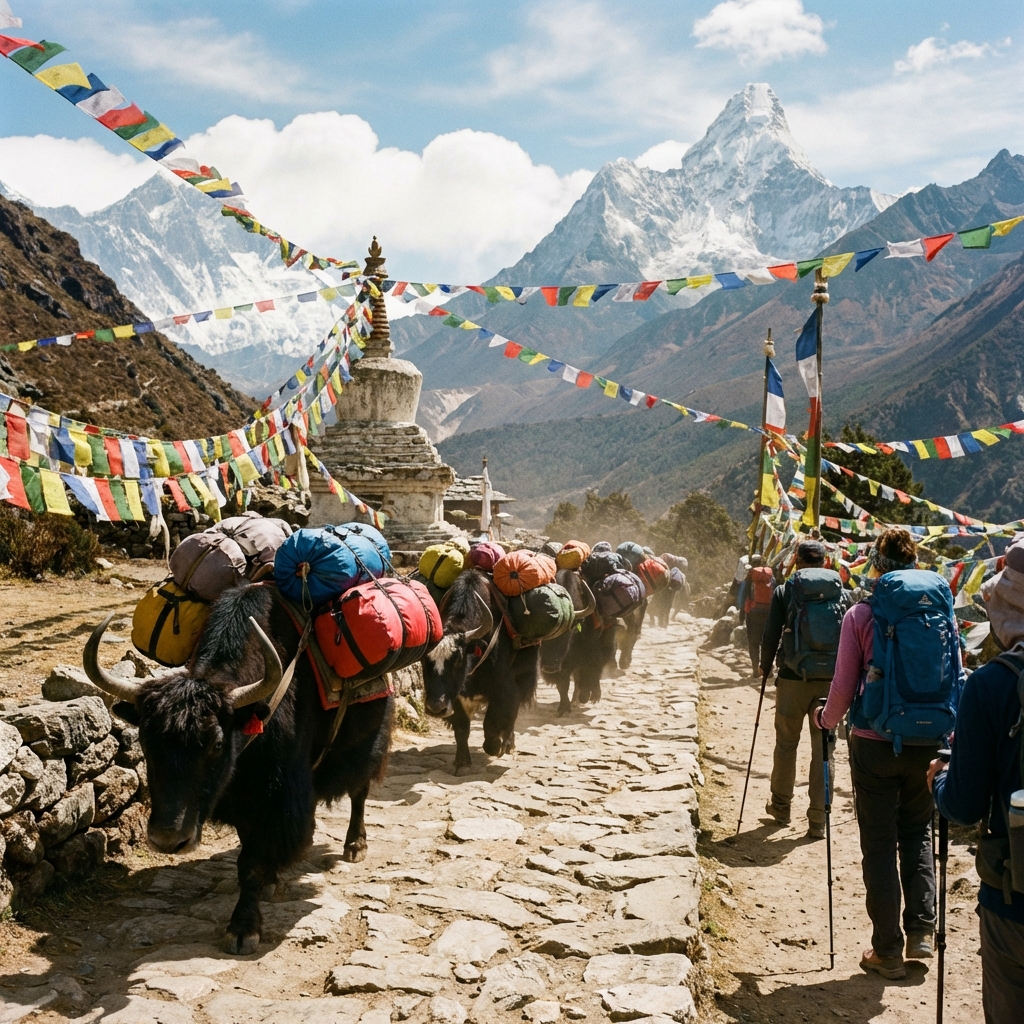
The Himalayas stand as one of Earth's most awe-inspiring landscapes, drawing over 500,000 trekkers to Nepal annually. These visitors come seeking adventure, spiritual renewal, and the unparalleled beauty of the world's highest peaks. Yet every footstep, every discarded wrapper, and every flight to Lukla carries an environmental cost that threatens the very landscapes we travel so far to experience.
Understanding the environmental impact of trekking in Nepal is not about guilt or discouragement - it is about awareness, responsibility, and taking meaningful action. This comprehensive guide examines the real environmental challenges facing Nepal's trekking regions and provides practical strategies for minimizing your footprint while maximizing your positive contribution to conservation efforts.
500,000+ foreign visitors trek in Nepal each year
Over 75,000 kg of trash left on trails annually
Average EBC trek produces 1.2 tons CO2
Estimated 50+ tons of plastic waste yearly on major routes
Forests in Khumbu reduced by 30% since 1960s
6 major protected areas covering trekking regions
Over 100,000 kg waste removed from Everest region since 1991
75% of streams near popular trails show contamination
Introduction: The Environmental Cost of 500,000+ Annual Trekkers
Every year, Nepal welcomes over half a million trekkers from around the world. These visitors inject vital income into mountain communities, support local livelihoods, and fund conservation efforts. However, the sheer volume of tourists creates unprecedented environmental pressure on fragile alpine ecosystems that evolved over millennia without significant human presence.
The numbers tell a sobering story. Before commercial trekking began in the 1960s, the Everest region supported small, sustainable Sherpa communities whose impact was minimal. Today, during peak season, over 1,500 trekkers may pass through Namche Bazaar in a single day. Multiply this across the Annapurna Circuit, Langtang Valley, and dozens of other popular routes, and the scale of the challenge becomes clear.
Key environmental pressures include:
- Waste accumulation from food packaging, batteries, toilet paper, and human waste
- Deforestation for firewood, construction materials, and teahouse expansion
- Water pollution from improper waste disposal and increased toilet facilities
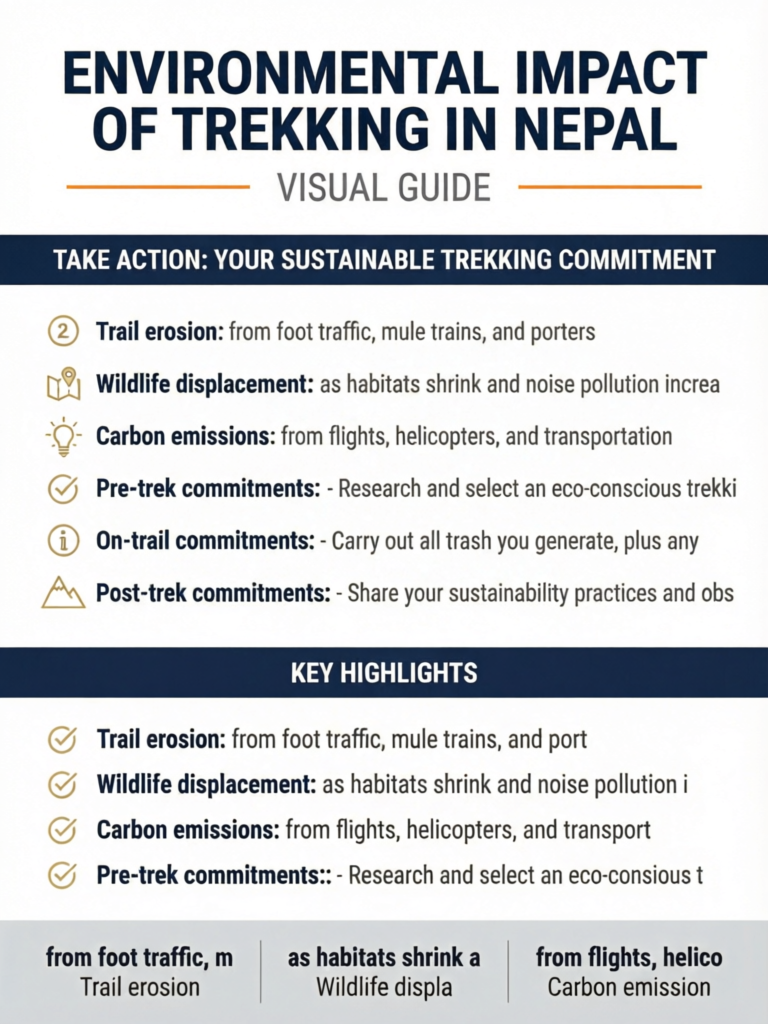
- Trail erosion from foot traffic, mule trains, and porters
- Wildlife displacement as habitats shrink and noise pollution increases
- Carbon emissions from flights, helicopters, and transportation
The Urgency of Action
Climate change is accelerating glacial melt in the Himalayas at an alarming rate. The Khumbu Glacier, which provides water for communities throughout the Everest region, has retreated significantly over the past decades. Every action we take to reduce our environmental impact matters not just for preserving trekking experiences, but for protecting the water sources that millions of people downstream depend upon.
The goal is not to stop trekking - tourism remains essential to Nepal's economy and provides critical funding for conservation. The goal is to trek thoughtfully, minimize harm, and actively contribute to solutions. By the end of this guide, you will have a comprehensive understanding of the environmental challenges and a practical toolkit for becoming part of the solution.
Major Environmental Issues Facing Nepal's Trekking Regions
Deforestation: The Silent Crisis
Before trekking tourism, Nepal's mountain forests served as crucial carbon sinks, wildlife habitats, and stabilizers against erosion and landslides. The explosion of teahouse construction and the demand for cooking fuel and hot water has placed enormous pressure on these forests.
Extent of the problem:
- The Sagarmatha National Park area has lost approximately 30% of its forest cover since the 1960s
- Each teahouse burns an estimated 4-6 kg of firewood daily for cooking and heating during peak season
- A single hot shower at altitude can require 3-4 kg of firewood to heat
- Wood demand for construction has stripped entire hillsides in some areas
While alternative energy sources (solar, hydroelectric, kerosene) have reduced pressure in some areas, many remote regions still rely heavily on wood. The consequences extend beyond aesthetics - deforestation increases erosion, disrupts water cycles, and threatens species like the endangered red panda and musk deer.
Water Pollution: Contaminated Streams and Springs
The pristine mountain streams that trekkers photograph are increasingly contaminated with bacteria, soap residue, and chemical pollutants. Testing conducted by various organizations has found concerning levels of coliform bacteria in water sources near popular trails.
Sources of water contamination:
- Improper disposal of human waste near water sources
- Soap and detergent runoff from teahouse kitchens and trekker bathing
- Garbage leachate from informal dumping sites
- Chemical runoff from kerosene and fuel storage
This pollution affects not just trekkers who may consume contaminated water, but the local communities who depend on these water sources year-round. Children in mountain villages suffer disproportionately from waterborne illnesses during and after trekking seasons.
Air Quality and Carbon Emissions
While Nepal's mountain air seems pristine, localized air pollution from cooking fires, kerosene heaters, and helicopter traffic affects both human health and climate. The carbon footprint of a typical trek is substantial when accounting for international flights, domestic flights, and ground transportation.
Carbon Footprint Awareness
The average round-trip flight from Europe or North America to Kathmandu produces 2-4 tons of CO2 per passenger. Add domestic flights to Lukla, helicopter evacuations, and ground transportation, and a single trek can easily exceed 3-4 tons of carbon emissions - equivalent to driving a car for an entire year.
Solid Waste Accumulation
Perhaps the most visible environmental impact is the accumulation of solid waste along trekking routes. Despite significant cleanup efforts, garbage remains a persistent problem that degrades the trekking experience and harms ecosystems.
The Trash Problem: Statistics and Reality on the Trails
The waste crisis in Nepal's trekking regions has reached a point where major cleanup operations are required annually just to maintain usable trails. Understanding the scale and composition of this waste is the first step toward addressing it.
Waste Generation Statistics
Annual waste estimates for major trekking regions:
- Everest Region: 25,000-30,000 kg of burnable waste, plus 10,000+ kg of non-burnable materials
- Annapurna Region: 35,000-40,000 kg across all routes combined
- Langtang Valley: 8,000-10,000 kg annually
- Total for all Nepal trekking areas: Over 75,000 kg of waste generated annually by tourists
Composition of trekking waste:
| Waste Type | Percentage | Decomposition Time |
|---|---|---|
| Plastic packaging | 35% | 20-500 years |
| Food containers | 20% | Varies (aluminum: 200 years) |
| Paper and cardboard | 15% | 2-6 weeks |
| Organic waste | 12% | 2-8 weeks |
| Glass bottles | 8% | Over 1 million years |
| Batteries | 5% | Never fully decomposes |
| Other (clothing, gear) | 5% | Varies |
The Hidden Waste Problem
What trekkers see on trails represents only a fraction of the total waste problem. Hidden waste includes:
- Human waste: An estimated 12,000 kg of untreated human feces deposited in the Everest region alone during peak season
- Kitchen waste: Teahouses generate massive amounts of food waste that often ends up in informal dumps
- Expedition garbage: High-altitude climbing expeditions leave oxygen cylinders, tents, and equipment
- Toilet paper: Improperly disposed toilet paper creates unsightly and unsanitary conditions near trails
Mount Everest Garbage
The summit of Mount Everest itself has become a dumping ground. Cleanup expeditions have removed over 11 tons of garbage from the slopes above Base Camp in recent years, including abandoned tents, oxygen cylinders, and even human bodies. While most trekkers do not venture above Base Camp, this extreme example illustrates the cumulative impact of mountaineering activities.
Cleanup Efforts and Their Limitations
Organizations like the Sagarmatha Pollution Control Committee (SPCC) and local NGOs conduct regular cleanup campaigns. The SPCC alone has removed over 100,000 kg of waste from the Everest region since its founding in 1991. However, these efforts face significant challenges:
- Cleanup costs approximately $1-2 per kg of waste removed
- Waste must be carried down by porters or transported by helicopter
- No recycling facilities exist in most mountain areas
- Some waste (batteries, medical supplies) requires special handling
- Volunteer cleanups cannot keep pace with waste generation
The fundamental truth is that cleanup efforts alone cannot solve the problem. Prevention and behavior change among trekkers is essential.
Carbon Footprint of Nepal Trekking
Understanding the full carbon footprint of your trek helps inform decisions about offsetting and minimizing emissions. Most trekkers significantly underestimate their climate impact.
Breakdown of Carbon Emissions
Typical Everest Base Camp Trek (European origin):
| Activity | CO2 Emissions |
|---|---|
| International flight (London-Kathmandu) | 2.5 tons |
| Domestic flight (Kathmandu-Lukla return) | 0.15 tons |
| Teahouse accommodation (14 nights) | 0.2 tons |
| Food and supplies transport | 0.1 tons |
| Ground transportation | 0.05 tons |
| Total | ~3 tons CO2 |
Typical Annapurna Circuit Trek (American origin):
| Activity | CO2 Emissions |
|---|---|
| International flight (New York-Kathmandu) | 3.2 tons |
| Ground transportation (Kathmandu-Besisahar-Jomsom) | 0.15 tons |
| Teahouse accommodation (18 nights) | 0.25 tons |
| Food and supplies transport | 0.12 tons |
| Total | ~3.7 tons CO2 |
Comparative Perspective
To put these numbers in context:
- Average annual per capita emissions: USA = 16 tons, UK = 5 tons, Nepal = 0.3 tons
- A single EBC trek from Europe equals approximately 7 months of average UK emissions
- The emissions from one trekker's international flight exceed what the average Nepali generates in 10 years
This stark disparity between tourist emissions and local emissions raises important ethical questions about responsibility for climate impacts in the Himalayas.
Emissions Reduction Strategies
High-impact actions:
- Combine trips: Trek multiple routes in one visit rather than making separate trips
- Extend your stay: Longer visits amortize flight emissions across more experiences
- Choose overland options: When possible, use buses instead of domestic flights
- Avoid helicopter evacuations: While sometimes necessary, helicopters generate significant emissions
Moderate-impact actions:
- Select eco-conscious agencies: Some operators use renewable energy and sustainable practices
- Stay at green lodges: Properties using solar power and efficient practices reduce accommodation emissions
- Eat local food: Imported food has higher transport emissions than local dal bhat
Overland Alternatives
While the Lukla flight saves time, consider trekking from Jiri for a more sustainable and culturally rich experience. This classic route adds 5-6 days but eliminates domestic flight emissions and provides income to communities bypassed by air travel. Similarly, the Annapurna Circuit accessed by bus generates far less carbon than helicopter-assisted treks.
Conservation Areas and Their Efforts
Nepal has established a network of protected areas that encompass most major trekking regions. Understanding these organizations helps you appreciate where your permit fees go and how you can support their work.
Sagarmatha Pollution Control Committee (SPCC)
The SPCC operates in the Everest region (Sagarmatha National Park) and has been instrumental in addressing environmental challenges since 1991.
SPCC initiatives include:
- Garbage collection points: Designated locations where trekkers and teahouses can deposit waste
- Deposit system: Expeditions pay a refundable garbage deposit ($4,000 per expedition)
- Cleanup campaigns: Annual organized cleanups involving local communities and volunteers
- Incinerators: High-temperature incinerators at key locations for burning suitable waste
- Awareness programs: Educational materials and signs along trails
- Toilet construction: Building and maintaining toilet facilities
Funding: SPCC receives portions of national park entry fees, expedition royalties, and donations. Trekker permit fees directly support these operations.
Annapurna Conservation Area Project (ACAP)
ACAP manages the Annapurna region, covering 7,629 square kilometers and over 100,000 local residents. It pioneered the integrated conservation and development approach in Nepal.
ACAP environmental programs:
- Alternative energy: Installation of solar systems, back-boilers, and hydroelectric systems
- Kerosene depots: Subsidized kerosene distribution to reduce firewood demand
- Tree nurseries: Growing and distributing seedlings for reforestation
- Wildlife protection: Anti-poaching patrols and habitat conservation
- Trail maintenance: Repairing erosion damage and improving drainage
- Waste management: Collection centers and awareness campaigns
Success story: ACAP's kerosene depot program has reduced firewood consumption by an estimated 50% in some areas, demonstrating that alternatives can work when properly implemented.
Manaslu Conservation Area Project (MCAP)
MCAP protects the Manaslu region, working with local communities to balance conservation and tourism development.
Key MCAP initiatives:
- Community-managed forests with sustainable harvesting protocols
- Wildlife monitoring programs for snow leopards and other endangered species
- Environmental education in local schools
- Support for homestays as alternatives to teahouse expansion
How Your Permit Fees Support Conservation
When you pay for trekking permits and park entry fees, a portion goes directly to conservation:
| Permit Type | Fee (2025) | Conservation Allocation |
|---|---|---|
| ACAP Entry | $30 | 60% to local conservation |
| Sagarmatha NP | $30 | Supports park management |
| TIMS Card | $10-20 | Trek registration and safety |
| Manaslu Restricted | $100/week | Community development and conservation |
Leave No Trace Principles Adapted for Nepal
The Leave No Trace principles, developed for wilderness areas worldwide, require adaptation for Nepal's unique teahouse trekking environment. Here is how to apply these principles effectively:
1. Plan Ahead and Prepare
Nepal-specific applications:
- Research the environmental challenges of your specific route
- Pack reusable alternatives to single-use items before leaving home
- Bring water purification instead of planning to buy bottled water
- Understand local regulations and permit requirements
- Plan realistic itineraries that do not require emergency helicopter evacuations
2. Travel and Camp on Durable Surfaces
Nepal-specific applications:
- Stay on established trails rather than creating shortcuts
- Use designated camping areas if camping (most trekkers use teahouses)
- Avoid walking on fragile alpine vegetation
- Follow trail markers even when muddy - widening trails damages ecosystems
3. Dispose of Waste Properly
Nepal-specific applications:
- Pack out all trash you bring in, plus any you find
- Use designated toilet facilities whenever available
- When no toilets exist, defecate at least 50 meters from water sources and trails
- Bury human waste 15-20 cm deep in soil (not snow)
- Pack out toilet paper in sealed bags - do not bury or burn it
- Never throw garbage into rivers or crevasses
The Toilet Paper Crisis
Improperly disposed toilet paper is one of the most visible and embarrassing problems on Nepal's trails. White flags of toilet paper behind rocks and along stream banks create unsanitary conditions and ruin the experience for other trekkers. Always pack out your toilet paper or use water for cleaning as locals do.
4. Leave What You Find
Nepal-specific applications:
- Do not collect plants, rocks, fossils, or artifacts
- Respect religious and cultural sites - take only photographs
- Do not remove prayer stones or mani stones
- Leave juniper and other sacred plants for local religious practices
5. Minimize Campfire Impacts
Nepal-specific applications:
- Never burn trash - plastics and batteries release toxic fumes
- Use kerosene or gas stoves if cooking independently
- Support teahouses using alternative energy (solar, hydroelectric)
- Avoid requesting unnecessary hot water that requires wood burning
- Limit hot showers, especially in remote areas without alternative fuel
6. Respect Wildlife
Nepal-specific applications:
- Maintain safe distances from all wildlife, including Himalayan tahr and musk deer
- Do not feed animals - this creates dependency and aggression
- Keep food properly stored to avoid attracting rodents and birds
- Report snow leopard or other rare wildlife sightings to conservation authorities
7. Be Considerate of Other Visitors and Locals
Nepal-specific applications:
- Yield trail to porters and uphill trekkers
- Keep noise levels low, especially near villages and monasteries
- Respect local customs regarding dress and behavior
- Support local businesses rather than competing with them
Waste Management Best Practices for Trekkers
Effective personal waste management is the single most impactful action individual trekkers can take. Here is a comprehensive approach:
Before You Leave Home
Essential preparations:
- Repackage food: Remove excess packaging and transfer items to reusable containers
- Choose bar products: Solid shampoo, soap, and toothpaste tablets reduce plastic
- Pack reusable bags: Bring stuff sacks for carrying trash out
- Bring a water filter: Eliminate the need for bottled water
- Select recyclable packaging: When packaging is unavoidable, choose recyclable materials
On the Trail
Daily waste management:
- Carry a trash bag: Dedicate a stuff sack or dry bag to garbage
- Compact packaging: Flatten and compact all waste to save space
- Separate recyclables: Keep metals and plastics separate for proper disposal
- Pick up trail litter: Carry out waste you find, not just your own
- Use reusable bottles: Fill from teahouse boiled water or purified sources
Waste Disposal Options
In larger villages (Namche, Lukla, Manang):
- Use designated garbage collection points
- Separate recyclables where facilities exist
- Pay for proper waste disposal at your teahouse (typically included)
In remote areas:
- Carry all waste to the next major settlement
- Never bury non-biodegradable waste
- Burning waste should be a last resort and only for paper products
The One Kilogram Challenge
Challenge yourself to carry out at least one kilogram more trash than you brought in. If every trekker on the EBC route did this, it would remove over 25 tons of garbage annually - more than is currently generated. Pick up discarded wrappers, bottles, and paper as you walk.
Handling Specific Waste Types
Batteries: Never throw away batteries on the trail. Carry them back to Kathmandu where some organizations collect them for proper disposal. Better yet, bring rechargeable batteries and a small solar charger.
Medical waste: Used bandages, medications, and feminine hygiene products must be carried out. Double-bag these items for hygiene.
Food waste: While biodegradable, food waste can attract animals and create odors. Dispose of food waste in teahouse compost systems where available, or carry it out if hiking independently.
Water and Plastic: Reducing Bottle Waste
The plastic bottle crisis in Nepal's mountains is staggering. Estimates suggest trekkers consume over one million plastic water bottles annually in the Everest region alone. Addressing this problem requires individual action.
The True Cost of Bottled Water
Environmental costs:
- Plastic bottles take 450+ years to decompose
- Bottles discarded in the mountains wash into rivers, eventually reaching the ocean
- Production of each bottle requires oil and generates greenhouse gases
- Bottles cannot be recycled in mountain regions - they must be carried down or burned
Financial costs:
- Bottled water costs $3-8 at high altitude
- A 14-day trek may require 70+ liters of water = $210-560 in bottled water
- Water purification tablets or filters cost $20-40 and eliminate all bottle purchases
Sustainable Water Solutions
Option 1: Water Purification Tablets
- Aquatabs and similar products kill bacteria, viruses, and protozoa
- Cost approximately $0.15 per liter treated
- Lightweight and effective
- 30-minute wait time required
- May not remove chemical contaminants or sediment
Option 2: UV Purification (SteriPEN)
- Kills all pathogens in 60-90 seconds
- No chemical taste
- Requires batteries or charging
- Does not work in cloudy water
- Initial cost $80-120, no ongoing costs
Option 3: Water Filters (Sawyer, Katadyn)
- Removes bacteria, protozoa, and sediment
- Instant results with no chemical taste
- Does not remove viruses (combine with tablets for complete protection)
- Initial cost $30-100, minimal maintenance
- Can freeze at high altitude (keep warm overnight)
Option 4: Teahouse Boiled Water
- Most reliable method - boiling kills all pathogens
- Supports local economy directly
- Costs $1-3 per liter depending on altitude
- Reduces need for carrying heavy water
- Fill your reusable bottles each morning
The Safe Drinking Water Station Initiative
The Everest region has installed Safe Drinking Water Stations in several villages where you can refill bottles with treated water for a small fee. Look for these stations in Lukla, Namche, Tengboche, and Gorak Shep. Using these stations supports local infrastructure while eliminating bottle waste.
Calculating Your Water Needs
At altitude, you need 4-5 liters of water daily. For a 14-day trek, that totals approximately 60-70 liters. If each liter came from plastic bottles, you would generate 60-70 pieces of plastic waste. With purification methods, you generate zero.
Supporting Green Lodges and Eco-Initiatives
Where you stay and how you spend your money directly impacts environmental outcomes. The rise of green lodges and eco-conscious operators offers trekkers meaningful choices.
Identifying Green Lodges
Look for these features:
- Solar power: Panels visible on roofs, solar water heating
- Energy-efficient design: Good insulation, south-facing windows, airlocks
- Water conservation: Low-flow fixtures, rainwater collection
- Waste separation: Designated bins for recycling, composting, and disposal
- Local food sourcing: Menus featuring local vegetables and dal bhat rather than imported items
- Staff welfare: Fair wages, proper training, good conditions
Questions to ask teahouse owners:
- What is your water heating system? (Solar back-boilers are most efficient)
- Do you separate recyclable waste?
- Where does your food come from? (Local sources are more sustainable)
- Do you use gas/kerosene or wood for cooking? (Gas is cleaner)
Eco-Certification Programs
While comprehensive eco-certification is limited in Nepal, some initiatives exist:
- ACAP Green Lodge Program: Recognizes properties meeting environmental standards
- SPCC Clean Lodge Initiative: Awards lodges with proper waste management
- Nepal Eco-Tourism Forum: Promotes sustainable tourism practices
Supporting Community-Based Tourism
Community-owned and operated lodges often have stronger environmental commitments because residents directly experience the impacts of pollution and degradation.
Benefits of community tourism:
- Revenue stays in local communities rather than flowing to outside investors
- Local ownership creates incentives for environmental stewardship
- Traditional knowledge informs sustainable practices
- Cultural authenticity is better preserved
Green Initiatives Worth Supporting
Sagarmatha Next: An initiative to make the Everest region carbon-neutral through renewable energy, waste management, and reforestation.
Kathmandu Environmental Education Project (KEEP): Provides environmental training to trekking staff and promotes responsible tourism.
Himalayan Trust: Founded by Sir Edmund Hillary, supports community development and conservation in the Khumbu region.
Carbon Offsetting Options
Given the substantial carbon footprint of international trekking, carbon offsetting provides a mechanism to compensate for emissions you cannot eliminate.
Understanding Carbon Offsets
Carbon offsets fund projects that reduce or sequester greenhouse gases, theoretically balancing your emissions. The effectiveness varies significantly based on project quality.
Types of offset projects:
- Renewable energy: Installing solar or wind power in developing regions
- Reforestation: Planting and protecting forests that absorb CO2
- Cookstove programs: Providing efficient stoves that reduce wood burning
- Methane capture: Preventing methane release from landfills or agriculture
- Energy efficiency: Upgrading buildings and equipment to reduce energy use
Calculating Your Offset Needs
For a typical Nepal trek, calculate approximately 3-4 tons of CO2 for international and domestic travel, accommodation, and food. At current market rates of $10-25 per ton, offsetting a trek costs $30-100.
Recommended Offset Programs
Gold Standard certified projects offer high integrity and verification:
- Gold Standard: Rigorous verification and community benefit requirements
- Verra (VCS): Verified Carbon Standard projects worldwide
- Plan Vivo: Focus on community-based forest conservation
Nepal-specific offset opportunities:
- Community forest projects: Supporting community forests in the Middle Hills
- Biogas programs: Replacing wood cooking with biogas from animal waste
- Micro-hydro projects: Clean energy for mountain villages
Offset Quality Matters
Not all carbon offsets are equal. Look for offsets that are independently verified, additional (would not happen without your funding), permanent, and free from leakage (not shifting emissions elsewhere). Gold Standard and VCS certifications provide reasonable assurance of quality.
Beyond Offsetting: Direct Impact
Consider directing funds to Nepal-specific conservation rather than generic offsets:
- ACAP Fund: Direct donations support local conservation
- Mountain Institute: Funds community-based conservation in Himalayan regions
- WWF Nepal: Supports snow leopard conservation and climate adaptation
- Local tree planting: Some agencies offer tree planting programs where you can fund and even participate in reforestation
How to Choose Eco-Conscious Trekking Agencies
Your choice of trekking agency significantly impacts environmental outcomes. Agencies control porter behavior, waste management, transportation choices, and lodge selection.
Questions to Ask Agencies
Environmental practices:
- What is your waste management policy? (Carry out all trash? Separate recyclables?)
- Do you provide porter training on environmental practices?
- What lodges do you use and what are their environmental standards?
- Do you offer carbon offset options?
- How do you handle human waste on camping treks?
- What alternative energy sources do your camping treks use?
Social responsibility (environmental protection requires social commitment):
- Do you pay fair wages to porters and guides?
- Do you provide proper equipment (warm clothing, boots, sunglasses) for staff?
- Are your staff insured and covered for emergencies?
- Do you support any local conservation projects?
Red Flags to Avoid
Signs of poor environmental practices:
- No clear waste management policy
- Resistance to discussing environmental practices
- Unusually low prices (often indicate cutting corners on waste management)
- No mention of sustainability on website or materials
- Use of wood fires for camping treks without justification
Recognized Eco-Conscious Operators
Several agencies have demonstrated commitment to sustainability:
- Adventure Consultants: Strong environmental policies and porter welfare standards
- Himalayan Guides: Local ownership with community reinvestment
- Alpine Ascents: Comprehensive sustainability program including offsets
- World Expeditions: Carbon-neutral treks and responsible tourism leadership
Price vs Sustainability
The cheapest trek is rarely the most sustainable. Proper waste management, fair porter treatment, and environmental safeguards cost money. If an agency's prices seem too good to be true, they may be cutting corners on environmental and social responsibility. Expect to pay 10-20% more for genuinely sustainable operations.
Individual Actions That Make a Difference
While systemic change requires government action and industry reform, individual choices collectively create significant impact. Here are actions ranked by environmental benefit:
High-Impact Actions
- Eliminate bottled water: Use purification methods for all drinking water
- Minimize domestic flights: Trek from Jiri instead of flying to Lukla when possible
- Choose eco-conscious operators: Support agencies with strong environmental practices
- Carry out more than you bring: Remove trail litter beyond your own waste
- Offset your carbon: Purchase quality carbon offsets for your travel
Medium-Impact Actions
- Use safe drinking water stations: Support infrastructure development
- Limit hot showers: Especially in remote areas without alternative energy
- Eat local food: Dal bhat and local vegetables have lower carbon footprints
- Stay at green lodges: Support sustainable accommodation providers
- Avoid helicopter transport: Unless medically necessary
Lower-Impact but Still Valuable Actions
- Use rechargeable batteries: Reduce battery waste
- Choose bar soap and shampoo: Eliminate plastic bottles
- Repackage food before trek: Reduce packaging waste
- Use a reusable bag: For shopping and carrying items
- Turn off lights and devices: Conserve energy at teahouses
The Multiplier Effect
Your actions influence others. When you visibly carry out trash, use water purification, or support green businesses, you model behavior for other trekkers. Talking about environmental practices spreads awareness and normalizes sustainable behavior.
The Future of Sustainable Trekking in Nepal
The trajectory of trekking sustainability in Nepal depends on decisions being made now by governments, businesses, and individual travelers.
Current Trends and Initiatives
Positive developments:
- Increasing adoption of solar power in teahouses
- Growing network of safe drinking water stations
- Mandatory garbage deposits for expeditions
- Rising awareness among trekkers about environmental issues
- Development of eco-tourism certification standards
Ongoing challenges:
- Waste management infrastructure remains inadequate
- Enforcement of environmental regulations is inconsistent
- Climate change continues to alter mountain ecosystems
- Tourism pressure increases as trekking grows more popular
- Remote areas lack resources for proper waste handling
Policy Developments to Watch
Proposed and emerging policies:
- Plastic bag and bottle bans in national parks (partially implemented)
- Mandatory environmental orientation for trekkers
- Lodge environmental certification requirements
- Trail carrying capacity limits during peak season
- Carbon neutral trail initiatives
How Trekkers Can Advocate for Change
Individual advocacy:
- Provide feedback to agencies and lodges about environmental practices
- Share experiences (positive and negative) on review platforms
- Support organizations advocating for policy improvements
- Contact elected officials about conservation funding
- Participate in cleanup initiatives during your trek
Collective action:
- Join trekker associations advocating for sustainability
- Support campaigns for plastic bans and improved waste management
- Contribute to research documenting environmental impacts
- Fund local organizations working on solutions
A Vision for Sustainable Trekking
Imagine Nepal's trekking regions in 2040:
- All lodges powered by renewable energy
- Comprehensive waste management with full recycling
- Carbon-neutral transportation options
- Thriving wildlife populations in protected areas
- Sustainable tourism providing prosperity for mountain communities
- Pristine trails preserved for future generations
This vision is achievable but requires sustained commitment from all stakeholders. Every trekker who chooses sustainability over convenience, every agency that invests in environmental practices, and every policy that prioritizes conservation moves us closer to this future.
Frequently Asked Questions
Take Action: Your Sustainable Trekking Commitment
The Himalayas have inspired generations of adventurers, seekers, and nature lovers. Their protection is our collective responsibility. As you plan your trek, consider making these commitments:
Pre-trek commitments:
- Research and select an eco-conscious trekking agency
- Invest in water purification equipment to eliminate bottle waste
- Repackage food and supplies to minimize waste
- Purchase quality carbon offsets for your travel
On-trail commitments:
- Carry out all trash you generate, plus any you find
- Use safe drinking water stations and teahouse boiled water
- Support lodges and businesses with sustainable practices
- Respect Leave No Trace principles adapted for Nepal
Post-trek commitments:
- Share your sustainability practices and observations with other trekkers
- Provide feedback to your agency about environmental performance
- Support organizations working on conservation in Nepal
- Advocate for improved policies and infrastructure
The mountains do not belong to any generation. They are held in trust for all who will come after us. By trekking responsibly, we ensure that future adventurers will experience the same wonder we feel today standing beneath Everest, Annapurna, and the countless other peaks that make Nepal's Himalayas truly extraordinary.