
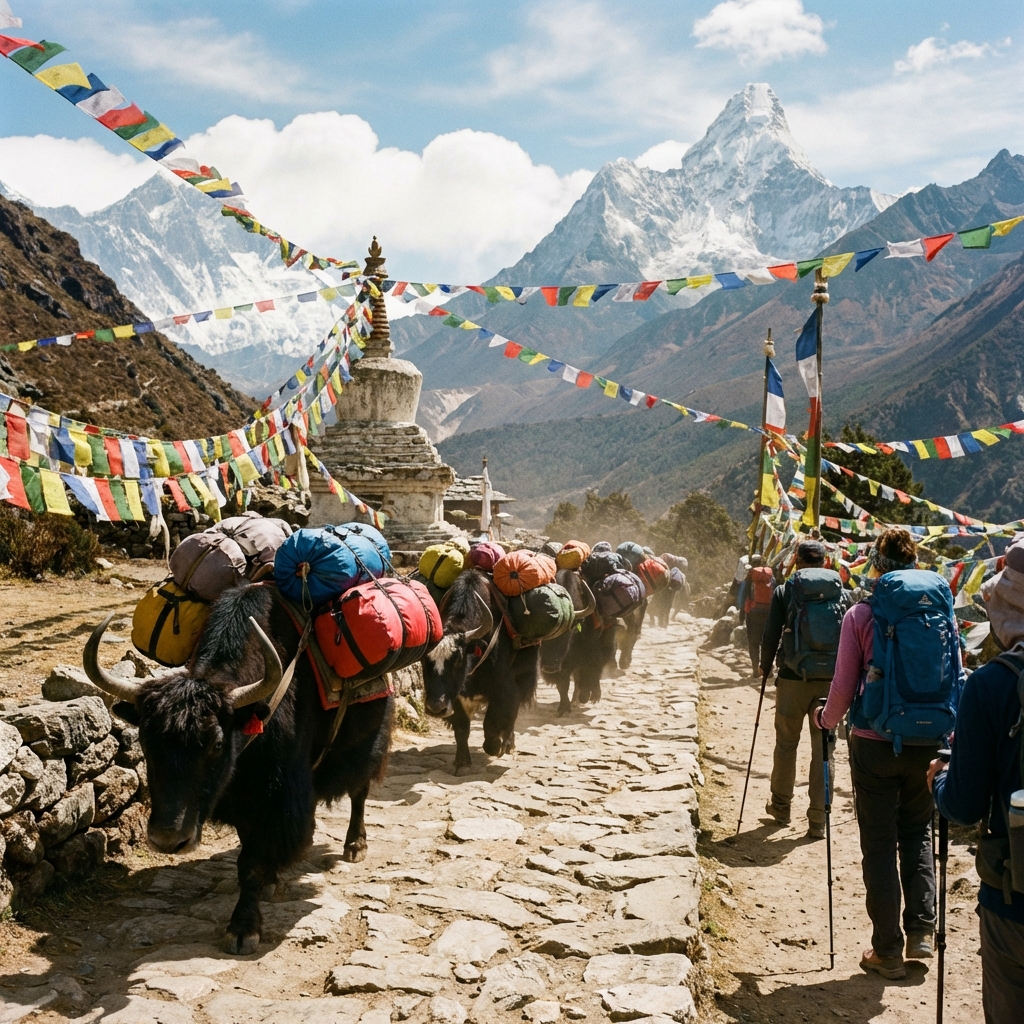
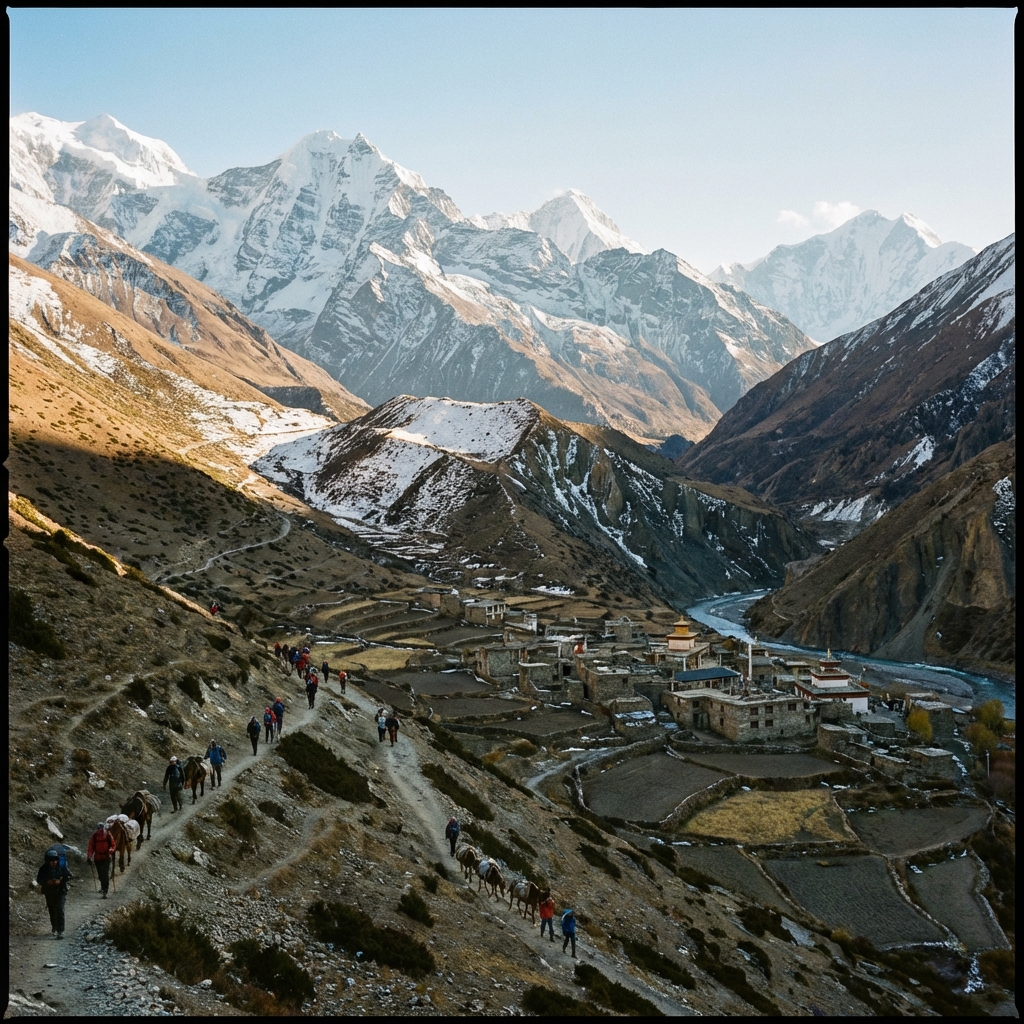
4 zones from valley to high camp
NPR 200-1,500+ per night
Common below 3,500m, rare above 4,500m
Free to NPR 500+ per device
NPR 300-800+ (altitude dependent)
Namche Bazaar, Manang, Chhomrong
Gorak Shep, Thorong Phedi, high passes
Yak dung stoves above 3,500m
One of the most common questions first-time trekkers ask is "what will the tea houses actually be like?" The honest answer depends almost entirely on altitude. A tea house at 2,000 meters in the lower Annapurna foothills has almost nothing in common with one at 5,000 meters near Everest Base Camp. Understanding these differences before you leave home helps you pack the right gear, set realistic expectations, and budget accurately.
This guide breaks down amenities across four distinct altitude bands, covering everything from room quality and bedding to electricity, WiFi, hot water, toilet facilities, menu variety, and costs. We also highlight how the three major trekking regions -- Everest (EBC), Annapurna Circuit (AC), and Langtang -- differ within each band.
If you are new to the tea house system, start with our complete guide to tea house trekking for the fundamentals before diving into altitude-specific details here.
Understanding the Altitude-Amenity Relationship
The general principle is straightforward: as altitude increases, amenities decrease and costs increase. This inverse relationship exists because everything at higher elevations must be carried up by porters or pack animals, fuel becomes scarce, water freezes, solar panels produce less energy, and the growing season for fresh produce ends.
At lower elevations, tea houses compete for trekker business with comfortable rooms, varied menus, reliable electricity, and modern bathrooms. At high altitude, owners struggle just to keep water from freezing in the pipes and food from spoiling. The result is a dramatic gradient that every trekker experiences as they ascend.
Key Factors That Determine Amenity Levels
Several factors interact with altitude to determine what a specific tea house offers:
- Route popularity: The EBC route has better infrastructure at equivalent altitudes than less-traveled routes because higher trekker volume justifies greater investment
- Road access: Tea houses connected to road networks (lower Annapurna Circuit, lower Langtang) receive supplies more easily and cheaply
- Solar exposure: South-facing locations with strong sun can support solar heating and charging even at altitude
- Competition: Villages with multiple tea houses tend to offer better amenities than monopoly locations
- Season: Many tea houses reduce services during off-peak months (December through February, June through August)
The Golden Rule of Tea House Expectations
Below 2,500m: Valley and Lower Hill Tea Houses
This altitude band covers the starting sections of most treks: Lukla to Phakding on EBC, Besisahar to Chame on the Annapurna Circuit, and Syabrubesi on the Langtang trek. These tea houses are the most comfortable you will encounter on any trek.
Room Quality
Rooms at this elevation are surprisingly decent. Most offer:
- Bed type: Proper wooden beds with foam mattresses (50-75mm thick), sometimes spring mattresses in newer lodges
- Bedding: Pillows provided, sometimes with pillowcases. Many lodges include a heavy blanket or duvet, though quality varies
- Room size: Typically 2x3 meters for twin rooms, enough for two beds and bags
- Walls: Solid wood or stone construction with reasonable insulation
- Doors: Lockable doors with basic padlocks or latches
- Windows: Glass windows that open for ventilation, some with curtains
Heating, Electricity, and Charging
- Heating: Central dining room heated by wood stove or gas heater in the evening. Some lodges have room heaters available for an extra charge (NPR 500-1,000)
- Electricity: Reliable grid or generator power, available most of the day
- Charging: Most lodges offer free charging or charge NPR 100-200 per device. Multiple wall outlets in dining areas and sometimes in rooms
- Lighting: Electric lights in rooms and hallways, though bulbs are often dim
Hot Water, WiFi, and Connectivity
- Hot showers: Gas-heated or electric showers, NPR 300-500 per shower. Water pressure is reasonable and temperature is consistent
- WiFi: Available in most lodges, often free or NPR 200-300 per day. Speeds of 1-5 Mbps are common -- adequate for messaging and basic browsing, too slow for video calls
- Cell signal: Decent NTC and Ncell coverage for calls, data, and basic internet
Toilet Facilities
- Type: Mix of Western flush toilets and squat toilets. Newer and better lodges typically have at least one Western toilet
- Location: Often attached to or very near the rooms, though shared between 2-4 rooms
- Cleanliness: Generally maintained daily
- Running water: Available for flushing and hand washing
- Toilet paper: Sometimes provided, but always bring your own supply
Menu and Food
- Variety: Extensive menus with 30-50 items including Nepali, Tibetan, Indian, and Western dishes
- Fresh ingredients: Vegetables, eggs, and sometimes meat are locally available or brought in by road
- Typical items: Dal bhat (unlimited refills), momos, fried rice, noodle soups, pancakes, pasta, pizza, sandwiches, eggs any style
- Beverages: Tea, coffee, hot chocolate, soft drinks, beer, and sometimes local spirits
- Pricing: Dal bhat NPR 500-700, main dishes NPR 400-600, tea NPR 100-150
Price Range
- Room: NPR 200-500 per night (often free if you eat all meals there)
- Daily food budget: NPR 2,000-3,500
- Extras (shower, WiFi, charging): NPR 500-1,000
The Meal Deal Arrangement
At virtually every altitude, tea house owners offer free or heavily discounted rooms on the condition that you eat all meals at their lodge. This is the standard business model across Nepal. Breaking this arrangement by eating elsewhere and only sleeping at the lodge is considered very poor form and may result in paying full room rates of NPR 500-1,500.
2,500m to 3,500m: Mid-Hill Tea Houses
This band covers key stops like Namche Bazaar (3,440m) on EBC, Manang (3,540m -- just above this band) on the Annapurna Circuit, and Lama Hotel to Langtang Village on the Langtang trek. Some of the most popular overnight stops fall in this range, and certain hub villages like Namche offer amenities that rival or exceed lower altitude lodges.
Room Quality
- Bed type: Wooden beds with thinner foam mattresses (25-50mm). Twin rooms are standard
- Bedding: Pillows and blankets usually provided, though blankets may be thinner than at lower altitudes. Quality varies significantly between lodges
- Room size: Slightly smaller than lower altitude, typically 2x2.5 meters
- Walls: Wood or stone, but insulation quality drops. You will hear neighbors through thin plywood partitions in budget lodges
- Windows: Glass windows, though some may not seal properly, allowing drafts
- Temperature: Rooms are noticeably cold at night, especially October through March. Indoor temperatures can drop to 0-5 degrees Celsius
Heating, Electricity, and Charging
- Heating: Communal dining room heated by yak dung or wood stove, typically lit from 5:00-9:00 PM. No room heating in most lodges
- Electricity: Solar panels and sometimes micro-hydro provide power. Availability may be limited to evening hours in smaller villages
- Charging: NPR 200-400 per device. Charging stations in dining rooms, rarely in rooms. Bring a power bank and multi-port charger as backup
- Lighting: Electric lights available, but dimmer and less reliable. Carry a headlamp for nighttime bathroom visits
Hot Water, WiFi, and Connectivity
- Hot showers: Solar-heated or gas-heated showers for NPR 400-600. Solar showers work best in the afternoon when water has had all day to warm. Gas-heated showers are more reliable but cost more
- WiFi: Available in most lodges along major routes, NPR 300-500 per day. Speed drops to 0.5-2 Mbps. Connection can be unreliable during peak evening hours when everyone connects
- Cell signal: Good NTC coverage along EBC route, patchier on Annapurna and Langtang. Data speeds are slower
Charge Strategy at Mid-Altitude
Toilet Facilities
- Type: Mix of squat and Western toilets. Hub villages like Namche have better Western toilets; smaller villages predominantly have squat toilets
- Location: Shared facilities at the end of hallways or in separate buildings. Expect to walk 10-30 meters from your room
- Running water: Usually available for flushing, though it may freeze overnight in winter
- Night visits: Dark, cold hallways between rooms and toilets. A headlamp is essential, not optional
Menu and Food
- Variety: Still good menus with 20-40 items, though the quality and variety of Western food begins to decline
- Fresh ingredients: Fewer fresh vegetables. Eggs still available. Meat becomes rarer and less trustworthy from a food safety perspective
- Dal bhat: Remains the best value and safest option. NPR 600-800 with unlimited refills
- Beverages: Tea, coffee, hot chocolate. Beer available but expensive (NPR 700-1,000)
- Pricing: Main dishes NPR 500-800, tea NPR 150-250
Price Range
- Room: NPR 300-800 per night (often free with meal commitment)
- Daily food budget: NPR 2,500-4,500
- Extras: NPR 800-1,500
Hub Villages: The Exception to the Rule
Certain villages in this altitude band function as supply hubs and offer amenities well above what their altitude would suggest:
Namche Bazaar (3,440m) on the EBC route is the standout example. As the commercial center of the Khumbu region, it has:
- Lodges with attached Western bathrooms
- Bakeries and coffee shops
- Gear rental shops and ATM
- Reliable WiFi and charging
- Irish pubs and pizza restaurants
- Hot showers that actually stay hot
Manang (3,540m) on the Annapurna Circuit and Chhomrong (2,170m) approaching Annapurna Base Camp also offer above-average facilities for their elevation.
Do Not Skip Acclimatization Days
The comfort of hub villages tempts some trekkers to push quickly through lower, less comfortable stops to reach places like Namche. This is dangerous. Your body needs gradual altitude adjustment. Rushing to a comfortable lodge at 3,440m while skipping proper acclimatization can trigger acute mountain sickness. Follow recommended schedules and rest days regardless of lodge quality.
3,500m to 4,500m: High-Altitude Tea Houses
This is where conditions change dramatically. This band covers Tengboche to Dingboche on EBC, Manang to Thorong Phedi on the Annapurna Circuit, and Kyanjin Gompa on the Langtang trek. Trekkers who have only experienced lower-altitude lodges are often surprised by how basic things become.
Room Quality
- Bed type: Simple wooden platform beds with thin mattresses (15-25mm foam). Some lodges have barely padded plywood platforms
- Bedding: A thin blanket may be provided, but it will not keep you warm. A sleeping bag rated to minus 10 to minus 15 degrees Celsius is essential, not optional
- Room size: Compact rooms, sometimes just 1.5x2 meters with barely enough space for two beds and gear
- Walls: Thin plywood partitions that offer no insulation and minimal sound dampening. You will hear every cough, snore, and zipper from neighboring rooms
- Windows: Single-pane glass, often with gaps that let in cold air. Frost forms on the inside of windows overnight
- Temperature: Rooms can drop to minus 5 to minus 15 degrees Celsius at night during autumn and winter seasons
Heating, Electricity, and Charging
- Heating: Dining room yak dung stove is the only heat source in most lodges. The stove is usually lit from 5:00-8:30 PM. Everyone crowds around it -- the seats closest to the stove are prime real estate
- Electricity: Limited solar power. Some lodges have no electricity in rooms at all, only in the dining area
- Charging: NPR 400-600+ per device, and charging is slow due to limited solar panel capacity. During cloudy days, charging may not be available at all
- Lighting: Dim bulbs in dining room. Many rooms have no electric light -- headlamp is your only option
The Sleeping Bag Is Non-Negotiable
Hot Water, WiFi, and Connectivity
- Hot showers: Available at some lodges for NPR 500-800, but the water may be lukewarm at best. Solar showers only work on sunny afternoons. Gas-heated showers are inconsistent. Many trekkers skip showering entirely at this altitude and use wet wipes instead
- WiFi: Available at some lodges for NPR 500-700 per day, but speeds are painfully slow (often under 0.5 Mbps). Connection drops frequently. Do not count on sending photos or making calls
- Cell signal: Intermittent NTC coverage. Ncell coverage is poor or nonexistent on many routes. Text messages may work when calls do not
Toilet Facilities
- Type: Predominantly squat toilets. Western toilets exist in some newer or upgraded lodges but are the exception
- Location: Separate building or at the end of an outdoor corridor. The walk from your room to the toilet involves going outside in freezing temperatures
- Running water: May freeze overnight. Some toilets require a bucket of water for flushing
- Condition: Basic. The cold preserves somewhat, but hygiene standards drop significantly at this altitude
- Night visits: Going to the bathroom at 2:00 AM means leaving your warm sleeping bag, putting on boots and a jacket, walking through freezing corridors, and using a headlamp to navigate. Many trekkers use a pee bottle in the room to avoid this ordeal
Menu and Food
- Variety: Reduced menus with 15-25 items. Western dishes are hit or miss -- pizza and pasta are often disappointing
- Fresh ingredients: Very limited. Most food is dried, canned, or preserved. Fresh vegetables are rare
- Dal bhat: Still the best option. NPR 800-1,200 with refills. The lentil soup is thinner and the vegetable accompaniments are simpler, but it remains nutritious
- Hydration: Hot drinks become critically important for hydration and warmth. Tea NPR 200-350, hot lemon NPR 250-400
- Cooking quality: Meals take longer to prepare because water boils at lower temperatures at altitude, meaning food may not cook as thoroughly
Price Range
- Room: NPR 500-1,000 per night
- Daily food budget: NPR 3,500-5,500
- Extras: NPR 1,000-2,000
Altitude Sickness Kills Appetite
Above 3,500m, many trekkers experience appetite loss as a symptom of altitude adjustment. Force yourself to eat even when you do not feel hungry. Dal bhat is the easiest food to get down at altitude because the soup helps with hydration and the rice provides essential calories. Skipping meals leads to weakness, which worsens altitude sickness symptoms.
Above 4,500m: High Camp and Base Camp Tea Houses
This is the most demanding altitude band, covering Lobuche and Gorak Shep on EBC, Thorong Phedi and High Camp on the Annapurna Circuit, and the highest points on Manaslu and other remote treks. Facilities here are minimal. The focus shifts from comfort to basic survival needs: shelter, food, and water.
Room Quality
- Bed type: Wooden platforms with minimal padding. Some lodges offer mattresses so thin they are essentially decorative
- Bedding: Bring everything you need. A high-quality sleeping bag (minus 15 to minus 20 degree rating), sleeping bag liner, and ideally a foam sleeping pad are all recommended
- Room size: Tiny rooms, sometimes dormitory-style shared spaces with 4-8 beds during peak season
- Walls: Very thin. You may be sleeping next to someone separated by a single sheet of plywood
- Temperature: Rooms regularly drop to minus 10 to minus 20 degrees Celsius at night. Water bottles freeze solid inside rooms. Your breath creates visible fog
Heating, Electricity, and Charging
- Heating: The dining room stove is the only warm space. It may only be lit for 2-3 hours in the evening. Yak dung fuel is expensive at this elevation because it must be carried up from lower pastures
- Electricity: Very limited. Some lodges have small solar panels that provide just enough power for a few dim lights
- Charging: NPR 500-700+ per device when available. On cloudy or snowy days, there may be zero power for charging. A fully charged power bank is essential
- Lighting: Minimal. Many rooms are completely dark -- headlamp only
Hot Water, WiFi, and Connectivity
- Hot showers: Rarely available. When offered, they are expensive (NPR 800+) and the water is often barely warm. Most trekkers do not shower at all above 4,500m. Hot water for washing face and hands may be available as a thermos from the kitchen for NPR 300-500
- WiFi: Unreliable or nonexistent. Some lodges at Gorak Shep and Lobuche claim to have WiFi but it works only sporadically and at speeds too slow for practical use
- Cell signal: Minimal. Everest Link provides paid WiFi at some Khumbu locations, but service is expensive and slow
Toilet Facilities
- Type: Almost exclusively squat toilets or basic pit toilets
- Location: Outdoor structures, sometimes 20-50 meters from sleeping quarters
- Running water: Frozen pipes are common. Bucket flushing or dry pit toilet systems
- Condition: Challenging. The cold, the altitude, and the limited maintenance create the most basic bathroom conditions on the trek
- Night visits: The most difficult part of high-altitude trekking for many people. The combination of freezing temperatures, pitch darkness, altitude-induced breathlessness, and outdoor toilet locations makes every nighttime bathroom visit an ordeal
Menu and Food
- Variety: Reduced to 10-15 items. The menu exists on paper, but many items are unavailable on any given day
- Fresh ingredients: None. Everything is dried, canned, or packet-based
- Dal bhat: Still available and still the best choice. NPR 1,000-1,500. Portions may be smaller and the quality simpler than at lower elevations
- Cooking: Everything takes longer at extreme altitude. Expect 45-90 minute waits for meals during busy periods
- Water: Boiled water or purified water is essential. NPR 200-400 per liter for boiled water. Bring purification tablets as backup
Price Range
- Room: NPR 800-1,500+ per night
- Daily food budget: NPR 4,500-7,000
- Extras: NPR 1,500-2,500
Gorak Shep Survival Strategy
Amenity Comparison Table by Altitude Band
| Amenity | Below 2,500m | 2,500m - 3,500m | 3,500m - 4,500m | Above 4,500m |
|---|---|---|---|---|
| Room Quality | Good -- solid walls, foam mattress | Decent -- thin walls, adequate mattress | Basic -- plywood walls, thin mattress | Minimal -- bare platform, bring your own padding |
| Bedding | Blankets and pillows | Blankets provided, sleeping bag helpful | Thin blankets, sleeping bag essential | Sleeping bag mandatory |
| Room Temperature | 5-15 degrees C | 0-10 degrees C | Minus 5 to 5 degrees C | Minus 10 to minus 20 degrees C |
| Heating | Wood/gas stove, sometimes room heaters | Dining room stove only | Dining room yak dung stove, 3-4 hours | Dining room stove, 2-3 hours if fuel available |
| Electricity | Reliable, most of day | Solar/hydro, mostly reliable | Limited solar, evening only in many lodges | Very limited, may be unavailable |
| Charging Cost | Free to NPR 200 | NPR 200-400 | NPR 400-600 | NPR 500-700+ |
| Hot Shower | Gas/electric, NPR 300-500 | Solar/gas, NPR 400-600 | Rare, NPR 500-800, often lukewarm | Usually unavailable |
| WiFi | Free to NPR 300, 1-5 Mbps | NPR 300-500, 0.5-2 Mbps | NPR 500-700, under 0.5 Mbps | Unreliable or nonexistent |
| Toilet Type | Western flush common | Mix of Western and squat | Mostly squat | Squat or pit toilet |
| Menu Items | 30-50 items | 20-40 items | 15-25 items | 10-15 items |
| Dal Bhat Cost | NPR 500-700 | NPR 600-800 | NPR 800-1,200 | NPR 1,000-1,500 |
| Fresh Vegetables | Widely available | Available but limited | Rare | None |
How EBC, Annapurna Circuit, and Langtang Compare
Not all routes are equal when it comes to tea house quality. Even at the same altitude, amenities can differ dramatically between regions.
Everest Base Camp (EBC) Route
The EBC route has the most developed tea house infrastructure in Nepal, thanks to decades of high trekker volume and Sherpa entrepreneurship. Key advantages:
- Better construction quality: Many lodges have been rebuilt or upgraded with earthquake-resistant designs after the 2015 earthquake
- Everest Link WiFi: A paid WiFi network provides internet access at multiple points along the route, though it is expensive and slow at altitude
- More Western toilets: Even at higher altitudes, some lodges have Western-style toilets
- Competition drives quality: Multiple lodges in most villages means owners invest in amenities to attract trekkers
- Premium options: Lodges like Yeti Mountain Home offer luxury-level accommodation at selected EBC route stops
See our detailed EBC accommodation guide for village-by-village breakdowns.
Annapurna Circuit (AC) Route
The Annapurna Circuit offers a different experience:
- Road access at lower altitudes: The jeep road that now reaches Manang means lower-altitude lodges have easier supply access and better amenities than equivalent EBC lodges
- Diversity of lodge styles: From bamboo huts in the lowlands to stone lodges in Manang to high-altitude shelters at Thorong Phedi
- Manang hub: The acclimatization stop at Manang (3,540m) has surprisingly good amenities including bakeries, WiFi cafes, and comfortable lodges
- Thorong Phedi and High Camp: The highest stops before Thorong La Pass (5,416m) are among the most basic on any major route. Expect dormitory sleeping and minimal facilities
- Muktinath descent: Facilities improve rapidly on the descent to Jomsom and Muktinath where road access returns
Langtang Trek
Langtang offers a more intimate, less commercialized experience:
- Rebuilding after 2015: The Langtang Valley was devastated by the 2015 earthquake. Many lodges have been rebuilt, meaning facilities are often newer than equivalent EBC or Annapurna lodges
- Fewer options per village: Most Langtang villages have 2-5 lodges compared to 10-20 in busy EBC villages. Less competition means less pressure to upgrade
- Kyanjin Gompa (3,830m): The highest permanent settlement has basic but adequate tea houses. Facilities are more basic than Namche at a similar altitude
- Closer to Kathmandu: Easier road access to the trailhead means supply logistics are simpler for lower Langtang lodges
- Quieter atmosphere: Fewer trekkers means dining rooms are less social but also less crowded
Regional Lodge Quality Ranking
What to Pack Based on Altitude Expectations
Understanding amenity levels by altitude directly informs your packing list:
Essential for All Altitudes
- Headlamp with extra batteries (for nighttime toilet trips at every elevation)
- Personal toilet paper supply
- Hand sanitizer
- Quick-dry towel
- Earplugs (thin walls at all altitudes mean noise)
Essential Above 3,000m
- Sleeping bag rated to minus 10 degrees or colder
- Power bank (20,000mAh minimum)
- Wet wipes for hygiene when showers are unavailable
- Warm layers for cold rooms and dining rooms
- Water purification method
Essential Above 4,000m
- Sleeping bag liner for extra warmth
- Hot water bottle (fill with boiled water at dinner for sleeping bag warmth)
- Extra warm hat and socks for sleeping
- Pee bottle for overnight use (optional but many trekkers find this essential)
- Multiple power banks or a solar charger
For a complete equipment list, see our EBC packing checklist.
Luxury Lodge Alternatives
If the prospect of basic high-altitude tea houses concerns you, consider luxury lodge treks operated by companies like Yeti Mountain Home (EBC route) or Ker and Downey (Annapurna). These offer heated rooms, hot showers, and Western-standard facilities even at altitude -- but at costs of $200-400+ per night compared to $5-15 at standard tea houses. See our best lodges in the Everest region guide for premium options.
Seasonal Variations in Amenities
The altitude-amenity gradient shifts with seasons:
Peak Season (October-November, March-April)
- All tea houses open and fully staffed
- Menus offer full range of available items
- Charging stations operational (more solar on clear autumn days)
- Hot showers available where infrastructure exists
- WiFi operational at most locations
- Competition for rooms means some lodges maintain higher standards
Off-Season (December-February, June-August)
- Many high-altitude tea houses close entirely, especially above 4,000m on less-trafficked routes
- Reduced menus at open lodges (sometimes only dal bhat and noodle soup)
- Frozen pipes mean no hot showers and limited flushing above 3,500m in winter
- Solar charging is limited during monsoon cloud cover (June-August) and short winter days (December-February)
- WiFi systems may be shut down to conserve power
- Fewer staff means slower service and less maintenance
Winter and Monsoon Closures
Do not assume all tea houses will be open if you trek outside peak season. Above 4,000m, many lodges close from December through February and during the monsoon months. Even lodges that remain "open" may operate with skeleton staff and minimal supplies. Always check current conditions with your guide or trekking agency before an off-season trek.
Tips for Maximizing Comfort at Any Altitude
Experienced trekkers develop strategies for staying comfortable regardless of altitude:
- Arrive early (before 2:00 PM): First arrivals get the best rooms and first access to charging stations
- Eat where you sleep: This keeps room costs low and maintains good relationships with lodge owners
- Huddle in the dining room: Spend evenings around the stove rather than in your cold room
- Use hot water bottles: Buy boiled water at dinner, pour it into a Nalgene bottle, and sleep with it in your sleeping bag
- Layer everything at night: Wear your base layer, fleece, warm socks, and hat inside your sleeping bag above 3,500m
- Charge during lunch stops: If you stop at a tea house for a midday meal, plug in your devices -- every charge opportunity counts
- Go solar on approach days: A portable solar panel strapped to your pack charges devices during the hiking day
The Dining Room Social Strategy
Frequently Asked Questions
Final Thoughts
The altitude-amenity gradient is one of the defining experiences of trekking in Nepal. Understanding what to expect at each level allows you to prepare mentally and physically, pack appropriately, and budget realistically. The key takeaway is simple: below 3,000 meters, tea houses are comfortable enough for most travelers. Above 4,000 meters, your own gear -- sleeping bag, power bank, headlamp, and warm layers -- becomes far more important than any amenity a tea house can provide.
Embrace the simplicity of high-altitude tea houses rather than fighting it. Some of the most memorable moments on any trek happen around a yak dung stove at 4,500 meters, playing cards with fellow trekkers and sipping sweet Nepali tea, while the stars blaze overhead through a frost-covered window.